Categories
Contents

Borderless, February 2025

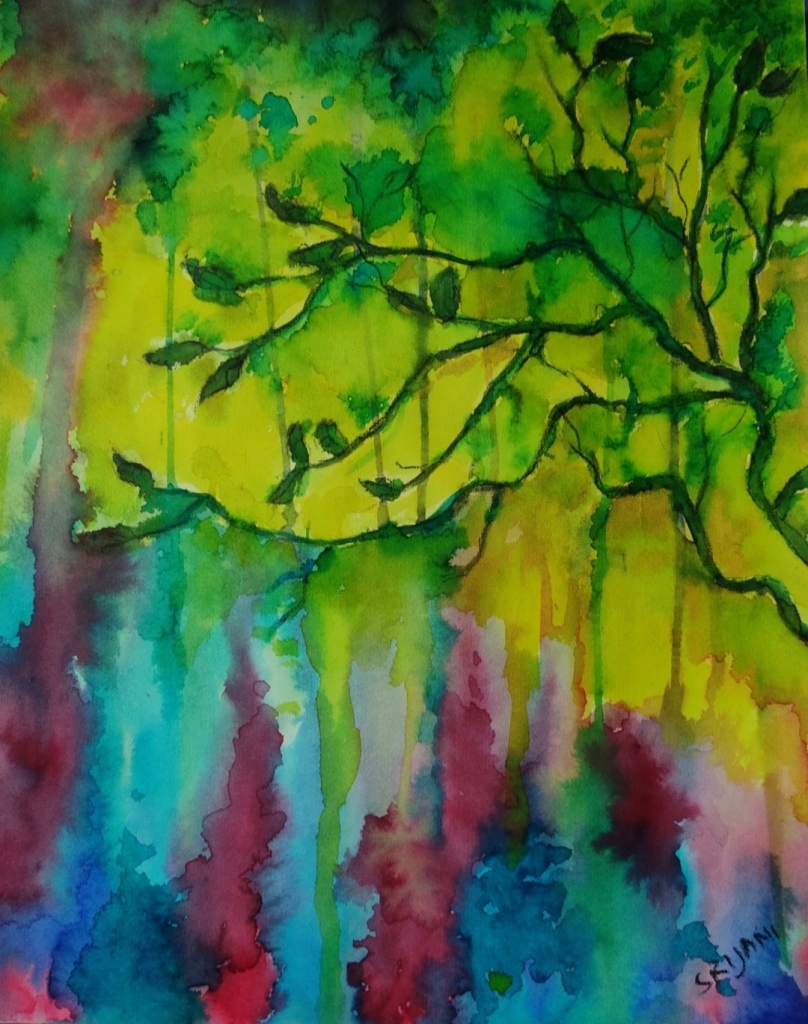
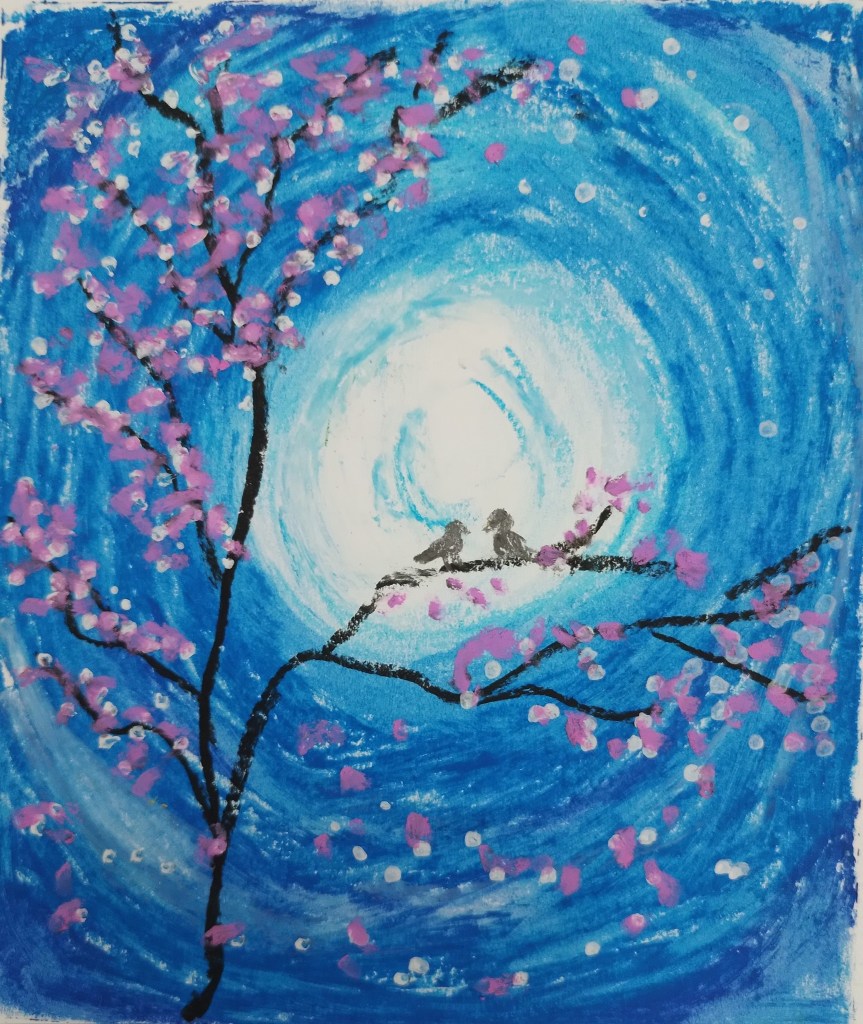
Art by Sohana Manzoor

Editorial

The Kanchejunga Turns Gold … Click here to read.

Translations

Tumi Kon Kanoner Phul by Tagore and Anjali Loho Mor by Nazrul, love songs by the two greats, have been translated from Bengali by Professor Fakrul Alam. Click here to read.

Tumi to Janona Kichu (You seem to know nothing) by Jibananda Das has been translated from Bengali by Professor Fakrul Alam. Click here to read.

Where Lies the End of this Unquenchable Thirst?, a poem by Atta Shad, has been translated from Balochi by Fazal Baloch. Click here to read.

The Bird’s Funeral a poem by Ihlwha Choi  has been translated from Korean by the poet himself. Click here read.

Kheya or Ferry, a poem by Tagore, has been translated from Bengali by Mitali Chakravarty. Click here to read.

Poetry

Click on the names to read the poems

Michael Burch, Shamik Banerjee, John Drudge, Ashok Suri, Cal Freeman, Lokenath Roy, Stuart McFarlane, Thompson Emate, Aditi Dasgupta, George Freek, Gazala Khan, Phil Wood, Srijani Dutta, Luis Cuauhtémoc Berriozábal, Akbar Fida Onoto, Ryan Quinn Flangan, Rhys Hughes

Musings/Slices from Life

Just Another Day?

Farouk Gulsara muses on the need to observe various new year days around the globe and across time. Click here to read.

Of Birthdays and Bondings…

Ratnottama Sengupta reminiscences on her past experiences. Click here to read.

As Flows the Gomti: A Palace of Benevolence

Prithvijeet Sinha takes us for a tour of the Bara Imambara in Lucknow with his words and camera. Click here to read.

The Midwife’s Confession and More…

Aparna Vats shares a narrative around female infanticide centring her story around a BBC interview and an interview with the journalist who unfolded the narrtive. Click here to read.

Juhu

Lokenath Roy gives a vignette of the world famous beach. Click here to read.

Musings of a Copywriter

In The Heroic Fall, Devraj Singh Kalsi explores dacoits and bravery. Click here to read.

Notes from Japan

In Finding Inspiration in Shikoku’s Iya Valley, Suzanne Kamata has written of a source of inspiration for a short story in her recently published book. Click here to read.

Essays

Reminiscences from a Gallery: MF Husian

Dolly Narang recounts how she started a gallery more than four decades ago and talks of her encounter with world renowned artist, MF Husain. Click here to read.

In The Hidden Kingdom of Bhutan

Mohul Bhowmick explores Bhutan with words and his camera. Click here to read.

When a New Year Dawns…

Ratnottama Sengupta writes of the art used in calendars and diaries in India. Click here to read.

What Is Your Name?

Fakrul Alam recalls his mother as a person who aspired for fairplay for women. Click here to read.

Stories

Vasiliki and Nico Go Fishing

Paul Mirabile gives a heartwarming story set in a little Greek island. Click here to read.

Naughty Ravi

Naramsetti Umamaheswararao writes of an awakening. Click here to read.

The Wise One

Snigdha Agrawal gives a touching story around healing from grief. Click here to read.

Conversations

Ratnottama Sengupta converses with Joy Bimal Roy, author of Ramblings of a Bandra Boy. Click here to read.

A discussion on managing cyclones, managing the aftermath and resilience with Bhaksar Parichha, author of Cyclones in Odisha: Landfall, Wreckage, and Resilience. Click here to read.

Book Excerpts

An excerpt from Bhaskar Parichha’s Cyclones in Odisha, Landfall, Wreckage and Resilience. Click here to read.

An excerpt from Joy Bimal Roy’s Ramblings of a Bandra Boy. Click here to read.

Book Reviews

Somdatta Mandal reviews Amitav Ghosh’s Wild Fiction: Essays. Click here to read.

Meenakshi Malhotra reviews Syed Mujtaba Ali’s Shabnam, translated from Bengali by Nazes Afroz. Click here to read.

Bhaskar Parichha reviews Abhay K’s Nalanda: How it Changed the World. Click here to read.

.

Click here to access the Borderless anthology, Monalisa No Longer Smiles

Click here to access Monalisa No Longer Smiles on Amazon International
Categories
Editorial

The Kanchenjunga Turns Gold…

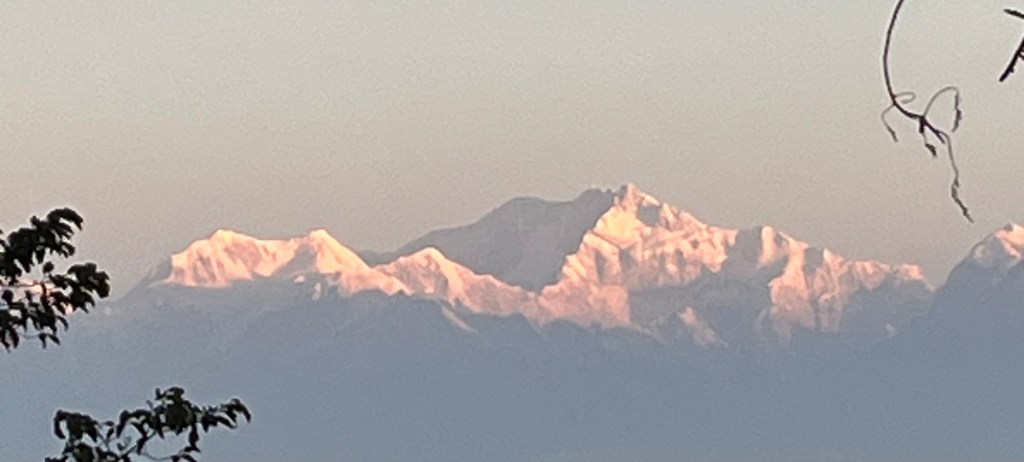
The Kanchenjunga turns gold

Ghoom, Darjeeling, is almost 2.5 km above sea level. Standing in the rarified air of Ghoom, you can watch the Kanchenjunga turn gold as it gets drenched in the rays of the rising sun. The phenomenon lasts for a short duration. The white pristine peak again returns to its original colour blending and disappearing among the white cirrus clouds that flit in the sky. Over time, it’s shrouded by mists that hang over this region. The event is transitory and repeats itself on every clear morning like life that flits in and out of existence over and over again…

Witnessing this phenomenon feels like a privilege of a lifetime as is meeting people who shine brightly and unusually, like the Kanchenjunga, to disappear into mists all too early. One such person was the founder of pandies’ 1 who coordinated the pandies’ corner for Borderless Journal, the late Sanjay Kumar (1961-2025). The idea of starting this column was to bring out the unheard voices of those who had risen above victimhood to find new lives through the work done by pandies’. In his book, Performing, Teaching and Writing Theatre: Exploring Play, published by Cambridge Scholars Publishing, he described his scope of work which in itself was stunning. His work ranged from teaching to using theatre and play to heal railway platform kids, youngsters in Kashmir, the Nithari survivors and more — all youngsters who transcended the scars seared on them by violations and violence. We hope to continue the column in coordination with pandies’.

Another very renowned person whose art encompassed a large number of social concerns and is now lost to time was the artist, MF Husain (1915-2011). This issue of Borderless is privileged to carry an artwork by him that has till now not been open to the public for viewing. It was a gift from him to the gallerist, Dolly Narang, on her birthday. She has written nostlgically of her encounters with the maestro who walked bare-feet and loved rusticity. She has generously shared a photograph of the sketch (1990) signed ‘McBull’ — a humorous play on his first name, Maqbool, by the artist.

Drenched with nostalgia is also Professor Fakrul Alam’s essay, dwelling on more serious issues while describing with a lightness his own childhood experiences. Many of the nonfiction in this issue have a sense of nostalgia. Mohul Bhowmick recalls his travels to Bhutan. And Prithvijeet Sinha introduces as to a grand monument of Lucknow, Bara Imambara. Lokenath Roy takes us for a stroll to Juhu, dwelling on the less affluent side. Suzanne Kamata describes her source of inspiration for a few stories in her new book, River of Dolls and Other Stories. A darker hue is brought in by Aparna Vats as she discusses female infanticide. But a light sprays across the pages as Devraj Singh Kalsi describes how his feisty grandmother tackled armed robbers in her home. And an ironic tone rings out in the rather whimsical musing by Farouk Gulsara on New Year days and calendars.

With a touch of whimsy, Ratnottama Sengupta has also written of the art that is often seen in calendars and diaries as well as a musing on birthdays, her own and that of a friend, Joy Bimal Roy. They have also conversed on his new book, Ramblings of a Bandra Boy, whose excerpt is also lodged in our pages, recalling their days in the glitzy world of Bollywood as children of notable film director, Bimal Roy (1909-1966), and award-winning writer, Nabendu Ghosh (1917-2007).

We feature the more serious theme of climate change in our other interview with Bhaskar Parichha, who has written a book called Cyclones in Asia: Landfall, Wreckage and Resilience. He has spoken extensively on resilience and how the incidence of such storms are on the rise. We carry an excerpt from his non-fiction too. His book bears the imprint of his own experience of helping during such storms and extensive research.

Climate change has been echoed in poetry by Gazala Khan and the metaphor of thrashing stormy climate can be found in Luis Cuauhtémoc Berriozábal’s poetry. Touching lines on working men spread across the globe with poems from Michael Burch, Shamik Banerjee, Stuart McFarlane and Ashok Suri while Ryan Quinn Flanagan has written of accepting change as Nazrul had done more than eighty years ago:

Everyone was at each other's throats,
insistent that the world was ending.
But I felt differently, as though I were just beginning,
or just beginning again…

--Changes by Ryan Quinn Flanagan

Poets, like visionaries across time and cultures, often see hope where others see despair. And humour always has that hum of hope. In a lighter tone, Rhys Hughes makes one laugh or just wonder as he writes:

I once knew a waiter
who jumped in alarm
when I somersaulted across
his restaurant floor
after entering the front door
on my way to my favourite
table: he wasn’t able
to control his nerves
and the meal he was bearing
ended up on the ceiling
with people staring
as it started to drip down.

--No Hard Feelings by Rhys Hughes

We have many more colours of poetry from John Drudge, Cal Freeman, Phil Wood, Thompson Emate, George Freek, Srijani Dutta, Akbar Fida Onoto, and others.

Translations feature poetry. Lyrics of Nazrul (1899-1976) and Tagore (1861-1941) appear together in Professor Alam’s translations of their love songs from Bengali. He has also transcreated a Bengali poem by Jibananada Das (1899-1854). Profoundly philosophical lines by Atta Shad (1939-1997) in Balochi has been rendered to English by Fazal Baloch for his birth anniversary this month. Ihlwah Choi has translated his poem from Korean, taking up the poignant theme of transience of life. A Tagore poem called ‘Kheya (Ferry)’, inspired by his rustic and beautiful surroundings, has been brought to us in English.

Our fiction this month features human bonding from across oceans by Paul Mirabile, Naramsetti Umamaheswararao and Snigdha Agrawal. This theme of love and bonding is taken up in a more complex way by our reviews’ section with Meenakshi Malhotra writing of Syed Mujtaba Ali’s novel, Shabnam, translated from Bengali by Nazes Afroz. Bhaskar Parichha has explored the past by bringing to focus Abhay K’s Nalanda: How it Changed the World. Somdatta Mandal’s review of Amitav Ghosh’s latest Wild Fiction: Essays touches upon various issues including climate change.

Huge thanks to all our contributors, the Borderless team for all these fabulous pieces. Thanks to Gulsara, Kamata, Bhowmick and Sinha for the fabulous photography by them to accompany their writings. Heartfelt gratitude to Sohana Manzoor for her cover art and to Dutta for her artwork accompanying her poem. Without all your efforts, this issue would have been incomplete. And now, dear readers, thank you for being with us through this journey. I turn the issue over to all of you… there is more as usual than mentioned here. Do pause by our contents page.

Let’s celebrate life this spring!

Happy Reading!

Mitali Chakravarty

borderlessjournal.com

.

  1. pandies’ was started in 1987. It’s spelled with a small ‘p’ and the name was picked by the original team. Read more about pandies’ by clicking here. ↩︎

Click here to access the contents page for the February 2025 Issue

READ THE LATEST UPDATES ON THE FIRST BORDERLESS ANTHOLOGY, MONALISA NO LONGER SMILES, BY CLICKING ON THIS LINK.

Categories
Poetry

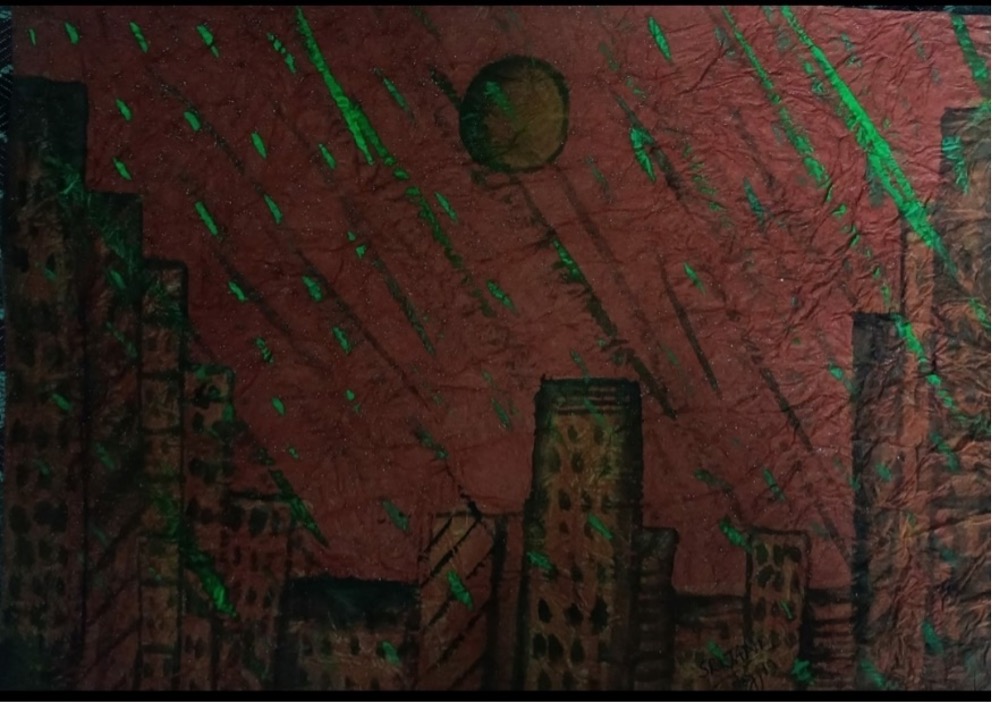
The City

Poetry and Art by Srijani Dutta

The City (2019) by Srjani Datta
THE CITY  

In the deep, deep, dark woods,
The youth is lost.
In the vast sky,
The red-yellowish moon is sublime;
Twisted --
Tangled --
Twice told tales
Of yellowish noon of last summer --
Lascivious rippling of
Mirth, dancing in the heart
Of passers-by --
Today’s dunce is tomorrow’s poet.
Philosophers smile at words of the prophets.
The city of dreamers,
The city of blue nights,
The city of fascism,
The city of silent cries,
The city of dew drops,
The city of lost souls,
Hunchbacks, bird catchers --
Are making this city their homes;
Insomniacs start listening to
Lunatic melodies
Of the unseen microcosms,
Buds bloom between
Two skyscrapers
Made of debris
And
Of chaos.

Srijani Dutta is a post graduate from Visva Bharati University. She has published in Parcham, Contemporary Literary Review India, Story Mirror, EKL review journal, Setu, Plato’s cave, The Antonym etc. Her paintings have been published in Borderless Journal, Creative chromosomes, Rappahannock review, Fourth River Journal.

.

PLEASE NOTE: ARTICLES CAN ONLY BE REPRODUCED IN OTHER SITES WITH DUE ACKNOWLEDGEMENT TO BORDERLESS JOURNAL

Click here to access the Borderless anthology, Monalisa No Longer Smiles

Click here to access Monalisa No Longer Smiles on Kindle Amazon International

Categories
Editorial

And Wilderness is Paradise Enow…

Hope in Winter(2020) by Srijani Dutta
“Here with a Loaf of Bread beneath the Bough,
A Flask of Wine, a Book of Verse -- and Thou
Beside me singing in the Wilderness --
And Wilderness is Paradise enow.”

― Omar Khayyám (1048-1131); translation from Persian by Edward Fitzgerald (Rubaiyat, 1859)

I wonder why Khayyam wrote these lines — was it to redefine paradise or just to woo his beloved? I like to imagine it was a bit of both. The need not to look for a paradise after death but to create one on Earth might well make an impact on humankind. Maybe, they would stop warring over an invisible force that they call God or by some other given name, some ‘ism’. Other than tens of thousands dying in natural disasters like the recent earthquake at the border of Turkiye and Syria, many have been killed by wars that continue to perpetrate divides created by human constructs. This month houses the second anniversary of the military junta rule in Myanmar and the first anniversary of the Ukrainian-Russian war that continues to decimate people, towns, natural reserves, humanity, economics relentlessly, polluting the environment with weapons of mass destruction, be it bombs or missiles. The more weapons we use, the more we destroy the environment of our own home planet. 

Sometimes, the world cries for a change. It asks to be upended.

We rethink, reinvent to move forward as a species or a single race. We relook at concepts like life and death and the way we run our lives. Redefining paradise or finding paradise on Earth, redefining ‘isms’ we have been living with for the past few hundred years — ‘isms’ that are being used to hurt others of our own species, to create exclusivity and divisions where none should exist — might well be a requisite for the continuance of our race.

Voices of change-pleaders rang out in the last century with visionaries like Tagore, Gandhi, Nazrul, Satyajit Ray urging for a more accepting and less war-bound world. This month, Ratnottama Sengupta has written on Ray’s legendary 1969 film, Goopy Gyne, Bagha Byne: “The message he sent out loud and with laughter: ‘When people have palatable food to fill their belly and music to fill their soul, the world will bid goodbye to wars.’” Shantanu Ray Chaudhuri has given an essay on one of the greatest pacifists, Gandhi, and his attitudes to films as well as his depiction in movies. What was amazing is Gandhi condemned films and never saw their worth as a mass media influencer! The other interesting thing is his repeated depiction as an ethereal spirit in recent movies which ask for changes in modern day perceptions and reforms. In fact, both these essays deal with ghosts who come back from the past to urge for changes towards a better future.

Delving deeper into the supernatural is our interviewee, Abhirup Dhar, an upcoming writer whose ghost stories are being adapted by Bollywood. While he does investigative stories linked to supernatural lore, our other interviewee, Andrew Quilty, a renowned journalist who has won encomiums for his coverage on Afghanistan where he spent eight years, shows in his book, August in Kabul: America’s Last Days in Afghanistan and the Return of the Taliban, what clinging to past lores can do to a people, especially women. Where does one strike the balance? We also have an excerpt from his book to give a flavour of his exclusive journalistic coverage on the plight of Afghans as an eyewitness who flew back to the country not only to report but to be with his friends — Afghans and foreigners — as others fled out of Kabul on August 14 th 2021. While culturally, Afghans should have been closer to Khayyam, does their repressive outlook really embrace the past, especially with the Taliban dating back to about only three decades?

The books in our review section have a focus on the past and history too. Meenakshi Malhotra’s review of Priyadarshini Thakur Khayal’s Padmini of Malwa: The Autobiography of Rani Rupmati, again focusses on how the author resurrects a medieval queen through visitations in a dream (could it be her spirit that visited him?). Somdatta Mandal writes of a book of history too — but this time the past and the people are resurrected through objects in Sudeshna Guha’s A history of India through 75 Objects. Bhaskar Parichha has also reviewed a history book by culinary writer-turned-historian Colleen Taylor Sen, Ashoka and The Maurya Dynasty: The History and Legacy of Ancient India’s Greatest Empire.

This intermingling of life and death and the past is brought to life in our fiction section by Sreelekha Chatterjee and Anjana Krishnan. Aditi Yadav creates a link between the past and our need to travel in her musing, which is reminiscent of Anthony Sattin’s description of asabiyya, a concept of brotherhood that thrived in medieval times. In consonance with wanderlust expressed in Yadav’s essay, we have a number of stories that explore travel highlighting various issues. Meredith Stephens travels to explore the need to have nature undisturbed by external interferences in pockets like Kangaroo Island in a semi-humorous undertone. While Ravi Shankar travels to the land’s end of India to voice candid concerns on conditions within Kerala, a place that both Keith Lyons and Rhys Hughes had written on with love and a sense of fun. It is interesting to see the contrasting perspectives on Southern India.

Hughes of course brings in dollops of humour with his travel to Adam’s Peak in Sri Lanka as does Devraj Singh Kalsi who writes about camel rides in Chandigarh, a place I known for its gardens, town planning and verdure. Suzanne Kamata colours Japan with humour as she writes of how candies can save the day there! Sengupta continues to travel to the past delving into the history of the last century.

Poetry that evokes laughter is rare but none the less the forte of Hughes as pensive but beautiful heartfelt poetry is that of Asad Latif. This February, the edition features poetry by Ryan Quinn Flanagan that borders on wry humour and on poignancy by George Freek. More poems by Pragya Bajpai, Sanjukta Dasgupta, Chad Norman, John Grey, Amit Parmessur, Sister Lou Ella Hickman, Saranyan BV and many more bring in varied emotions collected and honed to convey varieties that flavour our world.

Professor Fakrul Alam has also translated poetry where a contemporary Bengali writer, Masud Khan, cogitates on history while Ihlwha Choi has translated his own poem from Korean. A translation of Tagore’s poem on the ocean tries to capture the vastness and the eternal restlessness that can be interpreted as whispers carried through eons of history. Fazal Baloch has also shared a poem by one of the most revered modern Balochi voices, that of Atta Shad. Our pièce de resistance is a translation of Premchand’s Balak or the Child by Anurag Sharma.

This vibrant edition would not have been possible without all the wonderful translators, writers, photographers and artists who trust us with their work. My heartfelt thanks to all of you, especially, Srijani Dutta for her beautiful painting, ‘Hope in Winter’, and Sohana for her amazing artwork. My heartfelt thanks to the team at Borderless Journal, to our loyal readers some of whom have evolved into fabulous contributors. Thank you.

Do write in telling us what you think of the journal. We look forward to feedback from all of you as we head for the completion of our third year this March.

Best wishes,

Mitali Chakravarty

borderlessjournal.com

Click here to access the Borderless anthology, Monalisa No Longer Smiles