Categories
Contents

Borderless, June 2025

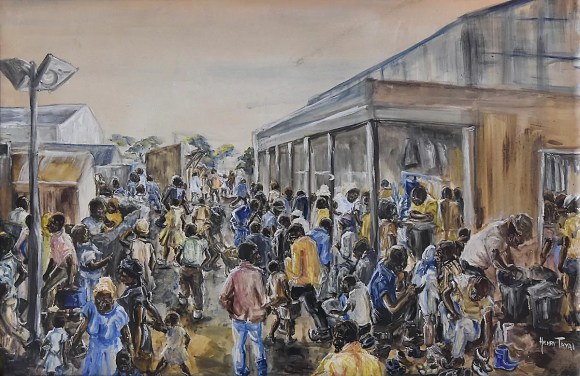
Art by Sohana Manzoor

Editorial

‘How do you rebuild a life when all that remains is dust?’… Click here to read.

Translations

The Great War is Over and A Nobody by Jibanananda Das have been translated from Bengali by Professor Fakrul Alam. Click here to read.

Sukanta Bhattacharya’s poem, Therefore, has been translated from Bengali by Kiriti Sengupta. Click here to read.

 Five poems by Soubhagyabanta Maharana  have been translated from Odia by Snehaprava Das. Click here to read.

Animate Debris, a poem by Sangita Swechcha has been translated from Nepali by Saudamini Chalise. Click here to read.

Lost Poem, a poem by Ihlwha Choi  has been translated from Korean by the poet himself. Click here to read.

Sonar Tori (Golden Boat), a poem by Tagore, has been translated from Bengali by Mitali Chakravarty. Click here to read.

Poetry

Click on the names to read the poems

Allan Lake, Shobha Tharoor Srinivasan, Ron Pickett, Ananya Sarkar, George Freek, Bibhuti Narayan Biswal, Jim Bellamy, Pramod Rastogi, Vern Fein, Saranyan BV, Ryan Quinn Flanagan, Juairia Hossain, Gautham Pradeep, Jenny Middleton, Mandavi Choudhary, Rhys Hughes

Musings/Slices from Life

Where Should We Go After the Last Frontiers?

Ahamad Rayees writes from a village in Kashmir which homed refugees and still faced bombing. Click here to read.

The Jetty Chihuahuas

Vela Noble takes us for a stroll to the seaside at Adelaide. Click here to read.

Hope Lies Buried in Eternity

Farouk Gulsara muses on hope. Click here to read.

Undertourism in the Outback

Merdith Stephens writes from the Australian Outback with photographs from Alan Nobel. Click here to read.

Musings of a Copywriter

In Driving with Devraj, Devraj Singh Kalsi writes of his driving lessons. Click here to read.

Notes from Japan

In The Tent, Suzanne Kamata visits crimes and safety. Click here to read.

Essays

Public Intellectuals Walked, So Influencers Could Run

Lopamudra Nayak explores changing trends. Click here to read.

Where No One Wins or Loses a War…From Lucknow with Love

Prithvijeet Sinha takes us to a palace of a European begum in Lucknow. Click here to read.

Bhaskar’s Corner

In Can Odia Literature Connect Traditional Narratives with Contemporary Ones, Bhaskar Parichha discusses the said issue. Click here to read.

Feature

The story of Hawakal Publishers, based on a face-to-face tête-à-tête, and an online conversation with founder Bitan Chakraborty with his responses in Bengali translated by Kiriti Sengupta. Click here to read.

Stories

The Year the Fireflies Didn’t Come Back

Leishilembi Terem gives a poignant story set in conflict-ridden Manipur. Click here to read.

The Stranger

Jeena R. Papaadi writes of the vagaries of human relationships. Click here to read.

The Opening

Naramsetti Umamaheswararao relates a value based story in a small hamlet of southern India. Click here to read.

Book Excerpts

An excerpt from Wendy Doniger’s The Cave of Echoes: Stories about Gods, Animals and Other Strangers. Click here to read.

An excerpt from Mohua Chinappa’s Thorns in My Quilt: Letters from a Daughter to Her Father. Click here to read.

Book Reviews

Somdatta Mandal reviews Madhurima Vidyarthi’s Job Charnock and the Potter’s Boy. Click here to read.

Rakhi Dalal reviews Dhruba Hazarika’s The Shoot: Stories. Click here to read.

Satya Narayan Misra reviews Bakhtiyar K Dadabhoy’s Honest John – A Life of John Matthai. Click here to read.

Bhaskar Parichha reviews David C Engerman’s Apostles of Development: Six Economists and the World They Made. Click here to read.

.


Click here to access the Borderless anthology, Monalisa No Longer Smiles

Click here to access Monalisa No Longer Smiles on Amazon International

Categories
Editorial

‘How do you rebuild a life when all that remains is dust?’

The Great War is over
And yet there is left its vast gloom.
Our skies, light and society’s soul have been overcast…

'The Great War is Over' by Jibanananda Das (1899-1954), translated from Bengali by Professor Fakrul Alam.

Jibanananda Das wrote the above lines in the last century and yet great wars rage even now. As the world struggles to breathe looking for a beam of hope to drag itself out of the darkness induced by natural calamities, accidents, terror attacks and wars that seem to rage endlessly, are we moving towards the dystopian scenario created by George Orwell in 1984, which would be around the same time as Jibanananda Das’s ‘The Great War is Over’?

Describing such a scenario, Ahmed Rayees writes a moving piece from the Kashmiri village of Sheeri, the last refuge of the displaced refugees who were bombarded after peace was declared in their refuge during the clash across Indo-Pak borders. He contends: “People walked back not to homes, but to ruins. Entire communities had been reduced to ash and rubble. Crops were destroyed, livestock gone, schools turned into shelters or craters. How do you rebuild a life when all that remains is dust?”

People could be asking the same questions without finding answers in Gaza or Ukraine, where the cities are reduced to rubble. While we look for a ray of sunshine, amidst the rubble, Farouk Gulsara muses on hope that has its roots in eternity. Vela Noble wanders on nostalgic beaches in Adelaide. And Meredith Stephens travels to the Australian outback. Devraj Singh Kalsi brings in lighter notes writing of driving lessons while Suzanne Kamata creeps back to darker recesses musing on likely ‘criminals’ and crimes in her neighbourhood.

Lopamudra Nayak writes on social media and its impact while Bhaskar Parichha writes of trends that could be brought into Odia literature.  What he writes could apply well to all regional literature, where they lose their individual colouring to paint dystopian realities of the present world. Does modernising make us lose our ethnic identity and how important is that? These are questions that sprung to the mind reading his essay. As if in an attempt to hold on to the past ethos, Prithvijeet Sinha wafts around old ruins in Lucknow and sees a cemetery for colonial soldiers and concludes: “Everybody has formidable stakes, and the dead don’t preach the gospel of victory or sombre defeat.”

Taking up a similar theme of death and war is a poem from Saranyan BV. In poetry, we have colours from around the world with poems from Allan Lake, Ron Pickett, Ananya Sarkar, George Freek, Jim Bellamy, Ryan Quinn Flanagan, Juairia Hossain, Gautham Pradeep, Jenny Middleton, Mandavi Choudhary and many more. Multiple themes are woven into a variety of perspectives, including nature and environment, with June hosting the World Environment Day. Rhys Hughes gives a funny poem on the Welsh outlaw, Twm Siôn Cati.

We have mainly poetry in translation this time. Snehaprava Das has brought to us Soubhagyabanta Maharana’s poems from Odia and Ihlwha Choi has translated his own poem from Korean. Sangita Swechcha’s poem in Nepali has been rendered to English by Saudamini Chalise. From Bengali, other that Jibanananda Das’s poems translated by Professor Fakrul Alam, we have Tagore’s pensive and beautiful poem, Sonar Tori (the golden boat). Yet another Bengali poet, one who died young and yet left his mark, Sukanta Bhattacharya (1926-1947), has been translated by Kiriti Sengupta. Sengupta has also translated the responses of Bitan Chakravarty in a candid conversation about his dream child — the Hawakal Publishers. We also have a feature on this based on a face-to-face conversation, giving the story of how this publishing house grew out of an idea. Now, they publish poetry traditionally, without costs to the poet. Their range of authors are spread across continents.

Our fiction again returns to the darkness of war. Young Leishilembi Terem has given a story set in conflict-ridden Manipur from where she has emerged safely — a story that reiterates the senselessness of violence and politics. While Jeena R. Papaadi writes of modern human relationships that end without commitment, Naramsetti Umamaheswararao relates a value-based story in a small hamlet of southern India. 

From stories, our book excerpts return to the real world, where a daughter grieves her father in Mohua Chinappa’s Thorns in My Quilt: Letters from a Daughter to Her Father while Wendy Doniger’s The Cave of Echoes: Stories about Gods, Animals and Other Strangers, dwells on demystifying structures that create borders. We have two non-fiction reviews. Parichha writes about David C Engerman’s Apostles of Development: Six Economists and the World They Made. And Satya Narayan Misra discusses Bakhtiyar K Dadabhoy’s Honest John – A Life of John Matthai. Somdatta Mandal this time explores a historical fiction based around the founding of Calcutta, Madhurima Vidyarthi’s Job Charnock and the Potter’s Boy while Rakhi Dalal looks at fiction born of environmental awareness, Dhruba Hazarika’s The Shoot: Stories.

We have more content. Do pause by our contents page and take a look.

Huge thanks to all our contributors without who this issue would not have materialised. Heartfelt thanks to the team at Borderless for their support, especially Sohana Manzoor for her iconic artwork that has almost become a signature statement for Borderless.

Let’s hope that next month brings better news for the whole world.

Best wishes,

Mitali Chakravarty

borderlessjournal.com

Click here to access the contents for thJune 2025 Issue

READ THE LATEST UPDATES ON THE FIRST BORDERLESS ANTHOLOGY, MONALISA NO LONGER SMILES, BY CLICKING ON THIS LINK.
Categories
Tribute

How Nazrul Stirred the Winds of Change

Kazi Nazrul Islam was born in Churulia in India on 24th May, and he died a Bidrohi poet in Bangladesh. When he was born in 1899, it was before the McMahon Line of Partition had been drawn. He looked up to Rabindranath Tagore as his mentor but his form of poetry was more rebellious and his lyrics, different, though no less beautiful. His heart belonged to a united Bengal as can be seen from much of his works. He started magazines, supported feminism, brought out Begum Rokeya’s work in his journal, spoke of rising beyond borders and he has even written of climate change more than a hundred years ago…

His essay on melting icebergs has been translated by Radha Chakravarty. Today, we celebrate Nazrul’s birth anniversary with translations of his works from Bengali. These showcase the diversity in his writings, broadness of his thought and his concern for global issues that remain unresolved to date: his essay on climate change, a story grown out of his experiences as a soldier translated by Sohana Manzoor, a poem on poverty and lyrics on women and living in a world that transcends human constructs rendered in English by Fakrul Alam and more. Welcome to Nazrul’s world!

Poetry

Arise O Woman and Two Flowers on One Leafstalk, lyrics by Nazrul, have been translated from Bengali by Professor Fakrul Alam. Click here to read.

Daridro or Poverty by Nazrul has been translated from Bengali by Professor Fakrul Alam. Click here to read.

Prose

The Day of Annihilation, an essay on climate change by Kazi Nazrul Islam, has been translated from Bengali by Radha Chakravarty. Click here to read.

Temples and Mosques: Kazi Nazrul Islam’s fiery essay translated by Sohana Manzoor. Click here to read.

 Deposition of a Political Prisoner: A Speech by Nazrul: A powerful speech by Nazrul from the Selected Essays: Kazi Nazrul Islam, translated by Radha Chakravarty. Click here to read.

Hena, a short story by Nazrul, has been translated by Sohana Manzoor. Click here to read.

Categories
Contents

Borderless, May 2025

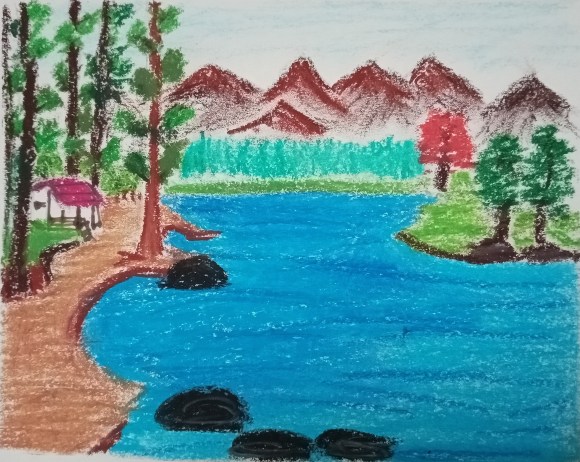
Art by Sohana Manzoor

Editorial

“Imagine all the people/ Living life in peace”… Click here to read.

Translations

The Day of Annihilation, an essay on climate change by Kazi Nazrul Islam, has been translated from Bengali by Radha Chakravarty. Click here to read.

Arise O Woman and Two Flowers on One Leafstalk, lyrics by Nazrul, have been translated from Bengali by Professor Fakrul Alam. Click here to read.

Five poems by Bipin Nayak have been translated from Odia by Snehaprava Das. Click here to read.

Identity by Munir Momin has been translated from Balochi by Fazal Baloch. Click here to read.

Among Strangers, a poem by Ihlwha Choi  has been translated from Korean by the poet himself. Click here to read.

Asha or Hope by Tagore has been translated from Bengali by Mitali Chakravarty. Click here to read.

Poetry

Click on the names to read the poems

Ryan Quinn Flangan, Jim Bellamy, Snehprava Das, George Freek, Niranjan Aditya, Christine Belandres, Ajeeti S, Ron Pickett, Kajoli Krishnan, Stuart McFarlane, Snigdha Agrawal, Arthur Neong, Elizabeth Anne Pereira, Rhys Hughes

Poets, Poetry & Rhys Hughes

In Did He Ever?, Rhys Hughes gives fun-filled verses on Lafcadio Hearn, a bridge between the East and West from more than a hundred years ago. Click here to read.

Musings/ Slices from Life

Will Dire Wolves Stalk Streets?

Farouk Gulsara writes of genetic engineering. Click here to read.

The Boy at the Albany Bus Stop

Meredith Stephens dwells on the commonality of human emotions. Click here to read.

The Word I Could Never Say

Odbayar Dorj muses on her own life in Mongolia and Japan. Click here to read.

Social Media Repetition

Jun A. Alindogan discusses the relevance of social media. Click here to read.

Shanghai in Jakarta

Eshana Sarah Singh takes us to Chinese New Year celebrations in Djakarta. Click here to read.

Musings of a Copywriter

In My Writing Desk, Devraj Singh Kalsi writes of the source of his inspiration. Click here to read.

Notes from Japan

In Feeling Anxious in Happy Village, Suzanne Kamata relates a heartwarming story. Click here to read.

Essays

Reminiscences from a Gallery: The Other Ray

Dolly Narang muses on Satyajit Ray’s world beyond films and shares a note by the maestro and an essay on his art by the eminent artist, Paritosh Sen. Click here to read.

This Garden Calls Out to Me: A Flaneur in Lucknow’s Sikandar Bagh

Prithvijeet Sinha takes us back to a historical landmark, made for love but bloodied by war. Click here to read.

Stories

Going to Meet the Hoppers

Fiona Sinclair writes a layered story on human perspectives. Click here to read.

The Ritual of Change

Parnika Shirwaikar explores the acceptance of change. Click here to read.

The Last Metro

Spandan Upadhyay explores the spirit of the city of Kolkata. Click here to read.

Nico Finds His Dream

Paul Mirabile narrates how young Nico uncovers his own yearnings. Click here to read.

The Bequest

Naramsetti Umamaheswararao gives a story reflecting a child’s lessons from Nature. Click here to read.

Conversation

Ratnottama Sengupta introduces and converses with photographer, Vijay S Jodha. Click here to read.

Book Excerpts

An excerpt from Devabrata Das’s One More Story About Climbing a Hill: Stories from Assam, translated by multiple translators from Assamese. Click here to read.

An excerpt from Ryan Quinn Flangan’s Ghosting My Way into the Afterlife. Click here to read.

Book Reviews

Somdatta Mandal reviews Arundhathi Nath‘s translation, The Phantom’s Howl: Classic Tales of Ghosts and Hauntings from Bengal. Click here to read.

Andreas Giesbert reviews Rhys Hughes’ The Devil’s Halo. Click here to read.

Bhaskar Parichha reviews Aubrey Menen’s A Stranger in Three Worlds: The Memoirs of Aubrey Menen. Click here to read.

.

Click here to access the Borderless anthology, Monalisa No Longer Smiles

Click here to access Monalisa No Longer Smiles on Amazon International

Categories
Editorial

“Imagine all the people/Living life in peace”

God of War by Paul Klee (1879-1940)
The sky weeps blood, the earth cannot contain
The sorrow of the young ones we've slain.
How now do dead kids laugh while stricken by red rain?

— from Stricken by Red Rain: Poems by Jim Bellamy

When there is war
And peace is gone
Where is their home?
Where do they belong?

— from Poems on Migrants by Kajoli Krishnan

Poetry, prose — all art forms — gather our emotions into concentrates that distil perhaps the finest in human emotions. They touch hearts across borders and gather us all with the commonality of feelings. We no longer care for borders drawn by divisive human constructs but find ourselves connecting despite distances. Strangers or enemies can feel the same emotions. Enemies are mostly created to guard walls made by those who want to keep us in boxes, making it easier to manage the masses. It is from these mass of civilians that soldiers are drawn, and from the same crowds, we can find the victims who die in bomb blasts. And yet, we — the masses — fight. For whom, for what and why? A hundred or more years ago, we had poets writing against wars and violence…they still do. Have we learnt nothing from the past, nothing from history — except to repeat ourselves in cycles? By now, war should have become redundant and deadly weapons out of date artefacts instead of threats that are still used to annihilate cities, humans, homes and ravage the Earth. Our major concerns should have evolved to working on social equity, peace, human welfare and climate change.

One of the people who had expressed deep concern for social equity and peace through his films and writings was Satyajit Ray. This issue has an essay that reflects how he used art to concretise his ideas by Dolly Narang, a gallery owner who brought Ray’s handiworks to limelight. The essay includes the maestro’s note in which he admits he considered himself a filmmaker and a writer but never an artist. But Ray had even invented typefaces! Artist Paritosh Sen’s introduction to Ray’s art has been included to add to the impact of Narang’s essay. Another person who consolidates photography and films to do pathbreaking work and tell stories on compelling issues like climate change and helping the differently-abled is Vijay S Jodha. Ratnottama Sengupta has interviewed this upcoming artiste.

Reflecting the themes of welfare and conflict, Prithvijeet Sinha’s essay takes us to a monument in Lucknow that had been built for love but fell victim to war. Some conflicts are personal like the ones of Odbayar Dorj who finds acceptance not in her hometown in Mongolia but in the city, she calls home now. Jun A. Alindogan from Manila explores social media in action whereas Eshana Sarah Singh takes us to her home in Jakarta to celebrate the Chinese New Year! Farouk Gulsara looks into the likely impact of genetic engineering in a world already ripped by violence and Devraj Singh Kalsi muses on his source of inspiration, his writing desk. Meredith Stephens tells the touching story of a mother’s concern for her child in Australia and Suzanne Kamata exhibits the same concern as she travels to Happy Village in Japan to meet her differently-abled daughter and her friends.

As these real-life narratives weave commonalities of human emotions, so do fictive stories. Some reflect the need for change. Fiona Sinclair writes a layered story set in London on how lived experiences define differences in human perspectives while Parnika Shirwaikar explores the need to learn to accept changes set in her part of the universe. Spandan Upadhyay explores the spirit of the city of Kolkata as a migrant with a focus on social equity. Both Paul Mirabile and Naramsetti Umamaheswararao write stories around childhood, one set in Europe and the other in Asia.

As prose weaves humanity together, so does poetry. We have poems from Jim Bellamy and Kajoli Krishnan both reflecting the impact of war and senseless violence on common humanity. Ryan Quinn Flanagan introduces us to Canadian bears in his poetry while Snigdha Agrawal makes us laugh with her lines about dogs and hatching Easter eggs! We have a wide range of poems from Snehprava Das, George Freek, Niranjan Aditya, Christine Belandres, Ajeeti S, Ron Pickett, Stuart McFarlane, Arthur Neong and Elizabeth Anne Pereira. Rhys Hughes concludes his series of photo poems with the one in this issue — especially showcasing how far a vivid imagination can twist reality with a British postman ‘carrying’ sweets from India! His column, laced with humour too, showcases in verse Lafcadio Hearn, a bridge between the East and West from more than a hundred years ago, a man who was born in Greece, worked in America and moved to Japan to even adopt a Japanese name.

Just as Hearn bridged cultures, translations help us discover how similarly all of us think despite distances in time and space. Radha Chakravarty’s translation of Kazi Nazrul Islam’s concerns about climate change and melting icecaps does just that! Professor Fakrul Alam’s translation of Nazrul’s lyrics from Bengali on women and on the commonality of human faith also make us wonder if ideas froze despite time moving on. Tagore’s poem titled Asha (hope) tends to make us introspect on the very idea of hope – just as we do now. At a more personal level, a contemporary poem reflecting on the concept of identity by Munir Momin has been translated from Balochi by Fazal Baloch. From Korean, Ihlwah Choi translates his own poem about losing the self in a crowd. We start a new column on translated Odia poetry from this month. The first one features the exquisite poetry of Bipin Nayak translated by Snehprava Das. Huge thanks to Bhaskar Parichha for bringing this whole project to fruition.

Parichha has also drawn bridges in reviews by bringing to us the memoirs of a man of mixed heritage, A Stranger in Three Worlds: The Memoirs of Aubrey Menen. Andreas Giesbert from Germany has reviewed Rhys Hughes’ The Devil’s Halo and Somdatta Mandal has discussed Arundhathi Nath’s translation, The Phantom’s Howl: Classic Tales of Ghosts and Hauntings from Bengal. Our book excerpts this time feature Devabrata Das’s One More Story About Climbing a Hill: Stories from Assam, translated by multiple translators from Assamese and Ryan Quinn Flangan’s new book, Ghosting My Way into the Afterlife, definitely poems worth mulling over with a toss of humour.

Do pause by our contents page for this issue and enjoy the reads. We are ever grateful to our ever-growing evergreen readership some of whom have started sharing their fabulous narratives with us. Thanks to all our readers and contributors. Huge thanks to our wonderful team without whose efforts we could not have curated such valuable content and thanks specially to Sohana Manzoor for her art. Thank you all for making a whiff of an idea a reality!

Let’s hope for peace, love and sanity!

Best wishes,

Mitali Chakravarty

borderlessjournal.com

Click here to access the contents page for the May 2025 Issue

READ THE LATEST UPDATES ON THE FIRST BORDERLESS ANTHOLOGY, MONALISA NO LONGER SMILES, BY CLICKING ON THIS LINK.
Categories
Tagore Translations

‘Asha’ by Rabindranath Tagore

Asha or Hope is a poem from Tagore’s collection, Kalpana (Imagination, 1900).

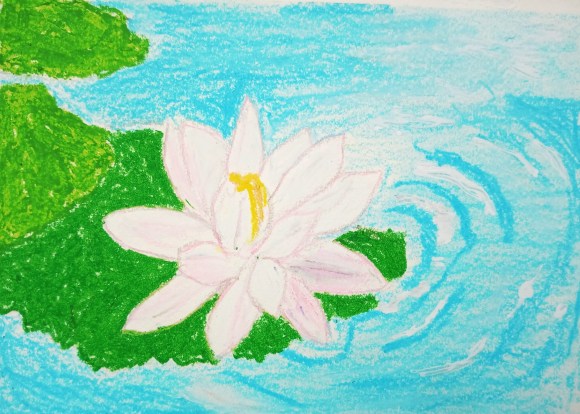
Art by Sohana Manzoor
HOPE

When the sun set on my life,
You welcomed me, O mother of mine.
Opening the doors of your inner sanctum,
You planted a kiss on my temples,
Lit a timeless lamp at my bedside. My neck
Was with a string of thorny blooms decked
To honour my songs. It hurt, it burnt —
Till taking off the wreath, you plucked
Each thorn off with your own hands,
Washed the dust. That garland —
With blooms now clean and white —
You draped on me as your eternal child.
My eyes opened as tears streamed.
I woke up to find it was only a dream!

This poem has been translated from Bengali by Mitali Chakravarty with editorial input from Sohana Manzoor.

.

PLEASE NOTE: ARTICLES CAN ONLY BE REPRODUCED IN OTHER SITES WITH DUE ACKNOWLEDGEMENT TO BORDERLESS JOURNAL

Click here to access the Borderless anthology, Monalisa No Longer Smiles

Click here to access Monalisa No Longer Smiles on Kindle Amazon International

Categories
Tribute

Celebrating Tagore

Rabindranath Tagore (1861-1941) in the role of the blind singer in his play, Falguni (published in 1917). Art by Abanindranath Tagore. From Public Domain

On May 7th 1861, or Pochishe Boisakh of the Bengali year 1268, Rabindranth Tagore was born in Jorsanko, Calcutta. That time, there was one subcontinent. Borders were fluid though the concept of countries had already started making inroads with the onset of colonials more than a couple of centuries ago. Rabindranath Tagore — a man who rejected the academia and earned no degrees — set the world aflame with his words and ideals. Many of his works hope to inspire people out of miseries by getting them in touch with their own strength. He created Santiniketan and Sriniketan to train young minds, to close social and economic gaps, to override the stigma of walls that continue to box and divide humanity to this date. Subsequently, his works, especially his writings, have become subjects of much academic discourse as well as part of popular cultural lore.

Tagore celebrated his own birthdays with poetry on Pochishe Boishakh. Pochishe Boisakh falls between 7-9 May on the Gregorian calendar. We start our celebrations with translations of his birthday songs and poems. The song translated by Aruna Chakravarti was the last he wrote, and based on a long poem he had written in 1922, also featured here. We also have the first birthday song he composed in 1899. In prose, we bring to you works that showcase his call for change and reform. Fakrul Alam has translated a powerful play by him, Red Oleanders, which strongly seems to reflect the machinations of the current world and ends on a note of hope. We can only carry an excerpt from this long play but it will be a powerful read when published in full. Somdatta Mandal shares a translations of an essay in which Tagore airs his views on the need for change in social norms — the strange thing is it would still seem relevant today. And Himadri Lahiri rendered an essay from Bengali to English on his views about the British Raj. We also have a story about a woman who changed social norms and her religion, translated by Chakravarti.

Birthday Poems & Lyrics

Hey Nutan or Oh ever new has been translated by Aruna Chakravarti in Daughters of Jorasanko. This was the last birthday song he wrote in 1941, a few months before he died. It was based on the long birthday poem he had written in 1922. Click here to read.

 Pochishe Boisakh Cholechhe (The twenty fifth of Boisakh draws close…), a birthday poem written in 1935, seems to be a sad reminder of mortality and dreams left unfinished. Click here to read.

Pochishe Boisakh (25th of Baisakh) is a birthday poem Tagore wrote in 1922 and the poem from which he derived the lyrics of his last birthday song written in 1941. Click here to read.

Jonmodiner Gaan or  Birthday Song by Tagore was written in 1899 and later sung as Bhoye Hote Tobo Abhayemajhe ( Amidst Fears, May Fearlessness). Click here to read the translation.

Prose

An excerpt from Tagore’s long play, Roktokorobi or Red Oleanders, has been translated by Professor Fakrul Alam. Click here to read.

Tagore’s essay, Classifications in Society, has been translated by Somdatta Mandal. Click here to read.

 Raja O Praja or The King and His Subjects, an essay by Tagore, has been translated by Himadri Lahiri. Click here to read.

Musalmanir Galpa (A Muslim Woman’s Story), a story by Tagore, has been translated by Aruna Chakravarti. Click here to read.

Bengal Landscape. Art by Sohana Manzoor.
Categories
Editorial

Seasons in the Sun?

April is a month full of celebrations around the world. Asia hosts a spray of New Year festivities. Then there are festivals like Qing Ming Jie, Good Friday and Easter. All these are in a way reminders of our past. And yet, we critique things as old fashioned! So, where does tradition end and ‘outdated’ or ‘outmoded’ start? Meanwhile we continue to celebrate these festivals with joy but what happens to those who have lost their home, family and their living due to war or climate disasters? Can they too join in with the joie de vivre? Can we take our celebrations to them to give solace in some way?

In our April issue, we have stories from climate and conflict-ridden parts of the world. From Bangkok, Amy Sawitta Lefevre gives an eyewitness account of the March 28th Earthquake that originated in Myanmar. While in her city, the disaster was managed, she writes: “I’m also thinking of all the children in Myanmar who are sleeping in the open, who lost loved ones, who are feeling scared and alone, with no one to reassure them.” As news reels tell us, in Myanmar there have been thousands of casualties from the earthquake as well as shootings by the army.

From another troubled region, Pakistan, Zeeshan Nasir gives a heartrending narrative about climate change, which also dwells on the human suffering, including increase in underage marriages.

Human suffering can be generated by rituals and customs too. For instance, if festivals dwell on exclusivity, they can hurt those who are left out of the celebrations. Odbayar Dorje muses along those lines on Mongolian traditions and calls for inclusivity and the need to change norms. On the other hand, Devraj Singh Kalsi hums with humour as he reflects on social norms and niceties and hints at the need for change in a light-hearted manner. Farouk Gulsara makes us laugh with the antics of his spoilt pet cat. And Suzanne Kamata dwells on her animal sightings in Kruger National Park with her words and camera while Meredith Stephens takes us sailing on stormy seas… that too at night.

Art is brought into focus by Ratnottama Sengupta who introduces artist Haren Thakur with his adaptation of tribal styles that has been compared to that of Paul Klee (1879-1940). She also converses with filmmaker Leslie Carvalho, known for his film The Outhouse, and his new novel, Smoke on the Backwaters. Both of these have a focus on the Anglo-Indian community in India. Also writing on Indian film trends of the 1970s is Tamara Raza. Bhaskar Parichha pays tribute to the late Ramakanta Rath (1934-2025), whose powerful and touching poetry, translated from Odia by the poet himself, can be found in our translations section.

We have an excerpt from Professor Fakrul Alam’s unpublished translation of Tagore’s Red Oleanders. It’s a long play and truly relevant for our times. Somdatta Mandal shares with us her translation of Tagore’s essay called ‘The Classification in Society’, an essay where the writer dwells on the need for change in mindsets of individuals that make up a community to move forward. A transcreation of a poem by Tagore for his birthday in 1935 reflects the darkness he overcame in his own life. Two poems expressive of longings by Jibananada Das have been translated from Bengali by Professor Alam aswell. From Balochistan, we have an excerpt from the first Balochi novel, Nazuk, written by the late Syad Zahoor Shah Hashmi and rendered into English by Fazal Baloch. Among contemporaries, we have a short story by Bitan Chakraborty translated from Bengali by Kiriti Sengupta, a poignant story that reflects on gaps in our society. And a Korean poem by Ihlwha Choi rendered to English by the poet himself.

Our poetry section celebrates nature with poetry by Lizzie Packer. Many of the poems draw from nature like that of George Freek and Luis Cuauhtémoc Berriozábal. Some talk of the relationship between man and nature as does Stuart McFarlane. We have a variety of themes addressed in poems by Thompson Emate, Meetu Mishra, Saranyan BV, Paul Mirabile, Pramod Rastogi, Ryan Quinn Flanagan and many more. Rhys Hughes brings in both humour and social commentary of sorts with his poem. And in his column, Hughes has shared three gothic poems which he claims are horrible but there is that twinge of fable and lightness similar to the ghosts of Ebenezer Scrooge’s world[1]— colourful and symbolic.

Stories sprinkle humour of different shades with Snigdha Agrawal’s narrative about mendicants and AI and Mitra Samal’s strange tale about childhood pranks. Naramsetti Umamaheswararao takes us back to schooldays with his narrative. We have a fun book excerpt from Agrawal’s Fragments of Time (Memoirs), almost in tone with some of her stories and musings.

An extract from Anuradha Kumar’s latest non-fiction making bridges across time and geographies. Called Wanderers, Adventurers, Missionaries: Early Americans in India, the book is an intriguing read. We have a review by Professor Mandal of Sheela Rohekar’s Miss Samuel: A Jewish Indian Saga, translated by Madhu Singh. Highlighting syncretic folk traditions, Gracy Samjetsabam has discussed the late Tony K Stewart’s translation of oral folklore in Needle at the Bottom of the Sea: Classic Bengali Tales from the Sundarbans. Parichha has written about a high-profile book that also hopes to draw bridges across the world, Raisina Chronicles: India’s Global Public Square, by S. Jaishankar and Samir Saran.

This issue has been made possible because of support from all of you. Huge thanks to the team, all our contributors and readers. Thanks to Sohana Manzoor for her fabulous artwork. Do pause by our contents page as all the content could not be covered here.

Perhaps, world events leave a sense of pensiveness in all of us and an aura of insecurity. But, as Scarlett O’ Hara of Gone with the Wind[2] fame says, “After all, tomorrow is another day.” 

Looking forward to a new day with hope, let’s dream of happier times filled with sunshine and change.

Enjoy the reads!

Mitali Chakravarty

borderlessjournal.com

[1] A Christmas Carol by Charles Dickens, 1843

[2] Gone With the Wind, a novel by Margaret Mitchell, published in 1936

Click here to access the contents page for the April 2025 Issue

READ THE LATEST UPDATES ON THE FIRST BORDERLESS ANTHOLOGY, MONALISA NO LONGER SMILES, BY CLICKING ON THIS LINK.
Categories
Tagore Translations

‘Pochishe Boisakh Cholechhe…’ Rabindranath Tagore’s Birthday Poem

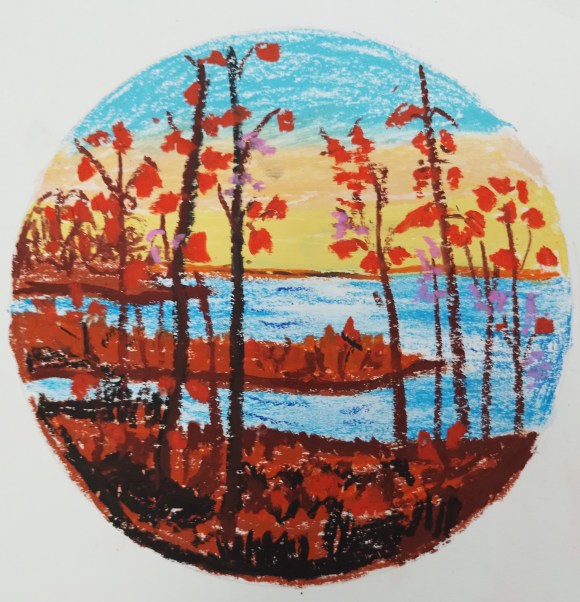
Art by Sohana Manzoor

Tagore’s Pochishe Boishak Cholechhe (The twenty fifth of Boisakh draws to a close…), was published in a collection called Shesh Shaptak (Final Week) in 1935. Pochishe Boisakh ( coinciding with 7-9 May on the Gregorian calendar) was his birthday.

             BIRTHDAY POEM

The twenty fifth of Boisakh
Draws my stream of birthdays
Closer to death.
Sitting on that wafting mat, an artisan is making a garland
With small statuettes of
Many mortal Rabindranaths.

Time travels on his chariot.
The pedestrian lifts his bowl
While walking, he gets a drink.
When he finishes, he recedes into the darkness.
His bowl is crushed to dust under the wheels.
Behind him,
Follows another with a new bowl.
He savours a fresh flavour.
Eventhough he has the same name,
He is a different person.

Once I was a child.
Within a few birthdays,
An entity was sculpted
Who no one recognised.
The people who would have known him
Are not around.
The being of that child is non-existent,
Nor does anyone remember him.
He has disappeared with his little world.
His past sorrows and joys
Find no reverberations.
The pieces of his broken toys
Cannot be seen in the dust.
He would sit and calf-like
Gaze outside, with longing.
His world was
Framed by the opening in the window.
His innocent glance
Would halt at the
Coconut trees along the fence.
His evenings were steeped in fairytales.
There was no insurmountable barrier
Between the real and unreal.
His mind would skip between
The two effortlessly.
In the gloaming of light and darkness,
The shadows wrapped around spring,
Drawing close with belonging.
Those few birthdays,
For some time,
Were like a brightly lit island.
But the past has sunk into the darkness of the ocean.
Sometimes, during low tides,
We can see that mountain peak.
We can see a shoreline of blood-red corals.

Over time,
The twenty fifth of Boishakh
Assumed
Vivid vernal hues.
Youthfulness played a melody
Of yearning on the ektara,
Questing for intangible
Invisible inspirations.
Hearing that music over time,
The celestial Lakshmi’s throne swayed
She sent over
Few of her ambassadors,
To earth to spew colours
On the palash woods,
Enticing, alluring to forgetfulness.
I have heard their voices speak softly.
I understood some. Some I didn’t.
I have seen dark eyelashes damp with wetness.
I have seen lips tremble with unspoken agony.
I have heard the tinkle of bracelets vacillate with eager surprise.
Unbeknown to me,
On the first conscious morning,
Of the twenty fifth of Boisakh,
They left behind a
Garland of jasmines.
My dream at dawn
Was heady with their fragrance.

That birthday was youthful with
Fairytales woven by communities and villages,
Some we knew, some doubted.
There, princesses with their hair undone
Were sometimes asleep,
Sometimes, they awoke in surprise
Touched by magical golden wands.
Over time,
The ramparts that walled the
Vernal pochishe Boishakh broke.
The path laden with the sway of Bokul leaves
Trembling shadows,
Murmuring breeze,
The lovelorn kokil’s pleading call
That turns the morning to afternoon,
The bees buzzing their wings
Towards the invisible scent of nectar --
That grassy path arrived
At the stone paved road of adulthood.
The ektara that played the haunting melody
In youth changed its old string for new.
That twenty fifth of Boisakh,
Exposed me
To a rough road,
Bore me like a wave to the ocean of humanity.
Morning and night,
I have woven tunes and
Caste a net mid-river –
Some have been caught,
Some have fled the fragile net.

Sometimes, the day has been faint,
Motivation disappointed,
Sadness filled the mind.
Unexpectedly, in the midst
Of such depression, I found
Inspiration in Amravati’s mortal idol.
They beautify the world,
Offering vessels of nectar
To the weary.
They insult fear with billowing
Waves of laughter.
They fan flames of courage
From ash-smothered smouldering fires.
They arouse celestial voices to ignite meditative words.
They have lighted the flame in my nearly suffused lamp.
They have given melody to the strings with their cool breeze.
They have garlanded me with honour
On the twenty fifth of Boishakh.
My songs, my words,
Still reverberate with their
Magical touch.

From then, in the battle of life,
Conflicts raged like
Thundering clouds.
I had to abandon the ektara.
Sometimes, I had to pick up the trumpet.
Under the hot mid-day sun,
I had to take on
A battle.
My feet are injured with thorns,
My wounded heart bleeds. The
Merciless harshness of waves
Have beaten my boat, left and right,
Muddying with criticism,
Drowning with transactions.
Hatred and love,
Envy and friendship,
Music and courage,
My world has been
stirred
By the mists of all these emotions.

In the midst of this revolutionary-crisis,
As the twenty fifth of Boishakh grows older,
You have all come to me.
Do you know –
Despite my attempts, much is still left unexpressed,
Much is in disarray, much is neglected?

From inside and outside,
Good and bad, clear and unclear, famed and unknown,
A vain, complicated character,
You have created an idol
With your regard, your love,
Your forgiveness.
Today you have brought this garland,
I accept this as a recognition of
The aging twenty-fifth of Boishakh,
As an acknowledgment of my years.
Heartfelt blessings from me to you.
As I prepare to take leave, my human idol
Remains in your heart.
As the future is unknown, I cannot be arrogant.

Then give me your leave
In this lifetime from all relationships
Strung with black and white threads.
Lonely, nameless, solitary –
Let me look for a melody amidst
Many tunes, many instruments,
In the depth of all songs.


*Ektara-Bengal folk instrument

Tagore celebrated his birthdays by the Bengali Calendar on Pochishe Boisakh with poetry. This poem was dedicated to Amiya Chandra Chakravarty (1901-1986), a critic, academic and poet. He was a close associate of Tagore. The Pochishe Boisakh arrived in late spring as he mentions in this poem.

From Public Domain: The long stringed instrument is an ektara and the other another folk instrument called dugdugi

This poem has been translated from Bengali by Mitali Chakravarty with editorial input from Sohana Manzoor.

.

PLEASE NOTE: ARTICLES CAN ONLY BE REPRODUCED IN OTHER SITES WITH DUE ACKNOWLEDGEMENT TO BORDERLESS JOURNAL

Click here to access the Borderless anthology, Monalisa No Longer Smiles

Click here to access Monalisa No Longer Smiles on Kindle Amazon International

Categories
World Poetry Day

Raindrops, Roses and Pandas…

World Poetry Day falls in March — the same month that houses the World Wildlife Day. Our beautiful planets’ flora and fauna, impacted by the changing climate, might have to adapt or alter. Part of the land masses are likely to return to rest under rising tides. And humanity, how will we respond or survive these phenomena?

We have here responses in poetry from our newly-minted section on Environment and Climate. We celebrate with poetry on our home and hearth, the Earth.

We start with poetry on fires that seems to have razed large parts of our planet recently…

Fires in Los Angeles by Luis Cuauhtémoc Berriozábal. Click here to read.

Wildfires in Uttarakhand by Gazala Khan. Click here to read.

Hot Dry Summers, covering the fires in Australia, by Lizzie Packer. Click here to read.

We move on to more extreme weather phenomenons like heatwaves, droughts and floods.

Extreme Drought or California Dreaming by Ron Picket. Click here to read.

Hurricane Laura’s Course by Jane Hammons. Click here to read

This Heatwave by John Grey. Click here to read.

This Island of Mine by Rhys Hughes. Click here to read.

And yet some weep for things we take for granted, for the pollution and the rapacity exhibited by our species.

Unanswered by Vernon Daim. Click here to read.

Under the Rock Crags by Peter Magliocco. Click here to read.

The New Understanding by Peter Cashorali. Click here to read.

Meanwhile, we continue to want to celebrate nature as we did of yore…and some just do continue to turn to it for inspiration.

Eco Poetry by Adriana Rocha. Click here to read.

Green by Mark Wyatt. Click here to read.

Sunrise from Tiger Hill by Shamik Banerjee. Click here to read.

Whistle & Fly by Shaza Khan. Click here to read.

Seeds Fall to the Ground by Ryan Quinn Flanagan. Click here to read.

Quietly by Ashok Suri. Click here to read.

Carnival of Animals by Rhys Hughes. Click here to read.