Categories
Contents

Borderless, September 2025

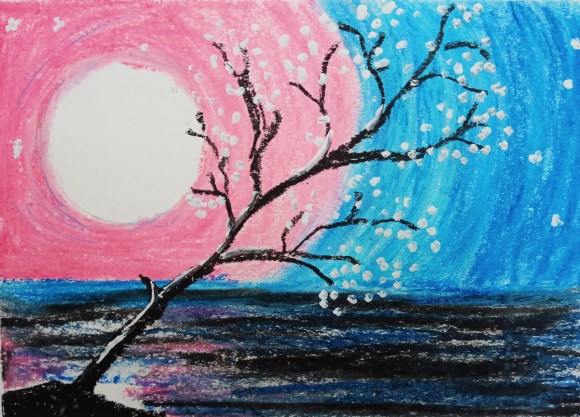
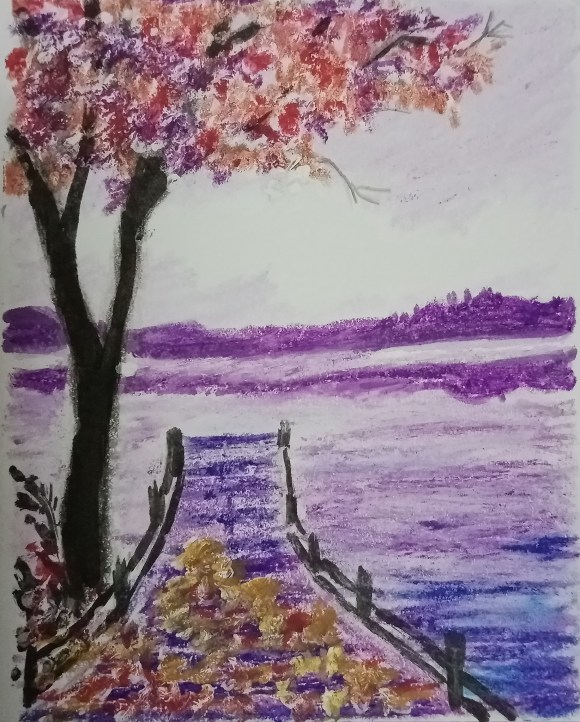
Art by Sohana Manzoor

Editorial

Seasons Out of Time Click here to read

Translations

Nazrul’s Karar Oi Louho Kopat (Those Iron Shackles of Prison) has been translated from Bengali by Professor Fakrul Alam. Click here to read.

Five poems by Ashwini Mishra have been translated from Odia by Snehprava Das. Click here to read.

The Dragonfly, a poem by Ihlwha Choi,  has been translated from Korean by the poet himself. Click here to read.

Tagore’s Aaj Shororter Aloy (Today, in the Autumnal Light) has been translated from Bengali by Mitali Chakravarty. Click here to read.

Poetry

Click on the names to read the poems

Ryan Quinn Flanagan, Onkar Sharma, Ron Pickett, Arshi, Joseph K Wells, Shamim Akhtar, Stephen House, Mian Ali, John Grey, Juliet F Lalzarzoliani, Joseph C.Obgonna, Jim Bellamy, Soumyadwip Chakraborty, Richard Stimac, Sanzida Alam, Jim Murdoch, Rhys Hughes

Poets, Poetry & Rhys Hughes

In Soaring with Icarus, Rhys Hughes shares a serious poems. Click here to read.

Musings/ Slices from Life

Parenting Tips from a Quintessential Nerd

Farouk Gulsara relooks at our golden years and stretches it to parenting tips. Click here to read.

Instrumental in Solving the Crime

Meredith Stephens takes us to a crime scene with a light touch. Click here to read.

What’s in a Name?

Jun A Alindogan writes about the complex evolution of names in Phillippines. Click here to read.

Bibapur Mansion: A Vintage Charmer

Prithvijeet Sinha takes us for a tour of Lucknow’s famed vintage buildings. Click here to read.

Musings of a Copywriter

In Demolition Drives… for Awards?, Devraj Singh Kalsi muses on literary awards. Click here to read.

Notes from Japan

In Contending with a Complicated History, Suzanne Kamata writes of her trip to US from Japan. Click here to read.

Essays

The Bauls of Bengal

Aruna Chakravarti writes of wandering minstrels called bauls and the impact they had on Tagore. Click here to read.

The Literary Club of 18th Century London

Professor Fakrul Alam writes on literary club traditions of Dhaka, Kolkata and an old one from London. Click here to read.

Stories

Looking for Evans

Rashida Murphy writes a light-hearted story about a faux pas. Click here to read.

Exorcising Mother

Fiona Sinclair narrates a story bordering on spooky. Click here to read.

The Storm

Anandita Dey wanders down strange alleys of the mind. Click here to read.

The Fog of Forgotten Gardens

Erin Jamieson writes from a caregivers perspective. Click here to read

The Anger of a Good Man

Naramsetti Umamaheswararao makes up a new fable. Click here to read.

Feature

A review of Jaladhar Sen’s The Travels of a Sadhu in the Himalayas, translated from Bengali by Somdatta Mandal, and an online interview with the translator. Click here to read.

Book Excerpts

An excerpt from Jaladhar Sen’s The Travels of a Sadhu in the Himalayas, translated from Bengali by Somdatta Mandal. Click here to read.

An excerpt from Prithvijeet Sinha’s debut collection of poems, A Verdant Heart. Click here to read.

Book Reviews

Somdatta Mandal reviews Aruna Chakravarti’s selected and translated, Rising From the Dust: Dalit Stories from Bengal. Click here to read.

Rakhi Dalal reviews Mohua Chinappa’s Thorns in My Quilt: Letters from a Daughter to her Father. Click here to read.

Pradip Mondal reviews Kiriti Sengupta’s Selected Poems. Click here to read.

Bhaskar Parichha reviews Kalyani Ramnath’s Boats in a Storm: Law, Migration, and Decolonization in South and Southeast Asia, 1942–1962. Click here to read.

.

Click here to access the Borderless anthology, Monalisa No Longer Smiles

Click here to access Monalisa No Longer Smiles on Amazon International

Categories
Poetry

Found in Translation: Ashwini Mishra’s poems

Five poems by Ashwini Mishra have been translated from Odia by Snehaprava Das

Ashwini Mishra
RIDING THE EARTH: THE LAST DAY

Farewell!
A final goodbye!
The prologue to an epic of an endless rest
Has to be something
Extra special.

Gathering up all the strength
Of his senses
He strove to know the people
Around him.
He spoke fondly to them
‘Let you all be there in my heart
Forever,
May my world keep shimmering
With the glow of this endearing bond.’
He rode each passing day
That galloped on --
Like a well-fed, robust horse,
He rode on,
His feet securely stuck in the stirrups
His hands gripping the rein hard.
In an instant he could
Gallop around the earth
Cradling time under his arm.
The river, the ponds
And the rainclouds brought water
For his parched throat,

Towards the end of the journey
He called one by one his folks
Whom he held dear to his heart.
Some of them sounded assuring,
Some promised to come.
A few fulfilled their promises too
And came --
Still, there was a disturbing emptiness
Somewhere within.

Where has disappeared
The knot of love that had held
So strong in the days of past?
It was as though that knot
Had loosened and shredded.
Worn out like a weary page
In the mindscape,
Like someone that had once
Played a major role,
And had moved away from the centerstage,
To stand by the stage-wings
Distanced and dispassionate!

SWORD


I had never wanted
To wield a sword, a dagger or a goad.
I had always wanted to tuck plumes
into the hair,
To draw a lotus on the palm,
To play the notes of spring breeze
For the ears of the
Blazing summer noon.
I had wanted to be a dreamer,
To let my eyes close
At the touch of the delicate petals
Of exotic blooms!
But you did not let that happen.
My loved ones,
My folk I held close to my heart,
Fell at the merciless blows
Of harsh and hostile words
Your canons shot.
Your anger, your cruelty,
Weighed heavy on me
And a thunderstorm brew inside me.
Unnoticed by others.
In the end,
My compelled hands
Reached out to the scabbard
Lying abandoned under
The smuts of time
To draw the sword out.

THE CLAY LAMP

A clay lamp can always guess
How long the ghee and
The wick in it will last.
It is a living thing
How brief might its lifespan be.
It can, like all living beings,
Battle the wind and the darkness
In its struggle to survive
In an unenclosed space
That is vulnerable to
The assault of hooves of animals
Or the misty spray of the dew.
It knows that
The moment the curtain rises,
Revealing the stage
All set for the entry of light,
The first act of the play will end
And Its role will be over
Even before the makeup is
Rubbed off the face or the artificial tint
On the hair fades.
The hand that had lit it
May turn impassive, too!

A woman, her heart and hands
Focused on the act,
Keeps lighting up the clay lamps,
Not knowing for sure
How long their light would last
Or when the flames would die.
The idol of the goddess
That glittered in the light of
The lamps she lights
Never steps down to help her
When the flames char her body.
There is not a soul in sight
When her flame dies,
Except a few burnt insects.

GAZA
You neither have a chest
Nor arms now
To embrace those who once saw
You as their own
Like you did before.
The natives and the foreigners,
Who trod your soil,
Now take a turn either to your left
Or to your right and move on.
No longer the chirrups of birds
Come sprinkling down
Either from your sky, or your trees.
There are vultures everywhere
Scavenging on the tender human flesh
Getting fat and heavy.
The sun, the moon and the stars
In your sky are
Blown away into thousand pieces now.
You may dig up some of them
Graved under your ground.
The Death in your sea breeze
And in your explosive garb
Haunts living humans
To turn them to corpses.
Like a farmland ladened with crops,
Skeletons are heaped in your streets.
Houses and buildings where life dwelt
Are mounds of shattered concrete.
Wreckage of kitchenware,
And of home appliances
Lie on the desolate roads
In pathetic scatters.
A book satchel slings from the
Severed hand of a dead child.
The thirst for war is not quelled yet,
New strategies are deliberated upon
To pursue newer missions of death.
New weapons must be hoarded
In the arsenal
To launch an attack on the netherworld
After this world is razed to ruins.

WHIP

The whip that once basked proud in
The love of the kings and the feudal lords
And danced in elation on
The defenseless back of the oppressed,
Now lies worn and weary
In a niche in the royal palace or
Behind the glass doors in the shelf
Of a museum,
Coated in dust and dirt.
The obsequious tanners,
Who were far below the
Aristocracy,
Polished this tool of tyranny
Bright with oil,
And it jumped crazy
On their haggard backs,
Drawing crooked lines
Of livid blue and red.

How wide is the chasm between
Sage Dadhichi who gave his bones
For forging a thunderbolt
To kill demon Brutrasura*,
And the stingray that gave its tail to
Shape a whip
That performs its brutal dance
On the back of innocent humans?
Even today,
The barges of history and legends
Voyage across the pages
Of text books taught in the classroom,
Their sails fluttering
On their proud masts.

*Brutrasura was killed by Indra with a weapon made with Sage Dadhichi’s bones as per mythology.

Aswini Kumar Mishra has 13 poetry collections to his credit. He has been translated widely into English, Hindi, Bengali, Tamil and other Indian languages. He has authored a fiction in English, Feet in the Valley (Rupa Publications, 2016),  His poems and essays have appeared in several literary journals including Indian Literature, Kavya Bharati, Wasafiri, M.P.T, The Little Magazine, Samakaleen, Konark, Rock Pebbles and Vahi etc. A recipient of several awards, he currently lives in Bhubaneswar and can be reached at cell phone +919438615742, +918456953936. His email id is:  mishra.aswini53@gmail.com

Dr.Snehaprava Das, is a noted writer and a translator from Bhubaneswar, Odisha. She has five books of poems, three of stories and thirteen collections of translated texts (from Odia to English), to her credit. 

PLEASE NOTE: ARTICLES CAN ONLY BE REPRODUCED IN OTHER SITES WITH DUE ACKNOWLEDGEMENT TO BORDERLESS JOURNAL

Click here to access the Borderless anthology, Monalisa No Longer Smiles

Click here to access Monalisa No Longer Smiles on Kindle Amazon International

Categories
Contents

Borderless, August 2025

Art by Sohana Manzoor

Editorial

Storms that Rage… Click here to read.

Translations

Nazrul’s Jonomo, Jonomo Gelo (Generations passed) has been translated from Bengali by Professor Fakrul Alam. Click here to read and listen to a rendition by the famed Feroza Begum.

Ajit Cour‘s short story, Nandu, has been translated from Punjabi by C Christine Fair. Click here to read.

The Scarecrow by Anwar Sahib Khan has been translated from Balochi by Fazal Baloch. Click here to read.

Five poems by Aparna Mohanty have been translated from Odia by Snehprava Das. Click here to read.

Angshuman Kar has translated some of his own Bengali poems to English. Click here to read.

Sunflower, a poem by Ihlwha Choi,  has been translated from Korean by the poet himself. Click here to read.

Tagore’s Shaishabshanda (Childhood’s Dusk) has been translated from Bengali by Mitali Chakravarty. Click here to read.

Poetry

Click on the names to read the poems

Ron Pickett, Fakrul Alam, William Miller, Meetu Mishra, Heath Brougher, Laila Brahmbhatt, Luis Cuauhtémoc Berriozábal, Snigdha Agrawal, George Freek, Ashok Suri, Scott Thomas Outlar, Dustin P Brown, Rajorshi Patranabis, Ryan Quinn Flanagan

Poets, Poetry & Rhys Hughes

From the Vale of Glamorgan are two poems on the place where Rhys Hughes grew up. Click here to read.

Musings/Slices from Life

Menaced by a Marine Heatwave

Meredith Stephens writes of how global warming is impacting marine life in South Australia. Click here to read.

The Man from Pulwama

Gowher Bhat introduces us to a common man who is just kind. Click here to read.

More than Words

Jun A. Alindogan writes on his penchant for hardcopy mail. Click here to read.

To Bid or Not to Bid… the Final Goodbye?

Ratnottama Sengupta ponders on Assisted Dying. Click here to read.

Musings of a Copywriter

In Syrupy Woes, Devraj Singh Kalsi looks at syrupy health antidotes with a pinch of humour. Click here to read.

Essays

‘Verify You Are Human’

Farouk Gulsara ponders over the ‘intelligence’ of AI and humans. Click here to read.

Does the First Woman-authored Novel in Bengali Seek Reforms?

Meenakshi Malhotra explores Somdatta Mandal’s translation of Manottama, the first woman-authored Bengali novel published in 1868. Click here to read.

Bhaskar’s Corner

In Bidyut Prabha Devi – The First Feminist Odia Poet, Bhaskar Parichha pays a tribute to the poet. Click here to read.

Stories

The Sixth Man

C. J. Anderson-Wu tells a story around disappearances during Taiwan’s White terror. Click here to read.

I Am Not My Mother

Gigi Baldovino Gosnell gives a story of child abuse set in Philippines where the victim towers with resilience. Click here to read.

The Archiver of Shadows

Hema R explores shadows in her story set in Chennai. Click here to read.

Ali the Dervish

Paul Mirabile weaves the strange adventures of a man who called himself Ali. Click here to read.

The Gift

Naramsetti Umamaheswararao moulds children’s perspectives. Click here to read.

Notes from Japan

In American Wife, Suzanne Kamata gives a short story set set in the Obon festival in Japan. Click here to read.

Conversation

Neeman Sobhan, author of Abiding City: Ruminations from Rome, discusses shuttling between multiple cultures and finding her identity in words. Click here to road.

Book Excerpts

An excerpt from M.A.Aldrich’s From Rasa to Lhasa: The Sacred Center of the Mandala. Click here to read.

An excerpt from Neeman Sobhan’s An Abiding City: Ruminations from Rome. Click here to read.

Book Reviews

Somdatta Mandal reviews Chhimi Tenduf-La’s A Hiding to Nothing. Click here to read it.

Madhuri Kankipati reviews O Jungio’s The Kite of Farewells: Stories from Nagaland. Click here to read.

Bhaskar Parichha reviews Snehaprava Das’s Keep it Secret: Stories. Click here to read.

.

Click here to access the Borderless anthology, Monalisa No Longer Smiles

Click here to access Monalisa No Longer Smiles on Amazon International

Categories
Editorial

Storms that Rage

Storm in purple by Arina Tcherem. From Public Domain

If we take a look at our civilisation, there are multiple kinds of storms that threaten to annihilate our way of life and our own existence as we know it. The Earth and the human world face twin threats presented by climate change and wars. While on screen, we watch Gaza and Ukraine being sharded out of life by human-made conflicts over constructs made by our own ‘civilisations’, we also see many of the cities and humankind ravaged by floods, fires, rising sea levels and global warming. Along with that come divides created by economics and technology. Many of these themes reverberate in this month’s issue.

From South Australia, Meredith Stephens writes of marine life dying due to algal growth caused by rising water temperatures in the oceans — impact of global warming. She has even seen a dead dolphin and a variety of fishes swept up on the beach, victims of the toxins that make the ocean unfriendly for current marine life. One wonders how much we will be impacted by such changes! And then there is technology and the chatbot taking over normal human interactions as described by Farouk Gulsara. Is that good for us? If we perhaps stop letting technology take over lives as Gulsara and Jun A. Alindogan have contended, it might help us interact to find indigenous solutions, which could impact the larger framework of our planet. Alindogan has also pointed out the technological divide in Philippines, where some areas get intermittent or no electricity. And that is a truth worldwide — lack of basic resources and this technological divide.

On the affluent side of such divides are moving to a new planet, discussions on immortality — Amortals[1] by Harari’s definition, life and death by euthanasia. Ratnottama Sengupta brings to us a discussion on death by choice — a privilege of the wealthy who pay to die painlessly. The discussion on whether people can afford to live or die by choice lies on the side of the divide where basic needs are not an issue, where homes have not been destroyed by bombs and where starvation is a myth, where climate change is not wrecking villages with cloudbursts.  In Kashmir, we can find a world where many issues exist and violences are a way of life. In the midst of such darkness, a bit of kindness and more human interactions as described by Gower Bhat in ‘The Man from Pulwama’ goes some way in alleviating suffering. Perhaps, we can take a page of the life of such a man. In the middle of all the raging storms, Devraj Singh Kalsi brings in a bit of humour or rather irony with his strange piece on his penchant for syrups, a little island removed from conflicts which seem to rage through this edition though it does raise concerns that affect our well-being.

The focus of our essays pause on women writers too. Meenakshi Malhotra ponders on Manottama (1868), the first woman-authored novel in Bengali translated by Somdatta Mandal whereas Bhaskar Parichha writes on the first feminist Odia poet, Bidyut Prabha Devi.

Parichha has also reviewed a book by another contemporary Odia woman author, Snehaprava Das. The collection of short stories is called Keep it Secret. Madhuri Kankipati has discussed O Jungio’s The Kite of Farewells: Stories from Nagaland and Somdatta Mandal has written about Chhimi Tenduf-La’s A Hiding to Nothing, a novel by a global Tibetan living in Sri Lanka with the narrative between various countries. We have an interview with a global nomad too, Neeman Sobhan, who finds words help her override borders. In her musing on Ostia Antica, a historic seaside outside Rome, Sobhan mentions how the town was abandoned because of the onset of anopheles mosquitos. Will our cities also get impacted in similar ways because of the onset of global ravages induced by climate change? This musing can be found as a book excerpt from Abiding City: Ruminations from Rome, her book on her life as a global nomad. The other book excerpt is by a well-known writer who has also lived far from where he was born, MA Aldrich. His book, From Rasa to Lhasa: The Sacred Center of the Mandala is said to be “A sweeping, magnificent biography—which combines historical research, travel-writing and discussion of religion and everyday culture—Old Lhasa is the most comprehensive account of the fabled city ever written in English.”

With that, we come to our fiction section. This time we truly have stories from around the globe with Suzanne Kamata sending a story set in the Bon festival that’s being celebrated in Japan this week for her column. From there, we move to Taiwan with C. J. Anderson-Wu’s narrative reflecting disappearances during the White Terror (1947-1987), a frightening period for people stretched across almost four decades.  Gigi Gosnell writes of the horrific abuse faced by a young Filipino girl as the mother works as a domestic helper in Dubai. Paul Mirabile gives us a cross-cultural narrative about a British who opts to become a dervish. While Hema R touches on women’s issues from within India, Sahitya Akademi Award Winner, Naramsetti Umamaheshwararao, writes a story about children.

We have a powerful Punjabi story by Ajit Cour translated by C.Christine Fair. Our translations host two contemporary poets who have rendered their own poems to English: Angshuman Kar, from Bengali and Ihlwha Choi, from Korean. Snehaprava Das has brought to us poetry from Odia by Aparna Mohanty. Fazal Baloch has translated ‘The Scarecrow’, a powerful Balochi poem by Anwar Sahib Khan. While Tagore’s Shaishabshandha (Childhood’s Dusk) has been rendered to English, Nazrul’s song questing for hope across ages has been brought to us by Professor Fakrul Alam.

Professor Alam has surprised us with his own poem too this time. In August’s poetry selection, Ron Pickett again addresses issues around climate change as does Meetu Mishra about rising temperatures. We have variety and colour brought in by George Freek, Heath Brougher, Laila Brahmbhatt, Luis Cuauhtémoc Berriozábal, Snigdha Agrawal, William Miller, Ashok Suri, Scott Thomas Outlar, Dustin P Brown, and Ryan Quinn Flanagan. Rajorshi Patranabis weaves Wiccan lore of light and dark, death and life into his delicately poised poetry. Rhys Hughes has also dwelt on life and death in this issue. He has shared poems on Wales, where he grew up— beautiful gentle lines.

 In spring warm rain will crack
the seeds of life: tangled
roots will grow free again.

('Tinkinswood Burial Chamber' by Rhys Hughes)

With such hope growing out of a neolithic burial chamber, maybe there is hope for life to survive despite all the bleakness we see around us. Maybe, with a touch of magic and a sprinkle of realism – our sense of hope, faith and our ability to adapt to changes, we will survive for yet another millennia.

We wind up our content for the August issue with the eternal bait for our species — hope. Huge thanks to the fantastic team at Borderless and to all our wonderful writers. Truly grateful to Sohana Manzoor for her artwork and many thanks to all our wonderful readers for their time…

We wish you all a wonderful reading experience!

Gratefully,

Mitali Chakravarty.

borderlessjournal.com

[1] Homo Deus: A Brief History of Tomorrow (2015) by Yuval Noah Harari

.

Click  here to access the contents for the August 2025 Issue

.

READ THE LATEST UPDATES ON THE FIRST BORDERLESS ANTHOLOGY, MONALISA NO LONGER SMILES, BY CLICKING ON THIS LINK.

Categories
Poetry

Found in Translation: Aparna Mohanty’s Poetry

Five poems by Aparna Mohanty have been translated from Odia by Snehaprava Das

Aparna Mohanty
STAR

A tiny star watched me
As I groped my way in a blinding darkness
Nudged to tears.
It sparkled white
Exactly the way my mother’s face did.
The tiny star was about to climb down
When I saw it and waved, stopping it.
I knew it could easily understand
My unvoiced pleading.
So, I closed my eyes and beseeched,
“Go back! This is no place
For a star that holds such
Pure whiteness in its soul.
See, how pride and ego here
Hiss and howl
Cloaked in a guise of false modesty.
‘Selfishness’ is brokering deals
In the trade-fair of power
Pretending redressal and help.
Truth is ineffectual here,
So is love!
Go back, dear
My little lodestar
Because I can’t bear to see them
Smudge your serene whiteness,
Defile you and seat you
On a dazzling platform of deceit,
And announce
‘Here is one of our bright ancestors
We borrow our light from!’”

IN JUST AN INSTANT

Do not hold her
in your devouring desire.
Hold her in your soul
Let the woman be safe.

Do not take her as a prize won,
Treasure her with love.
Let the woman be happy.

Make her not a commodity.
Treat her as a virtue.
Let the woman feel elevated.

Just as much—
Assure her of
Security, happiness
And elevation,
A vast world of love and compassion.
Free from terror and savagery, she
Thrives on just that much assurance!
Wombs await great souls
And there is a promise of
A healthy, wholesome future
That carries pictures of a million hearts
Steeped in love.

Just for once,
Unfetter a woman’s body
From the scaffold of lust
And put it on the altar of worship.
You will then see
How in more than half of the world,
Shrines of love will come up in
just an instant.

FEAR

Too many restraints,
Numerous forbiddances.
“Do not sit here
Do not laugh like this
Don’t ever dare enter the forest
To taste the mangos,
There the tiger sits stalking,
Fear the tiger!”

I wonder if ever my movements
Were easy and unrestricted
Like nature.
I wonder if the constraints
Were ever chosen by
An individual autonomy.
I am a soul deprived, and
Defined in obedience.
I drag myself on by your will
Slouching under the load of your
Approval and disapproval.
I lie burning on an untimely pyre
At every intersection of the streets,
At every city center,
Where animal-howls echo
day and night.
Who knows better than you
The trick of championing self-interest
Through a pretense of love?
You lock me in your embrace
To mould me in a pliable shape,
Render me spineless,
Leaving no strength in
My arms to protest.
You gift me a heart that wallows
In fear and defeat every moment.
Why do you hold my
Easy growth in check?
What are you afraid of?
Do you fear that the arms of
All the Dusshasanas*
will be attracted
once I let my hair loose?
Do you fear that the spear will pierce
the chest of many a Mahishasura*
once I let my clothing drop?
Do you fear that many a ‘Lanka’ of gold
will burn to cinders
once I step beyond the
‘Lakshaman Rekha’?

*Dusshasana was Kaurava from Mahabharata who disrobed Draupadi, the wife of the Pandavas.
*Mahisasura is an Asura or demon who was killed by Durga
*Lakshman Rekha(line) in Ramayan was the circular border drawn by Lakshmana to keep Sita safe. Once she stepped beyond the border, she was kidnapped by Ravana.


THE WOMAN IN THE LAST ROW

The woman sits in the last row
lost in some strange
unhoped for possibilities.
Light and shadow
play hide and seek on her face
like scenes shifting alternately between
a verdant paddy field of Bhadrav*
and a gloomy Ashwina* sky.

The lines of mirrors in her front
never catch her reflection
inside their gilded frames.

Neither has she the time nor the wish
to adjust her image in varying postures
at every little maneuvering of her body,
She just sits there lowering her face,
her eyes downcast,
speaking to herself,
playing with herself,
contented in her own company.
The woman
who sits at the extreme back row
could hold anyone’s hand and
pull that person to
the delicate loneliness of her playhouse.

And, when the meeting disperses
amidst accolades and applauses,
the great ones stand up
weaved in blandishments
like mountains tangled in the
creepers of Malati*
raising their proud heads.
Not a single glance is flicked
at the last row.
No one would know when
the woman in the last row
had disappeared,
stealing the silence from there.
No one might believe
a river flowed there
just a while before.

*Bhadrav—August-September
*Ashwina – September -October
*Malati – a creeper with pink and white flowers


A SONG FOR THE LITTLE GIRL

The day my little girl
Climbed the steps to her green age
And reached out to pluck
The loveliest flower of Phalguna*
And the sweetest berry of Chaitra*,
I cried out “Don’t” from below,
Stopping her.
She heard me and came down
To where I stood.
Since that day, questions
Like the swelling waves
Of an unseasonal flood
Crash at the edges of her eyes --
Why such prohibitions, why?
And I thought, why indeed…
My movements would be
Held in check.
Why must always pain and forbearance
Come in my lot?

I am a mother, after all
Like all mothers,
The spells of Sravana*-showers
In her eyes
Swept me away in its current…
But, will it do if I let myself be tossed away
In the rushing flow
Of her questions?

I am not a little girl like her.
I am rather trapped perpetually
In the role of a culinarian
That cooks on a holy hearth to
Feed the custodians of morals.
So now,
It is the time to cut and dress my little girl,
Cook her to a savoury dish
Of her father and her husband’s choice
And serve them on a gold plate!

*Phalguna – February-March
*Chaitra – March-April
*Sravana – July August

Aparna Mohanty(1952) is a conspicuous voice in modern Odia poetry. Her poetry, with its feminist overtone, boldly asserts the significance a woman’s role in the family as well as in the society. They strongly defend the woman against the derogations perpetrated on her by a male-dominated society and defy the societal restraints imposed on her that curb her freedom. Aparna Mohanty has received several accolades for her contribution to Odia literature including the prestigious Odisha Sahitya Akademi Award.

Dr.Snehaprava Das, is a noted writer and a translator from Bhubaneswar, Odisha. She has five books of poems, three of stories and thirteen collections of translated texts (from Odia to English), to her credit. 

PLEASE NOTE: ARTICLES CAN ONLY BE REPRODUCED IN OTHER SITES WITH DUE ACKNOWLEDGEMENT TO BORDERLESS JOURNAL
Click here to access the Borderless anthology, Monalisa No Longer Smiles

Categories
Poetry

Found in Translation: Sangram Jena’s Poetry

Five Odia poems by Sangram Jena have been translated by Snehaprava Das

Sangram Jena
 RETURN

Is there ever a return?
Do the years left behind,
Or, water flown away in the river,
Return ever?
Do parents who had quit the world
years before come back?
Or, the erstwhile beloved
married now to another man?
What are the things that return
after having gone?
Doesn’t the sun that depart every evening
return on the next?
Perpetually, endlessly?
Is returning a reality
or, an illusion of one?
And, wrapped in it,
life moves on
from the crib to the crematorium.


ROCK*

What did he stumble on?
The unobtrusive block of stone
that lay on his way,
the sacred scriptures, the hearsay
all carried the story that
the sinning Ahalya was redeemed
at the touch of his holy feet;
When Indra had touched her that day,
what was that touch?
Was it a pretence? A betrayal?

It matters little whose touch is it
if there is trust in love!
A pretense of love is sometimes
More intimate than a relationship
that has no life in it!
What promises of redemption the world
That labels love a sin, held out for her?
She was neither a wife nor a beloved
after she was transformed
from a rock to a woman;
Hadn’t it been better
to have remained a rock
and lived the rest of the life
holding on to the memory
of a handful of those ecstatic moments!

*Refers to the story of Ahalya in Ramayana

IT IS NOT THERE WHERE YOU LOOK

It is not there where I look!
May be, what appears to be where
is never there in reality,
Like the face that is not there in the mirror,
Or, the pain in the body,
Will the words that need to be said
Ever be there in written letters?
Does the meaning dwell in the words?
Does the sun sit behind the mountains,
Or the sea ends at the skyline?
Actually, what appears where
Is never there!

SEARCH

There is no point in searching.

A river flows while
You keep searching words.
As you look for the right colours,
the painting fades.
The sun drops into night
as you grope for the morning

and a moon comes up while
you chase the dark.

The petals wilt and drop
before the search for fragrance ends.
The poem is lost
before the right images are found.
While you seek the sea,
The horizon shifts further.
The feet are lost
Through the search for a ground underneath.
The thread of the kite snaps
In the quest for a sky.
The clouds dissipate
While craving the rain,
And the body dissolves
While you look for the shadow.

Ther is no point in a search.

Life fritters away quietly
As you keep browsing.

WHAT DO YOU THINK?

Life does not flow
the way you expect.

Do you think morning does not arrive
Till the crows’ caw?
Does the kaash not bloom
after the river recedes?

Do you think butterflies never circle
The flower after the petals drop?
Does no one look up at the sky
After the moon goes into hiding?

Do the frogs stop croaking
When the rain goes away?
Can the night be omnipresent
With its darkness?
Can everyone find the way
When there is light?

Doesn’t your shadow stay back
After you leave?
What do you think?

Sangram Jena (1952), is an eminent poet, translator, critic and editor. He writes both in English and Odia and has published more than 70 books. Translation of his poems have been published in several Indian languages including English, Bengali, Hindi, Tamil, Assamese and Marathi. His poetry in English have been published in many magazines in India and abroad. He has translated Classics of World Poetry into Odia and classical, medieval and contemporary Odia Poetry into English. He has received many awards including Sahitya Akademi Award (National Academy of Letters, New Delhi) for translation, a Senior Fellowship from the Department of Culture, Govt. of India and served as a jury member of National Selection Committee (New Delhi) for award of ‘Saraswati Samman’. He edits two literary journals, Nishant in Odia and Marg Asia in English. He has served as Vice-President, Odisha Sahitya Akademi. He lives in Odisha, India.

Dr.Snehaprava Das, is a noted writer and a translator from Bhubaneswar, Odisha. She has five books of poems, three of stories and thirteen collections of translated texts (from Odia to English), to her credit. 

PLEASE NOTE: ARTICLES CAN ONLY BE REPRODUCED IN OTHER SITES WITH DUE ACKNOWLEDGEMENT TO BORDERLESS JOURNAL
Click here to access the Borderless anthology, Monalisa No Longer Smiles

Click here to access Monalisa No Longer Smiles on Kindle Amazon International

Categories
Excerpt

Keep It Secret

Title: Keep It Secret

Author: Snehaprava Das

Publisher: Black Eagle Books

It was for the first time Karisma had entered her father’s room after he was discharged from the Amrit Hospital. He had suffered that massive paralytic stroke a month and a half back, the night on which she had announced that she had transferred her shares in the company and debentures in the name of Sunil Arya, the company’s junior partner. Doctors had little hope of any significant improvement in his condition. Karisma had engaged a couple of nurses from the hospital who worked in shifts and took care of her father. A doctor visited the house twice a week to examine his vitals.

‘How are you, father?’ Karisma asked. Her voice had a formal, indifferent note. A brief sparkle came to the eyes of the man who lay helpless in the bed. He tried desperate to move his hands that lay dead and stiff.

‘This is the last time you are seeing me father,’ she said softly. ‘I will be leaving this place. I have no idea what I am going to do but I will not return here. I have made all financial arrangements for you. Aruna aunty will see to it that you are taken care of properly as long as you are alive. There will be no lapse in your treatment.’

The man’s eyes darted around revealing how desperate he was and his lips quivered as if he struggled to speak out something but the only sound he made was a muffled groan.

‘I know what you want to say, father,’ Karisma said, a deep agony in her eyes. ‘But I cannot continue to live here now. You have to be alone. Didn’t you want to live in a palace and own heaps of wealth? I have transferred all the amount to your account and authorized Aruna aunty to do all transactions on your behalf. You have avenged the injustice done to you years ago, though I would not call it a heinous sin as you have always believed and made my poor mother believe it to be one. But what did I do to deserve the punishment you meted out to me, father? Which father would subject his daughter to such devilish exploitation? But of course, you were determined to torture your poor wife for the slip she made by punishing me, by snatching away every damn thing I loved, by utilizing me to slake your hunger for money. What a fool have I been to fall for that dirty ‘princess’ trick you played with me! I have never wanted to be a princess father. I was happy in that small tenement house, with the love of my mother.  That was genuine and not fake, motivated by greed and hostility like yours. And of course, there was Ronit! My Ronit! The only silver lining behind my gloomy clouds of despair. You destroyed that too. I do not believe in the existence of a world beyond this one, or that of a hell or a heaven. Each of us has to atone his sin through a penance, through self-afflicted torments, like mother did, like I have been doing all these years. My sin was just that I had a look that constantly reminded you of the slip my mother made.’ Karisma paused for a breath and looked at the eyes that had sunken into the pale, desiccated face. A few drops of tears trickled down from the corners of the dull eyes. Karisma wiped the tears with the end of her sari. ‘There is nothing I could do to help you father.. This is your nemesis and you cannot escape it. And I give you my word father, I will not let the truth come out to the open, ever! It will always remain a secret.’

 She rose to her feet and cast a long pitiful look at the inert figure, then turned and walked towards the door. A frantic but low and muffled animal howl rippled across the room, bringing her to a halt. She repressed the urge to look back and strode out of the room, breaking into a tearless, dry sobbing.

About the Book

Keep It Secret, a collection of ten stories, has in its agenda an effort to cross over the flimsy and floating border between the substance and the shadow, to explore into the jungle within, to study the secrets carefully concealed behind the mask of pretence and shamming of an agreeable and acceptable facade.

In the words of Andre Malraux, ‘Man is not what he thinks, he is what he hides.’ 

The aim, thus in a way, is to unravel the truth man hides and strives to protect it under a falsehood, that, at times projects, reveals itself through a behaviour pattern which may appear absurd. It intends to push aside the deceptively glossy screen of fake complacence, and traverse into that murky, elusive terrain beyond the ordinary logical perceptibility.

This excerpt is the from the title story, a tale of  personal vendetta.

About the Author

 Dr.Snehaprava Das, Former Prof. of English, is a noted author, poet and translator. She has three collections of English stories, five collection of English poems, and thirteen collection of Translated texts (Odia to English) to her credit. She has received  The Prabashi Bhasha Sahitya Samman, The Jivanananda Das award, The Fakirmohan Anuvad Sammana  and Lakshmi Narayan Mohanty translation awards for her contribution to literature.    

.

PLEASE NOTE: ARTICLES CAN ONLY BE REPRODUCED IN OTHER SITES WITH DUE ACKNOWLEDGEMENT TO BORDERLESS JOURNAL

Click here to access the Borderless anthology, Monalisa No Longer Smiles

Click here to access Monalisa No Longer Smiles on Amazon International

Categories
Contents

Borderless, June 2025

Art by Sohana Manzoor

Editorial

‘How do you rebuild a life when all that remains is dust?’… Click here to read.

Translations

The Great War is Over and A Nobody by Jibanananda Das have been translated from Bengali by Professor Fakrul Alam. Click here to read.

Sukanta Bhattacharya’s poem, Therefore, has been translated from Bengali by Kiriti Sengupta. Click here to read.

 Five poems by Soubhagyabanta Maharana  have been translated from Odia by Snehaprava Das. Click here to read.

Animate Debris, a poem by Sangita Swechcha has been translated from Nepali by Saudamini Chalise. Click here to read.

Lost Poem, a poem by Ihlwha Choi  has been translated from Korean by the poet himself. Click here to read.

Sonar Tori (Golden Boat), a poem by Tagore, has been translated from Bengali by Mitali Chakravarty. Click here to read.

Poetry

Click on the names to read the poems

Allan Lake, Shobha Tharoor Srinivasan, Ron Pickett, Ananya Sarkar, George Freek, Bibhuti Narayan Biswal, Jim Bellamy, Pramod Rastogi, Vern Fein, Saranyan BV, Ryan Quinn Flanagan, Juairia Hossain, Gautham Pradeep, Jenny Middleton, Mandavi Choudhary, Rhys Hughes

Musings/Slices from Life

Where Should We Go After the Last Frontiers?

Ahamad Rayees writes from a village in Kashmir which homed refugees and still faced bombing. Click here to read.

The Jetty Chihuahuas

Vela Noble takes us for a stroll to the seaside at Adelaide. Click here to read.

Hope Lies Buried in Eternity

Farouk Gulsara muses on hope. Click here to read.

Undertourism in the Outback

Merdith Stephens writes from the Australian Outback with photographs from Alan Nobel. Click here to read.

Musings of a Copywriter

In Driving with Devraj, Devraj Singh Kalsi writes of his driving lessons. Click here to read.

Notes from Japan

In The Tent, Suzanne Kamata visits crimes and safety. Click here to read.

Essays

Public Intellectuals Walked, So Influencers Could Run

Lopamudra Nayak explores changing trends. Click here to read.

Where No One Wins or Loses a War…From Lucknow with Love

Prithvijeet Sinha takes us to a palace of a European begum in Lucknow. Click here to read.

Bhaskar’s Corner

In Can Odia Literature Connect Traditional Narratives with Contemporary Ones, Bhaskar Parichha discusses the said issue. Click here to read.

Feature

The story of Hawakal Publishers, based on a face-to-face tête-à-tête, and an online conversation with founder Bitan Chakraborty with his responses in Bengali translated by Kiriti Sengupta. Click here to read.

Stories

The Year the Fireflies Didn’t Come Back

Leishilembi Terem gives a poignant story set in conflict-ridden Manipur. Click here to read.

The Stranger

Jeena R. Papaadi writes of the vagaries of human relationships. Click here to read.

The Opening

Naramsetti Umamaheswararao relates a value based story in a small hamlet of southern India. Click here to read.

Book Excerpts

An excerpt from Wendy Doniger’s The Cave of Echoes: Stories about Gods, Animals and Other Strangers. Click here to read.

An excerpt from Mohua Chinappa’s Thorns in My Quilt: Letters from a Daughter to Her Father. Click here to read.

Book Reviews

Somdatta Mandal reviews Madhurima Vidyarthi’s Job Charnock and the Potter’s Boy. Click here to read.

Rakhi Dalal reviews Dhruba Hazarika’s The Shoot: Stories. Click here to read.

Satya Narayan Misra reviews Bakhtiyar K Dadabhoy’s Honest John – A Life of John Matthai. Click here to read.

Bhaskar Parichha reviews David C Engerman’s Apostles of Development: Six Economists and the World They Made. Click here to read.

.


Click here to access the Borderless anthology, Monalisa No Longer Smiles

Click here to access Monalisa No Longer Smiles on Amazon International

Categories
Editorial

‘How do you rebuild a life when all that remains is dust?’

The Great War is over
And yet there is left its vast gloom.
Our skies, light and society’s soul have been overcast…

'The Great War is Over' by Jibanananda Das (1899-1954), translated from Bengali by Professor Fakrul Alam.

Jibanananda Das wrote the above lines in the last century and yet great wars rage even now. As the world struggles to breathe looking for a beam of hope to drag itself out of the darkness induced by natural calamities, accidents, terror attacks and wars that seem to rage endlessly, are we moving towards the dystopian scenario created by George Orwell in 1984, which would be around the same time as Jibanananda Das’s ‘The Great War is Over’?

Describing such a scenario, Ahmed Rayees writes a moving piece from the Kashmiri village of Sheeri, the last refuge of the displaced refugees who were bombarded after peace was declared in their refuge during the clash across Indo-Pak borders. He contends: “People walked back not to homes, but to ruins. Entire communities had been reduced to ash and rubble. Crops were destroyed, livestock gone, schools turned into shelters or craters. How do you rebuild a life when all that remains is dust?”

People could be asking the same questions without finding answers in Gaza or Ukraine, where the cities are reduced to rubble. While we look for a ray of sunshine, amidst the rubble, Farouk Gulsara muses on hope that has its roots in eternity. Vela Noble wanders on nostalgic beaches in Adelaide. And Meredith Stephens travels to the Australian outback. Devraj Singh Kalsi brings in lighter notes writing of driving lessons while Suzanne Kamata creeps back to darker recesses musing on likely ‘criminals’ and crimes in her neighbourhood.

Lopamudra Nayak writes on social media and its impact while Bhaskar Parichha writes of trends that could be brought into Odia literature.  What he writes could apply well to all regional literature, where they lose their individual colouring to paint dystopian realities of the present world. Does modernising make us lose our ethnic identity and how important is that? These are questions that sprung to the mind reading his essay. As if in an attempt to hold on to the past ethos, Prithvijeet Sinha wafts around old ruins in Lucknow and sees a cemetery for colonial soldiers and concludes: “Everybody has formidable stakes, and the dead don’t preach the gospel of victory or sombre defeat.”

Taking up a similar theme of death and war is a poem from Saranyan BV. In poetry, we have colours from around the world with poems from Allan Lake, Ron Pickett, Ananya Sarkar, George Freek, Jim Bellamy, Ryan Quinn Flanagan, Juairia Hossain, Gautham Pradeep, Jenny Middleton, Mandavi Choudhary and many more. Multiple themes are woven into a variety of perspectives, including nature and environment, with June hosting the World Environment Day. Rhys Hughes gives a funny poem on the Welsh outlaw, Twm Siôn Cati.

We have mainly poetry in translation this time. Snehaprava Das has brought to us Soubhagyabanta Maharana’s poems from Odia and Ihlwha Choi has translated his own poem from Korean. Sangita Swechcha’s poem in Nepali has been rendered to English by Saudamini Chalise. From Bengali, other that Jibanananda Das’s poems translated by Professor Fakrul Alam, we have Tagore’s pensive and beautiful poem, Sonar Tori (the golden boat). Yet another Bengali poet, one who died young and yet left his mark, Sukanta Bhattacharya (1926-1947), has been translated by Kiriti Sengupta. Sengupta has also translated the responses of Bitan Chakravarty in a candid conversation about his dream child — the Hawakal Publishers. We also have a feature on this based on a face-to-face conversation, giving the story of how this publishing house grew out of an idea. Now, they publish poetry traditionally, without costs to the poet. Their range of authors are spread across continents.

Our fiction again returns to the darkness of war. Young Leishilembi Terem has given a story set in conflict-ridden Manipur from where she has emerged safely — a story that reiterates the senselessness of violence and politics. While Jeena R. Papaadi writes of modern human relationships that end without commitment, Naramsetti Umamaheswararao relates a value-based story in a small hamlet of southern India. 

From stories, our book excerpts return to the real world, where a daughter grieves her father in Mohua Chinappa’s Thorns in My Quilt: Letters from a Daughter to Her Father while Wendy Doniger’s The Cave of Echoes: Stories about Gods, Animals and Other Strangers, dwells on demystifying structures that create borders. We have two non-fiction reviews. Parichha writes about David C Engerman’s Apostles of Development: Six Economists and the World They Made. And Satya Narayan Misra discusses Bakhtiyar K Dadabhoy’s Honest John – A Life of John Matthai. Somdatta Mandal this time explores a historical fiction based around the founding of Calcutta, Madhurima Vidyarthi’s Job Charnock and the Potter’s Boy while Rakhi Dalal looks at fiction born of environmental awareness, Dhruba Hazarika’s The Shoot: Stories.

We have more content. Do pause by our contents page and take a look.

Huge thanks to all our contributors without who this issue would not have materialised. Heartfelt thanks to the team at Borderless for their support, especially Sohana Manzoor for her iconic artwork that has almost become a signature statement for Borderless.

Let’s hope that next month brings better news for the whole world.

Best wishes,

Mitali Chakravarty

borderlessjournal.com

Click here to access the contents for thJune 2025 Issue

READ THE LATEST UPDATES ON THE FIRST BORDERLESS ANTHOLOGY, MONALISA NO LONGER SMILES, BY CLICKING ON THIS LINK.

Categories
Poetry

Found in Translation: Soubhagyabanta Maharana’s Poetry

Five Odia poems by Soubhagyabanta Maharana  have been translated by Snehaprava Das

SUNSET: A SYMBOL 

To bridge the agelessly waiting gap
Between an unvoiced luminosity and a vibrant darkness
Sunset is a magic silence,
An indulging over the wispy interlapping
Of light and shadow.

It is an ancient oil-painting
On the old drawing sheet of the sky by a
Bohemian, invisible artist who fills the earth
With a spectrum of the melody of
An unforgettable twilight.

Sunset is the gentle thump of
Disembodied dancers’ feet, tripping
To the rhythm of witch-chanting
On a phantom, ashy-pale stage.

A lifetime that had glowed like a fake sun
In the crimson smile of the earth
Slowly turns black,
And on the black canvas of the sky
Painted in scatters are millions of sparkling stars.

Sunset is a Truth,
A promise of a melodious, bright morning
That the sun dreams of
Slumbering in the palanquin of the night.

SILENCE BETWEEN WORDS

Like a lone, saffron-robed monk
The silence hiding between the words, waits
Keeping awake in secret,
Hoping to get free
from the mysterious chains of mystic incantations.

The bewildering crowd of thoughts stuck between
One word and another,
Before even the mystery of the meaning is unraveled
Confuses the interpreting.

And the silence is left alone,
Weeping, elegizing the loss --
A dumb witness to the unwarranted death of words.

Because the silence does not reveal itself
In happiness,
A sorrow lives permanently in the palpitations
Of the poet’s heart
To bring the un-wilting flowers of poetry
Molded from the poet’s blood into blooming
in their vivid, picturesque charm.

In the unshackled voice of the poet
words and silence seek a nerve center,
in a sensitive, ultimate moment of love
to melt into each other.

Who else other than a poet could gauge
The depth of the silence hidden
In the koel’s song
To bridge the gap between life and death?

A VILLAGE THAT WAS: SKETCHING NOSTALGIA

No one was there waiting eagerly
To meet my shadow,
No one to lament the loss of a village
That was there once.
The smell of love in the wet mud
Has faded with the passage of time.
The melody of spring in the soft breeze,
The shadow of a rainbow on the face of water
Have disappeared too.

The day when I left the village,
A fleeting cloud played hide and seek
In my book-satchel.
The fragrance of the lotus in the village-pond
That wished to caress fondly
The vibrance of childhood on my face
Missed me.
The name of that village lives in me.
A village crowded with forests of Mahula
And throbbing with the song of Adivasis
Dancing in the shadows of the Sal --
The village where rings the rhythm of my birth-cries
in a straw-thatched hut --
the name of that village, has melted into my breath.

A deep sadness pricks me though
That just as I understood the village
I lost my way to it,
Before I could trace the lotus-pond
And inhale its fragrance.
The smoke the factories emitted
Choked me midway,
As I went on narrating the nostalgia
I was left with just myself.
Alone.
While I searched for dreams
Painted in rural shades,
I lost my own self in the pale horizon
Of a smoky, grey sky.

DECLARATION

I gathered the ardour of that missing warmth
From the ashes of a decadent sun
To charge the cold blood that run in my veins.
I gathered the exotic smell of blinking stars
To add years to my life.

My skeletal frame that resembles
some ancient sculptor has a voice.
It can speak, and it can hide
from the eyes of the world
the pain it writhes under,
lest someone use its vulnerability
and sign a sworn statement for befriending
its invisible blood, flesh and sinews.

In every corner of my body that is caged,
In the prison of the elements,
Love sojourns.
And the intimate voice of my shadow-self
Has reached up to the planets and beyond.

The primeval tale of my century-old wait
Has sheltered in the feeble gaze of my eyes
May be, I am designed to stand as
The enemy of Time.
It was perhaps designed so,
That my victory march, with the bugle blowing
Will be declared a glorious success
Against a different backdrop.

RELATIONSHIP: ANOTHER HORIZON

It feels odd at times
To play the hero in
The brief interlude between
Ignorance and innocence.
There are times when a relationship
Founded on poisoned, defiled trust
Tastes sweet.
In the dark sanctum of bitter animosity,
A beguiling god assumes a friendly form
And embraces to overwhelm you
with his gratifying blessings.

Only a fake hero would nurture
The overpowering urge to
Flaunt himself in vain glory on the
Dazzling stage of civility.
It is he who fosters a brazen wish
To draw a line on the water,
And to wish for the moon
In a moonless night-sky.
True friendship is where
The sapling of love grows
Its green foliage
To reach a lofty height
And brings life to fruition.
It’s like a faint streak of light
That illumines a blind alley at night.

A heart bathed in that love
Becomes more sacred than a shrine,
More craved than the potion of immortality.
It is the comfort an orphan child enjoys,
Sleeping inside a cozy culvert
In the chilly night of the month of the Pausha*.

*December- January
Soubhagyabanta Maharana

Soubhagyabanta Maharana (b.1951) in the  Bolangir town, Odisha, is a prominent bilingual poet, critic and translator of Odia and English.  He is an awardee of Odisha Sahitya Akademi for poetry in 2010 along with many prestigious literary awards. He has to his credit nineteen poetry collections  and  six essay collections on modern Odia poetry.

Dr.Snehaprava Das, is a noted writer and a translator from Bhubaneswar, Odisha. She has five books of poems, three of stories and thirteen collections of translated texts (from Odia to English), to her credit. 

PLEASE NOTE: ARTICLES CAN ONLY BE REPRODUCED IN OTHER SITES WITH DUE ACKNOWLEDGEMENT TO BORDERLESS JOURNAL

Click here to access the Borderless anthology, Monalisa No Longer Smiles

Click here to access Monalisa No Longer Smiles on Kindle Amazon International