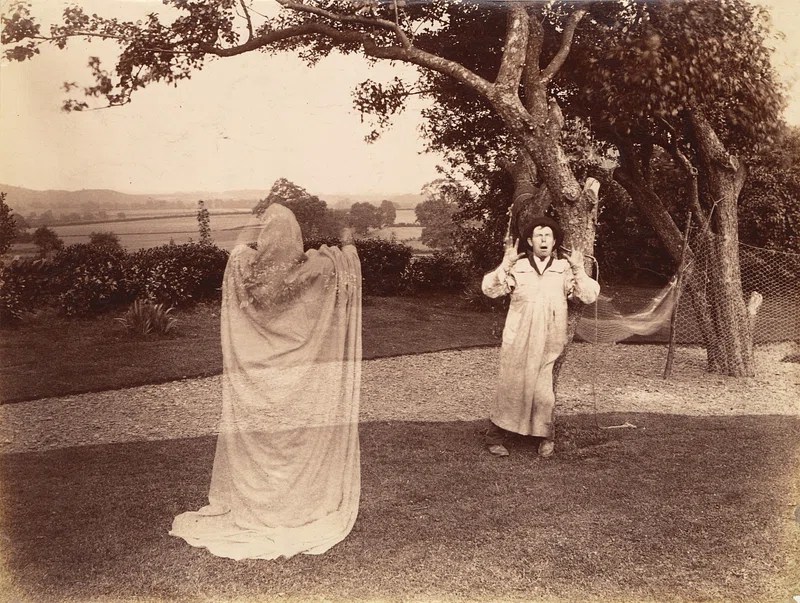
Ghosts have been interpreted as frightening, funny, gory or weird. In this collection, we bring to you some ghostly meanderings from our pages, not written by ghosts but written about ghosts or spooky encounters that are philosophical (occasionally), funny and weird.
With enough horrors in the real world around us, we decided to focus more (not fully) on the comedic and explore horror from the perspective of fun with hopefully a cathartic impact, which will deviate our minds from realities like war, hunger and climate change. Some of the tellings may be just spooky… some claim to be real encounters… are they scary or funny? Read and find out…
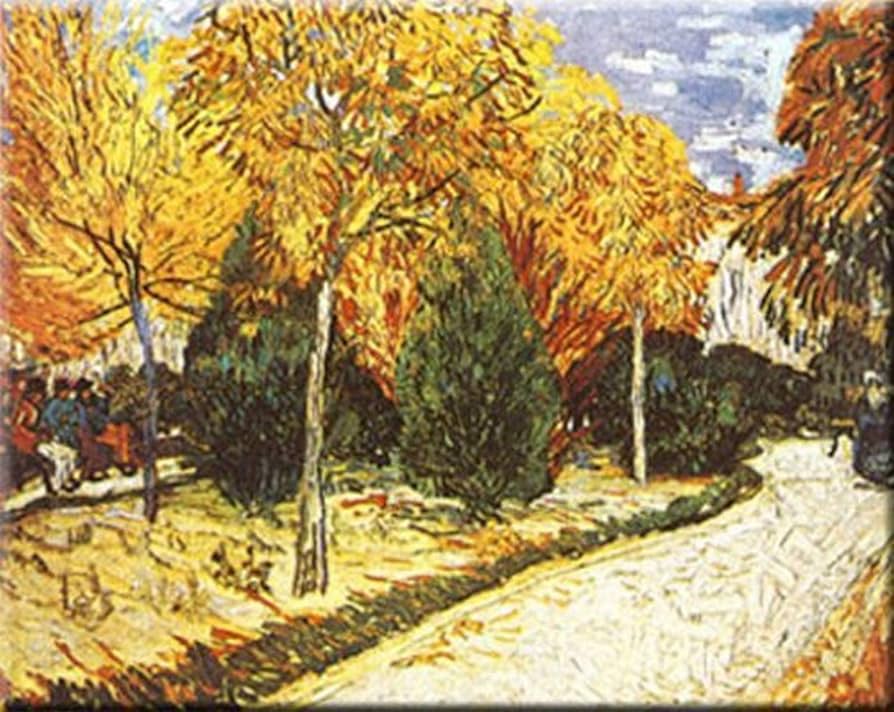
Autumn Garden by Vincent Van Gogh (1853-1890). From Public Domain
September heralds the start of year-end festivities around the world. It’s autumn in one part and spring in another – both seasons that herald change. While our planet celebrates changes, dichotomies, opposites and inclusively gazes with wonder at the endless universe in all its splendour, do we? Festivals are times of good cheer and fun with our loved ones. And yet, a large part of the world seems to be in disarray with manmade disasters wrought by our own species on its own home planet. Despite the sufferings experienced by victims of climate and war-related calamities, the majority will continue to observe rituals out of habit while subscribing to exclusivity and shun change in any form. Occasionally, there are those who break all rules to create a new norm.
One such group of people are the bauls or mendicants from Bengal. Aruna Chakravarti has shared an essay about these people who have created a syncretic lore with music and nature, defying the borders that divide humanity into exclusive groups. As if to complement this syncretic flow, we have Professor Fakrul Alam’s piece on a human construct, literary clubs spanning different cultures spread over centuries – no less an area in which we find norms redefined for, the literary, often, are the harbingers of change.
Mandal, herself, has a brilliant translation featured in this issue. We have a review of her book, an interview with her, and an excerpt from the translation of Jaladhar Sen’s The Travels of a Sadhu in the Himalayas. Written and first published in the Tagore family journal, Bharati, the narrative is an outstanding cultural bridge which even translates Bengali humour for an Anglophone readership. That Sen had a strictly secular perspective in the nineteenth century when blind devotion was often a norm is showcased in Mandal’s translation as well as the stupendous descriptions of the Himalayas that haunt with elegant simplicity.
Our fiction this month seems largely focussed on women’s stories from around the world. While Fiona Sinclair and Erin Jamieson reflect on mother-daughter relationships, Anandita Dey looks into a woman’s dilemma as she tries to adjust to the accepted norm of an ‘arranged’ marriage. Rashida Murphy explores deep rooted social biases that create issues faced by a woman with a light touch. Naramsetti Umamaheswararao brings in variety with a fable – a story that reflects human traits transcending gender disparity.
The September issue would not have been possible without contributions of words and photographs by many of you. Huge thanks to all of you, to the fabulous team and to Sohana Manzoor, whose art has become synonymous with our journal. And our heartfelt thanks to our wonderful readers, without who the effort of putting together this journal would be pointless. Thank you all.
Nazrul’s Jonomo, Jonomo Gelo(Generations passed) has been translated from Bengali by Professor Fakrul Alam. Click here to read and listen to a rendition by the famed Feroza Begum.
Ajit Cour‘s short story, Nandu, has been translated from Punjabi by C Christine Fair. Click here to read.
The Scarecrowby Anwar Sahib Khan has been translated from Balochi by Fazal Baloch. Click here to read.
Naramsetti Umamaheswararao moulds children’s perspectives. Click here to read.
Notes from Japan
In American Wife,Suzanne Kamata gives a short story set set in the Obon festival in Japan. Click here to read.
Conversation
Neeman Sobhan, author of Abiding City: Ruminations from Rome, discusses shuttling between multiple cultures and finding her identity in words. Click here to road.
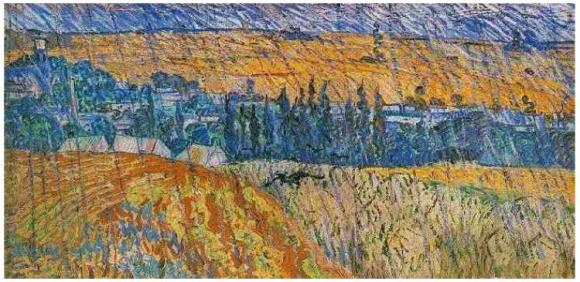
Rain-Auvers, Painting by Vincent van Gogh (1853-1890). From Public Domain
THE RAIN WAS LAUGHING SIDEWAYS(2)

Looking down into the box,
back on everything,
back through
that wonderful maze
of things.

And it seems
that the rain was laughing
sideways.

Pernicious alligators
climbing up out of
New York bathrooms.

Though I have never been
the way of that buxom bridge.

Not once across the fancied millennia.

It's more of a faraway thing.
The teeming thunderous clap.

An inner drive
to ceremonial drums,
can you see it?

Back through
through the alluvial plain
with a walking stick
of hungry crows.

To stand over dirty shave water
with that new face.

To smile
like a king
of many well-kissed
things.
Ryan Quinn Flanagan is a Canadian-born author residing in Elliot Lake, Ontario, Canada with his wife and many bears that rifle through his garbage. His work can be found both in print and online in such places as: Evergreen Review, The New York Quarterly, Borderless Journal, GloMag, Red Fez, and Lothlorien Poetry Journal.
.
PLEASE NOTE: ARTICLES CAN ONLY BE REPRODUCED IN OTHER SITES WITH DUE ACKNOWLEDGEMENT TO BORDERLESS JOURNAL
The humming Coke machine, and I have lost the light. The driving rains outside, and a most terrible truth. The swelling of wet cardboard and that whoosh of darting high beams by the curb. And tucked inside the asbestos house, I watch ceiling particles come to rest on the floor tile. Leaning back in a chair made to brave its own hind legs. A coke from the machine beside me, half-flat and half-finished. The mistrustful eyes of the shop proprietor all over me. I want to tell him the succubus train left her kisses three stations ago, but he wouldn't understand. I want to keep him apprised of any sudden menu changes. I want him to know of that Russian who made X-rays into records and smuggled them to the masses. Paid the hospitals for the discards, and handmade them into bootlegs of all the best banned American music. I want to show him all the strange patterns on the soles of my shoes, but the gophers of the earth have dug holes throughout my body. A tiny troll with purple hair, taped to the back of the register. And $1.50 slices of lukewarm pizza under glass.
From Public Domain
Ryan Quinn Flanagan is a Canadian-born author residing in Elliot Lake, Ontario, Canada with his wife and many bears that rifle through his garbage. His work can be found both in print and online in such places as: Evergreen Review, The New York Quarterly, Borderless Journal, GloMag, Red Fez and Lothlorien Poetry Journal
PLEASE NOTE: ARTICLES CAN ONLY BE REPRODUCED IN OTHER SITES WITH DUE ACKNOWLEDGEMENT TO BORDERLESS JOURNAL
In Did He Ever?,Rhys Hughes gives fun-filled verses on Lafcadio Hearn, a bridge between the East and West from more than a hundred years ago. Clickhere to read.
Dolly Narang muses on Satyajit Ray’s world beyond films and shares a note by the maestro and an essay on his art by the eminent artist, Paritosh Sen. Clickhere to read.
Poetry, prose — all art forms — gather our emotions into concentrates that distil perhaps the finest in human emotions. They touch hearts across borders and gather us all with the commonality of feelings. We no longer care for borders drawn by divisive human constructs but find ourselves connecting despite distances. Strangers or enemies can feel the same emotions. Enemies are mostly created to guard walls made by those who want to keep us in boxes, making it easier to manage the masses. It is from these mass of civilians that soldiers are drawn, and from the same crowds, we can find the victims who die in bomb blasts. And yet, we — the masses — fight. For whom, for what and why? A hundred or more years ago, we had poets writing against wars and violence…they still do. Have we learnt nothing from the past, nothing from history — except to repeat ourselves in cycles? By now, war should have become redundant and deadly weapons out of date artefacts instead of threats that are still used to annihilate cities, humans, homes and ravage the Earth. Our major concerns should have evolved to working on social equity, peace, human welfare and climate change.
One of the people who had expressed deep concern for social equity and peace through his films and writings was Satyajit Ray. This issue has an essay that reflects how he used art to concretise his ideas by Dolly Narang, a gallery owner who brought Ray’s handiworks to limelight. The essay includes the maestro’s note in which he admits he considered himself a filmmaker and a writer but never an artist. But Ray had even invented typefaces! Artist Paritosh Sen’s introduction to Ray’s art has been included to add to the impact of Narang’s essay. Another person who consolidates photography and films to do pathbreaking work and tell stories on compelling issues like climate change and helping the differently-abled is Vijay S Jodha. Ratnottama Sengupta has interviewed this upcoming artiste.
Reflecting the themes of welfare and conflict, Prithvijeet Sinha’s essay takes us to a monument in Lucknow that had been built for love but fell victim to war. Some conflicts are personal like the ones of Odbayar Dorj who finds acceptance not in her hometown in Mongolia but in the city, she calls home now. Jun A. Alindogan from Manila explores social media in action whereas Eshana Sarah Singh takes us to her home in Jakarta to celebrate the Chinese New Year! Farouk Gulsara looks into the likely impact of genetic engineering in a world already ripped by violence and Devraj Singh Kalsi muses on his source of inspiration, his writing desk. Meredith Stephens tells the touching story of a mother’s concern for her child in Australia and Suzanne Kamata exhibits the same concern as she travels to Happy Village in Japan to meet her differently-abled daughter and her friends.
As these real-life narratives weave commonalities of human emotions, so do fictive stories. Some reflect the need for change. Fiona Sinclair writes a layered story set in London on how lived experiences define differences in human perspectives while Parnika Shirwaikar explores the need to learn to accept changes set in her part of the universe. Spandan Upadhyay explores the spirit of the city of Kolkata as a migrant with a focus on social equity. Both Paul Mirabile and Naramsetti Umamaheswararao write stories around childhood, one set in Europe and the other in Asia.
Do pause by our contents page for this issue and enjoy the reads. We are ever grateful to our ever-growing evergreen readership some of whom have started sharing their fabulous narratives with us. Thanks to all our readers and contributors. Huge thanks to our wonderful team without whose efforts we could not have curated such valuable content and thanks specially to Sohana Manzoor for her art. Thank you all for making a whiff of an idea a reality!
Coffee bean on the floor split down the middle like surgical ward incisions, who put you all the way down there, friend, as if starting a long climb from the foot of a volcano? You should feel lucky in many ways to have escaped the grind, your humming dark roast brethren were not so lucky. Now, the house smells kind as candy. Stained lip of a personalised mug. Coffee bean on the floor I will pull up my socks, kick you under the fridge so we can both go into hiding.
(First appeared in BlogNostics)
You gotta be rich to die there
The rich and famous don’t even croak the same as us. They have their own place. The Motion Picture & Television Country House and Hospital.
With plenty of generous donors. George Clooney is one. You gotta be rich to die there.
I guess the celebs see the others at the end and figure it prudent to kick a little cash that way for when it is their turn.
They have a stipulation that you have to have worked “actively” in the film and entertainment industry for at least two decades.
Then you get to be special. Die with original Picasso’s adorning the halls.
I’d imagine their bedpans are solid gold. But Death being what it is, they never stay that way for long
(First appeared in Terror House Magazine)
Marcel Duchamp’s Snow Shovel
Last time I checked they didn’t get a lot of snow in Israel, but they have Marcel Duchamp’s snow shovel there with an inscription that reads: Prelude to a Broken Arm, 1915. I think ole Marcel would have quite a good laugh if he knew his snow shovel was stored in the Holy Land. Seems like the kind of thing you may want to store up in these more arctic of temperaments. I have two snow shovels and the Holy Land isn’t asking for either.
(First appeared in Poetic Musings)
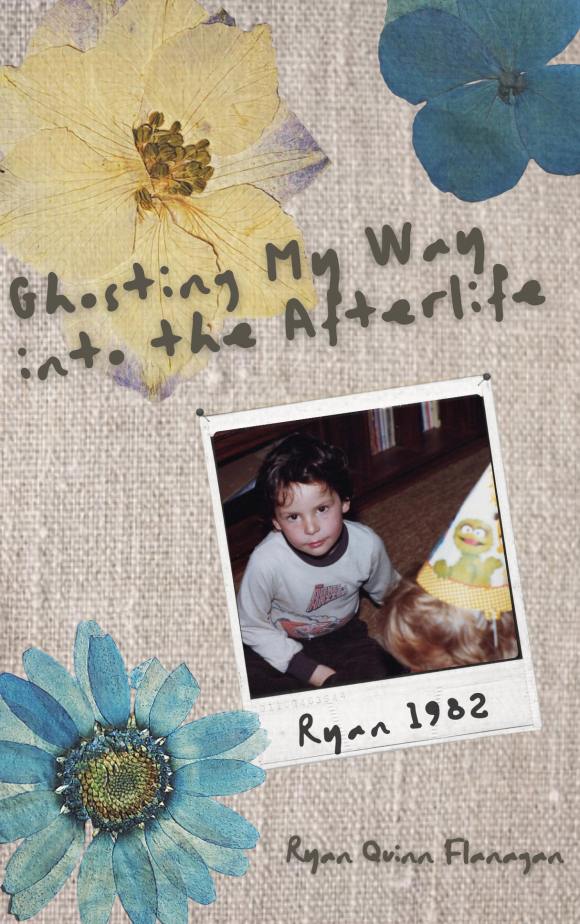
About the Book: This is a collection of recent poems by Ryan Quinn Flangan. He writes on daily lives of people with a fresh pen and a soupçonof humour.
About the Author: Ryan Quinn Flanagan is a Canadian-born author who lives in Elliot Lake, Ontario, Canada with his wife and many bears that rifle through his garbage. His work has been published both in print and online in such places as: The New York Quarterly, Rusty Truck, Borderless Journal, Evergreen Review, Red Fez, Horror Sleaze Trash and The Blue Collar Review. He enjoys listening to the blues and cruising down the TransCanada in his big blacked out truck.
.
PLEASE NOTE: ARTICLES CAN ONLY BE REPRODUCED IN OTHER SITES WITH DUE ACKNOWLEDGEMENT TO BORDERLESS JOURNAL
Stabs of natural light
and the bears are woken
from winter.

Bony yearlings
on their own now.

Ambling down the street
with a laboured
chuffing.

Pulling down the early buds
of berry bushes,
looking for an easy meal.

Early risers, the first of the season.

The ones
out at the dump
live right beside the humans.

They are seasoned, more conditioned.

There is a loaded shotgun
in the back of the bulldozer
if there are any issues.

But there is seldom anything.
Old dryers broken down to scrap.

The long winter
has everyone stunted.

Our fleet-footed fox
brought to lumber.

The birds
in the songless
trees.
From Public Domain
Ryan Quinn Flanagan is a Canadian-born author residing in Elliot Lake, Ontario, Canada with his wife and many bears that rifle through his garbage. His work can be found both in print and online in such places as: Evergreen Review, The New York Quarterly, Borderless Journal, GloMag, Red Fez, and Lothlorien Poetry Journal.
.
PLEASE NOTE: ARTICLES CAN ONLY BE REPRODUCED IN OTHER SITES WITH DUE ACKNOWLEDGEMENT TO BORDERLESS JOURNAL
Poems of Longing by Jibananada Das homes two of his poems translated from Bengali by Professor Fakrul Alam. Clickhereto read.
Four cantos from Ramakanta Rath’sSri Radha, translated from Odiya by the late poet himself, have been excerpted from his full length translation. Clickhere to read.
Naramsetti Umamaheswararao takes us back to school. Click here to read.
Conversation
Ratnottama Sengupta talks to filmmaker and author Leslie Carvalhoabout his old film, The Outhouse, that will be screened this month and his new book, Smoke on the Backwaters. Clickhere to read.




 Borderless