An interview with Amina Rahman, owner of Bookworm, Dhaka
In a world, where online bookshops and Amazon hold the sway, where people prefer soft copy to real books, some bookshops still persist and grow. There are of course many that have closed business or diversified. But what are these concerns that continue to show resistance to the onslaught of giant corporations and breed books for old fashioned readers? How do they thrive? To find answers, we talked to a well-known bookshop owner in Bangladesh.
Amina Rahman is an entrepreneur who runs such a concern called Bookworm, a haven for book lovers in Dhaka. Schooled in Italy, India and America, Rahman married into the family that owned a small bookshop. Started by her father-in-law, it was a family refuge till she took over the running and created a larger community – a concept that she believed in and learnt much about during her youth spent on various continents. She believes that just as it takes a community to bring up a child, a bookshop has to be nurtured in a similar vein. Bookworm started at Dhaka’s old airport in 1994 and eventually moved to a more community friendly locale at the town centre. Rahman took over in 2012, rebranding it, repurposing and breathing new life into it.
Bookworm houses books from all over the world, holds special launches, as they did recently of Sam Dalrymple’s Shattered Lands:Five Partitions and the Making of Modern Asia, and of many other local and foreign authors, like Vikram Seth and Aruna Chakravarti. They have even been adopted by the cats in the park! This month they are opening a book-café. Rahman has a unique outlook that makes her redefine ‘success’ and here she also talks about how she evolved into her dream project to make it a reality.
Sam Dalrymple at his launch on 9/11/2025A local launch
You studied environmental policy and environment, worked for several NGO’s and multinational concerns. What made you turn to or opt to run the bookstore over your own career options?
My choice of subject in university was impacted by a fantastic biology teacher I had in middle school at Rome. He took us out on regular field trips and made us collect garbage to learn about the environment! You can imagine — in 1984-85, when we were kids, he would pick up garbage and show us how diapers and cigarette butts were completely not biodegradable. Disgusting but effective. He told us it would take years before they deteriorated and dissolve into the Earth. These things stick in your mind.
To be honest, I followed the Environment path and ended up working for the King County solid-waste department in Seattle which was all about garbage and recycling and so fascinating. But as you get older and you travel through Asia, you realise the pointlessness of it all as none of it is applicable in the same way in our region. Bangladesh and Asia were green in those days until plastics were introduced in a big way about fifteen years ago. At the end of the day, the community is at the heart of taking care of everything, and if everyone takes care of their particular communities, it’s a better world. And this resonates with why I went into running the bookstore – to make community.
I realised that I was missing some kind of dynamism and I wanted to move forward. I wanted something more to happen. This had been a consistent strain I had with everything. You worked for organisations. They would become very top-heavy. Change happened slowly. When I shifted into the corporate world in Dhaka, I felt that was the most dynamic thing — it was fast moving. I learnt much. Then I went into market research, which was incredible research into human behaviour but was completely tuned into making money at whatever cost. It all was very self-serving and opposite of a welfarist approach towards the community. Corporations trumped community here.
I lost inspiration.
My father-in-law and I had a mutual love for books. I fell in love with my husband over his books. I married in 2004, and it was in 2012, when I was taking time out to assess my goals that my father-in-law suggested I spend time in his bookstore. So, I did. What was an amazing coincidence, was that the Dhaka LitFest started the same year! And the chief organiser asked if Bookworm could be part of the it and I agreed. Vikram Seth was the star guest that year.
Amina Rahman
Can you briefly tell us the story of Bookworm?
When I joined the Bookworm, it was almost a forgotten venture. The family had moved on to other interests. It was used more as a refuge for relatives, old staff, dusty books, unpaid debts and stalled time.
I had never run a business in my life before. For the book business I literally had to climb from the bottom up. It was definitely not easy. I had to figure out the book world, the suppliers, the publishers, the distribution network. Customer preferences, not to mention accounting, taxes, salaries and taking over a small business and the responsibilities that go with it.
The publishing world and the distributing world is a whole different ball game from every other business. It’s a supply chain of such remarkability from the packers and warehousing to the authors and customers. You go from the very basics to the highest and that is so fulfilling. Nothing can compare to that.
Besides, the love of books, one thing I knew was at bookstore was community. It is the ultimate community for booksellers and writers to connect with the world. As you will know, we hit every audience — everybody from the newborn baby to the old man or woman to young adults to school students to university goers to the erudite pursuing literature. We cover just about everything. Ultimately a physical bookstore is where the community meets, and that’s where the ideas are shared, that’s where if you put attention to it people meet inspiration.
While the Dhaka Literary Festival, in whose first iteration Bookworm was a participant, seems to have petered off, Bookworm continues to hold launches on its own. Do you see the shop as a substitute for the festival?
Absolutely not. I mean book launches are wonderful and are a must for every physical bookstore. They connect the people, and as I tell everyone, if you want to sell your book, even if you written the greatest book, you need to work hard at promoting the book. So, every writer needs to have venues whether small or big to launch their books.
Every city needs to have a LitFest, and it is a must. Dhaka is absolutely famous for having our Boimela[1]. That is a real heritage.
What is it you offer readers other than books? Do you have a café?
Actually, we are opening one now.
We didn’t have a cafe in the store, but we’ve had very interesting sort of cafe and bookstore combination when we were in the old airport. We had a cafe next-door to us, which I finally assimilated, also adding to more space for the books. And that became our own little cafe. It wasn’t really anything great; it was just regular we did not even have a coffee machine. Coffee was the old fashion Nescafe, but it did the trick. The whole set up had a very local flavour. Most of all people just like having an area to sit and drink something hot while freely reading books. And this sufficed.
That was wonderful. That store was in the old airport, which we loved with all our heart, and we were there for 30 years. Then we left. I opened up a branch in Dhanmundi, which is probably the best place for books sellers because the book reading population is huge there. We also got the opportunity to open up our bookstore inside a very famous Coffeehouse called Northend. They had a huge base, and they asked us if we’d like to take some of it and we did and that was fantastic.
We had to close that for Covid. Many say they miss it. And that was the first time we had ventured out of our space and opened a new store like a second branch. Then we got this chance to be in a park where we don’t have a cafe inside of our bookstore, but on the other side of the park, which is why we opened a café in our store.
What do you see as the future of bookstores like yours with the onset of online giants like Amazon? Does that impact you?
Yes. Amazon has had a huge impact. Luckily, we don’t have Amazon in Bangladesh. Amazon has had a very negative impact on our fellow booksellers in India and other places. I won’t even bother to compete with them.
I think everyone’s realised that there is a big difference with access points and how Amazon works. At the end of the day, people who come to our bookstore for the experience, for meeting other people, authors too, and talking to their bookseller. It’s more than just getting the book you want to read — that’s part of it — but it’s also about browsing and finding quiet time.
I think that my great experience with books was in bookstores I didn’t have to buy a book. I could browse. Sometimes, you may not be able to afford the book, but you can open it on any page. You could just read a passage, and that might change you. You could come back and buy it or the passage could just stay with you forever. You know it’s those sort of fleeting moments that you have when you’re browsing a book that makes a bookstore precious. That’s a very different experience from Amazon.
Amazon is much more utilitarian. Both have their ups and downs, I guess. You can’t have book launches on Amazon, but I think, Amazon is a big competition… in the sense that it also gives so many discounts.
What kind of books does your store offer? What kind of writers?
I tried to offer everything. In the beginning when we started, I started to try to figure out what books to get. I started with the catalogues, and it was a bit of hit and miss. You slowly start to realise what works. One of the worst experiences for bookstore are books that sit on shelves and don’t move. Sometimes you can buy what is really number one on the best seller list and it just doesn’t move because it’s irrelevant or it’s number one in a different country. You learn by trial and error and then you start to figure out your customers. It was painstaking yet enjoyable.
We use social media to draw readers to our shelves.
As a wholesome bookstore, we have a bit of everything from literature to history, kids’ books, romance, young adult fictions, thrillers, bestselling thrillers, to fantasy. Christie, Sydey Sheldon, Gabriel Garcia Marquez, Manga, graphic novels, spiritual and religious books to Bangla books and collector’s items, special editions to lighter books that just bring solace. We see your customer choices and learn. You do not stuff literature down their throats. It has to be relevant to our customers.
What are the challenges of running a bookstore like yours in a country where English is not the first language?
I think actually it’s a challenge to run a bookstore anywhere in, especially with the new market forces of Amazon and online shopping and the digital world. Having physical stores is becoming a challenge. I have travelled to bookstores all over the world and learnt from the experience. A bookstore is more of a tactile experience for all people, readers and non-readers. Humanity has learnt from tactile experiences and to touch and smell a book, browse and sit amidst books is very much that. When realised that people were not coming to me, I took the books to them. I took our books to every mela(fairs). Social media was the next big thing. The ultimate was of course the Dhaka LitFest. People were excited to see our English books, and they all sold. Bangladeshis would travel to other countries to buy books as Bengalis love reading.
The LitFest helped a lot. It brought big authors, like Vikram Seth, for they were interested in exploring new readers.
We also started a delivery service. Some customers said it was hard to get to our store. So, we started a thrice week delivery service and then increased it. We bought a cycle for the rider. He went out and delivered the books that readers had ordered and paid for.
When Covid hit, it was prime time for many to turned to books and we had everything in place – our social media and our delivery service. We did well during that phase, though that is not a good thing to say.
What do you see as the future for your bookstore? There are chains like Takashimaya, Times Books and others — which despite having shrunk, post online bookstores, maintain an international presence. Do you see yourself as a chain that will grow into an international presence?
I think a chain store goes beyond the community. It is a model for more profit-oriented sellers. I would rather have a community-based culture where all people are welcome and find something that draws them and gives them a sense of quiet.
A lot of people mistake success with earning huge profits and if that’s what you’re in for that’s fine too — that’s business but what I do isn’t that. I get fulfilment out of other things –- community health and happiness, and you know just interaction. I think one of the ways to make a very powerful long-lasting brand and business is trust and good service. There’s no substitute for hard work and passion. When you love something, you really put your mind to it. And that helps you keep your friends forever.
(This online interview has been conducted over transcribed voice messages in What’sApp by Mitali Chakravarty. All the photographs have been provided by Amina Rahman.)
PLEASE NOTE: ARTICLES CAN ONLY BE REPRODUCED IN OTHER SITES WITH DUE ACKNOWLEDGEMENT TO BORDERLESS JOURNAL
Nazrul’s Jonomo, Jonomo Gelo(Generations passed) has been translated from Bengali by Professor Fakrul Alam. Click here to read and listen to a rendition by the famed Feroza Begum.
Ajit Cour‘s short story, Nandu, has been translated from Punjabi by C Christine Fair. Click here to read.
The Scarecrowby Anwar Sahib Khan has been translated from Balochi by Fazal Baloch. Click here to read.
Naramsetti Umamaheswararao moulds children’s perspectives. Click here to read.
Notes from Japan
In American Wife,Suzanne Kamata gives a short story set set in the Obon festival in Japan. Click here to read.
Conversation
Neeman Sobhan, author of Abiding City: Ruminations from Rome, discusses shuttling between multiple cultures and finding her identity in words. Click here to road.
Neeman Sobhan, born in the West Pakistan of Pre-1971, continues a citizen of both her cultural home, Bangladesh, and her adopted home, Italy. Her journey took her to US for five years but the majority of times she has lived in Italy – from 1978. What does that make her?
She writes of her compatriots by culture – Bangladeshis — but living often in foreign locales. Her non-fiction, An Abiding City, gives us glimpses of Rome. These musings were written for Daily Star and then made into a book in 2002. Her short stories talk often of the conflicting cultures and the commonality of human emotions that stretch across borders. And yet after living in Rome for 47 years – the longest she has lived in any country – her dilemma as she tells us in this interview – is that she doesn’t know where she belongs, though her heart tugs her towards Bangladesh as she grows older. In this candid interview, Neeman Sobhan shares her life, her dreams and her aspirations.
Where were you born? And where did you grow up?
I was born in Pakistan, rather in the undivided Pakistan of pre-1971: the strange land we had inherited from our grandparents’ and parents’ generation when British colonial India was partitioned in 1947 down the Radcliffe line, creating an entity of two wings positioned a thousand miles apart on either side of India! The eastern wing, or East Pakistan was formerly East Bengal, and my cultural roots are in this part of the region because I come from a Bengali Muslim family. But I was born not there but in West Pakistan, which is culturally and linguistically distinct from Bengal, comprising the regions of Western Punjab, Sindh, Baluchistan and the NWFP (North-West Frontier Provinces, bordering Afghanistan), where the official language is Urdu.
So, my birthplace was the cantonment town of Bannu in the NWFP, (now KPK or Khyber Pakhtunkhwa).
Perhaps my life as the eternal migrant, living outside expected geographical boundaries started right there, at birth.
My father’s government job meant being posted in both wings of Pakistan. So, I grew up all over West Pakistan, and in Dhaka, whenever he was posted back to East Pakistan. Much of my childhood and girlhood were spent in Karachi (Sindh), Multan and Kharian (Punjab) and Quetta (Balochistan).
How many years did you spend in Pakistan?
The total number of years I spent in undivided Pakistan (West Pakistan, now Pakistan, and East Pakistan, now Bangladesh) is about two decades, or one year short of twenty years. From my birth in 1954, my growing years, till I left the newly independent Bangladesh in 1973 when I got married and came to the US at the age of nineteen.
What are your memories about your childhood in West Pakistan? I have read your piece where you mention your interactions with fruit pickers in Quetta. Tell us some more about your childhood back there.
I have wonderful memories of growing up in West Pakistan, in Karachi, Multan and Kharian of the late 50’s and early 60’s (despite the era of Martial Law under Field Marshall Ayub Khan, and later his military-controlled civilian government). However, the political environment is invisible and irrelevant to a child’s memories that center around family, school and playmates, till he reaches the teen years and becomes aware of the world of adults. Since, my father’ job entailed us going back and forth between West and East Pakistan, by the time we arrived in Quetta in late 1967, it ended up being my father’s last posting, because by then Ayub Khan’s regime was tottering under protests in both wings of Pakistan; and by the time (I should say in the nick of time) we left for Dhaka, it was already the turbulent year of 1970, which turned Pakistan upside down with General Yahya Khan becoming the new Marshall Law administrator. When we returned to Dhaka, it was the beginning of the end for Pakistan, with preparations for the first democratic general elections, and the blood soaked nine months war of independence for Bangladesh about to be staged.
But as a child, growing up in a Pakistan that was till then my own country, what remains in my treasure trove of memories are only the joys of everyday life, and the friendships (with those whom I never saw again, except one school friend from Quetta with whom I reunited in our middle age in Toronto, Canada!)
Also precious are the road trips with my five siblings and our adventurous mother, as we always accompanied our father on his official tours, across the length and breadth of West Pakistan.
But if I start to recount all my precious memories, I will need to write a thick memoir. And that is exactly what I have been doing over the years: jotting down my recollections of my past in Pakistan, for my book, a novel that is a cross between fact and fiction. The happy parts are all true, but the sad ones relating to the war that my generation underwent in 1971 as teenagers is best dealt with from the distance of fiction.
What I can offer is a kaleidoscopic view of some random memories: the red colonial brick residence of my family in the 60’s in Multan, one of the hottest cities of Punjab, known for its aandhi — dust storms — that would suddenly blow into the courtyard of the inner garden in the middle of the night as my sister and I slept on charpoys laid out in the cool lawn under a starlit sky, and being bundled up in our parents’ arms and rushed indoors; tasting the sweetest plums left to chill in bowls of ice; being cycled to school by the turbaned chowkidar weaving us through colourful bazars to the Parsi run ‘Madam Chahla’s Kindergarten School’ or on horse drawn tanga (carriages); learning to write Urdu calligraphic letters on the wooden takhta (board) with weed Qalam(pens) and a freshly mixed ink from dawaat (ink pots); and to balance this, my mother helping us to write letters in Bengali to grandparents back in East Pakistan on sky-blue letter pads, our tongues lolling as pencils tried to control the Brahmic alphabet-spiders from escaping the page.
In Karachi, returning home on foot from school with friends under a darkening sky that turned out to be swarms of locusts. Learning later that these grain eating insects were harmful only to crops not humans (and Sindhis actually eat them like fried chicken wings) does not take away the thrill of our adventure filled with exaggerated, bloodcurdling shrieks to vie with the screen victims of Hitchcock’s The Birds, viewed later as adults in some US campus. Picnics and camel rides on the seabeaches of Clifton, Sandspit, or Paradise Point. Near our home, standing along Drigh Road (the colonial name later changed to Shahrah-e-Faisal after King Faisal of Arabia, I later heard) waving at the motorcade of Queen Elizabeth II passing by with Ayub Khan beside her in a convertible with its roof down. That was in the 60’s. Later in 1970, embarking with my family on the elegant HMV Shams passenger ship at Karachi port for our memorable week long journey back to Dhaka across the Arabian Sea and the Indian Ocean, with a port of call at Colombo in what was still Ceylon, to disembark at Chittagong port, not knowing then that we were waving goodbye not just to the Karachi of our childhood but a part of our own country that would soon become the ‘enemy’ through its marauding army.
But I reset my memories and bring back the beauty and innocence of childhood with images of my family’s first sight of snowfall in Quetta, the garden silently filling with pristine layers of snowflakes piling into a cloudy kingdom under the freshly tufted pine trees, as we sipped hot sweet ‘kahwa’ tea, and cracked piles of the best chilgoza pine-nuts and dried fruits from Kabul. And since Quetta was our last home in Pakistan, I leave my reminiscences here.
In Front of their home With full family in the snow In Quetta: Photos provided by Neeman Sobhan
There are so many ways to enter the past. Photographs in albums discolor after a time, but words keep our lived lives protected and intact to be accessible to the next generation. I hope my novel-memoir will provide this.
How many countries have you lived in? Where do you feel you belong — Bangladesh, Pakistan, US or Italy — since you have lived in all four countries? Do you see yourself a migrant to one country or do you see yourself torn between many?
I have indeed lived in four countries, for varying lengths of time. In the sense of belonging, each country and stage of my life has left its unique impact. But I have still not figured out where I belong.
Although I lived in Pakistan and Bangladesh from birth till I was nineteen, these were the formative years of my life, and I feel they have coloured who I am fundamentally. The culture and languages of the subcontinent is fundamental to me as a human being. Also, having shared my parent’s experience of being almost foreigners and expats in their own country, trying to speak Urdu to create a Bengali lifestyle at home in a culturally diverse world of Punjabis, Sindhis, Baluchis or Pathans, I know it made them (and us as a family), different from our compatriots in East Pakistan who never left their region and had only superficial understanding of the West Pakistanis. My introduction to a migrant’s life and its homesickness started there, observing my parents’ life.
When I moved to the US after my marriage in 1973, it was to follow my husband Iqbal, to the Washington-Maryland area, where he had moved earlier as a PhD student after giving up, in 1971, his position in the Pakistani central government where he was an officer of the CSP (Civil Service of Pakistan) cadre. These were the days of being newly married and setting up our first home, albeit in a tiny student’s apartment, because more than as a home maker, I spent 5 years attending the University of Maryland as an undergraduate and then a graduate student. We thought our future might be here in the US, he working as an economist for a UN agency, and I teaching at a university. A classic version of the upwardly mobile American immigrant life.
But before we settled down, we decided to pursue a short adventure, and Iqbal and I came to Italy in 1978, from the US, on a short-term assignment with FAO, a Rome based agency of the UN. The mutual decision was to move here, temporarily! We would keep our options open for returning to the US if we did not like our life in Italy.
Well, that never happened! And given the fact that since then, we have spent the last 47 years in Italy, the Italian phase of my life is the longest period I have ever spent in any country in the last 71 years!
Meanwhile, we slowly disengaged ourselves from the US and it was clear that if we had to choose between two countries as our final homes, it would be between Bangladesh, our original home country, and Italy our adopted home.
Still, living away from ones’ original land, whether as an expatriate or an immigrant, is never easy. Immigrants from the subcontinent to anglophone countries like the US, UK, Canada, Australia etc, do not face the hurdles that migrants to Italy do in mastering the Italian language. I am still constantly trying to improve my language skills. Plus, there is the daily struggle to create a new identity of cultural fusion within the dominant and pervasive culture of a foreign land
So, in all these years, though I love Italy and my Roman home, I do not feel completely Italian even if my lifestyle incorporates much of the Italian way of life. For example, after a week of eating too much pasta and Mediterranean cuisine my husband and I yearn for and indulge in our Bengali comfort food. Although I enjoy the freedom and casual elegance of Italian clothes, I look forward to occasions to drape a sari, feeling my personality transform subtly, softly.
Yet, I cannot conceive of choosing one lifestyle over the other. The liberty to veer between different ways to live one’s life is the gift of living between two or more worlds.
The only incurable malaise, though, is the chronic nostalgia, especially during festivals and special occasions. For example, when Eid falls on a weekday, and one has to organise the celebration a few days later over a weekend, it takes away the spontaneous joy of connecting with one’s community, forcing one instead to spend the actual day as if it were an ordinary one. I miss breaking my fasts during the month of Ramadan with friends and family over the elaborate Iftar parties with special food back in Dhaka or celebrating Pohela Boishakh (Bengali new year) or Ekushey February (21st February, mother language day) in an Italian world that carries on with its everyday business, unaware of your homesickness for your Bengali world. Over the years, when my sons were in school, I made extra efforts for. But you know you cannot celebrate in authentic ways.
Of course, these are minor matters. And I am aware that by virtue of the fact that I have dual nationality (I’m both an Italian citizen, and a Bangladeshi), I cannot consider myself a true and brave immigrant — someone who leaves his familiar world and migrates to another land because he has no other options nor the means to return; rather, I feel lucky to be an ex-patriate and a circumstantial migrant — someone who chooses to make a foreign country her home, with the luxury of being able to revisit her original land, and, perhaps, move back one day.
Meanwhile, I feel equally at home in Italy and in Bangladesh because we are lucky to be able to make annual trips to Dhaka in winter.
Whether I am considered by others to be an Italo-Bangladeshi or a Bangladeshi-Italian, I consider myself to be a writer without borders, a global citizen. I feel, I belong everywhere. My home is wherever I am, wherever my husband and my family are. My roots are not in any soil, but in relationships.
I often quote a line by the Mexican poet Octavio Paz. “Words became my dwelling place.” It resonates with me because for me often, it is neither a tract of land, nor even people, but language, literature and my own writings that are my true sanctuary, my homeland. I feel blessed to have the gift of expressing myself in words and shaping my world through language. My home is etched on the written or printed page. My books are my country. It’s a safe world without borders and limits.
Maybe it’s the conceit of a writer and a migrant, nomadic soul, but I think our inner worlds are more substantial than our external ones.
When I read your writing, I find a world where differences do not seem to exist among people in terms of nationality, economic classes, race or religion. Is it not far removed from the realities of the world we see around us? How do you reconcile the different worlds?
I believe and trust in our common humanity, not the narrowness of nationality, race or religion. Nationality particularly is limiting, dependent on land, and boundaries that can shift due to physical or political exigencies. Nationality by conferring membership also necessarily excludes on the basis of manmade criteria, while humanity is boundless, all encompassing, and inclusive, based on shared natural, biological, and spiritual traits.
In my case, I consider the whole world my family. I say this not just as idealistic hyperbole and wishful thinking, but from the fact that I have a multi-cultural, multi-racial family. Only my husband and I are a homogenous unit being Bengali Muslims by origin, but both my sons are married outside our culture, race and religion. One of my daughters in law is Chinese, the other has an English-French father and a Thai mother. So, through my grandchildren, who are a veritable cocktail, yet my flesh and blood, I am related to so many races. How can I bear malice to any people on the globe? The whole world is my tribe, my backyard, where we share festivals and food and rituals and languages. We celebrate unity in diversity.
Kindness and caring for others are values I hold dear in myself and others. I believe in sharing my good fortune with others, and in peaceful co-existence with my neighbours, wherever I live. I believe in living with responsibility as a good citizen wherever I find myself. And so far, the world that I see around me, perhaps narrow, is peopled with those who invariably reflect my own sense of fraternity. Maybe I am foolish, but I believe in the essential goodness of humanity, and I have rarely been disappointed. Of course, there are exceptions and negative encounters, but then something else happens that restores ones faith.
Love is more powerful than hate and generates goodness and cooperation. Change can happen at the micro level if more people spread awareness where needed. Peace can snowball and conquer violence. The human will is a potent spiritual tool. As is the power of the word, of language.
Literature is about connections, communications, bridges. It can bring the experiences and worlds of others from the margins of silence and unspoken, unexpressed thoughts and emotions into the centre of our attention. It brings people who live in the periphery within our compassionate gaze. Language is one of the most effective tools for healing and building trust. Responsible writers can persuasively break down barriers and make the world a safe home and haven for everyone, every creature.
You have a book of essays on Rome, short stories and poems set in Rome. Yet you call yourself a Bangladeshi writer. You have in my perception written more of Rome than Bangladesh. So which place moves your muse?
Any place on God’s beautiful earth can move my muse. Still, the perception is not completely accurate that I have written more of Rome than Bangladesh. It is true that many of my columns, short fiction or poems are set in Rome, but they are not necessarily just about Italy and Italians. In fact, my columns and poems were written from the perspective of a global citizen, who celebrates whichever place she finds herself in.
Poetry, in any case, is never just about any place or thing, but a point of departure. It always goes beyond the visual and the immediate and transcends the particular to the philosophical. The sight of a Roman ruin may jumpstart the poem, but what lifts it into the stratosphere of meaningful poetry is the universal, the human. For example, even when my poem speaks of a certain balcony in Verona, the protagonist is not a girl called Juliet but the innocence of first love, in any city, in any era.
My book of short stories, even when located in Rome, actually concern characters that are mostly Bangladeshi. In fact, it is my fiction that makes me a Bangladeshi writer, because my stories are ways for me to preserve my memories of the Bengali world of my past and an ephemeral present. I write to root myself. I often feel that I should write more about the new Italians, the Bangladeshi immigrants generation, rather than the expats of my generation, but my writing stubbornly follows its own compass.
Regarding my book of essays, my original columns for the Daily Star were written about many other cities I travelled to, including Dhaka and places in Bangladesh, and encounters with people in various countries not just Italy. Constrained to select columns from two decades of weekly writing, for a slim volume to be published, I narrowed the field of topics to Italy and Rome. But I had many essays and travel pieces concerning China, Russia, Vietnam, Egypt, Brazil, Spain, Netherlands and many other European cities and Asian capitals. In the end, a handful of columns about Italy became my book An Abiding City: Ruminations from Rome.
However, in the preface I said: “I must remind that the scope of the book, as suggested in the title, is ‘Ruminations FROM Rome’ not ‘Ruminations ON Rome’ with a tacit emphasis on ‘from’ because the writing relates to matters not just concerning ROME but also encompasses reflections of a more general kind. This is a collection of writings from a columnist who, within her journey through the Eternal City, also attempts to share with her readers her passage through life. I wish my fellow travellers a smoothsojourn into my abiding city, the one WITHIN and WITHOUT.”
I know that had I not lived in Rome but, say, Timbuctoo, I would find something to inspire me to write about. Of course, I am privileged to have lived in Rome and Italy, but nature is beautiful everywhere, in its own way, and there are other civilisations with rich cultures, histories, arts, cuisines, poetry and philosophy that can inspire the sensitive observer and writer.
My elder son lives in Jakarta, my younger son in Bangkok and in all the years of visiting them, I am blown away by the culture and beauty of the Indonesian and Thai worlds, and I have a notebook full of unwritten essays. And there is still so much of the world I have not seen, yet every part of this wondrous earth including my backyard is a chapter in the book of human knowledge. So, had I never left Bangladesh I would still have written. Perhaps “Doodlings from Dhaka!”
What inspires you to write?
Many things. A face at a window, a whiff of a familiar perfume, an overheard conversation, a memory, a sublime view…. anything can set the creative machine running. Plus, if I’m angry or sad or joyous or confused, I write. It could become a poem, fiction, or a column.
The writer in me is my inner twin that defines my essential self. I am a contented wife of 52 years of marriage, a mother of two sons, and a grandmother of four grandsons (aged 8-7-6-5). These roles give me joy and help me grow as a human being. But my writer-self continues on its solitary journey of self-actualisation.
Yet, I write not just for myself, I write to communicate with others. I write to transmit the nuances of my Bengali culture and its complex history to my non-Bengali and foreign readers and students, but more importantly to my own sons, born and brought up in Italy, and my grandchildren, whose mothers (my daughters-in-law) are from multi-cultural backgrounds, one a Chinese, and the other a combination of English, French and Thai. I write also for the younger generation of Bengalis, born or raised abroad, who understand and even speak Bangla, but often cannot read the language, yet are curious about their parents’ world and their own cultural heritage.
What started you on your writerly journey? When did you start writing?
I have always written. As an adolescent, I wrote mostly poetry, and also kept a journal, which I enjoyed reading later. It created out of my own life a story, in which I was a character enacting my every day. It clarified my life for me. Interpreted my emotions, explained my fears and joys, reinforced my hopes and desires. Writing about myself helped me grow.
My columnist avatar is connected to this kind of self-referral writing, but in real life it emerged by accident when I was invited to write by the editor of the Daily Star. The act of producing a weekly column was a learning experience, teaching me creative discipline and the ability to marshal my life experiences for an audience. I learnt to sift the relevant from the irrelevant and to edit reality. What better training for fiction writing? For almost two decades my experience as a columnist was invaluable to my writer’s identity.
Soon I concentrated on fiction, especially short stories that were published in various anthologies edited by others in Bangladesh, Pakistan and India. I now realised that while column writing was about my life in the present tense and about the daily world around me, my fiction could finally involve the past. The result was my collection of short stories: Piazza Bangladesh.
Ironically, it was my book of poems, Calligraphy of Wet Leaves that was the last to be published.
Your short stories were recently translated to Italian. Have you found acceptance in Rome as a writer? Or do you have a stronger reader base in Bangladesh? Please elaborate.
Without a doubt, as an anglophone writer, my reader base is better not just in Bangladesh, but wherever there is an English readership. However, books today are sold not in bookshops but online, so these days readers live not in particular cities or countries but in cyberspace.
But living in Italy as a writer of English has not been easy. The problem in Italy is that English is still a foreign and not a global language, so very few people read books in the original English. Every important or best-selling writer is read in translation. This is unlike the Indian subcontinent where most educated people, apart from reading in their mother tongues, read books, magazines and newspapers in English as well.
This is why I was thrilled to finally have at least one of my books translated into Italian, and published by the well-known publishing house, Armando Curcio, who have made my book available at all the important Italian bookstore chains, like Mondadori or Feltrinelli. Also, through reviews and social media promotion by agents and friends, and exposure through book events and literary festivals in Rome, including a well-known book festival in Lucca, it has gained a fair readership.
That’s all I wish for all my books, for all my writing, that they be read. For me, writing or being published is not about earning money or fame but about reaching readers. In that sense, I am so happy that now finally, most of my Italian friends and colleagues understand this important aspect of my life.
You were teaching too in Rome? Tell us a bit about your experience. Have you taught elsewhere. Are the cultures similar or different in the academic circles of different countries?
I taught Bengali and English for almost a decade at the Institute of Oriental Studies of the University of Rome, La Sapienza., till I retired, and it was an enriching experience.
I studied for a year at the University of Dhaka before I got married and came to the US in 1973, where I continued my studies at the University of Maryland, earning my B.A in Comparative Literature and M.A in English Literature. I mention this because these experiences gave me the basis to compare the academic cultures in the Bangladeshi, American and Italian contexts.
I discovered more in common between the Bangladeshi and Italian academic worlds, especially regarding the deferential attitudes of students towards their teachers. In Italy, a teacher is always an object of reverence. In contrast, I recall my shock at the casual relationships in the American context, with students smoking in front of their teachers, or stretching their leg over the desk, shoes facing the professor. Of course, there was positivity in the informality and camaraderie too, between student and teacher. But with our eastern upbringing we cannot disregard our traditional veneration of the Guru and Master by the pupil.
In Italy it was rewarding for me to have received respect as a ‘Professoressa’ while teaching, and even now whenever I meet my old students. However, some of the negative aspects of the academic world in Italy linked to the political policies that affect the way old institutions are run, cause students to take longer to graduate than at universities in the UK or US for example.
Are you planning more books? What’s on the card next?
I have a novel in the pipeline, a fusion of fiction and memoir, that has been in gestation for more than a decade. Provisionally titled ‘The Hidden Names of Things’, it’s about Bangladesh, an interweaving of personal and national history. It’s almost done, and I hope to be looking for a publisher for it soon. Perhaps, it has taken so long to write it because over the years while the human story did not change much, the political history of the country, which is still evolving through political crises kept shifting its goal posts, impacting the plot.
Most of my writings illustrate, consciously or inadvertently, my belief that as against political history our shared humanity provides the most satisfying themes for literature.
To share my stories with a readership beyond the anglophone one, my collection of stories ‘Piazza Bangladesh’ was translated into Italian and published recently in Italy, as ‘Cuore a Metà’ (A Heart in Half) which underlines the dilemma of modern-day global citizens pulled between two worlds, or multiple homes.
Meanwhile, my short stories, poems and columns will be translated into Bengali to be published in Dhaka, hopefully, in time for the famous book fair in February, Ekushey Boimela. Then my journey as an itinerant Italian-Bangladeshi writer will come full circle and return home.
Sometimes, when my visitors to Rome, arriving in the sweltering month of July or August, voice over-zealous ambitions to ‘do’ Pompeii, I don’t have the heart to discourage them. But I beg off from accompanying them. I have nothing against Pompeii as such, but I am not sufficiently suicidal to relish the thought of trudging miles of arid ruins under a punishing sun for the twenty-third time!
It’s at this point, usually, that I try to sell what I call my ‘Lazy man’s Pompeii’: Ostia Antica. I could have called it the ‘Poor man’s Pompeii’ as well, but the riches of the ancient city can almost equal a Herculaneum to the imaginative tourist. And its biggest plus-point is that it is so much closer to Rome (as against Pompeii, about 200 kilometers away, towards Naples), and may I add, that much shadier!
Less than an hour away from Rome, Ostia Antica was founded in the fourth century B.C by King Arcus Martius (a historical persona of whom I readily admit to being shamelessly ignorant) it became Ancient Rome’s commercial and military port, and during Emperor Constantine’s time, it boasted a population of 100,000!
Ostia reminds me of another ancient city I once visited and loved: Fatehpur Sikri in India, the Mughal king Akbar’s doomed capital near Agra. The comparison to Akbar’s city is justified because, although Ostia is a remarkable example of historic Roman towns like Pompeii and Herculaneum, unlike them, it was not destroyed, rather, like Fatehpur Sikri, it was abandoned.
While the Mughal city was abandoned due to a lack of sustainable water supply, in the case of the Roman city, it was mosquitoes. Strange but true thatan epidemic of malaria drove out the inhabitants of this once flourishing port city. An odd quirk of history and biology that a puny anopheline community managed to drive out a powerful anthropical one, hundred times its size!
A quick reminder here: in talking about Ostia, we must make a clear distinction between Ostia Antica, the archeological site, and the present-day beach town of Ostia, a popular seaside resort within the municipality of Rome, further down.
The excavated areas of ancient Ostia abound in numerous ruins and reminders of a thriving commercial city of times past: public and private buildings, streets, defensive walls, and harbors.
I find the residential streets most fascinating because it brings to life a real world of ordinary people. Much has been written about Roman tenement-housing and remains of these buildings abound in Ostia.
Reconstructed models apparently reveal that a typical apartment block could be five-storeys high, and that the flats were probably quite functional, mostly reached from courtyards or from the street by stairs running between shops on the ground floors.
I think of all this as I stop at a crumbled courtyard here, touch a moth-eaten wall there, step over a threadbare threshold, or mount a mysterious flight of steps that end abruptly in mid-air, leading nowhere.
For me, it’s in this residential environment that I find the faint but persistent pulse of a bygone life. Visiting it on some empty afternoon, while I might be sitting on the broken steps of a roofless room, I can surmise the life of the ordinary man or woman who once lived here: I smell the fragrance of fresh baked bread in the gutted bakery next door; I hear the sound of children playing in the silent streets, or the hum of voices in the tavern with its dusty counter; and suddenly, the entire history of the humble populace seems to be whispered and echoed by the sea-spiked breeze among the pines and cypresses.
Let the Archeologist and Historian keep their details. To me the romance of a ruined city is not necessarily in the structures themselves, in the revealed or concealed splendor of its remains, it is in the mystique of its very presence, its undefined shape as a messenger from lost times, telling us stories of the long ago.
A dead city serves to remind us that it once existed, and that the past, although it is no more, is never completely wiped out, never obliterated from the collective memory of the world. In leaving behind its footprints, the spirit of the city has defied negation and accompanies me this afternoon.
And thus, I love to sit, under the peristyle of a vanished villa, absorbing the atmosphere of this long-deserted city, contemplating the history not just of this particular Roman town, but all the nameless cities of countless civilizations in the past. I wonder at the basic story it tells of our collective and individual engagement with Life, of the heroic audacity of the human spirit attempting, again and again, to build its sandcastles against the wind, trying to carve a permanent niche on the elusive surface of Time.
Whether the crumbling habitation is in Ostia Antica or Mohenjo-Daro, in Petra or Machu-Pichu, in Moinamoti or Fatehpur Sikri; each is a monument to the Spirit of Man, the builder of cities, the creamer of dreams.
[ Extracted from An Abiding City: Ruminations from Rome. Published by UPL (University Press Limited, Dhaka), 2002 ]
ABOUT THE BOOK
An Abiding City: Ruminations from Rome is a fresh look at Italy and Rome from the perspective of a long-time resident of non-Italian origin. Neeman Sobhan, living in Italy, since 1978 wrote for two decades a personal column in the Bangladesh English language daily, The Daily Star, spinning vignettes and sketches out of her daily encounters and reflections living in Rome. Here, in vivid prose and poetic detail are selections from her work.
Among some of the myriad themes in this collection of essays and poems: the charm of everyday Rome; the romance of history; the adventure of the expatriate’s eternal quest for home; the poetry of seasonal transformations; the mysteries of relationships; the kaleidoscope of life in general, and of one woman in particular, who within her journey through the Eternal City, shares with her readers her passage through life.
The writing is enhanced by ink sketches by Italian-American artist/writer Ginda Simpson.
ABOUT THE AUTHOR
Neeman Sobhan is a Bangladeshi-Italian fiction writer, poet, columnist. She writes in English, and her fiction and poetry have appeared in many anthologies and literary journals within the sub-continent. Till recently she taught English and Bengali at the University of Roma, La Sapienza.She lives in Rome with her husband. She has a collection of short stories, Piazza Bangladesh (2014) which has been recently translated to Italian; a volume of poetry, Calligraphy of Wet Leaves (2015) and a collection of her columns, An Abiding City: Ruminations from Rome (2002). Presently, she is finishing her first novel, and lives between her home in Rome and Dhaka.
.
PLEASE NOTE: ARTICLES CAN ONLY BE REPRODUCED IN OTHER SITES WITH DUE ACKNOWLEDGEMENT TO BORDERLESS JOURNAL
The first time I visited Rome was in early 1990. I was on a mission to find a better life after escaping the Iron Curtain of the Soviet Union. As punishment for my escape, my USSR citizenship was revoked, leaving me stateless, with the status of ‘Refugee of the World.’ I traveled light across continents, with just two suitcases filled with family photos, a few books, spoons, and small pots. I had almost no money in my pocket, but Rome and Italy were still a wonderful discovery and a source of immense cultural enrichment for me in 1990.
During that time, I visited Rome and its historical landmarks such as Vatican City, the Colosseum, the Roman Forum, and the Trevi Fountain, to name a few. I also had the most important interview of my life in Rome, at the American Embassy, where I received the green light to go to the USA!
In May of 2024, during our Mediterranean odyssey, we spent some time in Rome. It was a deeply nostalgic and memorable experience for me! Revisiting Rome after so many years brought back a flood of memories and allowed me to see familiar places with new eyes.
I would like to share with you a chapter about my life in Italy in 1990, from my memoir Camel from Kyzylkum:
Italy
My first impression of Italy was that it was quite dirty and noisy. After I got used to the spotless cleanliness of streets and places in Austria, it disappointed me to see trash on the streets and in public places, along with graffiti. For the first time, I saw homeless people sleeping on rags on the marble floor of the subway in Rome. I also noticed how Italians get pretty animated when they talk, compared to very restrained Austrian people. But with time, my opinion about Italy changed—I fell in love with the country, and I grew to love the warmth of Italian people. I came to love Italian bread. The Italian language was like music to my ears, and I even learned how to speak some basics.
For the first two weeks in Italy, we were stationed at the bungalow summer camp south of Rome. It was January, and even during the day it was pleasantly warm outside, but at night it was cold. These bungalow houses did not have heat and were not equipped for the wintertime. I remember I was sleeping in my warmest clothes and even covered myself with a mattress from a spare bed in my bungalow. Nevertheless, I got very sick with a cold, so sick that I thought I would not survive it. During the day I walked to the seafront and sat there for long hours—the warm Mediterranean sun and fresh, salty sea air helped me to slowly recover.
After two weeks in the bungalow summer camp, we were told that we needed to rent apartments for ourselves in the nearby city of Torvaianica, a city south of Rome that was founded in the 1940s and is best known for its beaches. It has a population of about 12,700 inhabitants and extends for about eight kilometers along central Lazio’s coast. The refugee organization, HIAS, gave us money to cover rent and food. I do not remember the exact amount it was per person, but it was just enough for us not to be on the street dying from hunger. Later on, when I was already in the United States and working, I was required to reimburse HIAS for what they’d spent on me. I paid it back gradually, a small amount each month.
There were plenty of apartments available for rent in January. Many of them were at the seaside. Refugees from the Soviet Union usually shared one apartment—a two-room apartment for two families, a three-room apartment for three families. I was alone and in no way could I afford to pay for a room on my own. Someone from the group introduced me to a young fellow who was traveling alone, too. His actual name completely escapes my memory at present, but I’ll call him “Misha.”
Misha was in his early twenties. He was very smart and even knew English. For the first time in his life, he was separated from his parents whom he had left behind in the Soviet Union. Misha and I rented a room in the two-room apartment on the first floor of a building at the seaside. We could sit on the balcony and look at the beach and the Mediterranean Sea in front of us. The enormous wardrobe that was in the room divided our room into two halves to give each of us some privacy. Misha was absolutely unprepared for everyday life. He did not know how to manage the little money we had, how to do grocery shopping, or how to cook food. I felt sorry for him and suggested that he contribute some amount of money for food and I would shop and cook for both of us. Misha was happy to do that.
When I went for an interview for the first time at the American Embassy in Rome, I was asked a lot about places I had worked in the Kyzylkum Desert. They had a detailed map of Uzbekistan on the table and asked me about Zarafshan, Navoi, Uchkuduk. I was surprised; I thought they already knew more than I did.
After the first interview, I had to wait for the second one, a very important interview, after which a decision would be made on whether to allow my entrance to the United States. Many families were denied the entrance visa to the United States without being given any specific reason or explanation. These people had stayed in Italy for six months, for a year, or even longer. They found some jobs to support themselves and their families. Some of them decided to stay in Italy for good. It was an unsettling time.
Every day at 6:00 p.m., all Soviet refugees who stayed in Torvaianica gathered together at the central square of the city. There were a lot of us, and while I do not know the exact number, I remember how the square was filled with a Russian-speaking crowd, to the amazement of the local population of Italians. We were waiting for the messenger, usually a man who would stand in the middle of the crowd and read the list of people who had gotten permission to go to America. Even though I had not yet had a second interview in the American Embassy, these daily meetings were the biggest entertainment of the day and a learning experience—people mingled together, told stories, shared news, and made friends.
Misha always found me in the crowd after the announcing part was over and asked, “What’s for dinner tonight?” It seemed that he was always hungry. Even though I did not want to go home yet, I felt an obligation to serve him dinner. I thought he was acting like a little baby and since I was not his mother, it was bothering me. There was only one time when I sent Misha to the store to get something for me while I was cooking. He returned with an ice cream cake, our money for two weeks of our food ration gone. We divided the cake among all of the people who lived in both rooms of the apartment. This was the last straw for me. I canceled our contract and let Misha be on his own. Our living arrangements in the apartment remained the same, but I did not cook for him anymore. Meanwhile, we got a new tenant in our room. Another woman, approximately my age, joined us. Three of us shared the room up to the time of my departure.
The distance between Torvaianica and Rome was about 40 kilometers (25 miles), and there was bus transportation. I used the bus a few times. The ride was about 50 to 60 minutes. I did not go often, because the bus was usually packed with people and reminded me very much of the buses in the Soviet Union. Also, traveling by bus costs money I could not spare. Very soon I learned I could get to Rome by hitchhiking—every car driven by an Italian man would stop when they saw a young, pretty woman hitchhiking on the road. Several times I even hitchhiked with Misha. When the car stopped, I told the driver that he was my brother. I must say that most of the time Italians were very reckless drivers, and I felt uncomfortable in the car quite often.
I loved my outings to Rome. I enjoyed exploring the beautiful city where every stone has a history. Once or twice a month, all museums in Rome were free and I took advantage of this. Visiting the Colosseum, St. Peter’s Basilica, the museums of the Vatican, including the Sistine Chapel and the Trevi Fountain, to name a few, all became unforgettable experiences and cultural enrichment for me.
On the days when I was not traveling to Rome, I was discovering Torvaianica. Some items and events from my time there will be engraved in my memory forever.
For instance, there was a shoe and leather accessories store across from our apartment. In the Soviet Union, Italian shoes and leather accessories always were part of every woman’s desirable outfit, but they were difficult to get. In the store across the street was everything I could only dream about: elegant leather shoes, hand purses, belts. I visited the store quite often—not to buy, just to look. The store seemed to me big and exceptional. Years later, in 2001, Sparky and I traveled to Italy and visited Torvaianica. We found the beachfront apartment where I lived at the beginning of 1990 and a shoe store across the road. To my amusement, all at once, I saw an ordinary little store where I calmly browsed —it did not give me the excitement that it had in 1990. Perception is everything, and I was a very different person by 2001.
The main drag of Torvaianica with its famous Italian bakeries, restaurants, and shopping sprawled along the Mediterranean coast. On the snuggly, warm Italian evenings of January and February, I liked to stroll the street, window shopping and people watching. Italian people did not like to hold back their emotions—they laughed, they talked loudly, helping themselves with gestures, and I loved the music of the Italian language. I always stopped at the window of one particular bakery to examine all of the wonderful baked goods on display, though I could not afford to buy any. One of these baked goods was filled with a mix of rich semolina and ricotta cheese, and was a shell-shaped pastry called Sfogliatelle; Zeppole was another pastry consisting of a deep-fried dough ball dusted with powdered sugar and sometimes filled with various sweets; there was also biscotti, Venetian cookies, and hot chocolate cake—I could not take my eyes off of these beautiful culinary arts. One evening, the owner of the store, a middle-aged Italian man wearing a white chef’s coat and hat, with a lush body, dark mustache, and kind, laughing eyes, came out carrying a plate with a few biscotti and Venetian cookies and offered it to me to taste. Bewildered by his offer and the fact that he, probably, had been watching me evening after evening in front of his window, I did not have the strength to refuse his marvelous-looking, tasty Italian pastries.
Finally, the day came when I received a letter from the American Embassy in Rome with the invitation for the second and most important interview of my life. As I struggled with the English language then, I clearly understood the date and time of my interview, but I completely missed the location. Besides, I was pretty sure that there was only one location for the American Embassy in Rome and I knew where it was. But I was wrong.
The interview was scheduled for 12:00 p.m. I wanted to be collected and prepared. To eliminate any possibility of being late, I arrived at the American Embassy in Rome at 11:00 a.m. It was a sunny, beautiful, spring-like day; I lost myself for a short time (while waiting) on the fascinating streets of Rome. The sidewalk cafes were full of business people enjoying their lunch hours. I was thinking, “Is there going to be a time in my life when I, like them, can sit leisurely at a sidewalk cafe and have lunch? And feel myself as confident, relaxed, and happy as these people?” I wanted to believe that this time would eventually come in my life.
At about 11:45 a.m., I returned to the American Embassy expecting to soon be called by the guard. There was a good crowd of people waiting, like me, to be called. One by one they went inside until only I was left waiting. It was after 12:00 p.m. I got anxious—I began to wonder why I was not being called. I showed my paper to the guard. He explained to me (mostly by gestures and with some Italian phrases) that my interview was in a completely different location on the other side of the city. I was shocked. First, I had no money to get a taxi. Second, I thought my life was doomed. With this realization, I stood on the curb of the street in the center of Rome and sobbed bitterly. Tears rolled down my face.
Well, the Italian people did not easily tolerate this scene. Soon enough, a taxi stopped by me. The driver got out of the cab and asked me what had happened. Continuing to cry, I showed him my paper invitation for the interview and tried to explain to him that I had come to the wrong location. He looked at the paper and then at me and started vigorously gesticulating, pushing me inside his cab. Even inside the taxi, I could not stop crying. The driver turned around to me shouting some equivalent of “Shut up” in Italian. I became quiet. I realized he was going to drive me to the address where I needed to be. While he was driving, I feverishly thought about how I would pay for my ride as I had very little money in my pocket. But I was wearing a gorgeous silver ring with a gemstone on the ring finger of my left hand. The ring was handmade with an intricate Gothic design and a big, beautiful, pink, tourmaline stone—it was my favorite ring! I bought it during my vacation in Latvia, a country on the Baltic Sea—Latvia was a part of the Soviet Union from 1940 to 1991. I immediately decided to pay for my ride with the ring.
We arrived at the address of the second location of the American Embassy. I paid for the ride with the ring. The grounds of the Embassy were surrounded by a high fence and the gates were closed. I was not sure how I could get inside. However, the gates opened for an incoming cab and I just sneaked through the gates and ran towards the main building. I entered a room full of people waiting to be called for their interviews. My face was red, mascara smeared across my face, and my hair was messed up. Immediately, I heard my name being called. I walked into a smaller room where two men asked me questions. Then one man with reddish hair said to me how he had grown up in Buffalo, New York. He asked me if I knew how severe the winter could be in Buffalo. I said, “Probably not worse than in Siberia.” They both laughed. With this, my interview was over. From that point, I would have to wait for the Messenger at the Torvaianica square to call my name and give me an official paper with “Yes” or “No” written on it.
After two weeks or so, the Messenger at the 6:00 p.m. gathering at the Torvaianica square called my name. I was not nervous; for some reason, I was sure that it would be “Yes”. I calmly opened the envelope—there were dates for my flight from Rome to New York City. It was exciting news for me, and in anticipation of big changes in my life, I started to prepare myself for the trip.
About the Book
Camel from Kyzylkum is an award-winning memoir that chronicles the remarkable journey of immigrating from the Soviet Union during the late twentieth century. It delves into themes of hope, struggle, family, and loss, offering a profound exploration of the human spirit’s yearning for freedom and self-determination. Through the author’s compelling narrative, readers gain a deep insight into life within the Soviet Union and the immense sacrifices and risks individuals undertake in pursuit of a better life.
The memoir traces a gripping path from Ukraine to the Kyzylkum Desert in Uzbekistan, and onward through Austria, Italy, and finally America. Along this journey, the author navigates personal truths and aspirations, illustrating the resilience and determination required to forge a new path in unfamiliar lands.
Camel from Kyzylkum is not just a memoir; it’s a transformative narrative that opens doors to unfamiliar worlds, encouraging readers to broaden their perspectives and empathize with the challenges and triumphs of others. It stands as a testament to the enduring human spirit and the universal quest for identity and belonging.
About the Author
Born and schooled in Ukraine, Lara Gelya spent the next two decades in the Kyzylkum Desert of the Republic of Uzbekistan, working at geological sites and expeditions of the Mining Industry. At that time Ukraine and Uzbekistan were parts of one country — the Soviet Union.
In 1989 Lara left the Soviet Union, lived in Austria and Italy before she, at last, found her way to the United States in 1990. Starting her life from ground zero again, and trying on so many hats, she was able to make a lengthy professional career that led to her eventual retirement on the shores of sunny Florida.
Now, enjoying her retirement, Lara fills her days with enriching activities like writing, creating videos and pictures, reading, gardening, cooking, traveling, and immersing herself in nature or entertainment. Her diverse interests and active lifestyle after retirement show a deep appreciation for life’s pleasures and a continuing curiosity about the world around her.
.
PLEASE NOTE: ARTICLES CAN ONLY BE REPRODUCED IN OTHER SITES WITH DUE ACKNOWLEDGEMENT TO BORDERLESS JOURNAL
In Dylan on Worm’s Head, Rhys Hughes describes a misadventure that the Welsh poet had while hiking as a tribute to him on Dylan Thomas Day. Clickhereto read.
Munaj Gul gives an in memoriam for a photographer from Balochistan. Clickhere to read.
Musings of a Copywriter
In ‘Is this a Dagger I See…?‘, Devraj Singh Kalsi gives a tongue-in-cheek account of a writer’s dilemma. Click here to read.
Notes from Japan
In A Golden Memory of Green Day in Japan, Suzanne Kamata tells us of a festival where she planted a tree in the presence of the Japanese royalty. Click here to read.
A brief overview of Rajat Chaudhuri’s Spellcasters, published by Niyogi Books, and a conversation with the author.
Spellcasters by Rajat Chaudhuri is a spellbinding fast paced adventure in a phantasmagorical world against the backdrop of climate change and environmental disasters. Chaudhuri, a proponent of solarpunk[1], has nine books under his belt, including the Butterfly Effect (2018) a few fellowships (like Charles Wallace), and a sense of fun as the characters hurtle through the book gripping the readers with their intensity.
In this novel, Chaudhuri’s universe is run by a council, based on Akbar’s Navratnas[2]. They seem to be people in charge of running a chaotic world. This group — though not drawn from Akbar’s court but from various parts of the world — are known as the ‘Nine Unknown Men’. They are said to host great people from the past in another dimension. As they “fold the dimensions and transform matter from one form to another”, manipulating and yet healing characters like Chanchal Mitra, his protagonist, putting the world to ‘rights’ by destroying villainous capitalists who sport shrunken heads of their enemies and indulge in creating drugs that can lead to annihilation of humankind, there is a fine vein of coherence which gives credibility to Chaudhuri’s imagined world.
The locales are all fictitious but highlight real world problems of climate change, unethical scientific research and uncontrolled economic growth that only pamper the pockets of the rich craving power. He weaves in episodes that had made headlines in Indian media, like Ganesha drinking milk, and Himalayan disasters, a result of interferences by human constructs like dam building and ‘development’. A sensuous mysterious woman with curly hair, Sujata, who sets Mitra back on track and is as good as a Marvel heroine when accosted with villains, adds to the appeal of the book.
He describes a barefoot tribe which seems more idyllic than real. But given that it is a phantasmagorical fantastical novel, one would just accept that as a part of the Spellcasters’ world. However, the import of the message the tribal leader conveys to the characters on the run is astute. “We take little from this land and try to return what it gives us. So did our forefathers and all those who walk this country with the animals. But the settlers in villages and cities never tire of drawing out the last drop of earth’s riches…” A similar take on nomadism and settler communities can be found in nonfiction in Anthony Sattin’s Nomads: The Wanderers Who Shaped our World, who talks of the spirit of brotherhood, or asabiyya, that bound the nomads together, a concept borne in the fourteenth century in the Middle East. One wonders if the Nine Unknown Men who cast spells are also bound by some such law as at the end the ‘Perfect Lovers’ disappear into another adventure in time… perhaps, to resurface in Chaudhuri’s next book?
Chaudhuri is poetic with words. He writes stunning descriptions of storms and climate events: “The rivers are boisterous and overflowing, the skies are being torn apart by forests of lightning. The great snow-capped peaks from where these rivers emerge have vanished behind walls of water tumbling down from the skies.”
The thing that makes his book truly unique is the way his characters seem to internalise or grow out of the miasma that encapsulates the world below the mountains. They seem like an extension of the chaotic external environment with strange happenings. Even in the council meeting held by the Nine Unknown Men, some of the crowd seem to be wisps of mists. Chanchal Mitra has to go above the hovering fog to start healing back to normal. The novel starts in a seemingly dystopian setting. The ending is more of a fantasy. There is a strain of Bengaliness in his wry humour, in small factual details, like we find Jagadish Chandra Bose seated in the council hall, though LJ drawn from RL Stevensons’ fictional pirate from Treasure Island (1883), Long John Silver, and Caligari from The Cabinet of Dr Caligari (1920), have larger and more crucial roles in the novel. Spellcasters is a thriller that entices with words, a gripping plot and suspense — set against a backdrop of strange climate events that are becoming a reality in today’s world, though the characters are more interesting than those drawn from real life.
The novel is written by an author who is compelled by perhaps more than a need to record his times. He has a vision… though not clearly laid out as a didactic message. But it hovers in the fog that is part of the book. One of the things that came across[3] was to create utopia, we need the chaos of dystopian existence…a theme that rebel poet Nazrul addresses in his poem, ‘Proloyullash’ (The Frenzy of destruction): “Why fear destruction? It’s the gateway to creation!”
Rajat Chaudhuri
In a past life, Chaudhuri had been a consumer rights activist, an economic and political affairs officer with a Japanese Mission and a climate change advocate at the United Nations, New York. Working in such capacities could have generated his vision, his worldview. Let us find out more about it by asking him directly:
What made you turn to writing from being an activist and climate change advocate? How long have you been writing fiction? What made you turn to fiction?
I am still involved with activism through my work with NGOs and my writing for popular media and other venues. However, I have gradually shifted my energies to creative fiction through which, nowadays, I try to engage with climate change and other planetary crises.
I have been writing fiction for nearly two decades now, my first novel, Amber Dusk was published seventeen years ago. As a full-time activist I have had the opportunity to interact and work with people from various strata of society right from the villages of India to international fora like the United Nations, where I have often noticed a tug-of-war of ideas between big business, sections of civil society, governments and other major groups like women, indigenous people and so on. While watching and participating in these, I had begun to realise how stories can open another flank in our efforts to communicate our ideas.
Today, you see, storytelling is everywhere. Stories are being recruited for issues big or small, important or completely worthless, even dangerous! In my case, I realised that stories can be an important vehicle for communicating issues surrounding planetary crises to my audience. Stories tend to be sticky — they remain with us for a long time and studies are now showing that well told stories can trigger changes in perceptions, beliefs and ideas. But it took me a long time to transform this realisation into book projects. Before that I had written other books – contemporary fiction, urban fantasy and so on.
What made you conceive Spellcasters? How long did it take you to write?
There are two or three strands that came together in the writing of Spellcasters. Most important among these is my interest in psychology and mental disorders and specifically in the fact that the ideas that dominate the world today, you can call them spells too, make us behave like we are affected by some kind of mental illness. Ideas and practices like limitless growth, conspicuous consumption and so on, make us behave as if we have lost our minds as we go on plundering the planet for energy and resources despite the fact that `nature’ is striking back at us with ever-increasing fury. So, our mental illness is causing planetary illness and at the centre of all this are these powerful, mesmerising, false beliefs, which right from the time of the Club of Rome have been known to be dangerous.
So, when I began to plan this novel, all these thoughts were in my mind partly driven by my activism. And at the same time, I had been reading Sudhir Kakar’s works about magic and mysticism in India and the parallels between Indian and western psychology so all of that came together. It took me about five years to complete Spellcasters not at one go, there was other stuff I have worked on in between.
What kind of research went into making the book?
To create the main character, the journalist Chanchal Mitra, I worked closely with my psychoanalyst friend Anurag Mishra who happens to be a student of Sudhir Kakar. And that research was really intense. We had long face-to-face and online sessions and I read a lot about the varieties and specificities of mental disorder.
Then there is of course that background layer of interest which oftenseeds ideas in your mind. This usually comes from your reading, and I had been interested in reading about the occult traditions of the East and the West for many years. Characters like Mme Alexandra David-Neel[4], the magic healers among indigenous peoples, the power of entheogenic substances like mushrooms have always fascinated me, and some of that came back while researching this book. Writing the climate layer of the story was comparatively easier because of my first-hand activist experience.
Do you have a vision or a message that you tried to address in this novel? I felt it moved from a dystopian setting to that of a fantasy — though not to utopia. Do you think a dystopian vision is necessary to evolve utopia?
The message is simple, and we all know it: Ideas of limitless growth have affected us mentally and so we behave and act in ways (resource extraction, carbon emission) that are making the planet sick. We are passing on our illness to the planet. The belief in limitless growth is a zoonotic disease that our species has transferred to the living planet. Still, we do not act because we are under the effect of these powerful ideas, these powerful spells, that’s where the novel gets its name. The message, if we can call it one, is to be aware of this and try to break out of these spells.
The path to utopia is not necessarily through dystopia. We can start hoping and acting today before things get really bad. Which is the locus of the whole solarpunk movement with which I am closely associated as an editor and creator. But `darkness’ can be redeeming too. Jem Bendell writes about this in detail. Grief and sorrow can indeed make us stronger; author Liz Jensen navigates grief and encounters hope in Your Wild and Precious Life, which is a must read for everyone asking these questions. But coming back to Spellcasters it is really neither dystopia or utopia if we are talking about the climate layer of the story, it’s very much set in the present. What might look dystopian are the gothic and magical elements and settings which serve as a counterpoint to the cold logic of the scientist character, Vincent.
Your novel has broken various barriers by mingling different constructs. So, tell us, how do you combine realism with fantasy, science with literature and create your own world?
It’s not difficult actually. Fantasy, magic and `unreason’ are woven around the borders of the familiar. We see them often without noticing it. Leaping a little higher or using a prescription eye-cleanser can do the trick!
To answer the other part of your question, science and literature or nature and culture were never apart in the first place. They were sundered because of the partitioning project of modernity which goes back to the work of Hobbes and Boyle and has its own history and protagonists. Science fiction as you know does not care much for this division. Climate fiction because of its scaffolding of science and reason needs to bring the two together. As a climate fiction writer, I try to keep the scientific complexities in the background, but they remain as building blocks of the story. In this book however we have a full chapter which is out of a scientist’s journal, and I did that for a change in flavour and in the spirit of experimentation.
Are your imaginary locales based on real cities? Please elaborate.
Often so. In Spellcasters the cities of Anantanagar and Aukatabadare modelled on Calcutta and Delhi respectively. A close reader can easily pick out the similarities but then I also enjoy changing some details especially when I am writing mixed-genre work like this one. So, there is no Chinese joint (like the one Chanchal hangs out at) in Calcutta where you can openly smoke weed but there are places quite similar to the one I described and there is indeed a real person with an eye of glass who used to hang out in one of these.
You have spoken of storms on the hills. Do you also see this as an impact of climate change? Do you think building roads, tunnels or hydel power stations on the hills can, over a period of time, have adverse effects on climate or humanity? Can you suggest an alternative to such ‘development’?
The avalanches, the unseasonal rains, especially the cloudbursts are all closely connected to climate change. Having said that, we also have to be careful to avoid climate reductionism. Often it is a concatenation of factors (including carbon emissions and climate change) and processes, their effects amplified by feedback loops, that precipitate disasters. This is very true if we study migration, for which climate change can be one of the driving forces but there could be other factors like economic opportunities, cultural patterns etc implicated in such flows.
Mindless development which does not take into account the fragility of nature and the interconnections between all beings big and small, microscopic or enormous, animate or inanimate, will set into motion processes that will precipitate crises like climate change. Yes, big dams are definitely a problem and small hydro is always a better option. We often hear that nature is self-healing or that there have been many previous extinctions, and that the planet has made and remade itself, but that’s like telling ourselves, please prepare for suicide while the super-rich and the cults of preppers, especially in the advanced industrialised nations, can escape to their doomsday bunkers.
The alternatives to the current development model is to be found in the ideas of Gandhi, of Schumacher, in solarpunk literature, in Vandana Shiva’s works among plenty of other places. The basic idea is to live in harmony with the planet, cut down on emissions, reduce resource extraction, try community based participatory solutions to problems instead of relying on economic, high-tech or market-based instruments, step back, go slow and let nature cloth and feed us so that we can live with dignity while forsaking greed.
In Spellcasters, you show climate change as an accepted way of life at the end. Do you think that can be a reality? Do you think climate change can be reversed?
A novel often presents itself as a bouquet of ideas without the author demonstrating any clear bias for one over the others. But as an activist-writer I usually drop clear hints as to what is more desirable without making it too obvious. There is always this ongoing duel between politics and aesthetics in a novel and the best among us balance the two quite well.
Climate change can of course be engaged with, controlled and reversed, if we can stick to the ambitious targets of the Paris climate agreement with the rich nations facilitating the process with more funds to poorer nations. Both producers and consumers have a role to play here, and we need serious lifestyle changes in the advanced industrial nations (or rather the global North) and a serious focus on climate justice for any meaningful change to occur. Only planting trees and carbon-trading won’t do.
Your language is very poetic. Do you have any intention of trying poetry as a genre?
Thank you. I haven’t ever thought of writing poetry because I am not gifted with the art of brevity which I think is essential there. But I have enjoyed translating poetry from Bengali to English, which was published as a book. I plan to do more of that.
What can we next expect from your pen?
I have been trying to finish a work of non-fiction about climate change and I hope to do this by the end of the year.
Let me also take this opportunity to thank you Mitali and your team at Borderless Journal for your service to literature. You are doing important work here and I am really grateful for your interest in my novel.
Thank you so much for giving us your time and sharing your wonderful book.
.
[1]Solarpunk is a sci-fi subgenre and social movement that emerged in 2008. It visualizes collectivist, ecological utopias where nature and technology grow in harmony. Read more by clicking her
[2]Navratnas or the nine gems were a bunch of very gifted men in his court, like Birbal and Tansen.
[3]The author does not agree to this reading in the interview. He sees his novel evolve out of the solarpunk movement.
‘Himalaya Jatra’ (A trip to the Himalayas) has been excerpted from Jibon Smriti[1] and translated by Somdatta Mandal.
Jibon Smriti by Rabindranath Tagore (1861-1941)
After my head was shaved for the upanayan (sacred thread) ceremony, I was seriously troubled thinking how I would go to school. However serious attraction the European boys had towards the bovine race; they did not have that much respect for the Brahmins. So even if they did not throw anything over the shaven head, they would surely make fun of it.
While I was worried with such thoughts, I got a call one day from the room on the second floor. Father asked me whether I would like to go with him to the Himalayas. If I could shout the words “Yes I do” at a sky-rendering tone, then the feelings of my heart would have been suitably expressed. Where was the Bengal Academy and where the Himalayas!
Before leaving, Father assembled everyone in the house and according to his tradition did the upasana – the traditional prayers. After paying obeisance to all the elders I entered the coach along with Father. At my age, this was the first time that clothes had been tailored for me. Father had personally ordered the colour and the quality of the fabric. A round velvet cap with design in zari[2] was also made for me. I held that in my hand because I felt reluctant to wear it on my shaven head. As soon as I entered the coach, Father ordered, “Wear it on the head.” He did not leave any scope for untidiness and so I had to wear that cap over my shameful head. In the train, I would take it off whenever I got an opportunity to do so but that did not escape Father’s notice. So, I had to keep it in its right place.
Right from youth to maturity, all the ideas and work of my father were always perfect. He could not leave anything hazy in his mind and could not do any work in a haphazard manner. For him his duty towards others and the duty of others towards him were defined very clearly. By nature, we are an easy-going people and not concerned when we deviate a little here and there. So, we were always very scared and alert about our behaviour towards him. Though it did not cause any serious damage, he felt hurt if there was any deviation from his agenda. Before making any resolution, he would mentally visualise everything clearly in all its details. So, for any occasion he would plan where each object should be placed, who would be placed in which position, who would be entrusted with which responsibility and to what extent there would be no deviation from that on any account. After the work was complete, he would gather reports from different people. Then he would compare each description and by putting them together in his mind, tried to see everything clearly. In this respect he did not possess our national character at all. There was no chance for the minutest deviation in his resolutions, thoughts, behaviour and performance. For this reason, for all the days I was with him on this trip to the Himalayas, I had plenty of freedom on the one hand but on the other, all my behaviour was determined in such a manner that it could not be transgressed. When he declared a holiday then he would not prevent one doing anything for any reason whatsoever; when he fixed some rules then he didn’t leave any scope for minute lapses.
Before our journey to the Himalayas commenced, we were supposed to stay for some days at Bolpur. Satya had gone there some time back with his parents. No nineteenth century child from any respectable household would ever believe his travel accounts. But we had not yet learnt to decipher the demarcating line between possible and impossible acts. Even Krittibas or Kashiram Das could not help us in this matter. The colourful children’s books and magazines with pictures in them did not warn us beforehand about the difference between fact and fiction. We had to learn the hard way that there was strict discipline in the world.
Satya[3] had told me that boarding the train was a dangerous act and one could not do it if one did not have special abilities for it. There was no way to save oneself if one slipped and fell. Also, when the train would start moving after that, they would need to assemble all the strength in the body and force themselves to sit down otherwise they would be pushed in such a strong manner that everyone would just get thrown out, scattered, and lost. So, I was quite scared when I reached the station. But when I got onto the train so easily, I started doubting whether the actual part of the boarding was yet to take place. After that when the train started to move very smoothly then I became demoralized that there was no sign of danger.
As the train kept on moving rows of green trees, blue bordered fields and shady villages ran past on both sides like a flood of mirages. We reached Bolpur in the evening. As soon as I got inside the palanquin, I closed my eyes. I wanted to discover all the surprises that Bolpur had in store for me only the next morning when I would open my eyes again. If I got a hint of it in this hazy unclear evening, then I would miss the charm of total happiness the next morning.
Early next morning, I came and stood outside with a tremble in my heart. The erstwhile traveller had told me that Bolpur was different from all other places in the world because though there was no roof over the pathway leading from the main house to the kitchen one would not have to face any rain or sunshine. So, I started looking for that strange path. Readers please do not be surprised to know that I have not found that path to date.
Being a city-bred boy, I had never seen paddy fields before and had painted rosy pictures about shepherd boys in my imagination after reading about them in books. Satya had told me that the fields around Bolpur were full of paddy and playing every day with the shepherd boys was a daily affair. The main aspect of this game was to collect rice from the fields, cook it and sit down with them to share that meal.
I looked desperately on all sides. Where were the paddy fields in this desert land? There might be a few shepherd boys in some field somewhere but there was no way to identify them. It did not take long to regret what I could not see because what I saw was enough for me. There was no control by the servants here. The only line of control was the blue line on the horizon which nature had demarcated and so there was no deterrent for me to roam about freely.
Even though I was quite small, Father did not prevent me from moving about freely on my own. At some places in the meadows of Bolpur the sandy topsoil on the ground had eroded in the monsoon rain and below that level created small caves, rivers, streams, and tiny hillocks full of red gravel and different kinds of stones. It was a complete geographical world for young children. The hillocks and pits here were known as the Khoai. From here I collected different kinds of stones in my pockets and took them to Father. He never made fun of this childish effort even for a single day. He would express interest and say, “How nice! From where did you get them?” I would reply, “There are thousands of stones like this. I can bring them for you every day.” He would then say, “That would be nice. Why don’t you decorate this hill with those stones?”
Earlier an attempt had been made to dig a pond but was left midway because the soil was very hard. Part of the soil from that incomplete hole was heaped up on the southern side like a hill. Father would sit there on a wooden stool early every morning for his upasana. The sun would rise from the eastern horizon in front of him. He would encourage me to decorate that hill with those stones. When I left Bolpur I felt very sad because I could not carry that huge collection of stones along with me. I had not realised then that there was a responsibility and cost for carrying any sort of burden. I could not even claim the ownership and maintain relationship with them just because I had saved them. Even today I sometimes fail to realise it. If God then listened to my sincerest prayers and blessed me with a boon, “From now on you will go on bearing the weight of these stones forever,” I would not be able to laugh and make fun of it as I am doing now.
There was a place in the Khoai where water had seeped through the soil and accumulated in a deep hole. This water would sometimes overflow and trickle very slowly through the sand. Near the mouth of that hole, I found many small fish that dared to swim against the flow of that water. I went and told Father, “I have seen a very beautiful stream, and it would be nice if we could get our drinking and bathing water from there.” He added to the excitement by saying, “Is that so? It will be good then.” and then decided to bring water from there just to award a prize to the discoverer.
I would roam around the hillocks and pits of Khoai at any time of the day and would look for discovering something extraordinary. I was Livingstone in this tiny unknown land. It seemed like land on the opposite side of a binocular. The rivers and the hillocks were so small, the scattered wild berry and wild date palm trees were equally stunted. The fish that I had discovered in that tiny river were equally small and of course there was no need to mention that the discoverer was small as well.
To develop my alertness, Father would give me two or four annas to keep and I had to account for it. He also entrusted me with winding his expensive gold watch regularly. He did not think that there was a possibility of damage; his mission was to teach me a sense of responsibility. When he went out for a walk in the morning he used to take me along. If he met a beggar on the way he would instruct me to give him alms. At the end when it was time to submit the accounts, I could never tally the amount received and spent. One day when my funds extended, he said, “I think I will have to appoint you as cashier; money grows in your hands.” I would take great care to wind his watch regularly. But the amount of care was perhaps a little more than required because very soon the watch had to be sent to Calcutta for repair.
When I grew up later, I remembered those days when I had to submit all accounts to him. At that time, he used to live on Park Street. I had to read the accounts to him every second or third day of the month. He could not read anything by himself then. I had to compare the accounts of last month and last year and place them in front of him. First, he heard the big figures and calculated them mentally. If he had any doubts in his mind, I would have to read out the smaller expenses. Sometimes it had also happened that I had evaded some sections of the accounts which did not tally so that he would not get annoyed but somehow it could never be suppressed. He would sketch the complete accounts in his mind and could detect wherever there were lapses. For this reason, those two days were full of anxiety for me. I have already mentioned how it was his habit to frame a clear picture in his mind – whether it was accounts or any natural scenery or arranging for any celebration. He had not seen the new mandir (prayer hall) and many other things at Santiniketan, but he got the details from different people who went there and then collated the picture in his mind. He had an extraordinary memory and power of assessment. So, once he had something in his mind it could never be erased.
Father had identified certain slokas[4] he liked from the Bhagavad Gita and asked me to copy them along with their Bengali translations. I was an ordinary boy at home, so I basked in the glory of that very serious task assigned to me. In the meantime, I had done away with that tattered blue exercise book and collected a bound Lett’s Diary. To maintain the prestige of a poet my attention was now focused on keeping proper notebooks and other external manifestations. Apart from writing poetry, in my own imagination I tried to establish myself as a poet. For this reason, whenever I wrote poems in Bolpur I would stretch my legs and sit below the small coconut palm tree at the end of the garden and love to fill up my notebooks. This felt quite poetic. Sitting on that grassless stony bed in the heat of the sun I had composed a heroic poem called ‘Prithvirajer Parajoy’ (The Defeat of Prithviraj). Despite having such heroic rasas, that poem could not be saved from destruction. Like its elder sister, the blue notebook, that bound Lett’s Diary also got lost in oblivion.
Starting from Bolpur we went to Sahebgunj, Danapur, Allahabad, Kanpur, and other places. After halting at some of them, we finally reached Amritsar. On the way one incident remains clearly etched in my mind. The train had halted at some big station. A ticket checker came to verify our tickets and after looking at me once he suspected something but did not dare to mention it. After some time, another checker arrived, and both stood uneasy for some time near the door and then left. The third time probably the station master himself arrived. He checked my half-ticket and asked Father, “Isn’t this boy above twelve years?” Father replied, “No.” I was eleven years old then but had more intelligence compared to my age. Then the station master said, “You will have to pay full fare for him.” My father’s eyes glowed in rage. He took out some notes from his box and gave them. When they deducted the fare and returned the change, Father took the money and threw it on the platform which made a jingling sound on the stone and was scattered everywhere. The station master was ashamed and left immediately. That Father would be lying for such a petty thing just to save money was something that made him bow his head in shame.
I remember the gurdwara[5] in Amritsar like a dream. On several mornings I would walk along with Father to that Sikh temple in the middle of the lake. There worship would go on throughout the day. My father went and sat among the Sikh worshippers and would suddenly start singing the hymns along with them. Listening to this song of praise being sung by an outsider, they got excited and got up to welcome him. On our way back we were given pieces of sugar candy and halwa.
Once, Father invited one of the singers of the gurdwara to our house just to listen to his bhajans[6]. The singer would probably be happy even with the lesser amount of money that was given to him. As a result, there were so many enthusiasts willing to come and sing at our house that a strict arrangement had to be made to prevent their entry. Unable to enter the house, they started attacking us on the street. Every morning, Father would take me along with him for his morning walk. During that time singers with tambourines on their shoulders would suddenly appear from nowhere. Just as a bird gets startled when it sees someone with a gun on his shoulders and thinks he is a hunter, so we would also get scared whenever we saw the tip of a tambourine at a distance. But the prey had become so clever that the sound of the tambourine was merely an empty one; it would chase us far away and couldn’t capture us.
In the evening Father would sit in the verandah in front of the garden. I was then called to sing Brahmasangeet[7] for him. The moon would rise, and moonlight infiltrated through the leaves of the trees and fell on the verandah while I sang a song in the raga Behag:
Without you Lord who is our saviour
Who is our support in this dark world?
I can still recollect that picture – Father sitting quietly in the evening with his head bent low, listening to the song with his palms folded on his lap.
I had mentioned before how Father had heard from Srikantha babu and laughed at the two spiritual poems which I had composed. I could take revenge for that much later when I grew older. Let me mention it here. Once I had composed several songs to be sung at the Maghotsav celebrations in the morning and evening. One song among them was worded, “I cannot see you, but you are there in all our eyes.” Father was then staying at Chinsurah and Jyoti dada and I were summoned there. He asked Jyoti dada to sit at the harmonium and asked me to sing all the new songs one by one. He even asked me to repeat some songs. After that he said, “If the king of this land knew the language of this country and could appreciate her literature, he would reward the poet. Since there is no such possibility for the king to do so, I will have to perform that duty.” Saying these words, he handed me a cheque for five hundred rupees.
Father wanted to teach me English and had carried with him several volumes of the series called Peter Parley’s Tales. Among them he selected for me the biography of Benjamin Franklin. He had thought that the biography could be read like a story, and I would benefit from it. But he realised his mistake soon. Benjamin Franklin was surely an intelligent man, but his religious worldview pained Father. At times while reading the text, he would become very annoyed with the extremely materialistic knowledge and advice of Franklin and could not stop without protesting it.
Except for learning Mugdhabodh by heart, I had not learnt any Sanskrit before this. Father started teaching me directly from the second volume of Rijupath and along with it asked me to memorize the word formation from Upakramanika. The way we had been taught Bengali helped us in our learning of Sanskrit. He encouraged me to learn Sanskrit right from the beginning. I would reverse all the words I had learnt and created complex sentences on my own by adding grammatical notes wherever I felt like. In this manner I transformed the language of the gods to the language of the demons. But Father did not make fun of my weird boldness even for a day. Besides that, he would explain to me many things about astronomy verbally from the simplified English text of Proctor. I would write them down in Bengali.
Among the books Father carried with him for his own reading I noticed one book in particular. This was Gibbon’s Rome bound in ten or twelve volumes. From their appearance, they did not seem to have any entertainment value. I used to think that since I was a child I had no choice and was forced to read many things but if Father wished he could easily avoid reading this book. Then why this sorrow?
We stayed in Amritsar for about a month. Towards the end of Chaitra [mid-April], we started our journey from there towards the hills of Dalhousie. In Amritsar, time did not seem to pass, and the call of the Himalayas was making me restless. While we were climbing the mountains in a sort of litter used in the hills, the entire region was full of different kinds of seasonal crops which grew in layers on the mountain slopes and looked very beautiful. We would have milk and bread and then leave early in the morning and take a rest at dak bungalows in the afternoon. My eyes did not rest for the whole day; I feared that I might miss noticing something. When we reached a corner of the mountain at the turn of the road, the bearers would put down our basket carriage and take rest under the dense shade of the trees that bent down with the weight of their leaves; a place where one or two streams leapt down over the mossy black stones that resembled playful daughters of the sages sitting at the feet of old meditating ascetics. I would covetously keep on thinking why they did not leave us there as it would be nice to stay at such a place.
Getting acquainted with something new always has its advantages. Till then the mind does not know that there are many more places like that. Once you get to know it, the mind starts saving its attentive powers but when it sees that everything is very rare then it does away with its stinginess and pays full attention to it. Now on some days when I walk on the streets of Calcutta, I imagine that I am a foreigner. Then I can imagine that there are plenty of things to see, but we don’t see them because we don’t have a mind to value them. That is the reason why people go abroad to satiate their visual hunger.
Father had entrusted me with his small cash box for safekeeping. There was no reason to think that I was the most suitable person for that job. A lot of money was kept there to be spent during our travels. He could have been more assured if he gave it to Kishori Chatterjee, but he had a special reason for handing it over to me. One day after reaching a dak bungalow, I had left that box on the table in the room and Father had chided me for that. After reaching the dak bungalow Father would sit on a bench outside. When it was evening and the stars shone brightly in the clear mountain sky, Father would teach me how to identify the planets and the stars and would discuss astronomy.
Our house in Bakrota was on the highest peak of a mountain. Though it was the month of Baisakh, it was very cold. The snow had not melted at many places on the road, especially where the sunlight did not fall directly. Father did not apprehend any danger here and so did not prevent me from wandering in the mountains at my own free will. There was a big pine forest in the valley near our house. I went alone to that forest quite frequently along with my metal-headed stick. The trees along with their shadows stood like giants and were many hundred years old. But they could not even speak a word when a small human child roamed among them. I would get a special touch from those trees as soon as I entered the shadow of the forest. It seemed to have the coldness of a reptile. The light and shade that fell on the dry leaves seemed like various lines drawn on the body of a huge prehistoric reptile.
Sketch of the house ‘The Snow Dawn’ at Bakrota. Photo provided by Somdatta Mandal
My bedroom was right at the end of the house. Lying on my bed at night I could see the faint light of the planets and the brightness of the snow on the mountain peaks through the windows. I don’t know at what hour of the night it was when I saw Father in a red shawl walking silently with a candle in his hand. He was going to the glass-enclosed verandah outside to sit and pray. After another bout of sleep Father shook me and asked me to wake up. The darkness of the night had not gone away completely. That time was fixed for me to learn by heart the “naroh, narou, narah” grammar from the Upakramanika. Getting out of the warm blankets in that cold weather was indeed a sad beginning.
At sunrise, Father finished drinking a bowl of milk after his morning prayers and then made me sit beside him. He would pray once more by chanting mantras from the Upanishads. After that he took me out for a walk. I could not compete with him. I would stop somewhere in the middle of the path and climb up through a short cut to go back to our house.
After Father came back, I had to study English for about an hour. After that a cold-water bath was scheduled at ten o’clock and there was no respite from this. The servants did not dare to mix some hot water against his orders. Father encouraged me by telling me stories about how he used to bathe in intolerably cold water in his younger days.
Drinking milk was another trial for me. Father drank plenty of milk. I wasn’t sure whether I inherited this strength of drinking milk from him or not, but I have mentioned earlier the reason why my eating and drinking habits went in a completely opposite direction. But I had to drink the milk along with him. I had to beg the servants and they took pity on me by filling up the bowl with less milk and more froth.
After lunch Father sat down once again to teach me but it was impossible to keep my eyes open as the spoilt morning sleep would take its revenge now. I would just doze off to sleep. Seeing my condition, Father would let me go but then the sleep would instantly run away. After that it was the turn of the mountains. On some afternoons I would take my stick and walk alone from one mountain to another. Father never expressed his anxiety over it. Till the end of my life, I have seen that he never wanted to restrain our independence. I did a lot of things that were against his taste or will, and if he so wished he could have scolded and prevented me from doing it. But he never did that. He would wait and see whether I performed all my duties from the core of my heart. He did not accept that we followed truth and beauty only as external manifestations; he knew that if we moved away from truth, we could return to it once again but if we were forced to accept truth through false discipline then it would block the path of our return.
At the beginning of my youth, I had the fancy that I would travel by bullock cart on the Grand Trunk Road and go up to Peshawar. No one approved of my proposal and cited various reasons against it. But when I went and told Father about it, he said, “This is a very good idea. Travelling by train is not real travel at all.” Then he narrated tales of how he travelled to different places on foot or in a horse carriage. He never for once mentioned that it would be difficult or dangerous for me to travel in that way.
On another occasion when I was newly appointed as the secretary of the Adi Samaj, I went to his house at Park Street and told him, “I do not like this idea that only Brahmins can become Acharyas at the Adi Brahmo Samaj and non-Brahmins cannot do so.” He then told me, “All right try and bring a remedy to this if you can.” After I received his permission, I realised that I did not have the power to do so. I could only see the deficiency but was unable to create something wholeheartedly. Where was my strength to do so? Where was the ingredient with which I could break something and rebuild something else? He knew that until the right person came forward, it was better to follow the old rules, but he did not discourage me by mentioning any such problem. Just as he had given me the freedom to roam around in the mountains alone, in a similar way he gave me the freedom to find the right path on my own. He was not scared that I would commit mistakes, did not express his doubts so that I would suffer. He just held the ideals of life in front of us but did not use the rod of discipline.
I would often spend time with Father talking about things at home. As soon as I received any letter from home I would go and show it to him. I am sure he got a lot of information from me about things that he did not have the possibility of getting from anyone else. He would also let me read the letters he received from Baro dada and Mejo dada, my elder brothers. In this manner I also learnt the art of writing letters and he knew that I also needed to learn all these external ways and manners as well.
I still remember that in one of Mejo dada’s letters he had used a phrase which meant that he was slogging at his workplace with a rope tied around his neck. Father repeated a few of those words and asked me the meaning of it. He did not approve of my explanation and offered a different meaning to it. But I had such impertinence that I was unwilling to accept it and argued with him for a long time. If it was anyone else, he would surely have scolded me and asked me to stop, but Father listened to all my protests with patience and then tried to make me understand.
Father even told me many funny stories which included stories about the whims of the rich people in those days. Since the border of the sari or dhoti would hurt their delicate skin, some of these fanciful people would tear the border off and then wear the cloth. Since the milkman used to mix water with the milk, a servant was appointed to look after it. Then another inspector was appointed to keep an eye on that servant. In this way the number of inspectors went on increasing while the colour of the milk turned paler and gradually became as crystal clear as water. When asked for an explanation the milkman replied that if the number of inspectors went on increasing then there would be no other way but to add snails, mussels, and prawns in the milk. I really enjoyed listening to this story when I heard it from him for the first time.
After several months passed by in this manner, Father sent me back to Calcutta along with his assistant Kishori Chatterjee.
.
[1] An early translation of Tagore’s Jibonsmriti (1911, Memories of Life), entitled My Reminiscences, had been done by Surendranath Tagore in 1916 and was reprinted in 1990 by Mitra and Ghosh Publishers, Calcutta. The translation of this particular section has been done by Somdatta Mandal from the original Bengali text.
[7] The songs sung by the people of the Brahmo faith and popularised by Tagore’s father, Debendranath Tagore.
Rabindranath Tagore (1861 to 1941) was a brilliant poet, writer, musician, artist, educator – a polymath. He was the first Nobel Laureate from Asia. His writing spanned across genres, across global issues and across the world. His works remains relevant to this day.
Somdatta Mandal is a critic and translator and a former Professor of English at Visva-Bharati, Santiniketan, India.
.
PLEASE NOTE: ARTICLES CAN ONLY BE REPRODUCED IN OTHER SITES WITH DUE ACKNOWLEDGEMENT TO BORDERLESS JOURNAL
Can anyone say for sure, when Japan and Kerala or, for that matter, Japanese and Malayalam languages, came into contact for the first time? No, it is all buried in the chronicles of yore! This is so, in spite of the legendary Bodhidharma travelling from somewhere in the South-West part of India (Kerala?) to China on its way to Japan in AD 520, albeit still disputed!
With the arrival of the Portuguese in Southern Japan from Cochin(?) during AD 1543, there was obviously a possibility of Malayalee priests or laymen including ‘horse trainers’ and cooks, reaching Japan along with Portuguese navigators. But records of such visits are yet to be made public, being either in Portuguese, Chinese or Japanese archives.
However, according to Takako Mulloor, a daughter-in-law from Japan living in Kerala for the past half a century, such obscurities need not always be the case. She remembers the story of four Japanese youths who happened to visit Quilon and from there to North Kerala, sometime during the reign of Ōtomo Sōrin (1530-1587).
Sorin was one of the few feudal lords of Japan (Daimyo), to embrace Catholicism under the influence of Portuguese missionaries. Originally known as ‘Fujiwara-no-Yoshishige’, he was very powerful at the time, ruling most of Japan. Apparently, he thought it apt to ascertain the ‘truth’ behind the new religion that was spreading fast in his domain. Thus, he is said to have deputed four Japanese youths to Rome and Europe – a new world — to meet the Holy Pope and report back to him.
These youths, after completing their mission successfully, landed in Quilon, on their return voyage. Quilon was a flourishing port of that period. Due to some unknown reasons, they proceeded further north towards Cochin by local crafts, called ‘Kettuvalloms’. Unfortunately, one of them caught malaria and died somewhere on the way and was buried.
According to personal communication from Takako, such records are available with the NHK ( Nippon Hōsō Kyōkai) Brodcasting Corporation of Japan. She remembered that a TV team from NHK had visited Kerala sometime in 1979-80, to make a documentary on these youths and to locate the grave of the one who had lost his life. Takako was their interpreter on this mission, being fluent in Malayalam, Japanese and English.
While I was in Japan from 1965 to 1969, very little information was available in Kerala about Japan. Prior to leaving India, except for some writings by the renowned author MT Vasudevan Nair, the knowledge of Japanese language or culture was scanty.
On joining Osaka University of Foreign Languages (Ōsaka Gaidai), I was fascinated by the general manners of people in and out of the university. They were always kind, polite and willing to help especially students and others from abroad.
Despite having an advanced ‘Language Laboratory’ and excellent faculty, my language proficiency was mostly strengthened by the people on the street or in the villages of the Osaka suburbs. From the very beginning, I was also struck with an inexplicable quality in their language, with its unaccented delivery and melodious intonations that always reminded me nostalgically, of Malayalam!
Amazingly, both these languages were similar in several respects such as the order of alphabets, vowels and structure of sentences that usually didn’t end in a consonant.
We foreign students had to learn some special topics namely ‘Things Japanese’ that included Flower arrangement (Ikebana); Japanese theatre traditions Kabuki, Bunraku and the oral Rakugo and so on. In general, most of them including folk arts, proverbs, and day to day practices, reminded me of the village life in Kerala.
For instance, ‘banishing’ evil spirits from home was just the same as practiced in villages here. Above all, I could also recognise a few Japanese words more or less similar in meaning and pronunciation, synonymous with Malayalam!
That was when the idea of a Japanese-Malayalam Dictionary germinated in me. But, back in Tokyo University after completing six months’ language course, my attention was mainly focused on research, to earn a doctorate. Still, I was able to hone my Japanese speaking skills by constant interaction with the local people who were always enthusiastic about teaching foreigners, their language.
During the second year in Tokyo, unexpectedly one day, the Indian Embassy in Tokyo called me to enquire if I could teach a few senior Japanese government officials, Malayalam.
Didactic skill being not my forte with Malayalam, my first response was a polite ‘no’, despite the attractive remuneration offered. But the potential pupils would not be dissuaded. Thus started my part-time job as ‘Malayalam Teacher’, in Tokyo. Nearly three years of teaching came to an end on my completing my doctoral research, so as to return home.
Contacts with my erstwhile students were soon reduced to almost nil. One exception was an exchange of communication with a Shyoichi Itoh, who retained his interest in Malayalam as also Kerala. Occasionally, he used to write to me in Malayalam to my great delight, for comments and correction. He had also written some articles on Kerala in Japanese journals, on topics of interest to Japanese readers, based on his experience.
The unique Writers’ Co-operative of Kerala (SPCS) was one of such topics covered. Similarly, at my request and as suggested by the editor M T Vasudevan Nair, he wrote an article for the Malayalam weekly, Mathrubhoomi, focusing on the ritual suicide of the famous Japanese writer Yukio Mishima, in 1970. He had also written a guide book for Japanese students interested in learning Malayalam entitled ‘Malayalam for Beginners’.
Subsequently in 1974, Itoh made a surprise visit to me in Poona where I was working at the time. In fact, he came with the happy news of joining The Tokyo University of Foreign Studies (TUFS) as Professor and Head of the Department of Malayalam. That was a deserving recognition of his dedication to the study of Malayalam. His Malayalam for Beginners is still in use in the University and elsewhere.
My last meeting with Prof. Itoh was during early 1982, when he visited my official residence in Tokyo, with his dear daughter. At that time, I was on a government of India assignment (1981-’85), renewing old contacts as well.
Sadly, Prof. Itoh passed away rather prematurely, in 1998.
After taking superannuation from my employer — an international organisation at that time – at the beginning of the current millennium, I settled down in Cochin, India. Still, the dictionary dream was alive and efforts for bringing Japanese and Malayalam closer, was always a passion!
During the early nineties, despite being immersed in professional activities, I had undertaken the translation of Nobel Laureate Yasunari Kawabata’s [1]novel, Yama no Oto or ‘Sound of the Mountain’ (1971) directly from Japanese to Malayalam as Malayute Shabdam.
Published by Current Books (Trissur) in 1994, the translation was well received by Malayalee readers, resulting in more editions. Considering the fact that such translations are usually based on the English version due to language constrains, my work, directly from the original Japanese, is thought to be the first of its kind, in Malayalam.
However, the dictionary project could not be taken up immediately even after retirement, due to personal preoccupations. Ultimately, work on this long-awaited project was started in 2002, two years after retirement, in right earnest.
An old dictionary of Japanese-English-Japanese format, brought along from my ‘student’ days in Osaka was used as the first reference source. Published in 1950 by the Obunsha Company of Tokyo, it was the only one available for me at that juncture.
Following untiring work, the first draft was ready in two years. It was prepared in the Japanese-English-Malayalam format covering some 2000 foolscap pages and nearly a hundred thousand head-words. The meaning of each word and phrase was given in English and Malayalam with Japanese pronunciation in Malayalam fonts. The entire manuscript was compiled in long hand, without using a typewriter or computer!
Thereafter, attempts to get a competent publisher in Kerala was futile mainly due to the non-availability of Japanese fonts for printing. As a final solution, it was felt necessary to obtain fonts from Japan. However, the impasse was broken finally when my old friend and great historian Prof (Dr.) M.G.S. Narayanan introduced Toshie Awaya, a faculty member of the TUFS, as a conduit for assistance from that university.
While discussing various possibilities with Awaya, it was a pleasant surprise to know that late Prof. Itoh, my ‘old student’, used to be her Malayalam Professor!
Subsequently, on visiting Japan with my wife, a meeting was arranged with the late Indologist and renowned historian, Prof. Noboru Karashima, whom I knew during Tokyo University days. He was living in Kamakura, and Awaye took us to his very impressive residence for discussion.
On that occasion, as he suggested, it was decided we meet Prof. Jun Takashima and Prof. Makoto Minegishi engaged in dictionary-related research, in TUFS. They were attached to the Institute of Languages and Cultures of Asia and Africa (ILCAA). Established in 1964 within TUFS, this institute was engaged in promoting academic exchanges between Japan and other Asian-African nations, having been recognised as competent to carry out that task.
The two Professors during a meeting that ensued in the Institute, were amazed to see the sample manuscript of the dictionary that was shown to them. Firstly, use of ‘long hand’ instead of typing or computer printing, seemed out of this world to them.
Another fact, of more importance, was that the dictionary used as reference source material was outdated. It was pointed out that in view of the fast-evolving nature of languages with the addition of new words incessantly, the earlier work had become redundant.
While agreeing to discard the manuscript, we decided to start afresh using a latest dictionary as source to digitalise the new version with the help of a software developed by Prof. Takashima! It was also agreed that the manuscript thus produced with my data would be arranged in a ‘camera-ready’ copy at the ILCAA, that could be suitably published in Kerala.
After several exchanges of visits from India to Japan and Japan to India followed by umpteen number of corrections and revisions, the promised ‘final’ product was ready by the end of 2018.
Then, it was a matter of finding a qualified publisher. The Kerala State Institute of Languages, Thiruvananthapuram, that readily agreed, was found to be the most appropriate one to accomplish that task, in an excellent manner.
The formal release of the beautifully printed and bound Japanese-Malayalam Dictionary of some 1500 pages was formally carried out in the presence of the ILCAA Professors, by Kerala State Cultural Minister A.K. Balan. Hideki Asari, Minister and Dy. Chief of Mission, Japanese Embassy, New Delhi and several other dignitaries were present on the occasion in Thiruvananthapuram on March 8, 2019.
With such a happy finale of a hard work put in during some sixteen years of my post-retirement years, the dictionary may represent a milestone in the annals of Japanese-Malayalam affinities.
During the half a century that elapsed from the time of my first landing in Japan and the release of the dictionary, major changes are manifested in the ethos of Japan-Kerala interactions. Exchange of visits by artists, academics, writers and common people, resulted in the publication of several travelogues, translations, studies, and so forth enabling people of these two parts of the world to come closer, as I dreamt in the 1960s.
Several literary works from Japanese were translated into Malayalam by eminent writers from Kerala including M.K. Menon (Vilasini), K. Kunhikrishnan and others! General studies were also published about Japan, in Malayalam. An in-depth study of Kerala-Japan cultural relations is available in the remarkable book, ‘The Throne of Chrysanthemums’ by the gifted writer and artist, K. Asok Kumar.
In addition to such developments, many professionals from Kerala are now finding gainful employment in Japan, something unheard of a few years back.
In conclusion, it has to be emphasised that the age-old affinity between Japanese and Malayalam needs to be studied afresh by our linguists and historians, in the light of significant evidence emerging from various new studies.
When Rev.(Dr.) Robert Caldwell (1814-1891) postulated the theory of possible origin of Japanese and Tamil languages from the same root, there was no mention of Malayalam, in particular. So also Japanese professors – Akira Fujiwara (1981) and Susumu Ohno (2007) — who revived that hypothesis recently, were also not referring to the Malayalam connection.
Meanwhile, some of our erudite linguists such as Prof. Naduvattom Gopala Krishnan, were able to prove the ancient origin of Malayalam, from the same root as modern Tamil, proving eligibility of both these languages to be included in the ‘Classical Languages’ category, already accepted officially.
According to Prof Gopala Krishnan, the very fact that some ‘Malayalam only’ words were identified in ‘Sangam Literature’ of 300 BCE- 300 ACE, reaffirms its classical position. Even epigraphical evidence from the Edakkal Caves of Wayanad (Malabar), that go back to 6000 BCE, are said to be supportive of ancient origin of Malayalam, together with Tamil.
As such, there is an urgent need for a relook into our perspective of the gamut of Japanese-Malayalam affinities!
[1] Yasunari Kawabata (1899-1972) was the first Japanese to win a Nobel prize in 1968
Dr. KPP Nambiar, formerly a Consultant/Technocrat at the UN Food and Agriculture Organisation, is the author of many scientific papers and books, including a 1500-page Japanese-Malayalam dictionary.
PLEASE NOTE: ARTICLES CAN ONLY BE REPRODUCED IN OTHER SITES WITH DUE ACKNOWLEDGEMENT TO BORDERLESS JOURNAL.
TS Eliot (1888-1965)Dust jacket of ‘The Wasteland’Courtesy: Creative Commons
One hundred years ago, T.S Eliot wrote ‘The Waste Land’ to find meaning in troubled times. As we wrestle with trouble in our own times, an examination of Eliot’s paean to chaos can prove instructive. Horrified by the return of war in Europe, disturbed by the looming threat of environmental collapse, and fatigued by over two years of a resilient pandemic, we crave relief and inklings of hope. In Eliot’s poem, relief does not come without tarrying with the darkness. In his 433-line poem, slivers of hope are crowded by the ubiquitous memento mori, the constant reminders of death. With his own hope compromised by a series of personal crises, Eliot’s fractured self mirrored a Europe fractured by the incomprehensibility of the millions sacrificed on European battlefields. To heal the fracturing, the poem represents a therapeutic exercise not only for the poet, but also a generation. After the questionably named Great War, cultural revisions produced modernism, representing a significant departure from traditional poetic sensibilities.
Before World War I, war retained a nobility exemplified in the “six hundred” of Tennyson’s ‘Light Brigade‘ (1854). After World War I, Tennyson’s sentiment of “Theirs not to reason why, / Theirs but to do and die” no longer reflected the misery and absurdity of millions sacrificed for a few acres of mud. As the world changes, so does its art. To restore both a fractured mind and a fractured generation, ‘The Waste Land’ assembles meaning from ruins and conflated mythologies to spring hope. Rife with allusions, sometimes obvious, often obscure, Eliot’s poem aligns with modernist principles as multiple narrative voices range freely across landscapes of time and memory.
In the poem’s opening section, hope does not sing forth as in a Dickinson (1830-1886) poem, but lays disassembled in the ruins of desolate imagery. A spark of hope is initiated by a female narrative voice recalling an idyllic childhood tobogganing episode: “In the mountains, there you feel free.” The pleasant recollection shifts dramatically into the middle of a land of “stony rubbish,” “broken images,” and a “dead tree (that) gives no shelter, the cricket no relief”. In a parenthetical note, a whispering narrator offers a hint to relief: “Only there is shadow under this red rock, (Come in under the shadow of this red rock).” The secret told in that shadow comes in the following four lines:
"And I will show you something different from either
Your shadow at morning striding behind you
Or your shadow at evening rising to meet you:
I will show your fear in a handful of dust."
What you leave behind is the past and what rises to meet you is the future. The “something different” is what lies between: the eternal present. In ‘The Waste Land’, our reckoning with death produces a despair that can only be relieved by moving meditatively out of time.
In 1922, the war has ended, yet trauma echoes within the workers who return to re-ignite the engine of economic growth. In the final stanza of the opening section, the poet gives us London’s financial district (The City) and a crowd flowing over London Bridge. Emotionally wrought automatons, the men carry a despair that manifests their drudgery: “Sighs, short and infrequent, were exhaled, / And each man fixed his eyes before his feet”. Within this crowd, the narrator recognises his comrade and calls to him: “Stetson! / You were with me in the ships at Mylae!” He does not recognise him from Passchendaele or the Somme, but from the first Punic War between Rome and Carthage in 330 B.C. Whether in modern Europe or ancient Rome, war is inevitable, and solace is often elusive. The dead, “planted” and sustained in our collective memory, can serve to assuage our despondency: “That corpse you planted last year in your garden, / Has it begun to sprout? Will it bloom this year?” April is indeed “the cruellest month” as the lilacs bred “out of the dead land” are fertilised by dead soldiers. Such is the dubious shape of hope in the aftermath of industrial scale war.
To conjure further hope, Eliot assembles mythologies and merges fragments with references to the Hindu Upanishads, Shakespeare, and the myth of the Fisher King. In the poem’s final section, reference to the Upanishads serves as an incantation to “controlling hands” of a governing Thunder that gives, sympathizes, and controls. Like a “broken Coriolanus”, we are compelled to surrender on the path of cruel iniquities that lead to our “obituaries”. Without surrender, we may suffer the same fate as Coriolanus, whose excess pride cost him his life. As Thunder exhorts humility, Eliot, as narrator, assumes the place of the Fisher King, the wounded sovereign who governs his barren lands: “I sat upon the shore / Fishing, with the arid plain behind me”. In ‘The Waste Land’, will a hero fulfill the myth of the Fisher King by arriving to restore both the wounded king and the “arid plain”? Eliot’s answer comes with the rhetorical question, “Shall I at least set my lands in order?” A hero will not come, and the fracturing of both Eliot and his generation endures as aridity persists. In the worst times, the only way to elicit hope comes with adjusting our expectations. For Eliot, his “fishing” is the resumption of his creative endeavours despite the prevailing aridity. To carry on, we must make peace with the circumstances of our time. Eliot invokes this in his final line with the chant that ends each Upanishad: “Shantih shantih shantih.”
In his notes on the poem, Eliot equates this final line with Philippians 4:7 and the “peace that passeth all understanding”. Sifting through the ashes of a destroyed Europe or diagnosing the causes of psychological fracture will not yield peace. Peace comes not from understanding why the trauma happened, but from reaching outside the chaos to a higher order. Eliot’s final allusion marks a harbinger to his conversion to Anglicanism in 1927, wherein he found community and peace for the rest of his life.
Westminster AbbeyTS Eliot’s memorialA memorial for TS Eliot in the Poet’s corner of the Westminster Abbey, London
As the war continues in the Ukraine, memories of the dead live on in the trauma of the living. To cope with that trauma, hope sustains those huddled in the Kyiv metro stations. Below the missile bursts above, Ukrainians singing traditional songs and the national anthem will not bring back the dead, but it will limit the fracturing: “The glory and freedom of Ukraine has not yet perished.”
.
Dan Meloche is a full-time professor at Algonquin College in Ottawa. When he isn’t teaching English, social psychology, and economics, he reads widely and writes reviews and personal account essays.

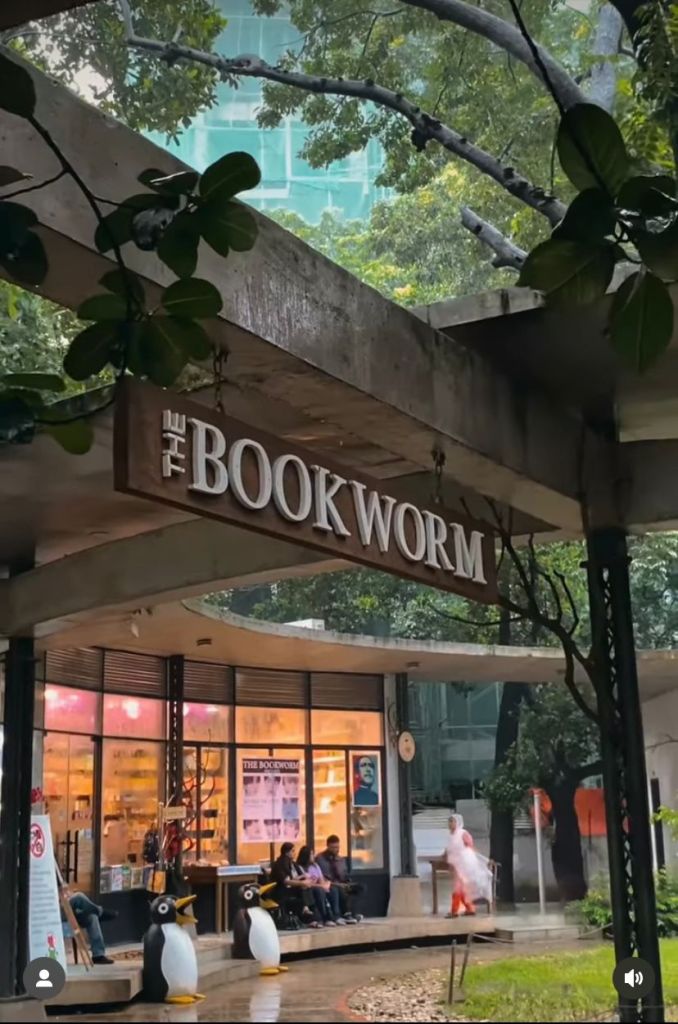


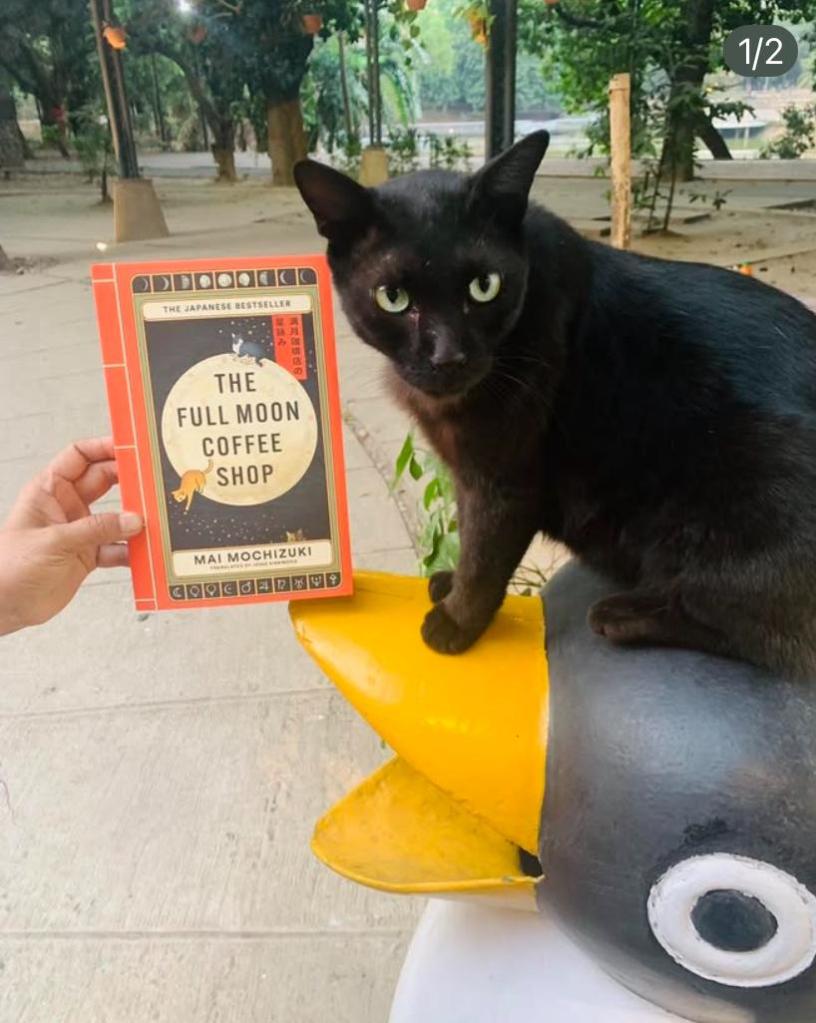
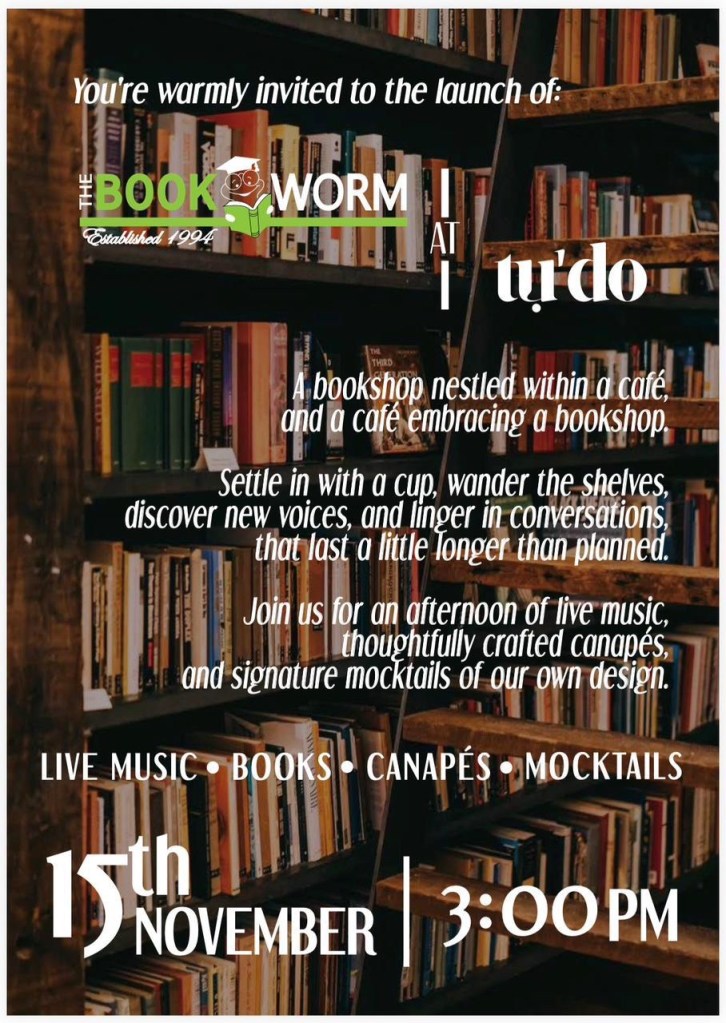

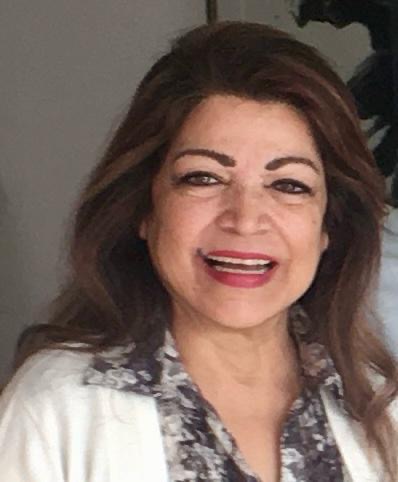
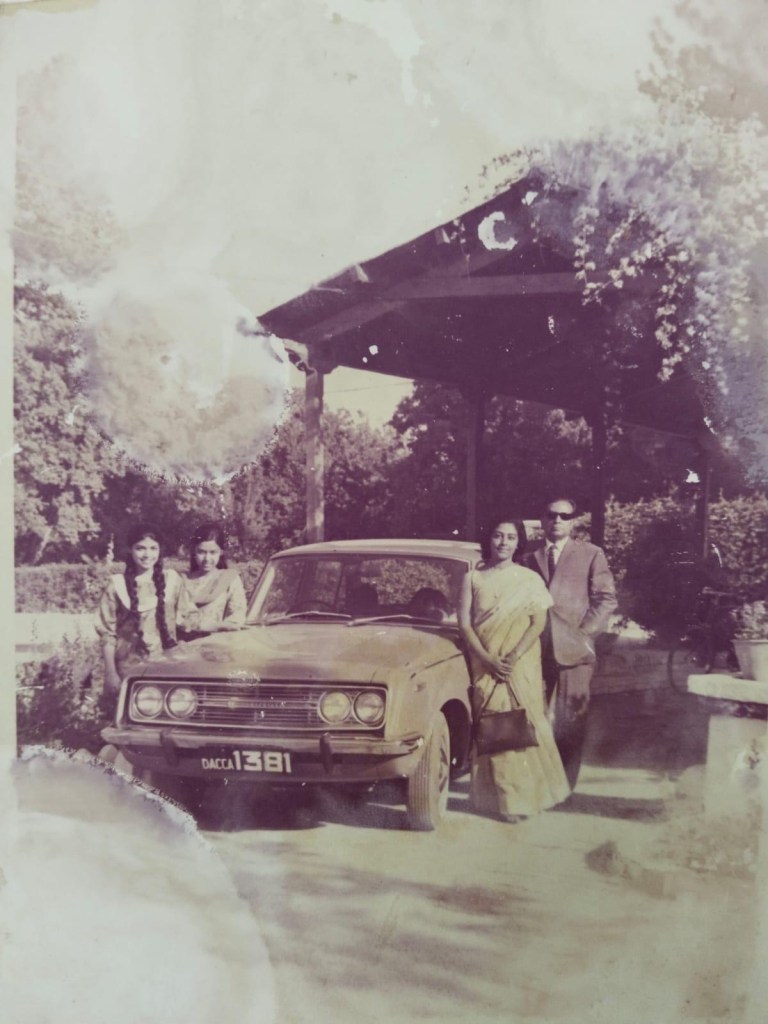
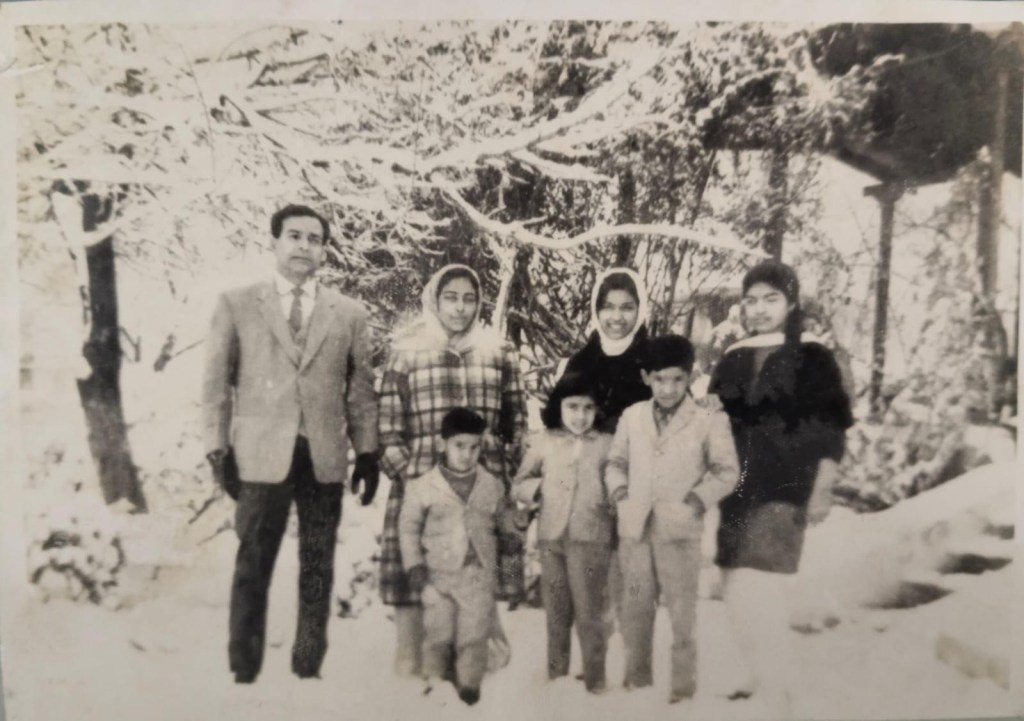
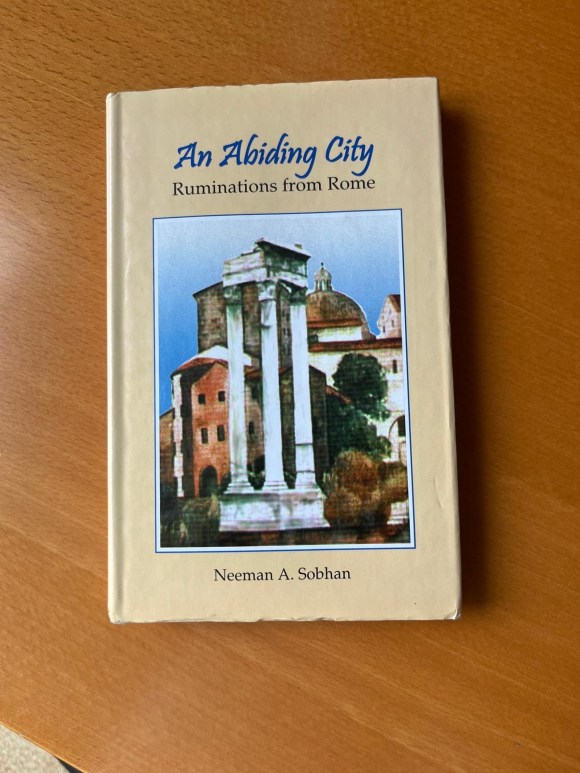

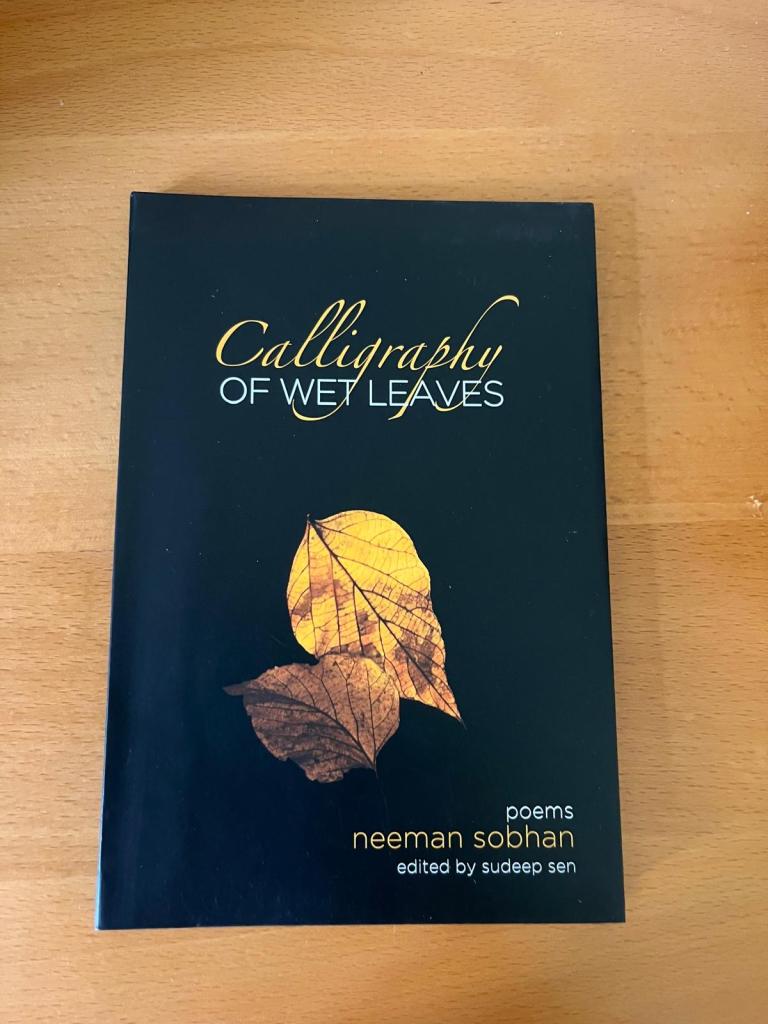

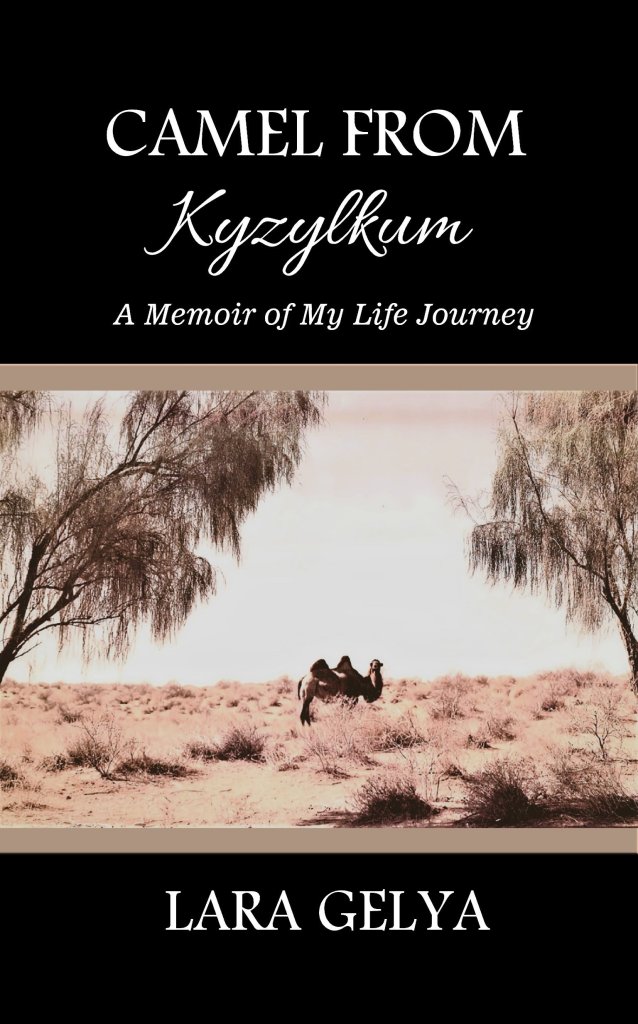




 Borderless