Nazrul’s Tumi Shundor Tai Cheye Thaki(Because you are so beautiful, I keep looking at you) has been translated from Bengali by Professor Fakrul Alam. Click here to read.
Hotel Acapulco, has been composed and translated from Italian by Ivan Pozzoni. Click hereto read.
Farouk Gulsara pays a tribute to a doctor and a friend. Click hereto read.
Musings of a Copywriter
InBecoming a ‘Plain’ Writer, Devraj Singh Kalsi explores the world of writer’s retreats on hills with a touch of irony. Clickhere to read.
Notes from Japan
In Educating for Peace in Rwanda, Suzanne Kamata discusses the peace initiatives following the terrors of the 1994 Rwandan Genocide while traveling within the country with her university colleague and students. Click here to read.
Bijoy K Mishra writes of cyclones in Odisha, while discussing Bhaskar Parichha’s Cyclones in Odisha – Landfall, Wreckage and Resilience. Clickhereto read.
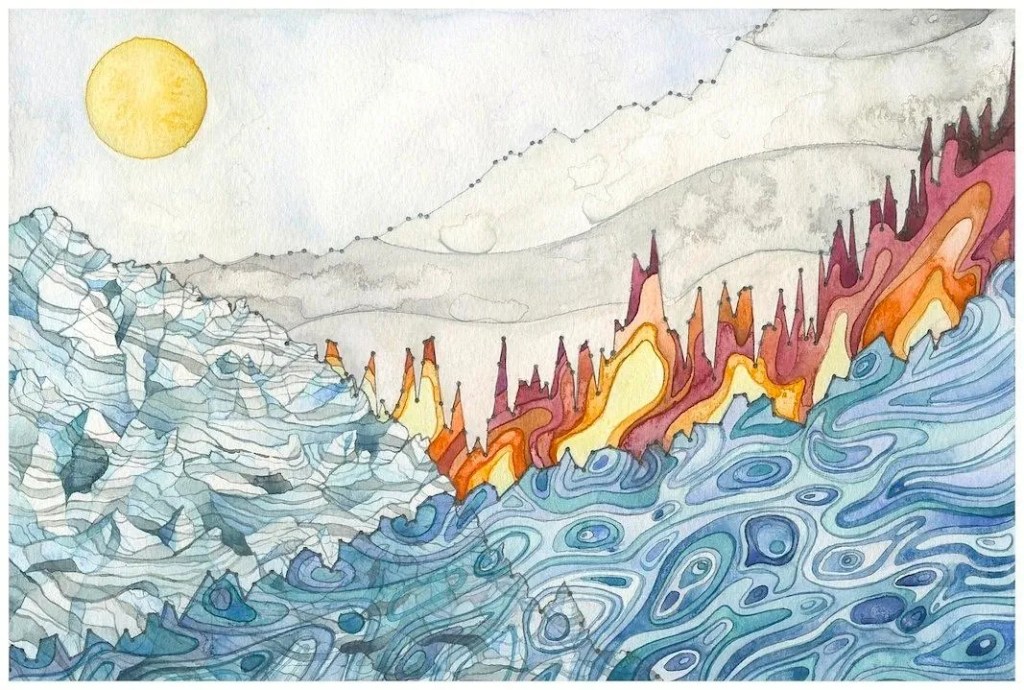
Landscape of Change by Jill Pelto, Smithsonian. From Public Domain
Hope is the mantra for all human existence. We hope for a better future, for love, for peace, for good weather, for abundance. When that abundance is an abundance of harsh weather or violence wrought by wars, we hope for calm and peace.
This is the season for cyclones — Dana, Trami, Yixing, Hurricanes Milton and Helene — to name a few that left their imprint with the destruction of both property and human lives as did the floods in Spain while wars continue to annihilate more lives and constructs. That we need peace to work out how to adapt to climate change is an issue that warmongers seem to have overlooked. We have to figure out how we can work around losing landmasses and lives to intermittent floods caused by tidal waves, landslides like the one in Wayanad and rising temperatures due to the loss of ice cover. The loss of the white cover of ice leads to more absorption of heat as the melting water is deeper in colour. Such phenomena could affect the availability of potable water and food, impacted by the changes in flora and fauna as a result of altered temperatures and weather patterns. An influx of climate refugees too is likely in places that continue habitable. Do we need to find ways of accommodating these people? Do we need to redefine our constructs to face the crises?
Echoing concerns for action to adapt to climate change and hoping for peace, our current issue shimmers with vibrancy of shades while weaving in personal narratives of life, living and the process of changing to adapt.
An essay on Bhaskar Parichha’s recent book on climate change highlights the action that is needed in the area where Dana made landfall recently. In terms of preparedness things have improved, as Bijoy K Mishra contends in his essay. But more action is needed. Denying climate change or thinking of going back to pre-climate change era is not an option for humanity anymore. While politics often ignores the need to acknowledge this crises and divides destroying with wars, riots and angst, a narrative for peace is woven by some countries like Japan and Rwanda.
Suzanne Kamata recently visited Rwanda. She writes about how she found by educating people about the genocide of 1994, the locals have found a way to live in peace with people who they addressed as their enemies before… as have the future generations of Japan by remembering the atomic holocausts of 1945.
In translations, we have poetry from varied countries. Ihlwha Choi has self-translated his poem from Korean. Ivan Pozzoni has done the same from Italian. One of Tagore’s lesser-known verses, perhaps influenced by the findings of sensitivity in plants by his contemporary, Jagadish Chandra Bose (1858-1937) to who he dedicated the collection which homed this poem, Phool Photano(making flowers bloom), has been translated from Bengali. Professor Alam has translated Nazrul’s popular song, Tumi Shundor Tai Cheye Thaki (Because you are so beautiful, I keep gazing at you).
Stories travel around the world with Paul Mirabile’s narrative giving a flavour of bohemian Paris in 1974. Anna Moon’s fiction set in Philippines gives a darker perspective of life. Lakshmi Kannan’s narrative hovers around the 2008 bombing in Mumbai, an event that evoked much anger, violence and created hatred in hearts. In contrast, Naramsetti Umamaheswararao brings a sense of warmth into our lives with a story about a child and his love for a dog. Sreelekha Chatterjee weaves a tale of change, showcasing adapting to climate crisis from a penguin’s perspective.
Trying something new, being out of the box is what helped humans move out from caves, invent wheels and create civilisations. Hopefully, this is what will help us move into the next phase of human development where wars and weapons will become redundant, and we will be able to adapt to changing climes and move towards a kinder, more compassionate existence.
Thank you all for pitching in with your fabulous pieces. There are ones that have not been covered here. Do pause by our content’s page to see all our content. Huge thanks to the fantastic Borderless team and to Sohana Manzoor, for her art too.
Phul Photano (Making Flowers Bloom) by Tagore was first published in 1906 in Kheya (Ferrying), a collection of 55 poems. The book was dedicated to the Indian scientist, Jagadish Chandra Bose (1858-1937), who discovered plants can feel pleasure, pain, understand affection and make sounds of distress.
From Public Domain
MAKING FLOWERS BLOOM

You cannot force,
    Force flowers to bloom.
Whatever you say or do,
However hard you try,
Day and night, excitedly
      Striking the stem —
None of you can force,
      Force flowers to bloom.

You can repeatedly
Fatigue with your glances.
You can tear the bunches,
       And throw them in the dust —
In such extreme chaos,
If they break their silence,
Their colours could spill,
      Their perfumes could overwhelm.
None of you can force,
      Force flowers to bloom.

He who can make flowers bloom,
          Does so on his own.
He radiates
With his eyes rays
Of the lifeforce
          To enchant the stem.
He who can make flowers bloom,
          Does so on his own.

Just his breath, seems
To make the flowers yearn to fly.
With wings made of leaves,
          They waft in the breeze.
Vibrant varied hues bloom
Like the heart in a swoon.
Many are drawn to them,
         Allured by the scents.
      He who can make a flower bloom,
          Does so on his own.
This poem has been translated from Bengali by Mitali Chakravartywith editorial input from Sohana Manzoor
.
PLEASE NOTE: ARTICLES CAN ONLY BE REPRODUCED IN OTHER SITES WITH DUE ACKNOWLEDGEMENT TO BORDERLESS JOURNAL
To conquer fear is the beginning of wisdom.
—Bertrand Russell, Unpopular Essays (1950)
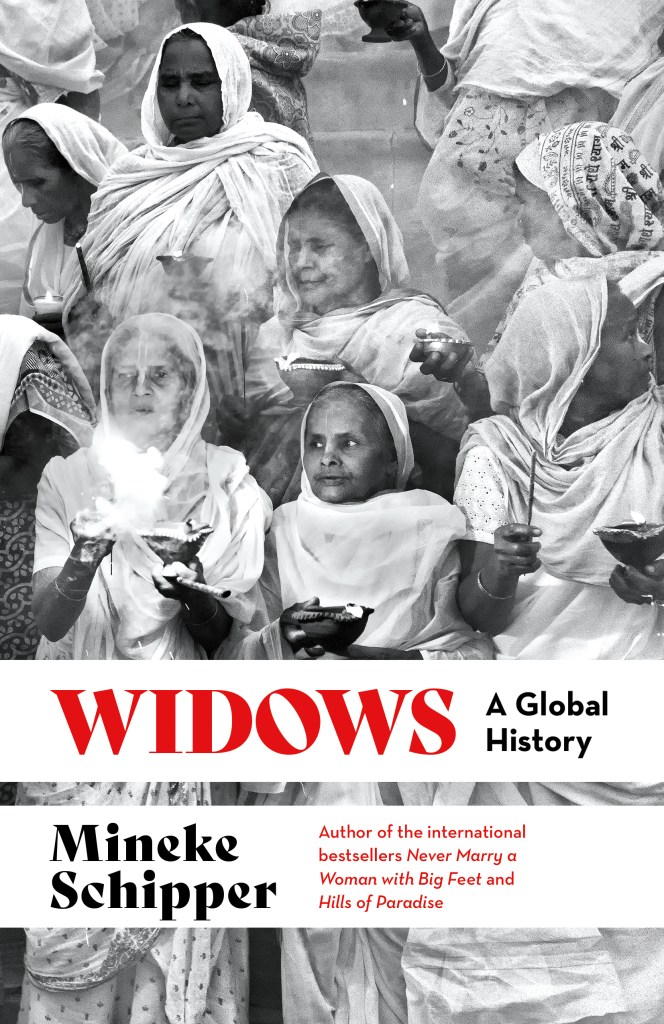
This is one of the dedications that precedes the narrative of Mineke Schipper’s non-fiction, Widows: A Global History. Her description of misapprehensions and the darkness around widowhood, as well as the actions that have been taken and suggestions on how more can be done to heal, weave a narrative for a more equitable society.
Starting with mythological treatment of widows, the book plunges into an in-depth discussion, not just with case studies but also with a social critique of the way these women are perceived and treated around the world, their need to heal from grief or a sense of devastation caused by their spouse’s death, concluding with stories that reflect the resilience of some of those who have overcome the odds of being repulsed. It is a book that inspires hope… hope for a world where despite all stories of misogyny covered in media, there are narratives that showcase both the human spirit and humanity where the ostracised are moving towards being integrated as a part of a functional social sphere.
Schipper, best known for her work on comparative literature mythologies and intercultural studies, navigates through multiple cultures over time and geographies to leave a lingering imprint on readers. She writes: “In Book V of his Histories, Herodotus (485-425/420 BCE) described life among the Thracians: Each man has many wives, and at his death there is both great rivalry among his wives and eager contention on their friends’ part to prove which wife was best loved by her husband. She to whom the honour is adjudged is praised by men and women alike and then slain over the tomb by her nearest of kin. After the slaying she is buried with the husband.” And yet she tells us of the dark past of Europe, “A Polish text asserts with great certainty that, after the burning of the body of her husband, ‘every wife allowed herself to be beheaded and went with him into death’.” She tells us stories of wife burning, killing and dark customs of yore across the world that seem like horror stories, including satis in India. The “motivation” is often greed of relatives or customs born of patriarchal insecurities. She contends, “wherever desperate poverty reigns, widows are at an increased risk.”
She argues: “The story is much the same everywhere; widows who are well educated know what rights they have or are able to find the right authorities to approach with their questions, while women with little or no education continue to suffer from malevolent practices.”
She has covered the stories that reflect the need for the welfare of widows, of how early marriages lead to widowhood even in today’s world ( “ Every year around twelve million girls under the age of eighteen get married, one in five of all marriages.”), of social customs like dowry, which can be usurped by a widow’s spouse’s family, of steps that are being taken and changes that need to be instituted for this group of women often regarded in the past and even in some places, in the present, as witches. In fact, she has written of such ‘witch villages’ in Africa, which have been developed to help widows who have been treated badly and turned away from their homes. Such stories, she tells us prevail all over the world, including India, where widows are sent or go to Varanasi.
She asserts that despite these efforts, “there is often still a significant gap between declarations of gender equality and their day-to-day enforcement and application.” She ends with case studies of four women: “Christine de Pisan, Tao Huabi, Laila Soueif and Marta Alicia Benavente examples of widows who dared to fully throw themselves into a new life following the death of their husbands.” And with infinite wisdom adds: “We cannot change history, but we can look to the past with new knowledge and to the future with new eyes.” She concludes with a profound observation: “Time does not heal sorrow, but out of the centuries-old ashes, grief, strict commandments and prohibitions, new prospects can also rise. The fact that every person’s life is finite makes every day unique and precious. The same goes for widows.”
In this interview Mineke Schipper (née Wilhelmina Janneke Josepha de Leeuw), an award-winning writer from Netherlands, tells us what started her on her journey to uncover the stories of this group of people.
What got you interested in widows as a group from around the world? Why would you pick this particular group only for a whole book?
Yes, whence this topic? The widow had been a tiny part of Never Marry a Woman with Big Feet. Women in Proverbs From Around the World (Yale UP 2004), an earlier book I wrote about proverbs referring to women’s lives, from girl babies to brides, wives and co-wives, mothers and mothers-in-law, grandmothers and old women. It was a long and breathtaking study about more than 15,000 proverbs, collected over many years, apparently widely appreciated and translated with two relatively recent editions published in India, in English and in Marathi. For those interested: the complete collected material is accessible and searchable at www.womeninproverbsworldwide.org, including proverbs about widows. That small but striking section about widows had made me curious, but other books, as it goes, pushed ahead, before I came back to them. In January 2020, I had to look up something in that book about proverbs, and the pages about widows looked so weird that I proposed the widow as my new topic to my Dutch publisher who responded enthusiastically.
You have written of so many cultures and in-depth. How long did it take you to collect material for this book and put it together?
All over I found obvious warnings and distrust viz a viz a woman whose husband dies. Interestingly, a widow was associated with death—and a widower was not. Take heed, suitor, when you replace the dead husband in the widow’s conjugal bed! Better not! Was it the fear that she had killed him? Or the creepy thought that the dead man’s hovering ghost was still hanging around? A widow was supposed to mourn intensely over her husband, preferably the rest of her life. In the meantime, proverbial messages openly expressed the widower’s happiness at the news of his wife’s death: ‘Grief for a dead wife lasts to the door’ (all over Europe) or ‘A wife’s death renews the marriage’ (Arabic). I came across well-known names—such as Confucius, Herodotus, Boniface, and Ibn Battuta—and lesser-known names of early travellers, historians, and philosophers with their commentaries on widows, compulsory or non-mandatory prolonged mourning, voluntary or prescribed chastity, and a surprisingly common choice of suicide as the best option for her. Amazingly many widows obediently followed their husbands to death. In all continents, monuments and documents witness how women joined dead men—buried or burnt alive, hanged, strangled or beheaded, drowned, stabbed or shot. A preference for strangling was inspired by the idea that the victim would enter the next world ‘intact’. So, from the narrow diving board of no more than a few dozen proverbs I plunged into the hidden history of widowhood for about three years.
How do women perpetrate the victimisation of widows? Would you say that widows as a group are more victimised against than other groups of women?
Conceptions about women as interchangeable objects were widespread. If a woman was ‘no longer of use’, a man would need to get a new one, much as you would do with a broken watch, rifle, knife or whip. A man cannot or will not do without a wife, but what about when the tables are turned? The need to present women without husbands as inept and dependent must have been great. A widow managing all by herself was rather met with obvious disapproval. Widowhood has traditionally been associated with emptiness. In Sanskrit, the word vidhua means ‘destitute’, and the Latin viduata (‘made destitute, emptied’) is the root of the word for widow in many European languages, including Witwe (German), veuve (French) and weduwe (Dutch).
Nonetheless there have always been plenty of widows who have lived wonderfully independent lives, but this is not the image seared into the public consciousness. The notion that a woman is unable to live her own life after the death of her husband is an amazingly deep-rooted one. The Japanese word for widow (mibōjin) literally means ‘she who has not yet died’, that is, a widow is simply sitting in Death’s waiting room for her own time to come. Interestingly, the status of widower on the other hand was usually so short-lived and temporary that some languages even lack a word for it all together!
What makes widows more vulnerable than others?
Every widow has her own story, but social systems play an important role. In traditions where goods, land and property are inherited through the mother’s family line with matrilocality, a groom comes to live with his bride’s family, although this often ended up working out slightly differently as men were not best pleased with this living arrangement, so in reality there would be negotiation. However, over the centuries patrilineal systems, lineage and inheritance significantly became the dominant system. According to the patrilocal rules, a man had to remain ‘at home’, a system which to this day obliges countless brides to move in with their parents-in-law, an environment foreign to them. They are forced to comply with the demands and expectations of their family-in-law, while the husbands remain comfortable in the familiar surroundings they grew up in, with major consequences for the lives of women who become widows. This patrilocal living situation has often resulted in greater inequality between marital partners and harsh rules for widows, often preventing a wife from any material heritage after her husband’s death. According to the work of evolutionary psychologists, married women who live with or in close contact with their matrilineal family run a significantly lower risk of violence in the form of (physical) abuse, rape and exploitation than those who move in with their husband’s family. This is all the more true for a widow with a distrustful family-in-law who accuse her of killing her husband, a danger that is greatest in areas where poverty reigns.
At a point you have said, “The Aryan period, which preceded later negative social developments, saw a differently structured society in which there was more space for women: to a certain extent women had religious autonomy, they were entitled to education at all levels (with some even becoming celebrated authors), they participated in public life and also held important positions… However, by the year 200 AD, their position had considerably worsened.” Do you have any idea why their condition worsened in India? What were the ‘negative social developments’ you mention?
In matters of religion the woman was increasingly dependent on the services of her husband or of priests, possibly also on her sons or male relatives, to carry out the rituals she required. Simultaneously she became largely excluded from all types of formalised education. This lasting effect can be seen even today in the global difference in the rate of female and male literacy. The negative stance towards women in India dates back to Brahmin commentaries of ancient Vedic texts, which referred to women as lesser humans; widows subsequently occupied an even lower rung on the social ladder and were forced to work hard towards their religious salvation through extreme asceticism. One example: ‘At her pleasure [after the death of her husband], let her emaciate her body by living only on pure flowers, roots of vegetables and fruits. She must not even mention the name of any other men after her husband has died.’ (Manusmriti Kamam 5/160) Patriarchal relations have developed gradually in different parts of the world and at different times, but not everywhere in the same rigorous forms.
In the Abron-Kulango culture in the northeast of his native Côte d’Ivoire, you have told us “[B]oth widows and widowers were required to accompany their spouse to the next world” but eventually due to societal realisations, such practices stopped. Do you think this can happen in other cultures too. Have you seen it happen in other cultures?
As far as I know, such practices do not exist anywhere anymore. The most problematic obstacle for the rights of widow’s in less-well off regions is the unfortunate combination of illiteracy, fear of witchcraft and covetous in-laws, particularly during periods of mourning and grief. The good news is that even in the most unexpected places initiatives are emerging to help inform women in rural areas of their equality before the law. Self-aware widows become inspiring role models; conscious of their rights, they share their knowledge with others so that more of their fellow widows can find the right legal aid when injustice rears its head.
Would you hold as culprit people who enforce the death of widows? Would you address these people too as criminals in today’s context? Please elaborate.
It wouldn’t help much to do this! Marriage is still frequently presented as the utmost peak that a woman can achieve during her life. From this supposed top spot married women often still look at single and widowed women in a new light—with pity, contempt, suspicion or even hostility: they are out to seduce your own husband! When death comes calling, not only men’s but also women’s negative feelings easily bubble up from the morass of fear at the dreaded prospect of becoming a widow. Over the centuries such reactions towards widows have become part of the constrictive hierarchy meant to keep so many women in their place.
Can sati be justified[1](even though they are deemed illegal as is suicide) by saying the widow immolated herself willingly? Please explain.
The social pressure on widows must have been immense, but we are living now and no longer in the past. It is true that in poorer regions far out of the reach of cities, countless numbers of widows still have to traverse a long road towards a humane and dignified existence. However, instead of justifying the willingness to immolate herself as her own choice, it is better to insist on the positive news that, after the loss of their partner, today not only men but also women have the right to stay alive and further explore their own talents and new possibilities.
You have told us dowry started as a European custom. Is it still a custom there as it is in parts of South Asia, even if deemed illegal? Was it brought into Asia by Aryans/colonials or a part of the culture earlier itself?
The dowry is the gift that the bride’s family would contribute to the couple’s new home. Even though colonisation may have reinforced this ancient custom, but in many communities, it was already a custom and still is in many parts of the world. In Europe it stayed on until the late nineteenth century. In cultures where the bride provided a dowry, the death of a wife would bring benefits to a widower, as a new wife with a new dowry would enrich his home with new assets such as silver tableware, jewellery, bed linen and other valuables. For centuries, among Christians, divorce was forbidden, and from the perspective of widowers the prospect of a second chance provoked a sense of euphoria, as expressed in quite some sayings where his sadness does not go beyond the front door. Across Europe such messages confirm a husband’s profit of his wife’s death: ‘Dead wives and live sheep make a man rich.’ (French; UK English). However, most widows were denied such liberating feelings or didn’t experience any profit from the change. Often, they did not even allow themselves to get over her loss and indulge in any new freedom. They usually were subject to the paralysing fear of other people’s gossip.
In many places a widow who remarried would even lose entitlement to her own dowry or other input she had contributed to her marriage. Many women who remarried felt unable to invoke any right they had on the property of their deceased husband. Little wonder, therefore, that widows were heavily discouraged from remarrying, for example in China. The use of far-reaching laws still re-enforced the highly recommended chaste and sexless existence of widows after the death of her husband. Of course, the considerable number of child marriages in sub-Saharan Africa and South Asia easily robbed child widows from the legal rights wherever they had. According to the World Widows Report, the situation for widows with children is still exceptionally alarming in many parts of the world. Daughters, in particular, remain a huge problem in traditions where women have to contribute a dowry when daughters get married. For this reason alone, poorer parents have a preference for sons: they are more likely to inherit from their father’s family, while their widowed mother can expect little.
Has the condition of widows across the world improved over time? Please elaborate.
Over the centuries far too many widows have been convinced that their only future was conditioned by their dead husband. In my book there are examples from different areas of courageous widows who changed their own lives. Looking around in one’s own neighbourhood, there are always exemplary models of independent widows who do not let themselves be deterred by the doom of whatever prejudiced people think or say.
All emancipation starts with the opportunity to acquire knowledge, but if we are to believe what tradition tells us, women had little need for that, based on an assumption that knowledge did nothing to encourage and promote female obedience, and even less for virtue. ‘Knowledge goes before virtue for men, virtue before knowledge for women’ is an old saying in Europe, while a Chinese saying also agrees that a woman without knowledge is already doing very well. The fact that this message has had such a wide-ranging effect can be seen in the vast difference in levels of education and training among boys and girls in global education statistics.
What did a man look out for when it came to finding a wife? In order to facilitate control over women, various warnings have been passed down to men. One such proverb found the world over clearly expresses this sentiment: ‘Never marry a woman with big feet.’ It comes from the Sena language in Malawi and Mozambique. In China, India and other parts of the world, I came across literal iterations of this proverb. In spite of geographic or cultural distances and differences, this saying reflects a widespread consensus: hierarchy in male-female relations seemed to be essential, and someone had to be in charge. Should he become the main breadwinner for the duration of their married life, his wife will be even more dependent on him.
Significantly the big feet metaphor points to male fear of female talents and power. Hardly surprising therefore that becoming a widow was the worst possible catastrophe for women. Worldwide the solidarity between wives and widows is growing and literacy support within local communities as well, while the former unwavering prejudices against widows are shrinking, and more and more widows with big feet do manage. The old anti-widow stronghold of local prejudice is slowly but surely crumbling into ruins. We cannot change history, but widows can look to the past with new knowledge and into the future with new eyes and new hope.
They bring hope, solace and love to those who believe in them. But, when the structures holding the fiestas in place start to crumble, what do we do then?
Our lives have moved out of wilderness to cities over centuries. Now, we have covered our world with the gloss of technology which our ancestors living in caves would have probably viewed as magic. And yet we violate the dignity of our own kind, war and kill, destroy what we built in the past. The ideological structures seem ineffective in instilling love, peace, compassion or hope in the hearts of the majority. Suddenly, we seem to be caving in to violence that destroys humanity, our own kind, and not meting out justice to those who mutilate, violate or kill. Will there be an end to this bleak phase? Perhaps, as Tagore says in his lyrics[1], “From the fount of darkness emerges light”. Nazrul has gone a step further and stated clearly[2], “Hair dishevelled and dressed carelessly/ Destruction makes its way gleefully. / Confident it can destroy and then build again …Why fear since destruction and creation are part of the same game?”
And yet, destruction hurts humans. It kills. Maims. Reduces to rubble. Can we get back the people whose lives are lost while destruction holds sway? We have lost lives this year in various wars and conflicts. As a tribute to all the young lives lost in Bangladesh this July, we have a poem by Shahin Hossain. Afsar Mohammad has brought in the theme of festivals into poetry tying it to the current events around the world. In keeping with the times, Michael Burch has a sense of mirthlessness in his poems. Colours of emotions and life have been woven into this section by Malashri Lal, Luis Cuauhtémoc Berriozábal, Fhen M, Shamik Banerjee, George Freek, Matthew James Friday, Jenny Middleton and many more. This section in our journal always homes a variety of flavours. Stuart MacFarlane has poems for Wordsworth… and some of it is funny, like Rhys Hughes’ poem based on photographs of amusing signposts. But then life has both sorrows and laughter, and poetry is but a slice of that as are other genres. We do have non-fiction in a lighter vein with Hughes’ story and poem about pizzas. Devraj Singh Kalsi has given a tongue in cheek narrative about his library experiences.
Festivals have also been taken up in fiction by Tanika Rajeswari V with a ghostly presence hovering over the arrangements. Paul Mirabile has taken us around the world with his story while Saeed Ibrahim writes from his armchair by the Arabian sea. Sahitya Akademi winner for his children’s stories, Naramsetti Umamaheswara Rao, has showcased peer pressure among youngsters in his narrative.
Our book excerpts usher good cheer with a narrative by Ruskin Bond from Let’s Be Best Friends Forever: Beautiful Stories of Friendship. And also hope with a refugee’s story from Ukraine, which travels through deserts, Italy and beyond to US and has a seemingly happier outcome than most, Lara Gelya’s Camel from Kyzylkum. This issue’s conversations take us around the world with Keith Lyons interviewing Lya Badgley, who has crossed continents to live and write. Malashri Lal, the other interviewee, is an academic and writer with sixteen books under her belt. She travels through the world with her poetry inMandalas of Time.
Huge thanks to the Borderless team for putting this issue together – the last-minute ties – and the art from Sohana Manzoor. Without all this, the edition would look different. Heartfelt thanks to our contributors without whose timely submissions, we would not have a journal. And most of all we thank our readers – we are because you are – thank you for reading our journal. As all our content, despite being indispensable, could not be mentioned here, do pause by our content’s page for this issue.
Fakrul Alam writes nostalgically of his visits to Feni in Noakhali, a small town which now suffers from severe flooding due to climate change. Click here to read.
Rakhi Dalal reviews Swadesh Deepak’s A Bouquet of Dead Flowers translated from Hindi by Jerry Pinto, Pratik Kanjilal, Nirupama Dutt, Sukant Deepak. Click here to read.
Imagine the world envisioned by John Lennon. Imagine the world envisioned and partly materialised by Tagore in his pet twin projects of Santiniketan and Sriniketan, training institutes made with the intent of moving towards creating a work force that would dedicate their lives to human weal, to closing social gaps borne of human constructs and to uplifting the less privileged by educating them and giving them the means to earn a livelihood. You might well call these people visionaries and utopian dreamers, but were they? Tagore had hoped to inspire with his model institutions. In 1939, he wrote in a letter: “My path, as you know, lies in the domain of quiet integral action and thought, my units must be few and small, and I can but face human problems in relation to some basic village or cultural area. So, in the midst of worldwide anguish, and with the problems of over three hundred millions staring us in the face, I stick to my work in Santiniketan and Sriniketan hoping that my efforts will touch the heart of our village neighbours and help them in reasserting themselves in a new social order. If we can give a start to a few villages, they would perhaps be an inspiration to some others—and my life work will have been done.” But did we really have a new social order or try to emulate him?
If we had acted out of compassion and kindness towards redefining with a new social order, as Miriam Bassuk points out in her poem based on Lennon’s lyrics of Imagine, there would be no strangers. We’d all be friends living in harmony and creating a world with compassion, kindness, love and tolerance. We would not have wars or regional geopolitical tensions which act against human weal. Perhaps, we would not have had the issues of war of climate change take on the proportions that are wrecking our own constructs.
Natural disasters, floods, fires, landslides have affected many of our lives. Bringing us close to such a disaster is an essay by Salma A Shafi at ground level in Noakhali. More than 4.5 million were affected and 71 died in this disaster. Another 23 died in the same spate of floods in Tripura with 65,000 affected. We are looking at a single region here, but such disasters seem to be becoming more frequent. And yet. there had been a time when Noakhali was an idyllic vacation spot as reflected in Professor Fakrul Alam’s nostalgic essay, filled with memories of love, green outdoors and kindnesses. Such emotions reverberate in Ravi Shankar’s account of his medical adventures in the highlands of Kerala, a state that suffered a stupendous landslide last month. While Shafi shows how extreme rainfall can cause disasters, Keith Lyons writes of water, whose waves in oceanic form lap landmasses like bridges. He finds a microcosm of the whole world in a swimming pool as migrants find their way to New Zealand too. Farouk Gulsara muses on kindness and caregiving while Priyanka Panwar ponders about ordinary days. Saeed Ibrahim gives a literary twist to our musings. Tongue in cheek humour is woven into our nonfiction section by Suzanne Kamata’s notes from Japan, Devraj Singh Kalsi’s piece on premature greying and Uday Deshwal’s paean to his sunglasses!
In translations, we have Nazrul lyrics transcreated from Bengali by Professor Alam and poetry from Korean by Ihlwha Choi. We pay our respects to an eminent Balochi poet who passed on exactly a year ago, Mubarak Qazi, by carrying a translation by Fazal Baloch. Tagore’s Suprobhat (Good morning) has been rendered in English from Bengali. His descriptions of the morning are layered and amazing — with a hint of the need to reconstruct our world, very relevant even today. A powerful essay by Tagore called Raja O Praja(The King and His Subjects), has been translated by Himadri Lahiri.
Our fiction hosts two narratives that centre around childhood, one by Naramsetti Umamaheswararao and another by G Venkatesh, though with very different approaches. Mahila Iqbal relates a poignant tale about aging, mental health and neglect, the very antithesis of Gulsara’s musing. Paul Mirabile has given a strange story about a ‘useless idler’.
A short story collection has been reviewed by Rakhi Dalal, Swadesh Deepak’s A Bouquet of Dead Flowers, translated from Hindi by Jerry Pinto, Pratik Kanjilal, Nirupama Dutt, Sukant Deepak. Somdatta Mandal has written about a book by a Kashmiri immigrant which is part based on lived experiences and part fictive, Karan Mujoo’s This Our Paradise: A Novel. Bhaskar Parichha has reviewed Ayurveda, Nation and Society: United Provinces, c. 1890–1950by Saurav Kumar Rai, a book which shows how healthcare was even a hundred years ago, politicised. Meenakshi Malhotra has reviewed Anuradha Marwah’s novel, Aunties of Vasant Kunj, of which we also have an excerpt. The other excerpt is from Mineke Schipper’s Widows: A Global History. Ratnottama Sengupta converses with Reba Som, author of Hop, Skip and Jump; Peregrinations of a Diplomat’s Wife.
We have more content that adds to the vibrancy of the issue. Do pause by this issue and take a look. This issue would not have been possible without all your writings. Thank you for that. Huge thanks to our readers and our team, without whose support we could not have come this far. I would especially like to thank Sohana Manzoor for her continued supply of her fabulous and distinctive artwork and Gulsara for his fabulous photographs.
Let us look forward to a festive season which awakens each autumn and stretches to winter. May we in this season find love, compassion and kindness in our hearts towards our whole human family.
Ranu Bhattacharyya takes us back to Dhaka of the 1930s… and a world where the two Bengals interacted as one with her migration story. Click here to read.
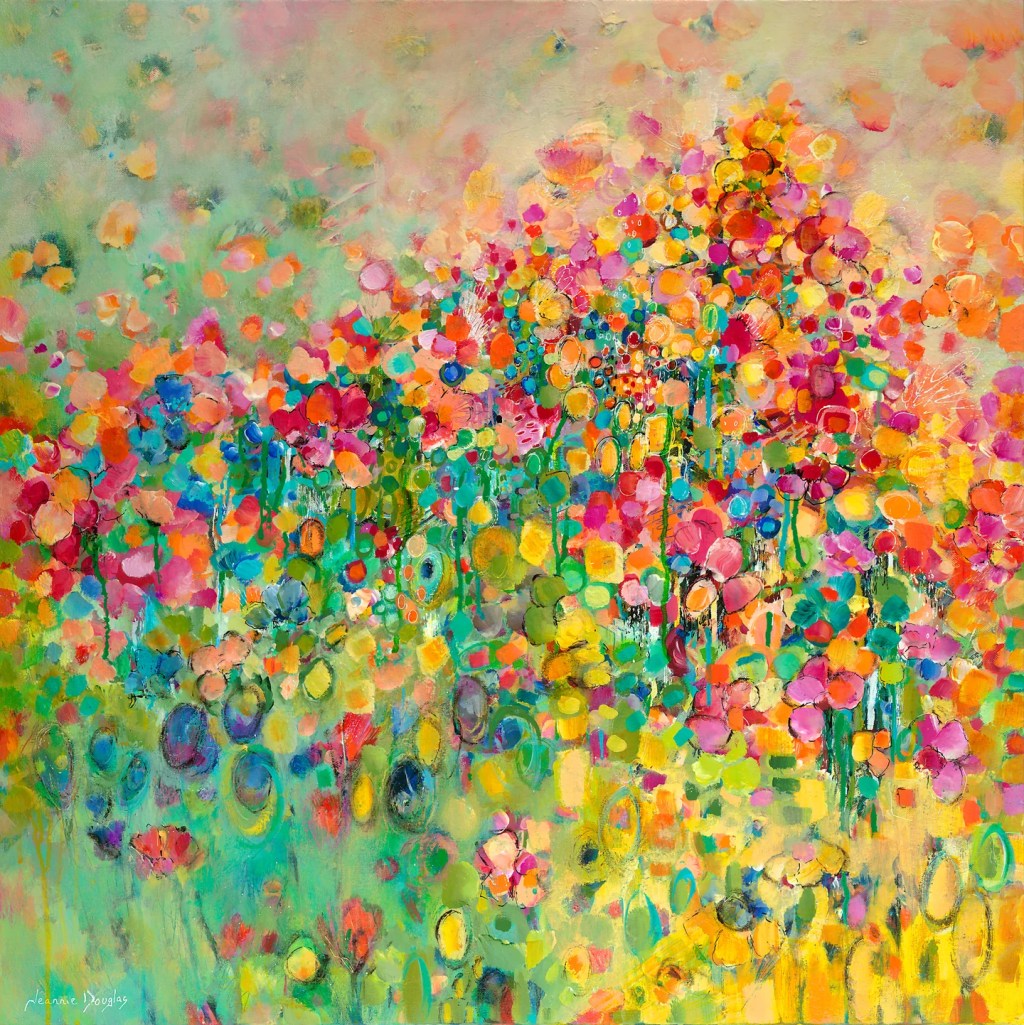
A Pop of Happiness by Jeanie Douglas. From Public Domain
Happiness is a many splendored word. For some it is the first ray of sunshine; for another, it could be a clean bill of health; and yet for another, it would be being with one’s loved ones… there is no clear-cut answer to what makes everyone happy. In Harry Potter and the Half Blood Prince (JK Rowling, 2005), a sunshine yellow elixir induces euphoria with the side effects of excessive singing and nose tweaking. This is of course fantasy but translate it to the real world and you will find that happiness does induce a lightness of being, a luminosity within us that makes it easier to tackle harder situations. Playing around with Rowling’s belief systems, even without the potion, an anticipation of happiness or just plain optimism does generate a sense of hope for better times. Harry tackles his fears and dangers with goodwill, friends and innate optimism. When times are dark with raging wars or climate events that wreck our existence, can one look for a torch to light a sense of hope with the flame of inborn resilience borne of an inner calm, peace or happiness — call it what you will…?
It is hard to gauge the extreme circumstances with which many of us are faced in our current realities, especially when the events spin out of control. In this issue, along with the darker hues that ravage our lives, we have sprinklings of laughter to try to lighten our spirits. In the same vein, externalising our emotions to the point of absurdity that brings a smile to our lips is Rhys Hughes’ The Sunset Suite, a book that survives on tall tales generated by mugs of coffee. In one of the narratives, there is a man who is thrown into a bubbling hot spring, but he survives singing happily because his attacker has also thrown in packs of tea leaves. This man loves tea so much that he does not scald, drown or die but keeps swimming merrily singing a song. While Hughes’ stories are dark, like our times, there is an innate cheer that rings through the whole book… Dare we call it happiness or resilience? Hughes reveals much as he converses about this book, squonks and stranger facts that stretch beyond realism to a fantastical world that has full bearing on our very existence.
A powerful essay by Binu Mathew on the climate disaster at Wayanad, a place that earlier had been written of as an idyllic getaway, tells us how the land in that region has become more prone to landslides. The one on July 30th this year washed away a whole village! Farouk Gulsara has given a narrative about his cycling adventure through the state of Kashmir with his Malaysian friends and finding support in the hearts of locals, people who would be the first to be hit by any disaster even if they have had no hand in creating the catastrophes that could wreck their lives, the flora and the fauna around them. In the wake of such destructions or in anticipation of such calamities, many migrate to other areas — like Ranu Bhattacharya’s ancestors did a bit before the 1947 Partition violence set in. A younger migrant, Chinmayi Goyal, muses under peaceful circumstances as she explores her own need to adapt to her surroundings. G Venkatesh from Sweden writes of his happy encounter with local children in the playground. And Snigdha Agrawal has written of partaking lunch with a bovine companion – it can be intimidating having a cow munching at the next table, I guess! Devraj Singh Kalsi has given a tongue-in-cheek musing on how he might find footing as a godman. Suzanne Kamata has given a lovely summery piece on parasols, which never went out of fashion in Japan!
Radha Chakravarty, known for her fabulous translations, has written about the writer she translated recently, Nazrul. Her essay includes a poem by Tagore for Nazrul. Professor Fakrul Alam has translated two of Nazrul’s songs of parting and Sohana Manzoor has rendered his stunning story Shapuray (Snake Charmer) into English. Fazal Baloch has brought to us poetry in English from the Sulaimani dialect of Balochi by Allah Bashk Buzdar, and a Korean poem has been self-translated by the poet, Ihlwha Choi. The translations wind up with a poem by Tagore, Olosh Shomoy Dhara Beye (Time Flows at an Indolent Pace), showcasing how the common man’s daily life is more rooted in permanence than evanescent regimes and empires.
Fiction brings us into the realm of the common man and uncommon situations, or funny ones. A tongue-in-cheek story set in the Midwest by Joseph Pfister makes us laugh. Farhanaz Rabbani has given us a beautiful narrative about a girl’s awakening. Paul Mirabile delves into the past using the epistolary technique highlighting darker vignettes from Christopher Columbus’s life. We have book excerpts from Maaria Sayed’s From Pashas to Pokemonand Nazes Afroz’s translation of Syed Mujtaba Ali’sShabnamwith both the extracts and Rabbani’s narratives reflecting the spunk of women, albeit in different timescapes…
When migrations are out of choice, with multiple options to explore, they take on happier hues. But when it is out of a compulsion created by manmade disasters — both wars and climate change are that — will the affected people remain unscarred, or like Potter, bear the scar only on their forehead and, with Adlerian calm, find happiness and carpe diem?
Do pause by our current issue which has more content than mentioned here as some of it falls outside the ambit of our discussion. This issue would not have been possible without an all-out effort by each of you… even readers. I would like to thank each and every contributor and our loyal readers. The wonderful team at Borderless deserve much appreciation and gratitude, especially Manzoor for her wonderful artwork. I invite you all to savour this August issue with a drizzle of not monsoon or April showers but laughter.
May we all find our paths towards building a resilient world with a bright future.





 Borderless