Festivals are affirmations of joy and love that bind humanity with their sense of hope even in a world torn by violence and climate change. As the end of the year approaches, we invite you to savour flavours of festivals past and, a few, yet to come, before the cycle starts again in the new year. The colours of celebrations are vibrant and varied as shades of nature or the skies.
We have new years spread out over the year, starting with January, moving on to the Chinese New Year around February, the Bengali new year in April to festivals of environment, light, darkness as in Wiccan beliefs, Tagore’s birth, more conventional ones like Deepavali, Eid, Durga Puja and Christmas. People celebrate in different ways and for different reasons. What we have also gathered is not only the joie de vivre but also the sadness people feel when celebrations are muted whether due to the pandemic, wars or for social reasons. In some cases, we indulge in excesses with funny results! And there are of course festivals of humanity … as celebrated by the bauls — the singing mendicants of Bengal — who only recognise the religion of love, compassion and kindness.
Ramakanta Rath’sSri Radha celebrating the love of Radha and Krishna have been translated from Odiya by the late poet himself, have been excerpted from his full length translation. Click here to read.
Bijoya Doushumi, a poem on the last day of Durga Puja, by the famous poet, Michael Madhusudan Dutt, has been translated from Bengali by Ratnottama Sengupta. Click here to read.
A Clean Start: Suzanne Kamata tells us how the Japanese usher in a new year. Click here to read.
Shanghai in Jakarta: Eshana Sarah Singh takes us to Chinese New Year celebrations in Djakarta. Click here to read.
Cherry Blossom Forecast: Suzanne Kamata brings the Japanese ritual of cherry blossom viewing to our pages with her camera and words. Clickhere to read.
Pohela Boisakh: A Cultural Fiesta: Sohana Manzoor shares the Bengali New Year celebrations in Bangladesh with interesting history and traditions that mingle beyond the borders. Clickhere to read.
The New Year’s Boon: Devraj Singh gives a glimpse into the projection of a new normal created by God. Click here to read.
A Musical Soiree: Snigdha Agrawal recalls how their family celebrated Tagore’s birth anniversary. Click here to read.
An Alien on the Altar! Snigdha Agrawal writes of how a dog and lizard add zest to Janmashtami (Krishna’s birthday) festivities with a dollop of humour. Click here to read
Memories of Durga Puja : Fakrul Alam recalls the festivities of Durga Puja in Dhaka during his childhood. Click hereto read.
KL Twin Towers near Kolkata?: Devraj Singh Kalsi visits the colours of a marquee hosting the Durga Puja season with its spirit of inclusivity. Click here to read.
Hold the roast turkey please Santa: Celebrating the festive season off-season with Keith Lyons from New Zealand, where summer solstice and Christmas fall around the same time. Click here to read.
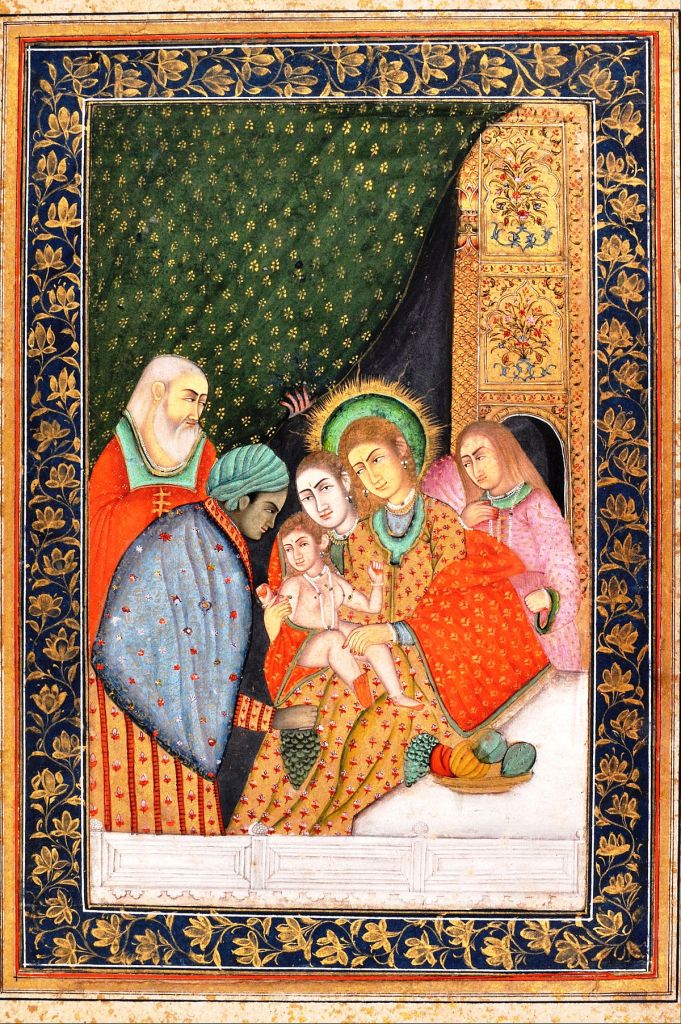
Nativity of Christ, painted in the Mughal empire, around 1800 AD
“The central celebration is the birth of a child. There is no culture that does not celebrate this event, because all of us who belong to the human race can see our collective future in the pudgy little face. We marvel at this conjuring act, the miniature miracle, at its tiny fingernails and budlike nose.” — Jerry Pinto, Indian Christmas: Essays, Memoirs, Hymns, an anthology edited by Jerry Pinto and Madhulika Liddle
Christmas centres around the birth of a child who impacted a large part of the world and urged us to love others despite differences, to be kind, to embrace those who suffered… and that is the spirit that continues to unite humankind to move towards a future where people thrive in harmony, with love in their hearts. Despite all the darkness that broods over the world, Christmas has come around. The sun still moves forward in time and at some point, the darkness will give way to light. Perhaps, Christmas will remind people of the values they need to uphold to live in a world that is not filled with fear, greed or the lust for power and they will stop killing ruthlessly and without any sense of coherence. With that in mind, we have tried to evoke the spirit of Christmas cheer by presenting writings that talk of celebrations.
This is a season that should be filled with hope, goodwill, peace and love. The celebrations — depicting variety, a departure from conventional norms — by writers who reach across borders and time, rekindle our belief in the wonder created by these values, which is what Christmas is all about. We start with Tagore, a Brahmo by religion but his poem in English dwells on the wonder he feels at the idea of this unique birth of Christ. Our other writers from across the world pitch in with what Christmas means to all of them, whether it creates a sense of goodwill, nostalgia, invokes curiosity or just evokes plain laughter. Hopefully, we can all join together to ring the bells of kindness, love, humanitarian help and peace this year!
Poetry
An excerpt from Rabindranath Tagore’s ‘The Child‘ a poem originally written in English by the poet to celebrate Christmas. Click here to read.
In I Went to Kerala, Rhys Hughes treads a humorous path while exploring Christmas in Kerala. Click here to read.
In Hold the Roast Turkey Please Santa , Keith Lyons writes from New Zealand, where summer solstice and Christmas fall around the same time. Click hereto read.
In My Christmas Eve “Alone”, Erwin Coomb has a strange encounter on Christmas eve… Is it real? Clickhere to read.
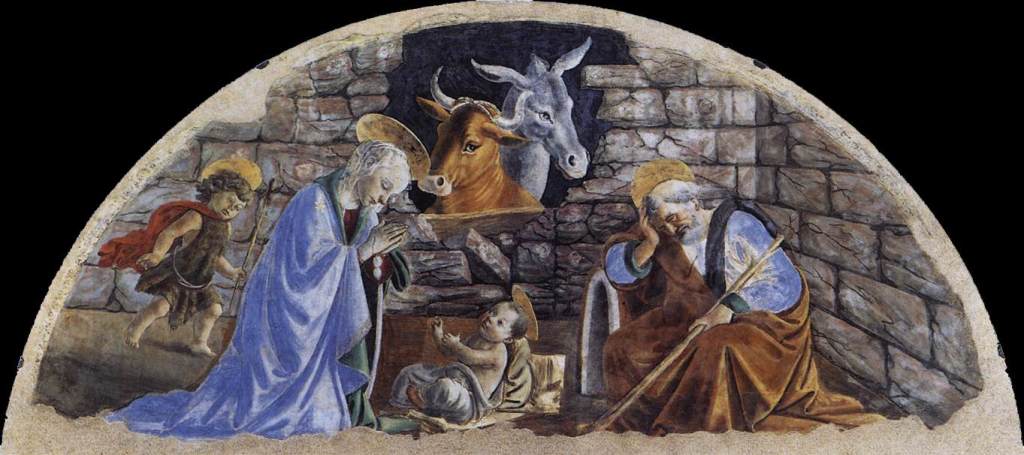
Nativity, a fresco by Italian artist Boticelli, created around 1467
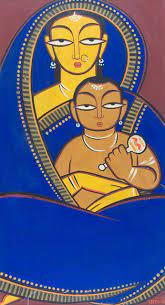
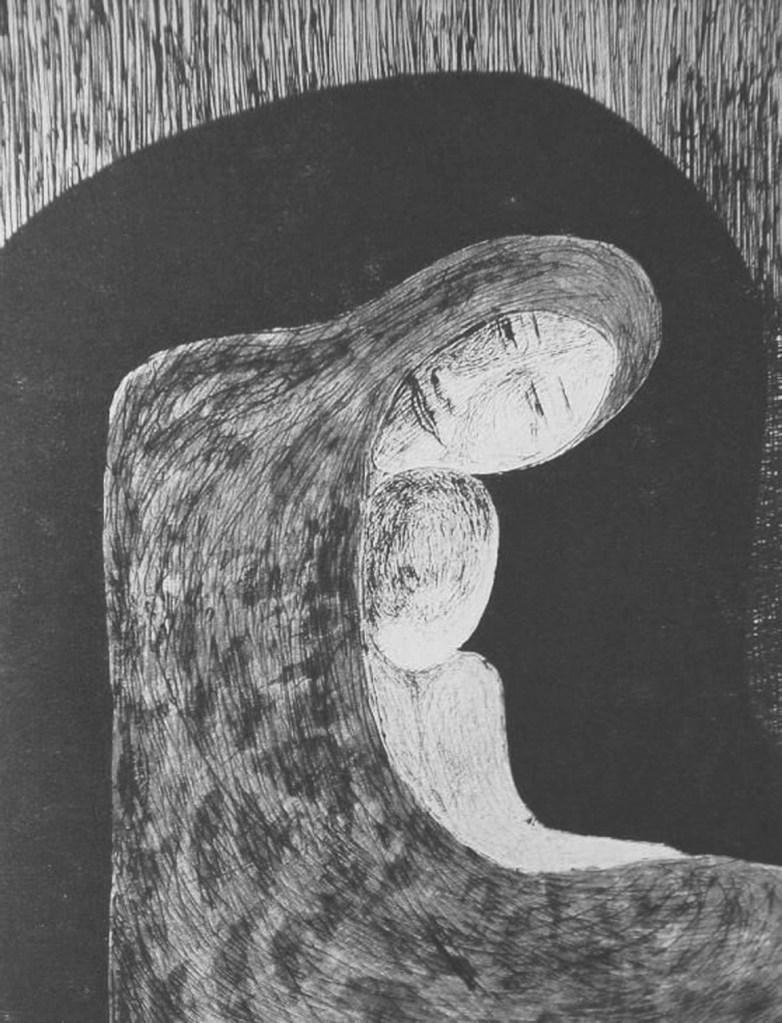
Mother & Child by Jamini Roy (1887-1972)Mother and Child by Picasso (1881-1973)
‘Victory to Man, the newborn, the ever-living.’ They kneel down, the king and the beggar, the saint and the sinner, the wise and the fool, and cry: ‘Victory to Man, the newborn, the ever-living.’
This is the month— the last of a conflict-ridden year— when we celebrate the birth of a messiah who spoke of divine love, kindness, forgiveness and values that make for a better world. The child, Jesus, has even been celebrated by Tagore in one of his rarer poems in English. While we all gather amidst our loved ones to celebrate the joy generated by the divine birth, perhaps, we will pause to shed a tear over the children who lost their lives in wars this year. Reportedly, it’s a larger number than ever before. And the wars don’t end. Nor the killing. Children who survive in war-torn zones lose their homes or families or both. For all the countries at war, refugees escape to look for refuge in lands that are often hostile to foreigners. And yet, this is the season of loving and giving, of helping one’s neighbours, of sharing goodwill, love and peace. On Christmas this year, will the wars cease? Will there be a respite from bombardments and annihilation?
We dedicate this bumper year-end issue to children around the world. We start with special tributes to love and peace with an excerpt from Tagore’s long poem, ‘The Child‘, written originally in English in 1930 and a rendition of the life of the philosopher and change-maker, Vivekananda, by none other than well-known historical fiction writer, Aruna Chakravarti. The poem has been excerpted from Indian Christmas: Essays, Memoirs, Hymns, an anthology edited by Jerry Pinto and Madhulika Liddle, a book that has been reviewed by Somdatta Mandal and praised for its portrayal of the myriad colours and flavours of Christmas in India. Christ suffered for the sins of humankind and then was resurrected, goes the legend. Healing is a part of our humanness. Suffering and healing from trauma has been brought to the fore by Christopher Marks’ perspective on Veronica Eley’s The Blue Dragonfly: healing through poetry. Basudhara Roy has also written about healing in her take of Kuhu Joshi’s My Body Didn’t Come Before Me.Bhaskar Parichha has reviewed a book that talks of healing a larger issue — the crises that humanity is facing now, Permacrisis: A Plan to Fix a Fractured World, by ex-British Prime Minister Gordon Brown, Nobel Laureate Michael Spence, Mohamed El-Erian and Reid Lidow. Parichha tells us that it suggests solutions to resolve the chaos the world is facing — perhaps a book that the world leadership would do well to read. After all, the authors are of their ilk! Our book excerpts from Dr Ratna Magotra’s Whispers of the Heart – Not Just A Surgeon: An Autobiographyand Manjima Misra’s The Ocean is Her Titleare tinged with healing and growth too, though in a different sense.
The theme of the need for acceptance, love and synchronicity flows into our conversations with Afsar Mohammad, who has recently authored Remaking History: 1948 Police Action and the Muslims of Hyderabad. He shows us that Hyderabadi tehzeeb or culture ascends the narrow bounds set by caged concepts of faith and nationalism, reaffirming his premise with voices of common people through extensive interviews. In search of a better world, Meenakshi Malhotra talks to us about how feminism in its recent manifestation includes masculinities and gender studies while discussing The Gendered Body: Negotiation, Resistance, Struggle, edited by her, Krishna Menon and Rachana Johri. Here too, one sees a trend to blend academia with non-academic writers to bring focus on the commonalities of suffering and healing while transcending national boundaries to cover more of South Asia.
That like Hyderabadi tehzeeb, Bengali culture in the times of Tagore and Nazrul dwelled in commonality of lore is brought to the fore when in response to the Nobel laureate’s futuristic ‘1400 Saal’ (‘The year 1993’), his younger friend responds with a poem that bears not only the same title but acknowledges the older man as an “emperor” among versifiers. Professor Fakrul Alam has not only translated Nazrul’s response, named ‘1400Saal’ aswell, but also brought to us the voice of another modern poet, Quazi Johirul Islam. We have a self-translation of a poem by Ihlwha Choi from Korean and a short story by S Ramakrishnan in Tamil translated by T Santhanam.
Our short stories travel with migrant lore by Farouk Gulsara to Malaysia, from UK to Thailand with Paul Mirabile while chasing an errant son into the mysterious reaches of wilderness, with Neeman Sobhan to Rome, UK and Bangladesh, reflecting on the Birangonas (rape victims) of the 1971 Bangladesh Liberation war, an issue that has been taken up in Malhotra’s book too. Sobhan’s story is set against the backdrop of a war which was fought against linguistic hegemony and from which we see victims heal. Sohana Manzoor this time has not only given us fabulous artwork but also a fantasy hovering between light and dark, life and death — an imaginative fiction that makes a compelling read and questions the concept of paradise, a construct that perhaps needs to be found on Earth, rather than after death.
The unusual paradigms of life and choices made by all of us is brought into play in an interesting non-fiction by Nitya Amlean, a young Sri Lankan who lives in UK. We travel to Kyoto with Suzanne Kamata, to Beijing with Keith Lyons, to Wayanad with Mohul Bhowmick and to Langkawi with Ravi Shankar. Wendy Jones Nakanishi argues in favour of borders with benevolent leadership. Tongue-in-cheek humour is exuded by Devraj Singh Kalsi as he writes of his attempts at using visiting cards as it is by Rhys Hughes in his exploration of the truth about the origins of the creature called Humpty Dumpty of nursery rhyme fame.
Poetry again has humour from Hughes. A migrant himself, Jee Leong Koh, brings in migrant stories from Singaporeans in US. We have poems of myriad colours from Ryan Quinn Flanagan, Patricia Walsh, John Grey, Kumar Bhatt, Ron Pickett, Prithvijeet Sinha, Sutputra Radheye, George Freek and many more. Papia Sengupta ends her poem with lines that look for laughter among children and a ‘life without borders’ drawn by human constructs in contrast to Jones Nakanishi’s need for walls with sound leadership. The conversation and dialogues continue as we look for a way forward, perhaps with Gordon Brown’s visionary book or with Tagore’s world view of lighting the inner flame in each human. We can hope that a way will be found. Is it that tough to influence the world using words? We can wish — may there be no need for any more Greta Thunbergs to rise in protest for a world fragmented and destroyed by greed and lack of vision. We hope for peace and love that will create a better world for our children.
As usual, we have more content than mentioned here. All our pieces can be accessed on the contents’ page. Do pause by and take a look. This bumper issue would not have been possible without the contribution of all the writers and our fabulous team from Borderless. Huge thanks to them all and to our wonderful readers who continue to encourage us with their comments and input.
Here’s wishing you all wonderful new adventures in the New Year that will be born as this month ends!
The final two sections of one of Tagore’s finest long poems, inspired by the life of Jesus Christ. Tagore wrote the poem first in English, in 1930, and translated it himself into Bengali the following year, titling it ‘Sishutirtha’.
                IX

The first flush of dawn glistens on the dew-dripping
leaves of the forest.
The man who reads the sky cries:
‘Friends, we have come!’
They stop and look around.


On both sides of the road the corn is ripe to the horizon—
the glad golden answer of the earth to the morning light.
The current of daily life moves slowly
between the village near the hill and the one by the
river bank.
The potter’s wheel goes round, the woodcutter brings
fuel to the market,
the cow-herd takes his cattle to the pasture,
and the woman with the pitcher on her head walks to
the well.
But where is the King’s castle, the mine of gold, the
secret book of magic,
the sage who knows love’s utter wisdom?
‘The stars cannot be wrong,’ assures the reader of the sky.
‘Their signal points to that spot.’
And reverently he walks to a wayside spring
from which wells up a stream of water, a liquid light,
like the morning melting into a chorus of tears and
laughter.
Near it in a palm grove surrounded by a strange hush
stands a leaf-thatched hut,
at whose portal sits the poet of the unknown shore, and
sings:
‘Mother, open the gate!’

                  X

A ray of morning sun strikes aslant at the door.
The assembled crowd feel in their blood the primaeval
chant of creation:
‘Mother, open the gate!’
The gate opens.
The mother is seated on a straw bed with the babe on
her lap,
like the dawn with the morning star.
The sun’s ray that was waiting at the door outside falls
on the head of the child.
The poet strikes his lute and sings out:
‘Victory to Man, the newborn, the ever-living.’
They kneel down, the king and the beggar, the saint and
the sinner,
the wise and the fool, and cry:
‘Victory to Man, the newborn, the ever-living.’
The old man from the East murmurs to himself:
‘I have seen!’
‘Mother and Child’, painting by Rabindranath Tagore. Photo Courtesy: Indian Christmas: An anthology
We all know that Christmas Day, the night that Jesus came to earth, bringing with him peace and love for all humanity, is celebrated by Christians all around the world with great enthusiasm and merriment. Interestingly, for a multicultural country like India, Christmas is equally celebrated — not only as a religious festival but also as a cultural one. For a country where less than three percent of the population is Christian, the central celebration is the birth of a child, but it takes on new meaning in different Indian homes. Known in local parlance also as “Burradin”[big day] Indians from all classes and communities look forward to this day when they can at least buy a cake from the local market, shower their children with stars, toys, red Santa caps and other decorative items, and go for a family picnic for lunch, dine at a fancy restaurant or visit the nearby church. This syncretic cult makes this festival unique, and for Jerry Pinto and Madhulika Liddle editing this very interesting anthology comprising of different genres of Indian writing on the topic – essays, images, poems and hymns, both in English and also translated from India’s other languages is indeed unique.
Mary and Jesus’ a painting by Sister Marie Claire. (Picture courtesy: SMMI Provincialate, Bengalaru) ‘Adivasi Madonna’, a painting by Jyoti SahiImages from Indian Christmas: Essays, Memories, Hymns
In his introduction which he titles “Unto All of Us a Child is Born,” Jerry Pinto reminisces how he was surprised when he saw his first live Santa Claus. He was a figure in red that Akbarally’s, Bombay’s first department store, wheeled out around Christmas week. “He was a thin man, not very convincingly padded… seemed to be from my part of the world, someone who would climb up our narrow Mahim stairs and leave something at the door for us at three or four a.m., then take the local back to his regular job as a postman or seller of second-hand comics. The man in the cards and storybooks preferred London and New York. And a lot of snow. … Today, it is almost a cliché to say that Christmas, like every other festival, is hostage to the market.”
The other editor, Madhulika Liddle in her introduction “Christmas in Many Flavours” states, “According to the annals of the Mambally Royal Biscuit Factory bakery in Thalassery, Kerala, its founder Mambally Bapu baked the first Christmas cake in India”. It was way back in 1883, at the instance of an East India Company spice planter he set about trying to create a Christmas cake. Liddle wondered what that first Christmas cake tasted like; how close it was to the many thousands of cakes still baked and consumed at Christmas in Kerala? She also writes about the situation in India, where instead of wholesale and mindless importing of Christmas ideas, the people have been discerning enough to amalgamate all our favourite (and familiar) ideas of what a celebration should be and fit them into a fiesta of our own.
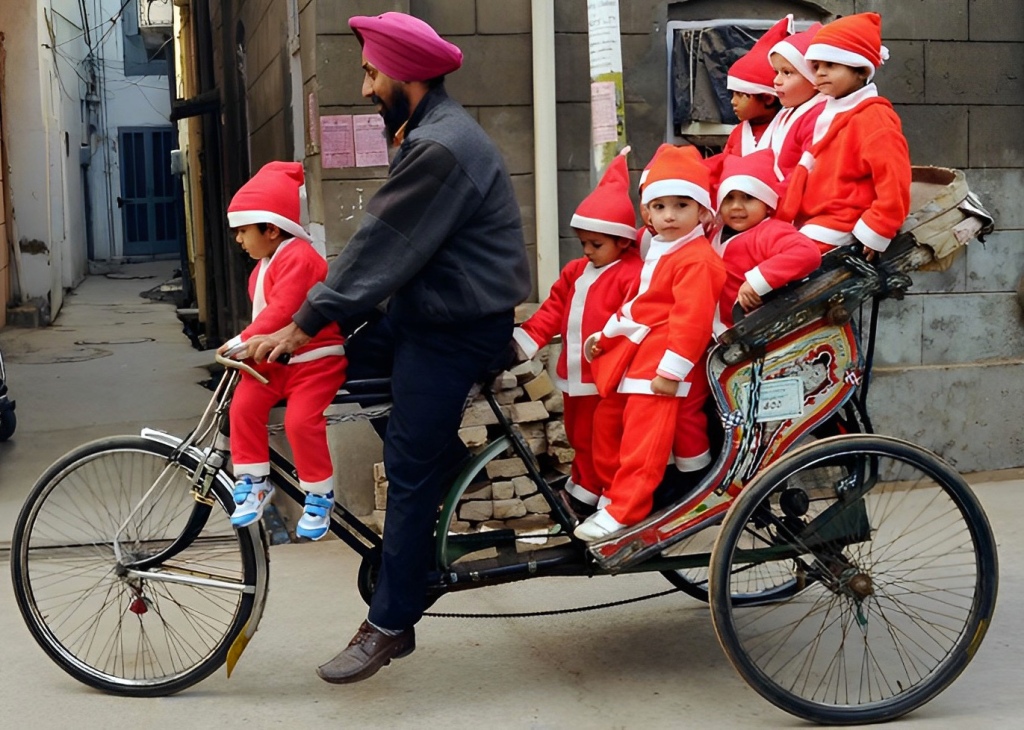
Images from Indian Christmas: Essays, Memories, Hymns: dressed up as Santa Claus leave for school in Punjab. (Picture courtesy: Ecocabs,Fazilka).
There are several other aspects of Christmas celebrations too. The Christmas bazaars are now increasingly fashionable in bigger cities. The choral Christmas concerts and Christmas parties are big community affairs, with dancing, community feasts, Christmas songs, and general bonhomie. Across the Chhota Nagpur area, tribal Christians celebrate with a community picnic lunch, while many coastal villages in Kerala have a tradition of partying on beaches, with the partying spilling over into catamarans going out into the surf. In Kolkata’s predominantly Anglo-Indian enclave of Bow Bazar, Santa Claus traditionally comes to the party in a rickshaw, and in much of northeast India, the entire community may indulge in a pot-luck community feast at Christmas time. Thus Liddle states:
“Missionaries to Indian shores, whether St Thomas or later evangelists from Portugal, France, Britain, or wherever brought us the religion; we adopted the faith, but reserved for ourselves the right to decide how we’d celebrate its festivals.”
Apart from their separate introductions, the editors have collated twenty-seven entries of different kinds, each one more interesting than the other, that showcase the richness and variety of Christmas celebrations across the country. Though Christianity may have come to much of India by way of missionaries from Europe or America, it does not mean that the religion remained a Western construct. Indians adopted Christianity but made it their own. They translated the Bible into different Indian languages, translated their hymns, and composed many of their own. They built churches which they at times decorated in their own much-loved ways. Their feasts comprised of food that was often like the ones consumed during Holi or Diwali.
Thus, Christmas in India turned to a great Indian festival that highlighted the syncretism of our culture. Damodar Mauzo, Nilima Das, Vivek Menezes, Easterine Kire, Hansda Sowvendra Shekhar, Nazes Afroz, Elizabeth Kuruvilla, Jane Borges and Mary Sushma Kindo, among others, write about Christmas in Goa, Nagaland, Kerala, Jharkhand, Delhi, Kolkata, Mumbai, Shillong and Saharanpur. Arul Cellatturai writes tender poems in the Pillaitamil tradition to the moon about Baby Jesus, and Punjabi singers compose tappe-boliyan about Mary and her infant. There are Mughal miniatures depicting the birth of Jesus, paintings by Jyoti Sahi and Sister Claire inspired by folk art, and pictures of Christmas celebrations in Aizawl, Bengaluru, Chennai and Kochi and these visual demonstrations enrich the text further.
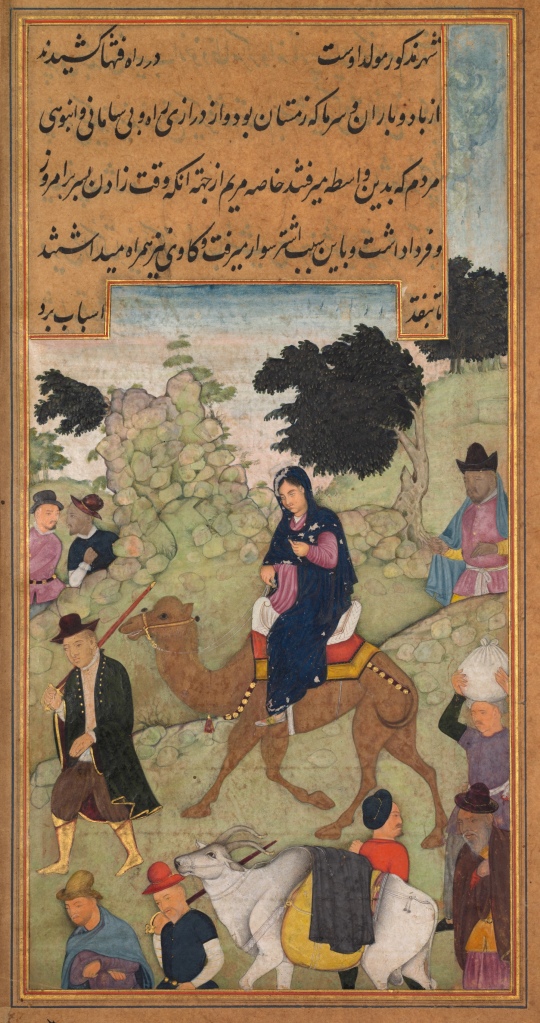
Seventeenth-century painting depicting Mary and Joseph travelling to Bethlehem. From a Mir’at al-quds of Father Jerome, 2005, Cleveland Museum of Art. (Wikimedia Commons) ‘Mother Mary and Child Christ’. Mid-eighteenth century, late Mughal, Muhammad Shah period. National Museum of India, New Delhi (Wikimedia Commons)Images from Indian Christmas: Essays, Memories, Hymns
Interestingly, the very first entry of this anthology is an excerpt from the final two sections of one of Rabindranath Tagore’s finest long poems, inspired by the life of Jesus Christ. Tagore wrote the poem “The Child” in 1930, first in English and translated it himself into Bengali the following year, titling it “Sishutirtha.” But many years even before that, every Christmas in Santiniketan, Tagore would give a talk about Christ’s life and message. Speaking on 25 December 1910, he said:
“The Christians call Jesus Man of Sorrow, for he has taken great suffering on himself. And by this he has made human beings great, has shown that the human beings stand above suffering.”
India celebrates Christmas with its own regional flair, its own flavour. Some elements are the same almost everywhere; others differ widely. What binds them together is that they are all, in their way, a celebration of the most exuberant festival in the Christian calendar.
Apart from the solemnity of the Church services, there is a lot of merrymaking that includes the food and drink, the song and dance. The songs often span everything from the stirring ‘Hallulujah Chorus’ to vibrant paeans sung in every language from Punjabi to Tamil, Hindi to Munda, Khariya and Mizo tawng.
Among the more secular aspects of Christmas celebrations are the decorations, and this is where things get even more eclectic. Whereas cities and towns abound in a good deal of mass decorating, with streets and public places being prettied up weeks in advance, rural India has its own norms, its own traditions. Wreaths and decorated conifers are unknown, for instance, in the villages of the Chhota Nagpur region; instead, mango leaves, marigolds and paper streamers may be used, and the tree to be decorated may well be a sal or a mango tree. Nirupama Dutt tells us how since her city had no firs and pines, she got her brother’s colleague to fetch a small kikar tree as kikars grew aplenty in the wild empty plots all over Chandigarh. In many entries we read about how Christmas decorations were rarely purchased but were cleverly constructed at home.
A very integral part of the Christmas celebrations of course is music. In many Goan Catholic neighbourhoods, Jim Reeves continued to haunt the listeners in his smooth baritone: “I’ll have a blue Christmas without you/ I’ll be so blue thinking about you/ Decorations of red on a green Christmas tree/ Won’t mean a thing, dear, if you’re not here with me.” Simultaneously, the words and music of “A Christmas Prayer” by Alfred J D’Souza are as follows: “Play on your flute/ Bhaiyya, Bhaiyya/ Jesus the saviour has come./ Put on your ghungroos/ Sister, Sister/ Dance to the beat of the drums!/ Light up a deepam in your window/ Doorstep, don with rangoli/ Strings of jasmine, scent your household/ Burn the sandalwood and ghee,/ Call your neighbour in, smear vermillion/ Write on his forehead to show/ A sign that we are one/ Through God’s eternal Son/ In friendship and in love ever more!/ Ah! Ah!” But the most popular Christmas song was of course “Jingle bells, jingle bells, jingle all the way….”
In “Christmas Boots and Carols in Shillong”, Patricia Mukhim tells us how the word ‘Christmas’ triggers a whole host of activities in Meghalaya and other Northeastern states that have a predominantly Christian population. Apart from cleaning and painting the houses, everything looks like fairyland during Christmas, a day for which they have been waiting for an entire year. She particularly mentions the camaraderie that prevails during this time:
“Christmas is a time when invitations are not needed. Friends can land up at each others’ homes any time on Christmas Eve to celebrate. Most friends drop by with a bottle of wine and others pool in the snacks and the party continues until the wee hours of morning. It’s one day in the year when the state laws that noise should end at 10 p.m. is violated with gay abandon. …Shillong [is] a very special place on Planet Earth. Everyone from the chief minister down can strum the guitar and has a voice that could put lesser mortals to shame. And Christmas is also a day when all VIPism and formalities are set aside. You can land up at anyone’s home and be welcomed in. It does not matter whether someone is the chief minister, a top cop, or the terrifying headmistress of your school.”
One very significant common theme in all the multifarious entries is the detail descriptions provided on food, especially the makeshift way Christmas cakes are baked in every home and the Indian way meat and other specialties are being prepared on the special day. There are several entries that give us details about the particular food that was prepared and consumed at the time along with actual recipes about baking cakes. “Christmas Pakwan[1]” by Jaya Bhattcharji Rose, “The Spirit of Christmas Cake” by Priti David, and “Armenian Christmas Food in Calcutta” by Mohona Kanjilal need special mention in this context. Liddle in her introduction wrote:
“Our Christmas cakes are a reflection of how India celebrates Christmas: with its own religious flair, its own flavour. Some elements are the same almost everywhere; others differ widely. What binds them together is that they are all, in their way, a celebration of the most exuberant festival in the Christian calendar.”
Later in her article “Cake Ki Roti at Dua ka Ghar[2],” the house where they lived in Saharanpur, Uttar Pradesh, she wrote how her parents told her that ‘bajre ki tikiyas’, thin patties made of pearl millet flour sweetened with jaggery, used to be a staple at Christmas teatime at Dua ka Ghar[3], though she has no recollection of those. She of course vividly recalls the ‘cake ki roti’. This indigenisation of Christmas is something that’s most vividly seen in the feasting that accompanies Christmas celebrations across the country. While hotels and restaurants in big cities lay out spreads of roast turkey (or chicken, more often), roast potatoes and Christmas puddings, the average Indian Christian household may have a Christmas feast that comprises largely of markedly regional dishes.
In Kerala, for instance, duck curry with appams is likely to be the piece de resistance. In Nagaland, pork curries rich in chillies and bamboo shoots are popular, and a whole roast suckling pig (with spicy chutneys to accompany it) may hold centre stage. A sausage pulao, sorpotel and xacuti would be part of the spread in Goa, and all across a wide swathe of north India, biriyanis, curries, and shami kababs are de rigueur at Christmas.
This beautifully done book, along with several coloured pictures, endorses the idea of religious syncretism that prevails in India. As a coiner of words, Nilima Das came up with the idea that ‘Christianism’ in our churches is after all, a kind of ‘Hinduanity’ (“Made in India and All of That”). This reviewer feels guilty of not being able to mention each of the unique entries separately that this anthology contains, so it is suggested that this is a unique book to enjoy reading, to possess, as well as to gift anyone during the ensuing Christmas season.
Between 1990 and 2017 one in seven people in India suffered from mental illness ranging from depression and anxiety to severe conditions such as schizophrenia. However, the depiction of this in cinema has been poor and sensationalist contends Shantanu Ray Chaudhuri.
‘In a lot of films there is the underlying message that all the patient really needs is love and affection. There is a tendency in films to try and normalise mental illness by saying that patients don’t need treatment, they need love. The audience gets the two extremes and what we are not getting are portrayals of people with chronic illness.’ – Dr Cleo Van Velsen, psychiatrist
A poet loses his mental balance on seeing his beloved fall to her death. And what do his family members do? They approach a dancing girl in a brothel to marry him in a bid to get him cured. In a fit of madness, he even rapes her, and she becomes pregnant. But the typical ‘good Indian woman’ that she is, she perseveres in her effort. A few convoluted plot-turns later, the poet gets into a brawl with the villain, resulting in the latter falling to his death, much like his lover. Lo and behold! He is cured, though now he has no memory of the dancing girl.
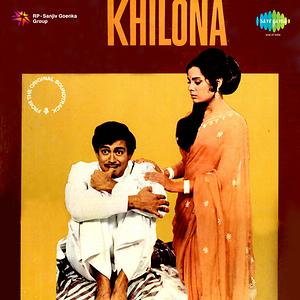
A nurse in a mental hospital is asked to take care of a patient as part of an ‘experiment’ that its dictatorial army doctor president wants to conduct. The patient is cured but it affects the nurse’s emotional stability. Insensitive to her turmoil, the doctor, preening with the ‘success’ of his experiment, more or less browbeats her into another one with a new patient. With disastrous consequences. Not only is the science/medicine of it dodgy (romantic love to cure a person), it also has the doctor spouting a line like ‘there’s nothing like a woman’s love and care to heal an unstable mind’, while the inmates going around the institute are, in the words of writer and critic Madhulika Liddle, the quintessential Hindi-film, “singing-screeching-long-haired lunatics in films like Khilona, Pagla Kahin Ka, Anhonee, etc”.
These are two of Hindi cinema’s most celebrated films, both huge commercial and critical successes: Khilona and Khamoshi. And both equally and criminally unaware of what mental health entails. Over fifty years later, on the evidence of films like Atarangi Re, Hasee Toh Phasee, Judgemental Hai Kya, Bhool Bhulaiyaa, Anjana Anjani, Tere Naam (in Hindi) and Hridpindo, Habgi Gabji and Bela Shuru (in Bengali), films continue to be as clueless about mental health conditions (MCHs) and how to deal with them.
As Vidushi Duggal, clinical psychologist and co-founder of Accept, says, “Mental health issues are grossly misrepresented in Hindi cinema. First, there is a tendency among filmmakers to select only the more overt (and hence the more ‘dramatic’) MHCs for portrayal, such as schizophrenia, bipolar disorder, dissociative identity disorder to name a few. Second, the lack of proper understanding and research, coupled with creative liberties aimed at sensational dramatisation, manifests as misinformed content.”
Her colleague and co-founder of Accept, Nikita Ramachandran, also a clinical psychologist, adds, “The depiction of mental health, despite advancement in literature, conversations and growing awareness remains largely uninformed. The core of this depiction is a viewing of mental health from the lens of chronicity and severity of illness. The scope of mental health has largely been limited to insidious mental health conditions such as depressive disorders, OCD, schizophrenia, with some focus on developmental disorders such as intellectual disability, autism or learning disorders. This depiction itself poses a problem, due to the association of mental health with illness/disease. The illness-lens fails to consider a fundamental truth – that mental health exists by virtue of being human.”
Leave alone such classic portrayals as A Streetcar Named Desire, Ingmar Bergman’s Persona and Hour of the Wolf, going back to the 1950s and ’60s, to more contemporary ones as One Flew Over the Cuckoo’s Nest, What’s Eating Gilbert Grape, A Beautiful Mind, Silver Linings Playbook, one would be hard-pressed to find one Hindi or Bengali film which addresses the theme with any verisimilitude till almost the new millennium.
There was the odd Mahesh Bhatt film like Arth and Phir Teri Kahani Yaad Aayi. One character that might escape attention when we talk of MHCs is the tenacious cop played by Boman Irani in Jijy Philip’s My Wife’s Murder, which has an interesting and understated subtext linking a food fetish with subtle melancholia.
Over the last couple of decades, films depicting mental illnesses have proliferated, sadly, with little responsibility and almost no understanding. While it is interesting that the films that managed to get some of it right were all made in the new millennium – reflecting a greater awareness about MHCs and greater acceptance in popular discourse – it is equally frustrating that some of the most pathetic films too have been made in the last two decades. As Vidushi Duggal says, “They depict an oversimplified and skewed portrayal of the MHCs in question, replete with stereotypical and insensitive portrayals that are magnified for dramatic effect.”
But this has been par for the course from, say, a Pagla Kahin Ka in 1970 and other films of the era which showed electroconvulsive therapy (ECT) as the cure for all symptoms of ‘madness’, to Krazzy 4 in 2008, where four patients suffering from every disorder possible escape the institution they have been committed to. Their experiences and conditions are then played out for laughs in a manner that is not only insensitive but also offensive.
The Films That Got It Partly Right
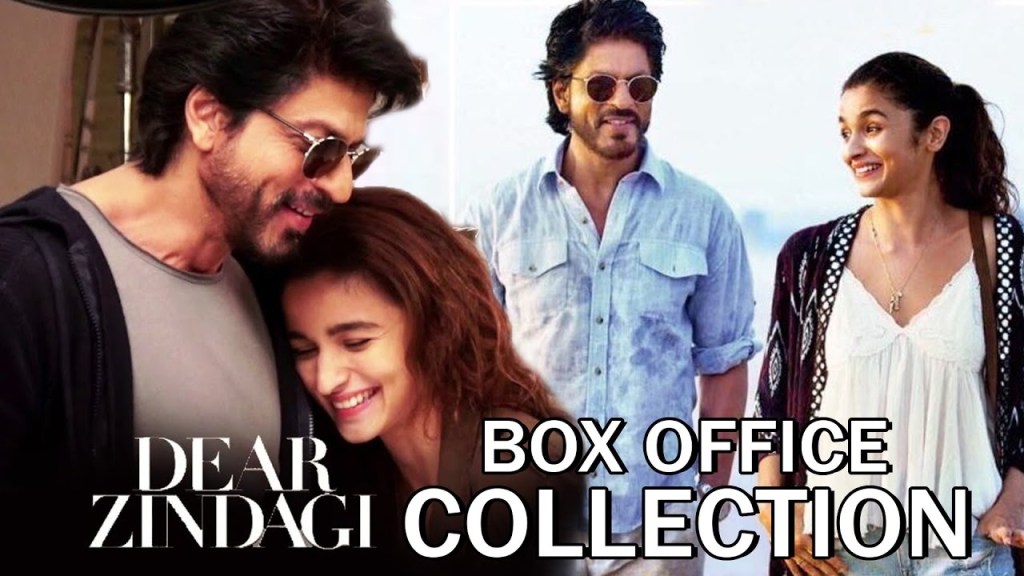
Dear Zindagi: That this Gauri Shinde film has been feted in the India media despite its problematic therapist-client relationship says a lot about how starved we are of responsible content. It needs to be applauded for its very nuanced take on mental health (Alia Bhatt[1] is a revelation), with none of the cliches that we are used to. It is also one of the few films that has its protagonist seeking therapy and that depicts sessions with a psychiatrist. As Vidushi Duggal says, “I can think of no realistic psychiatrist in Indian cinema. SRK’s[2] character may come close to a halfway decent portrayal of a psychotherapist in practice, but it too has problematic elements.” One major problem pertains to the relationship between the client and therapist with the latter even taking the former out to the beach for ‘sessions’ and talking about his own failed marriage and relationship with his son. A strict no-no as far as therapy is concerned in real life. As Anupama Chopra pointed out, the film offers a “Vogue version of therapy – a lovely expansive Goa house, sessions during walks on the beach, cycling together and dialogue like har tooti hui cheez jodi ja sakti hai[3]. It’s manicured and pat.”
Taare Zameen Par: This much-lauded film gave us the very real world of a dyslexic child and his relationship with a teacher who recognises his problem and inspires him and people around him to come to terms with and understand the very real gifts the child possesses. Though the child’s trouble with simple arithmetic is more a trait of dyscalculia than dyslexia, it remains a rare Hindi film that has found mention in peer-reviewed academic journals like Annals of Indian Academy of Neurology and Indian Journal of Psychiatry. These journals have praised the film for its general accuracy in depicting dyslexia which “deserves to be vastly appreciated as an earnest endeavour to portray with sensitivity and empathetically diagnose a malady”, blending ‘modern professional knowledge’ with a ‘humane approach’ in working with a dyslexic child. However, it needs to be mentioned that dyslexia is a learning disability and not a mental illness. That the filmmakers club it with other mental illnesses shows how mental health is not correctly understood.
15 Park Avenue: The story of a woman, Mithi (Konkona Sen Sharma[4]), conjuring a utopia in her mind – an imaginary house, 15 Park Avenue, that gives the film its name, happy mother of five imaginary children, wife of an imaginary husband – and living with it, Aparna Sen’s [5]film, shattering and affecting in equal measure, addresses mental illness with a sensitivity and accuracy that almost all Indian films lack. The telling moment when Mithi’s sister (played by Shabana Azmi[6]) tells the psychiatrist (Dhritiman Chatterjee[7]), “What right do we have to take away the happiness she gets from her imaginary world?”, raises an issue that is rarely addressed, the subjectivity of reality: hallucinations can be just as compelling as ‘reality’. Just because someone’s perceptions of reality is at variance from ours, does it give us the right to term the former ‘abnormal’ or object to it?
Death in the Gunj: Konkona Sen Sharma’s directorial debut is another rare film that addresses the unravelling of a fragile mind over a family holiday. Given that the film is set in 1979, an era when there was no conversation around the subject, there is no overt mention of mental health. Also, though Shutu (Vikrant Massey[8]) may be the one who comes across as prone to what could be called mental health issues, the film strips the veneer off the ‘loving family’ to show how we are complicit with our toxic masculinity and bullying in driving a frail mind off the rails.
Other films that got aspects of it right are Black, which despite going over the top in many crucial sequences offers a very nuanced understanding of Alzheimer’s, and Kartik Calling Kartik, one of the first Hindi films dealing with schizophrenia.
The Bad and the Ugly
Tere Naam: Leading the list would be this Salman Khan [9]starrer that featured a mentally unstable protagonist whose head is shaved, and who is tied in chains. The mental hospital sequence in the film is a gratuitous misrepresentation. In a gross failure of messaging, like Shah Rukh Khan’s Rahul in Darr, Radhe Mohan’s obsessiveness, in keeping with the tradition of ‘heroes’ stalking women in Hindi films, is presented as worthy of emulation. One aspect of Hindi films dealing with mental health issues that needs to be called out is the manner in which they position unrequited love/obsession as a trigger, often portraying that as a fashionable antihero statement. Which of course harks back to Saratchandra Chattopadhyay’s Devdas, the original ‘antihero’ who could have done with psychiatric consultation.
Vidushi Duggal says, “While many films have gone on to give this impression, I would be wary of making that connection as it is yet another example of misinformed sensationalisation. Mental health issues are complex and have multiple causal factors – genetic, biological, psychological and social/environmental. Nikita Ramachandran adds: “The depiction of someone unravelling or descending into a breakdown or developing a mental health condition is an inaccurate portrayal, as well as an overgeneralisation that caters to the general theme of love, attempting to add an ‘interesting’ dimension or layer to this portrayal of love. Equally problematic is the manner in which mental health has been pathologised for a long time. Behaviour seen as deviant, classified as ‘abnormal’, characters depicted with mental health issues were villainized. The violent death has been an age-old trope of a satisfactory ‘The End’, where closure has been synonymous with death and a general depiction of ‘good over evil’.”
Bhool Bhulaiyaa: A psychological horror comedy (!) that ostensibly deals with dissociative identity disorder (DID), this colossal hit makes a series of missteps about mental disorders. Hypnosis as a cure for DID, ‘treatments’ rooted in superstition (including a psychological condition that is cured when the doctor slaps the patient), ‘psychiatrists’ who applaud themselves as godmen – it is an endless list of shocking distortions. Akshay Kumar [10] as a psychiatrist. Need one say more?
Atarangi Re: ‘I am a psychiatrist, and I know women.’ That’s a dialogue a doctor mouths and that’s the level of discourse around mental health this film stoops to. In another sequence the doctor clubs together people with bipolar, psychiatrist disorders and schizophrenia in a manner that’s downright offensive. In one sequence, the ‘imaginary’ character Sajjad, a magician, is supposed to make the Taj Mahal disappear and fails to do so only because the patient has popped a pill immediately before the ‘act’. Filmmaker Aanand L. Rai is a serial offender when it comes to woeful depiction of mental health issues, with the protagonists of Tanu Weds Manu Returns shown consulting a marriage counsellor in an asylum! The man describes his wife’s irrational behaviour as an example of bipolarity to which the doctor responds: “In that case, every woman is bipolar.”
Anjana Anjani: Writing about the ‘hollow space in my heart’ that made her use the term ‘death thoughts’, Therese Borchard says in her blog, “The most difficult thing I will ever do in my lifetime is to not take my life.” That is everything that is wrong Anjana Anjani, where two adults battling life crises enter a pact to take their own lives. A hugely problematic representation that romanticises suicide, it makes a mockery of the breakdown that drives people to such despair.
Hasee Toh Phasee: The protagonist here, described as ‘mental Meeta’ in the film’s promotional material, blinks her eyes incessantly, twitches her nose, is extremely jittery – all of which are shown as symptomatic of ‘madness’. She is constantly popping pills to control these sensations which lead to odd situations.
The Situation in Bengali Cinema
Such is the paucity of characters dealing with MHCs in Bengali cinema that a few filmmakers I reached out to, could not come up with a single film on the subject. One pointed out Aparna Sen’s Paromitar Ekdin for its realistic and heartfelt delineation of the character of Khuku, a girl with intellectual disability who is referred to as ‘schizophrenic’ by other characters in the film. Uttam Kumar’s[11]1955 film Hrad, based on a novel by Bimal Kar, is another instance of a film that places its protagonist in an asylum. He seems to have forgotten parts of his life and behaves in a manner that make people feel he is ‘mad’. There’s of course Deep Jwele Jaai, the Bengali original of Khamoshi.
Three recent films stand out as examples of how clueless writers and filmmakers are when it comes to depiction of MHCs. Shieladityo Moulik’s Hridpindo is the story of a woman who, because of an accident and the brain surgery that follows, is left with her fourteen-year-old self, with no memory of her life after, including her husband. However, her pronounced lisp and the way she behaves, constantly demanding attention, leaves you wondering if she is a child of seven! Not to mention that a film dealing with a brain surgery is called Hridpindo.
Raj Chakraborty’s Habgi Gabji, the title a take-off on PUBG, addresses the very relevant theme of gaming and mobile addiction and its frightening consequences on young minds. Bolstered by a good turn by child actor Samantak Dyuti Maitra, the film, despite its noble intentions, suffers from the same problems that beset many other films of the genre. The child is taken to a psychiatrist. However, the session does not take place in a professional space but in the doctor’s drawing room. There is little emphasis on understanding, prevention and cure, with a large part of the meandering script devoted to the child’s violence and alienation. Which is disappointing given that the WHO has defined gaming disorder as a “pattern of behaviour characterised by impaired control over gaming, increasing priority given to gaming over other activities” and has flagged the escalation of gaming as a major health risk.
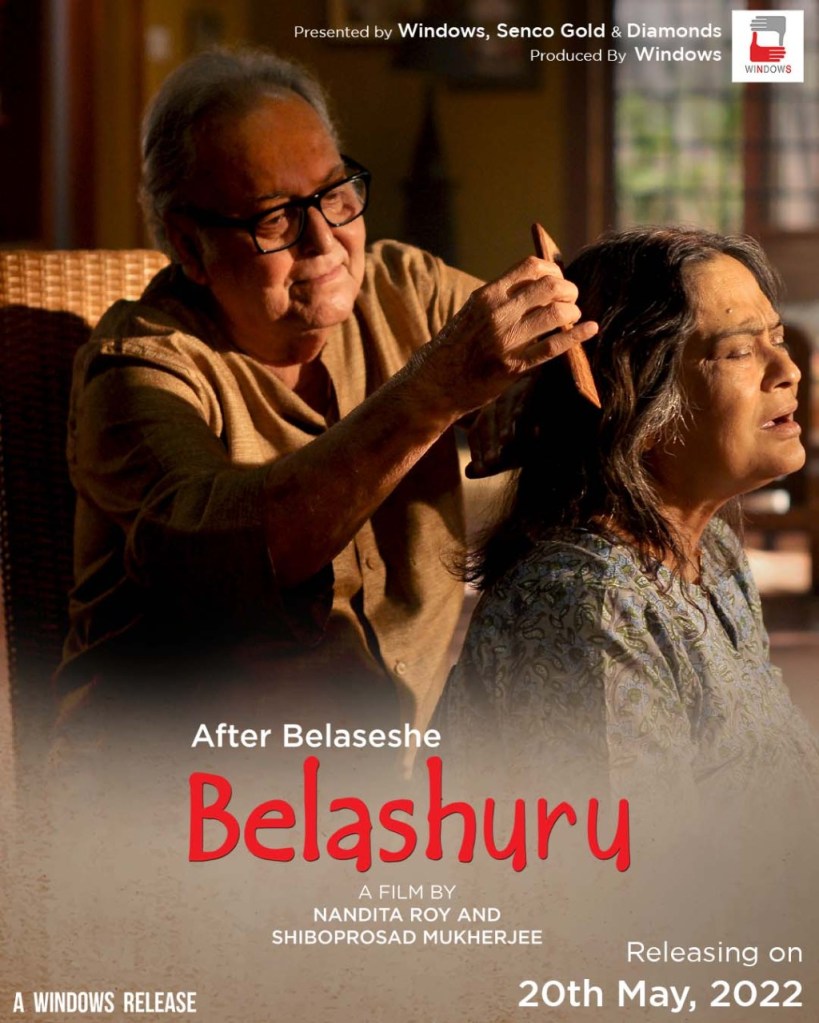
Bela Shuru, one of the biggest successes of 2022, is a high-intensity melodrama with a social message, typical of films by the filmmaker duo Nandita Roy and Shiboprasad Mukherjee. It addresses the onset of Alzheimer’s in the elderly but the symptoms that the wife displays – smearing her face with vermilion, among others – is more in tune with lunacy than the more insidious effects of Alzheimer’s. It is obvious that the filmmakers opt for the overdramatic and take creative liberties in the depiction of mental health issues, dumbing down the narrative, in the process bracketing different illnesses under the same umbrella and distorting the truth.
The lack of proper representation in Bengali cinema is also surprising given that its biggest icon, Satyajit Ray, introduced the world to many unheard-of mental health issues in his stories. Nakur Chandra Biswas in the Shonku books, for example, is a psychic who experiences flashes of the past and future. Barin Bhowmick-er Byaram is the story of a kleptomaniac who has been through therapy. The protagonist of Bipin Chowdhury-r Smritibhrom suffers from a curious case of memory loss, while Fritz explores the childhood trauma of its 37-year-old protagonist. In the Feluda story, Dr Munshi-r Diary, we have a patient who suffers from a persecution complex, an irrational fear or feeling that one is the object or target of collective hostility and persecution. What is fascinating is that Ray wrote about these conditions decades before they became part of the public discourse in India. However, none of these were adapted into cinema.
The Responsibility of Filmmakers and Writers
It is critical to note that cinema plays a significant role in shaping, creating and developing one’s understanding of reality. Films have of late started investing in an intimacy director/coordinator. Maybe it is time to have good psychiatric consultants too. Nikita Ramachandran says, “Mental health and emotional well-being are nuanced, and every story is different. It is challenging to depict the many layers, and also portray these in ways that will resonate or connect with the larger audience.” Vidushi Duggal is of the opinion that, “While acknowledging that an exhaustive depiction of all nuances of mental health is beyond the scope of a time-limited medium that is essentially designed for entertainment, as a community we need to remain cognizant of the potent and pervasive influence of cinema on creating awareness and developing/shaping attitudes. This calls for responsible filmmaking that involves adequate research on the mental health issues being portrayed.”
(Note: For Vidushi Duggal, who listened. Nikita Ramachandran, thank you for your inputs.)
A shorter version of this essay was published in Telegraph earlier
Shantanu Ray Chaudhuriis a film buff, editor, publisher, film critic and writer. Books commissioned and edited by him have won the National Award for Best Book on Cinema twice and the inaugural MAMI (Mumbai Academy of Moving Images) Award for Best Writing on Cinema. In 2017, he was named Editor of the Year by the apex publishing body, Publishing Next. He has contributed to a number of magazines and websites like The Daily Eye, Cinemaazi, Film Companion, The Wire, Outlook, The Taj, and others. He is the author of two books: Whims – A Book of Poems(published by Writers Workshop) and Icons from Bollywood (published by Penguin/Puffin).







 Borderless