Categories
Review

‘A Story of Moral Contradictions and Human Cost’

Book Review by Bhaskar Parichha

Title: India in the Second World War: An Emotional History

Author: Diya Gupta

Publisher: Rupa Publications

When we think of the Second World War, the images that most often come to mind are those of Europe’s ruin — the Blitz in London, the camps in Poland, the victory parades in Paris. India, though one of the largest contributors of men and material to the Allied cause, usually slips to the margins of that global story.

Diya Gupta’s India in the Second World War: An Emotional History sets out to correct that imbalance — and does so not by recounting battles or strategies, but by uncovering the feelings, memories, and private sufferings that shaped India’s wartime experience.

In this groundbreaking work, Gupta turns away from generals and governments to listen instead to soldiers, families, poets, and activists. Through letters, diaries, photographs, memoirs, and literary texts in both English and Bengali, she reconstructs the emotional life of a country caught in the contradictions of fighting for freedom while serving an empire. Her book is as much about the inner weather of a people at war as it is about history itself.

The story begins with the strange binary of India’s position in the 1940s. The British declared India a participant in the war without consulting its leaders. While nationalist politics in the country were reaching their boiling point, over two million Indian men were dispatched to fight on foreign fronts — from North Africa to Burma — under the Union Jack. They fought for a cause that was not their own, for a government that denied them liberty.

Gupta’s focus on emotion allows her to expose this moral paradox with nuance. The letters of sepoys from the Middle East reveal homesickness, confusion, and occasional pride; families back home are haunted by anxiety, caught between imperial propaganda and the whisper of rebellion. The result is a portrait of divided loyalties — of men and women who inhabited both the empire’s war and the nationalist struggle at once.

But it was the Bengal Famine of 1943 that made the war’s cost most brutally visible. Triggered by colonial economic mismanagement and wartime policies, it claimed nearly three million lives. Gupta’s chapter, ‘Every Day I Witness Nightmares’, captures this catastrophe through eyewitness accounts and literature that tried to make sense of it. Hunger, she suggests, became not only a physical condition but an emotional state — an emblem of the moral starvation of empire.

In poems and essays by writers such as Sukanta Bhattacharya and Mulk Raj Anand, the famine appears as a mirror held up to civilisation’s collapse. Tagore’s haunting late work, ‘Crisis in Civilisation’, forms a central thread in Gupta’s narrative — the poet’s disillusionment with humanity, his grief at the world’s descent into barbarism, and his call for renewal through compassion.

One of Gupta’s greatest achievements lies in her ability to braid together the intimate and the historical. The war years, she shows, were also years of reflection and redefinition. In the chapter named ‘The Thing That Was Lost’, she explores how the idea of “home” was transformed by displacement — whether through the departure of men to distant fronts or through the forced migrations caused by famine and air raids. Home, once a site of safety, became a space of longing and loss.

Another chapter, ‘Close to Me as My Very Own Brother”, turns the spotlight on male friendships in Indian war writing. Here, Gupta uncovers the tenderness that often underpinned comradeship — relationships that blurred the lines between duty and affection, and that offered emotional sustenance amid violence and uncertainty. In these pages, she challenges the stereotypes of stoic masculinity, showing that vulnerability and empathy were also part of the soldier’s story.

While the battlefield has long been the focus of war history, Gupta gives equal weight to those who remained behind. The women who waited, worked, and wrote — often in silence — emerge as witnesses in their own right.

Activists such as Tara Ali Baig, nurses and doctors on the Burma front, and countless unnamed mothers and wives populate the emotional landscape she paints. Through their letters and memoirs, we see how war invaded domestic spaces, transforming everyday life into a theatre of endurance.

Gupta writes of “anguished hearts” not as metaphor but as historical evidence. The fear of air raids, the sight of hungry children, the absence of loved ones — these, too, were the realities of India’s war. By restoring emotion to the historical record, she argues that feelings are not soft data but vital clues to understanding how societies survive crisis.

What makes the book so compelling is its insistence on looking at the global war from the Indian perspective. For Britain, the war was a fight for democracy and civilisation; for India, it was also a confrontation with the hypocrisy of those ideals. As Gupta notes, the same empire that called for liberty in Europe jailed Gandhi and suppressed the Quit India movement at home.

Seen from Calcutta rather than London, the war ceases to be a heroic narrative of Allied victory and becomes instead a story of moral contradictions and human cost. Gupta’s intervention is both historiographical and ethical: she reminds us that global history must include the emotions of those who bore its burdens without sharing in its glory.

A historian with literary sensibility, Gupta writes with precision, empathy, and grace. Her prose balances academic rigour with narrative warmth, allowing the reader to move effortlessly between archival fragments and the larger questions they evoke. Each chapter unfolds like a story, yet the cumulative effect is that of a symphony — voices rising and blending, carrying echoes of pain, pride, and endurance.

Gupta’s work has been widely celebrated for its originality and emotional depth. Shortlisted for the 2024 Gladstone Book Prize, it has drawn praise from scholars and critics alike for its fresh approach to war history. What distinguishes her study is not only its range of sources but its refusal to treat emotion as peripheral. For Gupta, feelings are the connective tissue of history — the invisible threads binding individuals to events, memory to nationhood.

The book is  more than the  war. It is about the human capacity to feel in times of fracture — to love, mourn, and imagine even amid devastation. It shows that the emotional life of a people can illuminate their political choices, their artistic expressions, and their vision of freedom.

By reassembling scattered memories and forgotten emotions, Diya Gupta offers a new way of reading both India and the world in the 1940s. Her India is not a passive colony swept along by imperial tides, but a living, feeling community navigating grief and hope in equal measure. The war, as she reminds us, did not just redraw maps; it reshaped minds and hearts.

In giving voice to those who seldom found one in history books — the sepoy writing from the desert, the poet confronting famine, the mother waiting for news — Gupta transforms statistics into stories, and stories into testimony. Her book stands as a reminder that history is not only written in treaties or timelines but in tears, silences, and the fragile language of feeling.

It ensures that those emotional histories, too long buried under the dust of archives, are heard again — quietly, insistently, and with the full weight of their truth.

.

Bhaskar Parichha is a journalist and author of Cyclones in Odisha: Landfall, Wreckage and ResilienceUnbiasedNo Strings Attached: Writings on Odisha and Biju Patnaik – A Political Biography. He lives in Bhubaneswar and writes bilingually. Besides writing for newspapers, he also reviews books on various media platforms.

PLEASE NOTE: ARTICLES CAN ONLY BE REPRODUCED IN OTHER SITES WITH DUE ACKNOWLEDGEMENT TO BORDERLESS JOURNAL

Click here to access the Borderless anthology, Monalisa No Longer Smiles

Click here to access Monalisa No Longer Smiles on Amazon International

Categories
Poetry

Put your Glad-Rags On by Jenny Middleton

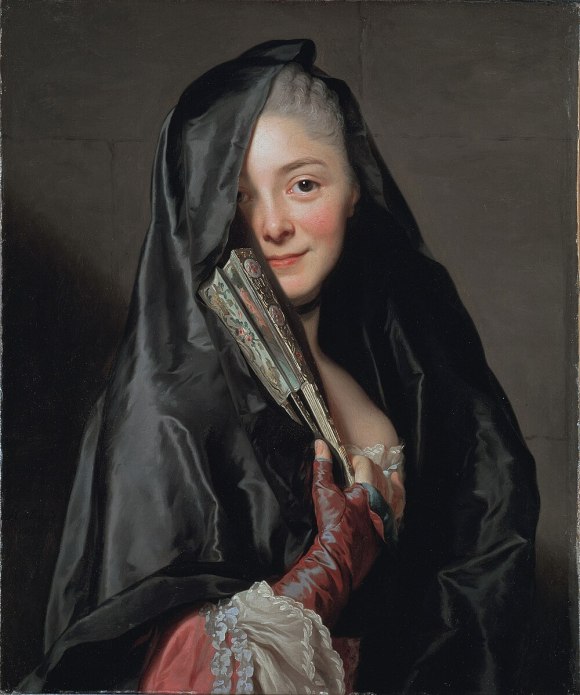
Painting by Alexander Roslin  (1718–1793)
PUT YOUR GLAD-RAGS ON

Wear your mother’s black velvet stole
like an unruined autumn day
sung of in poems — make them real.
Wear your mother’s black velvet stole—
It’s your turn, your spell to extoll
to ward away work’s drudgery
wear your mother’s black velvet stole
like an unruined autumn day.

Jenny Middleton is a working mum and writes whenever she can amid the fun and chaos of family life. Her poetry is published in several printed anthologies, magazines and online poetry sites.  Jenny lives in London with her husband, two children and two very lovely, crazy cats.  You can read more of her poems at her website  https://www.jmiddletonpoems.com.

.

PLEASE NOTE: ARTICLES CAN ONLY BE REPRODUCED IN OTHER SITES WITH DUE ACKNOWLEDGEMENT TO BORDERLESS JOURNAL

Click here to access the Borderless anthology, Monalisa No Longer Smiles

Click here to access Monalisa No Longer Smiles on Kindle Amazon International
Categories
Poetry

Two Poems by Stephen Druce

A CATASTROPHIC HABITAT


Nothing works in
my small flat -
it's a catastrophic
habitat,

the key to the flat
won't turn in the door,
the sign says three but
it's really number four,

the letterbox opening's
a millimetre wide -
the doorbell rings
but only outside,

security was fitted
with the burglar proof -
so the thieves broke in
through the leaking roof,

a fire broke out and
the smoke alarm failed,
the wall fell down when
I pulled the curtain rail,

the power cuts are frequent
so I'm often in the dark,
the cat can't meow and
the dog can't bark,

the stereo is broken and
the bathroom mirror cracked,
no signal on the wi-fi --
the extractor wont extract,

the microwave blew --
there's a hole in the bin,
the ceiling fell through and
the goldfish can't swim,

the fridge won't close and
the cupboards don't fit --
like my wrong-sized clothes
and the washing line split,

the rocking chair snapped
and I landed on my head,
I bounced into the bedroom
and I broke the waterbed,

the toaster burns the bread
when the settings on low --
the cork's stuck in the bottle
and the plants won't grow,

the vacuum cleaner won't suck --
the light bulbs have popped,
the superglue has never stuck
and all the clocks have stopped,

they undercut the window panes --
they all have two inch gaps,
the gas pipe burst -- I must be cursed --
the building just collapsed.


THEY'LL NEVER KNOW
THE WAY WE FEEL


They'll never know
the way we feel.

they'll know our names
and what we earn --
our capital gains --
our tax return,
and what we're worth --
our height and weight,
our place of birth --
the time and date,
our number flat --
our fixed abode,
our habitat --
our postal code,
our social links --
our network friends,
the way we think --
how much we spend,
our DNA --
the streets we go,
our resume --
the bills we owe,
our hidden scars --
our blood relation,
where we are --
our information,
star sign -- if
our passport's real --
but they'll never know
the way we feel.
From Public Domain

Stephen Philip Druce is based in Shrewsbury UK. He is published in the USA, India, the UK and Canada. He’s written for theatre plays in London and BBC 4 Extra. 

Contact: Instagram – @StephenPhilipDruce

.

PLEASE NOTE: ARTICLES CAN ONLY BE REPRODUCED IN OTHER SITES WITH DUE ACKNOWLEDGEMENT TO BORDERLESS JOURNAL

Click here to access the Borderless anthology, Monalisa No Longer Smiles

Click here to access Monalisa No Longer Smiles on Amazon International

Categories
Review

A Tapestry of Human Stories

Book Review by Rupak Shreshta

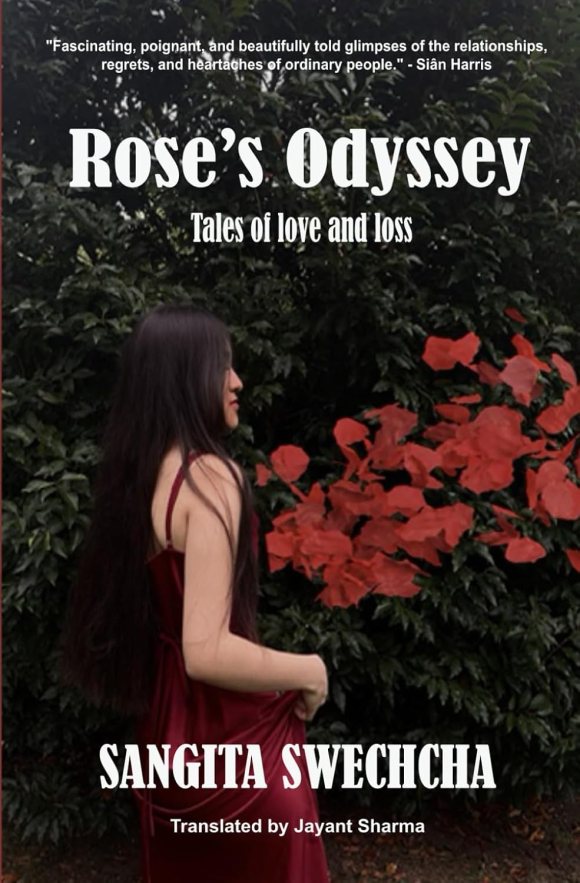
Title: Rose’s Odyssey: Tales of Love and Loss

Author: Sangita Swechcha

Translated from Nepali by Jayant Sharma

Publisher: Book Hill International

Rose’s Odyssey:Tales of Love and Loss is a translation of ‘Gulafsangako Prem1’, a short story collection in Nepali by Sangita Swechcha. Jayant Sharma, the translator, has displayed his incredible skill transmitting  the essence and the texture in his translation as they are in the original version.

Swechcha’s writing moves across geographies and emotional landscapes. In Rose’s Odyssey, we see the influence of her own journey: born and raised in Nepal, her time spent in Australia, and her life in the UK. Her experience of multiple cultures gives her work both depth and relatability. She writes not just as a woman, or a feminist, or a diasporic voice, but as a humanist. Her stories resonate because they are grounded in truth and told with generosity.

Several reviewers on Amazon have echoed the sentiments generated by the stories. Dr. Tamer Mikhail describes the experience as “mesmerising,” noting how vividly the characters come to life. Ketan Varia praises Swechcha’s exploration of how life unfolds and the unintended consequences of human choices, while Nirmala Karanjeet highlights the wit, humour, and deep perception of human emotions in every story. These voices of readers moved by the same qualities.

Among the twenty stories, a few stood out with particular force. The titular story, ‘Rose’s Odyssey’, reminded me in scope and ambition of Homer’s Odyssey. Yet this is no imitation. Swechcha’s tale of love, betrayal, vengeance, and repentance transcends a simple love story. It is a story within stories, a tapestry woven with dramatic shifts and psychological insight.

Another memorable piece is the final story, presented in diary format. The narrative offers a poignant glimpse into diasporic life, told in a male voice, which is an unusual and ambitious choice for a female writer. The story’s ability to inhabit male psychology with such authenticity is no small achievement.

The shortest story, ‘Ram Maya’, dealing with the issue of human trafficking, is devastating. In just a few pages, it trembles with urgency. Then there is ‘Shattered Dream’, a story I had previously read in its original Nepali and was eager to revisit in English. The translation, no easy feat, is executed beautifully, preserving cultural nuances while making the narrative accessible to a broader audience. In fact, I was reminded of Toni Morrison’s The Bluest Eye (1970), particularly in how Sweccha addresses themes of bodily autonomy, survival, and the commodification of womanhood.

What ties all these stories together is Swechcha’s ability to write about complex emotional terrain with elegance and restraint. Each story is deeply personal, yet universal. The immigrant experience, cultural duality, gender, longing, and resilience are all present without ever feeling heavy-handed. It is heartening to see readers on Amazon responding so positively. One reviewer calls it “an easy and interesting read,” while another from Holistic World notes how each tale is “captivating and alluring,” connected by “the thread of love.” This feedback is not only encouraging, it also affirms the book’s power to reach readers from all walks of life.

In addition to the warm reader responses and literary features, I also recall Shahd Mahanvi, author of White Shoes,  at the launch event aptly described Rose’s Odyssey as “a powerful exploration of human emotions.” She added that it is “a compelling collection that delves into themes of control, mistrust, the impulse to hurt those we love, and the complex intersections of human relationships, provoking deep reflection.”

In the year since its release, Rose’s Odyssey has had a successful run, from warm reader responses to literary features, several book signings in the UK and Nepal, and community events. Its journey is far from over. The success of the book is not just a testament to Swechcha’s literary talent, but to her ability to connect across continents, cultures, and hearts.

  1. The Love with a Rose ↩︎

Dr. Rupak Shrestha, a London-based Nepali poet from Pokhara, is acclaimed for diverse literary forms and translation. He also serves as Advisor to the International Nepali Literary Society (INLS) UK Chapter.

.

PLEASE NOTE: ARTICLES CAN ONLY BE REPRODUCED IN OTHER SITES WITH DUE ACKNOWLEDGEMENT TO BORDERLESS JOURNAL. 

Click here to access the Borderless anthology, Monalisa No Longer Smiles

Click here to access Monalisa No Longer Smiles on Kindle Amazon International

Categories
Review

Boats in a Storm: Migrant Narratives

Book Review by Bhaskar Parichha

Title: Boats in a Storm: Law, Migration, and Decolonization in South and Southeast Asia, 1942–1962

Author: Kalyani Ramnath

Publisher: Westland/Context

The legal frameworks established during the period from 1942 to 1962 in South and Southeast Asia played a crucial role in shaping migration patterns and influencing decolonisation processes. This era witnessed significant changes as countries in these regions sought to redefine their legal systems in the wake of colonial rule, which in turn affected the movement of people across borders.

Migration patterns were influenced by various factors, including the aftermath of World War II, the struggle for independence, and the establishment of new national identities. Additionally, the decolonisation processes during this time were marked by the emergence of new legal frameworks that aimed to address the complexities of post-colonial governance and the rights of migrants. Understanding the interplay between these legal frameworks, migration trends, and decolonisation efforts provides valuable insights into the socio-political landscape of South and Southeast Asia during this transformative period.

Boats in a Storm: Law, Migration, and Decolonization in South and Southeast Asia, 1942–1962  authored by Kalyani Ramnath is a thoroughly researched work. This book is  part of the series South Asia in Motion and was originally published by Stanford University. Ramnath serves as an Assistant Professor of History at the University of Georgia and has conducted extensive research on migration.

Says the blurb: “For more than a century before World War II, traders, merchants, financiers, and laborers steadily moved between places on the Indian Ocean, trading goods, supplying credit, and seeking work. This all changed with the war and as India, Burma, Ceylon, and Malaya wrested independence from the British empire.”

This captivating book is set against the backdrop of the tumultuous post-war period. It delves deeply into the legal struggles encountered by migrants who are determined to maintain their traditional ways of life and cultural practices. The narrative highlights their experiences with citizenship and the broader process of decolonisation. Even as new frameworks of citizenship emerged and the political landscapes of decolonisation created complexities that often obscured the migrations between South and Southeast Asia, these migrants consistently shared their cross-border histories during their engagements with the legal system.

These narratives, often obscured by both domestic and global political developments, contest the notion that stable national identities and loyalties emerged fully formed and free from the influences of migration histories after the fall of empires.

In her book, Kalyani Ramnath draws on archival materials from India, Sri Lanka, Myanmar, London, and Singapore to illustrate how former migrants faced legal challenges in their efforts to reinstate the prewar movement of credit, capital, and labour. The book is  set against the  backdrop of a climate marked by rising ethno-nationalism, which scapegoated migrants for taking away jobs from citizens and monopolising land.

Ramnath fundamentally illustrates in the book that the process of decolonisation was marked not just by the remnants of collapsed empires and the establishment of nation-states emerging from the debris of imperial breakdown. It also encompasses the often-ignored stories of wartime displacements, the unexpected consequences that arose from these events, and the lasting impacts they have had on societies.

This perspective highlights the complex and multifaceted process of decolonisation, demonstrating how it was shaped not only by significant political transformations but also by the personal narratives and experiences of individuals who faced the challenges of conflict and displacement.

An excellent book to read!
.

.

Bhaskar Parichha is a journalist and author of Cyclones in Odisha: Landfall, Wreckage and ResilienceUnbiasedNo Strings Attached: Writings on Odisha and Biju Patnaik – A Political Biography. He lives in Bhubaneswar and writes bilingually. Besides writing for newspapers, he also reviews books on various media platforms.

PLEASE NOTE: ARTICLES CAN ONLY BE REPRODUCED IN OTHER SITES WITH DUE ACKNOWLEDGEMENT TO BORDERLESS JOURNAL

Click here to access the Borderless anthology, Monalisa No Longer Smiles

Click here to access Monalisa No Longer Smiles on Amazon International

Categories
Essay

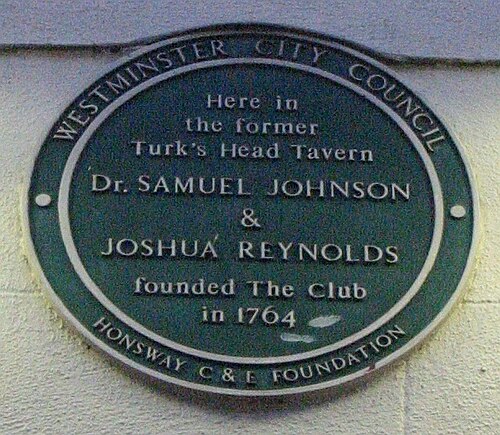
The Literary Club of 18th Century London

By Professor Fakrul Alam

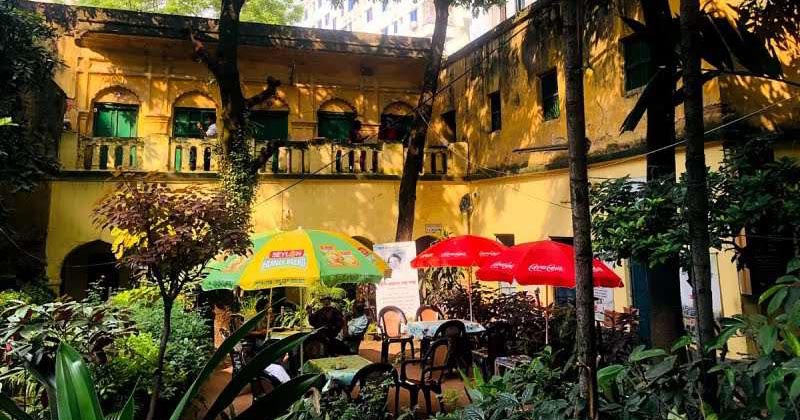
We Bengalis think that no one can match us for our addas[1]. If you were growing up in Dhaka in the 1950s or the 1960s and happened to be literary in your inclinations, chances are you would end up on some evenings in Old Dhaka’s hotel-cum-restaurant Beauty Boarding. You would do so not mainly for the good food sold there at modest prices, but chiefly because you intended to see and hear poet Shahid Quadri regaling everyone in a table that probably included budding poets such as Shamsur Rahman and Syed Shamsul Huq, a promising film maker like Abdul Jabbar Khan, or a gifted painter like Debdas Chakraborty.

Over seemingly endless cups of tea, Quadri and his fellow poets and artists and friends and many other enchanted hangers-on would be entertaining each other late into the evening. Everyone present would in all probability say to each other or to others later: “Was there anywhere any adda as good as the one that took place in Beauty Boarding that evening?”

And, of course, Bengalis of Kolkata will claim that there was never ever any place for chatting and no addas held anywhere that have been able to match the ones at the city’s College Street Coffee House. Who hasn’t heard the song by Manna Dey[2] that has immortalised the conversation and the characters there—poets, journalists, actors, artists—all engaged in intellectual chitchat over nonstop cups of coffee? And though the song laments the passing away of a generation, one can find Kolkata’s Coffee House, like Dhaka’s Beauty Boarding, still very busy and very full of addas even now. But surely among the most famous addas of all times were the ones that took place in 18th century London’s “The Club,” aka “Literary Club”. This was the archetypal club for flowing conversation conducted over good food, great coffee, and suitably stimulating drinks (this last bit is conjectural!). Without a doubt, it is the most famous British literary club in history, and here outstanding intellectuals would engage in always entertaining and often scintillating conversation.

Just consider the luminaries in attendance at the Club on a typical London evening. At the centre of the conversation would be the physically huge figure of Dr Johnson—he of the towering intellect, he who was also known as “Dictionary Johnson” for his incredible feat of penning the first substantial dictionary of the English language almost single-handedly. Listening to him would be his devoted biographer, James Boswell; the greatest painter of the period and the founder of the Club, Sir Joshua Reynolds; Burke, the brilliant orator, passionate parliamentarian and indefatigable critic of the East India Company; Oliver Goldsmith, the renowned author and playwright, and Dr Christopher Nugent, the successful physician. As they conversed, sparks surely must have flown all around the table and Boswell must have been taking notes all the time of the pearl s dropping from Dr Johnson’s lips!

It was Reynolds who had proposed the toast associated with the Club— “Esto perpetua,” Latin for “Let it be perpetual.” Club membership was restricted—at first there were nine members, but soon some more were inducted. They included cultural luminaries such as the greatest actor of the time, David Garrick; the great parliamentarian and minister of the British Government for a while, Charles James Fox; the luminous economist Adam Smith and arguably one of the greatest of British historians, Edward Gibbon. According to the author and member of the Club, Bishop Thomas Percy, as far as Johnson was concerned, the thing that all members were to keep in mind was that the Club “was intended” to “consist of such men, as that if only two of them chanced to meet, they should be able to entertain each other without wanting the addition of more Company to pass the evening agreeably”. Or, to use the word coined by the great Dr Johnson himself, Club members had to be “clubbable!”

As one can imagine, with such amazing minds and larger than life characters, the reputation of the Club spread far and wide—in London and beyond. For sure, there were other clubs in swelling and increasingly prosperous London (as is the case with Dhaka now!), and Johnson himself was associated with quite a few of them, but who could compete with the members of The Club?

Initially, Tuesday was set aside as the meeting day, then Friday; eventually other days were considered good for clubbing as well. According to one member, the writer and lawyer John Hawkins, The Literary Club soon proved to be “the great delight of Johnson’s life, a centre of conversation and mental intercourse.” As the century progressed and more and more, people vied with each other to become a member of The Club, strict rules were initiated to keep up its reputation.

Eventually, elections and “blackballing” were procedures chosen to control the number of members as well as to ensure that only “quality” people became members. Hawkins, unfortunately, was deemed to be “unclubbable” by Johnson himself and therefore was soon expelled from the Club! But Club members could be of varying political beliefs—Burke, for example, was passionate about the rights of the American colonists but Johnson critical of them. Burning political issues such as the right of the American colonists came up for discussion and debate but tempers were kept under control and wit-combats proved to be the rule and not scuffles. On most days, conversation flowed freely.

On April 3, 1778, Boswell records in his biography of Johnson, for example, “The conversation began with sculpture” and then “the subject is dropped for emigration; it then moved on to “population increase” and “density”; next to parliamentary oratory, then to philology; afterwards to travelling abroad and thence to “human nature generally”!

Johnson died in 1784, and The Club eventually disappeared from recorded history, but it had survived long enough to become a model of clubs where great minds could come together for a convivial atmosphere, free and witty exchange of ideas, and company worth seeking every evening. It became the inspiration of many such institutions all over the world. Dhaka Club, thus, can claim that any recorder of its primordial history would find The Club as one of its ancestors. For sure, for our club members, or literary minded people wanting to elevate their addas a lot, the London Club can be a source of inspiration and the conduct of its members well worth emulating during addas for fantastic clubbing!

The Literary Club met on Friday evenings until midnight in London. The club gatherings with all the luminaries spanned a period of 20 years. From Public Domain

[1] Could be a tête-à-tête or just a chat with multiple people.

[2] Manna Dey (1919-2013) sang about adda in the legendary Coffee House of Calcutta.

(First published on August 20, 2018 in Daily Star, Bangladesh)

Fakrul Alam is an academic, translator and writer from Bangladesh. He has translated works of Jibonananda Das and Rabindranath Tagore into English and is the recipient of Bangla Academy Literary Award (2012) for translation and SAARC Literary Award (2012).

PLEASE NOTE: ARTICLES CAN ONLY BE REPRODUCED IN OTHER SITES WITH DUE ACKNOWLEDGEMENT TO BORDERLESS JOURNAL

Click here to access the Borderless anthology, Monalisa No Longer Smiles

Click here to access Monalisa No Longer Smiles on Amazon International

Categories
Stories

Exorcising Mother

By Fiona Sinclair

In the taxi from the station, Emily hugged her freedom as if it was an expensive handbag. At twenty-nine, she was returning from her first ever weekend away from home.

London had meant an orgy of sightseeing that her old friend Hannah was happy to accommodate. Like a time poor tourist, Emily had galloped through St Pauls, The Tower of London and Westminster Abbey until her friend had begged for a sit down and some food. “These buildings have been here hundreds of years,” she panted, not understanding that Emily’s default setting was playing catch up.

Now Emily trotted up the bungalow’s short driveway, a suitcase in one hand and, in the other, shopping bags ripe with new clothes. ‘No more hand me downs’ she thought with a smile.

It was an exceptionally warm spring that year, as if the weather, too, was in cahoots with her. Inserting the key into the front door, Emily knew from experience that the pokey bungalow trapped extremes of weather. So, with windows and doors shut up for four days, she knew it would be like entering a forge.

But, stepping into the hall, she was struck by an uncanny chill, as if an air conditioner had been switched to its maximum setting and left unchecked for many hours. It did not provide a welcome contrast to the unseasonable spring weather outside. Instead, she began to shiver, the hairs on her arms raised like hackles and a rash of tiny goose pimples spread across her skin.

Emily instinctively pulled on a cardigan and wrapped it around her. She waited for the chill to dial down. It did not. In fact, if anything, it intensified. Her next response was to move into the small kitchen to see if the freezer door had swung open, reasoning that in a place little more than a bedsit, the chill from the freezer might well have filled the place with cold air. But the door was secure. She then went methodically room by room, trying to find some other source for the cold. She found no answers, but the bedrooms, bathroom and sitting room, were all equally as chilled as meat lockers.

This frosty atmosphere did not frighten her. Emily was accustomed to weird and little phased her now. Standing with her hands on her hips in the sitting room she suddenly recognised the atmosphere as the brooding anger that was her late mother’s trademark. Since childhood, she had been familiar with this withdrawal of affection for some minor misdemeanour, anything from ripping her jeans in some Tom boy escapade to playing out with friends, ignoring her parent’s curfew. At these times, her mother’s beautiful features became an ice queen mask as maternal love was switched off, a punishment that stung far more than a slap or being confined to her bedroom.

Now the adult Emily, suspecting that death did not dissolve a person’s worst traits, knew that the house was overwhelmed by her mother’s disapproval of her daughter’s behaviour in the aftermath of her death. From her mum’s perspective, she had betrayed her on many counts. So, this was, Emily suspected, a sort of supernatural sulk.

Decades before, her mother’s life of delicious domesticity was ruptured by dad’s sudden death at 40. Now there were bills to settle, a living to be earned and a daughter to raise. But mum was unable to face the challenges. She was proactive only in seeking a replacement for dad, a knight on a charger who would solve her troubles. However, she soon found that she was considered more mistress material than wife. Her beauty was too showy for a rural backwater and millionaires with money to purchase shiny things were in short supply.

She had begun drinking just to take the edge off her problems, in the days following her husband’s death. Failure to find a new man sent her mother’s moral compass spinning off its course. Liaisons with a series of rogues paid the bills. Sex was anaesthetised by copious amounts of booze then. It also helped to blur the truth of herself in the dressing table mirror.

For Emily, her dad’s death was the death of her childhood. As family and friends peeled off with mother’s plunging reputation, at eleven she was promoted to confidante. By eighteen, when her own life was becoming fecund with opportunity, her mother’s needy ‘You won’t leave me too’ tethered Emily to her and the bungalow. She procured her wine in the morning and put her to bed when it finally overwhelmed her.

Emily did this because she adored her mother. She was absolutely partisan, saw her as a beautiful victim relentlessly kicked by fate. Decades passed in this dreary routine. Mother and daughter’s lives contracted to the parameters of the tiny bungalow. Even the rogues fell away, except one who visited weekly, left money discreetly on the sideboard, claiming he expected nothing in return. However, his eyes constantly alighted on Emily like a fly, suggesting he was, in fact, watching an investment develop.

Then, in her mid-fifties, the knight she had always sought rode in to save mother. Sadly, it was more black than white and arrived in the guise of a tumour. Turning her back on treatment and determined that cancer would not run riot in her body as it done with her husband, she decided that suicide would be the cleanest exit.

The finding of the lump winded Emily. She crawled like an invalid through those early days of diagnosis. All the while mother insisted there would be no discussion and life would default to their version of normal. Emily’s shock was compounded when she understood that her mother expected her to facilitate death. Sick to her stomach, she nevertheless agreed, thereby giving her mother peace of mind. But she secretly offered up desperate prayers that it would not come to it.

The origins of the suicide pact were hazy. Looking back, it was like trying to accurately recall a nightmare. Had her mum suggested it? Or had Emily been unable to contemplate life without her? Either way, mother’s relief was evident. In her addled mind, it was an elegant solution to an ugly problem.

From her contracted perspective Emily could not envisage a future for herself. She was isolated as a heroine in a Victorian novel, having had no contact with her family since she was eleven. In a sense she had grown up supernumerary to her mother who took precedence even in something as basic as clothes. Emily had not had her own new garments since childhood. As she grew into a young woman, mother would rummage in her own chest of drawers to provide underwear, jeans, and tops. Largely because all surplus money must go on alcohol.

Mother had also guessed that the one remaining rogue who kept a seemingly friendly eye on them, in fact had an agenda. Whilst Emily lacked her mother’s beauty she had the asset of youth. Some residual maternal instinct must have kicked in here. She knew that her protection was finite now. The rogue was playing a not so long game for the prize of a vulnerable young woman. In retrospect, Emily thought mother’s advocacy for the suicide pact was a blur of all these factors, with perhaps a jigger of jealousy as well for her daughter’s youth and health.

In the months before the cancer overwhelmed, Emily basked in her mother’s praise, “You are so brave.” Even at 28, she still craved the approval that was dealt out so meagrely. Of course, mother had no idea that it was all bravado, but it helped ameliorate the prospect of the pact and almost made her decision worth it.

But in truth Emily was horrified. It was as if the cancer had invaded both their bodies, decided both their fates. At times she was able to park her terror by bingeing on classic literature and junk food. Other times, at night, she lay awake, horrifying images running riot in her mind, silently screaming, “I don’t want to.” At these times, her love of life fought with love for her mother.

Mum sensed when the cancer was making its final move. Laying claim to her brain, it was gradually stealing her mobility and reducing her voice to a whisper. That day, Emily downed a bottle of wine herself to take the edge off proceedings. Unaccustomed to alcohol, she worked in a haze. The afternoon took on a ‘down the rabbit hole’ unreality. She talked her way through the preparations. This served to focus her mind and subdue fear. But there were still moments when she felt like a prison warder forcing her petrified body towards the noose.

A lack of basic physics saved her. The flex caused the water in the bath to merely ripple like a mini tide. There was an element of dark humour about the botched attempt, but neither laughed. Emily took the failure as an intervention by fate. As she clambered from the bath the truth tumbled from her mouth. “No, I don’t want to.”

In contrast, her mother sobbed at the abortion. Having lost all agency to cancer, she could not now determine her own death. Her daughter, with strength gained from years of practice, now supported mum back to bed.

And then her mum performed the only selfless act of the past twenty years. She instructed Emily to phone her estranged grandmother. As is often the case, the two hit it off. Whilst Emily had never resembled her mother, she now saw her genes were gifted from this woman. They shared the same brown hair and eyes. Their temperament was similar, too. The granddaughter inheriting her indomitable spirit.

Of course, Emily knew there would be a reckoning in the future. At some stage she would have to make peace with the guilt she had stashed away in a corner of her mind; the broken promise of living on after her mother, the disloyalty of accepting her grandmother’s protection, the process of carving out a future for herself. But, at the moment, Emily was distracted by the sheer novelty of living.

And now, suddenly, she began to throw open all the windows and doors. The heat waiting outside burst into the bungalow, seeing off the cold from every corner, melting the ice of her mother’s anger until, standing bathed in sunlight, Emily smiled, knowing that, for now, her mum was routed.

.

 Fiona Sinclair lives in a village in the UK. She is a poet with several collections published by small presses. Fiona has just begun writing short stories especially about subjects that cannot be covered by poetry. 

.

PLEASE NOTE: ARTICLES CAN ONLY BE REPRODUCED IN OTHER SITES WITH DUE ACKNOWLEDGEMENT TO BORDERLESS JOURNAL

Click here to access the Borderless anthology, Monalisa No Longer Smiles

Click here to access Monalisa No Longer Smiles on Kindle Amazon International
Categories
Review

A Hiding to Nothing

Book Review by Somdatta Mandal

Title: A Hiding to Nothing

Author: Chhimi Tenduf-La

Publisher: Hachette India

Let me be honest enough. When I received this book for review penned by a Sri Lankan author, I expected it to be a debut novel written by a person who is one of the many new voices that keep on emerging in sub-continental English fiction every other day. But the unusual name of the author made me enquire a little further to find out that he was half Tibetan and half English, educated at Eton and Durham in England, and has been managing an international school in Sri Lanka for thirty years. All these issues account for and contribute to the background of the novel’s setting. More surprise was in store when I found that Chhimi Tenduf-La has been writing fiction for the past ten years and his first novel, The Amazing Racist, was published way back in 2015. Since then, he has penned two more books and now his fourth book, A Hiding to Nothing, is what he himself defines as his “first domestic thriller.”

Such background information therefore definitely helps the reader to understand the nature of this present novel, which is set in Colombo’s manicured gardens owned by rich, elite and sometimes dicey people, and simultaneously moves to the activities set in England in Durham’s cobblestone streets.

The central issue of the story revolves around the miscarriage of Neja Pinto after she marries Ramesh in England and her subsequent inability to conceive which results in taking recourse to surrogacy. Believing in the stigma of South Asian sensibilities when a woman is looked down upon if she cannot give birth to her own off-spring, they want to keep the entire matter as secretive as possible so that they can come back from England to Sri Lanka and claim the child, Devin, as their own biologically born offspring till a point when the child is kidnapped by unknown people. From this point begins a lot of questions like who would dare take Devin – and why? As the incidents of the story march forward at electronic speed, creating the right atmosphere of a well-devised whodunit, the novel is crowded with innumerable characters, some unique, others quite stereotypical, but none out of suspicion. Is it the swimming coach Neja gets too close to? Could it be the ghosts of their past – the ruthless creditors Ramesh deceived in a Ponzi scheme, now back for blood? Or is it the enigmatic Dr Haksar who helped them have a child? And what of the mysterious woman from the British High Commission, whose probing questions hint at knowledge she shouldn’t possess? As the whispers grow louder, one name resurfaces with terrifying weight: Satya Basu, who actually bears the child in lieu of money. Is she back to settle an old score?

As mentioned earlier, at the centre of the story are the protagonists Neja and Ramesh Pinto, who are now husband and wife, but are also portrayed in their pre-marital days in England. Then there is Ramesh’s mother Loku Madam who is a stern and powerful woman with complete control over her son, which results in a sort of mother fixation. Loku Madam is planning a fourth marriage with a rich tea garden owner.

There is a swimming pool trainer called Johnny Dias with whom Neja has a fling resulting in several complications in the plot; the child Devin who disappears after he is kidnapped and from where many more eventful activities take place in the story; then there is Mercy Mbangwa who works at the British High Commission but also takes too much of an interest in the affairs of Neja and Ramesh Pinto. The Pintos take on names as Nita and Ravi Ponniah when they live in Durham because they want to remain incognito and take possession of a surrogate child in the making by another character called Satya Basu ( I am surprised because though ending with an ‘a’, in Bengali Satya is usually a male name and not a female one), Dr. Haksar and several other characters, all of whom are illegal immigrants in England. There are bartenders, hustlers and many other minor characters that crowd the scene too.

Chhimi Tenduf-La unravels a suspenseful tale where the truth is elusive – and the cost of uncovering it may be too high to bear. He brings in all possible locations and situations with very intense visual details which makes us feel it to be the right ambience for a Netflix movie. The novel is architecturally very carefully set through fifty-six chapters (some as short as one and a half pages) to others slightly longer, and the chapters are very carefully juxtaposed by alternating between Sri Lanka, 2024 and London/England 2015, 2016, 2017 and 2018. In fact, the last chapter brings us to the present Sri Lanka in 2025 where finally all the mysteries are unravelled and the author hints at a positive and optimistic note where all the sound and fury is resolved to a quiet ending.

The racy speed at which the author takes the readers through this 310 page-turner mystery at times makes one confused and it seems that since he is attempting a new sub-genre of what he calls a first attempt at a ‘domestic thriller’, he has attempted to put in as many things as possible. Some of that could probably have been avoided. But his innovative style and deft handling of the English language needs special mention, and this reviewer strongly recommends everyone to read and appreciate the novel.

.

Somdatta Mandal, critic and translator, is a former Professor of English at Visva Bharati, Santiniketan.

PLEASE NOTE: ARTICLES CAN ONLY BE REPRODUCED IN OTHER SITES WITH DUE ACKNOWLEDGEMENT TO BORDERLESS JOURNAL

Click here to access the Borderless anthology, Monalisa No Longer Smiles

Click here to access Monalisa No Longer Smiles on Amazon International

Categories
Essay

Does the First Woman-authored Novel in Bengali Seek Reforms?

By Meenakshi Malhotra

The translation published by Shambhabi The Third Eye in 2022

Published in 1868, Manottoma: Dukkhini Sati Charit (Manottama: Narrative of a Sorrowful Wife) the first novel written by an unnamed Bengali woman identifying herself as ‘A Woman belonging to the Hindu Lineage’, which is technically not a pseudonym, has been translated by Professor Somdatta Mandal and published recently in 2022. Somehow evading the attention of literary historians, the text, or any detailed information about it was unavailable for a long time till it was unearthed by a researcher in London only in 2010. In the foreword to the translated novel, Prof Rosinka Chaudhuri points out that the year 1868 was only a decade after the introduction of the main genres of modern Bengali literature: the modern novel, poetry and drama. This was a time of revision and reinvention, of recasting selves and literary forms and genres.   

Manottama narrates the sufferings of a educated and long-suffering wife who labours under the petty punishments meted out to her by her uneducated husband, depicting the conflict between patriarchal expectations and prescriptions and women’s education and presumably, agency. The eponymous novel depicts a situation where Manottama, an educated woman, is married to an uneducated husband. Because of the latter’s profligate ways, she is subjected to penury and untold hardships, which she seems to accept without demur.

The narrator of Manottama claims it’s a ‘history’. Cast in a dialogic format as a conversation between two friends, Jadhav and Madhav, (a common format in its time) the novel, in one interpretation, tells us about the pitfalls of female education in the nineteenth century, a period that also saw the emancipation of Bengali women through education in a significant way. Written in the traditional Indian Puranic style of narration, with plenty of sub-plots and digressions and without conforming to the western dictates of unity of time, place, and action, it provides a domestic picture where an educated wife has to compromise with the activities and worldview of an uneducated husband. At one level of interpretation, it seems to be an attack on patriarchy. As an early narrative by an anonymous woman, the  work needs — and in a way, demands — greater attention now after more than a century of neglect in order to reinterpret and reconfigure its didacticism and question its meek acceptance of status quo.

Can we accord this work the status of a novel? Also is there a way in which we can unpack the didacticism of the text and pave the way to a  subversive reading of patriarchies?

In showcasing a woman who seems to meekly accept her lot in life without complaint, the intention purportedly was to show the benefits of education and how an educated woman navigates her destiny.  There are many instances of rampant social injustices in the text. The husband’s profligacy, his marrying a second time and frittering away family fortunes — all these are accepted by the protagonist, Manottama, in a spirit of apparent equanimity. She seems to accept the social injustices meted out to her meekly, without demur or protest. She obeys and serves her father during his visit and continues to perform her conjugal and domestic duties vis-a-vis her undeserving  husband. If anything, she continues in her endeavour to instruct her children and the children of the quarrelsome second wife. No complaint against marital injustices pass her lips, even when her father expresses concern over the indigent condition of the household. Her behaviour is ideal in every respect and she is upheld as a paragon.  

Manottama” in Bangla can be translated into someone with a superior mind or soul and the protagonist named as such fits the bill. She keeps quiet about her individual woes while trying to ensure the well-being of the whole family.

The novel shows the impact of the many instruction manuals and advice/conduct books  that were plentifully available at the time and herein lies part of the problem of the book as a novel. For one, there is no attempt to depict the inner thoughts of the protagonist. She at times seems like a cardboard cutout, a compendium of all the virtues extolled by patriarchs and paternalists in 19th century Bengal and India. She is a stereotype and seems almost a parodic version of the ’good woman’ who sacrifices self-interest at all times. Whether this narrative qualifies/succeeds as a novel is something which has to be decided by the reader .She embodies the ‘patibrata’ or the devoted wife, a kind of woman who helps in the salvation of the husband and nation. To quote a writer at the end of the 19th century:

The Patibrata wife is the road to liberty and mobility of man. If the women of India follow the footsteps of Sita and Savitri, then this fallen country will be the blessed land  again. (Chandranath Basu, Bagchi 85)

The discovery of this text forms a story by itself and is a precious nugget as it was located in the British library relatively recently, in 2010. The significance of this text  is also that it is a woman’s voice addressing other women, advising them with a strong didactic intent. As readers, we can only speculate that the writer intends this homily as a form of advocacy to women that they should not abandon their traditions and customs, but use their education in order to better themselves, and devote themselves  to serving their husbands.  

The narrative in a dialogic style seems like an extended conversation or debate between a proponent of tradition and a spokesperson and modernity. Some of the conversation between Nilabrata, the irresponsible husband, and Manottama, echo aspects of this debate. According to Nilabrata, who is rendered somewhat insecure by his educated wife and voices the biases against women’s education, only foolish men will send their daughters to school in order to train their daughters as prostitutes. “Educating women and showing them the path to go astray are similar,” he asserts.

One is reminded of Bankim Chandra Chatterjee’s (1838-1894) essay on Prachina o Nobina or “The Traditional Woman and the New Woman”(Woman Old and New, 1879). The debate on whether to educate women were along the contours of conservatism versus progressivism, albeit with shades and finer nuances.We can suppose that the author is in conversation with a conservative perspective which argues against women’s education and where she attempts to demonstrate that tradition and women’s education are not mutually opposed or divergent.

Bengali literature offers many examples of women who were poised on the brink of the  paradoxical conundrum of modernity, which made them embrace education and reform without abandoning traditional values. This attempt to recast and position the ‘new’ Indian woman was a pre-emptive gesture  to counter the accusation of Westernization and deracination levelled against the reformist attempts to redefine gender roles and relations in late 19th century India.

While one can grasp the discursive aspect of the text, the lack of what we understand or perceive as a natural human response on Manottama’s part to any of her husband’s actions — misdemeanours, follies or vices —  leave us feeling deeply dissatisfied. If the novel as a form shows the interactions of the individual with other individuals or with society, the lack of any credible response from Manottama casts her in the mould of a ‘patibrata’   woman but stifles the text as a novel.

However, if we keep in mind that many great writers  novelists from Bengal and elsewhere — Bankim Chandra Chatterjee, Rabindranath Tagore and Sarat Chandra Chattopadhayay— have often used the novel as vehicles of ideas, which generate debate both within the world of the novel and in a larger socio-historical context, this  novel can surely be counted as a precursor and a prototype of the discursive/social discussion novel in Bengali. As for the other question raised earlier about the possibility of a subversive reading, Manottama by showing  the evils  besetting patriarchal systems, manages to show the untenable nature of the same and the fact that men like Nilabrata, for all their bravado, are liable to collapse, unless rescued and sustained by sensible wives. In that sense, it hold a lesson for men to marry wisely and recognise the true worth of educated wives, without getting lured either by false friends or duplicitous women.   

The book has received a fresh lease of life in the hands of a competent translator and commentator. The foreword similarly draws out the significance of the narrative, placing it in the context of its times and the larger context of Bengali literature. An exploration of its discursive trajectories and varying cartographies adds to the joys of discovering and reading the narrative.

.                

Meenakshi Malhotra is a Professor of English Literature at Hansraj College, University of Delhi, and has been involved in teaching and curriculum development in several universities. She has edited two books on Women and Lifewriting, Representing the Self and Claiming the I, in addition  to numerous published articles on gender, literature and feminist theory.       

.

PLEASE NOTE: ARTICLES CAN ONLY BE REPRODUCED IN OTHER SITES WITH DUE ACKNOWLEDGEMENT TO BORDERLESS JOURNAL

Click here to access the Borderless anthology, Monalisa No Longer Smiles

Click here to access Monalisa No Longer Smiles on Kindle Amazon International

Categories
Slices from Life

To Bid or Not to Bid… the Final Goodbye?

That is the question Ratnottama Sengupta is asking with so many grey heads since London’s Westminster voted in favour of Assisted Dying

From Public Domain

“She was in so much pain these last four months that we are not mourning her final exit. We are celebrating her liberation.”

Speaking with Bhabhi’s[1] nephew last week forced me to readjust my emotions regarding the final goodbye. Condolences are in order, worldwide, when a dear one departs the mortal world. But of late I have been noticing that people “celebrate the life’ of the departed soul rather than mourn the death. Yes, every departure is a loss, taking an emotional toll of those left behind. And still I am not shocked nor angry that on June 20, a day after Bhabhi breathed her last in Singapore, the British Parliament voted in favour of a bill to legalise Assisted Dying for terminally ill people.

This has paved the way for a long debated social change that has, for as long as I can remember, been held in abeyance. Because? It has always been argued that, since we cannot bring the dead to life, we do not have the right to take away life. Indeed, the UK parliamentarians voted on the subject 10 years after it was first proposed, I learn from the news reports. And even as the Wise Men of London debated the issue, demonstrators outside were crying out, “Kill the Bill, Not the Ill.”

Once the Bill is passed by the House of Lords, the Terminally Ill Adults (End of Life) Law will give “mentally competent, terminally ill adults in England and Wales with six months or less life to live, the right to choose to end their life with medical assistance. Those who would want the procedure would have to gain the compassionate “Aye!” of two doctors and a panel of experts.

While the scrutiny by the Upper House might take months, it is unlikely to be blocked now that it has gone past the Commons and secured a nod from the PM.

*

My first acquaintance with the concept was garbed in the words, ‘Mercy Killing’. I was a school-going teenager when I read a Bengali courtroom drama, Parashuramer Kuthar (1989, Parashuram’s Axe) where the son was in the dock, fighting the charge of murdering his mother with morphine. “Night after night she would cry out of acute pain. Night after night I sat by her bed, watching her inch towards death. The doctor had prescribed the morphine that let her sleep at night. But when that failed, I gave her a repeat dose so she could go to sleep…”

Half a century ago that sounded ominous. Now, having seen — and digested — the ‘Assisted Suicide’ of celluloid icon Jean Luc Godard [2] in the autumn of 2022, I have been weighing my responses to the concept. 

Godard, born on July 7, 1930, had lived in France from where he had revolutionised cinema across the globe. At the age of 91, with “multiple disabling pathologies” — to quote his doctors — he went to Switzerland because that was the only country to have legalised euthanasia as long back as 1941. Albeit they have specifications, the overriding one being this: the person assisting the suicide must not have any selfish — read, monetary — motive to provide the seeker the means to exit. 

*

“Euthanasia is death with dignity,” my Jyotish Pishamoshai had said three decades ago. At 90 something, the man who went around all his life in trams and buses, to look up his younger cousins, simply hated to be bed bound. Besides, he had seen his youngest brother Dinesh “hang till death” at age 20, without a trace of remorse for having bombed the Writers Building in the Capital of the Raj. So why would the elder brother, his memory intact, want to “be a burden” to even his only son? Mercifully, Sudhir Da did not have to go the way of Parashuram. The almighty in heaven voted for the nonagerian’s exit.

*

My response to the issue peaked when I read this poem, ‘Antim Akanksha’ (The Last Wish) , by Purnendu Ghosh of Jaipur. This IIT-ian from Kanpur, a diehard cinema aficionado, has penned the same thoughts in Bengali and English too. But I had already translated his anguish in Hindi before I spoke with him. “I had written these lines when I was sitting by my mother-in-law, then languishing in the hospital. When I had first seen her, she was 46. Over the next 46 years, I was witness to the transformation age had forced upon her  I could only watch, helpless, because the final exit is in the hands of only the Almighty.”

I am still weighing my responses. Yes, I believe in the Existence of a Superior Force. Still, when a person has to lie waiting to bid goodbye to pain, would he or she wait for His mercy, or that of the medics?

[1] Sister-in-law

[2] https://www.onmanorama.com/entertainment/entertainment-news/2022/09/16/filmmaker-film-critic-jean-luc-godard-suicide-debates-switzerland.html

Ratnottama Sengupta, formerly Arts Editor of  The Times of India, teaches mass communication and film appreciation, curates film festivals and art exhibitions, and translates and writes books. She has been a member of CBFC, served on the National Film Awards jury and has herself won a National Award. 

.

PLEASE NOTE: ARTICLES CAN ONLY BE REPRODUCED IN OTHER SITES WITH DUE ACKNOWLEDGEMENT TO BORDERLESS JOURNAL

Click here to access the Borderless anthology, Monalisa No Longer Smiles

Click here to access Monalisa No Longer Smiles on Amazon International