Categories
Review

Silver Strands of Soaring Symphonies

Book Review by Anita Balakrishnan

Title: Silver Years: Senior Contemporary Indian Women’s Poetry

Editors: Sanjukta Dasgupta, Malashri Lal and Anita Nahal.

Publisher: Sahitya Akademi

Several centuries ago, women poets had to fight to be heard, their poems often dismissed as unworthy or mediocre. It is a testament to their determination, grace and sheer talent that today female poets are amongst the most celebrated and respected the world over. In India, pathbreaking women poets such as Toru Dutt, Sarojini Naidu and Kamala Das paved the way for more recent talents such as Eunice de Souza, Suniti Namjoshi and Sujata Bhatt. Of course, this list does not include the vast number of women poets writing in Indian languages ranging from Assamese, Bengali, Hindi, Malayalam, Punjabi, Tamil and Telugu to name but a few.

A recent anthology of poems by senior contemporary Indian women poets titled Silver Years, reflects the centrality of women in today’s Indian society. While elders have always been revered in this society, the overwhelming influence of western media has brought in a certain skepticism towards such traditions. In this context, it is refreshing to read these poems that showcase the maturity, resilience, humour and sagacity of these women. They offer their diverse perspectives on the experience of being an Indian woman, exploring changing societal attitudes to their place in the world, the dynamics of their social roles and the trauma and transcendence they encounter in their lives.

The poems in this collection are not just pretty words that pander to social expectations, they carry the weight of the experiences of fifty senior women poets who have lived rich and varied lives, working in their chosen fields and observing the radical transformation of the world around them. The common thread that runs through this anthology is the forthright tone and boldness of expression in the over 160 poems included. As women who have lived full lives, both in India and across the world, these poets never shy away from controversies, rather expressing with rare grace and tenderness what it means to be sixty plus and female in contemporary society.

The introduction to this volume is no less impressive than the poems. Jointly written by the editors of the collection, Sanjukta Dasgupta, Malashri Lal and Anita Nahal, the introduction traces the evolution of Indian women’s poetry in English, eloquently delineating the political and social challenges faced by women writing in English. Furthermore, the introduction also explores the impact of a deeply patriarchal culture on women in Indian society. The recasting of mythology to suit contemporary societal expectations also finds a mention as well as an emphasis on the voice, agency and power these poets claim for themselves through their poetry. Most significantly, the introduction underscores the resolve, resilience and charm of these sixty plus women, who erase with the power of their words the negativity and weakness associated with aging.

The poems in this anthology vary widely in style and theme, ranging from poems that reimagine gender and societal roles, to those that focus on the havoc wrought by humans on the environment. Perhaps understandably, in an anthology of poems by women poets over sixty, perspectives on aging are numerous.

Anita Nahal’s poem ‘We are the Kali Women’ is a searing condemnation of patriarchal oppression, casteism and discrimination based on skin colour. The poems refrain “Ma Kali. Ma Kali. Ma Kali. Don’t think she’s not watching” strikes a warning note to those hypocrites who are guilty of crimes against her followers while piously bowing before her image.

On a similar theme, but in an entirely different key, is the poetry of Lakshmi Kannan. This poet’s feminism is not overt, but the poems convey an effective message nonetheless. ‘Silver Streaks’ sets forth an idea that is common to many of the poems in the anthology, that senior women do not become less attractive as they age. Instead, this poem emphasizes the power of self-knowledge that maturity brings.

Malashri Lal’s poetry slides into the readers’ consciousness as smooth as silk. Replete with irony and layered with nostalgia, her minimalistic verse has a visceral appeal. ‘Book of Doubts’ evokes a sense of loss for the books one used to treasure. ‘Jaipur Bazar’ is almost like a haiku, conveying the beauty of an emerald and the heritage it encapsulates. ‘Kashmir One Morning’ contrasts the senselessness of sectarian violence with the Gandhian legacy of nonviolence. ‘Krishna’s Flute’, juxtaposes the mellifluous music of the flute and the dreaded coronavirus pandemic. One is associated with the certitude of faith that Krishna’s tunes represent while the other stalks the silent city leaving death and loss in its wake. This is elegant poetry, that does not shock for effect, instead gently evoking images that resonate in the reader’s mind.

Sanjukta Dasgupta’s poems focus on aging with honesty interwoven with humour. Her poems cut to the bone without any unnecessary sentimentality or understatement. Aging, for Sanjukta Dasgupta is an undeniable fact, she asserts that one has to accept the harsh reality of physical debility and the inevitability of death. The poet does not try to gloss over the signs of age, rather she sees them as a culmination of a life lived to the hilt.

The poem ‘When Winter Comes’, is a recasting of P. B. Shelley’s famous line ‘…when winter comes, can Spring be far behind’. The optimism of Shelley’s ‘Ode to the West Wind’ is contrasted with the reality of aging as Dasgupta notes:

In such an intimate Winter
No time
To spring back to Spring

Spreading its embrace….
Scripting a cryptic memoir
On every inch
From face to toe

The poem ‘Fall’ resonates with the repetition of the words ‘falling’ and ‘failing’, which sets the tone for the final descent “into everlasting rest”. The images used in these poems are at once concrete and fanciful, “the swan throat a tortoise neck now” with “countless rings of recorded time”. The poem “Crowning Worry” addresses the anxiety of aging:

Silver waved among blackened hair
Like flags of treachery
Flashing grin of metallic strands

This poem highlights the power of poetry to acknowledge the reader’s anxieties and ameliorate their lack of self-worth:

Black and blonde tresses howled
In low self-esteem, utter frustration
And massive bi-polar manic depression
As the Grey Gorgeous divas
Grinned and Glowed

Poems such as these emphasise the beauty of the older woman, whose youthful innocence may have gone, replaced by something finer, the beauty of self-assurance and poise.

Another significant theme among the poems is climate change and environmental degradation, the burning issue of our times. As mature adults who are aware that their legacy to future generations includes denuded forests, polluted rivers and oceans, arid landscapes and a rampantly consumerist mindset, these poets feel compelled to lament. The elegiac tone is prominent in many poems. Well-known poet from Northeast India, Mamang Dai celebrates the biocentric culture of the tribes of the region in her poem ‘Birthplace’. The poem ‘Floating Island’ also describes the harmony that exists between women and nature. ‘Earth Day’ by Smita Agarwal is another poem that focuses on the negative impact humanity has had on the environment.   

The poems in this anthology reflect the changing status of women in present day society. The poets are successful women and their clear-sighted view of life reflects their wisdom and rich experience. Aging is not seen as degeneration, but an enlightened phase where the wealth of one’s experience makes for a perspective that is to be celebrated. The poets included herein write with skill, empathy and wisdom, showing readers the hidden nuances of life that are often overlooked in the heedlessness of youth. They are unafraid to boldly present their wrinkles and grey hair as signs of a new beauty, one that is bolstered by maturity and self-acceptance. Pathbreaking feminist Betty Freidan sees aging not as decline, but as a new stage of life filled with power and promise. Her famous quote “Aging is not lost youth but a new stage of opportunity and strength” emphasises her views on the fountain of age.

In these 143 poems, these poets have offered readers a fresh perspective on these new horizons, so that they can be viewed with compassion and a renewed appreciation for the felicities of life. Most significantly, these poems reiterate that the silver years are a time of hope and light that shines on the promise of fresh achievement.  

.

Dr. Anita Balakrishnan is former Head, Department of English, Queen Mary’s College, Chennai, India. Author of Transforming Spirit of Indian Women Writers (2012) and contributor to the Routledge Encyclopaedia of Postcolonial Studies, ed by Sangeetha Ray and Henry Schwarz. Has published papers in national and international journals and reviewed books for The Book Review, Borderless Journal  and others. Her interests include contemporary Indian Writing in English, Ecocriticism, Ecofeminism, Cultural Studies and Postcolonial studies.

.

PLEASE NOTE: ARTICLES CAN ONLY BE REPRODUCED IN OTHER SITES WITH DUE ACKNOWLEDGEMENT TO BORDERLESS JOURNAL

Click here to access the Borderless anthology, Monalisa No Longer Smiles

Click here to access Monalisa No Longer Smiles on Kindle Amazon International
Categories
Contents

Borderless, November 2024

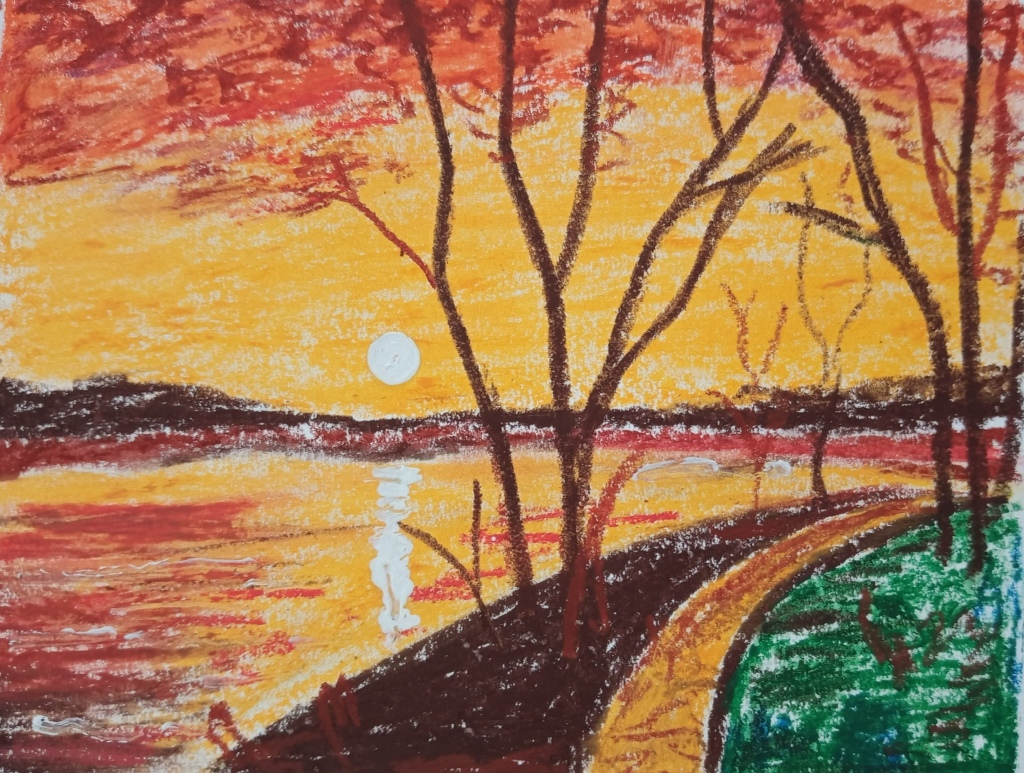
Art by Sohana Manzoor

Editorial

Clinging to Hope…Click here to read.

Translations

Nazrul’s Tumi Shundor Tai Cheye Thaki (Because you are so beautiful, I keep looking at you) has been translated from Bengali by Professor Fakrul Alam. Click here to read.

Hotel Acapulco, has been composed and translated from Italian by Ivan Pozzoni. Click here to read.

On the Reserved Seat of the Subway, a poem by Ihlwha Choi, has been translated from Korean by the poet himself. Click here to read.

Tagore’s Phul Photano (Making Flowers Bloom) has been translated from Bengali by Mitali Chakravarty. Click here to read.

Poetry

Click on the names to read the poems

Michael R Burch, Jahanara Tariq, Luis Cuauhtémoc Berriozábal, Shahalam Tariq, Stuart McFarlane, Saranyan BV, George Freek, G Javaid Rasool, Heath Brougher, Vidya Hariharan, Paul Mirabile, Ananya Sarkar, Ryan Quinn Flanagan, Pulkita Anand, Rhys Hughes

Musings/Slices from Life

Pinecones and Pinky Promises

Luke Rimmo Minkeng Lego writes of mists and cloudy remembrances in Shillong. Click here to read.

Elusive XLs

Shobha Sriram muses on weight management. Click here to read.

The Eternal Sleep of Kumbhakarna

Farouk Gulsara pays a tribute to a doctor and a friend. Click here to read.

Musings of a Copywriter

In Becoming a ‘Plain’ Writer, Devraj Singh Kalsi explores the world of writer’s retreats on hills with a touch of irony. Click here to read.

Notes from Japan

In Educating for Peace in Rwanda, Suzanne Kamata discusses the peace initiatives following the terrors of the 1994 Rwandan Genocide while traveling within the country with her university colleague and students. Click here to read.

Essays

The Year of Living Dangerously

Professor Fakrul Alam takes us back to the birth of Bangladesh. Click here to read.

Deconstructing Happiness

Abdullah Rayhan analyses the concept of happiness. Click here to read.

More Frequent Cyclones to Impact Odisha

Bijoy K Mishra writes of cyclones in Odisha, while discussing Bhaskar Parichha’s Cyclones in Odisha – Landfall, Wreckage and Resilience. Click here to read.

Stories

Hotel du Commerce

Paul Mirabile gives a vignette of life in Paris in the 1970s. Click here to read.

Chintu’s Big Heart

Naramsetti Umamaheswararao gives a value-based story about a child. Click here to read.

Headless Horses

Anna Moon relates a story set in rural Philippines. Click here to read.

A Penguin’s Story

Sreelekha Chatterjee writes a story from a penguin’s perspective. Click here to read.

Phantom Pain

Lakshmi Kannan writes of human nature. Click here to read.

Conversations

A conversation with Dutch author, Mineke Schipper, with focus of her recent book Widows: A Global History. Click here to read.

Ratnottama Sengupta converses with Veena Raman, wife of the late Vijay Raman, an IPS officer who authored, Did I Really Do All This: Memoirs of a Gentleman Cop Who Dared to be Different. Click here to read.

Book Excerpts

An excerpt from Vijay Raman’s Did I Really Do All This: Memoirs of a Gentleman Cop Who Dared to be Different. Click here to read.

An excerpt from Rhys Hughes’ Growl at the Moon, a Weird Western. Click here to read.

Book Reviews

Somdatta Mandal reviews The Collected Short Stories of Kazi Nazrul Islam, translated by multiple translators from Bengali and edited by Syed Manzoorul Islam and Kaustav Chakraborty. Click here to read.

Rakhi Dalal reviews The Long Strider in Jehangir’s Hindustan: In the Footsteps of the Englishman Who Walked From England to India in the Year 1613 by Dom Moraes and Sarayu Srivatsa. Click here to read.

Bhaskar Parichha reviews Mohammad Tarbush’s My Palestine: An Impossible Exile. Click here to read.

.

Click here to access the Borderless anthology, Monalisa No Longer Smiles

Click here to access Monalisa No Longer Smiles on Amazon International

Categories
Editorial

Clinging to Hope

I will cling fast to hope.

— Suzanne Kamata, ‘Educating for Peace in Rwanda

Landscape of Change by Jill Pelto, Smithsonian. From Public Domain

Hope is the mantra for all human existence. We hope for a better future, for love, for peace, for good weather, for abundance. When that abundance is an abundance of harsh weather or violence wrought by wars, we hope for calm and peace.

This is the season for cyclones — Dana, Trami, Yixing, Hurricanes Milton and Helene — to name a few that left their imprint with the destruction of both property and human lives as did the floods in Spain while wars continue to annihilate more lives and constructs. That we need peace to work out how to adapt to climate change is an issue that warmongers seem to have overlooked. We have to figure out how we can work around losing landmasses and lives to intermittent floods caused by tidal waves, landslides like the one in Wayanad and rising temperatures due to the loss of ice cover. The loss of the white cover of ice leads to more absorption of heat as the melting water is deeper in colour. Such phenomena could affect the availability of potable water and food, impacted by the changes in flora and fauna as a result of altered temperatures and weather patterns. An influx of climate refugees too is likely in places that continue habitable. Do we need to find ways of accommodating these people? Do we need to redefine our constructs to face the crises?

Echoing concerns for action to adapt to climate change and hoping for peace, our current issue shimmers with vibrancy of shades while weaving in personal narratives of life, living and the process of changing to adapt.

An essay on Bhaskar Parichha’s recent book on climate change highlights the action that is needed in the area where Dana made landfall recently. In terms of preparedness things have improved, as Bijoy K Mishra contends in his essay. But more action is needed. Denying climate change or thinking of going back to pre-climate change era is not an option for humanity anymore. While politics often ignores the need to acknowledge this crises and divides destroying with wars, riots and angst, a narrative for peace is woven by some countries like Japan and Rwanda.

Suzanne Kamata recently visited Rwanda. She writes about how she found by educating people about the genocide of 1994, the locals have found a way to live in peace with people who they addressed as their enemies before… as have the future generations of Japan by remembering the atomic holocausts of 1945.

Writing about an event which wrought danger into the lives of common people in South Asia is Professor Fakrul Alam’s essay on the 1971 conflict between the countries that were carved out of the 1947 Partition of the Indian subcontinent. As if an antithesis to this narrative of divides that destroyed lives, Luke Rimmo Minkeng Lego muses about peace and calm in Shillong which leaves a lingering fragrance of heartfelt friendships. Farouk Gulsara muses on nostalgic friendships and twists of fate that compel one to face mortality. Abdullah Rayhan ponders about happiness and Shobha Sriram, with a pinch of humour, adapts to changes. Devraj Singh Kalsi writes satirically of current norms aiming for a change in outlook.

Humour is brought into poetry by Rhys Hughes who writes about a photograph of a sign that can be interpreted in ways more than one. Michael Burch travels down the path of nostalgia as Ryan Quinn Flanagan shares a poem inspired by Pablo Neruda’s bird poems. Luis Cuauhtémoc Berriozábal writes heart wrenching verses about the harshness of winter for the homeless without shelter. We have more colours in poetry woven by Jahanara Tariq, Stuart MacFarlane, Saranyan BV, George Freek, G Javaid Rasool, Heath Brougher and more.

In translations, we have poetry from varied countries. Ihlwha Choi has self-translated his poem from Korean. Ivan Pozzoni has done the same from Italian. One of Tagore’s lesser-known verses, perhaps influenced by the findings of sensitivity in plants by his contemporary, Jagadish Chandra Bose (1858-1937) to who he dedicated the collection which homed this poem, Phool Photano (making flowers bloom), has been translated from Bengali. Professor Alam has translated Nazrul’s popular song, Tumi Shundor Tai Cheye Thaki (Because you are so beautiful, I keep gazing at you).

In reviews, Somdatta Mandal has discussed The Collected Short Stories of Kazi Nazrul Islam, translated by multiple translators from Bengali and edited by Syed Manzoorul Islam and Kaustav Chakraborty. Rakhi Dalal has written about The Long Strider in Jehangir’s Hindustan: In the Footsteps of the Englishman Who Walked From England to India in the Year 1613 by Dom Moraes and Sarayu Srivatsa, a book that looks and compares the past with the present. Bhaskar Parichha has written of a memoir which showcases not just the personal but gives a political and economic commentary on tumultuous events that shaped the history of Israel, Palestine, and the modern Middle East prior to the more than a year-old conflict. The book by the late Mohammad Tarbush (1948-2022) is called My Palestine: An Impossible Exile.

Stories travel around the world with Paul Mirabile’s narrative giving a flavour of bohemian Paris in 1974. Anna Moon’s fiction set in Philippines gives a darker perspective of life. Lakshmi Kannan’s narrative hovers around the 2008 bombing in Mumbai, an event that evoked much anger, violence and created hatred in hearts. In contrast, Naramsetti Umamaheswararao brings a sense of warmth into our lives with a story about a child and his love for a dog. Sreelekha Chatterjee weaves a tale of change, showcasing adapting to climate crisis from a penguin’s perspective.

Hoping to change mindsets with education, Mineke Schipper has a collection of essays called Widows: A Global History, which has been introduced along with a discussion with the author on how we can hope for a more equitable world. The other conversation by Ratnottama Sengupta with Veena Raman, wife of the late Vijay Raman, a police officer who authored, Did I Really Do All This: Memoirs of a Gentleman Cop Who Dared to be Different, showcases a life given to serving justice. Raman was an officer who caught dacoits like Paan Singh Tomar and the Indian legendary dacoit queen, Phoolan Devi. An excerpt from his memoir accompanies the conversation. The other book excerpt is from an extremely out of the box book, Rhys Hughes’ Growl at the Moon, a Weird Western.

Trying something new, being out of the box is what helped humans move out from caves, invent wheels and create civilisations. Hopefully, this is what will help us move into the next phase of human development where wars and weapons will become redundant, and we will be able to adapt to changing climes and move towards a kinder, more compassionate existence.

Thank you all for pitching in with your fabulous pieces. There are ones that have not been covered here. Do pause by our content’s page to see all our content. Huge thanks to the fantastic Borderless team and to Sohana Manzoor, for her art too.

Hope you enjoy our fare!

Mitali Chakravarty

borderlessjournal.com

Click here to access the  content’s page for the November 2024 Issue

.

READ THE LATEST UPDATES ON THE FIRST BORDERLESS ANTHOLOGY, MONALISA NO LONGER SMILES, BY CLICKING ON THIS LINK.

Categories
Stories

Phantom Pain      

By Lakshmi Kannan

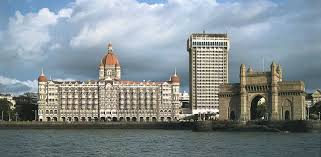
Mumbai. From Public Domain

 Gayatri got ready for the meeting. She stuffed her file covers and books into a tote bag, checked if her phone was completely charged, took the charger and put them inside her handbag. She recalled how she was both surprised and very pleased when her boss, the Chief Secretary, had called her on phone to inform her in advance that she would be required to attend this important meeting. “Save the date and keep it free of all other commitments,” he said. Given the agenda, the meeting could take a long time. Reaching the venue early would give her time to interact with her senior colleagues.

  She went to her mother’s room.

“Feeling better Amma[1]?” she asked but was alarmed to see her still writhing in pain. She was doubledup on the bed, clasping her stomach.

 “Oh God, Amma! Your pain has worsened. Wonder if it’s your appendix? Let me call our doctor.”

 “Gayatri, please don’t leave me.”

She stared at her mother, aghast. How very uncharacteristic of Amma! She was a strong matriarch who could manage many things in the absence of her busy husband, or even her grown sons, in sickness and crises. On the occasions she fell ill, she seldom asked her children to stay with her. Her general health had always been good, and she led a very active life. She was a pillar of support to Gayatri, helping her evolve as one of the most respected bureaucrats. Her parents were proud of her and she… she never voiced aloud her secret happiness about her parents’ tacit agreement with her choice to remain single so far. It was upsetting to see her women colleagues hit a roadblock the minute they got married. They had problems not just with the man who married them ‘for love’, but equally with their in-laws. What a waste of professional training!

“Massage my back,” said her mother. “It hurts so much.”  

Gayatri sat on a chair next to her mother’s bed. “Manni[2]!” she called, while gently massaging her mother’s back.   

 “Oh God!” screamed her mother.

“Where exactly does it hurt Amma, here?” she asked.  

Sujata rushed into the room. Suddenly, her mother howled in pain, holding her stomach.

Manni, please call our family doctor. Request him to come home immediately. Amma has too much pain.

Sujata nodded and rushed out with her phone.  

“Amma, don’t worry. Our doctor will here any moment,” assured Gayatri. “He may give you an injection that’ll control the pain. And check if it’s your appendix causing this pain.”  She made her lie down and continued to massage her till the doctor came in.

*

“Is it her appendix, doctor? At her age?” Gayatri inquired anxiously, waiting outside the door with Sujata. 

“I don’t think so, as she has no pain on the right side of her lower abdomen. She seems to be suffering from spasmsthat come on periodically. For now, I’ve given her a shot that’ll give her some relief. It has a mild sedativethat may help her sleep. I’ll come again to check,” he added.

“Thanks very much for coming doctor, at such short notice,” said Sujata, folding her hands.

Gayatri went in. Amma’s eyes were closed. When Gayatri got up, she felt a tug.

Her mother pulled at her dress. She asked her to sit down.

“Gayatri, please don’t go.”

Amma, Manni is here. Anna[3] may also come soon. This is a very important high-level meeting. I’m lucky to be asked to take part in the discussion,” she pleaded.

  Her mother nodded and patted her hands. “I know. I’m very proud of you, my girl, but today, I feel I may pass on. I want you to be around when I go.”

“What utter nonsense, Amma!  You never talk like this, and you scold all of us if we talk negatively.” She relented a bit and stroked her hands. “All right, I won’t go. Now sleep for a while.”
The sedative seemed to work. Her mother drifted off to sleep.  

                                                              *                                                                  

“Sujata Manni will take good care of her,” she thought. “I’ll inform Anna too. Now, let me call my colleagues to pick me up on their way to the meeting in Oberoi Trident.Gayatri gathered her tote bag, picked up her handbag and went to their living room. She tried their numbers repeatedly, but no one took her calls. Not even her brother. Let me call for a taxi then, she thought, when Sujata came in.

 “It’s Appa[4]. He called me because your phone was busy. Talk to him,” she said, giving her phone.  

“Gayatri, your phone was busy all the time,” said her father, petulantly.

“Sorry Appa. I wanted my colleagues to pick me up on the way for the meeting. But nobody took my call.”

“Their phones must be switched off.”

“What! And how can you tell?”

“Switch on the TV and see for yourself,” he said, hanging up.

*

The screen showed Taj Mahal Hotel, the Tower and Oberoi Trident in Mumbai. Then the camera panned over Chhatrapati Shivaji Terminus and the Nariman House and went back to Oberoi Trident with a fire blazing on the fourth floor. “Terrorists have ambushed the places from all around, holding people as hostages…,” said the newsreader. Gayatri and Sujata looked at each other, and then glanced at their mother’s room.

Gayatri froze. Sujata held her hand and whispered, “Your Anna called.:

“Where is he? And Appa?” Gayatri whispered back.

“They’re together in a place, far off from the scene. Ramesh is also safe, but no one is allowed to go out of the school, or enter,” she said. The two women huddled together on the sofa and watched. A lone man with a gun walked around Shivaji Terminus. He was to gain notoriety later  as the terrorist who went unrepentant to his execution in 2012.

.

[1] Mother

[2] Sister-in-law

[3] Elder brother

[4] Father and Father-in-law

Lakshmi Kannan is a poet, novelist, short story writer and translator. Her recent books include Nadistuti, Poems (Authors Press, 2024) and Guilt Trip and Other Stories (Niyogi, 2023). For more details, please see, please see her entry in The Routledge Encyclopedia of Indian Writing in English, or visit her site www.lakshmikannan.in

PLEASE NOTE: ARTICLES CAN ONLY BE REPRODUCED IN OTHER SITES WITH DUE ACKNOWLEDGEMENT TO BORDERLESS JOURNAL

Click here to access the Borderless anthology, Monalisa No Longer Smiles

Click here to access Monalisa No Longer Smiles on Amazon International

Categories
Review

Mapping the Mind

Book Review by Navleen Multani

Title: Mapping the Mind, Minding the Map

Editors: Basudhara Roy and Jaydeep Sarangi

Publisher: Sahitya Akademi

Mapping the Mind, Minding the Map edited by Basudhara Roy and Jaydeep Sarangi anthologises twenty contemporary poets. This book unveils a large canvas of poems penned by poets hailing from diverse locations and cultures, evoking thoughts on existential dilemmas of the contemporary world. The 391 pages of the anthology comprise poems by multiple poets: Adil Jussawalla, Arundhati Subramaniam, Ashwani Kumar, Bashabi Fraser, Bibhu Padhi, Jayant Mahapatra, K. Satchidanandan, K.Srilata, Keki N.Daruwalla, Lakshmi Kannan, Mamang Dai, Nabina Das, Robin S. Ngangom, Sanjukta Dasgupta, Tabish Khair, Usha Akella, Yogesh Patel and more

Every poem entails evocative images, visual and syntactic cues that put forth poetics of everyday life. Traversing maps and minds, this engaging collection of two hundred poems unravels different places and persons. The anthology is a poetic narrative and holistic exploration of locating oneself through language. As the book brings together experiences and knowledge of space, it pushes readers to rethink how landscape shape identity.

Memories encompassing reflections on landscapes, ancient history, myth, family, home, towns, cities, countries, music, seasons, elements of nature, disasters, wants, love and wounds of Homo Sapiens, women, mother as well as immigrants abounds the creation of every poet. Memories of special days, seasons, cities and cultures culminate in the compositions of Mamang Dai. Nabina Das’ creations talk about death and else. Sanjukta Dasgupta juxtaposes past and present to celebrate free spirit of Kali, Alakshmi and Millenial Sita.

This compilation, published by Sahitya Akademi, is an itinerary for dreamers and travellers alike. Ten poems by each poet weave a tapestry of emotions, experiences, moments and memories that define persons, places, practices and cultures. Every word, image and syntactical turn in these poems moves readers to discover poet’s emotional state. Events and myriad experiences, memorable and unpleasant, form an intricate reflection on life. The poems are also revelations about the contemporary world. The mosaic of memories present a ceaseless stream of significant moments that mould the minds and the maps. The compositions heighten consciousness, enrich the understanding of readers and deepen their humanity. The poems make the readers encounter hardships, moments of despair, compassion, empathy and resilience to extract invaluable insights. Reflections on difficult and dark times infuse renewed strength to deal with adversity.

Every poet uses different linguistic register to delve into solitude, decay, death and a new force that nurtures mind as well as takes to greater understanding about existence. “When Landscape Becomes Woman” by Arundhati Subramaniam reveals “That a chink in a wall is all you need to tumble into a parallel universe”. Whether it is Bashabi Fraser’s “Mothers All” claiming, “They are the bravest soldiers-marching on”, or Adil Jussawalla’s “Refuge” telling “Mother tells her rosary from six to seven, her one hour refuge,” each poet, irrespective of gender, envisions an independent and autonomous identity. “What’s wrong with us Kali women?”, “Maryada[1] and modern Draupadi”, “Woman in a Landscape” by Adil Jussawalla, “History”, “Draupadi”, “Partition Ghazal”, “The Tribal Goddess” and “Patna to Nalanda-1979” by Keki N.Daruwalla transport readers from past to present and illuminate multi-facets of life. “Somewhere like a shadow in the night like a black mineral in the earth, /Somewhere in a mirror where you can see your dreams a poem awaits deftly angled light,” writes Keki Daruwalla. Ashwani Kumar’s poems dwell on Alzheimer’s, lies emerging from deception, town vanished in the reservoir of waters and the strange ways of the world.

The deftly crafted poems blend imagery, thoughts and experiences. Many of the poems are centred on home, landscape and seasons. Titles of a few poems like “Mitti[2]’, “Bhakti[3]”, “Haldi[4]”, “Mahaprajapati[5]”, “O Boisakh[6]” and “Lopamudra[7]” have not been provided with a translation. Supplementing these titles are poems like “Earthrise”, “Missives of Music”, “The Same Moon from Edinburgh to Calcutta: A Refracted Lens”, “Sunrise at Puri-on-Sea”, “The River” and “Earth Day”.

The poems ranging from prose to typographic and linguistic variations, Mapping the Mind, Minding the Map speaks to larger issues of urban Indian identity, acceptance, adaptation and cultural estrangement. These map the poetics of womanhood, the body, institution, family and love. By doing so, the anthology erases traditional boundaries to develop a new poetic form. The poems are ensembles of words that unite to present verbal, vocal and visual sphere of communication.

This three-dimensional language becomes carrier of aesthetic message of the poet. The reduction of language to a word or fragments in many of the poems is similar to the reduction of landscape to map elements selectively and generally. This gives a distinct charm to the anthology. The poems explode with bird-names, names of cities and countries making these compositions a dialectical map. Very aptly the poems, as Howard McCord contends, can be comprehended as “a map on which articulation of consciousness can be charted, and the serial flow we associate with prose can be gathered into clusters and islands of words which reveal the individual’s voice and vision, even his philosophical stance, more accurately than a line broken by a general rule imposed.” Poems in Mapping the Mind, Minding the Map are maps that offer ways to know simplified, generalised and selective views on the world and human existence.

[1] Dignity

[2] Mud

[3] Devotion

[4] Turmeric

[5] The woman who raised Buddha

[6] The second month in the Bengali calendar which coincides with April-May

[7] A philosopher who lived in the Rigvedic age

Dr Navleen Multani is Associate Professor, Head, School of Languages, and Director, Public Relations at Jagat Guru Nanak Dev Punjab State Open University, Patiala (India). She is Area Editor with Oxford Online Bibliographies: Literary and Critical Theory.

.

PLEASE NOTE: ARTICLES CAN ONLY BE REPRODUCED IN OTHER SITES WITH DUE ACKNOWLEDGEMENT TO BORDERLESS JOURNAL

Click here to access the Borderless anthology, Monalisa No Longer Smiles

Click here to access Monalisa No Longer Smiles on Kindle Amazon International

Categories
Contents

Borderless, May 2024

Painting by Sohana Manzoor

Editorial

Though I Sang in my Chains like the Sea… Click here to read

Translations

Three poems by Nazrul have been translated by Niaz Zaman from Bengali. Click here to read.

Projapoti (Butterfly) by Nazrul has been translated by Fakrul Alam from Bengali. Click here to read.

Human by Manzur Bismil has been translated by Fazal Baloch from Balochi. Click here to read.

Now, What I Can Do by Ihlwha Choi has been translated from Korean by the poet himself. Click here to read.

Chhora or Rhymes by Tagore has been translated from Bengali by Mitali Chakravarty. Click here to read.

Poetry

Click on the names to read the poems

Michael Burch, Kirpal Singh, Ryan Quinn Flanagan, Shamik Banerjee, Stuart McFarlane, Mary Tina Shamli Pillay, George Freek, Radhika Soni, Craig Kirchner, Tapas Sarkar, Stephen Philip Druce, Anjali Chauhan, Michael Lee Johnson, Milan Mondal, Rhys Hughes

Poets, Poetry & Rhys Hughes

In Dylan on Worm’s Head, Rhys Hughes describes a misadventure that the Welsh poet had while hiking as a tribute to him on Dylan Thomas Day. Click here to read.

Musings/Slices from Life

Hooked for Life and Beyond…

Ravi Shankar looks at the computer revolution in a light vein. Click here to read.

Sundays are Only for Some…

Snigdha Agrawal introduces us to the perspectives of a child of parents who iron clothes for the middle class in India. Click here to read.

Eternalising the Beauty of Balochistan

Munaj Gul gives an in memoriam for a photographer from Balochistan. Click here to read.

Musings of a Copywriter

In Is this a Dagger I See…?, Devraj Singh Kalsi gives a tongue-in-cheek account of a writer’s dilemma. Click here to read.

Notes from Japan

In A Golden Memory of Green Day in Japan, Suzanne Kamata tells us of a festival where she planted a tree in the presence of the Japanese royalty. Click here to read.

Essays

When the Feminist and the Revolutionary Met

Niaz Zaman writes of the feminist leanings of Nazrul’s poetry in context of Madam Roquiah, a contemporary of the poet. Click here to read.

Metaphorical Maladies

Satyarth Pandita looks into literature around maladies. Click here to read.

The Storied Past of Khiva

Gita Viswanath takes us to the heritage city in Uzbekistan. Click here to read.

Akbar Barakzai: A Timeless Poet

Hazaran Rahim Dad explores the universal poetry of Akbar Barakzai. Click here to read.

Stories

Don Quixote’s Paradise

Farouk Gulsara takes us through a dystopian adventure. Click here to read.

The Buyback

Devraj Singh Kalsi gives a tale of reconnecting with the past. Click here to read.

Pier Paolo’s Idyll

Paul Mirabile traces a story of a young boy in the outskirts of Rome. Click here to read.

Conversations

Ratnottama Sengupta in conversation with Sohini Roychowdhury, who tries to bridge cultures with dance. Click here to read.

A brief overview of Rajat Chaudhuri’s Spellcasters and a discussion with the author on his book. Click here to read.

Book Excerpts

An excerpt from Selected Essays: Kazi Nazrul Islam, translated by Radha Chakravarty from Bengali. Click here to read.

An excerpt from Aruna Chakravarti’s Jorsanko. Click here to read.

Book Reviews

Somdatta Mandal reviews Radha Chakravarty’s translation of Selected Essays: Kazi Nazrul Islam. Click here to read.

Malashri Lal reviews Lakshmi Kannan’s Nadistuti: Poems. Click here to read.

Ajanta Paul reviews Bitan Chakraborty’s The Blight and Seven Short Stories. Click here to read.

Bhaskar Parichha reviews Will Cockrell’s Everest, Inc. The Renegades and Rogues who Built an Industry at the Top of the World. Click here to read.

.

Click here to access the Borderless anthology, Monalisa No Longer Smiles

Click here to access Monalisa No Longer Smiles on Amazon International

Categories
Editorial

Though I Sang in my Chains like the Sea…

      Time held me green and dying
Though I sang in my chains like the sea.

Fern Hill by Dylan Thomas (1914-1953)

Perhaps when Dylan Thomas wrote these lines, he did not know how relevant they would sound in context of the world as it is with so many young dying in wars, more than seven decades after he passed on. No poet does. Neither did he. As the world observes Dylan Thomas Day today — the day his play, Under the Milkwood, was read on stage in New York a few months before he died in 1953 — we have a part humorous poem as tribute to the poet and his play by Stuart McFarlane and a tribute from our own Welsh poet, Rhys Hughes, describing a fey incident around Thomas in prose leading up to a poem.

May seems to be a month when we celebrate birthdays of many writers, Tagore, Nazrul and Ruskin Bond. Tagore’s birthday was in the early part of May in 1861 and we celebrated with a special edition on him. Bond, who turns a grand ninety this year, continues to dazzle his readers with fantastic writings from the hills, narratives which reflect the joie de vivre of existence, of compassion and of love for humanity and most importantly his own world view. His books have the rare quality of being infused with an incredible sense of humour and his unique ability to make fun of himself and laugh with all of us. 

Nazrul, on the other hand, dreamt, hoped and wrote for an ideal world in the last century. The commonality among all these writers, seemingly so diverse in their outlooks and styles, is the affection they express for humanity. Celebrating the writings of Nazrul, we have one of his fiery speeches translated from Bengali by Radha Chakravarty and a review of her Selected Essays: Kazi Nazrul Islam by Somdatta Mandal. An essay from Niaz Zaman dwells on the feminist side of Nazrul while bringing in Begum Roquiah. Zaman has also shared translations of his poetry. Professor Fakrul Alam, who had earlier translated Nazrul’s iconic ‘Bidrohi or Rebel‘, has given us a beautiful rendition of his song ‘Projapoti or Butterfly’ in English.  Also in translation, is a poem by Tagore on the process of writing poetry. Balochi poetry by Manzur Bismil on human nature has been rendered into English by Fazal Baloch and yet another poem from Korean to English by Ilwha Choi.

Reflecting on the concept of a paradise is poetry from Michael Burch. Issues like climate, women, humanity, mourning, aging and more have been addressed in poetry by Shamik Banerjee, Ryan Quinn Flanagan, Milan Mondal, Kirpal Singh, Craig Kirchner, George Freek, Michael Lee Johnson and many more. Hughes brings in a dollop of humour with his response to a signpost in verse. Irony is woven into our non-fiction section by Devraj Singh Kalsi’s musing on writers and assailants. Ravi Shankar explores his passion for computers in a light vein. Snigdha Agrawal gives us a poignant story about a young child from the less privileged classes in India. Suzanne Kamata writes to tell us about the environment friendly Green Day in Japan.

Ratnottama Sengupta this month converses with a dancer who tries to build bridges with the tinkling of her bells, Sohini Roychowdhury. Gita Viswanthan travels to Khiva in Uzbekistan, historically located on the Silk Route, with words and camera.  An essay on Akbar Barakzai by Hazran Rahim Dad and another looking into literature around maladies by Satyarth Pandita add zest to our non-fiction section. Though these seem to be a heterogeneous collection of themes, they are all tied together with the underlying idea of creating links to build towards a better future.

Our stories travel from Malaysia to France and India. Farouk Gulsara sets his in futuristic Malaysia, again exploring the theme of utopia as did his earlier musing. Paul Mirabile creates a story where a child tries to create his own idyllic paradise while Kalsi writes of fiction centring around a property tussle. The book reviews feature a couple of non-fiction. Other than Kazi Nazrul Islam’s essays, Bhaskar Parichha reviews Will Cockrell’s Everest, Inc. The Renegades and Rogues Who Built an Industry at the Top of the World. Ajanta Paul discusses Bitan Chakraborty’s The Blight and Seven Short Stories, translated from Bengali by Malati Mukherjee. Malashri Lal has written on Lakshmi Kannan’s Nadistuti: Poems, poems dedicated to Jayanta Mahapatra who the poet reflects lives on with his verses. And that is so true, considering this issue is full of poets who continue in our lives eternally because of their words. That is why perhaps, we recreate their lives as has Aruna Chakravarti in Jorasanko.

In focus this time is a writer whose prose is almost akin to poetry, Rajat Chaudhuri. A proponent of solarpunk, his novel, Spellcasters, takes us to fictitious cities modelled on Delhi and Kolkata. In his interview, Chaudhuri tells us: “The path to utopia is not necessarily through dystopia. We can start hoping and acting today before things get really bad. Which is the locus of the whole solarpunk movement with which I am closely associated as an editor and creator…”

On that note, I would like to end with a couple of lines from Nazrul, who reiterates how the old gives way to new in Proloyullash (The Frenzy of Destruction, translated by Alam): “Why fear destruction? / It’s the gateway to creation!” Will destruction be the turning point for creation of a new world? And should the destruction be of human constructs that hurt humanity (like wars and weapons) or of humanity and the planet Earth? As the solarpunk movement emphasises, we need to act to move towards a better world. And how would one act? Perhaps, by getting in touch with the best in themselves and using it to act for the betterment of humankind? These are all points to ponder… if you have any ideas that need a forum on such themes, do share with us.

We have more content which has not been woven into this piece for the sheer variety of themes they encompass. Do pause by our content’s page and browse on all our pieces.

With warm thanks to our wonderful team at Borderless — especially Sohana Manzoor for her fabulous art — I would like to express gratitude to all our contributors, without who we could not create this journal. We would also like to thank our readers for making it worth our while to write — for all of our words look to be read, savoured and mulled, and maybe, some will evolve into treasured wines.

Thank you all.

Mitali Chakravarty

borderlessjournal.com

Click here to access the content’s page for the May, 2024 Issue

.

READ THE LATEST UPDATES ON THE FIRST BORDERLESS ANTHOLOGY, MONALISA NO LONGER SMILES, BY CLICKING ON THIS LINK.

Categories
Review

Thus Flow the Verses…

Book Review by Malashri Lal

Title: Nadistuti: Poems

Author: Lakshmi Kannan

Publisher: Author Press

The title plunges us into the sacrality of resonant words, the Nadistuti sukta being a hymn in the Rigveda in praise of rivers. Poet, novelist and translator Lakshmi-Kaaveri equates the flow of the waters with ‘the flow of poetry’, the quiet mingling of streams of remembrance and phrases that shape into lines of verse. Her book is dedicated to Jayanta Mahapatra ‘who lives on’ and an exordium titled ‘Naman’ offers gentle tribute to H.K. Kaul, who was among the founders of the Poetry Society of India and passed away during the recent pandemic. Nadistuti is a brilliant and thought-provoking collection of poems that charts the timeless continuums while being aware of the fragility of human existence.

The book begins with a prayer to the River Narmada (meaning ‘the giver of pleasure’), which divides the north from the south of India. Yet the rippling waters have no boundary—a philosophical observation that I find marks much of this remarkable volume. Remembering Ganga, Yamuna, Godavari, Saraswati, Narmada, Sindhu, Kaaveri, devotees recite the shloka[1] at their morning bath seeking the blessings of the rivers. Though such rituals are mostly forgotten in modern times, the climate crisis should remind us of the consequences of such amnesia. The invisible Saraswati is possibly a metaphor for such “forgetting” simply because of her partial invisibility. Lakshmi Kannan’s vibrant lines recall the disappearance of the river as also of Saraswati’s appearance in another form as a revered Goddess invoked by “students, writers, musicians, dancers, painters”. From the Nadistuti I learned the word— ‘potomologist’—the study of rivers, but the book is far greater than an academic enquiry—it’s a recognition of the civilisational bloodline that is linked to the ancient rivers which  were the earliest cradles of humankind.

Some extraordinary and innovative aspects Lakshmi’s book deserve special mention. First, the remarkable prose- poem called ‘Ponni Looks Back’ which stretches the boundaries of imagination in a charming manner.   Ponni is the name of the river Kaaveri in classical Tamil Literature.  It flows through Tamil Nadu and Karnataka and is always perceived as a woman. Lakshmi tracks Ponni’s autobiography as though writing a Bildungsroman, the education and growing up of an innocent girl and her experiences along the way. Therefore, Ponni is born as a small unobtrusive stream on the Mysore-Coorg border. Then she becomes prominent and significant, and a vital witness to history—the Hoysala kingdom, the classical arts of Belur, Halibid, Somnathpur, then carrying on further to wrap around the islands of Srirangapatnam and Srirangam and so on. I enjoyed the autobiographical voice of Ponni reveling in her centuries of testimony to all the changes she has observed and imbibed—till we come to the new politics that is destroying rivers and society today. Ponni says, “One day I heard different voices floating over my waters…they sit around tables, shout at each other and refer to me dryly as the Kaaveri dispute, wrenching my waters apart”. Like yet another goddess, Sita, she chooses to end her journey. Ponni merges with her mother, the Bay of Bengal —her love and amity having completed what tasks she could undertake towards humanitarian goals. The world of manmade disasters is a chapter River Kaaveri would rather not participate in.

My question here is: “Do poetry and politics merge?…  Can poets continue to be as Shelley called them ‘the unacknowledged legislators of the world’?”  This brings me to another significant aspect of Nadistuti: Lakshmi’s brand of subtle feminism. Predictably, I am drawn to the poems that argue against son-preference, challenge gender stereotypes, and poke gentle barbs at unenlightened men.

Second, I cite a longish poem called “Snake Woman” from the section titled Chamundi, because it combines rituals, dream imagery, gender prejudice and the paradox of son preference. The ritual is called Nagapuja and has strict rules of abstinence from certain foods like snake gourd, and it entails hours of prayer—the chant being:

Please grant me a male child
Oh, King of Cobras
I will name him Nagaraja
In your honour.

Something strange started happening that the pregnant woman could never dare reveal to the world. She dreamt every night of a female baby cobra wearing jhumkies (long earrings) and a jeweled girdle and sporting a red dot on her forehead. Well, the baby born was female—and the happy mother, though a little fearful, called her Nagalakshmi. The mother-in-law showed acute displeasure: “She can have any name.  Who cares!”

Another pregnancy, again the rituals of Nagapuja—more stringent than before. No dreams this time. And an eagerly welcomed boy-child is born, enthusiastically named Nagaraja. And guess what? As he grows up, he ‘hissed at is mother’, ‘bared his fangs at his father’ and ‘spewed venom on his sister’.  These are poet Lakshmi Kannan’s vivid vocabulary for the revered son! And the snake woman sister, what happened to her? She sloughed off her skin seasonally, grew strong, capable and emerged as a “lustrous one”.

I selected this poem for more than just Lakshmi’s clever reversal of gender prejudice. Snakes have a central place in the folktales and folklore of India. The word used, “theriomorphic”,  denotes  situations, where animals and human beings interchange  bodies and identities. Snakes are not evil—they are often the progenitors of good deeds and the shapeshifting happens for many commendable reasons.  The figuration of the snake as exclusively evil does not derive from Indian mythology. Lakshmi’s poem, this one and several others, tread this beautiful territory of humans and non-humans sharing a common abode, the Earth, and there is an implied lament that we have ignored this vital connectivity.  

And finally, I am delving into the emotive, personal poems that end the collection. Called  ‘Fireside’, it invites   memories of WB Yeats’ classic lines:

When you are old and grey and full of sleep,
And nodding by the fire, take down this book…

Lakshmi addresses many members of her family; they are named, thanked and remembered for their acts of love and compassion. Because Lakshmi believes in history and continuities, as we have seen in ‘Ponni Looks Back’, and the Nagalakshmi reference, these too are poems about lineage, heritage, respect and love—the attributes that make life worthwhile. Lakshmi’s mother (addressed in the poems as Amma) was Sharada Devi, an acclaimed painter in Mysore and Bangalore whom the daughter remembers with her easel-mounted canvas gently acquiring colours, the landscapes emerging from the contours of her imagination. Today, Lakshmi Kannan, the poet of Nadistuti, looks at a blank sheet of paper and compares that to her Amma’s canvas—the words will surely incarnate. Another poem has a redolent title ‘In Search of Father’s Gardens’, upturning African American writer Alice Walker’s book In Search Of Our Mothers’ Gardens, but for me it’s a tale reminiscent of Lakshmi’s early novel Going Home that I had reviewed decades ago. It was a book about ancestral homes and families breaking up. In the reconfigurations over time, Nadistuti’s final section presents poems to members of Lakshmi’s immediate family, named, but not too personalised, making this an exemplary template for those who hesitate to present the private in public poetry.  With beauty, grace, gratitude, humour, irony—each person emerges as a tributary in the flow of the poet and writer we know and love as Lakshmi- Kaaveri. The last poem ‘If You Want to Visit’ is deeply poignant.  It’s not a farewell poem—instead it’s an invitation to an eternal companionship:

Come
Visit me now
I’ll not have a word of complaint
I’ll gather all of these and leave with you.

Here is the confluence of all that Nadistuti says: the day’s prayer in the morning, the Ponni River encapsulating history, the rituals that pass through many generations, and the legacy of a poet’s words embedded in the annals of time. An exquisite and meaningful collection of poems, Lakshmi has introduced concepts of poetic writing that are evocative of the ancient Rigveda and equally provide the guiding lamps for modern choices.

[1] Holy chants

Malashri Lal, Former Professor in the English Department, University of Delhi, has published   twenty one  books of which Mandalas of Time: Poems, and Treasures of Lakshmi: The Goddess Who Gives   are the most recent. Lal has received several research and writing fellowships.  She is currently Convener, English Advisory Board of the Sahitya Akademi.

.

PLEASE NOTE: ARTICLES CAN ONLY BE REPRODUCED IN OTHER SITES WITH DUE ACKNOWLEDGEMENT TO BORDERLESS JOURNAL

Click here to access the Borderless anthology, Monalisa No Longer Smiles

Click here to access Monalisa No Longer Smiles on Amazon International

Categories
Contents

Borderless April, 2024

Art by Sohana Manzoor

Editorial

April Showers… Click here to read.

Translations

Baraf Pora (Snowfall) by Rabindranath Tagore, gives a glimpse of his first experience of snowfall in Brighton and published in the Tagore family journal, Balak (Children), has been translated from Bengali by Somdatta Mandal. Click here to read.

Himalaya Jatra ( A trip to Himalayas) by Tagore, has been translated from his Jibon Smriti (1911, Reminiscenses) by Somdatta Mandal from Bengali. Click here to read.

Bhumika (Introduction) by Tagore has been translated from Bengali by Ratnottama Sengupta. Click here to read.

The Fire-grinding Quern by Manzur Bismil has been translated from Balochi by Fazal Baloch. Click here to read.

The Tobacco Lover by Ihlwha Choi has been translated from Korean by the poet himself. Click here to read.

Pochishe Boisakh (25th of Baisakh) by Tagore(1922), has been translated from Bengali by Mitali Chakravarty. Click here to read.

Pandies Corner

Songs of Freedom: Dear Me… is an autobiographical narrative by Ilma Khan, translated from Hindustani by Janees. These narrations highlight the ongoing struggle against debilitating rigid boundaries drawn by societal norms, with the support from organisations like Shaktishalini and pandies’. Click here to read.

Poetry

Click on the names to read the poems

Michael Burch, Kirpal Singh, Scott Thomas Outlar, Nusrat Jahan Esa, George Freek, Snigdha Agrawal, Phil Wood, Pramod Rastogi, Stuart McFarlane, Ahmad Al-Khatat, Shamik Banerjee, Ryan Quinn Flanagan, Lisa Sultani, Jenny Middleton, Kumar Bhatt, Rhys Hughes

Poets, Poetry & Rhys Hughes

In The Desk, Rhys Hughes writes of his writerly needs with a speck of humour. Click here to read.

Musings/Slices from Life

Heatwave & Tagore

Ratnottama Sengupta relates songs of Tagore to the recent heatwave scorching Kolkata. Click here to read.

The Older I get, the More Youthful Feels Tagore

Asad Latif gives a paean in prose to the evergreen lyrics of Tagore. Click here to read.

No Film? No Problem

Ravi Shankar takes us through a journey of cameras and photography, starting with black and white films. Click here to read.

Musings of a Copywriter

In Witches and Crafts: A Spook’s Tale, Devraj Singh Kalsi finds a ghostly witch in his library. Click here to read.

Notes from Japan

In Of Peace and Cheese, Suzanne Kamata gives us a tongue in cheek glimpse of photo-modelling mores. Click here to read.

Essays

Discovering Rabindranath and My Own Self

Professor Fakrul Alam muses on the impact of Tagore in his life. Click here to read.

The Lyric Temper

Jared Carter explores the creative soul of poets through varied times and cultures. Click here to read.

Bengaliness and Recent Trends in Indian English Poetry: Some Random Thoughts

Somdatta Mandal browses over multiple Bengali poets who write in English. Click here to read.

Stories

Hope is the Waking Dream of a Man

Shevlin Sebastian gives a vignette of life of an artist in Mumbai. Click here to read.

Viceregal Lodge

Lakshmi Kannan explores patriarchal mindsets. Click here to read.

The Thirteen-Year Old Pyromaniac

Paul Mirabile gives a gripping tale about a young pyromaniac. Click here to read.

Conversation

Ratnottama Sengupta in conversation about Kitareba, a contemporary dance performance on immigrants, with Sudarshan Chakravorty, a choreographer, and founder of the Sapphire Dance Company. Click here to read.

Book Excerpts

An excerpt from Jessica Mudditt’s Once Around the Sun – From Cambodia to Tibet. Click here to read.

An excerpt from Bhaskar Parichha’s Biju Patnaik: The Rainmaker of Opposition Politics. Click here to read.

Book Reviews

Meenakshi Malhotra reviews Mahasweta Devi: Writer, Activist, Visionary, edited by Radha Chakravarty. Click here to read.

Basudhara Roy reviews Out of Sri Lanka: Tamil, Sinhala and English Poetry from Sri Lanka and its Diasporas, edited by Vidyan Ravinthiran, Seni Seneviratne, Shash Trevett. Click here to read.

Swagata Chatterjee reviews Sanjukta Dasgupta’s Ekalavya Speaks. Click here to read.

Bhaskar Parichha reviews Bhang Journeys: Stories, Histories, Trips and Travels by Akshaya Bahibala. Click here to read.

.

Click here to access the Borderless anthology, Monalisa No Longer Smiles

Click here to access Monalisa No Longer Smiles on Amazon International

Categories
Editorial

April Showers

Whan that Aprill with his shoures soote
The droghte of March hath perced to the roote,
….
Thanne longen folk to goon on pilgrimages.

— Prologue, The Canterbury Tales, Geoffrey Chaucer (1342-1400)

Centuries ago, April was associated with spring induced travel… just as pilgrims set out on a journey in Chaucer’s Canterbury Tales. Some of the journeys, like to Mecca, become a part of religious lore. And some just add to the joie de vivre of festivities during different festivals that punctuate much of Asia during this time — Pohela Boisakh (Bengali), Songkran (Thai), Navavarsha (Nepali), Ugadi (Indian), Vaisakhi (Indian), Aluth Avurudda (Sri Lankan) and many more.

A hundred years ago, in April 1924, Tagore had also set out to journey across the oceans to China — a trip which, perhaps, led to the setting up of Cheena Bhavan in Vishwa Bharati. Recently, Professor Uma Dasgupta in a presentation stated that Tagore’s Nobel prize winning Gitanjali, and also a collection called The Crescent Moon (1913), had been translated to Chinese in 1923 itself… He was renowned within China even before he ventured there. His work had been critically acclaimed in literary journals within the country. That arts connect in an attempt to override divides drawn by politics is well embodied in Tagore’s work as an NGO and as a writer. He drew from all cultures, Western and Eastern, to try and get the best together to serve humankind, closing gaps borne of human constructs. This spirit throbbed in his work and his words. Both towered beyond politics or any divisive constructs and wept with the pain of human suffering.

This issue features translations of Tagore’s writings from his childhood — both done by professor Somdatta Mandal — his first trip with his father to the Himalayas and his first experience of snow in Brighton. We have a transcreation of some of his lyrics by Ratnottama Sengupta. The translation of his birthday poem to himself — Pochishe Boisakh (his date of birth in the Bengali calendar) along with more renditions in English of Korean poetry by Ihlwha Choi and Manzur Bismil’s powerful poetry from Balochi by Fazal Baloch, add richness to our oeuvre. Bismil’s poetry is an ode to the people — a paean to their struggle. It would seem from all the translations that if poets and writers had their way, the world would be filled with love and kindness.

Yet, the world still thunders with wars, with divides — perhaps, there will come a time when soldiers will down their weapons and embrace with love for, they do not fight for themselves but for causes borne of artificial human divides. It is difficult to greet people on any festival or new year, knowing there are parts  of the world where people cannot celebrate for they have no food, no water, no electricity, no homes and no lives… for many have died for a cause that has been created not by them as individuals but by those who are guided solely by their hankering for power and money, which are again human constructs. Beyond these constructs there is a reality that grows out of acceptance and love, the power that creates humanity, the Earth and the skies…

Exploring the world beyond these constructs are poems by Scott Thomas Outlar, Nusrat Jahan Esa and Shamik Banerjee, who spins out an aubade to Kanchenjunga extolling the magnificence of a construct that is beyond the human domain.  Michael Burch brings in the theme of evolution and adaptation — the survival of the fittest. We have colours of life woven into our issue with poetry from Ryan Quinn Flangan, Kirpal Singh, George Freek, Stuart McFarlane, Lisa Sultani, Jenny Middleton, Phil Wood, Kumar Bhatt, Snigdha Agrawal and more. Rhys Hughes adds a zest of humour as he continues to explore signs and names with poetry and, in his column, he has written to extoll the virtues of a writing desk!

Humour is brought into non-fiction by Devraj Singh Kalsi’s narrative about being haunted by an ancient British ghost in Kolkata! Suzanne Kamata adds to the lightness while dwelling on modelling for photographs in the Japanese way. Ravi Shankar plunges into the history of photography while musing on black and white photographs from the past.

Tagore again seeps into non-fiction with Professor Fakrul Alam and Asad Latif telling us what the visionary means to the Bengali psyche. Starting with precursors of Tagore, like Michael Madhusudan Dutt, and post-him, Sarojini Naidu, Mandal has shared an essay on Bengaliness in contemporary poetry written by those born to the culture. Jared Carter has given discussed ‘the lyric temper’ in poetry — a wonderful empathetic recap of what it takes to write poetry. Exploring perspectives of multiple greats, like Yeats, Keats, George Santyana, Fitzgerald, Carter states, “Genuine lyricism comes only after the self has been quieted.”

Sengupta has conversed with a dance choreographer, Sudershan Chakravorty, who has been composing to create an awareness about the dilemmas faced by migrants. An autobiographical narrative in Hindustani from Ilma Khan, translated by Janees, shows the resilience of the human spirit against oppressive social norms. Our fiction has stories from Lakshmi Kannan and Shevlin Sebastian urging us to take a relook at social norms that install biases and hatred, while Paul Mirabile journeys into the realm of fantasy with his strange story about a boy obsessed with pyromania.

We carry excerpts from journalistic books by Jessica Muddit, Once Around the Sun: From Cambodia to Tibet, and by Bhaskar Parichha, Biju Patnaik: The Rainmaker of Opposition Politics.  Parichha has also reviewed for us an interesting book by Akshaya Bahibala, called Bhang Journeys: Stories, Histories, Trips and Travels. Basudhara Roy has explored migrant poetry in Out of Sri Lanka: Tamil, Sinhala and English Poetry from Sri Lanka and its Diasporas, edited by Vidyan Ravinthiran, Seni Seneviratne, Shash Trevett. Meenakshi Malhotra has discussed the volume brought out by Radha Chakravarty on the legendary Mahasweta Devi — Mahasweta Devi: Writer, Activist, Visionary. Meenakshi concludes her review contending:

“It is an ironical reflection on our times that a prolific and much awarded Indian writer– perhaps deserving of the Nobel prize — should be excised from the university syllabus of a central university. This move has, perhaps paradoxically, elicited even more interest in Mahasweta Devi’s work and has also consolidated her reputation as a mascot, a symbol of resistance to state violence. A timely intervention, this volume proves yet again that a great writer, in responding to local, regional, environmental ethical concerns sensitively, transcends his/her immediate context to acquire global and universal significance.”

There is more content than I mention here. Do pause by our current issue to take a look.

I would hugely like to thank the Borderless team for their unceasing support, and especially Sohana Manzoor, also for her fantastic art. Heartfelt thanks to all our wonderful writers and our readers. We exist because you all are — ubuntu.

Hope you have a wonderful month. Here’s wishing you all wonderful new years and festivals in March-April — Easter, Eid and the new years that stretch across Asian cultures.

Looking forward and hoping for peace and goodwill.

Mitali Chakravarty

borderlessjournal.com

.

Click here to access the content page for the April 2024 Issue.

.

READ THE LATEST UPDATES ON THE FIRST BORDERLESS ANTHOLOGY, MONALISA NO LONGER SMILES, BY CLICKING ON THIS LINK.