Categories
Musings of a Copywriter

Syrupy Woes

By Devraj Singh Kalsi

The doctor is shocked to hear my advice when he prescribes pills and capsules. Accustomed to customisation offers almost everywhere, I am quick to spell out my preference: syrup. As expected, he casts a befuddled look, and takes a while to cool down by closing his eyes, to distract his agitated mind. Here’s a fussy patient sitting right in front of the trained physician, showing the gall to be choosy during a bout of illness, directing the medical practitioner to write what he loves to drink to get cured. Had he not been a member of this noble profession and contractually bound to be courteous, his anger would have compelled him to throw the patient out of his chamber along with his fees.

My fascination for syrups dates back to childhood days. Dr Nandy, a gentle paediatrician, kept the tender organs of a developing kid safe from the side-effects of pellet-size capsules. Whenever my mother took me to him for liver concerns, poor appetite issues, gastric problems or cough and cold complications, he always gave syrups the first chance to cure me. Most of the time, these seemed to suit me well. So much so that I loved to memorise the names and recall them with ease in front of the doctor during the next visit, hoping he would add one of these in the fresh prescription he wrote for me.

Whenever I find these bottles lined up on the shelves inside medical stores even today, I am thrilled beyond measure to discover that these, much like classics, have survived the test of time, despite the arrival of newer brands. My instant query relates to how well these age-old brands are doing in the competitive market, and the chemist does not disappoint by saying most of these record higher sales vis-à-vis several new and heavily promoted brands.

The fear of vitamin deficiency haunts me and this explains my inclination to pop supplements from time to time, with fortnightly breaks thrown in between. Since many of these are sold over the counter, without a valid prescription, I feel it safe to down them without medical recommendations. The first one is the Vitamin B complex syrup that I am fond of – the sweet taste makes me feel tempted to slurp a spoonful twice a day, sticking to the standard dosage limit printed on the label. 

Cough syrups are addictive for some who consume these throughout the year. The sleep-inducing impact slows them down and they tend to relax, not knowing a thing about the harmful effect on their vital organs. As the chemist in the neighbourhood informs me that I should avoid these though the taste is good even if it’s sugar free. I am left with no option but to cough and prove that I need it genuinely and desperately. He offers herbal brands instead, which are costlier but supposedly healthier and safer when consumed in moderation, proving himself to be a true devotee of the bearded yoga instructor who has stretched all possible limits to ramp up the profitability of his medical business empire.  

The pineapple or mixed fruit flavour of the enzyme-boosting appetiser syrup features on top of my list in every season. The pure delight of enjoying the yummy flavour is further enhanced as it makes me crave for more. Instead of two chhole bhatura, I can gobble up four and still find space to add a sweet dish like kheer[1]. When it comes to developing more appetite for a heavy lunch punctuated with burps, trust the syrup to work wonders. In case there is a persistent feeling of heaviness, this is the right time to consume a teaspoonful of antacid syrup to neutralise digestive threats forming alliances inside me. These have retained their charm over the years and I prefer to have a dedicated cabinet for these, just like those who flaunt a wine cabinet to mirror their class.

My last visit to a very senior doctor to find relief from stress and anxiety did not produce results of my choice as he ruled out the possibility of syrups being effective in my case. He wrote down the name of a sleep-inducing drug to relax my jangled nerves. I discontinued the dose after having a few pills that produced some side effects I was not ready to face. I switched to bananas for higher magnesium and preferred darker chocolates to boost up feel-good hormones to battle rejections with a smiling visage.

Being a vegetarian, my mother was deprived of Omega 3 as chia seeds were not a household name yet. She kept having capsules that were specified to be non-vegetarian. Despite knowing the truth, she made no distinction between vegetarian and non-vegetarian stuff when it came to life-saving medicines. When I approached the doctor to know if a syrup for Omega 3 enrichment existed, he suggested a new syrup. I started enjoying the awesome taste as it is cheaper and affordable than walnuts and seeds. To keep nerves strong in a precarious profession like advertising is a priority and the consumption of a syrup for better nerve function is justified. What goes on inside the brain and the damage caused due to creative exhaustion is something undetected until the symptoms of shaky hands begin to disturb. One never knows when one reaches the excess level using supplements to stay healthy.

When the snack break phase started, I switched to protein shakes and protein bars to imitate body builders and gym goers. Always being deficient in terms of protein, I found this to be a good source to regain muscles, to punch mobsters and gangsters with my powerful fist. From a practical angle, this would mean I was strong enough to lift shopping bags and gaze at my brawny biceps without feeling ashamed that they lacked firmness. Guzzling syrupy, sugary protein and energy boosting drinks might not be the healthiest way to stay fit, but it is certainly one of the most effective ways for protein-keen people to build strength and stamina without burning a hole in the pocket. With discount offers raining across online platforms at odd hours, I am always on the lookout for the steal deal to pick up protein-rich drinks. My calf muscles need to remain strong enough to enable my long, winding walks to connect with nature and ideate, to climb three floors without feeling breathless and worn-out.

Whenever I am travelling within the country, I prefer to carry my syrup bottles as I am not sure of getting the same brands elsewhere. I do not forget to consume these during breakfast, post lunch and after dinner. Many doctors I met in my circle have found it funny that I was so obsessed with syrups.

After I discovered from articles that many creative people, not just writers, were fond of syrups and they were legends, my confidence has grown manifold. Even if I cannot compare my output with their body of work, what enters my body does some good work indeed.

The other day, my chemist made an attempt to break my bonding with syrups and suggested that I should consult good doctors for pills because syrups are not right for my age. I did not understand what made him suggest this, but I felt he realised I was old enough to fatten his medical income. These syrups were nominally priced and of no use for his profitability. To sound less hurtful, I said I would add an iron supplement next month but it was a lollipop he was not interested in. Even if he stopped giving discounts on syrups, I was okay with that.

I produced prescriptions which were old, and he refused to sell on the basis of these. I confessed the doctors who wrote these prescriptions were no longer alive. I had to produce a new prescription and so I was forced to approach a young doctor who sat in his shop. I told the doctor I have no health reason to consult him for but I want his permission to keep drinking these syrups. He refused to write down the names but when I came out with a forlorn look and paid the fees, the chemist gave me a hamper of syrups again! Was he trying to make an extra buck forcing me to consult with the doctor on his premises?

[1] Dessert of thickened milk

Devraj Singh Kalsi works as a senior copywriter in Kolkata. His short stories and essays have been published in Deccan Herald, Tehelka, Kitaab, Earthen Lamp Journal, Assam Tribune, and The Statesman. Pal Motors is his first novel.  

PLEASE NOTE: ARTICLES CAN ONLY BE REPRODUCED IN OTHER SITES WITH DUE ACKNOWLEDGEMENT TO BORDERLESS JOURNAL

Click here to access the Borderless anthology, Monalisa No Longer Smiles

Click here to access Monalisa No Longer Smiles on Kindle Amazon International

Categories
Interview Review

Of Wanderers and Migrants & Anuradha Kumar

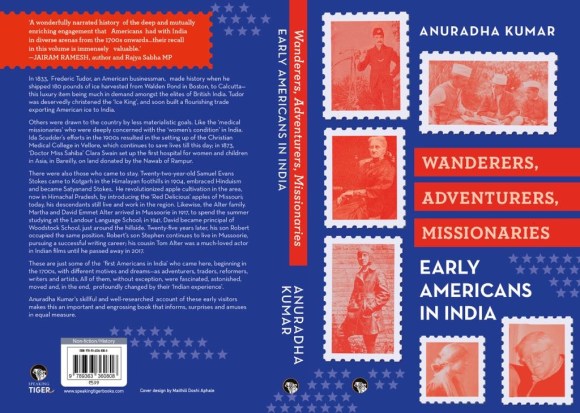
A review of Anuradha Kumar’s Wanderers, Adventurers, Missionaries: Early Americans in India (Speaking Tiger Books) and an interview with the author

Migrants and wanderers — what could be the differences between them? Perhaps, we can try to comprehend the nuances. Seemingly, wanderers flit from place to place — sometimes, assimilating bits of each of these cultures into their blood — often returning to their own point of origin. Migrants move countries and set up home in the country they opt to call home as did the family the famous Indian actor, Tom Alter (1950-2017).

Anuradha Kumar’s Wanderers, Adventurers, Missionaries: Early Americans in India captures the lives and adventures of thirty such individuals or families — including the Alter family — that opted to explore the country from which the author herself wandered into Singapore and US. Born in India, Kumar now lives in New Jersey and writes. Awarded twice by the Commonwealth Foundation for her writing, she has eight novels to her credit. Why would she do a whole range of essays on wanderers and migrants from US to India? Is this book her attempt to build bridges between diverse cultures and seemingly diverse histories?

As Kumar contends in her succinct introduction, America and India in the 1700s were similar adventures for colonisers. In the Empire Podcast, William Dalrymple and Anita Anand do point out that the British East India company was impacted in the stance it had to colonisers in the Sub-continent after their experience of the American Revolution. And America and India were both British colonies. They also were favourites of colonisers from other European cultures. Just as India was the melting pot of diverse communities from many parts of the world — even mentioned by Marco Polo (1254-1324) in The Kingdom of India — America in the post-Christopher Columbus era (1451-1546) provided a similar experience for those who looked for a future different from what they had inherited. The first one Kumar listed is Nathaniel Higginson (1652-1708), a second-generation migrant from United Kingdom, who wandered in around the same time as British administrator Job Charnock (1630-1693) who dreamt Calcutta after landing near Sutanuti[1].

Kumar has bunched a number of biographies together in each chapter, highlighting the commonality of dates and ventures. The earliest ones, including Higginson, fall under ‘Fortune Seekers From New England’. The most interesting of these is Fedrick Tudor (1783-1864), the ice trader. Kumar writes: “In Calcutta, Dwarkanath Tagore, merchant and patron of the arts (Rabindranath Tagore’s grandfather), expressed an interest to involve himself in ice shipping, but Tudor’s monopoly stayed for some decades more. Tagore was part of the committee in Calcutta along with Kurbulai Mohammad, scion of a well-established landed family in Bengal, to regulate ice supply.”

Also associated with the Tagore family, was later immigrant Gertrude Emerson Sen (1890-1982, married to Boshi Sen). She tells us, “Tagore wrote Foreword to Gertrude Emerson’s Voiceless India, set in a remote Indian village and published in 1930. Nobel Laureate Rabindranath Tagore called Emerson’s efforts, ‘authentic’.” She has moved on to quote Tagore: “The author did not choose the comfortable method of picking up information from behind lavish bureaucratic hospitality, under a revolving electric fan, and in an atmosphere of ready-made social opinions…She boldly took in on herself unaided to  enter a region of our life, all but unexplored by Western tourists, which had one great advantage, in spite of its difficulties, that it offered no other path to the writer, but that of sharing the life of the people.’” Kumar writes of an Afro-American scholar, called Merze Tate who came about 1950-51 and was also fascinated by Santiniketan as were some others.

Another name that stuck out was Sam Higginbottom, who she described as “the Farmer Missionary” for he was exactly that and started an agricultural university in Allahabad. Around the same time as Tagore started Sriniketan (1922), Higginbottom was working on agricultural reforms in a different part of India. In fact, Uma Dasgupta mentions in A History of Sriniketan: Rabindranath Tagore’s Pioneering work in Rural Reconstruction that Lord Elimhurst, who helped set up the project, informed Tagore that “another Englishman” was doing work along similar lines. Though as Kumar has pointed out, Higginbottom was a British immigrant to US — an early American — and returned to Florida in 1944.

There is always the grey area where it’s difficult to tie down immigrants or wanderers to geographies. One such interesting case Kumar dwells on would be that of Nilla Cram Cook, who embraced Hinduism, becoming in-the process, ‘Nilla Nagini Devi’, as soon as she reached Kashmir with her young son, Sirius. She shuttled between Greece, America and India and embraced the arts, lived in Gandhi’s Wardha ashram and corresponding with him, went on protests and lived like a local. Her life mapped in India almost a hundred years ago, reads like that of a free spirit. At a point she was deported living in an abject state and without slippers. Kumar tells us: “Her work according to Sandra Mackey combined ‘remarkable cross-cultural experimentation’ and ‘dazzling entrepreneurship.’”

The author has written of artists, writers, salesmen, traders (there’s a founder/buyer of Tiffany’s), actors, Theosophists, linguists fascinated with Sanskrit, cyclists — one loved the Grand Trunk Road, yet another couple hated it — even a photographer and an indentured Afro-American labourer. Some are missionaries. Under ‘The Medical Missionaries: The Women’s Condition’, she has written of the founders of Vellore Hospital and the first Asian hospital for women and children. Some of them lived through the Revolt of 1857; some through India’s Independence Movement and with varied responses to the historical events they met with.

Kumar has dedicated the book to, “…all the wanderers in my family who left in search of new homes and forgot to write their stories…” Is this an attempt to record the lives of people as yet unrecorded or less recorded? For missing from her essays are famous names like Louis Fischer, Webb Miller — who were better known journalists associated with Gandhi and spent time with him. But there are names like Satyanand Stokes and Earl and Achsah Brewster, who also met Gandhi. Let’s ask the author to tell us more about her book.

Anuradha Kumar

What made you think of doing this book? How much time did you devote to it? 

These initially began as essays for Scroll; short pieces about 1500-1600 words long. And the beginnings were very organic. I wrote about Edwin Lord Weeks sometime in 2015. But the later pieces, most of them, were part of a series.

I guess I am intrigued by people who cross borders, make new lives for themselves in different lands, and my editors—at Scroll and Speaking Tiger Books—were really very encouraging.

After I’d finished a series of pieces on early South Asians in America, I wanted to look at those who had made the journey in reverse, i.e., early Americans in India, and so the series came about, formally, from December 2021 onward. I began with Thomas Stevens, the adventuring cyclist and moved onto Gertrude Emerson Sen, and then the others. So, for about two years I read and looked up accounts, old newspapers, writings, everything I possibly could; I guess that must mean a considerable amount of research work. Which is always the best thing about a project like this, if I might put it that way.

What kind of research work? Did you read all the books these wanderers had written?

Yes, in effect I did. The books are really old, by which I mean, for example, Bartolomew Burges’ account of his travels in ‘Indostan’ written in the 1780s have been digitized and relatively easy to access. I found several books on Internet Archive, or via the interlibrary loan system that connects libraries in the US (public and university). I looked up old newspapers, old magazine articles – loc.gov, archive.org, newspapers.com, newspaperarchive.com, hathitrust.org and various other sites that preserve such old writings.

You do have a fiction on Mark Twain in India. But in this book, you do not have very well-known names like that of Twain. Why? 

Not Twain, but I guess some of the others were well-known, many in their own lifetime. Satyanand Stokes’ name is an easily recognisable still especially in India, and equally familiar is Ida Scudder of the Vellore Medical College, and maybe a few others like Gertrude Sen, and Clara Swain too. I made a deliberate choice of selecting those who had spent a reasonable amount of time in India, at least a year (as in the case of Francis Marion Crawford, the writer, or a few months like the actor, Daniel Bandmann), and not those who were just visiting like Mark Twain or passing through. This made the whole endeavour very interesting. When one has spent some years in a foreign land, like our early Americans in India, one arguably comes to have a different, totally unique perspective. These early Americans who stayed on for a bit were more ‘accommodating’ and more perceptive about a few things, rather than supercilious and cursory.

And it helped that they left behind some written record. John Parker Boyd, the soldier who served the Nizam as well as Holkar in Indore in the early 1800s, left behind a couple of letters of complaint (when he didn’t get his promised reward from the East India Company) and even this sufficed to try and build a complete life.

How do these people thematically link up with each other? Do their lives run into each other at any point? 

Yes, I placed them in categories thanks to an invaluable suggestion by Dr Ramachandra Guha, the historian. I’d emailed him and this advice helped give some shape to the book, else there would have been just chapters following each other. And their lives did overlap; several of them, especially from the 1860s onward, did work in the same field, though apart from the medical missionaries, I don’t think they ever met each other – distances were far harder to traverse then, I guess.

What is the purpose of your book? Would it have been a response to some book or event? 

I was, and am, interested in people who leave the comforts of home to seek a new life elsewhere, even if only for some years. Travelling, some decades ago, was fraught with risk and uncertainty. I admire all those who did it, whether it was for the love of adventure, or a sense of mission. I wanted to get into their shoes and see how they felt and saw the world then.

Is this because you are a migrant yourself? How do you explain the dedication in your book? 

I thought of my father, and his cousins, all of whom grew up in what was once undivided Bengal. Then it became East Pakistan one day and then Bangladesh. Suddenly, borders became lines they could never cross, and they found new borders everywhere, new divisions, and new homes to settle down in. They were forced to learn anew, to always look ahead, and understand the world differently.

When I read these accounts by early travellers, I sort of understood the sense of dislocation, desperation, and sheer determination my father, his cousins felt; maybe all those who leave their homes behind, unsure and uncertain, feel the same way.

You have done a number of non-fiction for children. And also, historical fiction as Aditi Kay. This is a non-fiction for adults or all age groups? Do you feel there is a difference between writing for kids and adults? 

I’d think this is a book for someone who has a sense of history, of historical movements, and change, and time periods. A reader with this understanding will, I hope, appreciate this book.

About the latter half of your question, yes of course there is a difference. But a good reader enters the world the writer is creating, freely and fearlessly, and I am not sure if age decides that.

You have written both fiction and non-fiction. Which genre is more to your taste? Elaborate. 

I love anything to do with history. Anything that involves research, digging into things, finding out about lives unfairly and unnecessarily forgotten. The past still speaks to us in many ways, and I like finding out these lost voices.

What is your next project? Do you have an upcoming book? Do give us a bit of a brief curtain raiser. 

The second in the Maya Barton-Henry Baker series. In this one, Maya has more of a lead role than Henry. It’s set in Bombay in the winter of 1897, and the plague is making things scary and dangerous. In this time bicycles begin mysteriously vanishing… and this is only half the mystery!

We’ll look forward to reading a revival of the characters fromThe Kidnapping of Mark Twain: A Bombay Mystery. Thanks for your time and your wonderful books.

.

[1] Now part of Kolkata (Calcutta post 2001 ruling)

Click here to read an excerpt from Wanderers, Adventurers, Missionaries: Early Americans in India

(This review and online interview is by Mitali Chakravarty)

PLEASE NOTE: ARTICLES CAN ONLY BE REPRODUCED IN OTHER SITES WITH DUE ACKNOWLEDGEMENT TO BORDERLESS JOURNAL

Click here to access the Borderless anthology, Monalisa No Longer Smiles

Click here to access Monalisa No Longer Smiles on Kindle Amazon International

Categories
Musings of a Copywriter

Gastronomy & Inspiration? Sherbets and More…

By Devraj Singh Kalsi

Entering the sherbet shop introduced me to an ambience I was not au courant with at all. Not the usual, expectedly flashy interiors greeted my bespectacled eyes. Instead, I was transported to another era, a kangaroo leap of a century in time, to witness heritage stir up breezy nostalgia. With old-fashioned teakwood tables, carved chairs, and antique lamp shades, framed, sepia-tone portraits of legends decorating the distempered walls chipped at various places, it was not difficult to guess that the outlet had retained a robust connection with the hallowed past.

As I walked in with the curiosity of an aficionado exploring an art gallery, there was so much else to engage myself with – apart from the listings on the laminated menu card. Before I sat down and ordered something to gulp down my parched throat, I chose to update myself with a walking tour of the entire sherbet joint. Driven by thirst to find enriching inputs from knowledgeable sources, I finally settled down and asked for assistance from the gentleman who served. He looked eager to share anecdotes about the quaint little shop, tucked away in a small, congested lane, that had managed to retain its client base with support from young students who made it their favourite haunt despite the easy availability of snazzy food kiosks and juice corners proliferating around their college premises. That the present generation – and the several earlier ones – had realised the need to patronise this outlet as a historical and cultural link was truly worthy of appreciation.

I trooped in at different hours of the day, and found that most of the seats were occupied by college and university students who were also lovers searching for a comfortable, affordable space where they could sit for long hours, sip their favourite sherbet, and slow down the passage of time while holding hands and making lifetime commitments. As the straw pipes in the two glasses made empty noises, couples ordered another tall glass of sherbet, of an untried flavour, to keep alive the flow of their discussions and personal plans for some more time without feeling remorseful that they were adversely impacting the commercial profitability of the century-old outlet with their prolonged stay. This sensibility was rare but precious and the sherbet store staff never disturbed such couples who preferred the rear seats, keeping themselves away from public glare. The front benches were readily available for fleeting customers of our kind who walked in casually to enjoy the chilled sherbet and walked out with a vintage experience.

Leading luminaries from diverse streams such as politics, arts, and literature frequented this shop over time. Their portraits on the walls were not only tributes to their contribution but also a part of cherishing the close association with the change-makers. A small conversation with the manager revealed snippets from the past – passed down the generations as heirlooms. Refreshing tales energised customers who felt delighted to be present here. Imagining this century-old world was recreated by the culturally conscious owners, who brushed aside upgradation requests only to preserve as much of the past as possible. The giant ceiling fans circulated not much air. So an air-conditioning system had been installed. But the slowly whirring fans were not dismantled. The wooden deer head wall mount above the door was a silent reminder of how much had not changed despite the lapse of time.

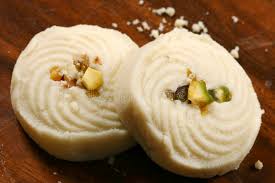
I chose to go with the manager’s recommendation – daab malai sherbet [1]– for a hot summer afternoon. He called it the favourite summer drink of a famous city-based author from the last century. I should have thanked him for offering it to another wannabe writer – even though he would not have been much impressed with this disclosure. At a personal level, the writer inside felt motivated that two authors, from two different centuries, enjoyed the same cooling drink under the same roof. Talking about the merits of the sherbet, it was amazing to taste: authentic and traditional. The flavour was different if not unique and this outlet was proud to offer it to those who valued the past. When I asked him if I could get this drink anywhere else in the city, he was reticent for a while. After poring over its faint possibility, he set me free to explore the city to find something remotely close and comparable to this drink. There was a smirk on his face, which suggested I would fail in my mission to get an equivalent to what I was served here.  

He suggested grapes crush sherbet as another specialty I would relish, and its taste was unique this time, with crushed grapes floating around the fragmented ice cubes to lend an authentic appeal. After consuming these two flavours, the flavours of the past came alive in my mind. I felt really close to the great artists on the wall, feeling the immediate need to write creative stuff. This was working at another level: offering me loads of inspiration and motivation to write. It was more effective and quicker than attending motivational workshops or literature festivals to boost up creative energies and overcome my writer’s block. Tuning into great speeches by life coach experts often failed to resonate with the audience. But my brief visit here seemed to have worked wonders as I was already feeling charged up to go home and write something powerful to move the cold, insensitive generals of warring nations to embrace peace forever.

The rapid flow of ideas made me insecure about losing them on my way home and I regretted not carrying a notebook to jot them down. When I visited the place again, I made it a point to carry my diary and pen and sat for hours to draft a story outline. It was not a matter of shame as I found the serving staff look happy to see my passion, to be added to their new list of great patrons. As our familiarity developed further, they showed me newspaper cuttings mentioning the sherbet outlet – how some journalists kept them alive in the print editions just as the young crowd made their outlet famous on the social media, with hundreds of Instagram reviews and top ratings of the place.  

This was just one outlet that motivated me but I was sure there should be more in the city, not just sherbet shops. I looked for other outlets that were part of the lives of the great artistes. I made it a quest to look for them in order to experience a surge of motivation that always does not come from sitting idle in front of an open window. As I began my search for similar outlets, I came across several of them still operating from modest spaces.

There was a bookstore on the first floor of a ramshackle building where some leading film directors came to buy imported books. Climbing the same stair case evoked feelings of nostalgia. In an era when many bookstores have shut down, this family-owned bookstore had over the generations expanded its list to include vernacular and academic books to stay commercially viable. The wooden shelves and the cash counter manned by a dhoti-clad septuagenarian gentleman keeping a hawk’s eye like a surveillance camera suggested retirement was still far away.  I was informed by the gentleman regarding the operational presence of another stationery store where many freedom fighters came to buy pens and ink. Holding a fountain pen bought from the store located in the next street, hidden behind a paan shop basking in the glory of serving great musicians of the country, I walked home to begin a new story with it.

As I continued with my search for such outlets to stir the pot of motivation, I realised, to identify closely with such landmark establishments, was indeed a powerful way to fill myself with zest and zeitgeist. During my next journey, I came across a sweet shop specialising in a wide variety of sandesh and its owner, standing beside a pedestal clock that was functional since the nineteenth century, spoke of the days of glory, with the intellectuals of the city dropping in the evening to pack boxes of sweets. They continued to keep the freshness of the sandesh alive without any compromise in terms of quality. They are not affected by modern shops making false claims of serving high quality traditional sweets. They proudly say those who value good taste and can differentiate between fake and original are their clients, always ready to pay extra to buy pure and tasty stuff. The melt-in-the-mouth experience of their sweets was heavenly indeed. I made it my preferred shop to buy sweets from to celebrate all successes in life. For festive occasions, there could be other shops, but to celebrate success I chose to bring home sandesh from this shop alone, even if it meant going an extra mile for their delicacy. It has been quite a while since I last went there – because the occasions to celebrate successes have dried up in the recent years, with tragedies and setbacks mounting allied attack since the pandemic. While the sherbet store has helped me regain a lot of confidence in the writing process, I hope the sandesh shop will soon find me at their glass counter, to order packets of sweets to celebrate literary success.  

[1] Coconut cream sherbet

Devraj Singh Kalsi works as a senior copywriter in Kolkata. His short stories and essays have been published in Deccan Herald, Tehelka, Kitaab, Earthen Lamp Journal, Assam Tribune, and The Statesman. Pal Motors is his first novel.  

PLEASE NOTE: ARTICLES CAN ONLY BE REPRODUCED IN OTHER SITES WITH DUE ACKNOWLEDGEMENT TO BORDERLESS JOURNAL

Click here to access the Borderless anthology, Monalisa No Longer Smiles

Click here to access Monalisa No Longer Smiles on Kindle Amazon International
Categories
Musings Stories

Dhruba Esh & Amiyashankar

Ratnottama Sengupta introduces a prolific, popular and celebrated Bengali writer and an artist

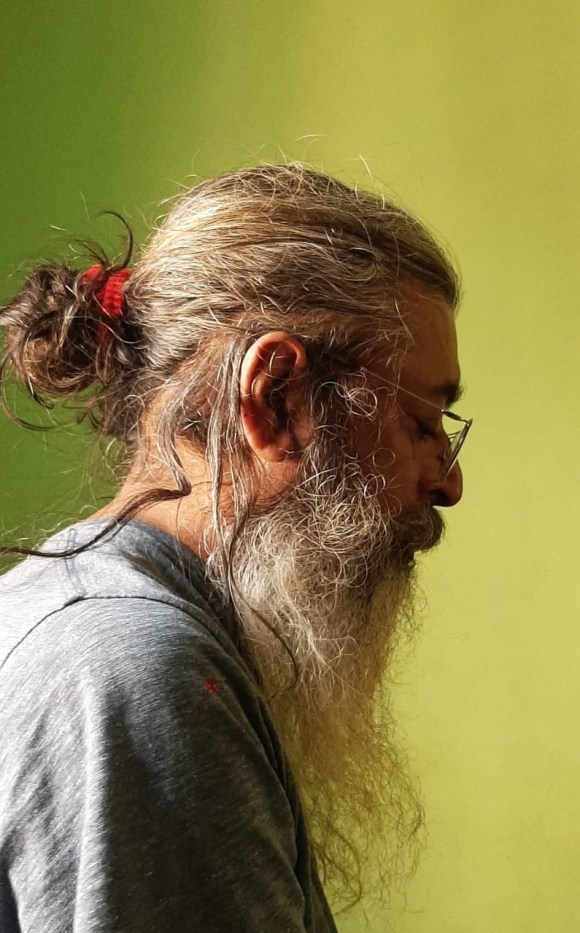
Dhruba Esh; Courtesy: Kamrul Hasan Mithon


Dhruba Esh, born 1967, is a full time cover designer – and a part time writer. He has authored stories for children and thrillers for grown-ups. A total of 40 books — or maybe more.”

This is from the cover flap of one of the artist’s published works. Cryptic? Yes. But it does not fail to convey the whimsy every Dhaka-based publisher and poet identifies with the name, Dhruba Esh. Read what Humayun Ahmed (1948-2012), a prolific author, dramatist and director of unforgettable films like Ghetuputra Kamola[1], saysabout the designer in Chaley Jaay Basanta Din[2]. “Must get hold of Dhruba Esh. For some unknown reason he’s been out of reach. Pasted on the front door of the flat he lives in is an A4 sized paper. It is adorned with the sketch of a crow in flight and is signed off with these words in Dhruba’s handwriting: ‘The Bird has Flown the Nest.’

“What I need to do is this: Throw away that A4 sheet and replace it with another, inscribed by these words: ‘Come back, Birdie!’

“Dhruba Esh might not know, but a bird that takes to its wings always returns to its nest. Only the caged bird has nowhere to fly off to. Its only reality is to stay put in one location…” 

Why am I taking a serious note of what Humayun Ahmed wrote? Not only because Dhruba Esh has penned the biography, Tumi Achho Kemon, Humayun Ahmed? More so because this custodian of Bangladesh literary culture, who continues to be a top seller at Ekushe Book Fair[3], is one of the cornerstones of modern Bengali literature on either side of the barbed wires.

Dhruba Esh is himself a legend in the Bangla literary firmament, I learn from Kamrul Hasan Mithon, a photographer turned publisher cum writer has been instrumental in reconnecting me with my father, Nabendu Ghosh’s roots in Kalatiya, once a village in Dhaka district that is now a suburb of the capital city. Bhaiti, as I affectionately address him, has been writing a column, Dyasher Bari (Ancestral Home), in Robbar (Sunday) magazine published online from Kolkata. Featured in it are all the major names of Bengali art, literary and cinema world — from Suchitra Sen, Mrinal Sen, Paritosh Sen to Ganesh Haloi, Miss Shefali, Sabitri Chatterjee and not forgetting Baba.

“Dhruba Esh is just one of his kind. He does not have a wife, no mobile, nor a Facebook page. He does not even ride a bus or train. If a destination is too long to walk, he travels only by rickshaw. He is most indifferent to money matters. But he is most enthusiastic about painting and designing. 

“Starting in 1989, when he was still a second year student at the Dhaka University, he has designed nearly 25,000 book covers. In addition he has designed music albums – and T’s too! Three years ago he was bestowed with the Bangla Academy Literary Award for his contribution to Children’s Literature – with titles such as Ayng Byang Chang [4] and Ami Ekta Bhoot[5].”

I fell for ‘Amiyashankar…’ at the very first reading. How effortlessly the surreal narrative etches a contemporary reality obtaining in the land of my forefathers!

Amiyashankar Go Back Home

Story by Dhruba Esh, translated from Bengali by Ratnottama Sengupta

Subachani or Bar footed Geese flying over Himalayas: From Public Domain

Amiyashankar Go Back Home!”

“That’s the title of the book?”

 “Yes Sir.”

“Is there a poem by this name?”

“No Sir. There’s no mention of Amiyashankar in my poetry.”

“No mention at all? Oh!”

“Can I send you some of my poems?”

“You may send.”

“Can you do the cover within this month?”

“Not this month. You’ll get it on the 12th of the next month. Only sixteen days to go now.”

He started laughing.

He’s a small town poet. A young professor. I have been to the town where he teaches in a girls’ College. It’s like a watercolour painting. There’s a river to the north of the town. Blue mountains in the distance complete the view.

The geese of Subachani had flown over this town on their journey towards the Manasarovar to restore Ridoy to his human size. The poet was unaware of this. He has not read Buro Angla[6].

“What is the book about? Birds?”

“You can find the PDF on Google.”

“Thanks. I will read it.”

Two days later he called. “Reading Buro Angla has sparked some fireflies in my mind. I’d not read the book until now.”

He was given my number by Rasul Bhai, a poet and a cricketer from the same town. He just about looks after the family publishing business. A good person. Last year I had done the cover for his book of poems, Lake Mirror of the Full Moon.

The poet had emailed his poems. He had said he’d send some poems, instead he had sent the PDF of the complete book. On the basis of Divine Selection I read 13 poems. He cannot be faulted for not reading Buro Angla. This poet writes good poetry. In two days I readied the cover for his book.

*

“Is Amiyashankar a friend of yours?”

“No.”

“Why are you telling him to go back home?”

“Because he is Amiyashankar.”

“What?”

“His wife waits for him.”

“He has no one of his own but his wife?”

“He has kids. One son, one daughter.”

“What does he do?”

“He’s a teacher in a government primary school.”

I was startled. Subhankar, Tushar, Amiyashankar, me — we are childhood friends. Our Amiyashankar is a teacher in a government primary school. He has a son and a daughter. The poet who lives in another town has never been to our town. He is not likely to have set his eyes on or made an acquaintance of Amiyashankar. Or, is a person likely to know another person through social media?

“I am not on social media,” said the poet.

“Why?”

“I get disoriented. Confused.”

“Oh. Your Amiyashankar’s wife is named Mitra?”

“Mitra. Yes, I did not tell you, sorry. Amiyashankar’s son is called Arnab, his daughter is Paramita.”

“Why are you creating Amiyashankar?”

“I have no friend.”

Our Amiyashankar’s wedded wife is Mitra. His son is Anu, Miti his daughter.

I call him.

“Hey, what’s the proper name of Anu and Miti?”

“Here — Anu is Arnab…”

“And Miti is Paramita?”

“Yes. You know it already.”

Really tough to suffer this.

I mentioned the poet. Amiyashankar did not read or write poetry. He had never heard of the poet.

“A modern poet?” he was curious.

“A post-modern modern poet.”

“Now what is THAT? Good to eat or wear?”

“Eat. Wear.”

“Does it hide your shame?”

“It covers your shame.”

“Good if it hides all.”

“Yes. Right. Where are you now?”

“I’m here, at Moyna and Dulal’s stall, sipping tea.”

“Aren’t you cold? Go back home.”

Amiyashankar, go back home.

*

On the 12th I sent the EPS file of the cover to the poet.

“If you don’t like it you may discard it,” I messaged.

Reply: “Will you design another cover then?”

Reply: “No.”

Reply: “This will do. I like it. There’s no Amiyashankar but one can visualise him. Thanks. Do I pay you online through bKash?”

I sent my bKash number. He sent the money.

End of give-and-take.

*

I blocked the poet’s number. I deleted every bit of communication in the mail. We had an Amiyashankar in flesh and blood. The poet had concocted an identical Amiyashankar. That Amiyashankar did not live and breathe – how’s that? Such convolution and complication! I was fed up of continuously, endlessly, unendingly living in complexity.

Better to shut my eyes and think of uncomplicated glow worms in my mind.

.

[1] A 2012 film by Humayun Ahmed centring around the exploitation of ghetupatras – young boy performers, Komala being a ghetupatra.

[2] The spring day passes

[3] Known as Eternal Twenty-first Book Fair is the largest organised by the government in Bangladesh.

[4] Bang is frog in Bengali. The rest are fun rhyming words.

[5] I am a ghost

[6] Book by Abanindranath Tagore (1871-1951, nephew of Rabindranath Tagore) published in 1953. Buro Angul is Thumb in Bengali. This is the humorous story about a mischievous boy, Ridoy, who was shrunk to the size of a thumb. He had to journey to the Mansarovar in Himalayas to regain his original size and meets various creatures, including the geese referred to here.

Dhruba Esh, born 1967, is a full time cover designer — and a part time writer. He has authored stories for children and thrillers for grown-ups. A total of 40 books — or maybe more. This story was first published in Bengali in a hardcopy journal called Easel.

Ratnottama Sengupta, formerly Arts Editor of  The Times of India, teaches mass communication and film appreciation, curates film festivals and art exhibitions, and translates and writes books. She has been a member of CBFC, served on the National Film Awards jury and has herself won a National Award. 

.

PLEASE NOTE: ARTICLES CAN ONLY BE REPRODUCED IN OTHER SITES WITH DUE ACKNOWLEDGEMENT TO BORDERLESS JOURNAL

Click here to access the Borderless anthology, Monalisa No Longer Smiles

Click here to access Monalisa No Longer Smiles on Amazon International

Categories
Feature

In Translation: Bitan Chakraborty

The story of Hawakal and a conversation with the founder, Bitan Chakraborty, whose responses have been translated from Bengali by Kiriti Sengupta.

Hawakal Publishers grew out of the compulsive need young Bitan Chakraborty had to express and connect. This was a young man who was willing to labour at pasting film hoardings to fund his dreams. An Information Technology professional by training, Chakraborty realised early he did not want to tread on trodden paths and started his journey as a creative individual. Now, he not only writes and publishes but also designs the most fabulous covers and supports local craftsmen.

Over the last nearly two decades, the brand Hawakal has become synonymous with traditional poetry publication from India. They do not offer buy back deals or ask to be paid like most publishers but pick selectively. No one seems to know what it is they look for. All Chakraborty says is – “We aimed to introduce a fresh wave in publishing.”

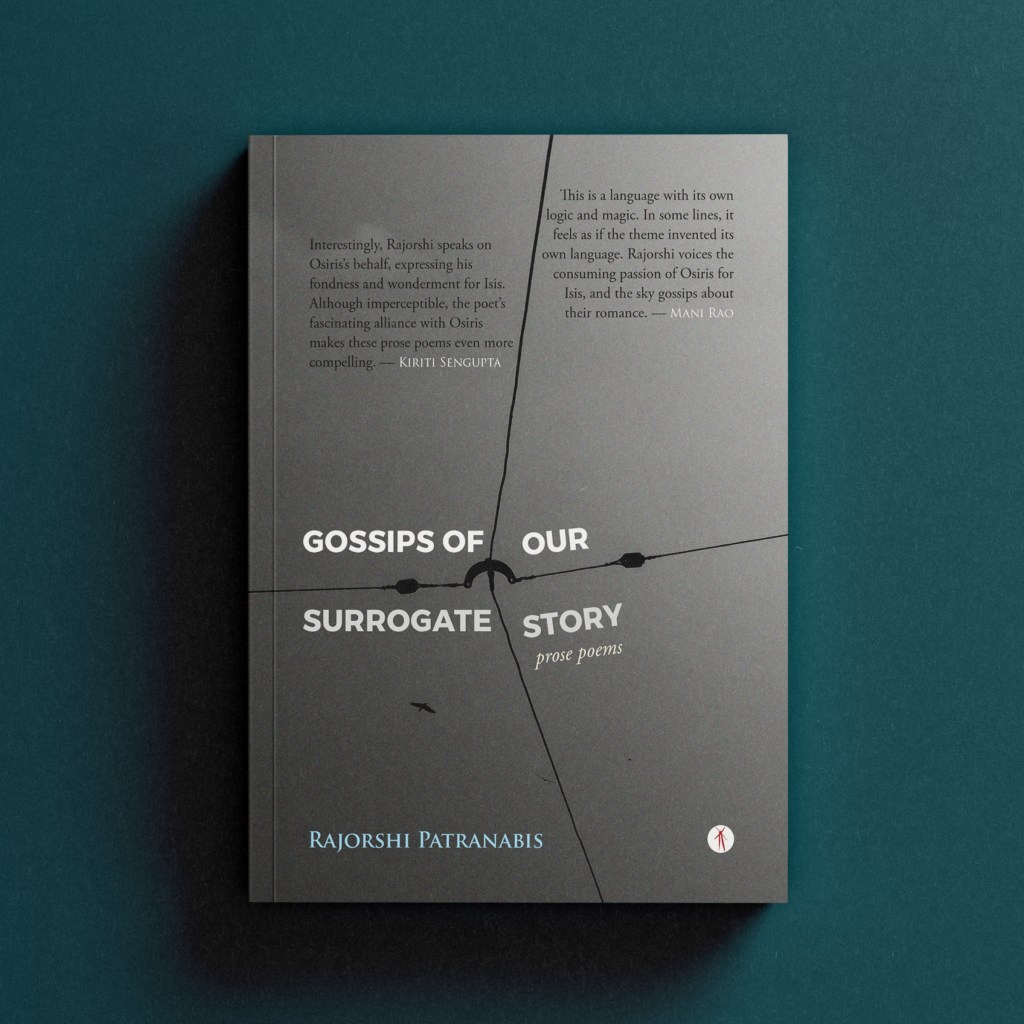
Chakraborty writes fully in Bengali which is why the dentist-turned-writer-turned-publisher, Kiriti Sengupta, had to chip in with the translation of his responses in Bengali. Their friendship matured over the last decade when Sengupta approached Chakraborty to publish a book of critical essays, which along with essays on Sharmila Ray’s poetry homed critical writing on his too. This was the first English publication of Hawakal.

Sengupta had given up dentistry by then and was living in a hostel on a packet of Maggi a day to indulge his creative passions.  A skilled poet with a number of books under his belt, he eventually joined Chakraborty to run the English section of Hawakal.  He also translates from Bengali to English. We have one of his translations of Chakraborty’s short story, Disappearance. A powerful reminder of social gaps that exist in the Subcontinent, it’s a poignant and frightening narrative, the kind someone writes and imagines out of a passion to reform.

Some of Bitan’s works are available in English. His style — by the translations — seems graphic. The deft strokes make the landscape and the stories almost visual, like films. 

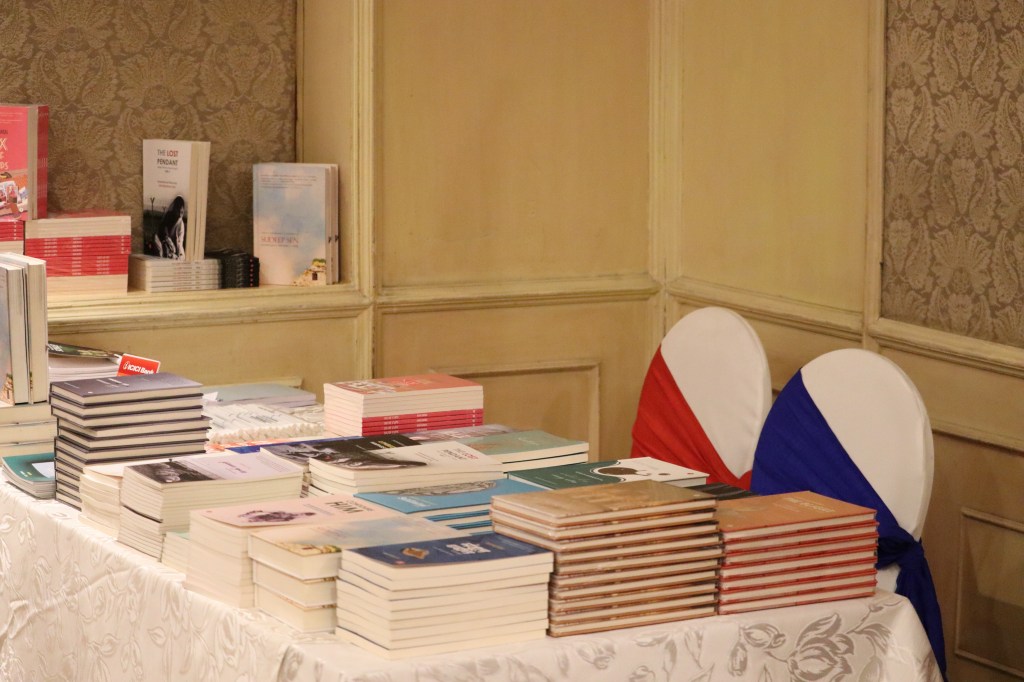
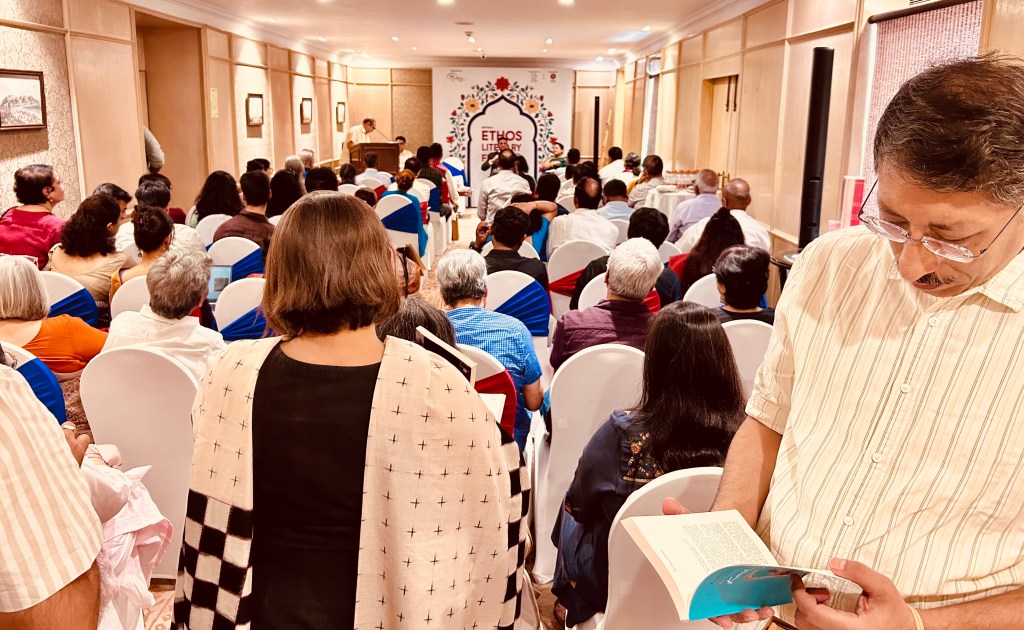
Chakraborty worked with ‘Little Magazines’ for some time. Then he made his way into publishing full time. Though he found it hard to make ends meet, he started his adventure without compromising his beliefs. He wanted to take books to readers and, with that spirit, they started the Ethos Literary Festival, where they host writers published by them. In fact, in the 2025 festival, Hawakal sold more than 400 books in seven hours! Who said poetry doesn’t sell?

Chakraborty and Sengupta have yet another hallmark. They wear matching clothes. These are tailored with material sourced from handloom weavers. They resorted to this when they found that commercialisation was killing the traditional homeborn handlooms. In that spirit, they started a clothes venture too, Mrinalika Weaves. 

Chakraborty is an unusual person – as the interview will reveal – humble, stubborn with aims like no other publisher or writer in this day and age! He doesn’t talk of money, survival, politics, awards or glamour, but what matters to him. He is direct and straightforward and perhaps, his directness is what makes his outlook appealing. He translates a few to Bengali for his own growth. But these are poets who are known for their terse writing. Maybe, that is what he looks for… Let’s find out!

Conversation
Bitan Chakraborty. Photo Courtesy: Kiriti Sengupta

Bitan, you are a multifaceted person: a writer, an artist, a photographer, and, most importantly, a publisher for all writers. What is it you most love to do and why?

I need to talk. What I observe or learn from my experiences compels me to express myself. Therefore, regardless of the medium I use, I strive to convey meaningful messages. Nevertheless, the range I enjoy in weaving words is unparalleled.

What sparked your interest in writing? Please elaborate. Do you only use Bengali to communicate with others? Do you translate from other languages to Bengali?

I felt emotionally down when I began writing. What a dreadful time it was! I believe it must be the emotional turmoil of my youth. However, writing has never left me since then. It’s more accurate to say that I have never managed to rid myself of my urge to write. During the early period, my writings contained more emotion than substance. In my college years, I was engaged in student movements that helped me discover the purpose of words. Society, socio-economic status, politics, and human dissatisfaction are the themes that run through my stories. Bengali is my mother tongue: I think, speak, dream, and curse in Bengali. I find it challenging to derive the same pleasure from using another language; it is my shortcoming.

Nevertheless, when I meet outstanding works in English, I attempt to translate them into Bengali. Not everything I read, but I have translated poems by Sanjeev Sethi and Kiriti Sengupta. I have consistently translated Gulzar into Bengali, but it has yet to be published in book format. Translation is a mental exercise; it particularly helps when I am experiencing writer’s block. I read poetry when I wish to untangle my thoughts, and when I come across fine poems in another language, I try to make them my own — bring them into my culture through translation.

Do you write only prose or poetry too?

I have been writing stories and essays for the past fifteen years. Interestingly, I began with poems, but they turned out to be junk. Therefore, I focussed on writing fiction.

Many of your stories focus on the Bengali middle class. What inspires your muse the most? People, art, nature, or is it something else?

I grew up in a lower-middle-class environment. Poverty, unemployment, and debt were parts of my formative years. I witnessed how this economic disparity allowed a particular segment of society to insult and humiliate others. Consequently, I have developed a strong affinity for those who are underprivileged. Later, when I began writing fiction, my political awareness enhanced my observations — I was able to merge the existing economic inequality with the nation’s political perspectives. The lessons I have learned over the years motivate me to write.

You design fabulous book covers. Do you have any formal training, or is it a natural flair?

When I entered the publishing industry, I had no funds to commission professionals for book covers or layouts. I had been involved with Little Magazines since my college days. I used to spend hours with the printers, meticulously observing how they designed cover spreads and interior text files. This experience proved useful when I began producing books. For the past several years, I have frequented bookstores, picking up a book or two — I also purchase books online, especially those that help me stay abreast of recent developments in book architecture. In my early years, I was unable to learn design formally due to financial constraints.

When and why did you decide to go into publishing? Could you tell us the story of Hawakal?

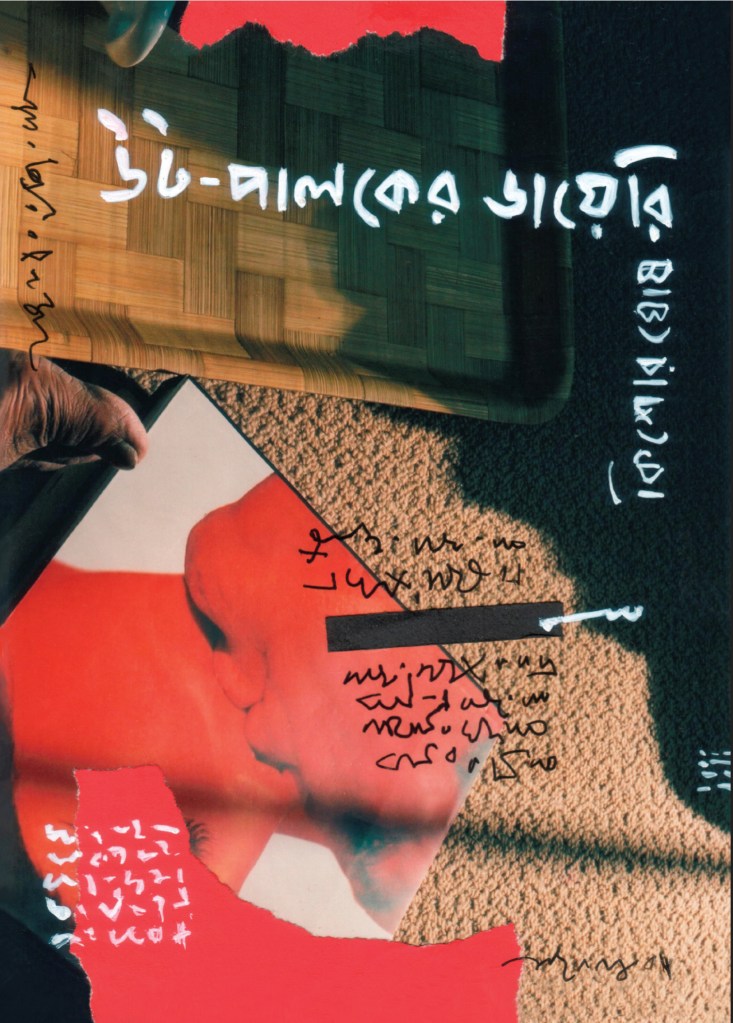
From 2003 to 2008, I was involved with four Little Magazines. Bengali Little Magazines thrive on minimal funds. Therefore, we (the team) managed everything necessary to publish a little magazine. We oversaw printing, distribution, book fairs, and other activities. By the middle of 2007, I realised I wasn’t suited for a day job. I understood that I would struggle to survive the conventional 10 am to 5 pm career. During that time, my family was in financial difficulties. Suddenly, we had the opportunity to publish Kishore Ghosh’s debut collection of poems, Ut Palaker Diary. It was published under the banner of the little magazine I was actively working with. As we worked on the book, I learned that publishing a magazine and publishing a book were entirely different endeavours. A little magazine is primarily sold through the efforts of its contributing writers and poets, while a book is sold through the combined efforts of the author and the publisher. I decided to pursue publishing as my career after we successfully sold 300 copies of Ghosh’s book in 10 months. That was the beginning.

Why did you opt to name your firm after a windmill — Hawakal in Bengali? Please elaborate.

We spent days selecting a name for our publishing concern. Finally, we chose the title of one of Kishore Ghosh’s poems as our company name. Hawakal, in English, means windmill. It signifies an alternative source of energy. We aimed to introduce a fresh wave in publishing. As an independent press, we have consistently operated ahead of our time. From developing a fully-fledged e-commerce hub (hawakal.com) in 2016 to producing the highest number of books during the pandemic (2020-2021), Hawakal has accomplished it all.

The first logo of Hawakal designed by contemporary artist, Hiran Mitra and then modified over time by Bitan Chakraborty.

You have boutique bookshops in Kolkata, Delhi — any other places? I believe you started a collaboration to get your books into the USA? Could you tell us a bit about your outlets and how you connect writers with the people? Are your boutique shops different from other bookshops? Do they only stock Hawakal books?

As you know, Hawakal has two functional ateliers in Delhi and Kolkata, while our registered office is located in New Delhi. We do not have any plans for an additional studio in India. We also have a bookstore in Gurgaon called Bookalign. There is a small outlet in Nokomis, Florida. It is a new unit in the United States. We primarily stock books published by Hawakal and its imprints (Shambhabi, CLASSIX, Vinyasa). However, we carefully select titles from other publishers for our store. We have sufficient seating in the store, allowing readers to browse the books before making a purchase. Since we publish non-mainstream authors, readers need to make a conscious choice. This not only benefits the authors we publish, but it also helps us evaluate the effectiveness of our selection process.

You started as a Bengali publisher, if I am not mistaken, and then forayed into English; now you are bringing out a translation in Hindi? How many languages do you cover? Do you plan to go into publishing in other languages?

We initially focused on Bengali books. Our venture into English titles began when Kiriti Sengupta joined Hawakal as its Director. Publishing a Hindi book was unexpected. However, we will not release books in other languages that we cannot read or speak. It is essential, as a publisher, to be well-versed in the language of the books we publish.

What kind of writers do you look for in Hawakal?

Would you like me to reveal the truth? We expect more than just satisfactory work from our writers: we want writers who will value their work passionately and take the necessary steps to reach a wider readership. Please don’t assume that what we expect from our authors is not something we adhere to ourselves. We expect this because we understand what it means to be truly passionate about one’s writing.

I heard that Hawakal was diversifying into textiles. How does that align with your writerly and publishing journey?

We opened our first kiosk in Mathabhanga, North Bengal, back in 2016. We simultaneously sold books and sarees from that small outlet. We had to close the shop due to a lack of staff. Kiriti Sengupta has long cherished the dream of representing the fine textiles of Bengal. Our family has grown larger. Bhaswati Sengupta and Lima Nayak have joined the team; they are the ones who established Mrinalika, collaborating with artisans from remote regions of India to showcase their creations to a wider audience.

Where do you envision yourself and Hawakal, your most extraordinary creation, ten years from now?

We aim to publish fifty timeless books over the next decade.

Thanks for your time and for the service you render to readers and writers.

[1] Ut Palaker Diary – Diary of a Camel Herder

Click here to read Disappearance, a story by Bitan translated from Bengali by Kiriti Sengupta.

(This feature — based on a face to face conversation — and online interview is by Mitali Chakravarty)

PLEASE NOTE: ARTICLES CAN ONLY BE REPRODUCED IN OTHER SITES WITH DUE ACKNOWLEDGEMENT TO BORDERLESS JOURNAL. 

Click here to access the Borderless anthology, Monalisa No Longer Smiles

Click here to access Monalisa No Longer Smiles on Kindle Amazon International

Categories
Review

Job Charnock and the Potter’s Boy

Book Review by Somdatta Mandal

Title: Job Charnock and the Potter’s Boy

Author: Madhurima Vidyarthi

Publisher: Niyogi Books

The nomenclature ‘historical fiction’ is sometimes quite confusing for the reader who keeps on wondering how much of the novel is real history and how much of it is the figment of the author’s imagination. Beginning in 1686, and set in the later part of Aurangzeb’s reign, this work of historical fiction named Job Charnock and the Potter’s Boy charts the turbulent history of an insignificant hutment in the inhospitable swamps of Sutanati in Bengal that becomes one man’s unyielding obsession. This man is no other than Job Charnock whom we all claim to be the original founder of the city of Calcutta.

Bengal during that period was the richest subah of the Mughal Empire and the centre of trade. The English were granted a toehold in Hugli when Shah Jahan ousted the Portuguese in 1632 and made it a royal port. Since then, they had been worrying Shaista Khan, the current nawab at Dhaka, to give them permission to erect a fort at the mouth of the river but the wily old nawab did not agree and dismissed their petitions repeatedly. This was a period of extreme flux when the European powers like the Dutch, the Danes, the French and the English were all playing out age-old rivalries in new battlefields, aided and abetted by individual interests and local conflicts. This is when Sir Joshua Child was at the helm of East India Company’s affairs in London throughout the 1680s and his plans were brought to fruition in faraway Bengal by William Hedges and then Job Charnock.

Of the earliest champions of the British Empire, none was as fanatic or single-minded as Job Charnock. He evinced no wish for private trade or personal gain, and unlike many of his contemporaries who returned to England as wealthy ‘nabobs’, he lived and died here as a man of modest means. His life’s work was only to identify the most strategic location on the river and secure it for his masters.

Sutanati, with its natural defences and proximity to the sea, appealed to his native shrewdness and he applied himself in relentless pursuit.  The story of this novel begins in Hugli in 1686, on the first day of the monsoon, when a poor potter, Gobardhan, and his wife, Indu, find it difficult to make ends meet and their life is centred around their young son Jadu. In the guise of Gobardhan relating bedtime stories to his son, the novelist very tactfully gives us the earlier historical background of the place. He tells us how during his great-great-grandfather’s time, two hundred years ago, Saptagram was the greatest city in the country, the greatest port in the Mughal Empire where ships and boats came from all over the world. Later the Portuguese bought land and built a fort at Golghat, but the Mughals grew jealous of them and finally attacked Hugli and ousted them from there.

Coming down to the present time, Jadu is twelve years old when his parents are burnt to death in front of his eyes as they were innocent bystanders in the struggle for power between the East India Company and the Nawab of Bengal. By a quirk of fate, Jadu is rescued by his father’s Mussalman friend, Ilyas, who is really protective of the boy and acts as a substitute father figure. But soon Ilyas leaves for Dhaka on a diplomatic mission and thrusts the young boy in the hands of a trusted Portuguese sailor and captain called D’ Mello. Since then, Jadu is drawn into the whirlwind of events that follow. He spends a lot of time on the river, and from December 1686 to February 1687, stays at Sutanati. Then, he moves from Sutanati to Hijli, and back to Sutanati up to March 1689, till at last he stands face to face with the architect of his misfortune — Job Charnock himself.

The rest of the tale hovers around how Jadu becomes one of his most trusted aides and though Charnock’s grand dreams did not come to fruition during his lifetime. When he died in 1693, the place was still a clutch of mud and timber dwellings still awaiting the nawab’s parwana[1] to build and fortify the new settlement. The English finally managed to acquire the zamindari rights to Sutanati, Kolkata and Gobindopur in November 1698, when the area had become quite lucrative by then.

In exploring the how, but more importantly the reason for this coming into being, the story then speaks of the motivations of the great and good and the helplessness of the not so great, all of whom in their own way contributed little nuggets of history to the city’s birth.  The novel is also filled with common folk, both local natives as well as foreigners, who watch unheeded while destinies are shaped by the whims of rulers. Interwoven with verifiable historical events and many notable characters from history, the novel therefore is above all primarily the story of an innocent boy Jadu who navigates the different circumstances he is thrust in and emerges victorious and hopeful in the end. As the narrative continues, he also moves from innocence to maturity. Through his eyes we are given to read about a wide range of characters who form the general backdrop of the story.

In the ‘Author’s Note’ at the end of the novel, Madhurima Vidyarthi categorically states that this is not a history book, but she has strung together imaginary events over a skeleton of fact, based on the sum of information available. She states, “While trying to adhere to accepted chronology, the temptation to exercise creative license is often too great to be overcome”. The most significant character in this perspective is Job Charnock’s wife, who has been the subject of much research and her treatment in the Company records is typical of the time. But though a lot of information is available about Charnock’s daughters repeatedly in letters, Company documents, baptismal registers, and headstones, their mother is conspicuous by her absence. This is where the author applies her ‘creative license’ and makes Mrs. Charnock’s interactions with Jadu reveal his coming of age, and with her death, he symbolically reaches manhood. Vidyarthi also clarifies that several characters in the novel like Jadu, his parents, Ilyas, Manuel, Madhu kaka and Thomas Woods are also imaginary, and they represent the nameless, faceless masses during that period and therefore provide a ‘slice of life’ that make up history. All in all, this deft mingling of fact and fiction makes this almost 400-page novel a page-turner, ready to be devoured as fast as possible.

[1] Written permission

Somdatta Mandal is a critic, translator and a former Professor of English, Visva Bharati, Santiniketan.

.

PLEASE NOTE: ARTICLES CAN ONLY BE REPRODUCED IN OTHER SITES WITH DUE ACKNOWLEDGEMENT TO BORDERLESS JOURNAL

Click here to access the Borderless anthology, Monalisa No Longer Smiles

Click here to access Monalisa No Longer Smiles on Amazon International

Categories
Musings of a Copywriter

Driving With Devraj

By Devraj Singh Kalsi

From Public Domain

After training for several months, I discovered that my driving instructor was not a qualified, certified one. With years of practice, he could easily take beginners for a ride. That he could bring the car to a screeching halt and avert head-on collision was his claim to fame recycled through unverified narratives circulated by his acolytes. Whatever he taught came under the lens of suspicion when I cross-checked with the driving manual and online videos. Nothing seemed to match with the tricks he passed on, making me feel the need to unlearn everything. The final moment of awakening arrived when my cousin laughed at my clumsy gear shifting exercise and raised the obvious question: who taught you driving?

A clutch of rapid-fire queries, based on observations, to assess my fitness to go behind the wheel deflated my confidence. I shared with him the reality of the fake instructor who fleeced gullible folks with his dignified facade. Always dressed in spotless white kurta like sober academicians, he did not come across as a man who negotiated sharp bends at great speed and mastered the art of rash driving. The windshield of his falsehood was smashed by a business rival trying hard to expand his start-up business. The veracity of accusations could not be established but the active involvement of my driving coach in a fraudulent network was further corroborated by some disgruntled former employees. Sadly, it was too late for advanced learners to cancel the admission and enrol elsewhere. 

Excavating facts revealed interesting details. His driving licence – issued decades ago – was obtained after bribing the officials as he did not meet the eligibility criteria. Gathering false certificates of secondary school education and submitting those documents was an offence that never surfaced due to lack of investigation. He drove around the city and the state even though he did not deserve to be granted a valid licence. He cleared the litmus test and silenced those who expected him to make a blunder. He reversed the car with precision and amazing control. It was so spectacular that the senior officer, who had never seen such a move in the real world but only in action films,  felt he surpassed the need for other examinations, thus allowing the bogus instructor to hit the road with legal approval.

Picking up driving skills while working as a helper for a lorry driver was his first big break.  He gained experience and then switched to smaller, lighter vehicles he fondly referred to as toys.  Once he became comfortable, he made it his strength and spent days and nights driving taxis and matadors. Nothing seemed to match the rule book as his learning process was organic. Practical exposure made him an expert and he taught others just the way he taught himself. All those who sought his guidance were granted licences very quickly and this was the key reason why he remained popular over the years.

His contacts were useful as many jobless and illiterate youth trained under him to acquire genuine licences just as he had done long ago. The issue of corruption was immaterial as he appeared to be a messiah who provided the scope to get employment. Even though his modus operandi was shady, nobody accused him of misdoings till recently. Tons of regret that I shelled out a premium amount to learn exclusively from him for an hour every day. His 1:1 tutoring model failed to impart flawless training. I feel ashamed of learning the ropes from an instructor who duped unsuspecting entrants by mentoring them without sticking to the rule book. He formulated his own set of rules and remained confident that accidents would never occur if his guidelines were strictly followed even on dug-up, potholed roads.

Clearing the driving test in front of the transport officer was a big victory for which I remained grateful to the driving school and the dubious instructor, even though I realised the need to learn a lot more to drive safely. He believed in pushing the learner to get rid of fears – like throwing a non-swimmer inside the Olympic-sized pool on the first day. We were encouraged to take risks in our stride and decide how to get past a stray dog or a stranded bovine in the middle of the road without honking incessantly from a long distance and disturbing the peace of the locality. There is no denying the fact that it was more of a trial-and-error method of learning under his tutelage. He expected the learners to observe him and learn. Instead of pointing out individual shortcomings, he sought focus on his style, hoping we would also pick it up like he did from his truck driver boss. Since he managed to get valid licences for all learners enrolled with his school, there was nothing called rejection or loss of fees. Evidently, the amazing clearance statistics never grounded his growth story.  

Whenever I hit the road, I knew I had to face unexpected dangers. Driving through crowded streets and negotiating narrow lanes without scratches on the chassis involved prayers. Every day I had to thank God for keeping me safe. But one day I ran out of luck and rammed the front bumper into a pillar. As it was more than a dent, it had to be replaced. This accident led to a dent of confidence and I became afraid of my irresponsible driving, entrusting my spouse to handle the vehicle. Henceforth, all I did was to take the car out of the garage and park it right outside the house.

The sight of a truck pounds my heart even when I am not driving the car. I feel it is there with the ulterior motive of bumping me off, sent on a special mission by one of my hidden enemies. Such is the residual impact of watching masala potboilers from Bollywood that I suspect something fishy when I see a speeding truck either in front of me or catching up fast from behind. Although my spouse urges me to stay calm, it is the best example of anxiety attack that wrecks my state of mind. She suggests I should face more trucks to overcome this irrational fear but the beastly trucks and containers do not leave me in peace. I hold their domineering presence on the roads to be equally responsible for my failure to ace driving skills. Seeing other people remain composed in front of trucks makes me wonder how fearless they are. The highways are meant for heavy vehicles and it is common to find a fleet of trucks every hour. We often hear and read stories about drunken truck drivers bumping off car passengers. I always share such tragic news with my spouse to make her understand that my fears are genuine, raising concerns regarding the company-fitted air bags that fail to open up when required. 

Recently, she asked me to hire a full-time personal instructor and learn driving once again as she finds it cumbersome to guide me on the roads. But I suspect all drivers have acquired the licence from the same instructor with dubious credentials. The retired gentleman in my neighbourhood has bought a swanky car and he drives around quietly, making my spouse shower compliments on his smooth driving style. Envious, I approached him one evening to know how he mastered driving and from where he learnt. I poured forth my sob story and he suggested I must begin as a fresher. I sought his help in this regard and offered my car for training purpose in case the safety of his vehicle was his worry. But he politely declined. However, to lift my spirits, he conducted a short theory test. My answers did not satisfy him. When I asked him why he refused help, he confessed he was also a student of the same school but he had to learn it all over again from his daughter who lived in another city. If a retired fellow can learn how to drive, there is hope for me.

Even though my licence is valid, I consider myself unfit to drive and keep others safe. The best way to use it is to furnish it as my address proof to get the cooking gas cylinder. I should have learnt driving before marriage like my spouse did. But then, I had no idea I would get any chance to drive. I admire those sunroof sedans in the Western movies where romantic, breezy scenes of long drives are filmed so well. But the ground reality of roads is quite bumpy here. You have to ensure safety of vehicles and lives, which is nothing less than a miracle in a chaotic world where car crashes have become common like fractures.

Devraj Singh Kalsi works as a senior copywriter in Kolkata. His short stories and essays have been published in Deccan Herald, Tehelka, Kitaab, Earthen Lamp Journal, Assam Tribune, and The Statesman. Pal Motors is his first novel.  

PLEASE NOTE: ARTICLES CAN ONLY BE REPRODUCED IN OTHER SITES WITH DUE ACKNOWLEDGEMENT TO BORDERLESS JOURNAL

Click here to access the Borderless anthology, Monalisa No Longer Smiles

Click here to access Monalisa No Longer Smiles on Kindle Amazon International

Categories
Contents

Borderless, May 2025

Art by Sohana Manzoor

Editorial

“Imagine all the people/ Living life in peace”… Click here to read.

Translations

The Day of Annihilation, an essay on climate change by Kazi Nazrul Islam, has been translated from Bengali by Radha Chakravarty. Click here to read.

Arise O Woman and Two Flowers on One Leafstalk, lyrics by Nazrul, have been translated from Bengali by Professor Fakrul Alam. Click here to read.

Five poems by Bipin Nayak have been translated from Odia by Snehaprava Das. Click here to read.

Identity by Munir Momin has been translated from Balochi by Fazal Baloch. Click here to read.

Among Strangers, a poem by Ihlwha Choi  has been translated from Korean by the poet himself. Click here to read.

Asha or Hope by Tagore has been translated from Bengali by Mitali Chakravarty. Click here to read.

Poetry

Click on the names to read the poems

Ryan Quinn Flangan, Jim Bellamy, Snehprava Das, George Freek, Niranjan Aditya, Christine Belandres, Ajeeti S, Ron Pickett, Kajoli Krishnan, Stuart McFarlane, Snigdha Agrawal, Arthur Neong, Elizabeth Anne Pereira, Rhys Hughes

Poets, Poetry & Rhys Hughes

In Did He Ever?, Rhys Hughes gives fun-filled verses on Lafcadio Hearn, a bridge between the East and West from more than a hundred years ago. Click here to read.

Musings/ Slices from Life

Will Dire Wolves Stalk Streets?

Farouk Gulsara writes of genetic engineering. Click here to read.

The Boy at the Albany Bus Stop

Meredith Stephens dwells on the commonality of human emotions. Click here to read.

The Word I Could Never Say

Odbayar Dorj muses on her own life in Mongolia and Japan. Click here to read.

Social Media Repetition

Jun A. Alindogan discusses the relevance of social media. Click here to read.

Shanghai in Jakarta

Eshana Sarah Singh takes us to Chinese New Year celebrations in Djakarta. Click here to read.

Musings of a Copywriter

In My Writing Desk, Devraj Singh Kalsi writes of the source of his inspiration. Click here to read.

Notes from Japan

In Feeling Anxious in Happy Village, Suzanne Kamata relates a heartwarming story. Click here to read.

Essays

Reminiscences from a Gallery: The Other Ray

Dolly Narang muses on Satyajit Ray’s world beyond films and shares a note by the maestro and an essay on his art by the eminent artist, Paritosh Sen. Click here to read.

This Garden Calls Out to Me: A Flaneur in Lucknow’s Sikandar Bagh

Prithvijeet Sinha takes us back to a historical landmark, made for love but bloodied by war. Click here to read.

Stories

Going to Meet the Hoppers

Fiona Sinclair writes a layered story on human perspectives. Click here to read.

The Ritual of Change

Parnika Shirwaikar explores the acceptance of change. Click here to read.

The Last Metro

Spandan Upadhyay explores the spirit of the city of Kolkata. Click here to read.

Nico Finds His Dream

Paul Mirabile narrates how young Nico uncovers his own yearnings. Click here to read.

The Bequest

Naramsetti Umamaheswararao gives a story reflecting a child’s lessons from Nature. Click here to read.

Conversation

Ratnottama Sengupta introduces and converses with photographer, Vijay S Jodha. Click here to read.

Book Excerpts

An excerpt from Devabrata Das’s One More Story About Climbing a Hill: Stories from Assam, translated by multiple translators from Assamese. Click here to read.

An excerpt from Ryan Quinn Flangan’s Ghosting My Way into the Afterlife. Click here to read.

Book Reviews

Somdatta Mandal reviews Arundhathi Nath‘s translation, The Phantom’s Howl: Classic Tales of Ghosts and Hauntings from Bengal. Click here to read.

Andreas Giesbert reviews Rhys Hughes’ The Devil’s Halo. Click here to read.

Bhaskar Parichha reviews Aubrey Menen’s A Stranger in Three Worlds: The Memoirs of Aubrey Menen. Click here to read.

.

Click here to access the Borderless anthology, Monalisa No Longer Smiles

Click here to access Monalisa No Longer Smiles on Amazon International
Categories
Editorial

“Imagine all the people/Living life in peace”

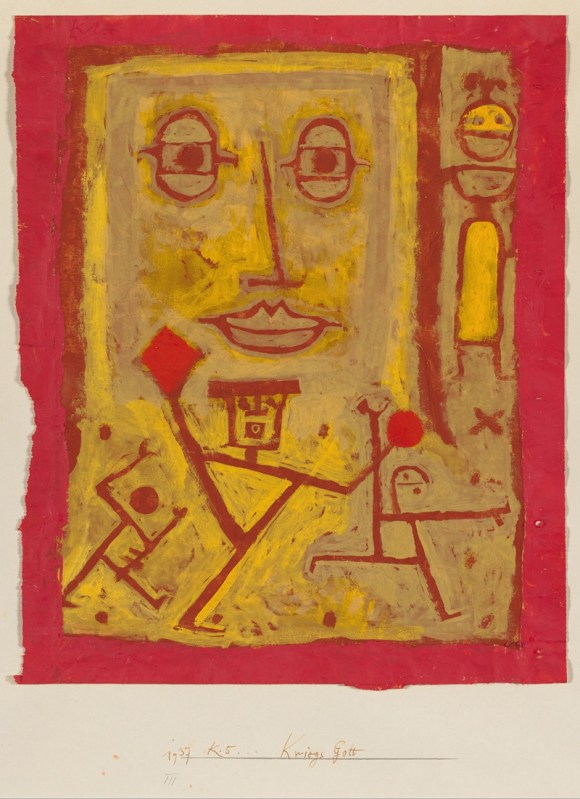
God of War by Paul Klee (1879-1940)
The sky weeps blood, the earth cannot contain
The sorrow of the young ones we've slain.
How now do dead kids laugh while stricken by red rain?

— from Stricken by Red Rain: Poems by Jim Bellamy

When there is war
And peace is gone
Where is their home?
Where do they belong?

— from Poems on Migrants by Kajoli Krishnan

Poetry, prose — all art forms — gather our emotions into concentrates that distil perhaps the finest in human emotions. They touch hearts across borders and gather us all with the commonality of feelings. We no longer care for borders drawn by divisive human constructs but find ourselves connecting despite distances. Strangers or enemies can feel the same emotions. Enemies are mostly created to guard walls made by those who want to keep us in boxes, making it easier to manage the masses. It is from these mass of civilians that soldiers are drawn, and from the same crowds, we can find the victims who die in bomb blasts. And yet, we — the masses — fight. For whom, for what and why? A hundred or more years ago, we had poets writing against wars and violence…they still do. Have we learnt nothing from the past, nothing from history — except to repeat ourselves in cycles? By now, war should have become redundant and deadly weapons out of date artefacts instead of threats that are still used to annihilate cities, humans, homes and ravage the Earth. Our major concerns should have evolved to working on social equity, peace, human welfare and climate change.

One of the people who had expressed deep concern for social equity and peace through his films and writings was Satyajit Ray. This issue has an essay that reflects how he used art to concretise his ideas by Dolly Narang, a gallery owner who brought Ray’s handiworks to limelight. The essay includes the maestro’s note in which he admits he considered himself a filmmaker and a writer but never an artist. But Ray had even invented typefaces! Artist Paritosh Sen’s introduction to Ray’s art has been included to add to the impact of Narang’s essay. Another person who consolidates photography and films to do pathbreaking work and tell stories on compelling issues like climate change and helping the differently-abled is Vijay S Jodha. Ratnottama Sengupta has interviewed this upcoming artiste.

Reflecting the themes of welfare and conflict, Prithvijeet Sinha’s essay takes us to a monument in Lucknow that had been built for love but fell victim to war. Some conflicts are personal like the ones of Odbayar Dorj who finds acceptance not in her hometown in Mongolia but in the city, she calls home now. Jun A. Alindogan from Manila explores social media in action whereas Eshana Sarah Singh takes us to her home in Jakarta to celebrate the Chinese New Year! Farouk Gulsara looks into the likely impact of genetic engineering in a world already ripped by violence and Devraj Singh Kalsi muses on his source of inspiration, his writing desk. Meredith Stephens tells the touching story of a mother’s concern for her child in Australia and Suzanne Kamata exhibits the same concern as she travels to Happy Village in Japan to meet her differently-abled daughter and her friends.

As these real-life narratives weave commonalities of human emotions, so do fictive stories. Some reflect the need for change. Fiona Sinclair writes a layered story set in London on how lived experiences define differences in human perspectives while Parnika Shirwaikar explores the need to learn to accept changes set in her part of the universe. Spandan Upadhyay explores the spirit of the city of Kolkata as a migrant with a focus on social equity. Both Paul Mirabile and Naramsetti Umamaheswararao write stories around childhood, one set in Europe and the other in Asia.

As prose weaves humanity together, so does poetry. We have poems from Jim Bellamy and Kajoli Krishnan both reflecting the impact of war and senseless violence on common humanity. Ryan Quinn Flanagan introduces us to Canadian bears in his poetry while Snigdha Agrawal makes us laugh with her lines about dogs and hatching Easter eggs! We have a wide range of poems from Snehprava Das, George Freek, Niranjan Aditya, Christine Belandres, Ajeeti S, Ron Pickett, Stuart McFarlane, Arthur Neong and Elizabeth Anne Pereira. Rhys Hughes concludes his series of photo poems with the one in this issue — especially showcasing how far a vivid imagination can twist reality with a British postman ‘carrying’ sweets from India! His column, laced with humour too, showcases in verse Lafcadio Hearn, a bridge between the East and West from more than a hundred years ago, a man who was born in Greece, worked in America and moved to Japan to even adopt a Japanese name.

Just as Hearn bridged cultures, translations help us discover how similarly all of us think despite distances in time and space. Radha Chakravarty’s translation of Kazi Nazrul Islam’s concerns about climate change and melting icecaps does just that! Professor Fakrul Alam’s translation of Nazrul’s lyrics from Bengali on women and on the commonality of human faith also make us wonder if ideas froze despite time moving on. Tagore’s poem titled Asha (hope) tends to make us introspect on the very idea of hope – just as we do now. At a more personal level, a contemporary poem reflecting on the concept of identity by Munir Momin has been translated from Balochi by Fazal Baloch. From Korean, Ihlwah Choi translates his own poem about losing the self in a crowd. We start a new column on translated Odia poetry from this month. The first one features the exquisite poetry of Bipin Nayak translated by Snehprava Das. Huge thanks to Bhaskar Parichha for bringing this whole project to fruition.

Parichha has also drawn bridges in reviews by bringing to us the memoirs of a man of mixed heritage, A Stranger in Three Worlds: The Memoirs of Aubrey Menen. Andreas Giesbert from Germany has reviewed Rhys Hughes’ The Devil’s Halo and Somdatta Mandal has discussed Arundhathi Nath’s translation, The Phantom’s Howl: Classic Tales of Ghosts and Hauntings from Bengal. Our book excerpts this time feature Devabrata Das’s One More Story About Climbing a Hill: Stories from Assam, translated by multiple translators from Assamese and Ryan Quinn Flangan’s new book, Ghosting My Way into the Afterlife, definitely poems worth mulling over with a toss of humour.

Do pause by our contents page for this issue and enjoy the reads. We are ever grateful to our ever-growing evergreen readership some of whom have started sharing their fabulous narratives with us. Thanks to all our readers and contributors. Huge thanks to our wonderful team without whose efforts we could not have curated such valuable content and thanks specially to Sohana Manzoor for her art. Thank you all for making a whiff of an idea a reality!

Let’s hope for peace, love and sanity!

Best wishes,

Mitali Chakravarty

borderlessjournal.com

Click here to access the contents page for the May 2025 Issue

READ THE LATEST UPDATES ON THE FIRST BORDERLESS ANTHOLOGY, MONALISA NO LONGER SMILES, BY CLICKING ON THIS LINK.

Categories
Stories

The Last Metro

By Spandan Upadhyay

The platform was empty. My footsteps echoed back at me as if mocking this sterile, hollow space. I had been here a thousand times before, but never like this—never in the aftermath of such a disaster. 9:30pm, and the metro hadn’t shown up yet. I sat down, unsure of where else to be. The evening had been a slow car crash — every minute at that poetry reading had scraped away at my dignity. Each time I glanced up from my notebook, I caught the same expression on people’s faces, that slightly bored politeness, the kind reserved for an artist you’ll never remember.

I loosened the strap of my satchel and rubbed my shoulder, trying to push the night out of my mind, but it stuck, like the words of my poems, lingering. Why had I called them ‘Words Left Unspoken’? It seemed so pretentious now, as if I was grasping for some profound truth when, really, they were just words no one cared to listen to. I saw my reflection in the mirror on the platform. Green kurta, brown sandals and black rimmed glasses, I didn’t really command much attention. Why would anyone care to listen to me anyway?

I glanced around the station. It felt unreal, like some purgatory where time stretched on forever, with nothing to look forward to. The fluorescent lights flickered, and the only sound was the occasional distant rattle of a train that would never come. Or at least it felt like it.

This city, Kolkata—it was once a place where artists mattered, where poets walked down College Street with a cup of tea in one hand and a burning idea in the other. Now? Now, the city didn’t care about poetry. It cared about money, about practicality, about getting from one station to the next as fast as possible.

I checked my phone again. Though there wasn’t really much to check. The poetry circle WhatsApp group was silent, like the station itself. No one had said a word about my performance. Probably because they were all too busy posting Instagram stories from some hipster café by now.

My eyes wandered to the far end of the platform. That’s when I saw her.

She was standing under one of the dim lights, a woman in her late forties, maybe early fifties, her face lined with age and fatigue. She had a basket of flowers slung over her arm—wilting roses, chrysanthemums, marigolds, all tired-looking, much like their owner. I’d seen her here before, always in the same spot. She was a fixture of the station, but I’d never paid much attention.

Tonight, though, there was something about her that pulled at me, maybe because she seemed as out of place as I felt.

I stood up, more out of curiosity than anything else, and walked toward her. My footsteps sounded loud in the silence, but she didn’t seem to notice.

“Flowers at this hour?” I asked, my voice echoing off the walls.

She glanced at me, her eyes sharp, measuring me up. “Metro or no metro, people still need flowers. Weddings, funerals, who cares? Life goes on.”

Her voice was raspy, like someone who’d spent years yelling into the wind. And yet, there was something calm about her. Resigned. It felt familiar.

I shrugged. “Strange place to sell them, though.”

She didn’t look at me this time, just adjusted the flowers in her basket, fingers working methodically. “It’s quieter down here. Besides, I’m not here for the regular crowd. I’m here for people like you.”

“Like me?” I frowned.

“Late. Alone. Waiting for something that’s probably not coming.”

The words hit me like a slap, sharper than I expected. There was a tired smile on her lips when she finally looked up, and in her eyes, I saw something I didn’t want to acknowledge—recognition.

I smirked, though I didn’t feel like it. “I guess that makes two of us then.”

She chuckled softly. It was a strange sound, not of amusement but of knowing. She leaned back against the wall, the flowers now forgotten at her side. “You’re one of those types, aren’t you? The ones who think too much.”

I should’ve been offended, but I wasn’t. She was right. I was one of those types. I lived inside my own head more than I lived in the real world. “I suppose I am.”

Silence enveloped us, thick and uncomfortable, but I didn’t move away. Maybe it was because I had nowhere else to go, or maybe it was because this was the first time in a long while that someone had spoken to me without the usual pretence. The usual platitudes.

“What about you?” I asked, breaking the silence. “What’s your story?”

Her eyes flicked to me again, and for a moment, I regretted asking. It sounded cheap, like I was trying to force a connection where there wasn’t one. But she didn’t seem to mind. If anything, the question seemed to amuse her.

“My story?” she repeated, almost as if tasting the words. “My story is this city. I came here when I was a girl, like so many others. Thought I’d find something—maybe love, maybe money. Instead, I found nothing. Just a city that takes everything and gives you nothing back.”

I nodded, though I wasn’t sure why. I wasn’t anything like her. I wasn’t scraping by selling flowers at a metro station. But her words felt true, as if they could just as easily be mine.

“I know that feeling,” I said quietly, more to myself than to her.

She tilted her head, her eyes narrowing slightly. “Do you? What did the city take from you?”

I swallowed. How do you explain to someone that the city hadn’t taken anything tangible? It hadn’t taken my house or my livelihood. It had taken my belief, my sense of purpose. It had eroded me slowly, bit by bit, rejection after rejection.

“I wanted to be a poet,” I said, almost ashamed of how small that sounded in comparison. “But it turns out, poetry doesn’t pay the bills.”

The woman smiled — a slow, tired smile, but a smile nonetheless. “Ah, poetry. That’s a different kind of hunger.”

She stood up straight then, looking at me with something like pity in her eyes. “And has the city fed that hunger? Or has it starved you?”

I felt my throat tighten, that familiar ache creeping up again. The answer was obvious, but saying it aloud would make it too real.

“Starved me,” I whispered.

She nodded, as if she already knew. As if that was the only answer she had ever expected. “This city has a way of doing that,” she said softly. “But you’re still here, aren’t you? Still waiting.”

I couldn’t look at her anymore. The sound of a train rumbled in the distance, but it didn’t matter. I wasn’t waiting for the metro. Not anymore.

*

The rumble of the approaching train faded, leaving only the familiar, dead silence behind. I stared at the woman, still leaning against the grimy wall, and realised how little I knew about her—this strange fixture of the metro station who spoke with such familiarity about a city I thought I understood.

I glanced at her basket of wilting flowers. The roses, once bright and promising, now drooped sadly, much like everything else in this place. I wanted to ask her something more meaningful, but I wasn’t sure where to start. Every time I opened my mouth, it felt like I was playing a part in a scene I hadn’t rehearsed for.

“How long have you been selling flowers?” I asked, almost awkwardly, knowing it wasn’t the right question, but asking it anyway.

She looked at me, then down at the basket as if only just remembering the flowers were there. “Long enough,” she replied with a wry smile. “It’s been… what, twenty years?”

“Twenty years?” I repeated, surprised. “At this station?”

She chuckled, shaking her head. “Not here, no. I used to sell near Howrah Bridge. It was better business back then. People actually bought flowers to take home. Now, people are too busy for things like that. They’re always in a rush—running to catch a train, running to get home. Nobody stops anymore. But down here, there’s time. The waiting… it slows everything down.”

Her words struck me in a way I hadn’t expected. The waiting—it was something I knew all too well. I wasn’t just waiting for the metro; I had been waiting for years, for something that never came. For recognition, for understanding, for someone to care about the words I scribbled on pages night after night.

“You said you came here when you were young. What brought you to Kolkata?” I asked, sensing there was more to her story than just flowers.

She hesitated, her eyes shifting toward the empty tracks. For a moment, I thought she wouldn’t answer. But then she sighed, the weight of the years settling into her voice. “A man,” she said simply. “A musician. He played the harmonium—beautifully, like he could make the city itself sing. I followed him here, thinking we’d make a life together. I was just a girl, then. What did I know?”

The way she said it—so matter-of-fact, without a trace of bitterness—made it seem like she had long ago accepted the futility of it all. But I could hear something else beneath her words, a kind of nostalgia wrapped in pain. Her story wasn’t unfamiliar; I had heard versions of it before. Hell, I had lived it, in my own way.

“What happened to him?” I asked, not sure if I was overstepping.

She smiled, but it didn’t reach her eyes. “What happens to all men like that? He left. One day, he just… disappeared. No note, no goodbye. Just gone. I waited for him—days, weeks—but I knew. Deep down, I knew he wasn’t coming back.”

She let the words hang in the air between us. I didn’t know what to say. What could I say? There was no way to ease that kind of loss. It wasn’t the kind you could fix with words. It just stayed with you, like a dull ache you learned to live with.

I shifted uncomfortably, memories of my own failed relationships creeping in, uninvited. I had been left before, too. Not in such a dramatic way, but in small, gradual steps. I had been with someone once—Megha, a girl who loved art, who loved the idea of poetry as much as I did. We would sit together in the old cafés of College Street, drinking endless cups of tea, talking about books and writing and the meaning of life.

But my ambition had killed it. She grew tired of waiting for me to be someone, tired of the rejection letters, the endless nights where I’d stay up writing instead of being with her. She had wanted a future, something stable, something real. I couldn’t give her that. I couldn’t be practical. And so, just like the woman’s musician, Megha had left.

I cleared my throat, trying to push the memory away. “Why did you stay here? In the city, I mean. After he left?”

She looked at me, surprised by the question. “Where else was I supposed to go?” Her voice was soft, as though the answer should have been obvious. “Once you come to this city, it doesn’t let you leave. Not really.”

I nodded, understanding more than I wanted to admit. Kolkata did that to people. It pulled you in with its promises of art, of culture, of something greater than yourself. But once you were here, it chewed you up and spit you out. And yet, you stayed. You stayed because there was something about this place, something that kept you hoping, even when you knew better.

“I stayed because this is where everything happened,” she continued, her voice barely above a whisper. “This is where I loved, where I lost. And I figured if I left, it would all disappear, like it had never happened. The city… it holds the memories.”

She looked away then, her gaze drifting toward the tracks again, as if waiting for something that wasn’t coming.

I understood her in a way I didn’t expect to. I had stayed for the same reason. I had stayed because leaving would mean admitting that none of it had mattered—my poems, my dreams of becoming something more than just another face in the crowd. As long as I stayed, I could pretend that maybe, one day, things would change. Maybe one day, someone would listen.

The sound of another train rumbled faintly in the distance, but neither of us moved.

*

I stayed quiet for a while, letting her words sink in. The idea that Kolkata held memories—it was strange how true that felt. The city never let you forget. Every street corner had a history, every old café carried the weight of conversations long past. And if you had been here long enough, like I had, those memories started piling up on you, like layers of dust on an old book you no longer bothered to open.

The woman shifted, the flowers rustling in her basket. She wasn’t looking at me anymore; her eyes were somewhere far away, back in whatever time she was remembering.

“We used to walk,” she said suddenly, her voice softer now, almost wistful. “All over the city. He used to play his harmonium on the ghats by the river, you know. I thought… I thought we’d stay like that forever.”

I could almost picture it: her and this mysterious musician, strolling through the old streets of Kolkata, full of hope, maybe even a kind of reckless love. The kind of love that felt invincible when you were young, when the world hadn’t yet shown you its teeth.

“And you believed in him,” I said, not as a question, but as a statement. Because of course she did. That’s what love did—it made you believe, even in the most absurd dreams.

She nodded. “Yes. I believed in him. I believed that the music would carry us through. I believed in the city, too. I thought this was the kind of place where people like us could thrive, where art mattered.”

Her words echoed something I had thought once. Maybe still did, deep down.

“And now?” I asked.

She didn’t answer right away. Her fingers traced the edge of one of the wilted flowers, and for a moment, I thought she wasn’t going to say anything. But then she looked up, her eyes meeting mine. “Now, I don’t know. I think… maybe I was wrong. Maybe this city only cares about those who already have something. If you come here with nothing, you leave with even less.”

That hit me hard. I thought of all the nights I had spent in tiny cafés, hunched over my notebook, scribbling out poems with the belief that this city—the same one that had raised writers like Tagore and Ghosh — would eventually recognise me. I thought of all the open mikes I had attended, all the rejection letters I had collected over the years. The city had taken my words, my effort, and it had given me nothing in return.

But, like her, I had stayed. I had stayed because I didn’t want to believe I was wrong. I didn’t want to admit that maybe this city wasn’t what I had imagined it to be.

I rubbed my face, trying to shake off the feeling that was creeping up on me. “I used to believe too,” I said quietly. “When I first came here… I thought Kolkata was the place where dreams happened. I thought it would embrace me.”

I wasn’t sure why I was telling her this. I hadn’t even said it out loud to myself before. But there was something about the way she spoke, the way she seemed to understand without judgment, that made it easier to confess.

She didn’t respond, but there was a look in her eyes that said she understood.

“I came here to be a poet,” I continued, feeling the weight of those words more heavily than I had before. “I thought I had something to say, you know? I thought people would listen.” I laughed, though there was no humour in it. “But the city doesn’t care. No one listens. They just… move on. Poetry doesn’t matter to them.”

“Poetry matters,” she said softly, surprising me. “It’s just that most people don’t realise it does.”

I wanted to believe her. I really did. But it was hard, after all these years. I couldn’t even remember the last time someone had genuinely cared about what I had written.

The silence between us thickened, and I found myself drifting back to a time when things were different. The early days, when I had first arrived in Kolkata. I remembered the excitement, the feeling that the city was alive with possibilities. I had been younger then, full of optimism. And I hadn’t been alone.

There was Megha.

The memory of her came back so suddenly, it was like a punch to the gut. I hadn’t thought about her in a long time—not really. Not in any meaningful way. But now, in this quiet station, with this woman who reminded me too much of lost things, Megha’s face rose to the surface.

I could see her as clearly as if she were standing in front of me: dark hair that always fell into her eyes, a quick, teasing smile, the way she’d sit across from me in a café, her hands wrapped around a cup of tea, listening intently as I read her some new poem I was working on. She had loved words as much as I did. Or at least, that’s what I had thought.

We had met during my first year in the city. She was a literature student at Presidency, full of fire and ideas, always debating something, always questioning. She was the kind of person who seemed like she could change the world if she wanted to. And for a while, I thought we could change it together.

We spent hours in each other’s company, walking through the narrow lanes of College Street, visiting the old bookstalls, talking about poetry and art like they were the only things that mattered. I had never felt so alive, so full of potential. With Megha, everything seemed possible.

But ambition has a way of turning on you.

I had wanted to be a poet so badly, wanted to make my mark in the world of letters. I spent every waking moment writing, trying to create something that would last. I thought Megha understood, but slowly, I could feel her slipping away. She grew tired of waiting for me to “make it,” tired of the uncertainty, the nights where I chose my poems over her. She wanted stability, something I couldn’t give.

The end had been slow, like a candle burning itself out. One day, she was just… gone. She hadn’t left like the woman’s musician, without a word. But when she said goodbye, I knew it wasn’t just the end of us—it was the end of the belief that love could coexist with art. Not for me, at least.

“Are you thinking about someone?” the woman’s voice broke through my thoughts, pulling me back to the present.

I blinked, surprised that she had noticed. “Yeah. Someone I lost.”

She nodded, as if she knew that feeling all too well. “Funny how they never really leave us, isn’t it? Even when they’re gone, they stay here.” She tapped her chest lightly, right where her heart was.

I didn’t reply. I didn’t need to. The station was silent again, except for the faint hum of the city above us, always moving, always forgetting.

The air felt heavy with all the things we hadn’t said yet. The train wasn’t coming, but neither of us seemed to care anymore. I glanced at the woman — this flower seller who seemed to know the city better than anyone I’d ever met — and wondered how many stories like mine she had heard over the years, how many late-night conversations had she had with strangers, all of us waiting for something.

“It’s funny,” I said, breaking the silence again. “I’ve been in Kolkata for years now, but I still feel like a stranger. Like the city doesn’t really belong to me.”

She looked at me, her expression unreadable. “The city doesn’t belong to anyone.”

Her words settled over me like a cold wind. Maybe that was the truth I had been avoiding all this time. Kolkata wasn’t mine. It wasn’t anyone’s. It just was, moving forward with or without us. And yet, somehow, I had convinced myself that it owed me something.

“I guess I’ve been waiting for it to recognise me,” I said, feeling a little foolish even as the words left my mouth. “Like, if I just wrote the right poem, if I just found the right words, then maybe…”

“Then maybe you’d matter,” she finished for me.

I nodded. There was no point in denying it. That’s exactly what I had been chasing—validation, recognition, something to prove that my words weren’t just disappearing into the void. But the truth was, no matter how many poems I wrote, no matter how many nights I spent scribbling away in dimly lit cafés, the city didn’t care.

She sighed, her shoulders sinking a little as she leaned against the wall. “This place… it makes you think you’re special. It makes you believe you’re destined for something more. But it’s just a city. It’s not listening.”

Her words hit harder than I expected. For years, I had clung to the idea that Kolkata was different—that it was a city that nurtured art, that it understood poets and dreamers. But the truth was, Kolkata wasn’t a living thing. It was just a backdrop. The stories we told ourselves about it were just that—stories.

“Do you ever regret it?” I asked. “Staying here, I mean.”

She didn’t answer right away. Instead, she looked down at the wilting flowers in her basket, running her fingers over the petals as if considering their fate.

“Regret?” she echoed, almost to herself. “I don’t know. I think, after a while, regret doesn’t mean much. You just… accept things. You stop fighting.”

There was a kind of peace in her voice, but it wasn’t the kind I wanted. It was the peace of someone who had given up on the fight. And that scared me.

“I don’t want to stop fighting,” I said, the words coming out more forcefully than I intended. “I don’t want to just… accept that this is all there is.”

She smiled softly, but there was something sad in it. “Then don’t. But the city won’t fight with you. It doesn’t care. You’re the only one who does.”

That was the hardest part to accept—that the city wasn’t an adversary or a friend. It wasn’t anything. All these years, I had been projecting my own desires onto it, waiting for it to give me something that it had never promised.

I ran a hand through my hair, frustration gnawing at me. “I don’t know. Maybe I’ve just been deluding myself this whole time.”

“Maybe,” she said simply. “Or maybe you’re just waiting for the wrong thing.”

I frowned. “What do you mean?”

She looked at me, her dark eyes sharp, searching. “You’re waiting for the city to recognize you. But what if that’s not what matters? What if… it’s about finding someone who sees you, instead?”

Her words lingered in the air between us, and for a moment, I didn’t know what to say. It wasn’t something I had thought about before. I had always assumed that if I could just succeed—if I could just make a name for myself—then everything else would fall into place. But what if I had been chasing the wrong thing all along?

“Someone who sees me…” I repeated quietly.

She nodded. “Isn’t that what we all want? To be seen, to be heard? Not by the world, but by one person who understands.”

Her words brought back the memory of Megha again. She had seen me once, hadn’t she? She had believed in me, in my poetry, in my passion. But I had let her slip away, too caught up in my own ambitions to realise that she had been the one who understood me.

I swallowed, the weight of that realisation settling in. All these years, I had been chasing after something abstract—recognition from a city, from an audience that didn’t even know me. But maybe what I had needed all along was something simpler. Someone to see me. Really see me.

“Did he see you?” I asked, my voice barely above a whisper. “The musician?”

Her eyes flickered with something I couldn’t quite place—pain, maybe, or longing. “He did. For a while.”

She didn’t say anything more, and I didn’t push. There was no need. I could tell by the way she looked at me, by the way her hand absently touched the petals of the flowers, that it was a wound she still carried. A wound that had never fully healed.

The sound of another distant train rumbled through the station, but it was faint, almost like a ghost passing through. We both stood there, lost in our own thoughts, the silence between us heavy but comfortable.

I felt something shift inside me, like a door that had been locked for years had finally creaked open. I didn’t know what was on the other side yet, but for the first time in a long while, I felt like maybe… just maybe, I was ready to find out.

*

The low rumble of the metro echoed through the station, growing louder with each passing second. But neither of us moved. The sound seemed distant, like a reminder that time was still flowing, even though it felt like we had stepped outside of it for a while.

I glanced at the woman. She wasn’t looking at me, or at the approaching train. Her eyes were fixed somewhere just past the tracks, as though she could see something I couldn’t. Maybe she was thinking about her musician. Maybe she was thinking about the life she’d imagined but never had. Whatever it was, I felt like I shouldn’t disturb her.

The train arrived, its brakes screeching as it slowed to a stop. The doors opened with a mechanical hiss, and for a moment, I considered getting up, walking toward the train, letting this conversation fade into memory like so many other late-night encounters in this city.

But I didn’t move.

I didn’t want to leave just yet. Not until I figured out why this conversation—this woman—had gripped me so intensely. I felt like there was still something left unsaid, something hanging in the air between us.

The woman turned her head slightly, her eyes meeting mine, and for the first time since we started talking, I saw a flicker of emotion there. Not just the weariness she had shown earlier, but something else. Something deeper.

“You’re not getting on the train,” she said, not as a question but as a statement.

“No,” I replied quietly. “Neither are you.”

She smiled faintly. “No. I guess not.”

We sat there for a few moments longer, the train doors still open, inviting us in, but neither of us made a move. The platform was empty except for us now. Everyone else had either left or never showed up. It was just the two of us, waiting for something we couldn’t quite name.

Finally, the doors slid shut, and the train began to pull away, leaving the station once again in silence.

“Why didn’t you get on?” I asked her, genuinely curious.

She shrugged, her gaze returning to the empty tracks. “I wasn’t waiting for the train.”

I frowned. “Then what were you waiting for?”

She didn’t answer right away, and for a moment, I thought she wouldn’t. But then she looked at me again, and this time, there was something in her expression that made my chest tighten.

“I’m not waiting for anything,” she said softly. “Not anymore.”

Her words hung in the air, heavy with finality. I didn’t know what she meant, not fully, but something in the way she said it made me feel like she had already made peace with whatever it was she had been waiting for all those years.

I wanted to ask her more—to pry open the door she had just cracked, to understand what lay behind her cryptic words. But I couldn’t. I felt like asking would break whatever fragile connection we had built, and I wasn’t ready to lose that yet.

Instead, I turned the conversation back to something I understood—something that had been gnawing at me since we started talking.

“Do you ever think about why we create art?” I asked, almost to myself. “I mean, why we bother with it at all? When no one’s listening, when no one cares, why do we keep going?”

She tilted her head, considering my question. “I don’t know,” she admitted. “But maybe it’s because we’re afraid of disappearing. Of being forgotten.”

I nodded slowly, the truth of her words sinking in. That was it, wasn’t it? The fear of being invisible. The fear that if we stopped creating, stopped putting pieces of ourselves into the world, we would just vanish.

“Maybe,” I said. “But sometimes it feels like we’ve already disappeared.”

She smiled at that, a small, sad smile. “Maybe we have. But it doesn’t stop us, does it?”

“No,” I said, shaking my head. “It doesn’t.”

We sat in silence for a while, the hum of the empty station filling the space between us. I thought about all the poems I had written, all the nights spent hunched over my notebook, convinced that the next line, the next stanza, would be the one that finally made people see me. I thought about Megha, about how I had pushed her away in my pursuit of something that had never materialised.

And then I thought about this woman, sitting here beside me, selling flowers at a metro station in the dead of night. She had loved, she had lost, and yet she had stayed. Not because the city had given her anything, but because… well, maybe because she had nowhere else to go. Or maybe because leaving would have meant giving up on the idea that this place still held something for her.

“What will you do now?” I asked her, unsure if I was talking about tonight or her life in general.

She glanced down at her basket of flowers, then back at me. “I’ll go home. Get some sleep. Tomorrow, I’ll come back here and sell more flowers. And the day after that.”

Her words were simple, matter-of-fact, but there was a weight to them that I couldn’t quite shake. It was like she had accepted her place in the world, and I wasn’t sure if that was comforting or terrifying.

“And you?” she asked, her eyes locking onto mine. “What will you do?”

I didn’t have an answer. Not a real one, anyway. I could say I’d keep writing, keep chasing the dream of being a poet in a city that didn’t care. But suddenly, that felt hollow. I wasn’t sure I believed in it anymore—not the way I had when I first came here.

“I don’t know,” I admitted. “I guess I’ll just… keep waiting.”

She nodded, as if that made perfect sense. “We all wait for something. Sometimes, we don’t even know what it is until it’s too late.”

The station fell quiet again, and I realized that this was it. This was the moment when I had to leave, when the night would end and I’d go back to my small, cramped apartment and try to make sense of everything that had happened. But something still held me there, some invisible thread connecting me to this woman and her basket of wilted flowers.

“I don’t even know your name,” I said, almost an afterthought.

She smiled—a real smile this time, not the sad, resigned ones from earlier. “It doesn’t matter,” she said. “Names are just another thing the city forgets.”

I opened my mouth to argue, to tell her that names did matter, that they were part of what made us real, what made us seen. But before I could say anything, the faint sound of another train approaching echoed through the station.

This time, I knew I had to go.

I stood up, slinging my satchel over my shoulder. “Goodbye,” I said, though it didn’t feel like enough.

She didn’t say anything, just nodded, her smile fading as the train grew louder. I turned and walked toward the platform, the noise of the approaching metro filling the space behind me. I didn’t look back, though I wanted to.

As the train doors opened and I stepped inside, I realised something strange. I had come here tonight feeling more lost and disconnected than ever, and yet now, leaving this woman behind, I felt a sense of closure. Like something had ended, even if I wasn’t sure what.

The doors slid shut, and the train began to move. I leaned back against the seat, staring out at the dark tunnel ahead. I didn’t know where I was going. But for the first time in a long while, that didn’t bother me.

.

Spandan Upadhyay is a new writer whose work captures the vibrant nuances of everyday life. With a deep appreciation for the human experience, Spandan’s stories weave together subtle emotions and moments of introspection. Each of his stories invite readers into a world where ordinary occurrences reveal profound truths, leaving a lasting impact.

.

PLEASE NOTE: ARTICLES CAN ONLY BE REPRODUCED IN OTHER SITES WITH DUE ACKNOWLEDGEMENT TO BORDERLESS JOURNAL. 

Click here to access the Borderless anthology, Monalisa No Longer Smiles

Click here to access Monalisa No Longer Smiles on Kindle Amazon International