Categories
Contents

Borderless, March 2026

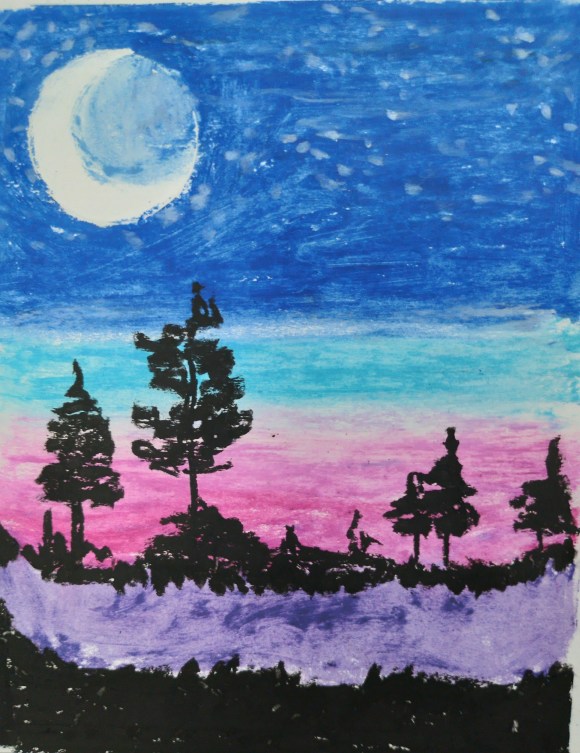
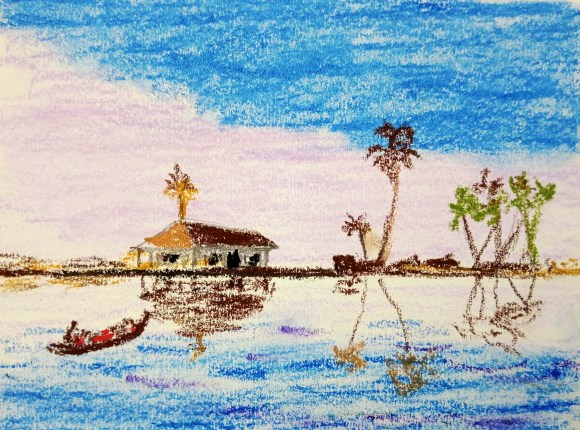
Art by Sohana Manzoor

Editorial

Is Sky the Limit?… Click here to read.

Feature

A brief introduction to Aruna Chakravarti’s Creeping Shadows: 13 Ghost Stories and an interview with the author. Click here to read.

Translations

Nazrul’s lyrics of Mor Priya Hobe Eso Rani (My Sweetheart, Be My Queen) has been translated from Bengali by Professor Fakrul Alam. Click here to read.

Eight quatrains by the late Majeed Ajez have been translated from Balochi by Fazal Baloch. Click here to read.

Four of his own Malay poems have been translated by Isa Kamari. Click here to read.

Open Marriage, a story by Lakhvinder Virk, has been translated from Punjabi by C Christine Fair. Click here to read.

Jatra ( Journey), a poem by Rabindranath Tagore has been translated from Bengali by Mitali Chakravarty. Click here to read.

Poetry

Click on the names to read the poems

Jared Carter, Tim Tomlinson, Mohul Bhowmick, Nma Dhahir, Laila Brahmbhatt, George Freek, Lana Hechtman Ayers, Pramod Rastogi, John Grey, Snigdha Agrawal, Edward Reilly, Ron Pickett, Luis Cuauhtémoc Berriozábal, Snehaprava Das, SR Inciardi, Ryan Quinn Flanagan, Rhys Hughes

Poets, Poetry & Rhys Hughes

In Rhysop’s Fables, Rhys Hughes shares short absurdist narratives. Click here to read.

Musings/Slices from Life

Imprints from the Past

Farouk Gulsara muses on imprints left in time. Click here to read.

When Meassurement Fails

Tamara-Lee Brereton-Karabetsos muses on numbers. Click here to read.

How I Learned to Write from Films

Gower Bhat writes about the impact of the screen on his writerly journey. Click here to read.

Launching into the New Year

Meredith Stephens writes of a fire on the night of the New Year, a hot summer day in the Southern Hemisphere. Click here to read.

Visiting an Outpost of Lucknow: Moosa Bagh

Prithvijeet Sinha takes us to visit an eighteenth century garden and monument. Click here to read.

Musings of a Copywriter

In Missing the Tail, Devraj Singh Kalsi dreams with a dollop of humour on the benefits of humans having the extension. Click here to read.

Notes from Japan

In My Cambodian Taxi Driver, Suzanne Kamata writes of her experiences in Phnom Penh. Click here to read.

Essays

March Musings: Rethinking Histories

Meenakshi Malhotra writes of the diverse ways histories can be viewed, reflecting on the perspective from the point of view of water, climate, migrations or women. Click here to read.

Some Changes are Bigger than Others

Keith Lyons assess our times. Click here to read.

Somdatta Mandal on ‘Mother Mary Comes to Me’

Somdatta Mandal steps beyond the review to look into the marketing of Arundhati Roy’s memoir. Click here to read.

Mark Tully: A Citizen of the World

Mohul Bhowmick pays a tribute to a journalist who transcended borders. Click here to write.  

Bhaskar’s Corner

In Odisha after 1947, Bhaskar Parichha brings us up to date with developments in this region. Click here to read.

Stories

The Wedding

Sohana Manzoor explores the razzmatazz of a Bangladeshi wedding to find what really matters. Click here to read.

Two Black Dresses

Jonathon B Ferrini gives a narrative that has a beam of light in a universe filled with losses. Click here to read.

Flying Away

Terry Sanville writes of death, growing up and healing from loss. Click here to read.

Whispers of Frost

Gower Bhat tells us a story set in Kashmir. Click here to read.

Ameya’s Victory

Naramsetti Umamaheswararao tells us a story that could happen in any school. Click here to read.

Book Excerpts

An excerpt from Aruna Chakravarti’s Creeping Shadows: 13 Ghost Stories. Click here to read.

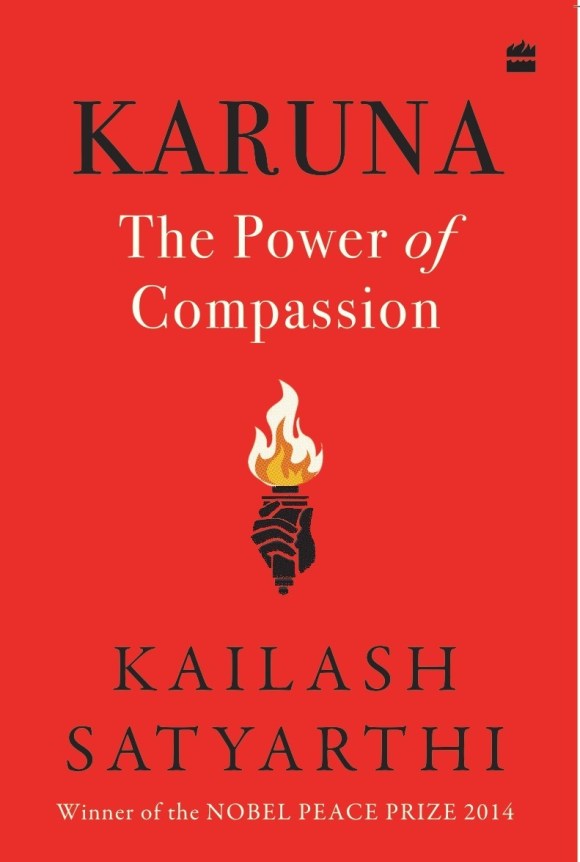
An excerpt from Kailash Satyarthi’s Karuna: The Power of Compassion. Click here to read.

Book Reviews

Mohammad Asim Siddiqui has reviewed Anisur Rahman’s The Essential Ghalib. Click here to read.

Rituparna Khan has reviewed Malashri Lal’s Signing in the Air. Click here to read.

Bhaskar Parichha has reviewed Deepta Roy Chakraverti’s Daktarin Jamini Sen: The Life of British India’s First Woman Doctor. Click here to read.

.

Click here to access the Borderless anthology, Monalisa No Longer Smiles

Click here to access Monalisa No Longer Smiles on Amazon International

Categories
Editorial

Is Sky the Limit?

Sometimes, we have an idea, a thought and then it takes form and becomes a reality. That is how the Borderless Journal came to be six years ago while the pandemic raged. The pandemic got over and takeovers and wars started. We continued to exist because all of you continue to pitch in, ignoring the differences created by certain human constructs. We meet with the commonality of felt emotions and aesthetics to create a space for all those who believe in looking beyond margins. We try to erase margins or borders that lead to hatred, anger, violence and war. Learning from the natural world, we believe we can be like the colours of the rainbow that seem to grow out of each other or the grass that is allowed to grow freely beyond manmade borders. If nature gives us lessons through its processes, is it not to our advantage to conserve what nurtures us, and in the process, we save our home planet, the Earth? We could all be together in peace, enjoying nature and nurture, living in harmony in the Universe if only we could overlook differences and revel in similarities.

A young poet Nma Dhahir says it all in her poem that is a part of our journal this month —

This is how we stay human together:
by refusing the easy damage, by carrying each other
without calling it sacrifice,
by believing that what we protect in one another
eventually protects the world.

--'How We Stay’ by Nma Dhahir

In our poetry section, we have Ron Pickett suggesting peace and love with his poem on three doves on a roof and Snigdha Agrawal hinting at a future Earth. We have heartfelt poetry weaving in the colours of life with Jared Carter, Tim Tomlinson, Mohul Bhowmick, Laila Brahmbhatt, George Freek, Lana Hechtman Ayers, Pramod Rastogi, John Grey, Edward Reilly, Luis Cuauhtémoc Berriozábal, Snehaprava Das, SR Inciardi and Ryan Quinn Flanagan while Rhys Hughes weaves in humour.

Translations has more poetry with Professor Fakrul Alam bringing us Nazrul’s Bengali lyrics in English and Fazal Baloch familiarising us with beautiful Balochi poetry of the late Majeed Ajez, a young poet who left us too soon. Isa Kamari translates his own poems from Malay, capturing the colours of the community in Singapore to blend it with a larger whole. And of course, we have a Tagore poem rendered into English from Bengali. This time it’s a poem called ‘Jatra (Journey)’ which reflects not only on social gaps but also on politics through aeons.

Christine C Fair has translated a story from Punjabi by Lakhvinder Virk, a story that reflects resilience in women who face the dark end of social trends, a theme that reverberates in Flanagan’s poetry and Meenakshi Malhotra’s essay, which while reflecting on the need of different perspectives in histories – like water and nomads — peeks into the need to recall women’s history aswell. This is important not just because March hosts the International Women’s Day (IWD) but because one wonders if women in Afghanistan are better off now than the suffragettes who initiated the idea of such a day more than a century ago?

This time our non-fiction froths over with scrumptious writings from across continents. Tamara-Lee Brereton-Karabetsos muses on looking at numbers and beyond to enjoy the essence of nature. Farouk Gulsara ideates about living on in posterity through deeds and ideas. Gower Bhat shares how he learns story writing skills from watching movies. Meredith Stephens talks of her experience of a fire in the Australian summer. Bhaskar Parichha writes with passion about his region, Odisha. We have a heartfelt tribute to Mark Tully, who transcended borders, from Bhowmick. And an essay on Arundhati Roy’s memoir, Mother Mary Comes to Me, from Somdatta Mandal, which explores not just the book but also the covers which change with continents. Prithvijeet Sinha travels beyond Lucknow and Suzanne Kamata brings to us stories about her trip to Phnom Penh.

Keith Lyons draws from the current crises and writes about changing times, suggesting: “Changes aren’t endings, but thresholds.” Perhaps, if we see them as ‘thresholds of change’, the current events are emphasising the need to accept that human constructs can be redefined. I am sure a Neolithic or an Australopithecus would have been equally scared of evolving out of their system to one we would deem ‘superior’. Life in certain ways can only evolve towards the future, even if currently certain changes seem to be retrogressive. We can never correctly predict the future… but can only imagine it. And Devraj Singh Kalsi imagines it with a dollop of humour where tails become a trend among humans again!

Humour and absurdity are woven into a series of short fables by Hughes while Naramsetti Umamaheswarao weaves a fable around acceptance of differences. In fiction, we have stories of resilience from Jonathon B Ferrini and Terry Sanville. Bhat gives us a story set in Kashmir and Sohana Manzoor gives us one set in Dhaka, a narrative that reminds one of Jane Austen… and perhaps even an abbreviated version of the 2001 film, Monsoon Wedding.

In reviews we have, Mohammad Asim Siddiqui discussing Anisur Rahman’s The Essential Ghalib. Rituparna Khan has written on Malashri Lal’s poetry collection reflecting on women, Signing in the Air. And Bhaskar Parichha has reviewed Deepta Roy Chakraverti’s Daktarin Jamini Sen: The Life of British India’s First Woman Doctor, a book that reflects on the resilience that makes great women. Thus, weaving in flavours of the IWD, which applauds women who are resilient while urging humans for equal rights for one half of the world population.

Book excerpts host Kailash Satyarthi’s Karuna: The Power of Compassion and Aruna Chakravarti’s Creeping Shadows: 13 Ghost Stories. We are also running a feature on the latter collection with Chakravarti telling us why she switched from historical fiction to ghost stories. The interesting thing is many of her ghouls are embedded in histories where they suffered violences, which leads us to the bigger question, can human suffering dehumanise us? Should it?

While we ponder on larger realities, Borderless Journal looks forward to a future with more writings centred around humanity, climate change, our planet and all creatures great and small. This year has not only seen a rise in readership and contributors — and the numbers rose further after our unsolicited Duotrope listing in October 2025 — but has also attracted writers from more challenged parts of the world, like Ukraine, Iran, Tunisia and Kurdistan. We are delighted to home writing from all those who attempt to transcend borders and be a part of the larger race of humanity. I would like to quote Margaret Atwood to explain what I mean. “I hope that people will finally come to realize that there is only one ‘race’—the human race—and that we are all members of it.” And I would like to extend her view to find solidarity with all living beings. I hope that there will be a point in time when we will realise there’s not much difference between, a lizard, a fly, a human or a tree… All these lifeforms are necessary for our existence.

I would want to hugely thank all our team for stretching out and making this a special issue for our sixth anniversary and Manzoor for her fabulous artwork. Huge thanks to all our contributors and readers for being with us through our journey. Let’s change the world with peace, love and friendship!

Looking forward to the future.

Mitali Chakravarty

borderlessjournal.com

CLICK HERE TO ACCESS THE CONTENTS FOR THE MARCH 2026 ISSUE.

.

READ THE LATEST UPDATES ON THE FIRST BORDERLESS ANTHOLOGY, MONALISA NO LONGER SMILES, BY CLICKING ON THIS LINK.

Categories
Excerpt

The Power of Compassion by Kailash Satyarthi

Title: Karuna: The Power of Compassion 

Author: Kailash Satyarthi

Publisher: HarperCollins India

What Is Compassion?

Who are we? What are we doing here? What is the purpose of life? These complex existential questions are best left to thinkers and philosophers. We could instead begin with a more straightforward query: What do we want from life? Though our aspirations are countless and various, the desire for happiness, contentment and peace is familiar to all of us. None of us seek sadness, pain or trouble. But life invariably acquaints us with these negative feelings and experiences.

Our ability to feel the suffering of others as our own and our consequent efforts to alleviate it are integral to the human experience. This has led to the creation of families, communities and organisations. If we were all to look away from the pain of others, none of us would have a shot at happiness. The stories of Chirag and a group of teenagers from Sweden help illustrate the true meaning of compassion.

The word ‘chirag’ means ‘lamp’ and, true to his name, Chirag brought light to corners that were once shrouded in darkness. After being rescued from slavery, Chirag had been brought years ago to Bal Ashram in Rajasthan, our long-term rehabilitation centre for children rescued from child labour, trafficking and slavery.

In 2015, an eleven-year-old boy called Mithun was rescued by my organisation, Bachpan Bachao Andolan[1], and also brought to Bal Ashram. He had been trafficked from his village and taken to the city, where he was forced into begging. When we asked him where he was from, he could only say ‘Bengal’. A case was registered with the West Bengal police, but without adequate details they failed to find his home. So, Mithun continued living and pursuing his education at Bal Ashram.

In 2020, the children at Bal Ashram were celebrating Chhath, a Hindu festival native to the state of Bihar. Mithun remembered that people in his village would also celebrate this festival with great pomp and show. He also said there was a bus stand and market near his home that his elder brother would visit often. Since Chirag was from Bihar, he guessed that Mithun’s village might also be in his state. Chirag then began showing a keen interest in Mithun’s story and could often be seen jogging his friend’s memory for more information. Borrowing a teacher’s phone, Chirag scoured the internet and—after many months of Google searches—found Mithun’s village, a place called Borna in Bihar’s Khagaria district.

When Chirag learnt that Google Earth renders three-dimensional representations of places with satellite imagery, he began using the software to find the bus stand and market Mithun had described. Looking at one of the images Chirag showed him, Mithun’s face lit up. He was convinced this was the bus stand near his village. Mithun also identified a shop he’d often visited with his elder brother. Chirag zoomed in and found a phone number on a board above the shop. When he called that number, the shop owner confirmed that years ago he had heard of a child being kidnapped from a village some 20 km away. He promised to look for Mithun’s brother and bring him to his shop.

The next day, Mithun finally spoke to his elder brother after five years of separation. Bal Ashram burst into celebration. The children lifted Chirag onto their shoulders and showered him with praise. A few days later, Mithun went back to Borna with his brother, who had come to get him. When I asked Chirag why he had tried so hard to find Mithun’s family, he said, ‘If my younger brother or I were lost like this, would I not have done the same thing?’ Today, Chirag is pursuing a management degree in Chennai, while Mithun is studying at a school near his village.

The following story is of a group of students from Sweden. They, accompanied by their teacher Ula Asberg, had come to visit Mukti Ashram several years ago. Mukti Ashram in Delhi is our short stay rehabilitation home for boys who have been rescued from child slavery and child labour. After the students returned home, they discussed among themselves how it was unfair that there was no such home for girls. At the time, the number of boys being rescued was more than girls and we did not have the funds for homes for both. The Swedish students felt it was necessary that girls who faced exploitation should have access to the same kind of help and support the boys did. They shared their intentions with their teachers, and not only did they collect a large amount by pooling their own pocket money and savings, but they also mobilised the teachers to contribute.

A few months later, when I was on a trip to Sweden, the students invited me to their school. They shared with me their wonderful initiative, telling me that they wished the money they had collected could be used to set up a rehabilitation home for girls. When I asked them what had made them do such a thing, they said, ‘Of what value are these krona to us? A few extra treats? But for the girls who are stuck in exploitation, this sum of money means life and freedom.’

I was spellbound by their compassion. After I returned to India, their contribution was used to set up a large rehabilitation home—including dormitories, classrooms, medical care and other rehabilitative facilities—for girls.

The actions of Chirag and the students from Sweden show that compassion exists all around us and that it is not a mythical force to be found only in legends and folktales. The spark of compassion lies within us all.

Think of what connects you and others in a manner that is both pure and profound. Oftentimes, you find the connection is so deep that it not only makes you responsible for another person but also creates an irrepressible desire to alleviate their suffering. This connection can also transcend human boundaries and extend to nature—to the climate, mountains, rivers, oceans, trees and animals. That intuitive expression is compassion.

Compassion is the force borne from feeling the suffering of others as one’s own that drives mindful action to end that suffering.

(Excerpted from Chapter 1 of Karuna: The Power of Compassion by Kailash Satyarthi, Published by HarperCollins India)

About the Book:

I see a world where compassion is the only solution. Do you see what I see?

Never before has our world been so wealthy, well-informed and technologically advanced. Yet we are facing an unprecedented crisis: humanity is plagued by conflict, inequality and indifference. It is imperative, therefore, that we rethink our approach to life and society, and that we do so now. The answer lies in karuna, compassion.

Compassion is not a soft emotion but a powerful force for transformation. It transcends borders, ideologies, religions and politics. And it asks only this: Act mindfully, as if the world is all one family—because it is.

Nobel Peace Prize awardee Kailash Satyarthi has fought for the rights and dignity of millions of marginalized people across the globe for the past five decades. For him, compassion is a way of life. In this new book, he shows us how karuna is the answer to our individual, social and global problems, and the key to a better future.

The Author

Kailash Satyarthi, awarded the Nobel Peace Prize in 2014, has dedicated more than five decades to defending the rights and dignity of marginalized children and communities around the world. He believes Karuna—compassion—is the most powerful force for building a just, equitable, peaceful and sustainable world, and one that must guide how individuals, institutions and societies think and act.

[1] Save Childhood Campaign

.

PLEASE NOTE: ARTICLES CAN ONLY BE REPRODUCED IN OTHER SITES WITH DUE ACKNOWLEDGEMENT TO BORDERLESS JOURNAL

Categories
Contents

Borderless, February 2026

Art by Sohana Manzoor

Editorial

What Do We Yearn for?… Click here to read.

Translations

Nazrul’s Ashlo Jokhon Phuler Phalgun (When Flowers Bloom Spring) has been translated from Bengali to English by Professor Fakrul Alam. Click here to read.

An Elegy for the Merchant of Hope by Atta Shad has been translated from Balochi by Fazal Baloch. Click here to read.

Four of his own Malay poems have been translated by Isa Kamari. Click here to read.

Two of her own Persian poems have been written and translated by Akram Yazdani. Click here to read.

The Beaten Rooster, a short story by Hamiruddin Middya, has been translated from Bengali by V Ramaswamy. Click here to read.

Tagore’s Shishur Jibon (The Child’s Life) has been translated from Bengali by Mitali Chakravarty. Click here to read.

Poetry

Click on the names to read the poems

Allan Lake, Goutam Roy, Chris Ringrose, Alpana, Lynn White, C.Mikal Oness, Shamim Akhtar, Luis Cuauhtémoc Berriozábal, Snehaprava Das, Jim Bellamy, Manahil Tahir, John Swain, Mohul Bhowmick, Ryan Quinn Flanagan, SR Inciardi

Poets, Poetry & Rhys Hughes

In The Clumsy Giant, Rhys Hughes shares a funny poem about a gaint who keeps stubbing his toes! Click here to read.

Musings/Slice from Life

From the Land of a Thousand Temples

Farouk Gulsara shares attitudes towards linguistic heritage. Click here to read.

A Tangle of Clothes Hangers

Mario Fenech explores the idea of time. Click here to read.

Dreaming in Pondicherry

Mohul Bhowmick muses in Pondicherry. Click here to read.

Champagne Sailing

Meredith Stephens narrated a yatch race between Sydney and Hobart with photographs by Alan Noble. Click here to read.

In the Company of Words

Gower Bhat shares a heartfelt account of a bibliophile. Click here to read.

Musings of a Copywriter

In Horoscope or Horrorscope, Devraj Singh Kalsi reflects on predictions made at his birth. Click here to read.

Essays

The Chickpea That Logged More Mileage Than You

Ravi Varmman K Kanniappan gives an interesting account of the chickpeas journey through time and space, woven with a bit of irony. Click here to read.

Memories: Where Culture Meets Biology

Amir Zadnemat writes of how memory is impacted by both science and humanities. Click here to read.

The Restoration of Silence

Andriy Nivchuk brings to us repetitious realities that occur through histories. Click here to read.

Aeons of Art

In If Variety is the Spice of Life…, Ratnottama Sengupta introduces upcoming contemporary artists. Click here to read.

Stories

The Onion

JK Miller brings to us the story of a child in Khan Yunis. Click here to read.

Santa in the Autorickshaw

Snigdha Agrawal takes us to meet a syncretic spirit with a heartwarming but light touch. Click here to read.

Disillusioned

Sayan Sarkar shares a story of friendship and disillusionment. Click here to read.

Decluttering

Vela Noble shares a spooky fantasy. Click here to read.

The Value of Money

Naramsetti Umamaheswararao writes a story that reiterates family values. Click here to read.

Book Excerpts

An excerpt from Arupa Kalita Patangia’s Moonlight Saga, translated from Assamese by Ranjita Biswas. Click here to read.

An excerpt from Natalie Turner’s The Red Silk Dress. Click here to read.

Interview

Keith Lyons in conversation with Natalie Turner, author of The Red Silk Dress. Clickhere to read.

Book Reviews

Somdatta Mandal reviews Sanjoy Hazarika’s River Traveller: Journeys on the TSANGO-BRAHMAPUTRA from Tibet to the Bay of Bengal. Click here to read.

Rakhi Dalal reviews Sujit Saraf’s Every Room Has a View — A Novel. Click here to read.

Anindita Basak reviews Taslima Nasrin’s Burning Roses in my Garden, translated from Bengali by Jesse Waters. Click here to read.

Bhaskar Parichha reviews Kailash Satyarthi’s Karuna: The Power of Compassion. Click here to read.

.

Click here to access the Borderless anthology, Monalisa No Longer Smiles

Click here to access Monalisa No Longer Smiles on Amazon International

Categories
Editorial

What Do We Yearn for?

Most people like you and me connect with the commonality of felt emotions and needs. We feel hungry, happy, sad, loved or unloved and express a larger plethora of feelings through art, theatre, music, painting, photography and words… With these, we tend to connect. And yet, larger structures created over time to offer security and governance to the masses—of which you and I are a part — have grown divisive, and, by the looks of it, the fences nurtured over time seem insurmountable. To retain these structures that were meant to keep us safe, wars are being fought and many are getting killed, losing homes and going hungry. We showcase such stories, poems and non-fiction to create an awareness among those who are lucky enough to remain untouched. But is there a way out, so that all of us can live peacefully, without war, without hunger and with love and a vision towards surviving climate change which (like it or not) is upon us?

Creating an awareness of hunger and destruction wreaked by war is a heartrending story set in Gaza by JK Miller. While Snigdha Agrawal’s narrative gives a sense of hope, recounting a small kindness by a common person, Sayan Sarkar shares a more personal saga of friendship and disillusionment — where people have choice. But does war leave us a choice as it annihilates friendships, cities, homes and families? Naramsetti Umamaheswararao’s story reiterates the belief in the family – peace being an accepted unit. Vela Noble’s fantastical fiction and art comes like a respite– though there is a darker side to it — with a touch of fun. Perhaps, a bit of fantasy and humour opens the mind to deal with the more sombre notes of existence.

The translation section hosts a story by Hamiruddin Middya, who grew up as a farmer’s son in Bengal. Steeped in local colours, it has been rendered into English by V Ramaswamy. Nazrul’s song revelling in the colours of spring has been translated from Bengali by Professor Fakrul Alam. Atta Shad’s pensive Balochi lines have been brought to us in English by Fazal Baloch. Isa Kamari continues to bring the flavours of an older, more laid-back Singapore with translations of his own Malay poems. A couple of Persian verses have been rendered into English by the poet, Akram Yazdani, herself. Questing for harmony, Tagore’s translated poem while reflecting on a child’s life, urges us to have the courage to be like a child — open, innocent and willing to imagine a world laced with trust and hope. If we were all to do that, do you think we’d still have wars, violence and walls built on hate and intolerance?

While in a Tagorean universe, children are viewed as trusting and open, does that continue a reality in the current world that believes in keeping peace with weapons? Contemporary voices think otherwise. Manahil Tahir brings us a touching poem in a doll’s voice, a doll belonging to a child victimised by violence. While violence pollutes childhood, pollution in Delhi has been addressed by Goutam Roy in verse. Poignant lines from Luis Cuauhtémoc Berriozábal make one question the idea of home and borders while Snehaprava Das has interpreted the word ‘borderless’ in her own way. We have more colours of humanity from Allan Lake, Chris Ringrose, Alpana, Lynn White, C.Mikal Oness, Shamim Akhtar, Jim Bellamy,John Swain, Mohul Bhowmick and SR Inciardi. Ryan Quinn Flanagan has given fun lines about a snow fight while Rhys Hughes has shared a humorous poem about a clumsy giant.

Bringing in humour in prose is Devraj Singh Kalsi’s musing about horoscopes! While, with a soupçon of irony Farouk Gulsara talks of his ‘holiday’, Meredith Stephen takes us to a yacht race in Australia and Mohul Bhowmick to Pondicherry. Gower Bhat writes of his passion for words while discussing his favourite books. Ratnottama Sengupta introduces us to contemporary artists from her part of the world.

Mario Fenech takes a look at the idea of time. Amir Zadnemat writes of how memory is impacted by both science and humanities while Andriy Nivchuk brings to us snippets from Herodotus’s and Pericles’s lives that still read relevant. Ravi Varmman K Kanniappan gives the journey of chickpeas across space and time, asserting: “The chickpea does not care about your ideology, your portfolio, or your meticulously curated identity. It will grow, fix nitrogen, feed someone, and move on without a press release.” It has survived over aeons in a borderless state!

In book excerpts, we have a book that transcends borders as it’s a translation from Assamese by Ranjita Biswas of Arupa Kalita Patangia’s Moonlight Saga. Any translation is an attempt to integrate the margins into the mainstream of literature, and this is no less. The other excerpt is from Natalie Turner’s The Red Silk Dress. Keith Lyons has interviewed Turner about her novel which crosses multiple cultures too while on a personal quest.

In reviews, Somdatta Mandal discusses a book that explores the colours of a river across three sets of borders, Sanjoy Hazarika’s River Traveller: Journeys on the TSANGO-BRAHMAPUTRA from Tibet to the Bay of Bengal. Rakhi Dalal writes about a narrative centring around migrants, Sujit Saraf’s Every Room Has a View — A Novel. Anindita Basak reviews Taslima Nasrin’s poetry, Burning Roses in my Garden, translated from Bengali by Jesse Waters. Bhaskar Parichha reviews Kailash Satyarthi’s Karuna: The Power of Compassion. In it, Satyarthi suggest the creation of CQ — Compassion Quotient— like IQ and EQ, claiming it will improve our quality of life. What a wonderful thought!

Could we be yearning compassion?

Holding on to that idea, we invite you to savour the contents of our February issue.

Huge thanks to all our contributors and readers for making this issue possible. Heartfelt thanks to our wonderful team, especially Sohana Manzoor for her fabulous artwork.

Enjoy the reads!

Let’s look forward to the spring… May it bring new ideas to help us all move towards more amicable times.

Mitali Chakravarty

borderlessjournal.com

CLICK HERE TO ACCESS THE CONTENTS FOR THE FEBRUARY 2026 ISSUE.

.

READ THE LATEST UPDATES ON THE FIRST BORDERLESS ANTHOLOGY, MONALISA NO LONGER SMILES, BY CLICKING ON THIS LINK.