In Conversation with Suzanne Kamata about Cinnamon Beach, published by Wyatt Mackenzie Publishing, and a brief introduction to her new novel.
Suzanne Kamata
Cinnamon beach by Suzanne Kamata seems to be ostensibly a normal romantic novel but there is an aspect that makes it unique. It glues all colours of humanity together. Almost all the families in her narrative are of mixed heritage or multiracial. She has stepped beyond the veneer of race and nationality to highlight that all humanity has the same needs— for love, acceptance and kindness, irrespective of colour and creed, a gentle reminder in a world that is moving towards polarisation in terms of constructs made by human laws.
Set against the backdrop of the Cinnamon Beach, the narrative shuttles through two countries that she has called home — Japan and USA. There are autobiographical elements woven into the narrative but perhaps, they halt in becoming lived experiences. The protagonist, upcoming writer, Olivia Hamada, an American married to a Japanese, has lost both her job and finds her marriage in doldrums when she visits her sister-in-law, Parisa. Parisa is a renowned fashion designer, daughter of an immigrant Indian and has lost her husband, Ted, Olivia’s elder brother. It is a poignant story with Olivia and her deaf daughter, Sophie, falling in love with a star, Devon, and his son, Dante respectively — both persons of colour. Devon’s ancestors were brought in from Africa. So how mixed are the races – Sophie is half Japanese-half American and Dante is part African-part American!
The narrative start simply and gains nuances as it progresses. There are comments and conversations that introduce twists and turns to explore attitudes and prejudices.
At a point Kamata tells us: “She’d heard, several years ago, of a revolt at a liberal college cafeteria in protest of its serving sushi. And there was that dust-up over a reality TV star using the name ‘kimono’ for her new line of shapewear. Perhaps she had been wrong to ever go to Japan in the first place. But she had done it and she had gone and written a collection of short stories heavily inspired by events in her real life, and now, here she was.” The bias against Japan that led to the destruction of Hiroshima and Nagasaki are hinted at conversationally – world events that conspired more than eighty years ago. Why do such biases still exist today when we have moved forward so much technologically?
When Olivia asks Devon why he never liked to talk race or indulge in activism, he tells her, “It’s just that I would rather build bridges than burn them.”
And he explains further, “Sometimes taking a stand on issues creates more division.”
Religious observances seem to be unboxed too with Buddhist, Hindu and Christian customs intermingled. All festivals become a celebration of love and acceptance. Her world is idyllic when it comes to interactions between the lead characters. Living in a city like Singapore, that does not seem an impossibility as many are of mixed origins.
One would hope that the whole world will eventually learn that all these differences are only the colours of the rainbow, as shown in Kamata’s novel. The novel ends on a note of hope — hope for a new beginning and for love and for a multiracial relationship.
Kamata’s style is fluid. The situations and events are so much a part of the lived reality that you can almost feel and see the characters come to life. Anyone can enjoy the novel, whether as a light read or to find the nuances that explore the need for the redefinition of societal norms. With her smooth and untroubled storytelling, Kamata leaves it to the reader to decide what they want to find in her storytelling. Nothing is coerced or made incomprehensible.
With a number of novels, short stories and poetry collections under her belt, as an award-winning storyteller, Kamata guides us through her world skilfully leaving us with a feeling of having made new friends and gained deeper insight into myriad colours of humanity. In this interview, she talks about her writing, her novel and beyond.
Tell us when you started writing? And how?
I have been writing since I was a child. I loved reading, so perhaps it was natural that I would start to make up my own stories. I got a lot of encouragement from my teachers and parents, which inspired me to continue.
How many novels have you written in all? And which has been your favourite?
I have written seven, including young adult novels and one for middle grade readers. At the moment, Cinnamon Beach is my favourite, maybe because it’s shiny and new.
You do stories for children too and poetry. Tell us a bit about those.
I subscribed to a magazine called Ladybug for my children when they were young. I decided to try writing a story and submitting it to the magazine, and it was accepted. Other stories, inspired by my children, followed. For example, my son requested a baseball story. My middle grade novel, Pop Flies, Robo-pets and Other Disasters is the result of that.
What is your favourite genre to read and to write?
I prefer to read and write realistic fiction. The age level doesn’t really matter. I personally read everything from picture books to middle grade novels to adult novels.
How did Cinnamon Beach come about? How long did it take you to write the novel?
This was my pandemic book. I wrote most of it within a year, which is unusual for me. It usually takes me about four years to finish something. But I had a lot of free time during the pandemic, when I was alone in my office, and I wrote. I was kind of obsessed with what was happening in the United States, where things were much, much worse than where I live in Japan. I actually made a visit to the US at the height of COVID-19 because my father broke his hip. So, my thoughts were turned toward South Carolina, where my parents and sister-in-law live. Also, I had been thinking about writing a multicultural beach novel for some time. I enjoy reading novels set at the beach, but they usually feature only white people. My family is very diverse, so when we go to the beach together there is a very interesting mix of cultures. I wanted the book to reflect that.
What kind of research went into it?
As I mention above, I did visit South Carolina during the pandemic. I also talked about it with my sister-in-law, who is Indian American. She gave me some ideas and commented on the final draft. Other than that, I went for a lot of walks on a nearby beach here in Japan.
In Cinnamon Beach, you have woven in autobiographical elements. Tell us how much of it is from your lived experiences.
A lot of it starts with something true and then leaps into “what if”? I did lose my brother, but not during the pandemic. He died in 2019, and I attended his funeral, but what if he had died a year later, when travel restrictions were in place? Also, I did have a work experience similar to Olivia’s. I brought my story to a newspaper, but I found a new job before the story was published, and I asked that it not appear in print after all. But what if I had allowed it to be published? My daughter is deaf and she uses an app to communicate with non-Japanese users. As far as I know, she doesn’t have a secret boyfriend, but what if she did?
You have written of nepotism in a Japanese University. Is that based on your experiences, facts or is it fiction?
Olivia’s experiences at a Japanese university are based on mine. People often get jobs through connections in Japan.
Having been married to a Japanese for a number of decades, what are the cultural differences? How do you bridge them? Is that woven into your narrative?
There are so many! There are a lot of little ones, such as my husband’s expectation for homemade soup with every meal (which I find troublesome to prepare), and my expectation for some sort of celebration on my birthday (which is rarely met). And there are many greater differences. For example, I feel that people don’t take gender harassment as seriously in Japan as they do in my native country, or that they are unaware of what it means. Also, Americans are very forthcoming about mental health issues, whereas it seems more secret and shameful to talk about them in Japan. I don’t know that my husband and I have necessarily bridged our cultural differences, but I have accepted that we think differently about many things. Olivia is divorced, so she and her Japanese husband did not bridge them very well.
Are mixed marriages more common in Japan or America? Please elaborate.
Mixed marriages are much more common in the United States than in Japan. Marriages between Japanese men and Western women are quite rare. According to Diane Nagatomo’s Identity, Gender, and Teaching English in Japan, in 2013, less than 2 percent of the 21,488 marriages registered in Japan between a Japanese and foreign national were between Japanese men and American women. I doubt that those numbers have changed much.
Do such families — with Western, Japanese, Indian and black, exist outside your fiction? Please elaborate.
Certainly. The ethnic mix of the family in Cinnamon Beach is based on that of my own family. As another example, Nikki Haley, the former governor of South Carolina, is an Indian American married to a white man. Their daughter married a black man. Many children of my Western friends who are married to Japanese have partners who are of other cultures (neither Japanese, nor Western). I think Third Culture Kids tend to be very open to people from other cultures.
What books, stories, music impact your writing and how?
In the case of Cinnamon Beach, having read beach novels by authors such as Elin Hilderbrand, Dorothea Benton Frank, Mary Alice Monroe, Patti Callahan Henry, Kristy Woodson Harvey and Sunny Hostin made me want to write my own beach novel. I don’t know that music influences my writing, because I write in silence, but it was fun to come up with a playlist of songs that related to the book.
Having said that, I love music and I have known people in bands. The music world is fascinating to me, and I have created musician or music-adjacent characters in other books as well. The character Devon was inspired by the Black American Country and Western singer Darius Rucker. I knew him a bit in college, because he and his then-band sometimes practiced in the house next to mine.
What are your future plans? What other books can we look forward to from you soon?
Next up in a short story collection, River of Dolls and Other Stories, which will be published in November by Penguin Random House SEA. And I also have an essay collection (mostly travel narratives) in the works. Will keep you posted!
Thank you for giving us a lovely novel and your time.
(The online interview has been conducted through emails and the review written by Mitali Chakravarty.)
Titles: The Poisoner of Bengal/The Prince and the Poisoner
Author: Dan Morrison
Publishers: Juggernaut (India)/ The History Press (UK)
November1933:HowrahStation
For most of the year, Calcutta is a city of steam, a purgatory of sweaty shirt-backs, fogged spectacles, and dampened décolletage. A place for melting. In summer the cart horses pull their wagons bent low under the weight of the sun, nostrils brushing hooves, eyes without hope, like survivors of a high desert massacre. The streets are ‘the desolate earth of some volcanic valley’, where stevedores nap on pavements in the shade of merchant houses, deaf to the music of clinking ice and whirring fans behind the shuttered windows above.
The hot season gives way to monsoon and, for a while, Calcuttans take relief in the lightning-charged air, the moody day- time sky, and swaying trees that carpet the street with wet leaves, until the monotony of downpour and confinement drives them to misery. The cars of the rich lie stalled in the downpour, their bonnets enveloped in steam, while city trams scrape along the tracks. Then the heat returns, wetter this time, to torment again.
Each winter there comes an unexpected reprieve from the furious summer and the monsoon’s biblical flooding. For a few fleeting months, the brow remains dry for much of each day, the mind refreshingly clear. It is a season of enjoyment, of shopping for Kashmiri shawls and attending the races. Their memories of the recently passed Puja holidays still fresh, residents begin decking the avenues in red and gold in anticipation of Christmas. With the season’s cool nights and determined merriment, to breathe becomes, at last, a pleasure.
Winter is a gift, providing a forgiving interval in which, sur- rounded by goodwill and a merciful breeze, even the most determined man might pause to reconsider the murderous urges born of a more oppressive season.
Or so you would think.
On 26 November 1933, the mercury in the former capital of the British Raj peaked at a temperate 28°C, with just a spot of rain and seasonally low humidity. On Chowringhee Road, the colonial quarter’s posh main drag, managers at the white- columned Grand Hotel awaited the arrival of the Arab-American bandleader Herbert Flemming and his International Rhythm Aces for an extended engagement of exotic jazz numbers. Such was Flemming’s popularity that the Grand had provided his band with suites overlooking Calcutta’s majestic, lordly, central Maidan with its generous lawns and arcing pathways, as well as a platoon of servants including cooks, bearers, valets, a housekeeper, and a pair of taciturn Gurkha guardsmen armed with their signature curved kukri machetes. Calcuttans, Flemming later recalled, ‘were fond lovers of jazz music’. A mile south of the Grand, just off Park Street, John Abriani’s Six, featuring the dimple-chinned South African Al Bowlly, were midway through a two-year stand entertaining well-heeled and well-connected audiences at the stylish Saturday Club.
The city was full of diversions.
Despite the differences in culture and climate, if an Englishman were to look at the empire’s second city through just the right lens, he might sometimes be reminded of London. The glimmer- ing of the Chowringhee streetlights ‘calls back to many the similar reflection from the Embankment to be witnessed in the Thames’, one chronicler wrote. Calcutta’s cinemas and restaurants were no less stuffed with patrons than those in London or New York, even if police had recently shuttered the nightly cabaret acts that were common in popular European eateries, and even if the Great Depression could now be felt lapping at India’s shores, leaving a worrisome slick of unemployment in its wake.
With a million and a half people, a thriving port, and as the former seat of government for a nation stretching from the plains of Afghanistan to the Burma frontier, Calcutta was a thrumming engine of politics, culture, commerce – and crime. Detectives had just corralled a gang of looters for making off with a small fortune in gold idols and jewellery – worth £500,000 today – from a Hindu temple dedicated to the goddess Kali. In the unpaved, unlit countryside, families lived in fear of an ‘orgy’ of abductions in which young, disaffected wives were manipulated into deserting their husbands, carried away in the dead of night by boat or on horseback, and forced into lives of sexual bondage.
Every day, it seemed, another boy or girl from a ‘good’ middle- class family was arrested with bomb-making materials, counterfeit rupees, or nationalist literature. Each month seemed to bring another assassination attempt targeting high officials of the Raj. The bloodshed, and growing public support for it, was disturbing proof that Britain had lost the Indian middle class – if it had ever had them.
Non-violence was far from a universal creed among Indians yearning to expel the English, but it had mass support thanks to the moral authority of Mohandas Gandhi. Gandhi, the ascetic spiritual leader whose campaigns of civil disobedience had galvanised tens of millions, was then touring central India, and trying to balance the social aspirations of India’s untouchables with the virulent opposition of orthodox Hindus – a tightrope that neither he nor his movement would ever manage to cross.
And from his palatial family seat at Allahabad, the decidedly non-ascetic Jawaharlal Nehru, the energetic general secretary of the Indian National Congress, issued a broadside condemning his country’s Hindu and Muslim hardliners as saboteurs to the cause of a free and secular India. Nehru had already spent more than 1,200 days behind bars for his pro-independence speeches and organising. Soon the son of one of India’s most prominent would again return to the custody of His Majesty’s Government, this time in Calcutta, accused of sedition.
It was in this thriving metropolis, the booming heart of the world’s mightiest empire, that, shortly after two o’clock in the afternoon on that last Sunday in November, well below the radar of world events, a young, slim aristocrat threaded his way through a crowd of turbaned porters, frantic passengers, and sweating ticket collectors at Howrah, British India’s busiest railway station.
He had less than eight days to live.
About the Book:
A crowded train platform. A painful jolt to the arm. A mysterious fever. And a fortune in the balance. Welcome to a Calcutta murder so diabolical in planning and so cold in execution that it made headlines from London to Sydney to New York.
Amarendra Chandra Pandey, 22, was the scion of a prominent zamindari family, a model son, and heir to half the Pakur Raj estate. Benoyendra Chandra Pandey, 32, was his rebellious, hardpartying halfbrother – and heir to the other half. Their dispute became the germ for a crime that, with its elements of science, sex, and cinema, sent shockwaves across the British Raj.
Working his way through archives and libraries on three continents, Dan Morrison has dug deep into trial records, police files, witness testimonies, and newspaper clippings to investigate what he calls ‘the oldest of crimes, fratricide, executed with utterly modern tools’. He expertly plots every twist and turn of this repelling yet riveting story –right up to the killer’s cinematic last stand.
About the Author:
Dan Morrison is a regular contributor to The New York Times, Guardian, BBC News and the San Francisco Chronicle. He is the author of The Black Nile (Viking US, 2010), an account of his voyage from Lake Victoria to Rosetta, through Uganda, Sudan and Egypt. Having lived in India for five years, he currently splits his time between his native Brooklyn, Ireland and Chennai.
.
PLEASE NOTE: ARTICLES CAN ONLY BE REPRODUCED IN OTHER SITES WITH DUE ACKNOWLEDGEMENT TO BORDERLESS JOURNAL
The Bengali poet, Kazi Nazrul Islam (1899-1976), is widely remembered as the fiery iconoclast who fought against the structures of oppression and orthodoxy. The iconic bidrohi or ‘rebel poet’ of Bengal, Nazrul continues to be loved for his songs and poetry that were aimed at arousing the rebellious spirit of both Hindus and Muslims alike. But what of his prose, his journalism, and his politics? Selected Essays reveals to us the extraordinary versatility of Nazrul as a writer, thinker, and activist. Addressing subjects as diverse as social reform, politics, communal harmony, environmental concerns, education, aesthetics, ethics, and philosophy, this rich collection showcases Nazrul’s dynamic vision and unique use of language as an instrument of change. The essays chart his evolving consciousness as a thinker, writer, and activist, offering vivid glimpses of the ethos of his times, his relationships with leading figures such as Tagore and Gandhi, and his active engagement with social, political, and cultural processes.
Of the forty-one essays selected here, (three undated), the first thirteen are all written in different places all in the year 1920. That was the year Nazrul returned to Bengal after serving in Karachi during World War I as a member of the Bengal regiment of the colonial British army. Reacting to the Jallianwallah Bagh massacre he writes, “May the Dyer monument never allow us to forget Dyer’s memory” because on that occasion Hindus and Muslims embraced each other and wept together as brothers. They shared the same agony as children of the same womb. In ‘Strike’, he praises the social awareness that has swept among the ranks of the labouring class and believes that the “protest is not just a rebellion, but the death-bite of the suffering, moribund class”. When some migrants were fired upon after a clash with the armed police at a place called Kanchagarhi, he asked in ‘Who is Responsible for the Killing of Migrants?’, whether anyone can ever tolerate such injustice towards humanity, conscience, self-respect and independence and states that they are no longer going to passively accept such assaults. ‘Awakening Our Neglected Power’ contends that democracy or people’s power cannot be established in our country because of the oppression inflicted by the Bhadra[1] community.
There are several essays in which Nazrul speaks about the state of National Education, he envisages ‘A National University’, and in a very powerful piece that he wrote from Presidency Jail in Kolkata on 7 January 1923, titled ‘Deposition of a Political Prisoner’ he reveals his self-confidence:
“If anything has struck me as unjust, I have described it as injustice, described oppression as oppression, named falsehoods as falsehood. …For that endless mockery, insults, humiliation and assaults have been rained on me, from within my home and beyond. But nothing whatsoever has intimidated me into dishonouring my own truth or my own Lord. No temptation has overpowered me enough to compromise my integrity or to diminish the immense self-satisfaction gleaned through my own endeavours…. I repeat, I have no fear, no sorrow. I am the child of the elixir of immortality.”
Nazrul grew up in a traditional religious environment, yet in his writings he drew upon both Hindu and Islamic sources, and expressed a faith that transcended the limits of any single religion. In several essays, he harps on the problems of Hindu-Muslim amity and enmity and warns us about “this hideous business of purity of touch and untouchability”. He wants only humans to live in India as brothers and wants everyone to be wary of the terrible deceptions created by both the religions.
In the essay ‘Temple and Mosque‘, he states that both parties have the same leader, and his real name is Shaitan, the Devil. Written in response to the communal riots that broke out in Kolkata on 2 April 1926, he feels that those very same places of worship that ought to have been bridges between heaven and earth are instead causing harm to humanity today, and so those temples and mosques should be broken down. In another essay titled ‘Hindu-Muslim’, penned the same year, Nazrul talks about the question of an internal tail in human beings. He says, “There’s no telling what animal excitement lured the human mind to discover a substitute for tails in the beard or tiki[2]!” He further elaborates:
“Both Hindu and Muslim ways of life can be tolerated, but their faith in tikitwa and daritwa, the orthodox ways of tiki and beard, is not to be borne, for both instigate violence and killing. Tikitwa is not Hindutwa, it is perhaps punditwa, the way of the pundit! Likewise, the beard, too, is not Islamic, it is mullatwa, the way of the mullah. These two types of hair tufts, marked with religious dogma, are precisely the reason for all the conflict and hair-splitting we witness today!”
Though it is not possible to discuss all the different editorials, book reviews, and political pieces that are included in this collection, one must mention at least two essays that speak about literary issues as well. In 1932, Nazrul wrote for Patrika (subsequently reprinted in Bulbul the following year), an interesting piece titled ‘World Literature Today’. In it he states that there are two kinds of writers present in the world today and their different tendencies have assumed immense proportions.
“Ranged on both sides are great war heroes, champion charioteers of the battlefield. On one side are the dreamers, such as Noguchi, Yeats and Rabindranath, and on the other, Gorky, Johan Bojer, Bernard Shaw, Benavente and their ilk.”
But Nazrul’s ire in being ostracized comes out clearly in ‘A Great Man’s Love Is a Sandbank’ (1927), where he criticises the high-handedness of Rabindranath Tagore. He begins by telling us how he was a prisoner of state at the Alipore Central Jail when he was informed by the assistant jailor that Tagore had recognised Nazrul’s talent and dedicated his play Basanta to him. The other political prisoners present there had laughed at him not in joy but in incredulity. For him, the blessing turned into a curse. His very close friends and state prisoners also turned away from him. He realised what massive internal damage this outward gain had caused him. Busy with his political agenda, he didn’t have the time to sit and meditate as advised several times by Tagore. So Nazrul writes, “I find that the brighter my countenance shines in this glory, the darker some other famous poets’ faces seem to appear.” He mentions that he had grown accustomed to police torture but when literary personages begin to torment one, their brutality knows no bounds. “Alas, O youthful new literature!” His crime was that young people celebrated his work. He laments further,
“That Kabiguru[3], revered by both parties like the grandsire Bhisma, should assent to this plot of killing Abhimanyu, is the greatest sorrow of our times. …As for me, I have discarded that topi–pyjama—sherwani–beard look[4], only out of fear of being mocked as a ‘Mia Saheb’. But still there is no respite for me…. Now we get the feeling that the Rabindranath of today is not the same Rabindranath we have always known.”
That the trajectories and beliefs of Tagore and Nazrul went in the opposite direction is well- known. In the essay, Nazrul then further continues his complaints against Tagore. He questions whether they have been considered as his enemies, simply because they didn’t go to him frequently. Also, since the goddess of wealth blessed him, Kabiguru did not know what dire poverty the new writers had to struggle against, languishing in conditions of starvation or semi-starvation. So, he humbly requests Kabiguru not to sprinkle salt on their wounds by mocking the impoverishment that is their singular affliction, for that is one form of heartlessness that they cannot tolerate.
Of the last three essays written in 1960, namely, ‘The Science of Life’(where men “are surrounded by all sorts of travails and sufferings, and many of them cannot be alleviated”), ‘A Point to Ponder’(where the nation faces an immense problem regarding the dispute about the instructions and procedure for the worship of the mother, the Bharatmata, our Mother India) and in ‘What We Need Today’, Nazrul speaks of the necessity of a “vast tumult in India”. Making his readers aware of the vast duplicity and trickery in the name of religion, he warns that unless one avoids the baseness of being subjugated by an external power, there is no prospect of heaven for us, only the grotesqueness of hell. He wants the kalboishakhi, the wild summer storm, to “approach in all its fury, rearing his head like a hooded serpent swimming in the unchecked torrents of an ocean of blood” and sweep everything away.
Before concluding one should also make a few comments on the translation. As a veteran translator, Radha Chakravarty, has successfully managed to transcreate some very difficult Bengali idioms, cultural nuances and analogies that Nazrul used in some of his essays. As she admitted in the Introduction, “[T]ranslating Nazrul’s prose proved to be a challenge, as demanding as it was exhilarating. …The endeavour demanded experiment and creativity rather than mechanical lexical ability and involved some difficult choices…Literal translation has been avoided, with greater focus on the sense, emotion, intellectual import, rhetorical features and stylistic particularities of the Bengali source texts.” She further adds that the present translations stemmed from a desire to bring Nazrul’s essays to a contemporary audience in South Asia and the rest of the world, to draw attention to his literary achievement as well as his significance as a writer, thinker, activist, and visionary. Though a lot of research and translation projects on Nazrul has been going on in Bangladesh for quite some time (where he holds the status of National Poet), in India, especially in West Bengal, the response is still rather lukewarm. Hence this volume is strongly recommended as a collector’s item.
[1] Literally decent but here indicates the bourgeoisie.
Ratnottama Sengupta in conversation with Sohini Roychowdhury, who uses dancing to build bridges across cultures
“Meet my daughter Sohini,” Uma Di was introducing the dancer who then lived in Madrid. And my first response was, “Why isn’t she in the movies?!”
Sohini Roy Chowdhury. Courtesy: Sohini Roy Chowdhury
Tall, fair, lissome, agile, Sohini Roychowdhury is the stuff beauty queens and show stoppers are made of. That wasn’t surprising: after all, Uma Roychowdhury herself is the picture of perfection in aesthetics.
It didn’t take me long to realise that, much like the well regarded sculptor’s bronzes, her daughter too was made of enduring stuff. One day she was teaching Bharatanatyam to French, Spanish, and Italian enthusiasts. The next day she was lecturing on mythology in New York. One day she was dancing to ‘Jai Ho![1]’ for the director of the Oscar winning Hollywood movie[2]. Another day she was delineating Durga in an Anthropology Museum…
None of these saw her run out of breath. Nor does she, ever, run out of time. When she’s not holding her fingers in a dance mudra, she is holding a metaphoric pen. This month she unveiled her second book, Dance of Goddess Kali. Yes, she has rings on her fingers and bells on her toes — and wherever she goes, there’s dance on the cards!
Here is what she had to say when I spoke to her:
The Dance of Kali follows Dancing with the Gods. How are the two books different?
Dancing With the Gods and The Dance of Kali are two distinct works, each focusing on different aspects of my artistic and spiritual journey.
Conceived by Monideepa Mukherjee and Sutapa Sengupta, featuring photos from Sohinimoksha
Dancing With the Godsis a pictorial, coffee-table book stemming from my journey as a classical Indian dancer with a multinational dance troupe. Its vivid visuals showcase my onstage performances and behind-the-scenes moments. These are highlights of my career as a dancer, both solo and with Sohinimoksha World Dance and Communications[3].
This visually captivating book focuses on imagery and aesthetics. It offers glimpses into my artistic expression through dance, celebrates my journey around the world, and highlights my life-mantra of connecting civilisations through my craft. This tracing of Sohinimoksha’s journey is for a broader audience: Indian dance enthusiasts, art lovers, and individuals interested in my achievements. The aim is to inspire through visually compelling storytelling.
In contrast, The Dance of Kali is a treatise on the ethos of Goddess Kali and Shaktism. It delves into the deeper spiritual and philosophical aspects associated with the goddess, exploring Kali’s symbolism, mythology, and significance within the context of Shaktism, a Hindu tradition of worshiping the divine feminine energy. The tone of this work is contemplative, as it delves into the profound symbolism and the spiritual aspects associated with the Goddess. It incorporates scholarly research, analysis, and interpretations from various perspectives. Hopefully it offers readers a deeper understanding of Kali’s significance in Hindu spirituality.
May I point out here that The Dance of Kali is not a religious book. It is for readers with a specific interest in Hindu mythology, spirituality, or the myths and legends around the resident Goddess of Kolkata. Those seeking a deeper understanding of Kali’s symbolism and philosophical underpinnings within the context of Shaktism, will find this book dispels disrespectful misrepresentations and unfounded Western misconceptions surrounding the images of Kali as a demonic goddess.
To sum up: both the books reflect different facets of my artistic and spiritual journey. However, they differ significantly in their subject matter, focus, tone, and intended audience. One celebrates my achievements as a dancer through captivating visuals. The other is an academic tome exploring the profound symbolism and spirituality associated with Goddess Kali.
What prompted you, an international dancer, to pick such a rooted in mythology subject?
I have always had a personal affinity with or inclination towards Goddess Kali. Many artistes draw inspiration from their own beliefs, experiences, and cultural backgrounds when choosing subjects for their work. I am no different. For me the depiction of the Goddess is an opportunity for artistic exploration. Kali, with her complex symbolism and multifaceted persona, offers rich material for creative interpretation through the arts, be it dance, literature or visual arts.
This book also celebrates India’s rich mythological heritage and the way it connects to other ancient cultures, in Mesopotamia, Egypt, Spain and France. Kali, with her global soul sisters Ishtar or Sara La Kali, holds significant cultural and religious importance, not just in Hinduism, but other cultures as well, particularly within the contexts of worshipping Mother Goddesses. I delve into Kali’s mythology and symbolism to honour this aspect of Indian life, and its universal resonance.
Yes, Goddess Kali is rooted in Indian mythology. But the themes she embodies — feminine power, transformation, and liberation —transcend cultural boundaries. I hope this book will serve to explore universal themes of empowerment and spirituality. It also aims to provide a deeper understanding of Hindu mythology, and the symbolism associated with the Dark Goddess. Effectively I seek to promote intercultural dialogue and foster greater appreciation for diverse religious traditions. Most significantly, I hope to dispel the uneducated interpretations of Kali as a horrific, savage, demonic goddess. How often she is typecast as a symbol of evil — in popular Western films, books and even as Halloween costumes for disrespectful celebrities like Heidi Klum!
I have witnessed your performance as Durga in an anthropology museum in Madrid. I have noted your commitment to meaningful, even profound themes in your endeavours. What has been your grooming in dance?
I started dancing at a young age under renowned Bharatanatyam Guru, Thankamany Kutty. Later I learnt from Kalamandalam Venkitt in Kolkata. I received rigorous training in Bharatanatyam, the dance that originated in the temples of Tamil Nadu. My dedication to classical art led me to delve deep into its nuances. I mastered intricate footwork, expressions, and storytelling techniques. Over the years, I refined my technique and expression through consistent practice and performance and came to embody the essence of Bharatanatyam.
Your father was a renowned sitarist living in Germany. Your mother is a reputed sculptor of Kolkata. Why did you, an only child, not take to any of these streams of creative expression?
Indeed I was born into a family of accomplished artists. My father, Pandit Subroto Roychowdhury was a renowned sitarist, and my mother, Uma Roychowdhury, is a reputed sculptor. But I chose a different path for myself.
As an only child, I was exposed to various forms of creative expression. But my passion for dance was ignited after watching a riveting performance by Yamini Krishnamurthy when I was about four years old. While I deeply respect my family’s artistic legacy, I followed my own calling and embarked on a journey to carve my niche in the world of dance.
What are the values you have imbibed from them individually?
My father’s sitar schools in Germany have produced hundreds of students — including distinguished sitar players. From him I imbibed a profound appreciation for music and rhythm. I learned discipline, dedication, and the importance of perseverance in mastering an art form. From my sculptor mother I inherited a keen love for aesthetics and eye for details. I learned the importance of expressing emotions and stories through visual and performing arts.
Together these values have steered me towards excellence and innovation in my journey as a dancer and communicator.
Mixed genre performance by Sohini Roychowdhury. Courtesy: Sohini Roy Chowdhury
You have lived in Moscow and Madrid. You are guest professor in far-flung Universities, in America and Columbia. You have danced Bharatanatyam and you have danced to Jai ho! at the premiere of Slumdog Millionaire. What have you gained through your international exposure?
My international exposure has enriched me both personally and professionally. Living in cultural environments as diverse as Moscow and Madrid have broadened my perspectives and deepened my understanding of global arts and communication.
More than 2000 students have ‘graduated’ through my two dance schools in Spain — Casa Asia and Sohinimoksha Artes de la India. In Moscow, more than 80 Russian students performed with me on stage at the Embassy of India and Nehru Centre at the end of their course. As a guest professor in universities across Europe, USA and Latin America, teaching dance, Natyashastra [theory of dance] and Indology, I have not only shared my expertise — I have learnt from students, artistes and scholars from different backgrounds.
Through my performances of Bharatanatyam, and collaborations with international artists, have bridged cultural divides. My dancing to Jai Ho! at the European premiere of Slumdog Millionaire showcased the universal appeal of Indian dance and music. It highlighted its ability to connect with people across borders. Today I can confidently claim to have promoted cross-cultural exchange globally.
Coming from an aristocratic, old Calcutta background, what merit do you see in Bollywood dancing?
Despite coming from an aristocratic background rooted in old Calcutta, I recognise the merit in Bollywood dancing which has become a global phenomenon. Not surprising. For, characterised by vibrant energy, expressive movements, and fusion of multiple dance styles — from Salsa to Tango, Twist to ChaChaCha – Bollywood dancing holds mass appeal. It serves as a platform for artists to showcase their talents to diverse audiences and has contributed to the popularization of Indian culture worldwide. It is rooted in traditional Indian dance forms, yet embraces modern influences. And it reflects the evolving tastes of contemporary audiences.
Since the 1960s, Bollywood has drawn inspiration from various musical traditions across the world. This imparted its films a rich tapestry of global influences. This fusion of world music and dance enriched the aesthetic of Bollywood — and in turn contributed to its cultural significance and global appeal.
In the 1960s, Indian cinema underwent a transformation with the emergence of filmmakers like Guru Dutt and Raj Kapoor, who infused their films with elements of Western music and dance. The most iconic example of this is seen in the song Mera joota hai Japani [my shoes are Japanese] from Shree 420 (1955): here Raj Kapoor’s character sings about wearing Japanese shoes, English pantaloons, and Russian caps — all of which symbolised the growing influence of the West in post-colonial India. And yet, as the song stresses, at core these films are Hindustani — Indian.
Throughout the ’60s, ’70s and ’80s, the industry witnessed the rise of dance and music directors who played a pivotal role in incorporating world music and dance forms into Hindi cinema. Composers like OP Nayyar, Shankar Jaikishan, SD Burman, C Ramachandran, Kalyanji Anandji, RD Burman, Laxmikant-Pyarelal, and Bappi Lahiri experimented with disparate musical styles. These ranged from rock-n-roll, rumba, flamenco to disco, reggae and jazz. This infused their compositions with international flavours.
Similarly, choreographers Sohanlal, PL Raj, Herman Benjamin, Suresh Bhatt, Saroj Khan, Chinni and Rekha Prakash, Shiamak Davar, Farah Khan, Remo D’Souza, Terence Lewis, Vaibhavi Merchant, and Prabhu Deva have blended Indian classical dance with Western styles. This has created the unique dance style that is now identified as Bollywood dancing. It has homogenised movements from hip-hop to salsa and contemporary dance.
Soon stars like Shammi Kapoor, Helen, Asha Parekh, Hema Malini, Rishi Kapoor, Mithun Chakraborty, Jeetendra, Govinda, Hrithik Roshan, Madhuri Dixit, and Sridevi became synonymous with Bollywood’s larger-than-life dance numbers. For, it showcased their versatility and flair for different dance steps. Embracing the twist and turn era of the ’60s to the disco craze of ’70s and the hip-hop-inspired moves of the 2000s, Bollywood stars captivated audiences with their energy and charisma.
Along with Western influences, Bollywood also drew from traditional Indian dances. Its choreography incorporated elements of Bharatanatyam, Kathak, and Odissi. Dance sequences like Dola Re Dola from Devdas (2002) and Pinga from Bajirao Mastani (2015) exemplify the fusion of classical and contemporary dances, blending intricate footwork with dynamic movements and expressions.
In recent years, Bollywood has continued to evolve, reflecting the changing tastes and preferences of global audiences. Directors, like Sanjay Leela Bhansali and Farah Khan, have pushed the boundaries of traditional filmmaking, creating visually stunning spectacles that showcase the diversity of world music and dance. Stars like Priyanka Chopra, Deepika Padukone, and Ranveer Singh have embraced this eclectic mix of styles, bringing their own unique interpretations to the screen.
Spanish, Bulgarian and other European dancers from my own troupe, Sohinimoksha World Dance, have performed specially choreographed fusion dance items set to popular Bollywood tracks. Kristina Veselinova danced toMere Dholnafrom Bhool Bhulaiya; Violeta Perez and Lola Martin to Senorita! from Zindagi Na Milegi Dobara and Maria Sanz on Padmavat’s Ghoomer on stages across India and the world. So I readily acknowledge the significance of Bollywood dance in preserving India’s cultural heritage while adapting to changing times.
Would you say our films are taking our dance traditions to votaries abroad? Just as Indian musicians of the 1960s had taken our ragas to the West?
In the 1960s, Ravi Shankar, Ali Akbar Khan and other maestros played a crucial role in initiating the West in the rich notes of Indian classical music — and that had enriched the global cultural landscape. My own father, Pandit Subroto Roychowdhury, spent more than 40 years in Germany and other European countries, spreading and popularising Indian classical music through concerts and classes. Today Indian films, particularly Bollywood, are carrying forward this legacy. They are showcasing the wealth that is Indian dance — often fused with world dance influences. Just as our musicians shared the wealth of ragas with the West, Bollywood films are spreading the infectious exuberance of Indian dance to enthusiasts around the globe. This is fostering cultural exchange on an international scale. Small wonder that Bollywood is now acknowledged as India’s most potent soft power.
What, in your opinion, is needed to make GenNext learn from our past traditions?
If we want GenNext to learn from our past traditions, we must provide them with comprehensive exposure to our rich cultural heritage. For this, we must integrate our arts and cultural practices into educational curricula. We must foster appreciation through interactive experiences — workshops, performances, cultural events. Additionally we must leverage modern technologies and platforms to disseminate information. Let’s make traditional arts more accessible and engaging for the young. Let’s cultivate mentorship programs and intergenerational exchanges. For, we must bridge the gap between past traditions and contemporary lifestyles, to ensure their relevance and continuity for the generations to come.
Sohini I have seen you at close quarters, as a mother, wife, daughter, and daughter-in-law even as you criss-cross the world for your dance. How do you still find time to write, which is such a demanding, reflective expression?
I am fortunate to be able to balance my roles as a mother, wife, daughter, daughter-in-law, and a performing artiste. My experience as much as my dedication to my craft honed my time-management skills. Despite crisscrossing the world for performances, lecture tours, and other professional commitments, I carve out time to write, for I recognise its significance as a reflective form of expression.
To effectively manage my time, I set priorities, create schedules, and maximize productivity during the available windows of time. I designate specific periods for writing, be it early mornings, late evenings, or during travel downtime. I try to integrate writing into my daily routine, seizing moments of inspiration and reflection to jot down ideas or draft passages.
My passion for writing is a driving force — it motivates me to make time for it amidst my busy schedule. Writing provides a creative outlet for introspection, and intellectual exploration. It complements my artistic endeavours and enriches my personal and professional growth.
I am grateful for the support I receive from the network of my family, friends, and collaborators. They play a crucial role in facilitating my writing pursuits. My latest book, The Dance of Kali, was co-written with my son Rishi Dasgupta, an Economics MSc from the University of St Andrews, UK.
However, at the end of the day, that I find time to write amidst my multifaceted life, reflects my passion for engaging in reflective expression. Because? It contributes to my holistic development as an artist and an individual.
[1] A song from the 2008 Bollywood movie, Slumdog Millionaire
[3] A dance troop started by Sohini Roychowdhury with presence in Madrid, Berlin and Kolkata
.
Ratnottama Sengupta, formerly Arts Editor of The Times of India, teaches mass communication and film appreciation, curates film festivals and art exhibitions, and translates and write books. She has been a member of CBFC, served on the National Film Awards jury and has herself won a National Award.
.
PLEASE NOTE: ARTICLES CAN ONLY BE REPRODUCED IN OTHER SITES WITH DUE ACKNOWLEDGEMENT TO BORDERLESS JOURNAL
Narrative by Debendranath Tagore, translated from Bengali by Somdatta Mandal
Note from the Translator
Debendranath, Father of Rabindranath Tagore
Born to Dwarkanath Tagore in Shelaidah, Debendranath Tagore (15 May 1817 – 19 January 1905) was a Hindu philosopher and religious reformer. One of the founders of the Brahmo religion in 1848, his journey in the role of ‘Maharshi’, the great ascetic, was an attempt to spread the Brahmo faith and he travelled extensively to various places, especially in different parts of the Himalayas like Mussourie, Shimla, Kashmir, and Dalhousie. He even constructed a house in Bakrota called ‘The Snow Dawn’ where he used to reside for months. Although Debendranath was deeply spiritual, he managed to continue to maintain his worldly affairs — he did not renounce his material possessions, as some Hindu traditions prescribed, but instead continued to enjoy them in a spirit of detachment. His considerable material property included estates spread over several districts in Bengal. Debendranath was a master of the Upanishads and played no small role in the education and cultivation of the faculties of his sons.
In his memoir, Jeevan Smriti [Memories of Life], Rabindranath also narrates in detail about his trip with his father in the Himalayas when he was just eleven years old. Debendranth founded the Tattwabodhini Patrika (1843) as a mouthpiece of the Brahmo Samaj and apart from his autobiography, wrote several other prose pieces which also reveal his wanderlust.
Among the two entries included here, we have ‘Moulmein Bhraman’ which is an interesting travel piece narrating his sojourn in Burma in September/October 1850. In the Chaitra 1817 Saka issue of Tattwabodhini Patrika, a travelogue ‘Mori Bhraman’ narrating Debendranath’s trip to Mori was published. Interestingly, as a prologue to this piece Sri Chintamani Chattopadhyay tells us that he was so enamoured after listening to Debendranath’s oral narration of the trip undertaken 28 years earlier, that he decided to transcribe it for the satisfaction of the readers.
Moulmein Bhraman (Travel to Moulmein)
After a year, the splendour of autumn revealed once again and the desire to travel blossomed in my mind. I could not make up my mind where to go for a trip this time. I thought I would make a trip on the river and so went to the bank of the Ganges to look for a suitable boat. I saw that several khalasis — dockyard workers – of a huge steamer were busy at their work. It seemed that this steamer would soon set sail.
“When would this steamer go to Allahabad?” I asked them.
In reply they said, “Within two or three days this will venture into the sea.”
On hearing that this steamer would go to the sea, I thought that this was the easiest way my desire for a sea journey could be fulfilled. I went to the captain instantly and rented a cabin and in due time boarded that steamer to begin my sea journey.
I had never seen the blue colour of the sea water before. I kept on watching the beautiful sights by day and night amid the continuous bright blue waves and remained immersed in the glory of the eternal spirit. After entering the sea and swaying with the waves for one night, the ship dropped anchor at three o’clock the next afternoon. In front of us, I saw a stretch of white sand and something that looked like human habitation. So, I took a boat and went to see it. As I was wandering about the place, I saw a few Bengali men from Chittagong with charms around their necks coming towards me. I asked them, “How come you are here? What do you do?”
“We do business here. We have procured the idol of Goddess Durga in this month of Ashwin[1],” they replied.
I was really surprised to hear that they celebrate Durga puja here in Khaekfu town of Burma. Durga puja was celebrated even here!
From there, I came back to the ship and started towards Moulmein. When the ship left the sea and entered the Moulmein River, I remembered the scene of leaving Gangasagar Island and going into the Ganges River. But this river did not offer any such good scenery. The water was muddy and full of crocodiles; no one bathed in it. The ship came and dropped anchor at Moulmein. Here a Madrasi resident called Mudeliar came and greeted me[2]. He came on his own and introduced himself. He was a high-level government official and a true gentleman. He took me to his house, and I remained a guest there and accepted his hospitality for the few days I stayed at Moulmein. I stayed very comfortably in his house.
The streets in the city of Moulmein were wide and clean. The shops that lined both sides of the street selling different kinds of things were all manned by women. I bought a box, and some very fine silk clothes from them. Going around the marketplace I went to the fish market at one time. I saw big fish for sale displayed on huge tables.
“What are these big fish called?”
They replied, “Crocodiles.” So, the Burmese ate crocodiles; they spoke verbally about ahimsa and the Buddhist religion, but their stomachs were filled with crocodiles!
One evening when I was wandering on the wide streets of Moulmein, I saw a man walking towards me. When he came close, I understood that he was a Bengali. I was quite surprised to see a Bengali there. From where did this Bengali arrive across the ocean? It seemed there were no places where Bengalis did not go. I asked him, “From where have you come?”
“I was in trouble and so came here,” he replied.
Instantly I understood his trouble[3]. I asked him further, “How many years of trouble?”
“Seven years,” he replied again.
“What did you do?”
“Nothing much. I just duplicated some papers of a company. Now my term is over, but I cannot go home because I do not have the money.”
I offered to give him the passage money. But how will he go home? He had set up a business, had got married, and was living quite comfortably. Would he ever go back to our country to show his shameful black face there?
Mudeliar told me that there was a mountain cave here which people went to visit[4]. If I wished he would accompany me there. I agreed. On the first moon night[5], he brought a long boat during the high tide. There was a wooden cabin in the centre of that boat. That night, Mudeliar, I, the captain of the ship and seven or eight other people boarded the boat and it left at two o’clock at night. We sat up for the whole night in that boat. The foreigners kept on singing English songs and requested me to sing Bengali songs. So, I kept on singing Brahma-sangeet occasionally. No one understood anything. They did not like them and went on laughing. We travelled for about twenty-seven miles that night and reached our destination at four o’clock in the morning.
Our boat reached the shore. Everything was still dark. On the shore I saw a cottage full of trees and creepers from which light was coming out. I got curious and ventured alone to that unknown place in the darkness. On reaching there I found it was a tiny cottage. Inside several bald-headed priests in yellow ochre robes were placing candles in different parts of the room. I was quite surprised to see people resembling the priests of Kashi[6] here. How did they come here? Later I came to know that they were the leaders of the Buddhist monks and known as Phungis. I hid myself and observed them playing with the lamps but suddenly one of them saw me and took me inside. They gave me a mat to sit on and water to wash my feet. I had come to their house, so this was their way of entertaining guests. According to the Buddhists, serving guests was a sacred act.
I returned to the boat at early dawn. The sun rose. Mudeliar and the other invited guests came and joined us. This made us fifty in number. Mudeliar fed all of us there. He had arranged for several elephants; about two or four people got on each elephant and proceeded towards the dense jungle. There were small hills all around and in between was that dense forest. There was no other way of travelling here except on elephant back. We reached the entrance of the cave in the mountain around three o’clock in the afternoon.
We descended from the back of the elephants and started to walk in the jungle where the undergrowth was waist high. The entrance to the cave was small; we had to crawl in. After crawling in a little we could stand up straight. It was very slippery inside and we kept on slipping and falling. So, we started walking very cautiously. It was pitch dark inside. Though it was three in the afternoon it seemed like three at night. I was scared that if we lost our way in the tunnel, we would not be able to come out. We would then have to wander inside the cave for the whole day. So, wherever I went, I kept an eye on the faint light at the entrance of the cave. All the fifty of us spread ourselves in various parts of the cave and everyone had sulfur powder in their hands. Then each person put a little sulfur powder in the little holes in the cave next to where he was standing.
After everyone’s place was defined, the captain lit his share of the sulfur powder. Instantly each one of us lit matches and ignited our portion. Now the cave was lit simultaneously at fifty different places like fireworks, and we could see the inside clearly. What a huge cave it was! On looking up to the ceiling our vision could not gauge its height. We saw the different natural formations that had been caused by rainwater seepage inside and were really surprised.
Later, we came out and had a picnic in the forest and then came back to Moulmein. On our way back we heard different musical instruments being played together. Locating that sound, we went forward and saw a few Burmese people dancing with all kinds of gestures of their bodies. Our captain and the foreigners also joined them and started to dance in a similar manner. They found great pleasure. A Burmese lady was standing at the entrance of her house. She watched the mimicry of the foreigners and went and whispered something in the men’s ears. They stopped their singing and dancing immediately, and all of them suddenly left the scene and disappeared somewhere. The captain went on entreating them to resume their dance, but they did not listen. It was amazing to see how much hold the Burmese women had over their men.
We came back to Moulmein. I went to meet a high-level Burmese official at his house. He received me very politely. There was a huge room and in its four corners sat four young women stitching something.
One of the girls instantly came and handed me a round box full of betel leaves. On opening it I found it to contain different condiments. This was the local Buddhist custom of receiving guests. He then gifted me some excellent saplings resembling the Ashok flower. I had brought them home and planted them in my garden, but they did not survive despite great care. The fruit of this tree is very popular with the Burmese. If someone had sixteen rupees then he would spend the entire amount to buy that fruit. We disliked their favourite fruit because of its smell[8].
Mori Bhraman (Travel to Murree)
On the 10th of Pous, 1789 Saka[9], I abandoned all work and ventured in full earnest to go for a tour in the west. I did not decide where I would go. Just as a confined river feels overjoyed when released, I too left home with equal enthusiasm. Two servants accompanied me. One was a Punjabi Sikh called Gour Singh, the other was Kashi Singh, an Odiya Kshatri. At that time the train went only up to Delhi.
Upon arriving at Delhi, I found out that there was no other way to go except by mail coach. So, I booked a seat on it. My destination was Punjab. The horses of the coach in which I travelled up to a place near Sutlej were not steady. Because of them the coach swayed on both sides. I feared that it might topple, and it did tilt on one side and fell down on the ground.
I got out of the coach through its panel and shouted at the driver in the topmost voice – “You made me fall down, the body is hurt in many places and the nose is bleeding.” The driver had assumed that I had already died under the pressure of the carriage. Feeling assured after hearing my voice he replied, “Baancha to – at least you are alive.” My servant brought some water from a nearby well. I washed my nose. It was almost evening by then. Seeing a rest house nearby, I spent the night there.
Early next morning, I boarded the mail carriage again. It crossed the huge bridge upon the river Sutlej. Upon looking down I saw that the water had a tremendous current. I had never seen such a large bridge before. The wind was blowing fiercely. The strange sound of the waves hitting one another created great pleasure in my mind.
After that I reached an inn near the Beas River. Having our lunch there, I boarded the coach again at four in the afternoon. It was almost evening; we hadn’t progressed far when all of a sudden, a heavy storm rose. The road was just along the river. Sand started blowing to form clouds and cover the surroundings. Nothing was visible in front of us. Sand filled our nostrils and the coach could hardly move. I couldn’t decide where to go and take shelter. We found a settlement a little further ahead. Seeing a two-storied house I got off the coach and spent the night there. The storm continued unabated till three o’clock at night. As soon as it stopped, I boarded the coach again.
In this manner, travelling from one inn to another, I ultimately reached Amritsar. Earlier when I had gone to Shimla, I had spent a few days with great pleasure in Amritsar in an old, dilapidated house located next to a narrow sewer line. Immediately upon reaching Amritsar, I went looking for that beloved house.
I came next to the sewage line but saw that the house did not exist anymore. There wasn’t even a sign of it anywhere. This was an example that nothing was permanent in our lives.
I came back from there in a depressed mood. I rented a small single storied hut next to the road. As a traveller on the road, I stayed there amid the dust in that small room quite stoically but with great excitement. I cannot express in words how much I enjoyed living in such seclusion. The room wasn’t much taller than the road. Unknown travellers would stop by and speak to me in a manner as if we had been acquainted before. I was also happy to interact with them. One of them was a devotee of Hafiz and I too became an admirer. He did not want to leave me and became an earnest friend of mine.
Days went by in this manner. One day a Brahmo gentleman called Shibchandra babu came from the Brahmo Samaj at Lahore. He said that he had been sent by the Brahmos there once they heard that I was here, and I had to go to Lahore. Seeing his eagerness I started for Lahore. Babu Nabinchandra Roy had arranged for my accommodation beforehand in a house located next to a wide road at Anarkali. Once I reached there, the Brahmos came and surrounded me with devotion. During my stay in Lahore, I even had to deliver a lecture in Hindi.
From there the Brahmos arranged for my stay inside a garden. Surrounded by lime trees, the dwelling house was in the middle. With only two servants accompanying me, who was going to cook for me? I developed diarrhoea after eating the hard rotis that were served. Soon, I was also attacked by malaria. The Brahmos informed a Muslim doctor, and he came and saw me. I did not take the medicines prescribed by him. My own medicine was powdered Myrobalan and I took that. The next day there was a lot of emission of blood. I became weak; wanting fresh air I went up to the first floor. There I felt the tremendous heat of the sun and my head started reeling. The very next moment I fainted. Upon hearing this news, two Brahmos came and started feeding me sugar cane and I regained my consciousness after their nursing.
The body was in a miserable condition. The next day I sat wondering where I could go in such a state and that too without a cook. How could I return home in the heat of summer? As I was feeling tense thinking about it and could not decide what to do, my heart suddenly said, “Go to Murree.”
Thinking this to be a god-sent instruction I started preparing to go to Murree. The local Brahmos came to meet me at around two in the afternoon. My body was still very weak, and I didn’t have the energy to even talk much. They asked me what I wanted to do now, and I told them that I had decided to go to Murree and would begin my journey that day itself. After they left, Nabin babu and a few other Brahmos came.
I told them, “I want to go to Murree today so please arrange for a coach.”
They sent Gour Singh and arranged a mail carriage for me. Nabin babu asked me what I would eat on the way. He then gave me two bottles of pomegranate juice. After the coach arrived, I had the two big trunks loaded on its roof and got inside with the two bottles of juice as sustenance. Two servants sat on the roof of the coach. Despite my objection, the Brahmos dismantled the horses and started pulling the coach by themselves. I had to persuade them to stop. The coachmen attached the horses again and started moving.
After travelling a little I realised that the coach was swaying too much, and it was also not strong enough. The Sikh Gour Singh who was sitting on top was very strong, and there were two heavy trunks; if the roof collapsed on my head, there would be nothing I could do. I started feeling scared. Travelling in this manner, I reached a dak bungalow. It was a great relief and I felt that my life was saved. After eating there, I boarded the coach again. Gradually I came to the Jhelum. Gour Singh’s house was located there. He stopped the coach and was pleased to call his relatives and introduce me to them.
In this manner I arrived at Rawalpindi, which was situated in the Murree valley. From this point the road went up and down. Many broken wheels lay scattered here and there as proof of this dangerous road. I became scared on seeing them and kept wondering what would happen to me if the wheels of this unstable coach also broke. But by God’s grace, we overcame all these various hurdles and safely reached another dak bungalow[10]. As soon as I arrived there, the local Bengali gentlemen came to meet me. The pain in my body and the strain of travel made it difficult for me to speak. A gentleman called Dwarik babu started taking special care of me. He went here and there looking for a house, and at last went and requested a Parsi gentleman to allow me to stay in his garden.
I stayed in that garden and a Punjabi doctor came to see me. I told him that milk was my only food, but I could not digest that milk very well. I asked him for some medicines that would help me to digest that milk and was slightly relieved with what he gave me. I had become very weak. At night when I went to bed, I felt that I would not be able to get up the next day.
When Dwarik babu came the following day, I told him that I wanted to go to Murree. He told me that there were still no shops and markets at Murree, and I would find it difficult to stay there. But I went on pestering him. So having no other way he arranged for two basket carriages called dulis that would take me to Murree. I went in one duli and my luggage was put in the other one, while the servants went walking. I reached Murree after three days and a lot of hardship.
It was situated at a height of 7,500 feet. The bearers asked me where I wanted to go, and I told them to take me to the place where the sahibs usually landed. They took me to a huge house which was totally deserted and not a single human being was around.
I told them, “Why did you bring me here? Take me to a bungalow where people are staying.”
So, they took me to another bungalow. But the people there told me that it was a club house and not a place for travellers to stay. So, I could not put up there. I told the bearers to take me back to that same uninhabited house where they had taken me at first. They got annoyed and went back there and said that they would not go anywhere else. They placed my duli under a tree in front of that house. Looking up I saw the sky overcast with clouds. Here in the hills, it doesn’t take long for clouds to gather and rain. I was worried and wondered where to go now. I asked the bearers to take me inside and they carried the duli up to the verandah. I got down and inspected the house. There was no one anywhere. I selected a room and again asked the bearers to bring all by bedding from the carriage and spread it out near the wall so that I could sit up and take some rest. They did that and the very next moment quickly disappeared with their dulis.
A little later it started raining. The servants had not reached till then. Through the windowpanes, I could see that a heavy storm was raging outside. The leafless branches of all the big trees were fiercely swaying and big hailstones started hitting the windowpanes as if they would break them, but nothing happened. I kept on thinking that if I arrived here a little late then I would surely have died inside the duli in this severe hailstorm.
After a while the two servants came shivering. With the cold, the rain, and the hailstorm, they were in very bad shape. After wringing their clothes, they came near me. I told Gour Singh to look for a bearer or the caretaker of this hotel and bring him to me.
So he went and got the chowkidar. I asked him to fetch the furniture for the room, but he said he couldn’t do that till he received orders from the master. I threatened him that if he did not bring the furniture out under my orders and if his owner got to know about it, then he would be instantly dismissed from his job. The man got scared and then brought out a charpoi. I spread out my bedding on that cot and lay down. That night Gour Singh brought me a roti and some water. I could neither eat that hard roti nor drink the ice-cold water of Murree. So, I spent the night without any food. In the morning, I sent Gour Singh to fetch some milk and kept on counting the hours until his return.
It was eight o’clock and still there was no sign of Gour Singh. Those eight hours seemed like eight days. At last, he came back at 9 am with some buffalo milk. Upon drinking it, I found it to be diluted with water and tasteless. I could not digest that milk, and nothing remained in my stomach. The milk just passed out as it was. I covered myself with layers of blankets and shawls and went to sleep in the charpoi in that tremendously cold weather.
While I was lying down, I saw a shivering sahib entering my room. I realised how extremely cold it was outside when I found his teeth were chattering. He lit a fire in the next room and because of that I felt a bit comfortable.
The next day Gour Singh brought such diluted buffalo milk once again. I drank it but again the milk went out of my body as it is. Having starved for three nights I felt almost half-dead on the third night. I laid down quite comfortably on the charpoi with all the warm clothes layered upon my body and did not feel any pain. I felt as if someone like my mother was sitting near my head. I was breathing and along with that breath I saw my friend, Sajuja, also looking at me. Breathing in and out in that manner I spent the whole night doing easy yoga and cannot describe how happy I felt.
Soon the night was over, and it was morning. Once again Gour Singh brought that kind of diluted buffalo milk. I drank it. How strange! I digested the milk that day. Since pure milk was unavailable here, I told Gour Singh that it would be nice if he went looking for a cow. So, he went to Rawalpindi and bought a small cow for thirty rupees. He said that she gave ten seers of milk per day. Now milk has become my staple diet.
After drinking that milk my body became a little stronger. I had been staying in Bekereya Hotel from the beginning but now I decided that it was not feasible to continue staying there any longer. So, I went to look for a rented house. I went up the hill in that extremely weak condition and found an empty house. But it was so cold there that I did not find it suitable. A little lower from that point I found another house and liked it. I rented it for nine hundred rupees and started staying there. The next day the postal peon brought me a letter from my nephew Gnanendranath. I opened it with excitement, and he had included a Brahma-sangeet which read thus:
Gao rey tahar naam
Rochito jaar visvadhaam.
Dayar jaar nahi biram
Jharey abitito dhaarey.

[Sing His name/He who has created this world/Whose blessings endless/Falls continuously on earth]
I had already received His blessings to get back my life from the verge of death; the same blessings that were referred to in this song made me feel excited and my heart leaped with joy. This sort of a letter, and at such a time! How strange! How strange!
In this new house I managed to get a cook. He prepared green moong dal for me, and I liked its taste. It was sufficient for my lunch. After a long time, I felt satiated after an afternoon meal. As my health started improving, I gradually began to increase the quantity of my milk consumption. Early in the morning after the upasana was over, they brought the cow in front of me, and I would immediately send a bowl for the cow to be milked before my eyes. The bowl of milk was brought to me; I drank it and sent the bowl back. The cow would then be milked again, and I would once again drink from the bowl. This procedure was repeated several times and after drinking four or five bowls of milk, I would go for a walk in the mountains. Walking in the fresh cool breeze and under the direct rays of the morning sun, I wandered here and there and then came home. Instantly I would have tea, chocolate, and milk. During lunch I would drink milk again, and in the evening, and before going to bed. In this manner, I would drink about ten seers of milk each day and whatever was left over was made into butter to be consumed with rotis the next morning.
Within seven days, I regained my strength and, feeling exuberated started travelling in the mountains. I started singing songs praising the grace of our creator and there was no end to those songs. For a long time, I had been cherishing dreams of visiting Kashmir and it seemed that our creator would now fulfill it. So, I started enquiring about how to go to Kashmir. By the beginning of May, Murree became full of people and the place took a new look with the red uniform of the British soldiers and the fanciful clothes of the other British men and women. Deserting its shabby look, even nature filled up the place with varieties of flowers. After staying in Murree for three months, I heartily began my journey to Kashmir on the 4th of September.
[ Excerpted from Wanderlust: Travels of the Tagore Family. Translated and Edited by Somdatta Mandal. Kolkata: Visva-Bharati, 2014]
[2] Sri Murugesam Mudeliar was the then Commissariat contractor of the military outpost at Moulmein.
[3] The fact was that the man had been banished here. Usually, political prisoners were interned in Moulmein prior to 1848. But after 1848 Port Blair in the Andaman Islands was made the new place for banishment and imprisonment. This narrative is dated 1850.
[4] The local name of this famous cave was Kha-yon-gu, and Farm Cave in English. It was situated in the northeast part of Moulmein town and was approachable through the Ataran River.
An introduction to Ratna Magotra’sWhispers of the Heart: Not Just a Surgeon (Konark Publishers) and a conversation with the doctor who took cardiac care to the underprivileged.
“I slept and dreamt that life was joy. I awoke and saw that life was service. I acted and behold, service was joy?”— Tagore, Whispers of the Heart: Not Just a Surgeonby Ratna Magotra
“There are at least five estimates of the number of poor people in India, which put the number of poor in India between 34 million (equivalent to the population to Kerala) to 373 million (more than four times the population of West Bengal). This puts the number of the poor between 2.5% of the population to 29.5%, based on different estimates between 2014 and 2022.”
How are the healthcare needs of the poverty stricken met in a country with a vast number who are unable to foot their daily food, housing, and potable water needs? This has been a question that confronts every doctor in cities where labourers who build housing for the middle class are themselves homeless just like the street side immigrants who beg. Even dwellers of shanties that spring up around colonies of the well-to-do to provide informal labour to the affluent are hardly any better off. Few in the medical profession move towards finding solutions to bridge this gap.
Dr Ratna Magotra, who moved from Jammu to find a career in healthcare in Mumbai, is one such person. Recently, she wrote an autobiography which has consolidated the work being done by cardiologists to bridge this gap. In her book, Whispers of the Heart: Not Just a Surgeon, while identifying this divide, she writes: “Poverty, inequality, deficient primary healthcare, unequal access, and the escalating commercialisation of medical care were causing an angst that I found difficult to make peace with. As medical practitioners, our expertise lies in providing treatment, but we often overlook the broader social factors underlying ill health. It might escape the attention of a surgeon performing intricate heart surgery that a child who survived a complex heart surgery could succumb to diarrhoea due to the lack of access to clean drinking water. Issues like malnutrition, skin infections, superstitious beliefs, and poverty may be the harsh realities in the patient’s actual living conditions beyond the confines of sanitised medical environment. /Medical training, regrettably, seldom includes the connection between poverty and disease.”
The land reforms laws that followed post-Partition[1] led to her family losing their wealth. But Magotra bears no ill-will or scars that have crippled her ability to contribute to a world that needs to heal — of taking healthcare to those who can’t afford it. She starts her biography with vignettes from her childhood: “I recall that the agricultural land we owned in our village in Jammu was considered very fertile with the best Basmati rice grown there. Though I was very young, I have faint memories of the house amidst lush paddy fields and a small stream that we had to cross to enter the village. It was very close to the international border between India and Pakistan. The way my mother was respected reflected the high esteem that villagers had for my father. Though their tenant status had changed to that of being landowners, the villagers visited the house as they did before and received generous gifts from her. /They would indulge us children with home-made sweets made of peanuts, jaggery and spices. Rolling in heaps of post-harvest grains piled up in open fields was great fun.”
She lost all that and her father. But with supportive family and friends, drawn to healthcare, she became a doctor in times when women doctors were rare. If they at all specialised, it was mainly in gynaecology. She chose cardiac surgery trained in UK and US. She made friends where she went and with a singular dedication, found solutions to access the underprivileged. She elaborates: “The quantum leap in India’s healthcare sector occurred during the 1990s following the economic reforms and the liberalisation of the economy. The end of the licence raj system facilitated the imports of advanced technology and medical equipment. Specialists, who had long settled abroad, began contemplating a return to India.”
While she attended an International Course in Cardiac Surgery at Sicily to update her skills, she tells us: “During our interactions, some German surgeons raised questions about the rationale behind a developing country like India engaging in an expensive speciality like cardiac surgery. I realised how biased opinions can be formed and spread, though rooted in ignorance. /By this point, however, I had grown accustomed to explaining the paradox — why it was essential for India to advance in specialised care alongside its priorities in basic healthcare and poverty alleviation.”
She cites multiple instances of cases that she dealt with from the needy rural population, for who to pay prohibitive costs would mean an end to their family’s meals. Magotra writes, “I had seen numerous poor heart patients who suffered not only from the ailment itself but also from financial burden of the treatment. The medical expenses incurred for a single family member affected the well-being of entire household, depleting their limited resources and savings. Unfortunately, medical education does not include health economics as a subject. As a result, doctors, especially specialists, trained in a reductionist approach to diseases tend to move away from a holistic perspective. They readily embrace new technological advances, often neglecting proven and cost-effective treatment options. This, in turn, drives up healthcare costs and makes it unaffordable for the common man.”
Living through a series of historical upheavals, she brings to light some interesting observations. She came in contact with Jinnah’s personal physician while looking for a placement in Mumbai. There she mentions that many wondered if the Partition of India could have been averted if this doctor had shared the information that Jinnah had limited life expectancy as he had advanced tuberculosis. She has lived through floods in Mumbai and riots and wondered: “I was staring at the blood on my clothes, which had come from multiple patients. In that quiet moment, I couldn’t help but wonder if there was a ‘test’ to distinguish between a Hindu blood and a Muslim blood.” She joined the anti-corruption movement started by Anna Hazare and fasted! She has travelled and watched and collected her stories and she jotted these down during the pandemic to share her world and her concerns with all of us. In the process, recording changes in health care systems over the years… the historic passing of an era that documents the undocumented people’s needs.
Dr Ratna Magotra
An award-winning doctor for the efforts she has made to connect with people across all borders and use her experience, she talks to us in this interview about her journey and beliefs.
What made you write this book? Who were the readers you wanted to reach out to?
I had asked myself the same questions before I started and even while I was writing: Why and for whom?
Some younger friends and family members would find the anecdotes and stories, I would relate to them from time to time, interesting. They would often prod me to write about these. People, situations, my travels to places — not the usual popular tourist destinations, invoked further curiosity in them to know more about my life. As such I like to write my thoughts (usually for myself) and have been contributing small articles to newspapers, magazines, and Bhavan’s Journal for their special Issues. The pandemic provided me an opportunity to contemplate further when I seriously considered about writing an autobiographical narrative.
As I progressed with my account, I envisaged a wider readership outside the medical community as multiple facets emerged about places, people and events of varying interests.
What were the hurdles you faced while training as a doctor — in terms of gender and attitudes of others?
Fortunately, I can’t recall any specific hurdle or adverse experience because of my being a woman. Studying for MBBS degree at Lady Hardinge Medical College (LHMC), made it a normal affair as LHMC was an all-women medical college.
The struggle that I faced in getting PG admission in Bombay also had nothing to do with gender. The problem was being an outsider in Bombay when number of seats were limited. Students from local medical colleges and rest of Maharashtra had first preference for selection to PG courses. Anyone in my place would have had to go through a similar grind as I did.
Once PG admission was secured, it was smooth sailing through training and working alongside male colleagues! I asked for no concessions being a woman and worked as hard as they did or may be little more. We had a very close and harmonious working relationship with healthy mutual respect leading to lasting friendships.
What made you choose cardiac surgery over other areas of specialisation?
The decision to become a doctor and a surgeon was firmed very early in life. Interest in Cardiac surgery was acquired much later when I started working with Dr Dastur in Bombay. Seeing and touching a beating heart was fascinating and at the same time very challenging at that time. I was tempted to take it up for further specialisation. And yes, it was a very glamorous specialty at that time with names like Denton Cooley[2] and Christiaan Barnard [3]making waves in mainstream conversations!
Cardiac surgery was perceived by some as the forte of the rich, but you have shown how many villagers also had the need for the same specialised care. So, what was it that made you realise that? What could be seen as the incident that made you move towards closing social gaps in your horizon?
Heart disease affects the rich as also the poor. In fact, in earlier times when lifestyle diseases were not as common, it was the poor who suffered more from many afflictions including heart disease. Rheumatic heart disease was the bane of the underprivileged, living in overcrowded spaces with repeated streptococcal throat infections that eventually ravaged their heart valves. Congenital heart disease was common though not diagnosed as often. While the rich and affluent could afford to travel abroad to get treatment, in turn costing precious foreign exchange to the nation, others had to make do with whatever was available. Indian surgeons stretched their resources, skills and imagination to fill the gaps in the infrastructure.
Working in teaching hospitals, I saw the suffering and helplessness of the poor from very close. Inadequacies in healthcare stared at us every day. Moreover, those days cardiac surgery was being performed only in 4-5 teaching hospitals in the country.
I tried looking beyond the patient, connecting their illness with the social and economic environment they came from. Their personal courage, resilience and faith in overcoming difficult moments of life stirred something inside me. One such incidence involved a patient, Ahir Rao, from interiors of Maharashtra. His surgery at KEM and my subsequent visit to his home opens the chapter on ‘Reaching the Unreached’ in my book.
Ironically flip side of development and changing economic status, is that lifestyle diseases like hypertension, diabetes and heart disease are affecting less affluent even more. Lack of awareness about diet, and rapidly adopting urban fads have changed the rural-urban spectrum of heart disease.
The prejudices and biases of the developed countries influenced many in the country also to question a developing country like India from investing in super-specialty like cardiac surgery instead of focussing on providing basic amenities to the people.
It was amusing to see the BBC presenters asking the chronic questions as recently as the landing of Chandrayaan on moon in August 2023 — whether India should have space missions? Persistence of same mind set exposed their ignorance about the benefits the technology and the science bring to common man as also reluctance to accept the progress India has made!
How did your travels to other countries impact your own work and perspectives?
Traveling is a great education to broaden one’s horizon. My travels in India and to different countries contributed towards my personal growth by helping me connect to the geography, nature as also the people belonging to different cultures and sensibilities. Different foods, attires or attitudes but with one common underlying bond of humanity with similar aspirations.
Professionally, going to advanced centres exposed me to a work culture that was very different from ‘chalta hai’[4] attitude back home. Staying ahead with the best research, better working conditions, new technology were just the stimulants I needed in doing better for our patients.
There were many people you have mentioned who impacted you and your work. Who would you see as the persons/organisations who most inspired and led you to realise your goals?
I owe so much to so many people, whom I met at different stages of my life and who influenced my thinking, values and my work. It is difficult to pick one or two, however, if asked to narrow down to three or four most important individuals, these would be my mother and Prof Rameshwar in early years, and Dr K. N Dastur in my professional choice and career. However, biggest influence in my later life has been my Guru, Swami Ranganathananda — who imparted the wisdom of practical vedanta giving ultimate message of oneness and freedom of thought and action for universal good as propagated by Swami Vivekananda.
Why did you join Anna Hazare and his organisation? How did it impact you? What were your conclusions about such trysts?
I had heard of Anna Hazare as an anti-corruption crusader and had met him once at his village while accompanying Dr Antia. It was very admirable the way he had motivated the village people to participate voluntarily in the economic and social development making Ralegaon Siddhi a model village. This simple rustic person could stand up to the high and mighty and often made news in local newspapers; the politicians took his protests seriously at least in Maharashtra. When India Against Corruption (IAC) came into existence in 2011, I didn’t think twice before joining the unique coming together of civil society to fight corruption in the highest corridors of power. I was personally convinced that corruption had eroded and marred the dream of India keeping the common people poor and backward even as the corrupt flourished. As an individual, one could not do much beyond complaining and paying a price for a principled life. It required the civil society to stand up collectively to oppose the corrupt who were (are) actually very powerful!
There was nothing personal to gain by joining the protest but only lend my voice to the common objective of checking, if not eradicating, the menace of corruption.
The experience, highs and lows of the movement form a chapter in my book. The movement becoming political and losing the momentum of a countrywide movement was a big disappointment.
What would be the best way of closing the divides in healthcare?
There has been some forward movement in healthcare at grass root levels in last two decades or so. These gains need to be streamlined as at present we have islands of excellence with vast areas of dismal healthcare — the imbalance needs correction.
Increased spending by the State for healthcare, forward looking national health policy keeping in mind the diverse needs of such a vast country, rural urban realities are the way forward. Investment in medical and nursing education, primary health care, paramedics, rational use of appropriate technologies — all these need to be considered in totality and not in isolation.
Lot of the healthcare work is bridged by NGOS as per your book. Do you think a governmental intervention is necessary to bring healthcare to all its citizens?
My narrative belongs to the eighties and nineties when NGOs were vital in taking basic medical services to remote places where none existed. These organisations did a herculean task and several continue to be a significant provider even as the governments, both at the Centre and State level, have initiated many schemes that include healthcare besides general rural development. I personally think that the NGOs too need to retune their earlier approach of being stand-alone providers seeking funding from government and foreign donors to remain relevant. NGOs, though a vital link between the governments and the communities, have traditionally taken adversarial position to the governments. While keeping their independence of work, maybe they should strive to avoid duplication of services; provide authentic data, and create awareness. These along with constructive criticism and cooperation would benefit the communities and the stakeholders alike. Health education, women empowerment, strengthening the delivery of healthcare integrated with holistic rural development are best done by NGOs working at ground level.
What reform from the government would most help bridge these gaps and can these reforms be made a reality?
The question has been partially answered as above. Increase in budgetary allocation and intent are the prime requirement with focus on nutrition, clean drinking water, sanitation (end of open defecation, provision of toilets, is a major reform) and clean cooking fuel impact public health at grassroots substantially, especially that of women and children. These alone should reduce the load of common diseases and prevent 70 to 80 percent of maladies in a community. This is similar to what Dr Antia used to advocate — “People’s health in People’s hands”. No medical specialists are required, and community health workers would be fully capable of taking care of routine illness. The gains would need to be evaluated periodically to see the impact by way of reduced infant mortality, maternal health, reduction in school dropouts and increase in rural household incomes. Use of technology is an important tool to connect the masses with healthcare centres for more advanced care.
More thought is necessary for specialist oriented medical care. I am aware that we have some very wise and thinking people at the top deciding on national medical policy that should actually map the number of specialised centres and the doctors in each specialty and super specialities (SS) required over say next 10 years. The number of training programmes should be tailored accordingly. It is saddening to know that so many seats for post-doctoral training continue to remain vacant. It is specially so in surgical SS like cardiovascular, pediatric, and neurosurgery that are seeing less demand with interventional treatment making roads in treatment.
The change in the attitudes of administration as also the medical community is important. The benefits should be harvested with honest appraisals for course correction where needed for better planning in consultations with doctors, civil society, and the NGOs working in the rural areas.
Another idea close to my heart has been to motivate or even incentivise the senior medical practitioners to serve the rural areas for 2-3 years prior to their retirement from active service. They would carry experience and wisdom to manage medical needs even with limited resources as compared to enforced bonds for fresh graduates who are short of practical experience, anxious about their future and that of the families. Seniors on the other hand have fulfilled their responsibilities and may be really looking forward to satisfaction of giving back to the society. Having secured their future and relatively in good health, can be very useful human resource for the governments and the communities. This should be entirely out of volition and not under any pressure from the authorities.
Now that you have retired, what are your future plans?
Life is unpredictable at my age. I would, however, wish to remain in reasonable health to be able to be a useful citizen. I have no firm plans and will go where the life takes me like I have done so far.
I am aware that the age would no longer allow me to continue with specialised and highly technical profession I am trained for. Modern communication has narrowed the distances and made it possible to stay connected. I should be satisfied if I can provide any meaningful inputs, retain the attitude of service and remain contended in my personal being.
A brief introduction to Remaking History:1948 Police Action and the Muslims of Hyderabad, published by Cambridge University Press, and a conversation with the author, Afsar Mohammed
Afsar Mohammad
In a world given to wars and fanning differences, an in-depth study of history only reflects how we can find it repeating itself. In Remaking History:1948 Police Action and the Muslims of Hyderabad, academic and writer, Afsar Mohammad, takes us back to the last century to help us fathom a part of history that has remained hoary to many of us.
On 15thAugust, 1947, when India and Pakistan ‘awoke’ to a freedom amidst the darkness of hatred and bloody trains and rivers, there was a part of the subcontinent which remained independent and continued under the rule of a Nizam, Mir Osman Ali Khan, Asaf Jah VII. This was Hyderabad. Later, in post-Jinnah times, when India decided to integrate the independent kingdom, which had even found a name for its independent existence — ‘Osmanistan’ — what broke out was an episode called Police Action, code name Operation Polo. Mohammad’s book is an exhaustive relook at the integration of a people into the mainstream nation of India, using the voices of common people.
There were strands of communists in the Telangana movement and the mercenaries we know of as Razakars. His own family was involved in the events, and he had an uncle arrested for the performance of Burra Katha, a form of theatre used by Left to educate the audience, somewhat like a musical street theatre. Mohammad has interviewed survivors extensively and knitted into his narrative findings which make us wonder if religion or nationalism were used as a subtext of power play and greed. For, we have the local cultural lore where the people despite differences in faith had a tehzeeb or a way of life, where Hindu writers wrote in Urdu for the love of it and Muslims used Telugu.
Afsar Mohammad interviewing an activist from abasti in Old Hyderabad. Photo Credits: Sajaya Kakarla
Hyderabad was perceived by some as a sanctuary, like writer Jaini Mallaya Gupta. He contends: “Like me, many leftist writers and activists had migrated to the city at that point and they became popular by using pseudonyms. Hyderabad was like a sanctuary as it could hide us in its remote neighborhoods where we were supported by local Muslim community too. But we all became really closer to each other and more connected to the Urdu literary culture that indeed provided a model for our activities.”
But did things stay that way post Operation Polo? Razia, a witness to the police action, states: “It was a phase of unfortunate turns—everything so unexpected! Not about the Razakars or the Nizam, but most of the ordinary Muslims (ām Musalmān) whom I know fully well since my childhood had a hard time. Particularly young Muslim men and women … all suddenly became suspects and many of them from their homes leaving everything. They just wanted to live somewhere rather than dying in the bloody hands of the Razakars and Hindu fundamentalists.”
That cultural hegemony has a tendency of typecasting languages based on political needs is shown as a myth by Mohammad as both Hindu and Muslims used Urdu and Telugu in Hyderabad. His book revives Hyderabadi tehzeeb as the ultimate glue for defining a Hyderabadi. This is somewhat similar to what Bengal faced which had been divided along religious lines in 1947. Professor Fakrul Alam, a well-known academic, essayist and translator, tells us in his essay on the birth of Bangladesh in 1971, “The key issue here was language and the catalyst was the insistence by the central government of Pakistan that Urdu should be the lingua franca of the country…” Bangladesh emerged as a protest against linguistic and cultural hegemony. Eminent writer, Aruna Chakravarti, goes further back in history in her historical novel, Daughters of Jorasanko (2016), and shows how Tagore was involved in preventing the division of Bengal proposed by Lord Curzon in 1905. However, despite these historic precedents, we are seeing the world suffer wars from such divides and common people continue to be affected by the violence and bloodshed, losing their homes, livelihoods and often, their lives. What happened in the last century continues to reiterate itself more virulently in the current world. In times such as these, Remaking History surfaces as a book that has much to offer, perhaps if humanity is willing to learn lessons from history.
Your book is focussed on a small group of people, the common people of Hyderabad who suffered during the integration into a nation. Why would this be important in a larger context? How would it assimilate into stories of the world? By stories, I would mean plight of Rohingyas,Muslims, Jews … more or less plight of minority groups of people. Do you see any emerging patterns in all these stories?
In this work, I’ve consistently used the category of ordinary people as related to Hyderabad and Deccan. I needed this term to speak about both Hindus and Muslims as I was constantly reminded of the divisive politics persistent in this region and throughout South Asia. Despite the focus on the Muslims of Hyderabad, this work emphasises the inseparability of Hindus and Muslims when it comes to the violence and trauma of the Police Action of 1948. According to many interlocutors, the violence had inflicted the entire community — mostly the ordinary people of the Deccan.
I started writing this book with a primary idea that this lens of ordinariness helps us to not just this 1948 violence in Deccan, but many other religious conflicts now rampant through the globe. The examples you just mentioned above are not an exception. Since we’re blind to an ordinary person’s approach or emotional life, we totally failed to capture many dimensions of these violent events. Most patterns, either subjective or objective, that emerge out of this violence and trauma have their origins in this search for ordinariness.
Along with a few interviews, you have brought up the issues through writings of great Telugu and Urdu writers of that time. Can you tell us if literature actually translates to real life situations?
To be honest, being a writer and poet by myself, I’ve always believed that literature is half-truth which is filtered by multi-dimensional subjectivity of a writer. Specifically, when there’s a political situation, literary writings also tend to project a partial reality. However, these gaps could be filled by empirical evidence that we gather from the stories of ordinary people who not only witnessed the violence, but also suffered many setbacks caused by such violence. Yet, we require a balanced perspective to level these oral narratives and written materials. In this way, rather than relying fully on a singular story, we can explore the possibilities of multiple stories of a singular event.
Your family and you profess Leftist leanings. And yet, you write of religious minorities. Historically, the Left professes to be above traditional religions, like Hinduism and Islam. How do you integrate religion into communist ideology? Would you agree with Harari that Left is a religion unto itself?
One of the major critiques in this work is to contest the left-centric approach to 1948 and even the Telangana armed rebellion of 1946-1951. As I argued in this book, leftist writers, poets and ideologues completely failed to capture the reality of the day. I’ve presented evidence for this argument from various writings and witness narratives too. Since their high emphasis on economic determinism, many key social and religious dimensions remained their blind spots. Various religious and caste developments during the periods of the 1930s and 40s were determining factors of modern Indian history. Yes, of course, I still believe in the Leftist ideology, but never worship it though! To put it simply, I’m a critical Leftist and critical Muslim!
‘Popular understanding is largely shaped by what exists in circulation. This is what we see in the form of how people understand the Police Action across India as well as folklore, including the reconstructed folk narratives such as Adluri Ayodhya Rama Kavi’s burra katha. Such popular representations further reinforce the larger narrative peddled by the state.’ What exactly is burra katha? And what was your family involvement in it?
Burra katha was a popular storytelling and music genre in Telugu utilised by the leftist organisations to circulate their idea of resistance against the status quo in Telangana and elsewhere. Shaik Nazar was an icon of this radical narrative tradition and he also trained hundreds of disciples in this genre. Most artists and writers from the leftist camp were busy producing stories based on the Telangana armed rebellion and other resistance movements to gather the people in the public meetings between 1946 and 1952. My family also had some role in the production and circulation of this genre. However, it’s a story beyond my family’s history and had numerous political and performative implications that I’ve discussed in my book. I already have a detailed narrative of these personal and professional connections in my book and I encourage my readers to access them directly from the book. Just a brief note, many performers were arrested and put in prisons for months and months during this armed rebellion and they also suffered heavily due to the oppression of the Nehru’s government.
Do you see a parallel between what was happening then to such performers and protest writers in more recent times? Do you find still that popular opinion is being shaped by stuff circulating in media?
I see many parallels between the past and the present conditions of performers and writers who speak out against the hierarchies and status quo. Recent times, we see more strategic ways of silencing such protest and performance genres. Various apparatuses of the state have become extremely powerful and most writers/performers are being cleverly trapped into a governmental system. Nevertheless, there’re always exceptions. This book captures such intense moments that stubbornly contested the government-led media or privileges. We need more such strong voices to change the current state of things.
Were Razakars the Nizam’s army? I had been under the impression that they were mercenaries — irrespective of religion. But you say they were volunteers. Can you explain who were the Razakars exactly?
During the earliest phase of the Razakar activism, this was not Nizam’s army. It was supposed to be a group of young Muslims who volunteered to initiate radical changes in the Hyderabadi-Deccan Muslim community. In that sense, Razakar was a “volunteer,” the actual literal meaning of the term. Later, when Kasim Razvi became the president of this group, it took on a totally different manifestation. Razvi promoted a version of the Razakar activism that eventually served the military needs of the Nizam. I actually tried to show these different faces/phases of Razakar activism by collecting evidence from various writings and oral histories.
Before the Indian government ‘integrated’ the state of Hyderabad, there seems to have been a simmering of resentment against the Nawabi lifestyle and the common people, irrespective of their religious beliefs as you have shown. Do you find in the world context such reactions against wars or cultural hegemony currently?
Before, during and after the integration of the state into the Indian national government, it was an extremely complicated situation which we could name it as a “transition” period. It was similar to many states in India, but Hyderabad state had a peculiar situation due to its local politics and Deccani identity. Of course, there was a resistance to the Nawabi lifestyle as the new generation Muslims were engaging with many facets of modernity and embracing a reformist version of Islam. Nevertheless, these changes were not merely the products of local Muslim life. As I argued in the book, local Islam and Muslim sense of belonging was in constant dialogue with the larger networks of Islam and Muslim politics. I see similar thread continuing in contemporary Muslim discourse since 1992 when Hindu nationalism became a defining factor for many identities.
Did and do common people resent the “integration” as they did the Nawab? What would be the cause of that? Was it religion or economic and social discontent that becomes the focal point of riots then and as of now?
Whereas the Nawab’s resistance had his own political and private reasons, as I noticed from the evidence, the resistance from ordinary people had more to do with the common good and also, there was a protest against the way the entire military invasion was initiated and promulgated. People were concerned about the atrocities of the military which were aimed at wiping out the leftist movement on the first hand. At the end of the day, the Nawab and the Nehru government remained safe and friendly, while thousands of people were killed for this power sharing. Despite several different viewpoints, most of the public opinion was against this military invasion and the killings.
Why is evolving a Muslim, or for that matter any religious identity, important in today’s world? Will these not lead to conflict as we are experiencing in the post-pandemic twenty first century?
It’s not about a specific religious identity: now it’s high time for any identity to be discussed and disseminated. I see this more as a conflict resolution so that we become aware of our differences and learn the limits of our discourses. We’ve bigger issues that the pandemic. We’ve caste, religion, gender and regional issues that we need to sort out gradually. Many conflicts around us are due to our failure to acknowledge these identities and their role in the making of our community.
“The nationalist/textbook version of history is determined by the nation-state as is seen in how a nascent India emphasized and celebrated the ‘integration’ with an utter disregard for native opinion or the costs people paid associated with the bloody event.” Is this true not just in the Indian context but in context of the battles we see happening in the world?
Yes! Absolutely! The desire for “integration” is a product of hegemonic politics and turning into global phenomenon and we’re all plagued by the idea of nationalism and we’re forced to declare a singular nation, culture and language in many instances. We’ve too many examples right now to prove this and I don’t have to rehearse everything here.
Can you suggest a solution to finding and enforcing, peace, love, kindness and forgiving?
At first, we need to realise our mutual desire for such love and compassion. Our sheer dependence on political parties and making their goals as our own goals is a self-defeat by all means. I see community as a larger concept and we need to acknowledge its real sources of being and belongingness.
Thanks for your time and the comprehensive book.
.
PLEASE NOTE: ARTICLES CAN ONLY BE REPRODUCED IN OTHER SITES WITH DUE ACKNOWLEDGEMENT TO BORDERLESS JOURNAL.
The year was 1881. The city — Kolkata. Its people, caught in the throes of a social and spiritual awakening the like of which they had never seen before, were sharply divided. Spinning between two worlds—one dying; one struggling to be born–they were all protagonists, all engaged in battle. Some to keep alive and perpetuate the old; others to hasten its death and bring about the birth of the new. But there were also those who felt the pull of both. Old and new. Traditional and modern. Science and faith. One such was Narendranath Datta, eldest son of Advocate Bishwanath Datta of Shimle.
Eighteen-year-old Naren was a fine figure of a man already. Tall and muscular, with broad shoulders and a heavy frame, his large, dark eyes flashed with spirit and intelligence from a strong, handsome face. He was a brilliant student and an even better sportsman. He could fence and wrestle and was an excellent boxer. Only last year he had won the Silver Butterfly at a college contest. With all this he was a fine singer and could play the pakhawaj and esraj[1].
PakhwajEsraj
That afternoon, he was pacing up restlessly up and down Hedo Lake Park under a sullen monsoon sky. Classes were over for the day, but he didn’t want to go home.
Naren: “What shall I do? Where shall I go? Home? Na! Na! Ma has filled the house with matchmakers. But I… I can’t even think of marriage just now. Life is short. Life is precious. I must discover the truth of it first. The worth of it.
“Shall I walk down to the Brahmo Mandir? I’ve gone there often with Dipendra. I like the prayers and sermons. I even join in singing the hymns. But…the experience remains on that level. Once, unable to control the curiosity that burns continually in my breast, I was guilty of a grave impertinence. ‘Have you seen God?’ I asked the Maharshi. But he had evaded the question. ‘You have the eyes of an ascetic,’ he had replied. ‘Abandon all enquiry and give yourself over to Him. With prayer and meditation, you will experience Him some day.’ The answer told me nothing.
“I’ve read the works of Western philosophers–Descartes, Hume and Herbert Spencer and have tried to make Logic and Reason my watchwords. I’ve tried to dismiss religion as the prop of the blind and weak. But…but certain religious customs have entrenched themselves in our culture from time immemorial! Can we wipe them out in an instant. And, even if we could, wouldn’t that create a terrible void?”
He laughed self-consciously. Was this a consequence of my meeting with Ramakrishna? Na Na. Not that. Never …
A few days ago, his uncle Ramchandra Datta had asked him to accompany him to Dakshineswar. And Naren, eager to escape the matchmakers, had agreed. He had been charmed with the place. The wide flight of steps rising from the river! The immense chataal[2]dotted with temples! The river itself — vast and unending as the sea! And, then, he had been led to a tiny room in the north west corner where, on a simple wooden chowki[3], sat a little dark man with a gap between his teeth and tiny, twinkling eyes. His hair and beard were unkempt and his coarse, half-soiled dhuti[4]rose to his knees. But the sacred thread that lay across his bare torso was thick and shining white. “Thakur,” Ramchandra Datta led the boy forward, “This is my nephew Naren. He sings well.” The man smiled and nodded encouragingly. And Naren, who enjoyed singing, dropped to the floor and sitting cross legged, a hand at one ear, commenced in a rich baritone…Mono Cholo Nijo Niketane…mind go to your own abode …
Ramakrishna in a trance
Ramkrishna went into a trance. He returned to consciousness and rushed up to Naren.
Ramakrishna: “I know you, my Lord! You are my Narayan! Why did you take so long in coming to me?”
Naren: (to himself) “The man is mad. Stark, raving mad! What do I do now? (Aloud) Let go of me. Please let go…”
Ramakrishna: “I will. If you promise to come again.”
Naren: (sternly) “I promise but I want to ask you a question first. Have you seen God? Tell me the truth.”
Ramakrishna: “Yes. I have seen God. As clearly as I see you standing before me.”
Naren had promised Ramakrishna that he would go to him again. But he had no intention of keeping his word. His reasoning told him that the man was a liar and a lunatic. But why was his heart saying something else? Why was it urging him to redeem his promise? He made a fresh resolve. He would go to Dakshineswar one last time and tell Ramakrishna, politely but firmly, that their worlds lay apart and he had other things to do.
A few days later Naren and his friends were enjoying a meal in an English hotel when he suddenly rose to his feet and walked out leaving everyone gaping in astonishment. Walking all the way to Dakshineswar, he barged into Ramakrishna’s room.
Naren: “I have just eaten what Hindus call forbidden meat. (His eyes challenged the priest) Now do what you need to do with me!”
Ramakrishna: “O re! Do you think My Mother will peep into your stomach to see what you hide in there? Beef and pork? Or vegetables and greens? She looks only into the heart. And yours is as pure as gangajal[5].” He put his arm around Naren’s shoulders. “See. I have touched you. Am I changed in any way?”
Naren: (aggressively) “How do you know where Your Mother looks or does not look? You claim you see Ma Kali and talk to Her. But I say your claim is false. I believe, like the Brahmos, that God is an abstraction–neither seen nor heard.”
Ramakrishna: (murmurs) “God? …. God is akin to a vast sea; an unending stretch of water. But when true faith is breathed upon it the water congeals and turns into ice—solid, tangible. And only then one sees God. Don’t I see you, one of the seven rishis, standing before me?”
Naren came home and thought long and hard. What did it all mean? Why had Ramakrishna called him one of the seven rishis[6]? Was the man mad? Or did he truly believe what he was saying? And, as the boy groped, his heart beat out the answer — dim and muffled but consistent. He, Naren, had assumed that faith and logic were polar opposites, and one could survive only by denying the other. But what if the two were one and the same? Ramakrishna saw faith as empathy in any relationship — human or divine. He saw Naren as that part of himself he considered his Godhead. Which was why his faith in him was unassailable. What a wonderful concept that was! Could he, Naren, ever establish that kind of empathy with anyone? Man or God? Wouldn’t his spirit deepen; grow richer if he could?
And now Naren understood one thing clearly. He was special because Ramakrishna thought him so. And he would have to carry the burden of love and faith placed on him, throughout his life, and make himself worthy of it…
A few months later Naren’s life changed dramatically. His father died and, as the eldest son, the responsibility for the family fell on him. Bishwanath Datta had been a prosperous advocate but, having always lived beyond his means, had died a pauper. What was worse he had left a trail of debts. Death had come to him so swiftly and suddenly — his wife and children reeled under the blow.
Vivekananda or Naren’s ancestral home in modern day Kolkata
With the creditors baying like a pack of wolves outside the door, Naren was forced to look for employment. He had no idea it would be so difficult. The streets were flooded with job seekers. Naren ran from pillar to post then, weak and exhausted with starvation and fatigue and crushed under a sense of defeat, he decided to run away from it all; to become a sadhu[7] and wander among the mountains. People would blame him for evading his responsibilities. They would call him an escapist. But he didn’t care…
Dakshineswar
Somehow, he didn’t know how, Ramakrishna got wind of his resolution and sent for him. Naren didn’t want to go. The man aroused all sorts of strange sensations in him. His body vibrated violently to Ramakrishna’s touch; his head swam, and his limbs felt weightless. Waves of rapture passed over his soul. Then, suddenly, he became his old, tormented, doubting, questioning self. He couldn’t bear these contradictions and decided to keep away. But Ramakrishna drew him like a magnet. Naren struggled against a current he didn’t understand for days, then succumbing, went to Dakshineswar. Ramakrishna took the boy’s hands in his and burst into tears. Something like a giant wave of light passed from those gripping hands and washed over Naren’s soul. His body trembled with ecstasy, and, in an instant, the truth lay bare before him. This little priest of Kali knew everything; saw everything. He sensed Naren’s suffering and suffered with him. The fire went out of the headstrong, stubborn boy. Loud sobs racked his chest and he clung to Ramakrishna’s hands as if they were his only hope.
Ramakrishna: “Naren re! It’s been so long since I’ve seen you. S-o-o long!”
Naren: (blubbering like a child) “You say you talk to Ma Kali. Why don’t you ask her to give us some food? I’ve heard you call her the Goddess of Mercy; the succour of the poor and wretched. Am I not poor and wretched? Why doesn’t she cast her eyes on me? My mother and brothers are starving…”
Ramakrishna with Naren
Ramakrishna: “Why don’t you ask her yourself?”
Naren: “How can I do that? I don’t know her.”
Ramakrishna: “You don’t know her because you don’t care to know her. I have an idea. Today is Tuesday. Go to her quietly when she’s alone and tell her what you want from her. She’ll give it to you.”
Late that night, when everyone was asleep, Ramakrishna sent Naren, practically by force, to the temple of Kali. The torch of knowledge trembled as enlightened India took her first cautious steps into an unknown realm. A vision, dim and shadowy, of something beyond the tangible world was driving out judgment and debate. Reason was about to surrender to faith, logic to intuition, as Naren stepped into the womb of the temple where Ma Kali stood. An earthen lamp, flickering in a corner, cast a soft glow over the naked form, black as night and of breath-taking beauty. A pair of glittering eyes gazed intently into Naren’s as he walked on unsteady feet and sank to his knees before Her…
Suddenly, a tremor passed through his limbs, making the blood leap up in his veins. He had seen — yes, he was sure he had seen the exquisitely chiseled lips part in a smile. He shut his eyes and opened them again. Yes — there it was. A smile of love and tenderness. And was it, could it, be… triumph? He thought he saw the image sway gently. But the room was full of shadows. Perhaps he was imagining it all! In his desperation he tried to revive all his old arguments; to summon up the logic and reason that had sustained him all these years. But he felt them slipping away. His eyes were glazed. Strange currents were running in his blood — sweeping him away. In the poorly lit room, swaying between patches of light and shadow, the image of the smiling goddess was trembling into life.
Naren: “Ma…Ma… Ma go![8]” Naren called again and again; stopped and looked around as though puzzled. “Why am I calling out to her? What do I want from her? Ah! Yes. I want food for myself and my family.” He shook his head vehemently. “Na Na. She’s the Mother of the three worlds! And she has smiled on me. How can I ask her for mundane things like food and clothes?” Naren knocked his head on the floor and cried out wildly. “Give me knowledge! Give me faith! Give me light! And above all these give me strength. Strength to suffer and endure! Strength to renounce!”
Ramakrishna was ill. He had been suffering from a bad throat and violent fits of coughing for some months now. His disciples had moved him from Dakshineswar, where the river air was cold and clammy, to a house in Baranagar. They had also sent for several doctors who diagnosed his ailment as Clergyman’s Sore Throat. But their treatment wasn’t working. Ramakrishna’s health was deteriorating day by day. His tongue was bloated to twice its size and was covered with sores. And to drink even a drop of water was agony.
At length Dr. Mahendralal Sarkar was called in. He was the most reputed doctor of Kolkata. He was also the harshest and most unpredictable. Yet, looking at the slight figure lying on the wooden chowki, he asked with a rare gentleness, ‘Where does it hurt?’
‘I feel a swelling in my throat the size of a rose apple.’
‘Open your mouth. Let me take a look.’
Ramakrishna obeyed, his eyes fixed fearfully on the stern face above his. Looking down at the torn, bleeding, ravaged organ the doctor’s eyes softened and he shook his head thoughtfully. “What is the diagnosis doctor?” Naren whispered, drawing him aside.
“Karkat Rog.” A shadow passed over Mahendralal’s face. “The sahebs call it cancer.” But within seconds he was his usual cut and dried self. Turning to the patient he said roughly, “I’m leaving some medicines. Take them regularly. And talk as little as possible. The world can do without your eloquence…”
Naren’s face reddened. “He’s our guru,” he said angrily, “Our link with God. He merits your respect.”
“Hunh!” The doctor gave a snort of contempt. “Why can’t man leave God alone and do his work on earth as best as he can? Why…”
“His work is the discovery of God,” Naren interrupted, his face flaming, “Just as yours is the spread of Science.”
Mahendralal laughed. “Has any man obsessed with God, be he Jesus, Chaitanya or Buddha, been content to make it a personal quest? No. He has to scream his lungs out and pull crowds along with him. Anyway– they were not my patients so what they did is none of my business. But this man is.” Fixing his large, fiery eyes on Ramakrishna he said sternly, “Remember what I said. No sermons and homilies. Give your voice a rest — for the present at least.”
Two days later Ramakrishna vomited blood — great globs splattering on his clothes, bed and all over the floor. Groaning with pain he beckoned Naren to his side, and holding his hands, looked deep into his eyes. “I give you all I have,” he said in a hoarse whisper, “From this moment I’m a pauper. I have nothing left. Nothing.” Then, his glance falling on his wife, Saradamoni, as she stood weeping in a corner, he said, “I leave her in your care.” Fixing his eyes on his wife’s pale, drawn face he said, “Do not weep. Naren will be to you the son you never bore.”
At these words something stirred in Naren’s brain. An image rose before his eyes — of a bleeding, battered body hanging from a cross; a pale emaciated brow crowned with thorns; a dying voice murmuring… “Mother…Behold thy son.” Sharp, scalding tears rose to Naren’s eyes and he wept like a child.
Ramakrishna died after midnight, two days later. His disciples thought he was in bhav samadhi[9]. For his eyes were open and his fingers twirled in the air. A thin whirring sound, like that of a clock work toy, was coming from his half open mouth. They moved around him chanting mantras and singing kirtans[10] — all except Naren, who jumped to his feet and ran all the way to Mahendralal Sarkar’s house. But the doctor, when he came, didn’t even touch the patient. “Start making arrangements for the cremation,” he said quietly, “He’s gone.”
One of the disciples, fearful of a sharp rebuke, murmured nervously, “He’s in bhav samadhi Daktar Babu.”
The doctor’s eyes were somber and his voice gentle as he answered, “I’m an ordinary physician who was given the privilege of ministering to a great soul. But I recognise the end when I see it. He is not in a state of bhav samadhi this time. It is maha samadhi[11].”
Swami Vivekananda and other disciples at the Mahasamadhi of Ramakrishna on Sunday, August 15, 1886.
There were a few distinctive features about the funeral procession that wended its way to Neemtala. One of the mourners held a Hindu trident, another a Buddhist spud. A third had a Christian cross in his hands and a fourth a replica of the crescent moon and single star– symbol of Islam. Ramakrishna had preached the concept of jata mat tata path (there are as many paths to God as there are faiths) and, even in their hour of desolation, his disciples hadn’t forgotten it.
Not many people had heard of Ramakrishna. Consequently. the number of mourners was pitifully small. The funeral processions of some other sadhus of the city had contained thousands. Ramakrishna’s numbered a little over a hundred. But one of them …was equal to a million.
Exactly four hundred years ago, to the day, a Italian sailor named Christopher Columbus had set sail on a discovery of India and landed, instead, on the shores of America. To mark that epoch making event a great festival was being organised in the city of Chicago of which an important feature was the coming together of spiritual leaders from all parts of the world. Invitations had been sent to Jews, Muslims, Buddhists, Confucians, Taos, Shintos and Zoroastrians along with representatives from the Roman Catholic, Greek Orthodox and Protestant Churches. Even Brahmos and Theosophists had been invited. The only religion left out was Hinduism. And that was because Americans knew nothing about it. From what they had heard, it was a savage, primitive cult whose members worshipped monkeys, elephants and rivers. The speakers sat in rows on either side of Cardinal Gibbons –Head of the Catholic Church of America. There was a young man among them; a youth in his twenties with strong, handsome features and dark, flashing eyes. He wore a loose robe of orange silk and a turban of the same material. There was something riveting about his appearance and many eyes turned to look at him.
“Who’s he?” Someone whispered from the audience.
“A Hindoo.” Another whispered back, “From India. His name is …let me see…S-o-a-m-i…very difficult to pronounce…S-o-a-m-i Viv…Viveka…Ananda.”
Naren’s metamorphosis from a whimsical lad to a representative of Hinduism at the Parliament of Religions was owing not so much to his own efforts as to a sequence of events that had carried him on its wings. After Ramakrishna’s death he took serious stock of his situation. ‘Who am I?’ he asked himself, “And what should I do with my life?” The answer came to him readily. He was an ascetic. And the true ascetic was rootless and free like a river that needed to flow to keep its waters pure and clear. He took a decision. He wouldn’t stagnate in this little Bengal. He would explore every inch of this huge country and see what it was like.
And thus, Naren’s travels began. He went from place to place without aim or direction. If anyone gave him food, he ate it. If not, he went hungry equally cheerfully. Sometimes someone bought him a railway ticket. But, more often than not, he had only his legs and lathi to take him forward. Everywhere he went he impressed everyone with his knowledge, dignified bearing and fluent English. Gradually his fame spread. More and more people were talking of the scholarly young man who was steeped in the wisdom of the East yet as liberated in thought and spirit as any European. He started receiving invitations from the royals of India. From Hyderabad, Alwar, Kota and Khetri.
While staying in the palace of Raja Ajit Singh of Khetri, Naren had an experience he would never forget. One evening, on entering the Durbar Hall, he was surprised to see a woman sitting on a carpet facing the Raja who lay sprawled on satin cushions surrounded by his courtiers. She was beautiful, though somewhat past her youth, and dressed in rich silks and jewels. She was singing a love song with smiles and provocative gestures. Naren’s back stiffened and his nostrils dilated in distaste. The choleric temperament and intolerance he had taken such pains to subdue flared up in him and he turned to leave the room. Suddenly the woman rose to her feet. Abandoning the song, she was singing she started on another. The song was a bhajan[12], Prabhu avagun chitta na dharo — Lord, hold not my sins against me.
Naren stood at the door, his feet rooted to the ground. His heart thudded painfully and a voice within him whispered, “You call yourself a sadhu! Yet you judge this woman!” Suddenly Ramkrishna’s eyes swam into his vision. Soft and sad. Holding oceans of mercy! And, in a flash, he saw the woman — not as she stood before him, wanton and voluptuous — but as a human being who carried within her a spark of that same godhead that irradiated his own soul. His eyes softened. He entered the room and took his place with the others.
Naren wove back and forth like a shuttle over the vast tapestry that was India. And, wherever he went he saw illiteracy and superstition, poverty and abuse of power. The caste system was like an insidious web trapping and choking the life breath out of the people. “To hell with Hinduism!” he muttered bitterly. “What is the worth of a religion which humiliates and rejects its own followers? True morality lies in feeding the hungry, nursing the sick and comforting the comfortless.”
Kanyakumari with the Vivekananda rock Memorial, where Naren attained enlightenment
It took Naren four years to tour the whole country. Then, one day, he came to the end of his journey. Reaching Kanya Kumari, he sat on a rock jutting out of the sea. A vast expanse of blue green water stretched, as far as the eye could see, on three sides. Behind him was India. Sick, starving, suffering India! Burying his face in his hands he wept; deep harsh sobs racking his starved, fatigued body. But his mind was clear. He had to find food for his countrymen. He could think of their souls and his own afterwards. But how was that to be done? Science was the answer. Scientific knowledge and modern equipment had to be imported from the West and used to grow more food for the masses. But no one gave anything for nothing. What could his country give in return?
He thought for hours and, slowly, the answer came to him. Weak and enfeebled though she was, India had something the West had lost. Christianity was under severe stress, reeling under a weight of doubt and speculation. Despair was setting in. But India had a spiritualism that went back thousands of years. It had survived the shocks and traumas of innumerable invasions and still stood firm. Give us food and we will give you a philosophy. That could be India’s slogan. He would take this message to the West. But how? Suddenly an idea struck him the enormity of which made him spring up, trembling, to his feet. He would go to Chicago and speak at the Parliament of Religions.
Implementing the decision was easy. Funds were raised by his admirers –the largest donation coming from Raja Ajit Singh of Khetri. And it was the latter who designed the costume he would wear at the Conference and gave him his new name. And thus, Narendranath Datta became Swami Vivekananda[13].
Swami Vivekananda at the Chicago Parliament of religions (1893)
And now the hour, for which he had undertaken a long and hazardous journey, was at hand. Naren walked towards the rostrum his heart thudding violently, his mind blank. Looking with glazed eyes at the sea of faces before him he tried to think of his guru Ramkrishna, tried to recall Ma Kali’s face as he had seen it on the night of his first spiritual experience. But, strangely, another face swam before his eyes — the face of Saraswati, the Goddess of Learning. “Have mercy on me Ma!” he prayed, “Unlock my tongue and give me speech.”
Taking a deep breath he began: “Sisters and Brothers of America.” As an opening sentence, this was an unusual one. People started clapping, a few at first, then more and more joined in. Naren was puzzled. Western audiences were generous with their applause. He knew that. But this was something more than ordinary applause; something he couldn’t fathom. Stirred by an emotion he had never experienced before, his fears fell away. His voice rose sonorous and strong:
“I am proud to belong to a religion which has taught the world both tolerance and universal acceptance… As different streams, having their sources in different places, all mingle their water in the sea, so Oh Lord, the different paths that men take through different tendencies, various though they appear, all lead to thee…”
The applause rose to a crescendo. Like a mighty storm it washed over the vast hall, in wave after deafening wave. People rose from their chairs and ran towards the rostrum. The other speakers stared at one another. What had the young man said that they hadn’t? Everyone had, at some point or the other, advocated tolerance of other religions. What they didn’t realise was that their discourses had been academic exercises. Naren had spoken from the heart and, in doing so, had won over the hearts of the Americans.
Swami Vivekananda was in a fix. As soon as it became evident that the young ascetic had the power to draw crowds the go-getting Americans lost no time in making a few dollars out of it. A Chicago firm, The Sleighton Lysium Bureau, offered to organise tours in various towns and cities of the United States for the dissemination of his message. Vivekananda signed the three-year contract with alacrity but regretted his decision within a few months. His managers drove him relentlessly from forum to forum and what began as a joyous interaction soon became a painful drudgery. He also found himself out of sync with the average American mindset. They attended his meetings in thousands but most of them looked at him as though he were a rare and exotic animal and asked absurd questions.
“Hey Mr Kanand!” A man addressed him once. “Is it true that in your country mothers throw their babies into a holy river to be eaten by crocodiles?”
“Well,” Vivekananda smiled, “If my mother had done so would I be standing here before you?”
“Boys are not thrown,” another voice was heard. “Only girls…”
“Is that so?” Vivekananda’s lips twitched. “But if all girls are eaten by crocodiles, I wonder how males are born. Perhaps one of you can enlighten me.”
“Even if you deny female infanticide,” an angry voice boomed, “Can you deny suttee?”
“No. But sati has been punishable by law for many years. Now, may I ask you a question? Have you heard of Joan of Arc of France? Or of the thousands of women who were branded as witches and burned at the stake in all parts of Europe? You haven’t? That’s what I thought. The West has conveniently forgotten its own history. You will never question a Frenchman about Joan of Arc. But the moment you see an Indian you’ll make it a point to ask him about sati.”
However, not all Americans were this insensitive. Some came in a genuine spirit of enquiry and listened to him with interest. One of them was a wealthy widow named Ole Bull. Another was a charming, vivacious woman in her thirties. Josephine Macleod, for that was her name, attended all his lectures and, over the years, became a good friend and an ardent admirer.
But, in faraway England, another young woman was waiting for the call. A woman whose destiny would become synonymous with Vivekananda’s, who would, in time to come, make India her home, imbibe her spirit and culture and work for her people as though they were her own…
Margaret Noble was thirty years old–the daughter of an Irish clergyman and a spinster. Love had come to her drab, lonely existence twice but she had been robbed of them both times. Once by death and once — desertion. This last blow was harder to bear than the first and it was in this frame of mind that she first saw Vivekananda. Listening to him, she felt herself transported to another world. She saw herself standing by a well beside a banyan tree under which an ascetic, bathed in the hues of sunset, was murmuring verses in a strange, exotic tongue. The spell broke in a few seconds, and she went home. But, for days afterwards, his face swam before her eyes– a bright golden face with large dark eyes burning with power and passion. She tried to shake it off, but it kept coming back.
After this she started attending Vivekananda’s lectures regularly — though in a spirit of non-acceptance. Her education had given her rational views and she was atheistic by temperament. But though she rejected the Hindu yogi’s doctrines, she couldn’t stay away from him. Vivekananda was amused. Perhaps he heard in the young woman’s vehement denials, an echo of his own. He had ranted against Ramakrishna but gone to him again and again. Margaret, he knew, was going through a similar experience.
There was one thing, though, that had a profound impact on her. Vivekananda never once touched on the negative aspects of the human race. The word ‘Sin’ was missing from his vocabulary. He always appealed to the highest and noblest instincts of humans. “The world needs men and women,” he said once, “who can find the courage to…abandon their own small families and seek out a larger one…” These words fell like blows on Margaret’s heart. She had sought love; a husband and children–a family of her own. But they had eluded her. She didn’t desire them anymore. She would answer Swamiji’s call. She would walk in his footsteps and seek out a larger world.
Vivekananda returned to India after four years — a conquering hero! A special Reception Committee, set up by the Maharaja of Dwarbhanga, met him at Khidirpur dock and escorted him all the way to Sealdah. As the train chugged its way into the station, the air rang with a tremendous cry and the platform shook under the feet of thousands of people pushing, jostling and treading on each other’s toes to catch a glimpse of the man who had left the country as obscure, penniless Naren Datta and returned as the universally acclaimed Swami Vivekananda. Not that everyone came in a spirit of respect. Many were mere onlookers. Some others came to carp and criticise. “The man is no longer a Hindu,” they whispered to one another. “He has eaten forbidden meat and slept with mlecchha[14] women. Besides, what call has a Kayastha to don a sadhu’s robe? What is our great religion coming to! Chhi! Chhi! Chhi!”[15]
Vivekananda was unfazed–touched neither by adulation nor censure. He had his work cut out. The first thing to do was to go to Alambazar and seek the help of his co-disciples in opening a mission in Ramakrishna’s name.
“A mission in Thakur’s[16]name!” the inmates exclaimed, “Like the Christians?”
“Yes.” Squatting on the floor and taking deep puffs from a hookah, Vivekananda said, “I intend to put together a band of committed workers who will go from village to village, providing succour to the poor and needy and educating the masses especially the women of the land. And by education, I don’t mean literacy. That too. But the need of the hour is the inculcation of self-respect and self-worth in our people. India must awake from her stupor.”
From that day onwards Vivekananda turned all his energies into establishing the Mission of his dreams. It couldn’t have come at a better time for plague had broken out in the city and a severe famine was raging in many parts of Bengal. The disciples formed groups and moved from slum to slum and village to village, distributing rations, nursing the sick, burning the dead and teaching the unafflicted how to protect themselves from the dread disease. As for Vivekananda–he drove himself relentlessly though the strain was unbearable. After four years of living in a temperate climate, his body had lost its ability to cope with the heat and humidity of Bengal. He suffered from bouts of fever and dysentery but wouldn’t let up for a second.
He had his misgivings though. Funds were being organised by Ole Bull and Josephine Macleod. But how would he organise a band of women? Women, in this conservative society, refused to interact with males. He wondered what to do. Should he send for Margaret Noble?
The first glimpse of grey was paling the inky darkness of a winter night when a great ship inched its way into the estuary. Margaret Noble stood on the deck shivering, not so much with cold as with apprehension. She had severed all her links with England and come out to India. But would her new country accept her?
After Swamiji’s return, he had written to her a couple of times. Short, dry missives informing her that the Ramkrishna Mission had been established and that Ole Bull and Josephine Macleod were already there supervising the work. Not a word about her joining them. Then, six months later, the letter she had longed for and awaited, had come. A letter that had set her pulses racing despite the formal courtesy of its tone:
“Dear Miss Noble,
“I am now convinced that you have a great future in the work for India. India cannot yet produce great women, she must borrow them from other nations. Yet the difficulties are many. You cannot form any idea of the misery, the superstition, the shunning of the white skin. Then the climate is fearfully hot, not one European comfort is to be had in places out of the cities. You must think well before you plunge in. If you fail or get disgusted, on my part I promise you, I’ll stand by you unto death–whether you work for India or not.”
I will stand by you unto death…– a tremor of ecstasy passed over Margaret’s frame every time she thought of the words. Now, with doubt and fear gnawing at her heart, she repeated them over and over again like a mantra.
Belur Mathh
On alighting she sought his face eagerly in the crowd. Suddenly, a deep musical voice came from behind her. “Margot!” She spun around and got a shock. It was Vivekananda but how he had changed! He was only 34 but he looked close to 50! She didn’t know that he had been extremely ill. Diagnosed with diabetes he had been advised to make substantial changes in his diet, take a lot of rest and keep his mind calm and free. But he had shrugged off the doctor’s counsel particularly the latter part. The mathh[17]in Alambazar had been gutted by a fire and another one was coming up in Belur. Tension and anxiety had become part of his life. There was nothing he could do about it.
Sister Nivedita (1867-1911)
One evening, as they sat together looking out at the river in Belur, Vivekananda fixed his large dark eyes on Margaret’s clear blue ones and said softly, “I’m giving you a new name Margot. A new identity. From henceforth you shall be known as Nivedita. Do you know what that means? It means One who has dedicated herself.”
Fortunately for Vivekananda, the pestilence disappeared from the city as suddenly as it had come. But the grinding work and sleepless nights had taken their toll. He became very weak and had difficulty in breathing. The doctors were alarmed and ordered him to leave the dust and fumes of the city and go to the hills where he could imbibe some pure, clean air. Vivekananda had wanted to go on a pilgrimage to Amarnath for many years and he decided to do so now. Nivedita insisted on accompanying him. He was reluctant at first. It was an arduous, dangerous climb over steep jagged rocks and ice-covered terrain. The weather was wild and inclement, while the most basic amenities were missing. But Nivedita stood firm. She hadn’t come to India to enjoy a holiday, she pointed out. She had abandoned her own country and was trying to put down roots in this soil. She wanted to gain all the experience she could; to merge with the people and become one with them. Why couldn’t she do what he; what so many others were doing? Hadn’t she given herself to this country? Was not her name Nivedita?
On a dark cloudy day at dawn, a party of about three thousand pilgrims set off for Amarnath. Vivekananda and Nivedita walked side by side for a while. Then, suddenly, he left her and strode off to a ledge where a group of ascetics were flailing their arms and crying, “Hara! Hara! Bom! Bom![18]” Nivedita craned her neck to catch a glimpse of her guru. But she couldn’t see him. A throng of pilgrims had swallowed him up.
And thus, it was throughout the journey. He avoided her most of the time. Occasionally he would appear to make a gentle enquiry about her well-being or to bark out a command to the porter to secure her tent against the wind and rain and put a hot water bottle in her bed. Then he would be gone again. Nivedita walked in a crowd but alone. Footsore and weary; limbs aching with exhaustion; heart heavy as lead.
Along the mountain path the pilgrims walked, the line winding and unwinding like a giant snake. And now the path wound upwards, dramatically, over slippery snow-covered rocks for about two thousand feet. This was the last lap and the most dangerous part of the journey. Nivedita’s heart beat fast. Would she be able to negotiate it without him by her side? What if she failed? So many pilgrims lost their footing and fell down the treacherous precipices to lie there forever — buried under drifts of snow. What if she too…? Even as the thought came to her a voice, rich and resonant as a roll of thunder, called out her name. Startled she looked up to see Vivekananda leaning against a boulder smiling down at her. “Look Margot,” he said, “Look ahead of you.”
Following his pointing forefinger, she saw a stretch of level ground covered with a blanket of freshly driven snow which glimmered like a ghostly sea of silver in the light of the fading moon. At the same time, a shout of jubilation came to her ears. Singing and ululating, the frenzied pilgrims ran forward, slipping, falling, helping each other up. The perils of the journey lay behind them. Amarnath was less than a mile away.
Nivedita wanted to wait for Vivekananda. But the crowd engulfed her carrying her along on its waves. On and on she went propelled by the force of faith behind her, feet flying, arms outstretched; deafened by cries of “Hara! Hara! Bom! Bom!” Was this the merging she had envisaged and yearned for? Then why did she feel so restless? So empty?
Amarnath Temple with its shining pillar of ice
Nivedita entered the cave. In front of her was the shining pillar of ice that was the phallus of Shiva. But all she felt was a sense of anticlimax. Was this all there was to see at the end of this seemingly endless, nightmarish journey fraught with so much pain and peril? Water dripping from a crack in the roof of a cave and solidifying into a column of ice?
Vivekananda came in after a while. He had bathed in the river and his dripping body was naked except for a flimsy bit of saffron that covered his genitals. His eyes were stark and staring and his feet unsteady as he ran towards the linga[19] and flinging himself, face downwards, knocked his head on the ground. Then, rising, he stood eyes closed, head bowed over his hands, lips moving in a silent chant. Nivedita noticed that his body was swaying from side to side. As though he would lose his balance, any moment, and fall to the ground. But Vivekananda did not fall. He turned and, fixing his large bloodshot eyes on hers, cried out in a wondering voice.
Naren: “I saw Him Margot. He revealed himself before me. He who is the first in the pantheon! Deb Adideb Mahadeb[20] stood before me in a cloud of blinding light…. And you…you Margot?”
Nivedita: (shamefacedly) “To tell you the truth, I saw nothing and … and felt nothing. Nothing at all. The famed linga thousands come to see is nothing but a natural phenomenon. I’m sure there are dozens of such ice pillars in Europe.”
Vivekananda: “The eyes of your mind are shut like a newborn child’s and your soul sleeps within you. You understand nothing. Yet the great pilgrimage you undertook will not go waste. You’ll receive its fruits when you awaken–older and wiser.”
Returning to Kolkata Vivekananda flung himself into all his self-appointed tasks. But the old energy was gone. He looked and felt like a ghost of his former self. The doctors told him that his heart was severely damaged. It had gone into a shock and stopped the moment he had plunged his body, steaming and quivering with the rigours of the strenuous climb, into the icy waters of the river at Amarnath. He could have dropped down dead that very minute. But, since all organs have a way of recovering themselves, his heart had started beating again on its own. However, the muscles had slackened and it was, now, hanging an inch longer than it should. It was a dangerous condition and his condition could not improve. It could only deteriorate.
Vivekananda had lost touch with his family for many years now. But these days he found himself thinking of them often. He yearned particularly for his mother and went to see her one day. The old lady was shocked to see her son looking so sick and frail and insisted that he rest, excusing himself from his excruciating schedule. Extracting a promise from him to take her on a pilgrimage to Langalbandha, on the banks of the Brahmaputra, where Parasuram had been absolved of the sin of matricide, she cooked a meal for him and fed him with her own hands as though he was a child.
On his way back from Langalbandha, at Dhaka, Vivekananda had an unforgettable experience. It was a hot humid evening and, exhausted from meeting streams of people, he was standing on the balcony in the hope of catching some cool air when he noticed a phaeton at the gate surrounded by people clamouring in agitated voices.
A few minutes later, two women entered the room. One was stout and elderly; her face coarse and darkened with the ravages of her profession. The other was young and a ravishing beauty. “Sadhu Maharaj,” The older woman knocked her head on the ground at Vivekananda’s feet. “This is my daughter. No one would guess, looking at her, that she is very sick. She suffers from asthmatic attacks so severe–she screams with agony. We’ve come to you from very far with a lot of hope.”
“But I’m not a doctor,” Vivekananda smiled. “I try to cure the ills of the mind. And even in that I’m not very successful. I know nothing about the body.”
“Everyone says you are the greatest sadhu living. Read a mantra over my child’s head and release her from her suffering.”
“If I knew such a mantra, I would read it over myself. I’m an asthma patient, too, and suffer excruciating pain at times.”
“You’re testing me my lord!” The woman burst out weeping –harsh, racking sobs rasping out of a chest congealed with years of repressed grief. “I’m a lowly woman led astray in my youth…”
“I’m not testing you Ma,” Vivekananda shook his head sorrowfully. “Sadhus are human like the rest of mankind. If they had the power of bestowing life and health would they not be immortal themselves?”
The woman continued to weep and plead. “Touch my daughter and give her your blessing,” she begged. “That will be mantra enough for her.”
Suddenly the girl rose to her feet and pulled her mother up by the hand. Hate and anger flashed into her beautiful surma-lined[21] eyes. “You’re wasting your time Ma,” she said. “We’re fallen women–despised by everyone. He won’t touch me.”
Vivekananda smiled. Stretching out his hand he placed it on the girl’s head. “If by blessing you I can soothe your pain away I do so with all my heart. Now you must do something for me. If you find a doctor or a sadhu or anybody who can cure your asthma be sure to let me know. I suffer such terrible agony at times– I would be grateful for some relief.”
Nivedita was on a tour of Europe and America to collect donations for the Ramakrishna Mission. Away from the country she gained a clearer perspective. She saw India’s poverty, ignorance and subservience under an alien rule. She felt her pain and humiliation as she had never felt before. She told herself that the first task before anyone who loved India was to rid her of the foreign yoke.
While in America she heard of the great Japanese philosopher, Count Okakura, and his dream of creating a vast Asian race that could overpower the European. Okakura was in India, already, meeting people and pledging support on behalf of his own and several other countries of the east — not moral support alone but military and financial as well. An overjoyed Nivedita decided to abandon what she was doing and throw herself into Okakura’s movement. Swami Vivekananda heard about Nivedita’s return and felt disturbed and angry.
Nivedita: “Count Okakura is launching a movement for the independence of India. He wants me to accompany him to Mayawati. I’ve come to take your permission.”
Vivekananda: “Independence. Hmph! Is it a piece of candy you can snatch away from the British? Who doesn’t know or admit that living under a foreign rule is humiliating? But backwardness, ignorance and superstition are deep rooted social evils which have to be removed first. Freedom will follow. You’re chasing a mirage, Margot.”
Nivedita: “Why do you say that? Count Okakura…”
Vivekananda: “The most important task before you is to educate the women of the land. And that is what you should be doing.”
Nivedita: “I’m not a simple school teacher. I’m a daughter of India. You have dedicated me to her service. That is why I am Nivedita.”
Vivekananda: “No. I haven’t dedicated you to the service of any country. You’re a disciple of my guru Ramakrishna Paramhansa. I brought you here to serve humanity.”
Nivedita: “I haven’t strayed from the path of service. Is not freeing the enslaved service to humanity?”
Vivekananda: “We are ascetics. Politics is not for us. You have two options before you. To stay with the order and obey its rules or sever your connections with the math and follow your own inclinations. I cannot allow the Mission to be threatened.”
Nivedita’s face turned a deathly white. Stooping she touched Vivekananda’s feet and walked out of his presence. Two days later she left for Mayawati with Okakura.
Vivekananda was stunned on hearing the news. But strangely, what he felt most was neither outrage nor a sense of betrayal. He was overwhelmed by a feeling of loss. Nivedita had left him. Not because she had wanted to but because he had compelled her. Had he been too harsh? Too intolerant? He wanted to go to her and soothe her with a few kind words. But every time he thought of crossing the river his spirit quailed. He felt acutely exhausted and breathless these days and the slightest strain brought on severe palpitations. Yet, one day, he went. Dropping into a chair he said with a desperate urgency in his voice. “Come to the mathh Margot. Come as soon as you can.”
Vivekananda meditating
Nivedita went, early one morning, a few days later. She looked very beautiful in a flowing dress of white silk and a string of rudraksha[22] beads around her neck.
Vivekananda: “You came because I asked you. Not because you wanted to.”
Nivedita: “I wanted to with all my heart,” She murmured with tear-filled eyes.
Vivekananda: “You must be hungry. I’ll cook you some breakfast.” He went out and returned with a thala[23].
She ate. He washed her hands and wiped them tenderly finger by finger.
Nivedita: “What are you doing Swamiji? It is I who should be serving you.”
Vivekananda: “Jesus washed the feet of his apostles…” he murmured so low that it sounded like he was almost speaking to himself, “on the last day… “
Nivedita: (shocked) “Why do you say that? There are many years before you. You have so much more to give…”
Vivekananda: “No Margot. I’ve given everything I had. I’ve nothing left.”
Nivedita: (bursting into tears) “Who else but you? Who else but you?”
Vivekananda: “Sometimes it becomes necessary to cut down a large tree to enable the smaller ones to grow. I must make room for you.”
Vivekananda woke up, the next morning, feeling as though he had never been ill in his life. Rising he walked to the balcony without any pain or breathlessness. And, strangest of all, it seemed to him that his vision had improved. Was the sky really as blue as it looked today? The grass and leaves as green? Then a sensation, long forgotten, stirred in his belly. He was hungry. Prodigiously hungry. He yearned for ilish –thick wedges of the delicate fish — some fried crisp in its own fat, some nestling in a rich spicy mustard curry and some in a sweet and tart sauce. He fell hungrily on the food as soon as it was served. Pouring the fried fish along with its oil on a mound of smoking rice he crushed some sharp green chillies into it and ate big handfuls with noises of relish. When the last course, the sweet and sour fish, came he cleaned the thala with his fingers and licked them, “Yesterday’s fast has left me very hungry,” he said, “I’ve never enjoyed a meal so much.”
He spent the whole afternoon talking to some visitors, who had come to the mathh, without betraying a trace of uneasiness or fatigue. But the moment he retired to his room for a rest he exclaimed, “Why is it so hot in here? And so dark? Is there a storm brewing outside?”
His face was streaming with sweat and he was breathing in loud painful gasps. Throwing himself on the bed, he commanded his young disciple Brajen, “Open all the windows, Byaja, and fan me.” Despite the strong breeze that blew in from the open window and Brajen’s frenzied fanning, he cried over and over again, “I’m sizzling all over. This heat is killing me.” Suddenly his head slid from the pillow and fell over the edge of the bed. Brajen leaned over his guru and shrieked in fear. And now, before his amazed eyes, Vivekananda straightened his head slowly and lay on his back. A deep sigh escaped him…then all was still.
In a few minutes the room was full of people. The doctor was sent for. But no one thought of informing Nivedita…
The news reached her the following morning. Snatching up a shawl she ran out of the house, just as she was, and came to Belur. Swamiji’s room was crammed with people, weeping, chanting Ramakrishna’s name and talking in agitated whispers. They made way for her as she walked in softly, on bare feet, and knelt by the bed. He looked exactly as he had yesterday except that his eyes were as red as hibiscus and runnels of blood had congealed around his nose. Asking for some damp cotton wool she wiped the blood tenderly away.
Around two o clock in the afternoon someone said to her. “You must rise now. It is time.” Nivedita moved away without a word. Fingers of ice clutched at her heart as she watched the disciples bathe the body in gangajal and dress it in new saffron robes. Then they carried their guru to a sandalwood pyre set up under a huge bel tree in front of the mathh. Nivedita looked on as the sanyasis[25] chanted mantras and placed his belongings, one by one, on the pyre. Among them was the shawl he had worn the day he had come to see her. “Can I have that?” Nivedita asked the senior most disciple, Saradananda, timidly. “As a keepsake?” Saradananda hesitated a little. “Everything a sanyasi had used in his earthly life is supposed to burn with him. But if you are very keen…”
“No, no,” she said hastily. “There’s no need to break the rule.”
The pyre was lit, and the flames rose to the sky. Nivedita noticed that no one was talking to her. No one had offered her any consolation. She was an outsider already.
Hours went by. The sun changed from a white-hot blur to a ball of fire that resembled the dancing flames on which Nivedita’s eyes were fixed. Suddenly she felt a warmth, a melting in her ice locked heart. Startled, she looked down. A piece of the shawl she had wanted as a keepsake had come flying from the pyre, grazed her breast, and fallen into her lap.
Aruna Chakravartihas been the principal of a prestigious women’s college of Delhi University for ten years. She is also a well-known academic, creative writer and translator with fourteen published books on record. Her novels Jorasanko, Daughters of Jorasanko, The Inheritors, Suralakshmi Villa have sold widely and received rave reviews. The Mendicant Prince and her short story collection, Through a Looking Glass, are her most recent books. She has also received awards such as the Vaitalik Award, Sahitya Akademi Award and Sarat Puraskar for her translations.
.
PLEASE NOTE: ARTICLES CAN ONLY BE REPRODUCED IN OTHER SITES WITH DUE ACKNOWLEDGEMENT TO BORDERLESS JOURNAL
Agomoni (1878–1883), Metropolitan Museum of Art, Kolkata
Bengal — and here I refer to undivided Bengal — with her plurality of religions, cultures and sub-cultures and her numerous linguistic forms and dialects, provides a wonderful kaleidoscope of thoughts and ideas through her oral utterances. Multiple streams of expressions provide a fascinating study for the researcher. This cultural heritage is deeply enmeshed in the life of a Bengali enfolding Hindu and Muslim alike. In the present scenario of divisive identity politics, it is imperative that we draw upon this common heritage constantly and consistently.
In this essay, we will highlight practices in which there was equal participation of Hindus and Muslims, with each community infusing and enriching the traditions of poetry, music, narrative and ritual. What is observed is a readiness to dissolve religious differences in a common cultural pool of assimilated identities.
A large body of the oral literature of Bengal is rooted in the worship of demonic powers. As is to be expected in a tropical region and a primitive, rural society, certain deities are seen as holding human lives in thrall by their control of natural calamities, animal attacks and epidemics. Though Islam sanctions worship of none other than Allah, the Muslims of Bengal are equal participants in the propitiation of these deities. Interestingly, most of these are female deities, indicating that Bengalis have seen the powers of destruction and preservation as vested in women from time immemorial.
Olai Chandi
Let us begin with the Saat Bibir Upakhyan, the legend of the seven sisters who hold in their hands the power to unleash and contain some of the deadly diseases that strike rural Bengal from time to time. The eldest and most feared is Ola Bibi or Bibi Ma –the goddess of cholera or olautha –ola, in the rustic dialect meaning diarheoa and utha –vomiting. When the two symptoms appear together the villagers see it as Ola Bibi’s curse and rush to offer prayers and sacrifices. So great is their awe and terror of this deity that they invest her with the most flattering attributes. Worshipped by both Hindus and Muslims alike, she is represented as a woman of surpassing beauty, striking personality and noble mien. The Hindu version of the idol, Olai Chandi, has a bright yellow complexion and long slanting eyes. She wears a blue sari, has open hair and is adorned with the jewellery wealthy Hindu women wear – bangles, necklaces, armlets and a nose hoop. The Muslims visualize her as a high-born Muslim maiden in Islamic attire – loose pyjamas, shirt, cap, veil and nagras[1] on her feet.
The worship of Ola Bibi continues vibrantly into the present in Nadiya, Bankura, Birbhum, Bardhman and even Kolkata, sometimes singly, sometimes along with her other six sisters –Jhola Bibi, Ajgai Bibi, Chand Bibi, Bahurh Bibi, Jhentuni Bibi and Asan Bibi. Her puja is performed out in the open under the trees or by the river. But some places are earmarked as Saat Bibir thaan or Ola Bibir thaan –thaan being a corruption of the word sthaan meaning place. The rituals, even when the devotees are Brahmins, are performed by Muslims or drawn from the lowest rung of the caste ladder –the Hadis or Doms.
The second sister Jhola is the goddess of pustules – the full range from the harmless measles to the killer smallpox. But at least one of the seven sisters is a benevolent deity. The youngest, Asan Bibi, makes things easy for women who invoke her aid.
Asan Bibir brata katha[2] tells the story of Shireen, the first brati or invoker of the deity’s aid. Shireen’s father Sultan Isa Khan ordered his daughter to be killed at birth to save her from falling into the hands of the pirates of Arakan who descended on his kingdom, periodically, to loot, plunder and rape. But his purpose was foiled by his eldest son Chand, who escaped with his sister into the forest, far away from the civilised world and its cruelties to women. When Chand was forced to go out to seek a livelihood, he gave his sister seven munia[3] birds and charged her solemnly to give them their gram and water everyday and keep them alive, for his life was bound up in theirs. Young Shireen, in a playful mood, forgot her duty one day and was shocked to find that the birds had died. She set up a wail hearing which Asan Bibi appeared before her. Commanding Shireen to find seven married women and make them sit around the birds and listen to her story, Asan Bibi brought the birds and Chand back to life.
This was the first Asan Bibir puja[4]. Isa Khan’s cruelty to his daughter, with all its implications of female infanticide and honour killing being foiled by his rebel son –an enlightened man and champion of women’s rights — is as relevant today as it was then. Asan Bibi is not only a deity. She is the manifestation of woman power. The seven bratis symbolise the bonding and coming together of women in a bid to protect each other from masculine cruelty and domination.
Asan Bibi is a Muslim deity but, as part of an appropriation and assimilation that has gone on for centuries and is typical of Bengalis, the legend of Asan Bibi is enacted, to this day, by Hindu women not only in Bengal but all over India. The offerings are gram and water and the birds are represented by clods of earth
The rituals of this puja display a fascinating blend of Hindu and Muslim practices. The square of red silk on which the pot of water is placed, the silence observed when the tale is being told and the prasad being eaten out of the pallus[5] of the women’s saris, are pure Muslim. But the water in the pot is Gangajal[6], the pot is adorned with a swastika and the clods of earth have to be taken from the base of a tulsi bush[7]. Sindoor, alta and paan[8] with which the chief brati or pledger greets the other six women are the other Hindu elements of the puja.
Another women’s brata[9] is centred around Bhadu — a folk deity worshipped extensively in Rarh and its surrounding districts. Bhadu puja is performed throughout the month of Bhadra, that is the middle of August to the middle of September. The main component of the puja is the community singing by women in which the tale of young Princess Bhadreswari of Manbhum and her tragic, untimely death is told. Bhadu gaan or the ballad of Bhadu expresses the hopes and aspirations of young maidens in ordinary, everyday village life. This puja has no religious basis. No mantras are required and no priests to conduct the rituals. The devotees, like in the Asan Bibir brata, are all women. But despite the non-Aryan nature of the puja and the absence of mantras, there are references to Kali and Krishna in the ballad. The drums announce the coming of Bhadu from Brindaban but, at some point, in her journey she must have stopped at Kailash for her hands are covered with blood red sandal paste, like Kali’s, and a garland of hibiscus hangs around her neck.
Thus, Vaishnav and Shaivaite ideologies are mixed and mingled in the worship of Bhadu, and Shyam and Shyama come together. Yet Bhadu is human – a young girl. She is petted and pampered by her devotees and called Bhadu Rani and Bhadu Dhan[10]. Young girls form eternal friendships with her using the tradition of Soi patano – the exchange of symbolic names with special girl friends. In the song that follows a devotee makes Bhadu her soi picking phul (flower) as a name for her. But what is she to give Bhadu as a gift? Flowers and garlands, of course.
To go back to the deities who hold the key to human suffering and happiness we have Ghentu – the patron deity of skin ailments like sores, itches, scabies and carbuncles. Like Jhola Bibi of the pustular menace, Ghentu appears in spring which, though a season of sweet breezes and mellow sunshine, is particularly conducive to skin afflictions. But Ghentu is not accorded the same respect as Jhola. Though feared, like her, he is also hated and held in contempt. This, perhaps, is owing to the fact that he is only capable of causing minor irritations. He doesn’t have the power to kill or wreak serious damage.
Ghentu Puja is performed by women, mainly mothers, in the twenty-four parganas and the Bardhaman / Bankura belt through the month of Chaitra[11]. There are no temples to Ghentu and no images. A well-worn household pot of black clay is placed on a broken winnowing tray. A pat of cowdung on the pot forms the face and two cowrie shells the eyes of the god. He is made to look bizarre and ugly because Ghentu, though a Deb Kumar[12], had to take birth among the ghouls following a curse by Vishnu. The offerings denote the contempt the idol is held in. Ghentu phul (a foul-smelling flower) parboiled rice (also foul-smelling) and masur dal[13] which is considered unholy for some reason (caste Hindu widows are not allowed to eat it) are placed before the pot with the left hand and not the right. There are no mantras but some verses, insulting and derogatory, and meant to drive him away, are chanted.
Ghentu puja
On the last day of the puja the clay pot is beaten with sticks and kicked to pieces by an excited crowd. This extraordinary humanising of deities and the concept of irreverence as a form of worship is admissible only in Hinduism and never better expressed than in Ghentu puja.
Agrarian societies are almost totally dependent on the whims of nature. Droughts, floods, storms and pests might bring to naught months of hard labour in the fields. Thus, fear and uncertainty dog the lives of peasants and they can breathe easy only after the harvest is reaped and safely stowed away in their paddy bins.
The harvest festival of Bengal starts on Makar Sankranti or the Winter Solstice when the crops begin to ripen. In some districts this festival is known as Tush Tushulir Brata and in others Tushu. Tushu is neither a goddess nor a human like Bhadu. Tush or the husk that protects the precious grain for the whole period of ripening is the object of worship here.
The puja is performed by women irrespective of age or status. Young girls, married women, matrons and widows are all allowed to participate in the rituals which go on for three days. An earthen plate filled with husk is placed in a room where the women of the household assemble chanting verses in praise of Tushu. On the third day one of them carries the plate on her head to the pond and sets it afloat. The rituals vary from region to region but the practice of bauri bandha is prevalent in most parts of Bengal. The outer surface of a clay saucer is smeared with rice paste then filled with water and placed on the fire. As the rice paste bakes and hardens and gets stuck to the pot women chant and sing for joy, for the ritual of bauri bandha symbolises the binding of the grain. It is now firmly in the household and cannot escape. It is only on the conclusion of this ritual that the preparing of peethe puli – an array of sweets made from new rice, coconut and mollases –can commence.
The emotions that spark off the festival of Tushu are relief and gratitude for being spared the prospect of starvation for another season. What better way to express these feelings than in song? Song which liberates the mind and relieves fears and anxieties? Tushu gaan[14]is similar to Bhadu gaan in many ways but whereas the latter focuses on the dreams and aspirations of young maidens Tushu expresses the hopes and fears of an entire community and is represented as a rustic lass celebrating a bountiful harvest with her friends –boys as well as girls.
The literature of rural Bengal is studded with references to these deities. Brata katha and katha katha, stories with a moral lesson at the end, were told by professional narrators or kathak thakurs at religious gatherings from as early as the 5th or 6th century AD. The practice continues vibrantly into the present. At some point down the years they were given a structured form called panchali, a story chanted in verses. Still later, they were textualised by erudite versifiers or pada kartas in a form called Mangal Kabya[15].
The worship of Satyanarayan or Satyapir is performed by both Hindus and Muslims. The rituals are identical, but the deity is called by different names –Satyanarayan by Hindus and Satyapir by Muslims. The offering is identical too – a thick gruel like substance made of flour, milk, mashed bananas and mollases called shirni, which seems to be a corrupted form of the Persian word phirni. Satyanarayan puja in Hindu households is performed by Brahmin priests learned in the Shastras. A Shalagram Shila[16](symbol of Vishnu) is placed on a square of carpet called an asan. Five small plates surround it each containing a betel leaf, a supari[17], a banana, a batasha[18] and a coin. These are called mokams. A metal object, usually a knife or blade, is placed next to the Shalagram Shila.
There is some debate on what came first – the Islamisation of Satyanarayan or the Sanskritising of Satyapir. The latter seems to come nearest to the truth for the following reasons:
The presence of a metal object on the asan of the Shalagram Shila is totally alien to any form of worship sanctioned by the Shastras.
2. The words Satya and mokam are Arabic in origin.
3 Shirni, as an offering, is not seen in the worship of any other Hindu deity.
The truth probably is that someone called Satyapir actually existed at some point of time and was subsequently raised to the status of a deity by his followers. Since Islamic shariat does not sanction worship of any other than Allah, Satyapir remained on the fringes till caste Hindus, ever eager to swell the ranks of their pantheon, appropriated him and made him their own. The rituals remained the same. The only thing they added was the concept that Satyapir was an incarnation of Vishnu in Kaliyug[19]. Hence the Shalagram Shila.
Several eminent pada kartas have written of the exploits of Manasa, the daughter of Shiva and Ganga, another name for whom is Bishhari (conqueror of poison). Of these the most popular version is the one by Ketakadas Khemananda and is still performed by theatrical troupes in the small towns and villages of Bengal.
Manasa Devi (1920) by Jamini Ray (1887-1972)
Manasa worship is said to have emanated from that of the goddess of snakes Manacha Amma of Karnataka — the ch sound having changed to sh in provincial Bengali. There are several versions of how the concept arrived from South India to Bengal of which the most reliable one is that it was brought by bands of Bedeys –nomadic snake charmers who wandered from place to place exhibiting their skills in taming snakes and making them dance to the trilling of their pipes. Bedeys — a community that still exists in Bengal, though Muslim, are fervent worshippers of Manasa.
Manasa puja is traditionally performed at the base of a phani manasa bush – a wild plant with thick, spiky leaves edged with thorns. The bush is supposed to be the protector of snakes and hence their favourite haunt. Though a pre-Aryan deity, Manasa puja is performed by Brahmin priests in accordance with Vedic rites. The goddess is offered flowers, paddy, incense and sindoor. But the bhog – a meal of rice, dal and vegetables– has to be cooked the previous night and offered stale. Manasa puja is also performed in Bangladesh, often by Namazi Muslims who see no contradiction between their worship of Allah and this indigenous deity.
ManasaMangal or Manasar Bhashan is a long-drawn-out narrative set to music. The versification is rudimentary – composed of octosyllabic couplets interspersed with occasional quatrains. The story line is simple and the tunes primary and repetitive. The ballad tells the story of the complete humiliation and defeat of the merchant Chand Saudagar at the hands of the snake goddess Manasa. Puffed up with pride at his wealth, his seven sons and his fleet of ships that carry expensive cargo from one port to another Chand Saudagar refuses to pay Manasa the homage due to her. Manasa decides to teach him a lesson. His seven sons die of snake bite. Seven of his ships, in some versions it is fourteen, are lost at sea. But the youngest son Lakhinder’s wife, the great sati[20], Behula, saves her father-in-law from Manasa’s wrath. She refuses to cremate her husband or don widow’s weeds. Making a raft of banana trunks, she sets herself afloat on the Ganga with her husband’s head on her lap. The river takes her to the abode of the gods where she wins Manasa over with her devotion and humility. Manasa forgives Chand Saudagar and all ends well with Chand acknowledging Manasa’s divinity and Manasa returning to him all she had taken.
The story of Behula predates Brahminical Hinduism and established caste structures. The names—Behula, Sonoka and Lakhinder serve as evidence to the fact. Yet the moral is rooted in patriarchy. A woman’s chastity and steadfast loyalty to her husband, as integral to the welfare of family and community, has been valorised in ‘Manasa Mangal‘ and to this day Behula’s chastity is seen to be on par with that of the great satis of the epics, Sita and Savitri.
Agomoni, verses sung in preparation for Durga’s coming by itinerant minstrels, both Hindu and Muslim, got its first structured form in the songs of the sage Ramprasad who, along with Horu Thakur, Ramnidhi Gupta and other pada kartas from the Twenty-four parganas, Bardhaman, Bankura and Murshidabad, imbued the form with extraordinary sensitivity and human feelings.
At the end of the monsoons when the first clear light of Autumn suffuses the skies, when the lotus blooms and the waving kaash is reflected in the waters of ponds and rivers, Bengal villages come alive with the singing of Agomoni, the legend dear to Bengali hearts, of the coming of Uma. For the great goddess, the ten-armed Mahashakti and the vanquisher of Mahishasur, comes to her earth mother’s lap in the form of her little Uma. The emotional Bengalis, ever ready to humanise their deities and form relationships with them, rejoice at her coming.
Agomoni song by former folk artiste, Amar Pal (1922-2019)Giri Ebar Uma Ele… Kaaro Katha Manbo Na (Giri, when Uma comes, I will not listen to anyone), A song composed by Ramprasad Sen (1718 or 1723 -1775)
Agomoni is an expression, pure and simple, of the everyday life of women in a rural community –their joys and sorrows; hopes and fears. Agomoni opens with Menaka’s grief at the plight of her daughter Uma married, by a careless, indifferent father, to the wayward, half crazed beggar Shiva who covers his nakedness with ash, gets stoned with bhang and consorts with ghosts and spirits. Maneka’s impassioned plea to her husband Giri Raj to bring her darling to her, if only for a few days, echo the yearning of all mothers for a daughter married far away from home.
Giri Raj, like most men, likes to believe what suits him. Convinced that his daughter is perfectly happy in her husband’s home, he dismisses his wife’s fears and tries to placate her with vague promises. But Menaka won’t let him off so lightly. She tells him that she won’t send Uma back to her husband’s house when she comes next. She’ll turn a deaf ear to what people say and, if Shiva insists on taking her back, she and her daughter together will give her son-in-law the tongue lashing he deserves. This song, composed by Ramprasad Sen in the eighteenth century, touches a chord in every mother’s heart for all women, including Menaka, know that this show of rebellion is worth nothing and will be quelled by Giri Raj before he has even heard her out.
Uma comes but Menaka has to reckon not only with her husband but with a daughter whose other name is Sati and who smiles away her mother’s suggestion of keeping her permanently with her. The three days of Uma’s visit pass quickly, too quickly. A desperate Menaka changes her tune. She appeals to her daughter to persuade her husband to come to his father-in-law’s house and stay a few days. Dropping her aggressive stance, she promises to pamper him and give him everything he wants including his favourite bhang.
But that, of course, is not to be. Shiva, incensed with Giri Raj for past insults, won’t even step across the threshold. Nabami[21] night comes. Only a few hours to dawn and Uma will go back. Menaka breaks down and weeps. Alas, her desperate plea to the night of the ninth moon to embrace eternity and never see the face of dawn remains unheard and unanswered.
From the complex compound of anxiety, nostalgia and hope that is Agomoni, we move to another area of cultural memory—the legend of Kerbela. Through the month of Muharrum the Muslims of rural Bengal enact the legend of the battle of Kerbela and the massacre of the prophet’s grandsons Hassan and Hussain. The tale is sung in verse known as jaari gaan—the word jaari, derived from Persian, denoting mourning. It is accompanied by the playing of musical instruments like drums and cymbals and body movements like leaping and dancing. About twenty young men, with gamchhas[22] on their shoulders and ghungroos[23] on their feet, make up a jaari troupe. They go from door to door, the lead singer telling the tale—the others singing the refrain.
Jaari is presumed to have originated in the 16th century with its roots in the Muharrum legend. But the form evolved and came to incorporate other tragic legends—not all of them Muslim. For instance, a very popular Jaari theme is that of Chandidas and his ill-fated love for the washer woman Rami. And, over the years, Jaari has moved on bringing every form of human suffering within its ambit. While retaining old myths and legends in its repertoire, present day Jaari explores and foregrounds the adversities and afflictions of common folk – the fears and terrors that make up their day-to-day existence – poverty, sickness, failed harvests and natural disasters. A famous Jaari gaan reflects this transition. It begins with a heart-rending account of the trials and tribulations suffered by the adherents of Allah after losing the battle of Kerbela—the miles of walking in the desert under a white-hot sun, feet on fire against the burning sand, chests crackling with thirst.
Allah Megh De: Pani De (God give cloud, give water): Jaari song by legendary folk singer Abbasuddin Ahmed (1901-1959)
But soon the focus moves from the plight of the faithful in distant Arabia to the plight of the ryot in rural Bengal. From a song of worship it becomes a song of livelihood. Peasants, who live by the soil, in the grip of the whims of Nature, look up at a drought hit sky and call upon to Allah to send rain.
Music runs in the Bengali blood, particularly in that of the rural masses. Work and song are so closely inter-woven that every livelihood is expressed in song. All working people whether potters or weavers, cowherds or blacksmiths, peasants or palanquin bearers sing as they work. But being a land of many rivers and waterways and sailing being a way of life here, perhaps some of the most poignant forms of folk music are to be found in the songs sung by the boatmen of Bengal.
Bhatiyali is the song of the lone boatman as he drifts down the river, wide as the sea from monsoon rains, far away from his loved ones, braving storms and tempests, the fear of never reaching his destination in his heart. The boatman pours out his love and longing, dreams and hopes in a melody that is as slow and tranquil as the flow of the water. Of all the folk songs of Bengal, nothing matches the subtle and sensitive blending of word and image, tune and rhythm that characterises Bhatiyali. The boatmen are both Hindu and Muslim and their songs, though reflecting their distinctive lifestyles, throb with the same emotions of nostalgia and despair.
Like Bhatiyali, Saari Gaan is essentially a collection of river songs. But these are sung during regattas when rows of boatmen need to ply their oars in synchrony to attain maximum speed. In fact, whenever a group of men or women try to accomplish a physically demanding task – be it weeding a field, threshing paddy, washing jute or rowing a boat — they tend to chant or sing to give a rhythm to their movements and to relieve the tedium of the work. In that sense all the songs sung collectively by the labouring class comes under the category of Saari Gaan – saari meaning row or line. But Saari Gaan, like Bhatiyali, is linked in the minds of Bengalis primarily with the movement of a boat – quick and rhythmic in Saari; slow and languorous in Bhatiyali. The other, more fundamental difference between the two is that Bhatiyali is sung in a single voice—Saari in a chorus of voices.
Boat races are organised, and Saari Gaan sung, extensively in Rajshahi, Dinajpur, Dhaka, Mymensingh and Barisal, on both Hindu and Muslim festivals such as Sravan Sankranti, Bijoya Doushami, Eid ul fitr and Eid ul zuha. They have a wide range of themes. The songs sung before the starting of the race are usually paens of praise to the deities with the idea of invoking their blessings. After the boats set sail, the singing becomes loud and clamorous and is accompanied by the beating of drums and the clanging of metal plates. These songs are loaded with comic jibes, contempt and invective for the rival group. Sometimes the main singer is seen dancing on the boat to the rhythm of the oars.
On the return journey, the mood changes. The singing becomes somber and pensive; the language thoughtful and imbued with philosophy.
Bhavaiyya is essentially a wonderfully lyrical love song expressing the full range of emotions that sway the heart of a woman in love. Sung mainly in Rangpur, Cooch Bihar Assam and Jalpaiguri, Bhavaiyya describes the rapture of union and surrender and the anguish of parting and loss. But, somewhere down the line, the fate of the abandoned woman is fused with the tragic destiny of the mahout—the dangers he faces as he guides his elephant through impenetrable forests. These songs are also known as Goalparar gaan—after a forest of Assam where, presumably they had their origin.
Jhumur is the name given to a style of folk music common to many parts of India such as Bengal, Bihar, Madhya Pradesh and Gujarat. The language differs from region to region, but the tune and style of singing is more or less similar. The bordering areas of all these states, being hilly terrain covered with forests, are inhabited by adivasis of whom the ones in Bengal and Bihar are santhal. Santhali Jhumur having come under the influence of Bengali folk and classical traditions, has evolved into something different in terms of form, tune, language and expression.
Santhali performance in spring
Santhali Jhumur is made up of three-line verses. The singing is accompanied by dancing and the playing of musical instruments like the madol (a kind of drum) and banshi (flute) The themes are mostly those that pertain to everyday adivasi life – such as the agony of a girl whose father, lured by a large bride price, marries her off to a man from a distant village or the aspirations of a vivacious lass who wishes to dress and walk as gracefully and elegantly as the women of the city.
But soon the girl’s flirtatious charm is revealed for what it really is– a thin veneer. Her real self is laid bare in the heart broken lament that follows; of a woman for whom poverty and deprivation are constant companions; whose children die because she cannot feed them.
We now come to the two universally acclaimed traditions of music in Bengal.Keertan and Baul, which while transcending the traditionally religious, and social and community needs and concerns, yet absorb and assimilate them all in the rich fabric of their complex plurality.
Cultural movements such as Bhakti and Sufi, spanning time and territory, entered Bengal in successive waves creating a syncretic culture in which music, poetry and other fine arts were amalgamated. Bhakti and Sufi found their creative expression in several parallel musical forms in Bengal. These forms, though distinct from one another, have some attributes in common. The presence of a mystical fervour which celebrates the unity of God and man and a philosophy of humanism which rejects rigid and stifling religious orthodoxies and stresses the equality of all human beings irrespective of caste, class, race, gender or religion is common inKeertan and Baul.
Keertan, derived from the word keerti or deed, is a form that showcases the attributes and exploits of the gods, humanising them to an extent that makes them part of the everyday lives of ordinary men and women. Keertan is said to have emanated from Sri Chaitanya Mahaprabhu. Vaishnavas believe him to be the eleventh incarnation of Krishna. It is said that Radha wept a hundred years after Krishna’s desertion –- that is his departure from Brindavan to assume the kingship at Mathura. But, as the legend goes, Radha didn’t stop at tears. Her grief and yearning were transmuted into a burning rage in the throes of which she cursed Krishna with another incarnation. He would be born among the common people, she said, bearing his own form but her heart, mind and senses. He would experience for himself the breathless rapture and the excruciating agony of Krishna love. Great God though he was, Krishna could not shake off Radha’s curse. He came down to earth as Nimai of Nadiya. But he didn’t come in his own aspect. The cloud complexioned god took on the hue of a golden lotus, Radha’s hue, becoming Gouranga or He of the Fair Form. The itinerant minstrel sings…
Nimai was Krishna’s natural incarnation in infancy – playfull and mischievous, the bane of his mother Sachi’s life. Then gradually she, whose heart, mind and senses he bore within his body, began asserting herself and he was drawn towards Krishna as a moth is to a flame. In the grip of a divine frenzy that could only be matched by Radha’s for her Madanmohan, Nimai found himself drowning in a sea of Krishna consciousness. He would stop in his tracks whenever he heard the God’s name then, lifting his arms above his head, he would close his eyes and start swaying and pirouetting, chanting …hare Krishna hare Krishna[24]…
This was the origin of Keertan. Naam Keertan (reciting the names of the god) swelled as villagers, both Hindu and Muslim, started veering around Nimai in twos and threes. Then, with the passing years, a large band of devotees was formed and Nimai the wayward and incorrigible was metamorphosed into the great saint and sage Sri Chaitanya Mahaprabhu who preached a religion of humanism and founded the Vaishnava cult.
As the numbers grew, Naam Keertan changed in form and content. Sang Keertan (sang meaning together or in a chorus) added adjectives and descriptive phrases to the names and used drums and cymbals to liven up the singing which became loud and clamorous. The Mahaprabhu often took the lead himself and the rest took up the refrain. Sang Keertan parties moved from village to village in the manner of troubadours disseminating the Mahaprabhu’s message.
From these humble beginnings Keertan passed, by degrees, into the hands of skilled versifiers and came to be known as Padabali Keertan – pad meaning verse. Haridas Thakur, Narottam Thakur, Jnandas Thakur and Raghunandan Thakur were some of the padakartas[25] from whose creative genius Keertan evolved into the intricate, meticulously structured musical form it is today. But though it had its genesis in the Radha Krishna legend, Keertan moved, over the years, towards the Shaivaite tradition imbuing it with its philosophy of humanism and love. Down the river from Nadiya was Halishahar where the great Kali sadhak[26], Ramprasad sang Kali Keertan which humanised the goddess of terror and turned her into a mother whose eyes held oceans of mercy.
Concentrated mostly in Kushthia, Shilaidaha and Sajadpur in East Bengal (now Bangladesh) and Murshidabad and Birbhum in West Bengal, Baul is a folk tradition rooted in the lives of the rural people. Though traces of other influences are seen in Baul gaan its main flow is from two strong sources—Muslim Sufi and Hindu Vaishnav. Hence the equal presence of Hindu and Muslim bauls in the villages of Bengal. Though they dress differently –Muslims wear robes of motley-coloured rags and carry a hookah and chimta[27]and Hindus don saffron and have sandalwood markings on their brows and ektaras[28] in their hands – their message is one and the same. Nurtured by great composers like Lalan Fakir, Duddu Shah, Madan Baul, Gagan Harkara and Fikir chand, Baul songs disseminate a message of harmony between man and man rejecting religious codes like Shariat and Shastras, caste differences, and social conventions and taboos as barriers to a true union with God. But where is one to find God? Gagan Harkara, an unlettered rustic whose livelihood was carrying the post from village to village sang as he went: “Ami kothai pabo tar amar moner manush je re…”[29]
And how does man find this moner manush—the being within himself. Only by freeing himself of all external forms of worship and trusting the flow of his own spirit.
The Baul (the word is derived from bayu –air) moves spontaneously towards God the way air flows in and out of all created things. The term could also be derived from the Arabic bawal meaning mad –in this case, mad with love of God.
Since God is believed to reside within man, the human body is looked upon as the site of the ultimate truth; that which encompasses the entire universe. This tenet of Baul philosophy is known as dehatatwabad—the belief that the soul being pure the body that houses it, together with all its functions, is pure and true. Lalan Fakir expresses this philosophy in a song so complex in idea and image as to be almost abstruse. The body is likened to a cage from which the godhead flits to and fro. The Baul spends a lifetime trying to capture it but the bird remains elusive.
Khachar Bhitor Ochin Pakhi( An unknown Bird in a Cage) Song by Lalan (1772-1890) sung by Kartik Das Baul, a contemporary Baul singer
In such a philosophy there is, one would think, no place for Guruvad[30]. If the godhead you seek resides within you, where is the need for a middleman? Yet, strangely enough, guru, peer, murshid and sain are extolled in Baul lyrics and often take the place of God. Baul philosophy, like a gigantic honeycomb, seems to have a slot for all human needs.
I would like to end this piece, with an account of the life of the greatest of Baul composers Lalan Fakir. Not much is known of him except what has come down to us in the form of anecdotes. Lalan was born in the year 1774 in the village of Bhadara in Nadiya district, to a kayastha family with the surname Kar or, as some academics maintain, Das. He lost his father in infancy and was married while still in his teens. As a young man he went on a pilgrimage to Puri and on the way back was stricken with small-pox. His fellow travellers abandoned him or, as per another account, set his body adrift on the Ganga thinking him dead. He was found, alive but badly pitted and blinded in one eye, by a Muslim woman who nursed him back to health. In this village, he met an itinerant Baul singer named Siraj Sain who became his murshid or mentor. There are frequent references to Siraj Sain in Lalan’s compositions.
Lalon by Jyotindranth Tagore. The poet Tagore and his family brought Lalon’s music to limelight… as much as they could.
At some point Lalan went back to his native village but was not accepted by his family and community because, having lived among Muslims and eaten with them, he had lost caste and was no longer acceptable as a Hindu. Many of Lalan’s songs question this aspect of Hinduism. But Lalan’s rejection is not only of the discriminations practiced by the Hindus. He questions the very basis of the divisive walls created by religion between man and man.
Shocked and hurt by his rejection Lalan renounced his family, community and religion and started keeping company with Siraj Sain. On the latter’s death, Lalan set up an akhra[31]in Chheuria village on the banks of the Gorai River and gradually a band of followers gathered around him. Lalan was an inspired singer and could only sing when the Muse was on him. But being totally illiterate, he could not record what he sang. Thus, many of his songs are lost to us. Later a disciple started writing them down the moment they issued from his lips. And his collection is what we have today. Though he didn’t go through any formal process of conversion or adopt Islamic religious practices, Lalan lived like a Muslim and among Muslims till his death in 1890 at the age of 116. In Lalan’s life and art is seen the confluence of the two greatest religions of this world in its truest and most humane form. He lies buried in Chheuria —a place of pilgrimage for all Bauls of Bengal, Hindu and Muslim.
[21] The fourth day of the five day festival of Durga Puja, the last day of Uma’s stay with her parents and the ninth day of Navratri, the Hindu festival.
[30] A guru is seen as a middleman who will help you reach out to God.
[31] An enclosure where they would live and practice their beliefs
Aruna Chakravartihas been the principal of a prestigious women’s college of Delhi University for ten years. She is also a well-known academic, creative writer and translator with fourteen published books on record. Her novels Jorasanko, Daughters of Jorasanko, The Inheritors, Suralakshmi Villa have sold widely and received rave reviews. The Mendicant Prince and her short story collection, Through a Looking Glass, are her most recent books. She has also received awards such as the Vaitalik Award, Sahitya Akademi Award and Sarat Puraskar for her translations.
.
PLEASE NOTE: ARTICLES CAN ONLY BE REPRODUCED IN OTHER SITES WITH DUE ACKNOWLEDGEMENT TO BORDERLESS JOURNAL
Over the past few decades there has been a surge in the publication of Indian historical fiction where the authors are fascinated by India’s rich past, and the many human stories of love and loss buried beneath the larger narratives. Simplistically speaking, historical fiction is a literary genre in which the plot takes place in a setting related to the past events, but is fictional. An essential element of historical fiction is that it is set in the past and pays attention to the manners, social conditions, and other details of the depicted period. Authors also frequently choose to explore notable historical figures in these settings, allowing readers to better understand how these individuals might have responded to their environments. After The Legend of Kuldhara (2017) and Mandu (2020), Malathi Ramachandran has now presented us with a fascinating novel, Begum Hazrat Mahal: Warrior Queen of Awadh (2023). She endeavours in her novel not just to re-create history as it happened long ago, but to also explore the lives and relationships of those who lived in those times.
The setting of the novel is Lucknow, 1857 where the First War of Independence against the British is fought. Wajid Ali Shah, the last Nawab of Awadh has been exiled by the British to Calcutta along with his courtiers and his coterie some months ago. Only his second wife, the beautiful queen Begum Hazrat Mahal, who had refused to accompany her husband to Calcutta stays back with her young twelve-year old prince Birjis Ali. Hazrat vows to fight the British and win back her beloved Awadh for her people and the crown for her son. She builds a rebel army and high drama ensues as they besiege the Residency, the walled British cantonment, for five months. A fictional saga based on actual events, this book takes us within the walls of the Residency where love and passion rage alongside the battle, and into the world of Begum Hazrat and her loyal band. From the beginning we encounter Hazrat’s interactions with Major Kenneth Murphy, the Company’s liaison officer who is enamoured by the beauty of the Begum and succumbs to her machinations. She wants his help to crown Birjis Ali the next Nawab and win back their lands and their properties. Then there are many stereotypical British characters – women who came from England to seek husbands and worked in evangelical missions, doctors, sergeants, and officers who took up native women for sexual gratification, and the like.
When Hazrat decides on action against the Angrez1, she forms baithaks2 comprising of the rich and poor, powerful and subordinate, Hindu, Muslim and Christian, all of whom feel that they had had enough of subjugation by these tyrants from another land. They would not take any more of their religious conversions, their oppression on the streets, their suppression in the garrisons. Her friendship with Jailal Singh, based on a shared love for Hindustan, blossomed and he promised her his allegiance in the fight against the British. She had found in Jailal a confederate, an able accomplice.
A large section of the narrative is then devoted to the details of the fight that ensued. There were times when the natives thought that they had managed to restrict the British soldiers from winning; at other times the tide of fortune turned in their disfavour when even after forming women’s brigade and defiant groups among the natives, success didn’t come in their favour. The reader is kept guessing whether the rebel army would storm the British bastion before their relief forces arrived or the tide would turn in a wave of loss and grief, crushing Hazrat Mahal’s dream for Awadh and her son. In November 1858, after more than nine months of fighting in Lucknow, and finally establishing complete control over North India, the Governor General, Lord Canning, presided over the Queen’s Durbar in Allahabad and read out the Proclamation from Queen Victoria. The territories of India, up until now governed by the East India Company, would now come directly under the Crown, and be governed by the Queen’s civil servants and military personnel.
After several turns of incidents Hazrat realises that defeated she and her army may be, but they would never be vanquished in spirit. In her chamber in the Baundi fort, she paces back and forth, the printed proclamation crumpled in her hand. Her close supporters watched in mute frustration. She would never agree to the British offer of clemency with all its benefits. She would rather live in penury than become one of their vassals. Deep inside the stone fortress, she sits huddled in her quilt, and feeling the loneliness and desolation of one who had fought and lost everything. The story ends with Hazrat and her son silently leaving the already orphaned Awadh and heading into the forests to cross over to Nepal on the other side and seek asylum there.
Malathi Ramachandran must be appreciated for the racy narrative style of the novel that does not weigh down under the plethora of historical events. Here one must mention the similarity of incidents narrated about the plight of another Indian queen in another historical fiction titled The Last Queen written by Chitra Banerjee Divakaruni. This novel also tells us the story of Jindan Kaur, Maharaja Ranjit Singh’s youngest and last queen, his favourite. She became regent when her son, Dalip, barely six-years-old, unexpectedly inherited the throne. Sharp-eyed, stubborn, passionate, and dedicated to protecting her son’s heritage, Jindan distrusted the British and fought hard to keep them from annexing Punjab. Defying tradition, she stepped out of the zenana, cast aside the veil, and conducted state business in public. Addressing her Khalsa troops herself, she inspired her men in two wars against the ‘firangs3.’ Her power and influence were so formidable that the British, fearing an uprising, robbed the rebel queen of everything she had, including her son. She was imprisoned and exiled. But that did not crush her indomitable will. Like Begum Hazrat Mahal, she also had to live the last years of her life in exile, shorn of all her power and wealth. In both the novels, we learn about the strong and determined will power of Indian women who wanted to retain the pride of their motherland despite all odds and machinations of the British. A perfect blending of fact with fiction, the novel is strongly recommended for all categories of readers, serious and casual alike.


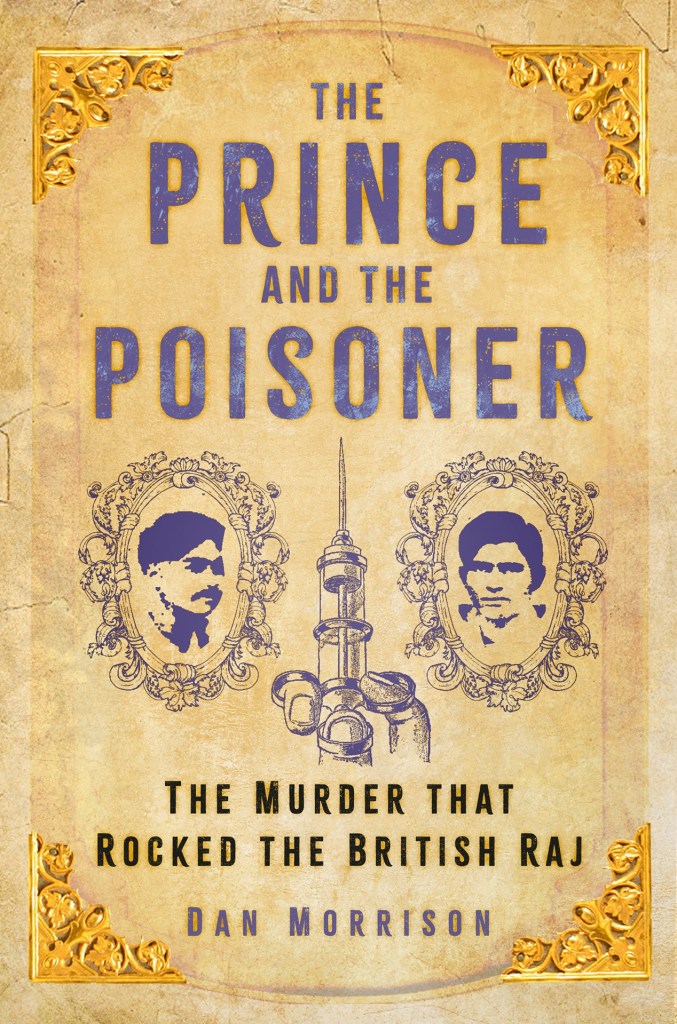
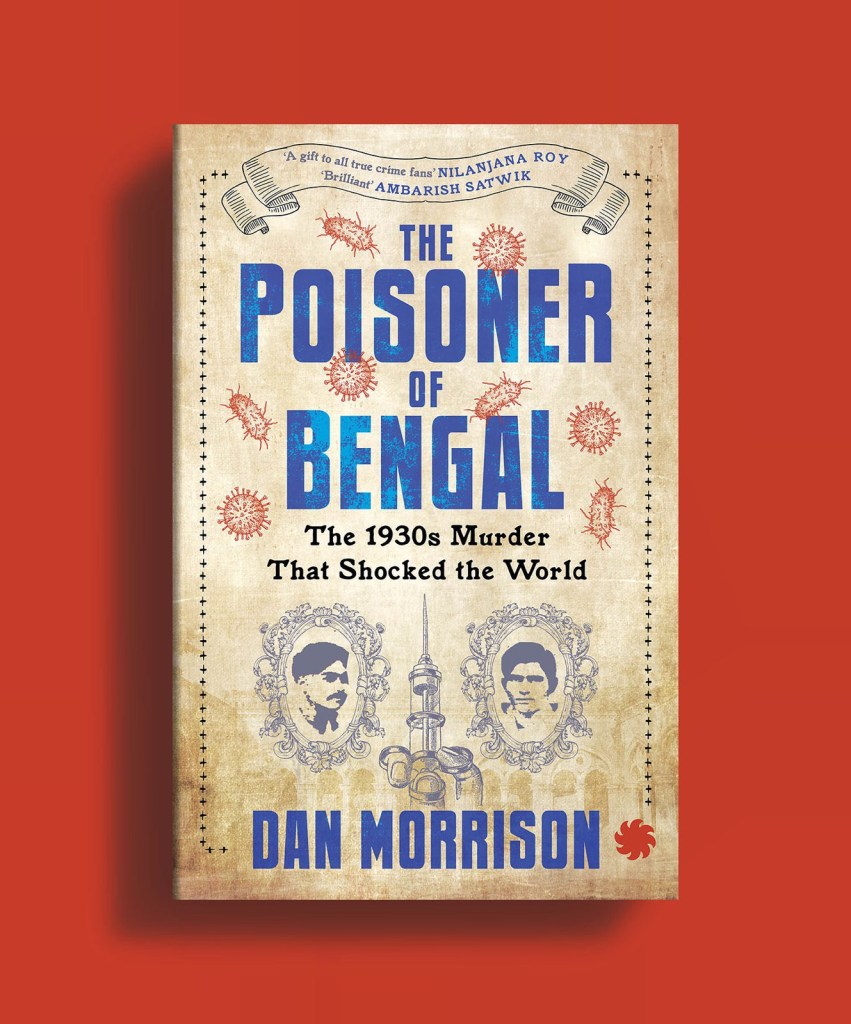


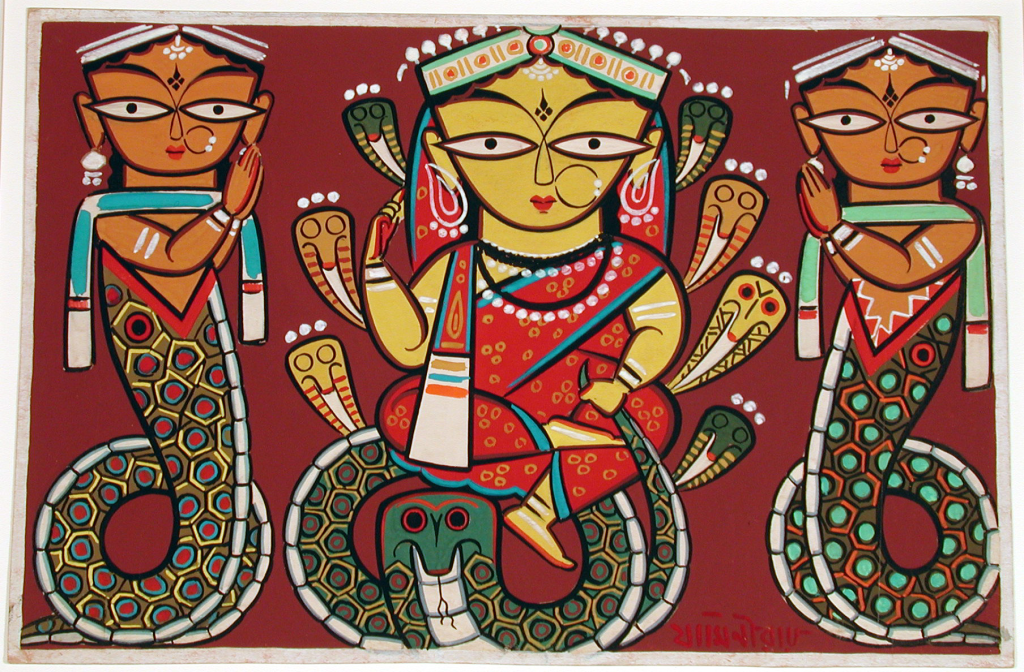


 Borderless