Festivals are affirmations of joy and love that bind humanity with their sense of hope even in a world torn by violence and climate change. As the end of the year approaches, we invite you to savour flavours of festivals past and, a few, yet to come, before the cycle starts again in the new year. The colours of celebrations are vibrant and varied as shades of nature or the skies.
We have new years spread out over the year, starting with January, moving on to the Chinese New Year around February, the Bengali new year in April to festivals of environment, light, darkness as in Wiccan beliefs, Tagore’s birth, more conventional ones like Deepavali, Eid, Durga Puja and Christmas. People celebrate in different ways and for different reasons. What we have also gathered is not only the joie de vivre but also the sadness people feel when celebrations are muted whether due to the pandemic, wars or for social reasons. In some cases, we indulge in excesses with funny results! And there are of course festivals of humanity … as celebrated by the bauls — the singing mendicants of Bengal — who only recognise the religion of love, compassion and kindness.
Ramakanta Rath’sSri Radha celebrating the love of Radha and Krishna have been translated from Odiya by the late poet himself, have been excerpted from his full length translation. Click here to read.
Bijoya Doushumi, a poem on the last day of Durga Puja, by the famous poet, Michael Madhusudan Dutt, has been translated from Bengali by Ratnottama Sengupta. Click here to read.
A Clean Start: Suzanne Kamata tells us how the Japanese usher in a new year. Click here to read.
Shanghai in Jakarta: Eshana Sarah Singh takes us to Chinese New Year celebrations in Djakarta. Click here to read.
Cherry Blossom Forecast: Suzanne Kamata brings the Japanese ritual of cherry blossom viewing to our pages with her camera and words. Clickhere to read.
Pohela Boisakh: A Cultural Fiesta: Sohana Manzoor shares the Bengali New Year celebrations in Bangladesh with interesting history and traditions that mingle beyond the borders. Clickhere to read.
The New Year’s Boon: Devraj Singh gives a glimpse into the projection of a new normal created by God. Click here to read.
A Musical Soiree: Snigdha Agrawal recalls how their family celebrated Tagore’s birth anniversary. Click here to read.
An Alien on the Altar! Snigdha Agrawal writes of how a dog and lizard add zest to Janmashtami (Krishna’s birthday) festivities with a dollop of humour. Click here to read
Memories of Durga Puja : Fakrul Alam recalls the festivities of Durga Puja in Dhaka during his childhood. Click hereto read.
KL Twin Towers near Kolkata?: Devraj Singh Kalsi visits the colours of a marquee hosting the Durga Puja season with its spirit of inclusivity. Click here to read.
Hold the roast turkey please Santa: Celebrating the festive season off-season with Keith Lyons from New Zealand, where summer solstice and Christmas fall around the same time. Click here to read.
Fuller Road, the short and winding road in the middle of the University of Dhaka campus, is quite legendary, not only as far as the history of that institution is concerned, but also in the annals of Bangladesh. It must also be one of the most beautiful of Dhaka city’s roads, having till now mostly escaped the degradations other old roads of the city have been subjected to due to rampant urbanisation. It is steeped in history, but still looks as if it was built not that long ago. Undoubtedly, it has real character and a distinctive place in the city’s life.
Bampfylde Fuller[1] was the first Lieutenant Governor of the province of East Bengal and Assam but he held that position for less than a year. Fuller Road must have been named to acknowledge his indirect role in the creation of Dhaka’s university. A controversial administrator and a very opinionated man, he had quit his position in a huff after less than a year at his job. The Partition of Bengal had been revoked in 1912, and all Fuller left behind then in his brief stint seemingly was the beautiful Old High Court Building of the city (whose construction he had initiated) and the splendid, sprawling rain trees of the university he had apparently imported from Madagascar. Nevertheless, the naming of the road indicates that he was part of the historical current that would lead not only to the building of the University of Dhaka in 1921, but also to the Partition of India in 1947, and the birth of Bangladesh in 1971. Fuller Road is thus replete with history.
Enter it from Azimpur Road and you will see it flanked on one side by Salimullah Muslim (or SM) Hall, and on the other by Jagannath Hall. The former, of course, is named to honour Nawab Salimullah, one of the university’s founders, and someone who had donated a lot of land to the university. Built in 1930-1931, SM Hall is a splendid building, incorporating features not merely of Mughal architecture and gardens, but also of design elements of the colleges and halls that echo another venerable university, Oxford (one reason why the University of Dhaka was once called the “Oxford of the East”). Jagannath Hall comes with an overload of history as well. It, too, was originally modelled after the halls of the University of Oxford and was named after a zamindar of Savar who had contributed to the founding of Jagannath College, which had an organic connection with the university for a long time.
Fuller Road, in fact, is also steeped in the history of Bangladesh. If you enter it from its Azimpur Road entrance, you will see the Swadhinata Sangram, a group of sculptural busts by Shamim Sikder that commemorates the legendary names associated with the university and the birth of Bangladesh. If you care to enter the university staff quarters from either the left or right of the road, and if you then ask the guards to show you around, you will find the graves of intellectuals (or plaques honouring them). These were men martyred in 1971 due to the single-minded determination of the Pakistani army and its Bengali collaborators to eliminate dissident intellectuals who had worked for the birth of Bangladesh, thereby crippling the country at the moment of its birth.
If you exit the road on Nilkhet road, you will find a solemnly built commemorative area in another island, containing plaques listing university teachers, staff members, and students martyred in 1971. The sculptures and the plaques are testaments not only to the sheer bloody-mindedness of the Pakistani forces of yore but also to the major contribution made by the university’s people to Bangladesh’s independence. I grew up listening to snatches of the history of the University of Dhaka and Fuller Road that are relevant here.
One of my uncles, for instance, is still fond of retelling an incident when he escaped from the Pakistani police’s bloody assault on demonstrators protesting on February 21, 1952, against the imposition of Urdu as the sole national language of the nascent state by (West) Pakistani administrators and their cohorts. He had taken refuge at that time in the Fuller Road flat of an European Jewish academic, who was then a faculty member. A few of my teachers have either talked about or written about the movements that continued from that memorable incident till December 16, 1971, describing their involvement with the various other movements that led to the emergence of Bangladesh. They highlight, in the process, noteworthy moments in the road’s history and the roles its denizens played in our country’s pre-liberation stages, as well as the memorable transitional historical moments they had either witnessed or were part of.
As I move in from the Swadhinata Sangram island on the Azimpur Road entry point of Fuller Road nowadays, I can see only a few remnants of the natural beauty the road once boasted. Gone is the basketball court placed in a picturesque setting that SM Hall once possessed, or the lush green grass tennis court of the Hall that my uncle reminisced about. He played there before my time. For a long time, there were many statuesque and lovely trees on the SM Hall side of the road. However, the distinctive architectural features of the SM hall building still strikes me as very impressive.
On the other side, however, the first clear signs of the uglification of Fuller Road are visible in the drab features of the newly built extension of the Jagannath Hall complex. In addition to these two halls, Fuller Road is flanked on one side by the British Council and university staff quarters, and on the other by Udayan Bidyalaya (aka Udayan School/College), some faculty and staff quarters, the residences of one of the pro-vice chancellors and the treasurer, and the vice chancellor’s house. The two buildings of the pro-vice chancellor and the treasurer are pretty nondescript, as are the Udayan buildings, but the British Council setup is quite notable. I have written about the British Council’s transformation from an open access center for intellectual and cultural pursuits and my own memories of stimulating as well as adda[2]-filled days in anguished as well as indignant remembrance elsewhere, but let me just reiterate what I say in that piece briefly here: This new British Council is, indeed, sleekly designed and has state-of-the art security, but it is no longer the vibrant centre of intellectual exchange it once was, and is now mostly a place visited by those who can afford its wares of British education.
The Vice-chancellor’s residence, however, is undoubtedly still striking. If you have had the privilege of going inside, you must have been impressed by the building as well as the grounds, containing krishnachuras and jarul trees, which when flowering, make Fuller Road look vibrant and colourful—almost a garden in Dhaka city. Indeed, the rain trees, the krishnachuras and jaruls in bloom, one or two shirish and a solitary sonalu trees and (still) numerous mango trees play their part in making Fuller Road a distinctive floral phenomenon of the cityscape. Fuller Road is indeed as beautiful as you could expect any road to be in a bustling, bursting-at-its seam, and unsparingly chaotic city like Dhaka.
It is a road that also has many moods and that you can see in many lights—literally. I lived in Fuller Road for over two decades and frequented it for two more, and thus have had the privilege of viewing the road at different times of the day and on diverse occasions for at least four decades. When I now reflect on what I saw, I am struck by the immense variety of the experiences the road affords to those who live in it and even to passersby.
It was during my prolonged stay in Fuller Road that I got frequent glimpses of the wondrous place it once must have been. Even now, a nature-lover can take delight in its birds, for although the cacophonic crows still reign supreme amongst the bird population of the locality, throughout the day, and especially in the evening, you will see swiftly flying flocks of pigeons, tribes of parrots, and incomparably beautiful yellow-breasted holud pakhi[3]couples, in addition to the sad-looking, ubiquitous shaliks[4] and evening’s surrealistic bats.
When I first started living in Fuller Road, I would occasionally see snakes slithering by on monsoonal days; mongooses darting away at the sight of walkers is a not uncommon experience even now. Wild dogs roam in parts of Fuller Road at nights and early mornings. The foxes have disappeared, and I have seen a stray monkey only once or twice, but there is still enough flora and fauna around to make you feel an intimate connection with nature in this neighbourhood of the city. But of course, in addition to its nonhuman residents as well as its human ones, Fuller Road is now frequented mostly by people who find its free and open spaces appealing for different reasons at different times of the day.
Early in the morning or late in the evening, for instance, you will find men and women chatting away as they do their constitutionals; during the day students saunter across the road while vehicles fill the free and plentiful parking spaces; come evening lovers sit down discreetly in its dark spots, trying to be as close as possible and as far away as they can from prying eyes; with nightfall nouveau riche youths park faux sports and/or sleekly painted cars, trying to impress the girls who stroll across the road. Nowadays you will see with irritating frequency in evenings the parked motorcycles of busy-seeming student leaders. At night, Fuller Road can have a surrealistic feel to it—lit up but deserted, desolate as in some dreamscape, and as in a dreamscape, hauntingly familiar.
What surely makes Fuller Road truly distinctive, though, are the festival days that it hosts throughout the year, and the processions and parades that cross it throughout the year for one reason or the other. If you list them by the English calendar, you can begin with the new year when celebrations continue from the final hours of the dying year and end till the first nightfall of the new one. February is a truly distinctive month in the road—first Bashanta Utshob[5]and then Valentine’s Day see it fill up with young men and women in bright, warm colours and obviously romantic, flirtatious moods. Even solemn Ekushey[6]February, when night-long Fuller Road residents hear the doleful notes of the Ekushey song commemorating our language martyrs, and when from dawn to afternoon the road is closed to all vehicular traffic, switches to a festive mood by late afternoon, as those crisscrossing it seem bent on leaving the sad notes behind to celebrate all things Bengali. But the most exuberant display you can see in and around Fuller Road is during Pohela Boishakh[7], when the road turns into a conduit for festival-loving people flowing from fun-filled event to event. Eid days and Durga Pujas, and Saraswati pujas too witness suitably dressed young people walking across the road in obviously celebratory moods, lighting up themselves and the people around them, as they either stroll by or stand in pairs or groups here and there in the curving road’s embrace.
And the processions and parades? Suffice it to say that they are motivated not only by politics but this or that reason or cause. In the three Fuller Road flats I lived in for twenty or so years, I felt the kind of contentment and ease that I did not experience in the many neighbourhoods of Dhaka I had lived in before, or the Dhanmondi flat I live in now. Mango-filled trees exuding mango blossom scents, kamini flowers with overpowering fragrances, wide open spaces where children and boys play to their hearts’ content and neighbours greet each other familiarly throughout the day made my life on Fuller Road incomparably pleasing.
Towards the end of my Dhaka University career, I moved to a flat on the ninth floor of the newly constructed faculty apartment complex. There I saw what I had never seen before—monsoonal cloud formations, magnificent sunsets (I would not get up in time for sunrises!), the moon in its full glory, and star-studded nights. Heaven seemed to come closer and closer to me then. I truly seemed to have ascended to celestial heights! But paradise has to be lost sooner or later and can only be regained in this world by willing the mind to vision it from exilic places every now and then. But to have had some close to it moments in this life through Fuller Road is truly something to be thankful for!
From Public Domain
[1]Fuller (1854-1935) held the position from 16 October 1905 until he resigned on 20 August 1906 after which he relinquished the position to Lord Minto (1845-1914).
[6] Twenty-first February has been declared the mother tongue day by UNESCO. One of the reasons Bangladesh was formed was its insistence on Bengali being its mother tongue while Pakistan tried to impose Urdu as the national language.
[7] Pohela Boishakh (first day of the Bengali month of Boishakh) falls on 14th April in Bangladesh and is celebrated as the start of the Bengali New Year with a holiday and fanfare.
Ramakrishna Mission Durga Puja, Dhaka. From Public Domain
The very first time I heard Shah Abdul Karim’s [1]heart-stirring song “Age Ki Shundor Din Kataitam[2]”, I was transported to my childhood years in Dhaka’s Ramakrishna Mission Road, where we revelled during Durga Puja. Karim remembers lyrically “how happily” he and other village youths would spend their childhood days, “Hindus and Muslims/Singing Baul and Ghetu songs all together.” Karim’s song always strikes a responsive note in my heart because I recall how joyously my friends—whether Muslim or Hindu—and my family members would spend the Puja days every year in our Ramakrishna Misson Road paara or neighbourhood. Although my memories of those days have dimmed considerably by now, one thing I still remember clearly is this: after the two Eids, Durga Puja was the most important festival to light up our young lives then. Alas, those days are gone, not only for me, but for most people growing up in a paara in Dhaka.
One explanation for the spontaneity with which we would participate in the Ramakrishna Mission Puja festivities was demography. Our paara consisted mostly of Muslims but also of not a few Hindus. Our nearest neighbours, for instance, were two Hindu families. True, the events leading to 1947 Partition had created a divide of sorts between people speaking the same language but belonging to different religions, yet, on most occasions, we interacted freely with each other. Every day we would hear the ululations linked to prayers in our Hindu neighbour’s house just as they would listen to the azaan[3] drift into their homes five times a day from our neighbourhood mosques (sans loudspeakers!), summoning the faithful to join the congregation. On Puja days, they would send us prasads[4] and we too would share sweets our mothers would cook for our religious festivals with them. Pakistan was very much a state built around one religion, but do I deceive myself or were ordinary people much more secular and much less bigoted then?
Another reason for the ease with which we moved in and out of Ramkrishna Mission stemmed no doubt from the attitudes of the people who directed Ramkrishna Mission. Much like the Catholic American missionaries who ran the school and college where I would get my basic education, the saffron-clad men of this mission were always tolerant of paara children irrespective of their religion. We were allowed to play football in the Mission field, bathe in its pond for hours, pick the bokul flowers from its trees or while they were strewn in the shades, chat for hours on its lawn, or read in its reading room. Occasionally, one of the missionaries who would spend most of their time meditating or leading prayers for Hindus, would even drop in for a chat with my parents, both devout Muslims but very pleased to have others in our midst. Sure, there were limits even then, for we would not go inside Hindu prayer rooms, and our Hindu friends would never disturb us during our prayer times, but open-mindedness and forbearance ensured that most of the spaces we lived in in our community were shared ones.
Dhakkis or drummers performing. From Public domain
In any case, Durga Puja in Ramkrishna Mission was the most memorable experience of another religion I have ever had. The moment we would hear the tak dum tak dum of the drums pervade the spaces of our neighbourhood in the mostly warm but occasionally hot and humid end-autumnal days full of fleecy clouds in nearly always blue skies, our hearts would flutter. Those thrumming, magical beats announced unmistakably that the time for another fun-filled Saradiya[5]Puja week had come! The dhakkis or drummers, I do believe, were our Pied Pipers, for we would sprint like the spellbound children of Hamlin then to the open field in front of the mission prayer hall the moment we heard them. We would find them there pounding away on their drums, swaying and smiling and showing off their skills on those ponderous-seeming but colourfully decorated and deep-echoing dhols!
The whole of Ramkrishna Mission became a spectacle of sights, smells, and sounds for the next few days. No matter where or when we went to the Mission during the festival, we would experience a riot of colours, a medley of sounds, and a range of flavours that made the Durga Puja days[6] unforgettable. During Durga Puja, Ramkrishna Mission was truly in the carnivalesque mode, for there was an unmistakable mela or fair-like quality to it.
Hindu men and women would come dressed in their fineries, the married women glowing because of their vermillion smeared-foreheads and multi-coloured saris, the men looking happy and yet self-conscious in their bright but heavily-starched new dhotis[7], and the children beaming and giggling because of anything and everything. We too would dress up for the occasion because, whether Hindu or Muslim, this was an occasion to meet people, mingle, chat, display and (for the boys) ogle.
Playing ManjirasBlowing the Conch shellFrom Public Domain
The sound of the drums would merge with the tinkle of manjiras[8], the chiming of bells, the unique note coming from conch shells, the ululation of women, the chanting of the mysterious but solemn-sounding Sanskrit prayers and the incessant chatter of not quite focused devotees. Indeed, there was a constant buzz in the Mission compound every day from mid-morning till late in the evening. In the Mission field, hawkers would sell hot and spicy pickles and chutneys, delectable sweet and/or sour savouries, and flavoured and syrupy drinks. At times the missionaries and volunteers would serve watery but delicious labra khichuri to anyone who cared to line up and eat from the plantain leaves. The smell of the different food items sold through the day would blend with the smoke and scent of the ceremonial dhups or incense lighted for the occasion. The press of the crowd, the feeling of excitement exuded by the people who sat to watch events or wander from place to place, and the assorted Bangla dialects heard all around us created a matchless mix.
But of course, Puja was mainly a holy occasion for the Hindus of the city. While we Muslim children did not understand a lot of what went on and were often mystified by the seemingly endless cycle of rituals, there was much to keep us absorbed in at least a few of the religious events. At the centre of the Puja, undoubtedly, were the idols built for the occasion. They are traditionally unveiled on the sixth day of the moon and placed on a pandal, a temporary structure erected for the veneration of the goddess Durga. Even if we did not know the import of all that we saw, who could not but be overwhelmed by the centrepiece, the resplendent goddess, ten weapons in her ten hands, a benign smile on her face, glowing in light golden colours, draped in a flaming red sari, standing on her lion mount, taming the demon Mahisasur.
Also awe-inspiring were the attendant deities (how “filmy” are the idols made now!). We were captivated by the welcoming melodies of “agamoni” and intrigued by the “Chandipat[9]” or reading from the Hindu scriptures. Day and night we were captivated by the rituals of anjali as the deity was offered flowers and prayers.
For most of us, one of the more fascinating moments of Durga Puja came on the ninth day, when a little girl was made the kumari, symbol of pristine beauty. But the climactic event was the immersion of the deity in the mission pond on the last day. From the morning of this day we would witness intense activity. First, devotees would begin preparations to move the deity, then the pandal would be carried to the pond to the sound of ululations, and finally the Durga would be immersed in the pond water to chants affirming her victory and predicting her triumphant return the next year.
The Durga Puja days mesmerised all of us in the paara in many other ways. For instance, the dhaakis seemed to punctuate the days and nights of the Puja week with aarati[10]and ritual dances, gyrating and drumming with abandon and delighting us children. In the evenings, kirtans or devotional songs absorbed older people who were content to muse to musical tunes even in the middle of a crowd. But what fascinated most people young or old was the jatra[11] that was staged in any one of these evenings. Like the morality plays that I would read about later in my English Studies when studying the history of the theatre of Elizabethan England, this folk genre had angels and demons, characters like Vice and Conscience, music and dance, pathos and farce. In short, it was made out of a recipe guaranteed to please. Its plot, typically taken from an episode of a Hindu epic, was of the kind that would keep children as well as adults spellbound.
Jatra performed on an open (often makeshift)stage with the audience sitting all around it. From Public Domain
All in all, Durga Puja was a truly enthralling and synaesthetic experience; no wonder our senses were satiated by the end of the Puja week! The most important thing, I now realise, was that for nearly a week our paara came alive and we became part of a carnival that went on for days. And in the process our neighbourhood managed to come somewhat closer, for this was one religious occasion where differences were overcome to a great extent.
In 1967, my family moved from Ramakrishna Mission Road to another part of Dhaka and I have never been to another Durga Puja held there since then. But by 1965, a change had already come over our paara. The India-Pakistan war of 1965 had widened the rift created by Partition, a rift that seemed to have been bridged to a great extent in our neighbourhood. A few of our Hindu neighbours left for India after the war. The rest, I know from subsequent visits, have migrated to India over the decades. The Ramkrishna Mission Puja, I hear, is still a huge event, but I doubt very much if the whole neighbourhood comes alive during puja week like it did when I was there.
Will coming generations in our part of the world ever rediscover the joy that comes from knowing that despite different beliefs, people can participate spontaneously in each other’s festivals and even delight in them fully? In 1985, after six years spent in Canada, I remember walking past a Durga Puja pandal in Khulna with a nephew. I asked him, “Have you ever gone inside and enjoyed the puja festivities?”
“No,” he said, “there is a smell that comes from the dhup that they use that I can’t stand. Besides, we aren’t supposed to!” It was a moment that first made me realise that the dream of a secular, tolerant, humane Bangladesh had received a jolt in the years that I had been away. Subsequent events have been even more upsetting for those of us who believe in the values encapsulated in that part of our original (1972) constitution that was later “amended”. It is thus that Shah Abdul Karim’s song has so much resonance for me that every time I hear it, I keep thinking of the Durga Puja celebrations in Ramakrishna Mission that I had been part of once upon a time: “How happily once we village youths/ Would spend our days, Hindus and Muslims/…./ I keep thinking: we’ll never be happy like then/ Though I once believed happiness was forever/ Day by day things get worse and worse.”
(Published in Daily Star on October 20, 2007)
[1] Shah Abdul Karim (1916-2009) was a baul musician of note.
Story by Ilma Khan, translated from Hindustani by Janees
Songs of Freedom bring stories from women — certainly not victims, not even survivors but fighters against the patriarchal status quo with support from the organisation Shaktishalini
Dr.Ilma Khan is 24 years old, was born and brought up in Rampur, Uttar Pradesh, India. She is studying BUMS (Bachelor of Unani Medicine & Surgery) and currently practising in the same field. Ilma loves to describe herself as ambitious, flawless and fearless, believing in ‘good vibes’, big dreams, and self-love always.
Dear Me . . .
2023
This year I met the most broken version of me, but also the strongest…
24 years ago…
Wednesday, 11 November 1998,
I was born into a family where when a woman is pregnant, she was expected to deliver a baby boy, but I was born…
I do not remember my childhood, but I do remember my family always wanting a boy. And so here we are with seven sisters now and one brother. I always wonder why they always wanted a son? What would have changed in their lives if they had a male child?
This greatly impacted my life and I decided to take matters in hand. I decided to do all the work which a boy could do. That didn’t seem to help much because I was constantly reminded of my ‘disabilities’, that ‘physically I was a girl and I should know my limits’, that I ‘should remember that one day when I would turn eighteen and I would get married. My parents’ house was just another impermanent motel’.
So, I started believing that this is my parents’ house and after marriage I would go to my husband’s house. But what if … they tell me someday that, ‘this is NOT YOUR home!’.
THEN WHERE EXACTLY IS MY HOME?
— LETTER TO MYSELF —

Dear Ilma,
I am meeting you after so long. You know it's been six years since we talked…
Just wanted to tell you that you were so genuine and innocent. I remember you always worried about little things, but you know this time it's different -- as in a ‘good different’. The Ilma I know now is strong enough to face her own journey. She has faith that she can always stand up for herself. The only things that haven't changed are the fact that she still likes to chill like you, she loves the rain, she does everything which is full of madness and enjoys every little moment of her life, she loves snow too…Though you were quieter than her you know. This Ilma -- she is aggressive, bold -- unlike your shy and scared self…
Oh yes and her nails have finally grown. She doesn't gnaw her nails like you. She loves to put paint on these. Can you imagine that?
Since that time, I started dreaming of having my home, a life full of adventures and freedom. But as I grew older, my family and relatives started asking about marriage. I was studying in college at that time.
I was completely shattered that I was very close to my career goals, but all this will stop me from achieving my dreams. Religion of course played a very important role in my life, as I was allowed to do things under ‘some limits’ because my family believed so.
I was just sixteen years old when my engagement was fixed with one of my cousins while my heart cried out in loud protest. But I was not able to express this to anyone. I decided that I would do something for myself — so that I could respond to all that was happening to me in which family members were complicit.
I had studied hard. When I completed school. I gave entrance exams and got selected for the medical profession. Since that time, I have been trying to tell my family members that I do not want to marry the person they choose.
Everything was going fine. I was living my life, but one call changed everything.
— LETTER TO MYSELF —

Dear Ilma,

I know you always wonder how you will pursue your career, how you will live your life if allowed to live on your own terms, about how smooth things will go if a person or your family will let you go or just abandon you or not want you to live by their rules.
But don't worry now because time has changed things, she is doing every single thing step by step, the way you thought it would be in future.
She is here to fulfill your dreams. I know you love to help the one in need. You know she has got a platform where she learns these things and is helping other ‘survivors’.
I promise when you will see this Ilma, you will be amazed because she is exactly the way you wanted her to be.
My mother called me, and said, “We are coming to pick you up after 3 days. You are getting married. Resign and come back with us. We have to do the preparations.”
I was silent. I could not utter a single word during the call. A feeling of hopelessness and helplessness mauled at me.
Somehow, I managed to muster the courage, assemble my shattered self together and called my mother –
“I don’t want to resign. I want to work. I want to be financially independent. I can’t marry now. This is not the right time.”
“No! You are 23 now and this is the right age. We have made the decision!”
“I don’t want to marry that person. He is annoying and this is final! I am not coming home!”
“How dare you talk like this? We are coming now to get you and you have to come with us. There’s nothing you can do about it.”
I was thinking about my next step. I took help from an NGO2 and they helped me. When my parents came, they promised that they would not ask me to marry any person and they would allow me to study. Somehow, they managed to convince me emotionally, and I decided to go back home with them to celebrate the festival of Eid.
When we were home, suddenly the behaviour of my mother changed, she snatched my phone and said, “Now do whatever you can? We will see how you will say no to marriage. There, we were helpless because of that NGO but now it’s all our say.”
REMEMBER THAT HEIGHT OF FEAR WHEN…

Her parents abused her physically with a belt, blood was coming out from her nose and head.
After all those arguments her parents finally decided to take her life and locked her in a room.
She was locked up in a room, with no hope of light in the darkest time. She was afraid, they were talking outside the room – planning and plotting. Her uncle was fighting with her family members to let her live. He was asking them not to kill her – to spare her. She lost all hope. Every second she was breathing, thinking this could be the last, this could be the last… this could… be the… last.
It was difficult to control her emotions. Her nose was bleeding, her tears were not coming out, her lips were dry with fear, she was shivering that this could be her last day and she could do nothing to save herself.
You’re alive today, Ilma. You lived through that time. The peak of fear.
But somehow, I was saved… and then I was screaming, crying… I wanted to disappear.
The next day I decided to do anything and everything to save myself, my life. I contacted many NGOs and left my home…and never looked back. How did it all happen? I am yet to make sense of it. One moment, I was trapped and hopeless, and the next moment, I was running for life.
Since then, I have been independently living on my own. I am currently studying, and at some point, I think that everything needs to be left alone – your past, even your pain.
But, yes, I remember when I was young, I thought that I would be helping poor people and I would do something through which I could be the person who would make others happy…
I decided to be a doctor and today it gives me hope and happiness which I cannot define in words. The very first time when I went to the gynaecology department and my duty was in the labour room. When I went there regularly for one month, I used to practice how to deliver a baby. After a few months, I learnt to do that on my own and when I helped one of my patients in delivering her baby, that was the best thing that ever happened to me in life…
The smiles on their faces were precious. Her mother-in-law gave me her blessings and all of them were just so happy.
So many times, I have tried to save the lives of people, pushing through to give them hope even if the situations are not in their favour.
Today when I go to the hospital and my patients, who are very ill and are in pain, give their blessings placing their trust in me, I realise what I’m living for.
YOU SHOULD KNOW --

You were in a toxic relationship, you know, you should know about red flags now. Why do you chase such people who don't value you, who don't care about the efforts you put into everything? You know she wants to be valued and respected by every individual she has in her life.
Things are very different now, but those memories of you with your family, she misses that.
Tell everyone in the past that she has moved on from things and no one can make her feel inferior.
And at last, I just want to say that I am so proud of everything you’ve done. Because of you, she discovered that she is fierce, and strong, and full of fire, and that not even she could hold herself back because her passion burned brighter than her fears.
Will meet you soon. Love and only love.
ME. YOU. US.
I faced a lot of hardships in life – mentally, physically, verbally, and socially. Despite being triggered by those memories I chose to live… I chose to live freely, I chose to love myself, I chose to owe myself a life which I dreamt of from an early age.
I was scared, but I realised that I am my own power. On certain days, when self-doubts creep in, I tell myself that I am worth every great thing. All that I have done till now. I am capable of reaching my dreams even if they’re beyond the stars. It’s only a matter of time. You look back and thank yourself for not giving up and for treating yourself with respect and kindness.
Now I am manifesting my life, my dream and everything I have wanted. I am becoming the best version of myself, and I deserve good things. This moment is always precious to me, the most satisfying moment of my life.
And I think once you choose HOPE, everything is possible in life…
“Establishing itself as a premier women’s organisation in India from 1987, Shaktishalini has spread out and deals with all kinds of gender based violence. A shelter home, a helpline and more than that a stunning activist passion are the hallmarks of this organisation. “pandies and Shaktishalini – different in terms of the work they do but firmly aligned in terms of ideological beliefs and where they stand and speak from. It goes back to 1996 when members of the theatre group went to the Shaktishalini office to research on (Dayan Hatya) witch burning for a production and got the chance to learn from the iconic leaders of Shaktishalini, Apa Shahjahan and Satya Rani Chadha. And collaborative theatre and theatre therapy goes back there. It is a mutual learning space that has survived over 25 years. Collaborative and interactive, this space creates anti-patriarchal and anti-communal street and proscenium performances and provides engaging workshop theatre with survivors of domestic and societal patriarchal violence. Many times we have sat together till late night, in small or large groups debating what constitutes violence? Or what would be gender equality in practical, real terms? These and many such questions will be raised in the stories that follow.” — Sanjay Kumar↩︎
These days, it seems to sixty-year-old Husna that the past is clearer than the blur of her mirror…
The black Morris had come to a halt near the major crossing on Top-Khana road. In the back seat, feeling as plump as the upholstery, Husna was sweating and dabbing her pretty twenty-year-old face and neck with the anchal end of her cotton Jamdani sari.
Pregnancy had made it hard for her to fit into the long tunics and gathered pants of her hitherto comfortable shalwar-kameez outfits. Beside her lay the folded newspaper that Baba, her father Dr. Rahman, had left behind that morning, when he got dropped at the Dacca Medical College. She picked it up to fan herself. It was the Bengali language daily, Azad[1], dated February 20, 1952. The headlines wafted back and forth, screaming in print the news of the continuing agitations around Dacca, East Pakistan, on the language issue.
Without needing to look at the paper, she knew about the meeting that day of the Language Action Committee from her youngest brother Shonju, the student activist. She knew that they were meeting to discuss a nationwide hartal[2]scheduled for tomorrow, a general strike against the government’s repressive policies and disregard for the legitimate demand of the people that their mother language be given its rightful place as one of the two state languages of the country.
Since January, when she had returned home from West Pakistan for her confinement, all the discussion around the family dinner table involved the Prime Minister Khwaja Nazimuddin’s reiteration of Governor-General of Pakistan, Jinnah’s enraging declaration of two years ago that “Urdu, and only Urdu shall be the state language of Pakistan.”
She glanced at driver Rashid Miya. The middle-aged man seemed unaffected by the heat, unlike Husna. She was due for delivery in a “matter of days”, as Daktar Chacha[3], her father’s MD friend, had promised during the last check-up, patting her head as if she were still the teen-aged, newly married bride, who had left for West Pakistan a year ago with her banker husband, Jamil.
In a way she was glad that Jamil and she had left their familiar world of Dacca immediately after their arranged marriage, helping two newlywed strangers to bond over the shared adventure of starting life as Bengalis new to the quasi-foreign, Urdu-speaking territory of Karachi in West Pakistan.
Not that Urdu was unfamiliar to Husna. Despite problems with gender in the language, she could manage basic social conversation (though, it annoyed her that she never found any Urdu speaking Pakistani who could utter even a word of Bengali, or tried to). But she was proud that just by listening to the radio she had learnt to sing the popular film ghazals of her favourite Indian playback singer Talat Mahmood, or Noor Jahan, now a Pakistani singer, who migrated to Lahore recently, after the Partition of India five years ago.
It was a bit disappointing that Jamil preferred her to sing the Tagore and Nazrul songs her music teacher had taught her since childhood, when all along her heart hummed with film songs. Songs from Bengali and Hindi films that her strict mother had seldom allowed her to see, unless escorted to the cinema halls by friends and relatives, and on special occasions, like Eid.
She had hoped to right this wrong immediately upon getting married. After all, Ma always said, “Do whatever you wish….after you’re married.” And Jamil did take her to the cinema, though, mostly to see English films. Matinees or late shows at the Rex or Ritz, or an early show at the Odeon followed by dinner in a hotel like Beach Luxury. Once she had seen a belly dancer from Beirut or Cairo perform there and had felt embarrassed yet fascinated by the lissom female body, the unfettered, uninhibited moves. She had felt a dizzy sense of freedom just watching the dancer.
She sighed, running her hand over the watermelon that was her belly! Today she didn’t feel like that bright eyed young girl in Karachi anymore. Nor even a mother-to-be. She just felt like a bloated animal, she sulked looking out of the car window. They were at a standstill for what seemed like an hour. Minutes crawled like the runnels of sweat under Husna’s new high-necked blouse, inspired by the popular Indian Bengali actress Suchitra Sen. She dabbed the constant beading of her nose and upper lip that Jamil always said he found endearing.
She started a mental reply to his last letter. “Dearest one. . . ” She began, then floundered. This would be her third letter to him since she arrived in Dacca, but she was still not convinced about how to address him in writing. Some of her Urdu-speaking female acquaintances in Karachi called their husbands by name, though often using the polite pronoun “aap[4].” Ma always called Baba “Ogo[5]” or “Shuncho?” as in “Are you listening?” That was funny because even if Baba were not listening, Ma would chatter on.
She felt awkward and insincere mimicking the spontaneous affection in Jamil’s letters, calling her “Beloved” and his “Myna bird” and so many other endearments, while she was unable to address him in a way that felt comfortable and not a lie. As usual, she settled for no salutations but an outright “Kemon acho?”
How’re you? I’m as well as can be expected. It’s only February and already Dhaka is uncomfortably warm. How is Karachi? Here, it’s not just the weather that’s heating up, but the political environment as well. The ‘bhasha andolon’, which the English newspapers refer to as ‘the Language Movement’ is going on full force. Baba and Ma are always worrying about Shonju, who is out on the streets every day and in student meetings at all hours. He creeps home late and stores all his protest posters and fliers under my bed and fills me in on what’s going on. I often have to cover for him to the family….”
She pulled forward the end of her sari and tried to cover her belly and wipe her glistening face. Oh! Pregnancy was so boring; and this heat was claustrophobic. If only she could be like Shonju, free to just come and go, walk the streets or ride the cycle or take a rickshaw.
“Ki holo, Rashid Bhai? What’s up?” she asked, as she wound the window all the way down.
“Apa[6], I think there’s a procession approaching. I feel we should take a side street. This road is blocked.” Rashid was already turning the steering wheel.
“Oh! Then, no New Market today? I wanted to collect my harmonium that I left for tuning.” Husna’s voice was lost in a volley of shouts that came from somewhere ahead. Meanwhile, a rickshaw edged close to the car, and two boys, possibly students, with cloth bags hanging from their shoulders, started throwing pamphlets through the windows of a few buses and into other rickshaws that were milling around.
One pamphlet landed on Husna’s lap like the silly, anonymous love-note she had once received while being driven to college, just two years ago. She smiled. She had often wished the author had been her elder brother’s friend and her girlhood crush, Farid. But he was hardly the type to write something romantic to her. Certainly not “Beloved one” or “My Myna bird.” No, it was hard to imagine that serious, brooding, good-looking face bent over anything but medical books.
Rashid stopped to make way for a group of demonstrators, banners folded under their arms. Some raised a slogan and the rest joined in. “Manbo na! Manbo na! Never will we accept!” Husna’s heart pumped. Ah! Unlike her, these boys dared to proclaim that they rejected whatever was being imposed on them. Was this possible? She wished she could get out of the car and walk with the boys, raise her voice in slogans. Unthinkable and unladylike, of course; plus, she was a waddling, pregnant beast.
Rashid Miya swung the car around and they entered a narrow street that led out to a wider road. He braked to give way to a truck that sped past, full of khaki-uniformed police, their rifles flashing in the sun. “Too many demonstrations today near the university, Apa. I hope tomorrow, your father will not go to Medical College. And our Shonju Bhaiyya should be careful. He and his friends were getting on a rickshaw at the gate this morning, when I was wiping the car, and they were talking about processions tomorrow. I kept hearing the date. 21st…Ekushey February. God only knows what will happen!”
“We better go home, Rashid Bhai. Shall we pick up Baba?”
“No, it’s only past 5. I’ll come for him later. Let me drop you first.”
Suddenly, preceded by the rumble of microphone, a van came into view. As it crawled past, it left the sputtering debris of words in crackling Bengali. She could decipher only: Section 144 imposed in the city… for 30 days…a ban on gatherings of more than 4 people in public places…processions or demonstrations to be severely punished…
Husna grew restless for Shonju. She prayed he would come home safely and not get embroiled in something foolhardy. He usually confided in her. At least, he used to till Husna got married. They were the closest among their many siblings. Even on the eve of her wedding, it was he and not one of her sisters who had insisted that if she had any doubts about this arranged marriage, it was not too late to speak up.
But she had never mustered enough courage. Or conviction. After all, Farid had not really confessed his feelings for her, and, from what she discovered about Jamil, he was a perfectly decent human being. In fact, she had no complaints about her husband, except that he was not the one her heart had chosen. If only she had met him on her own, and he had not been imposed on her, as if by state decree: “Jamil, and only Jamil shall be your husband!” And… if only elusive Farid had been clear about his feelings. Even if it were non-reciprocal, she would have felt free. Her heart would not now feel so mute.
Why was the language of the heart so complicated, so hard to decipher? It was as if its familiar truths, which could be accessed non-verbally, instinctively, were now locked in a foreign alphabet that she had to relearn in order to decode their meanings. Almost like that ridiculous proposal in the Legislative Assembly two years ago that Shonju had laughed with her about, regarding the use of Arabic script to write Bengali!
“Just imagine, Bubu, the word ‘mother’ would still be pronounced ‘Ma’ but not written ‘moye-akar’ but ‘meem-alef’! Our Brahmi script curling and prancing forward gracefully from left to right would be attacked from right to left by the slanting arrows of the Nastaliq squiggles, and then both colliding explosively in the middle!”
NastaliqBengali script
Oh! Shonju was so dramatic! A laugh escaped Husna, then she fell silent.
They were driving past the Ramna Racecourse. Her baby shifted in her womb. Later. . . many years later, she would think that her son Azeem knew that they were passing what in two decades would be a historical spot: the pulse point of an unprecedented political gathering on a March morning in 1971. On the seventh day of that month, a voice would rise like a colossal bird filling the Dhaka sky with its fateful, uncompromising call, announcing that the time had come “for the ultimate struggle, the struggle for freedom”: Ebarer shongram, shadhinotar shongram!
Had she been clairvoyant, known that the heady creature would swoop down and snatch her son and hurl them all into the whirlpool of destiny, perhaps she would have told Rashid Miya to change route, take another road. But would that have changed the course of history, erased the scribbling of fate?
For the moment, the Black Morris like a rigid pen on paper drives inexorably forward, and the future is drowned out by the sporadic shouts in the distance of “Rashtro bhasha Bangla chai! We demand Bangla for national language!”
The baby came early. In fact, the very evening after she returned from her outing, the pains started. There was no time to shift her to the maternity ward of the private clinic of Daktar Chacha, so he sent a nurse over to help deliver her baby at home. Early in the morning of February 21, her baby son arrived.
A trunk call was made to Karachi to give Jamil the good news. Then there was much rejoicing in the house with relatives dropping in to see the baby. By late afternoon, however, the atmosphere in the house became subdued as disturbing news from the streets filtered through.
The police had opened fire on protesting students. There were hushed discussions so she would not hear. But she overheard the day nurse telling the night nurse before she left that injured students had been taken to the Medical College. The very next day, Husna’s elder brother, the final year medical student, Monju Bhaijan, had come to the breakfast table shouting in rage that a student had succumbed to his wounds, and the body of another had been found on the floor behind the Anatomy room. Baba confirmed it with sadness.
Even Jamil’s letter to her after the joy of the news of Azeem’s birth contained a postscript: “Stay safe. These are volatile times. Worried about Shonju. The Dawn newspaper here carried an editorial saying that the people of West Pakistan have no objection to Bangla getting a status equal to Urdu. Why is there always such a divide between the wielders of political power and the populace?”
A few days later, Husna wasn’t sure if it was the 25th or 26th, Ma and the nurse had just taken away the baby when Shonju arrived. He was carrying a box of sweets. “Moron Chand and Sons” it said on the box. Inside were her favourite sweets: the soft, creamy white, renin-based balls of rose-scented pranhara-shondesh.
Ma must have bought the sweets and forced him to come visit his newborn nephew. Husna breathed a sigh of relief, seeing her brother, who paced restlessly, refusing to sit.
“I saw the baby in Ma’s room on my way in. Looks like Dulabhai.”
“Really? I think he has our family nose.”
“Poor kid! Hope not.” Shonju finally grinned, but his mind was elsewhere. He was wearing a black badge of mourning on his white kurta sleeve.
Husna stretched her arm and took his hand: “My heart aches for those who died, Shonju. But I’m so grateful you are okay.”
He didn’t let go of her hand but turned his angry face away.
“We students are still in battle mode. It will continue, the andolon, the protests, the confrontation. The Shaheed Minar memorial we constructed outside Medical College was destroyed, but we will rebuild it.”
He pulled his hand away, clicking his tongue: “Oh! Don’t worry. Nothing will happen to me. When you fight for a cause you feel superhuman, invincible. The collective spirit strengthens us, makes us feel immortal. We are more than an individual life. What will our enemies do? Kill or wound one person, right? But the cause… they can’t defeat that. We are the multitudes… ”
“Uff! Stop this speechifying!” Husna rolled her eyes. “Mothers don’t want multitudes. They just want their sons. Sisters want their brothers. Yes, even though you’re a moron, I’d rather have you than a street full of heroes.”
Shonju laughed. “In that case, Bubu, you better start speaking only in Urdu. Sell your mother tongue to these politicians.”
After Shonju left, the nurse brought the baby to be fed. Husna touched baby Azeem’s toes, his petal-like fingers. Once, she had laughed at her elder sister for her incessant baby talk when her son was born. Now it spilled out of her, and she felt no embarrassment. Soft, mashed up balls of Bengali words lisped with maternal love, sweeter, and more tender than the pranhara in the box.
Was that how all mother tongues started? With silly, besotted mothers cooing to the babies in their language? She realised that if she had to make up baby talk in another language, she probably couldn’t do it. There was something about expressing oneself in one’s own tongue, heard from infancy. It was the home that one carried within, because the earliest memories of the mother’s voice absorbed from the womb animated it. It was a birth right that no one could be permitted to take away or undermine.
But was it worth dying for? Worth being martyred like the student the police had shot on Thursday, the twenty-first?
A week later, after lunch, the house suddenly filled with voices. Shonju entered, followed by Monju Bhaijan, and Farid. Husna looked at him surreptitiously. His face was impassive and he gave her a distracted nod. What else could he do, or say, Husna could understand. After all, there she was, much married and a mother, to boot.
Loudly ordering tea to be served, sounding like a housewife, she left the room, disappointed in herself that despite her show of poise and indifference, her heart still ached in a dim way.
She asked herself, if, in the past, she and Farid had been granted the opportunity and the courage to express to each other what she was certain was a mutual attraction, would her life be different? Would the knowledge that her feelings were requited, or not, have made a difference to her sense of self?
When Jamil’s proposal of marriage came to her parents, and they had accepted on her behalf. It was too late. Farid was not around, having gone to visit his parents in Barishal, so nothing had been acknowledged. There had been no beginning, and subsequently, no closure.
During her impending wedding she had to make sure her feelings did not go into a Bhasha Andolon of sorts within her, agitating and demanding the right of her heart’s true language to be respected. Instead, she had gagged her heart, imposed on herself another language: a formal, emotionally correct, and socially acceptable language. The vocabulary of wedded propriety appropriate to an obedient daughter and daughter-in-law. An official language, foreign to her, like Urdu.
She sighed. Language supposedly empowered humans and differentiated them from animals. But if, despite the ability to verbalise, people could not make their wishes known or heard, were they not equal to dumb beasts? What use was the mother tongue when ones’ own mother had not understood her daughter’s unspoken wish just because she could not speak out: “I don’t want to marry, yet. I want to wait! Manbo na! Manbo na!” And what use was language when Farid too, had failed to use his tongue, express himself at the right time, ask her clearly to wait and not accede to the arranged marriage.
*
No, it was better that the Bengalis had spoken out. It was better that they had taken to the streets. This andolon would lead them to express their rights and desires, claim what was true. Of course, it would take four more years for Bengali to be constitutionally recognised as a state language of Pakistan, along with Urdu. But time was a tiny link in the cosmic chain of historical and personal events. Obviously, this last was not something thought up by Husna at the time, but by the Husna of today, watching her past self.
Today, she observed herself through the telescope of time, on the first day the young mother Husna nursed her baby son. Surely, she was unaware at that moment that everything was connected: her breast milk and baby talk in Bangla nourished not just her child, Azeem, but through him later, Shonju’s “multitudes” of a future generation, as a whole nation journeyed from Ekushey or twenty-first, to Ekattor or seventy-one: from the upheaval for language of February 21, 1952 to claiming a home for it in the war of independence of 1971. All were linked, even if separated by time and generation. In the end, everything existed in a grand NOW, where past and present simmered together.
Needless to say, all this was what she would think many years later, as an older sixty-year-old woman, looking back on her life as she wrote her journal, sitting in her room in her daughter’s suburban home in Maryland, in the US.
She dusted the photo frames on the painted bureau. Her doting late husband Jamil, and her gentle yet impassioned elder son Azeem looked at her from the distance of lost eras. One was gone in 1966 in a helicopter crash. The other in 1971, as a freedom fighter.
Farid, unframed, was a forbidden, almost forgotten memory. Lost like an unspoken language. Lost, because she had never fought for him.
She has a fanciful wish: in some after life she would like to ask those who had agitated and fought for a cause, and even laid down their life for it: in the end, was the sacrifice worth it?
“Today is February 21, 2002. Commemorated as Omor Ekushey in Bangladesh. But just another day here…” She wrote in her diary in Bangla, a language that her grandchildren could not speak.
She pulled out from under her bed the harmonium her daughter had recently bought for her from an Indian family that was moving back to India. She sat down on the rug, stroking the black and white keys with one hand and pumping lightly on the bellows at the back of the instrument.
On top of her harmonium lay open her old songbook, marked and written on by the music teacher of her childhood. She was a trained singer, and in 1950, she with a group from her school had performed some mass anthems and marching songs on what was then Radio Pakistan Dacca. There, they had met a musician named Abdul Latif, who would later put to melody a poem written by a journalist named Abdul Gaffar Choudhury for the student who had died on February 21. Later, the song would be recomposed by a noted composer named Altaf Mahmud and emerge as an anthem for what became Mother Language Day.
For her, of course, the day had a different and personal significance. It was the sacred anniversary of her motherhood that she had entered so reluctantly. On this day, every year, she sang to the son who had taught her the ultimate lesson of love and sacrifice and of never forgetting.
She started to hum the familiar refrain as she tried out a few chords.
Her granddaughter Zainab peeked through the door.
“What’re you singing, Nani[8]?” She said in her American accent.
“It’s a song about love, sweetie. About loving one’s language.”
“Which language, Nani?”
“Any language that you love, sweetheart. For me it’s Bangla, which you hear me speak with your mom.”
She sang the first lines. Zainab sat down beside Husna, gazing at her moving fingers.
“Cool! It’s like a portable piano! Can I learn to play it?”
“Well, only if you also learn to sing this song with me.”
“Deal!”
In bed that night, Husna wrote in her journal: “Today is February 21. International Mother Language Day. Today Zainab learnt to sing the Ekushey song, especially the refrain ‘Ami ki bhulite pari?’ And when I tested her on what it meant, she got it right as she ran away giggling and yelling: ‘Can I ever forget it?’
So, today turned out to be. . . not just another day, after all.”
Husna closed her eyes with a smile on her face. Just before she fell asleep, she felt as if she understood the world not with the uttered meanings of any language, but like an unborn baby breathing in the womb its mother’s voice, dreaming his or her first spoken word.
Dreaming in whatever language would become their home, their motherland.
Neeman Sobhan is anItaly based Bangladeshi writer, poet, columnist and translator. Till recently, she taught Bengali and English at the University of Rome. She has an anthology of columns, An Abiding City: Ruminations from Rome; fiction collection: Piazza Bangladesh; Poetry: Calligraphy of Wet Leaves. Armando Curcio Editore is publishing her stories in Italian. This short story was first published in Ekhushey Anthology 1952-2022, edited by Niaz Zaman, writers.ink in 2022.
.
PLEASE NOTE: ARTICLES CAN ONLY BE REPRODUCED IN OTHER SITES WITH DUE ACKNOWLEDGEMENT TO BORDERLESS JOURNAL
Heortology (the study of festivals) has expanded beyond its initial Christian focus to embrace all festivals and their enduring appeal and necessity in our human culture. Festivals remind us to celebrate, and celebration is a positive experience. The very idea of festivals is ancient. No existing history book is old enough to document when the first festival took place or what its origins were, but it’s a safe bet they had some kind of worship element attached. Modern festivals often also land on old pagan holidays, whilst others are more obvious in their origins. Many who attend festivals have no idea of their origins but go for entirely celebratory reasons. We have learned a lot about the history of varied festivals but another question to consider is: Why are humans drawn to festivals and what do they provide us?
Imagine the ancient world. As much as we think we know now, they knew a tremendous amount also, considering their lack of modern resources. This may well be down to the ‘necessity is the mother of invention’ paradigm. Or that we severely underestimate our ancient ancestors, in our egocentric belief the modern world knows best. Just as we underestimate the knowledge of animals and their abilities to survive. Perhaps we could even say, we have lost the art of survival and wouldn’t know how to, if our computers were offline and our cars did not work and the supermarkets were empty.
What we do know, is the ancients were able to amass a great deal of knowledge, despite seemingly not having easy access like we do today, with our modern telescopes and technology. They had to understand mathematics and science at the very core, to establish theorems on the universe and our place in it. Whilst many were later corrected, it is surprising how many ancient scientists, mathematicians and philosophers, got it right. Almost against all odds. It is fair then to say, we dismiss the richness of the ancient world, and imagine everyone lived ignorant lives, which was not the case. When ignorance did reign, it did so deliberately, with the quashing of knowledge by various religious groups, and resulting periods of ‘dark ages’.
The ancient world was in touch with what it means to be human. Being human isn’t knowing how to work your iPhone or microwave. It’s not having a huge house, with a swimming pool and driving a Lexus. Nor is it eternal youth, fame and glory. Being human is about surviving — just as it is with any animal. When we then add an awareness of our own being, which it is argued, not all animals understand, then we become the modern human we recognise today. A being who has the choice, the ability to reflect and learn, and a tendency to seek beyond themselves. In seeking beyond oneself, we find an innate or shaped desire for ‘more’ and that ‘more’ has often come in the guise of a God-head or spirituality of some kind.
Whether we believe humans are prone to worshipping gods or being spiritual, because Gods actually exists or we just have a propensity to create them, is immaterial. The outcome is the same. The God gene hypothesis proposes that human spirituality is influenced by heredity and that a specific gene, called vesicular monoamine transporter 2 (VMAT2), predisposes humans towards spiritual or mystic experiences, perhaps that is what is at work? In essence a transmitter in our brain that makes it more likely we will believe in God (and could explain why some people do so fervently, whilst others do not). Or perhaps we may find meaning in believing in a spirituality beyond the temporal world. But what we do know is, as long as humans evolved from their primate ancestors, they have formed meaning around some kind of spiritual observance and festivals were tied to this worship.
Why do we do this? We are born part of something (a family) but are also separate (an individual). Perhaps festivals and what they represent, is the coming together of all things: Nature. The seasons. Marking time (birth and death). Marking passages (fertility, menstruation, maturity, marriage, children, dying). These are the cornerstones of meaning, with or without God. I say without God, because for many, their notions of God are tied to nature, so it’s more the world around them than specific deities. For others, it’s the manifold destinies of humanity, or history of deities. But whatever the reason there is a sense of coming together in celebration of being alive, and acknowledging that life. A festival in that sense, irrespective of its actual purpose (the harvest, pagan holidays, etc.) is a ‘fest’ of life. Maybe this is why we can have such a happy time being part of it.
Growing up, neither of my parents liked festivals. They thought they were silly. I remember a street festival I went to as a child, for Fête du Travail (Labour Day) in France. I dressed up as princess and the frog (taking my toy Kermit with me) and felt an excitement like I had never felt before. The throngs of people and other children, the food, the smells, the magicians, the shows and the things to see. It was like walking through a market of treasures. I couldn’t understand why neither of my parents liked this; to me, it felt like a jewel had opened. But for some, festivities are synonymous with rituals and a degree of adherence to religion, even when it’s not. And rather than entering into the spirit of it and enjoying it, they feel what it represents is part of social control.
In France, like many countries, festivals abound. The national Fête du Citron (Menton Lemon Festival) draws crowds from around the world, as does the film screening: Festival de Cannes –near where I grew up — and Fête des Lumières (festival of lights, in Lyon). More traditional festivals include Défilé du 14 Juillet (Bastille Day). In the Middle Ages in France, on Midsummer’s Day, at the end of June, people would celebrate one last party (fête de la Saint-Jean or St. John’s Day). Bonfires would mark this longest day and young men would jump over the flames. This also happened on the first Sunday of Lent (le Dimanche de la Quadragésime), where fires are lit to dance around before carrying lit torches. Religion dominated many of the Autumn/Winter festivals historically.
In France, Christmas, is marked over twelve days with the Feast of the Innocents, the Feast of the Fools, New Year’s Eve and culminates in the Feast of the Kings with its traditional galette des Rois. Events include Candlemas (Chandeleur) with its candlelight process. Likewise, many Christian societies have some celebration connected to Easter (Pâques, in French)) or its Pagan roots. In France (and New Orleans in America) these include Shrove Tuesday (typically Mardi-Gras in America), marking the last feast day before Lent, and many others until Pentecost Sunday. My favorite ‘fest’ was Shrove Tuesday (also known as Fat Tuesday or Pancake Day, in other countries) because my grandma would make pancakes, despite our being Jewish. The notion was to eat before Christian Lent and a period of fasting, which has much in common with Muslim beliefs too (unsurprisingly since God is one in the Jewish, Christian and Muslim faiths). In America, they serve fish options every Friday for much the same reason.
Far more impressive and immersive festivals occur in India, with Hinduism celebrating among the highest number of festival days in the world. Over 50 festivals are celebrated throughout India by people of different cultures and religions. These Indian festivals form an integral part of the rich heritage of the country. The ancient Hindu festival of Spring, colors and love known as Holi is one. “Holi is considered as one of the most revered and celebrated festivals of India and it is celebrated in almost every part of the country. It is also sometimes called as the ‘festival of love’ as on this day people get to unite together forgetting all resentments and all types of bad feeling towards each other.” Holi is celebrated on the last full moon in the lunar month of Phalgun, the 12th month in the Hindu calendar (which corresponds to February or March in the Gregorian calendar).
With social media, more of the world have been granted access to the visual beauty of Holi – “This ancient tradition marks the end of winter and honors the triumph of good over evil. Celebrants’ light bonfires, throw colourful powder called gulal, eat sweets, and dance to traditional folk music.” One of the most popular legends in Hindu mythology says the Holi festival marks Lord Vishnu’s triumph over King Hiranyakashyapu, who killed anyone who disobeyed him or worshipped other gods. With coloured powder thrown on people as part of the celebration, many countries now celebrate Holi just as Indians may celebrate Halloween or Día de Muertos. The crossover effect may seem to dismiss the individualistic cultural value and smack of appropriation but, in reality, it’s more a sign of respecting other cultures, learning about them, and celebrating with them.
Mexico, which I live near to now, celebrates over 500 festivals yearly and consequently is one of the most festive cultures in the world. In San Antonio, TX, where I currently live, we celebrate many of these fiestas, alongside American ones. The most popular being Día de Muertos, Día de la Virgen de Guadalupe, Cinco de Mayo and Día de la Candelaria, (like the French Candlemas, celebrated after Three Kings Day, which is a bigger holiday than Christmas in Mexico). The variables in cultures are fascinating. In San Antonio, we get a huge influx of Mexican tourists over Christmas because they aren’t home celebrating as they do so a few days later. We have a fiesta in San Antonio that is much like those in Mexico, due to our large Mexican population and it’s heartening to see the merging of the two.
As a child I celebrated the Jewish Pilgrim Festivals—Pesaḥ (Passover), Shavuot (Feast of Weeks, or Pentecost), and Sukkoth (Tabernacles)—and the High Holidays—Rosh Hashana (New Year) and Yom Kippur (Day of Atonement). But I attended a school that celebrated all faiths so we also celebrated Ramadan, the Muslim sacred month of fasting, akin to Christian Lent. Growing up, my friends of all faiths, celebrated Eid-ul-Fitr or simply Eid which is among the religious festivals for the Muslim community, marking the end of Ramadan. This festival is celebrated on the day after seeing the night crescent moon with devotees offering prayers at mosques and then feasting with their near and dear ones.
We would also celebrate Kwanzaa, which is a worldwide celebration of African culture, running from December 26 to January 1, culminating in a communal feast called Karamu. Its creator was a major figure in the black power movement in America, “Maulana Karenga created Kwanzaa in 1966 during the aftermath of the Watts riotsas a specifically African-American holiday. Karenga said his goal was to ‘give black people an alternative to the existing holiday of Christmas, and give black people an opportunity to celebrate themselves and their history, rather than simply imitate the practice of the dominant society.’”
Are we socially controlled when we attend festivals? Given we have a choice, I would say no. Someone who chooses to be part of something, isn’t signing up for life, they’re passing through. Since my childhood I have been lucky enough to have attended many festivals in many countries. For me it is a reaffirming experience, seeing people from all walks of life come together in happiness. I like nothing better than dressing up and meeting with others and walking through streets thronged with people. Be they carnivals, even political events, there is an energy that you rarely feel anywhere else.
The May Pole festival, believed to have started in Roman Britain around 2,000 years ago, when soldiers celebrated the arrival of spring by dancing around decorated trees thanking their goddess Flora, is an especially interesting festival because it is still practiced almost as in ancient times. The ribbons and floral garlands that adorned it represent feminine energy and the beauty of the ritual is enduringly something to behold.
Likewise, another event ‘Guy Fawkes Night’ is steeped in ritual and British history, with much symbolism in the burning of straw dummies that are meant to represent Guy Fawkes thrown onto bonfires. However, the act of throwing a dummy on the fire to represent a person, has also been done since the 13th century to drive away evil spirits. What most people seem to take away from Guy Fawkes Night are the abundant fireworks in a beautiful night sky, alongside children and families holding sparklers and eating horse chestnuts in the cold, wrapped up in mittens. It’s a ritual that is beloved and a chance to ‘be festive’ even if it’s not a specific festival. As much as anything, it marks time, another year, another November, and gives wonderful memories. If we didn’t mark time or have those memories, we’d still have others, but there is an ease with festivals because they do it for us, unconsciously.
Young collegiates often attend festivals that involve dancing and sometimes drugs. Again, this is not a modern occurrence but has been going on for years, as rites of entering adulthood. The desire of the young to get out and meet others and dance and enjoy life, is primeval, and possibly a part of who we are as humans, marking a potent stage in our lives. Recently I went to a birthday party at a night club. I observed the diverse throngs of party goers and reveled in that abundant diversity. In just one night I saw: Pakistani women in saris, Japanese girls in anime costumes with ears, a pagan woman with huge, curled bull horns and floor length leather dress, Jamaican families in neon shorts and t-shirts, transgender wearing spandex dresses and big wigs, Hispanic Westsider’s filled with tattoos, and gold necklaces, Lesbian and gay couples holding hands. Old couples in sensible church clothes including one old black man with a pork pie hat and a waist coat.
I thought of all the diversity that had attended this club to dance the night away. All ages, all genders and backgrounds and ethnicities, and I thought how wonderful it was that one place could hold them all. In many ways this is the essence of a festival, especially nowadays where anyone can attend most festivals. Years previous, they were segregated by subject. Only those followers of that subject usually attended and you could be harmed if you tried to attend and were an outsider. The advantage we have today is we are more accepting of outsiders and when you attend festivals today, you see a wide range of people. Maybe this is the best opportunity we have to put down our differences and celebrate our similarities.
When I lived in Canada, I loved the homage paid to different seasons in varied outdoor festivals, where shaking off the lethargy of Winter, Canadians would celebrate with fairgrounds, amusements, shows and food among other things. It was like a period of renewal. Likewise, during my time in England, the Notting Hill Carnival, celebrated the Afro Caribbean culture, so essential and entrenched in English culture, with gorgeous street displays and floats, as well as some of the best music around. The idea of welcoming everyone into the fold, helps to remove any tensions between cultures and promote a feeling of unity, whilst not denying the unique properties of those cultures and ensuring they are promoted in their adopted countries. It may be idealistic and not entirely accurate, but it’s a better step than ignoring those myriad cultures exist.
As Halloween and Día de Muertos is fast approaching, I am thinking of how many of my neighbours attend these parties, despite some of them being from very conservative churches. Just last year, we all sat outside in the green spaces and had a mini fireworks display. I sat next to my little 4-year-old neighbour and watched her face as the older kids, dressed in all sorts of costumes, shrieked at the fireworks, and ran around with neon bangles, throwing glow powder at each other. I saw how inculcated we are, since childhood, but despite this I truly believe festivities are in our hearts, even if we weren’t introduced to them at an early age. Children mark their growing up by the events of their lives and it’s not just their birthday they celebrate but the touchstones of their respective culture and nowadays, many other cultures.
My Egyptian grandfather used to tell me about the Nile festival which celebrated the flooding of the river and the replenishing of life in Egypt. Without the Nile, Egypt couldn’t exist, and the ancients knew this. They employed methods to enhance the flooding and gave thanks for it. Gratitude like this can be found in many celebrations, including the American Thanksgiving (although this is a double-edged sword, given the history of genocide of the Native Americans by European pilgrims and invaders) and Harvest throughout the world. A celebration of life through food with music, is at the core of the human ability to endure and overcome hardship. More recently many of us celebrated healthcare workers by singing out of our windows and putting messages of thanks in our windows. We do this because it symbolizes essential parts of our lives, without which we would suffer.
Owing to its melting pot past, Egypt celebrates the Coptic Orthodox Christmas, the more ancient Abu Simbel Sun Festival that is akin to the Egyptian Sun God Ra (who in turn was one inspiration for the Christian God many years later), Sham Ennessim, the national festival marking the beginning of spring, as it originates from the ancient Egyptian Shemu festival, Ramadan and the Muslim Eid al-Adha (honoring the willingness of Ibrahim (Abraham) to sacrifice his son Ismail (Ishmael) as an act of obedience to Allah’s command). As a Jew, my grandfather’s family celebrated Passover, the festival celebrating the Jews Exodus from Egypt, despite our family still living there! Nowadays it is no longer safe to live in Egypt as a Jew but the memory of all people’s experiences is preserved through ancient festivals and events, marking our shared history.
Before the advent of mass-produced entertainment, festivals were also a highlight in any village or town, because they were entertainment. Traveling theatres and shows for children, even book sellers and traders of items not commonly found locally, could be bartered or purchased at such events and it was almost a spilling out from the market square economy that kept such villages alive. Perhaps evolving from our natural tendency to barter for things we want, we evolved to invite others from outside to come for specific events to gain greater reach. With this trading and bartering, came the accoutrements such as eating, drinking, dancing. Not only did this increase diversity and knowledge of foods and drinks from other locales, but brought people who may otherwise not meet, together into a camaraderie.
Sharing stories is also part of festivals, by way of theatre, or more improvised scenarios. It is at our heart to pass on oral knowledge and we haven’t lost that desire. We may do this now via YouTube more than face to face (which is a shame), but the desire to get out and talk directly, is innate, as evidenced by how many people have done just that since Covid 19 restrictions are eased. Religion, folklore, ritual and a desire for escapism, alongside our desire to celebrate things or others (saints, gods, seasons, harvest) are all reasons why festivals endure. Just like children will instinctively dance when music is played, maybe it is our innate nature to enjoy festivals because they foster inter-relationships we all crave to some degree. We may be diverse and believe different things, but we can also come together and respect the perspectives of others. Never more so than through our shared love of celebration.
.
Candice Louisa Daquin is a Psychotherapist and Editor, having worked in Europe, Canada and the USA. Daquins own work is also published widely, she has written five books of poetry, the last published by Finishing Line Press called Pinch the Lock. Her website is www thefeatheredsleep.com
.
PLEASE NOTE: ARTICLES CAN ONLY BE REPRODUCED IN OTHER SITES WITH DUE ACKNOWLEDGEMENT TO BORDERLESS JOURNAL.
Wherever I look, a golden light
Suffuses a vision of holidays,
The festive sun rises in the woods
Of puja* blossoms drenched in gold rays.
             -- Tagore, Eshechhe Sarat
This has been a favourite poem of many who grew up reading Tagore, lines that capture the joy and abandon of the spirit that embodies the celebration of Durga Puja, a festival that many Bengalis deem as important as Christmas, Chinese New Year, Diwali or Eid. It is a major celebration in Bengal and large parts of the sub-continent, though not in all parts.
The reason that reviving the lore associated with this fiesta has become very important is that it centres around women. Given the situation in Iran, where the battle over how to wear headscarves has turned bloody, murderous and violent, celebrating an empowered woman, even if mythical, takes precedence over all else. Mythology has it that Durga was empowered by weapons given to her by various deities, all of who were men, and then, she did what all the male Gods failed to do — destroyed a demon called Mahisasur. Rama too prayed to Durga for victory around this time. And on Bijoya Doushami, the last day of the Durga Puja, some celebrate Rama’s victory over Ravana and call it Dusshera or Dashain.
Taking up this theme of the narratives around Durga Puja and how it has been made into an “Intangible Cultural Heritage of Humanity” by UNESCO is Meenakshi Malhotra’s essay on the festival. Part of the citation reads: “During the event [Durga Puja], the divides of class, religion and ethnicities collapse….”
To bring to you a flavour of the Puja, we have translations of poetry by Tagore describing the season and of a poet who was writing before Rabindranath, Michael Madhusdan Dutt, by Ratnottama Sengupta, verses exploring the grief of parting Durga’s mother expresses as her daughter returns to her husband’s home. This is also a festival of homecoming for, like Durga, those living far from their homes return to the heart of their families. Rituparna Mukherjee has woven a story specially around this aspect of the festival. Journals in Bengal, traditionally, brought out special editions with writings of eminent persons, like Satyajit Ray. We have an interview with a writer who wrote a book on Satyajit Ray, an actor called Barun Chanda, to bring a flavour of that tradition along with the translation of a celebrated contemporary Bengali writer, Prafulla Roy, by Aruna Chakravarti. We hope you enjoy savouring our Durga Puja Special.
Poetry
Eshechhe Sarat(Autumn) , describing the season of Durga Puja, by Tagore has been translated from Bengali by Mitali Chakravarty. Click here to read.
Bijoya Doushumi, a poem on the last day of Durga Puja, by the famous poet, Michael Madhusudan Dutt, has been translated from Bengali by Ratnottama Sengupta. Click here to read.
Homecoming by Rituparna Mukherjee is a poignant story about homecoming during Durga Puja. Click here to read.
Nagmati by Prafulla Roy has been translated from Bengali as Snake Maiden by Aruna Chakravarti. Click here to read.
Interview
Meet Barun Chanda, an actor who started his career as the lead protagonist of a Satyajit Ray film and now is a bi-lingual writer of fiction and more recently, a non-fiction published by Om Books International,Satyajit Ray:The Man Who Knew Too Much in conversation Click here to read.


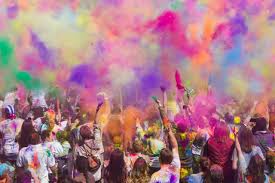

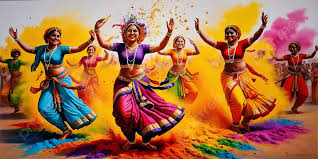
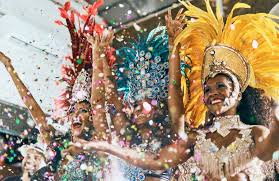
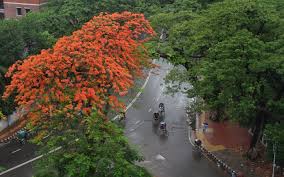
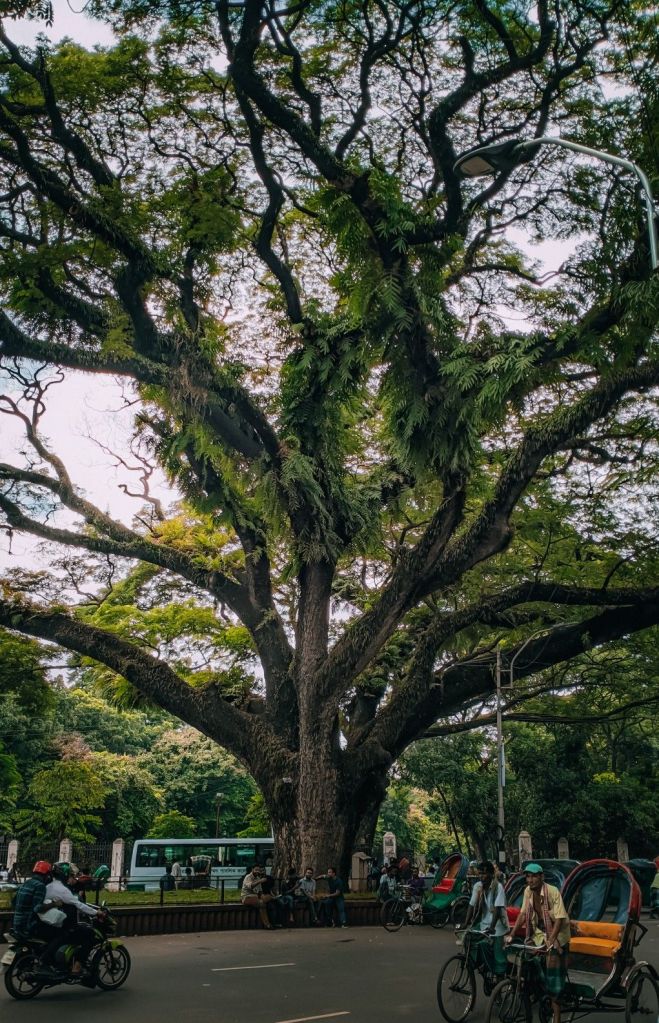
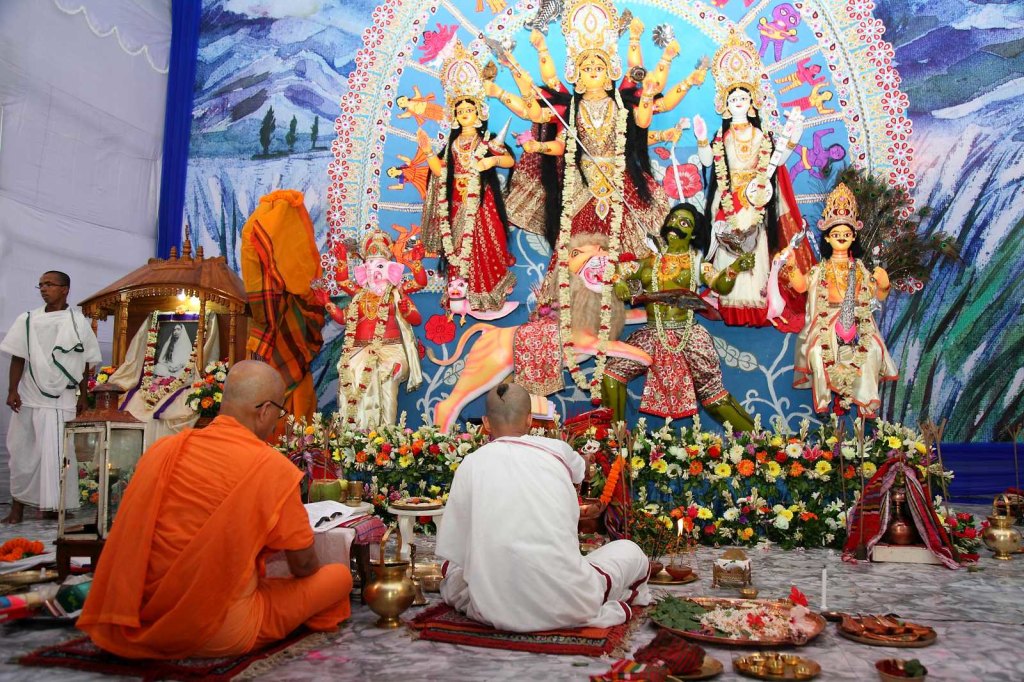
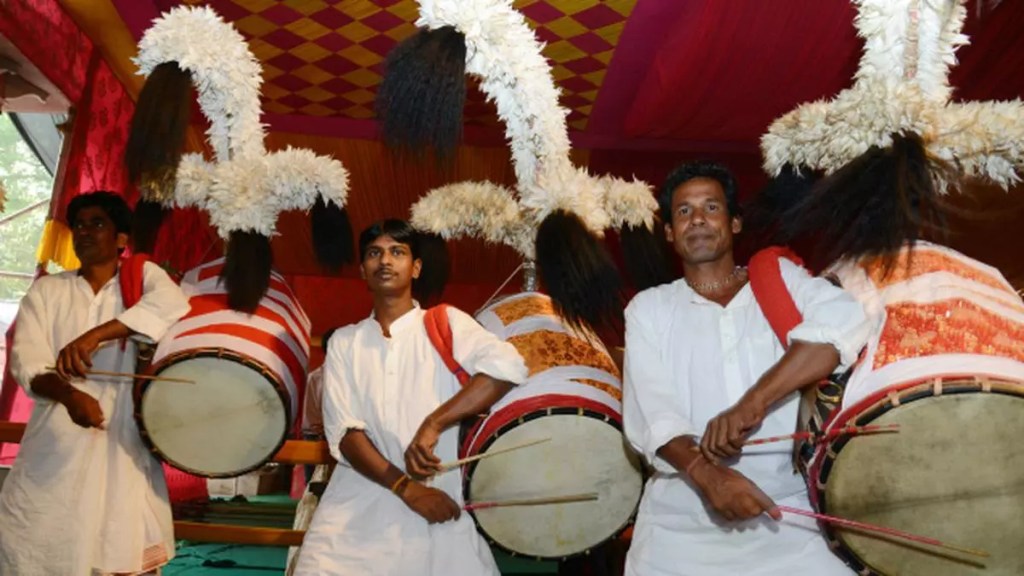
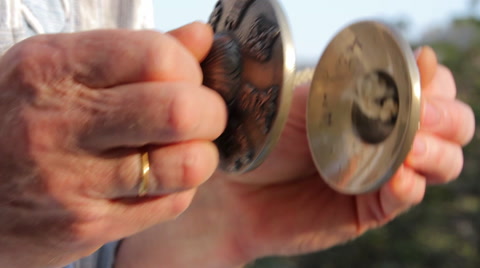

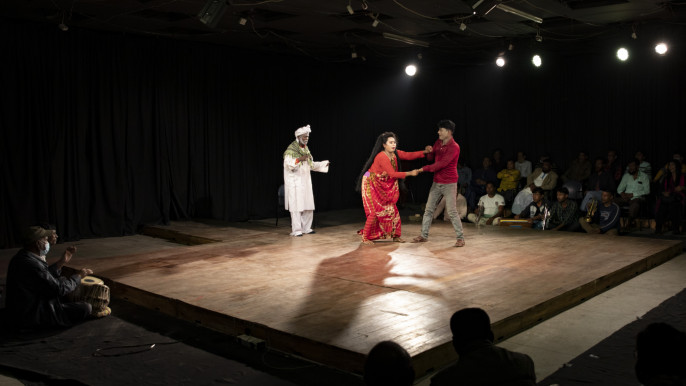
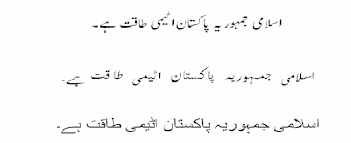
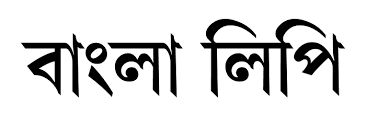
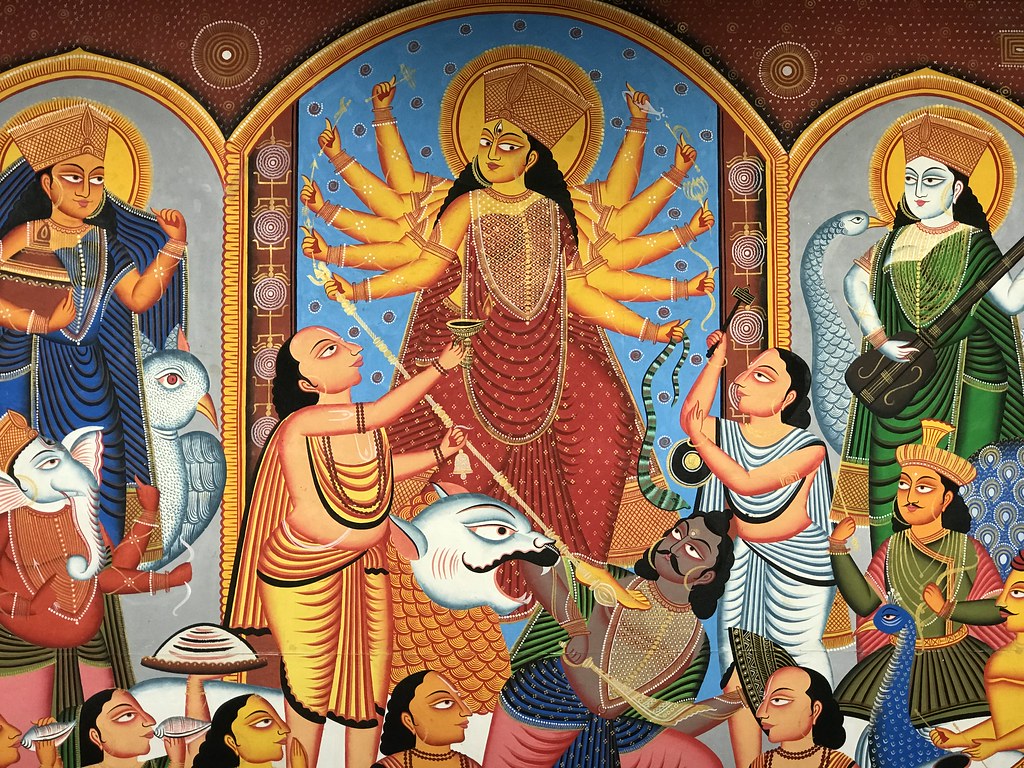
 Borderless