Categories
Conversation

‘Words, still photos, moving images – they are all storytelling’

Ratnottama Sengupta introduces and converses with a photographer who works at the intersection of art and social issues, Vijay S Jodha
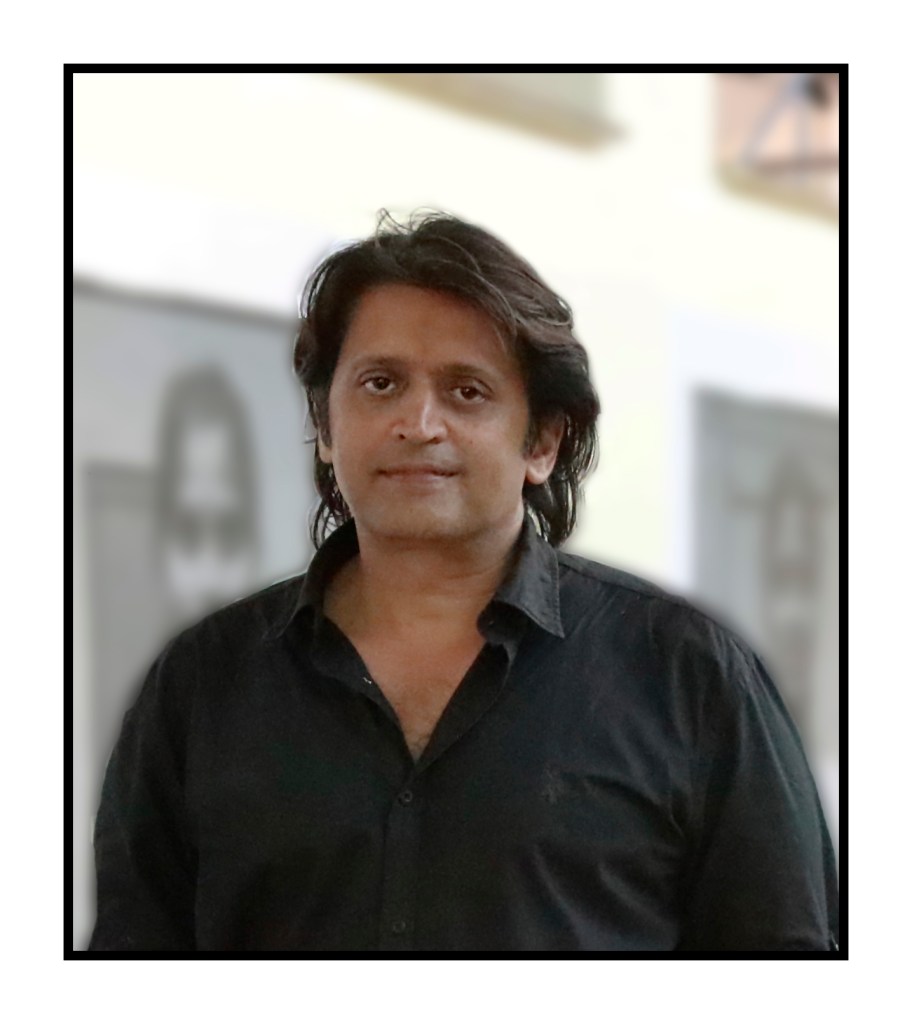
Vijay S Jodha was yet to become one of India’s leading lens-based artists at the intersection of art and social issues. Back then, in the 1990s, he had no inkling that 30 years later he would be the chairperson of UGC-CEC[1] jury for selecting the best educational films made in India. Or that he would be the national selector and trainer in photography for the National Abilympics Association of India.

When I first met him, he was mounting a collaborative exhibition of his work with the elderly, their contribution to society and the care they deserve. Little did I know that the entire bent of this journalist-turned documentary filmmaker-turned photo artist would go on to focus on subjects ranging from mob violence, riot victims, farmers’ suicide, 75 years of Indian constitution to Joys of Christmas and the Bus Art of Tamil Nadu. 
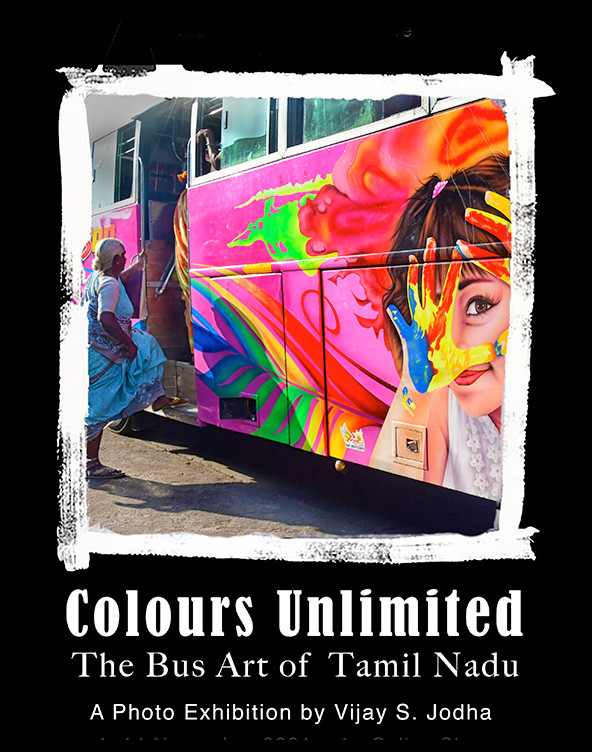
Not surprising that the International Confederation of NGOs has honoured Vijay with the Media Citizen Award for using media to drive social change. And it is only one among hundreds of honours he has received in two dozen countries. These include awards and grants, from Swiss Development Agency to Ford Foundation and Bill & Melinda Gates Foundation. Screening of his films on 75 channels worldwide and in 250 festivals in 60 countries.

These seem tedious details? So, interestingly, two public showings of his work have been vandalised. And a false police case against him took eight years to be thrown out by India’s courts!

Conversation

Vijay how did you come into photography? 

I’m a trained filmmaker – I mastered in film production – and have been making films for two decades. My films have shown on 75 stations including Discovery, CNN, BBC. But training in photography I have none. All my photography is non-fiction work. Actually my films are also non-fiction or reality based work. I just find still photography very relaxing because, unlike films where a director is responsible for so many things, here I’m on my own. But there’s no production deadline. No huge budget is needed. I can address any subject that catches my fancy and pursue it over several years, without any worry. Otherwise it’s the same: photos or films, you’re storytelling around substantial issues that interest you, in a manner that does justice to those issues, and — hopefully — engaging to the viewers.

So who was your inspiration?

In photography it is obviously the greats who defined the grammar of the medium itself such as Robert Frank[2] and Cartier Bresson[3]. They’ve inspired us all in some manner. I’m fortunate that, as a part time journalist in New York decades ago, I got to meet and interview top filmmakers and photographers like Gordon Parks and Richard Avedon. 

I once did a course at New York’s School of Visual Arts where they honoured Mary Ellen Mark and she had come across. As a journalist, I covered Sebastião Salgado’s launch of his workers’ project that put him on the map (of photography). I met Raghubir Singh while doing a project on Ayodhya in India, and again in New York where we put up the same exhibition. He also photographed some of us – myself, Siddharth Varadarajan, the editor-publisher of The Wire who was then a student at Columbia University, and other Indian students — were protesting some human rights issue.

I’m also fortunate to have our finest photo-journalists and lens-based artists as friends. I can take across my work to get a feedback or pick their brains. This beats the best photo schools in the world. In fact years ago I did a book which had photos from all of them! This was the biggest photo project on the Tiranga[4] as listed in the Limca Book of Records. They have all done many books on their own but this is the only one where all these masters appear in a single volume, their works united thematically. Apart from Raghu Rai, Ram Rahman, Prashant Panjiar,  Dayanita Singh,  T Narayan, and the late TS Satyan, I’d also interviewed people across India, from the then Prime Minister Vajpayee to those selling flags at traffic lights for a few meagre rupees.

You did not go to any international school to train in the art or the technology aspect. So what prompted your PhD?

Three decades back when I decided to go into mass communication as a career there were few computers, no internet, no private TV channels, or mobile phones. Sorry if that makes me seem Jurassic but it was a world with very few media opportunities. Post college, I had got  admissions into a trainee programme with a newspaper as well as in the MA programme in International Relations at India’s premier Jawaharlal Nehru University. My father felt that a masters and exposure at JNU would be a better investment for journalism – probably the single best advice I’ve got in my entire career — and I followed that. 

Then for some time I worked in print media: I freelanced for newspapers, edited and published a journal for a business house, scripted for a film and worked on a book with one of my journalism heroes – late Kuldip Nayar. But in the pre-internet era newspaper articles had a very short life, so I felt the need to produce something that would last longer such as film. So I decided to get a degree in Film. It also encompassed all my interests, from writing to art to music, travel and photography.

You’ve not been a photo-journalist working for any journal or newspaper. Yet you felt inclined to do projects on environment, elder care, survivors of riots and mob violence, farmer suicide, art that travels. Was it inevitable, given your father’s background?

Actually I’ve done a bit of photo journalism too. During my film school days at NYU I was a writer-photographer for their student-run newspaper, Washington Square News. I’ve also been a stringer for mainstream dailies including The Economic Times where I shot images parallel to my writing. I did stills for Mira Nair’s Monsoon Wedding and of course stills for my own film projects. So I’ve a lot of published images in papers worldwide though my main gig has been films. 

Frankly I don’t see much difference between these mediums. Be it words, stills or moving images; an academic paper, photo books, or films, short or long – all this is story telling. I’m a story teller.

And subjects? I’ve filmed every possible subject except wildlife: I just don’t have the patience for that. Otherwise everything, from artist biopics — on Paritosh Sen and Prokash Karmakar, whose inaugural screening you also attended in Calcutta years ago — to films on environment. My The Weeping Apple Tree (2005) was among the first ones on climate change in India. It won the UK Environment Film Fellowship Award 2005 and had multiple screenings on Discovery, with an introduction by Sir Mark Tully.

At that time, few knew about climate change. So Delhi govt organised a special screening for their MLAs and officers of water, electricity and sanitation departments. It was screened at UNEP headquarters in Nairobi and in various festivals. UNIDO and other grassroots level NGOs used it to create awareness. Some years back an IFS {Indian Forest Service} officer told me that Himachal government uses it to train their forest officers. 

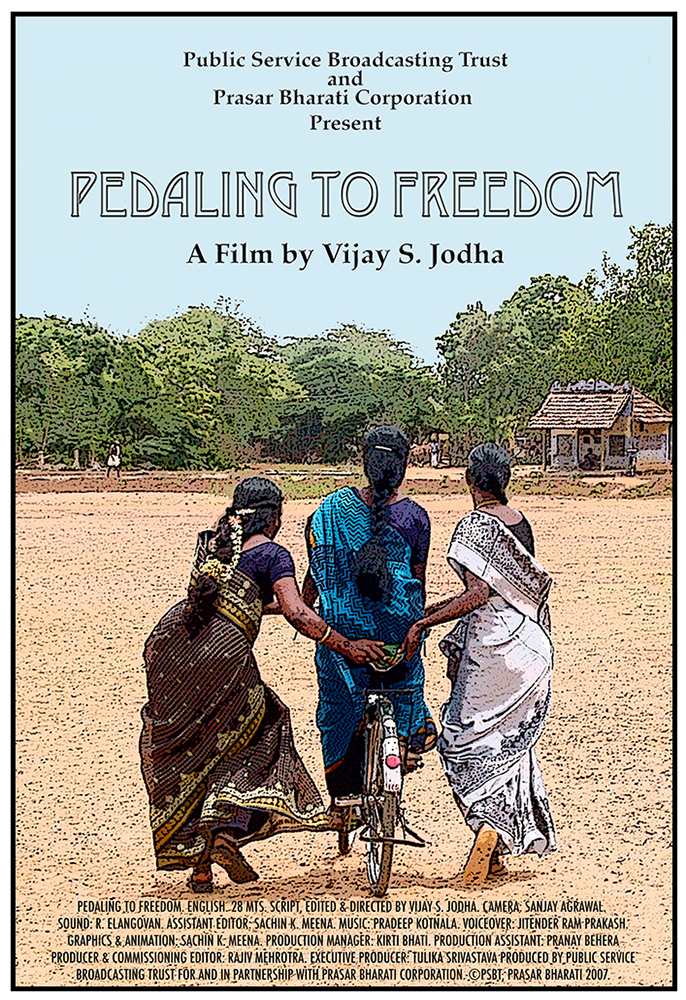
My film on gender, Pedalling to Freedom (2007) revisited an old initiative in one of the poorest parts of the world. It traced the life-changing impact of teaching 100,000 women to ride the bicycle. That film is in the US Library of Congress. It was also chosen for archiving at OSA Budapest, world’s premier repository of materials dealing with human rights. 

Then there are films that get food on the table. Training films. Corporate films. I once did a ‘funeral film’ on a well-known personality whose passing received a lot of press coverage in India but the NRI son could not come for the funeral.

What motivates you Vijay — money, international honour, or the possibility of social change?

Well, all this is livelihood so the money part is important. But doing work that gets recognised far and wide, that is substantial, to hold good for a long time – that’s a huge motivator. 

I have a slightly spiritual take towards this. I feel that regardless of our profession we are all bound by a dharmic or sacred duty. A teacher’s duty is to teach and a doctor’s is to heal. For those in the business of storytelling — including photographers — the sacred duty is to document, bear witness, push things forward. And believe you me, this has little connect with means or accessibility. 

To give you an extreme example: After the Nazis lost the war and Berlin fell, soldiers from the victorious allies army raped virtually every woman in Berlin. Few rapists were taken to task and  to top it, despite all the extensive coverage of the allies victory by forgotten photographers as well as superstars like Margaret Bourke-White  (known to us through her famous Gandhiji with charkha portrait) or Robert Capa (regarded as the greatest war photographer of all time), there was no coverage of this mass outrage in Berlin by anyone be it in photo essays in Life Magazine, or World War photo books. It appears in no Hollywood film or TV series.  

Likewise, fifty years ago, when India came under the draconian Emergency, our courts also endorsed the robbing of our Constitutional rights. Nobody documented, then or since, the forced sterilisation of 6,000,000 who were stripped of their reproductive rights. We, as photographers and filmmakers, failed on this front.

The First Witnesses is my project around farmer suicides. It is not an unheard issue nor something hard to get access. But how many have found it worth their while to document the issue? How many are documenting a disappearing art form or livelihood? Or our urban heritage being torn down? Our movie theatres once represented cinema as an inexpensive and readily accessible mass culture. Now they are being torn down even in smaller towns. Each had a unique character. Is anyone documenting that?

I documented Durga Puja in Kolkata 20 years ago when I was working with painters there. Durga astride a tiger, slaying the demonic Mahisasur emerging out of a buffalo: these elements get interpreted in hundreds of ways across the city each year. Each pandal has a different aesthetic interpretation, inside and outside. The religious aspect is no less important. But  these are also like site-specific installation art works shaped by the imagination of so many talented people but designed for impermanence. How many books of photos exist around this work now recognised by UNESCO as Intangible Cultural Heritage of Humanity?

How successful have you been in achieving this?

The merit of my work is for others to judge. I’m happy that, though India doesn’t have many foundations or support for non-commercial oriented art, I’ve been able to do at least a few things that are genuinely pathbreaking, substantial and have gone around the world. To be invited to UNESCO headquarters in Paris to screen a film and address delegates from 193 countries, or be honoured by our President for India’s best ever performed at Abilympics — these are certainly my career highlights.
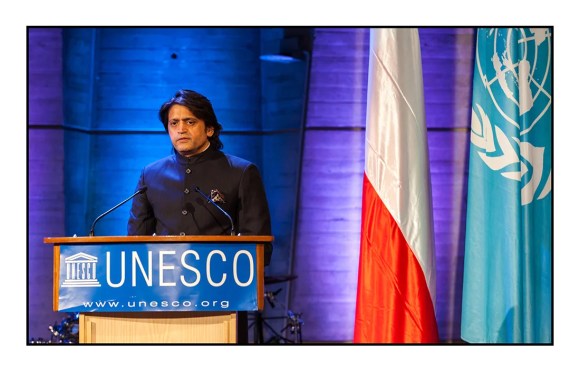
Vijay S Jodha at UNESCO introducing his film. Photo provided by Vijay S Jodha

My work has received over a hundred honours across 24 countries, but what truly motivates me is when people I look up to, my heroes, appreciate what I do. That kind of recognition carries a different weight. For instance, Magsaysay awardee P Sainath, whose ground-breaking reportage has long inspired me, saw my farmers project when it was exhibited alongside his photographic work at the Chennai Photo Biennale 2019. We hadn’t met before, so when he praised my effort, it felt like receiving a medal.

Another moment that has stayed with me was post my time at NYU. My professor, George Stoney, referred to as the father of public access television and mentioned in history books on documentary cinema, mentored Oscar-winning directors like Oliver Stone, Martin Scorsese, Spike Lee, and Ang Lee. When he watched The Weeping Apple Tree, he said, “Vijay, this is better than Al Gore’s An Inconvenient Truth. That was a glorified PowerPoint by comparison.” That one comment meant more to me than most awards ever could.

As a photo artist what is the biggest moment of joy for you — technical hurray or the joy of the subjects?

As I just said, recognition and praise of my heroes gives the maximum joy. There are other honours. Two photo projects listed in Limca Book of Records for being the biggest and path breaking. The first was on ageing that I did over eight years with my brother Samar Jodha – he did the images while I did the concept research, writing and interviews. The other was the aforementioned Tiranga. My film Poop on Poverty (2012) won a Peabody award, the oldest honour for documentary films, and more international honours than any non-fiction film produced out of India. 

After landmark exhibitions in Hong Kong and New York I donated two complete sets of The First Witnesses, my farming crisis project, to two farmer unions including our oldest and biggest All India Kisan Sabha (AIKS). They are using it for awareness raising across villages. That’s a real high as a photographer.

Then there’s high coming from those we pass down our expertise to. Among those I’ve taught or mentored is a highly talented though physically challenged youngster from Vijayawada with missing digits and motoring issues. His family runs a Kirana shop. When he started school, they sent him back saying he cannot even hold a pencil. He won a bronze medal in photography for India at the last Abilympics in France. Another student has himself become a photography teacher in a school for hearing impaired. This is the kind of stuff that gets me very excited. 

Thirty years ago as a volunteer writer and researcher I helped Sanskriti Foundation set up India’s first international artist retreat. That novel venture raised crores in grants and set up three museums. Today it is being scaled back as its founder O P Jain is in his 90s. But that idea caught on and you have scores of artist retreats across India. 

How has digital technology influenced photography as an art form? Has it done more harm? Or widened its spread?

Digital has been a mixed experience. It democratised the process of production and dissemination — be it still images or movies. This is a fantastic thing. But it killed a lot of the processes and livelihoods such as the printing labs, film production and processing facilities. It has also killed an art form like print making. It’s a specialised skill in itself, so a lot of artistry, understanding, appreciation and sustenance of it has got compromised.

The emergence of deep fake images and piracy of work is bad news too. But it has allowed more people to become story tellers. They now bear witness, as filmmakers and photographers, of issues and events that was earlier impossible.

I can cite examples from my work. I’m National Selector and Trainer in photography for National Abilympics Association of India (NAAI) and my students are in different parts of India. Two are hearing impaired, two others have motoring issues and physical challenges. Thanks to digital tools, we’re running long distance classes every week. NAAI provides me sign language interpreter but I can send and receive digital files, use zoom to conduct classes, use google translate to send instructions in Tamil, English and Marathi to my students. Now one student, despite hearing challenge, is running a photo studio. The student who has issues with his leg also works as wedding photographer. Workshops with institutions and festivals, within and outside India, are now easy and inexpensive thanks to these digital tools and communication modes.

Has selfies on mobile camera shortened the life of portraiture?

It has certainly democratised the process while the average person’s patience to study or appreciate any art work — portrait or landscape photo — is shrinking by the minute. Of course, good portraiture requires some skill to make as well as appreciate – that cultural literacy is a challenge everywhere, not just in photo medium. As a seasoned art critic you would have noticed that in the world of painting and sculpture too. Sadly we don’t have that education in our schools. 

You have continued with still images even after doing many documentaries. What is the joy in either case?

I’m doing still photography and movies parallel to each other. Last month I had a book on public policy, as I mentioned. Also launched last month – by our defence minister –was my film on our Armed Forces Medical Corps – it’s one of the oldest divisions in the world, going back 260 years. I’m working on a project on the Indian Constitution and a biopic on Amitabh Sen Gupta, the artist whose retrospective exhibition this year is organised by Artworld Chennai. My still photography project on the farmers crisis is also going on for the past 7-8 years.

All projects are joyous and offer their own challenges. It’s like bringing children into the world. You do the best you can, hope they’ll do well and go far, but you don’t know which one will. Regardless of their line of work you feel happy with each of them and what they achieve. 

What is the future of Arriflex, Mitchell, Kodak Brownie? And that of Yashica, Nikon, Canon, Leica, Olympus…?

Some old camera brands like Konica and Minolta have merged, or evolved into digital Avatars like Arriflex. Others, like Kodak, have faded into history. Interestingly, a small Indian company has licensed their name to market TVs under Kodak brand name now. For those of us from the analogue generation, it’s a bittersweet feeling. When a beloved brand disappears, it feels like saying goodbye to an old friend. But such is the nature of change.

My friend Aditya Arya, one of India’s eminent photographers and a passionate camera collector, has created a remarkable space to preserve this legacy. He established the Museo Camera in Gurgaon, a non-profit centre promoting photographic art, which has become not only a camera museum but also a leading art and culture hub in the Delhi national capital region. If you’re an old time photographer passing through Delhi, it’s a wonderful place to revisit these “old friends.”

(Website of Museo Camera https://www.museocamera.org)
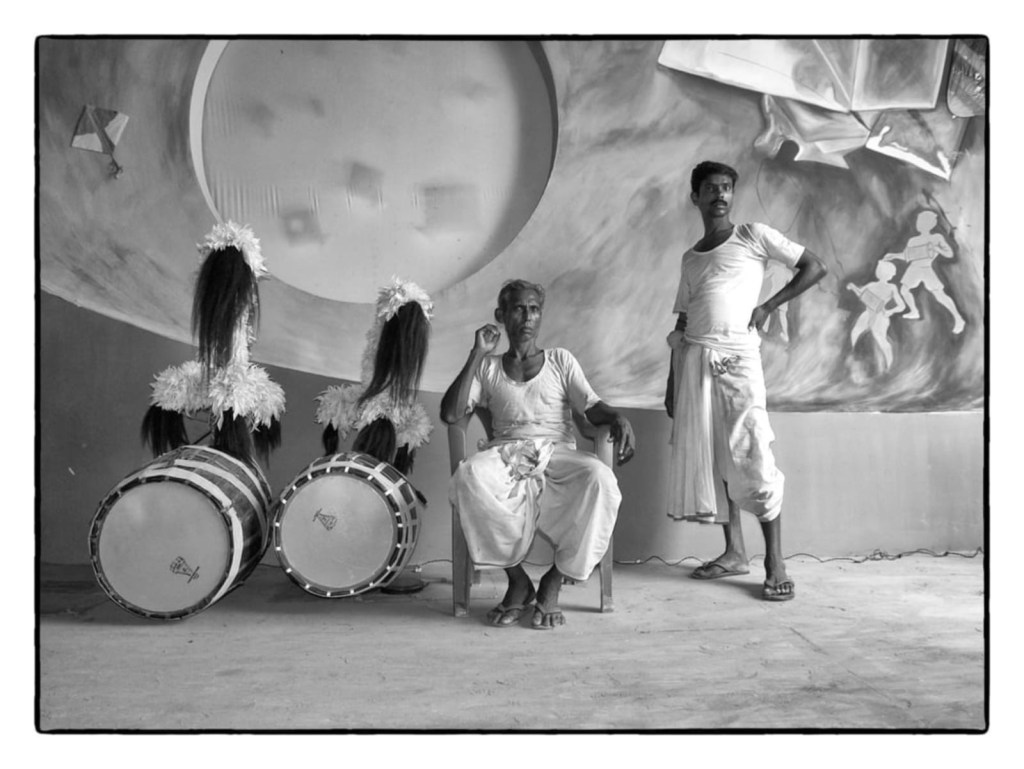
[1]  University Grants Commission-Consortium for Educational Communication

[2] Robert Frank (1924-2019) was a photographer and documentary filmmaker. 

[3] Henri Cartier-Bresson (1908-2004) was a humanist photographer, a master of candid photography, and an early user of 35mm film. One of the founding members of Magnum Photos in 1947, he pioneered the genre of street photography, and viewed photography as capturing a decisive moment.

[4] Three colours, published in 2005

Ratnottama Sengupta, formerly Arts Editor of  The Times of India, teaches mass communication and film appreciation, curates film festivals and art exhibitions, and translates and writes books. She has been a member of CBFC, served on the National Film Awards jury and has herself won a National Award. 

.

PLEASE NOTE: ARTICLES CAN ONLY BE REPRODUCED IN OTHER SITES WITH DUE ACKNOWLEDGEMENT TO BORDERLESS JOURNAL

Click here to access the Borderless anthology, Monalisa No Longer Smiles

Click here to access Monalisa No Longer Smiles on Amazon International
Categories
Essay

When a New Year Dawns…

Ratnottama Sengupta writes she does not junk all the old Calendars and Diaries…

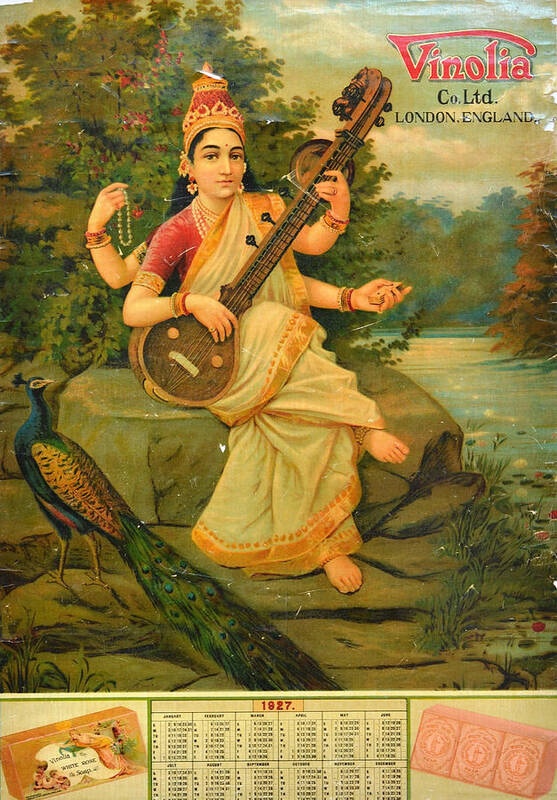
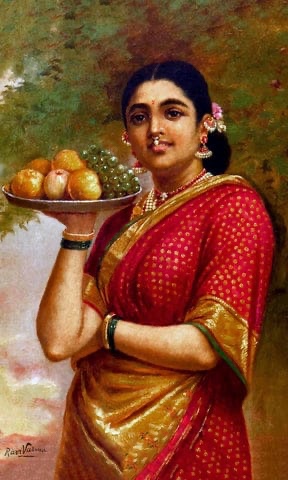
The dawn of every New Year brings with it the need for a new calendar and a couple of new diaries. So, wholesale markets in every major city on the map flourishes with these items in every shape and size. In the years of my growing up, a government organisation calendar, with only the dates and simply no illustration, was routine. Forget 12 images for as many months, even half that number was a rarity. This, even though in the previous decades Raja Ravi Varma’s [1] evocation of Saraswati, Shakuntala, Nala Damayanti or Lady with a Lemon, were coveted adornment for the walls. In certain instances, these images were individually dressed up with sequins and pearls too! Oleographs and mechanical reproductions had, by this time, won past hand paintings that once covered the mud-plastered walls with stories of Ram-Sita Vivaha[2], among others.

Since the turn of this century, which saw dealings in art skyrocket, galleries have made it a custom to bring out calendars on either a theme that’s tackled by a number of artists, or on works by one chosen artist. Simultaneously artists themselves became proactive in bringing out calendars sporting images of their own work. These are not driven so much with the need to publicise their creativity as to lend a personal touch to the annual give and take of ‘Season’s Greetings’.

I particularly cherish the textile scrolls published annually as calendar by my friend Subrata Bhowmik, one of India’s leading graphic designers. This ‘Design Guru’ has eighteen awards from the President for accomplishments in textiles, publications, advertisement, photography and craft communication. He was motivated to do these calendars in order to share what he learnt in Switzerland as also from his experience in the Calico Museum of Ahmedabad. And they spread a deep understanding of the contextual framework of design in the real world. I still cherish one such tapestry designed with Ajanta style beauties, though the year rang out seven years ago.

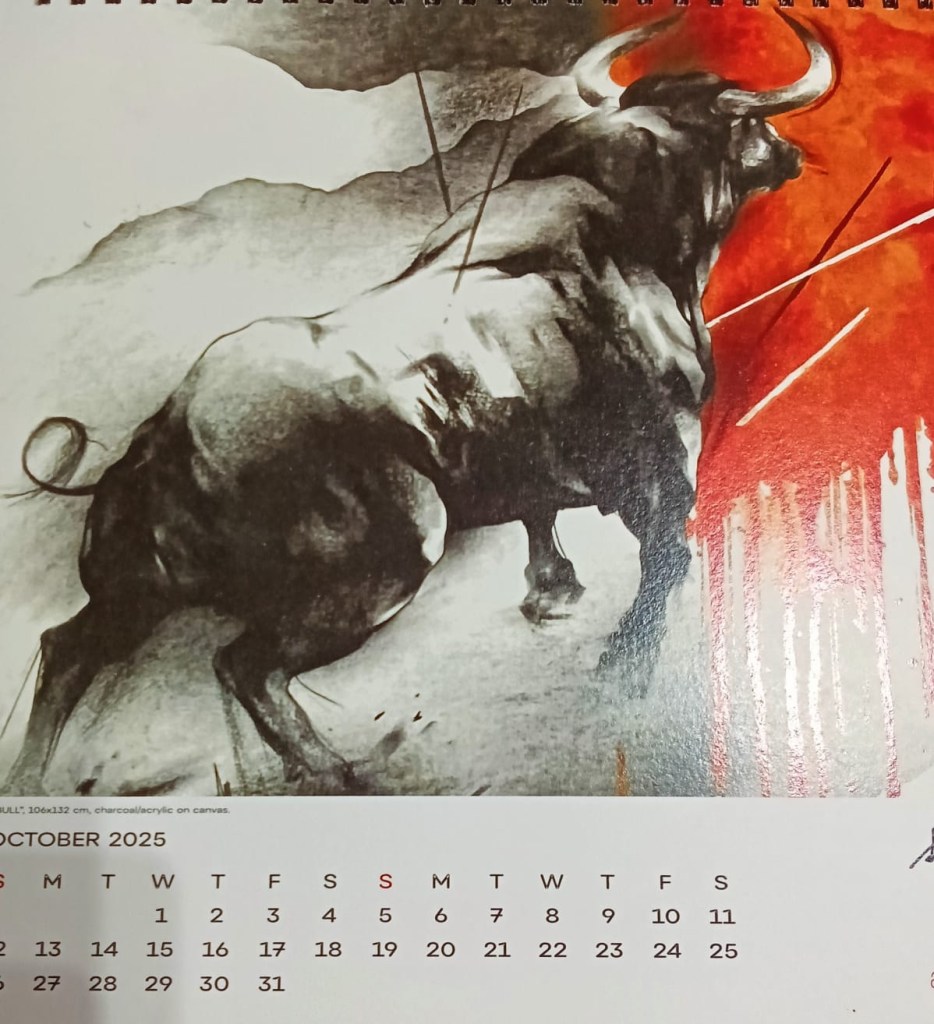
My friend Jayasree Burman’s desk calendar with detailed images of Laxmi Saraswati or Durga have, likewise, remained in my collection years past their expiry dates. Sohini Dhar used to regularly commemorate the memory of husband Ramlal Dhar with images of his landscape that shared pages with her own Bara Maasa, miniature style narration of the seasons. Ajay De’s limited-edition calendar published by Art and Soul gallery this January is in line with this custom.

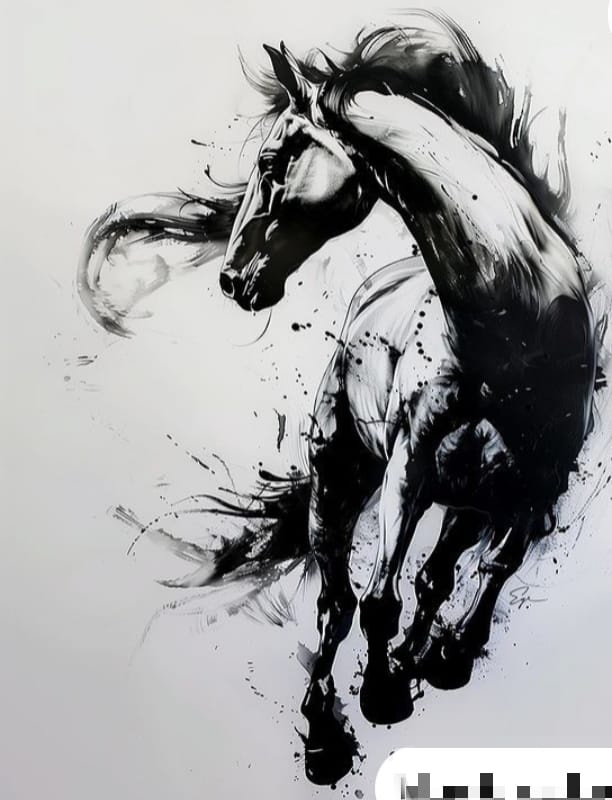
The passion in Ajay’s charcoal paintings of bulls and the stamina of his stallions bring to mind the energy of Assam’s wild boars that Shyam Kanu Borthakur familiarised; the vitality of the horses Sunil Das studied in Kolkata’s stables; the vigour of Husain’s much auctioned equines; even the animation of Paris-based Shahabuddin’s abstractions. However, the amazing vibrancy of Ajay’s treatment of a black and white palette acquires a touch of magic, with a red dot here or a wash of yellow there. And when he places the charging bull against a wall dripping the salsa red of blood, I recall the vivacity of a ‘Bull Fight’ that I had a chance to witness in Southern France a quarter century ago – before its forceful evocation in Pedro Almodovar’s Talk To Her (2002).

*

Prabal Chand Boral, as his name suggests, boasts kinship with Raichand Boral, a pioneer of Indian film music in 1940s. Not surprising that Prabal oftentimes breaks into songs on the terrace of his Kolkata home. Every Durga Puja finds him dancing with earthen dhunuchi[3]. And his diurnal routine finds him painting. Sketching. Outlining. Portraits. Flowers. Supernatural creatures. Illusive figures. Capricious forms. He creates videos to involve attentive viewers. And every year, out of his own pocket he brings out a wall calendar for private collection. “An artist craves to express himself in so many ways,” he told me last year when his calendar had sported six portraits in his signature style.

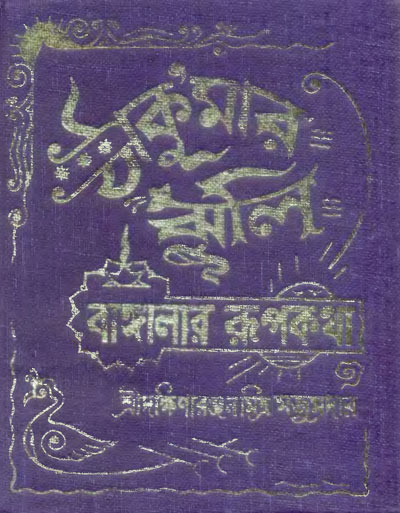
This year Prabal pays an ode to Thakurmar Jhuli (Grandma’s Satchel). Written in 1907 – year 1314 of Bengali calendar — by Dakshina Ranjan Mitra Majumdar this landmark in Bengal’s pre-Independence literature compiles stories that have been orally handed down from one generation to another in the villages and backwaters of undivided Bengal. This was in the manner of the Brothers Grimm who wrote and modified Germanic and Scandinavian tales that have been translated, like Hans Christian Andersen, into every language spoken in the world. In the process they embedded in the collective consciousness of the West lessons of virtue and resilience in the face of adversity.

 Much like them Dakshina Ranjan had gone around mechanically recording the tales of Lalkamal Neelkamal, Buddhu Bhutum, Dalim Kumar and Byangoma Byangomi. When first published, Nobel Laureate Rabindranath had written the foreword because he felt that publication of these legends was a need of the hour in order to counter the sense that only the European rulers had fairies, elves and ogres, imaginary beings with magical powers, to entertain and educate their young. Educate? Yes, because the dark and scary beings, even when they did not metamorphose like the Frog Prince, were metaphors for a state where the victim, though less powerful, always overcame the tormentor. Not only children and young adults but grown-ups too liked the stories that broke down the boundaries of time and culture. They encouraged and even emboldened the readers to look for wonder in their own lives.

Prabal had long cherished the desire to reinterpret the illustrations by Dakshina Ranjan himself. He has brought this to fruition with a touch of his own imagination. The result might not be a fairy tale – read, decorative – but none can deny the originality of this calendar.

*

I have personally felt happy to write for a diary – rather, a notebook – that has been published by Nostalgia Colours, a Kolkata based gallery that holds an annual exhibition in other metros of India. A number of the 17 exhibited artists are no longer with us in existential terms. K G Subrmanian, Paritosh Sen, Suhas Roy, Sunil Das, Robin Mondal, Prakash Karmakar — they do not eat-drink-chat with us across the dining table as they once did. Or as Anjolie Ela Menon, Jogen Chowdhury, Ganesh Haloi, Subrata Gangopadhyay and Prabhakar Kolte still do. But their watercolours and gouaches, contes and temperas continue to bring us as much pleasure as when these majors of art signed off their canvases. Only our viewing now is tinged with a certain sadness at the thought that they will no longer add new dimensions to Indian contemporary art scene with their thoughts, their arguments and their palette.

This precisely is what heightens the joy of an undated notebook richly decorated with aesthetic reproductions of not six or twelve but 52 works of art.

A thing of beauty, be it a calendar, a diary or a notebook, is joy forever. Raja Ravi Varma (1848-1906) can vouch for that.

.

[1] Raja Ravi Varma, an artist from the nineteenth century who mingled Indian and European styles

[2] Marriage

[3] Bengali incense burner

.

Ratnottama Sengupta, formerly Arts Editor of  The Times of India, teaches mass communication and film appreciation, curates film festivals and art exhibitions, and translates and write books. She has been a member of CBFC, served on the National Film Awards jury and has herself won a National Award. 

.

PLEASE NOTE: ARTICLES CAN ONLY BE REPRODUCED IN OTHER SITES WITH DUE ACKNOWLEDGEMENT TO BORDERLESS JOURNAL

Click here to access the Borderless anthology, Monalisa No Longer Smiles

Click here to access Monalisa No Longer Smiles on Amazon International
Categories
Essay

A Short, Winding, and Legendary Dhaka Road

By Fakrul Alam

From Public Domain

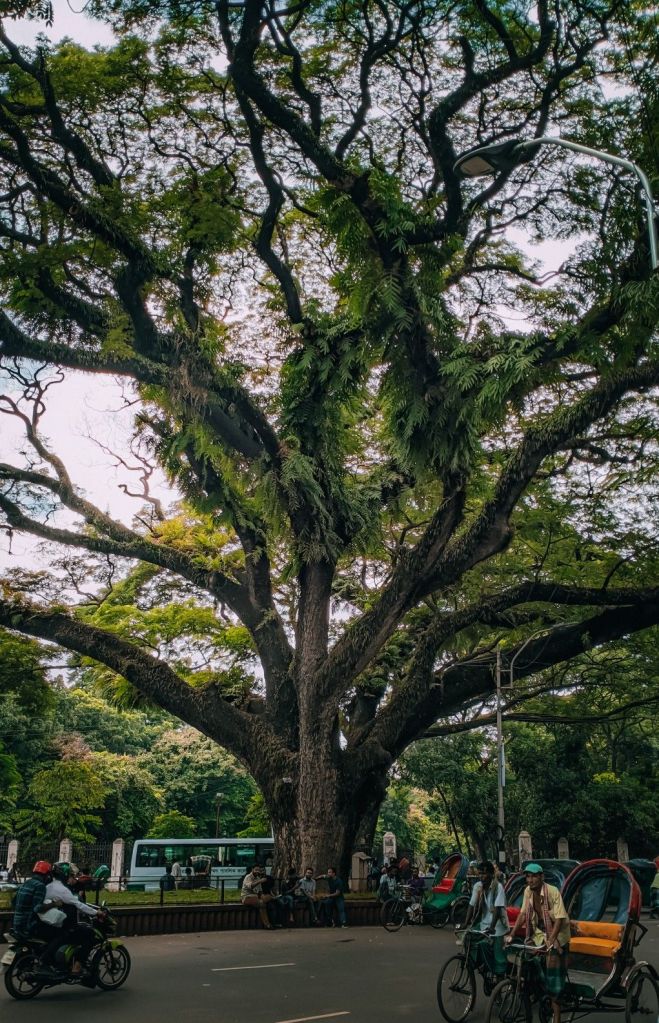
Fuller Road, the short and winding road in the middle of the University of Dhaka campus, is quite legendary, not only as far as the history of that institution is concerned, but also in the annals of Bangladesh. It must also be one of the most beautiful of Dhaka city’s roads, having till now mostly escaped the degradations other old roads of the city have been subjected to due to rampant urbanisation. It is steeped in history, but still looks as if it was built not that long ago. Undoubtedly, it has real character and a distinctive place in the city’s life.

Bampfylde Fuller[1] was the first Lieutenant Governor of the province of East Bengal and Assam but he held that position for less than a year. Fuller Road must have been named to acknowledge his indirect role in the creation of Dhaka’s university. A controversial administrator and a very opinionated man, he had quit his position in a huff after less than a year at his job. The Partition of Bengal had been revoked in 1912, and all Fuller left behind then in his brief stint seemingly was the beautiful Old High Court Building of the city (whose construction he had initiated) and the splendid, sprawling rain trees of the university he had apparently imported from Madagascar. Nevertheless, the naming of the road indicates that he was part of the historical current that would lead not only to the building of the University of Dhaka in 1921, but also to the Partition of India in 1947, and the birth of Bangladesh in 1971. Fuller Road is thus replete with history.

Enter it from Azimpur Road and you will see it flanked on one side by Salimullah Muslim (or SM) Hall, and on the other by Jagannath Hall. The former, of course, is named to honour Nawab Salimullah, one of the university’s founders, and someone who had donated a lot of land to the university. Built in 1930-1931, SM Hall is a splendid building, incorporating features not merely of Mughal architecture and gardens, but also of design elements of the colleges and halls that echo another venerable university, Oxford (one reason why the University of Dhaka was once called the “Oxford of the East”). Jagannath Hall comes with an overload of history as well. It, too, was originally modelled after the halls of the University of Oxford and was named after a zamindar of Savar who had contributed to the founding of Jagannath College, which had an organic connection with the university for a long time.

Fuller Road, in fact, is also steeped in the history of Bangladesh. If you enter it from its Azimpur Road entrance, you will see the Swadhinata Sangram, a group of sculptural busts by Shamim Sikder that commemorates the legendary names associated with the university and the birth of Bangladesh. If you care to enter the university staff quarters from either the left or right of the road, and if you then ask the guards to show you around, you will find the graves of intellectuals (or plaques honouring them). These were men martyred in 1971 due to the single-minded determination of the Pakistani army and its Bengali collaborators to eliminate dissident intellectuals who had worked for the birth of Bangladesh, thereby crippling the country at the moment of its birth.

If you exit the road on Nilkhet road, you will find a solemnly built commemorative area in another island, containing plaques listing university teachers, staff members, and students martyred in 1971. The sculptures and the plaques are testaments not only to the sheer bloody-mindedness of the Pakistani forces of yore but also to the major contribution made by the university’s people to Bangladesh’s independence. I grew up listening to snatches of the history of the University of Dhaka and Fuller Road that are relevant here.

One of my uncles, for instance, is still fond of retelling an incident when he escaped from the Pakistani police’s bloody assault on demonstrators protesting on February 21, 1952, against the imposition of Urdu as the sole national language of the nascent state by (West) Pakistani administrators and their cohorts. He had taken refuge at that time in the Fuller Road flat of an European Jewish academic, who was then a faculty member. A few of my teachers have either talked about or written about the movements that continued from that memorable incident till December 16, 1971, describing their involvement with the various other movements that led to the emergence of Bangladesh. They highlight, in the process, noteworthy moments in the road’s history and the roles its denizens played in our country’s pre-liberation stages, as well as the memorable transitional historical moments they had either witnessed or were part of.

As I move in from the Swadhinata Sangram island on the Azimpur Road entry point of Fuller Road nowadays, I can see only a few remnants of the natural beauty the road once boasted. Gone is the basketball court placed in a picturesque setting that SM Hall once possessed, or the lush green grass tennis court of the Hall that my uncle reminisced about. He played there before my time. For a long time, there were many statuesque and lovely trees on the SM Hall side of the road. However, the distinctive architectural features of the SM hall building still strikes me as very impressive.

On the other side, however, the first clear signs of the uglification of Fuller Road are visible in the drab features of the newly built extension of the Jagannath Hall complex. In addition to these two halls, Fuller Road is flanked on one side by the British Council and university staff quarters, and on the other by Udayan Bidyalaya (aka Udayan School/College), some faculty and staff quarters, the residences of one of the pro-vice chancellors and the treasurer, and the vice chancellor’s house. The two buildings of the pro-vice chancellor and the treasurer are pretty nondescript, as are the Udayan buildings, but the British Council setup is quite notable. I have written about the British Council’s transformation from an open access center for intellectual and cultural pursuits and my own memories of stimulating as well as adda[2]-filled days in anguished as well as indignant remembrance elsewhere, but let me just reiterate what I say in that piece briefly here: This new British Council is, indeed, sleekly designed and has state-of-the art security, but it is no longer the vibrant centre of intellectual exchange it once was, and is now mostly a place visited by those who can afford its wares of British education.

The Vice-chancellor’s residence, however, is undoubtedly still striking. If you have had the privilege of going inside, you must have been impressed by the building as well as the grounds, containing krishnachuras and jarul trees, which when flowering, make Fuller Road look vibrant and colourful—almost a garden in Dhaka city. Indeed, the rain trees, the krishnachuras and jaruls in bloom, one or two shirish and a solitary sonalu trees and (still) numerous mango trees play their part in making Fuller Road a distinctive floral phenomenon of the cityscape. Fuller Road is indeed as beautiful as you could expect any road to be in a bustling, bursting-at-its seam, and unsparingly chaotic city like Dhaka.

It is a road that also has many moods and that you can see in many lights—literally. I lived in Fuller Road for over two decades and frequented it for two more, and thus have had the privilege of viewing the road at different times of the day and on diverse occasions for at least four decades. When I now reflect on what I saw, I am struck by the immense variety of the experiences the road affords to those who live in it and even to passersby.

It was during my prolonged stay in Fuller Road that I got frequent glimpses of the wondrous place it once must have been. Even now, a nature-lover can take delight in its birds, for although the cacophonic crows still reign supreme amongst the bird population of the locality, throughout the day, and especially in the evening, you will see swiftly flying flocks of pigeons, tribes of parrots, and incomparably beautiful yellow-breasted holud pakhi[3]couples, in addition to the sad-looking, ubiquitous shaliks[4] and evening’s surrealistic bats.

When I first started living in Fuller Road, I would occasionally see snakes slithering by on monsoonal days; mongooses darting away at the sight of walkers is a not uncommon experience even now. Wild dogs roam in parts of Fuller Road at nights and early mornings. The foxes have disappeared, and I have seen a stray monkey only once or twice, but there is still enough flora and fauna around to make you feel an intimate connection with nature in this neighbourhood of the city. But of course, in addition to its nonhuman residents as well as its human ones, Fuller Road is now frequented mostly by people who find its free and open spaces appealing for different reasons at different times of the day.

Early in the morning or late in the evening, for instance, you will find men and women chatting away as they do their constitutionals; during the day students saunter across the road while vehicles fill the free and plentiful parking spaces; come evening lovers sit down discreetly in its dark spots, trying to be as close as possible and as far away as they can from prying eyes; with nightfall nouveau riche youths park faux sports and/or sleekly painted cars, trying to impress the girls who stroll across the road. Nowadays you will see with irritating frequency in evenings the parked motorcycles of busy-seeming student leaders. At night, Fuller Road can have a surrealistic feel to it—lit up but deserted, desolate as in some dreamscape, and as in a dreamscape, hauntingly familiar. 

What surely makes Fuller Road truly distinctive, though, are the festival days that it hosts throughout the year, and the processions and parades that cross it throughout the year for one reason or the other. If you list them by the English calendar, you can begin with the new year when celebrations continue from the final hours of the dying year and end till the first nightfall of the new one. February is a truly distinctive month in the road—first Bashanta Utshob[5]and then Valentine’s Day see it fill up with young men and women in bright, warm colours and obviously romantic, flirtatious moods. Even solemn Ekushey[6]February, when night-long Fuller Road residents hear the doleful notes of the Ekushey song commemorating our language martyrs, and when from dawn to afternoon the road is closed to all vehicular traffic, switches to a festive mood by late afternoon, as those crisscrossing it seem bent on leaving the sad notes behind to celebrate all things Bengali. But the most exuberant display you can see in and around Fuller Road is during Pohela Boishakh[7], when the road turns into a conduit for festival-loving people flowing from fun-filled event to event. Eid days and Durga Pujas, and Saraswati pujas too witness suitably dressed young people walking across the road in obviously celebratory moods, lighting up themselves and the people around them, as they either stroll by or stand in pairs or groups here and there in the curving road’s embrace.

And the processions and parades? Suffice it to say that they are motivated not only by politics but this or that reason or cause. In the three Fuller Road flats I lived in for twenty or so years, I felt the kind of contentment and ease that I did not experience in the many neighbourhoods of Dhaka I had lived in before, or the Dhanmondi flat I live in now. Mango-filled trees exuding mango blossom scents, kamini flowers with overpowering fragrances, wide open spaces where children and boys play to their hearts’ content and neighbours greet each other familiarly throughout the day made my life on Fuller Road incomparably pleasing.

Towards the end of my Dhaka University career, I moved to a flat on the ninth floor of the newly constructed faculty apartment complex. There I saw what I had never seen before—monsoonal cloud formations, magnificent sunsets (I would not get up in time for sunrises!), the moon in its full glory, and star-studded nights. Heaven seemed to come closer and closer to me then. I truly seemed to have ascended to celestial heights! But paradise has to be lost sooner or later and can only be regained in this world by willing the mind to vision it from exilic places every now and then. But to have had some close to it moments in this life through Fuller Road is truly something to be thankful for!

From Public Domain

[1] Fuller (1854-1935) held the position from 16 October 1905 until he resigned on 20 August 1906 after which he relinquished the position to Lord Minto (1845-1914).

[2] Tete-a tete

[3] Orioles

[4] Mynas

[5] Spring Festival

[6] Twenty-first February has been declared the mother tongue day by UNESCO. One of the reasons Bangladesh was formed was its insistence on Bengali being its mother tongue while Pakistan tried to impose Urdu as the national language.

[7] Pohela Boishakh (first day of the Bengali month of Boishakh) falls on 14th April in Bangladesh and  is celebrated as the start of the Bengali New Year with a holiday and fanfare.

(First Published in Daily Star on July 7, 2018)

Fakrul Alam is an academic, translator and writer from Bangladesh. He has translated works of Jibonananda Das and Rabindranath Tagore into English and is the recipient of Bangla Academy Literary Award (2012) for translation and SAARC Literary Award (2012).

PLEASE NOTE: ARTICLES CAN ONLY BE REPRODUCED IN OTHER SITES WITH DUE ACKNOWLEDGEMENT TO BORDERLESS JOURNAL

Click here to access the Borderless anthology, Monalisa No Longer Smiles

Click here to access Monalisa No Longer Smiles on Amazon International
Categories
Contents

Borderless, October 2024

Art by Sohana Manzoor

Editorial

Where Are Those Happy Days? … Click here to read.

Conversations

In conversation with Malashri Lal with focus on her poetry book, Mandalas of Time. Click here to read.

Keith Lyons speaks to novelist Lya Badgley about her life, books and travels. Click here to read.

Translations

Tagore’s poem on Africa has been translated from Bengali by Debali Mookerjea-Leonard. Click here to read.

Nazrul’s Shukno Patar Nupur Paye (With Ankle Bells of dried leaves) has been translated from Bengali by Professor Fakrul Alam. Click here to read.

Veena Verma’s story, Galat Aurat or The Wrong Woman, has been translated from Punjabi by C Christine Fair. Click here to read.

Sharaf Shad’s story, The Melting Snow, has been translated from Balochi by Fazal Baloch. Click here to read.

Tagore’s Andhokaarer Utso Hote (From the Fount of Darkness) has been translated from Bengali by Mitali Chakravarty. Click here to read.

Poetry

Click on the names to read the poems

Rhys Hughes, Afsar Mohammad, Fhen M, Luis Cuauhtémoc Berriozábal, Shamik Banerjee, George Freek, Shahin Hossain, Stuart MacFarlane, Matthew James Friday, Udita Banerjee, Jenny Middleton, Alpa Arora, Stephen Philip Druce, Malashri Lal, Michael Burch

Poets, Poetry & Rhys Hughes

In Two Pizza Fantasies, Rhys Hughes recounts myths around the pizza in prose, fiction and poetry, Click here to read.

Musings/Slices from Life

An Alien on the Altar!

Snigdha Agrawal writes of how a dog and lizard add zest to festivities with a dollop of humour. Click here to read.

To Be or Not to Be…

Farouk Gulsara ponders over the nature of humanity. Click here to read.

Memories of my Grandfather

Alpana writes of her interactions with her late grandfather. Click here to read.

From Diana to ‘Dayaan’

Rajorshi Patronobis talks of Wiccan lore. Click here to read.

Musings of a Copywriter

In Libraries and Me, Devraj Singh Kalsi recalls his experiences in school and University in a lighter vein. Click here to read.

Notes from Japan

In Among Ghosts in the Land of a Thousand Hills, Suzanne Kamata travels with a Japanese colleague and students to Rwanda. Click here to read.

Essays

Memories of Durga Puja

Fakrul Alam recalls the festivities of Durga Puja in Dhaka during his childhood. Click here to read.

A Doctor’s Diary: Syncretic Festivities

Ravi Shankar writes of his early life in Kerala where festivals were largely a syncretic event. Click here to read.

Stories

The Return

Paul Mirabile unravels the homecoming of a British monk. Click here to read.

The Mango Thief

Naramsetti Umamaheswara Rao writes a story about peer pressure among children. Click here to read.

Sunset Memories

Saeed Ibrahim writes from near the Arabian Sea. Click here to read.

A Whiff of the Past…

Tanika Rajeswari V gives a haunting story set in Kerala. Click here to read.

Book Excerpts

An excerpt by Ruskin Bond from Let’s Be Best Friends Forever: Beautiful Stories of Friendship. Click here to read.

An excerpt from Lara Gelya’s Camel from Kyzylkum. Click here to read.

Book Reviews

Meenakshi Malhotra reviews Anjum Katyal’s Safdar Hashmi: Towards Theatre for a Democracy. Click here to read.

Somdatta Mandal reviews Ammar Kalia’s A Person Is a Prayer. Click here to read.

Bhaskar Parichha reviews Selected Works of Vyasa Kavi Fakir Mohan Senapati, edited by Monica Das. Click here to read.

.

Click here to access the Borderless anthology, Monalisa No Longer Smiles

Click here to access Monalisa No Longer Smiles on Amazon International
Categories
Editorial

Where Are Those Happy Days?

Festivals are like friends.

They bring hope, solace and love to those who believe in them. But, when the structures holding the fiestas in place start to crumble, what do we do then?

Our lives have moved out of wilderness to cities over centuries. Now, we have covered our world with the gloss of technology which our ancestors living in caves would have probably viewed as magic. And yet we violate the dignity of our own kind, war and kill, destroy what we built in the past. The ideological structures seem ineffective in instilling love, peace, compassion or hope in the hearts of the majority. Suddenly, we seem to be caving in to violence that destroys humanity, our own kind, and not meting out justice to those who mutilate, violate or kill. Will there be an end to this bleak phase? Perhaps, as Tagore says in his lyrics[1], “From the fount of darkness emerges light”. Nazrul has gone a step further and stated clearly[2], “Hair dishevelled and dressed carelessly/ Destruction makes its way gleefully. / Confident it can destroy and then build again …Why fear since destruction and creation are part of the same game?”

And yet, destruction hurts humans. It kills. Maims. Reduces to rubble. Can we get back the people whose lives are lost while destruction holds sway? We have lost lives this year in various wars and conflicts. As a tribute to all the young lives lost in Bangladesh this July, we have a poem by Shahin Hossain. Afsar Mohammad has brought in the theme of festivals into poetry tying it to the current events around the world. In keeping with the times, Michael Burch has a sense of mirthlessness in his poems. Colours of emotions and life have been woven into this section by Malashri Lal, Luis Cuauhtémoc Berriozábal, Fhen M, Shamik Banerjee, George Freek, Matthew James Friday, Jenny Middleton and many more. This section in our journal always homes a variety of flavours. Stuart MacFarlane has poems for Wordsworth… and some of it is funny, like Rhys Hughes’ poem based on photographs of amusing signposts. But then life has both sorrows and laughter, and poetry is but a slice of that as are other genres. We do have non-fiction in a lighter vein with Hughes’ story and poem about pizzas. Devraj Singh Kalsi has given a tongue in cheek narrative about his library experiences.

Suzanne Kamata has written for us about her visit to Rwanda. Farouk Gulsara has pondered over humanity’s natural proclivitiesWiccan lore has been discussed by Rajorshi Patranabis. And Snigdha Agrawal has tuned into humour with her rendition of animal antics that overran festivities. Ravi Shankar, on the other hand, has written about the syncretic nature of festivals in Kerala. Professor Fakrul Alam has given a nostalgic recap of Durga Puja during his childhood, a festival recognised as an “Intangible Cultural Heritage of Humanity” by UNESCO, and known for its syncretic traditions where people from all backgrounds, religions and cultures celebrate together.

Festivals have also been taken up in fiction by Tanika Rajeswari V with a ghostly presence hovering over the arrangements. Paul Mirabile has taken us around the world with his story while Saeed Ibrahim writes from his armchair by the Arabian sea. Sahitya Akademi winner for his children’s stories, Naramsetti Umamaheswara Rao, has showcased peer pressure among youngsters in his narrative.  

Two stories have also featured in our translations. Christine C Fair has rendered Veena Verma’s Punjabi story about an illegal immigrant into English. Hinting at climate concerns, Sharaf Shad’s fiction, has been translated from Balochi by Fazal Baloch. Tagore’s powerful poem on Africa has been brought to Anglophone readers by Debali Mookerjea-Leonard as well as his inspiring lyrics, Andhokaarer Utso Hote (From the Fount of Darkness), by our team. Nazrul’s vibrant lyrics, Shukno Patar Nupur Paye (With Ankle Bells of Dried Leaves), has been rendered into English from Bengali by Professor Alam.

Our reviews explore immigrant stories in fiction with Somdatta Mandal reviewing Ammar Kalia’s A Person Is a Prayer. Bhaskar Pariccha has written about Selected Works of Vyasa Kavi Fakir Mohan Senapati, edited by Monica Das. Fakir Mohan is a legendary writer from Odisha. Meenakshi Malhotra has discussed a book on another legend, Safdar Hashmi, one of the greatest names in street theatre in India. The book is by Anjum Katyal and called, Safdar Hashmi: Towards Theatre for a Democracy.

Our book excerpts usher good cheer with a narrative by Ruskin Bond from Let’s Be Best Friends Forever: Beautiful Stories of Friendship. And also hope with a refugee’s story from Ukraine, which travels through deserts, Italy and beyond to US and has a seemingly happier outcome than most, Lara Gelya’s Camel from Kyzylkum. This issue’s conversations take us around the world with Keith Lyons interviewing Lya Badgley, who has crossed continents to live and write. Malashri Lal, the other interviewee, is an academic and writer with sixteen books under her belt. She travels through the world with her poetry in Mandalas of Time.

Huge thanks to the Borderless team for putting this issue together – the last-minute ties – and the art from Sohana Manzoor. Without all this, the edition would look different. Heartfelt thanks to our contributors without whose timely submissions, we would not have a journal. And most of all we thank our readers – we are because you are – thank you for reading our journal.  As all our content, despite being indispensable, could not be mentioned here, do pause by our content’s page for this issue.

We wish you a wonderful month!

Cheers,

Mitali Chakravarty

borderlessjournal.com

[1] Tagore’s Andhokaarer Utso Hote (From the Fount of Darkness)

[2] Nazrul’s Proloyullash translated by Professor Alam as The Frenzy of Destruction

Click here to access the content’s page for the October 2024 Issue.

.

READ THE LATEST UPDATES ON THE FIRST BORDERLESS ANTHOLOGY, MONALISA NO LONGER SMILES, BY CLICKING ON THIS LINK.

Categories
Essay

Memories of Durga Puja by Fakrul Alam

Ramakrishna Mission Durga Puja, Dhaka. From Public Domain

The very first time I heard Shah Abdul Karim’s [1]heart-stirring song “Age Ki Shundor Din Kataitam[2]”, I was transported to my childhood years in Dhaka’s Ramakrishna Mission Road, where we revelled during Durga Puja. Karim remembers lyrically “how happily” he and other village youths would spend their childhood days, “Hindus and Muslims/Singing Baul and Ghetu songs all together.” Karim’s song always strikes a responsive note in my heart because I recall how joyously my friends—whether Muslim or Hindu—and my family members would spend the Puja days every year in our Ramakrishna Misson Road paara or neighbourhood. Although my memories of those days have dimmed considerably by now, one thing I still remember clearly is this: after the two Eids, Durga Puja was the most important festival to light up our young lives then. Alas, those days are gone, not only for me, but for most people growing up in a paara in Dhaka.

One explanation for the spontaneity with which we would participate in the Ramakrishna Mission Puja festivities was demography. Our paara consisted mostly of Muslims but also of not a few Hindus. Our nearest neighbours, for instance, were two Hindu families. True, the events leading to 1947 Partition had created a divide of sorts between people speaking the same language but belonging to different religions, yet, on most occasions, we interacted freely with each other. Every day we would hear the ululations linked to prayers in our Hindu neighbour’s house just as they would listen to the azaan[3] drift into their homes five times a day from our neighbourhood mosques (sans loudspeakers!), summoning the faithful to join the congregation. On Puja days, they would send us prasads[4] and we too would share sweets our mothers would cook for our religious festivals with them. Pakistan was very much a state built around one religion, but do I deceive myself or were ordinary people much more secular and much less bigoted then?

Another reason for the ease with which we moved in and out of Ramkrishna Mission stemmed no doubt from the attitudes of the people who directed Ramkrishna Mission. Much like the Catholic American missionaries who ran the school and college where I would get my basic education, the saffron-clad men of this mission were always tolerant of paara children irrespective of their religion. We were allowed to play football in the Mission field, bathe in its pond for hours, pick the bokul flowers from its trees or while they were strewn in the shades, chat for hours on its lawn, or read in its reading room. Occasionally, one of the missionaries who would spend most of their time meditating or leading prayers for Hindus, would even drop in for a chat with my parents, both devout Muslims but very pleased to have others in our midst. Sure, there were limits even then, for we would not go inside Hindu prayer rooms, and our Hindu friends would never disturb us during our prayer times, but open-mindedness and forbearance ensured that most of the spaces we lived in in our community were shared ones.

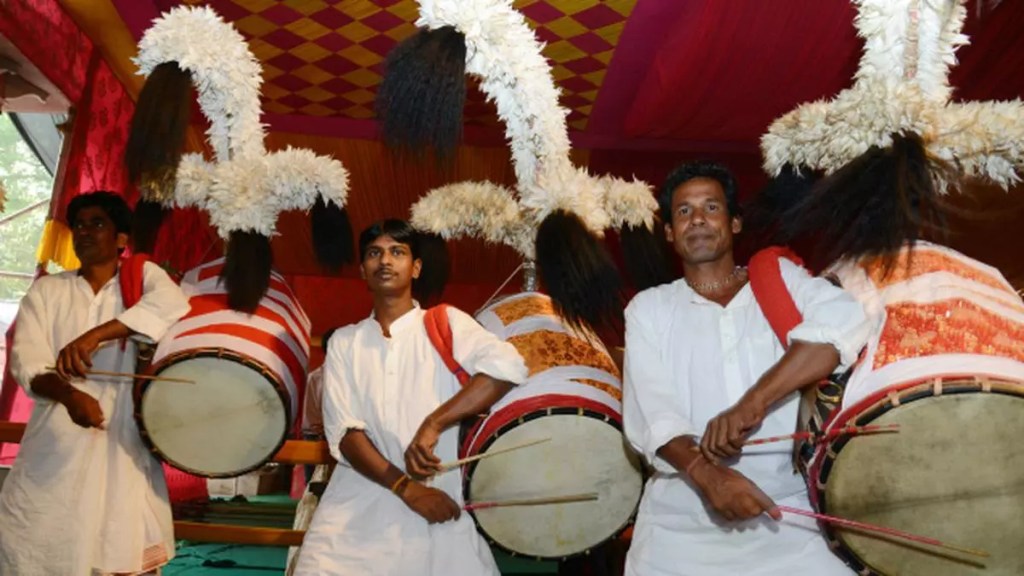
Dhakkis or drummers performing. From Public domain

In any case, Durga Puja in Ramkrishna Mission was the most memorable experience of another religion I have ever had. The moment we would hear the tak dum tak dum of the drums pervade the spaces of our neighbourhood in the mostly warm but occasionally hot and humid end-autumnal days full of fleecy clouds in nearly always blue skies, our hearts would flutter. Those thrumming, magical beats announced unmistakably that the time for another fun-filled Saradiya[5]Puja week had come! The dhakkis or drummers, I do believe, were our Pied Pipers, for we would sprint like the spellbound children of Hamlin then to the open field in front of the mission prayer hall the moment we heard them. We would find them there pounding away on their drums, swaying and smiling and showing off their skills on those ponderous-seeming but colourfully decorated and deep-echoing dhols!

The whole of Ramkrishna Mission became a spectacle of sights, smells, and sounds for the next few days. No matter where or when we went to the Mission during the festival, we would experience a riot of colours, a medley of sounds, and a range of flavours that made the Durga Puja days[6] unforgettable. During Durga Puja, Ramkrishna Mission was truly in the carnivalesque mode, for there was an unmistakable mela or fair-like quality to it.

Hindu men and women would come dressed in their fineries, the married women glowing because of their vermillion smeared-foreheads and multi-coloured saris, the men looking happy and yet self-conscious in their bright but heavily-starched new dhotis[7], and the children beaming and giggling because of anything and everything. We too would dress up for the occasion because, whether Hindu or Muslim, this was an occasion to meet people, mingle, chat, display and (for the boys) ogle.

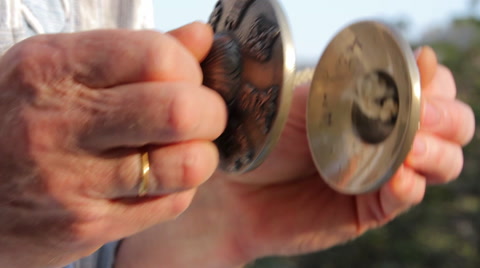
The sound of the drums would merge with the tinkle of manjiras[8], the chiming of bells, the unique note coming from conch shells, the ululation of women, the chanting of the mysterious but solemn-sounding Sanskrit prayers and the incessant chatter of not quite focused devotees. Indeed, there was a constant buzz in the Mission compound every day from mid-morning till late in the evening. In the Mission field, hawkers would sell hot and spicy pickles and chutneys, delectable sweet and/or sour savouries, and flavoured and syrupy drinks. At times the missionaries and volunteers would serve watery but delicious labra khichuri to anyone who cared to line up and eat from the plantain leaves. The smell of the different food items sold through the day would blend with the smoke and scent of the ceremonial dhups or incense lighted for the occasion. The press of the crowd, the feeling of excitement exuded by the people who sat to watch events or wander from place to place, and the assorted Bangla dialects heard all around us created a matchless mix.

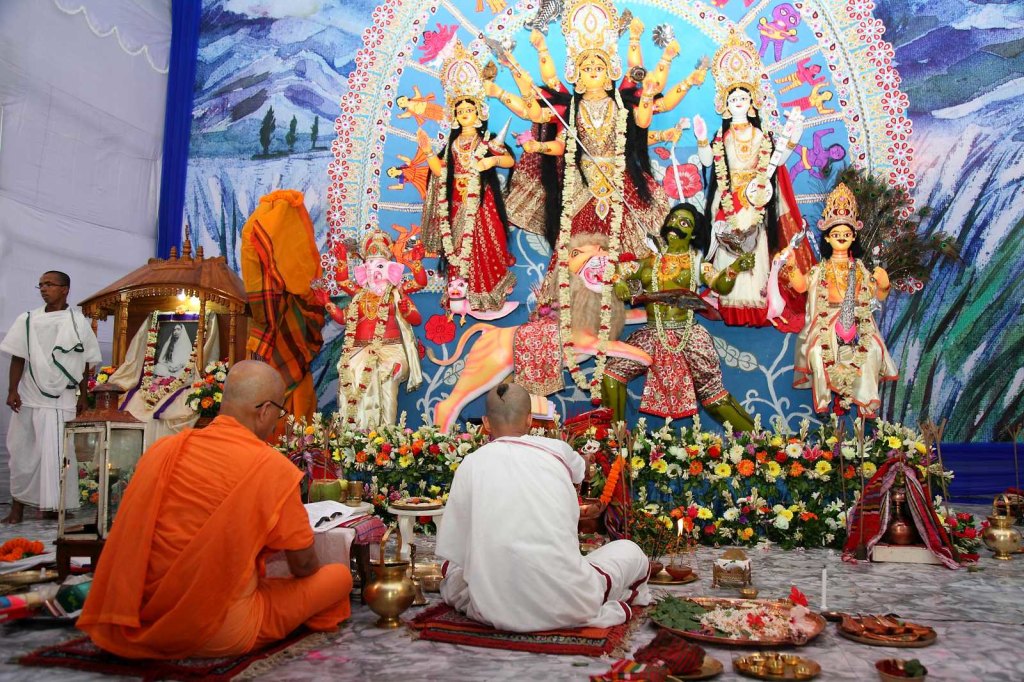
But of course, Puja was mainly a holy occasion for the Hindus of the city. While we Muslim children did not understand a lot of what went on and were often mystified by the seemingly endless cycle of rituals, there was much to keep us absorbed in at least a few of the religious events. At the centre of the Puja, undoubtedly, were the idols built for the occasion. They are traditionally unveiled on the sixth day of the moon and placed on a pandal, a temporary structure erected for the veneration of the goddess Durga. Even if we did not know the import of all that we saw, who could not but be overwhelmed by the centrepiece, the resplendent goddess, ten weapons in her ten hands, a benign smile on her face, glowing in light golden colours, draped in a flaming red sari, standing on her lion mount, taming the demon Mahisasur.

Also awe-inspiring were the attendant deities (how “filmy” are the idols made now!). We were captivated by the welcoming melodies of “agamoni” and intrigued by the “Chandipat[9]” or reading from the Hindu scriptures. Day and night we were captivated by the rituals of anjali as the deity was offered flowers and prayers.

For most of us, one of the more fascinating moments of Durga Puja came on the ninth day, when a little girl was made the kumari, symbol of pristine beauty. But the climactic event was the immersion of the deity in the mission pond on the last day. From the morning of this day we would witness intense activity. First, devotees would begin preparations to move the deity, then the pandal would be carried to the pond to the sound of ululations, and finally the Durga would be immersed in the pond water to chants affirming her victory and predicting her triumphant return the next year.

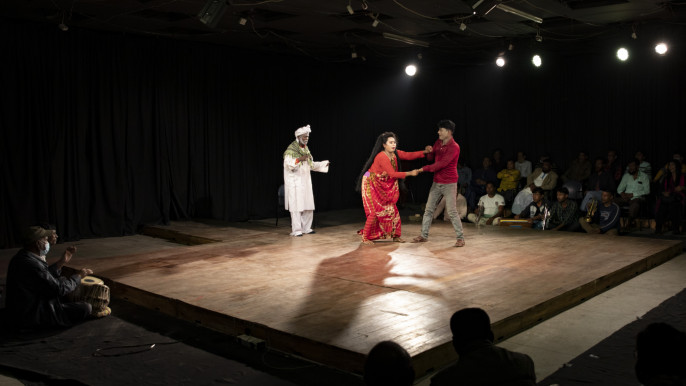
The Durga Puja days mesmerised all of us in the paara in many other ways. For instance, the dhaakis seemed to punctuate the days and nights of the Puja week with aarati[10]and ritual dances, gyrating and drumming with abandon and delighting us children. In the evenings, kirtans or devotional songs absorbed older people who were content to muse to musical tunes even in the middle of a crowd. But what fascinated most people young or old was the jatra[11] that was staged in any one of these evenings. Like the morality plays that I would read about later in my English Studies when studying the history of the theatre of Elizabethan England, this folk genre had angels and demons, characters like Vice and Conscience, music and dance, pathos and farce. In short, it was made out of a recipe guaranteed to please. Its plot, typically taken from an episode of a Hindu epic, was of the kind that would keep children as well as adults spellbound.

Jatra performed on an open (often makeshift)stage with the audience sitting all around it. From Public Domain

All in all, Durga Puja was a truly enthralling and synaesthetic experience; no wonder our senses were satiated by the end of the Puja week! The most important thing, I now realise, was that for nearly a week our paara came alive and we became part of a carnival that went on for days. And in the process our neighbourhood managed to come somewhat closer, for this was one religious occasion where differences were overcome to a great extent.

In 1967, my family moved from Ramakrishna Mission Road to another part of Dhaka and I have never been to another Durga Puja held there since then. But by 1965, a change had already come over our paara. The India-Pakistan war of 1965 had widened the rift created by Partition, a rift that seemed to have been bridged to a great extent in our neighbourhood. A few of our Hindu neighbours left for India after the war. The rest, I know from subsequent visits, have migrated to India over the decades. The Ramkrishna Mission Puja, I hear, is still a huge event, but I doubt very much if the whole neighbourhood comes alive during puja week like it did when I was there.

Will coming generations in our part of the world ever rediscover the joy that comes from knowing that despite different beliefs, people can participate spontaneously in each other’s festivals and even delight in them fully? In 1985, after six years spent in Canada, I remember walking past a Durga Puja pandal in Khulna with a nephew. I asked him, “Have you ever gone inside and enjoyed the puja festivities?”

“No,” he said, “there is a smell that comes from the dhup that they use that I can’t stand. Besides, we aren’t supposed to!” It was a moment that first made me realise that the dream of a secular, tolerant, humane Bangladesh had received a jolt in the years that I had been away. Subsequent events have been even more upsetting for those of us who believe in the values encapsulated in that part of our original (1972) constitution that was later “amended”. It is thus that Shah Abdul Karim’s song has so much resonance for me that every time I hear it, I keep thinking of the Durga Puja celebrations in Ramakrishna Mission that I had been part of once upon a time: “How happily once we village youths/ Would spend our days, Hindus and Muslims/…./ I keep thinking: we’ll never be happy like then/ Though I once believed happiness was forever/ Day by day things get worse and worse.”

(Published in Daily Star on October 20, 2007)

[1] Shah Abdul Karim (1916-2009) was a baul musician of note.

[2] Earlier, we had beautiful days

[3] Muslim prayer call

[4] Offerings of food to God

[5] Autumnal festival – Durga Puja is celebrated in Autumn

[6] Durga Puja celebrations is spread over 5 days, though the count starts from the sixth day of the lunar month.

[7] A cloth wrap worn in place of trousers

[8] Musical instrument

[9] Special chants for Durga

[10] Prayers with  offerings of incense and light

[11] Drama

Fakrul Alam is an academic, translator and writer from Bangladesh. He has translated works of Jibonananda Das and Rabindranath Tagore into English and is the recipient of Bangla Academy Literary Award (2012) for translation and SAARC Literary Award (2012).

PLEASE NOTE: ARTICLES CAN ONLY BE REPRODUCED IN OTHER SITES WITH DUE ACKNOWLEDGEMENT TO BORDERLESS JOURNAL

Click here to access the Borderless anthology, Monalisa No Longer Smiles

Click here to access Monalisa No Longer Smiles on Amazon International
Categories
Nostalgia

A Musical Soiree

By Snigdha Agrawal

This was an annual event organised at home, on Tagore’s birthday.  Preparations started a week before ‘Pochishe Boishakh’)[1].

Musical instruments were dusted and tuned, particularly the most used harmonium and tablas. The living room was rearranged.  Chairs were pushed against the walls.  Centre and side tables were removed, creating space for floor seating.  Durries were laid over the carpet.  All the pash balish — bolsters — in the house with freshly laundered covers, placed haphazardly for those wanting to recline.  A space earmarked for the performers, usually against the room’s longest wall.  On this wall hung a fairly large black and white framed photo of Tagore, garlanded with freshly picked jasmine flowers. Not the fully bloomed one.  White buds with short green stems.  We girls were given the responsibility of making smaller wristbands from the jasmine buds, presented to the visitors.  Stalks of rajanigandha (tuberoses) stood erect in tall vases placed on either side of the photo. 

The overpowering smell of jasmine and tuberoses drowned other smells floating in from the kitchen.  A hands-full kitchen as no jalsa[2] is complete without serving the guests chai and piping hot assortment of pakoras — onions, potatoes, brinjal, pumpkin flowers, battered fried crispy brown. Poppy seed-sprinkled vegetable chops, cylindrically shaped, were polished off as fast as they were made and served.  The service continued till the guests left, mouths sweetened with the dessert — usually rossogollas, delivered by the sweet-meat dhoti-clad guy, arriving on foot, carrying gigantic-sized aluminium dekchis[3]balanced on two ends of a pole, hoisted on his shoulder.

It was an open house event for those interested and wanting to join.  There were the regulars and walk-ins as well. Performers and audience.  A manageable crowd most years. Rarely spilling out into the adjacent veranda.  Cane chairs were lined up to accommodate the latecomers.  Ma, a gifted and trained singer had the honour of opening the ceremony with the songHey Nutan, Dekha dik aar-baar janmero prothamo shubhokhan…”[4].  On popular demand, she went on to sing a couple of Tagore’s songs not omitting the song dedicated to Boishakh esho hey boishak, esho…esho. Taposniswasbaye mumushure dao uraye, botsorer aborjona dur hoye jak…”.  [5]A song that has been on our minds, with the current heat wave raging throughout the country.

As the evening progressed there were recitations from Tagore’s poetry collection.  A young couple, Soumenda and Rinadi, our neighbours, had the gathering spellbound with their singing and poetry recitation.  Close neighbourhood friends of ‘Puluda’, the affectionate nickname of the famed actor, the Late Soumitra Chatterjee, the talented couple were in demand at many such musical soirees held on Vijaya Doushami[6] in community clubs.  And through them, we met the greatest Bengali screen actor of all time, on many occasions, when he visited after the day’s outdoor shooting in the picturesque surrounding in Maithon and Panchayat, way back in the 1960s. 

With our leaving the gated community complex in 1968, ended the annual Rabindra Jayanti home celebrations. A not-forgotten era.  Rabindranath Tagore lives on. These days, I listen to Rabindrasangeet on YouTube, remembering the days of youth, Ma’s full-throated voice, and Somenda, and Rinadi regaling us with their practised/professional voices. Pakoras are replaced now with sushi.  God rest their souls. 

.

[1] The 25th day of the Bengali month of Boishakh, recorded as the official date of birth of the Rabindranath Tagore in 1861. As per the Gregorian calendar, the date falls between the 7th or 8th of May.

[2] Musical soiree

[3] broad-rimmed cooking utensil with a flat round bottom

[4] Oh ever new!/ Let my eyes behold once more/ the first blessed moment of birth.- Translation by Aruna Chakravarty, Borderless Journal

[5] Hail O boisakh! Welcome./ Blow away deadly diseases with your ascetic breath./May the debris from the old year disappear. – Translation from Borderless Journal

[6] Last day of Durga Puja

Snigdha Agrawal (nee Banerjee) has published four books and is a regular contributor to anthologies.  A septuagenarian, she writes in all genres of poetry, prose, short stories and travelogues.

PLEASE NOTE: ARTICLES CAN ONLY BE REPRODUCED IN OTHER SITES WITH DUE ACKNOWLEDGEMENT TO BORDERLESS JOURNAL

Click here to access the Borderless anthology, Monalisa No Longer Smiles

Click here to access Monalisa No Longer Smiles on Kindle Amazon International

Categories
Essay

Travels of Debendranath Tagore

Narrative by Debendranath Tagore, translated from Bengali by Somdatta Mandal

Note from the Translator

Debendranath, Father of Rabindranath Tagore

Born to Dwarkanath Tagore in Shelaidah, Debendranath Tagore (15 May 1817 – 19 January 1905) was a Hindu philosopher and religious reformer. One of the founders of the Brahmo religion in 1848, his journey in the role of ‘Maharshi’, the great ascetic, was an attempt to spread the Brahmo faith and he travelled extensively to various places, especially in different parts of the Himalayas like Mussourie, Shimla, Kashmir, and Dalhousie.  He even constructed a house in Bakrota called ‘The Snow Dawn’ where he used to reside for months. Although Debendranath was deeply spiritual, he managed to continue to maintain his worldly affairs — he did not renounce his material possessions, as some Hindu traditions prescribed, but instead continued to enjoy them in a spirit of detachment. His considerable material property included estates spread over several districts in Bengal. Debendranath was a master of the Upanishads and played no small role in the education and cultivation of the faculties of his sons.

In his memoir, Jeevan Smriti [Memories of Life], Rabindranath also narrates in detail about his trip with his father in the Himalayas when he was just eleven years old. Debendranth founded the Tattwabodhini Patrika (1843) as a mouthpiece of the Brahmo Samaj and apart from his autobiography, wrote several other prose pieces which also reveal his wanderlust.

Among the two entries included here, we have ‘Moulmein Bhraman’ which is an interesting travel piece narrating his sojourn in Burma in September/October 1850. In the Chaitra 1817 Saka issue of Tattwabodhini Patrika, a travelogue ‘Mori Bhraman’ narrating Debendranath’s trip to Mori was published. Interestingly, as a prologue to this piece Sri Chintamani Chattopadhyay tells us that he was so enamoured after listening to Debendranath’s oral narration of the trip undertaken 28 years earlier, that he decided to transcribe it for the satisfaction of the readers.

Moulmein Bhraman (Travel to Moulmein)

After a year, the splendour of autumn revealed once again and the desire to travel blossomed in my mind. I could not make up my mind where to go for a trip this time. I thought I would make a trip on the river and so went to the bank of the Ganges to look for a suitable boat. I saw that several khalasis — dockyard workers – of a huge steamer were busy at their work. It seemed that this steamer would soon set sail.

“When would this steamer go to Allahabad?” I asked them.

In reply they said, “Within two or three days this will venture into the sea.”

On hearing that this steamer would go to the sea, I thought that this was the easiest way my desire for a sea journey could be fulfilled. I went to the captain instantly and rented a cabin and in due time boarded that steamer to begin my sea journey.

I had never seen the blue colour of the sea water before. I kept on watching the beautiful sights by day and night amid the continuous bright blue waves and remained immersed in the glory of the eternal spirit. After entering the sea and swaying with the waves for one night, the ship dropped anchor at three o’clock the next afternoon. In front of us, I saw a stretch of white sand and something that looked like human habitation. So, I took a boat and went to see it. As I was wandering about the place, I saw a few Bengali men from Chittagong with charms around their necks coming towards me. I asked them, “How come you are here? What do you do?”

“We do business here. We have procured the idol of Goddess Durga in this month of Ashwin[1],” they replied.

I was really surprised to hear that they celebrate Durga puja here in Khaekfu town of Burma. Durga puja was celebrated even here!

From there, I came back to the ship and started towards Moulmein. When the ship left the sea and entered the Moulmein River, I remembered the scene of leaving Gangasagar Island and going into the Ganges River. But this river did not offer any such good scenery. The water was muddy and full of crocodiles; no one bathed in it. The ship came and dropped anchor at Moulmein. Here a Madrasi resident called Mudeliar came and greeted me[2]. He came on his own and introduced himself. He was a high-level government official and a true gentleman. He took me to his house, and I remained a guest there and accepted his hospitality for the few days I stayed at Moulmein. I stayed very comfortably in his house.

The streets in the city of Moulmein were wide and clean. The shops that lined both sides of the street selling different kinds of things were all manned by women. I bought a box, and some very fine silk clothes from them. Going around the marketplace I went to the fish market at one time. I saw big fish for sale displayed on huge tables.

 “What are these big fish called?”

They replied, “Crocodiles.” So, the Burmese ate crocodiles; they spoke verbally about ahimsa and the Buddhist religion, but their stomachs were filled with crocodiles!

One evening when I was wandering on the wide streets of Moulmein, I saw a man walking towards me. When he came close, I understood that he was a Bengali. I was quite surprised to see a Bengali there. From where did this Bengali arrive across the ocean? It seemed there were no places where Bengalis did not go. I asked him, “From where have you come?”

“I was in trouble and so came here,” he replied.

Instantly I understood his trouble[3]. I asked him further, “How many years of trouble?”

“Seven years,” he replied again.

“What did you do?”

“Nothing much. I just duplicated some papers of a company. Now my term is over, but I cannot go home because I do not have the money.”

I offered to give him the passage money. But how will he go home? He had set up a business, had got married, and was living quite comfortably. Would he ever go back to our country to show his shameful black face there?

Mudeliar told me that there was a mountain cave here which people went to visit[4]. If I wished he would accompany me there. I agreed. On the first moon night[5], he brought a long boat during the high tide. There was a wooden cabin in the centre of that boat. That night, Mudeliar, I, the captain of the ship and seven or eight other people boarded the boat and it left at two o’clock at night. We sat up for the whole night in that boat. The foreigners kept on singing English songs and requested me to sing Bengali songs. So, I kept on singing Brahma-sangeet occasionally. No one understood anything. They did not like them and went on laughing. We travelled for about twenty-seven miles that night and reached our destination at four o’clock in the morning.

Our boat reached the shore. Everything was still dark. On the shore I saw a cottage full of trees and creepers from which light was coming out. I got curious and ventured alone to that unknown place in the darkness. On reaching there I found it was a tiny cottage. Inside several bald-headed priests in yellow ochre robes were placing candles in different parts of the room. I was quite surprised to see people resembling the priests of Kashi[6] here. How did they come here? Later I came to know that they were the leaders of the Buddhist monks and known as Phungis. I hid myself and observed them playing with the lamps but suddenly one of them saw me and took me inside. They gave me a mat to sit on and water to wash my feet. I had come to their house, so this was their way of entertaining guests. According to the Buddhists, serving guests was a sacred act.

I returned to the boat at early dawn. The sun rose. Mudeliar and the other invited guests came and joined us. This made us fifty in number. Mudeliar fed all of us there. He had arranged for several elephants; about two or four people got on each elephant and proceeded towards the dense jungle. There were small hills all around and in between was that dense forest. There was no other way of travelling here except on elephant back. We reached the entrance of the cave in the mountain around three o’clock in the afternoon.

We descended from the back of the elephants and started to walk in the jungle where the undergrowth was waist high. The entrance to the cave was small; we had to crawl in. After crawling in a little we could stand up straight. It was very slippery inside and we kept on slipping and falling. So, we started walking very cautiously. It was pitch dark inside. Though it was three in the afternoon it seemed like three at night. I was scared that if we lost our way in the tunnel, we would not be able to come out. We would then have to wander inside the cave for the whole day. So, wherever I went, I kept an eye on the faint light at the entrance of the cave. All the fifty of us spread ourselves in various parts of the cave and everyone had sulfur powder in their hands. Then each person put a little sulfur powder in the little holes in the cave next to where he was standing.

After everyone’s place was defined, the captain lit his share of the sulfur powder. Instantly each one of us lit matches and ignited our portion. Now the cave was lit simultaneously at fifty different places like fireworks, and we could see the inside clearly. What a huge cave it was! On looking up to the ceiling our vision could not gauge its height. We saw the different natural formations that had been caused by rainwater seepage inside and were really surprised.

Later, we came out and had a picnic in the forest and then came back to Moulmein. On our way back we heard different musical instruments being played together. Locating that sound, we went forward and saw a few Burmese people dancing with all kinds of gestures of their bodies. Our captain and the foreigners also joined them and started to dance in a similar manner. They found great pleasure. A Burmese lady was standing at the entrance of her house. She watched the mimicry of the foreigners and went and whispered something in the men’s ears.  They stopped their singing and dancing immediately, and all of them suddenly left the scene and disappeared somewhere.  The captain went on entreating them to resume their dance, but they did not listen. It was amazing to see how much hold the Burmese women had over their men.

We came back to Moulmein. I went to meet a high-level Burmese official at his house. He received me very politely. There was a huge room and in its four corners sat four young women stitching something.

When I sat down, he said “Ada[7].”

One of the girls instantly came and handed me a round box full of betel leaves. On opening it I found it to contain different condiments. This was the local Buddhist custom of receiving guests. He then gifted me some excellent saplings resembling the Ashok flower. I had brought them home and planted them in my garden, but they did not survive despite great care. The fruit of this tree is very popular with the Burmese. If someone had sixteen rupees then he would spend the entire amount to buy that fruit. We disliked their favourite fruit because of its smell[8].

Mori Bhraman (Travel to Murree)

On the 10th of Pous, 1789 Saka[9], I abandoned all work and ventured in full earnest to go for a tour in the west. I did not decide where I would go. Just as a confined river feels overjoyed when released, I too left home with equal enthusiasm. Two servants accompanied me. One was a Punjabi Sikh called Gour Singh, the other was Kashi Singh, an Odiya Kshatri. At that time the train went only up to Delhi.

Upon arriving at Delhi, I found out that there was no other way to go except by mail coach. So, I booked a seat on it. My destination was Punjab. The horses of the coach in which I travelled up to a place near Sutlej were not steady. Because of them the coach swayed on both sides. I feared that it might topple, and it did tilt on one side and fell down on the ground.

I got out of the coach through its panel and shouted at the driver in the topmost voice – “You made me fall down, the body is hurt in many places and the nose is bleeding.” The driver had assumed that I had already died under the pressure of the carriage. Feeling assured after hearing my voice he replied, “Baancha to – at least you are alive.” My servant brought some water from a nearby well. I washed my nose. It was almost evening by then. Seeing a rest house nearby, I spent the night there.

Early next morning, I boarded the mail carriage again. It crossed the huge bridge upon the river Sutlej. Upon looking down I saw that the water had a tremendous current. I had never seen such a large bridge before. The wind was blowing fiercely. The strange sound of the waves hitting one another created great pleasure in my mind.

After that I reached an inn near the Beas River. Having our lunch there, I boarded the coach again at four in the afternoon. It was almost evening; we hadn’t progressed far when all of a sudden, a heavy storm rose. The road was just along the river. Sand started blowing to form clouds and cover the surroundings. Nothing was visible in front of us. Sand filled our nostrils and the coach could hardly move. I couldn’t decide where to go and take shelter. We found a settlement a little further ahead. Seeing a two-storied house I got off the coach and spent the night there. The storm continued unabated till three o’clock at night. As soon as it stopped, I boarded the coach again.

In this manner, travelling from one inn to another, I ultimately reached Amritsar. Earlier when I had gone to Shimla, I had spent a few days with great pleasure in Amritsar in an old, dilapidated house located next to a narrow sewer line. Immediately upon reaching Amritsar, I went looking for that beloved house.

I came next to the sewage line but saw that the house did not exist anymore. There wasn’t even a sign of it anywhere. This was an example that nothing was permanent in our lives.

I came back from there in a depressed mood. I rented a small single storied hut next to the road. As a traveller on the road, I stayed there amid the dust in that small room quite stoically but with great excitement. I cannot express in words how much I enjoyed living in such seclusion. The room wasn’t much taller than the road. Unknown travellers would stop by and speak to me in a manner as if we had been acquainted before. I was also happy to interact with them. One of them was a devotee of Hafiz and I too became an admirer. He did not want to leave me and became an earnest friend of mine.

Days went by in this manner. One day a Brahmo gentleman called Shibchandra babu came from the Brahmo Samaj at Lahore. He said that he had been sent by the Brahmos there once they heard that I was here, and I had to go to Lahore. Seeing his eagerness I started for Lahore. Babu Nabinchandra Roy had arranged for my accommodation beforehand in a house located next to a wide road at Anarkali. Once I reached there, the Brahmos came and surrounded me with devotion. During my stay in Lahore, I even had to deliver a lecture in Hindi.

From there the Brahmos arranged for my stay inside a garden. Surrounded by lime trees, the dwelling house was in the middle. With only two servants accompanying me, who was going to cook for me? I developed diarrhoea after eating the hard rotis that were served. Soon, I was also attacked by malaria. The Brahmos informed a Muslim doctor, and he came and saw me. I did not take the medicines prescribed by him. My own medicine was powdered Myrobalan and I took that. The next day there was a lot of emission of blood. I became weak; wanting fresh air I went up to the first floor. There I felt the tremendous heat of the sun and my head started reeling. The very next moment I fainted. Upon hearing this news, two Brahmos came and started feeding me sugar cane and I regained my consciousness after their nursing.

The body was in a miserable condition. The next day I sat wondering where I could go in such a state and that too without a cook. How could I return home in the heat of summer? As I was feeling tense thinking about it and could not decide what to do, my heart suddenly said, “Go to Murree.”

Thinking this to be a god-sent instruction I started preparing to go to Murree. The local Brahmos came to meet me at around two in the afternoon. My body was still very weak, and I didn’t have the energy to even talk much. They asked me what I wanted to do now, and I told them that I had decided to go to Murree and would begin my journey that day itself. After they left, Nabin babu and a few other Brahmos came.

I told them, “I want to go to Murree today so please arrange for a coach.”

They sent Gour Singh and arranged a mail carriage for me. Nabin babu asked me what I would eat on the way. He then gave me two bottles of pomegranate juice. After the coach arrived, I had the two big trunks loaded on its roof and got inside with the two bottles of juice as sustenance. Two servants sat on the roof of the coach. Despite my objection, the Brahmos dismantled the horses and started pulling the coach by themselves. I had to persuade them to stop. The coachmen attached the horses again and started moving.

After travelling a little I realised that the coach was swaying too much, and it was also not strong enough. The Sikh Gour Singh who was sitting on top was very strong, and there were two heavy trunks; if the roof collapsed on my head, there would be nothing I could do. I started feeling scared. Travelling in this manner, I reached a dak bungalow. It was a great relief and I felt that my life was saved. After eating there, I boarded the coach again. Gradually I came to the Jhelum. Gour Singh’s house was located there. He stopped the coach and was pleased to call his relatives and introduce me to them.

In this manner I arrived at Rawalpindi, which was situated in the Murree valley. From this point the road went up and down. Many broken wheels lay scattered here and there as proof of this dangerous road. I became scared on seeing them and kept wondering what would happen to me if the wheels of this unstable coach also broke. But by God’s grace, we overcame all these various hurdles and safely reached another dak bungalow[10]. As soon as I arrived there, the local Bengali gentlemen came to meet me. The pain in my body and the strain of travel made it difficult for me to speak. A gentleman called Dwarik babu started taking special care of me. He went here and there looking for a house, and at last went and requested a Parsi gentleman to allow me to stay in his garden.

I stayed in that garden and a Punjabi doctor came to see me. I told him that milk was my only food, but I could not digest that milk very well. I asked him for some medicines that would help me to digest that milk and was slightly relieved with what he gave me. I had become very weak. At night when I went to bed, I felt that I would not be able to get up the next day.

When Dwarik babu came the following day, I told him that I wanted to go to Murree. He told me that there were still no shops and markets at Murree, and I would find it difficult to stay there. But I went on pestering him. So having no other way he arranged for two basket carriages called dulis that would take me to Murree. I went in one duli and my luggage was put in the other one, while the servants went walking. I reached Murree after three days and a lot of hardship.

It was situated at a height of 7,500 feet. The bearers asked me where I wanted to go, and I told them to take me to the place where the sahibs usually landed. They took me to a huge house which was totally deserted and not a single human being was around.

I told them, “Why did you bring me here? Take me to a bungalow where people are staying.”

So, they took me to another bungalow. But the people there told me that it was a club house and not a place for travellers to stay. So, I could not put up there. I told the bearers to take me back to that same uninhabited house where they had taken me at first. They got annoyed and went back there and said that they would not go anywhere else. They placed my duli under a tree in front of that house. Looking up I saw the sky overcast with clouds. Here in the hills, it doesn’t take long for clouds to gather and rain. I was worried and wondered where to go now. I asked the bearers to take me inside and they carried the duli up to the verandah. I got down and inspected the house. There was no one anywhere. I selected a room and again asked the bearers to bring all by bedding from the carriage and spread it out near the wall so that I could sit up and take some rest. They did that and the very next moment quickly disappeared with their dulis.

A little later it started raining. The servants had not reached till then. Through the windowpanes, I could see that a heavy storm was raging outside. The leafless branches of all the big trees were fiercely swaying and big hailstones started hitting the windowpanes as if they would break them, but nothing happened. I kept on thinking that if I arrived here a little late then I would surely have died inside the duli in this severe hailstorm.

After a while the two servants came shivering. With the cold, the rain, and the hailstorm, they were in very bad shape. After wringing their clothes, they came near me. I told Gour Singh to look for a bearer or the caretaker of this hotel and bring him to me.

So he went and got the chowkidar. I asked him to fetch the furniture for the room, but he said he couldn’t do that till he received orders from the master. I threatened him that if he did not bring the furniture out under my orders and if his owner got to know about it, then he would be instantly dismissed from his job. The man got scared and then brought out a charpoi. I spread out my bedding on that cot and lay down. That night Gour Singh brought me a roti and some water. I could neither eat that hard roti nor drink the ice-cold water of Murree. So, I spent the night without any food. In the morning, I sent Gour Singh to fetch some milk and kept on counting the hours until his return.

It was eight o’clock and still there was no sign of Gour Singh. Those eight hours seemed like eight days. At last, he came back at 9 am with some buffalo milk. Upon drinking it, I found it to be diluted with water and tasteless. I could not digest that milk, and nothing remained in my stomach. The milk just passed out as it was. I covered myself with layers of blankets and shawls and went to sleep in the charpoi in that tremendously cold weather.

While I was lying down, I saw a shivering sahib entering my room. I realised how extremely cold it was outside when I found his teeth were chattering. He lit a fire in the next room and because of that I felt a bit comfortable.

The next day Gour Singh brought such diluted buffalo milk once again. I drank it but again the milk went out of my body as it is. Having starved for three nights I felt almost half-dead on the third night. I laid down quite comfortably on the charpoi with all the warm clothes layered upon my body and did not feel any pain. I felt as if someone like my mother was sitting near my head. I was breathing and along with that breath I saw my friend, Sajuja, also looking at me.  Breathing in and out in that manner I spent the whole night doing easy yoga and cannot describe how happy I felt.

Soon the night was over, and it was morning. Once again Gour Singh brought that kind of diluted buffalo milk. I drank it. How strange! I digested the milk that day. Since pure milk was unavailable here, I told Gour Singh that it would be nice if he went looking for a cow.  So, he went to Rawalpindi and bought a small cow for thirty rupees. He said that she gave ten seers of milk per day. Now milk has become my staple diet.

After drinking that milk my body became a little stronger. I had been staying in Bekereya Hotel from the beginning but now I decided that it was not feasible to continue staying there any longer. So, I went to look for a rented house. I went up the hill in that extremely weak condition and found an empty house. But it was so cold there that I did not find it suitable. A little lower from that point I found another house and liked it. I rented it for nine hundred rupees and started staying there. The next day the postal peon brought me a letter from my nephew Gnanendranath. I opened it with excitement, and he had included a Brahma-sangeet which read thus:

Gao rey tahar naam
Rochito jaar visvadhaam.
Dayar jaar nahi biram
Jharey abitito dhaarey.

[Sing His name/He who has created this world/Whose blessings endless/Falls continuously on earth]

I had already received His blessings to get back my life from the verge of death; the same blessings that were referred to in this song made me feel excited and my heart leaped with joy. This sort of a letter, and at such a time! How strange! How strange!

In this new house I managed to get a cook. He prepared green moong dal for me, and I liked its taste. It was sufficient for my lunch. After a long time, I felt satiated after an afternoon meal. As my health started improving, I gradually began to increase the quantity of my milk consumption. Early in the morning after the upasana was over, they brought the cow in front of me, and I would immediately send a bowl for the cow to be milked before my eyes. The bowl of milk was brought to me; I drank it and sent the bowl back. The cow would then be milked again, and I would once again drink from the bowl. This procedure was repeated several times and after drinking four or five bowls of milk, I would go for a walk in the mountains. Walking in the fresh cool breeze and under the direct rays of the morning sun, I wandered here and there and then came home. Instantly I would have tea, chocolate, and milk. During lunch I would drink milk again, and in the evening, and before going to bed. In this manner, I would drink about ten seers of milk each day and whatever was left over was made into butter to be consumed with rotis the next morning.

Within seven days, I regained my strength and, feeling exuberated started travelling in the mountains. I started singing songs praising the grace of our creator and there was no end to those songs. For a long time, I had been cherishing dreams of visiting Kashmir and it seemed that our creator would now fulfill it. So, I started enquiring about how to go to Kashmir. By the beginning of May, Murree became full of people and the place took a new look with the red uniform of the British soldiers and the fanciful clothes of the other British men and women. Deserting its shabby look, even nature filled up the place with varieties of flowers. After staying in Murree for three months, I heartily began my journey to Kashmir on the 4th of September.

 [ Excerpted from Wanderlust: Travels of the Tagore Family. Translated and Edited by Somdatta Mandal. Kolkata: Visva-Bharati, 2014]

[1] Septemmber-October

[2] Sri Murugesam Mudeliar was the then Commissariat contractor of the military outpost at Moulmein.

[3] The fact was that the man had been banished here. Usually, political prisoners were interned in Moulmein prior to 1848.  But after 1848 Port Blair in the Andaman Islands was made the new place for banishment and imprisonment. This narrative is dated 1850.

[4] The local name of this famous cave was Kha-yon-gu, and Farm Cave in English. It was situated in the northeast part of Moulmein town and was approachable through the Ataran River.

[5] This was on the 4th of November, 1850.

[6] Varanasi

[7] In the Burmese language a guest was called ai the(y), which was pronounced like ‘aah’ and which when suddenly heard sounded like ‘ada’.

[8] The Durian looks somewhat like a jackfruit but is leaner and smaller in size.

[9] This would be 1867 CE.

[10] A dak bungalow was a circuit house along the postal route for the administrative officials to spend nights.

Somdatta Mandal, critic and translator, is a former Professor of English from Visva-Bharati University, Santiniketan, India.

.

PLEASE NOTE: ARTICLES CAN ONLY BE REPRODUCED IN OTHER SITES WITH DUE ACKNOWLEDGEMENT TO BORDERLESS JOURNAL

Click here to access the Borderless anthology, Monalisa No Longer Smiles

Click here to access Monalisa No Longer Smiles on Kindle Amazon International

Categories
Slices from Life

    When the Cobra came Home

By Antara Mukherjee

A strange thing happened.

A cobra came to our house in Burdwan two days ago. It stayed for few minutes in the washroom downstairs and then vanished in the dark. The caretakers were terribly frightened. They wanted to kill it by any means. When I got the call, I told them to wait for some time without even trying to do anything. Somehow, I knew it would go away on its own. And it did.

My mind raced back to the years when I was in school. One evening, to our horror, a cobra was discovered in my brother’s bedroom on the second floor. We shouted our heart out while my mother kept staring at it in silence with folded hands. After few seconds, it magically vanished. She looked at the calendar, hanging from the wall, and in a calm tone, declared that it wasn’t an ordinary cobra but Goddess Manasa, the Goddess of snakes, who came to ask for her annual worship; she further told us that whenever this would happen in future no one should try to do any harm to the snake but prepare to offer favourites to the Goddess.

Strangely, snakes kept visiting our house, infrequently though, before Manasa puja[1] and my mother wasted no time in preparing for her annual offerings. She, however, never cooked the day before, as was the usual practice related to the annual worship known as Aarandhan or No-Cooking Day. It is a ritual where Bengali households refrained from cooking on the day of worship and ate whatever had been cooked the day before, after offering the same to the Goddess. Neither the typical menu associated with Aarandhan— for instance, five types of vegetable fritters, vegetable mishmash, mixed vegetables, varied fish preparations and sweet dishes — nor the practice of eating previously cooked meal was a part of my mother’s annual worship of the Goddess. Her way of honouring the Goddess was a matter of pleasing her with a personal touch, something that was beyond the shackles of set rituals. As I grew up and got entangled in all sorts of activities, I hardly cared to ask her about such serpentine visitations. I don’t recall any such occurrences in the last seven-eight years until day before yesterday.

My mother was deeply religious and immensely superstitious. She had her own worldview about things, especially anything related to Goddess Kali — Goddess Manasa, being an incarnation, was quite honoured by her, though Manasa was not the coveted Goddess to be worshipped. In our locality, Viswakarma[2] puja, which falls on the last day of the Bengali month Bhadra, that is mid-September, is observed with huge pomp and glitter as we live in the same locality where the main power supply plant of Burdwan is located. On the same day of Viswakarma puja, Manasa puja is also observed. Close to the boundary of our house, every year a huge pandal is constructed by the working-class people and a sort of community meal is served. My mother never went to the power supply plant to offer puja, but to the pandal for Manasa. She strongly believed that it is her devotion that kept the snakes/evil away from her three children. When we would become unmindful of the power of Goddess, she told us, Manasa would send her agent to remind us!

As I have hardly believed in my mother’s self-constructed logic, I never subscribed to her practices. But, this time, with the cobra coming home, I felt I was being instructed to offer something to Manasa. I couldn’t believe myself doing this, but I called up the caretakers and coordinated so that Manasa got her favourites from us.

“Rinku, please buy some fruits, milk and a packet of sweets and offer it to Goddess Manasa tomorrow. Make sure that you remember doing this.”  I gave clear instructions to our homehelp.

In my mind, I prepared myself to visit the Goddess the next day, to see how she was doing!

Before the car took a turn towards Power House Para, my locality, Kumar Sanu[3]‘s powerful nasal tone that dominated my adolescence, reached my ears:

“Tu meri zindegi hai/Tu meri har khushi hai/Tu hi pyaar tuhi chahat /Tu hi aashiqui hai…(You are my life/You are my joy/You are my desire/You are my love) [4]

This song from the movie, Aashiqui[5], welled up fragments of my past. There used to be a time when I waited for ‘Pujor gaan‘ or  Bengali songs released during the puja. Almost all the notable singers of the time came up with new albums, yet Kumar Sanu was the unrivalled King. I passed my teens and jumped into adulthood with his superhit song – ‘Priyotoma mone rekho (‘Keep me in your heart, sweetheart’).’ That afternoon, after more than two decades, I heard him singing, again – ‘Koto je sagar nadi periye elam ami /Koto poth holam je paar/Tomar moton eto oporup shundor/ Dekhini to kauke je aar...(‘I crossed the seas/I walked through ways/ The beauty that you are/ I haven’t met’).’ Almost hypnotised, I got down from the car and walked straight to the direction of the pandal. I needed no Pied Piper from Hamlin; we, Bengalis have our own, the nasal Sanu. The closer I got, the louder he sang. Soon, familiar faces surfaced —

“Good to see you.” Lahiri Aunty shouted from her balcony.

“Same here.” I shouted back

The Lahiris and the Mukherjees are literally ‘samne wali khidki’[6], existing on the opposite lane, of Power House Para[7]. While my mother and Aunty went on talking for hours from their respective balconies, the doctor husbands silently attended to their respective patients in their respective chambers downstairs — a practice that went on for almost forty years.

The weather-beaten balconies have witnessed to the transformations in both the families. Lahiri Aunty was still standing on hers, while ours was empty. Instantly, I found myself standing there at the wee hours of a certain nineties morning, when Kumar Sanu was ruling the music industry and Uncle, the field of Dermatology, watching my father rushing to the Lahiris. Within few moments, our red telephone rang. I came inside and my mother told me to follow her immediately to the Lahiris. Inside their first-floor bedroom, for the second time in my life, I saw a dead body. Uncle’s eyes were closed. Aunty sat motionless. My mother went the window and sat beside her dear friend. I had nothing to do. I kept staring at various showpieces collected by them from all over the world. When my grandfather died couple of years earlier than Uncle, I had my cousin, Tiya, to play with me. We had our freedom then; the elders were busy. It was fun. Death had no power to scratch me, even though I saw a dead body for the very first time.

At the Lahiris that morning, not a sound could be heard. A house where harmonium, tabla and sitar existed in harmony, was unusually quiet. After Uncle, however, Aunty continued to sing but Kumar Sanu never ever dared to peep into her bedroom. She had the classics of Bengali music for her company. In contrast, I welcomed everyone in my life. From Kishore Kumar to Rafi, from Kumar Sanu to Udit Narayan, from Baba Saigal to Apache Indian etc[8], I brought all the cassettes that were available in the market. I was largely spoiled by my elder brother. Madonna, Michael Jackson, Backstreet Boys, Spice Girls, Harry Belafonte, Elton John, Phil Collins etc[9] were supplied by him and by some of my school friends. It was my elder brother who inculcated in me a deep love for what he called the four pillars of Hindi music: Kishore Kumar-Asha Bhonsle -R.D. Burman-Gulzar. I was in class eight when I heard ‘Sei rate rat chilo purnima/Mon chilo falguni hawate[10] (‘It was a full moon night/ my mind wandered in the spring air’)’. I replayed it ten times in our old, black tape-recorder. A hot and humid afternoon seemed so breezy then. And when dusk came, I became a moon-gazer. I have never stopped looking at the gorgeous lady ever since.

Since Viswakarma, Manasa and Kali pujas were observed in our locality with much gusto, I got the chance to listen to and update myself with the recent puja releases. At the same time, I also became aware of the oldies. A locality mostly consisting of doctors, engineers and professors, the choice of songs played was up to a certain standard. It was only when I went to one of the most notorious of colleges in town that I became acquainted with the masala numbers and I loved them! With time, the second generation took hold of the pujas and likewise the choice of songs to be played underwent a rapid change. Soft, romantic numbers as well as Jhankar beats were preferred. It was a time when Kumar Sanu gave voice to all the Khans — Shah Rukh, Salman, Amir [11]— and to seniors like Jackie, Anil and Sanjay[12]. Amongst Bengali Puja songs, Kumar Sanu somehow managed to coexist with the neo-liberal paracetamols of the nineties – Suman, Anjan and Nachiketa[13]. When ‘Bhoomi’, a Bengali band, swayed us with their hit songs, all sweethearts or ‘priyotomas’ were earnestly desired through Sanu’s nasal voice. The loudspeakers constantly amplified Sanu’s songs — be it the contemporary Bengali numbers or Bollywood hits. He was, as if, the unavoidable menu in our daily music-buffet.

My mother was cool about the change in the songs being played in our para-pandals but her friend, Lahiri Aunty, probably, was not. Bathed in the classics of Nirmala Mishra, Kanika Bandyopadhyay, Satinath Mukhopadhyay et al, she shut all her doors and windows when the speakers howled – ‘Ke bole Thakuma tomar / boyesh periye geche aashi! (It is unbelievable that Grandma/ you have crossed eighty)’– another Sanu blockbuster! She kept herself confined within the four walls and rarely came out in the balcony. Ma was always downstairs, on the streets, without caring which song was being played. Her attention was fixed at the puja, be it Kali or Manasa.

I don’t remember Lahiri Aunty joining her during Manasa Puja. But she enthusiastically participated during Kali Puja’s final ritualistic bidding adieu to the goddess, boron, and then,  in sindoor khela[14], a community practice where married women smear each other’s cheeks with vermilion powder. Aunty was the first to do boron and then to start the typical sindoor khela. Unmarried girls like us were not spared either. I disliked the rubbing of vermilion in my cheeks but who had the courage to say ‘no’ to her? After Uncle passed away, she stopped coming for boron and my mother, in solidarity, refrained herself from participating in the play. But nothing, absolutely nothing, could deter her from the elaborate preparation for the puja.

“So, puja means you would get a chance to harm your body by eating those items which you are not supposed to eat, right?” I often rebuked my mother.

“You are mistaken. I don’t eat anything. I offer everything to the Lord.” She was always ready with her defence.

I strongly believe that it was her blind devotion and irrationalities that drove her astray. I could no longer tolerate any ritual after her cremation. However, within one-and-half-year of her passing away, strangely enough, that same me, was standing in front of a Snake Goddess and repeating what her mother used to do.

*

“Here, take some prasad[15],” Nitai, the little boy of yesteryear, now a responsible local boy, in-charge of the Durga puja, offered a plate full of fruits and sweets. I don’t know for how long I was standing at the steps to the mandir[16]. His husky voice jolted me out of my inertia.

“How are you doing?” I asked him.

“Oh, I am very busy. Where were you yesterday?” He questioned

“I have just come.”

“I hope you’ll be with us during Durga puja?”

With no one waiting for me at home, why should I come to Burdwan during that time? I asked myself. Why should I pray to the Goddess whose annual visit, three years back, robbed me of my greatest treasure? My wounds were still fresh.

 He probably read my silence.

“Don’t worry at all. Uncle and Aunty have left the world but we are there for you. It’s where you were born. It’s your locality. Your roots are here. You must come.”

The para or locality where I grew up has changed a lot. My life, too, underwent massive transformations. Nobody awaits my arrival here anymore. Yet some things remain. Most importantly, my past remains, my root remains, my delightful memories remain. And in them, my parents still breathe. Why should I stop myself from generating further memories? Why won’t I live for my happiness too?

 I smiled and assured him that I will be back. He was still holding the plate of Prasad.

“I have given up sweets. I am taking a piece of cucumber, okay?”

“This is the blessing from Goddess. Nothing will happen if you take some,” he insisted.

Greedily, I picked up a batasha, a flat, coarse whitish sweet, and started to munch on. Ah! that heavenly feeling! When did I last eat a full batasha? I could not remember. We now have fancy sweets as prasad. The indigenous sweets like batasha, nokuldana — tiny, roundish sugary substance —  are fast vanishing from the platter of Bengali prasad.

During our childhood, nokuldanas and batashas had been middle-class Bengalees’ coveted folk-sweets. Roshogollas, pantuas or even malpuas, traditional Bengali sweets, were prepared by my mother on special days. But we always had jars of nokuldanas and batashas readily available at home. For an unannounced guest, a domestic help, a hungry beggar, the next-door child and, most importantly, for me, always looking out for something to munch on, batashas were generously distributed. However, she disliked my habit of stealing them from her Gods! Normally, after daily puja, I, reflexively, snatched batashas from her offerings and, in no time, crunched them inside my mouth. She cursed me for being so impatient. In those days, contrary to the softness of Bengali sweets, the crispy sound and feel of both nakuldana and batasha gave me an unparalleled satisfaction of winning over an invisible opponent.

After the ritualistic offerings, when my mother went inside her room to change (normally, she wore a special white and red saree for Puja purposes), I practically, ‘stole’ all the nokuldanas and batashas from the small silvery plates of her Gods and Goddesses. They were readily available candy to me. After her evening worship or during Satyanarayan puja, I watched with rapt attention the making of shinni– a semi liquid mixture of flour, banana, batasha, sweets, milk and dry fruits, treated as a special offering to the Gods. Particularly, I watched her hands, mercilessly squeezing the bananas, breaking the batashas and mixing milk and curd until it formed a smooth, soft semi-solid paste. We were at loggerheads, for her unmindful crushing of the batashas irked me to the core. It was, as if, she was bent on breaking the backbone of my childhood fantasies. I enjoyed the masculinity of the batashas amongst her otherwise feminine palate of prasad. I still avoid crushing batashas. I feel terrible to see them silently  disintegrate.

My precious memories of this rustic sweet were challenged by the Bengal politician, Anubrata’s gur-batasha politics; like a palimpsest, the visuals of my mother’s white cream-like smooth right hand, adorned with gold rings, a red and golden bangles, submerged in a copper tumbler full of flour, milk, fruits and batasha, surfaced in my mind. Ironically enough, the last desert which she ate before she passed away was shinni and, in all probability, it caused infection in her blood. An insulin-dependent, dialysis patient, after all, was not supposed to take such concentrated sweet items. But it was impossible to rationalise her. In Nitai’s plate of prasad, I saw her hand and felt the touch on my palm, as if asking me to take another sweet from it. But I controlled myself. I am not going to spoil my body after having witnessed the gradual disintegration of my mother’s body due to uncontrolled diabetes.

“Goodbye. We shall meet soon.” I waved at Nitai and left the pandal.

As I came home, instructions followed: “Rinku, please spread carbolic acid properly. We cannot take any risk with snakes.”

“Don’t worry. Snakes won’t come now. It came to ask for Puja. Your mother used to worship Manasa. Now that she is not there, you’ll have to carry forward the tradition.”

Rinku spoke like a philosopher. I was surprised to find her so relaxed! Just two days back she almost fainted when the Cobra had come.

I looked at my mother, hanging from the wall, and smiled.

“So you will make me do such things even in your invisible mode!” I communicated to her in silence.

Just then, it started to rain. I saw her smiling back at me.

Like the images of my mother’s jars of mixed pickle, her stories are stored in the depth of my unconscious mind. Whenever I need to energise myself, I take a scoop out and revitalise myself, the physical destruction of her body notwithstanding.

.

[1] Praying, normally in a community festival in this case

[2] The architect to the Hindu pantheon of Gods.

[3] Kedarnath Bhattacharya, popularly known as Kumar Sanu, a playback singer in India

[4] Hindi Bollywood song

[5]  Bollywood film translates to ‘Romance’ from Hindi  

[6] A reference to a popular Bollywood song – translates to ‘the window in front’

[7] Locality

[8] Indian popular singers

[9] Western pop singers

[10] A song by Kishore Kumar

[11] Bollywood actors

[12] Bollywood actors

[13] Bengali pop singers

[14] Sindoor is the vermilion powder worn by married women in the partings of their hair and Khela means play in Bengali. Women play with sindoor to bid the Goddess farewell.

[15] Offering of food for Gods

[16] Temple

Antara Mukherjee is the editor of three books and a Member of Review Boards of International Journals. She is a part of West Bengal Educational Service, Govt of West Bengal. She is presently teaching at the Dept. of English, Durgapur Govt College.

.

PLEASE NOTE: ARTICLES CAN ONLY BE REPRODUCED IN OTHER SITES WITH DUE ACKNOWLEDGEMENT TO BORDERLESS JOURNAL. 

Click here to access the Borderless anthology, Monalisa No Longer Smiles

Click here to access Monalisa No Longer Smiles on Kindle Amazon International
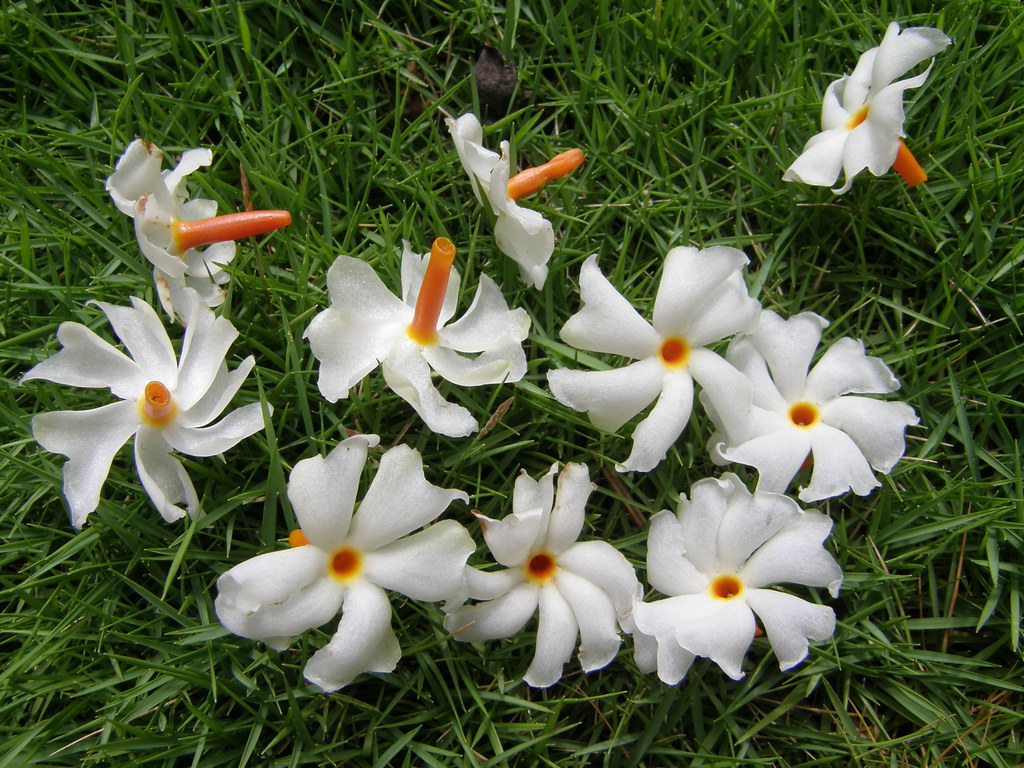
Categories
Poetry

Autumn in India

By Avantika Vijay Singh

Autumn, 
The bridge between nature’s seasons,
Summer and winter,
Heat and cold,
The cooling whites and the fiery oranges
So beautifully reflected in the shiuli’s* colours. 

Autumn, when the shiuli carpets the ground in legion,
Signifying the advent of the Goddess Durga in Sharad season,
Corresponding to the months of Ashwin (September-October).
Dusshera, too, comes in this season.
Both celebrate the victory of good over evil and corruption…
Maa Durga (the Goddess) triumphed over Mahisasur, the demon,
While Lord Rama triumphed over Ravana.

Autumn, that celebrates both festivals with great revelry
Turning our minds towards triumphing over evil
In our own lives, and evil within us.
The evil of ego that is the cause of suffering.
Ego, that is the demon that persuades us to discriminate with frivolity,
Between man and nature leading to a loss of biodiversity,
Between man and man leading to a false state of superiority.
Stemming from a mind of inferiority,
Judging against age, weight, skin colour, poverty and other such absurdity. 

Autumn, 
The time of the Shiuli flower
The time that reminds us to put our minds in favour
Of the divine and all that they have to teach us with fervour.
In the Guru Granth Sahib, the holy book of the Sikhs, 
Guru Arjan says, that when we contemplate on the divine,
In our life manifest immense virtues with blessings combined
Akin to precious jewels like the flowers of the wish-fulfilling Harshringar*.

*Shiuli is also known as parijat, harshringar, and night jasmine.

Avantika Vijay Singh is the author of Flowing…in the river of Life and Dancing Motes of Starlight.

.

PLEASE NOTE: ARTICLES CAN ONLY BE REPRODUCED IN OTHER SITES WITH DUE ACKNOWLEDGEMENT TO BORDERLESS JOURNAL

Click here to access the Borderless anthology, Monalisa No Longer Smiles

Click here to access Monalisa No Longer Smiles on Kindle Amazon International