Categories
Contents

Borderless, February 2024

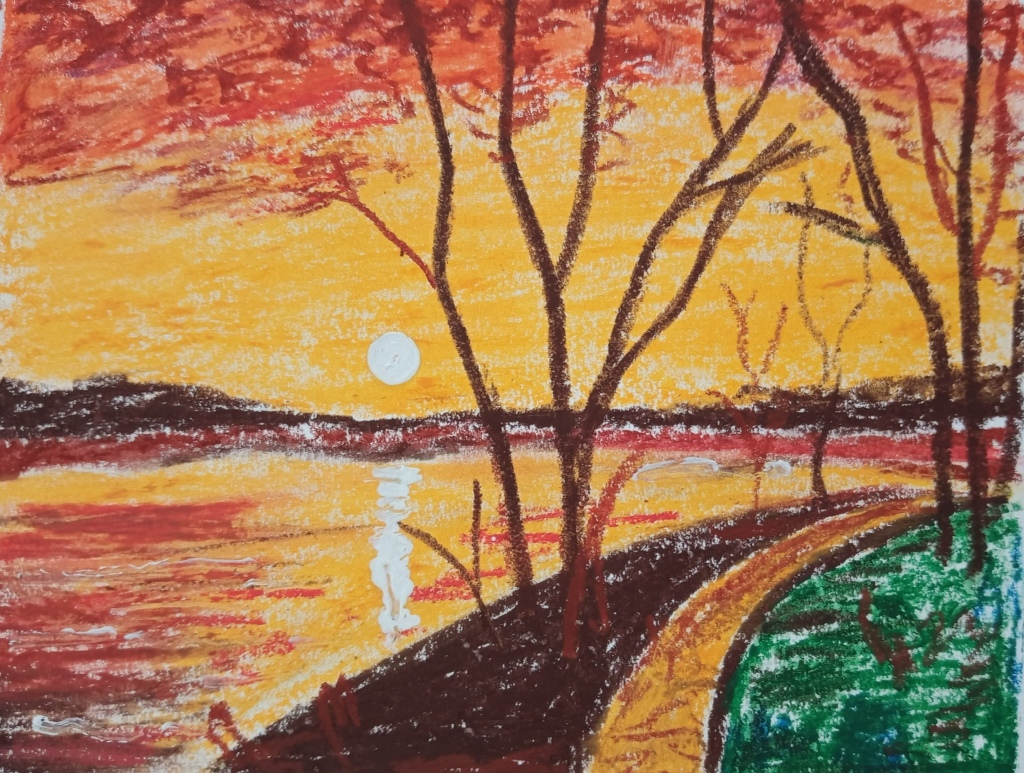
Art by Sohana Manzoor

Editorial

Finding Godot?… Click here to read.

Conversations

Ratnottama Sengupta talks to Ruchira Gupta, activist for global fight against human trafficking, about her work and introduces her novel, I Kick and I Fly. Click here to read.

A conversation with Ratna Magotra, a doctor who took cardiac care to the underprivileged and an introduction to her autobiography, Whispers of the Heart: Not Just a Surgeon. Click here to read.

Translations

Two poems by Nazrul have been translated from Bengali by Niaz Zaman. Click here to read.

Masud Khan’s poetry has been translated by Fakrul Alam. Click here to read.

The White Lady by Atta Shad has been translated from Balochi by Fazal Baloch. Click here to read.

Sparrows by Ihlwha Choi has been translated from Korean by the poet himself. Click here to read.

Tagore’s Dhoola Mandir or Temple of Dust has been translated from Bengali by Mitali Chakravarty. Click here to read.

Pandies Corner

Songs of Freedom: What are the Options? is an autobiographical narrative by Jyoti Kaur, translated from Hindustani by Lourdes M Supriya. These narrations highlight the ongoing struggle against debilitating rigid boundaries drawn by societal norms, with the support from organisations like Shaktishalini and pandies’. Click here to read.

Poetry

Click on the names to read the poems

Rhys Hughes, Maithreyi Karnoor, Luis Cuauhtémoc Berriozábal, Sivakami Velliangiri, Wendy Jean MacLean, Pramod Rastogi, Stuart McFarlean, Afrida Lubaba Khan, George Freek, Saranyan BV, Ryan Quinn Flanagan, Sanjay C Kuttan, Peter Magliocco, Sushant Thapa, Michael R Burch

Poets, Poetry & Rhys Hughes

In City Life: Samples, Rhys Hughes takes on the voice of cities. Click here to read.

Musings/Slices from Life

Ratnottama Sengupta Reminisces on Filmmaker Mrinal Sen

Ratnottama Sengupta travels back to her childhood wonderland where she witnessed what we regard as Indian film history being created. Click here to read.

Suga Didi

Snigdha Agrawal gives us a slice of nostalgia. Click here to read.

Healing Intellectual Disabilities

Meenakshi Pawha browses on a book that deals with lived experiences of dealing with intellectual disabilities. Click here to read.

Musings of a Copywriter

In Hobbies of Choice, Devraj Singh Kalsi explores a variety of extra curriculums. Click here to read.

Notes from Japan

In Becoming a Swiftie in my Fifties, Suzanne Kamata takes us to a Taylor Swift concert in Tokyo. Click here to read.

Essays

Walking about London Town

Sohana Manzoor takes us around the historic town. Click here to read.

How Do You Live?

Aditi Yadav explores the universal appeal of the translation of a 1937 Japanese novel that recently came to limelight as it’s rendition on the screen won the Golden Globe Best Animated Feature Film award (2024). Click here to read.

The Magic Dragon: Cycling for Peace

Keith Lyons writes of a man who cycled for peace in a conflict ridden world. Click here to read.

Stories

A Night at the Circus

Paul Mirabile tells a strange tale set in Montana. Click here to read.

Echoes in the Digital Expanse

Apurba Biswas explores a futuristic scenario. Click here to read.

Two Countries

Ravi Shankar gives a story about immigrants. Click here to read.

Chadar

Ravi Prakash writes about life in an Indo-Nepal border village. Click here to read.

Just Another Day

Neeman Sobhan gives a story exploring the impact of the politics of national language on common people. Click here to read.

Book Excerpts

An excerpt from Nabendu Ghosh’s Journey of a Lonesome Boat( Eka Naukar Jatri), translated from Bengali by Ratnottama Sengupta. Click here to read.

An excerpt from Upamanyu Chatterjee’s Lorenzo Searches for the Meaning of Life. Click here to read.

Book Reviews

Somdatta Mandal reviews The History Teacher of Lahore: A Novel by Tahira Naqvi. Click here to review.

Basudhara Roy reviews Srijato’s A House of Rain and Snow, translated from Bengali by Maharghya Chakraborty. Click here to read.

Bhaskar Parichha reviews Toby Walsh’s Faking It : Artificial Intelligence In a Human World. Click here to read.

.

Click here to access the Borderless anthology, Monalisa No Longer Smiles

Click here to access Monalisa No Longer Smiles on Amazon International

Categories
Editorial

Finding Godot?

Discard all prayers,
Meditation, hymns and rituals.
Why do you hide behind
Closed doors of temples?
....
There is no God in this house.

He has gone to visit the
Farmers who plough the hard ground,
The workers who break rocks ...


— Tagore, Dhoola Mandir or Temple of Dust (1910)

Love is a many splendoured thing and takes many forms — that stretches beyond bodily chemistry to a need to love all humankind. There is the love for one’s parents, family, practices one believes in and most of all nurtured among those who write, a love for words. For some, like Tagore, words became akin to breathing. He wrote from a young age. Eventually, an urge to bridge social gaps led him to write poetry that bleeds from the heart for the wellbeing of all humanity.  Tagore told a group of writers, musicians, and artists, who were visiting Sriniketan in 1936: “The picture of the helpless village which I saw each day as I sailed past on the river has remained with me and so I have come to make the great initiation here. It is not the work for one, it must involve all. I have invited you today not to discuss my literature nor listen to my poetry. I want you to see for yourself where our society’s real work lies. That is the reason why I am pointing to it over and over again. My reward will be if you can feel for yourself the value of this work.”

And it was perhaps to express this great love of humanity that he had written earlier in his life a poem called Dhoola Mandir that urges us to rise beyond our differences of faith and find love in serving humankind. In this month, which celebrates love with Valentine’s Day, we have a translation of this poem that is born of his love for all people, Dhoola Mandir.  Another poet who writes of his love for humanity and questions religion is Nazrul, two of whose poems have been translated by Niaz Zaman. Exploring love between a parent and children is poetry by Masood Khan translated from Bengali by Fakrul Alam. From the distant frontiers of Balochistan, we have a poem by Atta Shad, translated from Balochi by Fazal Baloch, for a fair lady — this time it is admiration. Ihlwha Choi translates poetry from Korean to express his love for a borderless world through the flight of sparrows.

Love has been taken up in poetry by Michael Burch. Borne of love is a concern for the world around us. We have powerful poetry by Maithreyi Karnoor that expresses her concern for humanity with a dash of irony or is it sarcasm? Luis Cuauhtémoc Berriozábal expresses his admiration for the poetry of Italian Poet Antonia Pozzi (1912-1938) in poetry. We have poems by Stuart McFarlane, Pramod Rastogi, Afrida Lubaba Khan, George Freek, Saranyan BV, Ryan Quinn Flanagan and many more. Rhys Hughes brings humour into poetry and voices out in his column taking on the persona of two cities he had lived in recently. There is truth and poignancy in the voices of the cities.

Suzanne Kamata writes a light-hearted yet meaningful column on the recent Taylor Swift concert in Tokyo.  Aditi Yadav takes up the Japanese book on which was based a movie that won the 2024 Golden Globe Best Animated Feature Film Award. Sohana Manzoor journeys to London as Devraj Singh Kalsi with tongue in cheek humour comments on extracurriculars that have so become a necessity for youngsters to get to the right schools. Snigdha Agrawal gives us a slice of nostalgia while recounting the story of a Santhali lady and Keith Lyons expresses his love for peace as he writes in memory of a man who cycled for peace.

Ratnottama Sengupta also travels down the memory lane to recall her encounters with film maker Mrinal Sen as he interacted with her father, Nabendu Ghosh. She has translated an excerpt from his autobiography to highlight his interactions with Ghosh. The other excerpt is from Upamanyu Chatterjee’s latest novel, Lorenzo Searches for the Meaning of Life.

In reviews, Somdatta Mandal has explored Tahira Naqvi’s The History Teacher of Lahore: A Novel. Srijato’s A House of Rain and Snow, translated from Bengali by Maharghya Chakraborty, has been discussed by Basudhara Roy and Bhaskar Parichha has reviewed Toby Walsh’s Faking It: Artificial Intelligence in a Human World. News and Documentary Emmy Award winner (1996) Ruchira Gupta’s daring novel born of her work among human traffickers, I Kick and I Fly, has been brought to our notice by Sengupta and she converses about the book and beyond with this socially conscious activist, filmmaker and writer. Another humanist, a doctor who served by bridging gaps between patients from underprivileged backgrounds, Dr Ratna Magotra, also conversed about her autobiography, Whispers of the HeartNot Just a Surgeon: An Autobiography , where she charts her journey which led her to find solutions to take cardiac care to those who did not have the money to afford it,

We have fiction this time from Neeman Sobhan reflecting on how far people will go for the love of their mother tongue to highlight the movement that started on 21st February in 1952 and created Bangladesh in 1971. Our stories are from around the world — Paul Mirabile from France, Ravi Shankar from Malaysia, Sobhan from Bangladesh and Ravi Prakash and Apurba Biswas from India — weaving local flavours and immigrant narratives. Most poignant of all the stories is a real-life narrative under the ‘Songs of Freedom’ series by a young girl, Jyoti Kaur, translated from Hindustani by Lourdes M Supriya. These stories are brought to us in coordination with pandies’ and Shaktishalini, a women’s organisation to enable the abused. Sanjay Kumar, the founder of pandies’ and the author of a most poignant book about healing suffering of children through theatre, Performing, Teaching and Writing Theatre: Exploring Play, writes, “‘Songs of Freedom’ bring stories from women — certainly not victims, not even survivors but fighters against the patriarchal status quo with support from the organisation Shaktishalini.”

While looking forward in hope of finding a world coloured with love and kindness under the blue dome, I would like to thank our fabulous team who always support Borderless Journal with their wonderful work. A huge thanks to all of you from the bottom of my heart. I thank all the writers who make our issues come alive with their creations and readers who savour it to make it worth our while to bring out more issues. I would urge our readers to visit our contents’ page as we have more than mentioned here.

Enjoy our February fare.

Mitali Chakravarty

borderlessjournal.com

Click here to access the content’s page for the February 2024 Issue.

.

READ THE LATEST UPDATES ON THE FIRST BORDERLESS ANTHOLOGY, MONALISA NO LONGER SMILES, BY CLICKING ON THIS LINK.

Categories
Musings of a Copywriter

Hobbies of Choice

By Devraj Singh Kalsi

In the public park near my residence, a motley group of kids and teenagers gather after dusk to learn karate from a trainer who does not generate the impression of being an agile practitioner of the art of self-defence. He barely makes a move as he struggles to raise a leg or strike an aggressive pose in his demo lesson. Although his body seems to have lost visible signs of fitness, his body of experience helps him grow his client base. He depends on his stentorian voice to cast a grand impression and throw his weight around as the most experienced trainer in the town.  

In the presence of guardians, mostly mothers, the instructor tries his best to sound confident and look smart, ready to provide feedback regarding the progress of young learners who grasp the moves and go home to try it out on their tired fathers unwilling to sponsor a weekend treat or buy them a fancy gift. Cowed down with threats of jabbing their delicate organs with trained fingers during sleep, they cave into submission. This is the most evident sign of triumph cheered by mothers, making one wonder if the ulterior motive to train in this martial art form is to teach stubborn dads a befitting lesson. 

The lure of acquiring a black belt does not make kids eager to learn karate but the assurance that they can defend themselves in case of a kidnapping attempt or sexual assault acts as a trigger for them to indulge in the practice sessions. Only a few kids, mainly girls, look genuinely interested in learning the skill whereas the rest of them perform under compulsion, to find inclusion in their peer group and amplify the status of their mothers who post pictures of karate-learning kids on their social media handles. Even though they do not expect them to become famous like Bruce Lee, they need the satisfaction of providing their kids the best opportunity to hone their defence skills. Nobody bothers to ask kids whether they asked for this opportunity. Just because they keep fighting at home, it is not right to infer that they are going to be big fighters. 

The trainer appears to be a good conversationalist as he takes small breaks to narrate anecdotes of his martial arts journey over the decades and infuses humour in his tales of dare-devilry to justify the steep fee he charges for his tutelage. Holding open-air classes three days a week, the instructor regales them with heart-warming, humorous tales that bring out the chronicler in him, fetching instant praise from the mixed crowd and free advice to compile them in the form of a book. Story-telling acumen ramps up his popularity as a karate teacher in the locality as he rides a heavy motorbike despite a problematic knee after surviving a life-threatening accident. Sympathy drips for him when he explains how he risked his life to save the life of a stray dog one night. 

Many women admirers predict a better future for him as a successful writer without knowing the long, harrowing struggle behind it. He spends more time in the park and allows kids to practice a lot without interference while he engages in discussion with mothers who appear sympathetic to his sacrifices and dedication. When some of his students excel in the district-level championships, the credit goes to him for being an excellent mentor. 

Almost a similar scene pans out in the housing society where the builder has constructed an indoor swimming pool as the chief attraction to sell the apartments. Considered a good exercise and a necessity to stay safe from drowning, parents and kids line up to learn to swim every evening. With mothers tagging along, kids in swimwear brace up to master new strokes. Men sit and dangle their legs by the poolside, sometimes taking a half dip as if bathing in a holy river, holding the rod for support. It gives a feeling of consolation that they use their time for exercise and also to showcase their responsibility towards young ones by teaching them swimming. 

Talking about popular hobbies, the craze to attend a music school remains all-time high as there are multiple options to take up singing as a career. Kids learn Sa-Re-Ga-Ma[1] along with ABCD these days. When they trudge to the music academy to learn how to sing or dance, it reminds me of what I had been through during my childhood days. The shrill-voiced music teacher was so scary that I could not play the harmonium in her presence. Hitting the right notes always became a challenge. After a few months, she gave her verdict that my voice was good, but my singing was bad. The day I broke the reeds of her favourite harmonium, her patience also broke. She imposed a fine to compensate for the damaged instrument and asked me to leave. 

Some years later, I got a chance to sing in front of my class on Teachers’ Day. The few lines I sang were liked but they added it was too fast paced, as if I was in a hurry to complete the song. I couldn’t say I tried to be peppy, but the truth is that in the presence of a teacher, you are reminded of alerts like quick or hurry. The lack of stillness and relaxation was palpable in the voice to suggest the singer was rushing through the singing exercise.

My maiden performance in front of the audience was lauded, and I was encouraged to practice more to get the chance to sing on Parents’ Day. Imagine singing a ghazal by Ghulam Ali or Mehndi Hasan[2] in front of a thousand people, and not being able to do justice to it. I chickened out as the pressure took a toll on my confidence to deliver. Even though some teachers encouraged me to take it up, I stayed out of it as the words of my music teacher kept haunting me. My tryst with singing began and ended with a film song from a Bollywood flick, Saagar[3]. Sometimes the wrong guide derails your interest. You develop a fear of the subject based on expert assessment by a person who is no expert of the subject. A fast paced ghazal performance would have been a hilarious idea as would be a new take on the ghazal format. It would have also become the iconic highlight and a major embarrassment in front of purists who would abhor the idea of a pop ghazal as a deliberate attempt to mar its purity. 

There is a new visitor – a guitarist – who comes to the park with his son. He sits on a bench and practices Western numbers while his son goes playing with friends. Park joggers stop in their tracks and listen to his soulful singing. Recently, a senior uncle assured him of an audience during the cultural program in the festive season and he agreed to sing Bengali numbers before a few hundred people without charging a penny. It was a dream come true for an upcoming musician and he thanked the committee members. 

The son started dancing right away, feeling happy for his father who was struggling to get a chance all these years. Most of the kids in school perform in front of their parents but it is a surprise when fathers perform on stage in front of their children. The joy parents get by encouraging kids to pursue a hobby is sometimes guided by their residual desire to see their kids learn what they couldn’t during their prime years. When kids see their parents fulfill their dreams, they also feel happy that they are not forced to realise the unfulfilled aspirations of their parents. While it is good to give kids the chance to pursue a hobby, it should be of their choice and not thrust upon them as a compulsion just because some kids in the locality or peer group are doing it. A hobby cannot become a passion if one is not obsessed with it. 

[1] Indian notes for music

[2] Well known Indian singers

[3] Translates as Ocean, a 1985 Bollywood film

Devraj Singh Kalsi works as a senior copywriter in Kolkata. His short stories and essays have been published in Deccan Herald, Tehelka, Kitaab, Earthen Lamp Journal, Assam Tribune, and The Statesman. Pal Motors is his first novel.  


PLEASE NOTE: ARTICLES CAN ONLY BE REPRODUCED IN OTHER SITES WITH DUE ACKNOWLEDGEMENT TO BORDERLESS JOURNAL

Click here to access the Borderless anthology, Monalisa No Longer Smiles

Click here to access Monalisa No Longer Smiles on Kindle Amazon International

Categories
Contents

Borderless, January 2024

Art by Sohana Manzoor

Editorial

Imagine all the People, Sharing All the World’Click here to read

Conversations

Interviewing Bulbul: Remembering Mrinal SenRatnottama Sengupta introduces Bulbul Sharma to converse with her on Mrinal Sen, the legendary filmmaker, reflecting on Bulbul Sharma’s experience as an actress in his film, Interview. Click here to read.

In conversation with Gajra Kottary, eminent screenplay writer, and a brief introduction to her recent book of short stories, Autumn Blossoms. Click here to read.

Translations

Nazrul’s poem, Samya or Equality, has been translated from Bengali by Niaz Zaman. Click here to read.

Masud Khan’s Fire Engine has been translated from Bengali by Fakrul Alam. Click here to read.

Short Poems by Mulla Fazul have been translated from Balochi by Fazal Baloch. Click here to read.

Disaster Alert by Ihlwha Choi has been translated from Korean by the poet himself. Click here to read.

Prarthona or Prayer by Rabindranath Tagore has been translated from Bengali by Mitali Chakravarty. Click here to read.

Poetry

Click on the names to read the poems

Radha Chakravarty, David Skelly Langen, Urmi Chakravorty, Avantika Vijay Singh, JM Huck, Isha Sharma, Stuart McFarlane, Saranyan BV, Ron Pickett, Mereena Eappen, Ahmad Al-Khatat, Ganesh Puthur, George Freek, Rhys Hughes

Poets, Poetry & Rhys Hughes

In Some Differences Between India and Sri Lanka, Rhys Hughes relates his perceptions of the two countries with a pinch of humour. Click here to read.

Musings/Slices from Life

When the Cobra Came Home

Antara Mukherjee nostalgically recalls her past and weaves it into the present. Click here to read.

The Old Man

Munaj Gul Muhammad describes his encounter with an old Balochi man. Click here to read.

Corner

Anita Sudhakaran muses on the need for a quiet corner. Click here to read.

Musings of a Copywriter

In Taking Stock…Finally, Devraj Singh Kalsi writes of stocks that defy the laws of gravity. Click here to read.

Notes from Japan

In A Sombre Start, Suzanne Kamata talks of the twin disasters in Japan. Click here to read.

Essays

Abol Tabol: No Nonsense Verses of Sukumar Ray

Ratnottama Sengupta relives the fascination of Sukumar Ray’s Abol Tabol, which has  just completed its centenary. Click here to read.

Peeking at Beijing: Fringe-dwellers and Getting Centred

Keith Lyons shares the concluding episode of his trip to Beijing. Click here to read.

Stories

The Gift

Rebecca Klassen shares a sensitive story about a child and an oak tree. Click here to read.

Healing in the Land of the Free

Ravi Shankar gives the story of a Nepali migrant. Click here to read.

Pigeons & People

Srinivasan R explores human nature. Click here to read.

Phôs and Ombra

Paul Mirabile weaves a dark tale about two people lost in a void. Click here to read.

Book Excerpts

An excerpt from Srijato’s A House of Rain and Snow, translated from Bengali by Maharghya Chakraborty. Click here to read.

An excerpt from The Kidnapping of Mark Twain: A Bombay Mystery by Anuradha Kumar. Click here to read.

Book Reviews

Somdatta Mandal reviews Sudha Murty’s Common Yet Uncommon: 14 Memorable Stories from Daily Life. Click here to read.

Meenakshi Malhotra reviews Rhys Hughes’ The Coffee Rubaiyat. Click here to read.

Rakhi Dalal reviews Ajit Cour’s Life Was Here Somewhere, translated by Ajeet Cour and Minoo Minocha. Click here to read.

Bhaskar Parichha reviews Scott Ezell’s Journey to the End of the Empire: In China Along the Edge of Tibet. Click here to read.

.

Click here to access the Borderless anthology, Monalisa No Longer Smiles

Click here to access Monalisa No Longer Smiles on Kindle Amazon International

Categories
Editorial

‘Imagine all the People, Sharing All the World’

Art by Sohana Manzoor

Let’s look forward to things getting better this New Year with wars tapering off to peace— a peace where weapons and violence are only to be found in history. Can that ever happen…?

Perhaps, all of us need to imagine it together. Feeling the need for peace, if we could dwell on the idea and come up with solutions, we could move towards making it a reality. To start with, every single human being has to believe firmly in the need for such a society instead of blaming wars on natural instincts. Human nature too needs to evolve. Right now, this kind of a world view may seem utopian. But from being hunter-gatherers, we did move towards complex civilisations that in times of peace, built structures and created art, things that would have seemed magical to a cave dweller in the Palaeolithic times. Will we destroy all that we built by warring – desecrating, decimating our own constructs and life to go on witch-hunts that lead to the destruction of our own species? Will human nature not evolve out of the darkness and chaos that leads to such large-scale annihilation?

Sometimes, darkness seems to rise in a crescendo only to be drowned by light emanating from an unknown source. This New Year — which started with an earthquake followed the next day by a deadly plane collision — was a test of human resilience from which we emerged as survivors, showing humanity can overcome hurdles if we do not decimate each other in wars. Bringing this to focus and wringing with the pain of loss, Suzanne Kamata, in her column tells us: “Earthquakes and other natural disasters are unavoidable, but I admire the effort that the Japanese people put into mitigating their effects. My hope is that more and more people here will begin to understand that it is okay to cry, to mourn, to grieve, and to talk about our suffering. My wish for the Japanese people in the new year is happiness and the achievement of dreams.”

And may this ring true for all humanity.

Often it is our creative urges that help bring to focus darker aspects of our nature. Laughter could help heal this darkness within us. Making light of our foibles, critiquing our own tendencies with a sense of humour could help us identify, creating a cathartic outcome which will ultimately lead to healing. An expert at doing that was a man who was as much a master of nonsense verses in Bengal as Edward Lear was in the West. Ratnottama Sengupta has brought into focus one such book by the legendary Sukumar Ray, Abol Tabol (or mumbo jumbo), a book that remains read, loved and relevant even hundred years later. We have more non-fiction from Keith Lyons who reflects on humanity as he loses himself in China. Antara Mukherjee talks of evolving and accepting a past woven with rituals that might seem effete nowadays and yet, these festivities did evoke a sense of joie de vivre and built bridges that stretch beyond the hectic pace of the current world. Devraj Singh Kalsi weaves in humour and variety with his funny take on stocks and shares. Rhys Hughes does much the same with his fun-filled recount on the differences between Sri Lanka and India, with crispy dosas leaning in favour of the latter.

Humour is also sprinkled into poetry by Hughes as Radha Chakravarty’s poetry brings in more sombre notes. An eminent translator from Bengali to English, she has now tuned her pen to explore the subliminal world. While trying to explore the darker aspects of the subliminal, David Skelly Langen, a young poet lost his life in December 2023. We carry some of his poems in memoriam. Ahmad Al-Khatat, an Iraqi immigrant, brings us close to the Middle East crisis with his heart-rending scenarios painted with words. Variety is added to the oeuvre with more poetry from George Freek, Ganesh Puthur, Ron Pickett, Stuart McFarlane, Urmi Chakravorty, Saranyan BV, JM Huck and many more.

Our stories take us around the world with Paul Mirabile from France, Ravi Shankar from Malaysia, Srinivasan R from India and Rebecca Klassen from England, weaving in the flavours of their own cultures yet touching hearts with the commonality of emotions.

In conversations, Ratnottama Sengupta introduces us to the multifaceted Bulbul Sharma and discusses with her the celebrated filmmaker Mrinal Sen, in one of whose films Sharma ( known for her art and writing) had acted. We also have a discussion with eminent screenplay writer Gajra Kottary on her latest book, Autumn Blossoms and an introduction to it.

Somdatta Mandal has reviewed Sudha Murty’s Common Yet Uncommon: 14 Memorable Stories from Daily Life, which she says, “speaks a universal language of what it means to be human”. Bhaskar Parichha takes us to Scott Ezell’s Journey to the End of the Empire: In China Along the Edge of Tibet. Parichha opines: “The book evokes the majesty of Tibetan landscapes, the unique dignity of the Tibetan people, and the sensory extremity of navigating nearly pre-industrial communities at the edge of the map, while also encompassing the erosion of cultures and ecosystems. Journey to the End of the Empire is both a love song and a protest against environmental destruction, centralised national narratives and marginalised minorities.” Meenakshi Malhotra provides a respite from the serious and emotional by giving us a lively review of Rhys Hughes’ The Coffee Rubaiyat, putting it in context of literature on coffee, weaving in poetry by Alexander Pope and TS Eliot. Rakhi Dalal has reviewed a translation from Punjabi by Ajeet Cour and Minoo Minocha of Cour’s Life Was Here Somewhere. Our book excerpts from Anuradha Kumar’s The Kidnapping of Mark Twain: A Bombay Mystery introduces a lighter note as opposed to the intense prose of Srijato’s A House of Rain and Snow, translated from Bengali by Maharghya Chakraborty.

Translations this time take us to the realm of poetry again with Fazal Baloch introducing us to a classical poet from Balochistan, the late Mulla Fazul. Ihlwha Choi has self-translated his poetry from Korean. Niaz Zaman brings us Nazrul’s Samya or Equality – a visionary poem for the chaotic times we live in — and Fakrul Alam transcribes Masud Khan’s Bengali verses for Anglophone readers. Our translations are wound up with Tagore’s Prarthona or Prayer, a poem in which the poet talks of keeping his integrity and concludes saying ‘May the wellbeing of others fill my heart/ With contentment”.

May we all like Tagore find contentment in others’ wellbeing and move towards a world impacted by love and peace! The grand polymath always has had the last say…

I would like to thank our contributors, the Borderless team for this vibrant beginning of the year issue, Sohana Manzoor for her fabulous art, and all our readers for continuing to patronise us.

With hope of moving towards a utopian future, I invite you to savour our fare, some of which is not covered by this note. Do pause by our contents page to check out all our fare.

Mitali Chakravarty

borderlessjournal.com

Click here to access the contents page for the January 2024 issue

.

READ THE LATEST UPDATES ON THE FIRST BORDERLESS ANTHOLOGY, MONALISA NO LONGER SMILES, BY CLICKING ON THIS LINK.

Categories
Musings of a Copywriter

Taking Stock…Finally

By Devraj Singh Kalsi

Reading stories of investors with the foresight to invest in the right kind of stocks that created wealth for them is truly motivational as it showcases their bravery. Without much technical data to support their decision-making decades ago, it is rather difficult to believe the sound fundamental homework they conducted before tossing their hard-earned money into the choppy seas of equity markets.

The sight of a charging bull on the road is certainly a fearful sight, but the bullish run on the bourses warms the cockles of the heart when you read your money has fetched four-fold, multi-bagger returns in just a few months and you wish to plough back the profits and stake the capital on another dark horse that only you know can pull off a major rally that takes all financial experts for a ride. You really wish God to whisper the name of the stock that can make you a billionaire and save you from the struggles and uncertainties of a writer’s life.

Not all writers churn out best-sellers to get hefty paychecks from publishers and there aren’t too many maharanis or dowagers left to sponsor an indulgent lifestyle in exchange of literary companionship.

Stock market, despite all the risks, offers a window of opportunity for writers to build a retirement corpus. There needs to be a smart sense of investing to get a rocking portfolio that draws envy from experts who wonder how this non-financial wizard operates. If profit is indeed imagination, writers are also entitled to imagine it in abundance.

Optimism and positive outlook is important as the stock market is similar to life in many ways. You have to be patient and stay invested for long term as those who saw their wealth perish during the recession of 2008 without suffering a heart attack were able to bounce back with double their earnings in just a decade. This is the most recent story of stock market success that is read out as a template to every investor who thinks it is the place to gamble away all you are left with.

The story of recovery is supported by facts and the financial experts give credible example of a modest investment of how a few thousands has given over fifty times in certain stocks and this makes you determined to try your luck when the EMI[1] lifestyle fails to leave behind much for you. Driven by the greed to grow wealth manifold, middle-class families now talk of mutual funds, IPOs, and shares. Homemakers and students also invest some amount in blue-chip shares to fund their lifestyle needs. With the share market giving handsome returns consistently, hopes are high that 2024 will repeat the successful rally seen in the previous year.

With elections lined up, the aspect of volatility is a concern. With nations going to war like having a tournament, nobody knows how this year is going to pan out. But the strong fundamentals of the economy and a robust banking system fuel hopes that even if it is a slower than expected, it would still be a good year for the stock market indices. The fear of another recession does not intimidate the small investor or the big player as diversification mitigates the risks involved. He continues to park his funds in the leading sectors promising double-digit returns.

For a salaried middle-class householder, the stock market makes it easy to meet the growing demands of his family without stress. Greed is no longer a bad word and a better option than trying out foul means to fund big dreams. This paradigm shift in the mindset is the biggest achievement in a decade.

Now you hear parents proudly declare they have bought blue chip shares of the best companies and leading banks to ensure higher education and marriage of their kids. With stocks entering the life of the new generation, the older generation is also forced to do a rethink. The liberalised economy with a huge market size is not going to make the banks fail. With retail banking turning out to be more attractive than corporate banking, with housing and car loans growing, it is most unlikely they will crash. The instances of recent bail-out by the government further cements the faith of investors.

Buy business class tickets with stock market gains and go for a holiday trip abroad. Relish the experience of five-star exotic dining with family and friends. Everything is possible if you scoop up a big chunk of profit by selling your shares. You do not mind spending it as the windfall gain came sparkling just like your Diwali bonus to sponsor your fancy outings. The ‘live for the day’ mantra makes people free from guilt as they know they have not wasted their hard-earned money but sponsored the treat with the profit earned from the stock market. Some divine force collaborates and delivers lucrative returns to make life a roller-coaster ride for you!

When it comes buying consumer durables, a similar mindset prevails. The stock option is the best way to bring home a smart LED or a side-by-side refrigerator by utilising the profit from the shares to avoid the pocket pinch. Meeting the rising aspirations, ranging from branded apparel to gadgets and luxury watches to durables, in the times of inflationary market trends without banking on a salary hike is quite within the realm of possibility.

Exercising prudence and displaying the tendency to create wealth for the long term, even if the shares do not deliver positive returns in the short term, there is always the scope to deny you have put it in the wrong basket and keep boasting that the fundamentals are strong and your research analysis says the chosen stock would soar twenty times after a decade of staying investing to deliver windfall gains. It is most comforting to forget the investment and continue with the journey to buy profitable stocks instead of mourning over the lost opportunity. Such is the philosophy of life that matches with the snakes and ladders kind of movement of stock indices. One has to move ahead in life and look forward to better times instead of mulling over the wrong choices and decisions made in the past.

When you see your driver or the housemaid trading in shares and offering you tips regarding the best picks for the day, it is time to realise you are a late entrant in a market that has already broken the class barriers with commendable success.

[1] Equated Monthly Instalment

Devraj Singh Kalsi works as a senior copywriter in Kolkata. His short stories and essays have been published in Deccan Herald, Tehelka, Kitaab, Earthen Lamp Journal, Assam Tribune, and The Statesman. Pal Motors is his first novel.  


PLEASE NOTE: ARTICLES CAN ONLY BE REPRODUCED IN OTHER SITES WITH DUE ACKNOWLEDGEMENT TO BORDERLESS JOURNAL

Click here to access the Borderless anthology, Monalisa No Longer Smiles

Click here to access Monalisa No Longer Smiles on Kindle Amazon International

Categories
Greetings from Borderless

We wish You a Happy New Year

The year 2023 seemed to have been hard on all of us. Wars in the post-pandemic world, weapons and armies that destroy innocent civilian lives have taken the centre stage, vying with climate disasters, refugees, senseless shootings and unrest.  Amidst this gloom and doom, we need hope — a gleam of light to help us find solutions towards a peaceful world. Let us give the newborn 2024 a fair chance towards its own wellbeing with cheer and laughter. Let’s laugh away our troubles and find the inner strength to move forward towards a better future where people live in harmony… perhaps to hum and recall Paul Mc Cartney’s wise words in ‘Ebony and Ivory'(1982)…

We all know that people are the same wherever you go 
There is good and bad in ev'ryone
We learn to live, when we learn to give
Each other what we need to survive, together alive

A solution to find that hidden strength within us is given to us by a bard who we cherish, Rabindranath Tagore. He suggests a panacea in his poem, Tomar Kachhe Shanti Chabo Na (I Will Not Pray to You for Peace):

....
Amidst this wave of conflict,
In the haze of the games you script,
I will swing towards my own dream.

Let the breeze blow off the lamplight,
Let storms thunder in the sky —
Every moment in my heart,
I can sense your footfall.
In darkness, I strive to find my stream.

In that spirit, we look inward not just to find our dreams and materialise them, but also into the treasure chests of Borderless Journal to find writings that bring a smile to our lips. Tagore, translated by Fakrul Alam and Somdatta Mandal, leads the way as we start with humour and wonder in poetry and meander into a few prose pieces that evoke laughter, at times upending our current stream of thoughts or values. We move on to our three columnists, Rhys Hughes, Devraj Singh Kalsi and Suzanne Kamata, who bring laughter and uncover the nuances of the world around us on a monthly basis. Included also are the pieces by our travelling granny, Sybil Pretious, whose spirited travels prove that age is just a number. Capturing the spirit of diversity with a tinge of laughter, let us usher in the new year to a more hopeful and sturdy start.  

Poetry

Giraffe’s Dad by Tagore: Giraffer Baba (Giraffe’s Dad), a short humorous poem by Tagore, has been translated from Bengali by Professor Fakrul Alam. Click here to read.

Dangermouse by Ryan Quinn Flanagan. Click here to read. 

A Poem About Mysore by Rhys Hughes. Click here to read.

Voice of the Webb by Ron Pickett.  Click here to read.

The Writer on the Hill by Kisholoy Roy.  Click here to read.

Philosophical Fragments by Don Webb. Click here to read.

A Blob of Goo? by Wilda Morris. Click here to read.

Dino Poems by Richard Stevenson.   Click here to read.

Rani Pink by Carol D’Souza. Click here to read.

Walking Gretchums by Saptarshi Bhattacharya. Click here to read.

The Decliner by Santosh Bakaya. Click here to read.

Prose

Travels & Holidays: Humour from Rabindranath: Translated from the original Bengali by Somdatta Mandal, these are Tagore’s essays and letters laced with humour. Click here to read.

Humbled by a Pig: Farouk Gulsara meets a wild pig while out one early morning and muses on the ‘meeting’. Click here to read. 

Leo Messi’s Magic Realism: Sports fan Saurabh Nagpal explores the magic realism in famous footballer Messi’s play with a soupçon of humour. Click here to read.

I am a Jalebi: Arjan Batth tells us why he identifies with an Indian sweetmeat. Click here to read why.

A Day at Katabon Pet Shop , a short story set amidst the crowded streets of Dhaka, by Sohana Manzoor. Click here to read.

Columns

Poets, Poetry & Rhys Hughes… Click here to read.

Musings of a Copywriter by Devraj Singh Kalsi … Click here to read.

Adventures of a Backpacking Granny by Sybil Pretious… Click here to read.

Notes from Japan by Suzanne Kamata … Click here to read.

Categories
Editorial

Celebrating the Child & Childhood…

‘Victory to Man, the newborn, the ever-living.’
They kneel down, the king and the beggar, the saint and
the sinner,
the wise and the fool, and cry:
‘Victory to Man, the newborn, the ever-living.’

The Child’ by Rabindranath Tagore1, written in English in 1930

This is the month— the last of a conflict-ridden year— when we celebrate the birth of a messiah who spoke of divine love, kindness, forgiveness and values that make for a better world. The child, Jesus, has even been celebrated by Tagore in one of his rarer poems in English. While we all gather amidst our loved ones to celebrate the joy generated by the divine birth, perhaps, we will pause to shed a tear over the children who lost their lives in wars this year. Reportedly, it’s a larger number than ever before. And the wars don’t end. Nor the killing. Children who survive in war-torn zones lose their homes or families or both. For all the countries at war, refugees escape to look for refuge in lands that are often hostile to foreigners. And yet, this is the season of loving and giving, of helping one’s neighbours, of sharing goodwill, love and peace. On Christmas this year, will the wars cease? Will there be a respite from bombardments and annihilation?

We dedicate this bumper year-end issue to children around the world. We start with special tributes to love and peace with an excerpt from Tagore’s long poem, ‘The Child‘, written originally in English in 1930 and a rendition of the life of the philosopher and change-maker, Vivekananda, by none other than well-known historical fiction writer, Aruna Chakravarti. The poem has been excerpted from Indian Christmas: Essays, MemoirsHymns, an anthology edited by Jerry Pinto and Madhulika Liddle, a book that has been reviewed by Somdatta Mandal and praised for its portrayal of the myriad colours and flavours of Christmas in India. Christ suffered for the sins of humankind and then was resurrected, goes the legend. Healing is a part of our humanness. Suffering and healing from trauma has been brought to the fore by Christopher Marks’ perspective on Veronica Eley’s The Blue Dragonfly: healing through poetry. Basudhara Roy has also written about healing in her take of Kuhu Joshi’s My Body Didn’t Come Before Me. Bhaskar Parichha has reviewed a book that talks of healing a larger issue — the crises that humanity is facing now, Permacrisis: A Plan to Fix a Fractured World, by ex-British Prime Minister Gordon Brown, Nobel Laureate Michael Spence, Mohamed El-Erian and Reid Lidow. Parichha tells us that it suggests solutions to resolve the chaos the world is facing — perhaps a book that the world leadership would do well to read. After all, the authors are of their ilk! Our book excerpts from Dr Ratna Magotra’s Whispers of the Heart – Not Just A Surgeon: An Autobiography and Manjima Misra’s The Ocean is Her Title are tinged with healing and growth too, though in a different sense.

The theme of the need for acceptance, love and synchronicity flows into our conversations with Afsar Mohammad, who has recently authored Remaking History: 1948 Police Action and the Muslims of Hyderabad. He shows us that Hyderabadi tehzeeb or culture ascends the narrow bounds set by caged concepts of faith and nationalism, reaffirming his premise with voices of common people through extensive interviews. In search of a better world, Meenakshi Malhotra talks to us about how feminism in its recent manifestation includes masculinities and gender studies while discussing The Gendered Body: Negotiation, Resistance, Struggle, edited by her, Krishna Menon and Rachana Johri. Here too, one sees a trend to blend academia with non-academic writers to bring focus on the commonalities of suffering and healing while transcending national boundaries to cover more of South Asia.

That like Hyderabadi tehzeeb, Bengali culture in the times of Tagore and Nazrul dwelled in commonality of lore is brought to the fore when in response to the Nobel laureate’s futuristic ‘1400 Saal’ (‘The year 1993’), his younger friend responds with a poem that bears not only the same title but acknowledges the older man as an “emperor” among versifiers. Professor Fakrul Alam has not only translated Nazrul’s response, named ‘1400 Saal’ aswell, but also brought to us the voice of another modern poet, Quazi Johirul Islam. We have a self-translation of a poem by Ihlwha Choi from Korean and a short story by S Ramakrishnan in Tamil translated by T Santhanam.

Our short stories travel with migrant lore by Farouk Gulsara to Malaysia, from UK to Thailand with Paul Mirabile while chasing an errant son into the mysterious reaches of wilderness, with Neeman Sobhan to Rome, UK and Bangladesh, reflecting on the Birangonas (rape victims) of the 1971 Bangladesh Liberation war, an issue that has been taken up in Malhotra’s book too. Sobhan’s story is set against the backdrop of a war which was fought against linguistic hegemony and from which we see victims heal. Sohana Manzoor this time has not only given us fabulous artwork but also a fantasy hovering between light and dark, life and death — an imaginative fiction that makes a compelling read and questions the concept of paradise, a construct that perhaps needs to be found on Earth, rather than after death.

The unusual paradigms of life and choices made by all of us is brought into play in an interesting non-fiction by Nitya Amlean, a young Sri Lankan who lives in UK. We travel to Kyoto with Suzanne Kamata, to Beijing with Keith Lyons, to Wayanad with Mohul Bhowmick and to Langkawi with Ravi Shankar. Wendy Jones Nakanishi argues in favour of borders with benevolent leadership. Tongue-in-cheek humour is exuded by Devraj Singh Kalsi as he writes of his attempts at using visiting cards as it is by Rhys Hughes in his exploration of the truth about the origins of the creature called Humpty Dumpty of nursery rhyme fame.

Poetry again has humour from Hughes. A migrant himself, Jee Leong Koh, brings in migrant stories from Singaporeans in US. We have poems of myriad colours from Ryan Quinn Flanagan, Patricia Walsh, John Grey, Kumar Bhatt, Ron Pickett, Prithvijeet Sinha, Sutputra Radheye, George Freek and many more. Papia Sengupta ends her poem with lines that look for laughter among children and a ‘life without borders’ drawn by human constructs in contrast to Jones Nakanishi’s need for walls with sound leadership. The conversation and dialogues continue as we look for a way forward, perhaps with Gordon Brown’s visionary book or with Tagore’s world view of lighting the inner flame in each human. We can hope that a way will be found. Is it that tough to influence the world using words? We can wish — may there be no need for any more Greta Thunbergs to rise in protest for a world fragmented and destroyed by greed and lack of vision. We hope for peace and love that will create a better world for our children.

As usual, we have more content than mentioned here. All our pieces can be accessed on the contents’ page. Do pause by and take a look. This bumper issue would not have been possible without the contribution of all the writers and our fabulous team from Borderless. Huge thanks to them all and to our wonderful readers who continue to encourage us with their comments and input.

Here’s wishing you all wonderful new adventures in the New Year that will be born as this month ends!

Mitali Chakravarty

borderlessjournal.com

  1. Indian Christmas: Essays, MemoirsHymns edited by Jerry Pinto & Madhulika Liddle ↩︎

Click here to access the content’s page for the December 2023 issue

.

READ THE LATEST UPDATES ON THE FIRST BORDERLESS ANTHOLOGY, MONALISA NO LONGER SMILES, BY CLICKING ON THIS LINK.

Categories
Musings of a Copywriter

Visiting Cards & Me…

By Devraj Singh Kalsi

Engaging with technicians from diverse domains is followed by one common experience. Be it a mason, electrician, plumber, carpenter, driver, or wall painting expert, they have all surprised me with their compulsive habit of presenting their visiting cards embossed with fancy titles and a glossy, designer look to hook potential clients even though most of them get the spellings wrong while providing the address and contact information. 

They wait patiently for some minutes in the hope that I will also reciprocate by fishing out one from my wallet. I pretend to search for one in my pockets before saying I am not carrying one, though the truth is I have rarely, except once years ago, thought of getting it printed to furnish my insignificant professional credentials that can be summed up in a word or two, making the card wear an unintended minimalist look, a wasteful expenditure without any purpose. 

The album of visiting cards collected from various professionals and business contacts in the past never engendered the hope of deriving any tangible benefit from investing in this communication tool for self-promotion. Now I end up tossing it away as soon as I receive one. I prefer to avoid accepting them under the pretext of contributing to a paperless, eco-friendly world, without sounding impolite to refuse a crucial piece of one’s identity in times when the search for it has become rather intense.  

Printing a visiting card with scant details of identity and achievement can neither look impressive nor impress any recipient. With no scope of finding clients from the world outside my window, the entire exercise would prove futile. The tailor around the corner will never launch a campaign to promote his outlet and the grocer will not blink in favour of advertising, even if there is a real threat from the online stores delivering faster than he can. If I decide to make it elaborate, I would still have to explain my job profile. Terms like ghostwriting cannot be self-explanatory to the common man who might think I am either writing for ghosts or about ghosts or perhaps a newbie ghost indulging in writing to seek revenge or salvation.

Smitten by the competitive bug, I did once seriously ponder over making one with AD MAN written in bold. I dropped the idea as this would shed no light on my specific role, making others slot me as a flex banner supplier who also paints walls and plasters the walls of the city with film and clinic posters. It would have necessitated the disclosure of my exact role in the realm of advertising to present a clear picture of the work I did. As it appeared a cumbersome process, it was wiser to refrain from flexing the creative muscle to score brownie points from an audience most unlikely to recognise the ordinariness of this trivial pursuit deemed as art. 

Skipping the tag of copywriting meant resorting to the identity of a writer, which did not go beyond the confines of a hobby. Many consider themselves writers but they do not call themselves writers as they have better designations to flaunt for social esteem. Employing nothing but the word writer means there is nothing else in the name of my pursuit to survive, as most people refuse to wake up to the possibility of writing becoming a full-time engagement that pays your bills. 

The uncontrollable urge to possess a visiting card made me pay a visit to the local printer who wanted the full content of the card. I insisted on highlighting the phrase writer-cum-copywriter, much like the sofa-cum-bed expression that made him understand the duality with ease. He was honest to say he had never made a card for this category of people even though he knew there existed many people from this background. It was a fresh task for him and he introduced the idea of using stars to highlight the celebrity angle even though there was nothing starry in it. I showed him some samples to accustom him with neatness and he copied the same pattern and font and offered me a pack of one hundred pieces without any printing error. 

I was excited to share my professional identity with the world around. I wanted to give it to the people I had received it from. I located several such folks, eager to gauge the reaction of the recipients. A few dropped it casually in their pocket without trying to read it while some cast a fleeting glance before putting it aside. Some struggled to read and make sense and then gave it up without asking for clarity or its relevance. A select few responded with astonishment to know writers also brandish visiting cards. It was a consolation that none of the recipients dropped it on the pavement even though I am sure some would have trashed it at home or fed it to their pets as a chewing exercise.

Within a month I had finished half the pack and the range of reactions stopped being any different. That’s when I decided to hoard the rest for better use later – for some high-profile people. When I did come across some such folks, I did not gather the courage to share it with them. As a result, the cards sat on my writing desk, only to remind me of what I had wanted – and failed – to achieve. 

I had shared it with spice dealer turned promoter and he tested me by asking me to write a tagline for his housing project that was not selling fast enough, without any promise of making it a payable freelance assignment. Out of respect for the gentleman, I wrote some catchy lines and he accepted them for his dream project with a cold thank-you, with the hope that his venture would be sold out soon. I never sought any input regarding the sales figure but the fact that he made it the brand tagline meant it was effective for the growth of his real estate business.   It has been quite a few years since this episode and the cards still languish with me. I am no longer excited to reciprocate by offering mine when florists, gardeners, drivers, stall vendors, gas cleaners, and milkmen offer me their visiting cards. I am not saddled with the burden of furnishing mine to assert and boost my identity that is less than relevant to the vast majority of people engaged in more profitable pursuits. I seek solace from the fact that going cardless is the next big thing in the AI-powered world that has marginalised the prestige and glamour of copywriting today.

Devraj Singh Kalsi works as a senior copywriter in Kolkata. His short stories and essays have been published in Deccan Herald, Tehelka, Kitaab, Earthen Lamp Journal, Assam Tribune, and The Statesman. Pal Motors is his first novel.  


PLEASE NOTE: ARTICLES CAN ONLY BE REPRODUCED IN OTHER SITES WITH DUE ACKNOWLEDGEMENT TO BORDERLESS JOURNAL

Click here to access the Borderless anthology, Monalisa No Longer Smiles

Click here to access Monalisa No Longer Smiles on Kindle Amazon International

Categories
Editorial

Counting Colours

Look around you and expand your heart. 
Petty sorrows are insignificant.
Fill your vacant life with love for humanity. 
The Universe reverberates with celestial ecstasy. 

— Anondodhhara Bohichche Bhubone (The Universe reverberates with celestial ecstasy), Tagore, 1894

Some of the most beautiful colours in this universe are blended shades— colours that are born out of unusual combinations. Perhaps that is why we love auroras, sunrises and sunsets. Yet, we espouse clear cut structures for comprehension. As we define constructs created by our kind, we tend to overlook the myriads of colours that hover in the gloaming, the brilliant play of lights and the vibrancy of tints that could bring joy if acknowledged. That ignoring the new-born shades or half-shades and creating absolute structures or constructs lead to wars, hatred, unhappiness and intolerance has been borne true not only historically but also by the current turn of events around the globe. While battles are never fought by the colours or beliefs themselves, they can harm — sometimes annihilate — rigid believers who are victimised for being led to accept their way as the only one and hate another. Perhaps, this has echoes of the battle between the Big Endians and Little Endians over the right way to break eggs in Jonathan Swift’s Gulliver’s Travels (1726). As the book is mere fiction, we can admire, agree and laugh at the content. However, in real life, watching newsreels has become a torture with destruction and violence being the main highlights. These detract from life as we knew it.

Writing or literary inputs seem to have become a luxury. But is it really hedonistic to play with words? Words used effectively over a period of time can impact readers to think peace, acceptance and love and also help people heal from the ensuing violence. That can be a possibility only if we self-reflect. While we look for peace, love and acceptance in others, we could start by being the change-makers and bridge builders ourselves. That is the kind of writing we have managed to gather for our November issue.

Building such bridges across humanity, we have poems on the latest Middle Eastern conflict by Stuart McFarlane and David Mellor, which explore the pain of the victims and not the politics of constructs that encourage wars, destruction of humanity, the flora, the fauna and our home, the Earth. Michael Burch writes against wars. Prithvijeet Sinha and Ahana Bhattacharjee write about refugees and the underprivileged. Reflecting colours of the world are poems from Ryan Quinn Flanagan, Suzayn AH, Radhika Soni, Ron Pickett, George Freek and many more. Rhys Hughes has brought lighter shades into his poetry by trying a new technique while reflecting on yetis and mermaids. His column tries to make a parody of a non-existing parody, using TS Eliot’s century old poem, ‘Wasteland’, with amazing results!

Our translations are all poetry too this time. Professor Fakrul Alam has translated a poem discussing human aspirations by Quazi Johirul Islam from Bengali. Another Balochi poem of hope by Bashir Baidar has been brought to us in English by Fazal Baloch bringing into play the moonlight.

For the first time, we are privileged to carry poetry from a language that has almost till now has eluded majority of Anglophone readers, Maithili. Vidyanand Jha, a Maithili poet, has translated his poetry for all of us as has Korean poet, Ihlwha Choi. Winding up translations are Tagore’s ultimate words for us to introspect and find the flame within ourselves in the darkest of times – echoing perhaps, in an uncanny way, the needs of our times.

Our conversation this month brings to us a poet who comes from a minority group in India, Banjara or gypsies, Ramesh Karthik Nayak. In his attempt to reach out to the larger world, he worries that he will lose his past. But does the past not flow into the future and is it not better for traditions to evolve? Otherwise, we could all well be living in caves… But what Nayak has done — and in a major way — is that he has brought his culture closer to our hearts. His debut poetry book in English, Chakmak (flintstones), brings to us Banjara traditions, lives and culture, which are fast getting eroded and he also visits the judgemental attitude of the majoritarian world. To give you a flavour of his poetry, we bring to you an excerpt from his book, livened beautifully with Banjara art and an essay by Surya Dhananjay that contextualises the poetry for us. Our excerpts also have a focus on poetry for we are privileged to have a few poems from Mamang Dai’s The White Shirts of Summer: New and Selected Poems. Mamang Dai is a well-known name from the North-eastern state of Arunachal Pradesh for both her journalistic and poetic prowess.

We are happy to host Ranu Uniyal’s beautiful review of I am Not the Gardener: Selected Poems by Raj Bisaria. Bisaria among other his distinctions, was named “Father of the modern theatre in North India” by the Press Trust of India. The other reviews are all of prose. Somdatta Mandal has written of Ali Akbar Natiq’s Naulakhi Kothi, a fictional saga of gigantic proportions. Anita Balakrishnan has reviewed Lakshmi Kannan’s short story collection, Guilt Trip. The book that gives hope for a green future, Akshat Rathi’s Climate Capitalism: Winning the Global Race to Zero Emissions has been reviewed by Bhaskar Parichha. Parichha contends: “Through stories that bring people, policy and technology together, Rathi reveals how the green economy is possible, but profitable. This inspiring blend of business, science, and history provides the framework for ensuring that future generations can live in prosperity.”

The anti-thesis to the theme for a welfarist approach towards Earth can be found in Koushiki Dasgupta Chaudhari’s poignant musing titled, “The Theft of a River”. Meredith Stephen’s travel to California and Sai Abhinay Penna’s narrative about Chikmagalur have overtones of climate friendliness. Ravi Shankar writes further of his travels in Peru and Peruvian coffee. Keith Lyons takes us peeking at Beijing and the Great Wall. Gayatri Devi adds to the variety by introducing us to the starry universe of South Indian cinema while Devraj Singh Kalsi brings in the much-needed humour with his narrative about his “Crush on Bottles“. Suzanne Kamata has also given a tongue-in-cheek narrative about the mystique of addresses and finding homes in Japan. We have fiction from Paul Mirabile located in England and Kalsi’s located in India. Pause by our contents page to view more gems that have not been mentioned here.

Huge thanks to our team at Borderless Journal, especially Sohana Manzoor for her fabulous artwork. This journal would not have been as it is of now without each and every one of them and our wonderful contributors and readers. Thank you all.

Wish you all a wonderful month as we head towards the end of a rather tumultuous year.

Mitali Chakravarty

borderlessjournal.com

Click here to access the contents page for the November 2023 issue

.

READ THE LATEST UPDATES ON THE FIRST BORDERLESS ANTHOLOGY, MONALISA NO LONGER SMILES, BY CLICKING ON THIS LINK.