Six years ago, a few of us got together to bring out the first issue of Borderless Journal. We started as a daily blog and then congealed into a monthly journal offering content that transcends artificial borders to meet with the commonality of felt emotions, celebrating humanity and the Universe. Today as we complete six years of our existence in the clouds, we would like to celebrate with all writers and readers who made our existence a reality. We invite you to savour writings collected over the years that reflect and revel in transcending borders, touching hearts and some even make us laugh while exploring norms.
In this special issue. we can only offer a small sample of writings but you can access many more like these ones at our site…Without further ado, let us harmonise with words. We invite you to lose yourselves in a borderless world in these trying times.
Rebel or ‘Bidrohi’, Nazrul’s signature poem, ‘Bidrohi‘, translated by Professor Fakrul Alam. Click here to read.
Manish Ghatak’s Aagun taader Praan (Fire is their Life) has been translated from Bengali by Indrayudh Sinha. Click here to read.
Tagore’s poem, Tomar Shonkho Dhulay Porey (your conch lies in the dust), has been translated from Bengali by Mitali Chakravarty as ‘The Conch Calls’. Click here to read.
Ihlwha Choi spent some time in Santiniketan and here are poems he wrote in reaction to his observations near the ‘home of R.Tagore’, as he names Santiniketan and the Kobiguru. Click here to read Nandini.
Rituals in the Garden: Marcelo Medone discusses motherhood, aging and loss in this poignant flash fiction from Argentina. Click here to read.
Navigational Error: Luke P.G. Draper explores the impact of pollution with a short compelling narrative. Click here to read.
Henrik’s Journey: Farah Ghuznavi follows a conglomerate of people on board a flight to address issues ranging from Rohingyas to race bias. Click hereto read.
The Magic Staff , a poignant short story about a Rohingya child by Shaheen Akhtar, translated from Bengali by Arifa Ghani Rahman. Click here to read.
A Cat Story : Sohana Manzoor leaves one wondering if the story is about felines or… Clickhere to read.
When West Meets East & Greatness Blooms: Debraj Mookerjee reflects on how syncretism impacts greats like Tagore,Tolstoy, Emerson, Martin Luther King Jr, Gandhi and many more. Click here to read.
The Day Michael Jackson Died: A tribute by Julian Matthews to the great talented star who died amidst ignominy and controversy. Click here to read.
Potable Water Crisis & the Sunderbans: Camellia Biswas, a visitor to Sunderbans during the cyclone Alia, turns environmentalist and writes about the potable water issue faced by locals. Click here to read.
My Love for RK Narayan, Rhys Hughes discusses the novels by ths legendary writer from India. Click here to read.
Travels ofDebendranath Tagore: These are travel narratives by Debendranath Tagore, father of Rabindranath Tagore, translated from Bengali by Somdatta Mandal. Click here to read.
Baraf Pora (Snowfall): This narrative gives a glimpse of Tagore’s first experience of snowfall in Brighton and published in the Tagore family journal, Balak (Children), has been translated by Somdatta Mandal . Clickhere to read.
The Day of Annihilation: An essay on climate change by Kazi Nazrul Islam has been translated from Bengali by Radha Chakravarty. Clickhereto read.
Reminiscences from a Gallery: The Other Ray: Dolly Narang muses on Satyajit Ray’s world beyond films and shares a note by the maestro and an essay on his art by the eminent artist, Paritosh Sen. Click here to read.
The Bauls of Bengal: Aruna Chakravarti writes of wandering minstrels called bauls and the impact they had on Tagore. Click here to read.
When I was five years old, my father transported our impoverished family from the banks of the Licking River in Eastern Kentucky to Bound Brook, New Jersey, just off a tributary of the Raritan River. My mother had not wanted to leave her beloved Kentucky or depart from her numerous kin there, but she did want to stay married. And my father wanted to find work and get away from anything connected to hollows, moonshine, and that old-time religion. Mother also hoped that she, and especially her four children (with a fifth on the way), would be better off. As it turned out, we children mostly were, while she likely wasn’t.
My father chose Bound Brook, New Jersey, because he planned to work in the trucking business managed by his older brother. In Bound Brook, my father moved us into a place described as “Garden Apartments,” but there weren’t any gardens. It was post WWII housing, mainly for immigrants and working class people who could not afford to buy homes. Since I had been transported from a shack in Appalachia, the two-bedroom apartment in New Jersey, even for parents with five kids, seemed palatial: A bathtub and flush toilet! Hardwood floors! A gas stove and oven! Sidewalks, and even a nearby building for doing laundry. Stupendous, indeed!
Bound Brook, New Jersey, was a town where most people worked in restaurants, retail, construction, trucking, and schools; plus, there were countless employees at a couple of highly polluting chemical plants located just above the west end of town. (Sometimes strange odors and actual particles released from American Cyanamid drifted into our schoolyards, homes and playing fields.) I considered townspeople who were low-level bankers and teachers wealthy. Of course we all knew a few kids whose parents were doctors, high-level bankers, or businessmen. Those were the really rich people who did not live in project-style apartments or in low-income housing in the sections of town populated by immigrant Poles, Italians and Irish, with perhaps a random exotic Cuban or Indian family. It was rare to see a Black person or hear Spanish in Bound Brook in the 1950s.
In Kentucky, my mother was a vibrant woman who worked in the County Courthouse. Living in New Jersey, she devolved into a burdened housewife with no local kin and no capacity to access a new community or social life. When the sixth child was on the way, the apartment management informed my parents that they had to move out because they had too many kids. Our family was given two days to leave or pay an extra month’s rent, and regardless, we were being evicted. It happened that there was some new home construction on our west end, near a brook that occasionally overflowed its banks. I knew about the development because we local children frequented the site to steal plywood, tarpaper, and nails to construct lean-tos down the brook. We also nabbed construction cable, which the big kids affixed to tree limbs to make sturdy “Tarzan” swings for sailing from bank to bank across the brook.
At age eleven, I surreptitiously joined a group tour of the model home in the completed new development, where the available space and the fancy furniture smote me. I raced back to our apartment to tell my mother about the model house, and she sent my father over to take a look. Fortuitously, he ran across a salesperson that informed him that as a veteran of WWII, he qualified for mortgage and down payment assistance. Child number six arrived shortly after we moved into one of the newly constructed homes in the development. Then, deep into the following year, my Mother delivered my youngest brother, child number seven. Our new house afforded a shared bedroom for me and my two younger sisters, and an elongated attic room for the four boys.
Sadly, as the duration of her stay in New Jersey and the number of kids in our family increased, my Mother’s mental state diminished. She went from intimidation and apprehension about her life in Bound Brook to what could have been clinically diagnosed as agoraphobia and paranoia. In Kentucky she had been a proud and self-confident woman; in New Jersey she was increasingly unkempt, unhinged, and functionally disabled. I remember having to fake her signature on my report card and school permission slips because she was too distracted to sign or even look at paperwork; in fact, she opted out of most any activity not related to basic household management and cooking.
Without filtering her outbursts, my mother jabbered with religious fervor about her afflictions and her rage at our father who had brought her to New Jersey. She lamented that she would not live long enough to see us grow up. She sang sad and sometimes-scary gospel tunes like, “The Old Rugged Cross,” with lyrics about suffering and shame. She also warned us about rich “Republican snakes” that didn’t care about poor people, and dangerous immigrants with funny-sounding names who spoke strange languages (Polish, Italian). She denigrated both poor Black people and neighbouring Jewish people who didn’t love Jesus the way that she did. And she did love Jesus, and the church, even though she thought church people up North dressed too fancy, sang without spirit, and passed the collection plate with too many expectations. She loved us kids unconditionally, while often relying upon us for the basics of daily living. She was unhappy in her marriage and with living in New Jersey, but she was proud of her children, despite her disappointment when most of us went hippie and unchurched and, worse, two voted Republican.
Sports events and churches consolidated the people in the town of Bound Brook. Officials and functionaries would save your soul if you let them, and, if you were male, tone your body. My brothers were better than good enough at sports, which won them friends, attracted mentors, and enabled them to acquire college scholarships.
I was an excellent gymnast, runner, fielder, and could handle baseballs, basketballs and footballs as well as many boys. And I could maneuver a cable swing and play ping-pong better than most boys. At an inter-school Sports Field Day, I won all six of the proffered blue ribbons. Nonetheless, I didn’t get scholarships, rewards, or accolades. Instead I was mocked as a tomboy for wearing sports attire, and teased as a “skinny-bones” because I didn’t eat or grow much. After leaving rural Kentucky where I was used to drinking raw milk, the New Jersey pasteurised milk did not taste right, and my mother was reduced to serving canned vegetables and mystery meat from a supermarket. I hated the ground meat, hot dogs, and strange overcooked vegetables she served up. So I mostly didn’t eat. At a time when women were expected to be voluptuous and alluring, I was lean and agile. I hated New Jersey.
In fact, I never embraced living in NJ the way I “owned” my early years in Eastern Kentucky and my adult years in New York City. My best friend Janice said whenever she told people she was born in New Jersey, they laughed. She even wrote a song about that. I wasn’t born in New Jersey, but had enough of it imposed upon me to understand the song. Although there were plenty of kids to play with and make “fun trouble” with in the apartments and in our new housing development, I was bullied by big (literally) girls in the neighbourhood, and spurned at school by stylish girls from the better-heeled households. To survive, I became fleet of foot and quick of tongue, able to either run away from dicey situations or talk my way out of them. I fully realised I had to get out of Bound Brook, New Jersey.
In the interest of fairness, I must report that in the late 1950’s and early 1960’s Bound Brook had excellent schools and recreation facilities. Unfortunately, I had not attended any school in Kentucky, so, upon entering elementary school for the first time, I was both shy and academically lost. I also suffered from undiagnosed dyslexia, so I didn’t learn to read until almost 6th grade and never learned to write script, to the chagrin of teachers charged with improving me. Self-conscious about my “hillbilly” accent, I also did not talk at school, a definite deterrent to making friends and getting teacher approval.
I finally caught up by playing and sparring with the kids on the west end, many of whom had worse family situations than me and had the kind of personal and academic issues that were not going to resolve with time. (Being a west end kid certainly informed me that the required “Dick and Jane” school readers did not represent most families.) By the end of fifth grade I could read slowly, print neatly, and participate orally in classes. Best of all, I learned about the local library where I took refuge and read about places and events beyond what I was exposed to at home or in school. I was determined to find a way out of New Jersey.
By high school I was considered one of the smart students who was also a discipline problem. I understood socio-economic differences and realised (without knowing the specified words) that I was from a home with domestic abuse and child neglect. We kids were essentially on our own because our mother had checked out mentally and our father was irritable, sullen and mostly absent. (His absence was a good thing, considering his PTSD rage disorder from WWII.) Never really fitting in either at school or in the neighborhood, I engaged in bravado and resentment to camouflage my fears and vulnerability.
While most of us west end kids were petty thieves and street combatants, my weapon of choice became wit. I assailed bad teachers with derision, mockery, and scorn, refusing to cave to silly authoritarian directives and relentlessly challenging their biased views or misinformation. In short, I was learning about and exposing racism (then called “prejudice”) and political manipulation (still called “patriotism”).
The good and honest teachers admired my audacity and laughed at my antics, but the bad teachers were threatened and became vindictive. I teamed up with Grace, a classmate from the neighbourhood. She came from a single parent household (rare for Bound Brook in the early 1960’s), and lived in one of those so-called garden apartments with her mother. Suffice it to say, Grace and I created a lot of “smart trouble” at school. Soon we were not allowed to be in the same classroom. Worse, despite my qualifying grades, I was barred from the National Honor Society and kicked out of senior English. I had to report to the guidance office where I befriended the guidance counselor, who arranged for me to graduate despite my not completing the English requirement. This all probably happened because English was my best subject, and I was beginning to nurture my lifetime commitment to human rights and civil rights. I held New Jersey in contempt.
I desperately wanted to get out of Bound Brook and away from my home life, but I had no information, experience, or resources to facilitate those yearnings. I had never even traveled to another town by bus or train.
Toward the end of my senior year, I got work at the local recreation center, where I met a woman who was attending Montclair State College. (At the time, Montclair was the best of the New Jersey State colleges.) My older brother was putting himself through Rutgers State University, where female applicants were relegated to their Douglas College campus, close enough to Bound Brook to have required me to live at home and commute. At the last minute, I mailed an application to Montclair State and got a late acceptance with a State Scholarship that covered the $150 annual tuition, without which I could not have attended. Best of all, I was required to find housing near the college, away from home.
I had managed to escape Bound Brook but not New Jersey. I only had enough savings to live off-campus and attend college for one year, so I was prepared to drop out when President Lyndon Johnson saved me by signing the Economic Opportunity Act. Based on family income, I was part of the first wave of acceptances. Yes, to socialism and good government! I was grateful and shocked to receive money for housing, books and general spending.
Moving onto the 7th floor of a new dormitory with a stunning view of the New York City skyline, I rejoiced. Furthermore, because of Montclair State’s proximity to New York City, I was able to partake of a broad liberal education in the arts and sciences. I could actually envision departing New Jersey, so I vowed never to use Bound Brook as my mailing address again. (As it turned out, my instincts were correct: the two of our seven siblings who remained in Bound Brook eventually voted unabashedly for Donald J. Trump.)
Still, my transition out of New Jersey was a long and winding road. I returned to the State (though not to live in Bound Brook) a couple of times for temporary work or educational opportunities, and I never abandoned my New Jersey family or friends. My escape route led me to explore living in Berkeley, California; Bangkok, Thailand; Hiroshima, Japan; Honolulu, Hawaii, and, finally, to settle permanently in Greenwich Village in New York City. My daughter was raised as a proudly triumphant New Yorker.
It was, therefore, not exactly serendipitous that in my early 70s I returned to the place of my former captivity: the state of New Jersey. My choosing a late-life summer residence in the Garden State just kind of happened. My sister and I had been looking in Cape Cod, Massachusetts for places to rent or buy near the ocean, bay or sound. At the time, I was living alone in New York City and Karla lived in Massachusetts. I wanted a get-away place; she was seeking a year-round home. After a couple of thwarted attempts and some financial reality testing, we conceded we could not afford Cape Cod.
Back in New York, we investigated numerous beach towns, with similar financial results. Then, in the New York Times, I read that Asbury Park, on the north coast of the New Jersey shore, was undergoing massively successful development. With more trepidation than excitement, Karla and I hopped on New Jersey Transit to check out the Asbury Park options. We were in the habit of referring to our old home State as “New F*cking Jersey” and reassured each other that “Down the Shore” is not the same thing as NFJ!
From my youth and during the early days of my marriage, New Jersey towns along the ocean were not unfamiliar to me. In the 1980’s, my husband and I had joined resources with our New York City friends to rent summerhouses in towns close to the ocean. We were emulating our previous summer rentals in the Hamptons, except none of it was like the Hamptons or Amagansett. It was New Jersey.
The Garden State has the shore, not snooty beach towns. You go “down the shore,” not to the beach. The Jersey shore is much cheaper than the Hamptons, but also has far less cache. Thankfully, most of the Jersey Shore is also not like the TV series of that name, at least in the experience of my friends, who were college professors, psychotherapists, artists, or in media-related professions.
In the late 1980’s the shore rentals in New Jersey were affordable, the commute was a dream, and the ocean was fabulous, even if the food and entertainment were not top notch. Of course this was the early days of Bruce Springsteen, so we knew about the Stone Pony, but the town and boardwalk areas of Asbury Park were a wreck. We also knew that next to Asbury Park was an odd little town called Ocean Grove, which was developed and managed by the Methodist Church Camp Meeting Association. The church people did not allow driving on Sunday or the sale of liquor at any time. Entry to the beach was blocked until noon on Sunday mornings. (You were supposed to be in church at that time.) At best, we New Yorkers, many Jewish and all borderline atheists, thought this Ocean Grove place was endearingly bizarre.
We stuck to upscale towns like Spring Lake for our summer rentals. By 1992, when I was 47 years old, we ended our group rentals in New Jersey and eventually most of the friends and their marriages dissipated.
It was not until 2016, when I was 71-years-old, that my sister Karla and I sadly discovered, on a sweltering summer day, that the newly renovated Asbury Park was also not affordable. Dismayed, we crossed an inviting footbridge in Asbury that led to the Ocean Grove side of the Wesley Lake estuary. Meandering around the quiet, spiritually immersed town, we noted the striking contrast to bustling Asbury Park.
Needing a cool down, we spotted an air-conditioned realtor’s office and inquired, without enthusiasm, about properties near the ocean. The prices were considerably cheaper than Asbury and the town was charming, but could we contend with the controlling Methodists? (Certainly our Mother would have approved!) The realtor patiently showed us a couple of listings on the market, but none were very appealing.
As an afterthought, probably because she was kind, it was a slow day, and we were likeable, the agent mentioned that next door to her home was a large Victorian house that had been converted to condos a couple of decades ago. The gaudy blue structure was facing the ocean and included a small 2-bedroom apartment, which had been languishing vacant and unsold for about ten years. We asked to see it, and despite the heat, the realtor agreed to climb over thirty steps in the giant house to show us an unpolished, but fully furnished, top floor unit. A series of convoluted real estate and legal processes that dragged out for a year (plus simple naive luck) enabled us to purchase this condo in the turret (meaning attic) of a magnificent old house, with ocean views throughout. Yes, it was located in Ocean Grove, NEW JERSEY!
Nowadays, I very much enjoy spending my summers down the shore, gazing at the sea from our New Jersey condo and happily catching waves in the buoyant salty water. (Fortunately, my sister lives there year-round to help maintain it.) It is indeed ironic that lacking finances, but having good fortune, delivered me “down the shore” for the summers of my elderhood. Have I come to terms with NFJ? Recently, I had lunch with a nephew visiting me in New York City. When he nonchalantly asked if I ever considered living year-round down the Jersey shore, I let out a resounding, “NOOO!”
.
Karen Beatty’s work appears in over 30 publications, including Chicken Soup for the Soul, Books Ireland, Non Binary Review, and Mud Season Review. Her novel, Dodging Prayers and Bullets, was published in 2023.
.
PLEASE NOTE: ARTICLES CAN ONLY BE REPRODUCED IN OTHER SITES WITH DUE ACKNOWLEDGEMENT TO BORDERLESS JOURNAL
It has been a strange year for all of us. Amidst the chaos, bloodshed and climate disasters, Borderless Journal seems to be finding a footing in an orphaned world, connecting with writers who transcend borders and readers who delight in a universe knit with the variety and vibrancy of humanity. Like colours of a rainbow, the differences harmonise into an aubade, dawning a world with the most endearing of human traits, hope.
A short round up of this year starts with another new area of focus — a section with writings on environment and climate. Also, we are delighted to add we now host writers from more than forty countries. In October, we were surprised to see Borderless Journal listed on Duotrope and we have had a number of republications with acknowledgement — the last request was signed off this week for a republication of Ihlwha Choi’s poem in an anthology by Hatchette US. We have had many republications with due acknowledgment in India, Bangladesh, Pakistan and UK too among other places. Our team has been active too not just with words and art but also with more publications from Borderless. Rhys Hughes, who had a play performed to a full house in Wales recently, brought out a whole book of his photo-poems from Borderless. Bhaskar Parichha has started an initiative towards another new anthology from our content — Odia poets translated by Snehaprava Das. We are privileged to have all of you — contributors and readers — on board. And now, we invite you to savour some of our fare published in Borderless from January 2025 to December 2025. These are pieces that embody the spirit of a world beyond borders…
I Am Not My Mother: Gigi Baldovino Gosnell gives a story of child abuse set in Philippines where the victim towers with resilience. Click here to read.
Persona: Sohana Manzoor wanders into a glamorous world of expats. Click here to read.
In American Wife, Suzanne Kamata gives a short story set set in the Obon festival in Japan. Click here to read.
Sandy Cannot Write: Devraj Singh Kalsi takes us into the world of advertising and glamour. Click here to read.
Reminiscences from a Gallery: The Other Ray: Dolly Narang muses on Satyajit Ray’s world beyond films and shares a note by the maestro and an essay on his art by the eminent artist, Paritosh Sen. Click here to read.
A discussion of Jaladhar Sen’s The Travels of a Sadhu in the Himalayas, translated from Bengali by Somdatta Mandal, with an online interview with the translator. Click here to read.
Neeman Sobhan, born in the West Pakistan of Pre-1971, continues a citizen of both her cultural home, Bangladesh, and her adopted home, Italy. Her journey took her to US for five years but the majority of times she has lived in Italy – from 1978. What does that make her?
She writes of her compatriots by culture – Bangladeshis — but living often in foreign locales. Her non-fiction, An Abiding City, gives us glimpses of Rome. These musings were written for Daily Star and then made into a book in 2002. Her short stories talk often of the conflicting cultures and the commonality of human emotions that stretch across borders. And yet after living in Rome for 47 years – the longest she has lived in any country – her dilemma as she tells us in this interview – is that she doesn’t know where she belongs, though her heart tugs her towards Bangladesh as she grows older. In this candid interview, Neeman Sobhan shares her life, her dreams and her aspirations.
Where were you born? And where did you grow up?
I was born in Pakistan, rather in the undivided Pakistan of pre-1971: the strange land we had inherited from our grandparents’ and parents’ generation when British colonial India was partitioned in 1947 down the Radcliffe line, creating an entity of two wings positioned a thousand miles apart on either side of India! The eastern wing, or East Pakistan was formerly East Bengal, and my cultural roots are in this part of the region because I come from a Bengali Muslim family. But I was born not there but in West Pakistan, which is culturally and linguistically distinct from Bengal, comprising the regions of Western Punjab, Sindh, Baluchistan and the NWFP (North-West Frontier Provinces, bordering Afghanistan), where the official language is Urdu.
So, my birthplace was the cantonment town of Bannu in the NWFP, (now KPK or Khyber Pakhtunkhwa).
Perhaps my life as the eternal migrant, living outside expected geographical boundaries started right there, at birth.
My father’s government job meant being posted in both wings of Pakistan. So, I grew up all over West Pakistan, and in Dhaka, whenever he was posted back to East Pakistan. Much of my childhood and girlhood were spent in Karachi (Sindh), Multan and Kharian (Punjab) and Quetta (Balochistan).
How many years did you spend in Pakistan?
The total number of years I spent in undivided Pakistan (West Pakistan, now Pakistan, and East Pakistan, now Bangladesh) is about two decades, or one year short of twenty years. From my birth in 1954, my growing years, till I left the newly independent Bangladesh in 1973 when I got married and came to the US at the age of nineteen.
What are your memories about your childhood in West Pakistan? I have read your piece where you mention your interactions with fruit pickers in Quetta. Tell us some more about your childhood back there.
I have wonderful memories of growing up in West Pakistan, in Karachi, Multan and Kharian of the late 50’s and early 60’s (despite the era of Martial Law under Field Marshall Ayub Khan, and later his military-controlled civilian government). However, the political environment is invisible and irrelevant to a child’s memories that center around family, school and playmates, till he reaches the teen years and becomes aware of the world of adults. Since, my father’ job entailed us going back and forth between West and East Pakistan, by the time we arrived in Quetta in late 1967, it ended up being my father’s last posting, because by then Ayub Khan’s regime was tottering under protests in both wings of Pakistan; and by the time (I should say in the nick of time) we left for Dhaka, it was already the turbulent year of 1970, which turned Pakistan upside down with General Yahya Khan becoming the new Marshall Law administrator. When we returned to Dhaka, it was the beginning of the end for Pakistan, with preparations for the first democratic general elections, and the blood soaked nine months war of independence for Bangladesh about to be staged.
But as a child, growing up in a Pakistan that was till then my own country, what remains in my treasure trove of memories are only the joys of everyday life, and the friendships (with those whom I never saw again, except one school friend from Quetta with whom I reunited in our middle age in Toronto, Canada!)
Also precious are the road trips with my five siblings and our adventurous mother, as we always accompanied our father on his official tours, across the length and breadth of West Pakistan.
But if I start to recount all my precious memories, I will need to write a thick memoir. And that is exactly what I have been doing over the years: jotting down my recollections of my past in Pakistan, for my book, a novel that is a cross between fact and fiction. The happy parts are all true, but the sad ones relating to the war that my generation underwent in 1971 as teenagers is best dealt with from the distance of fiction.
What I can offer is a kaleidoscopic view of some random memories: the red colonial brick residence of my family in the 60’s in Multan, one of the hottest cities of Punjab, known for its aandhi — dust storms — that would suddenly blow into the courtyard of the inner garden in the middle of the night as my sister and I slept on charpoys laid out in the cool lawn under a starlit sky, and being bundled up in our parents’ arms and rushed indoors; tasting the sweetest plums left to chill in bowls of ice; being cycled to school by the turbaned chowkidar weaving us through colourful bazars to the Parsi run ‘Madam Chahla’s Kindergarten School’ or on horse drawn tanga (carriages); learning to write Urdu calligraphic letters on the wooden takhta (board) with weed Qalam(pens) and a freshly mixed ink from dawaat (ink pots); and to balance this, my mother helping us to write letters in Bengali to grandparents back in East Pakistan on sky-blue letter pads, our tongues lolling as pencils tried to control the Brahmic alphabet-spiders from escaping the page.
In Karachi, returning home on foot from school with friends under a darkening sky that turned out to be swarms of locusts. Learning later that these grain eating insects were harmful only to crops not humans (and Sindhis actually eat them like fried chicken wings) does not take away the thrill of our adventure filled with exaggerated, bloodcurdling shrieks to vie with the screen victims of Hitchcock’s The Birds, viewed later as adults in some US campus. Picnics and camel rides on the seabeaches of Clifton, Sandspit, or Paradise Point. Near our home, standing along Drigh Road (the colonial name later changed to Shahrah-e-Faisal after King Faisal of Arabia, I later heard) waving at the motorcade of Queen Elizabeth II passing by with Ayub Khan beside her in a convertible with its roof down. That was in the 60’s. Later in 1970, embarking with my family on the elegant HMV Shams passenger ship at Karachi port for our memorable week long journey back to Dhaka across the Arabian Sea and the Indian Ocean, with a port of call at Colombo in what was still Ceylon, to disembark at Chittagong port, not knowing then that we were waving goodbye not just to the Karachi of our childhood but a part of our own country that would soon become the ‘enemy’ through its marauding army.
But I reset my memories and bring back the beauty and innocence of childhood with images of my family’s first sight of snowfall in Quetta, the garden silently filling with pristine layers of snowflakes piling into a cloudy kingdom under the freshly tufted pine trees, as we sipped hot sweet ‘kahwa’ tea, and cracked piles of the best chilgoza pine-nuts and dried fruits from Kabul. And since Quetta was our last home in Pakistan, I leave my reminiscences here.
In Front of their home With full family in the snow In Quetta: Photos provided by Neeman Sobhan
There are so many ways to enter the past. Photographs in albums discolor after a time, but words keep our lived lives protected and intact to be accessible to the next generation. I hope my novel-memoir will provide this.
How many countries have you lived in? Where do you feel you belong — Bangladesh, Pakistan, US or Italy — since you have lived in all four countries? Do you see yourself a migrant to one country or do you see yourself torn between many?
I have indeed lived in four countries, for varying lengths of time. In the sense of belonging, each country and stage of my life has left its unique impact. But I have still not figured out where I belong.
Although I lived in Pakistan and Bangladesh from birth till I was nineteen, these were the formative years of my life, and I feel they have coloured who I am fundamentally. The culture and languages of the subcontinent is fundamental to me as a human being. Also, having shared my parent’s experience of being almost foreigners and expats in their own country, trying to speak Urdu to create a Bengali lifestyle at home in a culturally diverse world of Punjabis, Sindhis, Baluchis or Pathans, I know it made them (and us as a family), different from our compatriots in East Pakistan who never left their region and had only superficial understanding of the West Pakistanis. My introduction to a migrant’s life and its homesickness started there, observing my parents’ life.
When I moved to the US after my marriage in 1973, it was to follow my husband Iqbal, to the Washington-Maryland area, where he had moved earlier as a PhD student after giving up, in 1971, his position in the Pakistani central government where he was an officer of the CSP (Civil Service of Pakistan) cadre. These were the days of being newly married and setting up our first home, albeit in a tiny student’s apartment, because more than as a home maker, I spent 5 years attending the University of Maryland as an undergraduate and then a graduate student. We thought our future might be here in the US, he working as an economist for a UN agency, and I teaching at a university. A classic version of the upwardly mobile American immigrant life.
But before we settled down, we decided to pursue a short adventure, and Iqbal and I came to Italy in 1978, from the US, on a short-term assignment with FAO, a Rome based agency of the UN. The mutual decision was to move here, temporarily! We would keep our options open for returning to the US if we did not like our life in Italy.
Well, that never happened! And given the fact that since then, we have spent the last 47 years in Italy, the Italian phase of my life is the longest period I have ever spent in any country in the last 71 years!
Meanwhile, we slowly disengaged ourselves from the US and it was clear that if we had to choose between two countries as our final homes, it would be between Bangladesh, our original home country, and Italy our adopted home.
Still, living away from ones’ original land, whether as an expatriate or an immigrant, is never easy. Immigrants from the subcontinent to anglophone countries like the US, UK, Canada, Australia etc, do not face the hurdles that migrants to Italy do in mastering the Italian language. I am still constantly trying to improve my language skills. Plus, there is the daily struggle to create a new identity of cultural fusion within the dominant and pervasive culture of a foreign land
So, in all these years, though I love Italy and my Roman home, I do not feel completely Italian even if my lifestyle incorporates much of the Italian way of life. For example, after a week of eating too much pasta and Mediterranean cuisine my husband and I yearn for and indulge in our Bengali comfort food. Although I enjoy the freedom and casual elegance of Italian clothes, I look forward to occasions to drape a sari, feeling my personality transform subtly, softly.
Yet, I cannot conceive of choosing one lifestyle over the other. The liberty to veer between different ways to live one’s life is the gift of living between two or more worlds.
The only incurable malaise, though, is the chronic nostalgia, especially during festivals and special occasions. For example, when Eid falls on a weekday, and one has to organise the celebration a few days later over a weekend, it takes away the spontaneous joy of connecting with one’s community, forcing one instead to spend the actual day as if it were an ordinary one. I miss breaking my fasts during the month of Ramadan with friends and family over the elaborate Iftar parties with special food back in Dhaka or celebrating Pohela Boishakh (Bengali new year) or Ekushey February (21st February, mother language day) in an Italian world that carries on with its everyday business, unaware of your homesickness for your Bengali world. Over the years, when my sons were in school, I made extra efforts for. But you know you cannot celebrate in authentic ways.
Of course, these are minor matters. And I am aware that by virtue of the fact that I have dual nationality (I’m both an Italian citizen, and a Bangladeshi), I cannot consider myself a true and brave immigrant — someone who leaves his familiar world and migrates to another land because he has no other options nor the means to return; rather, I feel lucky to be an ex-patriate and a circumstantial migrant — someone who chooses to make a foreign country her home, with the luxury of being able to revisit her original land, and, perhaps, move back one day.
Meanwhile, I feel equally at home in Italy and in Bangladesh because we are lucky to be able to make annual trips to Dhaka in winter.
Whether I am considered by others to be an Italo-Bangladeshi or a Bangladeshi-Italian, I consider myself to be a writer without borders, a global citizen. I feel, I belong everywhere. My home is wherever I am, wherever my husband and my family are. My roots are not in any soil, but in relationships.
I often quote a line by the Mexican poet Octavio Paz. “Words became my dwelling place.” It resonates with me because for me often, it is neither a tract of land, nor even people, but language, literature and my own writings that are my true sanctuary, my homeland. I feel blessed to have the gift of expressing myself in words and shaping my world through language. My home is etched on the written or printed page. My books are my country. It’s a safe world without borders and limits.
Maybe it’s the conceit of a writer and a migrant, nomadic soul, but I think our inner worlds are more substantial than our external ones.
When I read your writing, I find a world where differences do not seem to exist among people in terms of nationality, economic classes, race or religion. Is it not far removed from the realities of the world we see around us? How do you reconcile the different worlds?
I believe and trust in our common humanity, not the narrowness of nationality, race or religion. Nationality particularly is limiting, dependent on land, and boundaries that can shift due to physical or political exigencies. Nationality by conferring membership also necessarily excludes on the basis of manmade criteria, while humanity is boundless, all encompassing, and inclusive, based on shared natural, biological, and spiritual traits.
In my case, I consider the whole world my family. I say this not just as idealistic hyperbole and wishful thinking, but from the fact that I have a multi-cultural, multi-racial family. Only my husband and I are a homogenous unit being Bengali Muslims by origin, but both my sons are married outside our culture, race and religion. One of my daughters in law is Chinese, the other has an English-French father and a Thai mother. So, through my grandchildren, who are a veritable cocktail, yet my flesh and blood, I am related to so many races. How can I bear malice to any people on the globe? The whole world is my tribe, my backyard, where we share festivals and food and rituals and languages. We celebrate unity in diversity.
Kindness and caring for others are values I hold dear in myself and others. I believe in sharing my good fortune with others, and in peaceful co-existence with my neighbours, wherever I live. I believe in living with responsibility as a good citizen wherever I find myself. And so far, the world that I see around me, perhaps narrow, is peopled with those who invariably reflect my own sense of fraternity. Maybe I am foolish, but I believe in the essential goodness of humanity, and I have rarely been disappointed. Of course, there are exceptions and negative encounters, but then something else happens that restores ones faith.
Love is more powerful than hate and generates goodness and cooperation. Change can happen at the micro level if more people spread awareness where needed. Peace can snowball and conquer violence. The human will is a potent spiritual tool. As is the power of the word, of language.
Literature is about connections, communications, bridges. It can bring the experiences and worlds of others from the margins of silence and unspoken, unexpressed thoughts and emotions into the centre of our attention. It brings people who live in the periphery within our compassionate gaze. Language is one of the most effective tools for healing and building trust. Responsible writers can persuasively break down barriers and make the world a safe home and haven for everyone, every creature.
You have a book of essays on Rome, short stories and poems set in Rome. Yet you call yourself a Bangladeshi writer. You have in my perception written more of Rome than Bangladesh. So which place moves your muse?
Any place on God’s beautiful earth can move my muse. Still, the perception is not completely accurate that I have written more of Rome than Bangladesh. It is true that many of my columns, short fiction or poems are set in Rome, but they are not necessarily just about Italy and Italians. In fact, my columns and poems were written from the perspective of a global citizen, who celebrates whichever place she finds herself in.
Poetry, in any case, is never just about any place or thing, but a point of departure. It always goes beyond the visual and the immediate and transcends the particular to the philosophical. The sight of a Roman ruin may jumpstart the poem, but what lifts it into the stratosphere of meaningful poetry is the universal, the human. For example, even when my poem speaks of a certain balcony in Verona, the protagonist is not a girl called Juliet but the innocence of first love, in any city, in any era.
My book of short stories, even when located in Rome, actually concern characters that are mostly Bangladeshi. In fact, it is my fiction that makes me a Bangladeshi writer, because my stories are ways for me to preserve my memories of the Bengali world of my past and an ephemeral present. I write to root myself. I often feel that I should write more about the new Italians, the Bangladeshi immigrants generation, rather than the expats of my generation, but my writing stubbornly follows its own compass.
Regarding my book of essays, my original columns for the Daily Star were written about many other cities I travelled to, including Dhaka and places in Bangladesh, and encounters with people in various countries not just Italy. Constrained to select columns from two decades of weekly writing, for a slim volume to be published, I narrowed the field of topics to Italy and Rome. But I had many essays and travel pieces concerning China, Russia, Vietnam, Egypt, Brazil, Spain, Netherlands and many other European cities and Asian capitals. In the end, a handful of columns about Italy became my book An Abiding City: Ruminations from Rome.
However, in the preface I said: “I must remind that the scope of the book, as suggested in the title, is ‘Ruminations FROM Rome’ not ‘Ruminations ON Rome’ with a tacit emphasis on ‘from’ because the writing relates to matters not just concerning ROME but also encompasses reflections of a more general kind. This is a collection of writings from a columnist who, within her journey through the Eternal City, also attempts to share with her readers her passage through life. I wish my fellow travellers a smoothsojourn into my abiding city, the one WITHIN and WITHOUT.”
I know that had I not lived in Rome but, say, Timbuctoo, I would find something to inspire me to write about. Of course, I am privileged to have lived in Rome and Italy, but nature is beautiful everywhere, in its own way, and there are other civilisations with rich cultures, histories, arts, cuisines, poetry and philosophy that can inspire the sensitive observer and writer.
My elder son lives in Jakarta, my younger son in Bangkok and in all the years of visiting them, I am blown away by the culture and beauty of the Indonesian and Thai worlds, and I have a notebook full of unwritten essays. And there is still so much of the world I have not seen, yet every part of this wondrous earth including my backyard is a chapter in the book of human knowledge. So, had I never left Bangladesh I would still have written. Perhaps “Doodlings from Dhaka!”
What inspires you to write?
Many things. A face at a window, a whiff of a familiar perfume, an overheard conversation, a memory, a sublime view…. anything can set the creative machine running. Plus, if I’m angry or sad or joyous or confused, I write. It could become a poem, fiction, or a column.
The writer in me is my inner twin that defines my essential self. I am a contented wife of 52 years of marriage, a mother of two sons, and a grandmother of four grandsons (aged 8-7-6-5). These roles give me joy and help me grow as a human being. But my writer-self continues on its solitary journey of self-actualisation.
Yet, I write not just for myself, I write to communicate with others. I write to transmit the nuances of my Bengali culture and its complex history to my non-Bengali and foreign readers and students, but more importantly to my own sons, born and brought up in Italy, and my grandchildren, whose mothers (my daughters-in-law) are from multi-cultural backgrounds, one a Chinese, and the other a combination of English, French and Thai. I write also for the younger generation of Bengalis, born or raised abroad, who understand and even speak Bangla, but often cannot read the language, yet are curious about their parents’ world and their own cultural heritage.
What started you on your writerly journey? When did you start writing?
I have always written. As an adolescent, I wrote mostly poetry, and also kept a journal, which I enjoyed reading later. It created out of my own life a story, in which I was a character enacting my every day. It clarified my life for me. Interpreted my emotions, explained my fears and joys, reinforced my hopes and desires. Writing about myself helped me grow.
My columnist avatar is connected to this kind of self-referral writing, but in real life it emerged by accident when I was invited to write by the editor of the Daily Star. The act of producing a weekly column was a learning experience, teaching me creative discipline and the ability to marshal my life experiences for an audience. I learnt to sift the relevant from the irrelevant and to edit reality. What better training for fiction writing? For almost two decades my experience as a columnist was invaluable to my writer’s identity.
Soon I concentrated on fiction, especially short stories that were published in various anthologies edited by others in Bangladesh, Pakistan and India. I now realised that while column writing was about my life in the present tense and about the daily world around me, my fiction could finally involve the past. The result was my collection of short stories: Piazza Bangladesh.
Ironically, it was my book of poems, Calligraphy of Wet Leaves that was the last to be published.
Your short stories were recently translated to Italian. Have you found acceptance in Rome as a writer? Or do you have a stronger reader base in Bangladesh? Please elaborate.
Without a doubt, as an anglophone writer, my reader base is better not just in Bangladesh, but wherever there is an English readership. However, books today are sold not in bookshops but online, so these days readers live not in particular cities or countries but in cyberspace.
But living in Italy as a writer of English has not been easy. The problem in Italy is that English is still a foreign and not a global language, so very few people read books in the original English. Every important or best-selling writer is read in translation. This is unlike the Indian subcontinent where most educated people, apart from reading in their mother tongues, read books, magazines and newspapers in English as well.
This is why I was thrilled to finally have at least one of my books translated into Italian, and published by the well-known publishing house, Armando Curcio, who have made my book available at all the important Italian bookstore chains, like Mondadori or Feltrinelli. Also, through reviews and social media promotion by agents and friends, and exposure through book events and literary festivals in Rome, including a well-known book festival in Lucca, it has gained a fair readership.
That’s all I wish for all my books, for all my writing, that they be read. For me, writing or being published is not about earning money or fame but about reaching readers. In that sense, I am so happy that now finally, most of my Italian friends and colleagues understand this important aspect of my life.
You were teaching too in Rome? Tell us a bit about your experience. Have you taught elsewhere. Are the cultures similar or different in the academic circles of different countries?
I taught Bengali and English for almost a decade at the Institute of Oriental Studies of the University of Rome, La Sapienza., till I retired, and it was an enriching experience.
I studied for a year at the University of Dhaka before I got married and came to the US in 1973, where I continued my studies at the University of Maryland, earning my B.A in Comparative Literature and M.A in English Literature. I mention this because these experiences gave me the basis to compare the academic cultures in the Bangladeshi, American and Italian contexts.
I discovered more in common between the Bangladeshi and Italian academic worlds, especially regarding the deferential attitudes of students towards their teachers. In Italy, a teacher is always an object of reverence. In contrast, I recall my shock at the casual relationships in the American context, with students smoking in front of their teachers, or stretching their leg over the desk, shoes facing the professor. Of course, there was positivity in the informality and camaraderie too, between student and teacher. But with our eastern upbringing we cannot disregard our traditional veneration of the Guru and Master by the pupil.
In Italy it was rewarding for me to have received respect as a ‘Professoressa’ while teaching, and even now whenever I meet my old students. However, some of the negative aspects of the academic world in Italy linked to the political policies that affect the way old institutions are run, cause students to take longer to graduate than at universities in the UK or US for example.
Are you planning more books? What’s on the card next?
I have a novel in the pipeline, a fusion of fiction and memoir, that has been in gestation for more than a decade. Provisionally titled ‘The Hidden Names of Things’, it’s about Bangladesh, an interweaving of personal and national history. It’s almost done, and I hope to be looking for a publisher for it soon. Perhaps, it has taken so long to write it because over the years while the human story did not change much, the political history of the country, which is still evolving through political crises kept shifting its goal posts, impacting the plot.
Most of my writings illustrate, consciously or inadvertently, my belief that as against political history our shared humanity provides the most satisfying themes for literature.
To share my stories with a readership beyond the anglophone one, my collection of stories ‘Piazza Bangladesh’ was translated into Italian and published recently in Italy, as ‘Cuore a Metà’ (A Heart in Half) which underlines the dilemma of modern-day global citizens pulled between two worlds, or multiple homes.
Meanwhile, my short stories, poems and columns will be translated into Bengali to be published in Dhaka, hopefully, in time for the famous book fair in February, Ekushey Boimela. Then my journey as an itinerant Italian-Bangladeshi writer will come full circle and return home.
Poems of Longing by Jibananada Das homes two of his poems translated from Bengali by Professor Fakrul Alam. Clickhereto read.
Four cantos from Ramakanta Rath’sSri Radha, translated from Odiya by the late poet himself, have been excerpted from his full length translation. Clickhere to read.
Naramsetti Umamaheswararao takes us back to school. Click here to read.
Conversation
Ratnottama Sengupta talks to filmmaker and author Leslie Carvalhoabout his old film, The Outhouse, that will be screened this month and his new book, Smoke on the Backwaters. Clickhere to read.
Offerings during Qing Ming Jie, a festival honouring ancestorsSongkran(Thai New Year) CelebrationsFestivals in April: From Public Domain
April is a month full of celebrations around the world. Asia hosts a spray of New Year festivities. Then there are festivals like Qing Ming Jie, Good Friday and Easter. All these are in a way reminders of our past. And yet, we critique things as old fashioned! So, where does tradition end and ‘outdated’ or ‘outmoded’ start? Meanwhile we continue to celebrate these festivals with joy but what happens to those who have lost their home, family and their living due to war or climate disasters? Can they too join in with the joie de vivre? Can we take our celebrations to them to give solace in some way?
In our April issue, we have stories from climate and conflict-ridden parts of the world. From Bangkok, Amy Sawitta Lefevre gives an eyewitness account of the March 28th Earthquake that originated in Myanmar. While in her city, the disaster was managed, she writes: “I’m also thinking of all the children in Myanmar who are sleeping in the open, who lost loved ones, who are feeling scared and alone, with no one to reassure them.” As news reels tell us, in Myanmar there have been thousands of casualties from the earthquake as well as shootings by the army.
From another troubled region, Pakistan, Zeeshan Nasir gives a heartrending narrative about climate change, which also dwells on the human suffering, including increase in underage marriages.
Human suffering can be generated by rituals and customs too. For instance, if festivals dwell on exclusivity, they can hurt those who are left out of the celebrations. Odbayar Dorje muses along those lines on Mongolian traditions and calls for inclusivity and the need to change norms. On the other hand, Devraj Singh Kalsi hums with humour as he reflects on social norms and niceties and hints at the need for change in a light-hearted manner. Farouk Gulsara makes us laugh with the antics of his spoilt pet cat. And Suzanne Kamata dwells on her animal sightings in Kruger National Park with her words and camera while Meredith Stephens takes us sailing on stormy seas… that too at night.
Art is brought into focus by Ratnottama Sengupta who introduces artist Haren Thakur with his adaptation of tribal styles that has been compared to that of Paul Klee (1879-1940). She also converses with filmmaker Leslie Carvalho, known for his film The Outhouse, and his new novel, Smoke on the Backwaters. Both of these have a focus on the Anglo-Indian community in India. Also writing on Indian film trends of the 1970s is Tamara Raza. Bhaskar Parichha pays tribute to the late Ramakanta Rath (1934-2025), whose powerful and touching poetry, translated from Odia by the poet himself, can be found in our translations section.
We have an excerpt from Professor Fakrul Alam’s unpublished translation of Tagore’sRed Oleanders. It’s a long play and truly relevant for our times. Somdatta Mandal shares with us her translation of Tagore’s essay called ‘The Classification in Society’, an essay where the writer dwells on the need for change in mindsets of individuals that make up a community to move forward. A transcreation of a poem by Tagore for his birthday in 1935 reflects the darkness he overcame in his own life. Two poems expressive of longings by Jibananada Das have been translated from Bengali by Professor Alam aswell. From Balochistan, we have an excerpt from the first Balochi novel, Nazuk, written by the late Syad Zahoor Shah Hashmi and rendered into English by Fazal Baloch. Among contemporaries, we have a short story by Bitan Chakraborty translated from Bengali by Kiriti Sengupta, a poignant story that reflects on gaps in our society. And a Korean poem by Ihlwha Choi rendered to English by the poet himself.
This issue has been made possible because of support from all of you. Huge thanks to the team, all our contributors and readers. Thanks to Sohana Manzoor for her fabulous artwork. Do pause by our contents page as all the content could not be covered here.
Perhaps, world events leave a sense of pensiveness in all of us and an aura of insecurity. But, as Scarlett O’ Hara of Gone with the Wind[2] fame says, “After all, tomorrow is another day.”
Looking forward to a new day with hope, let’s dream of happier times filled with sunshine and change.
Amy Sawitta Lefevrefrom Bangkok writes an eyewitness account of the March 28, 2025, earthquake with it’s epicentre in Myanmar.
I had just finished an errand and was about to head home from downtown Bangkok. At the last minute, I decided that I needed lunch. I had barely sat down at a restaurant on the ground floor of a skyscraper when suddenly I felt dizzy, and almost about to black out. It felt as though a magnet were pulling down my head and my body.
Just then someone in the restaurant shouted: “Earthquake!”
Next thing, we were all running out of the building which was swaying. It felt like an apocalypse. The stuff out of Hollywood movies. People were pouring outside, and many started pointing upward at something with horrified eyes. As I turned my eyes in that direction, I was stunned at what I saw: the rooftop pool of the hotel in the skyscraper near us was splashing down like a mountain cataract.
Water spilling out of the pool. From Public Domain
A chill passed through me as I thought: “This building is about to collapse on us!”
Luckily for us, it did not. But we soon learnt that many others had not been so fortunate, as a 7.7 magnitude earthquake had just ripped through Mandalay in Myanmar, with shock waves in parts of Bangkok.
I tried to stand steady but felt as if I was on the deck of a ship on a stormy sea. I thought in a daze about the ferocious power of natural disasters. Incredible how something seemingly so far away could wreak havoc here. I’ve lived in Bangkok for more than a decade and nothing like this had ever happened.
My first thought was for my children. I tried calling the school, but everyone was using their phones, and I couldn’t get through. Eventually I saw a message pop up from the school saying the children had been evacuated. My next thought was to rush home and embrace my children.
I’m a former journalist and now a humanitarian, and I’ve been through many crises in my professional career, but nothing quite prepares you for having to live through a disaster, which for the first time, you realise could impact your own children. And it was a disaster in the sense that Thailand and Myanmar both declared states of emergency.
That day it took me 4-5 hours to walk from downtown Bangkok to my home in the north of Bangkok. The sky train was not working. The traffic on the downtown street was chaotic. My legs just kept moving because all I wanted to do was to get home to my children.
Along the way I met many people whose faces bore the same expression: kind Thai faces, or kind tourist faces, but all of them shell-shocked. Yet, despite everything, people tried to collect themselves in an orderly fashion and helped each other.
I met many angels: one man offered to buy me a cold sugarcane juice seeing the pallor of my blood drained face; a woman gave me her shopping bag to carry my bag as it’s handle had broken when I rushed out of the building.
As I kept walking down streets where the soundtrack was of wailing sirens, the rubber soles of the flimsy leopard print ballet shoes I had slipped on that morning were almost worn out. At one point, I couldn’t continue walking. I was dizzy and nauseated, and flopped onto the sidewalk to catch my breath beside a couple on holiday from Peru. We crouched on the floor together, trying to rest before continuing our journey. All around us people were spilling out of buildings, hugging each other, trying to phone loved ones, and in endearingly typical Thai fashion, smelling herbal inhalers!
Around 6 pm, I finally staggered home and embraced with relief and gratitude my two children and our nanny. We stood at the threshold just holding each other in a warm group hug. My husband was away from Thailand on work, and he called frantically, as did my mother from the suburbs of Bangkok, both relieved to hear our voices. Family and friends messaged with concern and prayers.
The weekend was a blur. We soon learned that the damage and death toll in Myanmar was significant. I spent Saturday in my role as a humanitarian media manager writing a press release, taking media interviews and coordinating interviews for others, while still processing what had just happened the day before.
Collapsed building in Bangkok. From Public Domain
On the Sunday, the children and I were on a highway when we drove past the rubble of a building under construction, near the well-known Chatuchak Market. It had collapsed, trapping dozens of unfortunate workers under it. All I could think of was how massive the pile of rubble was, and how eerily quiet it was. Now I can’t bear to look at the photos or videos of anxious relatives of those construction workers who are waiting to hear news of their loved ones.
In Myanmar more than 3,000 people have died and more than 3,000 are injured but that figure will likely go up as rescue operations continue. In the light of such a massive emergency, my natural instinct was to sideline my own needs and to first respond to the call of duty. But by the fifth day after the earthquake, I had to see a specialist at the hospital because my balance felt completely off since that day.
Even though the doctor gave me the all-clear with some medicines and has advised me to rest, to practice focusing my eyes on still images, and to take walks and deep breaths, I feel as though my entire body has shifted to one side or is cracked, just like some of those buildings in central Bangkok. My city and I, both shaken to the core, trying to recover.
We’re told that another earthquake could happen in the next 30 days again and it fills me with dread. My children, six and eight, ask me what we would do if another one hits. They are scared and want answers. As do we adults. The earth is our home, and the health and well-being of its environment influences our own. If seismic activities are linked to climate change, maybe, by treating our planet with more kindness and respect we might mitigate future eruptions.
In the meantime, my children have me and my husband to talk to them and reassure them. But I’m also thinking of all the children in Myanmar who are sleeping in the open, who lost loved ones, who are feeling scared and alone, with no one to reassure them. Let us be there for them and other victims of natural disasters, in whatever ways we can, in solidarity with our common and vulnerable humanity.
My prayers for those for whom the ground shifted not just for a day, but whose entire lives may have turned upside down.
.
Amy Sawitta Lefevre is a former journalist and currently works at an international NGO. She has been based in Thailand for over a decade.
.
PLEASE NOTE: ARTICLES CAN ONLY BE REPRODUCED IN OTHER SITES WITH DUE ACKNOWLEDGEMENT TO BORDERLESS JOURNAL
I sit down to remember myself Who and what I could’ve been Had I not fought countless wars in my head An arrow here and a canon there
I sit down to remember myself A master raconteur I could have been Seeking stories and spinning tales An anecdote here and a narrative there
I sit down to remember myself A gifted painter I could’ve been Colouring memories and sketching days An impasto here and a splattering there
I sit down to remember myself A talented musician I could have been Composing melodies and singing ballads An anthem here and a medley there
I sit down to remember myself The butcher I became Slaughtering thoughts, identity and experiences Into a stagnant river of nothing To be lost in a labyrinth of mayhem
Farah Sheikh is a freelance editor based in Bangkok, Thailand. After studying at Lady Shri Ram College and Jamia Millia Islamia, she worked with Dorling Kindersley Publishing and the Rekhta Foundation. She thrives on Urdu poetry and world cinema.
.
PLEASE NOTE: ARTICLES CAN ONLY BE REPRODUCED IN OTHER SITES WITH DUE ACKNOWLEDGEMENT TO BORDERLESS JOURNAL
Title: Did I Really Do All This: Memoirs of a Gentleman Cop Who Dared to be Different
Author: Vijay Raman
Publisher: Rupa Publications
Bandits and a Cursed River
When I began my career in the dacoit-infested region of the Chambal Valley in Madhya Pradesh (MP), I faced different kinds of issues.
I was first posted in Dabra where there are dacoits. In such places certain people come to you offering information that will be useful to us. These are our mukhbir, informers. Some come for the pittance of money that is sanctioned to us as anti-dacoity funds for meeting emergency expenses. But most come with an ulterior motive: they want a kill. ‘We will give you information that you need and will find very hard to get without me. But you have to kill the man,’ they would say.
As ASP Dabra I had 10 police stations under me. One was at Pandokhar, a village between Jhansi and Gwalior, on the (Uttar Pradesh) UP–MP border. A very pleasant-looking chap from there would come to me, always smiling, always making conversation, inquiring about my health, telling me whatever was happening in the village. When I asked for information, he would say, ‘Saheb, sab theek hai, it’s all good, Saheb!’
I would ask if there was any news of the dacoits, and he’d say ‘No Saheb, there is no movement.’
One day he said, ‘Aaj shaam ko jayenge Saheb. We’ll go this evening.’
It was December 1978. I distinctly remember the day: India was playing Pakistan in the Asian Games hockey finals in Bangkok.
One of the problems in that area, particularly for a young newcomer, is this: Whom do you trust? Is the informer trustworthy? Is the subordinate you share the information with trustworthy? I realized that ultimately it had to be your call, based on some homework, your own observations, and your intuition.
One dictum I always followed was to stick to the informer’s plan as much as possible. Anything else would make him suspicious. So I asked him what we should do. He said that this was Devi Singh’s gang, of seven or eight people. They were going from MP to UP to conduct a burglary since it was a full moon night. They would go on bicycles—yes, the dacoits those days went around on bicycles!—and he would be with them. When we arrived at the ambush area, he would ring his bicycle bell and that would be the signal for us to spring into action. All we had to do was surround them, fire two shots into the air, and they would be ours: an easily doable plan which otherwise might be most difficult to execute!
Bidding a mildly regretful goodbye to the hockey commentary on the radio I got into my vehicle and left for Pandokhar, about 60 km from Dabra. I shared my information with the sub-inspectors and inspector in the police station there. Soon the word spread, and from their reaction I could see that this was a very dangerous gang of dacoits. There was consensus that these fellows deserved the ultimate punishment.
We walked to the location, a distance of about 10 km, and took our positions before dark. There was no way I would find out the results of the hockey match there! Sure enough, a group of cyclists arrived. Someone rang a bell. That was our signal, and we surrounded them. And that’s when some of the constables recognized him. ‘Arre! Yeh toh Devi Singh hai! And there’s a big price on his head!’
Dying Declaration
Now the drama begins for a young police officer fresh out of the academy that trains to say no third degree, no this, no that. And with just one year of service, I was still carrying the commitment to uphold the law, protect human rights, behave as the Constitution expects me to. But was it possible when facing a rebellious group of subordinates who want a kill? Before my eyes, some of them were getting ready for violence. When some senior constables and sub-inspectors pacified them they protested, ‘Why should we let them go? They are crooks, they deserve to be killed.’ We tried to convince them that we must arrest them, take them back to the police station, and let the matter be resolved in a courtroom. But that would never work, they argued, because they would bribe the authorities and get away. So they must be killed now!
After a lot of persuasion they relented. They requisitioned a bullock cart from the village, put me in it, tied the hands of the dacoits together, and tied the rope to the bullock cart so that they could not escape. And all along the way they expressed their rage by thrashing Devi Singh, a bald-headed fellow, on the head with his own chappals!
*
My mind was in turmoil. Was I doing the right thing? And why was there so much anger against him from the lower constabulary? I was on the verge of being manhandled by my constables for my stand. Luckily there were sub-inspectors who could restrain them. Was this the sense of discipline we had in the police?
Back in the police station, I phoned my senior officer, a very fine Superintendent of Police (SP) from whom I learnt many practical aspects of policing. It was nearly midnight, so I started by excusing myself for calling at that hour, but I was speaking from Pandokhar and had just returned from an encounter. He must have wondered whether this kid from the south even knew the meaning of ‘encounter’. He disconnected with instructions to see him in the morning.
I had done exactly what my informer had asked me to do—and I had arrested seven members of a gang. We had fired only two rounds of ammunition.
We sent out the required messages to all the police stations in the district, informing them that Devi Singh was in our custody, giving information about the location, number of people arrested, and other details of the encounter. And we were astonished at the large number of requests from all around asking for them to be handed over for trial.
*
The next morning I reported to my headquarters in Gwalior, met my SP, and discussed with him my thoughts and feelings about the encounter. When I told him that we must control the level of indiscipline we have in the force, the seasoned officer counselled me, ‘These are things we have to take in our stride. In the course of time you will also learn how to go about it!’
I was feeling quite pleased with myself for the excellent work done but my SP was more than a little amused. ‘Raman, you fired only two rounds! How can you have an encounter with a dacoit when the police fire only two rounds? I’m sure even the dacoits would have fired more than that. You were just very lucky that you did not get massacred. Firing two rounds is not an encounter Raman! Go and take his dying declaration, and let’s close this matter.’
I was familiar with the belief that a person on the verge of death will not lie. Therefore greater credibility is given to such a statement. Little did I know that soon this episode would come back to haunt me.
The Price of Being Idealistic
Every day we would receive the daily situation report (DSR). It mandates that events such as blind murder, unidentified dead bodies, and other serious offences must be supervised by either the SP or the ASP.
One day I received a report of the discovery of an unidentified dead body. Somehow the name of the place, which fell under the police station of Pandokhar, rang a bell, and I found myself rushing towards it with a growing sense of dread. It was about 100 km from Gwalior and by the time I got there the body, though badly mauled and with limbs dismembered, had been identified. Beside it sat a woman clutching two children tightly to herself and wailing loudly.
It was a terrible feeling to know that this was my fault. I was responsible for the death of this informer. I was the person responsible for all those who were killed by Devi Singh after his release, until he was terminated by my junior, SP Asha Gopal. It always remained on my conscience that my actions, though purely to uphold human rights and protect human life, had led to so much violence and misery.
These thoughts often disturb sensitive police officers, making them face a dilemma that nobody else can help them solve. For myself, I had resolved that following the law was not just my duty but also my dharma, righteousness. However, even in my life there would occur situations when, in the heat of the moment, it might become necessary to take decisions not in keeping with strictly legal procedures. But this would NEVER be for personal gain, and only, ONLY for the greater good.
*
People of my generation who grew up in India would have read about the dacoits and what they did. Some might have a sense of the terrain in which the Chambal dacoits lived. But today’s youngsters, especially those unfamiliar with the place and time, would not understand what it was like, or the obstacles and dangers that were involved, in policing back then.
Chambal is a large area with a peculiar topography of dunes and ravines not seen anywhere else in India. These were formed by the force of water cutting through the land. For an outsider, the area was difficult to navigate. There are settlements and villages even in the midst of the ravines, and it was impossible to know whether they were already there when the ravine formed or whether the ravine grew around them. To get from one place to another was extremely difficult for anyone unfamiliar with the area. You could get hopelessly lost, as in a maze. However, once you began to understand the geometrical pattern of the ravines, it became easier to know where to enter. Over time, the surroundings became familiar.
Other than the terrain, the people of this region were also unique. Their culture developed almost in isolation, and while they had a lot in common with people of the neighbouring areas, some of their attributes were distinctive.
They had a strong sense of justice. One that was different from what we were used to. When I studied Law, what fascinated me was understanding the causes that had given rise to a law. One of the sources of a law is the customs of the people. When a custom is predominant, the wisdom of the legislature will formulate the custom into a law that can be implemented. And some of the customs in this region are what have shaped the indigenous laws here.
Thus, people here were deeply conscious of caste; not just in terms of untouchability but also as a pecking order. While Brahmins were at the top, there were various subgroups—Sharmas and Mishras, among others—and these had their own hierarchy. This applied to how they spoke and were spoken to, or where they stood or sat in a public gathering. Indeed every social interaction was strictly dictated by caste, marriage being the most carefully monitored.
Lower castes were also kept firmly in their place. Any breach of these age-old rules was taken extremely seriously and was bound to have consequences, sometimes fatal. If a person felt aggrieved or insulted, they would hit back. But there were exceptions and unexpected alliances emerged. Notorious dacoit Maan Singh, a legend in his lifetime with a temple to his name, was from a higher caste but his gang had many dacoits from lower castes.
Secondly, women were held in the highest esteem and no misbehaviour against a woman was condoned. It may seem strange to hear that a region famous for its law-breaking dacoits could have been so particular about the safety of and respect for women, but it was so. The women were, of course, expected to behave with all propriety in order to deserve this veneration.
Next, the people in this region were very, very possessive about their land. This may well be true of everybody everywhere. But the intensity of this feeling, and the response to any infringement in this, was extreme. Any transgression would immediately be punished, and not with a simple imprisonment, because this was not a minor offence but a serious one that deserved death. And it was the same when the modesty of a woman was outraged.
Linked to all this was the prestige derived from the ownership of a licensed weapon. Whether a 12-bore gun or a weapon of any calibre, displaying it was as much a source of prestige as a row of ribbons and medals might have been to someone from the forces, or a car brand for a city dweller of today.
With this uncompromising, cast-iron value system, life was sometimes quite difficult. Let me tell you about a case that took place during my time in that area. One evening, two brothers returned home after working all day in their fields. They sat in front of their home, smoking hookahs, relaxing, waiting to be served dinner.
One brother said, ‘I’ve been wondering whether I should also buy an animal, maybe a cow or a buffalo.’
‘Oh really?’ the other replied. “And where do you plan to tie it?’
‘Right here,’ said the first brother.
‘Really?’ the second responded. ‘But this is my land! You can’t tie your cow here!’
The first brother jumped up and walked indignantly into the house. He brought out a short wooden post and a hammer, with which he hammered the post into the ground. This was the kind of post used to wind rope around and tie cattle to. With this, the first brother had established his right to tie his cow right there.
Furious, the second brother too jumped up and strode into the house. He went in, brought out his weapon, and simply shot his brother down. Such was the value of land.
In short, legality and morality have their own geographical boundaries!
*
Another incident took place some years later. By then I had some credibility with the local people.
A Dalit boy from Umri village got married. The marriage party had gone to the bride’s village and, after the wedding rituals, were bringing her home in a procession with musicians playing and people dancing. On the way they passed some Thakur homes. Some young men who sat smoking on the veranda watched with contempt and passed snide remarks. As the boy ceremoniously walked with his new bride into the house, a lewd comment was heard by all: ‘These chamars sure know how to pick their beauties!’
Loud, mocking guffaws rang out.
I should mention here that the use of the caste name ‘chamar’, with the intent to insult or humiliate is an offence today, punishable under the provisions of the Scheduled Castes and Scheduled Tribes (Prevention of Atrocities) Act, 1989.
The ceremony of welcoming the bride into her new home continued with all its formality. But as soon as it was over, the groom picked up his gun, loaded it, and walked to the house where the spoilt Thakur brats still sat smoking. Taking aim, he shot and killed the boy who had made the mocking remark. In cold blood, in broad daylight. And in doing this, he was simply following the law dictated by the customs followed in this place.
For us it was a different situation altogether. The Thakurs were up in arms, the Dalit boy was absconding, and the entire chamar community had lined up, ready for a bloodbath. We had to prevent it! I spent a very tense 34 days searching for the boy in the maze-like ravines and meeting the leaders of both the communities to placate them. I was unable to sleep, constantly alert, constantly watching for any sudden movement on either side. Ultimately the boy surrendered and was sentenced.
This was the consequence of a ‘simple’ insulting comment. There is an entire framework that prescribes what the punishment should be, and in a case like this, it is different from our existing laws. Who can we blame? The people with a tradition of a certain law, or the police and the judiciary, with their own fixed sense of justice and punishment?
*
People ascribe the nature of the people and their customs to the water of the Chambal River. And having lived there I can speak for the water. It was so pure and wholesome that food got digested easily. The pulses and grains grown in the region were of the best quality. The soil was very productive, and I believe the per-acre yield was comparable to Punjab. This milieu formed the background of our police system.
Now, don’t forget that our police system was also manned mostly by people of the same area, with the same mentality and the same sense of revenge. It was a caste-based way of life. Such incidents were absolutely ‘normal’. Yet, as I soon found out, there was a great respect for authority. I was a South Indian officer without much knowledge of the place, hardly even able to speak their language. There was a lot of curiosity on both sides, but there was also respect.
Revenge on the Dead
A month or two later we received information about an encounter by a local DSP, about 30 km away from Bhind, on the bank of Sindh River. Seven dacoits were killed; no names were given; it was not one of the regular gangs.
I went to the site. As the SP, whenever I travelled I had a driver, a gunman, and sometimes also my PA. In case I remembered, or noticed, something my PA would record it. We arrived at the spot. The police were standing there. There were dead bodies on the ground. We stood a little away from them, discussing how it had happened, who did what, and had the dacoits been recognized.
Suddenly there was a burst of fire from an automatic weapon. All of us took position in a reflex action arising from our training. We looked up, to see someone standing with his rifle over the dead body of one of the dacoits. He had emptied all the bullets in his gun into the corpse!
The DSP and inspector chorused, ‘Sir! He is your gunman.’
I realized that this was my replacement gunman; my regular gunman was on leave.
Now this was my responsibility to go and disarm him!
I walked up to him. He was standing there, stunned at what he had done. As I came closer, he dropped his weapon and fell at my feet, sobbing. Lifting him up I asked, ‘What happened? Why did you do that?’
‘Sir, it is this fellow…’ he said, and a frenzy of abusive words started pouring out of him. Words that my men would never ordinarily use in front of me. ‘This is the guy who raped my sister!’
The point is, even after the man was dead, the atrocity he committed was not forgotten. Revenge must be taken, even on a dead body.
(Sourced and edited by Ratnottama Sengupta with permission from the family of the late author.)
About the Book
When he heard Mr Patel say, ‘These medals are to be earned, not to be purchased,’ Vijay was secretly filled with the determination to earn his own medal.
In the course of time, Vijay Raman not only earned the President’s Police Medal for Gallantry, but also went on to create history in each of his postings all over India.
He was a simple and straightforward cop, one who was extraordinarily courageous. His untimely demise in 2023 was preceded by many near-death situations—described in this book—which he was miraculously lucky to survive.
This is a real-life hero’s first-hand account of Paan Singh Tomar and his dacoit gang being decimated in a 14-hour dusk-to-dawn encounter; the surrenders of Daku Malkan Singh and Phoolan Devi; leading from the front and putting an end to the notorious terrorist Ghazi Baba; investigating the infamous Vyapam scam; dealing with the horror of the gas tragedy in Bhopal; guarding the life of four Indian prime ministers as one of the handpicked officers of the Special Protection Group; and beating the Guinness World Record for circumnavigating the globe.
The chronicles of Vijay Raman form a book of adventure, of remarkable events—giving readers precious insights into the making of a legend. As he reviewed the book’s final chapters, he asked his wife Veena incredulously, ‘Did I Really Do All This?’
About the Author
Vijay Raman, an IPS1 officer of the Madhya Pradesh cadre, was a legendary figure in Indian policing, celebrated for spearheading the elimination of dacoit Paan Singh Tomar and his gang in Chambal, and later leading the operations that liquidated the dreaded terrorist Ghazi Baba.
Growing up in Kerala and later a gold medallist in law at M.S. University Vadodara, his career achievements were spread across India. He also broke the Guinness World Record for circumnavigating the globe!
Vijay Raman’s bravery, intellect and striving for adventure were always secondary to his integrity; he was committed to upholding the law in even the most complex situations. He passed away in 2023.
Salma A. Shafi writes from ground level at Noakhali
From Public Domain
The Greater Noakhali region of Bangladesh is experiencing one of the most severe flood and water-logging crises in recent memory, driven by persistent heavy rainfall since mid-August 2024. The flood affected more than 5 million people, submerging houses, roads, and marketplaces, and leaving large portions of the region inundated. A total of 71 people, including women and children, lost their lives in the flood affected areas. With water levels reaching alarming heights, the disaster has raised significant concerns about vulnerability of the region for future flooding.
Almost every year floods occur in Bangladesh, but the intensity and magnitude vary from year to year. Their nature causes and extent of destruction gives them various definitions such as river flood, rainfall flood, flash flood, tidal flood, storm surge flood. The term manmade flood is a recent phenomenon attributed to encroachment on vital water channels, such as canals and wetlands sometimes for construction of roads and bridges and frequently for fish cultivation, hatcheries and shrimp farming.
Context of recent flood in Bangladesh
Since August 20, 2024, Bangladesh has been facing severe flooding triggered by continuous heavy rainfall and, according to the Bangladesh Ministry of External Affairs, water releases from Dumbur Dam, upstream in Tripura, India[1], a claim that is denied by the Indian government. Tripura also suffered severe floods and landslides[2] from this August. The flood impacted several districts in Bangladesh, including Feni, Noakhali, Comilla, Lakshmipur, Brahmanbaria, Cox’s Bazar, Khagrachhari, Chattogram, Habiganj, and Moulvibazar. By August 23, 2024, the Ministry of Disaster Management and Relief reported that floods had affected 4.5 million people across 77 upazilas in 11 districts. Nearly 194,000 people, along with over 17,800 livestock sought refuge in 3,170 shelters as the crisis continued.
In addition to widespread displacement, the floods led to tragic fatalities, with deaths reported across multiple districts. Communication with key river stations, such as Muhuri[3] and Halda[4], were completely severed, hampering collection of vital data necessary for relief and rescue operations. The extensive flooding has caused significant damage to property, crops, and infrastructure, displacing thousands of families. The disruption to transportation and agriculture deepened the humanitarian crisis, demanding immediate action to mitigate long-term impacts of disaster on the affected communities.
The flood situation in Noakhali District worsened due to continuous heavy rainfall and rising water levels of the Muhuri River. The district Weather Office recorded 71 mm of rainfall within 24 hours, exacerbating the flooding. Approximately 2 million people were stranded as floodwaters submerged roads, agricultural fields, and fish ponds. Seven municipalities in the district went underwater, with widespread waterlogging affecting both rural and urban settlements.
Map provided by Salma A Shafi
On September 1, 2024, the Noakhali Meteorological Office reported a staggering 174 mm of rainfall within a 12-hour period, causing widespread flooding and waterlogging across low-lying areas. The worst-affected upazilas include Noakhali, Senbagh, Sonaimuri, Chatkhil, Begumganj, Kabirhat, Companiganj, and Subarnachar, where over 2.1 million people were stranded. Additionally, more than 264,000 individuals sought refuge in emergency shelters and school buildings. The prolonged water-logging devastated local economy, particularly the agricultural sector, where vast areas of farmland, including Aman rice seedbeds and vegetable fields, were submerged, jeopardizing livelihoods of farmers and disrupting essential food production for a prolonged period.
With 90% of Noakhali district’s population impacted by this flash flood, the region faced critical humanitarian and environmental emergency. An analysis of the causes and consequences of flood and waterlogging in Greater Noakhali reveals an interplay of meteorological, infrastructural, and environmental factors coupled with geographic location of Bangladesh and the geo morphology of the river systems of the region. Bangladesh and India share 54 rivers of which the Teesta, Ganges, Brahmaputra, Meghna forming the GBM basin are the most important. This river basin is one of the largest hydrological regions in the world and stretches across five countries Bangladesh, Bhutan, China, India and Nepal. This basin area is home to 47 percent of the Indian population and 80 percent of the Bangladeshi population. Food security, water supply, energy and environment of both countries are dependent on the water resource of the rivers.
Uncertainty and Challenges in Flood situation
During the monsoon periods development of a low-pressure system over northern Bangladesh can bring very heavy to extremely heavy rainfall in Assam, Meghalaya, and Tripura posing great threat to flood-prone areas in Bangladesh. These overlapping weather patterns and regional dynamics create highly uncertain and dangerous situation, making it difficult to coordinate an effective response and leave millions of people vulnerable to worsening flood conditions.
Map provided by Salma A Shafi
Flooding in Noakhali region resulted from heavy rainfall and floods in western Tripura in August and as per MEA[5] news broadcast that the Dumbur Dam, a hydro power project had been, “auto releasing”, water as a consequence of the rainfall. The Dumbur Dam in Tripura is located far from the border about 120km upstream of Bangladesh. It is a low height dam (30m) that generates power and feeds into a grid from which Bangladesh also draws 40MW power. There are three water level observation sites along the 120km river course. As per news from the monitoring agencies excess water from the Gumti reservoir was automatically released through the spillway once it crossed the 94m mark which is the reservoirs full capacity. It is a known fact there is no comprehensive regional mechanism for transboundary water governance or multilateral forum involving the five Asian nations. The lower riparian nations particularly India and Bangladesh are therefore the worst sufferers.
Key Impact Areas in Bangladesh:
The flood in the Noakhali region was caused by overflow of water from the large catchment areas downstream of the Dumbur Dam. While river channels were not deep enough to accommodate the excess water, unplanned constructions on rivers and canals caused the water to spill into settlement areas causing humanitarian crisis unseen in decades. Kompaniganj and Hatiya upazilas (sub-districts) were completely inundated by floodwaters, while Subarna Char, Sonaimuri, Noakhali Sadar, Kabir Hat, and Senbag upazilas were partially affected. The flooding submerged homes, roads, and marketplaces, with water levels reaching roof levels in the high flood zones, waist-deep in some areas and knee-deep inside most homes. The rising floodwaters devastated farmlands, particularly Aman paddy seedbeds and vegetable fields, swept away, a large number of the cattle, poultry including the sheds which sheltered them.
Current Challenges
The ongoing flood crisis in Bangladesh faces several critical challenges. One of the most immediate issues is the submersion of roads and the disruption of communication networks, which has significantly hindered relief efforts. The situation is fluid, with new districts continuously being affected, complicating the delivery of aid and emergency services to those in need. This has also resulted in delays in evacuations, leaving many communities stranded without access to basic necessities.
Another key challenge is the conflicting information from different meteorological agencies. The Bangladesh Meteorological Department and the Flood Forecasting and Warning Center (FFWC) have issued varying reports regarding upcoming weather conditions. This uncertainty is affecting the preparedness of the affected populations, making it difficult for them to take timely and appropriate measures to protect themselves and their property.
Geo-political Tension in River Management in Bangladesh
Bangladesh, known as one of the most climate-vulnerable nations globally is facing increasing geopolitical challenges due to its strategic location on the Ganges-Brahmaputra Delta. Besides, annual monsoon floods, flash flood, particularly in northeastern districts of Sylhet, Feni and Cumilla, Noakhali are exacerbated by water releases from upstream dams, such as the Dumbur Dam. These actions have intensified tensions between Bangladesh and India, highlighting the complex dynamics of transboundary river management.
Despite legal recognition of rivers as living entities, both nations continue to exploit these water resources through infrastructure projects that disrupt natural river flows. Extensive dam and hydropower projects on shared rivers have caused significant environmental and social injustices downstream, impacting both ecosystems and livelihoods. This situation reflects a broader pattern of unilateral control and inadequate cooperation in water management, which contradicts international agreements and hinders equitable water sharing.
The Bangladesh-India Joint River Commission, established in 1972, is yet to resolve these critical issues. The recent floods have further underscored the need for more effective communication and cooperation between the two nations to prevent future disasters. As calls for water justice grow louder, there is increasing pressure on both countries to remove barriers and ensure the free flow of rivers across borders, upholding the principles of transboundary water governance and protecting the rights of those affected downstream.
Flood Map of Noakhali District, 2024. Map provided by Salma A Shafi
[5] Ministry of External Affairs, in this case Bangladesh.
Salma A. Shafi is an architect and urban planner. She did her MSc. in Urban Planning from AIT, Bangkok, Thailand and has a Bachelor of Architecture (B. Arch.) degree from BUET, Dhaka. Salma Shafi has extensive experience in urban research and consultancy, specialising in urban land use and infrastructure planning, housing and tenure issues. She is a well-known researcher in the field of urbanisation and urban planning. Urban Crime and Violence in Dhaka published by the University Press Limited (2010), Housing Development Program for Dhaka City, Centre for Urban Studies, Dhaka (2008) and Feroza, a biography of her mother published by Journeyman (2021).
.
PLEASE NOTE: ARTICLES CAN ONLY BE REPRODUCED IN OTHER SITES WITH DUE ACKNOWLEDGEMENT TO BORDERLESS JOURNAL

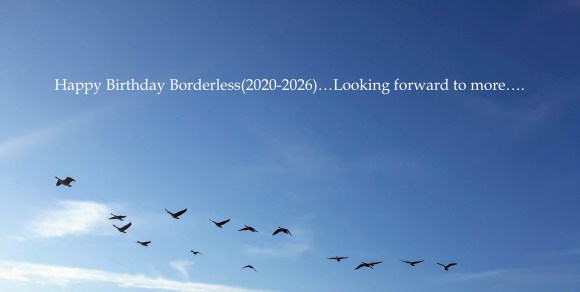
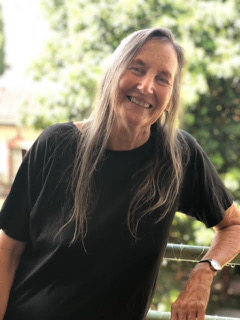
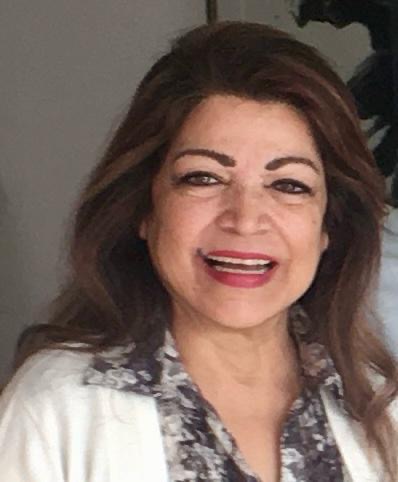
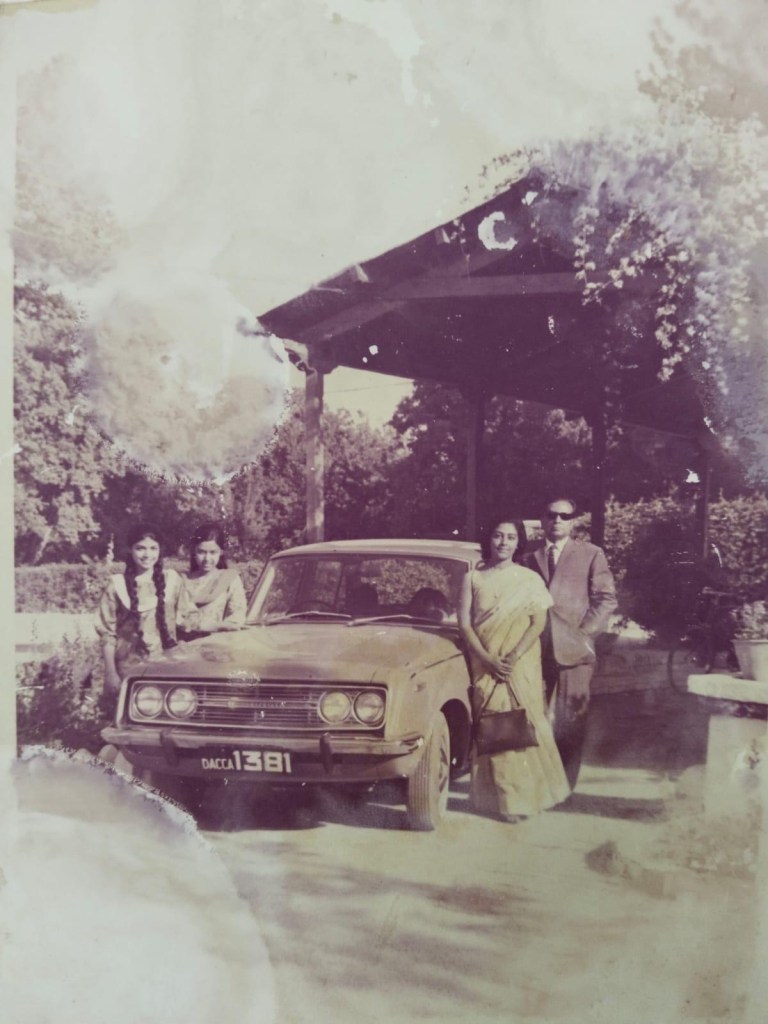
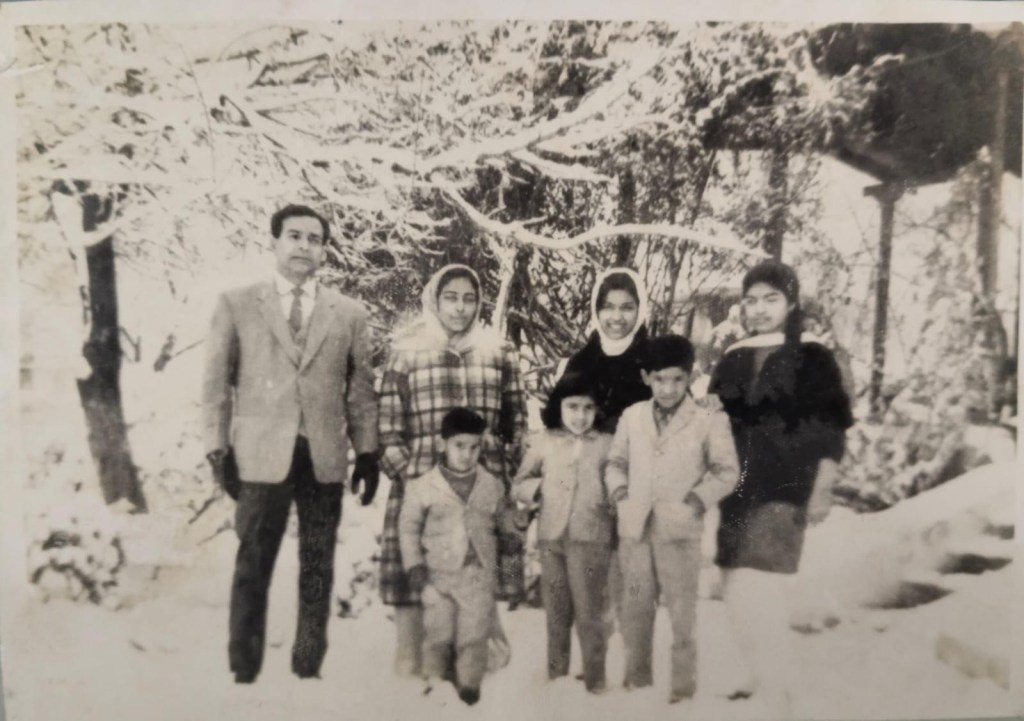
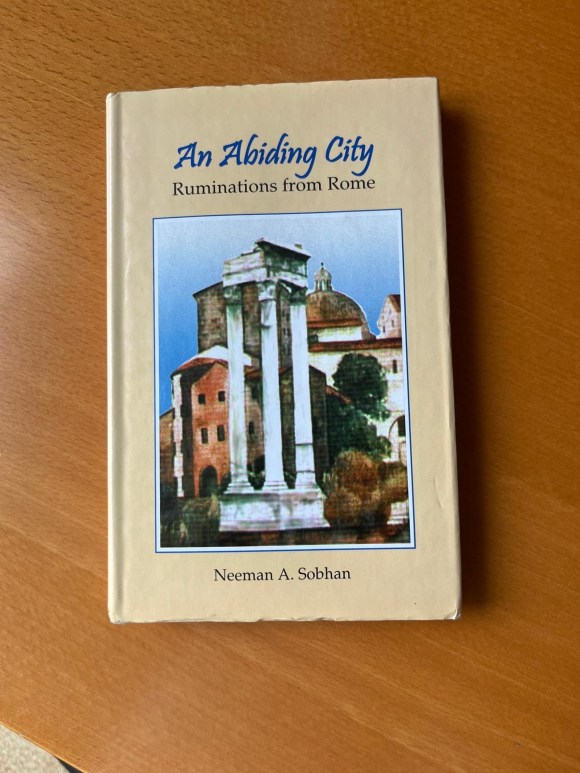

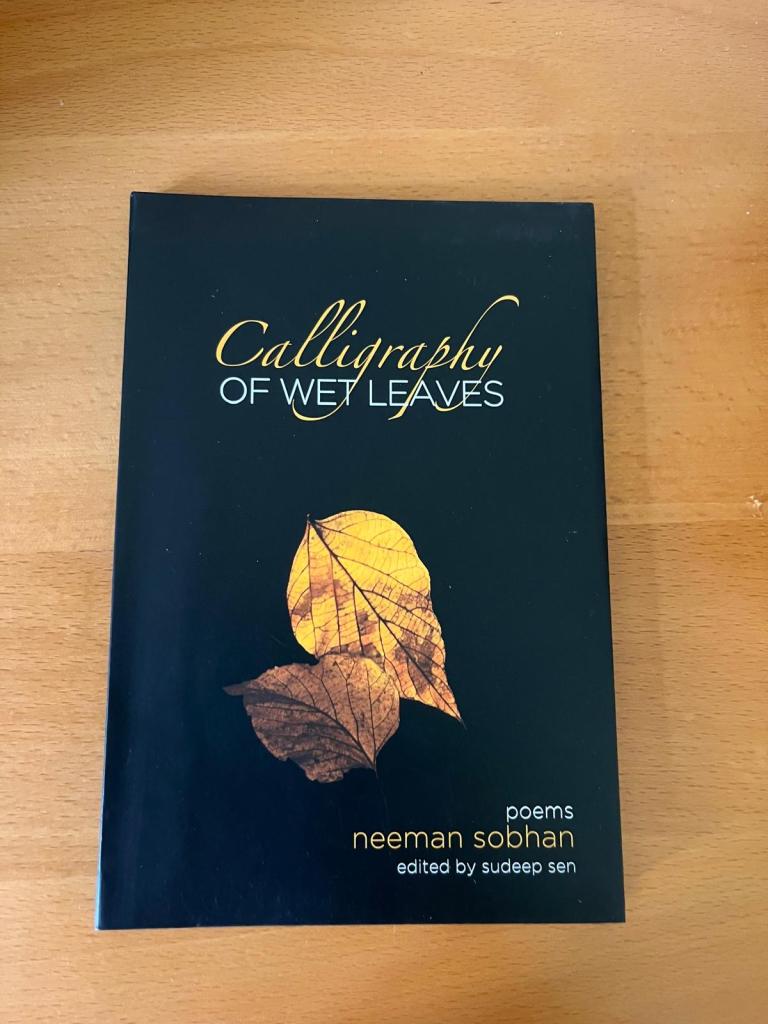


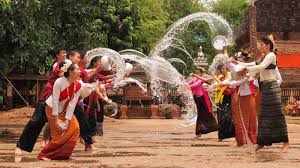
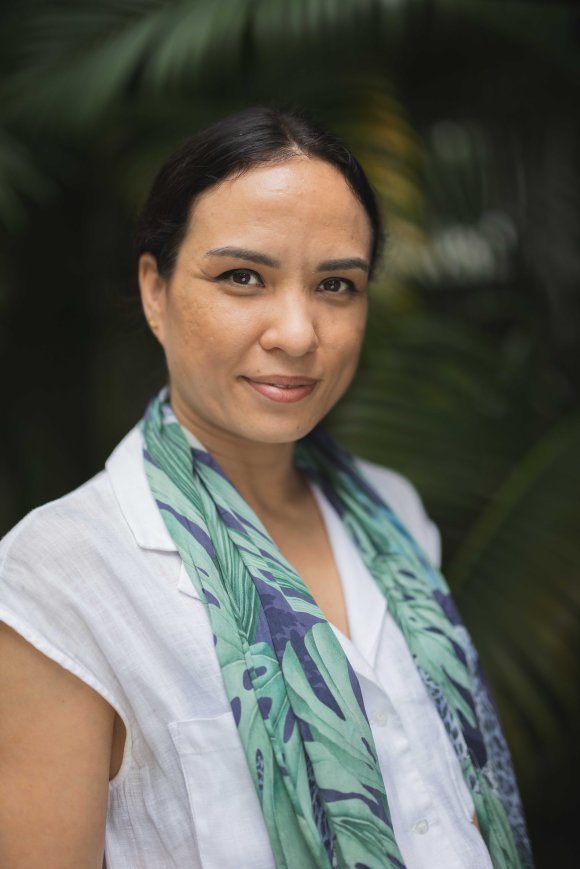

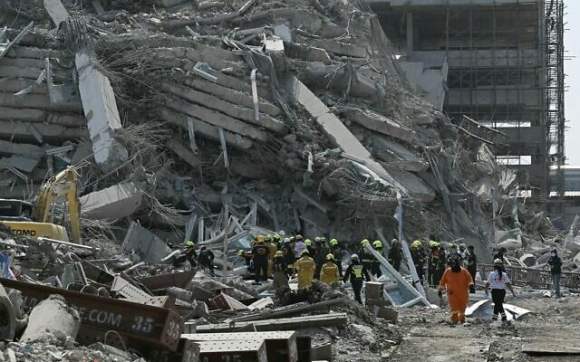
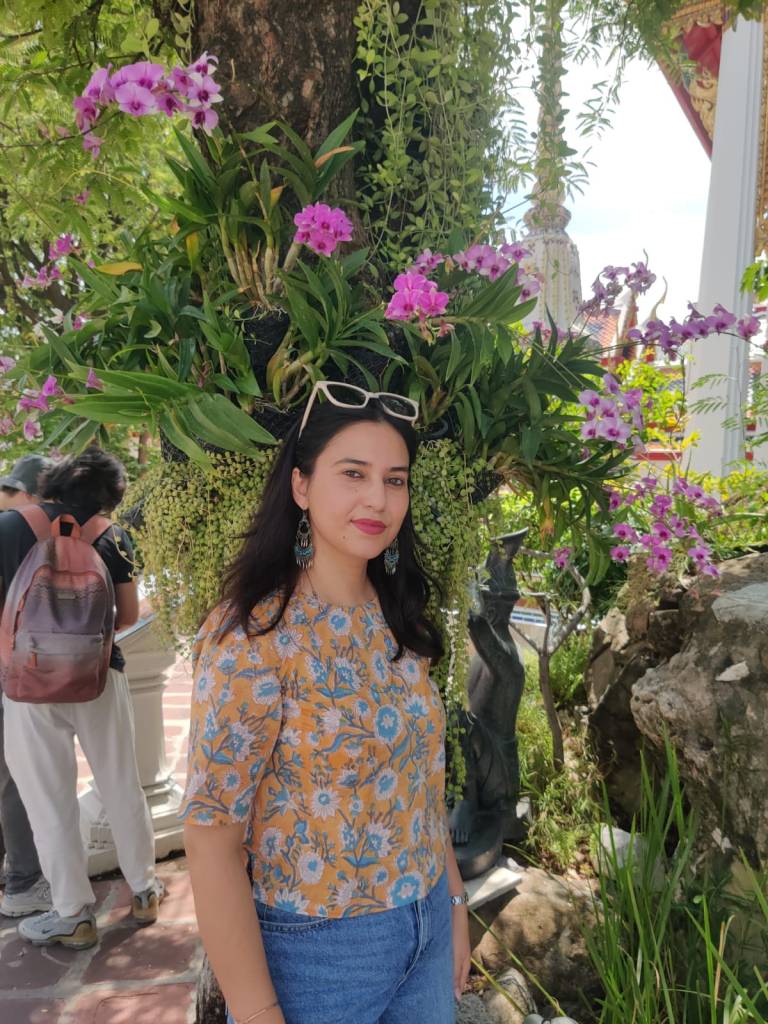
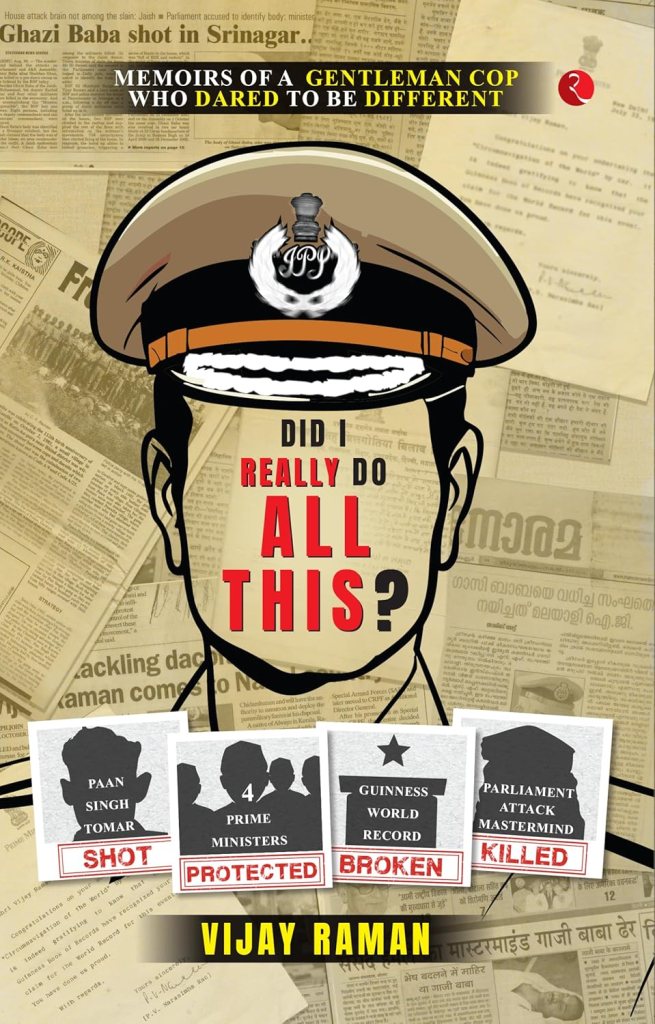
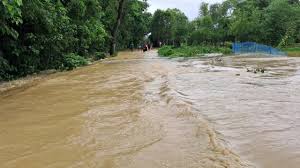
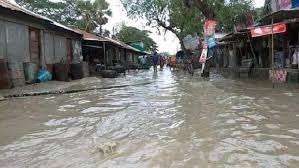
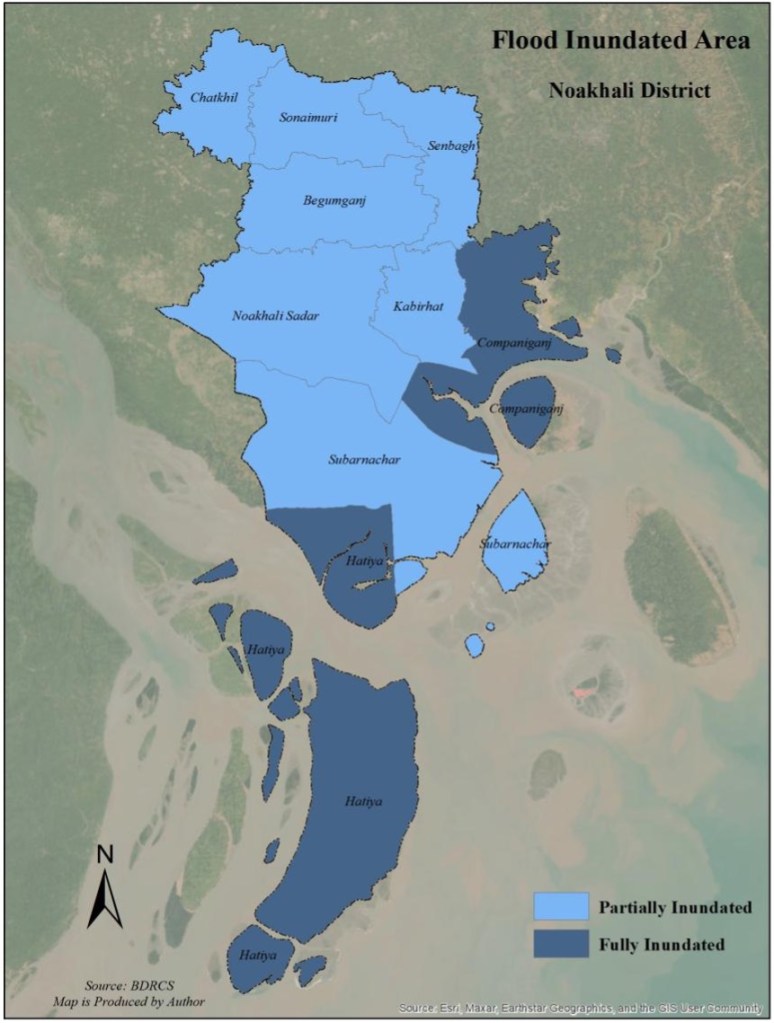
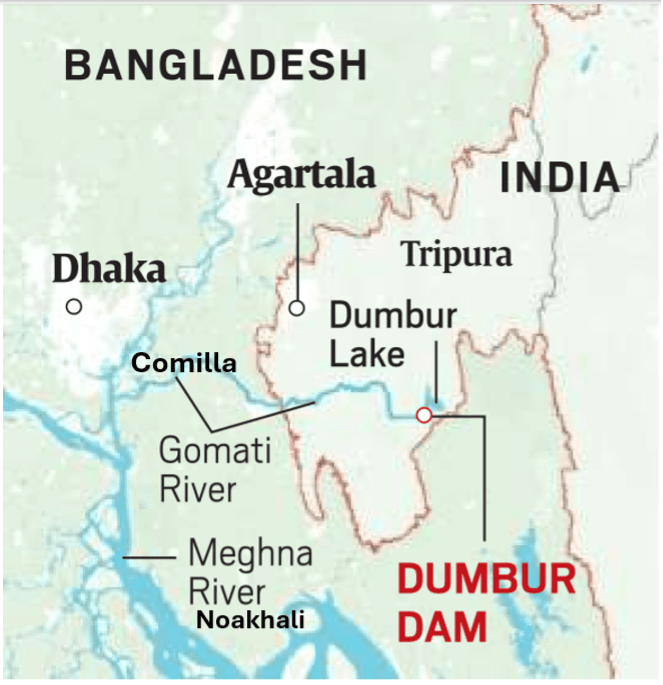
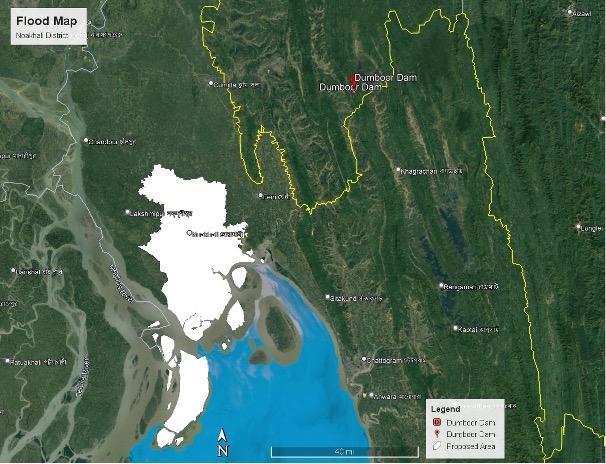
 Borderless