Categories
Contents

Borderless, November 2025

Art by Sohana Manzoor

Editorial

Spring in Winter?… Click here to read.

Translations

Nazrul’s Musafir, Mochh re Aankhi Jol (O wayfarer, wipe your tears) has been translated from Bengali by Professor Fakrul Alam. Click here to read.

Four of his own Malay poems have been translated by Isa Kamari. Click here to read.

Five short poems by Munir Momin have been translated from Balochi by Fazal Baloch. Click here to read.

Five poems by Rohini K.Mukherjee have been translated from Odia by Snehprava Das. Click here to read.

S.Ramakrishnan’s story, Steps of Conscience, has been translated from Tamil by B.Chandramouli. Click here to read.

Tagore’s poem, Sheeth or Winter, has been translated from Bengali by Mitali Chakravarty. Click here to read.

Poetry

Click on the names to read the poems

Ryan Quinn Flanagan, Usha Kishore, Joseph C. Ogbonna, Debadrita Paul, John Valentine, Saranyan BV, Ron Pickett, Shivani Shrivastav, George Freek, Snehaprava Das, William Doreski, Mohit Saini, Rex Tan, John Grey, Raiyan Rashky, Luis Cuauhtémoc Berriozábal

Poets, Poetry & Rhys Hughes

In Nomads of the Bone, Rhys Hughes shares an epic poem. Click here to read.

Musings/Slices from Life

When Nectar Turns Poisonous!

Farouk Gulsara looks at social norms around festive eating. Click here to read.

On a Dark Autumnal Evening

Ahmad Rayees muses on Kashmir and its inhabitants. Click here to read.

The Final Voyage

Meredith Stephens writes of her experience of a disaster while docking their boat along the Australian coastline. Click here to read.

Embracing the Earth and Sky…

Prithvijeet Sinha takes us to the tomb of Saadat Ali Khan in Lucknow. Click here to read.

Musings of a Copywriter

In A Fruit Seller in My Life, Devraj Singh Kalsi explores the marketing skills of his fruit seller a pinch of humour. Click here to read.

Notes from Japan

In Return to Naoshima, Suzanne Kamata takes us to an island museum. Click here to read.

Essays

The Trouble with Cioran

Satyarth Pandita introduces us to Emil Cioran, a twentieth century philosopher. Click here to read.

Once a Student — Once a Teacher

Odbayar Dorj writes of celebrating the start of the new school year in Mongolia and of their festivals around teaching and learning. Click here to read.

Bhaskar’s Corner

In ‘Language… is a mirror of our moral imagination’, Bhaskar Parichha pays a tribute to Prof. Sarbeswar Das. Click here to read.

Stories

Visions

Fabiana Elisa Martínez takes us to Argentina. Click here to read.

My Grandmother’s Guests

Priyanjana Pramanik shares a humorous sketch of a nonagenarian. Click here to read.

After the Gherkin

Deborah Blenkhorn relates a tongue-in-cheek story about a supposed crime. Click here to read.

Pause for the Soul

Sreenath Nagireddy writes of migrant displacement and adjustment. Click here to read.

The Real Enemy 

Naramsetti  Umamaheswararao gives a story set in a village in Andhra Pradesh. Click here to read.

Feature

A conversation with Amina Rahman, owner of Bookworm Bookshop, Dhaka, about her journey from the corporate world to the making of her bookstore with a focus on community building. Click here to read.

Book Excerpts

An excerpt from from Love and Crime in the Time of Plague: A Bombay Mystery by Anuradha Kumar. Click here to read.

An excerpt from Wayne F Burke’s Theodore Dreiser – The Giant. Click here to read.

Book Reviews

Somdatta Mandal reviews M.A.Aldrich’s Old Lhasa: A Biography. Click here to read.

Satya Narayan Misra reviews Amal Allana’s Ebrahim Alkazi: Holding Time Captive. Click here to read.

Anita Balakrishnan reviews Silver Years: Senior Contemporary Indian Women’s Poetry edited by Sanjukta Dasgupta, Malashri Lal and Anita Nahal. Click here to read.

Bhaskar Parichha reviews Diya Gupta’s India in the Second World War: An Emotional History. Click here to read.

.

Click here to access the Borderless anthology, Monalisa No Longer Smiles

Click here to access Monalisa No Longer Smiles on Amazon International
Categories
Editorial

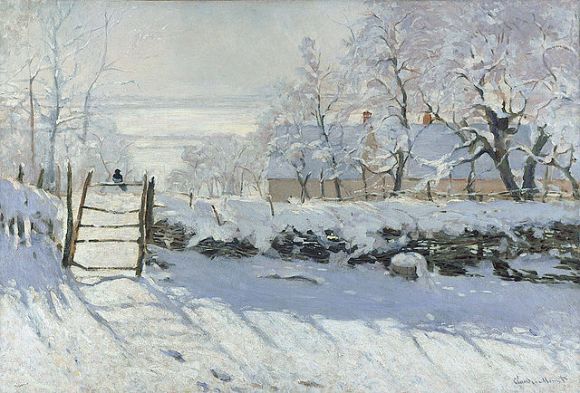
Spring in Winter?

Painting by Claude Monet (1840-1926)
If Winter comes, can Spring be far behind?

'Ode to the West Wind', Percy Bysshe Shelley (1792 -1822)

The idea of spring heralds hope even when it’s deep winter. The colours of spring bring variety along with an assurance of contentment and peace. While wars and climate disasters rage around the world, peace can be found in places like the cloistered walls of Sistine Chapel where conflicts exist only in art. Sometimes, we get a glimpse of peace within ourselves as we gaze at the snowy splendour of Himalayas and sometimes, in smaller things… like a vernal flower or the smile of a young child. Inner peace can at times lead to great art forms as can conflicts where people react with the power of words or visual art. But perhaps, what is most important is the moment of quietness that helps us get in touch with that inner voice giving out words that can change lives. Can written words inspire change?

Our featured bookstore’s owner from Bangladesh, Amina Rahman, thinks it can. Rahman of Bookworm, has a unique perspective for she claims, “A lot of people mistake success with earning huge profits… I get fulfilment out of other things –- community health and happiness and… just interaction.” She provides books from across the world and more while trying to create an oasis of quietude in the busy city of Dhaka. It was wonderful listening to her views — they sounded almost utopian… and perhaps, therefore, so much more in synch with the ideas we host in these pages.

Our content this month are like the colours of the rainbow — varied and from many countries. They ring out in different colours and tones, capturing the multiplicity of human existence. The translations start with Professor Fakrul Alam’s transcreation of Nazrul’s Bengali lyrics in quest of the intangible. Isa Kamari translates four of his own Malay poems on spiritual quest, while from Balochi, Fazal Baloch bring us Munir Momin’s esoteric verses in English. Snehprava Das’s translation of Rohini K.Mukherjee poetry from Odia and S.Ramakrishnan’s story translated from Tamil by B.Chandramouli also have the same transcendental notes. Tagore’s playful poem on winter (Sheeth) mingles a bit for spring, the season welcomed by all creatures great and small.

John Valentine brings us poetry that transcends to the realms of Buddha, while Ryan Quinn Flanagan, Ron Pickett and Saranyan BV use avians in varied ways… each associating the birds with their own lores. George Freek gives us poignant poetry using autumn while Luis Cuauhtémoc Berriozábal expresses different yearnings that beset him in the season. Snehaprava Das and Usha Kishore write to express a sense of identity, though the latter clearly identifies herself as a migrant. Young Debadrita Paul writes poignant lines embracing the darkness of human existence. Joseph C. Ogbonna and Raiyan Rashky write cheeky lines, they say, on love. Mohit Saini interestingly protests patriarchal expectations that rituals of life impose on men. We have more variety in poetry from William Doreski, Rex Tan, Shivani Shrivastav and John Grey. Rhys Hughes in his column shares with us what he calls “A Poem Of Unsuccessful Excess” which includes, Ogden Nash, okras, Atilla the Hun, Ulysees, turmeric and many more spices and names knitting them into a unique ‘Hughesque’ narrative.

Our fiction travels from Argentina with Fabiana Elisa Martínez to light pieces by Deborah Blenkhorn and Priyanjana Pramanik, who shares a fun sketch of a nonagenarian grandma. Sreenath Nagireddy addresses migrant lores while Naramsetti Umamaheswararao gives a story set in a village in Andhra Pradesh.

We have non-fiction from around the world. Farouk Gulsara brings us an unusual perspective on festive eating while Odbayar Dorj celebrates festivals of learning in Mongolia. Satyarth Pandita introduces us to Emil Cioran, a twentieth century philosopher and Bhaskar Parichha pays a tribute to Professor Sarbeswar Das.  Meredith Stephens talks of her first-hand experience of a boat wreck and Prithvijeet Sinha takes us to the tomb of Sadaat Ali Khan. Ahmad Rayees muses on the deaths and darkness in Kashmir that haunt him. Devraj Singh Kalsi brings in a sense of lightness with a soupçon of humour and dreams of being a fruit seller. Suzanne Kamata revisits a museum in Naoshima in Japan.

Our book excerpts are from Anuradha Kumar’s sequel to The Kidnapping of Mark Twain, Love and Crime in the Time of Plague: A Bombay Mystery and Wayne F Burke’s Theodore Dreiser – The Giant, a literary non-fiction. Our reviews homes Somdatta Mandal discussion on M.A.Aldrich’s Old Lhasa: A Biography while Satya Narayan Misra writes an in-depth piece on Amal Allana’s Ebrahim Alkazi: Holding Time Captive. Anita Balakrishnan weaves poetry into this section with her analysis of Silver Years: Senior Contemporary Indian Women’s Poetry edited by Sanjukta Dasgupta, Malashri Lal and Anita Nahal. And Parichha reviews Diya Gupta’s India in the Second World War: An Emotional History, a book that looks at the history of the life of common people during a war where soldiers were all paid to satiate political needs of powerbrokers — as is the case in any war. People who create the need for a war rarely fight in them while common people like us always hope for peace.

We have good news to share — Borderless Journal has had the privilege of being listed on Duotrope – which means more readers and writers for us. We are hugely grateful to all our readers and contributors without who we would not have a journal. Thanks to our wonderful team, especially Sohana Manzoor for her fabulous artwork.

Hope you have a wonderful month as we move towards the end of this year.

Looking forward to a new year and spring!

Mitali Chakravarty

borderlessjournal.com

CLICK HERE TO ACCESS THE CONTENTS FOR THE NOVMBER 2025 ISSUE.

.

READ THE LATEST UPDATES ON THE FIRST BORDERLESS ANTHOLOGY, MONALISA NO LONGER SMILES, BY CLICKING ON THIS LINK.

Categories
Contents

Borderless, July 2024

Art by Sohana Manzoor

Editorial

Seasons out of TimeClick here to read.

Conversation

A brief introduction to Suzanne Kamata’s Cinnamon Beach and a conversation with the author about her latest novel. Click here to read.

Translations

Tagore’s Achhe Dukhu, Achhe Mrityu, (Sorrow Exists, Death Exists) has been translated from Bengali by Fakrul Alam. Click here to read.

Nazrul’s Ghumaite Dao Shranto Robi Re (Let Robi Sleep in Peace) has been translated from Bengali by Professor Fakrul Alam. Click here to read.

Amalkanti by Nirendranath Chakraborty has been translated from Bengali by Debali Mookerjea-Leonard. Click here to read.

Speech Matters, a story by Naramsetti Umamaheswararao, has been translated from Telugu by Johnny Takkedasila. Click here to read.

Every Day by Hafeez Rauf has been translated from Balochi by Fazal Baloch. Click here to read.

The Long Journey by Ihlwha Choi has been translated from Korean by the poet himself. Click here to read.

Mrityu or Death by Tagore has been translated from Bengali by Mitali Chakravarty. Click here to read.

Poetry

Click on the names to read the poems

Jared Carter, Michael Burch, Kirpal Singh, Rakhi Dalal, Stuart MacFarlane, Averi Saha, John Grey, Surbhi Sharma, David Francis, Pramod Rastogi, David Mellor, Saranyan BV, Jim Bellamy, Tasneem Hossain, Thompson Emate, George Freek, Mitra Samal, Lizzie Packer, Shamik Banerjee, Ryan Quinn Flanagan, Rhys Hughes

Musings/ Slices from Life

Stop, Look, Think!

Farouk Gulsara muses with a slice irony at a traffic junction. Click here to read.

Norman Rockwell: Out of the Closet

Wayne F. Burke gives a vignette of the life of the legendary illustrator. Click here to read.

Unveiling the Magic of Mystical Mangroves

Sai Abhinay Penna travels to the second largest mangrove forest in the world. Click here to read.

Glimpses of an Indian Summer

Madhuri Bhattacharya nostalgically captures the nuances of a hot summer. Click here to read.

The Pearl of the Indian Ocean

Ravi Shankar travels to Colombo. Click here to read.

Essays

The Myriad Hues of Tagore by Aruna Chakravarti

Aruna Chakravarti writes on times and the various facets of Tagore. Click here to read.

Picked Clean

Snigdha Agrawal writes of the impact from the loss of green cover in Bangalore. Click here to read.

Fast Food for a Month

Keith Lyons gives an in memoriam about the late documentarian, Morgan Spurlock. Click here to read.

Stories

In the Shadows…

Paul Mirabile gives us a story steeped in art and mental health. Click here to read.

The Last Hyderabadi

Mohul Bhowmick talks of the passage of an era. Click here to read.

Alvin and the Curious Case of Spoilt Milk

Anagha Narasimha gives a light hearted piece about the impact of demonetisation. Click here to read.

Book Excerpts

An excerpt from The Poisoner of Bengal/The Prince and the Poisoner by Dan Morrison. Click here to read.

An excerpt from The Sunset Suite by Rhys Hughes. Click here to read.

Book Reviews

Somdatta Mandal reviews Knife:  Meditations After an Attempted Murder by Salman Rushdie. Click here to read.

Basudhara Roy reviews Wild Women: Seekers, Protagonists and Goddesses in Sacred Indian Poetry by Arundhathi Subramaniam. Click here to read.

Navleen Multani reviews Mapping the Mind, Minding the Map, edited by Basudhara Roy and Jaydeep Sarangi. Click here to read.

Bhaskar Parichha reviews Derek Waller’s The Pundits: British Exploration of Tibet and Central Asia. Click here to read.

.

Click here to access the Borderless anthology, Monalisa No Longer Smiles

Click here to access Monalisa No Longer Smiles on Amazon International
Categories
Editorial

Seasons Out of Time

...the horror of dark red sky – the gates of hell opened wide so they say that even atheists prayed to save the souls of the dead...

— Lizzie Packer, 'Hot Dry Summers'

The description in ‘Hot Dry Summers’ is not of hell but what is perceived as happening on certain parts of Earth due to global warming or climate change. Forest fires. Nearer the equator, the storms have become harsher with lightning strikes that seem to connect the Earth to the sky. Trees get uprooted as the soil is softened from excessive rain. Sometimes, they fall on passers-by killing or injuring them. There is no rain in some places, forest fires or flooding in others… The highest temperatures touched 55 degrees Celsius this year. Instead of worrying about losing our homes lodged on land masses to the oceans that continue to rise, becoming dark heat absorbers due to loss of white ice cover, we persistently fight wars, egged on by differences highlighting divisive constructs. It feels strange that we are witness to these changes which seem to be apocalyptic to doomsday sayers. Are they right? Our flora, fauna and food will also be impacted by global climate change. How will we survive these? Will we outlive these as a species?

Keeping the myriad nuances of living on this planet in mind, we have writings from more than a dozen countries showcased in this issue, with a few highlighting climate change and wars — especially in poetry. Michael Burch has given us poetry on weather. John Grey has celebrated nature. Other than Lizzie Packer, Mitra Samal has a subtle poem on climate change. Stuart McFarlane and David Mellor bring the disaster of war to our doorstep. Jared Carter, Kirpal Singh, Ryan Quinn Flanagan, Averi Saha, Shamik Banerjee, David Francis, George Freek, Rakhi Dalal and more have reflected on the varied nuances of life. Rhys Hughes has brought in humour and a comment on our perspectives, with his poem ‘Devil’s Bridge to Istanbul’… Can a shortcut be found across continents with the magic of a signboard?

Poetry in our translations’ section travels to Balochistan, from where a Hafeez Rauf translated from Balochi by Fazal Baloch, talks of burning tyres, again conflicts. It takes on a deeper hue as Ihlwha Choi translates his poignant poem from Korean, reflecting on the death of his mother. We have a translation of Tagore’s less popular poem, Mrityu[1], reflecting on the same theme. His reflections on his wife’s death too have been translated by Professor Fakrul Alam who has also shared a song of Nazrul, written and composed on the death of Tagore. Another lesser-known poet but brilliant nonetheless, Nirendranath Chakraborty, has been translated for us by Debali Mookerjea-Leonard. And what a tremendous poem it is when the person called Amalkanti wanted to be sunshine! We have a story too — ‘Speech Matters’ by Naramsetti Umamaheswararao translated by Johny Takkedasila.

Our stories as usual travel around the world — from Holland (by Paul Mirabile) to Hyderabad (by Mohul Bhowmick) and with a quick pause at Bangalore (by Anagha Narasimha). Travels in the real world are part of our non-fiction. Sai Abhinay Penna takes to a the second largest mangrove forest in the world and Ravi Shankar to Colombo. Madhuri Bhattachrya gives us a glimpse of an Indian summer and Snigdha Aggrawal explores the impact of climate change in her part of the world. Farouk Gulsara actually writes his reflections at a traffic junction. And it reads droll…

We have an in memoriam by Keith Lyons on Morgan Spurlock, the documentary maker who ate McDonald fare for a month and then made a film on it. We have two tributes to two legends across time. Wayne F Burke has given a brief piece on the iconic illustrator, Norman Rockwell. And Aruna Chakravarti, the queen of historic fiction who brought the Tagore family alive for us in her two very well researched novels, Jorasanko and Daughters of Jorasanko, has given us a fabulous tribute to Tagore on the not-so common aspects of him.

We have excerpts from another historical novel set in Bengal of Tagore’s time, Dan Morrison’s The Prince and the Poisoner: The Murder that Rocked the British Raj and Hughes’ The Sunset Suite, a set of absurd tall tales that make you smile, squirm or wonder…  Reviews of Salman Rushdie’s Knife: Meditations After an Attempted Murder by Somdatta Mandal and of Arundhathi Subramaniam’s Wild Women: Seekers, Protagonists and Goddesses in Sacred Indian Poetry by Basudhara Roy bring two latest books to our readers. Navleen Multani reflects on Mapping the Mind, Minding the Map, edited by Basudhara Roy and Jaydeep Sarangi. And Bhaskar Parichha tells us about a group of men called Pundits during British Raj, “In the closed files of the government of British India, however, they were given their true designation as spies…” in his review of Derek Waller’s The Pundits: British Exploration of Tibet and Central Asia.

Suzanne Kamata, the novelist who does a column from Japan for us normally, has spoken to us about her new novel, Cinnamon Beach, which overrides multiple manmade constructs. It’s an interesting read from someone who lives her life across multiple cultures and transcends many boundaries.

This is a bumper issue, and it is difficult to convey the vibrant hues of words that colour this edition. Please do pause by our contents page for a more comprehensive look.

This issue would not have been possible without all our fabulous contributors and a wonderful, dedicated team. We are delighted that Rakhi Dalal — who has done many reviews and shares her poetry with us in this issue — has agreed to be a writer-in-residence with us. A huge thanks to all of you, and especially Sohana Manzoor for her artwork. I am truly grateful to our readers for popularising our efforts to put together an online space with free and vibrant reads.

I would like to end with a few lines that gives me hope despite climate change, wars and doomsday predictions.

There’s more to life,
he says to me,
than what you choose to see.

— George Freek, 'The Imponderables'

Enjoy the reads.

Mitali Chakravarty

borderlessjournal.com

[1] Death

Click here to access the content’s page for the July 2024 Issue.

.

READ THE LATEST UPDATES ON THE FIRST BORDERLESS ANTHOLOGY, MONALISA NO LONGER SMILES, BY CLICKING ON THIS LINK.

Categories
Tribute

Out of the Closet: Norman Rockwell

By Wayne F. Burke

Norman Perceval Rockwell went into dementia in the last years of his life and died at 84 in 1978. He was a deeply insecure human being—about himself and his work. Even as a cultural icon, he still distrusted his judgement, wondering if the quality of his work was slipping, if editors would still take it, if he and his work were passé—too old fashioned. His insecurities—masculinity among them; his struggles with self-worth and the worthiness and meaningfulness of his work, drove him to achieve a kind of surface perfection in his work and self.

He wore rose coloured glasses an inch thick, refusing to acknowledge the seamier side of life, though in a few pictures, very few, he stepped out of character: with a poster/picture of a machine gunner, 1942; with a 1960’s painting of a little black girl being escorted by U.S. Marshalls, he presented a deeper reality, clearer vision, than his usual joshingly superficial emotionalism—the signature of his work. His seven years in therapy with Eric Erikson did bring a deeper psychological nuance to his work, but the depth remained at the shallow end of the pool.

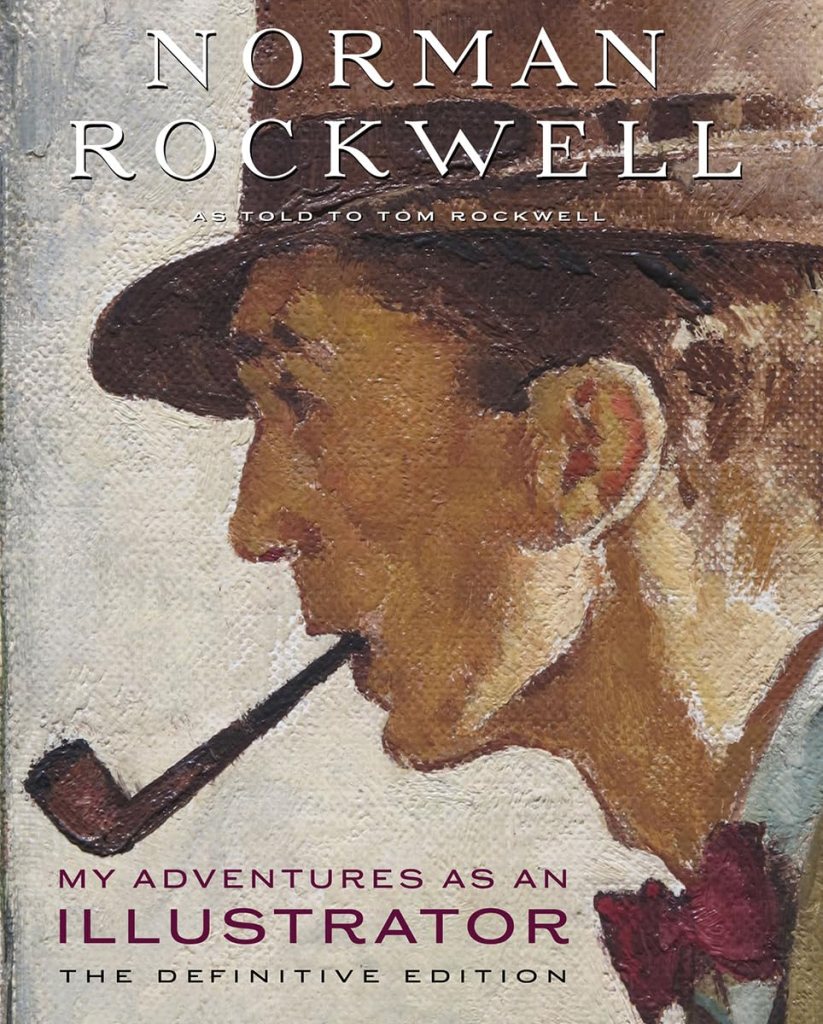
 “I have the ability,” he wrote in his autobiography My Adventures As An Illustrator,“to ignore unpleasant or disturbing experiences.” (In the autobiography, he failed to mention his second wife’s alcoholism—they were married for twenty years.)

He remained blinkered to reality, setting out purposely to create an alternative and prominently adenoidal looney-tune world.

As a product of a valetudinarian mother and a cold remote father (a salesman) Norman became an emotionally stunted pedantic oddball whose work straddled worlds of illustration and fine art. Whenever asked, he always declined to describe himself as an “artist,” insisting he was an “illustrator.” A display of humility, Deborah Solomon noted in her Rockwell biography, or a defensive feint—“he couldn’t be rejected by the art world if he rejected it first” (American Mirror, ‘The Life and Art of Norman Rockwell’). The insipid emotionalism of his characterisations ensured his place as illustrator.

Though Americanising Dutch Realism, as Solomon also noted, his technique—fidelity to realism, and to the shallowness of his vision—made his work’s elevation to rarified “art” probable though only as a side-show, as an art of eccentricity, and not for the big tent. 

Wayne F. Burke is, primarily, a poet–with 8 published poetry collections to date–but also writes prose fiction, nonfiction, and expository. His most recently published book, a nonfiction work, is titled “the VAN GOGH file: POTATO EATERS, PREACHERS, AND PAINTERS,” Cyberwit.net., publisher. He lives in the state of Vermont (USA).

.

PLEASE NOTE: ARTICLES CAN ONLY BE REPRODUCED IN OTHER SITES WITH DUE ACKNOWLEDGEMENT TO BORDERLESS JOURNAL

Click here to access the Borderless anthology, Monalisa No Longer Smiles

Click here to access Monalisa No Longer Smiles on Kindle Amazon International