Categories
Editorial

Towards a Brave New World

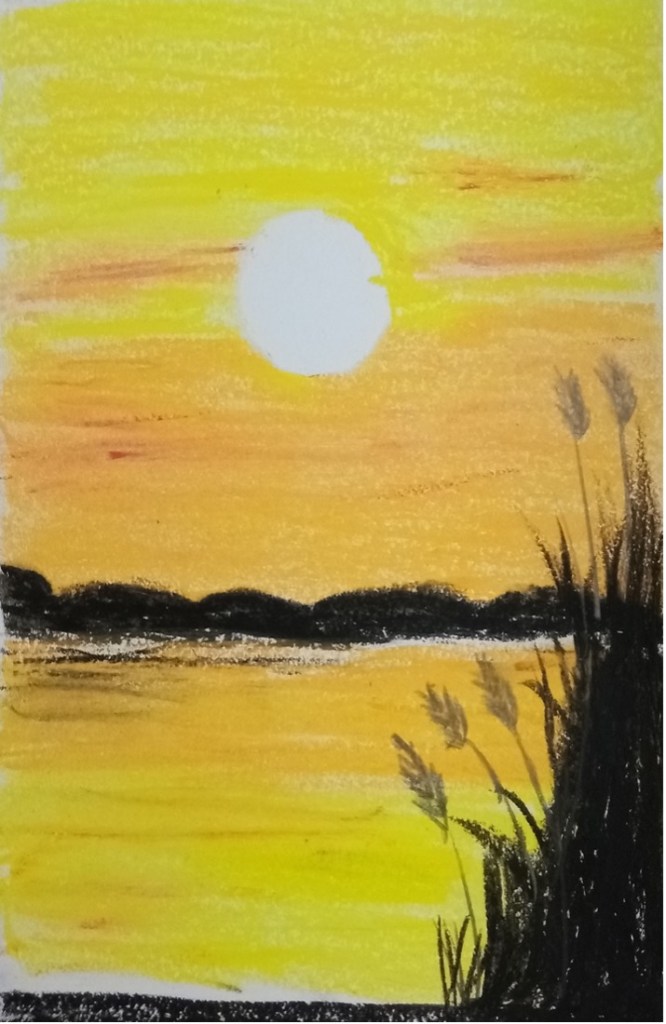
Painting by Sohana Manzoor

With Christmas at our heels and the world waking up slowly from a pandemic that will hopefully become an endemic as the Omicron seems to fizzle towards a common cold, we look forward to a new year and a new world. Perhaps, our society will evolve to become one where differences are accepted as variety just as we are fine with the fact that December can be warm or cold depending on the geography of the place. People will be welcomed even if of different colours and creed. The commonality of belonging to the same species will override all other disparities…

While we have had exciting developments this year and civilians have moved beyond the Earth — we do have a piece on that by Candice Louisa Daquin — within the planet, we have become more aware of the inequalities that exist. We are aware of the politics that seems to surround even a simple thing like a vaccine for the pandemic. However, these two years dominated by the virus has shown us one thing — if we do not rise above petty greed and create a world where healthcare and basic needs are met for all, we will suffer. As my nearly eighty-year-old aunt confided, even if one person has Covid in a remote corner of the world, it will spread to all of us. The virus sees no boundaries. This pandemic was just a start. There might be more outbreaks like this in the future as the rapacious continue to exploit deeper into the wilderness to accommodate our growing greed, not need. With the onset of warmer climates — global warming and climate change are realities — what can we look forward to as our future?

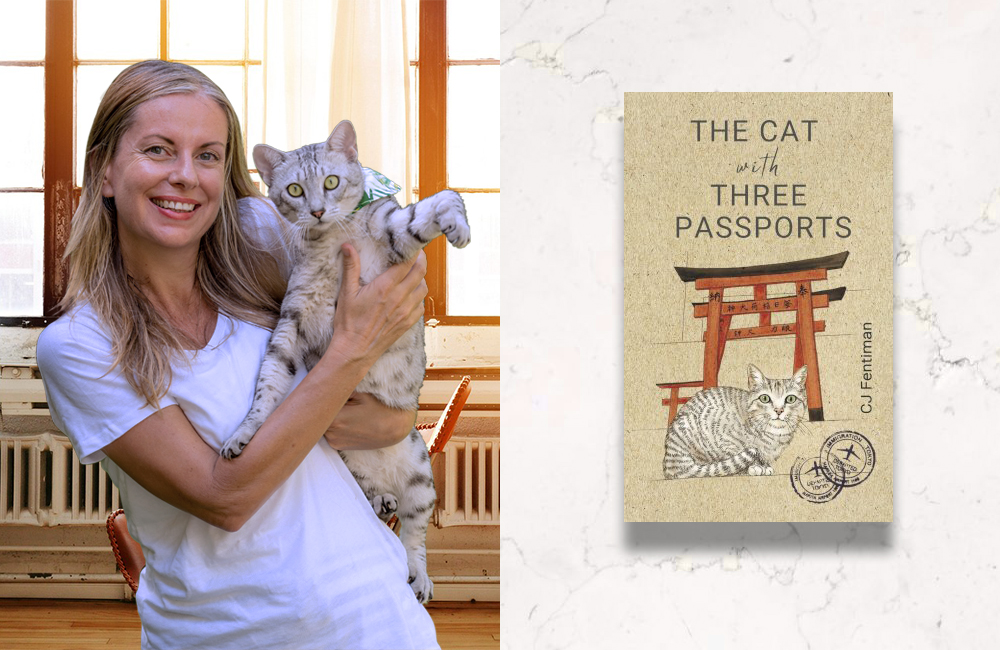
Que sera sera — what will be, will be. Though a bit of that attitude is necessary, we have become more aware and connected. We can at least visualise changes towards a more egalitarian and just world, to prevent what happened in the past. It would be wonderful if we could act based on the truth learnt from history rather than to overlook or rewrite it from the perspective of the victor and use that experience to benefit our homes, planet and all living things, great and small.  In tune with our quest towards a better world, we have an interview with an academic, Sanjay Kumar, founder of a group called Pandies, who use theatre to connect the world of haves with have-nots. What impressed me most was that they have actually put refugees and migrant workers on stage with their stories. They even managed to land in Kashmir and work with children from war-torn zones. They have travelled and travelled into different dimensions in quest of a better world. Travelling is what our other interviewee did too — with a cat who holds three passports. CJ Fentiman, author of The Cat with Three Passports, has been interviewed by Keith Lyons, who has reviewed her book too.

This time we have the eminent Aruna Chakravarti review Devika Khanna Narula’s Beyond the Veils, a retelling of the author’s family history. Perhaps, history has been the common thread in our reviews this time. Rakhi Dalal has reviewed Anirudh Kala’s Two and a Half Rivers, a fiction that focusses on the Sikh issues in 1980s India from a Dalit perspective. It brought to my mind a family saga I had been recently re-reading, Alex Haley’s Roots, which showcased the whole American Revolution from the perspective of slaves brought over from Africa. Did the new laws change the fates of the slaves or Dalits? To an extent, it did but the rest as fact and fiction showcase were in the hands that belonged to the newly freed people. To enable people to step out of the cycle of poverty, the right attitudes towards growth and the ability to accept the subsequent changes is a felt need. That is perhaps where organisations like Pandies step in.  Another non-fiction which highlights history around the same period and place as Kala’s novel is BP Pande’s In the Service of Free India –Memoirs of a Civil Servant. Reviewed by Bhaskar Parichha, the book explores the darker nuances of human history filled with violence and intolerance.

That violence is intricately linked to power politics has been showcased often. But, what would be really amazing to see would be how we could get out of the cycle as a society. With gun violence being an accepted norm in one of the largest democracies of the world, perhaps we need to listen to the voice of wisdom found in the fiction by Steve Davidson who meets perhaps a ghost in Hong Kong. Musing over the ghost’s words, the past catches up in Sunil Sharma’s story, ‘Walls’. Sharma has also given us a slice from his life in Canada with its colours, vibrancy and photographs of the fall. As he emigrated to Canada, we read of immigrants in Marzia Rahman’s touching narrative. She has opted to go with the less privileged just as Lakshmi Kannan has opted to go with the privileged in her story.

Sharma observes, while we find the opulence of nature thrive in places people inhabit in  Canada, it is not so in Asia. I wonder why? Why are Asian cities crowded and polluted? There was a time when Los Angeles and London suffered smogs. Has that shifted now as factories relocated to Asia, generating wealth in currency but taking away from nature’s opulence of fresh, clean air as more flock into crowded cities looking for sustenance?

Humour is introduced into the short story section with Sohana Manzoor’s hilarious rendering of her driving lessons in America, lessons given to foreigners by migrants. Rhys Hughes makes for  more humour with a really hilarious rendition of men in tea cosies missing their…I  think ‘Trouser Hermit’ will tell you the rest. He has perhaps more sober poetry which though imaginative does not make you laugh as much as his prose. Michael Burch has shared some beautiful poetry perpetuating the calmer nuances of a deeply felt love and affection. George Freek, Anasuya Bhar, Ryan Quinn Flanagan, Dibyajyoti Sarma have all given us wonderful poetry along with many others. One could write an essay on each poem – but as we are short shrift for time, we move on to travel sagas from hiking in Australia and hobnobbing with kangaroos to renovated palaces in Bengal.

We have also travelled with our book excerpts this time. Suzanne Kamata’s The Baseball Widow shuttles between US and Japan and Somdatta Mandal’s translation of  A Bengali lady in England by Krishnabhabi Das, actually has the lady relocate to nineteenth century England and assume the dress and mannerisms of the West to write an eye-opener for her compatriots about the customs of the colonials in their own country.

While mostly we hear of sad stories related to marriages, we have a sunny one in which Alpana finds much in a marriage that runs well with wisdom learnt from Kung Fu Panda.  Devraj Singh Kalsi has given us a philosophical piece with his characteristic touch of irony laced with humour on statues. If you are wondering what he could have to say, have a read.

In Nature’s Musings, Penny Wilkes has offered us prose and wonderful photographs of the last vestiges of autumn. As the season hovers between summer and winter, geographical boundaries too can get blurred at times. A nostalgic recap given by Ratnottama Sengupta along the borders of Bengal, which though still crossed by elephants freely in jungles (wild elephants do not need visas, I guess), gained an independence from the harshness of cultural hegemony on December 16th, 1971. Candice Louisa Daquin has also looked at grey zones that lie between sanity and insanity in her column. An essay which links East and West has been given to us by Rakibul Hasan about a poet who mingles the two in his poetry. A Bengali song by Tagore, Purano shei diner kotha,  that is almost a perfect trans creation of Robert Burn’s Scottish Auld Lang Syne in the spirit of welcoming the New Year, has been transcreated to English. The similarity in the content of the two greats’ lyrics showcase the commonalities of love, friendship and warmth that unite all cultures into one humanity.

Our first translation from Uzbekistan – a story by Sherzod Artikov, translated from Uzbeki by Nigora Mukhammad — gives a glimpse of a culture that might be new to many of us. Akbar Barakzai’s shorter poems, translated by Fazal Baloch from Balochi and Ratnottama Sengupta’s transcreation of a Tagore song, Rangiye Die Jao, have added richness to our oeuvre along with  one from Korean by Ihlwha Choi. Professor Fakrul Alam, who is well-known for his translation of poetry by Jibonanda Das, has started sharing his work on the Bengali poet with us. Pause by and take a look.

There is much more than what I can put down here as we have a bumper end of the year issue this December. There is a bit of something for all times, tastes and seasons.

I would like to thank my wonderful team for helping put together this issue. Sohana Manzoor and Sybil Pretious need double thanks for their lovely artwork that is showcased in our magazine. We are privileged to have committed readers, some of who have started contributing to our content too. A huge thanks to all our contributors and readers for being with us through our journey.

I wish you a very Merry Christmas and a wonderful transition into the New Year! May we open up to a fantastic brave, new world!

Mitali Chakravarty
Borderless Journal

Categories
Excerpt

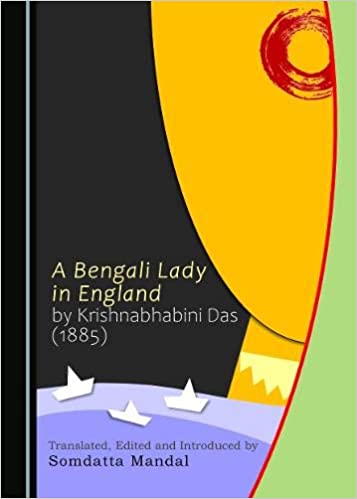
Somdatta Mandal’s translation of A Bengali Lady in England by Krishnabhabini Das (1885)

Title: A Bengali Lady in England by Krishnabhabini Das (1885)

Translator: Somdatta Mandal

Publisher : Cambridge Scholars Publishing

Foreword

When, in 1882, teenage Krishnabhabini Das (1864-1919) left for an extended trip to England with her husband, leaving behind her six-year-old daughter, she regarded this as her self-sacrifice in the service of her long-suffering Bengali people.  Even before leaving home, she took on uncomfortable English-style clothing, diet and deportment in order to prepare herself for that alien Western world.  She determined to use her own challenging experiences in order to awaken and uplift her nascent nation, especially by improving the customary roles of women like herself.  She wrote and published her discoveries and evaluation of Britain as a book, England-e Bangamohila, in 1885, even before her own return home.  She would remain in Britain for a total of eight years, even as her in-laws married off her own distant daughter at age ten.  

With this current volume, Professor Somdatta Mandal has added to her already impressive body of books and other publications by making accessible for the first time to Anglophone readers this significant book by Srimati Krishnabhabini Das.  This translation enables non-Bangla readers to deepen our understanding this key transitional period in India’s and England’s connected histories from the acute first-hand perspective of a woman traveller and published author.

One of the striking features of Krishnabhabini’s fascinating account is how genuinely new and unfamiliar to her were her journey and life in England.  By that time, men and women from India had been venturing to Europe for more than four hundred years.  Even over the decade prior to Krishnabhabini’s own visit, many Bengali men and at least half a dozen Bengali women had preceded her.  Indeed, this was the second trip for her husband, Debendranath Das, having returned only months earlier after six years in England where he had narrowly missed entry into the Indian Civil Service and had taken a degree in mathematics from Cambridge University. 

Krishnabhabini, although married at nine and home schooled by her in-laws, had herself long read and heard about England.  But, even to educated middle-class Indian women, distant imperial Britain still seemed overwhelmingly intimidating.  Determined to enlighten her Bengali sisters through her book, Krishnabhabini still seems to have hesitated to assert her own authority to do so, publishing anonymously.  Even her first publisher in Kolkata condescendingly prefaced the book by apologetically asking tolerance from readers for her misperceptions and simple language but applauding her sincere attempt.

In her account, Krishnabhabini repeatedly raises two central dilemmas.  First, how can she and her compatriots preserve their own culture and values while simultaneously becoming Anglicized.  As an example of this danger, she criticizes her contemporary, Ms. Pandita Ramabai (1858-1922), for having abandoned Hinduism to become a Christian ‘and hence degraded the Hindu race’.  Initially, Krishnabhabini laments with shame how, through her own adoption of a ‘memsahib’ Englishwomen’s dress, she had distanced herself from her Hindu Bengali sisters.  But she takes heart from her conviction that she has done so for their sake. 

Krishnabhabini’s second dilemma is who should be included in her vision for the nascent Indian nation.  As she first leaves Bengal and journeys by train to Mumbai, she notes both the stereotypical differences and also the foundational commonalities among middle-class Hindu women and men of India’s diverse regions.  But she does not identify with people of lower classes or other communities living in India.  Thus, her evocative account tells us much about her own personal perceptions and cultural journeys and those of many comparable people of her time and status.

Through Krishnabhabini’s thoughtful ethnography, we also learn much about English Victorian society and culture.  Insightful outside observers like her can note and record customs and details that are so commonplace for natives that they often remain unremarked.  Her descriptions of the world of middle-class English households, as well as the indigenous racial and other cultural attitudes toward Indians and other foreigners, thus enrich our understanding of this transitional period for imperial England.

Readers of Krishnabhabini’s fascinating and significant book will therefore find much to learn from and savour.

Michael H. Fisher

Robert S. Danforth Professor of History

Oberlin College, USA

January 2015

Chapter Twenty

Last Words

I have seen so many new things in this country and have gained knowledge on so many new subjects; but the more I see and learn about it, the longer I am living here, the more I am remembering India and this makes my heart ache. As I compare this country with that, I understand the great differences between them even more. I am also suffering a lot of mental pain on seeing the pitiable condition of India. Sometimes, I feel totally frustrated and feel India’s sorrow will never be reduced. At other times, I feel a little hopeful and think just as I am feeling for my country, similar feelings are also reverberating in many people’s minds back there. Like me, many people are mentally suffering after seeing the miserable condition of my country and so, hopefully they will compare both the good and bad aspects of the homeland and foreign lands and try to do something for the well-being of our country.

After reading about the knowledge, trade, labour, and women’s education in England, every Indian will understand how much more developed England is in comparison to India. Again, when you read about the English society, domestic life, personal independence of every individual, their love for the motherland, self-respect, etc., you will understand how different English life is from the Indian one. We Hindus are the descendants of the famous Aryans. Right from ancient times, even before the Greeks, our civilisation, religion, knowledge and learning have been famous in the world. We admired truth and courage. Even when all civilised nations had the practice of owning slaves, the Hindus were the only people who restrained themselves from such a heinous act as they did not believe in keeping another fellow human being bonded for life. Their brave deeds and fame spread across the world and their excellence in ancient mathematics, astrology, and philosophy acted as a leading light for other civilised races to follow and get inspired from to make new discoveries. We are the children of those Hindus but why are we in such a state now? Today, we have lost our courage, strength, wealth, prestige, independence, and complete happiness. Why are we residing in our own country in such a pathetic condition? Why have we forgotten the great achievements of the Hindus in cities like Kashi (Varanasi), Prayag (Allahabad) and Mathura today and are paying all our respects to Calcutta only?  Everyone knows the reason why but no one is willing to give the answer or wants to listen to the answer. No one will even admit that this has happened due to our own fault. The English people have two hands, two legs, and no part of their body is different or superior to that of the Indians. Isn’t it our fault that now we are subservient to them?

The Hindu women who undauntedly committed themselves to the fire in order to maintain their sanctity when their husbands left for the battlefield were also, at one point of time, known in all corners of the world because of their bravery. Their religion, chastity and bravery were ideals to be followed but today we, their daughters, are subservient and are being crushed underfoot. Isn’t this the fault of India’s own sons and daughters? Where is the bravery and courage of the Indian women today? Where is their zeal today to offer all the jewelry for procuring food for the soldiers? Today, when we see the sons of India sitting idle like cowards, we ask: where is the zeal to ignite their minds once again? We have nothing now and we have lost everything due to our own fault.  Lack of unity, like an evil serpent, has caused our destruction. It is because of this lack of unity that India is divided into so many parts and after the rule of the Muslims, she has now fallen under the control of the English. It is because of their unity that the people of this very tiny island could defeat the huge Hindustan and rule over it completely. It is because of this lack of unity that we are now turning poor and powerless and in spite of being civilised, we are subservient and considered uncivilised. Tiny termites get together and create huge molehills and if man tries to torture them in any way, instead of getting scared of huge human beings, they come out aggressively in hordes and start taking revenge for the torture inflicted upon them. But we human beings, with huge bodies, do not get together to protest but are afraid to face our rivals instead. 

The Hindus were worshipped throughout the world at one point of time for their civilisation and repository of knowledge; but now they are considered uncultured, lifeless cowards who are subservient to the independent races of people. They are looked down upon and in spite of being creatures of flesh and blood, they remain complacent about it and endure all humiliation. Isn’t it our own fault that we do not even feel insulted about it? The Bengalis are the most intelligent and learned among all Indians but they are cowards and lack bravery. So, what is the necessity for all their wisdom and learning? Other people in different parts of India are not crushed under the feet of the British as the Bengalis are, nor do they quiver in fear after seeing a white man’s face.

These people behave very strictly with women. The educated Bengali youth are busy acquiring degrees and seeking their own pleasure but they are incapable of seeing the silent tears that the Bengali woman keeps on shedding while being confined in a cage. The English women are now struggling to become members of parliament, are creating a lot of commotion and trying very hard to win power for themselves. In a similar manner, if we could strike at the heart of each Indian and ask for women’s liberation, if we did away with our docile and tender nature, and instead of keeping all our sorrows confined within our hearts, could shout and create a commotion in front of them, probably the Bengalis would lend ears to our pain and suffering. But by remaining subservient for a long time, we have lost all our power and strength for an independent life and that is why we are incapable of being equal to men in all respects as the English women are attempting to be. 

There are so many kinds of pleasurable sights in this country but what I prefer to see most are the meetings where men and women participate equally, play games together and also, grown-up women going to school. I love to see how all of them move around like brothers and sisters and play and laugh together. Which Indian’s mind would not be filled with joy after seeing this? But after looking at their happiness, instead of forgetting our sorrow, we become doubly sad.  The more I see the mark of independence on the face of the English woman, the sad and demure face of the Indian woman arises in my mind even more.

Many people lack racial strength, intelligence or unity; but the firm love for their nation has helped them to uplift themselves from a miserable and subservient state. But we do not even know the meaning of what love for the nation is. We spend our days complacently and do not get excited or eager to sacrifice our leisure even when we see the torture being inflicted upon our homeland. Like animals, we only prefer self-gratification and are totally oblivious of the welfare of India. We do not sit down together to have serious discussions on issues that would either develop the nation or bring more harm.

To conclude, I want to say that it is no use lamenting ancient times. Instead, we should specifically think of the present and the future. A truly knowledgeable person should understand the issues related to the past and then, act carefully now as well as in future. When we consider both our homeland and the foreign land together, we understand the reality of the present condition. We should constantly evaluate and then, adopt methods that will improve our present condition and also be beneficial in the future. If we analyse the history of civilised and prospering nations, we find that they have been continuously changing. This change has come very slowly and the gradual development has brought in a new countenance. We also see that those races which have not undergone any change at all and have remained in the same static position for a long time are now declining to a worse position and moving towards an imminent downfall. Just as man, animals, trees etc. change continuously, in the same way the main goal of every race is also to bring forth change. So, the only way to rectify the current miserable state of our country is through change and development.

Many people are excited by the idea that “we have to become independent” and ignite false hopes in the minds of others. But we must first consider whether we have the requisite qualifications to become independent, whether we can retain that independence and whether we have the strength to gain that independence. Before succeeding in our goal, we should know the ways and means to be adopted to achieve that goal. We should know whether we possess the virtues of the race we want to defeat and bring them down from their position as rulers. We have to ascertain whether we have sufficient power, knowledge, and tactics within ourselves. If we don’t have those qualities collectively, instead of showing false chivalry, we have to do away with superstitions and all old and harmful traditions and try our level best to inculcate all their virtues.  

Leaving behind all my friends and relatives, I bade farewell to my loving motherland with a lot of difficulty and am now living in this foreign land. I don’t even know whether I will be able to see my birthplace and my loving friends and relatives again. Many thoughts have been disturbing my mind for a long time and at times, I cannot control the pain and anxiety within me. That suffering has doubled after coming to this foreign land and I am expressing parts of it in this book in order to offer solace to my own mind. If any part of this book seems bad to my fellow countrymen, they will hopefully pardon me by thinking that the more one is hurt, the more loudly one speaks out. Many people could have written this book in a more refined language, expressed the inner thoughts of my mind in better words; but no one else could experience the mental stress and turmoil that this Bengali woman is undergoing for residing in a foreign land.  My readers can discard the bad sections and select only the good portions, if there are any. If even one person is inspired by new thoughts and feelings after reading this book or thinks about his homeland and the foreign land, I will know that all my labour has been successful.   

Here, Mother! I have come to independent Britain
With lots and lots of hope
I thought I will win eternal peace
But Mother India! Where is the happiness?

The more I listen to songs of independence here
The more I see jubilant spirits all around
The more my heart breaks into hundred pieces
And flows away in tears.

This Britain, like your daughter
A tiny country, but vigorous in spirit
Shakes the earth with its strength and bravery
Humanity is scared in fear
Of its courageous feats.

But no one fears us
Finding us cowards, they chase us far away
Mother! They take away all your wealth
And chain you instead.

As I look at this zealous spirit
This great pleasure, rich in wealth,
I despise myself and loathe to remain alive
In low subservient disgrace.

If you were ugly, and
Only with deserts full of sand,
Even that was better than this slavery
And to live a life of abject disgrace.
Only the weak tolerate such torture.

Mother! It would even have been better
If we were all caught in a web of ignorance
If we were savages like the Zulus,
And possessed the wealth of freedom,
We would be free of all pain.

Of what use is the wealth of knowledge
Of art and civilisation
If the priceless wealth eludes us
And glorifies the whole world?
Only heartache abounds!

I can see you suffer
With greater clarity from this distance
But alas! This merely doubles the pain
And increases it further.
Mother! It’s a terrible Bengali life.

So I think once more
If we were seeped in sea of ignorance
I would not cry ceaselessly
Sitting with a broken heart,
In this distant land of free Britain.

I see lots and lots of wealth
In Britain that has come
Floating from India,
Leaving the country forever in poverty
They will never go back again.

I also see the flag in the distance,
Flying with pride on top of the palace.
Inside sits Queen Victoria,
Ruling from Britain our mother India
With the Kohinoor crown on her head.

But, as I contemplate how
The Kohinoor becomes your jewel
And finds a place in the heart of England,
I remember this and such events in history.
And feel overwhelmed.

The goddess of Britain is not above you
O Mother! What injustice!
Even now I cannot think of it
The jewel of Ranjit Singh on her head.
Blood boils in my veins.

About the Book

This is a translation from Bengali to English of the first ever woman’s travel narrative written in the late nineteenth century when India was still under British imperial rule with Bengal as its capital. Krishnabhabini Das (1864-1919) was a middle-class Bengali lady who accompanied her husband on his second visit to England in 1882, where they lived for eight years. Krishnabhabini wrote her narrative in Bengali and the account was published in Calcutta in 1885 as England-e Bongomohila (A Bengali Lady in England). This anonymous publication had the author’s name written simply as “A Bengali Lady”. It is not a travel narrative per se as Das was also trying to educate fellow Indians about different aspects of British life, such as the English race and their nature, the English lady, English marriage and domestic life, religion and celebration, British labour, and trade. Though Hindu women did not observe the purdah as Muslim women did, they had, until then, remained largely invisible, confined within their homes and away from the public gaze. Their rightful place was within the domestic sphere and it was quite uncommon for a middle-class Indian woman to expose herself to the outside world or participate in activities and debates in the public domain. This self-ordained mission of educating people back home with the ground realities in England is what makes Krishnabhabini’s narrative unique. The narrative offers a brilliant picture of the colonial interface between England and India and shows how women travellers from India to Europe worked to shape feminized personae characterised by conventionality, conservatism and domesticity, even as they imitated a male-dominated tradition of travel and travel writing.

About the Translator

Somdatta Mandal is former Professor of English and Chairperson of the Department of English and Other Modern European Languages at Visva-Bharati University, Santiniketan, India. Her areas of interest are contemporary fiction, film and culture studies, diaspora studies and translation. A recipient of several prestigious awards and fellowships, she has been published widely both nationally and internationally. She has also an award from Sahitya Akademi for the All India Indian Literature Golden Jubilee (1957-2007) Literary Translation Competition in the Fiction category for translating short stories series ‘Lalu’ by Sarat Chandra Chattopadhyaya. She has written two academic books and edited and co-edited twenty books and journals, including three anthologies, Indian Travel Narratives (2010), Journeys: Indian Travel Writing (2013), Indian Travel Writing: New Perspectives (2021) and “India and Travel Narratives” for Rupkatha Journal on Interdisciplinary Studies in Humanities Volume 12 (3), May 2020.

Among her translations on travel writing are The Westward Traveller by Durgabati Ghose with a foreword by Ashis Nandy, Wanderlust: Travels of the Tagore FamilyEnglande Bongomohila (A Bengali Lady in England) by Krishnabhabini Das, Bangamohilar Japan Jatra (A Bengali Lady’s Trip to Japan and Other Essays) by Hariprabha Takeda with a foreword by Michael H. Fisher, Chitrita Devi’s Onek Sagar Periye (Crossing Many Seas), Rabindranath Tagore’s Pather Sanchoy (Gleanings of the Road), and two travel memoirs of Nirmalkumari Mahalanobis along with Rabindranath Tagore, Kobir Shonge Europey (With the Poet in Europe) and Kobir Shonge Dakkhinattey (With the Poet in the South).

.

PLEASE NOTE: ARTICLES CAN ONLY BE REPRODUCED IN OTHER SITES WITH DUE ACKNOWLEDGEMENT TO BORDERLESS JOURNAL

Categories
Interview

Lessons old and new from a stray Japanese cat

CJ Fentiman in conversation with Keith Lyons

CJ Fentiman & the much travelled cat. Courtesy: CJ Fentiman

CJ Fentiman is a writer, an entrepreneur, and an animal lover, originally from the UK, but currently living in Australia with her partner and two cats. She runs the Australian website, Pet Friendly Accommodation, and published a handy guidebook Travelling with Pets on Australia’s East Coast now in its fifth edition. Regarded as an expert on pet travel, CJ’s memoir The Cat with Three Passports: What a Japanese cat taught me about a old culture and new beginnings tells the story of her adventures as an English teacher in Japan, a fateful encounter with a homeless cat, and her own personal journey of growth and discovery, Fentiman and her partner, Ryan, lived in Japan from 2004 to 2007, but as we’ll learn, some of the biggest challenges came from CJ’s past and their future after working in Japan.

What attracted you to live and work in a place which is very foreign?

When a teaching opportunity came up in Japan, complete with two cats in the work apartment, I jumped at the chance. At first, Japan offered a way to travel and make money, I never thought I’d fall in love with the culture as much as I did, and that I’d learn so much from living there.

Do you think living in a strange and foreign place, and living as a couple, focused more on you, how you are in the world, and past patterns?

It can be quite a culture shock with regard to the work ethic and way of doing things in Japan, but the longer I was there I developed a real appreciation for the attention to detail to things, the politeness, respect, and courtesy. It also made me appreciate how fortunate I am to have the opportunities I have as an English speaker to work and study abroad without too many visa restrictions. I love the anonymity that Japan provided me. There I was just another ‘foreigner’.

Living as a couple in Japan was attractive to many employers, as I guess they saw you as more stable than a single person, so it actually helped when applying for jobs.

One of the themes is about your running away from things in the past. What do you think was behind this flight/escape urge?

That’s a good question. Three generations of women in my family have all emigrated internationally for one reason or another, so I guess I was following in their footsteps. The main temptation in living away from home offers you the opportunity to reinvent yourself and start afresh.

How did Japan, travel and cats (and Ryan) help you deal with this instinctive response?

Being able to just be the gaijin (foreigner) was really liberating for me, I was able to shed a lifetime of labels and reboot myself in a very positive way. Having a cat also meant a commitment, so I couldn’t just flit off when I chose. It gave me a reason to stay in one place and put down some roots and by doing so, connected with local people on a much deeper level, and was warmly welcomed as part of their community.

What do you think makes your book a little different from the standard foreigner goes to Japan travel memoir?

I like to think that it has a message of hope that no matter how bad things get, there is a way out. Changing your location and your surroundings can have a huge impact on how you see the world, and for me travel has been the greatest teacher.

How did your experiences in Japan and then moving Gershwin develop into articles and then your book and website?

It happened very naturally.  Seeing people take their pets on holiday in Japan, was the inspiration for my first book, which is about ‘Travelling with Pets’. I remember seeing a couple at Lake Inawashiro in Fukushima Prefecture with a cat and dog, thinking that’s exactly what I want to do! The inspiration for my second book, The Cat with Three Passports, was the experience of relocating internationally with a pet, and all the amazing people I met along the way.

How was the process of writing The Cat with Three Passports, given that it was your first book of that kind?

It was a challenge because I had so many positive experiences while living in Japan that I felt would be good material, I almost had too much, so I had to spend a lot of time editing. My first book pretty much wrote itself, but as a travel memoir is much more personal, I had to dig a lot deeper, which wasn’t always easy!

Who do you think your book will appeal to?

It will definitely appeal to people interested in going to Japan, cat lovers, and even Japanese people themselves. Recently, I received a lovely message from a Japanese lady, who said how much she enjoyed the book because she was living in New Zealand during the lockdown and couldn’t return home to Japan, she said my book helped her with homesickness. It was a very special moment for me.

How are sales of your book going, and in what countries is it selling? 

It seems to be hugely popular in the USA at the moment, and it even won an award there at the International Book Awards for American Book Fest in the narrative non-fiction category for animals.

What have been the highlights and lasting experiences of having your book appear in print and in bookshops?

I would say the biggest highlight has been the people that I have met, to hear that people have felt connected to the story is amazing. It’s nice to know that there are others out there that have had similar experiences in life.

The comments I get from different people around the world about how much people related to my story are beyond rewarding and make it all worthwhile.

You’ve lived away from the UK for quite some time — where are you now, and what are your plans for future, such as going back to the UK?

Never say never – but the older I get, the more I realise how lucky I am to have lived in many countries. I love the UK and will always consider it home, it’s just there are so many other places I’d love to visit and live in. We currently live in Australia, and although I do have a romantic idea of living back in the UK, I’m unsure when that will happen at the moment.

Click here to read an excerpt of The Cat with Three Passports.

Click here to read the review of the book.

Keith Lyons (keithlyons.net) is an award-winning writer, author and creative writing mentor, who gave up learning to play bagpipes in a Scottish pipe band to focus on after-dark tabs of dark chocolate, early morning slow-lane swimming, and the perfect cup of masala chai tea. Find him@KeithLyonsNZ or blogging at Wandering in the World (http://wanderingintheworld.com).

.

PLEASE NOTE: ARTICLES CAN ONLY BE REPRODUCED IN OTHER SITES WITH DUE ACKNOWLEDGEMENT TO BORDERLESS JOURNAL

Categories
Interview Review

Unveiling Afghanistan: In Conversation with Nazes Afroz

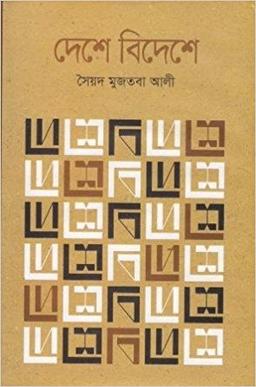
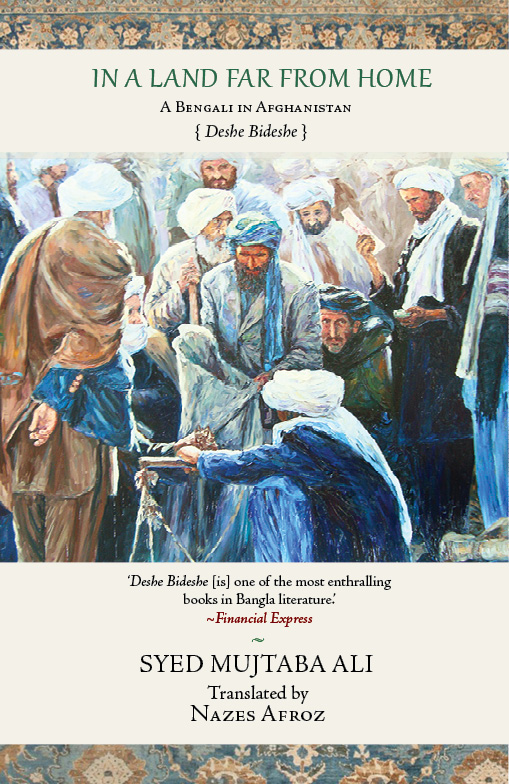
 Cry, My Beloved Country (1948) reflected the plight of Africans and the deep divides that created schisms between different groups in South Africa. The book won the author, Alan Paton, a Nobel prize. Another remarkable book that was published in the same year was a non-fiction written by a student of Tagore called Syed Mujtaba Ali. Mujtaba Ali wrote Deshe Bideshe in Bengali. This has been translated in recent times by the former BBC editor, Nazes Afroz, as In a Land Far from Home: A Bengali in Afghanistan. It is an outstanding memoir that demystifies and explains what led to the issues that are being faced by a country repeatedly jostled by varied regimes, a country that seems to be so steeped in problems that worrying about the pandemic remains a far cry for the common inhabitants.

For many decades this book had been feted by only a small group of readers, though the book is no lesser than Paton’s in crying out against injustices, terrors of violence and starvation, because it was written in Bengali. It was so witty and flavourful that people were afraid to translate it for the fear of losing the nuances of the original. As Afroz tells us in this interview, he had similar reservations. A book written by a scholar, it peppers history and political issues with lucidity and humour, making it an enjoyable experience for the lay reader. The author has a way of turning the mundane or intellectual into an amusing anecdote. During a conversation at an embassy party, the author through the voice of a fellow professor, makes a hilarious observation – but also, one that does convey much about Afghanistan despite its attempts at liberalisation.

Madame Vorvechievichi argued, ‘But there are mullahs in this country.’

“Dost Muhammad said reassuringly, ‘No need to worry, Madame. I know these mullahs very well. Their knowledge of religion is very little and I can teach you all of it in three days. However, a woman can’t be a mullah.’

Madame Vorvechievichi said angrily, ‘Why not?’

“With a deep sigh Dost Muhammad said, ‘Because she can’t grow a beard.’”

The book is speckled with multiple such instances. Along with these witticisms, the pathos of the country, the plight of the people is well captured by poignant observations:

“The real history of the country was buried beneath the soil, much like the way that Indian history was hidden in its Puranas, Mahabharata-Ramayana. Afghanistan is a poor country; Afghans do not have the time or the resources for archaeological excavations to write their own history.”

The writer, Syed Mujtaba Ali (1904-1974) a polyglot, scholar, traveller and humanitarian did just that – he recorded the history of the time he spent in Afghanistan, a time when a swift takeover from the liberal king Amanullah (1892-1960) was staged by Bacha-ye-Saqao (1891-1929) during the Afghan Civil War (1928-29).  Does this sound familiar, reminding one of the recent August 2021 takeover by Taliban?

A Humboldt scholar, Mujtaba Ali was conversant in fourteen languages, lived in five countries, including Afghanistan, where he had gone to teach. That his erudition never interfered but enhanced without marring the simplicity of rendition is what makes the book an attractive read for all lay persons. His astute observations are laced with wit and realism. The residue of the book lingers as the vibrant narrative flows — vicariously bringing to life, with humour and empathy, a culture that is distinct and yet warm in its uniqueness. His style is reflective of an in depth understanding of the situation and a sense of empathy for the common people with who he interacted daily – like his man Friday and the colleagues he mentions. For the author, everyone, from an uneducated villager to the crown prince (who invited him to play tennis), seemed to grow effortlessly into a rounded persona of a friend. All these have been transmitted by Afroz in the translation too. Translating two cultures across borders in a language that does not have all the words to capture the intimate nuances is not an easy feat, but it has fruited into an unusual and captivating read.

Nazes Afroz

Afroz’s maiden venture at translation was shortlisted for the Raymond Crossword Book Award. Afroz himself has spent a long stretch of time in Afghanistan. He joined the BBC in London in 1998. He was a senior editor in charge of South and Central Asia for a number of years. He has visited Afghanistan, Central Asia and West Asia regularly for over a decade. In 2013, he moved back to India. A passionate photographer, he writes in English and Bengali for various newspapers and magazines. In recent articles, he has been voicing his own concerns about developments in Afghanistan. In this interview, he reflects on what led him to translate the book, the situation as it was then and as it is now.  He dwells not only on the historic civil war as captured in the book but also on current day politics and the Taliban takeover.

You are a journalist. What got you interested in translating a Bengali classic from the last century?

I became a journalist five years after I read Deshe Bideshe. I was still a teenager when I picked up the book from a library rack. Reading Mujtaba Ali at that age had a profound impact on me. The erudition, the smooth sailing between multitude of cultures and languages, the gripping storytelling in his writing mesmerised me. I had never read anything like that in Bangla. Every Bengali reader of Syed Mujtaba Ali had felt the same way as I did. As a child I had the uncontrollable urge for travels and seeing the world. In Mujtaba Ali I found a role model. Deshe Bideshe stayed with me since then. It was one book that I would read two to three times a year from my teenage. So, by the time I decided to translate Deshe Bideshe more than thirty years after I first laid my hands on the book, I had read it for more than a hundred times! I knew its each page, I knew its each story and Afghanistan had seeped inside me permanently as I could relate to all the characters of the book.

While working for the BBC World Service in London, I had the opportunity to go to Afghanistan in 2002 soon after the Taliban were dislodged from power in a short war towards the end of 2001. I visited the country a number of the times in the following few years. As I travelled more, I befriended my BBC colleagues there and met other journalists and people on various walks of life. Some of them became good friends as well. I used to refer to events from the times of King Amanullah while discussing Afghanistan. They were surprised to hear all the details that I mentioned from a time that they said, ‘Even we don’t know!’ So, I mentioned how a Bengali scholar came from Kolkata to Kabul in 1927 and taught here, was a participant of the modernisation project of Amanullah by teaching English and French, played tennis with the crown prince Inyatullah (1888-1946) became an eyewitness of the rebellion against the king, got caught in the anarchy in the winters of 1928-29, and nearly perished starving before managing to go back to India. Hearing my story, they asked if there was any English translation of the book as they were keen to read. I told them that there was none as it was untranslatable!

As years went by and more and more of my Afghan friends got to know about Deshe Bideshe, they demanded that I did the translation. But I had my doubts. Would I be able to capture Mujtaba Ali’s unique language? Would I be able to transpose his wicked sense of humour? Would I be able to convey his erudition?

Eventually in 2011, I had already made up my mind to quit the BBC and move back to India. At that point my day-to-day workload in the BBC was significantly reduced. As I had ample time in hand, I thought I would attempt the translation. At that point I didn’t think of any publication; I wanted to do it just for fun and for my Afghan and non-Afghan friends who knew about the book and were keen to read it. I thought I would give them a taste of Mujtaba Ali’s writing by doing a few chapters. So, I did the first few chapters and shared them with a few friends. After reading those chapters they wanted to read more. I felt encouraged and I carried on with the translation for the following few months. Eventually the whole book was complete in about a year. After completing the translation, I let it sit for a few months before picking it up again and reread it as new text without looking at the original text. That exercise went on several times over the following one year till the final manuscript shaped up.

How many countries have you worked from? You were also in Afghanistan for several years I believe. Can you share your experiences?

My work has taken me to a dozen country or so. But as an intrepid traveller, I have visited more than 40 countries so far across four continents. Apart from my regular visits to Afghanistan, I spent months at a stretch on several occasions. Working in Afghanistan was certainly a unique experience. It wasn’t a country where one could travel and roam around freely. There were always the security alerts. One needed to negotiate security barriers everywhere. The accommodations – hotels, guesthouses were guarded by armed men. In the early years – in 2002 to 2004, there weren’t so much security in the hotels or guesthouses we stayed in. But that started to change from 2010 onwards as the Taliban had at that time started to regroup, and they made their presence felt in the country and in Kabul. Even at that time, cities like Mazar-e-Sharif and Herat were considered lot safer than Kabul. With increased and unpredictable attacks by the Taliban, the country became more and more edgy.

What was it about the book that drew you to it?

As I mentioned earlier, the uniqueness of Mujtaba Ali was that his erudition wasn’t frightening. He penned Deshe Bideshe almost twenty years after he left Kabul. By then, he had completed his PhD in comparative religion from Germany as a Humboldt scholar, did his post-doctoral research from al-Azhar university in Cairo, learned more than a dozen languages, and travelled extensively in Europe. So, even though his narrative of Afghanistan was drawn from what he had witnessed in his mid-twenties while teaching there, when he decided to write the book, he had acquired profound knowledge in philosophy, literature, culture and history of the world in many languages. The multilingual and multicultural references with an oblique yet gripping story-telling style infused with a wicked sense of humour that came in his writing, had been drawing ardent followers, including me, since 1948 when Deshe Bideshe was first published.

The book highlighted a growing divide between the minority with liberal education and the majority without education. Is that true still? Would you call the book relevant to the present-day crisis?

Yes, that divide between the educated and the not educated that Mujtaba Ali elicited in Deshe Bideshe is still there. But the gap has certainly reduced. The years between 1929 to 1978 had been relatively stable and peaceful in Afghanistan. Modern education had spread but without giving a jolt to the conservative society and keeping the clergy more or less content. In Kabul and other major cities, girls and women were getting more and more education; they were also seen in public life more. Following the coup through which the communists – the People’s Democratic Party of Afghanistan or PDPA came to power in 1978, there was a big push for universal education. This created a much bigger educated class. Women were the biggest beneficiary of that time in terms of acquiring knowledge and finding jobs. Women were joining the police and military as well. Following the capitulation of the PDPA government in 1992, the modern education system collapsed during the Mujahideen civil war years until 1996 and then after the takeover of virtually the whole of the country by the Taliban.

A large number of Afghans – almost a quarter of the population became refugees in neighbouring countries or elsewhere. When the American led international forces ousted the Taliban from power in 2001 following the 9/11 attacks in the USA, the population got a fresh chance to get education. Schools opened again. Both girls and boys went back to school. Internationally there were many programmes to give scholarships to Afghan women and men who were seeking higher education. As a country with a very young population (the average age of Afghanis is 18), a large number of students joined the public and private universities. So, tens of thousands of young women and men are now educated holding masters or even PhD degrees in the country. But the rural areas lagged behind. So, the gap is more of the city and rural areas.

Do you find similarities between the Afghanistan of then and of now?

The way the Afghan society works, based on its ethnic and tribal identities as witnessed by Mujtaba Ali, still exist. The stranglehold that the clergy had on the uneducated mass about a century ago has possibly changed; it’s been replaced with more political interpretation of their religion. The ethnic divisions have sharpened for multitude reasons – primarily due to the outside interference and the way ethnic groups have been used in the larger geo-political game of the world powers.

One of the issues that tussles through the book is that people were basically poor and lacked education. Syed Mustaba Ali spoke of the vicious cycles of poverty, how much has it changed from what he wrote and what you experienced? Please elaborate.

Mujtaba Ali talked about how poverty contributed to the cycle of unrest in Afghan history. Yes, that poverty still exists but with that, a toxic potion of religio-politics has been added to the cauldron. The conflict of the past four decades is more due to the global religio-political dynamics rather that its own poverty.

Did/ do you find parallels in the political situation where Amanullah and his brother escaped from the invading hardliner, Bacha-ye-Saqao? Would you see Bacha as a precursor of Taliban?

The only parallel that one can draw between 1929 when Amanullah and his brother Inayetullah fled and now in 2021 is that the suddenness of the events. Amanullah’s fall happened in months and Bacha took over Kabul in matter of days – almost the same way the Taliban took control of the country.

I don’t think Bacha-ye-Saqao or Habibullah Kalakani as he called himself, was a precursor of the Taliban. Bacha was more of an opportunist; he grabbed the opportunity that came his way. But the Taliban are more of an organised religio-political force what was the product of the geo-politics of the last decade of the Cold War. So, they two are not comparable.

Did the American or Russian intrusions into Afghanistan serve any purpose? Did they actually help the Afghans?

The short answer is no. Both the superpowers came to achieve their own strategic and foreign policy objectives. The Soviets came to expand their sphere of influence beyond their borders in Central Asia. In the process they were badly bruised and had to retreat. The Americans came to get hold of Osama-bin-Laden and dismantle the al-Qaeda infrastructure. It was never about helping a nation that had been devastated by decades of conflict in which they had no role. They just became pawns in the greater game of geopolitics.

By the descriptions in the book, Afghans seem to be fairly open as humans and yet, they have a distinct identity borne of their culture, their ethos — very different from any other. Was that undermined in any way by the attempts at modernisation?

Like many other rural, traditional and old societies, Afghans are hospitable and warm people. They are bound and governed by their age-old custom and codes of conduct.

Even when they are outside of their own land – in the West too, they extend their hospitality to strangers the same way they would in their own country and their behaviour would not differ much. It is not the question, if modernisation has or will undermine their tradition. They have had encounters with modernisation – the way modernisation is understood from the Western prism. Did that change the people who had experienced that modernisation in the time of Amanullah? Mujtaba Ali saw that the ‘so called’ modern people did not lose their Afghan-ness. The same can be said now. As a people they have largely remained unchanged despite connecting with the outside world like never before.

In the book, the international community was practically chased off Afghanistan. As the US troops left, one felt the same way. Do you feel intervention from the international community is necessary in Afghanistan? Why?

The backdrops of 1929 and the present are not identical. In 1929, the rebellion was against the king who had lost the support of the clergy. The king did not come to power with foreign intervention. So, the international community was not chased out in 1929. The Europeans left because of the chaos and the violence. The rebels didn’t fight with the foreigners. Yes, there was an armed opposition to the presence of the USA since the war in 2001, but that opposition wasn’t big enough to send the USA packing.

The USA left because they had achieved their goals in Afghanistan, and it was becoming hugely expensive for them to stay on. Many are also drawing parallels of the US’s departure from Afghanistan with their hasty retreat from Vietnam in 1975. But they were again not identical. In Vietnam, the USA visibly lost the war. But in Afghanistan they did not lose. They could have stayed on if they wanted but it made no sense to them to spend tens of billions of dollars each year. Hence, they left. They had been talking about withdrawing from Afghanistan since 2012, a year after they killed Osama bin Laden in Pakistan.

The intervention that the Afghans had been experiencing since 1979 – first by the Soviets, then Pakistan and finally the US led Western nations, devastated the country and the ordinary Afghans had been paying for it with all they had. No external intervention is beneficial for any country. It’s not desirable to have; certainly not the way the global powers had been intervening for the past 40 odd years in various corners of the world. But the question is, if unspeakable atrocities are committed on certain sections of a country or society, what does the international community do? Should the international community intervene? The world powers have unfortunately always used these as pretexts to intervene to further and achieve their own objectives not only in Afghanistan but in other countries too.

In the book, only foreigners with work seemed to be in Afghanistan. Is/ Was it possible for tourists to visit Afghanistan, even before the Taliban took over?

In the last twenty years, Afghanistan had been unstable. Violent incidents kept happening. So, it was not advisable for tourist to go there. But the country always issued tourist visa for short visits! For a few years, Japanese tourist used to come to visit the ancient Buddhist sites like Bamiyan. That too waned due to the escalating conflict.

Thank you for this wonderful interview and also for the flawless translation of a classic memoir.

Click here to read a book excerpt from In a Land Far from Home: A Bengali in Afghanistan.

(This is an online interview/review by Mitali Chakravarty.)

PLEASE NOTE: ARTICLES CAN ONLY BE REPRODUCED IN OTHER SITES WITH DUE ACKNOWLEDGEMENT TO BORDERLESS JOURNAL

Categories
Essay

A Life Well-Lived

By Candice Louisa Daquin

A life well-lived tends to be interpreted by cultural needs. In China, maybe it is portrayed as the accumulation of wealth and taking care of ones’ family; in Africa it may be about survival, integrity, and hard work; in Italy, possibly about how many friends you have, how often you laugh, if you feed stray animals.  No one country shares a defined concept of what a well-lived life looks like, but as we are more homogenized than ever before we’re all cross-influenced by other cultures.

The other day I was watching a travel documentary about The Silk Road. The idea of so many foreign countries we’ve never visited, nor know very much about, can be incredibly humbling. We talk in international terms; we talk as if we alone have the right to proclaim for the rest of the world. Even the most avid traveler hasn’t been steeped in a culture long enough to make those assumptions, nor have they visited every shore, every mountain, every tribe. As that is impossible, no one culture or group should claim to speak for what is a universal truth, there is no such thing. How can meaning being separated from being human, thus subjective?

Growing up I was deeply influenced by my mother. She didn’t live with me, but she wrote me letters from all parts of the globe she visited with amazing letterheads and stamps. Eventually this became more than an expensive hobby, she opened a travel company that published newsletters and books on high end travel. In my teen years, I might not have appreciated what she did from afar because I felt ‘high end’ was exclusionary, and it is. But despite this, I have grown to respect what my mom did, because it wasn’t for a living, it was for passion, and in this, I felt she has always lived her life to the full.

True, who wouldn’t like traveling for a living? In high end hotels? Isn’t she just another example of privilege? But she wasn’t. She created this from scratch, having left a highly successful career in media that she attained on her own merit. I think if it were not for my mom, I would not understand how far people can go if they are determined and hard working. It’s definitely why I work hard. However, my own journey has been vastly different. I found it challenging enough at times, to get through life, let alone to thrive. I recall my mom saying love what you do, feel passion in what you do! I felt I was missing a magical ingredient.

Eventually, health issues seemed to close that door to a passion-driven dimension, and I began to be more pragmatic. My thoughts were more along the lines of: how can I support myself and ensure I will have enough to survive? What can I do to overcome or compensate for my shortcomings in health? I lost the advantage of just being able to dream, because I had to survive, and sometimes for many of us, we simply don’t have the luxury to dream. That led me to understand, a life worth living is necessarily subjective. Unequal life chances versus individual effort play a bigger role in the outcome.

Even so, the question of what a well lived life looks like, is one worthy of examination. In the world there are women who are essentially still indentured to their husbands. There are castes and groups who will never be able to rise above other castes and groups because of their birth. There are those so poor they couldn’t attend school if they wanted to. I think of how the girls of Afghanistan will fare with the UK and US leaving and the Taliban gaining their former foothold. Will girls be safe? It doesn’t seem likely nor permitted their former right to education. I envision a similar outcome to what happened to women in Iran. And then there are the fabulously wealthy and the comfortable middle class. We simply don’t all have the same access to a well-lived life to begin with!

Within all these groups lie many variables, not least, our physical and mental state, our chosen career(s), where we live and how expensive it is to survive there. Then there’s just the fickleness of luck, who gets to live, who does not. To boldly state a life worth living is any one of these options, belies the truth of our differences. A child born with HIV may have a different life than one born healthy; a child born blind might have different outcomes than a child born with athletic prowess. Even then, one advantage may be nothing, we may need more advantages. To proclaim as self-help books and life coaches do, that there is one way, seems redundant and missing out on the diversity of our experiences. You can do everything right and still not succeed.

We get older and we think back and wonder, did I make the right choices, was this the direction I intended? Am I satisfied or disappointed? When we’re very young, these considerations are rarely as important, as such we simply experience. Maybe in youthful hedonism, we miss the very moment we should be thinking of the future. Some cultures do a better job of forcing their young to consider the future, such as Germany, who asks the very young to pick a career before they are even in their teens, to help mold an often vocational direction rather than leaving them to decide many years later when it could be too late?

For example, if you had a child, would you wish for the child to take philosophy or neuroscience in university? Which would be more likely to land them a secure job? This surely is part of our role as parents, to ensure our children will be financially safe when growing up. At the same time, we know the potential value of philosophy, but how translatable is that value in today’s world?

I grew up very aspirant-minded because my mom was very successful. Even as I didn’t live with her, I saw her as a role model and believed naively I could follow in her footsteps. There were many reasons I did not. The locations and cultures had changed. The times had changed as in her day it was easier to walk into jobs. By the time I was looking for work, there were thousands clamouring for fewer positions. Often people cannot understand this change because they only have their experience to refer to, but things change a lot, including what was possible and what is no longer possible. 

One might argue, then you just must be better, to do better. This is true in India, China (a Confucian principle) and many other Asian countries, where an excellent and high achieving work ethic coupled with a huge population, causes young people to be under more pressure than ever to attain those coveted positions. This causes one of the following two things as en masse more people do excellently, the bar gets pushed higher, and people from such countries can often cherry pick jobs in other countries because they excel; or a greater division between those who succeed (the minority) and those who traditionally speaking do not (the majority). It’s about sorting out the reality from the stereotype.

America, a country long thought to possess no caste or class system, perpetuates other countries’ histories by having a quiet class system that is denied by the mainstream but very alive. For many families with money, sending their kids to schools that will guarantee the best universities and thus, the best networking and jobs, there is an obvious bias. We talk of ‘The American Dream’, but for the majority, the advantages they are born into, play an equal if not larger role in determining their outcome.

This is partly why discussions about reparation exist, because if families that were traditionally exploited are now generationally paying the price by not having generational wealth and influence to hand down to their children, they come from a position of inequality and inequity even as the American dream continues to be touted. And if those families are mostly families of colour, even more so, as you must consider the racial injustice of the past, which has been carried into the future by this ongoing inequity. The same is true in other countries, the idea we’re born equal and thus, we all have the same chance at a dream is naïve at best.

But how much does this play into a life well-lived? Is it essential to be conventionally successful to achieve such a goal? I would argue it is not. Whilst there are basic essentials coined by Psychologist Abraham Maslow (Hierarchy of Needs) that must be met to even be in the running. In other words, if you cannot afford the basics such as healthcare, economic security, education etc, you’re still stuck on trying to survive. In that sense, it’s a luxury for most to even consider a life well lived, because they are too busy surviving.

Let’s assume however, some of us reach that position of being economically sound enough to consider beyond the mechanisms of survival. Then let us ask ourselves what is a life well lived? Should it be like that of my mother? Being somewhat hedonistic but, true to myself, by doing exactly what she wanted and traveling the world where she could expand. When she passes, will she have felt her life was well lived? I’m guessing she will.

That’s because of a process called reconciliation. One must reconcile one’s regrets or things we were judged for, and if we are able to do this (many of us fail), then we find inner peace. With peace comes a sense of no matter what, we did the best we could, we gave it all we could, we’re glad for the life we lived. In a sense, this summation of a life well lived, is rooted in our self-perception and then that perception projected into a larger context. It takes a lot to consider more than our immediate circle. Perhaps if we could, we would be less fractured as a planet. Less liable to turn the other cheek when atrocities occur,  or put our head in the sand and not think of future generations.

By coming together, universally, thinking in terms of all of us, not just as an individual, as touted so long by the West, we consider wholeness. Can we be whole if others are not? Should we be? And at the same time, not going so far as to lose a sense of ourselves or be merged into a homogenised, possibly too socialised loss of self? In other words, balance.

As you age you realise what mattered then doesn’t matter as much now. Or maybe, you come to realise that what you have always cared about, still matters. For myself, I am very different from my 15-year-old self, where I lived relatively hedonistically, caring about animals and injustice, but not doing enough about it. I see that at 15 , I thought mostly of having fun and generally being a little unrealistic about life. Some 15-year-olds aren’t that way. Why do some children grow up responsible and mature before their time, whilst others can be 30 and still fail to launch?

We can blame parenting, modern society, all sorts of things, but it’s probably more complicated than that. In Japan, many young people are literally shut-ins, (known as hikikomori) living on the cud of their parents income, rarely leaving their room, immersed in an unrealistic life, mostly online. Why do so few Japanese marry or have relationships comparatively speaking? Did the parents mess up? Or is this a symptom of a bigger sense of futility and despair felt by the young because some do think of the future?

I recall as a child I was unrealistic in my expectations, I truly thought I could do anything, be anything and this just wasn’t an honest evaluation of my situation. For some children, they knew they would be dentists at fifteen. For others, they did drugs and lived lost lives, before reinventing themselves. That’s the luxury of youth. But it’s not a permanent state. When you are older you realise, there isn’t as much time to ‘do anything / be anything’ and maybe that’s why I find some self-help/life coaches a little jarring. How long can we ‘do anything’ for realistically? Especially now, where different types of jobs are less than ever before, we’re being asked to homogenise into ever decreasing employment options. Many graduate law schools, formerly considered the pinnacles for employment, find no openings in an already saturated market, but should we doom a child’s dream if that’s what they want to do? The labour market doesn’t have a skills gap, it has an opportunity gap.

Many young people want to be famous, emulate some truly scary people, be unrealistically rich and have celebrity status. Less people want to heal, they want to make big bucks. Maybe they have it right. After all, when we do altruistic things but remain poor, how good does that feel when we can’t afford a car? With price hikes, standard of living seems to be improving because people have technology, but actually, we’re more in debt, without savings and living on a razor’s edge. Which might work at 25, but at 45 with children ready for college?

Again, I hark back to ‘balance’ and the need to live within one’s means, to have dreams that are capable of being pursued, and to help our kids dream up realistic jobs. The younger generations do not have the inherited wealth of the older, and immigrants often come with nothing to a country, depending upon the charity of that country, which is shrinking as our social services are overwhelmed and underfunded, even as immigration is on the rise.

Is the answer to print money? As has been discussed among Democrats? Or tax the rich and risk them leaving? Or is that a myth? With Covid 19 recently closing everything down, many formerly low wage workers were given monetary Covid compensations due to extended unemployment, which ended up being more than they were making as a badly paid waitress or shop worker. With some of those jobs vanishing forever, those that do return, see no employees willing to work for those wages again, and rightly so. But can we sustain a country if we pay what economists would consider a living wage? When $15 is already too little for someone to live on once tax and benefits are removed.

Increasingly we’re seeing a rise in people who fall through the cracks, they are the invisible workers whom we don’t know about, the underemployed, the fragile self-employed. That micro economy might not even show up on official statistics but look around, it exists. How likely can those people consider retiring in 30 years’ time? Can we blame those generations who are trapped by a system that doesn’t make it very likely to find an American Dream and what of the rest of the world, where survival comes long before the luxury of dreaming?

Where in this do we find concepts of lives well-lived? I think no such thing exists fundamentally but individually as we age, we should consider are we congruent to our concept of what a life well-lived means to us? Can we do anything to get closer to it? If so, what?

Recently I thought about this a lot and realised struggling with my health was my tipping point. For some that’s not their tipping point. A friend of mine said hers was losing her home. For me it was being told I was developing premature Macular Degeneration and with no treatment for Dry MD would lose my sight whilst still young. Facing those kinds of things forces us to consider what matters, what does not, and really think about how we value existence.

When I talk to people today, I recognise the value of clarity of purpose. When we know how best to direct our lives, we can spend more time on being the kind of person we want to be, rather than picking up the pieces from a series of failed impulses. If we remember how lucky we are to even have choices, when so many do not, even reading this on a computer puts us in a position of privilege, so rather than lamenting about what you do not have, consider what you need to live a life worth living and then do your best. Even half-way there might be enough to one day say, I have lived a life well-lived.

 .

Candice Louisa Daquin is a Psychotherapist and Editor, having worked in Europe, Canada and the USA. Daquins own work is also published widely, she has written five books of poetry, the last published by Finishing Line Press called Pinch the Lock. Her website is www thefeatheredsleep.com

.

PLEASE NOTE: ARTICLES CAN ONLY BE REPRODUCED IN OTHER SITES WITH DUE ACKNOWLEDGEMENT TO BORDERLESS JOURNAL.

Categories
Poetry

Legends in Verse

By Jared Carter

Sarcophagus with the myth of Protesilaus and Laodamia. Here, Laodamia grieves for the loss of her husband Protesilaus in the Trojan War. From a tomb along the Via Appia Nuova, ca. 160-170 CE: Creative Commons
Laodamia to Protesilaus

If you were lost, how would I find you,
what path take along dark streets, through
damp vaults, how untangle those choices
far underground, those myriad voices?

If I were gone, you could no longer follow
through great spillways, or deep hollows
in that world. My footsteps would fade,
there would be no echo, no light or shade.

Still, somewhere your presence ahead
would call, through realms of the dead,
through time imploded and turned back,
platform deserted, abandoned track.

No pause in this long pursuit, this seeking
that has no end. Neither of us speaking,
or able to break the spell – neither chase
nor surrender. Only the lost, familiar face.

(First published in The Raintown Review.)


Resurrection

The body rises up at last,
          it cannot keep
Its distance from what comes to pass,
          when more than sleep

Is beckoning. To bid adieu
          and still to bless,
Savonarola reached out through
          the flames; and pressed

Against them, Frida Kahlo sat
          upright, as though
Awakening at last from what
          is merely show.

(First published in Clementine Unbound.)


Jared Carter’s most recent collection, The Land Itself, is from Monongahela Books in West Virginia. His Darkened Rooms of Summer: New and Selected Poems, with an introduction by Ted Kooser, was published by the University of Nebraska Press in 2014. A recipient of several literary awards and fellowships, Carter is from the state of Indiana in the U.S.

.

PLEASE NOTE: ARTICLES CAN ONLY BE REPRODUCED IN OTHER SITES WITH DUE ACKNOWLEDGEMENT TO BORDERLESS JOURNAL

Categories
Poetry

Seasonal Whispers

Poetry by Jared Carter

  
 Visitant
 
 What is that calling on the wind
           that never seems a moment still?
 That moves in darkness like a hand
           of many fingers taken chill?
 
 What is it seeking when it flows
           about my head, and seems to wrest
 All motion from my heart, as though
           I still had something to confess?
 
 How can it be it knows my crime –
           this troubled whistling in the air?
 'Tis true, I left her long behind,
           but this is dark, and she was fair.
 
 (First published in The New Formalist)
  
 Snow
 
 At every hand there are moments we
 cannot quite grasp or understand. Free
 
 to decide, to interpret, we watch rain
 streaking down the window, the drain
 
 emptying, leaves blown by a cold wind.
 At least we sense a continuity in
 
 such falling away. But not with snow.
 It is forgetfulness, what does not know,
 
 has nothing to remember in the first place.
 Its purpose is to cover, to leave no trace
 
 of anything. Whatever was there before – 
 the worn broom leaned against the door
 
 and almost buried now, the pile of brick,
 the bushel basket filling up with thick,
 
 gathering whiteness, half sunk in a drift – 
 all these things are lost in the slow sift
 
 of the snow's falling. Now someone asks
 if you can remember – such a simple task –
 
 the time before you were born. Of course
 you cannot, nor can I. Snow is the horse
 
 that would never dream of running away,
 that plods on, pulling the empty sleigh
 
 while the tracks behind it fill, and soon
 everything is smooth again. No moon,
 
 no stars, to guide your way. No light.
 Climb up, get in. Be drawn into the night.
 
 (First published in A Dance in the Street)
 
 
 School of Ragtime, Exercise No. 6
 
 Saw you first one April day
           king, queen, sun, moon
 Whistled you outside to play
           right, left, fork, spoon
 
 Took you down to the river’s edge
           penny candy, paper doll
 Showed you bullheads under the ledge
           butterfingers, jackstone ball
 
 Say goodbye to your last dime
           up, down, cat, dog
 Gonna rag that tune this time
           leaf, tree, axe, log
 
 (First published in The Devil's Millhopper) 


Jared Carter’s most recent collection, The Land Itself, is from Monongahela Books in West Virginia. His Darkened Rooms of Summer: New and Selected Poems, with an introduction by Ted Kooser, was published by the University of Nebraska Press in 2014. A recipient of several literary awards and fellowships, Carter is from the state of Indiana in the U.S.

.

PLEASE NOTE: ARTICLES CAN ONLY BE REPRODUCED IN OTHER SITES WITH DUE ACKNOWLEDGEMENT TO BORDERLESS JOURNAL

Categories
Interview

In Conversation with Suzanne Kamata

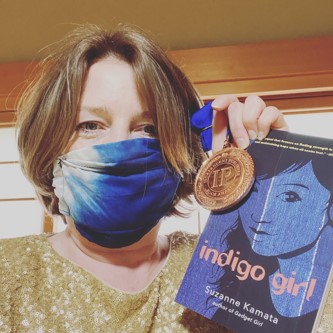
Suzanne Kamata is different. She is a mother writing for her children, who are uniquely placed in Japan – products of syncretic lore, an American mother and Japanese father. Recipient of a number of prestigious awards, Kamata represents the best in the mingling of the East and the West. Her writing flows well and is compelling — exploring areas that are often left untouched by more conventional writers.

Kamata has lived in Tokushima Prefecture, Japan, for more than half of her life. She is the author or editor of 14 published books including, most recently, The Spy (Gemma Open Door, 2020), a novella for emerging readers; the middle grade novel Pop Flies, Robo-pets and Other Disasters (One Elm Books, 2020) which won an American Fiction Award and was recently released as an audiobook; and Indigo Girl (GemmaMedia, 2019), winner of an SCBWI Crystal Kite Award and named a Freeman Book Awards Honor Book, as well as one of the Best Children’s Books of 2019 by Bank Street College. Her work also appears in The Best Asian Travel Writing 2020 (Kitaab, 2020),  The APWT Drunken Boat Anthology of New Writing, What We Didn’t Expect: Personal Stories About Premature Birth ( Melville House Publishing, 2020), Inaka: Portraits of Life in Rural Japan(Camphor Press, 2020), and The Phantom Games (Excalibur Press, 2020). Her adult novel The Baseball Widow is forthcoming in October 2021 from Wyatt-Mackenzie Publishing.

When and why did you move to Japan? What made you start writing? At what age did you start writing?

I came to Japan to work as an assistant English teacher on the JET Program in 1988, shortly after I graduated from college. I’d wanted to experience living abroad for a year or two before I began my “real job,” which was not yet determined. I partly wanted to accumulate material for writing future stories and novels. I started writing as a child and never quit. I think my love for writing developed from my early love for reading.

What was your first book and how did it come about?

The first book that I published was actually The Broken Bridge: Fiction by Expatriates in Literary Japan (Stone Bridge Press, 1997) an anthology of short stories by foreigners who lived or were living in Japan. I’d read an article about editing anthologies, and I read several short stories by expatriates in Japan which I felt deserved a wider audience, so I wrote a letter to a publisher that specialised in books about Japan with the idea of a collection. Little did I know, I wasn’t the first person to come up with such an idea, but I was perhaps the most persistent, so even though I was only in my twenties and had only published a couple of short stories in obscure journals, the publisher was willing to give me a shot at it.

What influenced your writing? Books, authors, music? And how?

My writing style is probably most influenced by reading. Early on, I was strongly attracted to the minimalist style of Ann Beattie and I tried to imitate that. Some other influences would be Marguerite Duras, particularly the collage aspect of The Lover, and Lorrie Moore’s dark humor. As far as subject matter goes, I am influenced by confluences of culture, by travel, by motherhood, by my daily life, and sometimes by quirky facts that I come upon.

You have a book called Losing Kei, in which a child born of a mixed marriage is torn by cultural differences and the parent’s inability to adjust to each other’s heritage. It has been compared to Kramer vs Kramer. Why the comparison and do you think it is justified?

Kramer vs. Kramer is about a custody battle, so I can see why my publisher used that comparison. I don’t know of any other novels about in-court custody battles over children of international marriages published at that time, so I think it’s more or less apt. In Losing Kei, the father is granted full custody of the couple’s son, against the mother’s wishes, but the child, Kei, is mostly taken care of by his grandmother. In the movie, the Kramer father is taking care of his son by himself because his wife has deserted them, but then she tries to get her son back.

Having grown up in America, do you actually think of the Japanese culture as ‘repressive’ or ‘xenophobic’ as says author Ellis Avery, author of The Teahouse fire, while commenting on Losing Kei?

Hmm. Things are changing, a bit, but I think that there is still a lot of resistance to foreigners in Japan. During the pandemic, which is on-going as I write, for a time only Japanese nationals were allowed to leave and re-enter the country. If a permanent resident – even someone with a home, job, and family – were to leave Japan during the early part of the pandemic, they weren’t allowed back into the country. Many foreign residents have seen this as discriminatory. Laws have changed, since I first arrived, allowing more foreign workers to come to Japan, but I think a lot of people worry that an influx of people from other countries will change Japan, and not in a good way.

You often write on or for children. Is there a reason for it?

I started writing for children when my own children were small. Being biracial/bicultural and living in Japan – and disabled, in the case of my daughter — their experiences were quite unique and rarely represented in books, so I tried to write a few stories to help fill that gap.

Squeaky Wheels, your immensely moving novel that won the inaugural Half the Globe Literati award (Best novel) in 2016, explores a mother’s travels with a child on a wheelchair. Can you tell us how this book came about?

Thank you so much for your kind words! Although the book won the award for “novel,’ it is actually a memoir of traveling with my daughter. When she was around twelve, she declared that she wanted to go to Paris. At the time, I was working as an adjunct, and we didn’t have a lot of money. So, I came up with the brilliant (ha ha) idea of writing a proposal for a book on traveling with my daughter, who is deaf and uses a wheelchair. It would be, I proposed, like Elizabeth Gilbert’s Eat, Pray, Love, but in different countries – France, not Italy; Japan, not Indonesia – and it would explore issues of accessibility in each country. I knew that Gilbert had gotten a huge advance to write her book. I also knew of a father of a child with autism who had gotten a million dollars to write a book about taking his son to visit a shaman in Tibet to be cured or whatever. So, I thought that I had a shot. No publisher, however, was willing to give me a contract and an advance to fund our trip, but I had a pretty decent book proposal by then, which I used to apply for a grant. I was extremely fortunate to be awarded a generous grant by the Sustainable Arts Foundation. We went to Paris, and I wrote the book.

Your last novel was Indigo Girl. The Kirkus Review said it was “a lovely sequel that focuses on finding strength in one’s self and maintaining hope when all seems lost.” It was a sequel to Gadget Girl. Tell us a bit about the two books.

A lot of people think that Gadget Girl, the story of the fourteen-year-old daughter of an American mother and Japanese father who has cerebral palsy, is based on my daughter’s actual experiences, but that’s not really true. I started writing the book when my daughter was quite small. I wanted to write a book that she might be able to enjoy as a teen. The main character, Aiko, is an aspiring manga artist, who has grown up as her sculptor mother’s muse. I wrote frequently about my children when they were small, so I imagined what my children might feel about those stories once they hit adolescence. In the first book, Gadget Girl, Aiko travels to Paris with her single mother. In the follow-up, Indigo Girl, which is a stand-alone sequel, Aiko visits rural Japan in the aftermath of the March 11, 2011 triple disaster (earthquake, tsunami, and nuclear meltdown) to finally connect with her biological father, who is an indigo farmer.

How many books have you authored? Are they all centred around young adults or children? Which one did you enjoy writing the most and why?

I have authored 12 including a picture book, a couple of titles for emergent readers, a short story collection, a memoir, three novels for adults (one forthcoming) and four novels for younger readers, the most recent of which is Pop Flies, Robo-pets and Other Disasters (One Elm Books, 2020). The first two novels that I wrote (but not the first two that I published) were The Mermaids of Lake Michigan (Wyatt-Mackenzie Publishing, 2017) and Screaming Divas (Simon Pulse, 2014), which were both initially intended to be adult novels, but which concern young adults. When I wrote those books, I was in my late twenties/early thirties, when I felt that I didn’t have enough distance or perspective to write about my adult experiences. And then later, I intentionally wrote for children and young adults. It’s really hard to say which one I enjoyed writing the most, but Squeaky Wheels was fun for me. I loved traveling with my daughter, and I loved reliving those experiences when I was writing and revising the book. And writing nonfiction is a lot easier than writing fiction.

You teach at Naruto University of Education. What is it like to teach students who have been brought up in an entirely different culture from you? How does this experience translate to your own writing?

Japanese students tend to be a bit conservative, so I am always striving to open their minds, and to help them see that being receptive to other cultures and travel can be mind-blowing as it has been for me. I also learn a lot from them, because their upbringing has been so different from mine. One very concrete way in which teaching has affected my writing is that I have started to write stories for emergent readers. I realise that a lot of my books are too difficult for the average Japanese reader of English, but many students are interested in reading my writing. So far, I have written two hi/lo books for the Gemma Open Door series. These books are short, and the level of language is a bit easier.

How has the pandemic affected Japan, you and your work?

Japan hasn’t suffered as greatly as many other nations, perhaps because it is a mask-wearing culture, and also because as soon as news of a break-out aboard the cruise ship the Diamond Princess appeared, people started being cautions. In Tokushima, where I live, there have been fewer than 400 documented cases since the start of the pandemic. Since I haven’t had to travel for conferences, and I have been teaching online, things have been pretty calm and peaceful. Surprisingly, I have written quite a bit. I actually started a new novel!

What are your future plans? Do you have a new novel/books in the offing?

I hope to continue writing and publishing! I have a couple of adult novels – a historical novel, and one set slightly in the future – in progress, as well as a few picture book manuscripts that I have been tinkering with. In October of this year, my adult novel The Baseball Widow, will be published by Wyatt-Mackenzie. I started writing it shortly after I finished Losing Kei, but I abandoned it a few times. Anyway, I am happy to announce that it will finally make it into print! It’s a family drama about an international/interracial marriage in crisis told from multiple points of view. I hope you will enjoy it!

.

This has been an online interview conducted by Mitali Chakravarty.

.

PLEASE NOTE: ARTICLES CAN ONLY BE REPRODUCED IN OTHER SITES WITH DUE ACKNOWLEDGEMENT TO BORDERLESS JOURNAL

Categories
Poetry

Departure

By Viplob Pratik

.

A table on the corner of a restaurant.

.

Half smoked cigarette is caught in my fingers

You are there; I am,

Face to face.

.

I am telling something but mute

You are listening to me, but without any attention.

.

The glasses of wine are recently backed in their position

And after we took the first sip,

One glass has a smear of lipstick on it

Another has on its outer part

A mark of wine drop.

.

While trying to take another sip

Something weird happens

And the glass slips

Hops in the air

And crashes on the floor.

.

Clink!

.

What’s broken –- a glass or the heart?

Both are fragile.

.

People look at us

And again become busy with them.

.

The waiter is cleaning the floor.

Love has broken in our heart too,

.

But there is no waiter for us.

.

Viplob Pratik was born and raised in Kathmandu, Nepal. He loves to travel, and has learned from other cultures and societies. He draws inspirations from everyday life. His thoughts are compact, and he is deeply sensitive to human values. His poetry collection ‘Nahareko Manchhe’ (translates to ‘The Undefeated Man’) and ‘A person kissed by the moon’ was published in 2005 and 2013 respectively and his debut novel ‘Abijit’ (the unconquered) was published in 2017.

~Bhim Karki 
Frisco, Texas

.

PLEASE NOTE: ARTICLES CAN ONLY BE REPRODUCED IN OTHER SITES WITH DUE ACKNOWLEDGEMENT TO BORDERLESS JOURNAL. 

Categories
Poetry

The Colour of Wind’s Song

By Linda Imbler

The Colour Of Wind’s Song

I must go with the wind’s song.

My feet bearing glad witness

to your many creeds.

Inside a maddening maze,

as day is done,

I follow the words on each page

that tell me how to sculpt my dreams.

Long standing upon stone,

upon hearts, jubilant,

upon the sky that is deep, dark blue,

upon vibrant moonshine

where all is amber and red,

I go to hear the colours

and feel exhilaration.

.

How Do I Dream?

I gazed with wonder and delight

as the fall of monsters shook the Earth,

and effervescent spirits

became balanced between nowhere and now.

I forgave the winds,

and the Undines,

those elemental beings of water,

those paper tigers.

I walked through a door

of many colours.

Its soft archway still and grand,

and saw novel birds atop golden branches.

I saw a fly within its webbed cell.

On the ground, lay hatched fragile shells

but, no hatchlings were near.

A silent coil of that forgiven wind

lifted my hair ever so gently.

A clear horn blew from atop a shut temple,

and all the caves began to sing.

Within the heart of their song,

they said to me,

“Carry all the love you have collected,

and spread it on the fields of tomorrow.”

And, I slept within a sparrow’s nest

as the night light died,

and all heavenly visions were seen,

I, me, mine.

.

Within The Din

His soul heard no welcome,

only murmurs.

It seemed he heard sweet singing.

The hope that he was right

stayed his sorrow.

His bedimmed dreams

came as angels.

As death became his friend,

he saw his own grace,

and all of sweet peace

wailed for him.

And within the din, welcome showed its hand.

.

Linda Imbler is the author of four poetry collections published at Amazon.  Soma Publishing published two of her poetry books and one poetry-short fiction hybrid.  She began writing in earnest five years ago.  In addition to putting pen and paper to inventive use, Linda is an avid reader. This writer, yoga practitioner, and classical guitar player lives in Wichita, Kansas with her husband, Mike the Luthier, several quite intelligent saltwater fish, and an ever-growing family of gorgeous guitars.  She’s been nominated for a Pushcart Prize and several Best of the Net awards. Learn more at lindaspoetryblog.blogspot.com.

.

PLEASE NOTE: ARTICLES CAN ONLY BE REPRODUCED IN OTHER SITES WITH DUE ACKNOWLEDGEMENT TO BORDERLESS JOURNAL