
Categories
Poetry

Found in Translation: Satrughna Pandab’s Odia Poems

Five poems by Satrughna Pandab have been translated to English from Odia by Snehaprava Das

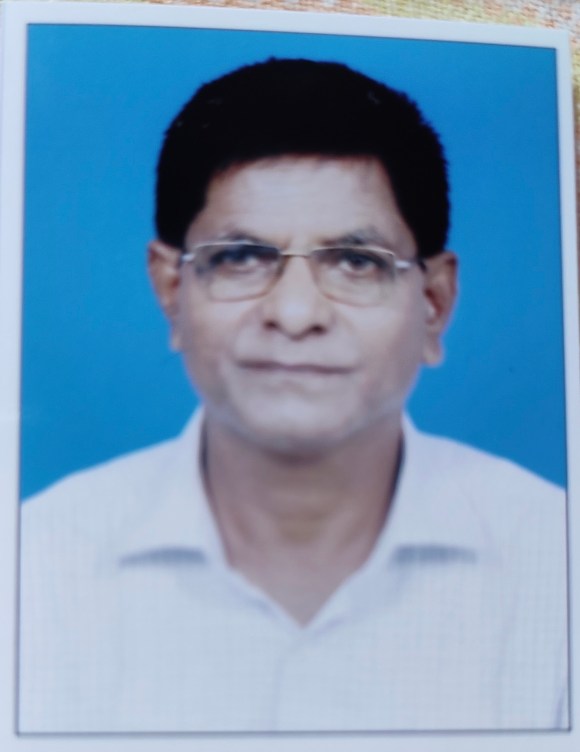
Satrughna Pandab
SUMMER JOURNEY

Does this journey begin in summer?
After the mango buds go dry
And the koel’s voice trails away…
When simuli, palash and krishna chuda
Blaze in red?
Does it begin when the blood
After reveling in the festivities of flesh
Crosses over the bone-fencing
And gets cold,
When the burning soul yearns for
The fragrant and cool sandalwood paste?

And the soothing monsoon showers?
Where lies the destination --
At what border, which estuary,
Which desolate island of wordlessness?
The journey perhaps itself decides
The appropriate hour.
You embark upon this journey alone --
Without friends, without kins,
Without allies without adversaries.

You yourself are the mendicant here.
You are the violin, you too are the ektara.
You are the alms too.
And what are the alms after all?
At that ultimate point,
When the end would wear the
Garb of blue ascetism,
The scorch of summer
Turns to
Sandalwood paste,
Besmears the breath that
Leaves you overwhelmed
With its exotic fragrance.

A SKETCH OF FAMINE

The white wrap of the clouds
Is ripped into shreds.
The pieces are blown away in the wind.

The sky spreads out like
A grey cremation ground,
Where the sun, like some kapalika
Performs a tantric ritual
A sacrificial act,
And slits the throat of a virgin cloud --
Moon: The skull of a man just died,
Constellations: A crowd of beggars,
Night: A Ghost Land
Fissured farmlands: Human skeletons.

Flames leap.
Green vegetations char.
The blue of the sky turns ashy.
The tender earth
Lamenting its bruised honour
Sprawls in a pathetic, arid sprawl.

WAR (I)
(FROM KURUKSHETRA TO KUWAIT)

All the Dhritarasthras
Between Kurukshetra and Kuwait
Are blinded kings,
Pride boiling in their blood,

Not a single weapon misses the target
Each Ajatasatru fights another
Ceaselessly,
Neither of them returns from the battlefield,

The weapons have no ears for
The mantra of love
Or of brotherhood,
Nor does the blood recognise its kinsmen.
The battlefield does not care to know
Which warrior belongs to which camp.

Not a soul could be seen on the bank of
The bottomless river of blood
That flows across the battlefield
Desolate and forlorn.

And there is always an Aswatthama,
Ready with his Naracha, the iron arrow,
Awaiting the Parikshitas yet to be born.


AUTUMN

Is this river your body
Flowing, calm and pristine,
A translucent green?
Are the dazzling streamers of sunlight
Hanging from the sky of
Your glowing skin?
Are the rows of paddy fields
Stretching to the horizon,
Your sari?
Do you smell like the paddy buds?
Do the delicate murmur of the river waves
Or the cheery chirpings of the birds
Carry your voice?
The glimmering stars of the night --
Are they your ear-studs?
Do your eyes sparkle
Like those of some goddess?
Do you ever cry?
Really?
Are the dew drops clustering
On the grass your tears, then?

And the pool of blood under your
Lotus-like feet --
Whose blood is that?
Ripping apart the night
Coloured like the buffalo’s skin,
Your lotus-face gleams like stars,
My breath smells of the lotus, too.


A FAMILY MAN’S DAILY ROUTINE

The man stands
His back turned to the sun,
Or is it the wind?

A bare back, always
Rough hair, dry, windblown,
May be there is a hunch on his back,
Or, is it a load of some kind?
Heavy and sagging,
His toils do not show on his face.

He stands like a scarecrow,
Waving aimless, hollow hands
Warding off the emptiness
Around him, or the void within?

His face does not show it,
Or he does not have a face at all?
Just a headless body
Moves about here and there,
Brushing the dust off,
Mopping the sweat beads away.
The cracks on his palms and his heels
Could be seen, indistinct though.
There are, however, times, when
A face fixes itself to the headless torso,
When he comes to know
About the pregnancy of his unwed daughter,
Or, when he has to carry his dead son
Over his shagging shoulders,
The pair of eyes in that face look like marbles
Deadpan, stiff and blank.

How does a family man take it
When the harvest succumbs
To the tyranny of flood and famine,
When a dividing wall is raised
In the house or in the fields,
Does it matter to the family man?
May be,
A dagger rips his heart apart,
The pain does not show on the face.

Sometimes one can see something like
A basket on his back --
Who does the family man carry in that?
His blind parents? His kids?
Perhaps his name is Shravan Kumar
And he is on a pilgrimage,
Perhaps not!

He buries his already sinking feet
Some more under earth,
Beads of sweat shine like pearls on him.
His beards hang off his face,
Like the aerial roots of a Banyan tree,
Does he move on carrying
A dead sun on his back?
His face reveals not much.

Who does the man stand
Showing his bare back to?
To the sun or to the wind?
Who knows?
Nothing shows clear on the family man’s face.

Satrughna Pandab is a conspicuous voice in contemporary Odia poetry. A poet working with an aim to define the existential issues man is confronted with in all ages, he adopts a style that embodies traditionalism and modernity in a proportionate measure. Highly emotive and poignant, his poetry that reveals a fine synthesis of the experiences both individual and universal, are testimonies of a rare poetic skill and craftmanship. A recipient of the Odisha Sahitya Akademi Award, the Sarala Award, and several such accolades the poet has nine anthologies of poems and several critical and nonfictional writing to his credit.

Dr.Snehaprava Das, is a noted writer and a translator from Bhubaneswar, Odisha. She has five books of poems, three of stories and thirteen collections of translated texts (from Odia to English), to her credit. 

PLEASE NOTE: ARTICLES CAN ONLY BE REPRODUCED IN OTHER SITES WITH DUE ACKNOWLEDGEMENT TO BORDERLESS JOURNAL

Click here to access the Borderless anthology, Monalisa No Longer Smiles

Click here to access Monalisa No Longer Smiles on Kindle Amazon International

Categories
The Lost Mantras

More Poems by Isa Kamari

Poetry and translation from Malay by Isa Kamari

DAWN

Hey, the morning breaks!
Hey, the faithful sun!
Hey, the disappearing dew!
Hey, the layered air!
The breath desires,
the soul asks:
Who do you greet?
Have you pondered, sons of Adam?
Death awaits, life prolongs.
Have you realised, progenies of Eve?
The earth is impregnated and layered by purpose.
The one that you welcome is the morning,
The one that you coax is the sun,
The one that you touch gently is the dew,
The one that you breathe is the air.
The gift of death,
life fulfilled,
accompanies the inevitable:
morning, sun, dew, and air.
A breath dissipates, a soul obliterates.
Nothingness. Gone.
Hey!

THE FIELD

The green grass is a mother’s heart,
the velvet of love for her children.
Although stepped upon by mischief and transgression,
she distils dews of hope
that her children would grow with the sun.
The earth is the preparation of a father:
soil and compost for his children
where character would be rooted.
Barren or fertile,
he digs into his responsibility and self-worth,
as long as the rain nourishes his age.
Grass flowers are the children
who only know the joy of the wind
for as long as their dreams
have not landed on earth
and kissed the grass.

MOLTEN EARTH

This moment,
we’re walking in the rain,
accompanied by a bluish rainbow
and red birds with purple blood.
If they’re heading towards the dais,
we have yet to embrace the longing.
When the moon is in tears,
it’s just ill-suited for us to sail
on the orange henna sea.
In truth,
we verily love the eagle
that flies in the desolate morning.
If not for ravens like you,
our forest would be infested with rabbits.
Give us white wings;
we want to fly with blue birds
that return to reciprocate love.
We want to taste milk.
Is it for us only urine,
the manifestation of love by dogs?
Sound your prayer call in our shacks
so that our tears
are not just to bear
the pain and bitterness
of a plate of rice.
If your pensiveness is just to reminisce
the sufferings of night longing for day,
our tears have flowed
from the earth’s molten belly,
which are stepped upon
by saints like you and them
who have cast curses
upon us wretched souls.

POTPOURRI

The screw pine thrives on damp soil,
next to the swampy pond.
It spreads its green in the wild;
roots clench the earth we tread upon.
The jasmine grows on the lawn,
marks the boundaries of property.
Sturdy branches, leaves flourish;
petals open, greet the clouds.
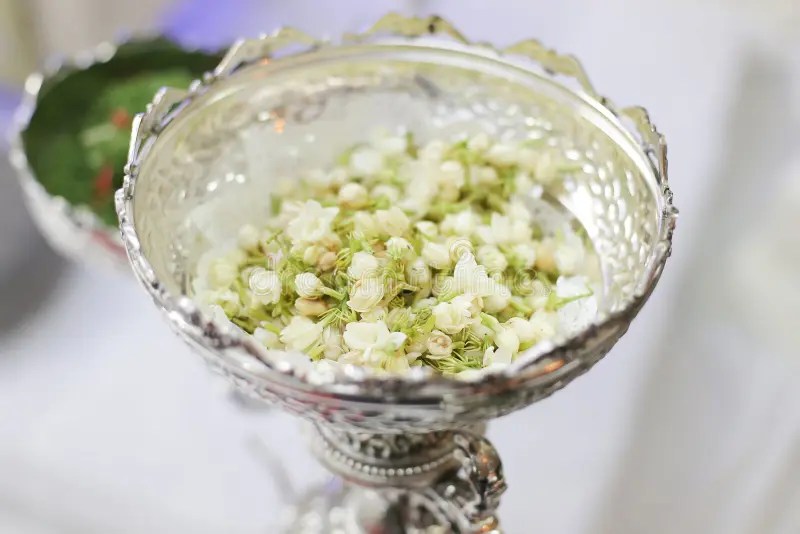
The sliced screw pine in a receptacle,
the jasmine blossoms spread on the tray,
perfume sprinkled to enhance the scent:
the potpourri of bunga rampai welcomes guests.
The ceremony officiated by the qadi,
the couple duly married,
customs and culture celebrated in fragrance,
religious laws honoured on the dais.
The shaving of the baby’s head,
first steps on the soil,
the coffin carried to the grave—
the potpourri of bunga rampai
adorns every domain,
binding firmly entire life’s moments.

Isa Kamari has written 12 novels, 3 collections of poetry, a collection of short stories, a book of essays on Singapore Malay poetry, a collection of theatre scripts and lyrics of 3 music albums, all in Malay. His novels have been translated into English, Turkish, Urdu, Arabic, Indonesian, Jawi, Russian, French, Spanish, Korean, Azerbaijan and Mandarin. Several of his essays and selected poems have been translated into English. Isa was conferred the S.E.A Write Award from Thailand (2006), the Singapore Cultural Medallion (2007), the Anugerah Tun Seri Lanang (2009) from the Singapore Malay Language Council, and the Mastera Literary Award (2018) from Brunei Darussalam.

He obtained a BArch (Hons) from the National University of Singapore in 1989, an MPhil (Malay Letters) from Universiti Kebangsaan Malaysia in 2008 and is currently pursuing a PhD programme at the Academy of Islamic Studies, Univeristi Malaya. His area of research is on the problem of alienation and the practice of firasat (spiritual intuition) in selected Singapore Malay novels.

The Lost Mantras is a collection that blends spirituality, Malay cultural heritage, and universal human experience. First published as part of Menyap Cinta (Love Greetings, 2022, Nuha Books KL), these poems are like a bridge between mysticism and everyday life, where traditional images (betel, jasmine, kris[1], oil lamps, setanjak[2]) are woven with Qur’anic echoes, prayers, and existential questioning. The collection carries a Sufi resonance—always circling back to longing, humility, surrender, and beauty as signs of God. The poems are not only lyrical but also function as cultural memory: they preserve Malay traditions, communal practices, and village life, while situating them in a cosmic framework of faith, sin, and redemption. The use of Malay customs, rituals, and objects is powerful: it asserts that spirituality is not abstract but embedded in heritage. This makes the collection uniquely Southeast Asian despite its universal in appeal.

[1]A dagger

[2] Malay headgear

PLEASE NOTE: ARTICLES CAN ONLY BE REPRODUCED IN OTHER SITES WITH DUE ACKNOWLEDGEMENT TO BORDERLESS JOURNAL

Click here to access the Borderless anthology, Monalisa No Longer Smiles

Click here to access Monalisa No Longer Smiles on Kindle Amazon International

Categories
Poetry

Found in Translation: Hrushikesh Mallick’s Poems

Five poems by Hrushikesh Mallick have been translated from Odia by Snehaprava Das

AFTER THEY LEAVE     

After they leave,
The tree in the midst of a bare field
Stands forlorn.
Not a single bird,
Nor the sound of chirping anywhere
Not a leaf flutters in the breeze,
No one speaks a word
After they leave.

The world is a meaningless void
When they are not there.
Flowers bloom and wither aimlessly.
Festive seasons come and depart.
The privileged and the poor come and go
Without making an impact.
Silence reigns everywhere and around
When they are not there.

Living in a pattern,
Like, in every moth-hour
‘Chhatu bhai’ riding back
From the village market, ringing the bicycle bell,
Or, farmers sitting on a platform in the evenings
And deciding which patch of the land
Would be plowed next morning,
Like, the moon coming up routinely
At measured intervals,
And discussions centering around
How ‘Gaya-bhai’
Escaped the wrath of the village-goddess
Last night by a sheer miracle.
Routine life continues
Like rice cooking tender in the kitchen-hearth
While cow-dung cakes are put
To smoulder in the cowsheds.
The regular pattern of living
Is dull and cheerless
In their absence.
Who are they, then? Who indeed?
They are the fragrance of the paddy-buds
In the farmlands by the hillside,
They are the Siju bushes that
Grow under the eaves in the backyard,
They are the sound of the clearing of throat
That inspires courage in a fearful heart
On a dark pathway,
They are the drumbeats floating in
In gentle waves from the neighbouring village,
They are the pallbearers that twine ropes
To make a pyre;
And, after they leave life loses its meaning!

WHEN THERE IS NO GOD

Once you join your palms
sitting on the bed
while going to sleep
or, as you wake up,
worries stop disturbing
your calm.
You are assured of the presence
of someone called God
who might break your fall.
But these are the bleak days
of God’s absence,
these days the headless bodies
saunter down the streets of the night
whispering to one another.
The dogs howl in a chorus.
The sounds of sermons or devotional songs
do not float in from the mandapa,
the air throbs instead with the siren
of ambulances.
As such belief is that
the God that holds
the trident and the mace
is omnipotent.
Why does that God stand dull
and lifeless in the temple now?
Does an idol in any temple
have the power now
even to chase away the stray dogs?
Is there a God in any shrine
who can hold open
its closed doors and by some miracle
turn auspicious
all that is ominous?
In these dark days when
God is not there,
if we take a fall,
we have to get up on our own.
We have to lean on our own mettle
and our own merit
in the moments of death or survival.
In the absence of God,
we have to commit ourselves
to the service of the distressed,
to feed the hungry
and nurse the sick,
give shelter to the homeless.
It’s time we repented our indulgences
without religious extravaganza.
It’s time we stopped
pinning blind faith in
the figures of stone.

THE LONE GIRL

The lone girl has nowhere to go,
She sits alone lamenting her loss;
Once upon a time she had
a country like we all have,
it was called Syria.
Its lofty national flag
soared to the clouds.
It had a national anthem that
sparked the spirit of martyrdom
in its people!

In the evenings,
perched on the shoulders
of her babajaan,
she watched the moon
in the sky of her homeland;
heard stories from her mother
that set her eyes rolling in wonder;
that country, her homeland is now in ruins
a vast, barren expanse,
littered with severed limbs.
Its air is sick with the smell of
tons and tons of explosives
there lay piles of disfigured childhood
in pathetic abandon
to tell the tale of a country that was!

No one had ever warned the girl
that her tomorrows will be spent
in makeshift shelters under the tents,
nor did she know that
her palms would join to make begging bowl,
and there would be merchants
to trade on
the perfumed void in her.
No one predicted that she would grow up
believing in hatred instead of love!
And when she would learn to ask
the whereabouts of her parents
the whole civilized world will
keep mute.

EYES

Just as I believed that all poems
which could have been written on ‘eyes’
are already written
your ‘eyes’ flashed before me
and what an amazing lot of trees
laden with fruits and flowers
and birds, they held!
I wondered where did you flick
your deep, boundless glance
from the corridors of the hospital
like a handful of floral offerings.
The anguish that glance held
was like the lost look in the eyes of a kid
who was rudely denied a father’s lap,
like a fresh bloom shying away
from the eyes of a honeybee
or, a streak of lightning flashing
in the overcast noon-sky
like a poor man’s last hope.
Your eyes are like the lines of a poem
that unfold a new meaning
at every other reading.
Your eyes,
like a strange horizon captures
the crimson of the dawn
and the gleam of a red silk sari
in a perfect balance!
Your eyes could transform a waste land
to a paddy field in luxuriant green,
at times they are moist with muffled sobs,
or, like a spear smeared in blood, at others!
What is more beautiful --
the bright loquacity in your eyes
or the rain-washed sunshine,
the mysterious mutter in your eyes
or a village enveloped in a wispy darkness?

THE HONEYBEE DOES NOT KNOW

The son writes poems.
His mother does not know.
‘You are rotting yourself through writing,’
She complains,
‘Did you write them?’
A girl-friend, looks at him in wonder,
‘Can you swear to that?’ she asks.
The boy writes poems
The street where he lives does not know it,
Nor does the village!
His young face does not sport a beard,
Nor have the creases appeared on his forehead.
There was not that distant look
Like the faraway stars in the eyes,
How could then he be a poet?
Who would believe that?
A man who picks up a quarrel with the fisherwoman
Could recite the brajabuli,
Or, the fellow weaving clothes at the loom
Can sing lines from Tapaswini

A poet is not supposed to have a home.
He sits under the trees
Amidst the anthills.
A poet hacks off the branch he sits on.
He does not have that worldly intelligence.
A poet is not pragmatic.
He begins a line at the wrong point
And ends it at a wrong one too.
A good poet forgets the right way of chanting
The mantra that would protect him from dangers
While actually facing them.

The mother does not know that
Her son is a poet; nor does the father.
The owner of the hut where the poet takes shelter
Does not know his tenant to be a poet.
The poet’s voice does not know
It belongs to a poet.
The reflection has no idea it is the poet’s image.
The lizard exploring the shelves
Does not know the ‘Award of Padmashree’
Carefully preserved there,
Was won by the poet.
The honeybee that circles the graves
Does not know that
The lines engraved on the tomb
Were the epitaph for the poet.

Glossary:
Mandapa is a pavilion.
Brajabuli is a dialect based on Maithali that was popularised for poetry by the medieval poet Vidyapati.
Tapaswini: A famous long poem by the 19th century Odia poet Gangadhar Meher.

.

Dr Hrushikesh Mallick is a reputed Odia poet and writer. He has 13 Poetry collections. His first book in 1987 heralded a new era in Odia poetry. He has received Odisha Sahitya Akademi Award (1988), Sarala Award (2016) and Central Sahitya Akademi Award (2021).He is also an eminent literary critic and fiction writer. He served as President of Odisha Sahitya Akademi (2021-2024). He has been a professor of Odia language and literature from 2012.

Dr.Snehaprava Das, is a noted writer and a translator from Bhubaneswar, Odisha. She has five books of poems, three of stories and thirteen collections of translated texts (from Odia to English), to her credit. 

PLEASE NOTE: ARTICLES CAN ONLY BE REPRODUCED IN OTHER SITES WITH DUE ACKNOWLEDGEMENT TO BORDERLESS JOURNAL

Click here to access the Borderless anthology, Monalisa No Longer Smiles

Click here to access Monalisa No Longer Smiles on Kindle Amazon International

Categories
Contents

Borderless, August 2025

Art by Sohana Manzoor

Editorial

Storms that Rage… Click here to read.

Translations

Nazrul’s Jonomo, Jonomo Gelo (Generations passed) has been translated from Bengali by Professor Fakrul Alam. Click here to read and listen to a rendition by the famed Feroza Begum.

Ajit Cour‘s short story, Nandu, has been translated from Punjabi by C Christine Fair. Click here to read.

The Scarecrow by Anwar Sahib Khan has been translated from Balochi by Fazal Baloch. Click here to read.

Five poems by Aparna Mohanty have been translated from Odia by Snehprava Das. Click here to read.

Angshuman Kar has translated some of his own Bengali poems to English. Click here to read.

Sunflower, a poem by Ihlwha Choi,  has been translated from Korean by the poet himself. Click here to read.

Tagore’s Shaishabshanda (Childhood’s Dusk) has been translated from Bengali by Mitali Chakravarty. Click here to read.

Poetry

Click on the names to read the poems

Ron Pickett, Fakrul Alam, William Miller, Meetu Mishra, Heath Brougher, Laila Brahmbhatt, Luis Cuauhtémoc Berriozábal, Snigdha Agrawal, George Freek, Ashok Suri, Scott Thomas Outlar, Dustin P Brown, Rajorshi Patranabis, Ryan Quinn Flanagan

Poets, Poetry & Rhys Hughes

From the Vale of Glamorgan are two poems on the place where Rhys Hughes grew up. Click here to read.

Musings/Slices from Life

Menaced by a Marine Heatwave

Meredith Stephens writes of how global warming is impacting marine life in South Australia. Click here to read.

The Man from Pulwama

Gowher Bhat introduces us to a common man who is just kind. Click here to read.

More than Words

Jun A. Alindogan writes on his penchant for hardcopy mail. Click here to read.

To Bid or Not to Bid… the Final Goodbye?

Ratnottama Sengupta ponders on Assisted Dying. Click here to read.

Musings of a Copywriter

In Syrupy Woes, Devraj Singh Kalsi looks at syrupy health antidotes with a pinch of humour. Click here to read.

Essays

‘Verify You Are Human’

Farouk Gulsara ponders over the ‘intelligence’ of AI and humans. Click here to read.

Does the First Woman-authored Novel in Bengali Seek Reforms?

Meenakshi Malhotra explores Somdatta Mandal’s translation of Manottama, the first woman-authored Bengali novel published in 1868. Click here to read.

Bhaskar’s Corner

In Bidyut Prabha Devi – The First Feminist Odia Poet, Bhaskar Parichha pays a tribute to the poet. Click here to read.

Stories

The Sixth Man

C. J. Anderson-Wu tells a story around disappearances during Taiwan’s White terror. Click here to read.

I Am Not My Mother

Gigi Baldovino Gosnell gives a story of child abuse set in Philippines where the victim towers with resilience. Click here to read.

The Archiver of Shadows

Hema R explores shadows in her story set in Chennai. Click here to read.

Ali the Dervish

Paul Mirabile weaves the strange adventures of a man who called himself Ali. Click here to read.

The Gift

Naramsetti Umamaheswararao moulds children’s perspectives. Click here to read.

Notes from Japan

In American Wife, Suzanne Kamata gives a short story set set in the Obon festival in Japan. Click here to read.

Conversation

Neeman Sobhan, author of Abiding City: Ruminations from Rome, discusses shuttling between multiple cultures and finding her identity in words. Click here to road.

Book Excerpts

An excerpt from M.A.Aldrich’s From Rasa to Lhasa: The Sacred Center of the Mandala. Click here to read.

An excerpt from Neeman Sobhan’s An Abiding City: Ruminations from Rome. Click here to read.

Book Reviews

Somdatta Mandal reviews Chhimi Tenduf-La’s A Hiding to Nothing. Click here to read it.

Madhuri Kankipati reviews O Jungio’s The Kite of Farewells: Stories from Nagaland. Click here to read.

Bhaskar Parichha reviews Snehaprava Das’s Keep it Secret: Stories. Click here to read.

.

Click here to access the Borderless anthology, Monalisa No Longer Smiles

Click here to access Monalisa No Longer Smiles on Amazon International

Categories
Poetry

Poems by Angshuman Kar

Angshuman Kar has translated some of his shorter Bengali poems to English

Angshuman Kar
RULE

A river wants
pebbles on its bosom.
Only then the water will get a jolt,
the current will be visible.

The wind wants
a few trees to stand against it.
Only then it will whiz,
the speed will become visible.

A word also wants a few antonyms
in opposition.
Only then can it sparkle like a jewel!

Nature wants opposition

A boss slavery…


GROUP PHOTO


Father is gone. Uncle is gone.
Grandma is gone. Tikla is gone.
I am still here. Tukai is here.
Looking at a forty-year-old group photo,
it becomes clear that people take pictures together
only to realise, someday,
that in a cruel world made of black stone,
they are alone.

UMBRELLA

A broken rib.
The plastic handle is partly cracked.
It holds back the drizzle,
but when the rain pours hard,
it gives up.
From head to toe, I get drenched.

And so, the monsoon comes, the monsoon goes.

Looking at the umbrella, sometimes
it seems,
it is my father from the distant past.

Always hesitant.


ONE HUNDRED YEARS OF SOLITUDE

One can immediately identify the other
the moment the two meet.

One understands the other.
Understands the pain, the suffering, their causes–
everything.

The two drink coffee together.
Gossip. Quarrel.
Together they watch the young couples
pass by.

Boarding the same bus, then,
they go back home together.

One solitary man, still,
can never become the friend of
another.


LOVE

The wind is blowing gently
and the leaves of a tree
are shivering.
It seems
a deaf and dumb boy
has fallen in love
with a girl, deaf and dumb.


THE WIND

Those who think you are a friend
are fools.
You just touch and pass–
A foreigner in every land.

Angshuman Kar, a Bengali poet and novelist, is Professor of English at University of Burdwan, West Bengal. He was also the Secretary of Sahitya Akademi, Eastern Region. Kar is the recipient of several prestigious awards including Paschim Banga Bangla Akademi Puraskar, Krittibas Award, Bangiya Sahitya Parishad Puroskar and Shakti Chattopadhyay Samman. He has read his poems in Scotland, Germany, America and Bangladesh. Wound Is the Shelter is a collection of his poems translated to English. 

.

PLEASE NOTE: ARTICLES CAN ONLY BE REPRODUCED IN OTHER SITES WITH DUE ACKNOWLEDGEMENT TO BORDERLESS JOURNAL

Click here to access the Borderless anthology, Monalisa No Longer Smiles

Click here to access Monalisa No Longer Smiles on Amazon International

Categories
Poetry

Identity by Munir Momin

Translated from Balochi by Fazal Baloch

From Public Domain
(1) 

If you were a lamp,
I would not become the night—
Nor a moth,
Nor a window,
Nor an eye.
If you were a lamp,
I too would be a lamp.

(2)

Whether you dwell afar or near,
To me, you are everywhere.
Be it dawn or dusk,
You bloom—verdant, evergreen.
With famished lamps,
I wander, seeking you.
I crumble, collapse.
With my tired soul,
I sow and grow whispers.
You are my pasture.

Munir Momin is a contemporary Balochi poet widely cherished for his sublime art of poetry. Meticulously crafted images, linguistic finesse and profound aesthetic sense have earned him a distinguished place in Balochi literature. His poetry speaks through images, more than words. Momin’s poetry flows far beyond the reach of any ideology or socio-political movement. Nevertheless, he is not ignorant of the stark realities of life. The immenseness of his imagination and his mastery over the language rescues his poetry from becoming the part of any mundane narrative. So far Munir has published seven collections of his poetry and an anthology of short stories. His poetry has been translated into Urdu, English and Persian.  He also edits a literary journal called Gidár. This poem originally titled as Pajjar (Identity) is taken from Munir Momin’s poetry collection Yak Bechelley Aazman (A Span Long Sky) published by Gidar Publications in 2014.

Fazal Baloch is a Balochi writer and translator. He has translated many Balochi poems and short stories into English. His translations have been featured in Pakistani Literature published by Pakistan Academy of Letters and in the form of books and anthologies. Fazal Baloch has the translation rights to Munir Momin’s works.

.

PLEASE NOTE: ARTICLES CAN ONLY BE REPRODUCED IN OTHER SITES WITH DUE ACKNOWLEDGEMENT TO BORDERLESS JOURNAL

Click here to access the Borderless anthology, Monalisa No Longer Smiles

Click here to access Monalisa No Longer Smiles on Kindle Amazon International

Categories
Nazrul Translations

Nazrul’s Lines for Tagore

Ghumaite Dao Shranto Robi Re (Let Robi Sleep in Peace) was written by Nazrul in 1941 for Tagore, when he died. It has been translated from Bengali by Professor Fakrul Alam

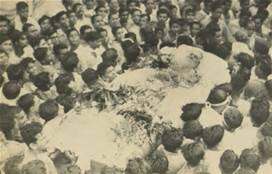
Tagore takes his leave on August 7, 1941. Photo from Public Domain
Let the spent Robi sleep on.
Please, please don’t try to wake him up.
Let not the one who spread light all his life
Be awakened; don’t disturb his sleep.
Let the one who gave light and delighted thousands,
And has now collapsed at mother earth’s bosom,
Be ritually smeared with sandal paste on his forehead;
Don’t redden his face by weeping incessantly!
Even at the risk of straining yourself, stretch out your palms
To accept the power and the strength he has given you.
The departed Sun and Supreme One will enable us to succeed
Let the poet sleep on!
The departed Sun’s glow will still light up our interiors.
So, from within yourself pay him homage every day.
Don’t make him weep by shedding continuous tears!

A recording of the first performance of Nazrul’s lyrics in Bengali

Born in united Bengal, long before the Partition, Kazi Nazrul Islam (1899-1976) was known as the  Bidrohi Kobi, or “rebel poet”. Nazrul is now regarded as the national poet of Bangladesh though he continues a revered name in the Indian subcontinent. In addition to his prose and poetry, Nazrul wrote about 4000 songs.

.

Fakrul Alam is an academic, translator and writer from Bangladesh. He has translated works of Jibonananda Das and Rabindranath Tagore into English and is the recipient of Bangla Academy Literary Award (2012) for translation and SAARC Literary Award (2012).

.

PLEASE NOTE: ARTICLES CAN ONLY BE REPRODUCED IN OTHER SITES WITH DUE ACKNOWLEDGEMENT TO BORDERLESS JOURNAL

Click here to access the Borderless anthology, Monalisa No Longer Smiles

Click here to access Monalisa No Longer Smiles on Amazon International

Categories
Poetry

Short poems by Mulla Fazul

Translated from Balochi by Fazal Baloch

Mulla Fazul (died around 1858) is considered one of the greatest poets of classical period. He is credited to have assigned new dimensions to classical Balochi poetry in terms of themes and diction. He also wielded equal command in Arabic and Persian languages which is evident in his poetry. The following poems have been taken from the anthology called, Drapshokin Sohail1, compiled and edited by Faqeer Shad.

MY BELOVED


Like the moon of the fourteenth night,
My beloved’s face glows bright.
She is the lightning on rainclouds,
Above the mountains that does strike,
Or a pomegranate
That ripens in weeks
Its blooming buds.
How desperately my ailing heart seeks!


WORLD

She seduces and ensnares a stranger
And her husband she cheats on and betrays.
The world is an unfaithful woman,
Each day she flirts in a new way.


HATRED TOWARDS BRETHREN


If a man harbours
Hatred towards his brother,
Off his sanity and wisdom will go.
The comforts of his abode
Away the scorching wind will blow
And soon the foemen
Subdue him with the sword.


DISUNITY

In disunity, what will you gain, after all?
The sun has gone past the horizons.
Night has descended on the world.
It’s dark wherever I cast a glance.

.

  1. Translation from Balochi: A Shining Star in Ursa Minor ↩︎

Fazal Baloch is a Balochi writer and translator. He has translated many Balochi poems and short stories into English. His translations have been featured in Pakistani Literature published by Pakistan Academy of Letters and in the form of books and anthologies.

PLEASE NOTE: ARTICLES CAN ONLY BE REPRODUCED IN OTHER SITES WITH DUE ACKNOWLEDGEMENT TO BORDERLESS JOURNAL

Click here to access the Borderless anthology, Monalisa No Longer Smiles

Click here to access Monalisa No Longer Smiles on Kindle Amazon International

Categories
Poetry

Indecisiveness

Poetry and translation from Korean by Ihlwha Choi

When you encounter something beautiful,

Even if you are not familiar with beauty,
Be willing to approach it,
Rather than hesitating and distancing yourself.

When something good is in front of you,
Even if it feels unfamiliar,
Show an interest,
Instead of being overly critical and parting ways.

When you encounter something true,
Even if you usually don't care much about it,
In the realm of human existence, truth is necessary.
Knowing that truth ultimately stays with us,
Accept it, instead of discarding it like an old rag.

Unacceptance, leads to inevitable collisions,
And regrets -- both big and small.
You end up being tossed around and remain indecisive at every turn.

Ihlwha Choi is a South Korean poet. He has published multiple poetry collections, such as Until the Time When Our Love will Flourish, The Color of Time, His Song and The Last Rehearsal.

.

PLEASE NOTE: ARTICLES CAN ONLY BE REPRODUCED IN OTHER SITES WITH DUE ACKNOWLEDGEMENT TO BORDERLESS JOURNAL. 

Click here to access the Borderless anthology, Monalisa No Longer Smiles

Click here to access Monalisa No Longer Smiles on Kindle Amazon International

Categories
Contents

Borderless, November 2023

Art by Sohana Manzoor

Editorial

Counting Colours… Click here to read.

Conversation

Banjara author Ramesh Karthik Nayak discusses his new book, Chakmak (flintsone), giving us a glimpse of his world. We also have a brief introduction to his work. Click here to read.

Translations

Demanding Longevity by Quazi Johirul Islam has been translated from Bengali by Fakrul Alam. Click here to read.

Moonlight, a poem by Bashir Baidar, has been translated from Balochi by Fazal Baloch. Click here to read.

Maithili Poetry by Vidyanand Jha has been translated from Maithili by the poet himself. Click here to read.

The Window and the Flower Vase has been written and translated from Korean by Ihlwha Choi. Click here to read.

Tagore’s Tomar Kachhe Shanti Chabo Na (I Will Not Pray to You for Peace) has been translated from Bengali by Mitali Chakravarty. Click here to read.

Poetry

Click on the names to read the poems

Michael Burch, Aineesh Dutt, Stuart McFarlane, Radhika Soni, David Mellor, Prithvijeet Sinha, John Grey, Ahana Bhattacharjee, Ron Pickett, Suzanne AH, George Freek, Arshi Mortuza, Caroline Am Bergris, Avantika Vijay Singh, Ryan Quinn Flanagan, Kisholoy Roy, Rhys Hughes

Poets, Poetry & Rhys Hughes

In A Parody of a Non-existing Parody: The Recycled Sea, Rhys Hughes uses TS Eliot’s ‘The Waste Land’ to create a new parody. Click here to read.

Musings/Slices from Life

The Theft of a River

Koushiki Dasgupta Chaudhuri tells a poignant truth about how a river is moving towards disappearance due to human intervention. Click here to read.

In Quest of Seeing the Largest Tree in the World

Meredith Stephens writes of her last day in California. Click here to read.

Beyond Horizons: A Love Story

Sai Abhinay Penna shares photographs and narrative about his trek at Chikmagalur. Click here to read.

Musings of a Copywriter

In Crush on Bottles, Devraj Singh Kalsi inebriates his piece with humour. Click here to read.

Notes from Japan

In Address Unknown, Suzanne Kamata shares a Japanese norm with a touch of humour. Click here to read.

Essays

Peeking at Beijing: The Wall

Keith Lyons travels to The Great Wall and writes of the experience. Click here to read.

Cinema, Cinema, Cinema!

Gayatri Devi writes of the translation impact of cinema, contextualising with the Tamil blockbuster, Jailer. Click here to read.

Coffee, Lima and Legends…

Ravi Shankar explores Lima, its legends and Peruvian coffee. Click here to read.

Stories

Jonathan’s Missing Wife

Paul Mirabile sets his story in a small town in England. Click here to read.

The Tender Butcher

Devraj Singh Kalsi weaves a story around a poetic butcher. Click here to read.

Book Excerpts

An excerpt of The White Shirts of Summer: New and Selected Poems by Mamang Dai. Click here to read.

An excerpt from Ramesh Karthik Nayak’s Chakmak. Click here to read.

Book Reviews

Somdatta Mandal reviews Ali Akbar Natiq’s Naulakhi Kothi, translated from Urdu by Naima Rashid. Click here to read.

Ranu Uniyal reviews I am Not the Gardener: Selected Poems by Raj Bisaria. Click here to read.

Anita Balakrishnan reviews Lakshmi Kannan’s Guilt Trip and Other Stories. Click here to read.

Bhaskar Parichha reviews Akshat Rathi’s Climate Capitalism: Winning the Global Race to Zero Emissions. Click here to read.

.

.

Click here to access the Borderless anthology, Monalisa No Longer Smiles

Click here to access Monalisa No Longer Smiles on Amazon International