Title: Epidemic Narratives: The Cultural Construction of Infectious Disease Outbreaks in India
Author: Dilip K. Das
Publisher: Orient BlackSwan
After the major outbreak of COVID-19 pandemic in 2020, there has been a plethora of studies about epidemic narratives in different kinds of literary and visual forms. Not that the issue had not been dealt with earlier, but somehow it increased manifold times and contends with a reality that is now increasingly becoming our way of life as new infectious diseases break out and older ones resurface almost every year. Drawing from the humanities, medicine and social sciences, and using the approach of interdisciplinary studies, this non-fiction examines stories of epidemic outbreaks in India, from the late-nineteenth century to the present, in the form of fiction, film, memoir, blogs, media reports and epidemiological accounts, to show how epidemics have been represented in social understanding.
Epidemics signify a crisis in society on multiple levels. The author, who specialises in medical humanities and has been meticulously studying and teaching courses in this area for several years, realised that very little is readily available in the nature of theoretical and analytical scholarship of epidemic narratives in general and on Indian narratives in particular and so he decided to write this book.
Divided into ten chapters, the study attempts a close textual analysis and focuses on the subjective experience of people affected by the outbreak. This ranges from the emotional impact of the suffering it causes to socio-political conflicts that it brings to the fore as a collective crisis. It poses two questions: what kind of plot do they employ, and what significances do they attribute to outbreaks as complex human events?
In the first chapter, the author discusses the social understanding of epidemics using a theoretical framework drawing on Charles Rosenberg and several other theorists to show how this understanding both derives from and adds to the biomedical view of disease. It examines how, in pluralistic societies, epidemic reality is constructed through both biomedical and cosmological paradigms, leading to contrary ways of responding to it. Thus, worshipping goddesses like Sitala Mata or Corona Devi and ritualising the event in shows of solidarity exists along with scientific perspectives.
The second chapter is about the impact of pandemic on the nation as a community that imagines itself as healthy yet is vulnerable to the threat posed by pathogens and pathogenic outsiders. The COVID-19 pandemic has made it clear that the future of public health in a rapidly globalizing context depends on how nationalism and internationalism balance mutual interests. Chapters three to ten deal with specific outbreaks. The third chapter discusses two intertextual narratives of the plague outbreak Pune in 1897 which culminated in the assassination of the Plague Commissioner Walter Charles Rand. The first is the autobiography of Damodar Hari Chapekar, who was convicted and hanged for the assassination. It shows how the outbreak was constructed and framed as a political event, marking the emergence of militant nationalism and anticipating the freedom struggle. The second narrative is 22 July 1897, a film made on the same incident by Nachiket and Jayoo Patwardhan.
U. R. Ananthamurthy’s novel Samskara1is usually studied as a text that deals with the themes of caste and religious orthodoxy, the role of tradition in a modernising society, and the tension between allegory and realism. In the next chapter, Das argues that plague not only provides the inspiration for the novel and its point of departure but also serves the function of a focaliser. Samskara is about the question of social order, how a particular code of conduct becomes rigid. In this context the plague outbreak serves as a metaphor for larger social and ethical crises.
Chapter five is about Spanish flu, which broke out in Bombay in June 1918 and was rapidly carried to the rest of the country by soldiers returning from the First World War. It begins with two official reports on the flu by the assistant health officer of Bombay municipality and the sanitary commissioner of India. The author examines newspaper accounts of the outbreak and two literary narratives to show how the outbreak was variously framed as a lapse of colonial public health, a personal tragedy and a cosmological crisis. The final section of the chapter discusses the memory of the Spanish flu a hundred years later with the outbreak of COVID-19.
Chapter six deals with an outbreak of viral hepatitis, a disease that is largely endemic but has occurred intermittently in epidemic form in India in the last hundred years. The author analyses Satyajit Ray’s 1990 film Ganashatru, an adaptation of Henrick Ibsen’s An Enemy of the People, which is about an outbreak of infectious hepatitis in a pilgrimage town in West Bengal. Taking the main theme of asserting commitment to ethics as against manipulation of truth for personal gain, Ray changes the plot, characterisation and context of Ibsen’s story to criticise religious dogma which contradicts rationality and places at risk the health of people.
The next chapter analyses narratives of the HIV/AIDS epidemic which broke out in India in 1986. It examines a range of media articles, literary and cinematic texts and an AIDS awareness video to track changes in the social understanding of the disease and those affected by it. From the stigmatising accounts of risk groups and HIV-positive individuals that was characteristic of the early decades of the epidemic in India, the focus shifted at the turn of the century to empathy for them. The author discusses in details the first commercially released Hindi film on AIDS, Naya Zaher (New Poison,1991) directed by Jyoti Sarup, mentions two human interest stories like Ritu Sarin’s ‘The Outcast’ (1990) and Subhash Mishra’s ‘Damned to Death’ (2000), analyzes a film like Ek Alag Mausam ( A Different Season, 2003) directed by K. P. Sasi, Negar Akhavi’s anthology AIDS Sutra (2008), and Kalpana Jain’s Positive Lives (2002) where the author journeys more than 15,000 kilometers in four months in order to get an idea of the epidemic’ s scale. He also analyses movies like Phir Milenge ( We’ll meet again, 2004) directed by Revathy and Onir’s My Brother…Nikhil(2005) and examines the dialectical relation between social understanding and narrative in bringing about this change.
Aashique Abu’s Malayalam film, Virus, is a fictional reconstruction of the outbreak of the Nipah virus disease in Kerala in the summer of 2018 and deals with biomedical explanations as well as accounts of personal suffering. The eighth chapter therefore shows how the film constructs the event as the disintegration and renewal of community and as a sign of the vulnerability of human life. It also shows how the ending denies any assurance that the crisis is over and will not recur.
The recent outbreak of COVID-19 in India that resulted in a nationwide lockdown in 2020 forms the subject of the next chapter. It discusses stories of the pandemic and the lockdown in terms of the suffering they caused, the loneliness, disruption of everyday life, time-space disorientation, loss of life and livelihood, the lack of institutional support, and the precariousness that resulted from all of these. It focuses on two kinds of stories, those of personal suffering like the video Infected 2030 and the Times of India blog ‘My Covid Story’, and those of collective suffering like Vinod Kapri’s documentary 1232 KMS and the book that followed from it, 1232 km: The Long Journey Home. The lockdown following the COVID outbreak in India disproportionately affected migrant workers who lost livelihoods and were prevented by the police and the local administration from returning to the safety of their villages. The author clearly analyses how the governments were unable to deal effectively with so complex a crisis.
The last chapter attempts to explain why narrative is the genre best suited to represent the experience of epidemic, and why epidemic in turn calls forth narrative as its most suitable mode of representation. We make sense of an outbreak in two ways, as an objective event and as subjective human experience. Narratives bring out both these dimensions, by emphasising emotional responses to disease, death and suffering as well as making cognitive sense of it. The book also contains an interesting epilogue by S. Mukundan who examines a narrative poem Plague Sindhu (1924) by Anthony Pillai recording the outbreak of plague in his home district of Theni in Madras Presidency. The poem is an apt example of how an outbreak of infectious disease comes to be socially constructed in terms of both modern scientific ideas of disease-causation and traditional ideas of disease as divine punishment for wrongdoing.
As mentioned earlier Epidemic Narratives takes as its main theme Charles Rosenberg’s argument that the social reality of disease is constituted in the frames of explanation provided by biomedical, political, cultural and social ideals and practices. Das mentions that the book is about “human suffering and compassion” and it will be of interest to researchers and students of literature, cultural studies, the history of medicine and public health policy.
.
Translates to ‘A Rite for a Dead Man’, a Kannada novel written in 1965 ↩︎
Somdatta Mandal, critic and translator, is a former Professor of English at Visva Bharati, Santiniketan.
PLEASE NOTE: ARTICLES CAN ONLY BE REPRODUCED IN OTHER SITES WITH DUE ACKNOWLEDGEMENT TO BORDERLESS JOURNAL
Where do knives go when they die? Do they sink in the ground, Without a sharp sound? Or do they watch with devil wings, While you sit around and cry?
Do they burn to lava, molten, but cold, Steel words purified by silence, A sad, pungent shame released into air?
Do they sit around and wait for their funeral, A rigid coffin forever holding their fiery breath?
The one who cut even the hardest of fruit, Now sits around sulking because no one Really knew, they didn't mean to be so cruel.
Where do knives go when they die? Where do words go to return to silence?
Alpa Arora is a former journalist/content writer who has been writing articles, poetry and short stories for the last 25 years. Her work has been published in The Times of India and Bengaluru Review. Her first novel, Floating Worlds, is looking to be published in the coming year. She resides in Bengaluru.
PLEASE NOTE: ARTICLES CAN ONLY BE REPRODUCED IN OTHER SITES WITH DUE ACKNOWLEDGEMENT TO BORDERLESS JOURNAL
Gandhi (1869-1948)The victims of the 1946 riots in Calcutta (now Kolkata)
The sun went down.
One after another the lamp posts in the winding lane sprung to life. Their brilliance was dimmed by the smoke from the homely clay oven, sigri. The darkening sky above got dotted by a glittering star or two. And that is when Ratan’s feet became unruly like a wild steed. Donning a mulmulkurta he got ready to go out for the evening.
Jasoda had entered the room to pick up something. She came to an abrupt halt.
“Off?” she asked, her voice laced with sarcasm. “Can’t stay put at home any longer, can you?”
Solemnly Ratan nodded his head. “Yes, just need to take a round.”
Jasoda knitted her brow, “Just take a round? Chhee! Don’t do that. Pour some down your throat too, okay?”
“Jasoda!”
“Why? Am I saying something wrong, haan[1]? Something not quite done?”
Ratan did not utter a word in reply. He only glared at Jasoda for a second before walking out in rapid steps.
He didn’t stop until he reached Jatin’s house. His friend Jatin who sells fish every morning and evening. He has no family save his aged mother – he had married but his wife died years ago, and he made no attempt to have another after that.
They all gather in his house – Haaru, Potla, Jaga, Radhu and a few others. Since most of them are in the business of selling fish or meat, they have cash in their pockets. They easily turn uproarious as mutton chops and prawn cutlets stream in to enhance the pleasure of downing country liquor.
In a room foggy with fumes of cigarette, they settle down to a few games of card. They play as long as they feel like; when they don’t want to, they storm the cells of Gendi or Bunchi in the dark of the night. Or, when they are told to, they dive into the alleys of the Muslim neighbourhood and toss a few hand grenades.
Yes, the responsibility to curb the riot – a euphemism for hunting down Muslims – has suddenly come to rest on their able shoulders. They didn’t anticipate or expect it to, but it did. All of a sudden the wealthies of their end of the city started to pamper them. They raised funds through donations, to arm Ratan and his friends with small weapons so that they could protect the prestige of the Hindus, and of the womenfolk.
The way things were going, this was bound to happen. They had outdone everyone in severing head from the torso of walking talking men.
*
They were all there. Haaru, Potla, Jaga, Radhu – all of them had showed up. Ratan lent the final touch.
“Come in saala[2], come!” Jatin affectionately welcomed him.
Laughter and banter followed.
There was a sudden lull in the spate of riots that had been on sporadically for a year since the Direct Action Day, and had got a spurt when the country won its freedom on 15th August. But God knows what went wrong? All of a sudden the darkness of hatred started to melt, and the two warring units that had been at each other’s throats, suddenly saw themselves in the mirror: they embraced each other in brotherhood.
Since that day their ‘work’ had gone down. Further calm has descended since Gandhiji appeared in the city. He is camping in Beliaghata. He has been saying that he will not go anywhere until there is peace. Why, he has even staked his life! He will give up his life if he has to, to stop the riots! That is why Ratan and his company are spending more hours in downing liquor and visiting the sluts in the forbidden quarters, singing in their hoarse voice and walking with unsteady steps.
The chops and cutlets from Nitai’s shop were hot off the oven. The air thickened with the smell of blended oil. And their eyes sparkled with the spirit.
“Abey Jatin, get the bottles out…” Ratan urged.
“Haan bey,” Jatin was most willing to oblige.
A bitter-sharp smell spread through the room. The earthen cups filled to the brim were emptied in no time. The world before their eyes started dancing like a flame. Nasha… stupor.
“Bring out one more bottle, saala…” Ratan nudged Jatin.
“Haan bey, I will…”
“Arre call for more chops and cutlets.”
“O-K-K Sa-a-la…”
Jaga suddenly sprung to his feet. “I’m off, bye…”
“Where to?” Jatin wanted to know.
“To Bimli’s…he-he-he…”
“Get back to your chair” – Jatin barked at him. “We will all go in a group.”
Jaga wasn’t too pleased, but he sat down again. “Okay baba, that’s what we will do. Meanwhile let me have a bite of the cutlets…”
The room was filled with the odour of country liquor and smoke. Reddened eyes and numbed responses. Tidbits dropped on the floor, empty bottles and used cups and dishes piled up. Vegetable salad and sauces dripped to stain their clothes. None of them cared to wash their hands, silently they went on downing the liquid fire. Periodically they pulled their faces and uttered satisfaction, “Aah!”
“Hear that?” Ratan turned to gaze at Jatin.
“What?”
“All of you here can hear this?”
Potla shook his head, “How can we hear if you don’t spit it out, saala…”
Ratan crinkled his face, “This Gendo[3] of yours has thrown a spanner in the wheel, re…”
A gentle murmur coursed through the room. Almost as if a gentle breeze had rustled dry leaves.
Gandhi – yes, Gandhi! Superannuated Gandhi, old rascal Gandhi. This Gendo chap is a fraud. He is in cahoots with the Muslims, enemy of the Hindus, foe of the Bengalis…
“Yes, he has thrown us off-gear,” Jatin spoke through gritted teeth. “But for how long can he stymie us? He can’t get away with his bujruki, his hoax …”
Jaga spoke in a tired voice, “I just want to see Bimli for a while…”
“Sit, you owl!”
“Whatever you may say,” Haru spoke in a soft voice, “Gandhiji is a good soul, hanh?”
“Good soul?” Ratan roared out a nasty abuse, “My foot! All of us can sing bhajans and paeans to Ram if we had a life of comfort like him, buddy! And this guy alone is responsible for the Muslims daring to go so far as to demand a separate land. But this can’t go on! Now we have gained Independence. This is Hindustan – we will put an end to the last Muslim standing here!”
“Right! Right you are!!” they chorused in their boozy voice.
“Riot! We must hack every invader, every single Yavan!”
“Listen!” Jatin ran his eyes over them, “What Ratan is saying is hundred percent correct. Gendo can’t have a run of the state. No. D’you know what that chap is up to now? He’s saying he will bring back every single Muslim and rehabilitate them in the bustee[6]at Beliaghata. Why, I ask you dear, why couldn’t you say this to our people? What did you, all told, achieve in Noakhali?”
Ratan nodded in agreement and let out a mouthful of smoke. “No, such humbug will no longer work here. Enough. The guy wants to unite Ishwar and Allah[7]! As if you can do that at will!”
“Shut up bey!” Jatin cackled.
“Tomorrow. We will rake it up tomorrow itself. The Babus had sent for me today – everything is fixed.”
“All fixed?” Ratan’s face brightened at this, “Good. I’m relieved.”
“Oh, good. Come on, baba Jatin…” Haru called out, “bring out another bottle Jatin!”
“Die, you pests!” Jaga stood up and spoke in excitement, “None of you are sober. I’m off to Bimli’s.”
“Saala can’t wait to get there,” Ratan chuckled. “Arre baba, we’ll all go with you…” They all got to their unsteady feet.
*
Ratan couldn’t contain his glee. As he strode forward he kept thinking, “So there’ll be riots again – good!”
The lull in the violence these past few days was most irritating. He simply couldn’t take it anymore. He had tasted blood – and that is a dangerous addiction. For years, he had been a butcher and beheaded goats and lambs. But the thrill of killing a man, a live human being, was something else.
The first day he stabbed a man he understood that this was the king of highs. Day after day, he had sought out Musalmaans and delighted in putting the knife into them – and now it had spread through his veins. Now he felt out of depth on the days when he did not snuff out a life. He felt rather unwell.
He had a faint recollection of one particular afternoon.
He was sipping tea in Bipin’s tea stall.
All of a sudden some boys dragged in a young Muslim fellow. They told Ratan, “Now you have to finish the job Dada[9]. We are exhausted.”
Ratan grinned, “What’s so tough, idiots?”
“You’re mistaken bhai[10]…” the young man broke into tears. “I’m a Hindu!”
“Really?” Ratan laughed uproariously. “I’ll check that out once I’ve finished with you.”
The youth was dragged to a dark end of the lane and done with. After the job was over, a curiosity gnawed Ratan. He was absolutely certain that the kid had claimed to be a Hindu out of sheer fear. Still… He bared the body and checked the genitals of the naked corpse. “Shhuh, I got fooled!! This guy was actually a Hindu…”
They were outside Bimli’s door. There was no one else in the gully but them. The entire city was holding its breath, too scared to breathe in the riot-torn air. And then, it was late in the night. The gaslight was casting eerie shadows. Silence ruled.
*
Jatin’s words came true. The riots broke out the very next morning. And there was severe rioting. But this time around it was the Hindus who were aggressive, not the Muslims. The bombs and sten guns resounded across the sky and the air was rife with fear.
Ratan finished one round and returned home. Aah ! He felt somewhat relieved today.
But Jasoda was furious and would not relent. “So! You do have to come home to Jasoda, yeah? So liquor and sluts are not your cup of tea round the clock!”
“Jasoda!”
“But why are you losing your cool? I’ll get it for you – after all, you have been doing so much work! Boozing… whoring… killing…”
“Jasoda I’ll knock your head off!”
“Don’t I know that?” Jasoda’s fiery eyes bored through him, “The day you will fail to find a human to stab, you’ll twist your knife into me to satisfy your thirst for blood…”
Jasoda walked out of the room.
After a while she sent a khullar[11] of tea through her little boy but she herself stayed away.
Ratan was displeased. He spent the rest of the afternoon sleeping. Let the others take the responsibility to keep the fire aflame; now that it has been lit again, it will spread on its own steam.
That’s exactly what happened. By nightfall the riots took a sinister turn. Tension gripped the air of the city, dread filled the dark of the eyes. There was hardly any footfall in the streets.
*
When they met in the evening, Jatin said, “See how easy it was to rekindle the flame! But…”
“But?”
“It seems that Gendo chap is fasting since morning.”
“Fasting! Really?”
“Yes. Crazy, this man is. He will fast unto death, he won’t eat a morsel until the riots stop, he has said.”
“Arre let him!” Ratan hissed. “Let the oldie die. This is how he has been pampering the Musalmaans. Forget him – he should die!”
“Right you are,” Jatin nodded in agreement, “let him die. You come with me, there’s work to be done.”
A while later the sky lit up with the blaze of a burning slum. The fire brigade rushed to the spot with sirens blaring. The city cowered, trembled with fear, as the sound of bombs rent the air every now and then.
Coming home, Ratan was again subjected to the tongue lash of Jasoda. What is this vixen, a virago? No fear in her soul!
“So you’ll kill him? You will kill Gandhiji?”
“And what if I kill him?”
“What if you kill him! Are you a human being? You’ll kill a sage like him? You’ll rot in hell if you do that, understand? You’ll burn in hellfire…”
“Piss off! Just shut up and go. Get lost — ”
“Chhee! What are you, a man?”
“Jasoda!”
“What? You’ll kill me too? Go ahead, do that!”
But what good was silencing Jasoda? Ratan simply couldn’t sleep that night.
That Gandhi has gone off food?! What stuff is the man made of? If I kill two men, you’ll fast yourself unto death? What a dissembler. But otherwise the man has done so much! That the country has gained independence – it is largely due to this man, they say. So what? Why must he pamper the Muslims to this extent? If he’s really so bothered, why doesn’t he go fast to stop the riots in Punjab? Humbug. Let him rot.
*
The same story repeated itself the next day. The sacrificial fire kept devouring human flesh.
“What a hassle,” Jatin grumbled. “This Gendo simply won’t eat a bite, I hear! He’ll kick the bucket day after if not tomorrow.”
“All this is willed by Goddess Kali, d’you realise Jattye?” Ratan added with a wave of his hand, “It’s best he shuffles off his mortal coil and drops dead.”
Stray incidents filled the day. Then it started to pour. They couldn’t do very much after that. When the rain stopped, Ratan stepped out to stretch his legs. He noticed that people were gathering here and there, reading newspapers, discussing something in a grave voice. Gandhiji, the name, kept recurring. They all looked worried, sounded concerned, crestfallen.
All his countrymen genuinely worshipped Gandhi. He has actually done a lot – gone to great length to gain independence for the people. Not just the Lord Saheb, even the King of the British rulers held him in deference!
Suddenly Ratan hastened his pace. Why not go upto Beliaghata and take a look at Gandhi? To this day he had not set his eyes on this man, what was the harm in sizing him up? Ratan was not enamoured of Gandhi, he didn’t care two hoots whether he lived or died. Still, a peek at the man would do no harm. All said and done, he’d made a name for himself, perhaps even a place in history.
Ratan was overcome by a strange emotion. Inscrutable. Without much thinking he showed up in Beliaghata for the evening prayers. There was a large crowd waiting outside the house. He nudged and pushed to wend his way and find a footing in the front row. After a long wait he got to see Gandhiji.
A short statured, dark complexioned ageing man with the radiance of a child on his face. Bare bodied, Khadi-clad, he had a meditative calm about him. So this was the magnanimous Gandhiji!
A tremor passed through Ratan. It was as if he had suddenly come face to face with a morning sun. As if he was standing on the shore of the Pacific Ocean, as deep as its boundless expanse.
In a flash something happened deep within Ratan. Everything turned topsy turvy as if shaken by an earthquake high on the Richter scale. He realised he had finally encountered a magnificent personality. One who would not bow his head to anything unjust or immoral. One who would not daunted by guns and bullets.
As he looked on, Ratan turned misty eyed. Who said Gandhi was a pygmy? To Ratan he seemed like the Himalayas piercing the sky. Ratan trembled, he panicked, he fled.
All kinds of thoughts beset Ratan and he became restless. He headed straight for Jatin’s house. He felt like settling down with bottles of the fiery stuff. As he felt the liquid sear down his throat, the daze cleared somewhat.
“Know what Jattye?” he tried to draw his friend’s attention.
“Seems a sadhu, right? Yes, the fellow has actually done a lot for the country…”
“That’s what I hear. So many times he has been incarcerated and been to the jail. So much suffering he has put up with…”
“But that one failing! He has spoilt all his good actions by pampering and mollycoddling the Muslims, over-indulging them…”
“You have hit the nail on its head!”
One by one the others joined them. In no time the place was abuzz with food from Bipin’s Stall and bottles of country liquor. Downing the liquid in rapid succession they were quite a boisterous crowd.
“Follow me, Ratnya?” Jatin slurred, “this…”
“Unh?”
“Gendo is fasting, let him. He won’t kick the bucket in a day or two, will he? Old bones are sturdy – he’ll last. Meanwhile, in two days we’ll clear out all the ragheads, won’t we?”
“Yes Jatye, spot on…”
“Here, some more… f-o-r youuu…”
“Yeah… g-i-v-e mee…”
Ratan could not walk straight when he reached home.
“Why?” Jaosoda came at him like a bull at a gate, “Why are you back here? Was there no space for you in Chandravali’s love nest?”
“Shut your trap Jasoda!”
“The frigging bastard won’t let me be in peace.. Maa-go!”
Ratan flopped in his bed and murmured, “Q-u-i-e-t Jasoda! Shut up and keep quiet bhai…”
“Bhai! Bro? Shame upon you, no-good burnt-face monkey! You see a brother in me?”
Jasoda kept on muttering long after Ratan had started snoring.
*
Next morning the rioting picked up in momentum.
Ratan and his chums returned to action big time, complete with sten guns. From the rooftops, on the streets, wherever they were, they kept firing towards the Muslim shanties. After almost three hours there was a lull in the firing. The police and military forces had arrived and by afternoon things were quiet again.
Vans with loudspeakers were blaring that, unless the riots came to a stop, Gandhiji would cease to be. He would end his life.
The peaceniks took out a procession. The violence started to wane.
“That was quite a blast, wasn’t it Ratnya?” Jatin was smiling ear to ear when they met in the evening.
Ratan simply nodded.
Jaga returned from the paan[14] shop with a fresh stock of bidis[15]. “Folks have you heard this? Gendo is about to snuff out!”
“Who said that?” Ratan was startled.
“The newspapers have headlined, it seems, that Gendo has refused to relent in his fasting because there’s no let-up in the riots.”
“Ohh!”
“Arre that’s bullshit!” Jatin reacted. “Two more days of action at this level and all the Mullas will be shown their place.”
“Hunh!” Ratan nodded unmindfully, “but Gandhi is in such a poor shape, he’ll conk out, they’re saying…”
“Arre forget it! Rumour – that’s all it is. Come, let’s have a toast.”
“Well then, let’s go.”
*
Ratan joined Jatin to open a liquor bottle long before sunset. The tumult in the morning had left him exhausted. A few drops of hard core liquor might just be the tonic. But Gandhiji? There’s something about him… a halo. He had touched the heart of thirty crore men and women. Ardently they cried out, “Mahatma Gandhi ki jai [16]!” All-pervading emperors and powerful lords had not succeeded in intimidating him. Mahatma Gandhi!
At this point Madhu ran up to them. “Hey guys, come fast! I’ve cornered one of them…”
“What?!”
“Bastard!”
Suddenly the thirst for blood got the better of him. Sitting bolt upright Ratan said, “Come on Jattye.”
The three of them strode forward. Jaga, Haru and Potla were waiting round the corner, a middle-aged Muslim in their grip. They’d got the better of the man who was walking down the street lost in thought.
“Please let go of me bhai !” the man pleaded.
“Let go of you?” Jaga laughed out loud, “Why? Are you my wife’s brother, saala? Does your sister sleep with me?”
In silence Ratan went up to the man and grabbed him by his hand. Agitation tinted the blood that was coursing through his body. Blood! Unless he spilled blood his head might burst!
“Who’ll twist the knife in – you?” Jatin asked. Ratan nodded, “Yes.”
“How many will this be in your count of heads?”
“Maybe a score and half…”
“Well then, go on. Get over with it.”
“You’ll kill me?” The man wailed out, “Please let go of me baba – I implore you! Believe me, I have a son at home who is critically ill – I came out only to buy some medicine for him…”
“Shut up!”
Just then a voice floated across from a loudspeaker being played from a van: “Gandhiji is in a critical condition…”
Ratan pricked up his ears. Jatin looked towards the van, “Hey, what are they saying?”
“Gandhiji’s priceless life is in your hands today…” the voice was faint but the words were clear. “If you don’t stop killing, Gandhiji will not return to life. Stop now – and bring Gandhiji back to life…”
The voice receded in the distance.
“Go on, finish the job at hand Ratnya,” Jaga spoke, “or leave it to me.”
Ratan looked at the man.
Instantly the man smiled. “You’re determined to kill me, Baba?”
“Abey why are you showing your teeth?” Potla rudely demanded.
“Kill me,” the man said. “But don’t forget, killing me means stabbing Gandhiji.”
“Shut up!” Jaga roared, “not a word more…”
Still the man went on, “Listen to me Baba, now I’m not speaking for myself. Don’t kill me – let Gandhiji live!”
“Enough! Don’t want to hear the devil quote scriptures – hold your tongue.”
“Kick the rascal!”
“Go for it Ratnya!”
‘What’s holding you Ratnya??’
“Go go go…”
Unexpectedly Ratan turned around. He stood in front of the Muslim guy and said in a determined voice, “No.”
“Meaning?!” Jatin was stupefied, “What’re you saying Ratnya?”
“You heard me right Jatye — I’ll let this man walk.”
“Nope.”
“Yes, I’ll let this fella go Jatye. If you try to stop me, you’ll have to fell me first.”
All the others moved back a few steps.
“Have you gone out of your mind ?!” Jatin couldn’t make head or tail of it. “What’s the matter, I say?”
Ratan didn’t reply. Instead he addressed the man, “Come Mian[17], let me take you to the high road.”
The two of them took a few steps forward.
“Bah ! Won’t you even tell us why you’re letting him off? Hey Ratnya?”
“Ratnya! Hey bugger!”
Without a pause in his walk Ratan said, “Don’t call out to me.”
After escorting the fellow to the safety of the main street Ratan headed home.
*
Soon the night set in. The curfew hour started. The roads emptied out. From the lane they could make out that the military trucks and police vans were whizzing around the city. Some light escaped the windows of neighbouring houses. A handful of faces peeped out now and then. Swiftly, a dopey silence engulfed the habitat. The city seemed to be drained of vigour. The yellow gaslights on barren roads imparted a ghostlike ambience. The night deepened.
Jasoda noticed the worry lines on her husband’s visage and frequented her rounds of the room.
Out of the blue she even asked him, “What’s the matter with you, go[18]?”
“What? Nothing!” Ratan responded.
“Today you didn’t down bottles of liquor. Such good fortune!” She grinned at him, then wondered, “Why, you’re not even angry!”
“Hunh !”
“Feeling unwell, are you? So you’re missing your Chandravali Brigade! Care for a cup of tea?”
“Get it.”
Jasoda left to get the tea. Today Ratan was happy to see Jasoda.
Amazing! Something was the matter with him surely. He just could not bring himself to stab the man! One man’s life is so precious? People were correct about him. They worry for him, to protect him. To save his life, they appeal to all and sundry, even to strangers!
Yesterday he had visited that One Man. Short of height, dark of complexion, an octogenarian with a halo about him. A man like the Ocean, like the Himalayas, like the Sun. Boundless his sacrifice; immense his patience, unending his hope. Forgiveness, compassion, truth, love, ahimsa [19]– he defined all these virtues.
Magician, he was! He had crazed thirty crore men and women who chanted in unison ‘Gandhiji Ki Jai! Victory for Gandhiji!’ He has made them fearless, and independent. Yesterday he saw his Ram with his own eyes. It was all rubbish, he was no one’s enemy. He was ajatshatru, his enemy had yet to be born. Everyone in the country was his child, his progeny. He did not punish one for the failings of another. The punishment due to everyone he placed on his own head – a crown of thorn.
The night deepened and darkened.
Lying in his bed Ratan started to leaf through the album of his life. Alcohol, meat, women, neglect of a wife like Jasoda, butchery, rioting and killing more than a score of lives… And that enlightened Old Man? He had won the country, the world, in the brief bracket of a lifetime.
The night rolled on, towards sunrise.
At daybreak Ratan rose from his bed. He searched through his house and pulled out every piece of hand grenade, bullets, knife, and tied them into a bundle. Jasoda was still not up. Ratan cast a silent look at her and stepped out of the house.
The sky had not yet lit up, but the curfew hours were over. A handful of souls had stirred out on the streets here and there. A few cars had set out for some destination.
Ratan took full strides eastward. That’s the direction from which a red sun would rise. But Ratan was not headed towards that sun. He was thinking only of the sun fasting in a dilapidated house in Beliaghata. Ratan would go to him and lay down the bundle of his sins at his feet and pray to him, “Oh sun! Please end the fasting soul within me and light up the inner soul so far deprived of light…”
Nabendu Ghosh’s (1917-2007) oeuvre of work includes thirty novels and fifteen collections of short stories. He was a renowned scriptwriter and director. He penned cinematic classics such as Devdas, Bandini, Sujata, Parineeta, Majhli Didi and Abhimaan. And, as part of a team of iconic film directors and actors, he was instrumental in shaping an entire age of Indian cinema. He was the recipient of numerous literary and film awards, including the Bankim Puraskar, the Bibhuti Bhushan Sahitya Arghya, the Filmfare Best Screenplay Award and the National Film Award for Best First Film of a Director.
.
Ratnottama Sengupta, formerly Arts Editor of The Times of India, teaches mass communication and film appreciation, curates film festivals and art exhibitions, and translates and write books. She has been a member of CBFC, served on the National Film Awards jury and has herself won a National Award.
A conversation with Nirmal Kanti Bhattacharya, the translator of Samaresh Bose’s In Search of the Pitcher of Nectar, brought out by Niyogi Books.
In 2017, the Kumbh Mela (the festival of the sacred pitcher) was declared an Intangible Cultural Heritage. A Times of India report read: “The committee noted that as the largest harmonious conclave in the world, Kumbha Mela stands for values like magnanimity and patience that are very beneficial for the modern humanity. Moreover, the concept of Kumbha Mela goes well with the current international human rights tools because the festival welcomes people from all corners of the world without any differentiation.”
Five years down the line, Niyogi Books brought out a translation of Samaresh Bose’s[1]In Search of a Pitcher of Nectar, an epic travelogue translated from Bengali by Nirmal Kanti Bhattacharjee on the festival at the confluence of the three rivers, Ganga, Saraswati and Jamuna — in Allahabad. An eminent acknowledged writer, whose stories won not just literary acclaim like the Sahitya Akademi award but were translated to prize winning films, Bose’s solo voice stands alone in the translated version — as that of Kalkut, one of the pseudonyms he assumed.
In the early part of the book, Bose gives the reason for his journey into this crowded event which even in the middle of the pandemic (2021) had 3.5 million visitors: “Observing this great variety of humankind on the move is a thirst that is not easily quenched.” Bose’s exploration came long before the pandemic as his book was published in 1954. Then a Bengali film was made on it in 1982.
The writer claimed to have set out to look into the heart of the nation: “I would dive deep into that heart of India. I would identify my own face in this strange mirror of India. That face is my mind. My religion.” And he discovers, “the poor India was there like a faded cloth by the side of a muslin chunni.” While peeling layers of poverty and ‘respectability’, he introduces us to a bevy of characters which include not just Godmen, but also women, who evolved from wifehood to prostitution to godwomen, to young girls forced to marry polygamous octogenarians, to people in quest of lost family members, to men in search of the intangible — and all united together for a dip in the holy ‘sangam[2]’ of three rivers, the ultimate panacea for all ailments and ills for believers. That the author is not part of the believing crowds, but a sympathetic, humane commentator is obvious from his conversations with various people and his actions, which defy boundaries drawn by the respectable god minding devotees thronging the festival. He uses the event to pinpoint the flaws of socially accepted norms and to find compassion for the less fortunate. He laces his narrative with love and compassion for humanity.
The title itself both in Bengali and English conveys the quest for nectar or the divine amrita of immortality which led to a festival that washes away sins with a dip at the confluence. Legend has it that the gods and the rakshasas worked together to draw out the ambrosial drink at this sangam and then, the gods cheated and consumed all of it, judging the other party as too evil to be handed eternal life in a cup. The unbreachable walls had started and perhaps continue even to this date.
The real origin of the festival as Bose contended remains disputed like that of many other cultural lores, though people do continue to quest for miracles in the waters that were supposed to have thrown up the ambrosia. The narrative implies the educated and schooled rarely participated in this event. There is a mention of the prime minister at the festival, but that would be as a dignitary, and not as part of the crowd.
The crowd in its urgency to take a dip at the holy hour, results in a stampede and many deaths. It is a sad and philosophical ending which clearly takes us back to the questions raised at the start of the narrative. “If lakhs of people are blinded by faith, then why not search for the reason? What is that celestial blinker which can blind lakhs of eyes?”
While questioning faith, the narrative exposes the gaps in society with compassion — even between the educated and uneducated that has become a severe point of contention as more fissures into society and creating more boundaries. At the end of the book, one wonders have things really changed from the 1950s when Bose wrote the book to the current experience where the UNESCO, a modern-day construct and belief, has dubbed this festival as a juncture where all humanity congregates? Do they? To enlighten us on this issue, we conversed with the eminent translator of this powerful book, Nirmal Kanti Bhattacharjee.
Nirmal Kanti Bhattacharjee
What led you to translate Samaresh Bose’s In Search of a Pitcher of Nectar?
Samaresh Bose was a celebrated novelist. Th social relevance of his novels can never be over-emphasised. But when he started writing travelogues under the pseudo-name Kalkut, he invented a new creative trajectory. Amrita Kumbher Sandhaney, Kothay Pabo Tarey[4]are all classics in Bengali literature. I have been reading and rereading Amrita Kumbher Sandhaney for decades and always felt it should be presented on a national and international platform. Hence, when time and opportunity arose, I took up the translation work and the result in In Search of the Pitcher of Nectar.
There was a Bengali film (Amrita Kumbher Sandhaney, 1982) made with the story of this book. Did you use this as a resource too for your translation? What do you think of the film? Did it capture the book well?
Yes, I have watched the film when it was released. I don’t remember the details now, but the impression remains that it was a reasonably well-made film. But I don’t think it has acted as a resource for my translation work. On the contrary whenever I tried to think of Shyama, the sophisticated face of Aparna Sen[5] would appear in my vision.
In 2017, UN declared the Kumbh-mela as an intangible cultural heritage. And yet, here Samaresh Bose mentioned a stampede within the Mela that killed many people. Do you think things have changed since he wrote this travelogue?
Definitely. Now, the Kumbh-mela is an extremely well-organised event. The way in which the administration handles the flow of lakhs of people is something to be seen to be believed. Even Harvard University researchers had undertaken a study to analyse how an ephemeral city comes up with all the civic, municipal and medical facilities for a temporary period of time. The stampede that Bose mentions are things of the past.
Have you ever been to a Kumbh-mela? Is it as he describes?
Yes, once; obviously inspired by the reading of the book. It was in early 70’s. I found it tallying with Bose’s description to a large extent. It was a lifetime experience for me, because I also went with an open mind, an agnostic as I am.
What in this book strikes you the most?
Two things struck me most in the book. One, unlike all other visitors, Bose’s was not a pilgrimage. He did not even take a dip at any of the auspicious dates and moments. He was in quest of understanding man’s urge for piety. It was as if an atheist’s search for the godhead. Secondly, the technique of writing was a unique blend of travelogue and fiction. His character sketches are something unparalleled in the history of travel writing anywhere in the world. I hope I am entitled to give this opinion, having a modest exposure to the world literature.
You are a felicitated translator. When you translate from Bengali to English, what strikes you as the biggest hurdle? And how do you get over it?
The biggest hurdle in translating from Bengali into English is the problem of culture specific transfer. Here one is not translating from an Indian language into another. Here translation is not just linguistic transfer, but culture transfer also. One has to be very careful where to valorise the source language and where to make some sacrifice for attaining compatibility to the idiom of the target language. I guess I have learnt to strike a balance between the two.
You have translated the Bengali portions fully in this book but not always the Sanskrit or Hindi? Why not?
The Sanskrit and Hindi portions in the text are very well-known quotes from Tulsidas and other celebrated poets. I thought they would communicate even without translation. More importantly, they are all in rhymed couplet or quartet. If the rhyming is done away with, their linguistic impact will drastically reduce. And maintaining a semblance of rhyming in English was beyond me. So, I left them as they were. The case of the Bengali quotes is totally different. There I could confidently take some liberty and attain the desired impact.
Do you think a translation is better if it is closer to the text or if it captures the spirit of the piece and conveys it to the readers, though it departs from the text as in Edward Fitzgerald’s translation of Omar Khayyam’s Rubaiyat?
It depends on the motive of the translator. Gayatri Chakravarty Spivak in her celebrated essay ‘Politics of Translation’ suggested that we should approach the text with love and empathy. If that is achieved, the translator remains as close to the text as possible; and yet he/she can take occasional liberty to capture the spirit of the original. But if the motive is to sanitise the text to cater to a particular reading community, as Tagore wrongly did or civilise the text from the point of view of master-slave attitude, as Fitzgerald did, then it is wrong. We now know how much of Tagore or Khayyam is lost in these English versions.
You have translated major writers from Bengal like Mahasweta Devi, Sunil Gangopadhyay, Sirshendu Mukhopadhyay and Samaresh Bose. Which has been your favourite author to translate and why?
Well, all the authors I translated so far are my favourite authors. I can not translate unless it is so. I greatly enjoy Sirshendu Mukhopadhyay’s young adult stories, Sunil Gangopadhyay’s romantic novels, Samaresh Bose’s dexterity in narration and characterisation, Mahasweta Devi’s socially conscious works. I have translated two novels of Tagore also for their universal appeal and extremely thought-provoking themes.
After translating this many novels, are you planning one of your own?
Oh no, I am not a creative person. I hopelessly lack imagination.
Do you have any advice for upcoming translators?
Well, I don’t feel entitled to give advice to anyone, I can only say that a wannabe translator should live with a book for some time before venturing into translation. You should not take up any translation work unless the book resonates with you or speaks to you, so to say.
Thank you for bringing the book to non-Bengali readers and also your time.
[3] Translates to ‘ On the Golden Peak’, part of Kalkut Rachna Samagra (Kalkut’s collected writings), published in 1957 and made into a Bengali film in 1970
[4] Translates to ‘Where will I find Him?’, published as a part of his collected writings in 1957
[5] Aparna Sen, the legendary actress from Bengal, acted as a character in this film
(The book has been reviewed and the interview conducted online by emails by Mitali Chakravarty)
PLEASE NOTE: ARTICLES CAN ONLY BE REPRODUCED IN OTHER SITES WITH DUE ACKNOWLEDGEMENT TO BORDERLESS JOURNAL
Ratnottama Sengupta trains the spotlight on actress Swatilekha Sengupta(22nd May 1950- 16th June 2021)
Swatilekha Sengupta in action in Shanu Roy Chowdhury. Photo sourced by Ratnottama Sengupta
“Swatilekha is more talented and far better actor than I. Still, everyone keeps asking for me!” Rudraprasad Sengupta was not boasting to me – the helmsman of the celebrated Nandikar Theatre Group was citing just one instance to show that “women in theatre still suffer bias[1].”
He wasn’t far from the truth: Swatilekha Sengupta, who passed away exactly a year ago on June 16 at 71, had graduated in English, mastered Western classical music in England, received guidance in theatre from iconic names like Tapas Sen, B V Karanth and Khaled Chowdhury. She composed music for, directed and carried on her shoulder Nandikar productions like Madhabi, Shanu Roy Chowdhury, Pata Jhore Jaay (Dry Leaves Fall), Naachni(Dancers).
Madhabi was adapted from Bhishm Sahni’s Mahabharat based play; Shanu Roy Chowdhury was adapted from Willy Russel’s Shirley Valentine; Naachni encapsulated the exploitation of the nautch girls of tribal Purulia. She wrote some, she composed the music for some, she travelled to UK and USA, Germany and Norway and Scotland… with husband Rudrapasad, with daughter Sohini, even to stage a one-woman play. Yet, she is most recalled for playing Bimala in Satyajit Ray’s Ghare Baire (Home and the World, 1985) – although, ironically, she faced fierce criticism for its critical failure!
Growing up in Allahabad Swatilekha – then Chatterjee – had repeatedly watched Charulata (1964) and Mahanagar (1963) with her school friends. She even wrote to Ray seeking an opportunity to work under him. Of course the letter went unanswered – or perhaps it went astray? For, Ray watched Swatilekha in Nandikar’s Galileo and zeroed in on her for the dream role of Bimala: the wife of a forward-thinking zamindar, Nikhiliesh, whose concern for the welfare of the peasantry under his care is critiqued and upended by an upstart revolutionary, Sandip.
Tagore had written the novel, told through the personal stories of the three protagonists, in 1916 when the Nationalist movement was peaking. The 1905 Partition of Bengal had outraged both, the Hindus and the Muslims, and the protests against the religion-based partition also saw Tagore set Bankim Chandra’s Vande Mataram to music and singing the song to protest the imposition of foreign rule. But after the ‘administrative division’ was rescinded, the call to boycott foreign goods in favour of Swadeshi, indigenous, appealed to the masses – and that led to tensions between the anti-British activists and the idealists. Swadeshi was critiqued as being unaffordable for the peasantry by Nikhilesh in the film and by Tagore, who contended that humanity came before nationalism. Effectively, then, the drama had pitted the conservative versus the radical, rational versus the emotional, East versus West. In short, the home versus the world.
So keen was Swatilekha’s appetite for the character that, on the first day, she’d defied a local bandh[2] and walked from her home in north Calcutta to the legend’s Bishop Lefroy address across the city. On learning that she’d not read the Tagore classic the iconic director had insisted that she should NOT read it. On noticing that she was staring at a harpsichord Ray had asked her if she could play it, and on hearing that she played the piano he’d asked her to play a Beethoven and he had himself whistled along!
Swatilekha Sengupta & Soumitra Chatterjee in Satyajit Ray’s 1985 film, Ghare Baire. Photo sourced by Ratnottama Sengupta
All this camaraderie must have passed on to his actor: when the film released to the world, a prestigious American newspaper praised the “immense grace” of the “pretty, surprisingly wilful Bimala”. But the demanding viewers at home tore her to pieces saying “she neither lived nor looked the role”. Suddenly her ‘home’ had turned into a horrid world… “I sunk into depression and wanted to end my life!” Swatilekha had confessed to my young screen-writer friend, Zinia Sen, while preparing to return to the screen 30 years later — with the same co-star, Soumitra Chatterjee, in Bela Sheshe (In the Autumn of My Life, 2015), which is now considered a cult film.
The story of Arati and Biswanath Majumdar takes a curious turn when, on the eve of their 50th anniversary, the husband seeks to divorce his wife. Because? Arati, a typical, traditional housewife, happily spends her life cooking and cleaning, washing and nursing. For, in her vocabulary, those are just other words to say ‘I love you’ to her husband; for looking after her in-laws; for expressing her concern for her daughters and son and grandchildren… This is a far cry from her husband’s definition of a dream partner. For Biswanath, the proprietor of a fabled bookstore, has unending curiosity about the world and wants to travel beyond the map…
The five relationships depicted in the film attempt to define the life-long companionship we brand as marriage. Do marriage vows ensure the fairy tale ending of happiness ever after? Is married life built upon promises kept and love requited? Or do unfilled expectations and unarticulated expressions also cement the friendship? Is it possible to walk into the sunset hand in hand?
Soumitra Chatterjee and Swatilekha Sengupta in Belasheshe. Photo sourced by Ratnottama Sengupta
Bela Sheshe made on a budget of Rs 1.1 crore reaped Rs 2.3 crore. More importantly, while reviving faith in institutionalised partnership it also breathed new box office appeal in the screen partners, Soumitra Chatterjee and Swatilekha Sengupta. In Belashuru (A New Beginning, 2022) the latest outing of Nandita Roy and Shiboprasad Mukherjee, the director duo have again cast them as Arati and Biswanath. This time, though, it is a new beginning for the husband is eagerly striving for his Alzheimer afflicted wife to recognise that the ‘stranger’ who follows her everywhere, even her bed, is her now-aged groom. For, Arati now lives in the past she left in Faridpur, along with the pond she’d fish in with Atindrada and the textile shop of her comrade in crime, when she got married…
The film pivots on Arati, and Swatilekha outshines one and all in the cast. Not surprising: the actor’s total commitment to the character is borne out by Zinia. She recalls that, “when the rest of the unit sat listening to Soumitra Da’s [3]enthralling anecdotes and Kharaj Da’s [4] humour filled recitation, Swati Di[5] refused to join in. Instead, she retired within herself, just as Arati would.”
Swatilekha Sengupta as Ammi in Dharma Juddha, a film that will be released in August 2022. Photo sourced By Ratnottama Sengupta.
This is echoed by Raj Chakraborty, the director of Dharma Juddha (Religious War ) which was screened in the recent Kolkata International Film Festival. He recounts that the film was shot in Purulia that suffers extreme summer, but “since the sequence was set on a winter night, she kept her warm clothes on all through the shoot. Such was her dedication to the character and the script!”
Having followed her theatre over a long time Raj counts it amongst his blessings that he could work with her. “I’m certain there was more left to learn,” he sighs as he awaits the masses’ response to the film which once again, rests on the sturdy shoulder of Ma/ Ammi/Dadi[6]. Raj could envisage none but Swatilekha as the protagonist who shelters to two sets of men and women when Ismailpur is seized by an apocalyptic night of communal rage. The pacifier succeeds in instilling brotherhood in the four victims from rival camps – until the tragic truth about her son’s death is revealed. It drives home the realisation that the foremost religion is humanism.
Like Swatilekha, Soumitra Da too had a strong presence on the stage. And fortunately, the screen pair’s daughters – Sohini and Poulami, respectively – are also deeply into theatre. “I had chosen theatre when I wanted to direct,” he’d said to me when Sangeet Natak Akademi had decorated him, “because, if I make films, people will always compare me with Manikda[7].”
That is why I am doubly delighted that the makers marked the release of Bela Shuru[8]– the duo’s last film – around Swatilekha’s birth anniversary[9], with a unique exhibition. it showcases Soumitra’s typewriter, the script he penned for a play, a collection of pipes acquired on travels abroad; his paintings, poems, letters to his daughter from his Jaisalmer shoot for Sonar Kella (1974)… And it showcases Swatilekha’s violin and mouth-organ; the costumes she wore in Nachni and Bela Shuru; and, a congratulatory letter to Swatilekha, from a star admirer — Amitabh Bachchan…[10]
Soumitra Chatterjee and Swatilekha Sengupta in Bela Shuru. Photo Sourced by Ratnottama Sengupta
Surely a far cry from the bias that you lamented when you celebrated the 150th birth anniversary of Notee Binodini[11] in 2013, Rudra Da[12]?
*
Yes, theatre people the world over agree, that the ‘Moon of Star Theatre’ was deprived of her rightful honour when the theatre that was founded by her not named after her. Why? Because “the aristocrats would not like to enter a place named after a noti.” Thespian Noti Binodini might have been, but she was a fallen woman, wasn’t she? So what if this contemporary of Tagore was the first South Asian actress to pen her own story – Aamar Katha — a lucid memoir that portrays the 19th century society in Bengal which was at ease with European ideas but confined women to homes. So what if the sage Ramakrishna had gone into a trance as he watched her essay Chaitanya Mahaprabhu (1884)? Such was her portrayal that thespian Amritlal Bose wrote, “Whenever I bow to any wooden or painted image of Sri Chaitanya, I see Binodini before my eyes.”
Binodini Dasi had gone onstage at age 12, under mentor Girish Ghosh (1844-1912), and her career had ended when she was just 23. Merely 11 years, but those were the years when the proscenium theatre modelled after European convention was spreading in Bengal. In those 11 years Binodini enacted 80 roles, playing Sita, Draupadi, Radha, Kaikeyi or Pramila, Mrinalini, Motibibi, Ayesha. Please note: She pioneered modern stage make-up by blending European and indigenous styles.
“Because of this, people who had seen her in one role could not recognise her in another,” Girish Ghosh himself wrote. Yet this same stalwart of theatre, to please whom Binodini had drained her own resources and foundedStar Theatre in north Calcutta, refused to write a foreword for My Story as it contained uncomfortable truths about Binodini’s patrons!
Why did the chroniclers of Bengal Renaissance overlook the contribution of this marginalised star to the land’s cultural mileu? “Because of the class-caste divide,” Soumitra Chatterjee suggests in his foreword for the memoir. “How could the Brahmo-Brahmin dominated upper crust acknowledge the talents of a lowborn ‘prostitute’?”
More than a century later, Swatilekha took it upon herself to train the spotlight on the fact that the years had failed to change the plight of another set of dancing artistes – the Nachnis.
[1] Women in Theatre suffer bias.’ – quoted from Times of India, article by Ratnottama Sengupta.
Ratnottama Sengupta, formerly Arts Editor of The Times of India, teaches mass communication and film appreciation, curates film festivals and art exhibitions, and translates and write books. She has been a member of CBFC, served on the National Film Awards jury and has herself won a National Award. Ratnottama Sengupta has the rights to translate her father, Nabendu Ghosh.
.
PLEASE NOTE: ARTICLES CAN ONLY BE REPRODUCED IN OTHER SITES WITH DUE ACKNOWLEDGEMENT TO BORDERLESS JOURNAL
Title: The Best of Travel Writing of Dom Moraes: Under Something of a Cloud
Author: Dom Moraes
Publisher: Speaking Tiger Books
Travel books that I have read so far, broadly fall into two categories. One is investigative and the other is a spontaneous account of the author’s experience. If one is analytical, the other is immediate. It’s not necessary that the two styles can’t be combined. V.S Naipaul’s A Million Mutinies Now(1990) is a good example of that: a mix of investigation of a place’s past and present through ordinary people’s lives combined with day-to-day travel details. Bill Bryson’s Travels in Small-Town America (1989) is about Bryson’s experience of visiting the towns of America with occasional dosage of nostalgia.
The Best of Travel Writingof Dom Moraes: Under Something of a Cloud falls into the second category – a spontaneous account of events as seen by the author. However, where it’s different from travel books in general (and the ones mentioned above) is that it doesn’t stick to a singular theme. A collection of essays, some autobiographical, some reports, the book takes the reader through a kaleidoscopic journey spanning continents, lives and topics ranging from when the author takes his first steps into the world of writing as a child to the time he is a mature travelling journalist covering topics as diverse as Suharto’s rule in Indonesia to dacoits in India.
If you are familiar with Dom Moraes ((1938-2004) as a poet, novelist and columnist, you will not be surprised by the sheer finesse of writing you encounter as you move from one essay to another, although you may have your own favourites. Regarded as one of the giants of Indian English literature, Moraes won the prestigious Hawthornden Prize when he was just 20 followed by Sahitya Academy Award and a series of other literary awards in England, America and India.
The book starts with an introduction by Sarayu Srivastava recounting the last days of Moreas with detours to his past. The introduction has a morbid element to it, as did Moraes’s life. But, surprisingly, the morbid mood the introduction sets, vaporises in the pieces that follow.
The first two travel pieces are purely autobiographical. ‘His Father’s Son’ (1945) recollects the carefree childhood days of Dom Moraes in Ceylon (now Sri Lanka) where is father, a reporter with Times of India, was posted. There is a strong visual element to how the natural world of these places has been described. Anecdotes about a child – Moraes – discovering this natural world slowly almost reads like the formative pages of a novel. In ‘Figures in the Landscape’ (1955) Moraes is equally carefree, if a little awkward, going through a range of experiences, some writerly, others potentially amorous, in that global capital of arts, artists and sensuality, Paris.
But there is a tragic and frightening aspect to the pieces, too, which appears and retreats only to reappear as if to remind you that life is not just about gambolling. That aspect is the gradual mental deterioration of Dom Moreas’s mother who was given to violence. Her fits of violence form a recurrent theme until she leaves Ceylon and returns to Bombay to stay with her relatives. But even after she departs, her presence constantly lurks in the background. And when she does reappear, either actually or via recollection, the atmosphere of the essay instantly changes.
She, although absent from many other pieces in the collection, casts a shadow on her son such that some of the actions of the son, particularly his introverted and melancholic personality, seem to be coloured by his mother’s tragedy. One can sense in later essays where the author has grown up, how the derangement of the mother would have affected the son. That almost becomes a subterranean subtheme.
The following opening passage of ‘The Chinese at the Doorstep’ is a case in point.
“One recalled the oddest things: I remember a toy-shop in a Knightsbridge arcade where I used to go when very unhappy, during my first days in London, in order to buy small delicate glass toys which I later smashed, one by one, in the fireplace of my flat, with a malediction against anything beautiful.”
Moraes had a complex relationship with his mother. And in the essays that are a throwback to his childhood days, you meet a helpless child unable to make up his mind whether he loves his mother for who she is, or is indifferent to her — seeing her from a distance with a sense of fright and awe.
As the book progresses, the world of Moraes opens up further. ‘The Chinese at the Doorstep’ (1959) is about a sudden journey to Sikkim and surrounding places. There is a tension in the place that it’s abuzz with Chinese spies, and that China is engaged in incursions and military build-up in the Indian border states. The year is 1959 and developments are admittedly a precursor to the things to come in 1962. Written more than half a century ago, the essay reads disturbingly current. The essay’s narrative is much tauter, almost like a spy thriller, than the other essays.
Since the global brouhaha about climate change is not older than roughly a decade and half, we tend to locate all climate disasters to recent times, having settled into the belief that the past generations were coexisting with nature in peace and harmony. However, the subcontinent has always been home to extreme climate events going back to the 18th century.
“Geography as well as history has always been linked to East Pakistan.” When I read this sentence, the first sentence in ‘Death by Water’ (1970), I thought I was in for an account of the atrocities on the Hindu population of East Pakistan during that period but was surprised to find an extremely well-informed report on a cyclone which had hit the region in 1970. The sea level had risen to a great height creating a ‘water wall’, according to eyewitnesses, which had then crashed on the land raging inland with a monster force and then stopping and moving back into the sea. The next day when helicopters were sent to survey the damage, bodies of humans and cattle were found floating in the sea, river and crevices.
In ‘Dispatches from Indonesia’ (1972), Moraes visits a country under the tyrannical rule of General Suharto. The dictator had come to power seven years before his visit through a military coup, and immediately after, there was a crackdown on the intelligentsia. Some were executed and some sent to prison camps. Moraes travels to one such prison camp outside the city and meets two famous prisoners, Suprapto (Soeprapto), the former Attorney General, and Pramudja (Pramudya Ananta Tur), a famous writer. Their lives are a reflection of the losses and tragedies the critics of the regime suffered.
In ‘The Company of Dacoits’ (1981), Moraes withdraws from the world of dictators and devastating floods and enters the rugged terrain of dacoits. We meet Lajjaram, who is dead and whose body is being constantly mishandled by the police, and Lakshman Singh Rathore, alias Lachhi, an eighteen-year-old boy who was thrust into dacoity by his circumstances, first to seek help to avenge his father being deceived, and then to pay for the help received by becoming a fulltime bandit. The rest of the essay is about Lachhi trying to get himself acquitted of the crimes committed by other dacoits in his group.
Likewise, the other pieces also deal with human conditions in varied settings.
The essays are undoubtedly dated, but the subjects they deal with brim with recency: human disaster, tyrannical govt, national expansionism, inaccessibility of justice. Over a period of time, these subjects, of course, have acquired a new lexicon: territorial conflict, climate change, human right excesses and so on.
The collective time span of the pieces is almost 60 years. Dom Moraes’s gaze is that of a writer, rather than of a journalist, always looking out for human tragedies, helplessness and intricacies within bigger narratives of climate disaster, military coups and national conflicts.
.
Indrasish Banerjee has been writing and publishing his works for quite some time. He has published in Indian dailies like Hindustan Times and Pioneer, and Café Dissensus, a literary magazine. Indrasish is also a book reviewer with Readsy Discovery. Indrasish stays and works in Bangalore, India.
.
PLEASE NOTE: ARTICLES CAN ONLY BE REPRODUCED IN OTHER SITES WITH DUE ACKNOWLEDGEMENT TO BORDERLESS JOURNAL
Translated by Ratnottama Sengupta from Bengali, Nabendu Ghosh’s short story brings out the absolute deprivation of basic needs of the common people during the Bengal Famine of 1943.
Courtesy: Creative Commons
Old man Ekkori was closing in on sixty. For two years his sight has been halved by cataract – in fact he’s as good as sightless. By doing this the Preserver of People’s Dignity had protected Harimati from the indignity of standing in the nude before her father-in-law – even her husband Teenkori admitted this.
Nude? Yes, what else but nude? The two saris that Harimati had been alternating on a daily basis had become so threadbare that, forget outings, it would be tough to maintain decorum even indoors if her father-in-law still had his power of vision. And this, even though they’re not gentlefolks, they’re mere peasants.
Harimati didn’t step out of the house until sundown. Fetching water, doing the dishes, washing the clothes – everything had to wait until darkness sets in. Yes, they’re from the lower strata but her sense of decorum and shame was not a mite less than that of a refined woman belonging to genteel society. It could actually be a bit more since Harimati had always been proud of one thing: Her father had studied till the Minor (primary) school examination – something beyond her husband Teenkori and his father Ekkori.
Still, she was managing. She was determined not to be bothered by embarrassment or chagrin. But things came to a head when an uninvited guest showed up with the claim of an uncalled for kinship. There was a time when a guest was worshipped as God but those times were long past. Time had taken that culture too with it. Now if things came to pass, a father disowned his son, a husband abandoned his wife, a mother sold her offspring. Even that could be excused – they may not have had any other option.
In a peasant’s family, even dire poverty did not deprive them of a coarse variety of rice and some greens that grew in their own courtyard. The bottle gourd climbing up their fence was about to blossom, the other end of the narrow stretch fenced off had a drumstick tree that caught attention with its healthy growth.
A distant cousin from Nandangachhi had showed up unannounced. Teenkori’s maternal aunt’s paternal cousin’s son Nandalal. Some work had drawn him to their town – he would go back the same evening. He was accompanied by a helping hand – belonging to the Tili community, a notch lower than them in social standing.
That wouldn’t be a problem. They’re guests for half a day – they could and would be taken care of. They would even be served a bowl of milk – borrowed from Tarini Mondal’s family who lived next door. But trouble arose when it came to serving them lunch.
It had been decided that Teenkori’s eleven-year-old sister Protima – the motherless Pooti – would serve the meal. But when it was time to seat the guest on the floor mats, she left on the pretext of fetching water from the nearby pond. Fact was, she too felt shy. A tense Harimati had called out to her two or three times but the girl didn’t look back. Consequently Harimati couldn’t avoid the task she was planning to all this while: she had to take upon herself the onus of serving food to the guests.
Teenkori started fidgeting halfway through the meal. A glance at his wife, and the food stuck in his throat. An old old sari soiled with time, torn in places and patch-worked at spots – she was trying to cover her body with the rag. Teenkori hasn’t forgotten the pedigree of the sari. Before the War broke out, before his stillborn son came into the world, when Harimati was given a shower in the seventh month, he had purchased a pair for two rupees and one anna. One of the duo had gone months ago, this one was worn occasionally and so had lasted a while longer. Since the last year, she was reduced to wearing it every single day, and now it was threadbare. Harimati had carefully draped it over her body, yet you could clearly make out the contours of her body. Her arms, her shoulder, fleshy bulge near her chest — they refused to be subdued by the rag. Had she the cover of a chemise, she would not feel so discomfited. But in a family where procuring a coarse sari barely five yards long was itself a feat, a chemise was a luxury they did not waste time thinking about.
Teenkori’s fidgeting could be traced to one more reason. All the men seated to lunch were focused on the meal, but the eyes of the boy accompanying Nandalal were restless, untamed. Even as he was gulping the mouthfuls, his oblique stare was devouring every part of Harimati’s body. She may not have been an eyeful, nor was she repulsive. Her youthful healthy body had an innate appeal. Earlier, she was even more healthy, even more sprightly. But the efforts to evade the decimation of the horrendous famine had taken a toll. She has withered, shrunk.
There was another reason. The famine that spared not a grain of rice, no food, not even greens that could sustain them, took with it the cynosure of her eyes, her two-year-old Khokon. But if Death is an inevitable truth, so is Life. Hence Harimati lived on. And at twenty-two she is not old enough to think of Death. So, youthful vigour was still overflowing her body. Naturally Nandalal’s helping hand would eye her every now and then. The effort to hide her nudity seemed to add to her appeal for the boy.
Harimati also realised that. That is why when she came in with the repeats, she took care to drape her father-in-law’s worn out gamchha over her chest. Teenkori looked at her, it seemed to him that tears had welled up in her eyes.
*
Precisely so.
Harimati did not touch her food. She was waiting for Teenkori. The minute Nandalal left with his help, and old man Ekkori surrendered to his siesta, Teenkori went indoors. Harimati came out of the kitchen and stood before him. The tears that she had so far kept within the guard of her eyelids now flowed over.
Teenkori took Harimati’s hand in his own. Trying to stem the hot spring of unhappiness with the palm of his right hand he asked, “What’s the matter bou?”
Harimati bit her lip so as not to break the silence.
Teenkori suddenly felt irritated. It was the monsoon month of Sravan halfway through the English month of July. There was so much left to do in the fields. It was just that there were guests at home, else he would have spent the whole day in tending to the fields. They held the key, the hope and happiness for the rest of the year. Rest, the unhappiness of the womenfolk, the need to love and be loved – now was not the time for all this. His debt was mounting at he moneylender’s who could now claim every hair on his head. With barely two rupees left to pull along till Diwali in November, he would have to borrow some more. Was this the time to cry?
“Why don’t you spit it out, woman?”
“Don’t you know what’s the matter? Can’t you see with your eyes?” – Harimati hissed at him like an angry serpent. She found it difficult to keep a hold on herself since their son died. At such times, the usually quiet woman terrified Teenkori.
“What? What’s the matter? How will I know if you don’t tell me, am I omniscient?”
“Your cousin’s help was gobbling me with his indecent eyes – didn’t you see that?”
“I did,” Teenkori hung his head low.
“Then do something about it. It’s better to go around nude than to be covered in revealing clothes!”
“What can I do about it?” Teenkori didn’t want to understand. And what could he actually do even if he did understand?
“Sari! Sari!!” Harimati impatiently stretched out her arms to her husband, “give me a piece of cloth, a sari… It’s so long since I asked you for one, don’t you remember? It is more than a year since you gave me one, for the pujas – can it last an entire lifetime? So many times I brought up the subject, you kept postponing it, ‘Not tomorrow, day after surely!’ ‘It’s very costly, prices have gone up, once the prices come down I’ll get you on…’ Words, words, words to fill in for inaction. You’ve caused me to go around semi-naked. Now? Now it’s impossible to go around. You get me a sari at any cost.”
The force of her words made Teenkori lose track of his thoughts. An indescribable impatience made him angry. So he spurned logic and picked on a phrase of Harimati, to vent his bitterness. With reddened eyes he glared at Harimati, “I’ve caused you to go around semi-naked?” he roared.
“You, you, you have. You’re the man of the house, can’t you get me a sari?”
“Where will I bring it from if there’s none in the market?” he demanded..
“I don’t care where you’ll get it from – just get it. I MUST HAVE IT. Issh! What an able husband, mine! Don’t they say…”
Tthaash!
Before she could say another word, Teenkori slapped Harimati hard on her cheek – he simply couldn’t take it any more.
“Hit me..! You hit me?!” Harimati’s fury fizzled out like water poured over a stove. Only tears streamed down her cheeks.
“Yes I hit you.” Teenkori grit his teeth and sat down to rummage through their trunk.
Old man Ekkori’s voice floated in, “What’s on with you guys, hunh?!”
“Nothing – go to sleep.” Teenkori shouted back at him.
“If you say so, son!” The old man’s voice echoed the dejection of the Blind King Dhritarashtra of the Mahabharat.
Teenkori extracted a few coins wrapped in a piece of rag kept safely in one corner of the trunk. They added up to some seven rupees, he counted before stashing them away in his waist. Then without a word he stepped out of the house.
*
But soon as he stepped out, he caused another uproar.
Pooti had just returned with a pitcherful of water poised on her hip. She was draped in an old gamchha around her waist, covering only the lower half of her body. That was all.
The sight of her stoked his asperity. Where was the need for the lass to go fetch water? Always evading work, always looking for fun.
“Pooti!”
“Yes?”
“Come here.”
Pooti put down the pitcher on the kitchen veranda and walked up to him. She could not fathom the reason for the summon in a grave voice.
The minute she stood by him, Teenkori traced the outline of all his five fingers on her cheek. “Where did you disappear, you brat? Didn’t your boudi tell you not to go, hunh? Went to fetch water!! Why did you go, hunh? WHY??”
The unexpected slap stunned Pooti. Pain and hurt choked her voice. She could not say a word in reply, only tears welled up in the large eyes like a dumb animal.
The reply came from Harimati. She was trembling with rage.
“So what if she had gone, why are you bossing?”
“Why should I not?”
“No, you cannot. You don’t have the right to. If you can, cast a glance on her chest.”
Teenkori cast a glance. It made Pooti swiftly retire into the kitchen. But that momentary glance was enough for Teenkori to ralise something that made him shut up.
He’d forgotten that Pooti has completed eleven. He’d forgotten that, in Bengali homes, this age spelt a lot of metamorphosis in a female anatomy. He only remembered that Pooti was his younger sister, much younger to him, even now.
But Teenkori does not know that there are glances other than a brother’s – glances that pierce through layers of clothings, so what to say of bare bodies. These glances do not make any concession for the innocence of a pre-teen girl.
Harimati chewed out every vowel, “She’s no longer a lass, she’s on her way to becoming a maiden. At this green age she’s more shy than I. Don’t you realise that?”
“Ayn?!”
Teenkori scurried out at the speed of an arrow released from the bow.
*
Teenkori walked some way at a very fast pace. Why, which way, he’d not stopped to think. He was still fuming in his mind. If his head were made of clay, then it might have let out steam into the air. Fortunately for all, his head was not made like an earthen pot.
Nibaran Dutta’s son Manish was walking down the mudpath. A young man of about twenty-six or –seven, he’d been incarcerated for five years for his involvement in the Nationalist movement. On his release three years ago he’d returned to the village. He still engaged in Nationalist activities. Dressed in a pleated Khadi dhoti, a half-shirt and a leather sandal on his feet, he had a cross-chested bag dangling by his side. It always held an assortment of books and papers. Every now and then he summons them, discusses various things about their well being, about the country’s well being. During the recent Famine and the epidemic he worked so hard – amazing! This was something to remember him by forever.
They – Manish and his partymen – were also agitating about the rationing of cloth, Teenkori was aware. At that moment he was like light at the end of a tunnel for Teenkori.
“O Manish Babu!”
“What’s new, brother?” – Manish smiled at him.
“I need something,” Teenkori’s vice bubbled with agitation.
“Tell me. But before that, come under the shade of that tree. I’ve been walking a long way you know, all the way from … Nimdanga.”
They walked under the banyan.
“Tell me what you want.”
“It’s become impossible to do without a sari.”
“That, I do know,” he smiled feebly. “That is exactly why I am going in every direction. Tomorrow we will take out a procession. All the boys and girls from poverty stricken families in the neighbouring villages will walk to the city to file an application. You must also join us without fail.”
Teenkori could not wait to communicate his own woes, he broke in, “Yes yes, I will but I must have one right away Manish Babu.”
Manish looked at Teenkori without speaking a word.
“You’re doing so much for the nation, and you can’t do this much?” – Teenkori’s voice lost its bite and sounded pathetic.
“Nation?” Manish smiled. “Yes, I am striving for the nation but Teenkori, it is still not swadesh, my country.”
“It might be so but you have to do this favour to me Manish Babu. You simply HAVE TO. If you don’t believe me, just go and take a peep at Pooti and her boudi.”
“No need,” Manish protested. “I don’t wish to add to your woes and humiliation. But what is the matter – haven’t you been to Fakir Miya’s yet?’
Fakir Miya was the president of the Union Board and secretary of the Food Committee. He’s the one who gives out the permit for clothes.
“Yes I’ve been to him. Several times. My shoes have worn out, so many visits I’ve made. But I haven’t got the permit.”
“Really? Come with me, let me see what can be done.”
*
At every step Teenkori thought to himself, “Something will surely materialise now.” Because, like everyone else in the village, Fakir Miya also had a lot of respect for Manish.
But nothing worked out.
Fakir Miya shook his head and said, “There’s no way to give a permit, because there is NO CLOTH.”
“Nothing at all can be done?” Manish asked with gentle smile.
Fakir Miya took a deep puff of his hookah and said, “How can it be? You’ll understand once you hear me out. There are 813 families in the village and the total of dhotis and saris we have received is 65. Now you tell me, who do I give and who do I deprive?”
“Whom have you given?”
“Those who came first.”
“And those who have references, and influences, isn’t it so?” Manish softly added with a grin.
A reddish tint played on Fakir Miya’s visage for an instant. He gave a gentle twist to his mehdi-tinted goatee, then said, “See Manish, I really hold you in deep regard, that is why I am not taking any offence at what you just said. But you have indeed spoken the truth. That is why I have decided that I will distribute the next lot only among the destitute and the needy. I will care for the poor first. This time I can’t help you – you really have no idea how helpless I feel.”
Manish smiled again. “I do understand, everything. I hope you will actually carry out what you are planning to do next time. Never mind: for the time being, do give me a permit, whether you have the stock or not. I have promised it to Teenkori, let me at least keep my word to him. Besides, his family is really finding it difficult to continue in society.”
Fakir Miya glanced at Manish, then at Teenkori who was waiting pale-faced and in all humility. Fakir Miya said, “I’ll honour your word Manish. I’ll write a permit.”
Manish went homeward. And, with the permit in his hand, Teenkori raced towards Chhaganlal’s shop, his heart beating fast, now with hope and now out of fear.
*
Chhaganlal Marwari has come to this village all the way from the deserts of Rajputana. From that distant corner of the land too he had learnt about the shortage of clothes in this unmapped village of Bengal – and in answer to that he had come via Kolkata with one lota and a bundle of clothings. In the weekly fairs that dot this and so many outlying villages, he personally carried such bundles of saris and dhotis for four full years. Then gradually, with the blessings of the Elephant-Faced God with a Big Belly he earned the benevolence of Goddess Lakshmi and prospered enough to own a double-storey building at the very front of the market – just like the Englishmen who came to trade with one ship full of goods and eventually built Fort William at the mouth of the Bay of Bengal.
This very Chhaganlal was reclining on a bolster post-lunch. Having loosened the knot of his dhoti around his tummy, he was glancing through the previous day’s accounts.
“Sethji!” – Teenkori called out softly.
Sethji looked up, “Yes? What is it?”
Teenkori brought up the permit, with the deference of a devotee offering flowers at the feet of a deity.
“What d’you want?” Sethji demanded again.
“Cloth – I mean a sari.”
“There’s none.”
“Here’s the permit. Fakir Miya himself gave it.”
Extremely irritated, Chhaganlal stood up. “So what if Miya has given a permit? If there is no sari in the stock where can I materialise it from? Leave now – come back next month.”
“I can’t go without one Sethji, please give me one.”
“Have you gone out of you mind, ayn? None – there is not a single sari, don’t you see all the almirahs are absolutely empty?”
“Yes I see that. Still, do give me one – it will be a big favour.”
“D’you want me to take off what I’m clad in and go naked?”
Teenkori could say nothing. He could think of nothing to say, he only looked around him vacantly.
His eyes fell on the colourful saris displayed from the hook at the shop window.
“Those – those are handloom saris?”
“Yes.”
“Price?”
“The lowest priced one costs twelve rupees and four annas.”
“Can’t you give for less than that?”
Chhaganlal lost his cool. “Go, leave now, go home right now… This isn’t a vegetable mandi, just go.”
Teenkori couldn’t buy a sari.
*
He walked some way, then sat down under a semul tree. The sun was strong. His temper was mounting too. Sitting there, under the semul tree, he tore up the permit into tiny pieces. In the depth of sorrow he felt like laughing. It wouldn’t be wrong on his part to laugh aloud – all the others who were passing that way were probably laughing at him! The difference was that Teenkori’s laughter was a distorted version of crying.
The village priest Mahesh Bhattacharjji was coming his way. He proudly displayed the twisted, unwashed sacred thread around his neck, his pigtail too was bobbing happily to declare his unadulterated Brahminhood. But he was clad in a lungi. Quite an example of how dearth helps people break tradition and adapt to new ways!
“Bhatt’charjji Sir, regards – pranam!” Teenkori strode up to him.
“May you prosper son! What news Teenu, all well?”
“How can things be well Sir?? But what’s this – Bhatt’charjji Mashai in a lungi!”
Bhattacharjji shook his head and smiled, a wan smile born of pain. His voice shook with emotion. He wanted to drape his wife’s sari but she warned him, “This is dearer than gold and gems now, it’s not for you to even touch.” Naturally he had to resort to this way of preserving his dignity – “can’t go out without a stitch on you, can you? And is this inexpensive? I had to kowtow to Manik Miya, go on pleading ‘Big Brother – you’re like my father!’ Only then I got it for four and half rupees. But I am not ashamed Teenu – the God who makes a lame climb mountains and a mute speak reams, is the same almighty who’s making a Brahmin dress like a Mullah!”
“Why, don’t you get offerings of sari and dhoti when you conduct pujas?”
“Ashes! Bananas!” Mahesh Bhattacharjji waved his right thumb in the air. “How many people organise pujas at that scale where you offer saris and dhotis? And even if they do, they just pay eight annas or a rupee saying, ‘Please buy yourself a cloth Sir!’”
Teenkori, though in deep anguish, couldn’t help but laugh.
They kept walking side by side. One of the village elders, Kalimuddin Sarkar was coming their way with something wrapped in a gamchha held under his armpit.
“How d’you do Morol {headman}? Where are you coming from?” Bhattacharjji hailed him.
“From the bazaar,” Kalimuddin grinned.
“You are laughing because I am in a lungi, aren’t you? Well, go on, laugh. But what’s that in your armpit, eh? So carefully you are clutching it – what’s it?” Bhattacharjji narrowed his sharp eyes.
Kalimuddin hesitated a bit before replying, “You won’t tell anyone, will you?”
“No dear, no –“
“Just bought a pair of dhoti from the Marwari.”
“Let’s see – let’s see –“ Bhattacharjji and Teenkori both said at once.
A pair of ordinary mill-produced dhotis.
“Did you get a permit?” Bhattacharjji enquired.
“Hunh!” – Kalimuddin pulled a face. “The permit is still in my pocket. This I bought in the black market. That too because he is known to me. These days you don’t get these even if you have the money.”
“How much did he charge?”
“Fifteen for the pair. He’d asked for twenty rupees.”
“Bastard! Thief!!” Bhattacharjji’s face went pale.
“And d’you know the price of saris? The mill-made ones are for 25, 30… the handloom ones are no less…”
Teenkori let out a sigh. If one had the money to pay for it, one could buy everything even when the situation was to the contrary. One who did not save money had to go without food and clothing – this is what Lord Almighty had ordained. At least in today’s world!
He would organise some money.
But money wasn’t for the asking!
The moneylender Ramkanta shook his head. “Ten rupees you want – but what else do you have to mortgage? Have you kept track of the balance still due to me? When will you clear that?”
“I remember – five rupees six annas. Apart from the interest.”
Teenkori went to many other people. Everyone shook his head just like Ramkanta. “No.”
Experiences and realisations build up the philosophy of our lives. Hence Teenkori had no hope, only hopelessness; no happiness, only unhappiness. Hence his life view was tragic, wrapped in a cover of ink-smeared darkness.
Manish turned grave on hearing the full account. He kept silent for quite a while, then said, “This is why we will take out the procession tomorrow. Be patient for some more days brother – there has to be some resolution.”
Teenkori spent the rest of the day going hither and thither. The whole day was wasted. There was work to be done in the fields – all had been undone. The next day also he would not be able to attend to the work, he had to join the procession. The nationalists were right: neither Teenkori by himself nor others like him – alone they could gain nothing. The strength of the poor and the deprived lies in their union, their coming together.
The procession would not draw immediate result; joining a party or raising slogans would not get Teenkori a sari for his wife. Still, would it all be wasted effort? Everyone would hear, everyone would know that nudity was forcing them to shed tears day and night.
*
Teenkori felt small going home. After darkness, he returned like a thief, stealthily. He felt relieved. Nandalal and his page had left in the evening.
Harimati entered the room after a while. Teenkori did not have the will to lift his head. Harimati fixed him with her gaze, then laughed a satirical smile and said, “Didn’t get it, did you? If you simply can’t, then this rag will have to be carefully donned – for a year, what d’you say?”
Slowly she walked out of the room.
Teenkori’s humiliation and remorse went up manifold at night. Harimati shut the door to their room, turned down the lamp and said, “Turn your face the other way.”
“Why?”
“There’s a reason…”
In the darkness she peeled off the torn yardage clinging to her body. With great care she folded it up and carefully she hung it on the clothes rack. She covered herself with the discarded gamchha of her father-in-law and came to bed.
The moment his hand touched Harimati he exclaimed, “What’s this?”
In a grave voice Harimati replied, “Can’t you imagine what will happen to the rag if I sleep in it?
Teenkori started sweating in the depth of the night.
*
At daybreak Teenkori showed up in the school playground. That’s where everyone was to assemble.
Manish was already there, and another 150 villagers. A few elderly women and a handful of girls too were in the crowd. People from the lowly communities of Bagdi, Jele (fisherfolk), Tili, poor peasants from both Hindu and Muslim communities were present. The dearth of clothes and of food did not differentiate on religious grounds.
Before setting out Manish and another young man gave them placards – slogans mounted on bamboo sticks. In English and Bengali, they said more or less the same thing: ‘We want clothes’ ‘Down with hoarders!’ ‘End the Shame of Nudity’ ‘Down with Black Market’ ‘Perish, Profiteers!’
Minutes later they started the march.
Intermittently they bellowed – “We want Saris! We want Dhotis!”
One voice shouted out: “Hoarders!” All others refrained: “Perish! Perish!”
“Down With…”
“Hoarders! Profiteers!”
While crossing the market Teenkori looked at Chhaganlal’s shop. It had yet to open, but along with others who sought to be entertained, Chhaganlal too was crowding the balcony. A sly smile of disdain hung from the corner of his lips. The bright beams of the baby sun shone brightly on the gold chain around his neck, casting an aura around him.
As they kept progressing, four or five other groups from two-three surrounding villages joined them. Their numbers now totalled at five hundred. It took about an hour to reach the city. It was almost eight by then.
Manish with all his men arrived at the bungalow of the District Magistrate. A policeman had joined forces with the watchman at the gate.
“Raise your voices brothers!” Manish urged. Before anyone else could respond Teenkori screamed, “We want cloth!” Everyone else joined in, “We want Cloth! We want Cloth!”
“Profiteers must perish!”
“Stop the black market!”
“Magistrate Sahib, give us justice!”
“We want clothing! Give us cloth!”
The policeman and the durwan barked something in unison. But, just as a river’s song would drown in the roar of the ocean, so too was their command drowned by the “We want clothing!” demand of the crowd.
At that moment District Magistrate Carter was discussing international politics with his wife and daughter. The slogans reached him like the sound of waves breaking on a distant shore.
“What’s that dear? Let me check,” Mrs Carter said.
“The same old story of naked men – they want clothing,” Carter replied.
Mrs Carter parted the green raw silk curtains and peeped outside. Their daughter Joanna came and stood behind her. Beyond the green lawn fenced by rose bushes, beyond the iron gate, a crowd of uncouth, underclad men were clamouring loudly. What were they crying out for? Mrs Carter and her daughter could not comprehend. But the numbers and the loud expression of their want filled them with panic.
“How pitiable!” Mother and daughter both agreed.
Durwan Ram Singh came in and saluted them.
“What is it Ram Singh?” Carter enquired.
“They’re asking for clothes Huzoor!”
“Why here?” Mrs Carter flared up. “Is this a shop for clothes?”
“Father is not a Marwari cloth merchant!” Joanna commented. “Ask them to go to the shop.”
Carter stood up. “Let’s go,” he said, lighting up his pipe.
Mrs Carter stopped him. Her blue blue eyes gleamed from fright. The August of 1942 was still fresh in her mind. “Carry your pistol darling,” she pleaded.
“Yes daddy,” Joanna echoed her, “do take that.”
“Nonsense!” Carter laughed. “People who don’t lift a finger even when they die of hunger, surely will not kill me for clothings!” He went off laughing.
Mrs Carter wasn’t pleased. These days you can’t trust Indians any more – the’ll go to any limit. What ought she to do? The sound of slogans was gradually rising outside.
“Mom – Mamma!”
“Yes?”
“Call the police please!”
“Right dear. I was also thinking of doing that.”
The sound of the phone being picked up filled the room.
Mr Carter stoutly stood at the gate. His pipe was ceaselessly blowing out the strong smell of tobacco while his other hand was twisting a white kerchief. On either side, stood a policeman and his personal guard, Ram Singh.
The assembly burst out like thunder, “Give us clothings!”
“Chup raho, silence!” Mr Carter roared at them. “Tell me peacefully what you want.”
“Clothings – that’s all we want,” they bellowed again. “Just organise that…”
“What?” Carter scanned the faces. “Aye you – come here, HERE…”
Teenkori was at the forefront, he was shouting his lungs out. Carter summoned him. With a high jump Teenkori tried to lose himself among the crowd at the back. Gora Sahib! Englishman!! Magistrate!!! Oh God!
Manish strode forward in his place. Carter scanned him from head to toe and asked, “Are you the leader?”
“I am not a leader, but I will tell you what they are here to tell you.”
“Then say – tell me.” Carter put the pipe back in his mouth.
No good came out of the effort. Meaningless assurance was all Carter could give them – they had to go back with the vague assurance that something would be done. But when? What? No word on that.
Teenkori wasn’t pleased. Walking the distance, shouting at the top of his voice – what result did that yield? They ambled through the city’s thoroughfares for another hour and then dispersed. It was almost 10 by this time.
Teenkori thought to himself, “I should try the city shops, may be I’ll get something within my means.”
But that wasn’t to be either. The black market crafted by profiteers and cheats had created a stock that was not available to anyone who did not have a certificate stating “My Candidate”. And what was available to those privileged was beyond his pocket.
Teenkori returned home empty handed.
*
Pooti was down with fever in the evening. Malaria. She was lying in a delirium, wrapped in a torn quilt.
After lunch, Teenkori went off to the fields with his bullocks. The sight of them brought tears to his eyes – both shrivelled, their ribs showing through their hide, they were unlikely to survive too long. What will be their fate then? Perhaps the Master of their Destiny too has no idea.
Harimati was in a jam. The dishes needed to be washed, there was no water at home, and Pooti was in the clutches of fever. No option but for her to go out.
But draping a piece of cloth doesn’t cover everything. The bulge of the breasts stands out, and the abdomen? That too remains visible.
Of course the pond wasn’t too far. Harimati didn’t go to the one frequented by most of her neighbours. Shame! She chose the one less frequented so that she could be away from human gaze. It had rained plenty in October, the ponds were still overflowing. She only had to reach out.
She’d almost finished washing when someone wolf-whistled right behind her. Startled, Harimati turned around. The good-for-nothing village loafer Avinash was oggling the exposed parts of her body with wolfish eyes.
Harimati tugged at one end of her sari to cover herself but the old wornout fabric gave way.
“Ahaha!” Avinash cackled, “you just tore your sari out of shame!”
“I’ll beat you lame, you monkey! Let Pooti’s brother come home from the fields…” Harimati retaliated.
Avinash cackled some more. “Damn all he can do. Why? What wrong have I done? I’ve not embraced you, not said anything indecent to you. I’m only gazing. God has given me eyes, and you have given things to gape at – so I’m looking. What’s wrong?”
Harimati swiftly gathered the vessels, filled up the bucket and took to her way.
Avinash called after her, “You need a sari, and I can get you one. Will you take it? Hear me!”
Harimati broke into a run, “God! Oh God!” she kept repeating.
The entity thus addressed did not reply.
Harimati started howling.
*
Teenkori’s veins were about to burst. “Quiet!” he said, not a word more! Just be quiet.”
Harimati’s wailing gave way to yelling. “Quiet?! What d’you mean, ‘Quiet’? I won’t shut up until you get me a sari.”
“How can I get one? Steal?”
“Do that.”
”All right, that’s what I’ll do.”
Teenkori stomped out of his house. It wasn’t too late at night, in fact they had not had their dinner yet. Only old man Ekkori had finished his dinner and gone to bed after dusk.
He actually went off?!
Harimati wiped off her tears, then went and stood outside. “Where are you?” she called out. “Where have you gone? I beg of you, come back and have your dinner.”
*
Teenkori did not ever come back to dinner.
In the middle of the night he was caught trying to steal a sari in Chhaganlal’s house.
Chhaganlal raised a huge hue and cry and gathered a large crowd. What a lynching Teenkori got! Slaps and kicks and boxing – it left him almost lifeless. The villagers who had gathered felt ashamed and sheepishly went back to their homes. In their heart they could not support Chhaganlal but openly they couldn’t let off Teenkori. All said and done, he had turned into a thief!
At daybreak Chhaganlal’s men took Teenkori all tied up to the police station. In that state he was left in their custody. His misery and despair had dried up his tears. His dejection and gloom made him only want to tear his hair.
*
The news reached Manish around 9 in the morning. “The docile, peaceable Teenkori could not keep a hold of himself!”
A few of the villagers pleaded with him to do something in the matter. Manish felt sorry for Teenkori. He felt it was his duty to do something, he hurried out.
When a man keeps asking for something basic and does not get it, what else can he do? Millions and zillion years of civilisation has taught him otherwise — today, how can he forget all that and accept nudity as normal? And, in terms of law too, how has Teenkori ‘erred’? How can age-old norms hold sway over changed circumstances and dire needs?
Manish went directly to Chhaganlal. He heard him out but refused to acquiesce. “That is not to be Manish Babu. He’s a thief, he ought to be jailed.”
Manish stood up, his eyes raining fire. “Don’t try to give a lesson in right and wrong. For the last time I’m pleading, with folded hands Chhaganlalji. Poor man, the lynching he has suffered has been punishment enough, please don’t send him to jail. If you destroy a family it will not bide well for you. Besides, I can prove that you are responsible for all this.”
Chhaganlal heard Manish speak and pondered over it. He has also been following the political trend, perhaps from afar, out of sheer curiosity, but yes, he has been following the trend. All of a sudden he felt that if the circle of time brings changes in history, when the present rule is over, perhaps he would find himself standing before these very people with folded hands. On that future date, it would not help to have these men as his opponents.
Chhaganlal also stood up. “Okay Manish Babu, I will do as you say, and let go of him. Come.”
Together the two went to the police station.
Not there. Half an hour before they got there, Teenkori had been transferred to the court.
Manish implored and took Chhaganlal with him to the court.
*
On hearing the news old man Ekkori had beseeched his neighbour Tarini and gone to the thana. The infirm, near-blind man had leaned on his walking stick and walked behind Tarini all the way to the police station and faced the policeman. He even met Teenkori. The son did not utter a word, only shed silent tears.
The station officer said, “How can I let him go, tell me? There’s a case filed against him. You better go to Chhaganlal.”
Oldman walked to Chhaganlal’s shop. Chhaganlal had just gone out.
Old man went back home, flopped on the floor and wailed, “I couldn’t, dear girl, I couldn’t bring him home!”
Harimati sat still like a corpse.
Ailing Pooti called out to her from inside, “Boudi I am starving. Give me a handful of puffed rice.”
Harimati made no reply. She went to the kitchen and tried to light a fire. She couldn’t, she just gave up. No fumes rising from the clay oven but her eyes were hurting, flooding with tears.
Harimati could almost see with her eyes that Teenkori had been sentenced to a long imprisonment. In the family that was already in dire straits, there was no one to bring home anything by way of livelihood. An emaciated father-in-law, a baby sister-in-law, she herself with no capability. She had no mother or father, no brother, no one to fall back on. She had only her husband, now he was gone. Even if she mortgaged all she could, it would not sustain them for long. The nudity would have to come into the open. The hyena eyes would feast on her, the indecent proposals would go up manifold. One man’s adversity emboldens the beast in other men: this is an eternal truth as the history of mankind shows. Many will offer her a bellyful of meal and a cloth to wrap her body in but in lieu she’ll have to lose her all — dignity, home, fidelity.
What good would be such a life?
*
Manish returned at sundown with Teenkori. Yes, he had succeeded in freeing him.
As soon as they drew near Teenkori’s house, they could hear wailing and commotion.
The minute they stepped into the courtyard, they could see Harimati’s semi clad body lying on the floor. Her dead eyes were wide open. She was surrounded by two-three elderly women, some men and a few children. Pooti and Ekkori were on the veranda.
Tarini was also present. He spoke, “She hung herself in the backyard of the Mukharjees. I found her an hour ago, on my way back with the cattle from the fields. Madhu has been dispatched to inform the police.”
Manish was speechless.
Teenkori was swaying.
Blind King Dhritarashtra had cried for a hundred sons – Ekkori was crying more than him for his only daughter-in-law. His weather-beaten face was swamped in tears.
Manish was immersed in thought. Are men and women governed by colonial rulers any better than dogs and wolves? So weak, so helpless, so pitiably helpless! Such tragedy befell them for the want of a piece of rag?! He turned his face away. The wailing, the howling, the half-naked body of Harimati – they were all taunting him, ridiculing his leadership, mocking his manhood.
A savage look had set in Teenkori’s eyes, the sort that descends in the eyes of soldiers when they confront their enemies. Many countless invisible enemies seemed to have aligned against him. His muscles swelled up. A desire to tear those enemies tingled at the tip of his fingers…
No, Teenkori would not cry.
Glossary
Anna — Currency. 1/16 of a rupee.
Gamchha — Coarse cotton cloth used like a towel.
Bou — Wife
Puja — Durga Puja
Boudi — Elder sister-in-law
Mandi — Market
Durwan — Security guard
Nabendu Ghosh’s (1917-2007) oeuvre of work includes thirty novels and fifteen collections of short stories. He was a renowned scriptwriter and director. He penned cinematic classics such as Devdas, Bandini, Sujata, Parineeta, Majhli Didi and Abhimaan. And, as part of a team of iconic film directors and actors, he was instrumental in shaping an entire age of Indian cinema. He was the recipient of numerous literary and film awards, including the Bankim Puraskar, the Bibhuti Bhushan Sahitya Arghya, the Filmfare Best Screenplay Award and the National Film Award for Best First Film of a Director.
Ratnottama Sengupta, formerly Arts Editor of The Times of India, teaches mass communication and film appreciation, curates film festivals and art exhibitions, and translates and write books. She has been a member of CBFC, served on the National Film Awards jury and has herself won a National Award. Ratnottama Sengupta has the rights to translate her father, Nabendu Ghosh.
.
PLEASE NOTE: ARTICLES CAN ONLY BE REPRODUCED IN OTHER SITES WITH DUE ACKNOWLEDGEMENT TO BORDERLESS JOURNAL
Ratnottama Sengupta, formerly Arts Editor of The Times of India, teaches mass communication and film appreciation, curates film festivals and art exhibitions, and translates and write books. She has been a member of CBFC (Certified Board of Film Certification), served on the National Film Awards jury and has herself won a National Award.
A conversation about an eminent screenwriter and author, Nabendu Ghosh. His daughter, senior journalist Ratnottama Sengupta, unfolds stories about her father. Clickhereto read.
Eminent film journalist, Ratnottama Sengupta, converses with legendary actress, Deepti Naval, on her literary aspirations at the Simla Literary festival, Unmesh, in June 2022. Click hereto read.
Ratnottama Sengupta introduces Bulbul Sharma to converse with her on Mrinal Sen, the legendary filmmaker, reflecting on Bulbul Sharma’s experience as an actress in his film, Interview.Click here to read.
Ratnottama Sengupta presents the first hand account of the war in Bosnia-Herzegovina (1992-1995) from a letter from her brother, who was posted there as part of the peace-keeping troops. Click here to read.
Ratnottama Sengupta shows the impact of Gandhi and his call for non-violence on Nabendu Ghosh as she continues to emote over his message of Ahimsa and call for peace amidst rioting. Click here to read.
Ratnottama Sengupta explores the poetry in lyrics of Bollywood songs, discussing the Sahityotsav (Literary Festival) hosted by the Sahitya Akademi. Clickhere to read.
Ratnottama Senguptagives a glimpse of the life of Zohra Sehgal, based on the book Zohra: A Biography in Four ActsbyRitu Menon, and her own personal interactions with the aging Zohra Sehgal. Click here to read.
Ratnottama Sengupta,comments on the current situation in Ukraine while dwelling on her memorable meeting with folk legend Pete Seeger, a pacifist, who wrote ‘Where have all the Flowers gone’, based on a folk song from Ukraine. Click here to read.
Ratnottama Sengupta writes of a time a palace called Bardhaman House became the centre of a unique tryst against cultural hegemony. The Language Movement of 1952 that started in Dhaka led to the birth of Bangladesh in 1971. In 1999, UNESCO recognised February 21 as the Mother Language Day. Click here to read.
Ratnottama Sengupta sings her own paean in which a chorus of voices across the world join her to pay a tribute to a legend called LataMangeshkar. Click here to read.
Ratnottama Sengupta muses on an NGO who has won a Magsaysay Award for his work with cloth distribution in India contextualising it against the issues raised in Give Me a Rag, Please by Nabendu Ghosh. Click here to read.
In a tribute to Bollywood legend Dileep Kumar, Ratnottama Sengupta recollects the days the great actor sprinted about on the sets of Bombay’s studios …spiced up with fragments from the autobiography of Sengupta’s father, Nabendu Ghosh. Click here to read.
Ratnottama Sengupta recalls her experiences of the Egyptian unrest while covering the 35th Cairo International Film Festival in 2012. Click here to read.
Ratnottama Sengupta journeys to show how past and present are interlinked in art and pays tribute to a polyglot, Maniklal Chatterjee. Click hereto read.
Ratnottama Sengupta discusses how translations impact the world of literature. Click hereto read.
Translations
Gandhiji, a short story by Nabendu Ghosh, has been translated from Bengali by Ratnottama Sengupta. Click here to read.
A translation from Nabendu Ghosh’s autobiography, Eka Naukar Jatri(Journey of a Lonesome Boat), translated by Dipankar Ghosh, from Bengali post scripted by Ratnottama Sengupta. Clickhereto read.
Down the stairs by Nabendu Ghosh, a gripping story exploring the greyer areas of ethical dilemmas, has been translated by Sarmishta Mukhopadhyay with editorial input from Ratnottama Sengupta. Click here to read.
Give Me A Rag, Please:A short story by Nabendu Ghosh, translated by Ratnottama Sengupta, set in the 1943 Bengal Famine, which reflects on man’s basic needs. Click here to read.
Ratnottama Sengupta translates Bengali poet Michael Madhusudan Dutt’sBijoya Doushami. Click here to read.
Colour the World: Rangiye Diye Jao, a song by Tagore, transcreated by Ratnottama Sengupta. Click hereto read.
Yet, Forget Me Not…: Short story by actress film-maker Aparajita Ghosh translated from Bengali by Ratnottama Sengupta. Click here to read.
Across Time: Ratnottama Senguptatranscreates three poems from Bengali. Clickhereto read.
An August Account of ‘Quit India’ Movement: Ratnottama Sengupta translates from Bengali the excerpts recorded by Sandhya Sinha (1928-2016), who witnessed an upsurge in the wake of the Quit India Movement, part of India’s struggle against colonial rule. Click here to read.
The Magic Spell of Scheherazade’s Nights: Translated by Ratnottama Sengupta, these are reflections by Sandhya Sinha (1928-2016) on the magic of storytelling in Arabian Nights. Clickhere to read.
The Awaited Mother’s Day: Translated by Ratnottama Sengupta, a short story by Sandhya Sinha (1928-2016). Click here to read.
“Beauty is truth, truth beauty — that is all
                Ye know on earth, and all ye need to know.”

John Keats (1795-1821), Ode to a Grecian Urn
‘Beauty is Truth’ : The Potato Eaters(1885) by Vincent van Gogh (1853-1890). Courtesy: Creative Commons
What makes for great literature? To me, great literature states the truth — the truth that touches your heart with its poignancy, preciseness, sadness, gentleness, vibrancy, or humour. If Khayyam, Rumi, Keats, Tagore, Frost or Whitman had no truths to state, their poetry would have failed to mesmerise time and woo readers across ages. Their truths – which can be seen as eternal ones — touch all human hearts with empathetic beauty. Lalon Fakir rose from an uneducated illiterate mendicant to a poet because he had the courage to sing the truth about mankind — to put social norms and barriers aside and versify his truth, which was ours and still is. This can be applied to all genres. Short stories by Saki, O’ Henry or plays and essays by Bernard Shaw — what typifies them? The truth they speak with perhaps a sprinkle of humour. Alan Paton spoke the truth about violence and its arbitrariness while writing of South Africa — made the characters so empathetic that Cry, My Beloved Country(1948) is to me one of the best fictions describing divides in the world, and the same divides persist today. The truth is eternal as in George Orwell’s 1984 (1949) or Suskind’s Perfume(1985). We love laughter from Gerald Durrell or PG Wodehouse too because they reflect larger truths that touch mankind as does the sentimentality of Dickens or the poignancy of Hardy or the societal questioning of the Bronte sisters, George Eliot, and Jane Austen. The list of greats in this tradition would be a very long one.
Our focus this time is on a fearless essayist in a similar tradition, one who unveiled truths rising above the mundane, lacing them with humour to make them easily digestible for laymen – a writer and a polyglot who knew fourteen languages by the name of Syed Mujtaba Ali (1904-1974). He was Tagore’s student, a Humboldt scholar who lived across six countries, including Afghanistan and spoke of the things he saw around him. Cherished as a celebrated writer among Bengali readers, he wrote for journals and published more than two dozen books that remained untranslated because his witticisms were so entrenched by cultural traditions that no translator dared pick up their pen. Many decades down the line, while in Afghanistan, a BBC editor for South and Central Asia, Nazes Afroz, translated bits of Mujtaba Ali’s non-fiction for his curious friends till he had completed the whole of the travelogue.
The translation named In a Land Far from Home: A Bengali in Afghanistan was published and nominated for the Crossword Awards. This month, we not only run an excerpt from the translated essays but also have an interview with the former BBC journalist, Afroz, who tells us not only about the book but also of the current situation in ravaged Afghanistan based on his own first-hand experiences. Nazes himself has travelled to forty countries, much like our other interviewee, Sybil Pretious, who has travelled to forty and lived in six. She had been writing for us till she left to complete her memoirs — which would cover much of history from currently non-existent country Rhodesia to apartheid and the first democratic election in South Africa. These would be valuable records shared with the world from a personal account of a pacifist who loves humanity.
We have more on travel — an essay by Tagore describing with wry humour vacations in company of his niece and nephew and letters written by the maestro during his trips, some laced with hilarity and the more serious ones excerpted from Kobi and Rani, all translated by Somdatta Mandal. We have also indulged our taste for Tagore’s poetry by translating a song heralding the start of the Durga Puja season. Durga Puja is an autumnal festival celebrated in India. An essay by Meenakshi Malhotra explains the songs of homecoming during this festival. It is interesting that the songs express the mother’s views as highlighted by Malhotra, but one notices, never that of the Goddess, who, mythology has it, gave up her life when the husband of her own choosing, Shiva, was perceived by her family as ‘uncouth’ and was insulted in her parent’s home.
In spirit of this festival highlighting women power and on the other hand her role in society, we have a review by Somdatta of T. Janakiraman’s Wooden Cow, translated from Tamil by Lakshmi Kannan, where the protagonist upends all traditional values ascribed to women. Another book which is flavourful with food and would be a real fit on every festive occasion is Mohana Kanjilal’s A Taste of Time: A Food History of Calcutta. Bhaskar Parichha tells us in his review, “In the thriving universe of Indian food books, this clearly stands out.”
Aruna Chakravarti’s review of Shazia Omar’s Golden Bangladesh at Fifty also stands out embracing the colours of Bengal. It traces the title back to history and their national anthem — a Tagore song called ‘Amaar Sonar Bangla – My Golden Bengal’. Gracy Samjetsabam’s review of Suzanne Kamata’sThe Baseball Widow, a cross cultural novel with an unusual ending that shuttles between America and Japan, winds up our review section this time.
As Kamata’s book travels across two continents in a pre-covid world, Sunil Sharma in reality moved home from one continent to another crossing multiple national borders during the pandemic. He has written an eye-opening account of his move along with his amazing short story on Gandhi. Another unusual story creating a new legend with wonderful photographs and the narrative woven around them can be relished in Nature’s Musings by Penny Wilkes. This time we have fiction from India, Malaysia, Bangladesh and America. Steve Davidson has given a story based partly on Tibetan lore and has said much in a light-hearted fashion, especially as the Llama resumes his travels at the end of the story. Keeping in step with light humour and travel is Devraj Singh Kalsi’s account of a pony ride up a hill, except it made me laugh more.
The tone of Rhys Hughes cogitations about the identity of two poets across borders in ‘Pessoa and Cavafy: What’s in a Name?’ reminds me of Puck or Narada! Of course, he has given humour in verses with a funny story poem which again — I am not quite sure — has a Welsh king who resisted Roman invasion or is it someone else? Michael Burch has limericks on animals, along with his moving poem on Martin Luther King Junior. We have much poetry crossing borders, including a translation of Akbar Barakzai’s fabulous Balochi poetry by Fazal Baloch and Sahitya Akademi winning Manipuri poet, Thangjam Ibopishak, translated by Robin S Ngangom. A Nazrul song which quests for a spiritual home has been translated from Bengali by no less than Professor Fakrul Alam, a winner of both the SAARC award and Bangla Academy Literary Award.
Former Arts Editor of Times of India, Ratnottama Sengupta, has shared an essay on how kantha (hand embroidered rug) became a tool to pass on information during the struggle against colonial occupation. The piece reminded me of the narrative of passing messages through mooncakes among Chinese. During the fourteenth century, the filling was of messages to organise a rebellion which replaced the Yuan dynasty (1271-1368) with the Ming (1368-1644). Now the filling is delicious lotus paste, chocolates or other edible delicacies. Women were heavily involved in all these movements. Sameer Arshad Khatlani has highlighted how women writers of the early twentieth century writing in Urdu, like Ismat Chughtai, created revolutionary literature and inspired even legendary writers, like Simone de Beauvoir. There is much more in our content — not all of which has been discussed here for again this time we have spilled over to near fifty pieces.
We have another delightful surprise for our readers – a cover photo of a painting by Sohana Manzoor depicting the season titled ‘Ode to Autumn’. Do pause by and take a look at this month’s issue. We thank our writers and readers for their continued support. And I would personally like to give a huge thanks to the team which makes it possible for me to put these delectable offerings before the world. Thank you all.
Santosh Bakaya interviews Tushar Gandhi, the great grandson of Bapu, after paying a brief tribute to the Mahatma
Gandhi (1869-1948) was assassinated on January 30th 1948. This was one of the last photos of him – sometime in 1947 when both, Gandhi and Nehru, apparently were appalled and concerned about the carnage resulting from the separation of India and Pakistan. This photo was published in Newsweek, Aug. 4, 1997. Courtesy: Creative Commons
Before I begin the interview, I would like to pay a small tribute to the great Bapu, the unarmed fighter, the environmentalist, the vibrant economic philosopher, who talked of Swadeshi and self- dependence long before the modern world is slowly waking up to its benefits, who emphasized a people -centered economy rather than a technology centred one, where we find individuals stripped off their dignity, becoming insignificant cogs in the machine. The plight of the migrant labourers during the current pandemic is branded on our collective consciousness, all because of a flawed-topsy- turvy model of development. Only if we had heeded Bapu’s call of making the villages self- sufficient and self- reliant.
Right from the time he refused to ‘cheat’ to correct the spelling of kettle in a class test during the visit of the school inspector, to the time he abruptly called off the Non-cooperation movement, due to violence at Chauri Chaura, well-aware of the repercussions that would follow, he shunned mendacity and violence. Belying his physical fragility, he managed to emerge as a strong moral icon. In a world torn asunder by war and violence, he succeeded in teaching many a world leader lessons in the powerful weapon of non- violence and truth, pitting soul force against brute force. The vulnerable Mohan, full of complexes, foibles, fears and phobias, a boy who was afraid of snakes, ghosts, multiplication tables, metamorphosed into the valiant, venerable Mahatma, [a sobriquet he did not feel comfortable with]. Under the seemingly frail façade, was a man who could flex his moral muscles and shake a comatose nation out of its languor. This unarmed warrior, went on to exemplify self- introspection, self -analysis, self- mastery, and a humongous moral power. Denigrated as the half-naked fakir by Winston Churchill, he was the very epitome of minimalism, but well- clothed in the raiment of love, compassion, fearlessness and forgiveness.
During the Dandi March, women from all sections of society- women who had never been part of public gatherings, women who had not stepped out of the four walls of the house, unlettered village women, poured out on the streets because he had very intelligently linked salt, a common kitchen ingredient to an uncommon call for freedom. Kamladevi Chattopadhyay valiantly stalked into the High Court premises, and while a stunned magistrate gaped, hurled a question at him whether he would like to buy “the salt of freedom”, she had prepared. Songs of freedom rang in the streets, women metamorphosed into human shields blocking the paths of policemen, facing lathi blows and even landing in jails. What do you call such a man – an intelligent strategist? Quixotic? Charismatic? A maverick? Was this not a coup of sorts?
Bapu’s strategy paid off and the Indians realized that throwing off the foreign yoke was not difficult, if heads are held high and spines, straightened. Gurudev Tagore told the Manchester Guardian of 17 May, 1930, “Europe has completely lost her former moral prestige in Asia.” Louis Fischer wrote in the chapter, ‘Drama at the Seashore’, in his biography of Gandhi, The Life of Mahatma Gandhi, “The British beat the Indians with batons and rifle butts. The Indians neither cringed, nor complained, nor retreated. That made England powerless and India invincible”– all because of a seemingly weak, five-foot five man, who sent quivers down the rulers’ backs by a handful of salt.
Tushar Gandhi with his book
In this interview with his great grandson, Tushar Gandhi , author of a book called Let’s Kill Gandhi(2007), chronicling the last days of his great grandfather, we hear more on Bapu and Gandhi-ism in the current world.
It is with a feeling of immense awe for the descendant of a great moral icon that I am here with my questions for you, Tusharji. If you remember, this is not the first time I am talking to you. It was in the year 2015 that I not just met you, but presented you my poetic biography of Bapu, Ballad of Bapu, for which you had graciously written the foreword. I remember being awe-struck by your unassuming demeanour coupled with a self-derogatory sense of humour, which your great-grandfather was also known to have had. Please tell us something about yourself, which we don’t know already.
I am an ordinary, simple person of limited abilities who is very lucky to be born a descendant of very illustrious ancestors. Life has taught me that greatness is not an inheritable quality it must be earned. I remember when a celebrity TV presenter Richard Quest was doing a series for CNN called ‘Quest for Greatness‘, he shot the concluding episode at Sabarmati Ashram and invited me to talk to him. His precept was whether places associated with greatness were the source of that greatness. He talked about the greatness of Bapu and about how the place attracted so many leaders of the world to visit it and be inspired by the place and the legacy of the person with whom the place was associated. He asked me if the fountain of greatness was at Sabarmati Ashram and was that the reason leaders visited it to partake of that greatness. My answer was yes, absolutely, sometimes the place inspires great actions and sometimes the aura of the great person associated with the place lingers on to inspire future generations. That draws them to the place.
Tushar Gandhi with his father at Hriday Kunj Sabarmati Ashram
Yes, that is absolutely right. The lingering aura of a particular place cannot be shrugged off, and if it is a place associated with our beloved Bapu, it will always keep inspiring people. The fragrance that I inhaled on my visit to the Sabarmati Ashram, is something I can never forget. Its aura and extraordinary energy seems to cling to ordinary visitors.
Richard’s concluding question for the show was directed at me, he asked, “There is no doubt that Gandhi was great. Scientists believe that our nature and what we become is also hot-wired in one’s DNA, genes. Did Gandhi have the greatness gene? As his direct descendant have you, Tushar inherited that greatness gene?”
My answer was immediate and short, I told Richard, “Greatness cannot be inherited, it has to be earned.”
I am overweight, the result of an indulgent lifestyle. I am lazy, when you sent me these questions my first question was how long would you be willing to wait for my responses! I haven’t, as yet developed the courage to be absolutely truthful. I succumb to anger and passion. I am enslaved by the sense of taste, to delicious food. I am unable to reduce my requirements in life. I know Bapu would have disapproved of me.
So, I live within my limitations, aware of my short comings.
No one is perfect. We all have our fads, foibles, idiosyncrasies and shortcomings. Yes, I remember, seeing some pictures, of your early teens, in one of which you are even holding on to your pet dog. What were your dreams then? Were you awareof your monumental legacy? Were you curious to know more and more about your great grandfather?
Yes, Zendy was more of a brother than a pet. I loved him, poor chap was a bit of a cripple, he had very limited abilities in his hind legs and so he would drag himself around or we carried him around. As a child I was inspired by my mother’s brother. He was a pilot in the Indian Air Force. So, from very early childhood I wanted to become a pilot. As I grew older, I wanted to join the Indian Air Force and become a fighter pilot. I even sat for the NDA entrance exam, unfortunately I could not qualify and so abandoned those plans. But my desire to become a pilot was obsessive and so I never considered doing anything else and when that dream crumbled, I was left adrift, not knowing what to do. Finally at my father’s suggestion I joined the Printing Institute to do a diploma in printing, I qualified as a printer, but my heart was never in that work and so after several halfhearted attempts, I gave it up as a career.
I don’t have any recollection of a moment or age in my life when I became aware of the legacy I had inherited. I feel I was always aware of the greatness of my ancestor, as I grew older, and my understanding increased the awareness about the greatness of Ba (Kasturba, Gandhi’s wife)and Bapu and my grandparents has grown and along with it my pride in the legacy they have bequeathed to me and with it the awareness of my limitations too.
I never had to request my elders about information about Bapu, I remember as a child my bedtime stories as told by my grandmother or by her sisters and cousins were almost always about their recollections of Ba and Bapu. As a child sometimes I would get fed up and throw a tantrum demanding to be told stories of kings and princes, fairies and princesses. But all I got were stories of Ashram experiences and anecdotes with Ba and Bapu. As I grew older, and my abilities of understanding evolved, I realised and understood the profound lessons those stories taught and the reason why my elders insisted on instilling those stories into my psyche.
My study of the ideals and the methods of Bapu continues. That is a lifelong never-ending quest.
We would love to know about your early life — your idols and heroes. Was Bapu also one of them? Are you also known for your candid, straightforward, hard-hitting words like your great- granddad?
My childhood, like me was very ordinary and unremarkable. I was a very average student someone who would have been diagnosed as being dyslexic, I am still spelling-challenged in all the languages I can write. If it wasn’t for the word processor software with their built-in spell checks I would never have been accepted as a writer, let alone a published author.
Were you a mischievous boy in school?
I was known to be a mischief maker and spent a record amount of time in detention. But it turned out to be a boon. In detention we were made to sit on a bench outside our principal’s office. The door of his curtain-less office always remained open, so he kept an eagle eye on all the benched ones.
The rule was that after we told him why we were on the detention bench, we had to go to the library, get a book and read it while sitting on the bench. I was so often on the bench that I got hooked to reading to such an extent that our school librarian when asked, why he was spending more than what was budgeted for library purchase, complained to our principal about how he had to keep buying new books because I had read all the books in the library.
This is hilarious! Your punishments turned you into a bibliophile!
The reading addiction grew so much that by my teenage years I was black listed by four libraries in our neighbourhood, because I had read through their collections of books!
In my childhood, shopkeepers used to keep paper bags made from pages of magazines and newspapers. I remember back home after the purchases had been put away, I would open up the bags and read whatever was printed on them, even though it was incomplete. My obsession with reading continues even today, now on laptops and smart phones, but I still prefer to read stuff printed on paper.
I had many idols during my childhood many still are, my ancestors, naturally. Revolutionaries too. Heroes from the folklore and history, sports icons, armed forces legends and martyrs. Those associates of my great grandfather I was fortunate to meet, Pandit Jawaharlal Nehru, C. Rajagopalachary, Maniben Patel, Khan Abdul Gaffar Khan, once and several others. They all left an indelible impression on my mind.
Since I am well- aware of my limitations I am not as honestly outspoken or frank as Bapu, but I am not known to mince words. Brash, is how I am more often described. But, as we live in a world of increasing hypocrisy, I have realized the need for plain speaking, so I too am becoming more and more outspoken.
To suit myself I have reinterpreted Bapu’s favourite three Monkeys from ancient Japanese and Buddhist lore who were actually four, Mizaru, who covers his eyes and sees no evil, Kikazaru who covers his ears and hears no evil, Iwazaru who covers his mouth and speaks no evil and the obscure fourth Sezaru who covers his lower abdomen and does no evil.
In today’s times I have reinterpreted them, feeling that they more appropriately convey the message: “Don’t shut your eyes and block out evil acts or crimes. Don’t close your ears so as not to hear a cry for help or to the bitter truth. Don’t shut your mouth and remain silent while evil is done, and hate is preached around you. And don’t remain indifferent against injustice, act against it decisively.”
I strongly believe Bapu would have adopted the fourth monkey too and reinterpreted all of them. It is no longer the time for polite and diplomatic talk, we need strong but honest words, not necessarily angry ones and most importantly, actions.
Very rightly said. In his very first public speech, on 4 February 1916, at the inaugural ceremony of Banaras Hindu University, because of his forthright words, Annie Besant had to plead, “Sit down Gandhi”, when he had ridiculed the highly bejeweled princes who were glibly talking about poverty. “Our salvation can only come through the farmer”. Don’t you think these words of Gandhi resonate today with a renewed vigour?
Yes, Bapu did fall foul of the organisers at the foundation stone laying ceremony of the Banaras Hindu University where he was invited to speak, as the hero of South Africa. When he criticised the bejeweled and pompously attired princes and the elite gathered there, Annie Besant who presided over the function, requested him to stop on several occasions.
When he started talking about swaraj (self-rule), the dignitaries on the dais staged a walk out and Ms. Besant called the meeting to a halt, but the student body gathered, insisted on listening to Bapu and trooped out of the venue and held an impromptu meeting on the open ground where Bapu continued his very ‘hard hitting’ and what was then dismissed as, impertinent ravings.
Yes, the students had applauded his candid utterances, saying Hear Hear! much to the discomfiture of the organizers and the princes.
The students were very fascinated by Bapu’s thoughts. It was after this that Bapu forayed into the Champaran Satyagraha, registering a decisive triumph over the colonial power, and gradually taking hold of the reins of the freedom movement.
There is a lot of dissatisfaction and frustration in our country and much that needs to be set right. To begin the process, we need a leader with Bapu’s ability of calling a spade a spade and yet not speaking in an offensive, insulting manner. India today suffers from a very dangerous epidemic of hate, it mustn’t and can’t be countered by counter hate. We must revert to Bapu’s method, honest, truthful words, yet not the language of hate and abuse.
India is witnessing an ongoing protest by farmers from northern states now almost a year old, there is discontent and despair in the entire farm sector, but it is being compromised by a general apathy towards their plight, today it is the farmers, tomorrow it will be another group of us, we must wake up and fight together, united.
Indeed, we need to yank away our comatose stupor, before it is too late. Bapu is said to have had a great sense of humour. Do you recall having heard any incident of Bapu which had tickled your funny bone immensely, as a child?
Bapu is reported to have said that ‘If it wasn’t for his sense of humour he would have gone mad.’ and also that ‘ If he did not have a sense of humour, the ability to enjoy the funny side of everything he would have been driven to despair and committed suicide.’ This is how much Bapu appreciated and valued humour. His humor used to be laced with sarcasm. When an American journalist asked Bapu what he thought about Western Civilisation, Bapu replied “It is a good idea!”
Yes, that witticism by Bapu never fails to bring a smile to my lips.
I recall a personal anecdote told by my grandmother. This happened in Sevagram, Wardha. Bapu received a request from a group of women village sevaks (workers), who wished to greet him on his birthday and spend 2nd October at the Ashram. Bapu welcomed them but said that he was a poor man and so they would have to bring their own meals and not burden the Ashram.
On 2nd October, they came to the Ashram early morning and participated in the activities of the Ashram. At lunch time when everyone at the ashram assembled at the dining hall, Kasturba noticed that the visitors were sitting under a tree, opening the cloth bundles they were carrying. She called my father and asked him why the visitors were not eating along with all the other residents of the Ashram? My father told her of the condition Bapu had laid down to permit the visitors to spend the day at the ashram.
Sabarmati Ashram, Ahmedabad, Gujarat, where Gandhi evolved his ideology within India. Courtesy: Creative Commons
When Ba heard the story, she was very angry, she told my father to call the visitors to assemble in her kutir (hut), she would cook a meal and feed the guests. Unlike her husband, she refused to forget her dharma (duty) as a host. Ba hurriedly cooked Khichadi and fed them. This defiance of his order by Ba was reported to Bapu, everyone expected him to get annoyed and reprimand her. But he smiled, quipping, ‘At one time the British Queen listens to me, but my words hold no authority over Ba.’
A typical Bapu witticism! We have mutated into rodents, running the rodent derby in helter-skelter haste. How would Bapu have reacted to this rodent derby? Would he still have continued to walk alone – taking long strides towards self- discovery, advising\ rebuking people along the way?
Bapu would have warned us about our devolution into rodents. But he would not have just warned us about the evil, danger and unsuitability of our way of life, he would have presented humankind with an evolving alternative way of life and lived it himself. Walking alone was second nature to Bapu, he was so far ahead of his times that he had no option but walk alone, not intimidated by the unknown. Having said that, his belief in the omnipresence of God was so deeply entrenched that he never considered himself to ever be alone.
Please tell us something about yourself as a student, were you obedient and disciplined? How did your peers and teachers treat you? Did you have a rebellious streak in you?
I was a very average student. In our times we were expected to be obedient, and we too believed that we should be obedient, so I also obeyed my elders and teachers. I was only nominally disciplined, there was a rebellious streak in me, muted most of the time, but it did manifest itself from time to time.
Please tell us something about Bapu’s walking habits. He shunned physical classes in school, but later did a lot of physical labour, becoming a very agile walker. “The modern generation is delicate, weak and much pampered.” He said during the Dandi March and walking less than twelve miles a day, he considered, “child’s play”. How did he become such a sturdy walker?
Bapu acquired the habit of walking far and fast in South Africa. He used to compete with his friend Herman Kallenbach to see who walked the longer distance and who was faster than the other. This became a daily lifelong habit and when at the age of 61 he lead the Dandi March, others much younger than him had to run to keep pace with him. There is a very iconic photograph of a child holding on to Bapu’s walking stick and seemingly pulling Bapu along.
Yes, I have seen that iconic photograph.
The child is Bapu’s grandson Kanha, who lived with him when Bapu was briefly staying at Juhu in Bombay. Every evening Bapu would insist that Kanha accompany him on his walks on the beach. Kanha walked very slowly, so, to make him walk faster, Bapu used to push him ahead of him with his walking stick. Over the years some dexterous photo retouching artists touched up the photo to appear as if the child was pulling Bapu along. Bapu had a very long stride which also added to his speed of walking.
Bapu was a staunch supporter of women empowerment, but in the Dandi March, if I am not mistaken, among the 78 handpicked volunteers, who accompaniedBapu on the 240-mile march which lasted 24 days [12 March to 6 April 1930], only a few women joined the retinue from the Sabarmati Ashram to Dandi, other women only joined him later. Did this issue not become a bone of contention among the women?I recall having read that powerful women like Kamladevi Chattopadhyay, Sarojini Naidu and Perin Captain (the granddaughter of Dada Bhai Naoroji) were displeased that they were not part of the handpicked retinue, strongly venting their ire, saying that they would not be satisfied merely by picketing shops. But yes, I remember Sarojini Naidu becoming a part of the March during the last stretch to Dandi, and raising a fistful of salt on 6 April,1930, and saying, “Hail Deliverer”.
There was a reason why Bapu refused to allow women to accompany him on the Dandi March. His objective was to provoke the Colonial Government to deal harshly with him. Threats were also made against the Satyagrahis, news was leaked that the Government would unleash a regiment of Pathan Sepoys to beat them and disrupt the march, not even sparing Bapu. Sardar Patel was arrested a week before the March was to begin and locked up in Sabarmati Prison. This was a warning to Bapu. Bapu wanted such harsh responses. He knew that if women accompanied him the Colonial Government would claim that Gandhi had taken women along as protection.
Gandhi leading the Dandi March, 1930. Courtesy: Creative Commons
He knew that the ‘gentlemanly’ colonial government would not harm women and so he had insulated himself from reprisals by hiding behind a protective shield of women. So Bapu decided that women would not accompany the marchers, hence they were not allowed to accompany him and his handpicked companions on the March from Sabarmati to Dandi.
There was a lot of discontent among the leading women Satyagrahis of that time, and they protested against Bapu, but they obeyed him too.
After he picked up salt at Dandi and broke the law on 6th April 1930 they demanded that now they must be allowed an equal opportunity to participate in Satyagraha in the front lines of Satyagrahis. Sarojini Naidu and Mithuben Petiet welcomed Bapu at Dandi. Eventually a Women’s Conference was held at Dandi and addressing the attendees, Bapu ordered the women to participate in the Satyagraha from then on.
Bapu used symbols very powerfully. Symbols such as minimal clothes, charkha(spinning wheel), salt, khadi were very effectively used by him for mass mobilisation. We would like to know something from you about his strategic use of symbols.
Bapu was a master communicator throughout his campaigns, first in South Africa and later in India, he utilised the power of symbolism to a great advantage. Bapu’s use of symbols and gestures was unlike the very artificial and dramatic use of symbolism, by the ‘leaders’ of today. He used them in a much more honest, sincere and believable manner. After deciding to embrace poverty when he was one of the most prosperous Indian lawyers in South Africa, Bapu chose to live simply to identify with the poor Indians he was leading and living amongst at the Phoenix Settlement. Yet he continued to wear the western attire of a gentleman.
It was only towards the end of his struggle in South Africa after a few Satyagrahis died during the Satyagraha and as a result of the brutal incarceration they were subjected to, that Bapu discarded the western attire and appeared in public dressed as what was then contemptuously described as the dress of a ‘Coolie’. When he arrived in India in 1915, he had started dressing in an elaborate costume of a Kathiyavadi gent. The dress of his home region in India.
In Champaran and before that during his year and half long travels to discover India, Bapu came face to face with the abject poverty of its populace and it was then that he began dressing less. Finally, it was when he saw the farmers of Madurai toiling in the fields, dressed merely in a brief loin cloth, that he discarded the kurti that he wore and adopted the attire of a mere loincloth to identify with the people he wanted to lead.
Yes, that is what riled Winston Churchill and he commented adversely on his attire.
Yes, it was this that bugged Winston Churchill and when Bapu visited Buckingham Palace to have tea with the royalty dressed similarly, Churchill called him ‘the half-naked Faqeer’. When Bapu was questioned by a reporter as to whether he would be dressed as he always did if he was invited to meet the Emperor he had replied that if he dressed up in any other manner he would be dishonest and disrespectful towards the Emperor.
The charkha to him was not just a symbol but a tool for the rejuvenation of India’s traditional crafts and village industries, he used it as a symbol of his idea of the ideal ‘industrial’ revolution in India’s villages he wished to usher in.
Salt was one of his most brilliant and evocative symbolisms, which he turned into a symbol of the British oppression of the masses of India. Their suffering and their aspirations for freedom, dignity and existence. It caught the fancy of the people of India and the attention of the entire humanity.
It goes without saying that through the powerful use of symbols and symbolic language, he was able to drive many a point home. Could you throw some light on his relationship with Kasturba? Both were married at the age of thirteen, and both grew together, and all of us know that Ba’s death devastated him completely. Obviously, with his obstinate ways, he was definitely not an easy man to carry along with. Yet, she was the moral strength behind him.
Ba was Bapu’s anchor. Throughout his evolution he has acknowledged her as his teacher of several important lessons, one of them being Passive Resistance.
Ba had the unenviable task of living with him as he transformed and surviving each of his catharsis. She not only survived but carried the family with her- immediate family initially, her growing sons and then the extended ashram family as she learnt to accept all of them and started feeling responsible for them.
Initially tumultuous, at times it was difficult to believe that their relationship would survive. But what Bapu wrote to the Viceroy and Lady Wavell replying to their message of condolences on Ba’s death, illustrates the depth of their relationship, showing how much Bapu relied on Ba. I quote:
‘I send you and Lady Wavell my thanks for your kind condolences on the death of my wife. Though for her sake I have welcomed her death as bringing freedom from living agony, I feel the loss more than I thought I should.
‘We were a couple outside the ordinary. It was in 1906 that after mutual consent and after unconscious trials we definitely adopted self-restrain as a rule of life. To my great joy this knit us together as never before. We ceased to be two different entities. Without me wishing it, she chose to lose herself in me. The result was she became truly my better half. She was a woman always of very strong will which, in our early days, I used to mistake for obstinacy. But that strong will enabled her to become quite unwittingly my teacher in the art and practice of nonviolent non-co-operation.’
One does not require to say any more.
Do you not find it a daunting task to carry forward the legacy of Bapu?
It is daunting but I have always lived within my limitations, and I don’t bother to live up to the expectations of others, this has made it easier to live with such a ‘heavy’ legacy. I have always considered the legacy I have inherited as a boon and so I have never felt it a burden.
It was Martin Luther King Jr who had said, “Gandhi was perhaps the first person in history to lift the love ethic of Jesus above mere interaction between individuals to a powerful and effective social force on a large scale”, which is indeed the truth. There is no denying the fact that it is a dystopian world that we are living in, where all are caught between the harsh tones of hatred and the insidious currents of revenge and rancor. How can non-violence again be revived as an effective social force?
Even in the past, we have lived in the age of hate, prejudice and strife; family relationships too have become fragile due to this but it’s not entirely a new phenomenon. When Bapu arrived in India, one of the first things he realised was the disunity between Hindus and Muslims due to distrust and hostility. He concluded that to effectively fight the colonial power he had to unite the two religious groups, and he set about working diligently towards it by igniting the passion for freedom in every heart.
He achieved his objective, but the glue was tenuous, and as independence became a reality, it rapidly deteriorated and the traditional distrust and hostility resurfaced. Hate and violence took center stage in 1946. Bapu realised that he had lost his dream in his hour of triumph. In 1946-47 and the first month of 1948 , insanity prevailed in India and the newly-created Pakistan.
It was only Bapu’s murder which shocked Indians and restored sanity for the time being. That sanity lasted for the first fifty years of its existence because of compassionate leadership and the memory of the sacrifice of Bapu. But then opportunist ‘leaders’ stepped into the forefront and unleashed a campaign of untruths and communal hate. The venom has now permeated to our cells and altered our very DNA, and we see its manifestation in every aspect of our existence. Unfortunately, now there is no Gandhi to jolt us back to sanity by sacrificing himself. Even if one was to emerge, I don’t think we collectively deserve such a deliverer.
Yes, we indeed need Bapu to remerge, and pull us back to sanity. Tell me, can walks for peace change mindsets? What triggered the idea of the re-enactment of the Dandi March? I remember, it was the year 2005, the 75th anniversary of the March I was in my MPhil class, and the news of the reenactment of Dandi March was very much in the air, and my students were hurling questions after questions at me – most of them laced with cynicism. Can you tell us something about your experience during these marches? I remember seeing pics of the March where one man was dressed like Bapu. How did this image of Gandhi impact the people?
My reenactment of the Dandi March in 2005, in its 75th anniversary year, was a personal challenge and a token gesture of response to the violence of 2002 the state had endured. That is why I went out of my way to invite the participation of a group of Pakhtoon Khudai Khidmatgaar, descendants of the legacy of Khan Abdul Gaffar Khan. It was a privilege to walk alongside the almost 100 Red Shirts from Pukhtoon Khwa in Pakistan and watch the people of Gujarat warmly embrace them and invite them into their homes.
The personal challenge was that three of my ancestors had walked the entire route in 1930: my great grandfather, Bapu, my grandfather, Manilal and my uncle, Kantilal. It always felt challenging to me. I wanted to test if I had it in me to walk the distance. I was always the proverbial ‘Couch Potato’, so, it was an intimidating task. After putting it off several times, I decided to take the plunge. None who knew me, believed I would complete the journey. On several occasions during the March, I wanted to give up mid-stride, the agony too excruciating. Then I visualized walking with Bapu, imagining his walking stick pushing me along and it gave me the strength to complete the walk-first that day’s walk and then the entire 241 miles.
There were several people who dressed as Bapu during the March, but one had a remarkable resemblance to Bapu, and it was very inspiring, walking the entire distance, barefeet!
That was indeed a commendable feat. Gurudev Tagore, who was deeply revered by Bapu, happened to be in the vicinity of Sabarmati Ashram on 18 January, 1930, and paid him a visit. When asked what plans he had for his country in 1930, Bapu remarked, “I am furiously thinking night and day, and I do not see any light coming out of the surrounding darkness.” But then the Inner Voice spoke to him, and light came in the form of the iniquities of the Salt Tax, and he decided to embark on the path of Civil Disobedience. What exactly was the nature of this Inner voice, for him?
For Bapu his inner voice was his conscience keeper. He acquired the ability to hear it after much effort. Once he began hearing the ‘still faint voice’ it became his search light, it guided him, showed him the direction and illuminated his objective.
Bapu was not against technology as such, but he was staunchly convinced that our education system bred mediocrity. What would he say about the education system of today?
Bapu had rejected the western education system outright as unsuitable for Indian needs. He believed it till his end, begging with his sons in South Africa and then in his Ashrams in South Africa and India he developed a new system of basic education that he believed would cater to the varied needs of India. It was based on the principle of Enlightening the mind, Awakening theheart and Empowering the hands. He named his model of Basic Education Buniyadi Talim and then Naee Talim.
True to his brutally honest utterances, he would have termed the education system in India today as a curse on India and Indians and would have crusaded to destroy it completely, at the same time, offering a more suitable sustainable alternative.
We are witnessing that our basic education model has completely failed and only churns out substandard students, worth next to nothing. Same is the case with the higher University education system. Upon graduation, students realise that their ‘qualifications’ are worthless, they are not able to get jobs which their parents were able to secure upon graduation. Even with professional degrees, it is the same. Engineers acquire a degree in Management even after specialising in a field of engineering, even after a masters. Doctors study for super specialisation after specializing to enhance their earning ability. Education from being a medium of enlightenment has been reduced to merely being a means of earning. That is the resounding failure of education system the world over, but starkly so in India.
Yes, it is indeed pathetic. If you happen to meet him again, what would your first question to him be? Any niggling doubt that you would want to clarify?
If I were to have an opportunity to meet Bapu now, my question to him, even though I know what his answer would be is, “Bapu, how may I seek revenge for your murder?” My biggest regret is that I did not get to learn from him and so the rest of the time I would sit patiently and absorb whatever he thought I needed to learn. I would not waste my time in asking questions.
In this era of Instant gratification, truth and honesty have become outdated. How would Bapu react to the WhatsApp forwards, short cuts, cutting corners, passing the buck and the inhumane behaviour of the human beings that have become so much a part of the present socio- political- psychological ethos?
Bapu would have rejected it all and made a bonfire of all of it.
Do you think Bapu was a disillusioned man in the last days of his life? On 14\ 15 August 1947 midnight, when the thrilling words of Nehru’s epochal “Tryst with Destiny” speech rang through a free India, sheathed in a celebratory fervor, a frail but morally strong man, lay on a frayed mat in Beliaghata in Calcutta praying, fasting and relentlessly spinning, considering the partition ‘a spiritual tragedy’, ruing the vacuity of such a freedom, but still not losing faith in humanity. Mulling over many things– if he had erred somewhere, maybe he could set it right, somehow? What do you think were the issues that were going on in his mind that day?
The last years of his life were tragic for Bapu, as he had faced betrayal, he felt abandoned, cast away by those he had trusted. He saw the true nature of his people, his countrymen and women, whom he had assumed he had transformed. But his personal grief would have been enhanced because for all the things he saw going wrong with his people and in the nation, he had helped liberate, he would have blamed some weakness of his own character some flaw in his actions and he would have been harsh on himself. That was the greatest agony he had to endure.
On the first Independence Day, he pondered over his anxieties but continued to work to set things right and guide his people back on the right path and to do penance for everything wrong, that he blamed himself for.
After India won freedom, in a message to the cabinet of ministers of West Bengal, he wrote, “From today, you have to wear the crown of thorns. Strive ceaselessly to cultivate truth and non-violence. Be humble. Be forbearing… Do not let yourself be entrapped by its pomp and pageantry. Remember, you are in office to serve poor in India’s villages.” Humility is needed like never before. Is the India that we see today the India of his dreams? Are the poor in India’s villages being served?
India became Independent on August 15, 1947. But it never achieved ‘Purna Swaraj’ that Bapu had aspired for, 75 years later it still hasn’t.
I quote Bapu to show what he believed ‘Purna Swaraj’ was. In 1925, in the issue of Young India of 29th January he wrote. ‘Real Swaraj will come not by the acquisition –of authority by the few but by the acquisition of the capacity by all to resist authority when it is abused. In other words, Swaraj is to be obtained by educating the masses to a sense of their capacity to regulate and control authority.’
Then again writing in the April 16, 1931 issue of Young India, Bapu said, ‘ Let there be no mistake what Purna Swaraj means. It is full economic freedom for all the toiling millions it means no unholy alliance with any interest for their exploitation. Any alliance must mean their deliverance.’
One does not need to illustrate how far India has diverged from Bapu’s concept of Purna Swaraj for his people. Today those he commanded to become servants of the people have become their Overlords.
Martin Luther King Jr. had pointed out, “He lived, thought and acted, inspired by the vision of humanity evolving toward a world of peace and harmony. We may ignore Gandhi at our own risk.” Ever thought of recreating a New India based on Bapu’s principles, with you heading it?
I am not capable of the task. I have admitted my short comings right in the beginning and once again let me remind you ‘Greatness cannot be inherited it has to be earned’.
It was an absolute honour interacting with you and getting to know a lot more about you and Bapu. Immensely grateful for this enriching and enlightening discussion. Thanks for your precious time.
The pleasure and privilege are mine. Thank you.
.
Dr. Santosh Bakaya is an academician, poet, essayist, novelist, biographer, Ted Speaker and creative writing mentor. She has been critically acclaimed for her poetic biography of Mahatma Gandhi [Ballad of Bapu]. She has more than ten books to her credit , her latest books are a biography of Martin Luther King Jr. (Only in Darkness can you see the Stars) and Songs of Belligerence (poetry). She runs a very popular column Morning meanderings in Learning And Creativity.com.
.
PLEASE NOTE: ARTICLES CAN ONLY BE REPRODUCED IN OTHER SITES WITH DUE ACKNOWLEDGEMENT TO BORDERLESS JOURNAL




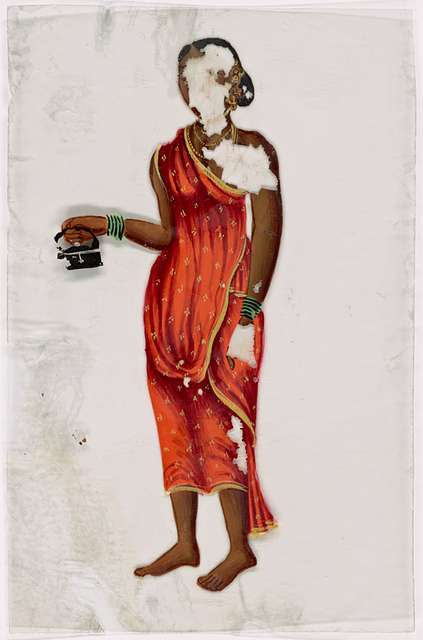
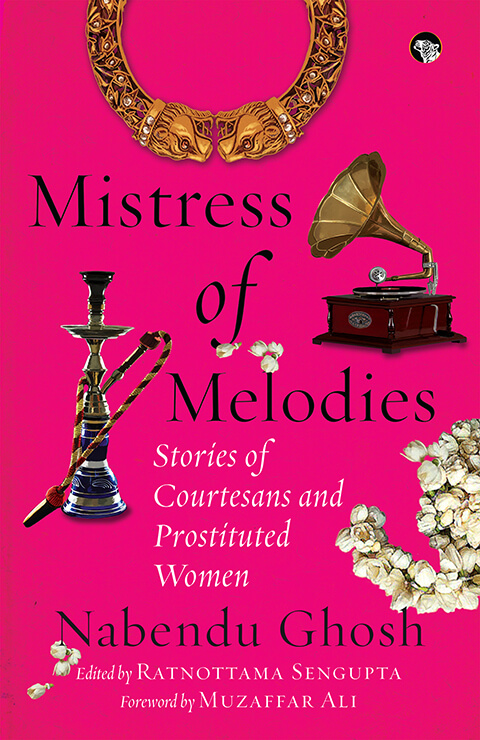


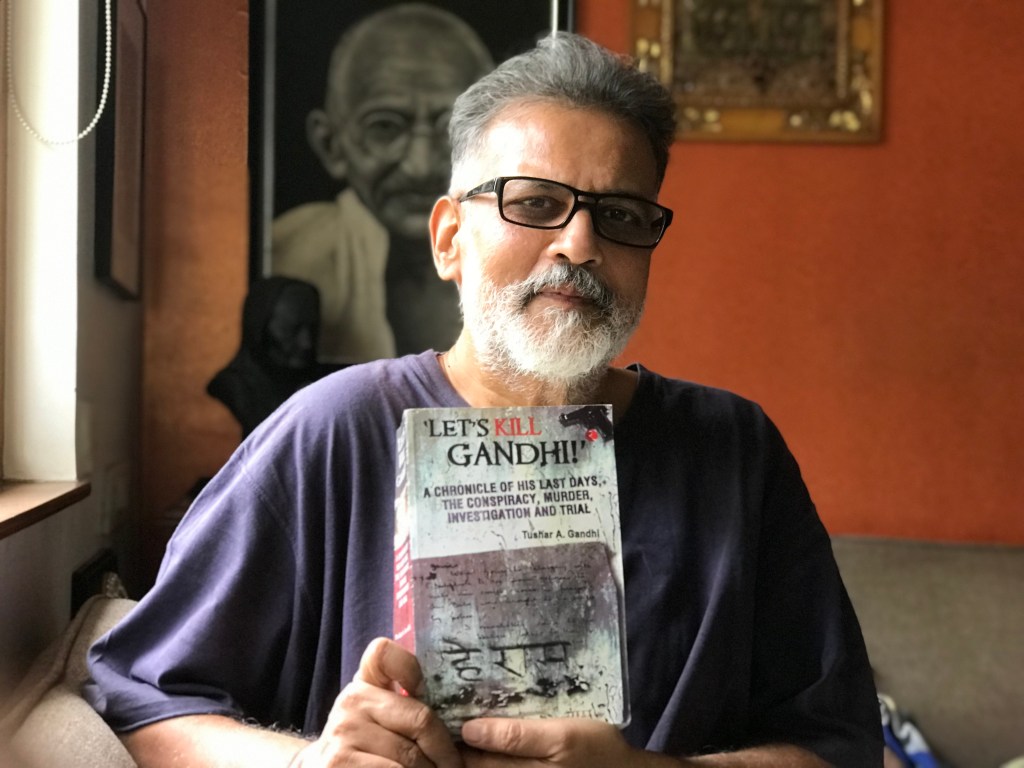
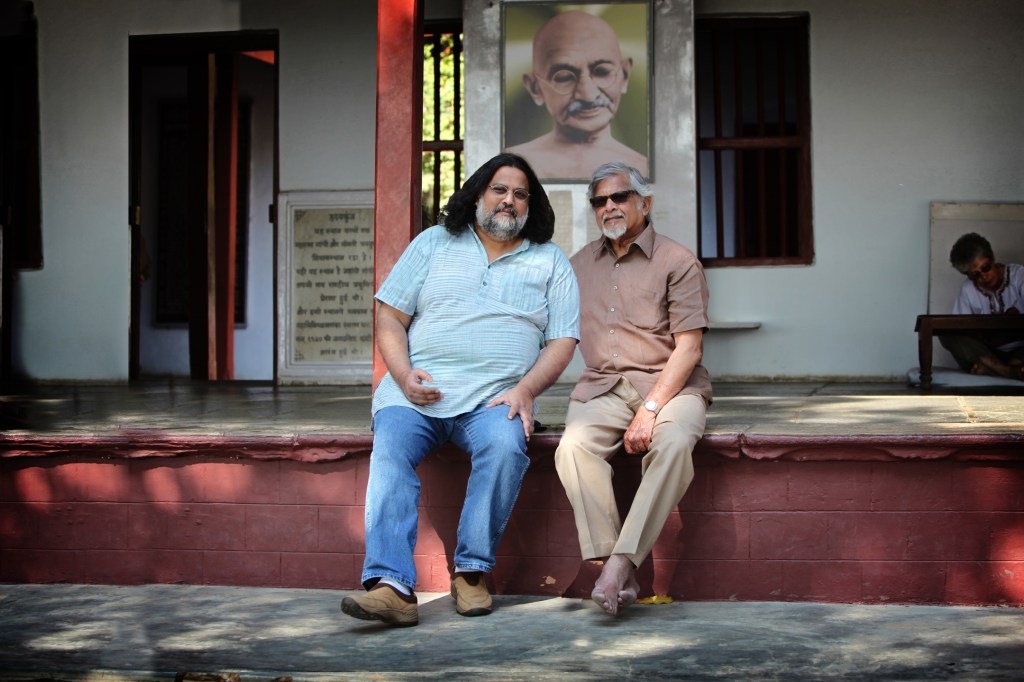
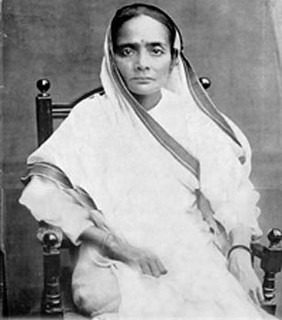

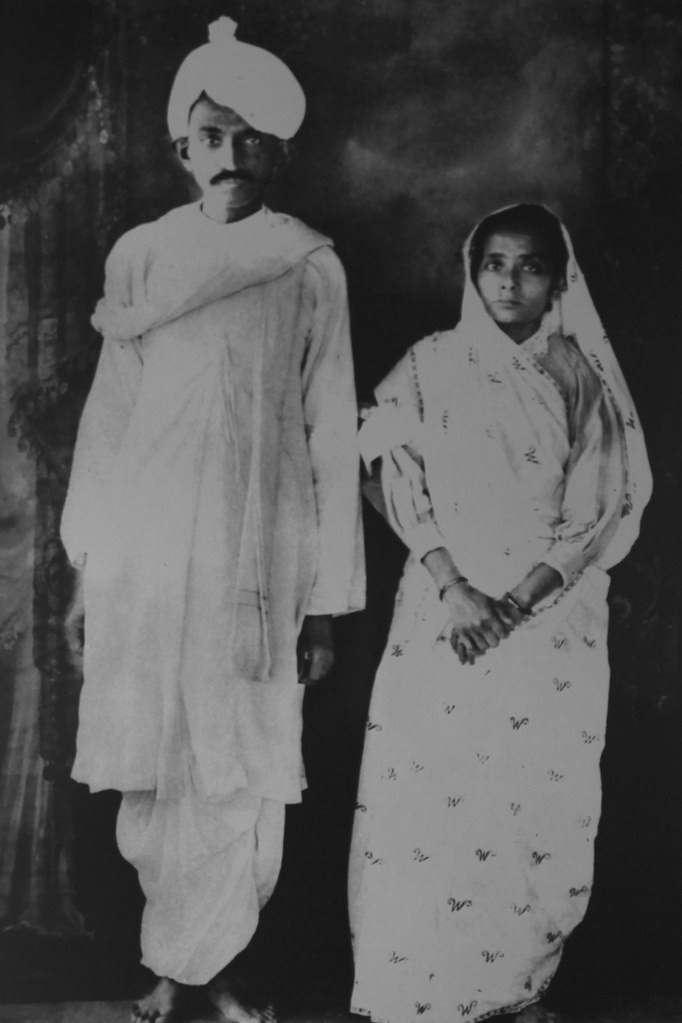

 Borderless