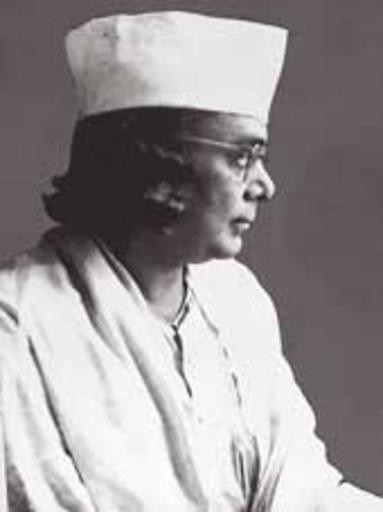
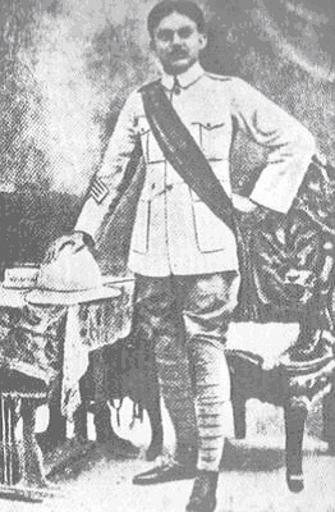
Kazi Nazrul Islam first published Mondir O Mosjid (Temples and Mosques) in Gonovani (People’s Voice) in August 1926, and then as part of his essay collection, Rudromongol(1927) This essay has been translated by Sohana Manzoor.
Rudromongol, Essays by Kazi Nazrul IslamKazi Nazrul Islam
“Kill those foreigners!” “Bash the non-believers!”—the riot between the Hindus and Muslims had begun anew. At first, it was mere bickering, then it grew into hitting one another, and in the end, it turned into breaking each other’s skulls. In defending the prestige of their respective deities, the Hindus and the Muslims screamed and yelled in a drunken stupor, but as they fell on to the ground after being wounded, I noticed that neither called upon Kali nor Allah; they cried for their mothers. They were lying side by side and were crying like two orphaned children bereft of their mothers.
I also noticed that their screams failed to deter the mosques; the effigies in the temples did not care about their sufferings. Only the blood of the fools continued to stain the stones of the holy buildings. Who would dare to erase the stain of stigma from the temples and mosques, my hero? The future awaits the hero’s arrival.
The Great Spirit approaches, the infinite being who will destroy the meeting place of these drunken religious fanatics. He will demolish the temples and the mosques and bring together all human beings under a single dome of the sky.
I am aware that the self-proclaimed “private secretaries” of the creator will chase me away by throwing their hats and caps, and blowing their shikhas, and yet they are the ones that will fall. They are the fanatics. They have not drunk the light of truth, but the alcohol of the shastra.
Those who hit Muhammad and barricaded his path, those that killed Jesus, have risen again and are in the act of hitting humanity—hurting people like Moses, Jesus and Muhammad. Where are all those prophets who died while saving human beings? They came to save humanity, and today it is their perverted disciples who are causing so much offence to humanity.
The God of humanity is imprisoned today in the secured unit of the temple, in the reformatory of the mosque, in the jail of the church. The mullah, the purut, and the priest are guarding him. On the throne of the Creator sits the devil.
At one place, I saw a total of fifty-nine Hindus beating up a lean, emaciated Muslim. At another, the same number of Muslims thrashed a weak specimen of Hindu. Their way of killing a fellow human being could easily be compared to barbarians killing wild boars. I scrutinised the faces of these murderers and realised that their faces were more ferocious than the devil’s, uglier than the boar. They were filled with jealousy and hatred and hence reeked of hell.
The leaders of both parties are the same and his name is Satan. At times, he joins the Muslims wearing a beard and a cap, and on other occasions, he sports a shikha and works with the Hindus. This same fellow also leads the British soldiers shooting both Hindus and Muslims. His long tail dips into the sea and his face is red like that of the wild monkey beyond the ocean.
I noted that Allah did not arrive to save his mosque and Kali did not appear to save her temple. The top of the temple was destroyed as was the minaret of the mosque. Neither of the two deities cared enough to strike the Muslims with thunderbolt, or to hit the Hindus with stones of Ababil.
Amidst all this turmoil, a few boys appeared and took the clean shaved corpse of Khairu Miah and carried him to the burning ghat uttering “Hari bol” at the top of their voices. A few other boys took the body of the bearded Sadananda Babu chanting “La ilaha illallah”, to the Muslim graveyard. The mistaken identities were assumed on the basis of these men having or not having beards.
Were the temple and the mosque growing cracks? Were they laughing at each other?
The battle continued. I saw a thin, wasted beggar-woman begging in the streets with a new-born child at her breast. It was wailing in a thin voice as if protesting against its birth in the world. The woman said, “I can’t even give him milk and he has just arrived. I have no milk in my breast.” I heard the voice of the world’s mother in hers. A man at my side sneered, “And you had to have a male child at this hour too? You don’t have a pound of flesh on your own body even!”
The woman just looked at him without batting her lashes once. Her eyes were burning like stars as if she was saying, “We have to sell our bodies because of hunger. And we sell it to people like you.”
Yes, this man could very well be the father of this child. If it’s not him, it could very well be his friend or brother. Aren’t the stars from the sky hurling the same question to you?
Three days later, I saw the same beggar woman on the street. She had no child with her, and her eyes were vacant. The other day, when she had the child with her, I saw the love of the universe in her eyes and her voice was earnest. But today, the mother in her had died and she was begging for the sake of begging.
She recognised me. I had given her the six paisas I had for tram fare. Her dry eyes suddenly welled up. I asked, “Where’s your son?”
She pointed to the sky and said, “Will you come with me, Sir?”
I followed her to a dustbin by the Krishnachura trees. I shuddered when she dug out a small bundle of rags from beneath the rubbish. She hugged and kissed it saying, “My darling, my sweet.”
This was her child—her darling and her sweet. She sat there quietly for some time and then threw the body in the dustbin. She said, “I bought a tin of outdated barley with the money you gave me the other day. I fed that barley diluted in cold water to my son. I took some myself with the hope of growing some milk in my breast. But no, it did not happen. My darling could not have a drop of milk in these three days. Then the barley was finished too, and he left me just today. It’s good that he left. I hope in his next life he is born to some well-to-do people. At least, he’ll have some milk.”
The beggar woman went off to beg and I took her child and walked toward the graveyard.
On my way, I saw the Hindus and the Muslims fighting with stones and bricks. I stood and watched them with the child’s corpse in my arms. But these zealously religious people had no time to look at a dead child; they were too busy hurling bricks and stones against each other and causing havoc. They had no time to look at the mother of the universe passing them by with ten lakhs of her emaciated children. They were the worshippers of bricks and boulders.
Weren’t those houses of worshipping created for the welfare of humanity? Since when have human beings become sacrificial animals for those houses? If that’s the reason behind the existence of those buildings, demolish them. Let all humanity gather together under the starlit night sky. Human beings built the temple and the mosque with their own hands. Now just because two bricks have fallen from the structure, should innocent victims be punished?
I wonder, when the row of emaciated, hungry men and women walk by the temple and mosque, why aren’t those structures affected? Why isn’t there an earthquake and why doesn’t the Eternal Power tear down these buildings? Why doesn’t He pursue those caps and shikhas and wipe them out from the face of the earth?
Oh, where are you, the youth of our times? You are the only ones that can overcome such adversities. O my fearless brothers playing with fire, the ten lakh hapless people stand at your door. They seek your help.
You are not part of the team of vultures; you are the roaring fire, and you belong to no race, no creed. You belong with light, with songs, with integrity. Come out and chase those vultures away.
.
Glossary
Shikhas – Crest of hair
Shastras— Hindu scriptures
Mullah – Muslim priest
Purut – Hindu priest
Ababil – Mythical birds from Islamic lore that attacked by pelting stones. Just as Thunderbolt was the weapon of the Hindu deity Indra, these birds attacked invading African armies and protected the Kaaba or the holy Islamic rock in Mecca.
Hari bol, La ilaha illallah – Chants used by Hindusand Muslims while doing death rituals invoking Krishna with Hari Bol and Allah with La ilaha illallah
Kazi Nazrul Islam(1899-1976) was born on 25th May. He was a Muslim, married a Hindu and wrote songs mingling Hindu and Muslim lores. In addition to his prose and poetry, Nazrul wrote about 4000 songs. He was charged with sedition by the British for his fiery writing and jailed repeatedly.
Sohana Manzoor is Associate Professor at the Department of English & Humanities at ULAB. She is also the Editor of The Daily Star Literature and Reviews Pages.
.
PLEASE NOTE: ARTICLES CAN ONLY BE REPRODUCED IN OTHER SITES WITH DUE ACKNOWLEDGEMENT TO BORDERLESS JOURNAL.
Celebrating the 160th birth anniversary of the polymath, Kobiguru Rabindranath, we offer our readers a selection of translations of his songs and stories and some essays on and around him. For more exhaustive translations and coverage on Tagore, do visit our new section — Tagore & Us.
We launched this section with the translation of seven of his songs by the gifted Sahitya Akademi winning translator and author, Aruna Chakravarti.
This selection of seven songs has been excerpted from Songs of Tagore translated by Aruna Chakravarti and brought out by Niyogi books. Click here to read.
Rabindranath Tagore’s Ekti Khudro Puraton Golpo (One Small Ancient Tale) from his collection Golpo Guchcho ( literally, a bunch of stories) has been translated by Nishat Atiya. Click here to read.
Meenakshi Malhotra explores the role of masculinity in Nationalism prescribed by Tagore, his niece Sarala Debi, Gandhi and Colonials. Click here to read.
Sohana Manzoor explores the social relevance of a dance drama by Tagore, Natir puja. We carry this to commemorate Tagore’s birth anniversary. Click hereto read
Greetings fromBorderless Journalfor all Asian New Years!Click here to read our message along with the video and a translation of a Tagore song written to greet the new year, with lyrics that not only inspire but ask the fledgling to heal mankind from deadly diseases.
Rabindranath Tagore’s Ekti Khudro Puraton Golpo (One Small Ancient Tale) from his collection Golpo Guchcho ( literally, a bunch of stories) has been translated by Nishat Atiya. Click here to read.
Sohana Manzoor shares the Bengali New Year celebrations in Bangladesh with colourful photographs and interesting history and traditions that mingle beyond the borders. Click here to read.
Ratnottama Sengupta, a well-known senior journalist and film critic lives through her past to make an interesting discovery at the end of recapping about the silk route. Click here to read and find out more.
Mike Smith drifts into nostalgia about mid-twentieth century while exploring a box of old postcards. What are the stories they tell? Click here to read.
Over 150 Authors and Artists from five continents have written on mental illness in an anthology called Through the Looking Glass. Candice Louisa Daquin, a psychotherapist and writer and editor, tells us why this is important for healing. Click here to read.
Meenakshi Malhotra explores the role of masculinity in Nationalism prescribed by Tagore, his niece Sarala Debi, Gandhi and Colonials. Click here to read.
Sohana Manzoor explores the social relevance of a dance drama by Tagore, Natir puja. We carry this to commemorate Tagore’s birth anniversary. Click here to read
Bhaskar Parichha reviews Reconciling Differencesby Rudolf C Heredia, a book that explores hate and violence. Click here to read.
Nivedita Sen reviews Nomad’s Landby Paro Anand, a fiction set among migrant children of a culture borne of displaced Rohingyas, Syrian refugees, Tibetans and more. Click here to read
Sohana Manzoor explores the social relevance of a dance drama by Tagore, Natir puja
Quite a few of Rabindranath Tagore’s dance dramas and poems develop around the idea of Buddhist philosophy that induces people to lead a simple life, to gain an understanding of the injustice and inequality prevailing in society, and to acquire knowledge and develop a deeper insight into the universe. Such a major problem reflected in Tagore’s work is the class and caste system of the Indian society.
It would be relevant to recall that one reason that Gautama or Buddha left home is because he recognised that the traditional religions practiced during his time were unable to absolve the dissatisfaction and frustration that abound in life. The class and caste system that divided and segregated people troubled him deeply. Little wonder that all the principal religions of the world rose for emancipation of people from such bondages.
Unfortunately, the corrupt human heart does not allow such practices to go unhindered. Even though at the root of any religious faith there is a high ideal to free people from evil practices and oppression, they also are used as ideological weapons to control mankind. In every age, therefore, figures like Christ and Buddha rise to remind humanity that there is a law beyond the one practiced through selfishness and pettiness of everyday life. Hence, peace and faith are required to be restored at the price of a sacrifice that shows the significance of selfless love, the futility of social class and caste. Actually, the truth is ever present, but sometimes it just takes one act to see that there is a truth higher than all the material wealth one can ever accumulate.
Tagore explored various perspectives of Buddhism in many of his works. Malini, Chandalika and Natir Puja are three dance dramas that deal with this theme. Natir Puja (Devotion of the Court-Dancer) has at its centre the pure soul of a mere dance-girl who is jeered at as a fallen woman, and who considers herself unworthy of even attending to the words of Buddha. But her humility reflects one of the core ideals of Buddhism and she is called upon by the devout followers of Buddha to perform the rituals of a priestess before the altar of Buddha. In the process, her devotion is preferred over the offerings of the royal princesses some of whom feel insulted.
One of them, the princess Ratnavali, takes measures to punish the court-dancer by throwing a choice before her — either to dance in front of the altar as an affront to Buddha, or to face death. The dance-girl Srimati accepts the royal order of dancing before the altar, but she succeeds in revealing herself as a devout follower of Buddha and embraces death. The storyline also focuses on the nature of the faith of Buddhism through the figure of Lokeswari, the wife of the former King, Bimbisar. Lokeswari’s only son Chitro had left home to follow the path of Buddha, and his mother, who used to be a follower of Buddha, emerges as a frenzied woman. She cannot accept that her only son had left home, and her husband renounced the throne when another son Ajatsatru wanted to be the King. For the first time in her life, she questions the validity of a belief that might want human beings to renounce all their precious possessions.
Through an intricate series of events Natir Puja unfolds and delves into several significant aspects of human dilemma. First, through the figure of Srimati and Lokeswari, the nature of devotion is explored. Second, the problem of caste system is brought out through characters such as Ratnavali who cannot accept that a lower caste man or woman could be considered more pious than the royal followers in the eyes of God. Third, that the gravest sinner could seek forgiveness and repentance is always a possibility.
Natir Puja is a tale elaborated from another longer poem by Tagore titled, “Pujarini” (The Worshipper). At the centre of both tales stands Srimoti, who claims to be “Buddher dashi,” or a handmaiden of Buddha. The term “dashi” should not be considered derogatory here but one that focuses on the nature of humility in Buddhism. The meaning of “Buddha” is teacher and in the traditional Vedic ideology, a teacher claims the highest status in society. Therefore, the chance of serving the teacher is indeed a privilege. And as Srimoti says, “My days of false modesty are over. I would not sing falsely, but you did not grasp what your eyes witnessed.” She points out how the faithful see and hear with their heart. The eyes might see, but they would not always recognise what they perceive.
Lokeswari, on the other hand, reminisces how once she was an ardent follower of Buddha, but it becomes clear from her words that she had thought more of distinction than salvation. And yet, Buddha preached freedom from avidya (darkness of ignorance and limiting of consciousness). A man living the life of avidya, spends his life in a spiritual slumber. Therefore, devotion to Buddha requires spiritual awakening, which Lokeswari fails to comprehend. Her very name, Lokeswari, actually suggests her dilemma — the Queen of the World — and naturally, she could not give up the ownership of the materialistic world. In the end, however, Lokeswari realises her error of judgment, and honours Srimoti’s sacrifice. After all, Srimoti is able to show that for faith and truth one should be ready to offer the highest price, one’s own life if necessary.
As a court-dancer, Srimoti might have received a lot of attention, but her position is still that of a high-class courtesan. There are quite a few references where the royal family members make fun of her. Even the elderly Queen Lokeswari scoffs at the idea that Srimoti might turn out to be a priestess of Buddha and the princesses will be her attendants: “Disciple of this dancing girl! That’s what will happen indeed! Now it’s up to the fallen woman to arise with words of salvation.”
From the onset, the Princess Ratnavali, too, makes fun of the calm and quiet nature of Srimoti who is frequently affronted by the princesses but rarely replies. It is almost as if Ratnavali senses her superior nature and takes her to task by insulting her in whatever way possible. The situation escalates when Srimoti is honoured by the Buddhist monks. At that point, Ratnavali makes snide remarks about the Bhikkhu Upali born of a barber family, or Sunado, the son of a milkman, or Sunit, an untouchable. She forgets that Buddhism is a faith that nullifies class and caste system. Her words also reveal that human psychology is deeply steeped in pettiness, jealousy and arrogance, and it takes sufferings and remorse to do away with them.
So, we come to the last point—the theme of repentance and forgiveness. The figure of Lokeswari is an everyman or woman. She is not an evil person, but nor is she convinced by the words of the bhikkhuni who attempts to make her see that there is a difference between the value of gold and that of the light. In today’s world this is where most of us stand. The materialistic ideology has taken over the ethical and philosophical aspects of life. As a result, we keep on asking for more and there is no end to our craving. In the process of worshipping Mammon, we overlook humanity and humility. We not only forget to look at the sufferings of other, but we choose to ignore them. Lokeswari’s humanity returns to her when Srimoti prepares to dance in front of Buddha’s altar. She offers her poison so that she dies before committing a sin. And when, Srimoti unfolds through her dancing that she never meant to insult Buddha but to honour him, once again Lokeswari joins her in reciting,
Buddham saranam gacchami (I submit to the Buddha for refuge)
Dhammam saranam gacchami (I submit to the Dhamma for refuge)
Sangham saranam gacchami (I submit to the Sangha for refuge.)
Even the Princess Ratnavali, who had insulted Srimoti earlier and is responsible for bringing out the royal order, finally kneels down before the dead body of the dance-girl to pay respect. The play ends with Ratnavali chanting the words of Buddha.
Tagore’s dance drama has played out beautifully to bring out a historical aspect of the Indian culture. The story of Bimbisar and his son Ajatsatru may not have been represented the way history records it, but the tale certainly brings out the tension and the hostility that poison the world at every age. The corrupt and selfish human heart tends to assume that property and wealth hold the key to success and happiness, but ends up in welcoming segregation, arrogance and jealousy. So, should we consider love, affection and sacrifice as mere human follies, or should we abandon the idealistic notions and consider wealth and control as our ultimate gain? Perhaps, the answer lies in the wasteland of our postmodern civilization, which has already sacrificed or butchered its saviours and is still waiting to be atoned.
Sohana Manzoor is Associate Professor, Department of English & Humanities, ULAB. She is also the literary Editor of The Daily Star, Bangladesh. This essay was first published inThe Daily Star.
.
PLEASE NOTE: ARTICLES CAN ONLY BE REPRODUCED IN OTHER SITES WITH DUE ACKNOWLEDGEMENT TO BORDERLESS JOURNAL
(The raindrops fall drip drop, the tide rises in the river.)
Ratri looked at the small nakshi kantha on the wall. The letters were uneven as if they had been stitched by some unsteady hand. But the bright green leaves and the blue droplets were neatly embroidered. She never remembered it in the last seven years, and yet it had been so much a part of her childhood. She recalled tracing the letters on a small piece of cloth and bringing it to the old lady who was her great grandmother. She had given her a needle with dark red thread and Ratri had made her first embroidery. Her Boro Ma had stitched the leaves and raindrops. The piece had yellowed slightly over the years; Ratri felt numb and stricken.
Why didn’t she remember it all these years? Is it because she always avoided the prospect of coming home? Now the only person who loved her was gone. She looked around the room of her great-grandmother—it still had her smell, faint but it was that intoxicating smell of jarda, incense, and contentment. She noticed her prayer beads hanging by the clothes rack. She took in the peeling green distemper which the old lady preferred to any other colour. The walls of her room were always green. Once it was painted white by mistake and her Boro Ma was furious. “Are they planning to make me blind or something? I need the green to soothe my eyes.” Two days later the walls were repainted.
When Ratri was young, she always felt safe and happy around her great-grandmother. Her mother was a classical dancer with a busy rehearsal schedule and frequent performances. Her parents had separated when she was an infant. Her grandmother had a big family and was busy fussing around the household. Everybody was too busy—only Boro Ma had time for Ratri.
Ratri did not know how her mother smelled—that is, how she really smelled. She saw her from a distance when she was dressed to leave the house or returning from a show. When she entered a room, everyone noticed her, and she wore a tantalizing perfume that Ratri thought was mysterious—just like her. Many years later she recognized the perfume in a famous fashion house in London as Miss Dior. Sometimes she petted Ratri absentmindedly, in the same absent-minded way she petted the house cat Minni. She practiced early in the morning in a room downstairs. She had a beautiful figure and Ratri thought that she danced divinely. Her grandmother often joked that they must have had a baijee in the family tree, and her daughter Nazma had inherited the talent.
Even though she had been married before and had a small child, she had no dearth of suitors. Ratri clearly remembered the bevy of men who came to court her—as one courts a queen, without any expectation of return. They often brought presents for Ratri too. Nazma had a charming smile for everybody, a smile she used to practice before the mirror in her room. She was a consummate artist—everything she did was practiced and trained. Dancing was the only thing she cared about. There were times when Ratri tiptoed to the room where her mother practiced and stood outside the door to listen to the ringing of her anklets and the tak dhin dhin dha – tak dhin dhin dha—na tin tin ta—tete dhin dhin ta that accompanied the music her mother danced to. Some evenings, there were other dancers who joined her, and they danced together. Ratri remembered one night they were all rehearsing a Tagore dance-drama. She thought her mother was some princess or queen and she was ordering her attendants to summon somebody:
“Bol ge nogor paley mor naam kori, Shyama dakitechhe taray.”
(Tell them at the town centre taking my name that Shyama is calling out to you)
Ratri did not understand the words but was enchanted by the rhythm and the spectacle of the performance.
She did not notice Naina Auntie approaching. Her aunt found her entranced by the door and dragged her away. “What are you doing here, Pichchi? You know that your mom doesn’t like to be disturbed during rehearsal. Come with me!” Ratri turned toward her aunt, “She is sooo pretty! Is she a princess?” Naina laughed, “No, she is who she is. A court dancer.”
When Boro Ma heard about the incident, she looked at the child and commented in a stern voice, “Nazu should spend some time with Ratri. She needs to make time for her daughter.” Naina Auntie replied, “She looks so much like her father that Apa does not even want to look at her.”
Boro Ma shook her head. “She should have allowed him to take her then,” she said. “What is the point of keeping her and then neglecting her?”
Neglect.
Ratri had not known then what the word meant. But over the years, she grew up learning all its nuances. She survived because of Boro Ma, the only one person who actually cared. And yet, Ratri would eventually take her for granted, imagining that the old lady would always be there. The years went by so fast—the rainbow years of childhood, the reckless years of youth, and she wondered what she did with them.
*
“Boro Ma!” the little girl came running. The old woman was just done with her midday prayers and had opened her large closet. “Yes, my darling?” she smiled at the upturned face of her great granddaughter.
Usually, Ratri loved to sniff around her Boro Ma when she opened her closet. There were things from the past like her bridal sari that dated from before the Partition, and old embroidered pieces that she had made as a young woman. Curious little sandalwood boxes, and dainty silver trinkets tarnished with age. And there was that mysterious and intimate smell of incense and naphthalene. But today Ratri was too preoccupied to notice.
“Toton Uncle says that I cannot take on a big journey because I am a girl.” Ratri had a frown on her small forehead. “That’s not right, is it?” she asked.
“What do you think?” asked her great-grandmother.
“I think he is wrong. I plan to look for my prince rather than the prince searching for me,” pouted Ratri.
“A ha,” smiled Boro Ma, “so that’s what the journey is about!”
“Yes, but I want to take on the journey. I don’t like that the prince finds the sleeping beauty. Why can’t the princess go in search of the prince herself?” asked a rather peeved Ratri.
Naina, who was poring over a dense medical text, snapped the book shut and laughed out loud. “I guess you do have to look for your prince, Pichchi. No prince will be happy to find you. You are so dark!”
Boro Ma barked, “What kind of talk is that Naina? There are a lot of girls who are dark.”
“But not princesses,” said Naina. “Princesses are pretty and fair, while Ratri is—”
Before she could finish, the old lady intercepted coldly, “Draupadi, the most sought-after woman of ancient India was dark. And Ratri will be no stupid princess, you heard her. She has a mind of her own and will make her own choices when the time comes. Now get out of here before you utter any more nonsense.”
Naina left the room meekly, but Ratri was looking at her arms and legs which were rather dark compared to Naina’s and most of the people in the house. Even her Boro Ma was very fair despite her wrinkled skin.
She looked up at her Boro Ma. “Does dark mean ugly, Boro Ma?” she whispered. She hesitated a little before adding, “Is that why Ammu does not love me?”
“Who told you that your Ammu does not love you?” asked the old lady with a gleam in her eyes.
“Nobody,” replied Ratri. She looked at her feet and examined her toes. She did not want to say that she overheard one of her uncles talking to his wife. She said lamely, “Naina Auntie says that’s why I was named ‘Ratri,’ meaning ‘night.’”
Despite the arthritis in her joints, Boro Ma bent down and grasped the little girl’s face with both of her hands and lifted it toward her. Ratri looked at the liquid grey eyes of her great-grandmother. They were bright and somber.
“Listen, my pet, you are very beautiful. Your skin may not be as fair as your mother’s, but you are lovely just as you are. But even more important is that you are also very brave. You have a beautiful spirit. You want to make a journey of your own—how many little girls want to do that, do you think?” She got up slowly and smiled. “Now, run along and play. Don’t worry over silly things. And don’t listen to Naina.”
Ratri walked out into veranda with her coloring books. It occurred to her that Boro Ma did not actually contradict the notion that her mother did not love her.
*
A week after Ratri’s eighth birthday, her mother married again. She thought her mother had gone on some tour, but Nazma had actually left for her honeymoon, and then to live with her new husband. She had married a business magnate and launched a new life. Nazma had not informed Ratri and had not of course considered taking her to live with her and her new husband.
Ratri’s grandmother thought it odd that the girl did not ask even once about her mother. But Ratri already knew that her life would be different from all her cousins who lived with their parents and siblings. Most of her maternal uncles and aunts had married and moved out by then but visited frequently with their children. Only Toton Uncle and Naina Auntie still lived in the sprawling old British-era house in Lalbagh. Ratri lived there too, along with her grandmother and Boro Ma. She kept mostly to herself, held court in a sun-drenched roof top, and laughed with the birds. She had few friends at school. The only person she could actually share her thoughts with was her Boro Ma. And she did not miss her mother much even though she often wondered why her mother was not like other mothers. But the mysteriously beautiful woman she used to admire from a distance soon became a faded memory.
*
“Ratri, come down. You have a visitor,” yelled Naina from the bottom of the stairs. Their two-storied house was built in the 1920s and large enough to have once housed all six of Ratri’s uncles and aunts.
Ratri did not hear her the first time. She was buried with a pile of books, several guavas and pickles in the attic. The red tabby Minnie with her two kittens dozed nearby. It was afternoon and she was diving under the deep seas with Nautilus and Captain Nemo. She planned to make a painting of the blue ocean and Nemo’s submarine at some point. She was looking for more details when her aunt Naina called to wake her up from her reverie.
Naina yelled again, this time from the first-floor landing. “Ratri! Where are you? You have a visitor, I say!” Ratri thought she must be mistaken. Who on earth would come to visit her? “I’m coming!” she yelled back and dragged herself out of the sea.
She went all the way down to the ground floor. The drawing room, which was usually locked, was now resplendent with the light from a chandelier. Her grandmother and Toton Uncle were talking to somebody. They all turned to look at her and the visitor exclaimed, “Oh, there she is! She does not look like her mother at all.” He sounded surprised but not vexed as people usually were after finding that she did not resemble her gorgeous mother. She never told anybody about her mother, and nobody at school knew that the celebrated classical dancer Nazma Nehreen was Ratri’s mother.
Ratri looked at the stranger. He had a kind face, a slight stoop, and a touch of grey at the temples. She wondered if she had seen him before as his face seemed faintly familiar. He smiled and beckoned her, “Come here, child. Do you not know me?” Ratri made no reply but continued staring at him. She heard a voice behind her, the very familiar voice of her Boro Ma. “How can she know you when you never came to see her once in thirteen years?” She sounded brittle and hostile.
The gentleman stood up. “Nanu, you are still here, I see,” he said with a nervous smile.
“Yes, I am alive and well,” came the answer. Boro Ma entered the room and placed her hand on Ratri’s shoulder. “Why have you come? What do you want?” she asked.
“He has come to see Ratri, of course,” Toton uncle intervened. He smiled and looked at the stranger. “And perhaps take her with him too?”
Ratri was totally confounded. Why would an unknown man come to take her away? Who was he? He wasn’t her mother’s husband, she hoped. She did know that they had a daughter. Nazma came with the child once, a very pretty child in a frilly baby-pink dress. Ratri had seen them from afar and taken refuge in the attic. She wanted no part of their life. Perhaps her Boro Ma had said something stern, and Ratri never saw the child again. Even Nazma rarely visited anymore. She often sent her daughter costly dresses, but Ratri never even tried them on. Did they want her as a baby-sitter? she wondered.
Now she concentrated on this stranger who looked at her earnestly. At length, he said, “I am your father, Ratri.”
At first the words did not make sense to Ratri. Then she suddenly realized that this man was her father, her very own father whom she had never seen, not even in a photograph. A sudden sense of unreality seized her, and she was not sure who she was, or where. She seemed to be somewhere outside her own body.
Boro Ma spoke up, “And where were you all these years, Mahtab? Why are you here now?”
“I—I live in Cyprus,” Mahtab mumbled. “I have a small business there. I only returned to Bangladesh last week. But I came here as soon as I could.”
Ratri’s father seemed to diminish before her Boro Ma’s withering gaze. “I wanted to come before but couldn’t find the time. The business was growing …” He did not finish his sentence but looked at Ratri with an agonized expression. “Nazma made it clear that she did not want me to see Ratri…. But I have finally come. I want to re-establish a relationship with my daughter.”
Ratri could not understand the tight feeling in her chest. She whispered, “Abbu!”
“Yes, yes, I am your Abbu,” Mahtab took off his glasses, his eyes bright and wet with unshed tears. “Ma, you look exactly like my mother.” He held out his arms to Ratri and she found herself ensconced in arms full of love and longing.
They all sat together, and for the first time in her life Ratri felt that she might have a normal life like her cousins and classmates. She may not have her mother, but now she had her father. She suddenly realized why her father’s face seemed so familiar. It was because she looked like him.
Her grandmother cleared her throat and asked, “So, you have come to take Ratri away?”
Mahtab was still misty-eyed, and he said, “I have to figure out how to take her to Cyprus. She will need a passport first.”
Ratri looked at her Boro Ma and said falteringly, “I cannot just leave, right? I live here.”
Her Boro Ma said nothing. But her grandmother and Toton Uncle said in unison, “Come on, he is your father. And you need a proper family.”
When Mahtab left after dinner that night, Ratri felt very strange. Her father! Where was he all these years? And would she really be able to live with him? Like a regular child? She looked up Cyprus in an old atlas that belonged to her late grandfather. She imagined the blue waters of the Mediterranean, and warm sand between her toes.
When it was time for bed, she turned to her Boro Ma and asked, “Boro Ma, what are people like in Cyprus?”
Her Boro Ma did not say anything. After a while she said in a hoarse voice, “I don’t know. Let’s see how things go.” She turned on her side to face the wall and pretended to go to sleep.
*
Mahtab did not come the next day as he promised, but two days later. He seemed disheveled, but Ratri did not notice. She was overjoyed to see him. She sat beside him holding him by the arm and smiling broadly. And then her father said, “Ma, I’m afraid I can’t take you with me. You have to stay here for the time being. Maybe when you grow a little older…” he stopped seeing the ashen face of Ratri.
“Why?” asked Ratri. “Why can’t I go with you now?”
“You are too young,” said Mahtab lamely. “I will take you when you become eighteen.”
“But why?” asked a bewildered Ratri again.
Her father seemed to be on the verge of tears, “I have a family in Cyprus.”
Ratri snapped up to look at her father who seemed to have shrunk in stature. He looked at her imploringly, “Ma, I re-married and I have two sons. Since we don’t have a daughter, I thought Amalie would not object. I told her about you before and that I came to see you. She did not seem to mind then.”
Ratri sat stonily for a few seconds and then slowly disengaged her arms from her father’s. She slowly picked herself up and walked out of the room without looking back. She went straight to the attic.
She heard her great-grandmother on her way out, “That was cruel, Mahtab. Did you have to get her hopes up? Her mother never even looked at her. And you came to tell her of fatherly love, only to abandon her? Shame on both of you.”
Mahtab sat with his head bent.
Ratri never answered any of the letters she received from Cyprus. Even when her mother had cancer and wanted to see her long neglected daughter, she felt no urge to visit her. They were both strangers to her.
She was a rootless tree, she thought. She preferred to remain that way.
*
Ratri made it to the College of Fine Arts thanks to her Boro Ma. She loved that part of town with its tea stalls and flower shops, the imposing façade of the National Museum, and the mystique of the World War II era crater just behind the College itself. It was another world, quite apart from anything else in Dhaka, and even set apart from University of Dhaka’s main campus. By the time she was 17, she was sure that’s where she wanted to study.
Her uncles and aunts thought it was a terrible idea. “What is the point of studying art? Will she become an artist?” Ripon Uncle had asked disdainfully.
“I didn’t ask for your permission,” retorted Ratri.
“Sure,” jeered Maliha Auntie. “Who will pay for it do you think? It’s quite expensive—I hope you know that!”
“And all sorts of weird people go to Art College,” supplied a giggling Naina. “Do you know they often have nude models? And drugs too.”
Ratri felt indignant, but also helpless. “I will pay for her education,” her Boro Ma said quietly.
“You?” Toton Uncle gaped at her.
“Yes, I still have the money Ratri’s great grandfather left me. I also have some property in Faridpur. I will sell it all, if necessary,” she said with determination.
Suddenly, the room went quiet. Nobody missed the old lady’s use of “Ratri’s great grandfather” rather than “your grandfather.” Ratan Uncle, who was the eldest among his siblings and had been listening quietly to all arguments so far, finally said, “I think we all should contribute. She is our niece, after all. We have a duty toward her. Also ask Nazma. She has neglected Ratri too long.”
Ratri wondered why Ratan Uncle suddenly felt responsible. Didn’t they all think of her as an outcast and burden? She felt an immense gratitude toward Boro Ma. She was the one who always stood up for her. Ratri tried to swallow the lump in her throat. She did not cry when people humiliated or hurt her. But love was something she rarely had. And that made her cry.
*
Boro Ma was ill when Ratri got the scholarship to England. She was more than 90-years-old, and her body was starting to betray her. Ratri wondered if she should turn down the scholarship and stay with the old lady. But in her heart, she was already soaring high and wanted to get out of the old house which had become more prison-like than ever. Her uncles and aunts jeered at her artistic talents, her irregular habits and idiosyncratic tastes. Naina Auntie thought she could join a hippie camp. It was the early 2000s, and she wore kurtas and jeans instead of sarees or salwar kameezes, and hardly wore jewelry like other young women her age. She was good looking in her own way, even though she did not have her mother’s exquisite features or complexion. If anything, she tried to distance herself from her mother in every way possible.
Can one grow up and flourish somewhere without feeling any kind of attachment? Boro Ma was her only tie to this house. But even she was not enough to keep her here for the rest of her life. Her life would not really begin until she left, and her great-grandmother seemed aware of the fact.
“Go, my pet,” she said. “This is the chance of a lifetime. Don’t waste it.” She smiled as she added, “We’ll meet again when you return.”
Nobody came to see her off at the airport except their old driver. And Ratri was glad because she was not used to expressing emotion. She felt happy and free. Her palette and paintbrushes were all she needed. She had a new canvas before her, gloriously open to the sky and the horizon, and she would paint to heart’s content.
*
The next four years were the happiest in her life. She met people who took her as she was. There were no expectations except that she excelled in her work. She learned different techniques, experimented with various media, took part in contests and exhibitions, and even won acclaim as a young artist. Mahzabeen Nishat Ratri, the talented young artist from Bangladesh, she thought with pride.
That’s when she met Irfan. They often travelled together and participated in exhibitions jointly. Sometimes they were competitors, but eventually he became her adviser as he was twelve years older than her. She didn’t mind him being older—she felt he was more mature as a result. He had been through a lot in life, just as she had herself. When Irfan proposed, she readily accepted. He had told her about his previous marriage and why it had not worked. “I badly wanted a child. But all Shila wanted was her career,” he said.
Ratri understood. Her mother too only thought of her career. She had heard that even her half-sister, the baby girl she saw with her mother, had had a tough life. Nazma was too much of a careerist to give up anything for children. She sent her daughter to Shanti Niketan at the age of eight.
“O my pet! How are you? When will you come home?” She could hear Boro Ma crowing with joy and longing.
“Did you get my letter, Boro Ma? The one about getting an artist’s residency in France?”
“Of course! I’m so proud of you. But aren’t you coming to see me? I’m getting old,” she sighed.
“I’m planning to.” Ratri paused. “I will bring Irfan with me. We are getting married.”
The phone went quiet on the other end.
“Boro Ma—I told you about Irfan, remember? He is a great guy. You will like him, I promise.”
“He’s too old for you, my pet.” Boro Ma’s voice suddenly sounded like that of a stranger. “And he looks like a catfish. You won’t be happy with him.”
Ratri was dumbfounded. She had always been supportive of Ratri, not hurtful like the others. She tried to reason with the old lady. “Boro Ma, do looks really matter? I am not pretty either. But he is loving and supportive, and he genuinely cares.”
Her Boro Ma was unmoved by Ratri’s remonstrations. She said that she felt in her bones that Irfan was not to be trusted.
The next couple of days Ratri felt lost and depressed. Finally, she decided to tell Irfan about the conversation. Irfan was taken aback, but then he laughed out loud. “I think your Boro Ma is jealous,” he said.
“Boro Ma jealous?” Ratri thought that was the most ridiculous thing she had ever heard. But the more she thought about it, the more it made sense. After all, Boro Ma would no longer be the center of Ratri’s life, and perhaps it was natural for her to feel jealous. Poor Boro Ma!
Ratri felt awful, but proceeded through with the wedding plans, which she felt was her one chance at happiness.
She returned to Dhaka with Irfan and took him to see her relatives. Her uncles and aunts now appreciated her since she was starting to make a name for herself. The Bengal Gallery had invited her to take part in an exhibition later in the year, and she hoped to get a spot at the Alliance Française as well. One of her younger cousins even took her autograph. They all congratulated her—except Boro Ma. She simply looked at her and then turned to face the wall.
Ratri remembered the night after her father’s first visit. She had turned to face the wall at the prospect of Ratri’s departure. For the first time, Ratri wondered about the nature of Boro Ma’s love. Did loving someone mean to possess them, and not let go? She wondered if all love was like that.
*
A couple of days before their wedding, Irfan asked Ratri to take a walk with him and share a plate of fuchka at Shahbag. It was February, and the weather was cool and pleasant.
“I want you to meet someone very special,” he said smiling. On the grassy lawn in front of the College of Fine Arts, he beckoned to a young girl of about twelve. Ratri was sitting under a champak tree wearing a green saree with yellow sunflowers. She did not usually wear a saree, but that day she did.
“My daughter, Laboni,” he said. “She is the light of my life. And Laboni, this is Ratri. She is the lady I told you about.”
Ratri stared at the lanky young child-woman who stared back at her with open hostility. The girl turned to her father. “She is not pretty like you said, Papa,” she said.
Irfan apologized after Laboni had retreated into the Central Public Library that she frequented. Irfan and Ratri were walking from the TSC toward the Kala Bhaban. “She is young and sentimental. I hope you understand.”
It was early spring. Around them, the krishnachura trees blazed their vermilion blossoms, and the shonalu flowers hung like molten gold. They would be imprinted in her soul forever. The sound of her mother’s anklets flitted through her mind. Tak dhin dhin ta, the tablas intoned. The pain of rejection, the elusive happy family.
“Why didn’t you tell me about Laboni?” she asked.
“I was afraid. I thought you would not agree to marry me.”
“So, you deceived me.”
Irfan laughed a little uneasily. “You’ve missed so much love in your life, Ratri! I am sure you will understand her pain.”
“Yes,” Ratri agreed. “I do understand.”
Irfan was relieved. “I knew you would.”
“But you don’t understand either of us, Irfan. That’s the problem.” Ratri took a deep breath.
“What do you mean?” Irfan was taken aback.
“I was in her position once. That girl wants her father. But not her father’s new wife.” Ratri paused. She turned to look at Irfan. “And I want a man to love me wholeheartedly. Without being deceitful.” She took another deep breath and said, “Our marriage is off.”
“No!” Irfan gasped. “The wedding has already been announced, and all my friends and family have been invited. I cannot call it off now.”
“You are not calling it off. I am,” replied Ratri calmly.
“You are insane, Ratri!”
She shrugged. “All the more reason for you not to marry me.”
*
Nine years had passed since then. And she had tried not to remember.
Ratri sat in her old hole in the attic. The night sky was clear, and she could see stars even though tall buildings loomed over their old home. Buildings that had risen while she was away. Towering apartment complexes had replaced many of the old and crumbling homes. But a few remained, including this one.
Ratri had not gone back to live in the old house in Lalbagh after the breakup with Irfan. She taught at the College of Fine Arts and lived in a women’s hostel nearby. She withdrew into herself like a snail. She ate, slept, and worked like an automaton. If people gave her odd looks, she did not notice. When she won a scholarship to France two years later, she broke all her ties with her family.
Only last month she met an elderly lady at one of her exhibitions. “Your work is very moving, you know,” she said. “Oui,très émouvant. It shows your knowledge of the human soul.” Ratri was drawn into the pool of her liquid grey eyes. “You have a beautiful spirit.”
Ratri thanked the woman politely, but her world was crumbling. What knowledge did she have of the human soul or of its depths? “You have a beautiful spirit.” The words echoed from the faded corridors of the past. “Boro Ma!” the child in her cried out. And Ratri could hear her incessant sobs.
“She cried for you a lot during her last days. She kept on asking for you,” said Toton Uncle sadly. “She wanted only you. We did not have any contact information, Ratri. I understand you had no reason to remember us. But how could you forget your Boro Ma?”
Ratri looked at the small nakshi kantha. Boro Ma had asked that they give it to her when she came back. “She said she knew you would return, and she asked us to give it to you.”
Yes, of course, thought Ratri. Boro Ma was the mother she never had. How could she forget her? She whispered into the nakshi kantha, “Boro Ma! I am sorry. I was angry. I was so hurt. I am sorry, Boro Ma.”
She held the small nakshi kantha close to her chest and thought of the days when they did so many things together. Her body shook as spasms of overwhelming grief engulfed her entire being. The raindrops in the nakshi kantha melted before her eyes and finally Ratri cried.
Ma : An affectionate way of addressing someone younger, technically, mother.
Fuchka: A savoury snack
Oui,très émouvant : Yes, very moving. French
Sohana Manzoor is an Associate Professor at the Department of English & Humanities, ULAB. she is also the Literary Editor of The Daily Star. “Elusive” was first published in an anthology, It’s All Relative, in 2017.
.
PLEASE NOTE: ARTICLES CAN ONLY BE REPRODUCED IN OTHER SITES WITH DUE ACKNOWLEDGEMENT TO BORDERLESS JOURNAL
Sohana Manzoor shares the Bengali New Year celebrations in Bangladesh on April 14th, pausing on the commonality and differences with Poila Baisakh, the Indian version of Pohela Boishakh celebrated in the Eastern part of India
Happy & Prosperous New Year or ‘Shubho Nabobarsho’ in Bengali script
“Shubho Nabobarsho” (happy and prosperous new year) is the traditional greeting for the Bengali new year. The upcoming April 14 will herald the beginning of the Bengali year 1428 in Bangladesh, but in the Indian states of West Bengal, Tripura, Odisha and parts of Assam it will be the 15th of April. In Bangladesh, Pohela Boishakh is one of the biggest occasions of celebration, next to perhaps the two Eids.
Whereas the celebrations of Pohela Boishakh is now a regular thing, its history is somewhat unclear. According to most historians, the Bengali year or Bangabdawas introduced by the Mughal Emperor Akbar. In those days, agricultural taxes were collected according to the HijriCalendar. But then the Hijri calendar is a lunar calendar and naturally, it did not coincide with the agricultural year. The tax collecting time was not a time when the peasants and farmers could pay the taxes. It only added to the confusion of the people who tilled the land in various capacities. To streamline the tax collection, Akbar ordered a reformation of the calendar. As a result, in 1584 Bangabda was born. But the year started from 963, the Hijri year it was modeled on. According to some historians, however, it was adopted by another Muslim ruler called Hussain Shah of Bengal. There is yet another group that alludes to Shashanka, a seventh-century King of Bengal, for inventing Bangabda. It is quite possible that it existed before Akbar’s time and the Mughal Emperor reinvented it with the help of his royal astronomer and other pundits of his court.
An interesting aspect of Bangabda is that the names of the months were different in those times. The story of how the months of Farwardin, Urdibahish and Khordad became Baishakh, Jyoshthyha and Ashar is lost to us. But we do know that just as he had helped in modernizing the Bengali language, Dr. Muhammad Shahidullah helped in modernizing the Bengali year. Partially accepting his reformative suggestions, the Bangla Academy saw that the first six months had thirty-one days each and the last six, thirty. Hence there is no further confusion about which day of the Gregorian calendar Pohela Boishakh coincides with. In Bangladesh, it is always 14 April. But in West Bengal and other parts of India, it can be either 14 or 15 of April.
When the Bengali new year was first introduced, the most important activities on the first day of the year involved halkhata, opening of a new book for zamindars who would treat their tenants with sweets. On the last day of the old year, there would be Chaitra Sankranti, a day celebrating the end of the year. Actually, in rural areas, this day was more colourful than Pohela Baishakh. Charak Puja, a Hindu festival honouring the god Shiva is central to this celebration. The actual puja used to take place on the midnight of Chaitra Sankranti, and it was a very special kind of ritual and not too many people even know about it anymore. The preparation would start a month ahead of the actual puja and a total of twelve devotees would take part in it. There would be different kinds of festivities through the day, and snacks like puffed rice, ground gram called chhatu, dry sugary sweets like khoi, murki, batasha, kodma, and many varieties of leafy vegetables would be available. In today’s Bangladeshi scenario, Chaitra Sankranti has almost disappeared except in some distant villages. Only lately, some initiatives are being taken in Dhaka to reintroduce the fair, even though it looks like any other fair and very different from the original Chaitra Sankranti.
With urbanization, the more secular Pohela Boishakh became popular. However, some elements from Chaitra Sankranti have been integrated in Baishakhi celebration. For example, there are fairs that still showcase puffed rice, khoi, murki, batasha and kodma. There are products made by rural artisans. Performances on musical instruments like ektara, dotara and dhol by rural artists are show cased. Riding the nagardola (a mini and wooden version of the Ferris wheel, reminiscence of the charak) is a central attraction of the fair.
Nagardola on Pohela Boisakh
Special dishes for the New Year
It is impossible to conceive of any Bengali festival without food. The first food item that comes to mind regarding Pohela Baishakh, is hilsa fish. Different preparations of mouth-watering taste are prepared with hilsa. Then there are panta bhat (fermented rice) with green chili, all kinds of bhartas (mashes) starting with potatoes to tomatoes, sweet pumpkins, lentils, beans, shrimps and different types of fish, chutneys, shutki (bitters), authentic Bengali sweets, savoury snacks like fuchka, chotpoti and even traditional ice-creams, kulfi. Bigger cities find fairs and programmes in almost every locality.
Chhayanaut, an institution devoted to the propagation of Bengali culture, started celebrating the Bengali Nababarsha under the Ramna Botomul (a historic banyan tree) in 1967. Since the Liberation War of 1971, Pohela Boishakh has grown into a national festival for all Bangladeshis irrespective of religions. In Dhaka, the Pohela Boishakh procession begins from the Faculty of Fine Arts, University of Dhaka. The students start taking preparation for the procession from days ahead. They make masks and banners and wear elaborate costumes. This is known as the festive Mangal Shobhajatra, translated procession showcasing good fortune. In 2016, this festivity organized by the Faculty of Fine Arts was listed as UNESCO cultural heritage. Specific roads around Dhaka city are decorated with white and red alpanas, elaborate designs made with rice flour mixed with water.
Alpanas
Mangal Shobhajatra
Morning Programme by Chhayanaut
At the break of dawn on Pohela Boishakh, people gather at the Ramna batamul festival ground. The day starts with singing the famous Tagore song, “Esho he Boishakh*” along with many others. The whole day is spent in celebration. Radios and TV channels air special programs on the day too. People dressed in white and red and other colourful attire flock around the city. It is also observed as a national holiday and a fun-day for everybody.
Sohana Manzoor is an Associate Professor of English at ULAB. She is also the Literary Editor of The Daily Star.
.
PLEASE NOTE: ARTICLES CAN ONLY BE REPRODUCED IN OTHER SITES WITH DUE ACKNOWLEDGEMENT TO BORDERLESS JOURNAL
A mysterious woman in a lonely house… a story by Sohana Manzoor
The ride from the train station to their old house would take about fifteen minutes. Tana’s eyes tried to understand the changes which did not seem to be too many. Things in the cities change fast, but here, in the backwaters of their old town, the houses and the narrow alleys seemed pretty much the same. There were a few changes, of course. The famous Neeldubi Pond seemed to have shrunk in size and the waters did not seem as clear as before. She also noted that even though it was around noon nobody was washing at its banks. Tana could understand that the old custom of washing and bathing at the pond was probably gone.
The auto-rickshaw turned to the very familiar lane where her grandparents’ house was. And her heart stopped beating for a few seconds. The small brick house of the red witch down the alley was there still.
Tana had not been to Tushapur for over ten years now and even this visit too was purely out of necessity. Their old ancestral house was being sold. It has been many years since she and her siblings had moved out. After her grandmother died about eleven years ago, Tana had not had a chance to come back. The years went by too fast, but the memories of Tushapur were frozen in a globe of timelessness. The shuttered house made of red bricks where once upon a time a lone woman lived did the magic of opening the memory box.
Tana had not thought about her any time in the recent past. She had lived there as far as Tana could remember. When Tana was a little girl, the woman never came out of the house. But once every month a man used to visit her and buy packets of things. He would also deliver some large packages and boxes. Once, someone had whispered that she used to sell herbs and magic medicines. She did have a small garden at the back of her house where she grew vegetables, flowers and strange smelling plants.
Tana and her friends found this lonely woman really strange. Everybody knew her but avoided her for no palpable reason. Moreover, she lived just by herself. There were no children, no husband and no elderly parents. In those days, there was no other woman in their vicinity who lived all by herself. It was strange indeed. There was some kind of secret, the children could sense it, but nobody told them anything. The adults and children might have lived side by side, but they always had their very own secrets which they jealously guarded against the other.
Hence one dove-cooing noon, three curious children jumped over the mossy brick wall to walk around the strange grove. The cluster of mango and tamarind trees had cast a spell of shadows and light in the garden. A tall acacia seemed out of place with sunlight reflecting on the topmost branches. There was a bushy bokul at the corner of the garden with small pale-coloured flowers which one could smell from afar. They wondered what the creeping vines of orange and blue bulbs were. Then there were those herbs that emitted strange smells– some pungent, some intoxicating and some dizzyingly sweet. They all recognized amla and bay leaves. Shojon whispered the named the haritaki tree because his grandmother used to have the fruit on a daily basis. But what were the others? Then, Husna, who was always a bit jumpy, noted the bats hanging upside down in the branches of a shaggy tree. And a strange voice said, “Wookkuuu!”
They ran for their lives. Tana looked at the house one last time and saw a black cat sitting on the sun shed as if keeping vigil of some kind.
Later Husna swore that she saw a small dome-like thing sticking out of the ground. Stories grew after that– strange stories that made no apparent sense. Rokon said that creatures walked upside down in that garden. Piyal was sure he had seen a large caterpillar the size of a side-pillow crawling on its walls. Nobody wanted to go around that house after dark. They called her ‘the woman who lives down the lane’. Mushfique was ready to swear that when he was passing by that house late one night with his father, both of them had heard sounds of crying. His father had later said that it was either a kitten or a bat, but they all sat silent with apprehension as Mushfique regaled them with his tale. Some went as far as calling her ‘the red witch’.
As years passed, the stories grew longer and darker. However, no matter what they said, the adults seemed either unconvinced or oblivious to their fears. But she was nobody’s aunt and only once Tana’s mother had mentioned casually that her name was Surma and in a long forgotten past they used to go to school together. Then Tana’s grandmother hushed her up. The information sounded so foreign to little Tana that she pretended not to have heard it. She certainly did not want to destroy the web of enchantment they had woven around her. So, the little shabby house down the lane grew shabbier and darker while its lone inhabitant continued to be an enigma.
Tana reached the two storey-house, where she had spent her childhood. Two of her cousins still lived nearby. Tana was supposed to live with them till the papers were signed. Her other siblings lived abroad, and Tana was carrying documents that gave her the power of attorney to sign on their behalf. Ruby, a daughter of her phuppi (paternal aunt) had mentioned that she had a few trunks that belonged to her parents and Tana would have to go through them to see if there was anything valuable. Tana went to stay at Ruby’s house that was right beside their old home. After lunch, they sat down for a cup of tea at the veranda. Tana asked, “Does she still live in that house at the end of our lane?”
“What house and who?” Ruby seemed to have forgotten all about the red house.
“That old red brick house. Remember, we used to call her ‘the red witch’?”
“Oh, her!” Ruby said. Then she shook her head. “She died two years ago.”
Tana said, “And her house?”
“The house has been sold. They are going to demolish it soon and turn it into a fancy cottage we hear.”
“Who sold it?” was Tana’s quizzical question.
Ruby knitted her eyebrows as she said, “There was quite a hubbub, actually. It seemed that she was a cousin of Mahbub chacha(uncle). But for some odd reason, there was no connection. But after she died, his mother started to cry claiming her as her niece. And some of the older people seemed to know all about it. So, they buried her in their family graveyard and Mahbub Chacha’s sons later claimed the property as theirs.”
Tana was suddenly at a loss. All those stories of ghosts and witches around that house suddenly had such an ordinary ending!
“But why were they estranged?”
“I have no clue,” Ruby shrugged.
Tana looked at her cousin a little distastefully. Ruby never had any imagination. Even now as she was telling Tana the tale of the strange woman, there was no excitement.
“Such a bore!” Tana muttered to herself.
The few days that Tana stayed at Tushapur were devoid of any extraordinary events. People seemed to have accepted that the mysterious woman whose real name was Shahanara Khatun, and who went by the name Surma, was a cousin of Mahbub Talukdar. Apparently, there was some kind of family feud. Then her husband died as did her baby boy. But she continued to live alone.
Tana felt there was a missing link somewhere. And what about all those weird creatures and crying in her house?
As Tana was going through the trunks, she wondered at the discolored brass trinkets with greenish hue. Some of them were ashtrays and ornate cups. An antique coffee pot with turquoise stones raised its head from the mass of junk. There were some wooden dolls and boats. She touched the trays of dull silver and wondered if they were real silver. At this point, she espied a diary. A leather-bound diary that was faded with age. The front cover was badly discoloured, as if someone had spilled liquid on it. Tana’s eyes widened as she opened and saw the name on the first page — Gul Nahar Sultana. It dated from the 1980s, more than thirty-five years ago. Gul Nahar was her mother’s name. But Tana could not recall ever seeing the diary before.
Finally, when Tana left Tushapur, she had reduced the three trunks into one. She still was not sure why she was even taking this one back, but she did. The relics of the past were not easy to give up.
After another month and a half, Tana finally found some time to look into the things she had brought back from Tushapur. The first thing she picked up was the diary. Two poems. A fragment of a story. There were some sketches of human figures. Tana felt a pang as she knew her mother once wanted to be an artist. Most pages were clean, just slightly yellowish. She thought that was it. But then she saw some pages at the end, filled up with closely knit writing.
The name “Surma” caught her eyes.
“I went to visit Surma yesterday. Amma tells me not to go again. She is an outsider now. A high price to pay for marrying a man of a different religion. But I had to go and help her with the last rituals of her baby. They did not allow her to bury the child in the graveyard because his father was not Muslim. With Tapan dada gone, what can she do by herself? She buried the poor thing under the Bokul tree in her garden. I can hear her cry at night. And all those cats in her house wail through the night too. Sometimes I think, I can hear the baby cry. She could not even get a doctor for the mite. Am I going crazy? Perhaps I should not go. Sometimes, it is wiser to shut our eyes and not see others suffer. That’s the only way to be happy, they say.”
Tana sat there immobile. The mystery of the woman who lived down the lane was finally solved. But how will she ever remember the magical childhood now without feeling guilty? The days of innocence are not so innocent after all.
.
Sohana Manzoor is an Associate Professor, Department of English & Humanities at the University of Liberal Arts bangladesh. She is also the Literary Editor of The Daily Star.
.
PLEASE NOTE: ARTICLES CAN ONLY BE REPRODUCED IN OTHER SITES WITH DUE ACKNOWLEDGEMENT TO BORDERLESS JOURNAL
Sohana Manzoor explores the myth of happily ever after with three short & gripping narrativesset in modern urban Bangladesh
No matter how people dream of being happy together, dreaming, like sleeping and living, is done alone. There just might be a few couples that would dream of doing the exact same things. Ninety-nine percent of couples don’t and yet they are known as happy couples.
1
Trina eyed Porag like a cat eyeing a mouse. Porag was looking wistfully through the window and it was not too difficult for her to guess what he wished. As for herself, the newly bought Devil’s Diadem was beckoning her from the bedside table where she had left it last night.
So, before Porag could propose anything, she said coquettishly, “The rain is lovely, isn’t it, darling? Wish we could go out in the rain. But I feel feverish. Can we read together?”
Porag’s face fell; he was about to ask his newly wedded wife to take a rickshaw-ride with him. But if she was feeling feverish, there was nothing much he could do, could he? Yet why did he feel somewhat cheated? He looked at Trina who was gazing back with imploring eyes. He shook off the nagging thought and took a seat by her.
An hour later, Porag was snoring on the bed while the house-cat Minty dozed and purred over his chest contentedly. Trina was poring over the fantasy book and was oblivious to the rest of the world. If Porag was asleep, that must mean that he was very happy too.
Everything’s right with the world!
2
Israr got into the car and drove out cheerfully. He just needed to believe that it was a special day, and it indeed turned out very special. Yes, the man she was betrothed to died last year, but surely, she would not be grieving him through the rest of her life?
He was Rupam’s best friend and he did everything he could to save him. It is not that Israr was always in love with Sruti. But watching her taking care of Rupam during his dying days made him fall for her. He was tired of all the glossy social butterflies and became totally smitten with Sruti. Israr knew that if she could learn to care about him half as much, she cared about Rupam, he should be very happy. He waved at the young woman who stood still in the veranda. Even though she did not wave back, he felt joy rushing through his veins.
“Our life together will be the happiest, I promise you!” Sruti stared at the receding figure of the young man driving away. Her heart almost felt that it would break. Did people still believe in that kind of happiness? Or such dreams? It seemed as if they did.
She had accepted the proposal. Israr came from a very affluent family and would gladly take care of her brother who was slowly dwindling away because of bone cancer. At her heart, she felt the presence of a dried up river. The grotesqueness of the reality that she had just sold herself hit her hard even if that buyer was very nice and caring.
3
Ria uploaded all the eleven pictures of the “perfect couple” on Facebook. All were taken the previous evening at Eppi’s engagement ceremony. Ria admired her blue jamdani studded with silver stars. It may not be as expensive as Tania’s golden one but was certainly more beautiful. Ria admired her own oval shaped fair skinned face with just the perfect blush. The smile was enchanting. And Ashik looked as dark and handsome as ever. Speaking of Ashik, where was he? Still stuck in the bathroom? The sound from her phone made her look at the screen again. A message in the messenger: “You look lovely. But did you have to cling on to his arm?”
A dimpled smile played at Ria’s lips. There are so many ways to play. Jishan had not called her or talked to her in the past one week. But this one post got his attention, and he was back in line. So, would she have lunch with him today? Hmm, that would be nice but weren’t they supposed to visit Ashik’s sister that same afternoon?
Ashik scrolled up fast. Did he lose the message? Piu would kill him if he did not find the number. Just imagine him agreeing to run this errand! He would never agree to do this for anybody else. But Piu was his oldest friend; more than a friend, to be honest. Okay, he found it and heaved a sigh of relief.
The door opened and a neutral voice said, “Call apa* and cancel the lunch today, Ria. An emergency meeting has come up.”
Ria could not believe her luck but she pouted nevertheless. “Haven’t seen apa in a while. But, oh well… will do.”
The perfectly happy couple danced away in pursuit of their separate interests.
*apa: Elder sister
.
Sohana Manzoor is Associate Professor, Department of English & Humanities, ULAB.
.
PLEASE NOTE: ARTICLES CAN ONLY BE REPRODUCED IN OTHER SITES WITH DUE ACKNOWLEDGEMENT TO BORDERLESS JOURNAL.
Nishat got up from the swing and walked to the edge of the balcony to look at the procession leaving the house. They left her with no choice now. She will have to do what she had only put off from doing all these years.
Nishat’s husband, Muhib was ever ambitious, shoving all ethics under the carpet and disposing off his oppositions right and left. Nishat was finally tired of picking up the pieces and resuming normalcy. She was done with pretending to be naïve and stupid. Her thoughts turn to her children. Miserable mother that she was, she had failed utterly in raising them.
Her son Purbo was getting married and she had just refused to attend the wedding. For the first time in her life she had looked at her husband and said quietly, “You have sold your son to the highest bidder and I refuse to accept it.” There was pin drop silence in the room and her two daughters, Rima and Rikta had gone white. Purbo sat like a statue and her husband Muhib stared at her in sheer disbelief. Nobody knew that Nishat could think like that, let alone speak. The ever-patient wife and mother had finally thrown a gauntlet to her imposing husband and the fashionable but useless brood she had raised. They just stared at it and did not know what to do with it. Nor did they understand what it meant. Nishat spoke again, “If you return to this house with your chosen daughter-in-law, I will leave the house. You will never see me again.”
Of course, nobody believed what she said, but they could not quite laugh her threat away. The shadow of a dead girl was already at the threshold of their posh home. And hence they all felt a nagging uneasiness.
Purbo was supposed to marry Shreya. They had known each other since school and Muhibur Rahman was then a regular service-holder. Both families were in agreement that Purbo and Shreya would marry. But when Purbo finally came back from abroad with a PhD in Economics, things had drastically changed. By that time, his father had earned tons of money through business and consultancy and was looking for a better match for his brilliant and only son. Purbo, of course would not hear of anybody else until he met Farina—the gorgeous daughter of his father’s newly acquainted friend and business-partner. Initially, he was reluctant, but then he too was swayed by the riches of his prospective father-in-law and his charming daughter.
He started to compare the two girls and Shreya, even though quite attractive, kept on falling short by his newly acquired western yardstick. He had already taken to occasional drinking and Shreya with her middle-class upbringing, wrinkled her nose at the mention of alcohol. She was curious about the parties that Purbo frequented, but he did not show interest in taking her there. Purbo also felt irritated with some other typically middle-class aptitude she showed. Finally, he realised that there was nothing Shreya could give him that could tie him to her for an entire lifetime. Unfortunately, that realization did not deter him from taking advantage of her. And Shreya, in her last efforts to retain him, lost miserably. Nishat still recalled with an aching heart the young woman who had come to see her with an ashen face for the last time. She had seen her grow up and could not protect her from her own son.
Then one fine afternoon, Purbo announced to a delighted father and a dumbfounded mother that he had broken off with Shreya and he was ready to marry Farina. Nishat looked at her son sadly and said, “But Shreya waited only for you all these years. She could have been married by now…”
Her husband laughed out aloud, “Shreya is not good enough for our Purbo. Why should he be happy with glass when he can have diamonds?”
Nishat said quietly, “You don’t know if Farina is diamond. And what makes you think Shreya is not diamond. She may not have a rich father…”
Muhib raised his hand and said irritably, “Enough. My son will marry whoever I want him to.”
“Your son? Is he not mine too?”
Muhibul Islam looked at his wife with surprise. “What has gotten into you, woman? What rubbish are you talking about? Purbo himself said he won’t marry Shreya. That’s it.”
Nishat said in a voice that was unlike her affable self, “Purbo should marry Shreya. You pride yourself of wealth and money. Don’t forget that Shreya’s father gave you the initial capital to start off your venture.” Muhib’s face darkened. “You promised on his death-bed that Shreya will be your daughter-in-law.”
Nobody spoke for a while. Muhib tried to laugh as he said, “I will pay Shreya off. I will give her back her father’s share of the money. Money should not tie two people together.” He paused and added reprovingly, “Now push away that middle-class mentality of yours. We are rising!”
Nishat sat in her chair frozen. Years of memories with Shreya and her parents threatened to drown her. She looked at her son askance; she could not see the rambunctious boy she had raised in this clean-shaven young man ready to shed his past like a dead skin.
*
It would be hours before they were back. She might as well take a last look around the house that had been her home for the last fifteen years. Every piece of it was her creation. Her husband and children may have gotten many of the rare and expensive articles in the house, but she took care of their whereabouts. She was the one who kept the house speckless. When people came to visit, they noted the burnished furniture, soft carpets in the drawing room with three different sitting arrangements. From the green plants in brass pots right outside the windows to the trinkets displayed on marble top side tables—everything bespoke her taste. Nobody knew though how she had hidden all her frustration and sorrow beneath them. Her life, thoughts, expectations, and even her children, were taken away from her bit by bit. All she was left with were these souvenirs. A curator of dead values and emotions — that is what she had become.
As she walked about her much-loved garden, she placed her bare feet in the soft grass. The blue, pink and yellow grass flowers in the bed nodded at her. She did not like roses and refused to have them. Instead, she had planted deshi* flowers like hajar beli, hasnahena and jasmine. Instead of bougainvillea, she had madhabilata climbing up her gate. Yes, there were caterpillars in them, and her children often objected to the tree. But she used to laugh those away.
She wondered how things would change now that she had decided to leave. Would they cut the madhabilata creeper, and these local flowers down? Would they create hot houses for roses? Would there be chrysanthemums and poppies in the flowerbeds? She sighed. But what did it matter? When one chose to leave, one should never look back. Now she had to hurry to make arrangements. Standing at the landing of the stairwell, she called out to Minu. Minu had been with her for years—since she got married. Nobody called her by her first name anymore except Nishat.
“Bhaijaan*, come home quickly. Something bad has happened to Bubu…. “The line went off and Muhib did not know what to make of it. Here he was standing and chatting amiably with his behai* Chowdhury Modabber Islam. Everybody knew Modabber Islam, who was not only a business tycoon, but also very important personnel. What was there to tell? Of course, Muhibur Rahman had made a name for himself too, but he lacked the family name. His son was a rising economist and he intended to see him well-settled in the society. Wasn’t it bad enough that his wife was not at the wedding? She had announced dramatically the week before that she was not happy with their son’s wedding and would leave the house if the marriage took place. Stupid woman. Now how to get home “quickly” leaving all these behind? Muhib just waved aside the uneasy knot that was getting bigger and tighter.
Muhib got home slightly earlier than the rest. They would be arriving in another half an hour. The entire house was ablaze with lights. Masuda, his wife’s personal maid, was waiting at the top of the stairs and she was in tears. Nishat called her “Minu” though and the familiarity that existed between them always made him uncomfortable.
“I’m sure, something terrible has happened. Bubu gave bakhshish* to all of us and then she locked herself inside,” Masuda said in a broken voice. She chose not to reveal that her mistress had given away her old and heavy wedding necklace and a pair of gold bangles too.
“But these should go to the aunties!” the maid had protested.
“Rima and Rikta? They don’t care for these. These came from my parents. These are old fashioned, and they will throw these away or change for something fancy. I want you to have them, Minu. You knew my parents and cared for them.”
Muhib noted with irritation that Minu referred to his wife as “Bubu.” Could she not call her, “Madam,” or “Apa” at least? “Bubu” sounded too intimate. He knocked on the door and then rapped. He shouted, “For God’s sake, Nishat. Don’t make a scene now. Today’s your son’s wedding day.” But even to him the words sounded hollow. Nishat’s voice mocked at him, “You’ve sold your son to the highest bidder.”
Finally, they had to break the door down.
They found her in the bathtub of her bathroom. As the police carried away her body, Muhib wondered detachedly why she chose to die exactly as Shreya did. Was there not a less dramatic way out?
Seated in the small parlour on the first floor, Muhibur Rahman suddenly had a taste of sand in his mouth. The initial shock and rage were replaced by a despondency he did not know he was capable of feeling. The blank and dead look in his children’s eyes had hit him harder than any loss he had ever encountered. Earlier he had been wondering how he would explain it to the bevy of friends and relatives. Now, however, he felt despair sinking into him. It was rather easy to ignore the shadow of his unhappy wife as she was living. Now she might be dead to the rest of the world, but how in the world was he going to ignore the ignoble wife who had transformed into a silhouette to haunt him and his children as long as they lived?
*Deshi — indigenous
*Bhaijan — brother
*Behai — father-in -law of the son
Sohana Manzoor is Associate Professor, Department of English & Humanities at ULAB.
.
PLEASE NOTE: ARTICLES CAN ONLY BE REPRODUCED IN OTHER SITES WITH DUE ACKNOWLEDGEMENT TO BORDERLESS JOURNAL
I could begin in the style of Daphne du Maurier’s Rebecca, “Last night, I dreamed I went to Carbondale again.” It would surely seem literary and romantic. I owe this write-up, however, to a former colleague who is currently a graduate student in the US. As we were chatting on a video call, I noticed some shining pots and pans on the wall behind her. It might seem strange to our Bengali sentiments, but I was immediately taken back to my graduate student days in Southern Illinois. I recalled the studio apartments at Southern Hills where the kitchen was not a separate establishment but just a counter in the room. And pots and pans needed to be scrubbed clean and shiny if I wanted to hang them on the wall. If they turned too black, I would hide them in the cupboard.
Looking back after more than ten years, I now can see that I probably landed there in quite a dramatic way. Carbondale is a very small town at the southernmost point of Illinois. There was a small community of Bangladeshi students and faculty members associated with the Southern Illinois University Carbondale. And it would have been only natural to contact some Bangladeshi there and stay with somebody for the first few days. But the overly independent dunderhead that I was, I contacted the English Department instead to figure out a way to get directly to the grad student apartment I had rented on campus.
I often wonder now how I could dare to go alone to an unknown country, virtually knowing nobody. And when the student worker from the International Student Office dropped me off at my apartment after collecting the keys from the office, apart from my luggage, I had only a burger, some fries and a tall glass of coke from McDonalds. I had no phone, no computer, no internet connection, and no immediate way of letting my family know of my whereabouts. And yet, I just tucked my stuff inside the closet and lay down on the couch of the furnished apartment for a long, peaceful sleep. I doubt I can ever do that again.
It did not take too long for me to get acquainted with the Bangladeshi community there. I will always remember Beena Apa, the kind and ever helpful big sister who virtually rescued me the next day from my apartment in Southern Hills. I had never met her before, did not know anything about her either. But when she arrived at my door-step introducing herself, just one look on her beaming face told me that I could trust her. She took me to her apartment in Evergreen Terrace, another grad student housing complex, and I came to meet the vibrant Bangladeshi community there.
Evergreen Terrace was for grad students with families, and it was surely brighter and more cheerful than Southern Hills, where I had taken my abode. Mine was a rather run-down place, and that is where the bachelor and “half-bachelor” graduate students lived. “Half-bachelor” is a term I invented for the men who were married but had left their wives and children back home. I met one family who had come to live in Southern Hills first and shifted to the family housing within a few weeks. I don’t remember their names anymore even though I can recall their story.
“Babu Bhai helped us to get there, you know. And he warned, ‘Shabdhane thaiko. Bagh tagh ase. Dorja khola raikho na (Be careful. There are tigers around. Don’t keep your doors open.)'” The man with a merry twinkle in his eyes said, “I thought he must be joking, but when we saw the place, especially after dark, we were convinced of the tigers.”
“But there are no tigers!” I replied, thoroughly confused.
He howled with laughter. “Only bugs (bagh). That’s what he had meant.”
No. there were no tigers in Southern Hills. Nor did I come across any of the ghosts or supernatural beings people claimed to have seen there. But yes, the place was almost wild, running amok with creepers and moss. Some would find it eerie, as my PhD supervisor had, “It seems so desolate, Sohana. Are you sure you’re safe there?”
The apartment buildings stood apart, separated by tall trees, bushes and thickets. I had seen rabbits, deer and even skunks many times in the vicinity. One evening, as I was coming back from a walk and I thought I spotted a cat running down the stairs. I called out but it ran faster. Two days later, to my chagrin, I realized that the damn thing was not a cat at all, but a raccoon.
Friends advised me to move away to Evergreen Terrace. But somehow, by that time, I had fallen in love with Southern Hills. I remember surprising a deer family when a friend dropped me off late at night; the moonlight had caught the antlers of the male deer and he stood still trying to assess if I was a danger to his babies. The scene is etched in my memory as something magical. I watched the snow falling and draping the ground and the trees with white coverlets and curtains. The large magnolia tree with its wax-like flowers emitted a balmy fragrance that seemed very soothing. Squirrels ran up and down the trees and there was something very peaceful around that place. Every evening, when I returned from school, I looked forward to a quiet dinner with a book. I had no television and honestly, I had grown to detest them. I still do.
But living by oneself has its negative points too. I once discovered a large black crawling insect inside my laundry basket. I hate creepy-crawly things and rainy days in Carbondale were problematic for me because footlong earthworms used to take over the streets. Many of my friends had reported seeing me striding in boots through the rain water and cursing at the top of my lungs. Hence the moment I saw the crawling monster, I yelped and jumped on to my bed. But there was no Prince Charming to the rescue and I had to get it out myself. I surely was not going to sleep in the same room with that wriggly bug. Gritting my teeth, I put on gloves and got a pair of tongs from the kitchen cupboard and pulled it out from the basket. I dumped the thing in the commode and flushed it down, and then threw the tongs out too. To this date I am not sure what that horrendous creature was.
After two years at Southern Hills life there ended kind of abruptly. There were talks of demolishing the place as many of the buildings were old, leaky and not very comfortable. I could clearly see a decline in the population too. I also saw that rather than regular graduate students, there were strange looking people moving in.
A crazy pair took up the apartment next to mine and they were quite rowdy. Then one resident on the ground floor of another building was evicted because he was smoking pot inside his apartment and causing trouble for his two neighbours. I felt that safety might become an issue soon. At the same time, I could not help thinking that it was not the wild beasts, nor the supernatural beings, but the human bugs that were chasing me out of my heaven. Marie, a close friend of mine, asked if I wanted to take up a studio in her building. It was very close to the university, smaller in size than the place I had, and somewhat sparsely furnished. But it was way cheaper. So, finally, after two years, I gave up my blissful abode in Southern Hills and moved to the down town area.
Sohana Manzoor is an Associate Professor of English at the University of Liberal Arts Bangladesh.
PLEASE NOTE: ARTICLES CAN ONLY BE REPRODUCED IN OTHER SITES WITH DUE ACKNOWLEDGEMENT TO BORDERLESS JOURNAL.