Ranu Bhattacharyya takes us back to Dhaka of the 1930s… and a world where the two Bengals interacted as one with her migration story. Click here to read.
As I was fast asleep in my bed of roses,
Someone silently moved
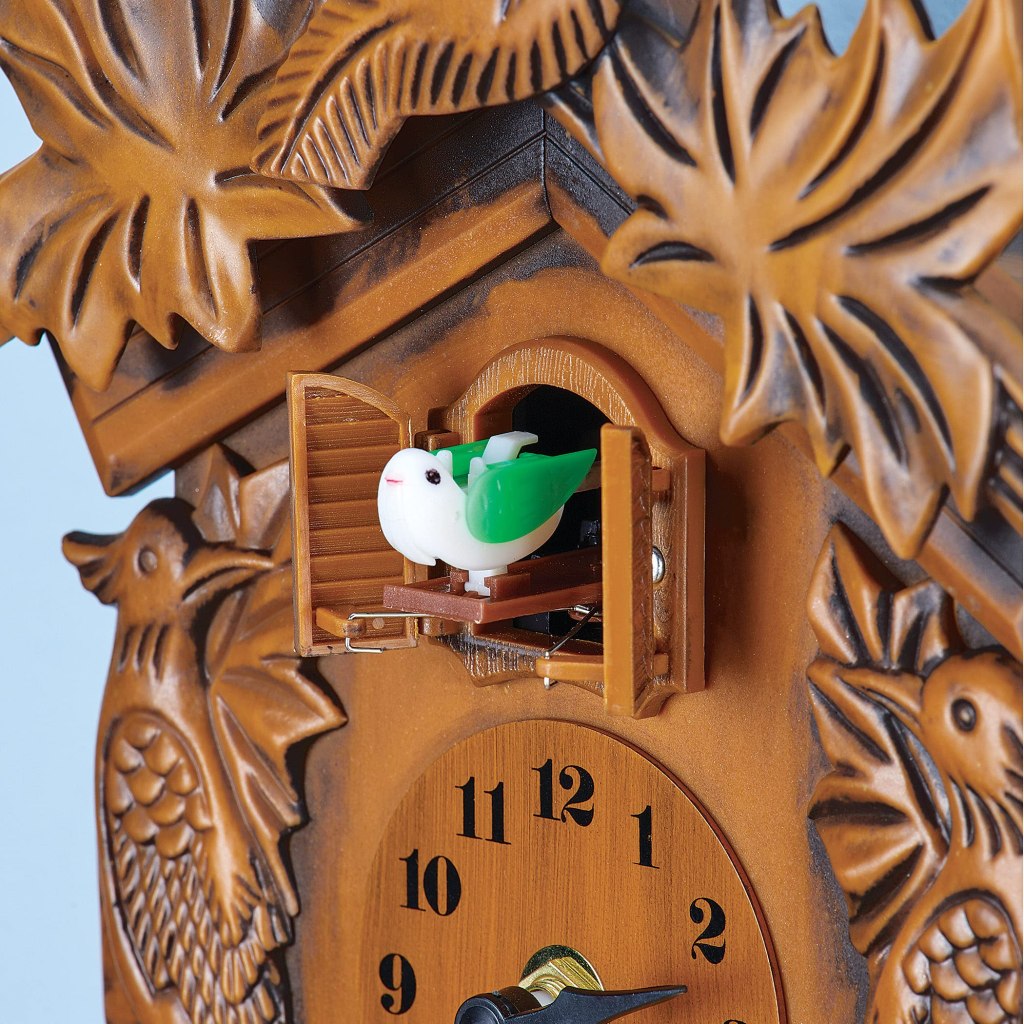
           The cuckoo clock standing against the eastern wall
And hung it next to the awning through which I watch sunset.

            As I sleep on my bed of roses,
The cuckoo comes out of the darkness every hour.
The cuckoo's breast is brown, like the pile of wood stacked on funeral pyres.
The cuckoo would look at the unencumbered nail sticking out,
And blow its honest heart out,
                            ‘It’s not about death I am afraid,                                                                                                                  It’s about living’ –
It’s time I hang a picture of the churchyard symmetry
        Where my father, my mother and my friend have gone before, sleep.
          I sleep past my bed of roses.
I do not draw conclusion from the waxing of or waning of the moon
The moon passes through the window over the beads of raindrops
All night,
           The good old cuckoo clock minds
‘Cuckoo…, cuckoo…’.
From Public Domain
Saranyan BV is poet and short-story writer, now based out of Bangalore. He came into the realm of literature by mistake, but he loves being there. His works have been published in many Indian and Asian journals. He loves the works of Raymond Carver.
.
PLEASE NOTE: ARTICLES CAN ONLY BE REPRODUCED IN OTHER SITES WITH DUE ACKNOWLEDGEMENT TO BORDERLESS JOURNAL
Our friendship overcomes the distance between the balconies.

At first the extent seems long, gaping like the head of a ship-mast sailing beyond the horizon.

We could connect only with our eyes. We do not have access to each other.

Otherwise, she is companionable, very bubbly. She is petite,

I guess she feels lost being alone. She demands I remain in the balcony all the time.

And I would, a book of poems on my lap.

My neighbours often leave her alone,

go roaming, to play or to munch popcorns in movie malls,

She would express her stress by barking through the morning,

or whining the rest of the day. I learn not to be troubled by her tantrums.

She would jump with joy upon seeing me, let me know how happy she felt using the tail.

I never reason any other purpose for that appendage.

It makes me feel inadequate, the absence of it.

In that period of love we forge  our clandestine  kinship by panting like mountaineers doing high altitude trek.

I learn to return her love.

I would lean over the balustrade and pretend to hug.

She taught my eyes to ooze oxytocin, which she channels into her wide-eyed ardour.

And then her folks move away to another apartment, taking her along.

She is not aware of the plan to move, she has not been told, she goes without saying goodbye.

I still have the book on my lap, the book of poems, open and face down.

The silence is not adequate to replace the ligature of our bond

or to teach me how to bear her absence with quietude.
Saranyan BV is poet and short-story writer, now based out of Bangalore. He came into the realm of literature by mistake, but he loves being there. His works have been published in many Indian and Asian journals. He loves the works of Raymond Carver.
.
PLEASE NOTE: ARTICLES CAN ONLY BE REPRODUCED IN OTHER SITES WITH DUE ACKNOWLEDGEMENT TO BORDERLESS JOURNAL
In Cherry Blossom Forecast, Suzanne Kamata brings the Japanese ritual of cherry blossom viewing to our pages with her camera and words. Clickhere to read.
Where the mind is without fear … Where the world has not been broken up into fragments … Where the clear stream of reason has not lost its way … Where the mind is led forward by thee Into ever-widening thought and action…
As we complete the fourth year of our virtual existence in the clouds and across borders, the world has undergone many changes around us, and it’s not only climate change (which is a huge challenge) but much more. We started around the time of the pandemic — in March 2020 — as human interactions moved from face-to-face non-virtual interactions to virtual communication. When the pandemic ended, we had thought humanity would enter a new age where new etiquettes redefining our social norms would make human existence as pandemic proof as possible. But before we could define new norms in the global context, takeovers and conflicts seem to have reft countries, regions and communities apart. Perhaps, this is a time when Borderless Journalcan give a voice to all those who want to continue living as part of a single species in this world — where we can rise above our differences to find commonalities that make us human and part of the larger stream of humanity, that has been visualised by visionaries like Tagore or John Lennon — widely different cultural milieus but looking for the same things — humankind living together in harmony and moving towards a world without violence, without hate, without rancour and steeped in goodwill and love.
Talking of positive values does not make sense in a world that seems to be veering towards darkness… Many say that humankind is intrinsically given to feelings of anger, hate, division, lust, shame and violence. But then we are just as much inclined towards happiness, fun, love, being respectful and peaceful. Otherwise, would we be writing about these? These are inherited values that have also come down to us from our forefathers and some have been evolving towards embalming or healing with resilience, with kindness and with an open mind.
If you wake up before sunrise, you will notice the sky is really an unredeemable dark. Then, it turns a soft grey till the vibrant colours of the sun paint the horizon and beyond, dousing with not just lively shades but also with a variety of sounds announcing the start of a new day. The darkest hours give way to light. Light is as much a truth as darkness. Both exist. They come in phases in the natural world, and we cannot choose but live with the choices that have been pre-made for us. But there are things we can choose — we can choose to love or hate. We can choose resilience or weakness. We can choose our friends. We can choose our thoughts, our ideas. In Borderless, we have a forum which invites you to choose to be part of a world that has the courage to dream, to imagine. We hope to ignite the torch to carry on this conversation which is probably as old as humanity. We look forward to finding new voices that are willing to move in quest of an impractical world, a utopia, a vision — from which perhaps will emerge systems that will give way to a better future for our progeny.
In the last four years, we are happy to say we have hosted writers from more than forty different nationalities and our readers stretch across almost the whole map of the world. We had our first anthology published less than one and a half years ago, focussing more on writing from established pens. Discussions are afoot to bring out more anthologies in hardcopy with more variety of writers.
In our fourth anniversary issue, we not only host translations by Professor Fakrul Alam of Nazrul, by Somdatta Mandal of Tagore’s father, Debendranath Tagore, but also our first Mandarin translation of a twelfth century Southern Song Dynasty poet, Ye Shao-weng, by Rex Tan, a journalist and writer from Malaysia. From other parts of Asia, Dr Haneef Sharif’s Balochi writing has been rendered into English by Fazal Baloch and Ihlwha Choi has transcreated his own poetry from Korean to English. Tagore’s Phalgun or Spring, describing the current season in Bengal, adds to the variety in our translated oeuvre.
Devraj Singh Kalsi has explored darker shades of humour in his conversation with God while Suzanne Kamata has ushered in the Japanese spring ritual of gazing at cherry blossoms in her column with photographs and narrative. Keith Lyons takes us to the beautiful Fiordlands of New Zealand, Ravi Shankar to Malaysia and Mohul Bhowmick trapezes from place to place in Sri Lanka. Farouk Gulsara has discussed the elusiveness of utopia — an interesting perspective given that we look upto ideals like these in Borderless. I would urge more of you to join this conversation and tell us what you think. We did have Wendy Jones Nakashini start a discussion along these lines in an earlier issue.
I would want to thank our dedicated team from the bottom of my heart. Without them, we could not have brought out two issues within three weeks for we were late with our February issue. A huge thanks to them for their writing and to Sohana Manzoor for her art too. Thanks to our wonderful reviewers who have been with us for a number of years, to all our mentors and contributors without who this journal could not exist. Huge thanks to all our fabulous loyal readers. Devoid of their patronage these words would dangle meaninglessly and unread. Thank you all.
Wish you a wonderful spring as Borderless Journal starts out on the fifth year of its virtual existence! We hope you will be part of our journey throughout…
Enjoy the reads in this special anniversary issue with more content than highlighted here, and each piece is a wonderful addition to our oeuvre!
Standing in the Expanse Under the Neem Tree Cluster

I wait with a bundle of tinder logs rolled in a hessian sack.
It’s raining, the air humid, the dust in the air settled.
I wait for the pilgrims to pass, the coast town is overfilled.
I wait for today’s angels to avail my service,
Angels who arrive with spices and groceries,
They never bring the firewood. I cook their food with love.

I stand waiting at the crossroad with a jerrycan of petrol,
The fuel’s brown looking like gold, no sediments in there,
No decisions to be made by the private car users,
Except to notice the quality of my fuel,
And ask me if I could take over the wheels.
I drive with love. Whatever I do, I do with love.

All this waiting is about being and the essence of being
And finding means to make ends meet;
When the need stops, you would no longer find me
Standing in the expanse under the neem tree cluster;
The hessian sack or the jerrycan would continue
In the hands of another good person, waiting to learn.
Saranyan BV is poet and short-story writer, now based out of Bangalore. He came into the realm of literature by mistake, but he loves being there. His works have been published in many Indian and Asian journals. He loves the works of Raymond Carver.
.
PLEASE NOTE: ARTICLES CAN ONLY BE REPRODUCED IN OTHER SITES WITH DUE ACKNOWLEDGEMENT TO BORDERLESS JOURNAL
Ratnottama Sengupta talks to Ruchira Gupta, activist for global fight against human trafficking, about her work and introduces her novel, I Kick and I Fly. Click here to read.
The White Lady by Atta Shad has been translated from Balochi by Fazal Baloch. Click here to read.
Sparrows by Ihlwha Choi has been translated from Korean by the poet himself. Click here to read.
Tagore’s Dhoola Mandiror Temple of Dust has been translated from Bengali by Mitali Chakravarty. Click here to read.
Pandies Corner
Songs of Freedom: What are the Options? is an autobiographical narrative by Jyoti Kaur, translated from Hindustani by Lourdes M Supriya. These narrations highlight the ongoing struggle against debilitating rigid boundaries drawn by societal norms, with the support from organisations like Shaktishalini and pandies’. Click here to read.
Ratnottama Sengupta travels back to her childhood wonderland where she witnessed what we regard as Indian film history being created. Click here to read.
Aditi Yadav explores the universal appeal of the translation of a 1937 Japanese novel that recently came to limelight as it’s rendition on the screen won the Golden Globe Best Animated Feature Film award (2024). Click here to read.
I sat in the railway station leaning on a chair.
The evening was pleasant with orange-violet cotton clouds.
The chairs were meant for the passengers waiting for the 5.45 pm shuttle.
The passengers carried veggies and sweetmeats in yellow bags to take home.
Most of the passengers were old and capable of coughing the phlegm of life.
One or two well-to-do walked up the refreshment stall and slurped the hot brew.
I never went to that side because it reeked of sour milk.
Aroma of guavas rented the air where I was seated. It is the season, though late.
The bill advertising the tabloid press said,
‘An engineer from the public works department was found dead in the reservoir.’
I have seen only fishes in those turbid waters, big and small ones snapping their tails.
Sometimes pachyderms appeared from the thick groove on the banks for a drink.
Doubts were raised if the engineer committed suicide, or was it a murder?
A crow wearing a grey collar flew under the roof. It pecked at crumbs fallen off
The potato wafers people bought, ate from polythene bags to kill hunger
While the wait pounded blue vessels and produced dreariness.
The fritters would be swept away before sunset
By the station cleaning staff enveloped in bellow-like overalls.
These particles would soon be part and parcel of the purple carboys in which garbage collects.
The crow has to make a quick dash for its supper. It did not pause to read the bill.
The news of the engineer’s death did worry the crow or anyone. We were not like the crow with the grey collar.
We sat craning our necks and knitting brows, not knowing what to do with what is left.
One of us returned and said the post-mortem is done. The pyre is lit without a trace.
Saranyan BV is poet and short-story writer, now based out of Bangalore. He came into the realm of literature by mistake, but he loves being there. His works have been published in many Indian and Asian journals. He loves the works of Raymond Carver.
.
PLEASE NOTE: ARTICLES CAN ONLY BE REPRODUCED IN OTHER SITES WITH DUE ACKNOWLEDGEMENT TO BORDERLESS JOURNAL
Interviewing Bulbul: Remembering Mrinal Sen… Ratnottama Sengupta introduces Bulbul Sharma to converse with her on Mrinal Sen, the legendary filmmaker, reflecting on Bulbul Sharma’s experience as an actress in his film, Interview. Click here to read.
In conversation with Gajra Kottary, eminent screenplay writer, and a brief introduction to her recent book of short stories, Autumn Blossoms. Click hereto read.
Translations
Nazrul’s poem, Samya or Equality, has been translated from Bengali by Niaz Zaman. Click here to read.
Masud Khan’s Fire Engine has been translated from Bengali by Fakrul Alam. Click here to read.





 Borderless