Categories
Poetry

Whale Song Across a Darkened Harbour 

By Ryan Quinn Flanagan  

The old man and the sea, painting by Anne Weirich (Public Domain)
Of all things comprised, my unwitting alibis – 
cove familiar shoulders in hunch, a mortuary stillness, 
whale song across a darkened harbour, 
the ghost of old pipe smoke through a ripened air 
and rattily seated upon this chair, this porch, 
a man of great age and weather; 
a bottle of scotch and a single malt glass 
on a nearby table – the roaming vicissitudes; 
no pining gallant plight, no hands of shared warmth,    
just a language so bare and true 
as no man will be incited, 
no love startled back from the breathless  
unmoved depths.

Ryan Quinn Flanagan is a Canadian-born author residing in Elliot Lake, Ontario, Canada with his wife and many bears that rifle through his garbage.  His work can be found both in print and online in such places as: Evergreen Review, The New York Quarterly, Borderless Journal, GloMag, Red Fez, and Lothlorien Poetry Journal

PLEASE NOTE: ARTICLES CAN ONLY BE REPRODUCED IN OTHER SITES WITH DUE ACKNOWLEDGEMENT TO BORDERLESS JOURNAL

Click here to access the Borderless anthology, Monalisa No Longer Smiles

Click here to access Monalisa No Longer Smiles on Kindle Amazon International

Categories
Contents

Borderless, October 2023

Artwork by Sohana Manzoor

Editorial

We had Joy, We had Fun … Click here to read

Conversations

A conversation with Nazes Afroz, former BBC editor, along with a brief introduction to his new translations of Syed Mujtaba Ali’s Tales of a Voyager (Jolay Dangay). Click here to read.

Keith Lyons converses with globe trotter Tomaž Serafi, who lives in Ljubljana. Click here to read.

Translations

Barnes and Nobles by Quazi Johirul Islam has been translated from Bengali by Professor Fakrul Alam. Click here to read.

Cast Away the Gun by Mubarak Qazi has been translated from Balochi by Fazal Baloch. Click here to read.

One Jujube has been written and translated from Korean by Ihlwha Choi. Click here to read.

A Hymn to an Autumnal Goddess by Rabindranath Tagore,  Amra Beddhechhi Kaasher Guchho ( We have Tied Bunches of Kaash), has been translated by Mitali Chakravarty. Click here to read.

Poetry

Click on the names to read the poems

Michael Burch, Gopal Lahiri, Ryan Quinn Flanagan, Hawla Riza, Reeti Jamil, Rex Tan, Santosh Bakaya, Tohm Bakelas, Pramod Rastogi, George Freek, Avantika Vijay Singh, John Zedolik, Debanga Das, Rhys Hughes

Poets, Poetry, and Rhys Hughes

In Do It Yourself Nonsense Poem, Rhys Hughes lays some ground rules for indulging in this comedic genre. Click here to read.

Musings/Slices from Life

Onsen and Hot Springs

Meredith Stephens explores Japanese and Californian hot springs with her camera and narrative. Click here to read.

Kardang Monastery: A Traveller’s High in Lahaul

Sayani De travels up the Himalayas to a Tibetan monastery. Click here to read.

Ghosts, Witches and My New Homeland

Tulip Chowdhury muses on ghosts and spooks in Bangladesh and US. Click here to read.

Musings of a Copywriter

In Red Carpet Welcome, Devraj Singh Kalsi re-examines social norms with a scoop of humour. Click here to read.

Notes from Japan

In Baseball and Robots, Suzanne Kamata shares how both these have shaped life in modern Japan. Click here to read.

Stories

The Wave of Exile

Paul Mirabile tells a strange tale started off by a arrant Tsunami. Click here to read.

Glimpses of Light

Neera Kashyap gives a poignant story around mental health. Click here to read.

The Woman Next Door

Jahanavi Bandaru writes a strange, haunting tale. Click here to read.

The Call

Nirmala Pillai explores different worlds in Mumbai. Click here to read.

Essays

The Oral Traditions of Bengal: Story and Song

Aruna Chakravarti describes the syncretic culture of Bengal through its folk music and oral traditions. Click here to read.

Belongingness and the Space In-Between

Disha Dahiya draws from a slice of her life to discuss migrant issues. Click here to read.

A City for Kings

Ravi Shankar takes us to Lima, Peru with his narrative and camera. Click here to read.

The Saga of a Dictionary: Japanese-Malayalam Affinities

Dr. KPP Nambiar takes us through his journey of making a Japanese-Malyalam dictionary, which started nearly fifty years ago, while linking ties between the cultures dating back to the sixteenth century. Click here to read.

Book Excerpts

An excerpt from Kailash Satyarthi’s Why Didn’t You Come Sooner?: Compassion In Action—Stories of Children Rescued From Slavery. Click here to read.

An excerpt from Rhys Hughes’ The Coffee Rubaiyat. Click here to read.

Book Reviews

Somdatta Mandal reviews Usha Priyamvada’s Won’t You Stay, Radhika?, translated from Hindi by Daisy Rockwell. Click here to read.

Aditi Yadav reviews Makoto Shinkai’s and Naruki Nagakawa’s She and Her Cat, translated from Japanese by Ginny Tapley Takemori. Click here to read.

Gemini Wahaaj reviews South to South: Writing South Asia in the American South edited by Khem K. Aryal. Click here to read.

Bhaskar Parichha reviews One Among You: The Autobiography of M.K. Stalin, translated from Tamil by A S Panneerselvan. Click here to read.

.

Click here to access the Borderless anthology, Monalisa No Longer Smiles

Click here to access Monalisa No Longer Smiles on Kindle Amazon International

Categories
Editorial

We had Joy, We had Fun…

There was a time when there were no boundaries drawn by humans. Our ancestors roamed the Earth like any other fauna — part of nature and the landscape. They tried to explain and appease the changing seasons, the altering landscapes and the elements that affected life and living with rituals that seemed coherent to them. There were probably no major organised structures that laid out rules. From such observances, our festivals evolved to what we celebrate today. These celebrations are not just full of joie de vivre, but also a reminder of our syncretic start that diverged into what currently seems to be irreparable breaches and a lifestyle that is in conflict with the needs of our home planet.

Reflecting on this tradition of syncretism in our folklore and music, while acknowledging the boundaries that wreak havoc, is an essay by Aruna Chakravarti. She expounds on rituals that were developed to appease natural forces spreading diseases and devastation, celebrations that bring joy with harvests and override the narrowness of institutionalised human construct. She concludes with Lalan Fakir’s life as emblematic of the syncretic lore. Lalan, an uneducated man brought to limelight by the Tagore family, swept across religious divides with his immortal lyrics full of wisdom and simplicity. Dyed in similar syncretic lore are the writings of a student and disciple of Tagore from Santiniketan, Syed Mujtaba Ali (1904-1974). His works overriding these artificial constructs have been brought to light, by his translator, former BBC editor, Nazes Afroz. Having translated his earlier book, In a Land Far from Home: A Bengali in Afghanistan, Afroz has now brought to us Syed Mujtaba Ali’s Tales of a Voyager (Jolay Dangay), in which we read of his travels to Egypt almost ninety years ago. In his interview, the translator highlights the current relevance of this remarkable polyglot.

Humming the tunes of Mujtaba Ali’s tutor, Tagore, a translation of Tagore’s song, Amra Beddhechhi Kasher Guchho (We have Tied Bunches of Kash[1]) captures the spirit of autumnal opulence which heralds the advent of Durga Puja. A translation by Fazal Baloch has brought a message of non-violence very aptly in these times from recently deceased eminent Balochi poet, Mubarak Qazi. Professor Fakrul Alam has translated a very contemporary poem by Quazi Johirul Islam on Barnes and Nobles while from Korea, we have a translation of a poem by Ihlwha Choi on the fruit, jujube, which is eaten fresh of the tree in autumn.

A poem which starts with a translation of a Tang dynasty’s poet, Yuan Zhen, inaugurates the first translation we have had from Mandarin — though it’s just two paras by the poet, Rex Tan, who continues writing his response to the Chinese poem in English. Mingling nature and drawing life lessons from it are poems by George Freek, Ryan Quinn Flanagan and Gopal Lahiri. We have poetry which enriches our treasury by its sheer variety from Hawla Riza, Pramod Rastogi, John Zedolik, Avantika Vijay Singh, Tohm Bakelas and more. Michael Burch has brought in a note of festivities with his Halloween poems. And Rhys Hughes has rolled out humour with his observations on the city of Mysore. His column too this time has given us a table and a formula for writing humorous poetry — a tongue-in-cheek piece, just like the book excerpt from The Coffee Rubaiyat. In the original Rubaiyat, Omar Khayyam (1048–1131) had given us wonderful quatrains which Edward Fitzgerald immortalised with his nineteenth century translation from Persian to English and now, Hughes gives us a spoof which would well have you rollicking on the floor, and that too, only because as he tells us he prefers coffee over wine!

Humour tinged with irony is woven into Devraj Singh Kalsi’s narrative on red carpet welcomes in Indian weddings. We have a number of travel stories from Peru to all over the world. Ravi Shankar takes us to Lima and Meredith Stephens to Californian hot springs with photographs and narratives while Sayani De does the same for a Tibetan monastery in Lahaul. Keith Lyons converses with globe trotter Tomaž Serafi, who lives in Ljubljana. And Suzanne Kamata adds colour with a light-veined narrative on robots and baseball in Japan. Syncretic elements are woven by Dr. KPP Nambiar who made the first Japanese-Malyalam Dictionary. He started nearly fifty years ago after finding commonalities between the two cultures dating back to the sixteenth century. Tulip Chowdhury brings in colours of Halloween while discussing ghosts in Bangladesh and America, where she migrated.

The theme of immigration is taken up by Gemini Wahaaj as she reviews South to South: Writing South Asia in the American South edited by Khem K. Aryal. Japan again comes into focus with Aditi Yadav’s Makoto Shinkai’s and Naruki Nagakawa’s She and Her Cat, translated from Japanese by Ginny Tapley Takemori. Somdatta Mandal has also reviewed a translation by no less than Booker winning Daisy Rockwell, who has translated Usha Priyamvada’s Won’t You Stay, Radhika? from Hindi. Our reviews seem full of translations this time as Bhaskar Parichha comments on One Among You: The Autobiography of M.K. Stalin, the current Chief Minister of Tamil Nadu, translated from Tamil by A S Panneerselvan. In fiction, we have stories that add different flavours from Paul Mirabile, Neera Kashyap, Nirmala Pillai and more.

Our book excerpt from Nobel laureate Kailash Satyarthi’s Why didn’t You Come Sooner? Compassion in Action—Stories of Children Rescued from Slavery deserves a special mention. It showcases a world far removed from the one we know. While he was rescuing some disadvantaged children, Satyarthi relates his experience in the rescue van:

“One of the children gave it [the bunch of bananas] to the child sitting in front. An emaciated girl and a little boy were seated next to me. I told them to pass on the fruit to everyone in the back and keep one each for themselves. The girl looked curiously at the bunch as she turned it around in her hands. Then she looked at the other children.

“‘I’ve never seen an onion like this one,’ she said.

“Her little companion also touched the fruit gingerly and innocently added, ‘Yes, this is not even a potato.’

“I was speechless to say the least. These children had never seen anything apart from onions and potatoes. They had definitely never chanced upon bananas…”

Heart-wrenching but true! Maybe, we can all do our bit by reaching out to some outside our comfort or social zone to close such alarming gaps… Uma Dasgupta’s book tells us that Tagore had hoped many would start institutions like Sriniketan all over the country to bridge gaps between the underprivileged and the privileged. People like Satyarthi are doing amazing work in today’s context, but more like him are needed in our world.

We have more writings than I could mention here, and each is chosen with much care. Please do pause by our contents page and take a look. Much effort has gone into creating a space for you to relish different perspectives that congeal in our journal, a space for all of you. For this, we have the team at Borderless to thank– without their participation, the journal would not be as it is. Sohana Manzoor with her vibrant artwork gives the finishing touch to each of our monthly issues. And lastly, I cannot but express my gratefulness to our contributors and readers for continuing to be with us through our journey. Heartfelt thanks to all of you.

Have a wonderful festive season!

Best wishes,

Mitali Chakravarty

borderlessjournal.com

[1] Wild long grass

.

.

Visit the October edition’s content page by clicking here

READ THE LATEST UPDATES ON THE FIRST BORDERLESS ANTHOLOGY, MONALISA NO LONGER SMILES, BY CLICKING ON THIS LINK.

Categories
Poetry

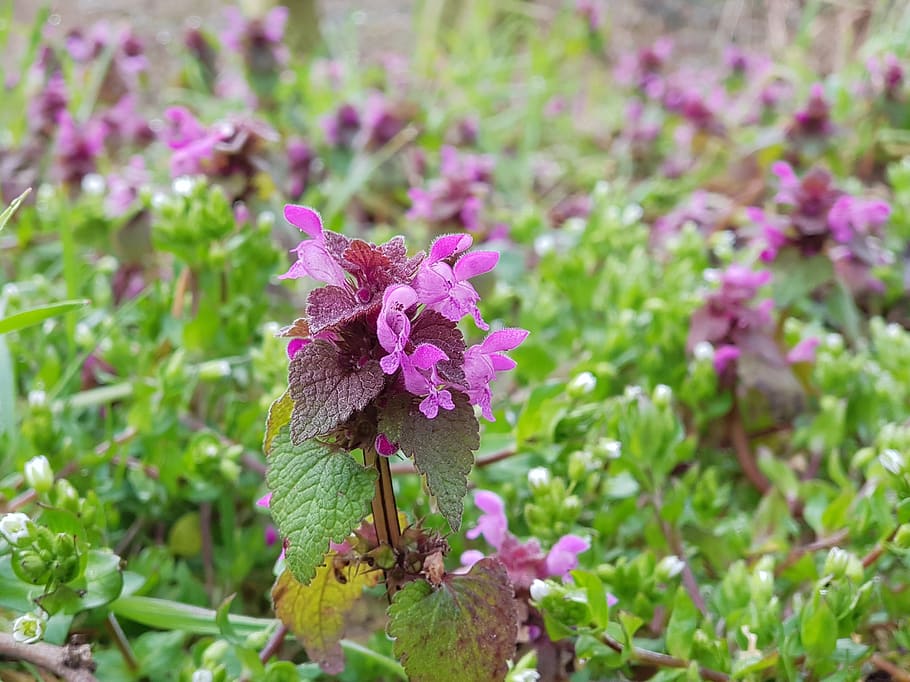
Purple Deadnettle, at the Foot of a Failing Rockface 

By Ryan Quinn Flanagan

Courtesy: Creative Commons
Purple Deadnettle, at the Foot of a Failing Rockface 
 
I turn that corner, towards the galloping glue factory homestretch,  
stumble upon this wild patch of purple deadnettle,  
at the foot of a failing rockface, run calloused sweat fingers 
down the side of fresh barber craft, hair off the neck like the oily  
gallivanting gallows given a stay in the bottom of the slimy  
eleventh and the UV warnings are out in numbers  
like idiot storm troopers so that agoraphobia  
is the new 30 – 
the bugs don't bite any more than the relentless taxman  
and everything leaves its mark if we are honest, 
which of course we are not, so that the lie is fed and grows 
large as some less than panicked Godzilla-stomped city  
taken right out of the movies and given some sorry phonebook  
name that anyone could call by mistake, so that fear is the crutch  
of the dreaming bed head Man brought to wake.

Ryan Quinn Flanagan is a Canadian-born author residing in Elliot Lake, Ontario, Canada with his wife and many bears that rifle through his garbage.  His work can be found both in print and online in such places as: Evergreen Review, The New York Quarterly, Borderless Journal, GloMag, Red Fez, and Lothlorien Poetry Journal

PLEASE NOTE: ARTICLES CAN ONLY BE REPRODUCED IN OTHER SITES WITH DUE ACKNOWLEDGEMENT TO BORDERLESS JOURNAL

Click here to access the Borderless anthology, Monalisa No Longer Smiles

Click here to access Monalisa No Longer Smiles on Kindle Amazon International

Categories
Contents

Borderless August 2023

Art by Sohana Manzoor

Editorial

Other Echoes in the Garden… Click here to read.

Interviews

Ujjal Dosanjh, former Minister from Canada and former Premier of British Columbia, discusses his autobiography, Journey After Midnight – A Punjabi Life: From India to Canada, and the need for a world with less borders. Click here to read.

Professor Fakrul Alam discusses his new book of Tagore translations, Gitabitan: Selected Song-Lyrics of Rabindranath Tagore. Click here to read.

Translations

Tagore’s Musalmanir Galpa (A Muslim Woman’s Story) has been translated from Bengali by Aruna Chakravarti. Click here to read.

Masud Khan’s poem, In Another Galaxy, has been translated from Bengali by Professor Fakrul Alam. Click here to read.

Wakeful Stays the Door, a poem by Munir Momin, has been translated from Balochi by Fazal Baloch. Click here to read.

Dangerous Coexistence, written in Korean and translated by Ilhwah Choi. Click here to read.

Proshno or Questions by Tagore has been translated by Mitali Chakravarty. Click here to read.

Pandies Corner

Songs of Freedom: An Ordinary Tale is a narrative by Nandani based on her own experiences, translated from Hindustani by Janees. These narrations highlight the ongoing struggle against debilitating rigid boundaries drawn by societal norms, with the support from organisations like Shaktishalini and Pandies. Click here to read.

Poetry

Click on the names to read the poems

Jared Carter, Rhys Hughes, Malachi Edwin Vethamani, Luis Cuauhtémoc Berriozábal, Saranyan BV, Ryan Quinn Flanagan, A Jessie Michael, Jahnavi Gogoi, George Freek, Koushiki Dasgupta Chaudhuri, David Francis, Akil Contractor, Michael Burch

Poets, Poetry & Rhys Hughes

In An Experiment with Automatic Poetic Translation, Rhys Hughes auto translates an English poem sequentially through 28 languages and then back to English with hilarious results. Click here to read.

Musings/ Slices from Life

Mister, They’re Coming Anyway

Timothy Jay Smith writes on the refugee crisis in Lesbos Island, Greece with photographs by Michael Honegger. Click here to read.

Migrating to Myself from Kolkata to Singapore

Asad Latif explores selfhood in context of diverse geographies. Click here to read.

Islands that Belong to the Seas

Paul Mirabile muses on how humans are like migrants on islands borrowed from the seas. Click here to read.

Of Dreams, Eagles and Lost Children

Aysha Baqir muses on the narrow, closed borders that condemn children. Click here to read.

Mushroom Clouds and Movies: Response from a Hibakusha’s Daughter

Kathleen Burkinshaw discusses Oppenhiemer the movie. Click here to read.

Sleepless in the High Desert, Slumber in the Sierra

Meredith Stephens covers Nevada to Columbia in a car with her camera. Click here to read.

My Hostel Days

Ravi Shankar reminisces on bygone days. Click here to read.

Musings of a Copywriter

In The Amateur Professional, Devraj Singh Kalsi writes of a amateur who thought of himself as a professional. Click here to read.

Notes from Japan

In How I Wound Up in Japan, Suzanne gives her story as an immigrant. Click here to read.

Essays

A Different Persuasion: On Jane Austen’s Novels & their Adaptations

Deepa Onkar delves into the world of Jane Austen books and films. Click here to read.

A Foray into Andamans

Mohul Bhowmik explores Andaman with a camera and narrative. Click here to read.

Bhaskar’s Corner

In Chittaranjan Das: A Centenary Tribute, Bhaskar Parichha discusses the life of one of the most legendary Odia writers. Click here to read.

Stories

Belacan

Farouk Gulsara shares a story based on the life of a migrant in 1950s. Click here to read.

The Japanese Maple

Shivani Shrivastav weaves a story of friendship and loneliness among migrants. Click here to read.

The Coin

Khayma Balakrishnan explores human and supernatural interactions in a school setting in Malaysia. Click here to read.

The Vagrant

Reeti Jamil narrates a strange tale set in a village and told by a farmer. Click here to read.

Book Excerpts

An excerpt from Ujjal Dosanjh’s Journey After Midnight: A Punjabi Life from Canada to India. Click here to read.

An excerpt from Roses in the Fire of Spring: Better Roses for a Warming World and Other Garden Adventures, by M.S. Viraraghavan and Girija Viraraghavan. Click here to read.

Book Reviews

Somdatta Mandal reviews Amitav Ghosh’s Smoke and Ashes: A Writer’s Journey Through Opium’s Hidden Histories. Click here to read.

Basudhara Roy reviews Greening the Earth: A Global Anthology of Poetry, edited by K. Satchidanandan & Nishi Chawla. Click here to read.

Bhaskar Parichha reviews Arunava Sinha’s The Greatest Indian Stories Ever Told: Fifty Masterpieces from the Nineteenth Century to the Present. Click here to read.

.

Click here to access the Borderless anthology, Monalisa No Longer Smiles

Click here to access Monalisa No Longer Smiles on Kindle Amazon International

Categories
Editorial

Other Echoes in the Garden…

“Other echoes
Inhabit the garden. Shall we follow?
Quick, said the bird, find them, find them…”

— TS Eliot, ‘Four Quartets: Burnt Norton’(1936)

Humans have always been dreamers, ideators and adventurers.

Otherwise, could we have come this far? From trees to caves to complex countries and now perhaps, an attempt to reach out towards outer space for an alternative biome as exploring water, in light of the recent disaster of the Titan, is likely to be tougher than we imagined. In our attempt to survive, to live well by creating imagined constructs, some fabrications backfired. Possibly because, as George Orwell observed with such precision in Animal Farm, some perceived themselves as “more equal”. Of course, his was an animal allegory and we are humans. How different are we from our brethren species on this beautiful planet, which can survive even without us? But can humanity survive without Earth? In science fiction, we have even explored that possibility and found home among stars with the Earth becoming uninhabitable for man. However, humanity as it stands of now, continues to need Earth. To live amicably on the planet in harmony with nature and all the species, including our own, we need to reimagine certain constructs which worked for us in the past but seem to have become divisive and destructive at this point.

Ujjal Dosanjh, former Minister in the Canadian cabinet and former Premier of British Columbia, in his autobiography, Journey After Midnight – A Punjabi Life: From India to Canada, talks of regionalism as an alternative to narrow divisive constructs that terrorise and hurt others. He writes in his book: “If humanity isn’t going to drown in the chaos of its own creation, the leading nations of the world will have to create a new world order, which may involve fewer international boundaries.” We have a candid conversation with him about his beliefs and also a powerful excerpt from his autobiography.

An interview with Professor Fakrul Alam takes us into Tagore’s imagined world. He discussed his new book of Tagore translations, Gitabitan: Selected Song-Lyrics of Rabindranath Tagore. He has brought out a collection of 300 songs translated to English. In a bid to emphasise an inclusive world, we also have a translation of Tagore’s ‘Musalmanir Galpa’ (A Muslim Woman’s Story) by Aruna Chakravarti. A transcreation of his poem, called ‘Proshno or Questions’ poses difficult challenges for humanity to move towards a more inclusive world. Our translation by Ihlwha Choi of his own Korean poem to English also touches on his visit to the polymath’s construct in the real world, Santiniketan. All of these centring around Tagore go to commemorate the month in which he breathed his last, August. Professor Alam has also translated a poem from Bengali by Masud Khan that has futuristic overtones and builds on our imagined constructs. From Fazal Baloch we have a Balochi translation of a beautiful, almost a surrealistic poem by Munir Momin.

The poetry selections start with a poem on ‘Wyvern’, an imagined dragon, by Jared Carter. And moves on to the plight of refugees by Michael Burch, A Jessie Michael, and on migrants by Malachi Edwin Vethamani. Ryan Quinn Flanagan has poetry that suggests the plight of refugees at a metaphorical level. Vibrant sprays of colours are brought into this section by Luis Cuauhtémoc Berriozábal, Saranyan BV, Jahnavi Gogoi, George Freek and many more. Rhys Hughes brings in a spot of humour with his mountainous poetry (literally) and a lot of laughter with his or rather Google’s attempt at automatic translation of a poem. Devraj Singh Kalsi has shared a tongue in cheek story about an ‘amateur professional’ — rather a dichotomy.

We travel to Andaman with Mohul Bhowmick and further into Sierra with Meredith Stephens. Ravi Shankar travels back in nostalgia to his hostel and Kathleen Burkinshaw dives into the past — discussing and responding to the media presentation of an event that left her family scarred for life, the atomic holocaust of 1945 in Japan. This was a global event more than seven decades ago that created refugees among the survivors whose homes had been permanently destroyed. Perhaps, their stories are horrific, and heart wrenching like the ones told by those who suffered from the Partition of India and Pakistan, a divide that is celebrated by Independence Days for the two nations based on a legacy of rifts created by the colonials and perpetrated to this day by powerbrokers. Aysha Baqir has written of the wounds suffered by the people with the governance gone awry. Some of the people she writes of would have been refugees and migrants too.

A poignant narrative about refugees who flock to the Greek island of Lesbos by Timothy Jay Smith with photographs by Michael Honegger, both of whom served at the shelters homing the displaced persons, cries out to halt wars and conflicts that displace them. We have multiple narratives of migrants in this issue, with powerful autobiographical stories told by Asad Latif and Suzanne Kamata. Paul Mirabile touches on how humans have adopted islands by borrowing them from seas… rather an unusual approach to migrations. We have an essay on Jane Austen by Deepa Onkar and a centenary tribute to Chittaranjan Das by Bhaskar Parichha.

The theme of migrants is echoed in stories by Farouk Gulsara and Shivani Shrivastav. Young Nandani has given an autobiographical story, translated from Hindustani to English by Janees, in which a migration out of various homes has shredded her family to bits — a narrative tucked in Pandies Corner.  Strange twists of the supernatural are woven into fiction by Khayma Balakrishnan and Reeti Jamil.

In reviews, Parichha has explored Arunava Sinha’s The Greatest Indian Stories Ever Told: Fifty Masterpieces from the Nineteenth Century to the Present. Somdatta Mandal’s review of Amitav Ghosh’s Smoke and Ashes: A Writer’s Journey Through Opium’s Hidden Histories seems to be an expose on how historical facts can be rewritten to suit different perceptions and Basudhara Roy has discussed the Greening the Earth: A Global Anthology of Poetry, edited by K. Satchidanandan and Nishi Chawla.

There is more wonderful content. Pop by our August’s bumper edition to take a look.

I would like to give my grateful thanks to our wonderful team at Borderless, especially to Sohana Manzoor for her fabulous artwork. Huge thanks to all our gifted contributors and our loyal readers. Borderless exists today because of all of you are making an attempt to bringing narratives that build bridges, bringing to mind Lennon’s visionary lyrics:

You may say I'm a dreamer
But I'm not the only one
I hope someday you'll join us
And the world will live as one

Thank you for joining us at Borderless Journal.

Have a wonderful month!

Mitali Chakravarty

borderlessjournal.com

.

Visit the August edition’s content page by clicking here

READ THE LATEST UPDATES ON THE FIRST BORDERLESS ANTHOLOGY, MONALISA NO LONGER SMILES, BY CLICKING ON THIS LINK.

Categories
Poetry

‘Seeds Fall to the Ground’ 

By Ryan Quinn Flanagan

Courtesy: Creative Commons
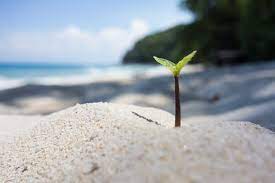
‘Seeds fall to the ground, something grows’ 

Nestled so close to harpied shore, 
seeds fall to the ground, something grows – 
what has been replaced, never in true replica, 
it is but for these small changes that that I find myself 
ambered in thought, wrenched mandibled and Langoliered 
as if the thick black ledger has gone to town and left a deep flush  
pulsing to be felt by personal agitators; if I seem pensive, 
know that the millwright has never been the machine, 
these oats of a ponderous farling… 
And see how the diving gulls parry, 
the many deboning stations along fisherman’s wharf 
lost to scaler’s ardour; 
a heaviness overcomes me that is no simple sleep, 
never suffocating, so much as revelatory: 
imposter fish, locksmith, birth mother…  
Everyone is in the service of someone. 
Even if that service is  
of the Self. 	

Ryan Quinn Flanagan is a Canadian-born author residing in Elliot Lake, Ontario, Canada with his wife and many bears that rifle through his garbage.  His work can be found both in print and online in such places as: Evergreen Review, The New York Quarterly, Borderless Journal, GloMag, Red Fez, and Lothlorien Poetry Journal

PLEASE NOTE: ARTICLES CAN ONLY BE REPRODUCED IN OTHER SITES WITH DUE ACKNOWLEDGEMENT TO BORDERLESS JOURNAL

Click here to access the Borderless anthology, Monalisa No Longer Smiles

Click here to access Monalisa No Longer Smiles on Kindle Amazon International

Categories
Contents

Borderless July 2023

Painting by Sohana Manzoor

Editorial

As Imagination Bodies Forth Click here to read.

Translations

Bankim Chandra Chattopadhyay’s Bangalar Nobbyo Lekhokdiger Proti Nibedon (a request to new writers of Bengali), has been translated from Bengali and introduced by Abdullah-Al-Musayeb. Click here to read.

Poetry on Rain by Masud Khan has been translated from Bengali by Professor Fakrul Alam. Click here to read.

Dancer by Bashir Baidar, has been translated from Balochi by Fazal Baloch. Click here to read.

Motherhood: A Tiny Life inside Me, a poem by Sangita Swechcha, has been translated from Nepali by Hem Bishwakarma. Click here to read.

The Wind and the Door, has been written and translated from Korean by Ihlwha Choi. Click here to read.

Megh or Cloud by Tagore has been translated from Bengali by Mitali Chakravarty. Click here to read.

Conversation

In conversation with Afsar Mohammad, a poet, a Sufi and an academic teaching in University of Pennsylvania. Click here to read.

Poetry

Click on the names to read the poems

Afsar Mohammad, Rhys Hughes, Kirpal Singh, Don Webb, Masha Hassan, Vernon Daim, George Freek, Arya KS, Robert Nisbet, Dr Kanwalpreet, John Grey, Nivedita N, Samantha Underhill, Vikas Sehra, Ryan Quinn Falangan, Saranyan BV, Heath Brougher, Carol D’Souza, Michael Burch

Poets, Poetry & Rhys Hughes

In Productivity, Rhys Hughes muses tongue-in-cheek on laziness and its contribution in making a nation more productive. Click here to read.

Musings/ Slices from Life

Should I stay or should I go?

Keith Lyons muses on our attitude towards changes. Click here to read.

Bangal-Ghoti-Bati-Paati or What Anglophilia did to My Palate

Ramona Sen journeys in a lighter vein through her taste buds to uncover part of her identity. Click here to read.

Awesome Arches and Acrophobia

Meredith Stephens takes us for a fabulous treat of Sierra Nevada mountains with her camera and narrative. Click here to read.

Musings of a Copywriter

In The Lost Garden, Devraj Singh Kalsi writes of how his sense of wellbeing mingles with plants. Click here to read.

Notes from Japan

In Better Relations Through Weed-pulling, Suzanne Kamata introduces us to an annual custom in Japan. Click here to read.

Essays

The Story of a Land at War with Itself

Ratnottama Sengupta presents the first hand account of the war in Bosnia-Herzegovina (1992-1995) from a letter from her brother, who was posted there as part of the peace-keeping troops. Click here to read.

‘Wormholes to other Worlds’

Ravi Shankar explores museums in Kuala Lumpur. Click here to read.

Stories

A Troubled Soul

Mahim Hussain explores mental illness. Click here to read.

The Llama Story

Shourjo shares a short fun piece written from a llama’s perspective. Click here to read.

Mister Wilkens

Paul Mirabile gives a strange tale set in Europe of the 1970s. Click here to read.

Book Excerpts

An excerpt from Red Sky Over Kabul: A Memoir of a Father and Son in Afghanistan by Baryalai Popalzai and Kevin McLean. Click here to read.

An excerpt from The Blue Dragonfly – healing through poetry by Veronica Eley. Click here to read.

Book Reviews

Somdatta Mandal reviews The Past is Never Dead: A Novel by Ujjal Dosanjh. Click here to read.

KPP Nambiar reviews The Stolen Necklace: A Small Crime in a Small Town by Shevlin Sebastian and VK Thajudheen. Click here to read.

Rakhi Dalal reviews Drop of the Last Cloud by Sangeetha G. Click here to read.

Bhaskar Parichha reviews Burning Pyres, Mass Graves and A State That Failed Its People : India’s Covid Tragedy by Harsh Mander. Click here to read.

.

Click here to access the Borderless anthology, Monalisa No Longer Smiles

Click here to access Monalisa No Longer Smiles on Kindle Amazon International

Categories
Editorial

As Imagination Bodies Forth…

Painting by Sybil Pretious
And as imagination bodies forth
The forms of things unknown, the poet's pen
Turns them to shapes and gives to airy nothing
A local habitation and a name

 A Midsummer Night's Dream (1595) by William Shakespeare

Famous lines by Shakespeare that reflect on one of the most unique qualities in not only poets — as he states — but also in all humans, imagination, which helps us create our own constructs, build walls, draw boundaries as well as create wonderful paintings, invent planes, fly to the moon and write beautiful poetry. I wonder if animals or plants have the same ability? Then, there are some who, react to the impact of imagined constructs that hurt humanity. They write fabulous poetry or lyrics protesting war as well as dream of a world without war. Could we in times such as these imagine a world at peace, and — even more unusually — filled with consideration, kindness, love and brotherhood as suggested by Lennon’s lyrics in ‘Imagine’ – “Imagine all the people/ Livin’ life in peace…”. These are ideas that have been wafting in the world since times immemorial. And yet, they seem to be drifting in a breeze that caresses but continues to elude our grasp.

Under such circumstances, what can be more alluring than reflective Sufi poetry by an empathetic soul. Featuring an interview and poetry by such a poet, Afsar Mohammad, we bring to you his journey from a “small rural setting” in Telangana to University of Pennsylvania, where he teaches South Asian Studies. He is bilingual and has brought out many books, including one with his translated poetry. Translations this time start with Bankim Chandra Chattopadhyay’s advice to new writers in Bengali, introduced and brought to us by Abdullah-Al-Musayeb. Tagore’s seasonal poem, ‘Megh or Cloud’, has been transcreated to harmonise with the onset of monsoons. However, this year with the El Nino and as the impact of climate change sets in, the monsoons have turned awry and are flooding the world. At a spiritual plane, the maestro’s lines in this poem do reflect on the transience of nature (and life). Professor Fakrul Alam’s translation of Masud Khan’s heartfelt poetry on rain brings to the fore the discontent of the age while conveying the migrant’s dilemma of being divided between two lands. Fazal Baloch has brought us a powerful Balochi poet from the 1960s in translation, Bashir Baidar. His poetry cries out with compassion yet overpowers with its brutality. Sangita Swechcha’s Nepali poem celebrating a girl child has been translated by Hem Bishwakarma while Ihlwha Choi has brought his own Korean poem to readers in English.

An imagined but divided world has been explored by Michael Burch with his powerful poetry. Heath Brougher has shared with us lines that discomfit, convey with vehemence and is deeply reflective of the world we live in. Masha Hassan is a voice that dwells on such an imagined divide that ripped many parts of the world — division that history dubs as the Partition. Don Webb upends Heraclitus’s wisdom: “War is the Father of All, / War is the King of All.” War, as we all know, is entirely a human-made construct and destroys humanity and one cannot but agree with Webb’s conclusion.  We have more from Kirpal Singh, Ryan Quinn Flanagan, Nivedita N, John Grey, Carol D’Souza, Vernon Daim, George Freek, Saranyan BV, Samantha Underhill and among the many others, of course Rhys Hughes, who has given us poetry with a unique alphabetical rhyme scheme invented by him and it’s funny too… much like his perceptions on ‘Productivity’, where laziness accounts for an increase in output!

Keith Lyons has mused on attitudes too, though with a more candid outlook as has Devraj Singh Kalsi with a touch of nostalgia. Ramona Sen has brought in humour to the non-fiction section with her tasteful palate. Meredith Stephens takes us on a picturesque adventure to Sierra Nevada Mountains with her camera and narrative while Ravi Shankar journeys through museums in Kuala Lumpur. We travel to Japan with Suzanne Kamata and, through fiction, to different parts of the Earth as the narratives hail from Bangladesh, France and Singapore.

Ratnottama Sengupta takes us back to how imagined differences can rip humanity by sharing a letter from her brother stationed in Bosnia during the war that broke Yugoslavia (1992-1995). He writes: “It is hard to be surrounded by so much tragedy and not be repulsed by war and the people who lead nations into them.” This tone flows into our book excerpts section with Red Sky Over Kabul: A Memoir of a Father and Son in Afghanistan by Baryalai Popalzai and Kevin McLean. Popalzai was affected by the Russian invasion of Afghanistan in 1980 and had to flee. A different kind of battle can be found in the other excerpt from The Blue Dragonfly – healing through poetry by Veronica Eley – a spiritual battle to heal from experiences that break.

In our reviews section, KPP Nambiar reviews The Stolen Necklace: A Small Crime in a Small Town by Shevlin Sebastian and VK Thajudheen, a book that retells a true story. Sangeetha G’s novel, Drop of the Last Cloud, we are told by Rakhi Dalal, explores the matrilineal heritage of Kerala, that changed to patriarchal over time. Bhaskar Parichha reviews Burning Pyres, Mass Graves and A State That Failed Its People: India’s Covid Tragedy by Harsh Mander. Parichha emphasises the need never to forget the past: “It is a powerful book and sometimes it is even shattering. The narrative is a live remembrance of a national tragedy that too many of us wish to forget when we should, instead, etch it in our minds so that we can prevent another national tragedy like this one from recurring in the future.”  While we need to learn from the past as Parichha suggests, Somdatta Mandal has given a review that makes us want to read Ujjal Dosanjh’s book, The Past is Never Dead: A Novel. She concludes that it “pays tribute to the courage and tenacity of the human spirit and its capacity for hope despite all odds.”

We have more content than mentioned here… all of it enhances the texture of our journal. Do pause by our July issue to savour all the writings. Huge thanks to all our contributors, artists, all our readers and our wonderful team. Without each one of you, this edition would not have been what it is.

Thank you all.

Have a wonderful month!

Mitali Chakravarty

borderlessjournal.com

.

Visit the July edition’s content page by clicking here

READ THE LATEST UPDATES ON THE FIRST BORDERLESS ANTHOLOGY, MONALISA NO LONGER SMILES, BY CLICKING ON THIS LINK.

Categories
Poetry

Pinnacle by Ryan Quinn Flanagan

Courtesy: Creative Commons
Crest not bade me soul – not a more perfect sentence in the  
language. Tops! The pinnacle! I wasn't there yet, for the crest had  
not bade me. The shoulders of my shirt cinched down between  
drowsy hanging arms, revealing a scraggly dark patch of chest hair.  
If there were gifts left to give, they would come by those splintered  
brazen workbench hands. Unshuttered windows, that briny  
squawking clime of distant sea air. Great parapets of lost concealments.  
Bilging heels gong-rung together in startled splay.  
Suddenly, like banshees wailing across the moors – it came!  
"Christ hath bathed my soul," the beautiful voice sparkled. I looked  
up from the pew to find a priest standing over me. Cherub-faced  
and nipper drunk. A smile like fresh linens. A great light! – "Crest  
not bade me soul," I muttered inaudibly. His way was fine too

Ryan Quinn Flanagan is a Canadian-born author residing in Elliot Lake, Ontario, Canada with his wife and many bears that rifle through his garbage.  His work can be found both in print and online in such places as: Evergreen Review, The New York Quarterly, Borderless Journal, GloMag, Red Fez, and Lothlorien Poetry Journal

.

.

PLEASE NOTE: ARTICLES CAN ONLY BE REPRODUCED IN OTHER SITES WITH DUE ACKNOWLEDGEMENT TO BORDERLESS JOURNAL

Click here to access the Borderless anthology, Monalisa No Longer Smiles

Click here to access Monalisa No Longer Smiles on Kindle Amazon International