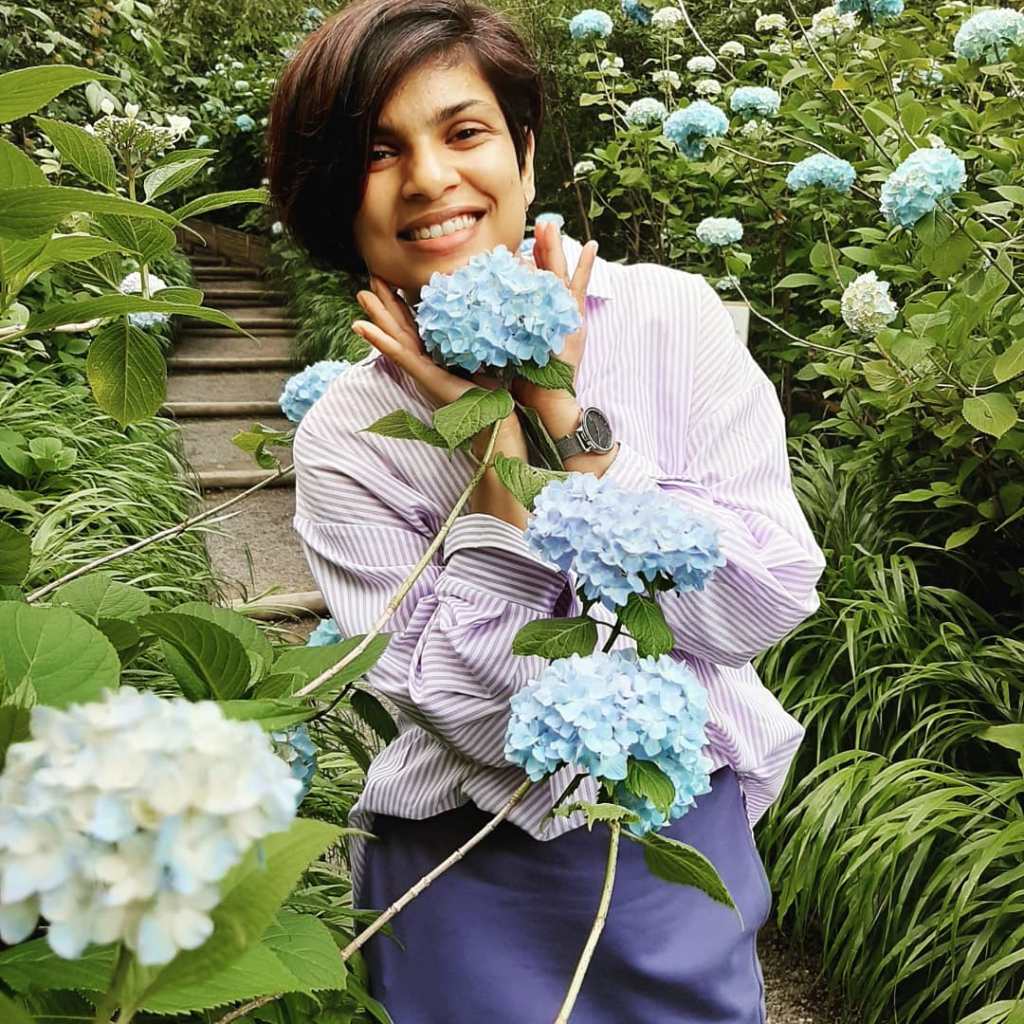
By Aditi Yadav
When Magellan set sail on the seas in 1519, little did he know that his expedition would be the first to circumnavigate the earth. Unfortunately, he died midway and could not see the historic feat that his voyage accomplished. Human race has travelled an exponentially long way since then– locating places through GPS, hopping around on Google earth, planning voyages to solar system family and researching on galaxies far, far away. In some inter-galactic bird’s eye-view, just like Carl Sagan(1934-1996) said, the earth is just a ‘pale blue dot.’ Yet, the ‘only home we’ve ever known’, is marred with myriads of conflicts across the continents. Major conflicts on global scale, time and again lead to wars and revolutions.
The French Revolution which laid the foundation of democratic institutions of the world, was deeply inspired by the famous political philosopher Jean-Jacques Rousseau (1717-1778). As an enlightened man of his times, Rousseau famously said, “Man is born free but everywhere he is in chains”. I do not know if he considered women absolutely free or irredeemably enslaved that he put it down with a such male-centric perspective. Nonetheless, to celebrate the progress of civilization, let’s just rephrase it for modern times– humans are born free but everywhere they are in chains. Indeed, such are the repercussions of the said and unsaid social contracts we find ourselves tied to, that stir conflicts in everyday human life.
“Work” is one such social contract that involves exchange of labour and capital. But it is not just labour that one puts in — there is so much of one’s precious soul and time that goes into the process. Even if one gets capital or remuneration in exchange — more often than not, there is not enough time or energy to make fulfilling use of this compensation. Such is the conflict of ‘work-life’ balance. The internet these days is ablaze with reactions to a certain Indian CEO calling for ‘18 hours of work per day’ while the first world countries rethink working patterns with ‘four days a week’ option. In my personal experience, I recall many high-ranking corporate bosses saying how they have serious problems with non-working Saturdays. Oh, the conflict of losing one’s life while making a living!
Since the dawn of Industrial Revolution, the world has increasingly taken to machines and industrialisation. Humans have enhanced their control over nature while their own lives are controlled by the force of their inventions. Sociologically speaking as Karl Marx (1818-1883) propounded, this is the age of alienation. He theorised that this estrangement takes place on four levels: from the process of production, from the product, from the family and fellow workers and from the self. The last category of estrangement is indeed disconcerting.
The concept of work in post-covid scenario needs a serious rethink on the macro-level, with well-planned sustainable and flexible approach keeping in pace with the demographic scene. What would a physically sick and mentally stressed population accomplish anyway? In modern times nuclear families have become the norm, and the stakeholder-ship of women in work force is on the rise. The work policies, infrastructure and facilities need to be upgraded. Men and women should equally be given the environment where they don’t feel guilty about taking care of their families or themselves. All this needs systemic structural change and would take substantial time to be put into practice. Meanwhile, until the system overhauls or evolves, it is incumbent upon us as individuals to try a mind shift to address the conflict of everyday work and life. Moreover, any macro change will happen only when enough micro level consciousness lays its foundations.
Throughout school and college, one is continuously wired to focus on earning good credentials, and building up a brilliant CV, to rank high on labour-capital exchange quotient. When we join the work force as adults, there are bound to be troubles, because we haven’t been humane enough to ourselves. In the face of multifold de-humanisation, Austrian philosopher Ivan Illych (1926-2002) even called for ‘Deschooling society’, wishing for a liberated humane model of education.
Let’s first come to terms with the fact that a human being is not a machine with the sole goal to be the perfect employee to maximise profits. Life as gift of nature should be valued and cherished. The chicanery of modern times is that your fears and dreams are exploited if you are not on your guard. That top spot, that super performer tag, that fear of failure and ignominy — are all factors that will make you vulnerable mentally and psychologically — more often than not leading to serious ailments. You will feel stuck in a rut and suffocated if your life pivots arounds this exploitation.
Although extremely recommended and desirable, not all of us are able to find regular time out for physical routine or yoga session. It instead seems more prudent to wire a change of perspective in day-to-day life situations to deal with conflict. In this regard, the spirit of Japanese philosophy of wabi-sabi [1]can be of comfort. There is inner peace and contentment in being kinder to oneself.
‘Wabi-sabi’ as a way of life is acceptance of simplicity, imperfection and transience. It reminds you that it’s okay to not be perfect (because perfectionism is elusive anyway). There is not one single word in the English language to exactly express this beautiful philosophy. The essence is to be grasped by inferred understanding. Literally, the kanji character for wabi (侘) stands for the feeling of desolation and solitude one experiences, especially midst nature. It sounds depressing at first. But the root feeling is that of humility and gratefulness, realising that in the scheme of grand nature, you are only one among billions of living forms. It the true essence of life, you come alone and go alone, as there is only so much you can do. While sabi (寂) means to rust, wither or decay. It underscores the impermanence of life. How the cherry blossom petals wither away in spring after a brief dazzling display of ethereal pink! The transience of life should teach us better appreciation of aging, loss and celebration of little moments that we have in everyday life.
Erin Niimi Longhurst in her book Japonisme (2018) tries to elucidate what wabi-sabi encompasses. Applying the principles with a bit of thoughtfulness can be helpful for a lot of conflict resolution within one self.
- “Asymmetry, not conformity or evenness”: There will be days you’ll be on top of things at work, but miss out on personal goals, while vice versa on other days. Lopsidedness of achievements is natural. Have some, loose some. Celebrate little joys that come your way. Reassess and reset priorities once in a while.
- “Humble and modest, not arrogant, conceited or proud”: Humility is strength indeed. It helps you see and accept your flaws, and fix what can be fixed. It makes you a cooperative member of the society. The flexibility it instills, earns peace. Arrogance not only earns you toxic energy of those around you, it is self-defeating for personal growth where you are blind to you mistakes.
- “Growth not stagnation”: While one starts celebrating simple pleasures of life, chooses to opt out of blind race, is peaceful with being flawed, it does not mean stagnation. Impermanence of life means acceptance of changes. Working on weeding out toxicity in life is a life-long growth process. Once this takes roots, you connect will your priorities better.
- “Natural decay, not synthetic nor preserved”: As a natural product, every thing has a natural life. Lifestyle choices make a great impact on mindset and vice-versa. Choosing to moderate processed and synthesized food, spending time in nature are little steps of consciousness with profound impact. Also, aging is inevitable. Practice kindness unto yourself– accept the onset of wrinkles and ward off chronic worry to look youthful. As time passes you by, you become a work of time you spend with yourself. Peace starts with you.
- “Slow not fast”. The implied meaning is slowing down enough to connect to your own pace of life. Taking time to observe, appreciate and reflect, rather than storming headlessly through life.
- “Abstemious, not gluttonous”: As much as it is important to know what you can do, it is crucial to understand your limitations too. It’s like knowing what your digestive system can take and what it is intolerant to. Just as overeating is dangerous, overcommitment at work or in personal relations to meet everybody’s expectations, can take a toll on your life — and before you realise you are caught in the vicious cycle of meeting people’s expectations at the expense of your peace. Limit yourself and cautiously expand the boundaries.
- “Small moments not grand gestures”: The beauty of a well composed haiku is in its brevity to capture the moment. It conveys how epic emotions can be experienced in transience. Take a moment to congratulate others around you, compliment them, or immerse in brewing your coffee/ tea- little by little- profoundness of life begins to shine in mundane, everyday things. Each moment is a grand celebration of life. Do not wait for that grand day or promotion to hold a party. Be your own host, your own guest. Revel!
- “Unfinished, not complete”: The uncertainty of life makes it all the more precious and mysteriously alluring. The best thing is to remember that the rest is still unscripted. There’s still more to come, and life always stays an unfinished project, even when one leaves the earth. Perfection or being best of the best are grand illusions. One always remains imperfect. With that understanding, take some time to look inward at what bothers you at work place or home, what irritates you, there so much toxic grass to weed out. Better still, search for anything that uplifts or makes you feel creative. Have yourself merry little breaks. Merry little heart will go a long, long way.
The whole spirit of building micro-level consciousness is like kintsugi[2] to heal our broken parts. It tones down our toxic drive toward continuous competition, comparison, and excessive target planning. The approach is to know yourself better, and set work limits accordingly in your natural pace. Soon you realise the carrot that dangles is only a bait to bigger trap, and you start setting your boundaries as a human. Though this prima-facie[3] appears opposed to the socially perceived standards of success, the continuous practice earns you inner peace at your intrinsic pace-kind of negotiating your way through the matrix. Instead of perfection, you choose sustainability. You have raced enough, find a breather, connect with what relaxes you, comforts you, recharge time and again, live.
St. Augustine(354-453) contends: “There are many going afar to marvel at the heights of mountains, the mighty waves of the sea, the long courses of great rivers, the vastness of the ocean, the movements of the stars, yet they leave themselves unnoticed!” Magellan’s ship went on to circumnavigate the earth. Guided by the essence of wabi-sabi, there is much more adventure and fulfillment when one sets out to circumnavigate oneself. Bon Voyage, humans!
[1] The transient nature of life
[2] Repairing broken ceramics with gold
[3] Latin for apparent or self-evident
Aditi Yadav is a public servant from India. As and when time permits she engages in creative pursuits and catches up her never-ending to-read list.
.
PLEASE NOTE: ARTICLES CAN ONLY BE REPRODUCED IN OTHER SITES WITH DUE ACKNOWLEDGEMENT TO BORDERLESS JOURNAL
 Borderless