Keith Lyons converses with globe trotter Tomaž Serafi, who lives in Ljubljana. Click here to read.
Translations
Barnes and Nobles by Quazi Johirul Islam has been translated from Bengali by Professor Fakrul Alam. Clickhereto read.
Cast Away the Gun by Mubarak Qazi has been translated from Balochi by Fazal Baloch. Click here to read.
One Jujubehas been written and translated from Korean by Ihlwha Choi. Clickhere to read.
A Hymnto an Autumnal Goddess by Rabindranath Tagore, AmraBeddhechhi Kaasher Guchho ( We have Tied Bunches of Kaash), has been translated by Mitali Chakravarty. Click hereto read.
Dr. KPP Nambiar takes us through his journey of making a Japanese-Malyalam dictionary, which started nearly fifty years ago, while linking ties between the cultures dating back to the sixteenth century. Click hereto read.
Pre-historic cave painting in France La Tauromaquia. Leap with the Spear by Picasso (1881-1973)Courtesy: Creative Commons
There was a time when there were no boundaries drawn by humans. Our ancestors roamed the Earth like any other fauna — part of nature and the landscape. They tried to explain and appease the changing seasons, the altering landscapes and the elements that affected life and living with rituals that seemed coherent to them. There were probably no major organised structures that laid out rules. From such observances, our festivals evolved to what we celebrate today. These celebrations are not just full of joie de vivre, but also a reminder of our syncretic start that diverged into what currently seems to be irreparable breaches and a lifestyle that is in conflict with the needs of our home planet.
Reflecting on this tradition of syncretism in our folklore and music, while acknowledging the boundaries that wreak havoc, is an essay by Aruna Chakravarti. She expounds on rituals that were developed to appease natural forces spreading diseases and devastation, celebrations that bring joy with harvests and override the narrowness of institutionalised human construct. She concludes with Lalan Fakir’s life as emblematic of the syncretic lore. Lalan, an uneducated man brought to limelight by the Tagore family, swept across religious divides with his immortal lyrics full of wisdom and simplicity. Dyed in similar syncretic lore are the writings of a student and disciple of Tagore from Santiniketan, Syed Mujtaba Ali (1904-1974). His works overriding these artificial constructs have been brought to light, by his translator, former BBC editor, Nazes Afroz. Having translated his earlier book, In a Land Far from Home: A Bengali in Afghanistan, Afroz has now brought to us Syed Mujtaba Ali’s Tales of a Voyager (Jolay Dangay), in which we read of his travels to Egypt almost ninety years ago. In his interview, the translator highlights the current relevance of this remarkable polyglot.
Humming the tunes of Mujtaba Ali’s tutor, Tagore, a translation of Tagore’s song, AmraBeddhechhi Kasher Guchho (We have Tied Bunches of Kash[1]) captures the spirit of autumnal opulence which heralds the advent of Durga Puja. A translation by Fazal Baloch has brought a message of non-violence very aptly in these times from recently deceased eminent Balochi poet, Mubarak Qazi. Professor Fakrul Alam has translated a very contemporary poem by Quazi Johirul Islam on Barnes and Nobles while from Korea, we have a translation of a poem by Ihlwha Choi on the fruit, jujube, which is eaten fresh of the tree in autumn.
A poem which starts with a translation of a Tang dynasty’s poet, Yuan Zhen, inaugurates the first translation we have had from Mandarin — though it’s just two paras by the poet, Rex Tan, who continues writing his response to the Chinese poem in English. Mingling nature and drawing life lessons from it are poems by George Freek,Ryan Quinn Flanagan and Gopal Lahiri. We have poetry which enriches our treasury by its sheer variety from Hawla Riza, Pramod Rastogi, John Zedolik, Avantika Vijay Singh, Tohm Bakelas and more. Michael Burch has brought in a note of festivities with his Halloween poems. And Rhys Hughes has rolled out humour with his observations on the city of Mysore. His column too this time has given us a table and a formula for writing humorous poetry — a tongue-in-cheek piece, just like the book excerpt from The Coffee Rubaiyat. In the original Rubaiyat, Omar Khayyam (1048–1131) had given us wonderful quatrains which Edward Fitzgerald immortalised with his nineteenth century translation from Persian to English and now, Hughes gives us a spoof which would well have you rollicking on the floor, and that too, only because as he tells us he prefers coffee over wine!
Humour tinged with irony is woven into Devraj Singh Kalsi’s narrative on red carpet welcomes in Indian weddings. We have a number of travel stories from Peru to all over the world. Ravi Shankar takes us to Lima and Meredith Stephens to Californian hot springs with photographs and narratives while Sayani De does the same for a Tibetan monastery in Lahaul. Keith Lyons converses with globe trotter Tomaž Serafi, who lives in Ljubljana. And Suzanne Kamata adds colour with a light-veined narrative on robots and baseball in Japan. Syncretic elements are woven by Dr. KPP Nambiar who made the first Japanese-Malyalam Dictionary. He started nearly fifty years ago after finding commonalities between the two cultures dating back to the sixteenth century. Tulip Chowdhury brings in colours of Halloween while discussing ghosts in Bangladesh and America, where she migrated.
The theme of immigration is taken up by Gemini Wahaaj as she reviews South to South: Writing South Asia in the American South edited by Khem K. Aryal. Japan again comes into focus with Aditi Yadav’s Makoto Shinkai’s and Naruki Nagakawa’s She and Her Cat, translated from Japanese by Ginny Tapley Takemori. Somdatta Mandal has also reviewed a translation by no less than Booker winning Daisy Rockwell, who has translated Usha Priyamvada’sWon’t You Stay, Radhika? from Hindi. Our reviews seem full of translations this time as Bhaskar Parichha comments on One Among You: The Autobiography of M.K. Stalin, the current Chief Minister of Tamil Nadu, translated from Tamil by A S Panneerselvan. In fiction, we have stories that add different flavours from Paul Mirabile, Neera Kashyap, Nirmala Pillai and more.
“One of the children gave it [the bunch of bananas] to the child sitting in front. An emaciated girl and a little boy were seated next to me. I told them to pass on the fruit to everyone in the back and keep one each for themselves. The girl looked curiously at the bunch as she turned it around in her hands. Then she looked at the other children.
“‘I’ve never seen an onion like this one,’ she said.
“Her little companion also touched the fruit gingerly and innocently added, ‘Yes, this is not even a potato.’
“I was speechless to say the least. These children had never seen anything apart from onions and potatoes. They had definitely never chanced upon bananas…”
Heart-wrenching but true! Maybe, we can all do our bit by reaching out to some outside our comfort or social zone to close such alarming gaps… Uma Dasgupta’s book tells us that Tagore had hoped many would start institutions like Sriniketan all over the country to bridge gaps between the underprivileged and the privileged. People like Satyarthi are doing amazing work in today’s context, but more like him are needed in our world.
We have more writings than I could mention here, and each is chosen with much care. Please do pause by our contents page and take a look. Much effort has gone into creating a space for you to relish different perspectives that congeal in our journal, a space for all of you. For this, we have the team at Borderlessto thank– without their participation, the journal would not be as it is. Sohana Manzoor with her vibrant artwork gives the finishing touch to each of our monthly issues. And lastly, I cannot but express my gratefulness to our contributors and readers for continuing to be with us through our journey. Heartfelt thanks to all of you.
The famous old poem called The Rubaiyat of Omar Khayyam is known to many through the translation Edward FitzGerald published in 1859. His first edition, a selection of 75 quatrains, is considered the best. He revised the quatrains several times, losing poetic force each time he did so.
His translations are regarded as highly inaccurate anyway, but they are musical, evocative and wistful, and I like them very much. They are among my favourite poems and I once resolved to learn them all by heart.
As it happens, I failed in that attempt, mainly through laziness, which is appropriate really, for FitzGerald himself was an especially lazy man, who wrote and did very little in his life.
The quatrains are all about the joys of wine. At any time of the day or night wine is good to drink. That is the essential message.
I have heard it said that Omar Khayyam’s wine is actually a metaphor, perhaps for God or enlightenment, but personally I find the idea unconvincing. Or rather, I lack the scholarly insight to feel the truth of that interpretation.
The verses seem to be about real wine, the kind that can get you drunk, though I am willing to entertain the notion that I am missing the point. At the very least they can be plausibly quoted in connection with real wine, and I have used them to justify drinking an extra glass, for yes, Omar is keen to insist that more is better than less, indulgence superior to restraint.
But although I am fond of wine, I am fonder of coffee by far. I can easily live without wine, but only with difficulty live without coffee.
Thus, I decided to write a Coffee Rubaiyat, matching FitzGerald’s first edition quatrain for quatrain but making mine all about coffee.
I daydream that copies of my slim collection will one day be found in the coffee shops of the world. If the cappuccino fits, wear it. So say I.
And now it is time for a coffee break and I shall say no more.
Rhys Hughes, June 2023
The Coffee Rubaiyat
I.
Awake! for the alarm clock next to the bed
Is ringing the bells that can wake the dead:
And Lo! The ruby rays of the rising sun
colour the espresso machine a pinkish red.
II.
Dreaming when Dawn’s Left Hand was in the Sky
I turned to Dawn with a very deep sigh,
“Crikey, dear, that’s a massive hand you’ve got.
Why not get out of bed and bring me coffee—a lot?”
III.
And, as the Cock crew, those who stood before
The coffee shop shouted—“Open then the door.
We all rather fancy a round of cappuccinos
Before grappling with our foes upon the floor.”
IV.
Now the New Year reviving caffeine desires,
The thoughtful soul to the kitchen retires,
Where the white froth on the large cappuccino
Flows out, and steam from the kettle perspires.
V.
Biscuits indeed are gone with all their crumbs,
And Sinbad is reduced to sucking his thumbs;
But still the coffee bush her lovely beans yields,
And still the waiter with our beverages comes.
VI.
And Dawn’s lips are coffee smeared; but in divine
Extra-strong roast, sighing, “The coffee’s all mine!
Cream but no sugar!”—the fox cries to the toad
But those dregs have gone cold and that’s not fine.
VII.
Come, fill the mug, and into the boiling kettle
Pour more pure water to cool the red-hot metal.
Strange folks prefer fashionable herbal teas
To sip—and Heck! They include leaves of nettle.
VIII.
And smells—a thousand aromas within one year
Wafted—and a thousand had no aroma to revere:
And this first breakfast time that brings burnt toast
Shall smear Sinbad’s ear on the sheer frontier.
IX.
Come with Coffee Khayyam and leave the lot
of juice bars and water bottles forgot:
Let gym instructors rant about overconsumption
Or doctors cry Enough—heed them not.
X.
With me at the quiet table of a terrace café
That divides the indolent from those gone astray,
Where one may slurp and dribble in peace
And pity the pedestrians who hurry on their way.
About the Book:
Settle into the enchanting rhythm of this coffee-themed adaptation of the classic Rubaiyat of Omar Khayyam, as each stanza awakens the senses with witty, humorous, and thought-provoking reflections on the joys and quirks of coffee culture.
The Coffee Rubaiyat embraces the essence of morning awakenings, midday pick-me-ups, and contemplative sips, all while exploring the comical and heart-warming encounters that revolve around this beloved brew.
This collection celebrates the endless nuances and pleasures that coffee brings. Coffee lovers, literature enthusiasts, and anyone with a penchant for the art of the bean will relish in the fusion of two worlds – the timeless verses of Omar Khayyam and the contemporary charm of Rhys Hughes.
A delightful literary adventure that will leave you yearning for another sip.
About the Author
Rhys Hughes is a writer of Fantastika and Speculative Fiction.
His earliest surviving short story dates from 1989, and since that time he has embarked on an ambitious project of writing a story cycle consisting of exactly 1000 linked tales. Recently, he decided to give this cycle the overall name of PANDORA’S BLUFF. The reference is to the box of troubles in the old myth. Each tale is a trouble, but hope can be found within them all.
His favourite fiction writers are Italo Calvino, Stanislaw Lem, Boris Vian, Flann O’Brien, Alasdair Gray and Donald Barthelme, all of whom have a well-developed sense of irony and a powerful imagination. He particularly enjoys literature that combines humour with seriousness, and that fuses the emotional with the intellectual, the profound with the light-hearted, the spontaneous with the precise.
His first book was published in 1995 and sold slowly but it seemed to strike a chord with some people. His subsequent books sold more strongly as my reputation gradually increased. He is regarded as a “cult author” by some and though pleased with that description, he obviously wants to reach out to a wider audience!
PLEASE NOTE: ARTICLES CAN ONLY BE REPRODUCED IN OTHER SITES WITH DUE ACKNOWLEDGEMENT TO BORDERLESS JOURNAL
I decided to go to Mysore
because it seemed quite rude
not to pay it a visit
while I was in the mood.
Ate too much food.
Mysore tum!
Sat on a porcupine.
Mysore bum!
Walked for many hours.
Mysore feet!
Sat on a porcupine again.
Mysore seat!
Climbed one of the trees.
Mysore knees!
Then I was very tired
and booked a hotel room
to lie down on a bed.
Mysore head!
And while I slept I dreamed
of a problem philosophical,
namely who has the
twitchiest whiskers.
Mysore cats?
And that, my friends, was that.
Rhys Hughes has lived in many countries. He graduated as an engineer but currently works as a tutor of mathematics. Since his first book was published in 1995 he has had fifty other books published and his work has been translated into ten languages.
.
PLEASE NOTE: ARTICLES CAN ONLY BE REPRODUCED IN OTHER SITES WITH DUE ACKNOWLEDGEMENT TO BORDERLESS JOURNAL
Nonsense poems consist of nonsense without choice. You may choose to read or not read them, true enough, but once you have embarked on the journey you are helpless in the rushing of the raging word-torrent. Your reading mind becomes a canoe, sturdy enough but lacking a rudder or paddle. There are no alternatives to the direction in which you are rushing. You are committed, at least as much as the writer of the poem was, and the act of abandoning the work is equivalent to throwing yourself out of the canoe, immersing yourself in the foaming liquid, scraping your soul on the submerged rocks of the dangerous passage. Your inner being will experience this, even if it appears on the surface that you have simply ceased reading a few bewildering verses.
Therefore, I have decided, with some rhymes and a little reason, to create a nonsense poem that gives the reader rather more latitude in the way it develops. As an absurdist piece, the freedom of choice is limited to different meaningless outcomes, but my hope is that some of the permutations will be musical enough and sufficiently evocative to make the procedure worthwhile. The total number of combinations of lines is astronomical. This means that a reader who chooses a particular path through the poem will probably be the first to have done so. It is also likely he or she will be the last. The chances of someone else choosing the same route are vanishingly small. It can therefore be said that the poem was written entirely for you and nobody else. To navigate this ‘Do It Yourself Nonsense Poem’ simply choose a first line from the first grid, followed by a second line from the second grid, then a third line from the third grid, a fourth line from the fourth grid, and so on. There are twelve grids. The end result, if you persist, will be a twelve-line nonsense poem. It might be the case that a poem produced using this method makes some sort of sense. If this happens, I will be happy to offer you my condolences. But I think it is very unlikely a sensible poem will be found from this exercise, even if one really is hiding within the combined grids.
Among the multitude of poems that can be generated using these grids, one of them will be the best of all, and another one must be the worst, but it is simply unfeasible to work out which those are. The number of combinations is so high that the best will surely remain secret forever, and the same is true of the worst. This does not logically mean that the best is magnificent and the worst terrible. The difference between the best and worst might be very minor. But the grids are finished and I am the first reader of the work as well as its writer, so I felt entitled to find my own way through the grids. My random path led me to the following. After reading it through, my mind wanted to add the words ‘Well, wouldn’t you?’ to the end of the poem, but that is cheating. Attempts to twist nonsense into sense must be discouraged.
After cooking beans on the green platform the yeti mends a net
but never moon mice smell a rose inside my clothes
if singing a duet. The fanciest dress was bought new
thanks to rubber bones yet bedsteads gleam in smug dry streams
both to left and right. And why do butter puppets stutter on the stage?
The tangent was once unexplained, I guess, in situational anxiety
and so, aghast, four wise moons break a chair cogitating fruit.
The scholarly fruit trees rhyme badly, every day, or chatter with bees
greedily, noisily, sadly. And what of the butler? He loves all the clutter
under duress, he wonders while hissing, beautifully nonetheless.
And so the man blundered badly near a cockatoo but crystallised
and broke the cloud in the dusk to shun the vanilla fruit flies.
Rhys Hughes has lived in many countries. He graduated as an engineer but currently works as a tutor of mathematics. Since his first book was published in 1995 he has had fifty other books published and his work has been translated into ten languages.
.
PLEASE NOTE: ARTICLES CAN ONLY BE REPRODUCED IN OTHER SITES WITH DUE ACKNOWLEDGEMENT TO BORDERLESS JOURNAL
In conversation with Isa Kamari, a celebrated writer from Singapore, with focus on his latest book, Maladies of the Soul. Click here to read.
Translations
A Hunger for Stories, a poem by Quazi Johirul Islam, has been translated by Professor Fakrul Alam. Click here to read.
A Hand Mill, a story by Ammina Srinivasaraju, has been translated from Telugu by Johny Takkedasila. Click here to read.
Kiyya and Sadu, a part of this long ballad on the legendary lovers from Balochistan, has been translated from Balochi by Fazal Baloch. Click hereto read.
In Tintin in India, Rhys Hughes traces the allusions to India in these iconic creations of Hergé while commenting on Tintin’s popularity in the subcontinent. Click hereto read.
Meredith Stephens shares the response of some of the Californian community to healing after the 2020 forest fires with a narrative and photographs. Click hereto read.
THE LAST POEM
I wanted the last poem
I ever wrote
to be profound and clever
and I wanted
to write it outdoors.
But the weather was awful
and my coat
was unsuitable,
so like a dutiful idiot
in my wooden hut
I wrote it with a carrot
carved in the form of a pen.
Luckily I was only ‘like’
a dutiful idiot
and not an actual dutiful
idiot, thus the poem that was my last
turned out to be
quite a good one. Thank heavens for
similes as broad as grins.
And the poem in question?
It went like this:
A parrot in a garret drinking claret
and a pen that is a carrot
are disparate.POEMS OF THE FLOATING WORLD
Haiku floats like boat
The middle line does not sink–
Watertight canoe
A shipshape limerick from Iran
was drifting in circles like a fan.
Each line was a hull,
three pecked off by a gull,
and it became just a catamaran.
A bold ode to a seaworthy sight
floating on the estuary,
a schooner
getting ready to leave at night
to take advantage
of the light of the moon,
while the navigator hums
a tune to Luna
because the sooner
they arrive at their destination,
the faster this crooner
will be reunited with the woman
he calls his wife.
This is a four-line poem
about an anchor that was weighed
and brought to the surface
a surprised mermaid.
And this is a rhyming couplet
about a ship sailing into a sunset.
Poems are rowing
Distant islands are closer
Rhyme schemes are drowning
The syllables are counting
We say tanka very much
Rhys Hughes has lived in many countries. He graduated as an engineer but currently works as a tutor of mathematics. Since his first book was published in 1995 he has had fifty other books published and his work has been translated into ten languages.
.
PLEASE NOTE: ARTICLES CAN ONLY BE REPRODUCED IN OTHER SITES WITH DUE ACKNOWLEDGEMENT TO BORDERLESS JOURNAL
An Indian newspaper published an article about adults who still read Tintin and I realised that although I would have liked to be interviewed for that article, my qualifications were inadequate, for there is no ‘still’ in my particular case. I only began reading the comic when I was grown up. In fact, I only read it properly in the past few years, and I am more than half a century old. True, I did read one or two of his adventures when I was young, but I read them half-heartedly, I don’t know why, instead of with unalloyed delight, as they ought to be read. Possibly they were too elaborate for me back then.
Yes, Tintin is elaborate, but this doesn’t mean it isn’t simple. Yet it has the kind of simplicity that seems complex to the very young reader. There are plots and subplots, conspiracies and clues, and all of this is perhaps a bit much for the mind of a child more familiar with the primitive antics of Dennis the Menace or The Bash Street Kids from The Beano. Each of Tintin’s exploits seemed beyond reasonable length to me, too adult and requiring a heavy investment of my time and intelligence. I speak, naturally enough, only from a personal perspective. In some households, Tintin was read by minds younger than mine, understood and enjoyed too. I was clearly a late developer.
Thanks to a remarkable bookshop in Bangalore, I have been able to obtain the comic books in omnibus editions and catch up with what I missed out on. It intrigued me to learn that the elements I had regarded as impossibly modern in my youth are now quaintly dated. Tintin’s adventures are not hugely dissimilar in tone and setting to the adventure stories of John Buchan1 and they even put me in mind of Somerset Maugham2 at his most sensational, with their heavy reliance on seaplanes and tramp steamers and open-topped automobiles. The pacing is as fast as The Thirty-Nine Steps or Greenmantle, the atmosphere as exotic-colonial as The Moon and Sixpence or The Narrow Corner. There are differences too, of course, but the differences are less surprising.
The pacing is incredibly fast and Tintin blunders his way into scrapes and pickles almost as if destiny has chosen him for the role of spanner in the cogs of the workings of villains, which in a way it has (if we regard Hergé as Fate). He is highly competent most of the time, but can also be inefficient and even inept, often hampered as well as helped by his dog, Snowy. But no quantity or quality of hampering can keep him down for long, he is deft at seizing the opportunities of coincidence that extreme contrivance throws his way. He is fully the equal of any ancient hero from legend or mythology.
And he is mentally strong: no amount of trauma, no near-death incidents or hair-breadth escapes affect him psychologically. He falls out of an aeroplane, an assassination attempt by a dastardly pilot, and his parachute malfunctions. A flat character on a flat page is about to be flattened on the flat ground, but no, he has the singular good fortune to land in a hayrick being transported on a cart. There are no broken bones and no gasping for breath. He picks himself up, dusts off a few straws, resumes his mission with perfect aplomb. One might even say he is inhuman in his attitude to danger. A touch of psychopathy, perhaps? But he is a friend of goodness, an enemy of criminality.
He is also weirdly tolerant of the pompous ineffectiveness of all the sundry supporting characters who populate his existence. Thomson and Thompson, the detectives who never get it right but always take credit for cases solved in their vicinity, provide comic relief, which justifies itself, but even a cursory analysis of their deeds raises a few awkward questions. How on earth are they entrusted continually with missions requiring the utmost delicacy, tact and cunning? They are negative factors in the field of detection, hindrances rather than boons, a pair of slim buffoons (we normally regard buffoons as portly) with a strange sartorial taste and peculiar speech patterns, dramatically underperforming sleuths who are prone to take what they are told at face value. They are worse than useless; they are beneficial to the continuance of evil.
It was a long time before I was able to tell them apart but now, I know they are doubles rather than twins, and that the one with the drooping moustache is Thompson and the one with the flaring moustache is Thomson. In the original French, they were Dupont and Dupond, which is a little less confusing but not much. Tintin ought to have nothing to do with them, but he is always delighted to see them and treats them as highly competent and valuable colleagues. This is a symptom of his own occasional incompetence. But this has nothing to do with India and so we must regretfully forget them.
Tintin travels to India on several occasions. In Egypt, he daringly escapes a firing squad, requisitions an aeroplane, a 1929 de Hallivand DH-80 Puss Moth, one of the highest performing aircraft of its time, with a 130 hp (97 kW) Gipsy Major engine (this aircraft is also notable for being the first to cross the Atlantic from east to west, in 1932) and he courageously, some might say foolishly, sets off for India. Unlike the pilot Nevill Vintcent3, who flew the exact same aircraft from Britain to Sri Lanka (Ceylon, as it once was) without crashing, Tintin runs out of fuel and comes down in the jungle.
Although extremely absurd, the idea of piloting such a plane so far isn’t as implausible as it might appear. We should remember Maurice Wilson4, that very noble but eccentric mystic who planned to climb Mount Everest solo in 1934, forty-six years before Reinhold Messner5 managed the feat, and of course it was inevitable that he would fail, for all the odds were against him. Despite his lack of flying experience, he purchased a de Havilland DH.60 Moth, a more rickety aircraft than the one Tintin used, and flew it from Britain to India in a series of hops. It was a lunatic thing to attempt and yet he succeeded. His failure was on the mountainside, not in the air. Therefore, we have established that Tintin really could have flown to India from Egypt.
Tintin, after his crash landing, meets elephants in the jungle and he wishes to solicit their aid but he doesn’t know their language. He decides to learn it and improvises a trumpet in order to do so, carving the instrument from a block of wood with a penknife, an amazing feat of carpentry (but in Land of the Soviets he creates a new propeller in a similar manner). Now he can fluently talk to all elephants in their own tongue, for elephants apparently speak in a kind of jazz. It is good to have such magnificent animals on your side. One elephant is worth a dozen human friends when it comes to strength and endurance. And they will never forget a service rendered. That, as far as I’m aware, was Tintin’s first visit to India, but he had another a little later.
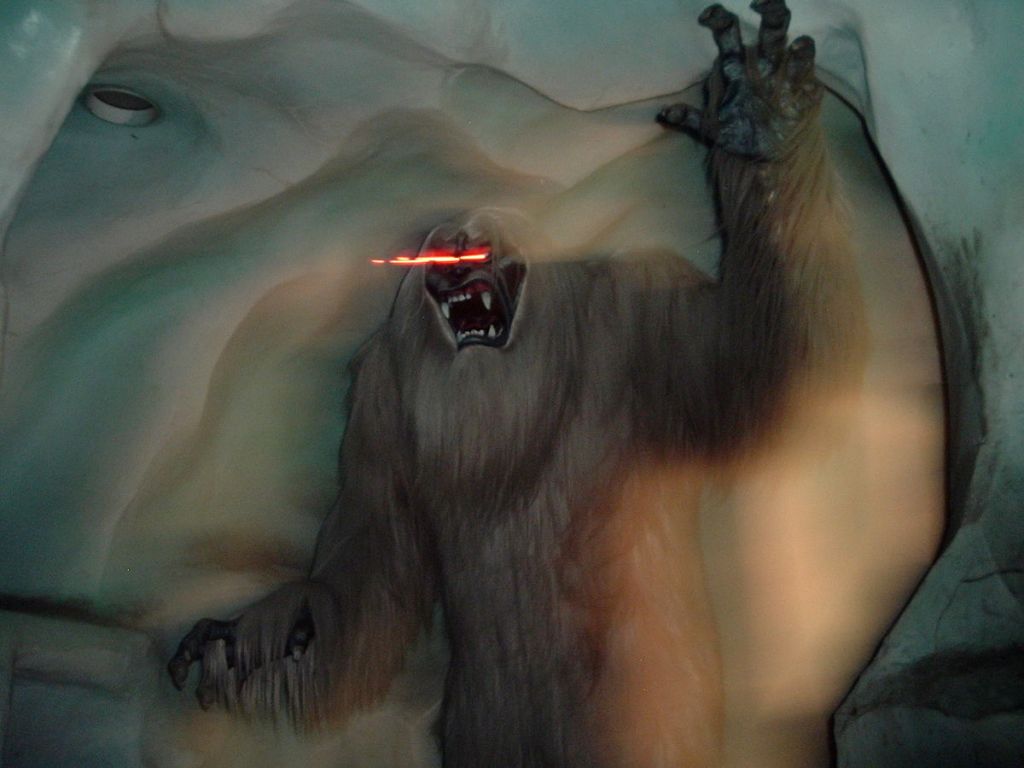
Tintin in Tibet, often regarded as his finest adventure, finds Tintin visiting Delhi in the company of Captain Haddock, that boisterous, drunken, bumbling, loquacious master mariner who frequently makes matters worse rather than better. They admire the Qutab Minar, as I did, awestruck, when I was in Delhi. I have since learned that the Qutab Minar was based on a tower in Afghanistan, the Minaret of Jam, which must be the most marvellous name ever devised for a tower. I imagine it is made from apricots and strawberries and I lick my lips as I contemplate it. But this has nothing to do with Tintin, who after leaving Delhi travels to Kathmandu and then overland into the mountains. He meets a Yeti and scares it off with the flash of his camera.
The Tintin comics always had a very substantial fanbase in India and letters from Indian readers often were mailed to Hergé. It is therefore unfortunate that a Tintin adventure set entirely in India doesn’t exist. Personally, I would be happy to see one set in Goa. In the 1990s, a nameless artist designed a series of t-shirts bearing images that are parodies of the Tintin book covers with the title “Tintin in Goa” on them. They show the intrepid reporter doing nothing intrepid at all, simply lounging about the beach or going for a joy ride on a motorcycle. Even a comic character as psychologically resolute as Tintin needs a holiday once in a while. What better place for a relaxing stay?
John Buchan ((1875–1940), Scottish peer, writer and editor ↩︎
Neville Vintcent (!902-1942), South African aviator ↩︎
Maurice Wilson (1898-1934), British soldier, mystic and aviator, who died trying to climb Mt Everest solo ↩︎
First mountaineer to ascend Mt Everest solo, without oxygen in 1970 ↩︎
Rhys Hughes has lived in many countries. He graduated as an engineer but currently works as a tutor of mathematics. Since his first book was published in 1995 he has had fifty other books published and his work has been translated into ten languages.
.
PLEASE NOTE: ARTICLES CAN ONLY BE REPRODUCED IN OTHER SITES WITH DUE ACKNOWLEDGEMENT TO BORDERLESS JOURNAL
Ujjal Dosanjh, former Minister from Canada and former Premier of British Columbia, discusses his autobiography, Journey After Midnight – A Punjabi Life: From India to Canada, and the need for a world with less borders. Click hereto read.
Professor Fakrul Alam discusses his new book of Tagore translations, Gitabitan: Selected Song-Lyrics of Rabindranath Tagore. Click here to read.
Translations
Tagore’sMusalmanir Galpa(A Muslim Woman’s Story) has been translated from Bengali by Aruna Chakravarti. Clickhere to read.
Masud Khan’s poem,In Another Galaxy, has been translated from Bengali by Professor Fakrul Alam. Click hereto read.
Wakeful Stays the Door, a poem by Munir Momin, has been translated from Balochi by Fazal Baloch. Click here to read.
Songs of Freedom: An Ordinary Taleis a narrative by Nandani based on her own experiences, translated from Hindustani by Janees. These narrations highlight the ongoing struggle against debilitating rigid boundaries drawn by societal norms, with the support from organisations like Shaktishalini and Pandies. Click hereto read.
“Other echoes
Inhabit the garden. Shall we follow?
Quick, said the bird, find them, find them…”
— TS Eliot, ‘Four Quartets: Burnt Norton’(1936)
Humans have always been dreamers, ideators and adventurers.
Otherwise, could we have come this far? From trees to caves to complex countries and now perhaps, an attempt to reach out towards outer space for an alternative biome as exploring water, in light of the recent disaster of the Titan, is likely to be tougher than we imagined. In our attempt to survive, to live well by creating imagined constructs, some fabrications backfired. Possibly because, as George Orwell observed with such precision in Animal Farm, some perceived themselves as “more equal”. Of course, his was an animal allegory and we are humans. How different are we from our brethren species on this beautiful planet, which can survive even without us? But can humanity survive without Earth? In science fiction, we have even explored that possibility and found home among stars with the Earth becoming uninhabitable for man. However, humanity as it stands of now, continues to need Earth. To live amicably on the planet in harmony with nature and all the species, including our own, we need to reimagine certain constructs which worked for us in the past but seem to have become divisive and destructive at this point.
Ujjal Dosanjh, former Minister in the Canadian cabinet and former Premier of British Columbia, in his autobiography, Journey After Midnight – A Punjabi Life: From India to Canada, talks of regionalism as an alternative to narrow divisive constructs that terrorise and hurt others. He writes in his book: “If humanity isn’t going to drown in the chaos of its own creation, the leading nations of the world will have to create a new world order, which may involve fewer international boundaries.” We have a candid conversation with him about his beliefs and also a powerful excerpt from his autobiography.
An interview with Professor Fakrul Alam takes us into Tagore’s imagined world. He discussed his new book of Tagore translations, Gitabitan: Selected Song-Lyrics of Rabindranath Tagore. He has brought out a collection of 300 songs translated to English. In a bid to emphasise an inclusive world, we also have a translation of Tagore’s ‘Musalmanir Galpa’ (A Muslim Woman’s Story) by Aruna Chakravarti. A transcreation of his poem, called ‘Proshno or Questions’ poses difficult challenges for humanity to move towards a more inclusive world. Our translation by Ihlwha Choi of his own Korean poem to English also touches on his visit to the polymath’s construct in the real world, Santiniketan. All of these centring around Tagore go to commemorate the month in which he breathed his last, August. Professor Alam has also translated a poem from Bengali by Masud Khan that has futuristic overtones and builds on our imagined constructs. From Fazal Baloch we have a Balochi translation of a beautiful, almost a surrealistic poem by Munir Momin.
We travel to Andaman with Mohul Bhowmick and further into Sierra with Meredith Stephens. Ravi Shankar travels back in nostalgia to his hostel and Kathleen Burkinshaw dives into the past — discussing and responding to the media presentation of an event that left her family scarred for life, the atomic holocaust of 1945 in Japan. This was a global event more than seven decades ago that created refugees among the survivors whose homes had been permanently destroyed. Perhaps, their stories are horrific, and heart wrenching like the ones told by those who suffered from the Partition of India and Pakistan, a divide that is celebrated by Independence Days for the two nations based on a legacy of rifts created by the colonials and perpetrated to this day by powerbrokers. Aysha Baqir has written of the wounds suffered by the people with the governance gone awry. Some of the people she writes of would have been refugees and migrants too.
A poignant narrative about refugees who flock to the Greek island of Lesbos by Timothy Jay Smith with photographs by Michael Honegger, both of whom served at the shelters homing the displaced persons, cries out to halt wars and conflicts that displace them. We have multiple narratives of migrants in this issue, with powerful autobiographical stories told by Asad Latif and Suzanne Kamata. Paul Mirabile touches on how humans have adopted islands by borrowing them from seas… rather an unusual approach to migrations. We have an essay on Jane Austen by Deepa Onkar and a centenary tribute to Chittaranjan Das by Bhaskar Parichha.
The theme of migrants is echoed in stories by Farouk Gulsara and Shivani Shrivastav. Young Nandani has given an autobiographical story, translated from Hindustani to English by Janees, in which a migration out of various homes has shredded her family to bits — a narrative tucked in Pandies Corner. Strange twists of the supernatural are woven into fiction by Khayma Balakrishnan and Reeti Jamil.
I would like to give my grateful thanks to our wonderful team at Borderless, especially to Sohana Manzoor for her fabulous artwork. Huge thanks to all our gifted contributors and our loyal readers. Borderless exists today because of all of you are making an attempt to bringing narratives that build bridges, bringing to mind Lennon’s visionary lyrics:
You may say I'm a dreamer
But I'm not the only one
I hope someday you'll join us
And the world will live as one