Sonar Tori(Golden Boat) is the titular poem of Tagore’s book of the same name. This celebrated collection was first published in 1894.
Art by Rabindranath Tagore. From Public domain
Amidst dense clouds and heavy downpour,
Without any hope of respite, I sit on the shore.
        Many sheaves of rice are piled in droves,
                 Housed in straw-built stores.
The river's edge is like a razor as the water flows,
                    Torrential and ferocious.
While the rice was being cut, it started to pour.

         I have a small field, and I work alone.
    The water sways on all sides and overflows.
           On the other shore’s horizon,
                     I see etched
              A village under the shadow of trees
                 Covered in misty morning clouds.
   On this shore, I am alone in this small field.

Someone is singing and rowing to this side.
    Looks like, I might know her.
           Without glancing around,
            She rows past in full sail.
            The waves helplessly
                  Part to give way—
      Looks like, I might know her.

Oh where do you row, to which foreign land?
       Come to me in your boat.
            Go wherever you want,
              Give to whoever you desire,
                      Only, do take
                       With a smile,
            My golden crop from this shore.

 Take as much as you wish into your boat.
      Is there anymore? — There’s none left.
                           By the river,
               I stashed into the boat
              All that I had done in my life
                  In bundles —
Now, please be merciful and take me along.

I have no place. The boat is too small.
It is filled with my crop of golden paddy.
                 Surrounded by heavy
                  Monsoon clouds,
                  I stayed by the
                     Lonely shore —
Whatever I had was taken away by the golden boat.
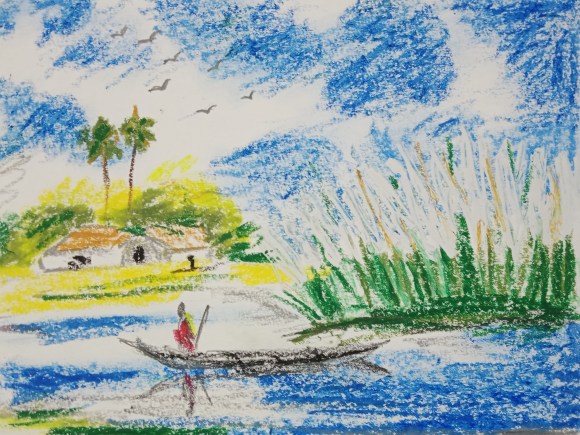
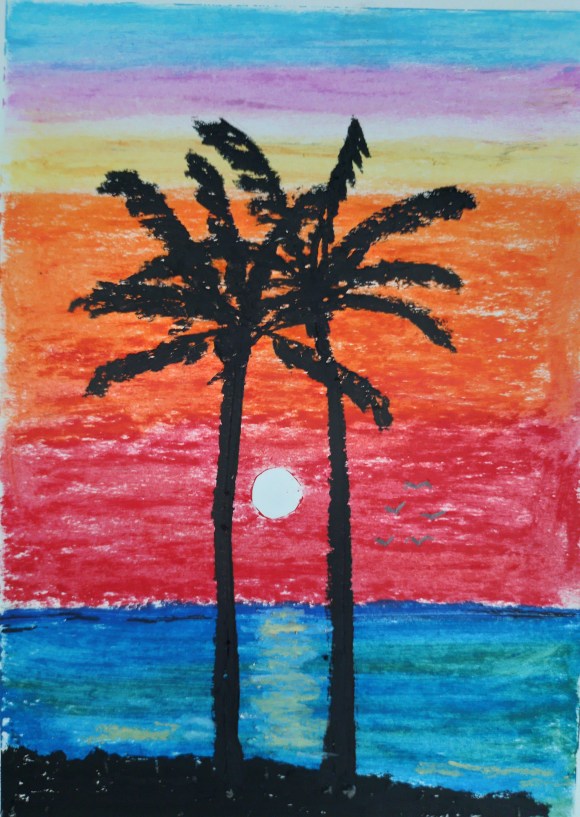
Art by Sohana
This poem has been translated from Bengali by Mitali Chakravartywith editorial input from Sohana Manzoor.
.
PLEASE NOTE: ARTICLES CAN ONLY BE REPRODUCED IN OTHER SITES WITH DUE ACKNOWLEDGEMENT TO BORDERLESS JOURNAL
In Did He Ever?,Rhys Hughes gives fun-filled verses on Lafcadio Hearn, a bridge between the East and West from more than a hundred years ago. Clickhere to read.
Dolly Narang muses on Satyajit Ray’s world beyond films and shares a note by the maestro and an essay on his art by the eminent artist, Paritosh Sen. Clickhere to read.
Poetry, prose — all art forms — gather our emotions into concentrates that distil perhaps the finest in human emotions. They touch hearts across borders and gather us all with the commonality of feelings. We no longer care for borders drawn by divisive human constructs but find ourselves connecting despite distances. Strangers or enemies can feel the same emotions. Enemies are mostly created to guard walls made by those who want to keep us in boxes, making it easier to manage the masses. It is from these mass of civilians that soldiers are drawn, and from the same crowds, we can find the victims who die in bomb blasts. And yet, we — the masses — fight. For whom, for what and why? A hundred or more years ago, we had poets writing against wars and violence…they still do. Have we learnt nothing from the past, nothing from history — except to repeat ourselves in cycles? By now, war should have become redundant and deadly weapons out of date artefacts instead of threats that are still used to annihilate cities, humans, homes and ravage the Earth. Our major concerns should have evolved to working on social equity, peace, human welfare and climate change.
One of the people who had expressed deep concern for social equity and peace through his films and writings was Satyajit Ray. This issue has an essay that reflects how he used art to concretise his ideas by Dolly Narang, a gallery owner who brought Ray’s handiworks to limelight. The essay includes the maestro’s note in which he admits he considered himself a filmmaker and a writer but never an artist. But Ray had even invented typefaces! Artist Paritosh Sen’s introduction to Ray’s art has been included to add to the impact of Narang’s essay. Another person who consolidates photography and films to do pathbreaking work and tell stories on compelling issues like climate change and helping the differently-abled is Vijay S Jodha. Ratnottama Sengupta has interviewed this upcoming artiste.
Reflecting the themes of welfare and conflict, Prithvijeet Sinha’s essay takes us to a monument in Lucknow that had been built for love but fell victim to war. Some conflicts are personal like the ones of Odbayar Dorj who finds acceptance not in her hometown in Mongolia but in the city, she calls home now. Jun A. Alindogan from Manila explores social media in action whereas Eshana Sarah Singh takes us to her home in Jakarta to celebrate the Chinese New Year! Farouk Gulsara looks into the likely impact of genetic engineering in a world already ripped by violence and Devraj Singh Kalsi muses on his source of inspiration, his writing desk. Meredith Stephens tells the touching story of a mother’s concern for her child in Australia and Suzanne Kamata exhibits the same concern as she travels to Happy Village in Japan to meet her differently-abled daughter and her friends.
As these real-life narratives weave commonalities of human emotions, so do fictive stories. Some reflect the need for change. Fiona Sinclair writes a layered story set in London on how lived experiences define differences in human perspectives while Parnika Shirwaikar explores the need to learn to accept changes set in her part of the universe. Spandan Upadhyay explores the spirit of the city of Kolkata as a migrant with a focus on social equity. Both Paul Mirabile and Naramsetti Umamaheswararao write stories around childhood, one set in Europe and the other in Asia.
Do pause by our contents page for this issue and enjoy the reads. We are ever grateful to our ever-growing evergreen readership some of whom have started sharing their fabulous narratives with us. Thanks to all our readers and contributors. Huge thanks to our wonderful team without whose efforts we could not have curated such valuable content and thanks specially to Sohana Manzoor for her art. Thank you all for making a whiff of an idea a reality!
Asha or Hope is a poem from Tagore’s collection, Kalpana (Imagination, 1900).
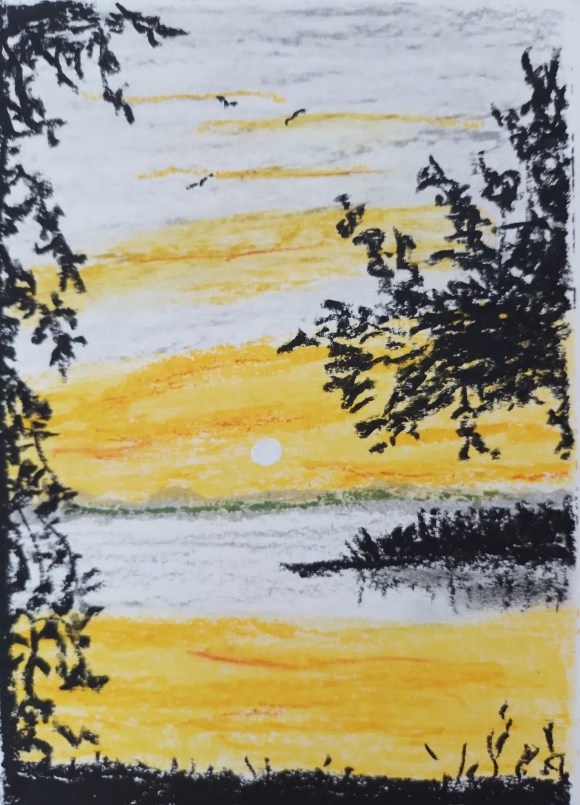
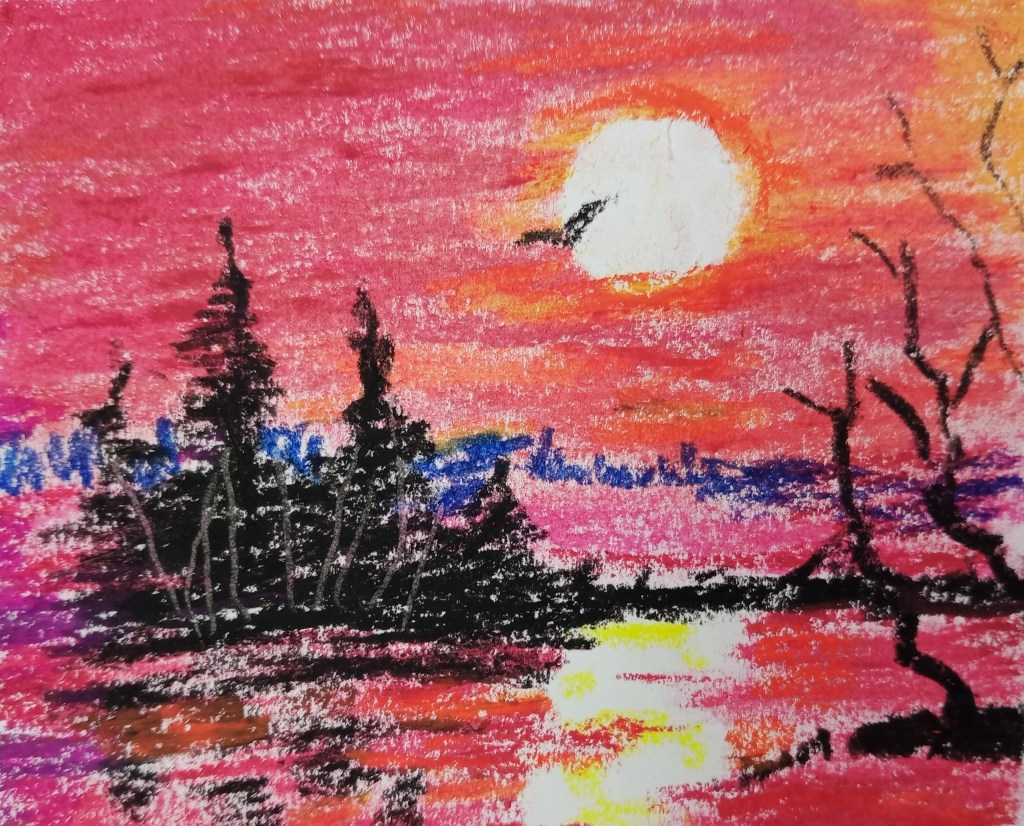
Art by Sohana Manzoor
HOPE

When the sun set on my life,
You welcomed me, O mother of mine.
Opening the doors of your inner sanctum,
You planted a kiss on my temples,
Lit a timeless lamp at my bedside. My neck
Was with a string of thorny blooms decked
To honour my songs. It hurt, it burnt —
Till taking off the wreath, you plucked
Each thorn off with your own hands,
Washed the dust. That garland —
With blooms now clean and white —
You draped on me as your eternal child.
My eyes opened as tears streamed.
I woke up to find it was only a dream!
This poem has been translated from Bengali by Mitali Chakravartywith editorial input from Sohana Manzoor.
.
PLEASE NOTE: ARTICLES CAN ONLY BE REPRODUCED IN OTHER SITES WITH DUE ACKNOWLEDGEMENT TO BORDERLESS JOURNAL
Poems of Longing by Jibananada Das homes two of his poems translated from Bengali by Professor Fakrul Alam. Clickhereto read.
Four cantos from Ramakanta Rath’sSri Radha, translated from Odiya by the late poet himself, have been excerpted from his full length translation. Clickhere to read.
Naramsetti Umamaheswararao takes us back to school. Click here to read.
Conversation
Ratnottama Sengupta talks to filmmaker and author Leslie Carvalhoabout his old film, The Outhouse, that will be screened this month and his new book, Smoke on the Backwaters. Clickhere to read.
The twenty fifth of Boisakh Draws my stream of birthdays Closer to death. Sitting on that wafting mat, an artisan is making a garland With small statuettes of Many mortal Rabindranaths.
Time travels on his chariot. The pedestrian lifts his bowl While walking, he gets a drink. When he finishes, he recedes into the darkness. His bowl is crushed to dust under the wheels. Behind him, Follows another with a new bowl. He savours a fresh flavour. Eventhough he has the same name, He is a different person.
Once I was a child. Within a few birthdays, An entity was sculpted Who no one recognised. The people who would have known him Are not around. The being of that child is non-existent, Nor does anyone remember him. He has disappeared with his little world. His past sorrows and joys Find no reverberations. The pieces of his broken toys Cannot be seen in the dust. He would sit and calf-like Gaze outside, with longing. His world was Framed by the opening in the window. His innocent glance Would halt at the Coconut trees along the fence. His evenings were steeped in fairytales. There was no insurmountable barrier Between the real and unreal. His mind would skip between The two effortlessly. In the gloaming of light and darkness, The shadows wrapped around spring, Drawing close with belonging. Those few birthdays, For some time, Were like a brightly lit island. But the past has sunk into the darkness of the ocean. Sometimes, during low tides, We can see that mountain peak. We can see a shoreline of blood-red corals.
Over time, The twenty fifth of Boishakh Assumed Vivid vernal hues. Youthfulness played a melody Of yearning on the ektara, Questing for intangible Invisible inspirations. Hearing that music over time, The celestial Lakshmi’s throne swayed She sent over Few of her ambassadors, To earth to spew colours On the palash woods, Enticing, alluring to forgetfulness. I have heard their voices speak softly. I understood some. Some I didn’t. I have seen dark eyelashes damp with wetness. I have seen lips tremble with unspoken agony. I have heard the tinkle of bracelets vacillate with eager surprise. Unbeknown to me, On the first conscious morning, Of the twenty fifth of Boisakh, They left behind a Garland of jasmines. My dream at dawn Was heady with their fragrance.
That birthday was youthful with Fairytales woven by communities and villages, Some we knew, some doubted. There, princesses with their hair undone Were sometimes asleep, Sometimes, they awoke in surprise Touched by magical golden wands. Over time, The ramparts that walled the Vernal pochisheBoishakh broke. The path laden with the sway of Bokul leaves Trembling shadows, Murmuring breeze, The lovelorn kokil’s pleading call That turns the morning to afternoon, The bees buzzing their wings Towards the invisible scent of nectar -- That grassy path arrived At the stone paved road of adulthood. The ektara that played the haunting melody In youth changed its old string for new. That twenty fifth of Boisakh, Exposed me To a rough road, Bore me like a wave to the ocean of humanity. Morning and night, I have woven tunes and Caste a net mid-river – Some have been caught, Some have fled the fragile net.
Sometimes, the day has been faint, Motivation disappointed, Sadness filled the mind. Unexpectedly, in the midst Of such depression, I found Inspiration in Amravati’s mortal idol. They beautify the world, Offering vessels of nectar To the weary. They insult fear with billowing Waves of laughter. They fan flames of courage From ash-smothered smouldering fires. They arouse celestial voices to ignite meditative words. They have lighted the flame in my nearly suffused lamp. They have given melody to the strings with their cool breeze. They have garlanded me with honour On the twenty fifth of Boishakh. My songs, my words, Still reverberate with their Magical touch.
From then, in the battle of life, Conflicts raged like Thundering clouds. I had to abandon the ektara. Sometimes, I had to pick up the trumpet. Under the hot mid-day sun, I had to take on A battle. My feet are injured with thorns, My wounded heart bleeds. The Merciless harshness of waves Have beaten my boat, left and right, Muddying with criticism, Drowning with transactions. Hatred and love, Envy and friendship, Music and courage, My world has been stirred By the mists of all these emotions.
In the midst of this revolutionary-crisis, As the twenty fifth of Boishakh grows older, You have all come to me. Do you know – Despite my attempts, much is still left unexpressed, Much is in disarray, much is neglected?
From inside and outside, Good and bad, clear and unclear, famed and unknown, A vain, complicated character, You have created an idol With your regard, your love, Your forgiveness. Today you have brought this garland, I accept this as a recognition of The aging twenty-fifth of Boishakh, As an acknowledgment of my years. Heartfelt blessings from me to you. As I prepare to take leave, my human idol Remains in your heart. As the future is unknown, I cannot be arrogant.
Then give me your leave In this lifetime from all relationships Strung with black and white threads. Lonely, nameless, solitary – Let me look for a melody amidst Many tunes, many instruments, In the depth of all songs.
*Ektara-Bengal folk instrument
Palash flowersKokils or Asian KoelsFrom Public Domain
Tagore celebrated his birthdays by the Bengali Calendar on Pochishe Boisakh with poetry. This poem was dedicated to Amiya Chandra Chakravarty (1901-1986), a critic, academic and poet. He was a close associate of Tagore. The Pochishe Boisakh arrived in late spring as he mentions in this poem.
From Public Domain: The long stringed instrument is an ektara and the other another folk instrument called dugdugi
This poem has been translated from Bengali by Mitali Chakravartywith editorial input from Sohana Manzoor.
.
PLEASE NOTE: ARTICLES CAN ONLY BE REPRODUCED IN OTHER SITES WITH DUE ACKNOWLEDGEMENT TO BORDERLESS JOURNAL
Jibanananda Das’ poems on war and for the common masses have been translated from Bengali by Professor Fakrul Alam. Click here to read.
A Scene with an Aged Queen, a poem by Ihlwha Choi has been translated from Korean by the poet himself. Clickhere to read.
Tagore’sEsho Bosonto, Esho Aj Tumi(Come Spring, Come Today) has been translated from Bengali by Mitali Chakravarty. Click here to read.
Pandies’ Corner
For Sanjay Kumar: To Sir — with Love has been written for the founder of pandies’ theatre by Tanvir, a youngster from the Nithari village where pandies’ worked with traumatised victims. Over time, these kids have transcended the trauma to lead fulfilling lives. The late Sanjay Kumar passed on this January. This is a tribute to him by one of his students. It has been translated from the Hindustani original by Lourdes M Surpiya. Click here to read.
Esho Bosonto, Esho Aj Tumi (Come Spring, Come Today) was part of Tagore’s collection called Smaran (Remembrances) in 1903. Here is a translation of the poem.
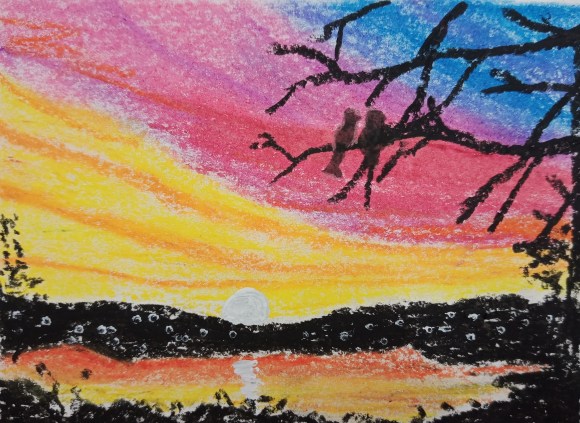
Art by Sohana Manzoor
O Spring, come today,
Welcome to my world steeped
In untidy darkness and emptiness.
The flowers remain unplucked.
Mock at the poverty
And disarray if you must.
Still O Spring, today,
Do visit my home.
Today, all my windows—
all of them — are open.
The day stretches without hindrances.
There is no hope, no work.
The heart swings as
All the windows stay open
In the empty house.
For many days, laughter and tears
Have not been heard here.
Let them find freedom in your skies.
Let them breathe your breeze.
Let them be reborn with
Blooms of bokul and champa.
The past is over —
all its tears and laughter.
Revel with your festivities
Amidst the wounds in my heart.
Play your flute.
Blossom in abundance.
Let all the returning birds
Sing in chorus.
Celebrate your vernal festivals
Tuning in with my pain.
I will heal with the joy
Of your celebrations.
The heaven and Earth will
Come together as you celebrate.
They will laugh at death’s door
Repeatedly. Such festivities
Will heal, touch deep within
My being to find closure.
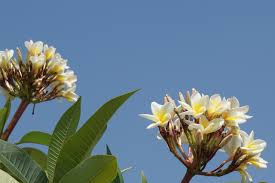
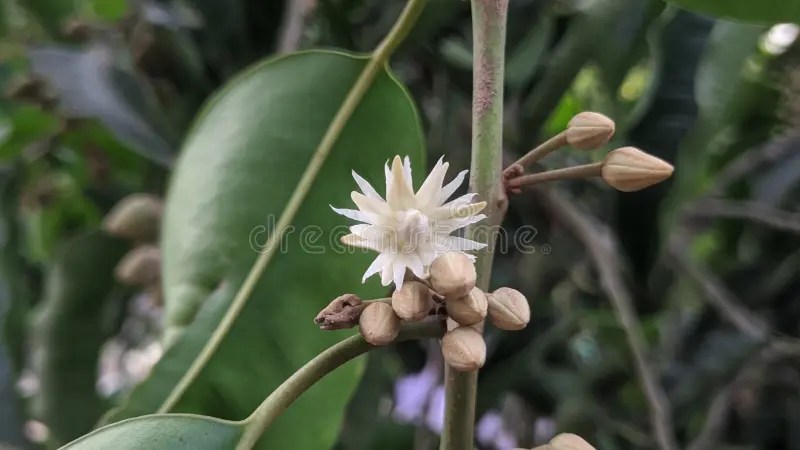
Champa FlowersBokul Blooms From Public Domain
This poem has been translated from Bengali by Mitali Chakravartywith editorial input from Sohana Manzoor
.
PLEASE NOTE: ARTICLES CAN ONLY BE REPRODUCED IN OTHER SITES WITH DUE ACKNOWLEDGEMENT TO BORDERLESS JOURNAL
Aparna Vats shares a narrative around female infanticide centring her story around a BBC interview and an interview with the journalist who unfolded the narrtive. Click here to read.
Dolly Narang recounts how she started a gallery more than four decades ago and talks of her encounter with world renowned artist, MF Husain. Click hereto read.
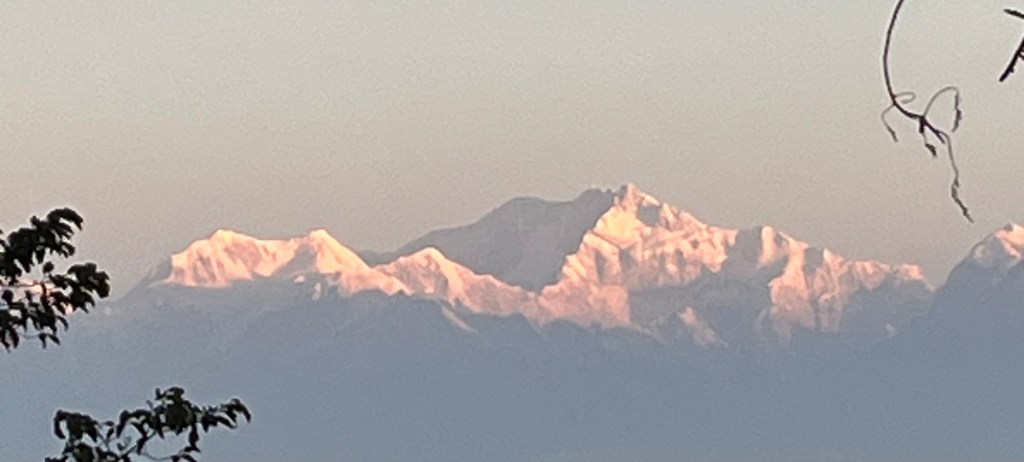
Ghoom, Darjeeling, is almost 2.5 km above sea level. Standing in the rarified air of Ghoom, you can watch the Kanchenjunga turn gold as it gets drenched in the rays of the rising sun. The phenomenon lasts for a short duration. The white pristine peak again returns to its original colour blending and disappearing among the white cirrus clouds that flit in the sky. Over time, it’s shrouded by mists that hang over this region. The event is transitory and repeats itself on every clear morning like life that flits in and out of existence over and over again…
Witnessing this phenomenon feels like a privilege of a lifetime as is meeting people who shine brightly and unusually, like the Kanchenjunga, to disappear into mists all too early. One such person was the founder of pandies’ 1 who coordinated the pandies’ corner for Borderless Journal, the late Sanjay Kumar (1961-2025). The idea of starting this column was to bring out the unheard voices of those who had risen above victimhood to find new lives through the work done by pandies’. In his book, Performing, Teaching and Writing Theatre: Exploring Play, published by Cambridge Scholars Publishing, he described his scope of work which in itself was stunning. His work ranged from teaching to using theatre and play to heal railway platform kids, youngsters in Kashmir, the Nithari survivors and more — all youngsters who transcended the scars seared on them by violations and violence. We hope to continue the column in coordination with pandies’.
Another very renowned person whose art encompassed a large number of social concerns and is now lost to time was the artist, MF Husain (1915-2011). This issue of Borderless is privileged to carry an artwork by him that has till now not been open to the public for viewing. It was a gift from him to the gallerist, Dolly Narang, on her birthday. She has written nostlgically of her encounters with the maestro who walked bare-feet and loved rusticity. She has generously shared a photograph of the sketch (1990) signed ‘McBull’ — a humorous play on his first name, Maqbool, by the artist.
Drenched with nostalgia is also Professor Fakrul Alam’s essay, dwelling on more serious issues while describing with a lightness his own childhood experiences. Many of the nonfiction in this issue have a sense of nostalgia. Mohul Bhowmick recalls his travels to Bhutan. And Prithvijeet Sinha introduces as to a grand monument of Lucknow, Bara Imambara. Lokenath Roy takes us for a stroll to Juhu, dwelling on the less affluent side. Suzanne Kamata describes her source of inspiration for a few stories in her new book, River of Dolls and Other Stories. A darker hue is brought in by Aparna Vats as she discusses female infanticide. But a light sprays across the pages as Devraj Singh Kalsi describes how his feisty grandmother tackled armed robbers in her home. And an ironic tone rings out in the rather whimsical musing by Farouk Gulsara on New Year days and calendars.
Everyone was at each other's throats, insistent that the world was ending. But I felt differently, as though I were just beginning, or just beginning again…
Poets, like visionaries across time and cultures, often see hope where others see despair. And humour always has that hum of hope. In a lighter tone, Rhys Hughes makes one laugh or just wonder as he writes:
I once knew a waiter who jumped in alarm when I somersaulted across his restaurant floor after entering the front door on my way to my favourite table: he wasn’t able to control his nerves and the meal he was bearing ended up on the ceiling with people staring as it started to drip down.
Translations feature poetry. Lyrics of Nazrul (1899-1976) and Tagore (1861-1941) appear together in Professor Alam’s translations of their love songs from Bengali. He has also transcreated a Bengali poem by Jibananada Das (1899-1854). Profoundly philosophical lines by Atta Shad (1939-1997) in Balochi has been rendered to English by Fazal Baloch for his birth anniversary this month. Ihlwah Choi has translated his poem from Korean, taking up the poignant theme of transience of life. A Tagore poem called ‘Kheya (Ferry)’, inspired by his rustic and beautiful surroundings, has been brought to us in English.
Huge thanks to all our contributors, the Borderless team for all these fabulous pieces. Thanks to Gulsara, Kamata, Bhowmick and Sinha for the fabulous photography by them to accompany their writings. Heartfelt gratitude to Sohana Manzoor for her cover art and to Dutta for her artwork accompanying her poem. Without all your efforts, this issue would have been incomplete. And now, dear readers, thank you for being with us through this journey. I turn the issue over to all of you… there is more as usual than mentioned here. Do pause by our contents page.
pandies’ was started in 1987. It’s spelled with a small ‘p’ and the name was picked by the original team. Read more about pandies’ by clicking here. ↩︎





 Borderless