Fakrul Alam writes nostalgically of his visits to Feni in Noakhali, a small town which now suffers from severe flooding due to climate change. Click here to read.
Rakhi Dalal reviews Swadesh Deepak’s A Bouquet of Dead Flowers translated from Hindi by Jerry Pinto, Pratik Kanjilal, Nirupama Dutt, Sukant Deepak. Click here to read.
Imagine the world envisioned by John Lennon. Imagine the world envisioned and partly materialised by Tagore in his pet twin projects of Santiniketan and Sriniketan, training institutes made with the intent of moving towards creating a work force that would dedicate their lives to human weal, to closing social gaps borne of human constructs and to uplifting the less privileged by educating them and giving them the means to earn a livelihood. You might well call these people visionaries and utopian dreamers, but were they? Tagore had hoped to inspire with his model institutions. In 1939, he wrote in a letter: “My path, as you know, lies in the domain of quiet integral action and thought, my units must be few and small, and I can but face human problems in relation to some basic village or cultural area. So, in the midst of worldwide anguish, and with the problems of over three hundred millions staring us in the face, I stick to my work in Santiniketan and Sriniketan hoping that my efforts will touch the heart of our village neighbours and help them in reasserting themselves in a new social order. If we can give a start to a few villages, they would perhaps be an inspiration to some others—and my life work will have been done.” But did we really have a new social order or try to emulate him?
If we had acted out of compassion and kindness towards redefining with a new social order, as Miriam Bassuk points out in her poem based on Lennon’s lyrics of Imagine, there would be no strangers. We’d all be friends living in harmony and creating a world with compassion, kindness, love and tolerance. We would not have wars or regional geopolitical tensions which act against human weal. Perhaps, we would not have had the issues of war of climate change take on the proportions that are wrecking our own constructs.
Natural disasters, floods, fires, landslides have affected many of our lives. Bringing us close to such a disaster is an essay by Salma A Shafi at ground level in Noakhali. More than 4.5 million were affected and 71 died in this disaster. Another 23 died in the same spate of floods in Tripura with 65,000 affected. We are looking at a single region here, but such disasters seem to be becoming more frequent. And yet. there had been a time when Noakhali was an idyllic vacation spot as reflected in Professor Fakrul Alam’s nostalgic essay, filled with memories of love, green outdoors and kindnesses. Such emotions reverberate in Ravi Shankar’s account of his medical adventures in the highlands of Kerala, a state that suffered a stupendous landslide last month. While Shafi shows how extreme rainfall can cause disasters, Keith Lyons writes of water, whose waves in oceanic form lap landmasses like bridges. He finds a microcosm of the whole world in a swimming pool as migrants find their way to New Zealand too. Farouk Gulsara muses on kindness and caregiving while Priyanka Panwar ponders about ordinary days. Saeed Ibrahim gives a literary twist to our musings. Tongue in cheek humour is woven into our nonfiction section by Suzanne Kamata’s notes from Japan, Devraj Singh Kalsi’s piece on premature greying and Uday Deshwal’s paean to his sunglasses!
In translations, we have Nazrul lyrics transcreated from Bengali by Professor Alam and poetry from Korean by Ihlwha Choi. We pay our respects to an eminent Balochi poet who passed on exactly a year ago, Mubarak Qazi, by carrying a translation by Fazal Baloch. Tagore’s Suprobhat (Good morning) has been rendered in English from Bengali. His descriptions of the morning are layered and amazing — with a hint of the need to reconstruct our world, very relevant even today. A powerful essay by Tagore called Raja O Praja(The King and His Subjects), has been translated by Himadri Lahiri.
Our fiction hosts two narratives that centre around childhood, one by Naramsetti Umamaheswararao and another by G Venkatesh, though with very different approaches. Mahila Iqbal relates a poignant tale about aging, mental health and neglect, the very antithesis of Gulsara’s musing. Paul Mirabile has given a strange story about a ‘useless idler’.
A short story collection has been reviewed by Rakhi Dalal, Swadesh Deepak’s A Bouquet of Dead Flowers, translated from Hindi by Jerry Pinto, Pratik Kanjilal, Nirupama Dutt, Sukant Deepak. Somdatta Mandal has written about a book by a Kashmiri immigrant which is part based on lived experiences and part fictive, Karan Mujoo’s This Our Paradise: A Novel. Bhaskar Parichha has reviewed Ayurveda, Nation and Society: United Provinces, c. 1890–1950by Saurav Kumar Rai, a book which shows how healthcare was even a hundred years ago, politicised. Meenakshi Malhotra has reviewed Anuradha Marwah’s novel, Aunties of Vasant Kunj, of which we also have an excerpt. The other excerpt is from Mineke Schipper’s Widows: A Global History. Ratnottama Sengupta converses with Reba Som, author of Hop, Skip and Jump; Peregrinations of a Diplomat’s Wife.
We have more content that adds to the vibrancy of the issue. Do pause by this issue and take a look. This issue would not have been possible without all your writings. Thank you for that. Huge thanks to our readers and our team, without whose support we could not have come this far. I would especially like to thank Sohana Manzoor for her continued supply of her fabulous and distinctive artwork and Gulsara for his fabulous photographs.
Let us look forward to a festive season which awakens each autumn and stretches to winter. May we in this season find love, compassion and kindness in our hearts towards our whole human family.
In a tiny shop located within a narrow lane packed with people, sat Rakesh, in his late seventies, though he couldn’t say exactly. They didn’t keep proper records of birthdays back then. He sat staring outside as people pushed past one another, and over their heads, thick black electric cables coiled around one another and around long poles, forming a black canopy. He remained motionless, with glazed eyes.
Someone entered the shop, looked at him, and said something.
“What?” Rakesh muttered, coming out of his thoughts.
It was Nitesh, who had been running a food stall across the street for the past five months. It was called “Nitesh Snacks”.
“I came to have this watch repaired. It fell yesterday while I was going back home, and the glass broke.”
He put a watch on the counter. Rakesh picked it up and glanced thoughtfully at it. Then he nodded to himself and put it aside.
“I will give it to you tomorrow.”
Nitesh stood there hesitantly for a while, then said, “Arun ji was a very nice man. It’s a pity that he…died.”
Rakesh nodded again and said nothing. His shoulders seemed to weigh him down. His head was covered with thick grey hair, dyed bright orange with henna. He wore an oversized faded blue shirt that hung over his thin frame, and it was clear that he had forgotten to shave that morning. Nitesh looked worriedly at him. Things weren’t going well, and now that Arun ji was dead, they would likely worsen.
*
Rakesh walked into his single-floor house, which was a short distance from his watch repair shop. He remembered how he had started that shop. He had painted it himself, had the shutters fitted, and then began repairing watches. It had cost him plenty to buy that tiny room on the main street, but it paid well. People came frequently, and soon he could start selling clocks and watches. The shop was named after his late father, “Narayan Watch Repairing”. He remembered covering every shred of the wall with clocks- all colours and shapes.
He went right towards the back of the house, down a long narrow corridor, to a room that was visibly separated from all the other rooms. He sat down on the bed, thinking about when it had all started—when he became like this. It was probably when Arun died…no, that happened two days ago…it was when his wife died. Or around that time, or perhaps even before. He couldn’t think straight. He sat motionless, with a deep feverish glow in his eyes.
Someone looked into the room. It was his son with a big smile on his face. “How was work?”
Rakesh said nothing, and there was a pause. “You must miss your friend.”
Again, nothing.
“We all have to go sometime.”
This time, Rakesh just looked at him thoughtfully. His son nodded to himself and then said, “Sold any clocks today?”
When there was no reply, he added, “Well, that business is no longer as good. A few clocks, that’s all we can sell nowadays. Everyone has clocks on their smartphones. Who needs them now? That’s why we decided to shut it down. You do remember that we have only got a month left? I hope you have started wrapping everything up.”
His son had an easy smile on his face ever since he had entered the room. He looked at him for a moment before adding, “If you need any help at all while closing down, you can always call me.”
Rakesh nodded but said nothing. His son kept talking and then left after a while. Yes, he remembered now. He remembered how it had all started. It had started soon after his son got married. They began quarrelling frequently, especially Rakesh’s wife and their son. It felt like they were always in their son’s way, like they were always doing things to disrupt his life. He remembered his wife crying all night because of their son. He didn’t say anything much until she died. He did not like quarrelling. Many things displeased him, but he learned to remain quiet or use very few words. It had still not been as bad. At least, he still had some respect around the house.
Then one day, his son had seemed to turn over a new leaf. He was always there for him suddenly. He took an interest in the shop. He sat and chatted with him in the evenings over a cup of tea. Rakesh liked this change. Over several months, he came to trust his son, feeling a sense of satisfaction when he looked at him. There were disagreements, of course, but his son invariably seemed to come to his senses and apologised.
Rakesh couldn’t remember how long this harmony continued, but he did remember when it came to an end. It was a short time after he signed the documents that transferred all his property to his son. After that, things began to change. His son no longer took an interest in the shop. They barely spoke anymore. Rakesh’s health also started to deteriorate. Instead of taking more care of him, his son had a room built at the far end of the house. This room was bare except for an old wooden bed and an attached bathroom. It was in this room that Rakesh spent most of his time while he was in the house. His food was sent to the room. It always looked like leftover food from yesterday. Whenever they quarrelled, his son would always end the argument by giving the example of their old neighbour, who was sent to live in a temple by his children because he became ‘too much of a burden.’
He had lived like that for about a year now, missing his wife terribly. No one spoke to him in the house. His only solace was his shop. He eagerly spoke to the customers, absorbing himself in his work. His closest friend, Arun, was a barber whose small salon was right next to the watch repair shop. They had known each other for forty years. Every day, after closing up, they sat and chatted for about an hour. Arun was the one person he could always talk to, the one person who always shared his sorrow, and now Arun was dead. He had no one. At night, he would lie in bed, hearing laughter drift from the house. There was no outlet for his sorrow. It was bottled up inside him, and he felt that it was slowly poisoning him. His feet felt heavy, his breathing was often laborious, and he sometimes heard his wife calling out to him in the middle of the night. Was he going mad? Perhaps he was, and this month, his son’s news had been the final nail in his coffin.
His son had come bustling into the dingy room with a smile and told him that he urgently needed some money, then he had abruptly began talking about the watch shop—how it was not doing well, how people no longer cared about watches anyway, and how Rakesh was getting old and needed some rest. Then he explained that these things had prompted him to sell the shop, and they were required to clear out within two months.
There had been heated arguments between them. Rakesh had refused to speak to him for several days until one day, his son had assumed that his silence meant that the matter was settled. That there was no longer any need to discuss the issue anymore. Rakesh had become quieter than ever before. All he did was nod, as though if he was careful enough to maintain his stubborn silence, then perhaps someone out there would miss his words. Would miss them enough to make things right again. He would have a function in this world—a purpose. He would not be a burden on anyone. His son would miss speaking to him. They would once again sit in the evenings with a cup of tea and chat, not because he wanted his property, but for Rakesh’s sake. Because Rakesh would never be a burden. No one could make that happen to him.
*
Rakesh woke up and stared at the ceiling for several minutes before he realised that someone was in the room. Someone was speaking to him. He sat up and looked thoughtfully at his son. He was still too disoriented to hear him.
“You still haven’t done a thing…I can’t believe…we only have ten days left…do you realise how less time that is?” his son said.
Rakesh thought that he might be in a dream, but then he remembered that he hadn’t had a dream for years. He closed his eyes tightly and opened them again. It became clearer.
“You had two months to clear the shop. That’s more time than necessary in the first place, and today I went there in the morning to have a look, but not a thing has changed! I thought I could trust you with a simple task like this. How can I handle everything on my own? Haven’t I always taken proper care of you? But okay now, tomorrow I am coming down myself to start clearing things up. This has gone on for long enough. I know you have been handing over all the earnings from the shop to Arun’s old widow. I know that Arun was very poor, but we can’t really afford to be so generous if we are poor ourselves, can we? I tolerated all that, but you couldn’t even handle one small thing.”
Rakesh didn’t know how long his son had been speaking, but he understood what was being said. He did not reply at all and waited until his son stormed off.
He got his shirt off the hook and put it on. He stood in the middle of the room for a moment and then left the house. He walked for a long time to nowhere in particular. He had not eaten anything since the morning, but he didn’t feel hungry anyway.
He knew his son was lying. The shop had been doing just fine. His son just wanted to sell it off and get his hands on the money. Worst of all, Rakesh was powerless. Tomorrow, his son would come to start clearing up the shop, and after ten days, it would belong to someone else. He would probably spend the remainder of his days in the little cell his son had built as far away from their lives as possible, waiting for death. Waiting for time to pass.
He looked around and realised that he was near his shop. It was dusk now. In the deep orange sky, some birds were on their way home in a v-formation. How long had he walked? He felt drained, and his heart was fluttering slightly. He stared at the shop front for a while, waiting for his breathing to become normal again, but it didn’t. He then began to open the shutter, but it felt heavier than usual. By the time it was done, he was sweating profusely. Once inside, he collapsed into his chair behind the counter after locking the door from inside.
His mind was blank for a while. He was only aware of how tired his body was. Then he stared thoughtfully at each and every corner of the shop. He would leave this little space after ten days, and it would continue to exist without him. It might stand there for a hundred more years. He sometimes wished he could be a building. At least they were not a burden on anyone. They got to fulfil a certain function. He might leave, but this shop would continue to be a room. It might not be a watch repair shop, but it would still have a function. No one thought buildings were a burden. In fact, people fought with one another to get ownership. Wasn’t that what had happened to him? His son had lied and cheated to get his property, and it wasn’t even much at that.
He had thought that he would feel better after sitting down, but instead, his head had started spinning slightly. He looked at the walls. Each of them were covered with clocks from top to bottom. Normally, they would please him, the culmination of lifelong hard work. Now, looking at them, they all reminded him that time was passing. That the next day, he would have to pack each one of them. That ten days would pass soon, and after that all he would ever do would be to wait for time to pass. He could not bear the thought of packing the clocks up.
He realised that these were the last few moments of his old life, and they were passing really fast. Placing his palms on the counter, he hoisted himself out of the chair and stood for a moment, breathing hard. Then he walked over to the first clock on the wall—a bright yellow square-shaped one—and took it down from the hook. He stared at the minute hand for a while and then smashed it violently on the floor. Then he began moving faster, even though he still felt weak, but his eyes gleamed with determination. He went around smashing every clock. They all reminded him that time was flying by, leaving him behind, and for once, he wanted it to stop at the threshold of his shop. For once, he wanted to be free from the burden of the next day.
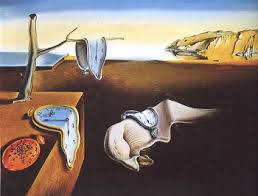
The Persistence of Memory by Salvador Dali (1904-1989). From Public Domain
Maliha Iqbal is a student and writer from Aligarh, India. Many of her short stories, write-ups, letters and poems have been published on platforms Live Wire (The Wire), Cerebration, Kitaab, Countercurrents, Freedom Review, ArmChair Journal, Counterview, Writers’ Cafeteria, Café Dissensus, Borderless Journal and Indian Periodical. She can be reached at malihaiqbal327@gmail.com.
.
PLEASE NOTE: ARTICLES CAN ONLY BE REPRODUCED IN OTHER SITES WITH DUE ACKNOWLEDGEMENT TO BORDERLESS JOURNAL
Born free
As free as the wind blows
As free as the grass grows
Born free to follow your heart
-- Born Free by Andy Williams
These are lines from a song by Andy Williams, a pop icon whose song was the theme song in Born Free, a film made in 1966 about a lion cub bred in captivity, who had to be trained to live free even though she was born free. Does that apply to all living creatures, including humans? What is freedom? And who is free? Does political independence mean ultimate freedom?
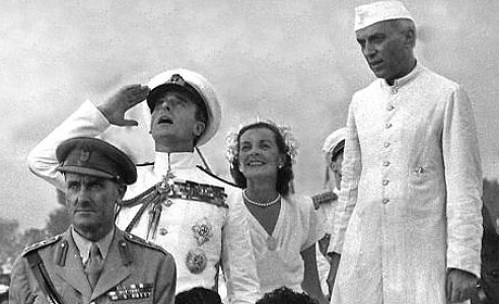
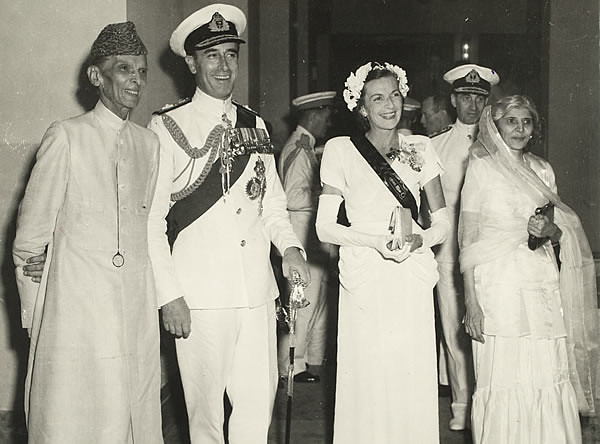
We celebrate political ‘freedom’ of countries as national or independence days. Sometimes, as in the case of India and Pakistan, independent nationhood can be laced with bloodshed and grief . Two new countries were born of a single colonial India in the August of 1947. Pakistan awoke as a country on the midnight of 14th August and India called the late hour 15th August. Nehru’s speech has become an iconic one: “Long years ago we made a tryst with destiny, and now the time comes when we shall redeem our pledge… At the stroke of the midnight hour, when the world sleeps, India will awake to life and freedom…”
Lord & Lady Mountbatten with Nehru on 15th August 1947
Lord & Lady Mountbatten with Jinnah and his sister, Fatima, 14 August 1947.
Lord Mountbatten was the last Viceroy of colonial India. Courtesy: Creative Commons
Common people while crossing the boundary line between the two new nations lost their lives, homes and lands over the mob violence. The resentment still simmers in a few hearts. In an attempt to find peace and amity, we have put forward a combined selection of writing from across borders, words devoid of angst or hate, words that look for commonality and harmony.
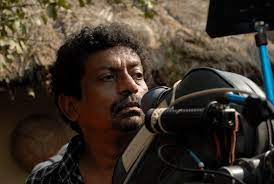
In Conversation with Goutam Ghose, multiple award-winning filmmaker, writer, actor discusses his films, film-books and journey as a humanitarian artiste who makes cross cultural films across all boundaries. Click here to read.
In The Idea of India: Bharata Bhagya Bidhata – The Making of a MotherlandAnasuya Bhar explores the history around the National Anthem of India which started as a song, composed by Tagore. Only the first paragraph of the whole song in Bengali was adapted as the National Anthem. We include the translations of the complete song both by Tagore and by Aruna Chakravarti. Click here to read.
In An August Account of ‘Quit India’ MovementRatnottama Sengupta, translates from Bengali the excerpts recorded by Sandhya Sinha (1928-2016), who witnessed an upsurge in the wake of the Quit India Movement. Click here to read.
In Seventy-four Years After Independence…“Mil ke rahe gi Azadi”(We will get our Freedom), Aysha Baqir muses on Pakistani women’s role in the independence movement and their current state. Click here to read.
In 2147 without Borders, Devraj Singh Kalsi meanders over Partitions, borders and love stories and looks for an amicable solution in a happier future. Click here to read.
Fiction
Bundu, Consoler of the Rich is a story based on memories of Partition by Nadir Ali, translated from Punjabi by Amna Ali. Click here to read.
In The Best Word, Maliha Iqbal explores the impact of wars in a spine chilling narrative, journeying through a range of emotions. Click here to read.
In Do Not Go!, Moazzam Sheikh explores dementia, giving us a glimpse of the lives of Asian immigrants in America. Click here to read.
In The Chained Man Who Wished to be Free, Sunil Sharma explores freedom and democracy versus conventions. We are left wondering is this the freedom we fought for? Click here to read.
Goutam Ghose, multiple award-winning filmmaker, writer, actor discusses his films, film-books and journey as a humanitarian artiste. Click here to read.
DrKirpal Singh, a well-known poet and academic from Singapore, talks of his life and times through colonial rule, as part of independent Malaya, and the current Singapore. Click here to read.
Ratnottama Sengupta translates from Bengali the excerpts recorded by Sandhya Sinha (1928-2016), who witnessed an upsurge in the wake of the Quit India Movement, part of India’s struggle against colonial rule. Click here to read.
‘Tran’by Tagore translated from Bengali to English by Mitali Chakravarty, art and editing by Sohana Manzoor for Borderless Journal. Click here to read.
Anasuya Bhar explores the history of the National Anthem of India, composed by Tagore in Bengali and translated only by the poet himself and by Aruna Chakravarti. Click here to read.
John Herlihy explores the magnificent sites of Mandalay in company of a Slovenian friend in the first episode of his quartet on his Myanmar. Click here to read.
Bhaskar’s Corner
In Tagore & Odisha, Bhaskar Parichha explores Tagore’s interactions with Odisha, his impact on their culture and the impact of their culture on him. Click here to read
“Mil ke rahe gi Azadi”(We will get our Freedom) by Aysha Baqir muses on Pakistani women’s role in the independence movement and their current state. Click here to read.
Beyond The Himalayas by Goutam Ghose, based on a five-part documentary taking us on a journey along the silk route exploring parts of Pakistan and China. Click here to read.
A solemn boy of seven was busily writing away without a thought about the world. He was perspiring and his clothes were damp. There were beads of sweat on his forehead as he knitted his brows in concentration.
Suddenly a woman in her thirties came into the room and looking at him said “Samad! Take a break! You ought to be tired by working like that since morning and that too with a power cut! It’s so hot!”
“Mother! Please don’t worry about me, the heat doesn’t bother me” replied the boy with an earnest look on his face.
His mother merely stared at him, mumbled “what a child!” and left. She rushed to a quiet corner of the house with tears welling up in her eyes. Once she was out of earshot, she began weeping and muttering over and over again, “Oh! How the child loves to study! If only I could give him a better future! His books are his only solace from the grief and miseries of his life!” She soon stopped herself as she recalled her husband’s last words before he left the world. “You should be a source of inspiration, courage and love to Samad, never show your sorrow, face your troubles with a smile.” Yes! That’s what he said and that’s what I’ll do! She thought and smiled suddenly which lit up her face.
Samad lived in a war-torn country. Many had rebelled against the government and the country was at civil war. There was an epidemic of poverty, and all had fallen prey to this.
It was nearly 9 O’clock in the evening when Samad silently slipped out of the back door of his house and hurried through the lonely streets to a tiny, dilapidated building tucked away in a corner. A contented look came over his face as he entered the building and greeted his educator.
Ah! That was his school! How he loved going there! Samad went to school in the silence and aloofness of night — most children in the country did because of the fear of rebel attacks. Samad had few children in his school, only seven and he was the brightest among them.
They had recently started learning English and today their teacher had an interesting idea.
“All of you have to write your favourite word of English language on your slates and then one by one you will come out and tell the whole class why it’s your favourite. You have ten minutes,” announced Mr. Blake, their teacher. He wanted to test the children’s vocabulary and spellings.
Soon the room became silent as each child began to write. Samad finished his work much earlier than the given time and stared idly at the light bulb in the room which was flickering occasionally. It gave a dull glow and swarms of insects had gathered around it. Out of nowhere a loud explosion was heard followed by shouts of terror. The rebels!
The teacher shouted, “Keep calm! Don’t be frightened! Hold my hand and don’t let go of one another.”
Everyone slowly began walking out of the building in a single file but suddenly the lonely streets seemed to have come alive, and people bustled about. In the chaos and confusion, Samad was separated from everyone.
He did what any wise person would have done and began running towards his home which was nearby, the slate still grasped in his hands.
He was out of breath, but he wouldn’t stop at any cost. Finally, the front door of his house came into sight, and he ran faster still.
Suddenly there was a loud explosion and Samad saw large flames before he fell to the ground. Bruised and bleeding, he got up, limped a few steps and collapsed.
An agonized mother found her son the same night with a slate gripped in his lifeless hands. On the slate was the word “HOPE” written in a shaky handwriting. Isn’t it the best word? Doesn’t it provide you with the courage to strive towards your goal? Hopelessness itself is the end of life. Even insects are attracted towards a source of light for navigation and warmth, or should we say a source of hope?
Maliha Iqbal is a student and freelance writer based in Aligarh, India.
.
PLEASE NOTE: ARTICLES CAN ONLY BE REPRODUCED IN OTHER SITES WITH DUE ACKNOWLEDGEMENT TO BORDERLESS JOURNAL



 Borderless