Categories
Contents

Borderless, October 2025

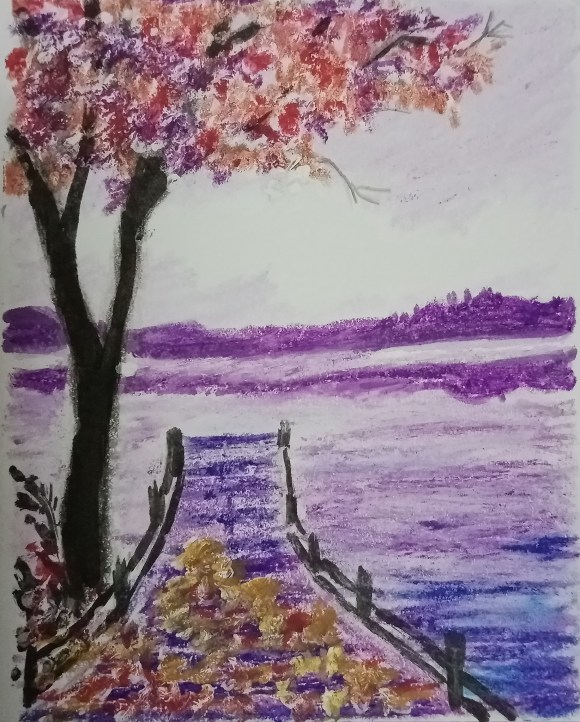
Painting by Sohana Manzoor

Editorial

Imagine… All the People… Click here to read

Translations

Jani Jani Priyo, Ea Jebone  (I know my dear one, in this life) by Nazrul has been translated from Bengali by Professor Fakrul Alam. Click here to read.

Four of his own poems in Malay have been translated by Isa Kamari. Click here to read.

Five poems by Hrushikesh Mallick have been translated from Odia by Snehprava Das. Click here to read.

The Headstone, a poignant story by Sharaf Shad has been translated by Fazal Baloch. Click here to read.

Shukh (Happiness) by Tagore has been translated from Bengali by Mitali Chakravarty. Click here to read.

Poetry

Click on the names to read the poems

John Valentine, Saranyan BV, John Swain, Ahmad Al-Khatat, Stephen Druce, Jyotish Chalil Gopinath, Jenny Middleton, Maria Alam, Ron Pickett, Tanjila Ontu, Jim Bellamy, Pramod Rastogi, John Grey, Laila Brahmbhatt, John Zedolik, Snehaprava Das, Joseph K.Wells, Rhys Hughes

Poets, Poetry & Rhys Hughes

Rhys Hughes shares his play, Night in Karnataka. Click here to read.

Musings/ Slices from Life

Just Passing Through

Farouk Gulsara muses on humans and their best friends. Click here to read.

Feeding Carrots to Gentle Herbivores

Meredith Stephens looks back to her past adventures with horses and present ones with giraffes. Click here to read.

Linen at Midnight

Pijus Ash relates a real-life spooky encounter in Holland. Click here to read.

Two Lives – A Writer and A Businessman

Chetan Datta Poduri explores two lives from the past and what remains of their heritage. Click here to read.

My Forest or Your City Park?

G Venkatesh muses on the tug of war between sustainabilty, ecology and economies. Click here to read.

Musings of a Copywriter

In Karmic Backlog, Devraj Singh Kalsi explores reincarnations with a twinge of humour. Click here to read.

Notes from Japan

In DIY Dining in Japan, Suzanne Kamata in a light note talks about restaurants with robots. Click here to read.

Essays

Peddling Progress?

Jun A. Alindogan writes about what is perceived as progress from Philippines. Click here to read.

From Madagascar to Japan: An Adventure or a Dream…

Randriamamonjisoa Sylvie Valencia writes of her journey from Africa to Japan with a personal touch. Click here to read.

From Bombay to Kolkata — the Dhaaks of Durga 

Ratnottama Sengupta explores a UNESCO Intangible Cultural Heritage Festival. Click here to read.

Stories

Sleeper on the Bench

Paul Mirabile sets his strange story in London. Click here to read.

Sandy Cannot Write

Devraj Singh Kalsi takes us into the world of adverstising and glamour. Click here to read.

The Wise Words of the Sun

Naramsetti Umamaheswararao relates a fable involving elements of nature. Click here to read.

Discussions

A conversation with Swati Pal, academic and poet, on healing through writing and bereavement. Click here to read.

A conversation with five translators — Aruna Chakravarti, Radha Chakravarty, Somdatta Mandal, Fakrul Alam and Fazal Baloch from across South Asia. Click here to read.

Book Excerpts

An excerpt from That’s A Fire Ant Right There! Tales from Kavali by Mohammed Khadeer Babu, translated from Telugu by D.V. Subhashri. Click here to read.

An excerpt from Swati Pal’s poetry collection, Forever Yours. Click here to read.

Book Reviews

Somdatta Mandal reviews Banu Mushtaq’s Heart Lamp: Selected Stories, translated from Kannada by Deepa Bhasthi. Click here to read.

Meenakshi Malhotra has reviewed Malachi Edwin Vethamani’s anthology, Contours of Him: Poems. Click here to read.

Rupak Shreshta reviews Sangita Swechcha’s Rose’s Odyssey: Tales of Love and Loss, translated from Nepali by Jayant Sharma. Click here to read.

Bhaskar Parichha has reviewed Kalpana Karunakaran’s A Woman of No Consequence: Memory, Letters and Resistance in Madras. Click here to read.

.

Click here to access the Borderless anthology, Monalisa No Longer Smiles

Click here to access Monalisa No Longer Smiles on Amazon International
Categories
Editorial

Imagine… All the People…

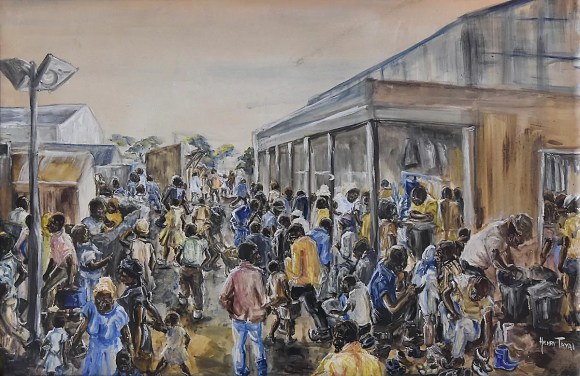
Art by Henry Tayali(1943-1987). From Public Domain

Let us imagine a world where wars have been outlawed and there is only peace. Is that even possible outside of John Lennon’s song? While John Gray, a modern-day thinker, propounds human nature cannot change despite technological advancements, one has to only imagine how a cave dweller would have told his family flying to the moon was an impossibility. And yet, it has been proven a reality and now, we are thinking living in outer space, though currently it is only the forte of a few elitists and astronomers. Maybe, it will become an accessible reality as shown in books by Isaac Asimov, Arthur C Clarke or shows like Star Trek and Star Wars. Perhaps, it’s only dreamers or ideators pursuing unreal hopes and urges who often become the change makers, the people that make humanity move forward. In Borderless, we merely gather your dreams and present them to the world. That is why we love to celebrate writers from across all languages and cultures with translations and writings that turn current norms topsy turvy. We feature a number of such ideators in this issue.

Nazrul in his times, would have been one such ideator, which is why we carry a song by him translated by Professor Fakrul Alam. And yet before him was Tagore — this time we carry a translation of an unusual poem about happiness. From current times, we present to you a poet — perhaps the greatest Malay writer in Singapore — Isa Kamari. He has translated his longing for changes into his poems. His novels and stories express the same longing as he shares in The Lost Mantras, his self-translated poems that explore adapting old to new. We will be bringing these out over a period of time. We also have poems by Hrushikesh Mallick translated from Odia by Snehprava Das and a poignant story by Sharaf Shad translated from Balochi by Fazal Baloch.

We have an evocative short play by Rhys Hughes, where gender roles are inverted in a most humorous way. It almost brings to mind Begum Rokeya’s Sultana’s Dream. Tongue-in-cheek humour in non-fiction is brought in by Devraj Singh Kalsi and Chetan Dutta Poduri. Farouk Gulsara and Meredith Stephens write in a light-hearted vein about their interactions with animal friends. G. Venkatesh brings in serious strains with his musings on sustainability. Jun A. Alindogan slips into profundities while talking of “progress” in Philippines. Young Randriamamonjisoa Sylvie Valencia gives a heartfelt account of her journey from Madagascar to Japan. Ratnottama Sengupta travels across space and time to recount her experiences in a festival recognised by UNESCO as an Intangible Cultural Heritage of Humanity. Suzanne Kamata brings a light touch again when she writes about robots serving in restaurants in Japan, a change that would be only fiction even in Asimov’s times, less than a hundred years ago!

Pijus Ash — are we to believe or not believe his strange, spooky encounter in Holland? And we definitely don’t have to believe what skeletons do in Hughes’ limericks, even if their antics make us laugh! Poetry brings on more spooks from Saranyan BV and frightening environmental focus on the aftermath of flooding by Snehaprava Das. We have colours of poetry from all over the world with John Valentine, John Swain, Ahmad Al-Khatat, Stephen Druce, Jyotish Chalil Gopinath, Jenny Middleton, Maria Alam, Ron Pickett, Tanjila Ontu, Jim Bellamy, Pramod Rastogi, John Grey, Laila Brahmbhatt, John Zedolik and Joseph K.Wells.

Fiction yields a fable from Naramsetti Umamaheswararao. Devraj Singh Kalsi takes us into the world of advertising and glamour and Paul Mirabile writes of a sleeper who likes to sleep on benches in parks out of choice! We also have an excerpt from Mohammed Khadeer Babu’s stories, That’s A Fire Ant Right There! Tales from Kavali , translated from Telugu by D.V. Subhashri. The other excerpt is from Swati Pal’s poetry collection, Forever Yours. Pal has in an online interview discussed bereavement and healing through poetry for her stunning poems pretty much do that.

Book reviews homes an indepth introduction by Somdatta Mandal to Banu Mushtaq’s Heart Lamp: Selected Stories, translated from Kannada by Deepa Bhasthi. We have a discussion by Meenakshi Malhotra on Contours of Him: Poems, edited and introduced by Malaysian academic, Malachi Edwin Vethamani, in which she concludes, “that if femininity is a construct, so is masculinity.” Overriding human constructs are journeys made by migrants. Rupak Shreshta has introduced us to immigrant Sangita Swechcha’s Rose’s Odyssey: Tales of Love and Loss, translated from Nepali by Jayant Sharma. Bhaskar Parichha winds up this section with his exploration of Kalpana Karunakaran’s A Woman of No Consequence: Memory, Letters and Resistance in Madras. He tells us: “A Woman of No Consequence restores dignity to what is often dismissed as ordinary. It chronicles the spiritual and intellectual evolution of a woman who sought transcendence within the rhythms of domestic life, turning the everyday into a site of resistance and renewal.” Again, by the sound of it a book that redefines the idea that housework is mundane and gives dignity to women and the task at hand.

We wind up the October issue hoping for changes that will lead to a happier existence, helping us all connect with the commonality of emotions, overriding borders that hurt humanity, other species and the Earth.

Huge thanks to our fabulous team, especially Sohana Manzoor for her inimitable artwork. We would all love to congratulate Hughes for his plays that ran houseful in Swansea. And heartfelt thanks to all our wonderful contributors, without who this issue would not have been possible, and to our readers, who make it worth our while, to write and publish.

Have a wonderful month!

Mitali Chakravarty

borderlessjournal.com

CLICK HERE TO ACCESS THE CONTENTS FOR THE OCTOBER 2025 ISSUE

.

READ THE LATEST UPDATES ON THE FIRST BORDERLESS ANTHOLOGY, MONALISA NO LONGER SMILES, BY CLICKING ON THIS LINK.

Categories
Poetry

Poems by John Zedolik

John Zedolik
HELD PURPOSE 	                                                                      

The coppery husk of a cicada clings
to the neighbour’s concrete, pertinacious
in its position, carapace, crust open
to the air, denizen departed old long since

in summer’s singing night after seventeen
years for this former flier, now a clawing
remain that will in weeks, months crackle
like a tasty treat needing only salt pinch,

at last falling under some casual foot
encased whose owner will not distinguish
exoskeleton from spent leaf—just another crunch
punctuating the surface prone to popping

in the naked weather under seasoned time


SIEVE

I was carrying sand in plastic bags
that weighed down the cousin plastic crate
in which they, jumbled, sat—

for seconds after I lifted the frame

then splinter! crash!

the assemblage lay in shards and grains
upon the sidewalk and adjacent grassy ground

except some bags in my suddenly relieved arms,
which bled white quartz, slipping, slipping—

I was out of time with no hourglass’s pinched channel
between now and the safe back then

below me the resting place not my choosing,
the order now a sprawling mess

due to my underestimation of the desert’s weight in my charge—

or hubris at the thought of carrying what the wind
will carry away to invisible

(How heavy could it be?)

unequal to the strength of my arms and back
accustomed to gravity’s pull
upon much more dense concerns

John Zedolik has published five collections of poetry: Lovers’ Progress, 2025; The Ramifications, 2024; Mother Mourning, 2023; When the Spirit Moves Me, 2021; and Salient Points and Sharp Angles, 2019. 

.

PLEASE NOTE: ARTICLES CAN ONLY BE REPRODUCED IN OTHER SITES WITH DUE ACKNOWLEDGEMENT TO BORDERLESS JOURNAL

Click here to access the Borderless anthology, Monalisa No Longer Smiles

Click here to access Monalisa No Longer Smiles on Kindle Amazon International

Categories
Contents

Borderless, October 2023

Artwork by Sohana Manzoor

Editorial

We had Joy, We had Fun … Click here to read

Conversations

A conversation with Nazes Afroz, former BBC editor, along with a brief introduction to his new translations of Syed Mujtaba Ali’s Tales of a Voyager (Jolay Dangay). Click here to read.

Keith Lyons converses with globe trotter Tomaž Serafi, who lives in Ljubljana. Click here to read.

Translations

Barnes and Nobles by Quazi Johirul Islam has been translated from Bengali by Professor Fakrul Alam. Click here to read.

Cast Away the Gun by Mubarak Qazi has been translated from Balochi by Fazal Baloch. Click here to read.

One Jujube has been written and translated from Korean by Ihlwha Choi. Click here to read.

A Hymn to an Autumnal Goddess by Rabindranath Tagore,  Amra Beddhechhi Kaasher Guchho ( We have Tied Bunches of Kaash), has been translated by Mitali Chakravarty. Click here to read.

Poetry

Click on the names to read the poems

Michael Burch, Gopal Lahiri, Ryan Quinn Flanagan, Hawla Riza, Reeti Jamil, Rex Tan, Santosh Bakaya, Tohm Bakelas, Pramod Rastogi, George Freek, Avantika Vijay Singh, John Zedolik, Debanga Das, Rhys Hughes

Poets, Poetry, and Rhys Hughes

In Do It Yourself Nonsense Poem, Rhys Hughes lays some ground rules for indulging in this comedic genre. Click here to read.

Musings/Slices from Life

Onsen and Hot Springs

Meredith Stephens explores Japanese and Californian hot springs with her camera and narrative. Click here to read.

Kardang Monastery: A Traveller’s High in Lahaul

Sayani De travels up the Himalayas to a Tibetan monastery. Click here to read.

Ghosts, Witches and My New Homeland

Tulip Chowdhury muses on ghosts and spooks in Bangladesh and US. Click here to read.

Musings of a Copywriter

In Red Carpet Welcome, Devraj Singh Kalsi re-examines social norms with a scoop of humour. Click here to read.

Notes from Japan

In Baseball and Robots, Suzanne Kamata shares how both these have shaped life in modern Japan. Click here to read.

Stories

The Wave of Exile

Paul Mirabile tells a strange tale started off by a arrant Tsunami. Click here to read.

Glimpses of Light

Neera Kashyap gives a poignant story around mental health. Click here to read.

The Woman Next Door

Jahanavi Bandaru writes a strange, haunting tale. Click here to read.

The Call

Nirmala Pillai explores different worlds in Mumbai. Click here to read.

Essays

The Oral Traditions of Bengal: Story and Song

Aruna Chakravarti describes the syncretic culture of Bengal through its folk music and oral traditions. Click here to read.

Belongingness and the Space In-Between

Disha Dahiya draws from a slice of her life to discuss migrant issues. Click here to read.

A City for Kings

Ravi Shankar takes us to Lima, Peru with his narrative and camera. Click here to read.

The Saga of a Dictionary: Japanese-Malayalam Affinities

Dr. KPP Nambiar takes us through his journey of making a Japanese-Malyalam dictionary, which started nearly fifty years ago, while linking ties between the cultures dating back to the sixteenth century. Click here to read.

Book Excerpts

An excerpt from Kailash Satyarthi’s Why Didn’t You Come Sooner?: Compassion In Action—Stories of Children Rescued From Slavery. Click here to read.

An excerpt from Rhys Hughes’ The Coffee Rubaiyat. Click here to read.

Book Reviews

Somdatta Mandal reviews Usha Priyamvada’s Won’t You Stay, Radhika?, translated from Hindi by Daisy Rockwell. Click here to read.

Aditi Yadav reviews Makoto Shinkai’s and Naruki Nagakawa’s She and Her Cat, translated from Japanese by Ginny Tapley Takemori. Click here to read.

Gemini Wahaaj reviews South to South: Writing South Asia in the American South edited by Khem K. Aryal. Click here to read.

Bhaskar Parichha reviews One Among You: The Autobiography of M.K. Stalin, translated from Tamil by A S Panneerselvan. Click here to read.

.

Click here to access the Borderless anthology, Monalisa No Longer Smiles

Click here to access Monalisa No Longer Smiles on Kindle Amazon International

Categories
Editorial

We had Joy, We had Fun…

There was a time when there were no boundaries drawn by humans. Our ancestors roamed the Earth like any other fauna — part of nature and the landscape. They tried to explain and appease the changing seasons, the altering landscapes and the elements that affected life and living with rituals that seemed coherent to them. There were probably no major organised structures that laid out rules. From such observances, our festivals evolved to what we celebrate today. These celebrations are not just full of joie de vivre, but also a reminder of our syncretic start that diverged into what currently seems to be irreparable breaches and a lifestyle that is in conflict with the needs of our home planet.

Reflecting on this tradition of syncretism in our folklore and music, while acknowledging the boundaries that wreak havoc, is an essay by Aruna Chakravarti. She expounds on rituals that were developed to appease natural forces spreading diseases and devastation, celebrations that bring joy with harvests and override the narrowness of institutionalised human construct. She concludes with Lalan Fakir’s life as emblematic of the syncretic lore. Lalan, an uneducated man brought to limelight by the Tagore family, swept across religious divides with his immortal lyrics full of wisdom and simplicity. Dyed in similar syncretic lore are the writings of a student and disciple of Tagore from Santiniketan, Syed Mujtaba Ali (1904-1974). His works overriding these artificial constructs have been brought to light, by his translator, former BBC editor, Nazes Afroz. Having translated his earlier book, In a Land Far from Home: A Bengali in Afghanistan, Afroz has now brought to us Syed Mujtaba Ali’s Tales of a Voyager (Jolay Dangay), in which we read of his travels to Egypt almost ninety years ago. In his interview, the translator highlights the current relevance of this remarkable polyglot.

Humming the tunes of Mujtaba Ali’s tutor, Tagore, a translation of Tagore’s song, Amra Beddhechhi Kasher Guchho (We have Tied Bunches of Kash[1]) captures the spirit of autumnal opulence which heralds the advent of Durga Puja. A translation by Fazal Baloch has brought a message of non-violence very aptly in these times from recently deceased eminent Balochi poet, Mubarak Qazi. Professor Fakrul Alam has translated a very contemporary poem by Quazi Johirul Islam on Barnes and Nobles while from Korea, we have a translation of a poem by Ihlwha Choi on the fruit, jujube, which is eaten fresh of the tree in autumn.

A poem which starts with a translation of a Tang dynasty’s poet, Yuan Zhen, inaugurates the first translation we have had from Mandarin — though it’s just two paras by the poet, Rex Tan, who continues writing his response to the Chinese poem in English. Mingling nature and drawing life lessons from it are poems by George Freek, Ryan Quinn Flanagan and Gopal Lahiri. We have poetry which enriches our treasury by its sheer variety from Hawla Riza, Pramod Rastogi, John Zedolik, Avantika Vijay Singh, Tohm Bakelas and more. Michael Burch has brought in a note of festivities with his Halloween poems. And Rhys Hughes has rolled out humour with his observations on the city of Mysore. His column too this time has given us a table and a formula for writing humorous poetry — a tongue-in-cheek piece, just like the book excerpt from The Coffee Rubaiyat. In the original Rubaiyat, Omar Khayyam (1048–1131) had given us wonderful quatrains which Edward Fitzgerald immortalised with his nineteenth century translation from Persian to English and now, Hughes gives us a spoof which would well have you rollicking on the floor, and that too, only because as he tells us he prefers coffee over wine!

Humour tinged with irony is woven into Devraj Singh Kalsi’s narrative on red carpet welcomes in Indian weddings. We have a number of travel stories from Peru to all over the world. Ravi Shankar takes us to Lima and Meredith Stephens to Californian hot springs with photographs and narratives while Sayani De does the same for a Tibetan monastery in Lahaul. Keith Lyons converses with globe trotter Tomaž Serafi, who lives in Ljubljana. And Suzanne Kamata adds colour with a light-veined narrative on robots and baseball in Japan. Syncretic elements are woven by Dr. KPP Nambiar who made the first Japanese-Malyalam Dictionary. He started nearly fifty years ago after finding commonalities between the two cultures dating back to the sixteenth century. Tulip Chowdhury brings in colours of Halloween while discussing ghosts in Bangladesh and America, where she migrated.

The theme of immigration is taken up by Gemini Wahaaj as she reviews South to South: Writing South Asia in the American South edited by Khem K. Aryal. Japan again comes into focus with Aditi Yadav’s Makoto Shinkai’s and Naruki Nagakawa’s She and Her Cat, translated from Japanese by Ginny Tapley Takemori. Somdatta Mandal has also reviewed a translation by no less than Booker winning Daisy Rockwell, who has translated Usha Priyamvada’s Won’t You Stay, Radhika? from Hindi. Our reviews seem full of translations this time as Bhaskar Parichha comments on One Among You: The Autobiography of M.K. Stalin, the current Chief Minister of Tamil Nadu, translated from Tamil by A S Panneerselvan. In fiction, we have stories that add different flavours from Paul Mirabile, Neera Kashyap, Nirmala Pillai and more.

Our book excerpt from Nobel laureate Kailash Satyarthi’s Why didn’t You Come Sooner? Compassion in Action—Stories of Children Rescued from Slavery deserves a special mention. It showcases a world far removed from the one we know. While he was rescuing some disadvantaged children, Satyarthi relates his experience in the rescue van:

“One of the children gave it [the bunch of bananas] to the child sitting in front. An emaciated girl and a little boy were seated next to me. I told them to pass on the fruit to everyone in the back and keep one each for themselves. The girl looked curiously at the bunch as she turned it around in her hands. Then she looked at the other children.

“‘I’ve never seen an onion like this one,’ she said.

“Her little companion also touched the fruit gingerly and innocently added, ‘Yes, this is not even a potato.’

“I was speechless to say the least. These children had never seen anything apart from onions and potatoes. They had definitely never chanced upon bananas…”

Heart-wrenching but true! Maybe, we can all do our bit by reaching out to some outside our comfort or social zone to close such alarming gaps… Uma Dasgupta’s book tells us that Tagore had hoped many would start institutions like Sriniketan all over the country to bridge gaps between the underprivileged and the privileged. People like Satyarthi are doing amazing work in today’s context, but more like him are needed in our world.

We have more writings than I could mention here, and each is chosen with much care. Please do pause by our contents page and take a look. Much effort has gone into creating a space for you to relish different perspectives that congeal in our journal, a space for all of you. For this, we have the team at Borderless to thank– without their participation, the journal would not be as it is. Sohana Manzoor with her vibrant artwork gives the finishing touch to each of our monthly issues. And lastly, I cannot but express my gratefulness to our contributors and readers for continuing to be with us through our journey. Heartfelt thanks to all of you.

Have a wonderful festive season!

Best wishes,

Mitali Chakravarty

borderlessjournal.com

[1] Wild long grass

.

.

Visit the October edition’s content page by clicking here

READ THE LATEST UPDATES ON THE FIRST BORDERLESS ANTHOLOGY, MONALISA NO LONGER SMILES, BY CLICKING ON THIS LINK.

Categories
Poetry

         Spot Assessment     

By John Zedolik

These skeleton keys hail from Portugal,
states the hand-drawn phrase on gray
 
cardboard, which provenance unlocks
my thinking as to what is so special
 
about these thin fingers of old iron and brass
that to my lay-eyes do not appear any different
 
from the domestic variety that might sell
for far less, especially as used item and even
 
worse lacking the complementary locks,
necessary for utility securing some equally lost
 
door or chest, but in which some expert
in Iberian antiques might find money
 
and historical value. I cannot rid
 
      thus, my doubt of the sign’s worth
 
and the wares, better left to the keener sight
and mind that can unlock the mystery
 
safe, pendant and plain before a blind view.

John Zedolik has published hundreds of poems in many journals around the world. Earlier this year, he published Mother Mourning (Wipf & Stock), his third collection, which is available on Amazon.

PLEASE NOTE: ARTICLES CAN ONLY BE REPRODUCED IN OTHER SITES WITH DUE ACKNOWLEDGEMENT TO BORDERLESS JOURNAL

Click here to access the Borderless anthology, Monalisa No Longer Smiles

Click here to access Monalisa No Longer Smiles on Kindle Amazon International