Categories
climate change

More Frequent Cyclones to Impact Odisha

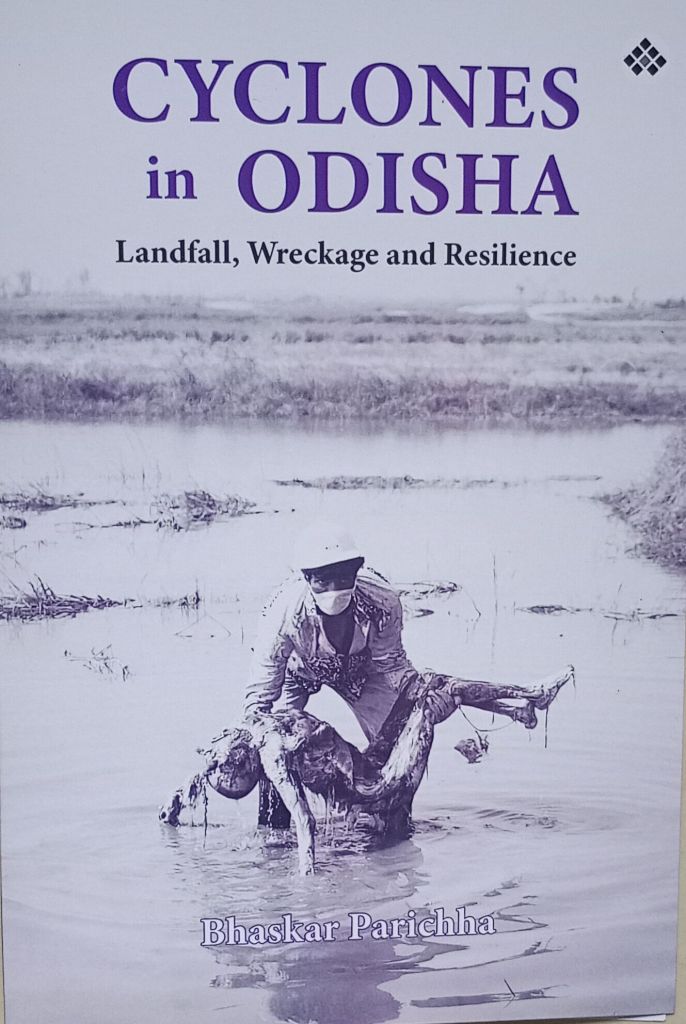
Cyclones in Odisha – Landfall, Wreckage and Resilience by Bhaskar Parichha cannot be underestimated given the recent impact of Dana (October 2024) which despite being  less aggressive than Amphan (May 2020) disrupted life as we know it. Bijoy K Mishra writes about the book and its relevance.

Climate Change will increase the incidence of cyclones in Odisha. Rising sea levels and warmer ocean temperatures create more favourable conditions for cyclones to form and intensify, posing a significant threat to the people of the state.

This has been clearly stated in the book, Cyclones in Odisha – Landfall, Wreckage and Resilience by senior journalist journalist and author, Bhaskar Parichha, “[C]limate change has a profound effect on Odisha’s disaster preparedness plans in various ways. The increasing temperatures and sea levels are contributing to more frequent and severe disasters such as cyclones, floods, droughts, and heat waves.” Published by Pen in Books, the book was released on October 29th to coincide with the Super Cyclone that struck the Odisha coast twenty-five years ago.

Odisha Super Cyclone 1999 (29/10/1999): 12.9 million people were affected by the storm. The India Meteorological Department indicated that around 9,887 were killed, 40 persons missing and 2,507 others injured. Photo from: Public Domain

The book, which traces the history of cyclones in Odisha in the past one hundred years, says: “The rise in sea levels due to climate change and the increased intensity of storms pose a threat to coastal infrastructure, including cyclone shelters and evacuation routes. Regular maintenance and improvement of these structures are essential to minimize the impact of climate change.”

Health Sector

While there is a need to ensure full-bodied evacuation drills, shelter maintenance, and emergency response planning more frequently, the prevalence of water and vector-borne diseases like malaria and dengue fever is worsened by climate change. The author suggests, “[T]he health sector must incorporate climate change considerations into health policies, enhance disease management, and implement measures to mitigate the impact of heat waves.”

With changes in monsoon patterns and more frequent cyclones resulting in widespread food and nutrition insecurity, the book has some precise suggestions; “Disaster preparedness efforts should prioritize ensuring access to nutritious food and promoting sustainable agricultural practices. Raising awareness about climate change and being prepared require ongoing community involvement and capacity building. This involves training volunteers, promoting safe migration practices, and increasing media coverage of climate change issues.”

Economic Impact

On the impact of the economy, the book says: “Climate change can negatively impact economic growth and exacerbate poverty. Disaster preparedness strategies need to address these economic risks by encouraging sustainable industries, renewable energy, and climate-resilient infrastructure.

“Odisha’s disaster preparedness strategies must evolve to ensure effective response and mitigation measures. This requires ongoing investment in disaster preparedness and response measures, as well as efforts to address the underlying causes of climate change. By taking proactive steps to mitigate the impact of cyclones and adapt to changing climatic conditions, Odisha can better protect its coastal region and ensure its safety and well.”

East Coast

The book emphasises financial investment in measures to reduce disaster risk and adapt to climate change is essential for the East Coast of India. This includes funding for the development and maintenance of early warning systems, the construction of resilient infrastructure, and community preparedness initiatives. Investment in research and development of new technologies and strategies for cyclone mitigation is crucial in building a more resilient and adaptive East Coast community.

Underlining the need for effective disaster management strategies and resilient infrastructure to protect the vulnerable populations of Odisha, we are told: “In the face of a cyclone, communities must come together to prepare and respond to the impending disaster. Early warning systems and evacuation plans can help to minimize the impact of a cyclone, saving lives and reducing property damage. In the aftermath of a cyclone, communities must work together to rebuild and recover, showing resilience in the face of adversity.”

(First Published in Political And Business Daily, Odisha)

Bijoy Ketan Mehta is the resident editor of Political and Business Daily. He can be contacted at bijoykm1259@gmail.com.

.

PLEASE NOTE: ARTICLES CAN ONLY BE REPRODUCED IN OTHER SITES WITH DUE ACKNOWLEDGEMENT TO BORDERLESS JOURNAL

Click here to access the Borderless anthology, Monalisa No Longer Smiles

Click here to access Monalisa No Longer Smiles on Amazon International

Categories
Review

In the Footsteps of the Man Who Walked From England to India in 1613

Book Review by Rakhi Dalal

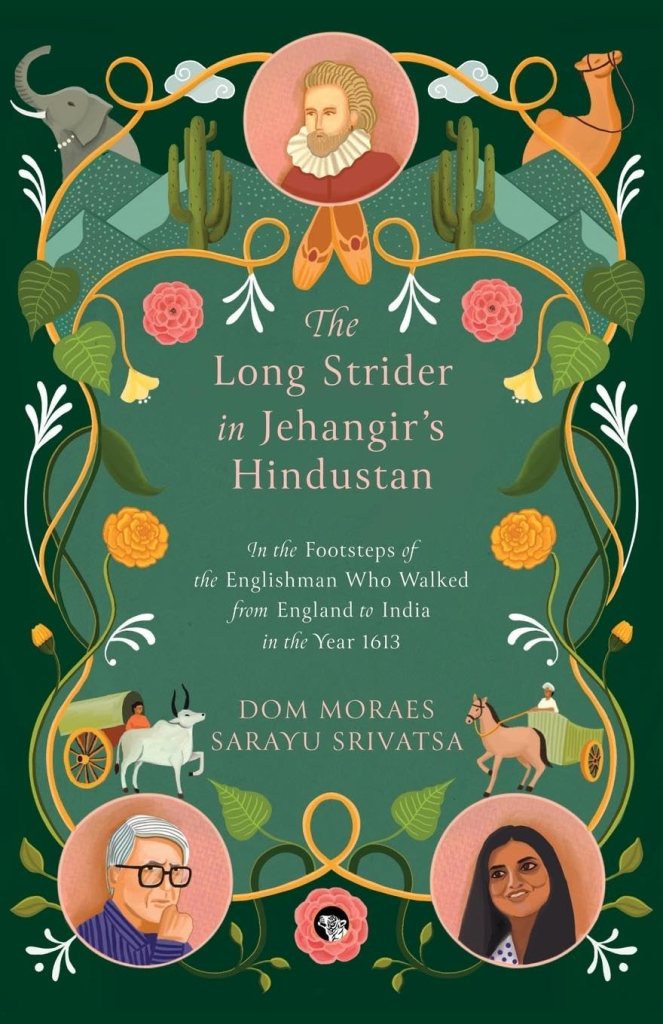
Book Title: The Long Strider in Jehangir’s Hindustan: In the Footsteps of the Englishman Who Walked From England to India in the Year 1613

Authors: Dom Moraes and Sarayu Srivatsa

Publisher: Speaking Tiger Books

During the years, in the early seventeenth century, when East India Company began a search for the possibilities of trade with India via sea route, Thomas Coryate of the village Odcombe in Somerset, England, made an ambitious plan to travel to the Indies, as he called it, on foot. This wasn’t his first undertaking. Having travelled across Europe on foot before, writing a travelogue Crudities on his experience which brought him some fame, he now wished to travel to a place no Englishmen had gone before. Motivated by the thought of gaining more fame with this venture so as to win the affection of Lady Ann Harcourt of Prince Henry’s Court, even the idea of traversing 5000 miles on foot as compared to 1975 miles that he did in Europe did not dissuade him.   

Known as ‘the long strider’, in 1612, Coryate set for his journey to the Indies from London. And in year 1999, more than three hundred years later, his journey and subsequent struggles, somehow inspired Dom Moraes to traverse the same route to correlate Coryate’s experience in the now altered places and its people. Coryate travelled alone, Moraes took the journey with Sarayu Srivatsa, the co-author of this book.

Dom Moraes, poet, novelist and columnist, is seen as a foundational figure in Indian English Literature. He published nearly thirty books in his lifetime. In 1958, at the age of twenty, he won the prestigious Hawthornden Prize for poetry. He was awarded the Sahitya Akademi Award for English in 1994. The Long Strider in Jehangir’s Hindustan was first published in the year 2003. Moraes passed away in 2004.

Sarayu Srivatsa, trained as an architect and city planner at the Madras and Tokyo universities, was a professor of architecture at Bombay University. Her book, Where the Streets Lead, published in 1997 had won the JIIA Award. She also co-authored two books with Dom Moraes: The Long Strider, and Out of God’s Oven (shortlisted for the Kiriyama Prize). Her first novel, The Last Pretence, was longlisted for the Man Asian Literary Prize, and upon its release in the UK (under the title If You Look For Me, I am Not Here), was also included on The Guardian’s Not the Booker Prize longlist.

Srivatsa, who travelled with Moraes to all the places Coryate passed through, writes diary chapters coextending the same routes subsequently. So, each fictive reconstruction of a period and place of Coryate’s travel by Moraes is followed by a diary chapter for the same place by Srivatsa. In that sense the book becomes part biographical fiction and part memoir. 

Coryate, son of a Vicar and dwarfish in stature, was seized by this desire to gain fame and respect. What desire seized the imagination of Moraes, eludes this reader. It, however, doesn’t escape the notice that both the writers shared somewhat similar plight towards the end.

Some of Coryate’s writing during the period did not survive as it was destroyed by Richard Steele, but the rest was sent to England and was posthumously published in an anthology in 1625. Basing his research on such sources, after extensive three years of investigation, Moraes managed to create an account of Coryate’s demeanour, his lived life in a new land with diverse people and customs at different places which he found both shocking and fascinating.  Coryate found the people of India loud and violent but he was also touched by their generosity and kindness. He witnessed the disagreements between Hindus and Muslims, the caste system where the upper caste oppressed the people from lower caste, sati, and the ways of Buddhist monks, Sikhs, pundits of Benaras and Aghoris[1], the lifestyle of Jehangir and the city of Agra before Taj Mahal. He was fortunate to have an audience with Jehangir, the main reason of his travel, but he failed in securing his patronage or enough money to continue to China which he had been his original intent.

In Moraes’ writing, the era comes alive. Vivid imagery and description makes the struggles and sufferings of Coryate palpable on one hand and on the other offer a view on the unfolding of history in a country where these many hundred years later, the echoes of a past similar to the present can be heard. In the preface, Moraes posits one of the reasons to take on the book — to compare the India then with the country during his times. As the reader proceeds with the story, the comparison becomes apparent in Moraes’ construction vis-a-vis Srivatsa’s entries.

Towards the end, an ailing Coryate succumbed to his illness and his body was buried somewhere near the dock at Surat. He could not make a journey home in 1615, but in 2003 a brick from his supposed tomb was sent back to the church in Odcombe by Srivatsa where a ninety six year old vicar waited patiently for the only famous man from Odcombe to return home. The epilogue by Srivatsa gives an account of Moraes’ own struggle with cancer and his demise in 2004, a year after the book was published. It is but right that the soil from his grave in Mumbai also found a resting place in Odcombe.    

[1] Devotees of Shiva

Rakhi Dalal writes from a small city in Haryana, India. Her work has appeared in Kitaab, Scroll, Borderless Journal, Nether Quarterly, Aainanagar, Hakara Journal, Bound, Parcham and Usawa Literary Review

.

PLEASE NOTE: ARTICLES CAN ONLY BE REPRODUCED IN OTHER SITES WITH DUE ACKNOWLEDGEMENT TO BORDERLESS JOURNAL

Click here to access the Borderless anthology, Monalisa No Longer Smiles

Click here to access Monalisa No Longer Smiles on Kindle Amazon International
Categories
Excerpt

Bandits and a Cursed River in Chambal Valley

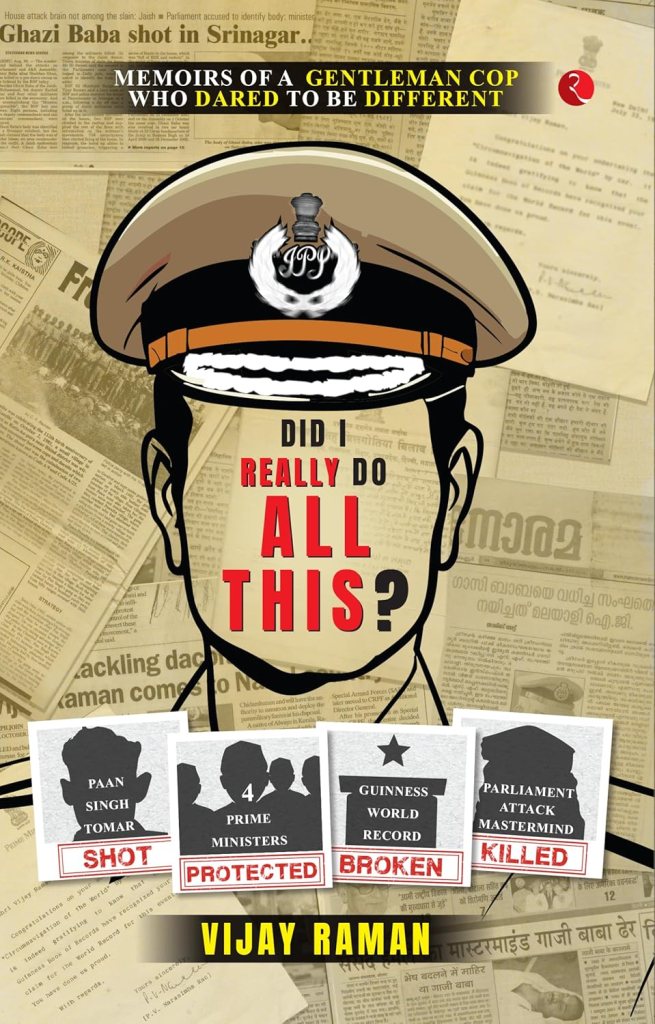
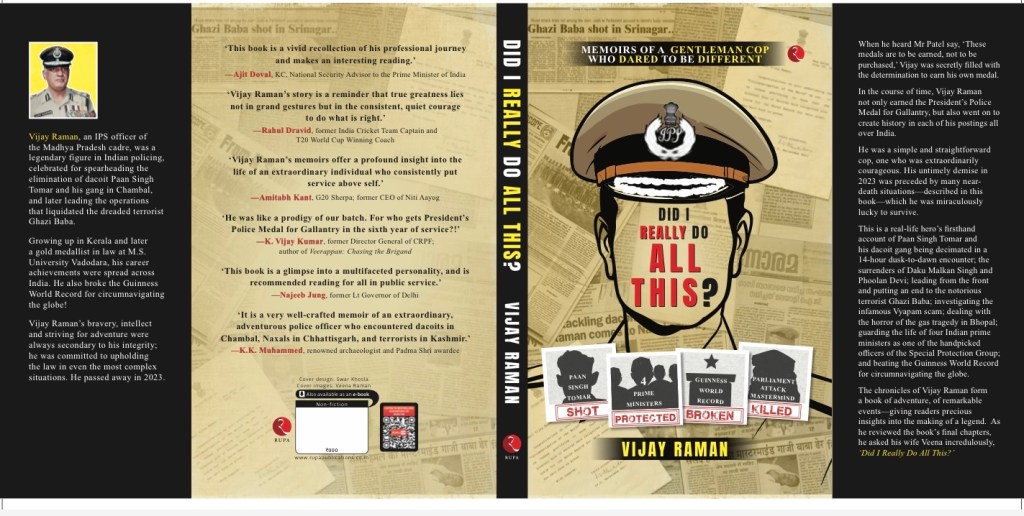
Title: Did I Really Do All This: Memoirs of a Gentleman Cop Who Dared to be Different

Author: Vijay Raman

Publisher: Rupa Publications

Bandits and a Cursed River

When I began my career in the dacoit-infested region of the Chambal Valley in Madhya Pradesh (MP), I faced different kinds of issues.

I was first posted in Dabra where there are dacoits. In such places certain people come to you offering information that will be useful to us. These are our mukhbir, informers. Some come for the pittance of money that is sanctioned to us as anti-dacoity funds for meeting emergency expenses. But most come with an ulterior motive: they want a kill. ‘We will give you information that you need and will find very hard to get without me. But you have to kill the man,’ they would say.

As ASP Dabra I had 10 police stations under me. One was at Pandokhar, a village between Jhansi and Gwalior, on the (Uttar Pradesh) UP–MP border. A very pleasant-looking chap from there would come to me, always smiling, always making conversation, inquiring about my health, telling me whatever was happening in the village. When I asked for information, he would say, ‘Saheb, sab theek hai, it’s all good, Saheb!’

I would ask if there was any news of the dacoits, and he’d say ‘No Saheb, there is no movement.’

One day he said, ‘Aaj shaam ko jayenge Saheb. We’ll go this evening.’

It was December 1978. I distinctly remember the day: India was playing Pakistan in the Asian Games hockey finals in Bangkok.

One of the problems in that area, particularly for a young newcomer, is this: Whom do you trust? Is the informer trustworthy? Is the subordinate you share the information with trustworthy? I realized that ultimately it had to be your call, based on some homework, your own observations, and your intuition.

One dictum I always followed was to stick to the informer’s plan as much as possible. Anything else would make him suspicious. So I asked him what we should do. He said that this was Devi Singh’s gang, of seven or eight people. They were going from MP to UP to conduct a burglary since it was a full moon night. They would go on bicycles—yes, the dacoits those days went around on bicycles!—and he would be with them. When we arrived at the ambush area, he would ring his bicycle bell and that would be the signal for us to spring into action. All we had to do was surround them, fire two shots into the air, and they would be ours: an easily doable plan which otherwise might be most difficult to execute!

Bidding a mildly regretful goodbye to the hockey commentary on the radio I got into my vehicle and left for Pandokhar, about 60 km from Dabra. I shared my information with the sub-inspectors and inspector in the police station there. Soon the word spread, and from their reaction I could see that this was a very dangerous gang of dacoits. There was consensus that these fellows deserved the ultimate punishment.

We walked to the location, a distance of about 10 km, and took our positions before dark. There was no way I would find out the results of the hockey match there! Sure enough, a group of cyclists arrived. Someone rang a bell. That was our signal, and we surrounded them. And that’s when some of the constables recognized him. ‘Arre! Yeh toh Devi Singh hai! And there’s a big price on his head!’

Dying Declaration

Now the drama begins for a young police officer fresh out of the academy that trains to say no third degree, no this, no that. And with just one year of service, I was still carrying the commitment to uphold the law, protect human rights, behave as the Constitution expects me to. But was it possible when facing a rebellious group of subordinates who want a kill? Before my eyes, some of them were getting ready for violence. When some senior constables and sub-inspectors pacified them they protested, ‘Why should we let them go? They are crooks, they deserve to be killed.’ We tried to convince them that we must arrest them, take them back to the police station, and let the matter be resolved in a courtroom. But that would never work, they argued, because they would bribe the authorities and get away. So they must be killed now!

After a lot of persuasion they relented. They requisitioned a bullock cart from the village, put me in it, tied the hands of the dacoits together, and tied the rope to the bullock cart so that they could not escape. And all along the way they expressed their rage by thrashing Devi Singh, a bald-headed fellow, on the head with his own chappals!

*

My mind was in turmoil. Was I doing the right thing? And why was there so much anger against him from the lower constabulary? I was on the verge of being manhandled by my constables for my stand. Luckily there were sub-inspectors who could restrain them. Was this the sense of discipline we had in the police?

Back in the police station, I phoned my senior officer, a very fine Superintendent of Police (SP) from whom I learnt many practical aspects of policing. It was nearly midnight, so I started by excusing myself for calling at that hour, but I was speaking from Pandokhar and had just returned from an encounter. He must have wondered whether this kid from the south even knew the meaning of ‘encounter’. He disconnected with instructions to see him in the morning.

I had done exactly what my informer had asked me to do—and I had arrested seven members of a gang. We had fired only two rounds of ammunition.

We sent out the required messages to all the police stations in the district, informing them that Devi Singh was in our custody, giving information about the location, number of people arrested, and other details of the encounter. And we were astonished at the large number of requests from all around asking for them to be handed over for trial.

*

The next morning I reported to my headquarters in Gwalior, met my SP, and discussed with him my thoughts and feelings about the encounter. When I told him that we must control the level of indiscipline we have in the force, the seasoned officer counselled me, ‘These are things we have to take in our stride. In the course of time you will also learn how to go about it!’

I was feeling quite pleased with myself for the excellent work done but my SP was more than a little amused. ‘Raman, you fired only two rounds! How can you have an encounter with a dacoit when the police fire only two rounds? I’m sure even the dacoits would have fired more than that. You were just very lucky that you did not get massacred. Firing two rounds is not an encounter Raman! Go and take his dying declaration, and let’s close this matter.’

I was familiar with the belief that a person on the verge of death will not lie. Therefore greater credibility is given to such a statement. Little did I know that soon this episode would come back to haunt me.

The Price of Being Idealistic

Every day we would receive the daily situation report (DSR). It mandates that events such as blind murder, unidentified dead bodies, and other serious offences must be supervised by either the SP or the ASP.

One day I received a report of the discovery of an unidentified dead body. Somehow the name of the place, which fell under the police station of Pandokhar, rang a bell, and I found myself rushing towards it with a growing sense of dread. It was about 100 km from Gwalior and by the time I got there the body, though badly mauled and with limbs dismembered, had been identified. Beside it sat a woman clutching two children tightly to herself and wailing loudly.

It was a terrible feeling to know that this was my fault. I was responsible for the death of this informer. I was the person responsible for all those who were killed by Devi Singh after his release, until he was terminated by my junior, SP Asha Gopal. It always remained on my conscience that my actions, though purely to uphold human rights and protect human life, had led to so much violence and misery.

These thoughts often disturb sensitive police officers, making them face a dilemma that nobody else can help them solve. For myself, I had resolved that following the law was not just my duty but also my dharma, righteousness. However, even in my life there would occur situations when, in the heat of the moment, it might become necessary to take decisions not in keeping with strictly legal procedures. But this would NEVER be for personal gain, and only, ONLY for the greater good.

*

People of my generation who grew up in India would have read about the dacoits and what they did. Some might have a sense of the terrain in which the Chambal dacoits lived. But today’s youngsters, especially those unfamiliar with the place and time, would not understand what it was like, or the obstacles and dangers that were involved, in policing back then.

Chambal is a large area with a peculiar topography of dunes and ravines not seen anywhere else in India. These were formed by the force of water cutting through the land. For an outsider, the area was difficult to navigate. There are settlements and villages even in the midst of the ravines, and it was impossible to know whether they were already there when the ravine formed or whether the ravine grew around them. To get from one place to another was extremely difficult for anyone unfamiliar with the area. You could get hopelessly lost, as in a maze. However, once you began to understand the geometrical pattern of the ravines, it became easier to know where to enter. Over time, the surroundings became familiar.

Other than the terrain, the people of this region were also unique. Their culture developed almost in isolation, and while they had a lot in common with people of the neighbouring areas, some of their attributes were distinctive.

They had a strong sense of justice. One that was different from what we were used to. When I studied Law, what fascinated me was understanding the causes that had given rise to a law. One of the sources of a law is the customs of the people. When a custom is predominant, the wisdom of the legislature will formulate the custom into a law that can be implemented. And some of the customs in this region are what have shaped the indigenous laws here.

Thus, people here were deeply conscious of caste; not just in terms of untouchability but also as a pecking order. While Brahmins were at the top, there were various subgroups—Sharmas and Mishras, among others—and these had their own hierarchy. This applied to how they spoke and were spoken to, or where they stood or sat in a public gathering. Indeed every social interaction was strictly dictated by caste, marriage being the most carefully monitored.

Lower castes were also kept firmly in their place. Any breach of these age-old rules was taken extremely seriously and was bound to have consequences, sometimes fatal. If a person felt aggrieved or insulted, they would hit back. But there were exceptions and unexpected alliances emerged. Notorious dacoit Maan Singh, a legend in his lifetime with a temple to his name, was from a higher caste but his gang had many dacoits from lower castes.

Secondly, women were held in the highest esteem and no misbehaviour against a woman was condoned. It may seem strange to hear that a region famous for its law-breaking dacoits could have been so particular about the safety of and respect for women, but it was so. The women were, of course, expected to behave with all propriety in order to deserve this veneration.

Next, the people in this region were very, very possessive about their land. This may well be true of everybody everywhere. But the intensity of this feeling, and the response to any infringement in this, was extreme. Any transgression would immediately be punished, and not with a simple imprisonment, because this was not a minor offence but a serious one that deserved death. And it was the same when the modesty of a woman was outraged.

Linked to all this was the prestige derived from the ownership of a licensed weapon. Whether a 12-bore gun or a weapon of any calibre, displaying it was as much a source of prestige as a row of ribbons and medals might have been to someone from the forces, or a car brand for a city dweller of today.

With this uncompromising, cast-iron value system, life was sometimes quite difficult. Let me tell you about a case that took place during my time in that area. One evening, two brothers returned home after working all day in their fields. They sat in front of their home, smoking hookahs, relaxing, waiting to be served dinner.

One brother said, ‘I’ve been wondering whether I should also buy an animal, maybe a cow or a buffalo.’

‘Oh really?’ the other replied. “And where do you plan to tie it?’

‘Right here,’ said the first brother.

‘Really?’ the second responded. ‘But this is my land! You can’t tie your cow here!’

The first brother jumped up and walked indignantly into the house. He brought out a short wooden post and a hammer, with which he hammered the post into the ground. This was the kind of post used to wind rope around and tie cattle to. With this, the first brother had established his right to tie his cow right there.

Furious, the second brother too jumped up and strode into the house. He went in, brought out his weapon, and simply shot his brother down. Such was the value of land.

In short, legality and morality have their own geographical boundaries!

*

Another incident took place some years later. By then I had some credibility with the local people.

A Dalit boy from Umri village got married. The marriage party had gone to the bride’s village and, after the wedding rituals, were bringing her home in a procession with musicians playing and people dancing. On the way they passed some Thakur homes. Some young men who sat smoking on the veranda watched with contempt and passed snide remarks. As the boy ceremoniously walked with his new bride into the house, a lewd comment was heard by all: ‘These chamars sure know how to pick their beauties!’

Loud, mocking guffaws rang out.

I should mention here that the use of the caste name ‘chamar’, with the intent to insult or humiliate is an offence today, punishable under the provisions of the Scheduled Castes and Scheduled Tribes (Prevention of Atrocities) Act, 1989.

The ceremony of welcoming the bride into her new home continued with all its formality. But as soon as it was over, the groom picked up his gun, loaded it, and walked to the house where the spoilt Thakur brats still sat smoking. Taking aim, he shot and killed the boy who had made the mocking remark. In cold blood, in broad daylight. And in doing this, he was simply following the law dictated by the customs followed in this place.

For us it was a different situation altogether. The Thakurs were up in arms, the Dalit boy was absconding, and the entire chamar community had lined up, ready for a bloodbath. We had to prevent it! I spent a very tense 34 days searching for the boy in the maze-like ravines and meeting the leaders of both the communities to placate them. I was unable to sleep, constantly alert, constantly watching for any sudden movement on either side. Ultimately the boy surrendered and was sentenced.

This was the consequence of a ‘simple’ insulting comment. There is an entire framework that prescribes what the punishment should be, and in a case like this, it is different from our existing laws. Who can we blame? The people with a tradition of a certain law, or the police and the judiciary, with their own fixed sense of justice and punishment?

*

People ascribe the nature of the people and their customs to the water of the Chambal River. And having lived there I can speak for the water. It was so pure and wholesome that food got digested easily. The pulses and grains grown in the region were of the best quality. The soil was very productive, and I believe the per-acre yield was comparable to Punjab. This milieu formed the background of our police system.

Now, don’t forget that our police system was also manned mostly by people of the same area, with the same mentality and the same sense of revenge. It was a caste-based way of life. Such incidents were absolutely ‘normal’. Yet, as I soon found out, there was a great respect for authority. I was a South Indian officer without much knowledge of the place, hardly even able to speak their language. There was a lot of curiosity on both sides, but there was also respect.

Revenge on the Dead

A month or two later we received information about an encounter by a local DSP, about 30 km away from Bhind, on the bank of Sindh River. Seven dacoits were killed; no names were given; it was not one of the regular gangs.

I went to the site. As the SP, whenever I travelled I had a driver, a gunman, and sometimes also my PA. In case I remembered, or noticed, something my PA would record it. We arrived at the spot. The police were standing there. There were dead bodies on the ground. We stood a little away from them, discussing how it had happened, who did what, and had the dacoits been recognized.

Suddenly there was a burst of fire from an automatic weapon. All of us took position in a reflex action arising from our training. We looked up, to see someone standing with his rifle over the dead body of one of the dacoits. He had emptied all the bullets in his gun into the corpse!

The DSP and inspector chorused, ‘Sir! He is your gunman.’

I realized that this was my replacement gunman; my regular gunman was on leave.

Now this was my responsibility to go and disarm him!

I walked up to him. He was standing there, stunned at what he had done. As I came closer, he dropped his weapon and fell at my feet, sobbing. Lifting him up I asked, ‘What happened? Why did you do that?’

‘Sir, it is this fellow…’ he said, and a frenzy of abusive words started pouring out of him. Words that my men would never ordinarily use in front of me. ‘This is the guy who raped my sister!’

The point is, even after the man was dead, the atrocity he committed was not forgotten. Revenge must be taken, even on a dead body.

(Sourced and edited by Ratnottama Sengupta with permission from the family of the late author.)

 About the Book

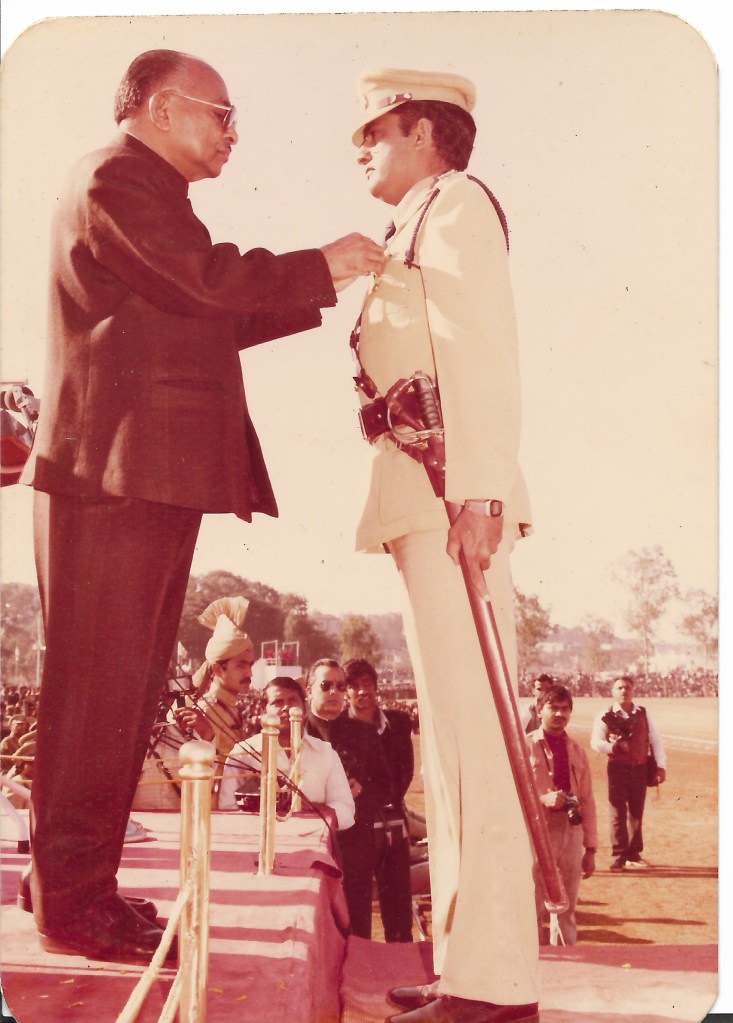
When he heard Mr Patel say, ‘These medals are to be earned, not to be purchased,’ Vijay was secretly filled with the determination to earn his own medal.

In the course of time, Vijay Raman not only earned the President’s Police Medal for Gallantry, but also went on to create history in each of his postings all over India. 

He was a simple and straightforward cop, one who was extraordinarily courageous. His untimely demise in 2023 was preceded by many near-death situations—described in this book—which he was miraculously lucky to survive. 

This is a real-life hero’s first-hand account of Paan Singh Tomar and his dacoit gang being decimated in a 14-hour dusk-to-dawn encounter; the surrenders of Daku Malkan Singh and Phoolan Devi; leading from the front and putting an end to the notorious terrorist Ghazi Baba; investigating the infamous Vyapam scam; dealing with the horror of the gas tragedy in Bhopal; guarding the life of four Indian prime ministers as one of the handpicked officers of the Special Protection Group; and beating the Guinness World Record for circumnavigating the globe. 

The chronicles of Vijay Raman form a book of adventure, of remarkable events—giving readers precious insights into the making of a legend. As he reviewed the book’s final chapters, he asked his wife Veena incredulously, ‘Did I Really Do All This?’

About the Author

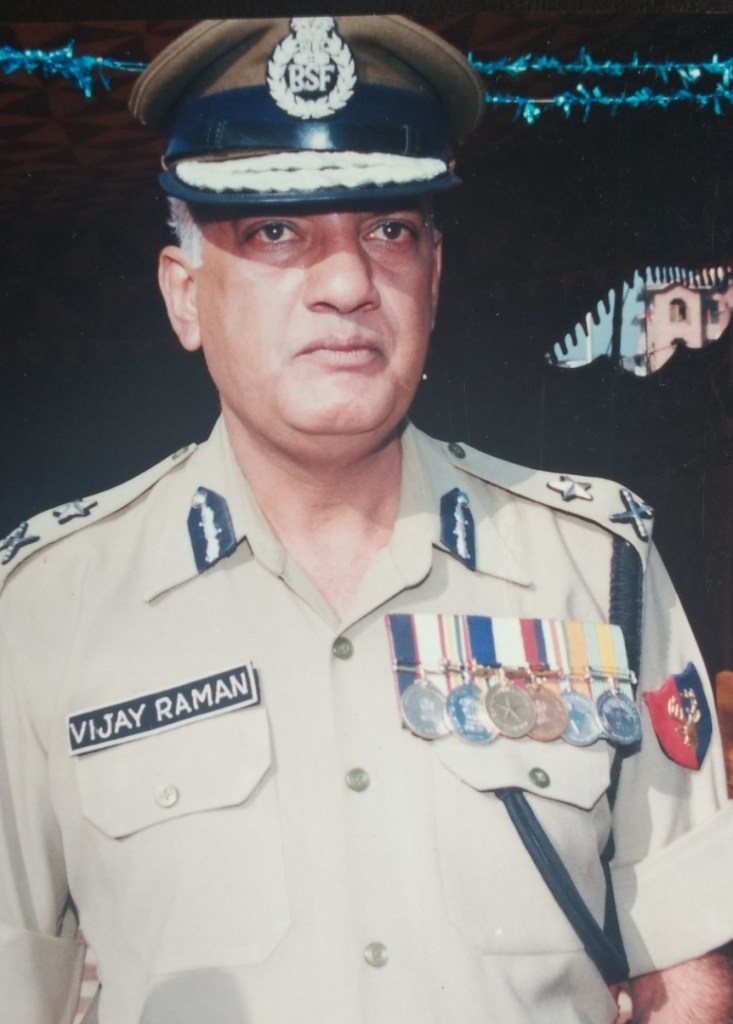
Vijay Raman, an IPS1 officer of the Madhya Pradesh cadre, was a legendary figure in Indian policing, celebrated for spearheading the elimination of dacoit Paan Singh Tomar and his gang in Chambal, and later leading the operations that liquidated the dreaded terrorist Ghazi Baba.

Growing up in Kerala and later a gold medallist in law at M.S. University Vadodara, his career achievements were spread across India. He also broke the Guinness World Record for circumnavigating the globe! 

Vijay Raman’s bravery, intellect and striving for adventure were always secondary to his integrity; he was committed to upholding the law in even the most complex situations. He passed away in 2023.

Click here to read more about the book and the writer.

  1. Indian Police Service ↩︎

.

PLEASE NOTE: ARTICLES CAN ONLY BE REPRODUCED IN OTHER SITES WITH DUE ACKNOWLEDGEMENT TO BORDERLESS JOURNAL

Click here to access the Borderless anthology, Monalisa No Longer Smiles

Click here to access Monalisa No Longer Smiles on Kindle Amazon International
Categories
Conversation

An Officer and a Gentleman: Vijay Raman in Focus

Ratnottama Sengupta, introduces the late Vijay Raman and converses with Veena Raman, the widow of this IPS[1] officer, about his book, Did I Really Do All This: Memoirs of a Gentleman Cop Who Dared to be Different. The memoir was recently launched by Sengupta and brought out posthumously by Rupa Publications.

Vijay Raman’s success as a police officer was not merely a personal triumph. The career of this IPS officer traced the changes in the history of India’s security measures. India’s police organisation in 1947 — the Intelligence Bureau, Assam Rifles and CRPF[2]  — were legacies from the British Raj. The 1962 Indo-China War led to the creation of the ITBP[3]; the 1965 war with Pakistan formed the BSF[4]. Investments in the Public Sector Undertakings led to the establishment of CISF[5]. Indira Gandhi’s assassination in 1985 led to crafting of SPG[6]. The sabotaged crash of Air India’s Kanishka[7] and the Operation Blue Star prompted the formation of NSG[8], and the 2008 terror attack on Mumbai was followed by NIA[9]. Vijay Raman’s life was intertwined with these organisations. He was also responsible for bringing in a number of terrorists and dacoits, including the notorious women dacoit, Phoolan Devi[10] (1963-2001)…He died last year.

In this conversation, Veena Raman[11] reflects on his life and his memoir, Did I Really Do All This: Memoirs of a Gentleman Cop Who Dared to be Different.

Veena this book is a tribute to a police officer who brought honour to his uniform. Having met Vijay Raman I know how wonderful a person he was – deeply loved by not only his family and friends but also many VIPs he interacted with in his professional life. Is this your way of mourning his sudden demise?

When Vijay passed away we — my son Vikram, daughter-in-law Divya, grandson Shaurya and I — were devastated. The cruel illness was swift and relentless: within months he grew weaker before our eyes, and before we were ready to accept the loss. We had no choice but to face it. While we tried to console each other Vikram said, “Mamma we should be grateful that we had him for all these years. After all, Papa was that proverbial cat with nine lives!”

Really?

Absolutely. And why nine? I can give you 19 instances in our years together when his life was in danger and he miraculously escaped. 

I am all ears Veena!

At the very outset, in November 1978, when Vijay was in his first posting as assistant superintendent of police (ASP) in Dabra, Madhya Pradesh, a country-made bomb was flung at his jeep by agitating students in Gwalior. It fell and exploded nearby. Fortunately, no one was harmed.

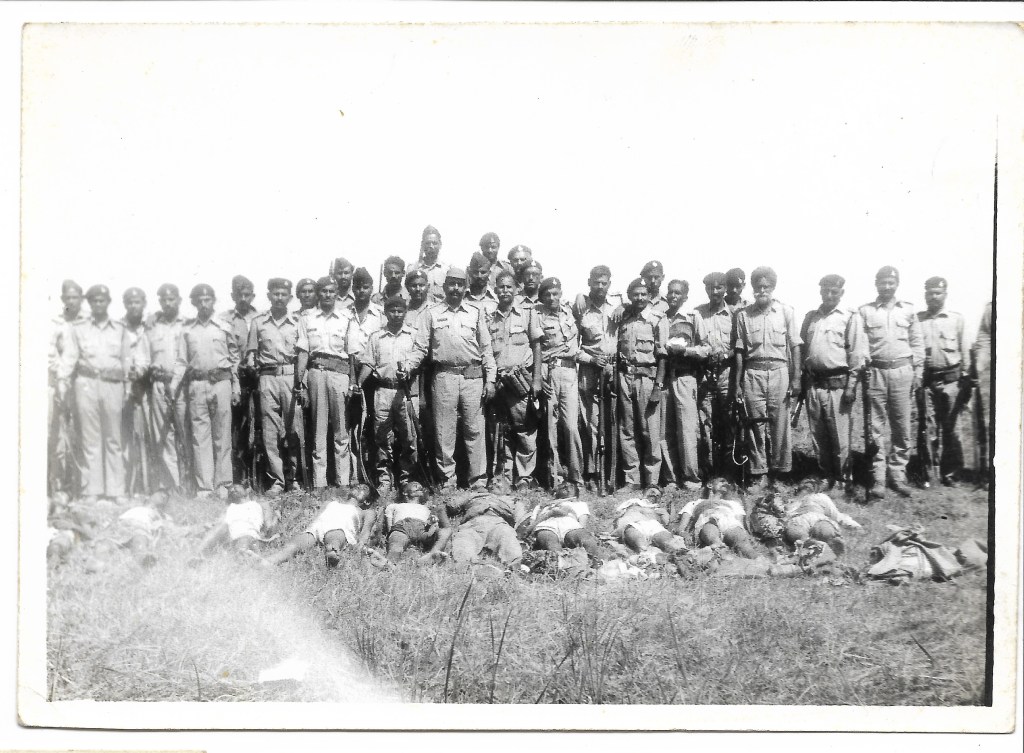
In 1981, based as he was in the Chambal, notorious for dacoits who stalked the nooks and crannies of the ravines, my illustrious husband had already faced dacoit encounters. The most dramatic of these took place in October, when he led the team that wiped out Paan Singh Tomar who, with his gang, had terrorised the region for years. As he describes in the book, bullets had rained on the encounter team from all sides, caught in the crossfire between the dacoits and the police.

The Pan Singh Tomar gang after a dusk to dawn encounter submits to the police: Photo provided by Veena Raman

He was superintendent of police (SP), Special Branch in Bhopal when the world’s worst industrial disaster took place. On the night of 3 December 1984, more than 40 tons of methyl isocyanate (MIC) gas leaked from the Union Carbide pesticide plant. At exactly that time Vijay was driving to the railway station. “Why inconvenience the driver to stay up late when I want to receive my parents myself?” he had argued. 

Within minutes the gas had created havoc. He was shocked to see hundreds killed and untold hundreds maimed. Somehow he and his parents, so close to the scene of destruction, were spared.

In 1998, as inspector-general of police (IGP) Security, Jammu and Kashmir, while Vijay was in Srinagar, a bomb blast took place on the route during the hour he routinely travelled to office. He was saved that day because his driver had taken an alternative route!

In 2000, as IG-Border Security Force (BSF), Jammu, Vijay was responsible for erecting a much-needed part of the fence between Pakistan and India under highly adverse conditions. Enemy bullets rained down from across the border throughout the operation. That forced him to take some daring and potentially controversial decisions. How very relieved and thankful we were when he came home safe!

Vijay was appointed IG, BSF, Kashmir, in 2003 with the secret mandate to get Ghazi Baba, the mastermind of the 2001 attack on the Indian Parliament. Along with an informer, he had gone on an undercover exploration of the site where the encounter eventually took place. Most unexpectedly the informer pointed out the man himself! Vijay instinctively tried to open the car door and rush out to apprehend the terrorist. The informer roughly pulled him back and screamed to the driver to step on the accelerator and escape immediately. Later the informer explained that Ghazi Baba never left his lair unless he was strapped with explosives, and an attack would have spelled explosions that would have been the end of everyone in the vicinity. 

Did he ever face a situation that he regretted? 

One of the most dangerous situations Vijay ever faced in his risk-fraught career was as Special Director General (DG), Anti-Naxal Operations of the Central Reserve Police Force (CRPF). In April of 2010, many of his men were massacred in Dantewada by Naxalites. The loss weighed so heavily on him that his health declined: he neglected his meals and even forgot to take his medicines. He had moved from the headquarters in Chhattisgarh to Kolkata; Vikram and I were in Delhi. We understood the intensity of what he was going through only later, when he suffered a stroke.

Did your angst-ridden years end with his retirement?

Not really. For, four years after he retired, in 2015, Vijay was handpicked to be a member of a special investigation team (SIT) to investigate the Vyapam (Vyavasayik Pariksha Mandal[12]) examination scam. This was a challenging assignment because the entrance examination admission and recruitment had been going on since the 1990s and had come to light only in 2013.

Did he do anything that was not challenging? What got him a place in the Guinness Book of World Records?

Vijay came close to death even in the personal adventure he undertook with a friend. Together they circumnavigated the globe in an Indian-made car in the last 39 days of 1992. Don’t forget, that was an era when Indian manufacturing was just coming of age. Though this tremendous feat earned him a place in the Guinness Book of World Records, he was exposed to danger of a different kind. For 39 days, they drove at very high speeds, in different countries, different terrains, and different political climates. Let alone sleep on a bed, many a night they could not even catch 40 winks. And still they had only one accident! Yes, it left him badly injured, but he found the strength to complete the challenge and beat the record.

Doesn’t every policeman court danger — even death — in the course of duty? What made him stand apart from other men with stripes?

True, every policeman faces bullets in the course of duty. And Vijay, throughout his career, was inviting them, to see what they could do to him. His faith in the divine, in his own destiny, made him fearless. How very fortunate we were that, time and again, they were deflected.

Another thing that made him stand out was his sheer artlessness. In a field of work steeped in the dregs of humanity, he stood unwavering by the principles of human rights and democracy. Again, fortunately, he came out unscathed, retaining faith in humanity all through life.

This dream run surely merited documenting. And Vijay had a flair for writing. So why did he not pick up the pen until the last hours of his life?

It was indeed a dream run. And that was precisely why I urged Vijay for years to write a book. Yes, many people have achievements, but his narrative was different. Winning without challenges is victory, but winning after overcoming challenges is history! 

I remember that, when you visited us in Pune in 2019, you had said that the range and scope of what he had done, deserved to be recorded. I myself maintained that the consistently straightforward way in which he had done it, had to be recorded for posterity. But whenever this was suggested Vijay would say, “Who would be interested in such a book!” 

None of us agreed with him. We read books by many other police officers which made it clear that Vijay’s experiences were unique. While the others excelled in certain areas of policing, Vijay’s was a whole range of spectacular achievement! 

He may be the only police officer in the country who has dealt with all the aspects of policing — and been successful at each. He was at the forefront of dealing with the changing nature of crime in the country and also at the epicentre of varied policing challenges. 

Doesn’t he write about how his actions led to change in tackling crime and criminals?

Yes, his successes invariably led to major changes in the law-n-order situation in the region. In Bhind, removing the Paan Singh[13] gang led to the surrender of a large number of dacoits who previously considered themselves invincible. This list includes the most notorious Malkan Singh[14] and the celebrated Phoolan Devi. 

Surprise visitor Dacoit Malkhan Singh (right) with Vijay Raman Photo provided by Veena Raman

Similarly, when Vijay initiated the Indo-Pak border fencing, it was a major deterrent because most of the infiltration was from Jammu and there was a marked decline once the fence came up. Ghazi Baba too was seen as invincible, so the encounter destroyed a formidable opponent and also sent a clear message to enemies across the border.

Vijay’s success was not merely personal triumph. His career as an IPS officer traces the changes in the history of India’s security measures, right?

Indeed, his life and career were intertwined with an entire spectrum of events that enhanced the security of Indians. But let me point out that his daily life also contained an extraordinary range of experiences. He grew up in a village in Kerala, and later lived in villages among the most primitive of peoples in other Indian states. But he also lived in the cities, a privileged urban Indian. He had travelled in bullock carts on rutted roads and often walked 30 km in the course of an ordinary day through ravines. And he had also jetted across the world with the prime ministers he protected. 

Vijay exemplified the essential truth of India being one, from Kashmir to Kerala!

Without a spec of doubt Vijay was that quintessential Indian who was intimately connected in different ways to the length and breadth of India. He grew up in Kerala, the deepest south, and spent some of the most significant years of his career in Jammu and Kashmir, the farthest north. His higher education took place in Gujarat; when he retired, we came to live in Pune.

The western part of India was his beloved home as an impressionable youngster, and then again in his final years. There were formative experiences in the east when, as a probationer in the Police Academy, he was taken to explore and understand India’s verdant Northeast. And he was in Calcutta for induction training at the ordnance factory, and later during his stint as Special Director General, Anti-Naxal Operations of the CRPF.

With these influences of north, south, east and west, it was only fitting that Vijay should be allotted the Madhya Pradesh cadre, at the very heart of India.

And he met his darling wife – then a hockey champion – in Nagpur! How did you meet? And how did you sustain your enchantment when the miles kept you in different corners of the land?

Vijay was an excellent writer. Of late I’ve been reading his letters to me over the years, from before we were married as well as during the tenures of separation induced by our work and careers. I can only marvel at his intellectual ability. Even at a very young age, he articulated his thoughts and feelings beautifully, and the letters reflect his tendency to introspect often, and be constantly self-critical. 

I see a proud wife sitting before me.

I have always been extremely proud to be the wife of such an exceptional human being. But Vijay disliked being praised. At the peak of achievement, when his heroic deeds were earning him medals and he was surrounded by people singing his praises to the sky, when he was achieving success after success, he tried to ignore it all. Specifically he would tell me, “Please Veena, you don’t praise me. It’s all right that so many people are praising me. But if you start doing it, it’ll go to my head.” 

Stupidly, I took him at his word. Of course, I boasted to others that the outstanding police officer was also the best husband, and the best father, ever. Even in the 1970s, when so few women had careers, he supported my ambitions. He knew he was marrying a woman who had her own dreams, who wanted to see the world. And yes, he knew that I had not learnt to cook! 

I admired many other things about him. His commitment to perfection no matter how inconsequential the task. His commitment to service, to justice, to humanity. His love for reading. His wry sense of humour. His care for his parents and members of both our families. The deep respect he drew from whosoever knew him well — his family, his colleagues, his subordinates, his superiors, and even many criminals he came in contact with in the course of his duties. 

But because he stopped me from praising him, I could never convey to him in words how much I admired him. It was only when he grew weaker that we worked fast and furious to get down on paper all that he was telling us. And as we approached the final pages of this book he said to me, with some surprise and wonder, “Veena, did I really do all this?”

So this book is Vijay’s story in his words. When he became too weak to speak, and when we lost him, my memories continued to pour in and I took the liberty to fill a few gaps. 

May his legacy live on!

Vijay Raman at work with a kidnap victim. Photo provided by Veena Raman
The A B C of Vijay Raman

Adventure: Awarded citation in Guinness Book of World Records and Limca Book of Records for his around the world tour in an Indian Contessa car in 39 days 7 hrs 55 minutes
Brains: Gold Medals in Law
Courage: Presidents Police Medal for Gallantry

Experience: Over 34 years of rich experience in General Administration, Policing, handled PM Security, CM Security, anti-dacoity operation in Chambal, anti- terrorist operations in Jammu & Kashmir , anti-Naxalite operation, Investigated Vyapam Scam.

Awards
• Presidents Police Medal for Gallantry.
• Presidents Police Medal for Distinguished Service
• Presidents Police Medal for Meritorious Service.
• Gold medals in Law

Click here to read an excerpt from I Really Do All This: Memoirs of a Gentleman Cop Who Dared to be Different

[1] Indian Police Service

[2] Central Reserve Police Force

[3] Indo Tibetan Border Police

[4] Border Security Force

[5] Central Industrial Security Force

[6] Special Protection Group

[7] 1985 crash of AI 182 to London

[8] National Security Guards

[9] National Investigation Agency

[10] Phoolan Devi (1963-2001) was married at the age of eleven and sexually assaulted before she became a dacoit. She was jailed for eleven years and then joined politics till she was assassinated.

[11] Veena Raman retired as General Manager Marketing, Madhya Pradesh Tourism, after serving for 29 years. After retirement, she joined two NGO organisations, University Women’s Association Pune and Pune Women’s Council working towards empowerment of women. She was part of the national hockey team of India in 1975.

[12] Madhya Pradesh Professional Examination Board

[13] Paan Singh Tomar (1932-1981) was an Indian athlete and soldier who became a dacoit due to family feud.

[14] Malkan Singh (born 1943) is a former dacoit who has turned to politics

.

Ratnottama Sengupta, formerly Arts Editor of  The Times of India, teaches mass communication and film appreciation, curates film festivals and art exhibitions, and translates and write books. She has been a member of CBFC, served on the National Film Awards jury and has herself won a National Award. 

.

PLEASE NOTE: ARTICLES CAN ONLY BE REPRODUCED IN OTHER SITES WITH DUE ACKNOWLEDGEMENT TO BORDERLESS JOURNAL

Click here to access the Borderless anthology, Monalisa No Longer Smiles

Click here to access Monalisa No Longer Smiles on Amazon International

Categories
Editorial

Where Are Those Happy Days?

Festivals are like friends.

They bring hope, solace and love to those who believe in them. But, when the structures holding the fiestas in place start to crumble, what do we do then?

Our lives have moved out of wilderness to cities over centuries. Now, we have covered our world with the gloss of technology which our ancestors living in caves would have probably viewed as magic. And yet we violate the dignity of our own kind, war and kill, destroy what we built in the past. The ideological structures seem ineffective in instilling love, peace, compassion or hope in the hearts of the majority. Suddenly, we seem to be caving in to violence that destroys humanity, our own kind, and not meting out justice to those who mutilate, violate or kill. Will there be an end to this bleak phase? Perhaps, as Tagore says in his lyrics[1], “From the fount of darkness emerges light”. Nazrul has gone a step further and stated clearly[2], “Hair dishevelled and dressed carelessly/ Destruction makes its way gleefully. / Confident it can destroy and then build again …Why fear since destruction and creation are part of the same game?”

And yet, destruction hurts humans. It kills. Maims. Reduces to rubble. Can we get back the people whose lives are lost while destruction holds sway? We have lost lives this year in various wars and conflicts. As a tribute to all the young lives lost in Bangladesh this July, we have a poem by Shahin Hossain. Afsar Mohammad has brought in the theme of festivals into poetry tying it to the current events around the world. In keeping with the times, Michael Burch has a sense of mirthlessness in his poems. Colours of emotions and life have been woven into this section by Malashri Lal, Luis Cuauhtémoc Berriozábal, Fhen M, Shamik Banerjee, George Freek, Matthew James Friday, Jenny Middleton and many more. This section in our journal always homes a variety of flavours. Stuart MacFarlane has poems for Wordsworth… and some of it is funny, like Rhys Hughes’ poem based on photographs of amusing signposts. But then life has both sorrows and laughter, and poetry is but a slice of that as are other genres. We do have non-fiction in a lighter vein with Hughes’ story and poem about pizzas. Devraj Singh Kalsi has given a tongue in cheek narrative about his library experiences.

Suzanne Kamata has written for us about her visit to Rwanda. Farouk Gulsara has pondered over humanity’s natural proclivitiesWiccan lore has been discussed by Rajorshi Patranabis. And Snigdha Agrawal has tuned into humour with her rendition of animal antics that overran festivities. Ravi Shankar, on the other hand, has written about the syncretic nature of festivals in Kerala. Professor Fakrul Alam has given a nostalgic recap of Durga Puja during his childhood, a festival recognised as an “Intangible Cultural Heritage of Humanity” by UNESCO, and known for its syncretic traditions where people from all backgrounds, religions and cultures celebrate together.

Festivals have also been taken up in fiction by Tanika Rajeswari V with a ghostly presence hovering over the arrangements. Paul Mirabile has taken us around the world with his story while Saeed Ibrahim writes from his armchair by the Arabian sea. Sahitya Akademi winner for his children’s stories, Naramsetti Umamaheswara Rao, has showcased peer pressure among youngsters in his narrative.  

Two stories have also featured in our translations. Christine C Fair has rendered Veena Verma’s Punjabi story about an illegal immigrant into English. Hinting at climate concerns, Sharaf Shad’s fiction, has been translated from Balochi by Fazal Baloch. Tagore’s powerful poem on Africa has been brought to Anglophone readers by Debali Mookerjea-Leonard as well as his inspiring lyrics, Andhokaarer Utso Hote (From the Fount of Darkness), by our team. Nazrul’s vibrant lyrics, Shukno Patar Nupur Paye (With Ankle Bells of Dried Leaves), has been rendered into English from Bengali by Professor Alam.

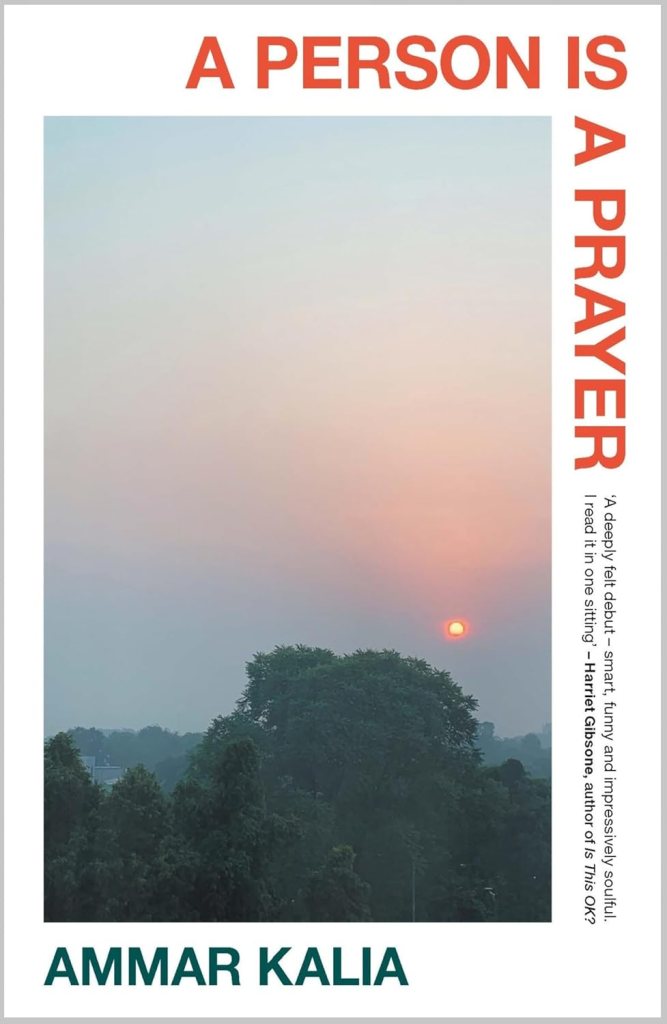
Our reviews explore immigrant stories in fiction with Somdatta Mandal reviewing Ammar Kalia’s A Person Is a Prayer. Bhaskar Pariccha has written about Selected Works of Vyasa Kavi Fakir Mohan Senapati, edited by Monica Das. Fakir Mohan is a legendary writer from Odisha. Meenakshi Malhotra has discussed a book on another legend, Safdar Hashmi, one of the greatest names in street theatre in India. The book is by Anjum Katyal and called, Safdar Hashmi: Towards Theatre for a Democracy.

Our book excerpts usher good cheer with a narrative by Ruskin Bond from Let’s Be Best Friends Forever: Beautiful Stories of Friendship. And also hope with a refugee’s story from Ukraine, which travels through deserts, Italy and beyond to US and has a seemingly happier outcome than most, Lara Gelya’s Camel from Kyzylkum. This issue’s conversations take us around the world with Keith Lyons interviewing Lya Badgley, who has crossed continents to live and write. Malashri Lal, the other interviewee, is an academic and writer with sixteen books under her belt. She travels through the world with her poetry in Mandalas of Time.

Huge thanks to the Borderless team for putting this issue together – the last-minute ties – and the art from Sohana Manzoor. Without all this, the edition would look different. Heartfelt thanks to our contributors without whose timely submissions, we would not have a journal. And most of all we thank our readers – we are because you are – thank you for reading our journal.  As all our content, despite being indispensable, could not be mentioned here, do pause by our content’s page for this issue.

We wish you a wonderful month!

Cheers,

Mitali Chakravarty

borderlessjournal.com

[1] Tagore’s Andhokaarer Utso Hote (From the Fount of Darkness)

[2] Nazrul’s Proloyullash translated by Professor Alam as The Frenzy of Destruction

Click here to access the content’s page for the October 2024 Issue.

.

READ THE LATEST UPDATES ON THE FIRST BORDERLESS ANTHOLOGY, MONALISA NO LONGER SMILES, BY CLICKING ON THIS LINK.

Categories
Excerpt

Let’s Be Best Friends Forever

Title: Let’s Be Best Friends Forever: Beautiful Stories of Friendship

Publisher: Talking Cub, Speaking Tiger Books

From ‘The Tunnel of Friendship’ by Ruskin Bond

I had already started writing my first book. It was called Nine Months, but had nothing to do with a pregnancy; it referred merely to the length of the school term, the beginning of March to the end of November, and it detailed my friendships and escapades at school and lampooned a few of our teachers. I had filled three slim exercise books with this premature literary project, and I allowed Azhar to go through them. He was my first reader and critic. ‘They’re very interesting. But you’ll get into trouble if someone finds them,’ was his verdict.

We returned to Shimla, having won our matches against Sanawar, and were school heroes for a couple of days. And then my housemaster discovered my literary opus and took it away and read it. I was given six of the best with a Malacca cane, and my manuscript was torn up. Azhar knew better than to say ‘I told you so’ when I showed him the purple welts on my bottom. Instead, he repeated the more outrageous bits he remembered from the notebooks and laughed, till I began to laugh too.

‘Will you go away when the British leave India?’ Azhar asked me one day.

‘I don’t think so,’ I said. ‘My stepfather is Indian. My mother’s family have lived here for generations.’

‘Everyone is saying they’re going to divide the country. I think I’ll have to go away.’

‘Oh, it won’t happen,’ I said glibly. ‘How can they cut up such a big country?’

‘Gandhi will stop them,’ he said.

But even as we dismissed the possibility, Jinnah, Nehru and Mountbatten and all those who mattered were preparing their instruments for major surgery.

Before their decision had any effect on our life, we found a little freedom of our own—in an underground tunnel that we discovered in a corner of the school grounds. It was really part of an old, disused drainage system, and when Azhar and I began exploring it, we had no idea just how far it extended. After crawling along on our bellies for some twenty feet, we found ourselves in complete darkness. It was a bit frightening, but moving backwards would have been quite impossible, so we continued writhing forward, until we saw a glimmer of light at the end of the tunnel. Dusty, a little bruised and very scruffy, we emerged at last on to a grassy knoll, a little way outside the school boundary. We’d found a way to escape school!

The tunnel became our beautiful secret. We would sit and chat in it, or crawl through it just for the thrill of stealing out of the school to walk in the wilderness. Or to lie on the grass, our heads touching, reading comics or watching the kites and eagles wheeling in the sky. In those quiet moments, I became aware of the beauty and solace of nature more keenly than I had been till then: the scent of pine needles, the soothing calls of the Himalayan bulbuls, the feel of grass on bare feet, and the low music of the cicadas.

World War II had just come to an end, the United Nations held out the promise of a world living in peace and harmony, and India, an equal partner with Britain, would be among the great nations…

But soon we learnt that Bengal and Punjab provinces, with their large Muslim populations, were to be bisected. Everyone was in a hurry: Jinnah and company were in a hurry to get a country of their own; Nehru, Patel and others were in a hurry to run a free, if truncated, India; and Britain was in a hurry to get out. Riots flared up across northern India.

At school, the common room radio and the occasional newspaper kept us abreast of events. But in our tunnel Azhar and I felt immune from all that was happening, worlds away from all the pillage, murder and revenge. Outside the tunnel, there was fresh untrodden grass, sprinkled with clover and daisies, the only sounds the hammering of a woodpecker, and the distant insistent call of the Himalayan barbet. Who could touch us there?

‘And when all wars are done,’ I said, ‘a butterfly will still be beautiful.’

‘Did you read that somewhere?’ Azhar asked.

‘No, it just came into my head.’

‘It’s good. Already you’re a writer.’

Though it felt good to hear him say that, I made light of it. ‘No, I want to play hockey for India or football for Arsenal. Only winning teams!’

‘You’ll lose sometimes, you know, even if you get into those teams,’ said wise old Azhar. ‘You can’t win forever. Better to be a writer.’

One morning after chapel, the headmaster announced that the Muslim boys—those who had their homes in what was now Pakistan—would have to be evacuated. They would be sent to their homes across the border with an armed convoy.

It was time for Azhar to leave, along with some fifty other boys from Lahore, Rawalpindi and Peshawar. The rest of us—Hindus, Christians, Buddhists, Sikhs and Parsis—helped them load their luggage into the waiting British Army trucks that would take them to Lahore. A couple of boys broke down and wept, including our departing school captain, a Pathan who had been known for his unemotional demeanour. Azhar waved to me and I waved back. We had vowed to meet again some day. We both kept our composure.

The headmaster announced a couple of days later that all the boys had reached Pakistan and were safe. On the morning of 15 August 1947, we were marched up to town to witness the Indian flag being raised for the first time. Shimla was still the summer capital of India, so it was quite an event. It was raining that morning. We were in our raincoats and gumboots, while a sea of umbrellas covered the Mall.

(Extracted from Let’s Be Best Friends Forever: Beautiful Stories of Friendship, with an introduction by Jerry Pinto. Published by Talking Cub, the children’s imprint of Speaking Tiger Books.)

ABOUT THE BOOK

 An Afghan trader and a young Bengali girl form a touching connection that transcends cultural barriers in Rabindranath Tagore’s classic story ‘The Kabuliwala’. Jo March and Laurie from Little Women meet at a dull party and become companions for life. L. Frank Baum’s timeless characters Dorothy and Toto adventure around Oz forging magical bonds of friendship.

The brave queen of Jhansi and her ally Jhalkaribai come together to fight for freedom and dignity; Jesse Owens narrates an inspiring tale of sportsmanship and solidarity from his Olympic days; and twelve-year-old Kamala and her friends, Edward, Amir and Amma, endure the Partition riots together in Bulbul Sharma’s heart-warming story.

In these pages you will also meet Nimmi and her best pal, Kabir, whose school misadventures include spirited debates; Sunny, whose love for books leads to a new friendship on a trip to Darjeeling; Cyril and Neil, who face life’s challenges with inventive word games, and Siya, who discovers that true friends can come in the most unexpected forms—even as a cherished doll.

Animal lovers will delight in the escapades of Gillu, the charming squirrel, Harold, the handsome hornbill, Rikki-tikki-tavi, the loyal mongoose, Hira and Moti, the powerful oxen, and Bagheera, the brave panther who looks after the young boy Mowgli.

With stories from beloved and popular authors—Ruskin Bond, Rudyard Kipling, Mahadevi Varma, Jerry Pinto, Shabnam Minwalla, and many more—Let’s Be Best Friends Forever is an enchanting collection that celebrates the universal power and beauty of friendship.

.

PLEASE NOTE: ARTICLES CAN ONLY BE REPRODUCED IN OTHER SITES WITH DUE ACKNOWLEDGEMENT TO BORDERLESS JOURNAL

Categories
Essay

Memories of Durga Puja by Fakrul Alam

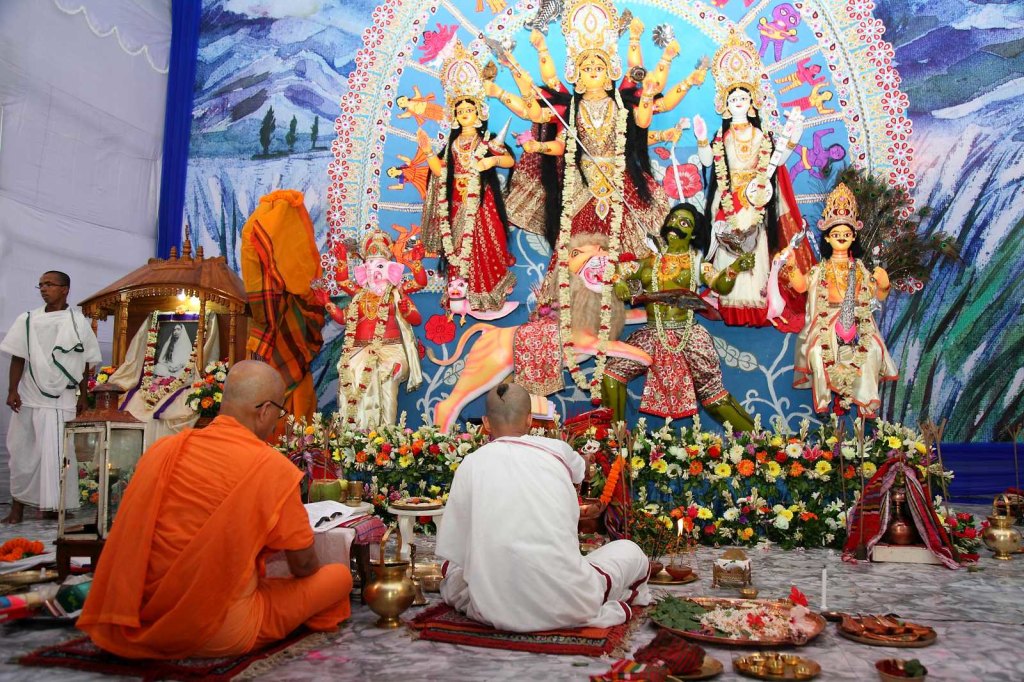
Ramakrishna Mission Durga Puja, Dhaka. From Public Domain

The very first time I heard Shah Abdul Karim’s [1]heart-stirring song “Age Ki Shundor Din Kataitam[2]”, I was transported to my childhood years in Dhaka’s Ramakrishna Mission Road, where we revelled during Durga Puja. Karim remembers lyrically “how happily” he and other village youths would spend their childhood days, “Hindus and Muslims/Singing Baul and Ghetu songs all together.” Karim’s song always strikes a responsive note in my heart because I recall how joyously my friends—whether Muslim or Hindu—and my family members would spend the Puja days every year in our Ramakrishna Misson Road paara or neighbourhood. Although my memories of those days have dimmed considerably by now, one thing I still remember clearly is this: after the two Eids, Durga Puja was the most important festival to light up our young lives then. Alas, those days are gone, not only for me, but for most people growing up in a paara in Dhaka.

One explanation for the spontaneity with which we would participate in the Ramakrishna Mission Puja festivities was demography. Our paara consisted mostly of Muslims but also of not a few Hindus. Our nearest neighbours, for instance, were two Hindu families. True, the events leading to 1947 Partition had created a divide of sorts between people speaking the same language but belonging to different religions, yet, on most occasions, we interacted freely with each other. Every day we would hear the ululations linked to prayers in our Hindu neighbour’s house just as they would listen to the azaan[3] drift into their homes five times a day from our neighbourhood mosques (sans loudspeakers!), summoning the faithful to join the congregation. On Puja days, they would send us prasads[4] and we too would share sweets our mothers would cook for our religious festivals with them. Pakistan was very much a state built around one religion, but do I deceive myself or were ordinary people much more secular and much less bigoted then?

Another reason for the ease with which we moved in and out of Ramkrishna Mission stemmed no doubt from the attitudes of the people who directed Ramkrishna Mission. Much like the Catholic American missionaries who ran the school and college where I would get my basic education, the saffron-clad men of this mission were always tolerant of paara children irrespective of their religion. We were allowed to play football in the Mission field, bathe in its pond for hours, pick the bokul flowers from its trees or while they were strewn in the shades, chat for hours on its lawn, or read in its reading room. Occasionally, one of the missionaries who would spend most of their time meditating or leading prayers for Hindus, would even drop in for a chat with my parents, both devout Muslims but very pleased to have others in our midst. Sure, there were limits even then, for we would not go inside Hindu prayer rooms, and our Hindu friends would never disturb us during our prayer times, but open-mindedness and forbearance ensured that most of the spaces we lived in in our community were shared ones.

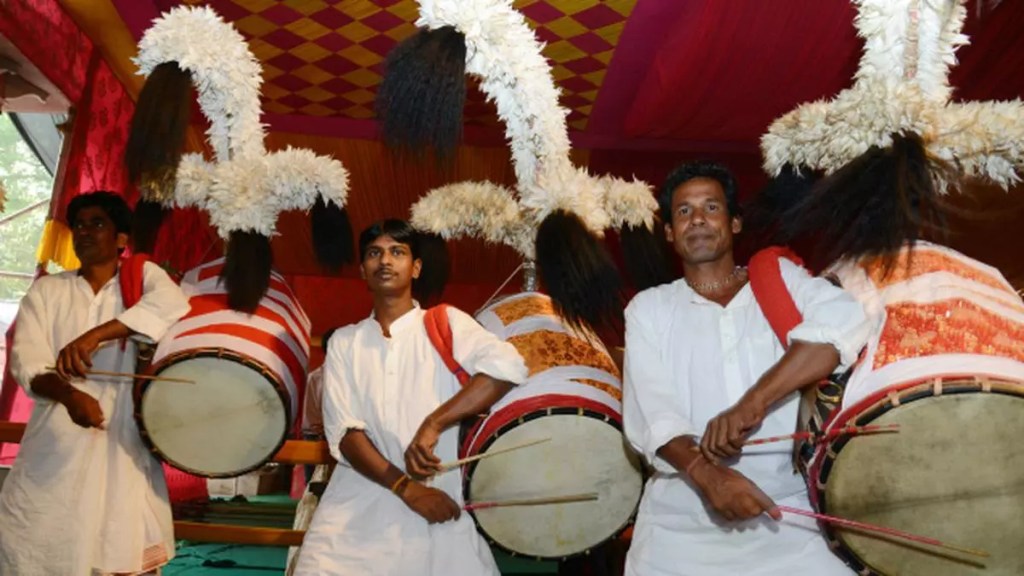
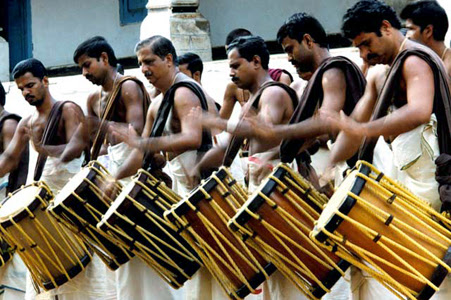
Dhakkis or drummers performing. From Public domain

In any case, Durga Puja in Ramkrishna Mission was the most memorable experience of another religion I have ever had. The moment we would hear the tak dum tak dum of the drums pervade the spaces of our neighbourhood in the mostly warm but occasionally hot and humid end-autumnal days full of fleecy clouds in nearly always blue skies, our hearts would flutter. Those thrumming, magical beats announced unmistakably that the time for another fun-filled Saradiya[5]Puja week had come! The dhakkis or drummers, I do believe, were our Pied Pipers, for we would sprint like the spellbound children of Hamlin then to the open field in front of the mission prayer hall the moment we heard them. We would find them there pounding away on their drums, swaying and smiling and showing off their skills on those ponderous-seeming but colourfully decorated and deep-echoing dhols!

The whole of Ramkrishna Mission became a spectacle of sights, smells, and sounds for the next few days. No matter where or when we went to the Mission during the festival, we would experience a riot of colours, a medley of sounds, and a range of flavours that made the Durga Puja days[6] unforgettable. During Durga Puja, Ramkrishna Mission was truly in the carnivalesque mode, for there was an unmistakable mela or fair-like quality to it.

Hindu men and women would come dressed in their fineries, the married women glowing because of their vermillion smeared-foreheads and multi-coloured saris, the men looking happy and yet self-conscious in their bright but heavily-starched new dhotis[7], and the children beaming and giggling because of anything and everything. We too would dress up for the occasion because, whether Hindu or Muslim, this was an occasion to meet people, mingle, chat, display and (for the boys) ogle.

The sound of the drums would merge with the tinkle of manjiras[8], the chiming of bells, the unique note coming from conch shells, the ululation of women, the chanting of the mysterious but solemn-sounding Sanskrit prayers and the incessant chatter of not quite focused devotees. Indeed, there was a constant buzz in the Mission compound every day from mid-morning till late in the evening. In the Mission field, hawkers would sell hot and spicy pickles and chutneys, delectable sweet and/or sour savouries, and flavoured and syrupy drinks. At times the missionaries and volunteers would serve watery but delicious labra khichuri to anyone who cared to line up and eat from the plantain leaves. The smell of the different food items sold through the day would blend with the smoke and scent of the ceremonial dhups or incense lighted for the occasion. The press of the crowd, the feeling of excitement exuded by the people who sat to watch events or wander from place to place, and the assorted Bangla dialects heard all around us created a matchless mix.

But of course, Puja was mainly a holy occasion for the Hindus of the city. While we Muslim children did not understand a lot of what went on and were often mystified by the seemingly endless cycle of rituals, there was much to keep us absorbed in at least a few of the religious events. At the centre of the Puja, undoubtedly, were the idols built for the occasion. They are traditionally unveiled on the sixth day of the moon and placed on a pandal, a temporary structure erected for the veneration of the goddess Durga. Even if we did not know the import of all that we saw, who could not but be overwhelmed by the centrepiece, the resplendent goddess, ten weapons in her ten hands, a benign smile on her face, glowing in light golden colours, draped in a flaming red sari, standing on her lion mount, taming the demon Mahisasur.

Also awe-inspiring were the attendant deities (how “filmy” are the idols made now!). We were captivated by the welcoming melodies of “agamoni” and intrigued by the “Chandipat[9]” or reading from the Hindu scriptures. Day and night we were captivated by the rituals of anjali as the deity was offered flowers and prayers.

For most of us, one of the more fascinating moments of Durga Puja came on the ninth day, when a little girl was made the kumari, symbol of pristine beauty. But the climactic event was the immersion of the deity in the mission pond on the last day. From the morning of this day we would witness intense activity. First, devotees would begin preparations to move the deity, then the pandal would be carried to the pond to the sound of ululations, and finally the Durga would be immersed in the pond water to chants affirming her victory and predicting her triumphant return the next year.

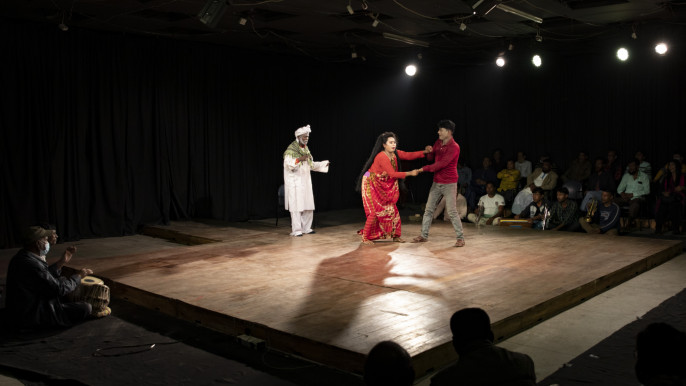
The Durga Puja days mesmerised all of us in the paara in many other ways. For instance, the dhaakis seemed to punctuate the days and nights of the Puja week with aarati[10]and ritual dances, gyrating and drumming with abandon and delighting us children. In the evenings, kirtans or devotional songs absorbed older people who were content to muse to musical tunes even in the middle of a crowd. But what fascinated most people young or old was the jatra[11] that was staged in any one of these evenings. Like the morality plays that I would read about later in my English Studies when studying the history of the theatre of Elizabethan England, this folk genre had angels and demons, characters like Vice and Conscience, music and dance, pathos and farce. In short, it was made out of a recipe guaranteed to please. Its plot, typically taken from an episode of a Hindu epic, was of the kind that would keep children as well as adults spellbound.

Jatra performed on an open (often makeshift)stage with the audience sitting all around it. From Public Domain

All in all, Durga Puja was a truly enthralling and synaesthetic experience; no wonder our senses were satiated by the end of the Puja week! The most important thing, I now realise, was that for nearly a week our paara came alive and we became part of a carnival that went on for days. And in the process our neighbourhood managed to come somewhat closer, for this was one religious occasion where differences were overcome to a great extent.

In 1967, my family moved from Ramakrishna Mission Road to another part of Dhaka and I have never been to another Durga Puja held there since then. But by 1965, a change had already come over our paara. The India-Pakistan war of 1965 had widened the rift created by Partition, a rift that seemed to have been bridged to a great extent in our neighbourhood. A few of our Hindu neighbours left for India after the war. The rest, I know from subsequent visits, have migrated to India over the decades. The Ramkrishna Mission Puja, I hear, is still a huge event, but I doubt very much if the whole neighbourhood comes alive during puja week like it did when I was there.

Will coming generations in our part of the world ever rediscover the joy that comes from knowing that despite different beliefs, people can participate spontaneously in each other’s festivals and even delight in them fully? In 1985, after six years spent in Canada, I remember walking past a Durga Puja pandal in Khulna with a nephew. I asked him, “Have you ever gone inside and enjoyed the puja festivities?”

“No,” he said, “there is a smell that comes from the dhup that they use that I can’t stand. Besides, we aren’t supposed to!” It was a moment that first made me realise that the dream of a secular, tolerant, humane Bangladesh had received a jolt in the years that I had been away. Subsequent events have been even more upsetting for those of us who believe in the values encapsulated in that part of our original (1972) constitution that was later “amended”. It is thus that Shah Abdul Karim’s song has so much resonance for me that every time I hear it, I keep thinking of the Durga Puja celebrations in Ramakrishna Mission that I had been part of once upon a time: “How happily once we village youths/ Would spend our days, Hindus and Muslims/…./ I keep thinking: we’ll never be happy like then/ Though I once believed happiness was forever/ Day by day things get worse and worse.”

(Published in Daily Star on October 20, 2007)

[1] Shah Abdul Karim (1916-2009) was a baul musician of note.

[2] Earlier, we had beautiful days

[3] Muslim prayer call

[4] Offerings of food to God

[5] Autumnal festival – Durga Puja is celebrated in Autumn

[6] Durga Puja celebrations is spread over 5 days, though the count starts from the sixth day of the lunar month.

[7] A cloth wrap worn in place of trousers

[8] Musical instrument

[9] Special chants for Durga

[10] Prayers with  offerings of incense and light

[11] Drama

Fakrul Alam is an academic, translator and writer from Bangladesh. He has translated works of Jibonananda Das and Rabindranath Tagore into English and is the recipient of Bangla Academy Literary Award (2012) for translation and SAARC Literary Award (2012).

PLEASE NOTE: ARTICLES CAN ONLY BE REPRODUCED IN OTHER SITES WITH DUE ACKNOWLEDGEMENT TO BORDERLESS JOURNAL

Click here to access the Borderless anthology, Monalisa No Longer Smiles

Click here to access Monalisa No Longer Smiles on Amazon International

Categories
Essay

A Doctor’s Diary: Syncretic Festivities

By Ravi Shankar

I fondly remember my first place of work after graduation and the lessons it taught me. My education and house surgency had prepared me well for medical practice. I was removed from the cocoon of my alma mater and learned to practice medicine in the community. I have not visited the place after I left, and the ensuing three decades must have brought about a lot of changes. Unsure if any of my colleagues are still working at the hospital.  I owe a debt of gratitude to the nurses, fellow resident doctors, specialists and others who got me started on the long road toward independent medical practice!

I recall… in the 1990s, the time was after two in the afternoon when I reached Perumpaddapa in Malappuram district of Kerala state in India. I had used public transport. Public transport in Kerala is mainly provided by private buses. I was happy to meet two of my seniors working at the KMM hospital as medical officers. The hospital had advertised a resident medical officer (RMO) post in local dailies, and I had travelled to apply for the position.

Coincidentally, two seniors both had the same name as me — Ravi, and they strongly recommended me for the position. The Medical Superintendent was a paediatrician. Based on my academic records and my friends’ recommendations, I was offered the position. The hospital was a busy one and it was my first job after graduation and house surgency. Soon we had three Ravis as RMOs at the hospital. The other two RMOs were named Abdul Ghafoor.

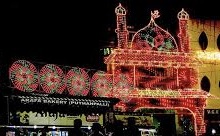
The hospital was next to the famous Puthenpalli (new mosque in Malayalam) and was located at the Southern border of Malappuram district. There was a strong influence from the neighbouring district of Thrissur where I did my undergraduate medical degree. The nearest town was Kunnamkulam. I had frequented the town many times before. We, the RMOs were posted in different departments, and had to take emergency duty in turns. There was an emergency duty room. We spent the evening and night there while on duty. The hospital had a psychiatry department and a coronary care unit (CCU). These were not common in the 1990s. In the evening, we accompanied the psychiatrist and the internal medicine specialist on their rounds in the psychiatry ward and the CCU. The hospital was not built to a central plan, and buildings had been added as per need leading to a warren of buildings and structures.

During the mornings I worked in the Paediatrics outpatient department (OPD) and assisted the Paediatricians. Our lead child specialist was very popular in the region and had a lot of patients. Most doctors working in the hospital did private practice in the afternoon and evenings. On my non-duty days, I would be free by around two in the afternoon. I stayed in a quarter provided by the hospital. The quarter was a two-story building surrounded by swaying coconut and betel nut trees. I was on the top floor and my apartment had a small sit out, a living room and a bedroom and a kitchen. There were two quarters on the top floor while the ground floor only had one large quarter occupied by our orthopaedic surgeon. There were two buildings in proximity.

The rooms had basic furniture —  armchairs, cots and beddings. There were no curtains and old fashioned open wooden cupboards fitted into the walls. These consisted of wooden planks and frames recessed into the wall. These are often depicted in older Malayalam movies.

I occasionally made house calls. The region had a lot of individuals working in the ‘Gulf’. Remittances had made the region prosperous.   

It was a short three-minute walk to the hospital. Puthenpalli was a popular place for pilgrimage. The mosque contains the maqbara (grave) of a renowned Sufi saint, Sheik Kunjahmed Musaliyar. Devotees believe that his blessings keep the place safe and radiant. The consecrated water at the mosque is believed to have divine healing powers.

Puthenpalli Nercha[1] was the annual festival and drew pilgrims from far and wide. Ghee rice was distributed to the pilgrims and the needy. Ghee rice is a popular delicacy in the Malabar region. The flavour was largely syncretic as the festival was in December around Christmas and it catered to all communities irrespective of religious inclinations. A grand procession involving elephants and traditional musical performances like Chenda Melam using the traditional drums of Kerala and Mapila Pattu… dances like Kol Kali and Duffu Muttu followed.

It is typical of Kerala that religious festivals have both a religious and a community purpose. Over centuries, different religions have co-existed in harmony. Elephant processions are common in Hindu temple festivals and are also increasingly used in church and mosque celebrations.

In the olden days these festivals were also important locations for commerce as various stalls were set up selling a variety of goods. Today with online shopping sites and home delivery this may be less important though the shopping attraction still exists. These festivals enable people to forget the challenges of daily life and be transported to a different world for a few days. The Hindu festivals are called Poorams or Velas, the Christian ones are termed Perunnal and the Muslim ones are called either Nercha or Perunnal. Puthenpalli Nercha also boasted a mesmerising fireworks display at night.

The mosque committee served the community by running a school and an orphanage.

We were provided with food from the school hostel. The food was usually par boiled rice and sardines. We were provided with both spicy sardine curry and sardine fries. Two sardines in the curry and two or three well fried and crispy ones for both lunch and dinner. Eating the same food day after day could get a bit boring though! There would also be a vegetable that used to vary daily. And Kerala papadam. The Kerala fish curry used plenty of coconut and tamarind. A coconut and chilly paste was coated on the sardine and it was then deep fried in coconut oil before being part of the curry. Shallots, Kashmiri chillies and curry leaves are common ingredients. I discovered as you travelled up the Malabar coast toward Mangalore, the coating became less spicy.

The emergency department was busy during the evenings, but things usually quietened down at night. I always found night duty tiring as it took me a long time to go back to sleep after attending to a case. Injuries were common and we also received psychiatric patients for admission to the psychiatry ward and cardiac patients as we had an CCU. We were not sufficiently trained to handle aggressive patients. We did have a security person on duty outside the emergency. There were also other security personnel on duty at the entrance to the CCU and at different outpatient departments.     

The hospital was surrounded by village homes, and we often walked along the quiet by lanes. The quarter next to me on the top floor was occupied by a lab technician and he was good company and had a wealth of stories to tell. The buses were usually very crowded.

The coast was not far, and you could also walk on the beach and watch the fishermen set out in their boats. The mosque was usually crowded. There were no academic activities at the hospital, and we learned by doing. We would get a break after finishing our night duty and I used to combine my leaves and spend two or three days with my uncle in Palakkad once every two months. KMM hospital was a good place to work. I eventually left to join a small hospital and clinic at Areacode further north in the same district.

[1] The Perumpadappu Puthen Palli Nercha is a Muslim festival that celebrates Marhoom Kunji Mohammed Musaliar. https://www.keralatourism.org/1000festivals//assets/uploads/pdf/1515486704-0.pdf

.

Dr. P Ravi Shankar is a faculty member at the IMU Centre for Education (ICE), International Medical University, Kuala Lumpur, Malaysia. He enjoys traveling and is a creative writer and photographer.

.

PLEASE NOTE: ARTICLES CAN ONLY BE REPRODUCED IN OTHER SITES WITH DUE ACKNOWLEDGEMENT TO BORDERLESS JOURNAL

Click here to access the Borderless anthology, Monalisa No Longer Smiles

Click here to access Monalisa No Longer Smiles on Kindle Amazon International
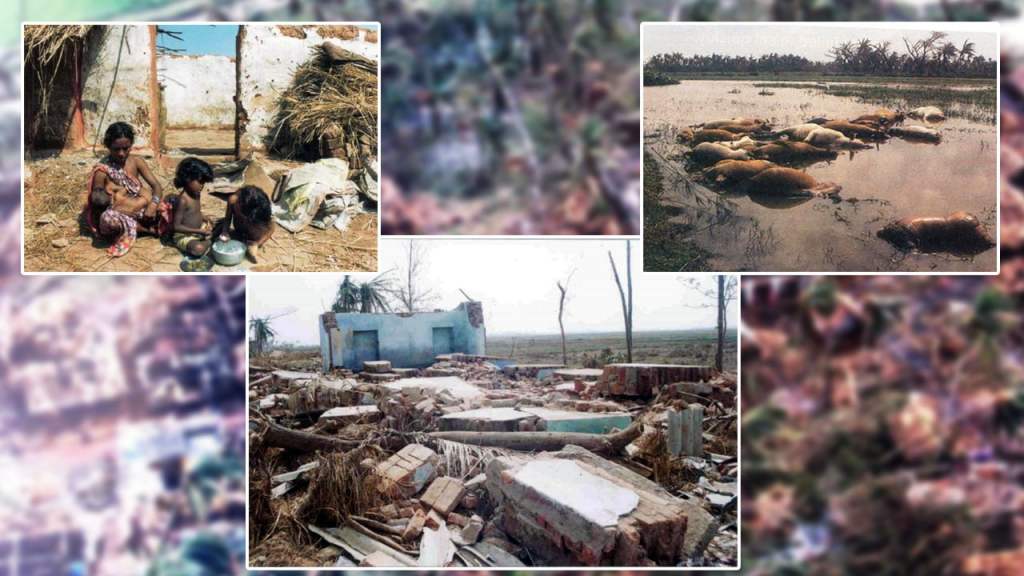
Categories
Review

Weaving Strands of the Past to Create an Imagined Place

Book Review by Somdatta Mandal

Title: A Person Is a Prayer

Author: Ammar Kalia

Publisher: Penguin Books

“This novel became a way to collect the strands of the past, to pull these disparate lives together and to give me an imagined place to stand upon.”  Ammar Kalia

Debut novels have a unique quality – the author takes extra care to deliver his best, whether in the form of storyline, or setting or stylistic devices. And though either subconsciously or deliberately borrowing from family history, he always tries to justify that the novel is not autobiographical, but a piece of fiction. A similar thing takes place with Ammar Kalia, the author of this novel under review, who is a writer, musician and journalist living in London. Beginning and ending his narration in March 1955, he tells us the story of the Bedis, a Punjabi family who went through multiple migrations from India to Kenya and then to England. Like all diasporic Indians in search of their roots and still longing for somewhere they can call home, and find ‘something to belong to’, Kalia got the idea to develop this novel when he came to India in 2019, especially to Haridwar, to spread his grandmother’s ashes in the Ganges. As he stood in the dust near the river, several questions popped up in his mind – where did my grandparents grow up? How did they meet? Why did they move multiple continents in a lifetime (from Asia to Africa to Europe)? What were their dreams? Why did I never ask them anything important?

With all these questions lurking in his mind, Kalia opens Part I of the novel in March 1955 with a detailed description of how his grandfather Bedi’s marriage was arranged with a girl called Sushma through a middleman. Coming from far off Nairobi where he was the son of an engine driver and had seven other siblings, he came all the way to India, but Bedi was a tourist and not a prodigal son. We are given the details of the bride-viewing, the discussions of both parties on what they want and what to expect, and finally give the green signal to marry.

Part II of the book jumps straight ahead to February 1994, and it is located in London and Bournemouth where Bedi was spending his time trying to erase the past and not to be engaged in his three grown kids’ lives anymore, wanting to be left alone, to be respected from a distance, to ultimately be ignored. The story of his life in England is like all immigrants who had to make that a new home and go on living with the hope that maybe one day they would be able to go back. After mentioning the generation gap and how the children would not be stuck between continents, there is a sudden catastrophe in the family when Sushma goes out for a last-minute shopping trip for the family get-together and dies after meeting with a street accident. Everything goes haywire in their lives.

The story then moves ahead to September 2019 with three long sections comprising Part III of the novel and is narrated by the three siblings – Selena, Rohan and Tara – who come to India along with their family members on a ‘dreaded pilgrimage’ to scatter their father’s ashes in the Ganges at Haridwar. The heat knocked them out of their daze, and they could feel the looks of the surrounding men bearing down on them. They realsed they didn’t belong here but needed to be here as this was the only place they were meant to say goodbye. It was also a chance to reconnect with their ‘roots.’ By far the most powerful section in the entire novel, we are told how pilgrimage sites in India were dens of corrupt individuals, who tried to fleece the tourist or visitor at every step. After suffering from the heat and dust and a futile attempt to trace their father’s genealogical chart from the family records maintained by different pandits in the long family scrolls, they ultimately decide to scatter the ashes at the end of the day with the help of a new pandit and complete the ceremony for which they had travelled all the way from England.

Tara narrates:“We began to sprinkle him into the bubbling water and after each round we would watch as he dissolved like dropped candy floss in a puddle. … And now all of Dad is in the water and Sel and Rohan bow their heads for a moment of silence amid the strange harmonies of splashing, calling and praying. And I see myself, as if in a painting, unhook from their chain and step into the water, as if in my dreams, and I can feel its cold needles between my toes.”

Divided into several sub-sections and narrated in the first person, we get the detailed background and fill-up of the personal lives and family relationships of each of the three narrators. Kalia does a remarkable job here. We are told how each sibling follows a different profession, gets embroiled in different relationships, and how they ultimately behave with their own children. Incidentally, one is reminded of William Faulkner’s novel As I Lay Dying (1930), which narrates the story of the death of a matriarch in a family and keeping to her last wish, the family members carry her coffin for forty miles to the town of Jefferson to bury her next to her own kith and kin. While they are travelling, Faulkner devotes each chapter to a different family member who narrates the same incident in the first person and from a different point of view. Thus, it gives us his or her background along with the reason for travelling to Jefferson.

In the ‘Author’s Note’ at the end of the novel, Kalia categorically states: “I like to call it an act of remembrance, but it’s all fiction. It’s bringing people back to life – with those we can no longer reach. This is a story of a family like mine, but that isn’t mine; it is a novel about people hoping for a better future, longing for an idealized past and striving to survive in the present. It is about so many families.”

This personalisation and universalisation of the narration at the same time is what makes this novel a unique reading experience. Kalia’s narrative style is appreciable, and one can go through these 284 pages without feeling bored or mired into unnecessary details for long. The observant eye of a foreigner blends subjectivity and objectivity in balanced proportion and so the book is recommended for all classes of readers – serious and casual alike.

Somdatta Mandal, critic and translator, is a former Professor of English at Visva-Bharati University, Santiniketan, India.

PLEASE NOTE: ARTICLES CAN ONLY BE REPRODUCED IN OTHER SITES WITH DUE ACKNOWLEDGEMENT TO BORDERLESS JOURNAL

Click here to access the Borderless anthology, Monalisa No Longer Smiles

Click here to access Monalisa No Longer Smiles on Amazon International
Categories
Poetry

Poetry by Stephen Philip Druce

From Public Domian
THE GOLDEN FLOWER


Let the blue mountain slide,

to the pink snow abyss,

let the green city hide

from the burgundy mist,

let the copper creature wither

in an oil painting splatter,

give the new crimson river

for the silver sky to scatter,

let the violet tree tumble

in a turquoise dissolve,

let the yellow hill crumble

in a ruby moon fold,

let the purple sun sear,

let the orange lake drain,

take the red rainbow spear,

lance the cherry forest flame,

chase the claret rain away,

sink the lilac in the sea,

let the amber cloud decay

but let the golden flower be.


THE FIX

Oh what a drag,
to be a perfect
duplicate of two,

burdened with all
the characteristics
of our makers, we are
struck down with their
every trait for our
precise imitation,

once the fresh
dewy offspring shoots
in the new wind, we
rose from the good earth
as one-off hopefuls,

the first day of spring -

"damn!, I'm turning
into my mother!"
shrieked one,

"I'm turning into
my father!"
shrieked another,

"We didn't bloom
unique, we're all copies!"
chanted the endless sea
of petals, washed away
by their own tears,

true, we are our makers,

what we do,
and the way
we do it,

every detail,
passed down,
traced back,
and nobody ever
broke the mold,
never a break,

we're all sentenced
to the same fate and
there is no escape,

that's the fix,

so think twice before
you roll the dice.

Stephen Philip Druce is based in Shrewsbury UK. He is published in the USA, India, the UK and Canada. He’s written for theatre plays in London and BBC 4 Extra. 

Contact: Instagram – @StephenPhilipDruce

.

PLEASE NOTE: ARTICLES CAN ONLY BE REPRODUCED IN OTHER SITES WITH DUE ACKNOWLEDGEMENT TO BORDERLESS JOURNAL

Click here to access the Borderless anthology, Monalisa No Longer Smiles

Click here to access Monalisa No Longer Smiles on Amazon International