The description in ‘Hot Dry Summers’ is not of hell but what is perceived as happening on certain parts of Earth due to global warming or climate change. Forest fires. Nearer the equator, the storms have become harsher with lightning strikes that seem to connect the Earth to the sky. Trees get uprooted as the soil is softened from excessive rain. Sometimes, they fall on passers-by killing or injuring them. There is no rain in some places, forest fires or flooding in others… The highest temperatures touched 55 degrees Celsius this year. Instead of worrying about losing our homes lodged on land masses to the oceans that continue to rise, becoming dark heat absorbers due to loss of white ice cover, we persistently fight wars, egged on by differences highlighting divisive constructs. It feels strange that we are witness to these changes which seem to be apocalyptic to doomsday sayers. Are they right? Our flora, fauna and food will also be impacted by global climate change. How will we survive these? Will we outlive these as a species?
Poetry in our translations’ section travels to Balochistan, from where a Hafeez Rauf translated from Balochi by Fazal Baloch, talks of burning tyres, again conflicts. It takes on a deeper hue as Ihlwha Choi translates his poignant poem from Korean, reflecting on the death of his mother. We have a translation of Tagore’s less popular poem, Mrityu[1], reflecting on the same theme. His reflections on his wife’s death too have been translated by Professor Fakrul Alam who has also shared a song of Nazrul, written and composed on the death of Tagore. Another lesser-known poet but brilliant nonetheless, Nirendranath Chakraborty, has been translated for us by Debali Mookerjea-Leonard. And what a tremendous poem it is when the person called Amalkanti wanted to be sunshine! We have a story too — ‘Speech Matters’ by Naramsetti Umamaheswararao translated by Johny Takkedasila.
Our stories as usual travel around the world — from Holland (by Paul Mirabile) to Hyderabad (by Mohul Bhowmick) and with a quick pause at Bangalore (by Anagha Narasimha). Travels in the real world are part of our non-fiction. Sai Abhinay Penna takes to a the second largest mangrove forest in the world and Ravi Shankar to Colombo. Madhuri Bhattachrya gives us a glimpse of an Indian summer and Snigdha Aggrawal explores the impact of climate change in her part of the world. Farouk Gulsara actually writes his reflections at a traffic junction. And it reads droll…
We have an in memoriam by Keith Lyons on Morgan Spurlock, the documentary maker who ate McDonald fare for a month and then made a film on it. We have two tributes to two legends across time. Wayne F Burke has given a brief piece on the iconic illustrator, Norman Rockwell. And Aruna Chakravarti, the queen of historic fiction who brought the Tagore family alive for us in her two very well researched novels, Jorasanko and Daughters of Jorasanko, has given us a fabulous tribute to Tagore on the not-so common aspects of him.
Suzanne Kamata, the novelist who does a column from Japan for us normally, has spoken to us about her new novel, Cinnamon Beach, which overrides multiple manmade constructs. It’s an interesting read from someone who lives her life across multiple cultures and transcends many boundaries.
This is a bumper issue, and it is difficult to convey the vibrant hues of words that colour this edition. Please do pause by our contents page for a more comprehensive look.
This issue would not have been possible without all our fabulous contributors and a wonderful, dedicated team. We are delighted that Rakhi Dalal — who has done many reviews and shares her poetry with us in this issue — has agreed to be a writer-in-residence with us. A huge thanks to all of you, and especially Sohana Manzoor for her artwork. I am truly grateful to our readers for popularising our efforts to put together an online space with free and vibrant reads.
I would like to end with a few lines that gives me hope despite climate change, wars and doomsday predictions.
There’s more to life, he says to me, than what you choose to see.
Chembra stands out imperceptibly in the background as the mist descends over its northern side. The driver of the rickety auto-rickshaw in which I make the topsy-turvy trip from Kalpetta settles to drop me at the backpacker’s hostel at Chembra’s foothills for 500 rupees. A vast tea estate stretches out for as far as the eye can see, and it is only when one edges closer to the property’s north-western precipice is any semblance of Wayanad encountered.
Originally a hospital set up by the British in the 1920s, the hostel is a renovated colonial-style structure with a vast corridor that runs parallel to its rooms. I learnt much later that the tea estate that houses the hostel is spread over 700 acres. The fall to the northwest is spectacular, with hills in the lower range of the Western Ghats basking in the late evening sun as it makes its way down to the low-country orbs of Mysore and Chamarajanagar.
It is no surprise that one has to cross Bandipur to reach Wayanad in the first place; any easier and one would have been tempted to think that one was within the anonymity of civilisation.
*
Earlier in the day, the elephants that I spotted from an unobtrusive window on the bus from Mysore seemed triumphant and exultant — for what I did not know. The egret that sat contentedly upon the shoulders of a rather guileless water buffalo winked at me as I struggled to bring my camera out of the mishmash that my backpack had become. I was reminded of an older boy with whom I never got along in school and who often bullied me for the pancakes my mother painstakingly packed.
*
I am forced to snap out of this reverie when my hostess reminds me that elephants were spotted at the southern expanses of the property a few days ago. She asks me to not step out after dark. In the common area boasting of a sit-out on a makeshift tree house, a motley crew from all hues of life rejoice at what appears to be a joint venture launched by a businessman from Bangalore and an engineer from Bombay. I join the pack and am welcomed by a loud cheer.
John, a chartered accountant who rode all the way from Coimbatore on his imported motorcycle, recounts having seen a leopard when turning in one of the several snaking curves when climbing from Kalpetta. He slurs as he articulates and his eyes appear bloodshot; I know only too well to separate the wheat from the chaff. Advait, a veterinarian from Anantapur, rebuffs everything that John says and vociferously advocates for an early dinner. He is, quite promptly, turned down.
*
The trek towards the peak of Chembra is made through the heartland of the eponymous forest range. Langurs peer out inadvertently while a flying squirrel makes an appearance from its cosmic abode. Catching sight of me and my companions’ incongruously sunscreened visages, it jumps shyly onto the double-storied Bo where it has made its home. Murali, the young forest officer who accompanies us jokes with Estelle, the German lady who quite fortuitously chooses to trek in her Birkenstock footwear, about sightings of bears in the vicinity but restrains himself when she turns ashen white.
The heart-shaped lake peeks with unabashed curiosity as we huff and puff our way up to the midway point of the trek. To our great consternation, this is where we have to end our trip as the summit of the peak is sealed off by the government. A few years ago, Murali tells us, a group of nincompoops who made it to the summit lit a couple of cigarettes to celebrate. They did not, however, stub them when they were done. What happened next is well documented — a forest fire of gargantuan scale that wiped out about 60 hectares of forest land and claimed the lives of hundreds of wild animals. The summit has been off-limits to travellers ever since.
The parched outcrops that surround the lake by no means diminish the panorama that lies to the west. A faint countenance of the vast fields of tea and paddy which fortify the district of Wayanad is visible through the mist. It is almost noon, but my companions and I find no reason to shed our coats. Specks of Mohit Chauhan’s Phir Se Ud Chala[1] fill the air; it feels as if Chembra herself has come to life.
It is not exactly wise, but we surrender to the lure of lying down on the grass and bask, cocooned by the benevolent gaze of Chembra. Dark clouds brew overhead but Begum Akhtar reassures us in her palliative voice, and it is not before the first drops fall on my forehead that I alert the others over our predicament. Unsurprisingly, I find that most of my friends had nodded off, obliged by the exercise and the accompanying iridescent breeze.
*
The descent, as always, is trickier than the climb, and we take refuge from the rain under a giant rock midway. The shelter is insubstantial for a group of ten, and we end up getting soaked to the skin anyway. Murali, rather ingeniously, offers his service raincoat to Estelle. Much to his chagrin, she declines, and continues unabated in her soaking t-shirt, Nike track pants and Birkenstocks. Someone mentions a childhood spent in the Bavarian Alps…
Dry leaves fall from the trees — these untimely showers ensure that they are not held on to their material comforts for long — and the fauna we encountered on the way up seemed to have disappeared. The langurs call out occasionally, but the mynahs respond in dulcet tones of their own.
Drenched to the core yet alive beyond measure, the rain loses significance as we meander down the trail. Consciousness makes itself felt in every cell of my body as I lumber past the sludge and try to find a foothold on the wet tracks. Awake to the moment and mindful of not slipping — essentially holding my life in my hands — I experience a pacifying sense of tranquillity that I normally associate with timing a straight drive back past the bowler on a cloudy afternoon at the Gymkhana.
Damp pathways mark our way back to the hostel. On the way, an appetising breakfast of puttu and kadala curry[2] is sought to calm our nerves. A gulp of tea, brewed from the plants of the estate on which our hostel stands, soothes and brings some warmth back into our bodies. After that, we sleep all afternoon. The 1980s restaurant at this point serves as a reputable hotbed for the exchange of accounts as fellow travellers make their way upcountry for further investigation. Krishnagiri, Edakkal, Banasura and even Ooty, among other places, feature on their itinerary. Buses out of Meppadi take the circuitous route towards Sultan Bathery via Kalpetta. A few companions remain as I make the hike back to the hostel.
Last vestiges of the raindrops from earlier in the day cling on with pride on the tea leaves. Seen from a distance as we walk up the bend onto the track that leads to the hostel’s gates, it appears as if the leaves have shed tears of their own.
The sky turns a dull shade of orange, almost as if playing testament to friendships made and attachments uncovered. I am content enough to watch the sunset over the lower Western Ghats as another pre-monsoon drizzle wafts in. Someone mentions a fresh batch of pazham pori[3] being made in the kitchen. I scramble down the tree house to beat the rush.
[1] Song from Bollywood movie, Rockstar. Translates to: He flew again
[2] Local fare. Rice cake and spicy chick pea curry
Mohul Bhowmick is a national-level cricketer, poet, sports journalist, essayist and travel writer from Hyderabad, India. He has published four collections of poems and one travelogue so far. More of his work can be discovered on his website: www.mohulbhowmick.com.
PLEASE NOTE: ARTICLES CAN ONLY BE REPRODUCED IN OTHER SITES WITH DUE ACKNOWLEDGEMENT TO BORDERLESS JOURNAL.
The year was 1881. The city — Kolkata. Its people, caught in the throes of a social and spiritual awakening the like of which they had never seen before, were sharply divided. Spinning between two worlds—one dying; one struggling to be born–they were all protagonists, all engaged in battle. Some to keep alive and perpetuate the old; others to hasten its death and bring about the birth of the new. But there were also those who felt the pull of both. Old and new. Traditional and modern. Science and faith. One such was Narendranath Datta, eldest son of Advocate Bishwanath Datta of Shimle.
Eighteen-year-old Naren was a fine figure of a man already. Tall and muscular, with broad shoulders and a heavy frame, his large, dark eyes flashed with spirit and intelligence from a strong, handsome face. He was a brilliant student and an even better sportsman. He could fence and wrestle and was an excellent boxer. Only last year he had won the Silver Butterfly at a college contest. With all this he was a fine singer and could play the pakhawaj and esraj[1].
PakhwajEsraj
That afternoon, he was pacing up restlessly up and down Hedo Lake Park under a sullen monsoon sky. Classes were over for the day, but he didn’t want to go home.
Naren: “What shall I do? Where shall I go? Home? Na! Na! Ma has filled the house with matchmakers. But I… I can’t even think of marriage just now. Life is short. Life is precious. I must discover the truth of it first. The worth of it.
“Shall I walk down to the Brahmo Mandir? I’ve gone there often with Dipendra. I like the prayers and sermons. I even join in singing the hymns. But…the experience remains on that level. Once, unable to control the curiosity that burns continually in my breast, I was guilty of a grave impertinence. ‘Have you seen God?’ I asked the Maharshi. But he had evaded the question. ‘You have the eyes of an ascetic,’ he had replied. ‘Abandon all enquiry and give yourself over to Him. With prayer and meditation, you will experience Him some day.’ The answer told me nothing.
“I’ve read the works of Western philosophers–Descartes, Hume and Herbert Spencer and have tried to make Logic and Reason my watchwords. I’ve tried to dismiss religion as the prop of the blind and weak. But…but certain religious customs have entrenched themselves in our culture from time immemorial! Can we wipe them out in an instant. And, even if we could, wouldn’t that create a terrible void?”
He laughed self-consciously. Was this a consequence of my meeting with Ramakrishna? Na Na. Not that. Never …
A few days ago, his uncle Ramchandra Datta had asked him to accompany him to Dakshineswar. And Naren, eager to escape the matchmakers, had agreed. He had been charmed with the place. The wide flight of steps rising from the river! The immense chataal[2]dotted with temples! The river itself — vast and unending as the sea! And, then, he had been led to a tiny room in the north west corner where, on a simple wooden chowki[3], sat a little dark man with a gap between his teeth and tiny, twinkling eyes. His hair and beard were unkempt and his coarse, half-soiled dhuti[4]rose to his knees. But the sacred thread that lay across his bare torso was thick and shining white. “Thakur,” Ramchandra Datta led the boy forward, “This is my nephew Naren. He sings well.” The man smiled and nodded encouragingly. And Naren, who enjoyed singing, dropped to the floor and sitting cross legged, a hand at one ear, commenced in a rich baritone…Mono Cholo Nijo Niketane…mind go to your own abode …
Ramakrishna in a trance
Ramkrishna went into a trance. He returned to consciousness and rushed up to Naren.
Ramakrishna: “I know you, my Lord! You are my Narayan! Why did you take so long in coming to me?”
Naren: (to himself) “The man is mad. Stark, raving mad! What do I do now? (Aloud) Let go of me. Please let go…”
Ramakrishna: “I will. If you promise to come again.”
Naren: (sternly) “I promise but I want to ask you a question first. Have you seen God? Tell me the truth.”
Ramakrishna: “Yes. I have seen God. As clearly as I see you standing before me.”
Naren had promised Ramakrishna that he would go to him again. But he had no intention of keeping his word. His reasoning told him that the man was a liar and a lunatic. But why was his heart saying something else? Why was it urging him to redeem his promise? He made a fresh resolve. He would go to Dakshineswar one last time and tell Ramakrishna, politely but firmly, that their worlds lay apart and he had other things to do.
A few days later Naren and his friends were enjoying a meal in an English hotel when he suddenly rose to his feet and walked out leaving everyone gaping in astonishment. Walking all the way to Dakshineswar, he barged into Ramakrishna’s room.
Naren: “I have just eaten what Hindus call forbidden meat. (His eyes challenged the priest) Now do what you need to do with me!”
Ramakrishna: “O re! Do you think My Mother will peep into your stomach to see what you hide in there? Beef and pork? Or vegetables and greens? She looks only into the heart. And yours is as pure as gangajal[5].” He put his arm around Naren’s shoulders. “See. I have touched you. Am I changed in any way?”
Naren: (aggressively) “How do you know where Your Mother looks or does not look? You claim you see Ma Kali and talk to Her. But I say your claim is false. I believe, like the Brahmos, that God is an abstraction–neither seen nor heard.”
Ramakrishna: (murmurs) “God? …. God is akin to a vast sea; an unending stretch of water. But when true faith is breathed upon it the water congeals and turns into ice—solid, tangible. And only then one sees God. Don’t I see you, one of the seven rishis, standing before me?”
Naren came home and thought long and hard. What did it all mean? Why had Ramakrishna called him one of the seven rishis[6]? Was the man mad? Or did he truly believe what he was saying? And, as the boy groped, his heart beat out the answer — dim and muffled but consistent. He, Naren, had assumed that faith and logic were polar opposites, and one could survive only by denying the other. But what if the two were one and the same? Ramakrishna saw faith as empathy in any relationship — human or divine. He saw Naren as that part of himself he considered his Godhead. Which was why his faith in him was unassailable. What a wonderful concept that was! Could he, Naren, ever establish that kind of empathy with anyone? Man or God? Wouldn’t his spirit deepen; grow richer if he could?
And now Naren understood one thing clearly. He was special because Ramakrishna thought him so. And he would have to carry the burden of love and faith placed on him, throughout his life, and make himself worthy of it…
A few months later Naren’s life changed dramatically. His father died and, as the eldest son, the responsibility for the family fell on him. Bishwanath Datta had been a prosperous advocate but, having always lived beyond his means, had died a pauper. What was worse he had left a trail of debts. Death had come to him so swiftly and suddenly — his wife and children reeled under the blow.
Vivekananda or Naren’s ancestral home in modern day Kolkata
With the creditors baying like a pack of wolves outside the door, Naren was forced to look for employment. He had no idea it would be so difficult. The streets were flooded with job seekers. Naren ran from pillar to post then, weak and exhausted with starvation and fatigue and crushed under a sense of defeat, he decided to run away from it all; to become a sadhu[7] and wander among the mountains. People would blame him for evading his responsibilities. They would call him an escapist. But he didn’t care…
Dakshineswar
Somehow, he didn’t know how, Ramakrishna got wind of his resolution and sent for him. Naren didn’t want to go. The man aroused all sorts of strange sensations in him. His body vibrated violently to Ramakrishna’s touch; his head swam, and his limbs felt weightless. Waves of rapture passed over his soul. Then, suddenly, he became his old, tormented, doubting, questioning self. He couldn’t bear these contradictions and decided to keep away. But Ramakrishna drew him like a magnet. Naren struggled against a current he didn’t understand for days, then succumbing, went to Dakshineswar. Ramakrishna took the boy’s hands in his and burst into tears. Something like a giant wave of light passed from those gripping hands and washed over Naren’s soul. His body trembled with ecstasy, and, in an instant, the truth lay bare before him. This little priest of Kali knew everything; saw everything. He sensed Naren’s suffering and suffered with him. The fire went out of the headstrong, stubborn boy. Loud sobs racked his chest and he clung to Ramakrishna’s hands as if they were his only hope.
Ramakrishna: “Naren re! It’s been so long since I’ve seen you. S-o-o long!”
Naren: (blubbering like a child) “You say you talk to Ma Kali. Why don’t you ask her to give us some food? I’ve heard you call her the Goddess of Mercy; the succour of the poor and wretched. Am I not poor and wretched? Why doesn’t she cast her eyes on me? My mother and brothers are starving…”
Ramakrishna with Naren
Ramakrishna: “Why don’t you ask her yourself?”
Naren: “How can I do that? I don’t know her.”
Ramakrishna: “You don’t know her because you don’t care to know her. I have an idea. Today is Tuesday. Go to her quietly when she’s alone and tell her what you want from her. She’ll give it to you.”
Late that night, when everyone was asleep, Ramakrishna sent Naren, practically by force, to the temple of Kali. The torch of knowledge trembled as enlightened India took her first cautious steps into an unknown realm. A vision, dim and shadowy, of something beyond the tangible world was driving out judgment and debate. Reason was about to surrender to faith, logic to intuition, as Naren stepped into the womb of the temple where Ma Kali stood. An earthen lamp, flickering in a corner, cast a soft glow over the naked form, black as night and of breath-taking beauty. A pair of glittering eyes gazed intently into Naren’s as he walked on unsteady feet and sank to his knees before Her…
Suddenly, a tremor passed through his limbs, making the blood leap up in his veins. He had seen — yes, he was sure he had seen the exquisitely chiseled lips part in a smile. He shut his eyes and opened them again. Yes — there it was. A smile of love and tenderness. And was it, could it, be… triumph? He thought he saw the image sway gently. But the room was full of shadows. Perhaps he was imagining it all! In his desperation he tried to revive all his old arguments; to summon up the logic and reason that had sustained him all these years. But he felt them slipping away. His eyes were glazed. Strange currents were running in his blood — sweeping him away. In the poorly lit room, swaying between patches of light and shadow, the image of the smiling goddess was trembling into life.
Naren: “Ma…Ma… Ma go![8]” Naren called again and again; stopped and looked around as though puzzled. “Why am I calling out to her? What do I want from her? Ah! Yes. I want food for myself and my family.” He shook his head vehemently. “Na Na. She’s the Mother of the three worlds! And she has smiled on me. How can I ask her for mundane things like food and clothes?” Naren knocked his head on the floor and cried out wildly. “Give me knowledge! Give me faith! Give me light! And above all these give me strength. Strength to suffer and endure! Strength to renounce!”
Ramakrishna was ill. He had been suffering from a bad throat and violent fits of coughing for some months now. His disciples had moved him from Dakshineswar, where the river air was cold and clammy, to a house in Baranagar. They had also sent for several doctors who diagnosed his ailment as Clergyman’s Sore Throat. But their treatment wasn’t working. Ramakrishna’s health was deteriorating day by day. His tongue was bloated to twice its size and was covered with sores. And to drink even a drop of water was agony.
At length Dr. Mahendralal Sarkar was called in. He was the most reputed doctor of Kolkata. He was also the harshest and most unpredictable. Yet, looking at the slight figure lying on the wooden chowki, he asked with a rare gentleness, ‘Where does it hurt?’
‘I feel a swelling in my throat the size of a rose apple.’
‘Open your mouth. Let me take a look.’
Ramakrishna obeyed, his eyes fixed fearfully on the stern face above his. Looking down at the torn, bleeding, ravaged organ the doctor’s eyes softened and he shook his head thoughtfully. “What is the diagnosis doctor?” Naren whispered, drawing him aside.
“Karkat Rog.” A shadow passed over Mahendralal’s face. “The sahebs call it cancer.” But within seconds he was his usual cut and dried self. Turning to the patient he said roughly, “I’m leaving some medicines. Take them regularly. And talk as little as possible. The world can do without your eloquence…”
Naren’s face reddened. “He’s our guru,” he said angrily, “Our link with God. He merits your respect.”
“Hunh!” The doctor gave a snort of contempt. “Why can’t man leave God alone and do his work on earth as best as he can? Why…”
“His work is the discovery of God,” Naren interrupted, his face flaming, “Just as yours is the spread of Science.”
Mahendralal laughed. “Has any man obsessed with God, be he Jesus, Chaitanya or Buddha, been content to make it a personal quest? No. He has to scream his lungs out and pull crowds along with him. Anyway– they were not my patients so what they did is none of my business. But this man is.” Fixing his large, fiery eyes on Ramakrishna he said sternly, “Remember what I said. No sermons and homilies. Give your voice a rest — for the present at least.”
Two days later Ramakrishna vomited blood — great globs splattering on his clothes, bed and all over the floor. Groaning with pain he beckoned Naren to his side, and holding his hands, looked deep into his eyes. “I give you all I have,” he said in a hoarse whisper, “From this moment I’m a pauper. I have nothing left. Nothing.” Then, his glance falling on his wife, Saradamoni, as she stood weeping in a corner, he said, “I leave her in your care.” Fixing his eyes on his wife’s pale, drawn face he said, “Do not weep. Naren will be to you the son you never bore.”
At these words something stirred in Naren’s brain. An image rose before his eyes — of a bleeding, battered body hanging from a cross; a pale emaciated brow crowned with thorns; a dying voice murmuring… “Mother…Behold thy son.” Sharp, scalding tears rose to Naren’s eyes and he wept like a child.
Ramakrishna died after midnight, two days later. His disciples thought he was in bhav samadhi[9]. For his eyes were open and his fingers twirled in the air. A thin whirring sound, like that of a clock work toy, was coming from his half open mouth. They moved around him chanting mantras and singing kirtans[10] — all except Naren, who jumped to his feet and ran all the way to Mahendralal Sarkar’s house. But the doctor, when he came, didn’t even touch the patient. “Start making arrangements for the cremation,” he said quietly, “He’s gone.”
One of the disciples, fearful of a sharp rebuke, murmured nervously, “He’s in bhav samadhi Daktar Babu.”
The doctor’s eyes were somber and his voice gentle as he answered, “I’m an ordinary physician who was given the privilege of ministering to a great soul. But I recognise the end when I see it. He is not in a state of bhav samadhi this time. It is maha samadhi[11].”
Swami Vivekananda and other disciples at the Mahasamadhi of Ramakrishna on Sunday, August 15, 1886.
There were a few distinctive features about the funeral procession that wended its way to Neemtala. One of the mourners held a Hindu trident, another a Buddhist spud. A third had a Christian cross in his hands and a fourth a replica of the crescent moon and single star– symbol of Islam. Ramakrishna had preached the concept of jata mat tata path (there are as many paths to God as there are faiths) and, even in their hour of desolation, his disciples hadn’t forgotten it.
Not many people had heard of Ramakrishna. Consequently. the number of mourners was pitifully small. The funeral processions of some other sadhus of the city had contained thousands. Ramakrishna’s numbered a little over a hundred. But one of them …was equal to a million.
Exactly four hundred years ago, to the day, a Italian sailor named Christopher Columbus had set sail on a discovery of India and landed, instead, on the shores of America. To mark that epoch making event a great festival was being organised in the city of Chicago of which an important feature was the coming together of spiritual leaders from all parts of the world. Invitations had been sent to Jews, Muslims, Buddhists, Confucians, Taos, Shintos and Zoroastrians along with representatives from the Roman Catholic, Greek Orthodox and Protestant Churches. Even Brahmos and Theosophists had been invited. The only religion left out was Hinduism. And that was because Americans knew nothing about it. From what they had heard, it was a savage, primitive cult whose members worshipped monkeys, elephants and rivers. The speakers sat in rows on either side of Cardinal Gibbons –Head of the Catholic Church of America. There was a young man among them; a youth in his twenties with strong, handsome features and dark, flashing eyes. He wore a loose robe of orange silk and a turban of the same material. There was something riveting about his appearance and many eyes turned to look at him.
“Who’s he?” Someone whispered from the audience.
“A Hindoo.” Another whispered back, “From India. His name is …let me see…S-o-a-m-i…very difficult to pronounce…S-o-a-m-i Viv…Viveka…Ananda.”
Naren’s metamorphosis from a whimsical lad to a representative of Hinduism at the Parliament of Religions was owing not so much to his own efforts as to a sequence of events that had carried him on its wings. After Ramakrishna’s death he took serious stock of his situation. ‘Who am I?’ he asked himself, “And what should I do with my life?” The answer came to him readily. He was an ascetic. And the true ascetic was rootless and free like a river that needed to flow to keep its waters pure and clear. He took a decision. He wouldn’t stagnate in this little Bengal. He would explore every inch of this huge country and see what it was like.
And thus, Naren’s travels began. He went from place to place without aim or direction. If anyone gave him food, he ate it. If not, he went hungry equally cheerfully. Sometimes someone bought him a railway ticket. But, more often than not, he had only his legs and lathi to take him forward. Everywhere he went he impressed everyone with his knowledge, dignified bearing and fluent English. Gradually his fame spread. More and more people were talking of the scholarly young man who was steeped in the wisdom of the East yet as liberated in thought and spirit as any European. He started receiving invitations from the royals of India. From Hyderabad, Alwar, Kota and Khetri.
While staying in the palace of Raja Ajit Singh of Khetri, Naren had an experience he would never forget. One evening, on entering the Durbar Hall, he was surprised to see a woman sitting on a carpet facing the Raja who lay sprawled on satin cushions surrounded by his courtiers. She was beautiful, though somewhat past her youth, and dressed in rich silks and jewels. She was singing a love song with smiles and provocative gestures. Naren’s back stiffened and his nostrils dilated in distaste. The choleric temperament and intolerance he had taken such pains to subdue flared up in him and he turned to leave the room. Suddenly the woman rose to her feet. Abandoning the song, she was singing she started on another. The song was a bhajan[12], Prabhu avagun chitta na dharo — Lord, hold not my sins against me.
Naren stood at the door, his feet rooted to the ground. His heart thudded painfully and a voice within him whispered, “You call yourself a sadhu! Yet you judge this woman!” Suddenly Ramkrishna’s eyes swam into his vision. Soft and sad. Holding oceans of mercy! And, in a flash, he saw the woman — not as she stood before him, wanton and voluptuous — but as a human being who carried within her a spark of that same godhead that irradiated his own soul. His eyes softened. He entered the room and took his place with the others.
Naren wove back and forth like a shuttle over the vast tapestry that was India. And, wherever he went he saw illiteracy and superstition, poverty and abuse of power. The caste system was like an insidious web trapping and choking the life breath out of the people. “To hell with Hinduism!” he muttered bitterly. “What is the worth of a religion which humiliates and rejects its own followers? True morality lies in feeding the hungry, nursing the sick and comforting the comfortless.”
Kanyakumari with the Vivekananda rock Memorial, where Naren attained enlightenment
It took Naren four years to tour the whole country. Then, one day, he came to the end of his journey. Reaching Kanya Kumari, he sat on a rock jutting out of the sea. A vast expanse of blue green water stretched, as far as the eye could see, on three sides. Behind him was India. Sick, starving, suffering India! Burying his face in his hands he wept; deep harsh sobs racking his starved, fatigued body. But his mind was clear. He had to find food for his countrymen. He could think of their souls and his own afterwards. But how was that to be done? Science was the answer. Scientific knowledge and modern equipment had to be imported from the West and used to grow more food for the masses. But no one gave anything for nothing. What could his country give in return?
He thought for hours and, slowly, the answer came to him. Weak and enfeebled though she was, India had something the West had lost. Christianity was under severe stress, reeling under a weight of doubt and speculation. Despair was setting in. But India had a spiritualism that went back thousands of years. It had survived the shocks and traumas of innumerable invasions and still stood firm. Give us food and we will give you a philosophy. That could be India’s slogan. He would take this message to the West. But how? Suddenly an idea struck him the enormity of which made him spring up, trembling, to his feet. He would go to Chicago and speak at the Parliament of Religions.
Implementing the decision was easy. Funds were raised by his admirers –the largest donation coming from Raja Ajit Singh of Khetri. And it was the latter who designed the costume he would wear at the Conference and gave him his new name. And thus, Narendranath Datta became Swami Vivekananda[13].
Swami Vivekananda at the Chicago Parliament of religions (1893)
And now the hour, for which he had undertaken a long and hazardous journey, was at hand. Naren walked towards the rostrum his heart thudding violently, his mind blank. Looking with glazed eyes at the sea of faces before him he tried to think of his guru Ramkrishna, tried to recall Ma Kali’s face as he had seen it on the night of his first spiritual experience. But, strangely, another face swam before his eyes — the face of Saraswati, the Goddess of Learning. “Have mercy on me Ma!” he prayed, “Unlock my tongue and give me speech.”
Taking a deep breath he began: “Sisters and Brothers of America.” As an opening sentence, this was an unusual one. People started clapping, a few at first, then more and more joined in. Naren was puzzled. Western audiences were generous with their applause. He knew that. But this was something more than ordinary applause; something he couldn’t fathom. Stirred by an emotion he had never experienced before, his fears fell away. His voice rose sonorous and strong:
“I am proud to belong to a religion which has taught the world both tolerance and universal acceptance… As different streams, having their sources in different places, all mingle their water in the sea, so Oh Lord, the different paths that men take through different tendencies, various though they appear, all lead to thee…”
The applause rose to a crescendo. Like a mighty storm it washed over the vast hall, in wave after deafening wave. People rose from their chairs and ran towards the rostrum. The other speakers stared at one another. What had the young man said that they hadn’t? Everyone had, at some point or the other, advocated tolerance of other religions. What they didn’t realise was that their discourses had been academic exercises. Naren had spoken from the heart and, in doing so, had won over the hearts of the Americans.
Swami Vivekananda was in a fix. As soon as it became evident that the young ascetic had the power to draw crowds the go-getting Americans lost no time in making a few dollars out of it. A Chicago firm, The Sleighton Lysium Bureau, offered to organise tours in various towns and cities of the United States for the dissemination of his message. Vivekananda signed the three-year contract with alacrity but regretted his decision within a few months. His managers drove him relentlessly from forum to forum and what began as a joyous interaction soon became a painful drudgery. He also found himself out of sync with the average American mindset. They attended his meetings in thousands but most of them looked at him as though he were a rare and exotic animal and asked absurd questions.
“Hey Mr Kanand!” A man addressed him once. “Is it true that in your country mothers throw their babies into a holy river to be eaten by crocodiles?”
“Well,” Vivekananda smiled, “If my mother had done so would I be standing here before you?”
“Boys are not thrown,” another voice was heard. “Only girls…”
“Is that so?” Vivekananda’s lips twitched. “But if all girls are eaten by crocodiles, I wonder how males are born. Perhaps one of you can enlighten me.”
“Even if you deny female infanticide,” an angry voice boomed, “Can you deny suttee?”
“No. But sati has been punishable by law for many years. Now, may I ask you a question? Have you heard of Joan of Arc of France? Or of the thousands of women who were branded as witches and burned at the stake in all parts of Europe? You haven’t? That’s what I thought. The West has conveniently forgotten its own history. You will never question a Frenchman about Joan of Arc. But the moment you see an Indian you’ll make it a point to ask him about sati.”
However, not all Americans were this insensitive. Some came in a genuine spirit of enquiry and listened to him with interest. One of them was a wealthy widow named Ole Bull. Another was a charming, vivacious woman in her thirties. Josephine Macleod, for that was her name, attended all his lectures and, over the years, became a good friend and an ardent admirer.
But, in faraway England, another young woman was waiting for the call. A woman whose destiny would become synonymous with Vivekananda’s, who would, in time to come, make India her home, imbibe her spirit and culture and work for her people as though they were her own…
Margaret Noble was thirty years old–the daughter of an Irish clergyman and a spinster. Love had come to her drab, lonely existence twice but she had been robbed of them both times. Once by death and once — desertion. This last blow was harder to bear than the first and it was in this frame of mind that she first saw Vivekananda. Listening to him, she felt herself transported to another world. She saw herself standing by a well beside a banyan tree under which an ascetic, bathed in the hues of sunset, was murmuring verses in a strange, exotic tongue. The spell broke in a few seconds, and she went home. But, for days afterwards, his face swam before her eyes– a bright golden face with large dark eyes burning with power and passion. She tried to shake it off, but it kept coming back.
After this she started attending Vivekananda’s lectures regularly — though in a spirit of non-acceptance. Her education had given her rational views and she was atheistic by temperament. But though she rejected the Hindu yogi’s doctrines, she couldn’t stay away from him. Vivekananda was amused. Perhaps he heard in the young woman’s vehement denials, an echo of his own. He had ranted against Ramakrishna but gone to him again and again. Margaret, he knew, was going through a similar experience.
There was one thing, though, that had a profound impact on her. Vivekananda never once touched on the negative aspects of the human race. The word ‘Sin’ was missing from his vocabulary. He always appealed to the highest and noblest instincts of humans. “The world needs men and women,” he said once, “who can find the courage to…abandon their own small families and seek out a larger one…” These words fell like blows on Margaret’s heart. She had sought love; a husband and children–a family of her own. But they had eluded her. She didn’t desire them anymore. She would answer Swamiji’s call. She would walk in his footsteps and seek out a larger world.
Vivekananda returned to India after four years — a conquering hero! A special Reception Committee, set up by the Maharaja of Dwarbhanga, met him at Khidirpur dock and escorted him all the way to Sealdah. As the train chugged its way into the station, the air rang with a tremendous cry and the platform shook under the feet of thousands of people pushing, jostling and treading on each other’s toes to catch a glimpse of the man who had left the country as obscure, penniless Naren Datta and returned as the universally acclaimed Swami Vivekananda. Not that everyone came in a spirit of respect. Many were mere onlookers. Some others came to carp and criticise. “The man is no longer a Hindu,” they whispered to one another. “He has eaten forbidden meat and slept with mlecchha[14] women. Besides, what call has a Kayastha to don a sadhu’s robe? What is our great religion coming to! Chhi! Chhi! Chhi!”[15]
Vivekananda was unfazed–touched neither by adulation nor censure. He had his work cut out. The first thing to do was to go to Alambazar and seek the help of his co-disciples in opening a mission in Ramakrishna’s name.
“A mission in Thakur’s[16]name!” the inmates exclaimed, “Like the Christians?”
“Yes.” Squatting on the floor and taking deep puffs from a hookah, Vivekananda said, “I intend to put together a band of committed workers who will go from village to village, providing succour to the poor and needy and educating the masses especially the women of the land. And by education, I don’t mean literacy. That too. But the need of the hour is the inculcation of self-respect and self-worth in our people. India must awake from her stupor.”
From that day onwards Vivekananda turned all his energies into establishing the Mission of his dreams. It couldn’t have come at a better time for plague had broken out in the city and a severe famine was raging in many parts of Bengal. The disciples formed groups and moved from slum to slum and village to village, distributing rations, nursing the sick, burning the dead and teaching the unafflicted how to protect themselves from the dread disease. As for Vivekananda–he drove himself relentlessly though the strain was unbearable. After four years of living in a temperate climate, his body had lost its ability to cope with the heat and humidity of Bengal. He suffered from bouts of fever and dysentery but wouldn’t let up for a second.
He had his misgivings though. Funds were being organised by Ole Bull and Josephine Macleod. But how would he organise a band of women? Women, in this conservative society, refused to interact with males. He wondered what to do. Should he send for Margaret Noble?
The first glimpse of grey was paling the inky darkness of a winter night when a great ship inched its way into the estuary. Margaret Noble stood on the deck shivering, not so much with cold as with apprehension. She had severed all her links with England and come out to India. But would her new country accept her?
After Swamiji’s return, he had written to her a couple of times. Short, dry missives informing her that the Ramkrishna Mission had been established and that Ole Bull and Josephine Macleod were already there supervising the work. Not a word about her joining them. Then, six months later, the letter she had longed for and awaited, had come. A letter that had set her pulses racing despite the formal courtesy of its tone:
“Dear Miss Noble,
“I am now convinced that you have a great future in the work for India. India cannot yet produce great women, she must borrow them from other nations. Yet the difficulties are many. You cannot form any idea of the misery, the superstition, the shunning of the white skin. Then the climate is fearfully hot, not one European comfort is to be had in places out of the cities. You must think well before you plunge in. If you fail or get disgusted, on my part I promise you, I’ll stand by you unto death–whether you work for India or not.”
I will stand by you unto death…– a tremor of ecstasy passed over Margaret’s frame every time she thought of the words. Now, with doubt and fear gnawing at her heart, she repeated them over and over again like a mantra.
Belur Mathh
On alighting she sought his face eagerly in the crowd. Suddenly, a deep musical voice came from behind her. “Margot!” She spun around and got a shock. It was Vivekananda but how he had changed! He was only 34 but he looked close to 50! She didn’t know that he had been extremely ill. Diagnosed with diabetes he had been advised to make substantial changes in his diet, take a lot of rest and keep his mind calm and free. But he had shrugged off the doctor’s counsel particularly the latter part. The mathh[17]in Alambazar had been gutted by a fire and another one was coming up in Belur. Tension and anxiety had become part of his life. There was nothing he could do about it.
Sister Nivedita (1867-1911)
One evening, as they sat together looking out at the river in Belur, Vivekananda fixed his large dark eyes on Margaret’s clear blue ones and said softly, “I’m giving you a new name Margot. A new identity. From henceforth you shall be known as Nivedita. Do you know what that means? It means One who has dedicated herself.”
Fortunately for Vivekananda, the pestilence disappeared from the city as suddenly as it had come. But the grinding work and sleepless nights had taken their toll. He became very weak and had difficulty in breathing. The doctors were alarmed and ordered him to leave the dust and fumes of the city and go to the hills where he could imbibe some pure, clean air. Vivekananda had wanted to go on a pilgrimage to Amarnath for many years and he decided to do so now. Nivedita insisted on accompanying him. He was reluctant at first. It was an arduous, dangerous climb over steep jagged rocks and ice-covered terrain. The weather was wild and inclement, while the most basic amenities were missing. But Nivedita stood firm. She hadn’t come to India to enjoy a holiday, she pointed out. She had abandoned her own country and was trying to put down roots in this soil. She wanted to gain all the experience she could; to merge with the people and become one with them. Why couldn’t she do what he; what so many others were doing? Hadn’t she given herself to this country? Was not her name Nivedita?
On a dark cloudy day at dawn, a party of about three thousand pilgrims set off for Amarnath. Vivekananda and Nivedita walked side by side for a while. Then, suddenly, he left her and strode off to a ledge where a group of ascetics were flailing their arms and crying, “Hara! Hara! Bom! Bom![18]” Nivedita craned her neck to catch a glimpse of her guru. But she couldn’t see him. A throng of pilgrims had swallowed him up.
And thus, it was throughout the journey. He avoided her most of the time. Occasionally he would appear to make a gentle enquiry about her well-being or to bark out a command to the porter to secure her tent against the wind and rain and put a hot water bottle in her bed. Then he would be gone again. Nivedita walked in a crowd but alone. Footsore and weary; limbs aching with exhaustion; heart heavy as lead.
Along the mountain path the pilgrims walked, the line winding and unwinding like a giant snake. And now the path wound upwards, dramatically, over slippery snow-covered rocks for about two thousand feet. This was the last lap and the most dangerous part of the journey. Nivedita’s heart beat fast. Would she be able to negotiate it without him by her side? What if she failed? So many pilgrims lost their footing and fell down the treacherous precipices to lie there forever — buried under drifts of snow. What if she too…? Even as the thought came to her a voice, rich and resonant as a roll of thunder, called out her name. Startled she looked up to see Vivekananda leaning against a boulder smiling down at her. “Look Margot,” he said, “Look ahead of you.”
Following his pointing forefinger, she saw a stretch of level ground covered with a blanket of freshly driven snow which glimmered like a ghostly sea of silver in the light of the fading moon. At the same time, a shout of jubilation came to her ears. Singing and ululating, the frenzied pilgrims ran forward, slipping, falling, helping each other up. The perils of the journey lay behind them. Amarnath was less than a mile away.
Nivedita wanted to wait for Vivekananda. But the crowd engulfed her carrying her along on its waves. On and on she went propelled by the force of faith behind her, feet flying, arms outstretched; deafened by cries of “Hara! Hara! Bom! Bom!” Was this the merging she had envisaged and yearned for? Then why did she feel so restless? So empty?
Amarnath Temple with its shining pillar of ice
Nivedita entered the cave. In front of her was the shining pillar of ice that was the phallus of Shiva. But all she felt was a sense of anticlimax. Was this all there was to see at the end of this seemingly endless, nightmarish journey fraught with so much pain and peril? Water dripping from a crack in the roof of a cave and solidifying into a column of ice?
Vivekananda came in after a while. He had bathed in the river and his dripping body was naked except for a flimsy bit of saffron that covered his genitals. His eyes were stark and staring and his feet unsteady as he ran towards the linga[19] and flinging himself, face downwards, knocked his head on the ground. Then, rising, he stood eyes closed, head bowed over his hands, lips moving in a silent chant. Nivedita noticed that his body was swaying from side to side. As though he would lose his balance, any moment, and fall to the ground. But Vivekananda did not fall. He turned and, fixing his large bloodshot eyes on hers, cried out in a wondering voice.
Naren: “I saw Him Margot. He revealed himself before me. He who is the first in the pantheon! Deb Adideb Mahadeb[20] stood before me in a cloud of blinding light…. And you…you Margot?”
Nivedita: (shamefacedly) “To tell you the truth, I saw nothing and … and felt nothing. Nothing at all. The famed linga thousands come to see is nothing but a natural phenomenon. I’m sure there are dozens of such ice pillars in Europe.”
Vivekananda: “The eyes of your mind are shut like a newborn child’s and your soul sleeps within you. You understand nothing. Yet the great pilgrimage you undertook will not go waste. You’ll receive its fruits when you awaken–older and wiser.”
Returning to Kolkata Vivekananda flung himself into all his self-appointed tasks. But the old energy was gone. He looked and felt like a ghost of his former self. The doctors told him that his heart was severely damaged. It had gone into a shock and stopped the moment he had plunged his body, steaming and quivering with the rigours of the strenuous climb, into the icy waters of the river at Amarnath. He could have dropped down dead that very minute. But, since all organs have a way of recovering themselves, his heart had started beating again on its own. However, the muscles had slackened and it was, now, hanging an inch longer than it should. It was a dangerous condition and his condition could not improve. It could only deteriorate.
Vivekananda had lost touch with his family for many years now. But these days he found himself thinking of them often. He yearned particularly for his mother and went to see her one day. The old lady was shocked to see her son looking so sick and frail and insisted that he rest, excusing himself from his excruciating schedule. Extracting a promise from him to take her on a pilgrimage to Langalbandha, on the banks of the Brahmaputra, where Parasuram had been absolved of the sin of matricide, she cooked a meal for him and fed him with her own hands as though he was a child.
On his way back from Langalbandha, at Dhaka, Vivekananda had an unforgettable experience. It was a hot humid evening and, exhausted from meeting streams of people, he was standing on the balcony in the hope of catching some cool air when he noticed a phaeton at the gate surrounded by people clamouring in agitated voices.
A few minutes later, two women entered the room. One was stout and elderly; her face coarse and darkened with the ravages of her profession. The other was young and a ravishing beauty. “Sadhu Maharaj,” The older woman knocked her head on the ground at Vivekananda’s feet. “This is my daughter. No one would guess, looking at her, that she is very sick. She suffers from asthmatic attacks so severe–she screams with agony. We’ve come to you from very far with a lot of hope.”
“But I’m not a doctor,” Vivekananda smiled. “I try to cure the ills of the mind. And even in that I’m not very successful. I know nothing about the body.”
“Everyone says you are the greatest sadhu living. Read a mantra over my child’s head and release her from her suffering.”
“If I knew such a mantra, I would read it over myself. I’m an asthma patient, too, and suffer excruciating pain at times.”
“You’re testing me my lord!” The woman burst out weeping –harsh, racking sobs rasping out of a chest congealed with years of repressed grief. “I’m a lowly woman led astray in my youth…”
“I’m not testing you Ma,” Vivekananda shook his head sorrowfully. “Sadhus are human like the rest of mankind. If they had the power of bestowing life and health would they not be immortal themselves?”
The woman continued to weep and plead. “Touch my daughter and give her your blessing,” she begged. “That will be mantra enough for her.”
Suddenly the girl rose to her feet and pulled her mother up by the hand. Hate and anger flashed into her beautiful surma-lined[21] eyes. “You’re wasting your time Ma,” she said. “We’re fallen women–despised by everyone. He won’t touch me.”
Vivekananda smiled. Stretching out his hand he placed it on the girl’s head. “If by blessing you I can soothe your pain away I do so with all my heart. Now you must do something for me. If you find a doctor or a sadhu or anybody who can cure your asthma be sure to let me know. I suffer such terrible agony at times– I would be grateful for some relief.”
Nivedita was on a tour of Europe and America to collect donations for the Ramakrishna Mission. Away from the country she gained a clearer perspective. She saw India’s poverty, ignorance and subservience under an alien rule. She felt her pain and humiliation as she had never felt before. She told herself that the first task before anyone who loved India was to rid her of the foreign yoke.
While in America she heard of the great Japanese philosopher, Count Okakura, and his dream of creating a vast Asian race that could overpower the European. Okakura was in India, already, meeting people and pledging support on behalf of his own and several other countries of the east — not moral support alone but military and financial as well. An overjoyed Nivedita decided to abandon what she was doing and throw herself into Okakura’s movement. Swami Vivekananda heard about Nivedita’s return and felt disturbed and angry.
Nivedita: “Count Okakura is launching a movement for the independence of India. He wants me to accompany him to Mayawati. I’ve come to take your permission.”
Vivekananda: “Independence. Hmph! Is it a piece of candy you can snatch away from the British? Who doesn’t know or admit that living under a foreign rule is humiliating? But backwardness, ignorance and superstition are deep rooted social evils which have to be removed first. Freedom will follow. You’re chasing a mirage, Margot.”
Nivedita: “Why do you say that? Count Okakura…”
Vivekananda: “The most important task before you is to educate the women of the land. And that is what you should be doing.”
Nivedita: “I’m not a simple school teacher. I’m a daughter of India. You have dedicated me to her service. That is why I am Nivedita.”
Vivekananda: “No. I haven’t dedicated you to the service of any country. You’re a disciple of my guru Ramakrishna Paramhansa. I brought you here to serve humanity.”
Nivedita: “I haven’t strayed from the path of service. Is not freeing the enslaved service to humanity?”
Vivekananda: “We are ascetics. Politics is not for us. You have two options before you. To stay with the order and obey its rules or sever your connections with the math and follow your own inclinations. I cannot allow the Mission to be threatened.”
Nivedita’s face turned a deathly white. Stooping she touched Vivekananda’s feet and walked out of his presence. Two days later she left for Mayawati with Okakura.
Vivekananda was stunned on hearing the news. But strangely, what he felt most was neither outrage nor a sense of betrayal. He was overwhelmed by a feeling of loss. Nivedita had left him. Not because she had wanted to but because he had compelled her. Had he been too harsh? Too intolerant? He wanted to go to her and soothe her with a few kind words. But every time he thought of crossing the river his spirit quailed. He felt acutely exhausted and breathless these days and the slightest strain brought on severe palpitations. Yet, one day, he went. Dropping into a chair he said with a desperate urgency in his voice. “Come to the mathh Margot. Come as soon as you can.”
Vivekananda meditating
Nivedita went, early one morning, a few days later. She looked very beautiful in a flowing dress of white silk and a string of rudraksha[22] beads around her neck.
Vivekananda: “You came because I asked you. Not because you wanted to.”
Nivedita: “I wanted to with all my heart,” She murmured with tear-filled eyes.
Vivekananda: “You must be hungry. I’ll cook you some breakfast.” He went out and returned with a thala[23].
She ate. He washed her hands and wiped them tenderly finger by finger.
Nivedita: “What are you doing Swamiji? It is I who should be serving you.”
Vivekananda: “Jesus washed the feet of his apostles…” he murmured so low that it sounded like he was almost speaking to himself, “on the last day… “
Nivedita: (shocked) “Why do you say that? There are many years before you. You have so much more to give…”
Vivekananda: “No Margot. I’ve given everything I had. I’ve nothing left.”
Nivedita: (bursting into tears) “Who else but you? Who else but you?”
Vivekananda: “Sometimes it becomes necessary to cut down a large tree to enable the smaller ones to grow. I must make room for you.”
Vivekananda woke up, the next morning, feeling as though he had never been ill in his life. Rising he walked to the balcony without any pain or breathlessness. And, strangest of all, it seemed to him that his vision had improved. Was the sky really as blue as it looked today? The grass and leaves as green? Then a sensation, long forgotten, stirred in his belly. He was hungry. Prodigiously hungry. He yearned for ilish –thick wedges of the delicate fish — some fried crisp in its own fat, some nestling in a rich spicy mustard curry and some in a sweet and tart sauce. He fell hungrily on the food as soon as it was served. Pouring the fried fish along with its oil on a mound of smoking rice he crushed some sharp green chillies into it and ate big handfuls with noises of relish. When the last course, the sweet and sour fish, came he cleaned the thala with his fingers and licked them, “Yesterday’s fast has left me very hungry,” he said, “I’ve never enjoyed a meal so much.”
He spent the whole afternoon talking to some visitors, who had come to the mathh, without betraying a trace of uneasiness or fatigue. But the moment he retired to his room for a rest he exclaimed, “Why is it so hot in here? And so dark? Is there a storm brewing outside?”
His face was streaming with sweat and he was breathing in loud painful gasps. Throwing himself on the bed, he commanded his young disciple Brajen, “Open all the windows, Byaja, and fan me.” Despite the strong breeze that blew in from the open window and Brajen’s frenzied fanning, he cried over and over again, “I’m sizzling all over. This heat is killing me.” Suddenly his head slid from the pillow and fell over the edge of the bed. Brajen leaned over his guru and shrieked in fear. And now, before his amazed eyes, Vivekananda straightened his head slowly and lay on his back. A deep sigh escaped him…then all was still.
In a few minutes the room was full of people. The doctor was sent for. But no one thought of informing Nivedita…
The news reached her the following morning. Snatching up a shawl she ran out of the house, just as she was, and came to Belur. Swamiji’s room was crammed with people, weeping, chanting Ramakrishna’s name and talking in agitated whispers. They made way for her as she walked in softly, on bare feet, and knelt by the bed. He looked exactly as he had yesterday except that his eyes were as red as hibiscus and runnels of blood had congealed around his nose. Asking for some damp cotton wool she wiped the blood tenderly away.
Around two o clock in the afternoon someone said to her. “You must rise now. It is time.” Nivedita moved away without a word. Fingers of ice clutched at her heart as she watched the disciples bathe the body in gangajal and dress it in new saffron robes. Then they carried their guru to a sandalwood pyre set up under a huge bel tree in front of the mathh. Nivedita looked on as the sanyasis[25] chanted mantras and placed his belongings, one by one, on the pyre. Among them was the shawl he had worn the day he had come to see her. “Can I have that?” Nivedita asked the senior most disciple, Saradananda, timidly. “As a keepsake?” Saradananda hesitated a little. “Everything a sanyasi had used in his earthly life is supposed to burn with him. But if you are very keen…”
“No, no,” she said hastily. “There’s no need to break the rule.”
The pyre was lit, and the flames rose to the sky. Nivedita noticed that no one was talking to her. No one had offered her any consolation. She was an outsider already.
Hours went by. The sun changed from a white-hot blur to a ball of fire that resembled the dancing flames on which Nivedita’s eyes were fixed. Suddenly she felt a warmth, a melting in her ice locked heart. Startled, she looked down. A piece of the shawl she had wanted as a keepsake had come flying from the pyre, grazed her breast, and fallen into her lap.
Aruna Chakravartihas been the principal of a prestigious women’s college of Delhi University for ten years. She is also a well-known academic, creative writer and translator with fourteen published books on record. Her novels Jorasanko, Daughters of Jorasanko, The Inheritors, Suralakshmi Villa have sold widely and received rave reviews. The Mendicant Prince and her short story collection, Through a Looking Glass, are her most recent books. She has also received awards such as the Vaitalik Award, Sahitya Akademi Award and Sarat Puraskar for her translations.
.
PLEASE NOTE: ARTICLES CAN ONLY BE REPRODUCED IN OTHER SITES WITH DUE ACKNOWLEDGEMENT TO BORDERLESS JOURNAL
Shantanu Ray Chaudhuri in conversation with M.S. Viraraghavan and Girija Viraraghavan
M.S. Viraraghavan and Girija Viraraghavan
In their new book Roses in the Fire of Spring: Better Roses for a Warming World and Other Garden Adventures (Running Head, 2023), world-renowned rose hybridisers, M.S. Viraraghavan and Girija Viraraghavan, record their journey of over fifty years, creating more than a hundred new rose varieties, in a range of colours, shapes and types. The authors spoke to Shantanu Ray Chaudhuri on their lifelong passion for the rose.
The passion for roses goes back a long way – can you recall the first moments when you realised that this was a ‘calling’ you had to follow? Any epiphanic moment that leaps to the mind?
From quite a young age, Viraraghavan was fascinated with roses, but the epiphanic moment was really when his family spent summer vacations in Coonoor, staying at the government guesthouse within Sim’s Park, which overlooked a rose garden. Every morning, he would wander about this garden which was a blaze of colour of the new roses created from the golden rose of Persia, R. foetida by Pernet Ducher, a great French rose breeder. The brilliant, never-before-seen colours of these roses amazed him – from bright gold and apricot to dazzling oranges and reds. In particular, one of the golden roses took his breath away – ‘Julien Potin’, aptly named for a jeweller – its vivid colour was quite overwhelming for the boy of thirteen, already thrilled with roses. From this came the intoxicating thought: ‘If Pernet Ducher could do it, why not I?’
There’s a delightful little bit about Viraraghavan sir’s viva-voce for the IAS and how his knowledge of roses played an important part in him getting through that. Would you like to share that with our readers?
A difficult part of the IAS examination is the viva-voce, where a panel of senior administrators question the aspirant about various aspects of his or her life and ambitions. Viraraghavan was in the middle of this interview when the Chairman, by chance a learned rose grower, asked him what his hobbies were. ‘Growing roses,’ was the response. The next question was meant to be a googly to confuse a nervous candidate. ‘What roses can you grow in Madras City?’ But Viraraghavan had read the CompleteGardening in India by K.S. Gopalaswamiengar, well-known horticulturist of Bangalore, many times, so my answer was nearly verbatim from the chapter on various kinds of roses which do well in low-to-medium elevations, i.e., warm climates, so he reeled off the different rose classifications: Teas, Noisettes, Bourbons, Chinas, Hybrid Teas, Hybrid Perpetuals. The interview committee then decided it was prudent to go on to other questions rather than get a lecture from a young and seemingly unflurried candidate! But his capacity to master detailed information on various subjects had been noted, and he came through with flying colours (pun intended).
You mention making your presence on the world stage as late as 2000. Please give us a brief account of your work on roses before and after – a potted highlights package, if one can call it.
From the start, our rose breeding focused on creating better roses for warm climates based on the dictum of India’s pioneer rose breeder, B.S. Bhatcharji of Bengal and Bihar, who had stressed the need for a separate breeding line for warm climates as distinct from the Western focus on creating cold-hardy roses suitable for them. Thus, in the early years, our work was with those roses which, though Western, performed well in hot climates, and we had bred many which did well in Hyderabad where we lived. Then, after perusal of many books on roses, we realised the potential in two Indian rose species Rosa gigantea (from northeast India) and Rosa clinophylla (perhaps the world’s only tropical rose species). After getting them with great effort, we began to work with them. At every annual national rose convention in India we would present updates of our work. In 1999, at what happened to be a World Regional Rose Convention, in Jaipur, Viraraghavan’s talk, as always, focused on the breeding with the two rose species mentioned. After the talk, the World Federation of Rose Societies President, Helga Brichet, and Vice-President (South America), Mercedes Villar, came up to him and said they had never before heard of this kind of rose work or of these rose species and invited him to be a speaker at the next World Rose Convention to be held in May 2000 in Houston, Texas.
That was the start of a further phase of rose breeding with the realisation that other than India, several warm parts of the world were also looking for roses that would do well there. These two rose species had been personally collected by us from their native habitat. At Houston, and in other places, people were fascinated by this aspect, which no earlier breeder had undertaken, that is, personally collecting rose species in the wild, at great risk, growing them and using them in creating new roses; starting from scratch as it were. It made sense to them when Viraraghavan explained the dictum of that great German breeder Wilhelm Kordes I who said –‘The soup ladle will only bring out what is already in the tureen’, meaning that fresh genetic input was required if new and different roses are to be created. The enthusiastic response to his ideas strengthened his determination to go ahead with this new rose breeding line. There is nothing as intoxicating as the realisation that the rose world is watching our work with great interest.
One of the most fascinating sections of the book is the one titled ‘The Ones Who Came Before’. Please provide readers with a short account of these legendary influences.
Karrie’s Rose. Photo courtesy: M.S. Viraraghavan and Girija Viraraghavan
We had noticed that invariably roses were named for famous people with often no connection to the world of roses. This made us think: why not name our roses for the intrepid plant-hunters who had discovered roses in the wild, on mountains and in forests, and botanists who had contributed to the knowledge on plants.
One wild Indian rose is R. gigantea, from our north-east, and Myanmar. Three great plant hunters were responsible for collecting this species in the wild – Sir George Watt, General Sir Henry Collett and Frank Kingdon Ward. We decided to name our rose hybrids for all three. Sir George was a medical doctor with an interest in botany, and worked as a surveyor with the British India government. During the course of his work, in the 1880s, he found Rosa gigantea growing on the slopes of Mt Sirohi, now in Manipur, and collected specimens. Almost simultaneously, so did Sir Henry Collett, except in the Shan Hills in what is now Myanmar. Both specimens were identified as being the same and named by the great Belgian taxonomist of the time, François Crepin. Climbing Mt Sirohi in 1990, we came across and collected plants from perhaps the precise location that Sir George had found Rosa gigantea. We named our first hybrid, a creamy yellow climbing rose, for him. We then felt it should be planted near his ancestral home in Scotland. With the help of the Royal Botanic Garden, Edinburgh, we managed to get this new rose planted in the Logan Botanic Garden, very near Sir George’s birthplace. Some years later we embarked on a sentimental journey, along with his descendants and his associates’ descendants, visiting his grave and the hospital he had worked in after retiring from India, to see the rose blooming in Logan.
We named a second seedling we had bred from R. gigantea for General Sir Henry Collett, a rose with big creamy white blooms that has been planted in suitable areas in Britain as well, and, gratifyingly, being grown by some of his descendants. A third rose, a climber with blooms of yellow-suffused pink, was named for Frank Kingdon Ward, the legendary and intrepid plant hunter who collected innumerable new and wild Himalayan plants despite his surprising acrophobia! We then came across a piece by the then BBC 4 gardening anchor, Matthew Biggs, who had visited Kingdon Ward’s grave in Grantchester near Cambridge. He wrote about the neglected condition of the grave of one of the world’s greatest plant explorers. So we decided to make amends by planting ‘Frank Kingdon Ward’ by the wall nearest his grave in the churchyard in a moving ceremony organised by Matthew Biggs, and attended by a number of well-known British horticulturists, as also the family. An urn with the ashes of Sheila Macklin, Kingdon Ward’s wife, for whom he had named a Himalayan lily, and who had died just the previous year, was interred near his grave, and close to where the rose was planted.
We have also named a rose for Leschenault de la Tour, the great French plant explorer who found a beautiful new rose species, called Rosa leschenaultiana after him, in the Western Ghats in the early 1800s; our rose named for him is a climber with pure white blooms.
And of course we have a rose to celebrate the remarkable life and career of the great Indian botanist and cytogeneticist, E.K. Janaki Ammal, who co-wrote the Chromosome Atlas of All Cultivated Plants in 1945. She studied botany at Michigan State University in the 1920s on a full scholarship, later receiving a PhD and DSc honoris causa. Back in India, she played a vital role in creating the ‘Noble’ strain of sugarcane – an extraordinary hybrid of sugarcane and bamboo leading to varieties thick as a man’s arm in contrast to the pencil-thin traditional varieties. But credit was stolen by seniors at the research station, and so she went off to Britain. There she worked at famous institutes, including John Innes, Kew and the Royal Horticultural Society. Later, she met the then Prime Minister Jawaharlal Nehru on a plane, and he put her in charge of reforming the Botanical Survey of India in Calcutta. But sadly she was a forgotten figure by the time of her death in 1984. Our rose named for her has the same colour hues as the saris she wore – orange yellow and saffron. A plant of this rose was planted in 2020 at the World Regional Rose Conference Kolkata, at the Botanical Survey of India garden. The rose has also been planted in the John Innes Institute, in Kew and the Royal Horticultural Society’s garden in Wisley in the UK.
If one were to ask you of one moment each – one particular achievement in the journey and one abiding regret – what would these be and why?
There can be no doubt that the moment which was special in our rose breeding career was the moment described above, when Helga Brichet and Mercedes Villar came up to us in Jaipur in 1999, and said they had never heard such a new approach to breeding roses, pioneered by us, of using two Indian rose species to create a new line of warm-climate roses. It was their invitation to speak in Texas launched us on to the world stage of roses.
As for an abiding regret, that’s all too easy to answer. It’s the systematic neglect of Indian-bred roses by the rose-growing public of India, who remain fascinated by roses raised in Europe and the U.S. though they are utterly unsuited for Indian climates. This unreasonable preference for foreign rose varieties is part of the general craze for all things foreign. Fortunately, more recently, there has been a change, and young rose breeders and growers are realising that Indian bred roses do better in the heat and are slowly beginning to grow these.
Give us an insight into the challenges and pitfalls of growing and creating roses in India, as informed by your journey. Interesting story that highlighted these.
The main challenge was getting Indian roses accepted by the Indian rose growing public, as highlighted above. Indeed, now our roses are being grown in India, perhaps because they are being grown around the world! Another thing is one must learn patience. It takes us about eight to nine years to name and release a new rose. It is a long process, of the actual crossing of two roses, waiting for the fruit to ripen, then harvesting the fruit (rose hips), collecting the seeds, stratifying them in the refrigerator (if one lives on the hot plains), sowing the seed, waiting for the seedlings to sprout, growing the plant for a number of years to test its potential, and suitability, and only then finding a name and releasing it, by sending to a rose nursery to make more plants.
Our long career in rose breeding and our connected travels around the world has provided us with many interesting, even hilarious experiences. We were in Japan, at the Sakura Rose Garden. With us was a group of people including our friend, the well-known Japanese plant scientist, Dr Yuki Mikanagi. We were looking at a rose plant, with dark pinkish-red blooms with white on the reverse, bred by us and as yet unnamed. Yuki said she liked this rose very much. We immediately told her that we would name it for her. She said: ‘But this rose is red and white, whereas my name means “snow” in Japanese. Viru’s instant response was, ‘Then we will it name it Blushing Yuki,’ much to the delight of Yuki and everyone.
In his government service days, when we lived in Hyderabad, Viru would tend to his roses, watering and spraying them with fertilizers before leaving for office. There would be a number of telephone calls for him about some official matter. Girija would answer the phone (landline in those days), and when she told the callers he was busy spraying, they would hear it as ‘praying’ and immediately apologise: ‘Please do not disturb him when he is at his prayers’.
Both of us were hands-on gardeners, doing most of the work ourselves and you cannot garden without muddy hands and clothes. Very often visitors would mistake us for the garden help and request us to take them to the master or the mistress of the house. The looks on their faces when they realised who we were would make us laugh.
On one occasion, we were in California to receive the ‘Great Rosarians of the World’ Award. At the ceremony, we both first gave a talk on ‘Roses in India, Past Present and Future’. At the end of the ceremony, an earnest old lady came up to us and asked, in all seriousness, ‘Do roses grow in India?’
For most of us, roses are red and a Valentine’s Day Gift. Appendix 1 of your roses runs to 50 pages! Tell us briefly of some of the interesting ones, in particular the very evocative names you have, for example, Kindly Light, Meghamala/Wine-dark Sea, Twilight Secret. What goes into giving a name to a rose?
Apart from the roses we have named for friends, for other roses we like to give evocative names.
KINDLY LIGHT: we named this lovely white shading to soft pink rose after the hymn ‘Lead, Kindly Light’, a favourite of Mahatma Gandhi’s. We have the practice of giving two names to some of our roses, one better understood in India, if it is a Sanskrit word, and one for the West. This rose is named ‘Swami Vinayananda’ in India, for a monk of the Ramakrishna Mission order. He was great plantsman, his book on dahlias is a definitive work on all aspects of dahlia growing and he was very good rose grower.
MEGHAMALA/WINE-DARK SEA: One more example of two names for a rose. Meghamala translates as ‘garland of clouds’. The name for our rose was inspired by the purple garland-like pattern, reminiscent of clouds, on the petals of this rose, which otherwise are dark orange-red in colour. ‘Meghamala’ is from a line by Devulapalli Krishna Sastri, beloved modern poet of the Telugu language, to whom the rose is a tribute. ‘Wine-Dark Sea’ derives from Homer’s epithet, in both the Iliad and Odyssey, of the purple shadows of approaching night on the orange-red waters reflecting the rays of a setting sun on the Aegean Sea.
ALLEGORY OF SPRING: We named a very special light-pink rose with intriguing pointed petals after the famous Botticelli painting La Primavera, also called ‘Allegory of Spring’.
INCENSE INDIGO: An indigo purple rose with an enticing fragrance was the inspiration for this name.
TWILIGHT SECRET and TWILIGHT TRYST: Two purple-hued roses that remind one of the late evening, shadowy light, romantic secrets and trysts.
AHIMSA: We gave this name to a golden yellow rose borne on a plant without any thorns (prickles), thinking of the Mahatma’s philosophy of non-violence.
KUSABUE’S GUARDIAN ANGELS: Kusabue is the name of a rose garden in Sakura City, Japan, entirely looked after by volunteers, all very senior citizens. This is our tribute to them.
Golden ThresholdKanyakumariPhoto Courtesy: M.S. Viraraghavan and Girija Viraraghavan
Shantanu Ray Chaudhuriis a film buff, editor, publisher, film critic and writer. Books commissioned and edited by him have won the National Award for Best Book on Cinema twice and the inaugural MAMI (Mumbai Academy of Moving Images) Award for Best Writing on Cinema. In 2017, he was named Editor of the Year by the apex publishing body, Publishing Next. He has contributed to a number of magazines and websites like The Daily Eye, Cinemaazi, Film Companion, The Wire, Outlook, The Taj, and others. He is the author of two books: Whims – A Book of Poems(published by Writers Workshop) and Icons from Bollywood (published by Penguin/Puffin).
.
PLEASE NOTE: ARTICLES CAN ONLY BE REPRODUCED IN OTHER SITES WITH DUE ACKNOWLEDGEMENT TO BORDERLESS JOURNAL
The palms sway as if they are reminded of a time long ago when they did not know that tectonic shifts would eventually edge them closer to the peninsular sequestration of mainland India. I bristle with the unimpeded curiosity of a man who knows that there is little to be seen apart from the reality of the here and the now. Corbyn’s Cove remains deliciously impaired by the downhill stretch of road that sees at least a hundred motor mishaps a year; I cannot help but grimace as the palms continue their little dance in immaculate rhythm with the late evening breeze.
Corbyn’s Cove seems to be a delightful aperitif before the hinging actuality imposed upon us by that of the most symbolic images of the island: the Cellular Jail. The garden near the gate of Cellular Jail boasts of petunias imported from England; I give them as much of a passing glance as the after-effects of the audio-visual show permit me.
Savarkar, hailed as a hero by the modern dispensation of our country, was perhaps the most well-known inmate of this gaol. As a reward for the valour he displayed while submitting at least three mercy petitions to the British for clemency after being sentenced here, the airport in Port Blair was named after him. On being granted that, Savarkar virtually stopped all criticism of the British Raj, as a result of which he enjoys a considerable legacy in present-day India as a freedom fighter. The museum here offers no facts about the said freedom or fighting. A young schoolboy asks questions to which his parents have no answer.
*
The convoy through which our car moves in giddying fashion on the Andaman Trunk Road leads us, after a fleeting glimpse of the indigenous people of the island — the Jarawas, to Baratang, where limestone caves await. An old, almost run-down ferry transports us to the mangrove creeks over the Middle Strait and heaves with painful aggravation before vomiting us out of its hull. The mud volcanoes watch with distaste and emit a sigh of antipathy. While the limestone caves remain apathetic to our incursions, I pay no heed to their unvoiced contempt.
Wading through the mangrove forests of Baratang Island
But unlike many of my forays in the past, I have felt less at home in Andaman than I have anywhere else. On leaving Port Blair, it seems as if I am circumnavigating an alternate planet, where the corruption that greed unfailingly encourages is let down by the unbridled probity of the officialdom, many of whom hail from the mainland. There is little of culture to speak of, save that which is showcased by settlers from the mainland. As is usually the case when emigres outnumber natives by their sheer magnitude, the indigenous peoples of Andaman have been forced to the margins of a history that they could not claim to have created.
Repeated written requests to visit the island of Nicobar get turned down. Resigned to an expedition that matches the itinerary of other visitors from the mainland, it is not hard to find solace in Aberdeen Bazaar in downtown Port Blair when the sun goes down. The limestone caves of Baratang had been exceptionally kind during the day, decrypting my confusion between stalagmites and stalactites with ease. Listening to my questions with the uninhibited sagacity of a sixty-year-old, the caves showcased how indifference does not necessarily have to portray weakness.
*
Havelock is perhaps the best-known illustration of a one-horse or one-road-town. The ferry from Haddo twists and tumbles in the unfamiliar Bay of Bengal, infamous for its stomach-churning capabilities; it is not before the reassuring Naseeruddin Shah makes an appearance on the in-house television that I finally close my eyes. I wake to the turquoise-clear waters of the same tormentor (the Bay, not Shah) before descending into the waiting taxi, grateful for another chance at life.
The sun sets without leaving a trace of itself at Radhanagar, and the Bengali migrants who serve up a delightful Mughlai parantha[1] talk endlessly of the overflow of tourists. Their Tamil neighbours, who sell seashells and illegal necklaces made from corals, seem happy enough to welcome the said disturbance, without whom their livelihoods would have been at stake.
The next day, the Kala Patthar beach seems astral at high noon as the sun beats gently down on the golden sand. I sit sipping on tender coconut juice and remind myself that it is too easy to seek the idea of Shangri-la in such locales, and not in the grim reality that the here and the now present. The harsh sun that burns my bare forearms to embers brings with it the missive that utopia, after all, is a state of mind.
The bright sun parches you on the Kala Patthar beach, Havelock Island.
“All the way to heaven is heaven,” Saint Catherine had decreed in the fourteenth century. I found little to argue with the apostle when heading into Neil Island, recently renamed Shaheed Dweep by the central government. Bharatpur merits no mention at all, or about as much as a slap the genteel administrator at the tourist information centre would deserve for including it in one’s itinerary. Laxmanpur 1 and 2, strangely enough, overwhelm me enough to want as little to do with them as possible; it is often the untested and untried that draw a weary traveller’s mind.
Going against the tide? Almost sunset at the Laxmanpur -2 beach on Neil Island.
*
Return to Port Blair. The droll afternoon spent at Ross takes one back a century or two, but the cacophony that the resultant evening provides is worthy enough of a Tarantino chef-d’oeuvre. At dinner, two raucous Punjabi gentlemen argue over the viscosity of the dal makhni on offer; I take second helpings of the rabri[2] keeping an ear out for the chatter. They involve the floor staff as well, who are helpless, and have no option but to get a new batch of dal tadka served. The gentlemen say that they remember having asked for dal fry… I wonder what Rasheed, our driver during the sojourn, feels when he drops his guests at the airport for their flights back home to the mainland. He has never stepped out of Port Blair and continues to seem distant from the release (or is it escape?) that the terminal offers. I imagine him looking towards me misty-eyed, hopeful for a future in which his reality mirrors that which Andaman often proffers to travellers. But he turns the car around and rushes past the incoming traffic even before we have entered the concours
[1] Mughlai Parantha is flatbread stuffed with minced meat and coated with eggs
Mohul Bhowmick is a national-level cricketer, poet, sports journalist, essayist and travel writer from Hyderabad, India. He has published four collections of poems and one travelogue so far. More of his work can be discovered on his website: www.mohulbhowmick.com.
PLEASE NOTE: ARTICLES CAN ONLY BE REPRODUCED IN OTHER SITES WITH DUE ACKNOWLEDGEMENT TO BORDERLESS JOURNAL.
Poetry

Poetry is a recipe to taste life
words, a ladle; silence, a bowl.

Blend what you hear, see,
touch, feel and taste
into a scrumptious paste
stir it with a ladle
and pour into the bowl
Nivedita N is a poet from Hyderabad. She has been published in a few noted journals. Apart from poetry she enjoys cycling, cold coffee, and gallivanting around the gullies of Hyderabad in an auto rickshaw, her dream vehicle. She hopes to work as a postwoman someday.
PLEASE NOTE: ARTICLES CAN ONLY BE REPRODUCED IN OTHER SITES WITH DUE ACKNOWLEDGEMENT TO BORDERLESS JOURNAL
         Your fingers tinker
          untouched corners
            of my skin.

             Lingering
           sloppy kisses
          wayward embraces

          While I melt in
        the traces of cusps
           left on me.

           Come back
           not today
        but in forever,

       Rested in longing,
     holding the ephemeral
     of us in each other.
Vikas Sehra is a researcher and aspiring poet residing in Hyderabad, India. His work has been published in Economic and Political Weekly andEKL Review among others.
PLEASE NOTE: ARTICLES CAN ONLY BE REPRODUCED IN OTHER SITES WITH DUE ACKNOWLEDGEMENT TO BORDERLESS JOURNAL
Sreedevi Anumula writes short stories and poetry both in Telugu and English. She has published her poetry and research articles in national and international Journals. She teaches Modern British Poetry and American Literature at the Department of English, Osmania University, Hyderabad, India.
.
PLEASE NOTE: ARTICLES CAN ONLY BE REPRODUCED IN OTHER SITES WITH DUE ACKNOWLEDGEMENT TO BORDERLESS JOURNAL
We were brought up by folks who respected the encrusted time,
wound in their watches every morning, opened windows to days.
*
They swept the morning breeze with either their prayerful ways
or brisk footprints out about the gardens of mint and marigolds.
*
We were taught to eat with hands but not lick the fingers too much,
sometimes given spoons to scoop up manners away from the old world.
*
Also made to brush our shoes black as squeaky bumblebees on the run,
rub wet chalk every Saturday on the white canvaswear like ghost tales.
*
Visitors in that world arrived often without having to sniff their hands
from stiff alcohol smells. No furtive glances. They kept wearing shoes.
*
We were brought up by a man and a woman who valued hugging
and cracking a silly joke or two, elbows pirouetting at the dining table.
*
They took us to the movies where women with small breasts got laughs
and even men with clownish big arms were thought to be big bores.
*
Solitude meant suddenly finding hand holding in unexpected places.
A decade has now gone. Taking away easy tactile closeness with it.
*
Nothing changed as we spotted snails in the grass; she still cooked
while he got the monthly grocery home counting money with care.
*
Days of déjà vu-ing didn’t matter and he read the inscrutable Prufrock
in his gong-wide voice; she sang full throated. But it wasn’t called strategy.
*
Nothing took the rhythm away from books and ink and weekends,
ice cream treats, water color tablets in tin boxes, the neat domestic talk.
*
It’s not to say we did not hop mad after the moon or swoon in rains
brought mud in our feet, ran amok like twisters on the sleepy town.
*
He sneezed too hard some days and scared the alley cat and she
scanned the city in her tiny feet, eyes lush gooseberries and face small.
*
The music was always a rousing breeze through the receptive ceiling,
the food was quite reluctant to let its own vital aroma fade and die
*
I often read through my story books learning to spell: i-s-o-l-a-t-i-o-n
hidden within the Kamasutra. The neighborhood lay in erotic repose.
*
What was missing, oh, what was missing, people sometimes asked in jest:
not the doorknobs, not the bloody ancestors, not new birds on chipping beams.
Nabina Das is a poet and writer based in Hyderabad. She has published three books of poetry, one short fiction collection, and one novel. In the age of Corona virus, she tackles here the questions of isolation already experienced while she grew up in Guwahati, Assam, among ginger roots and swamp dragonflies.


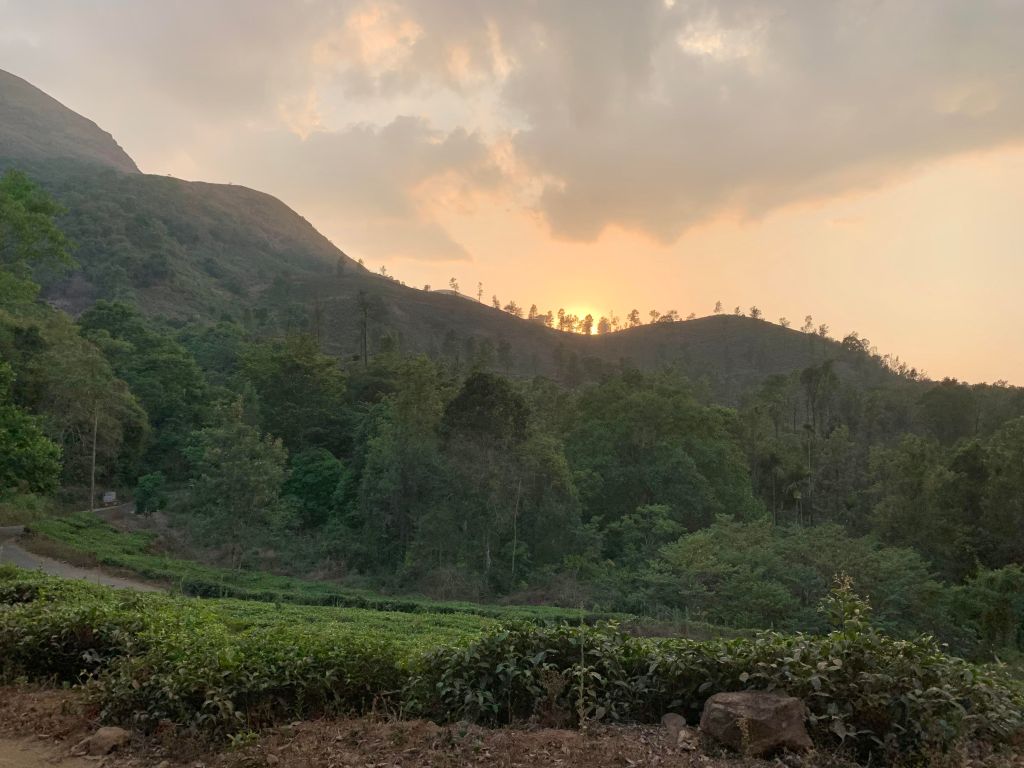
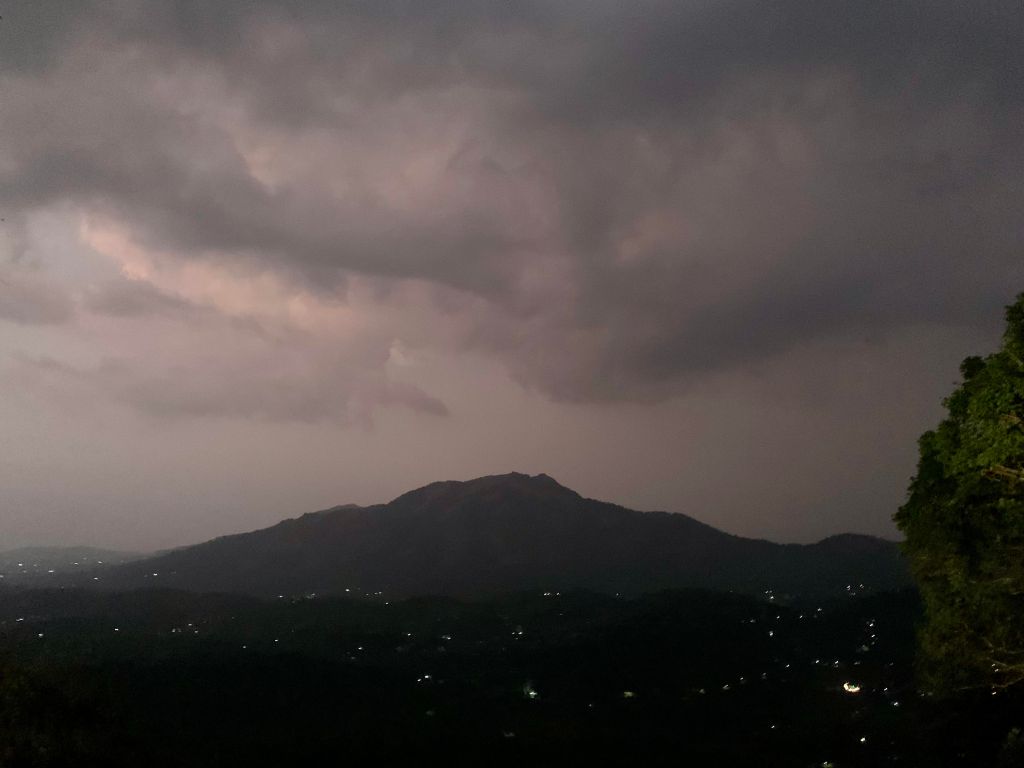
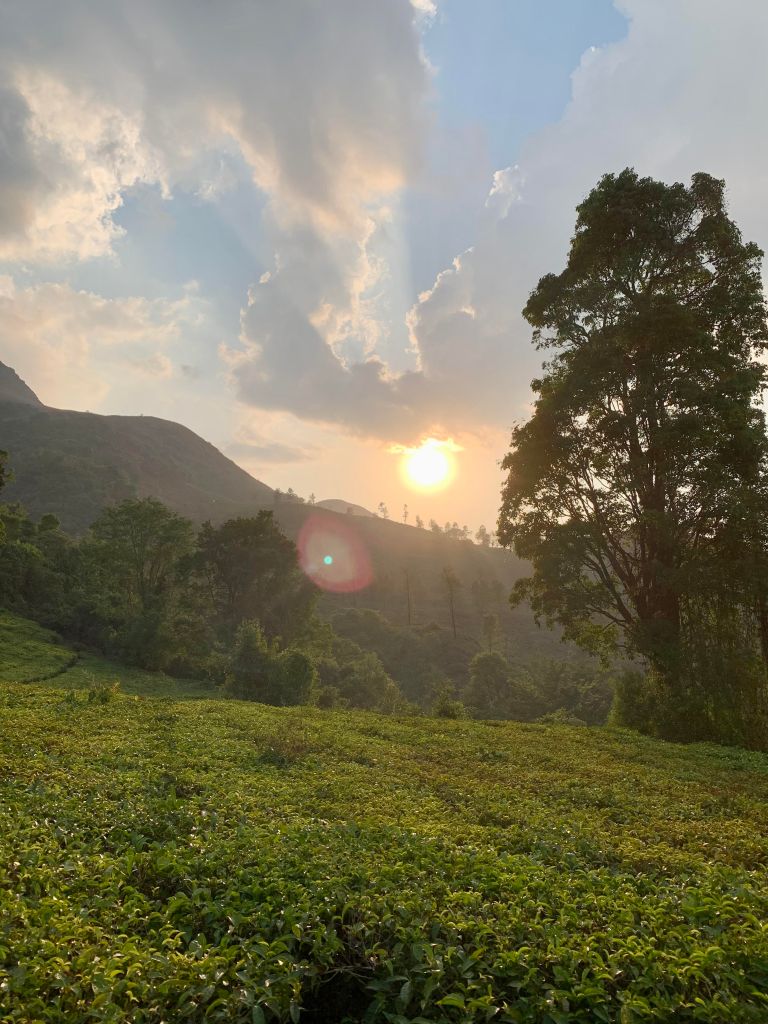


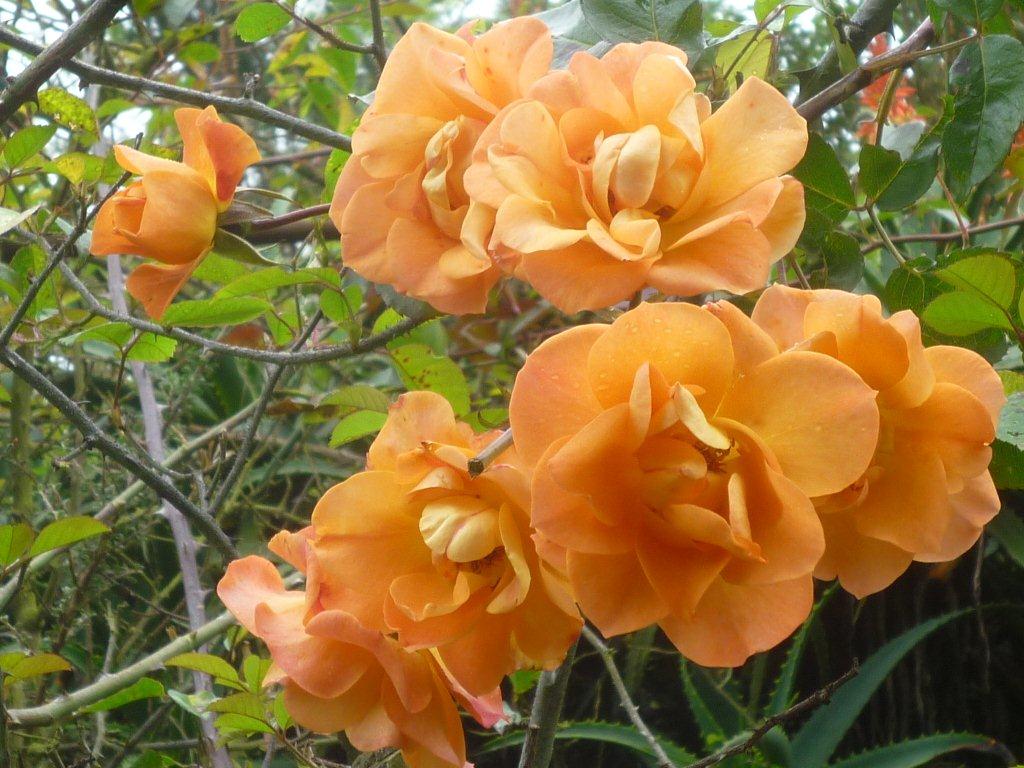
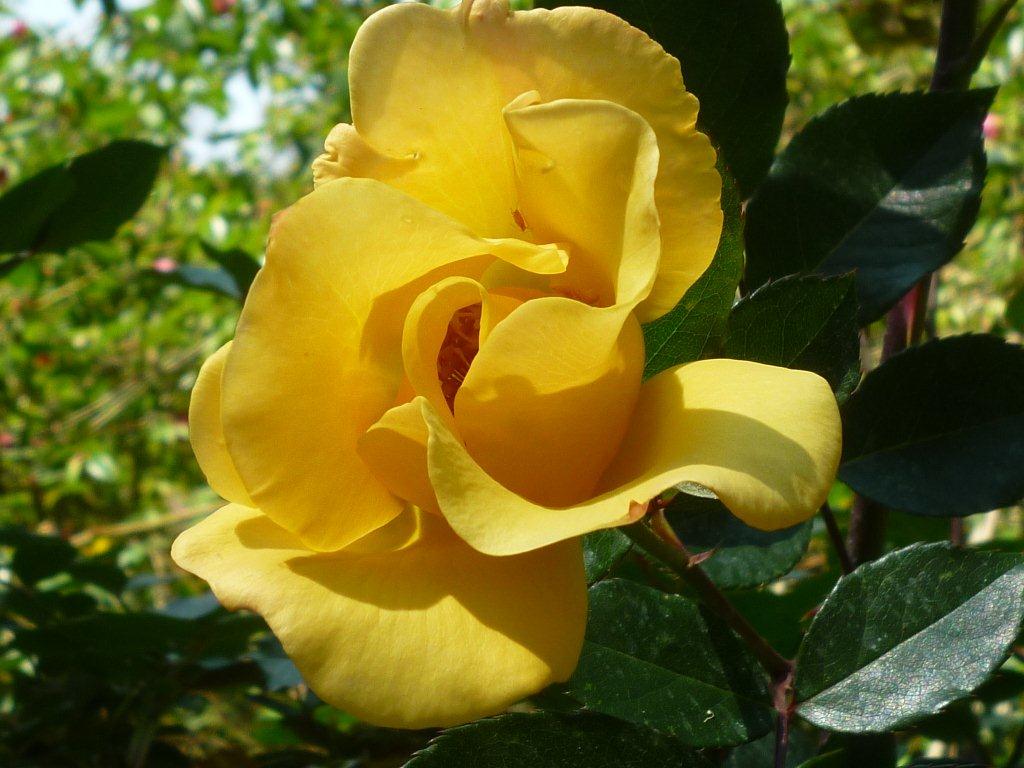


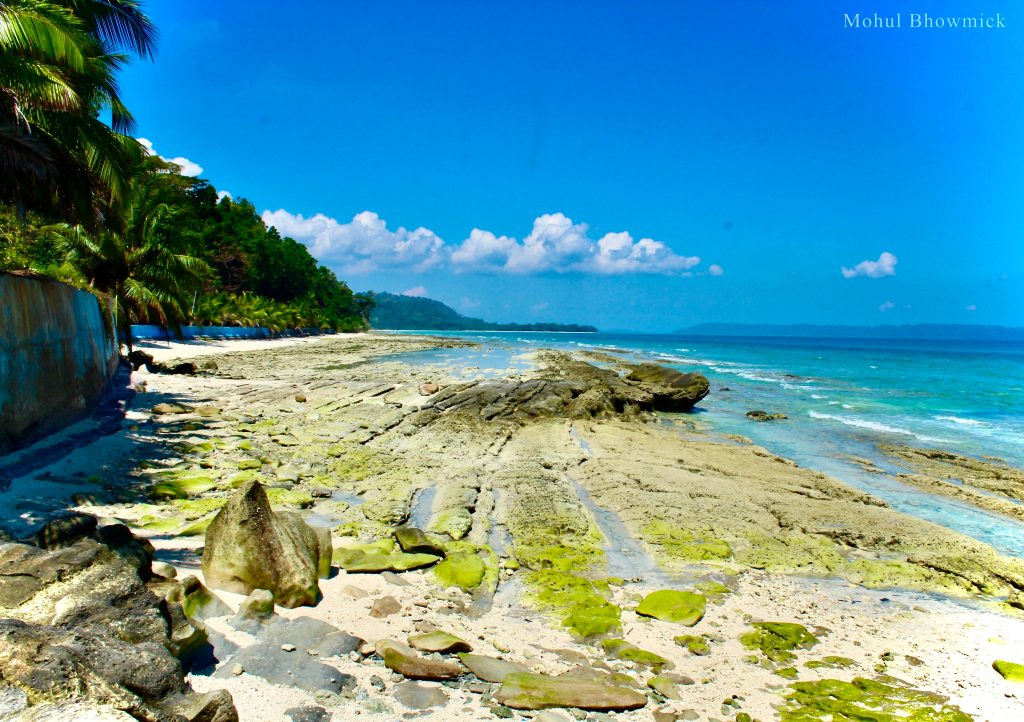
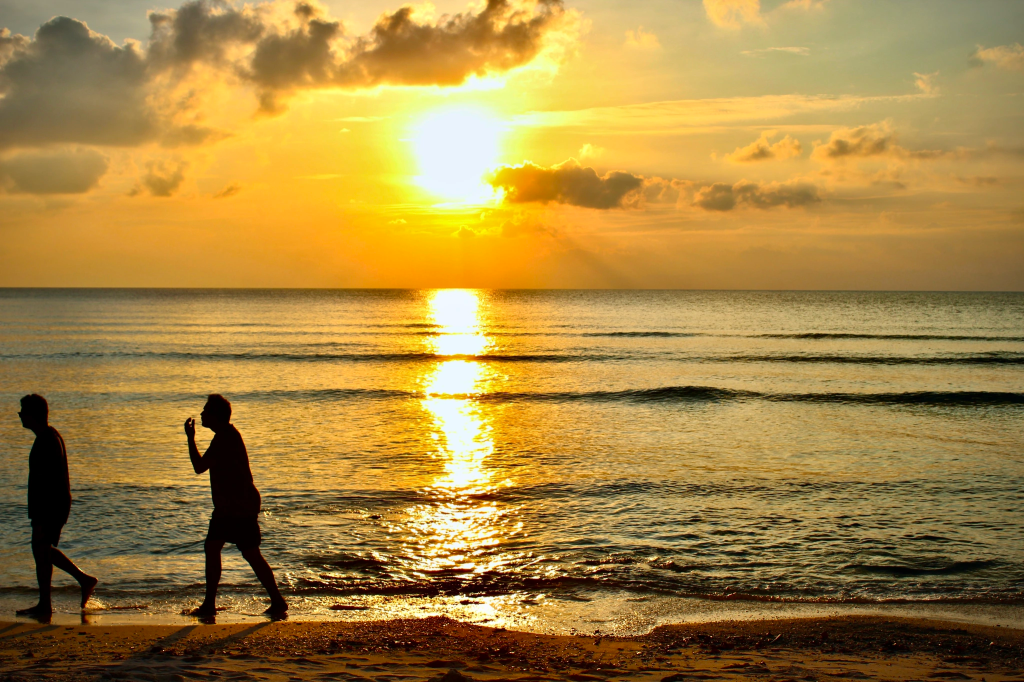
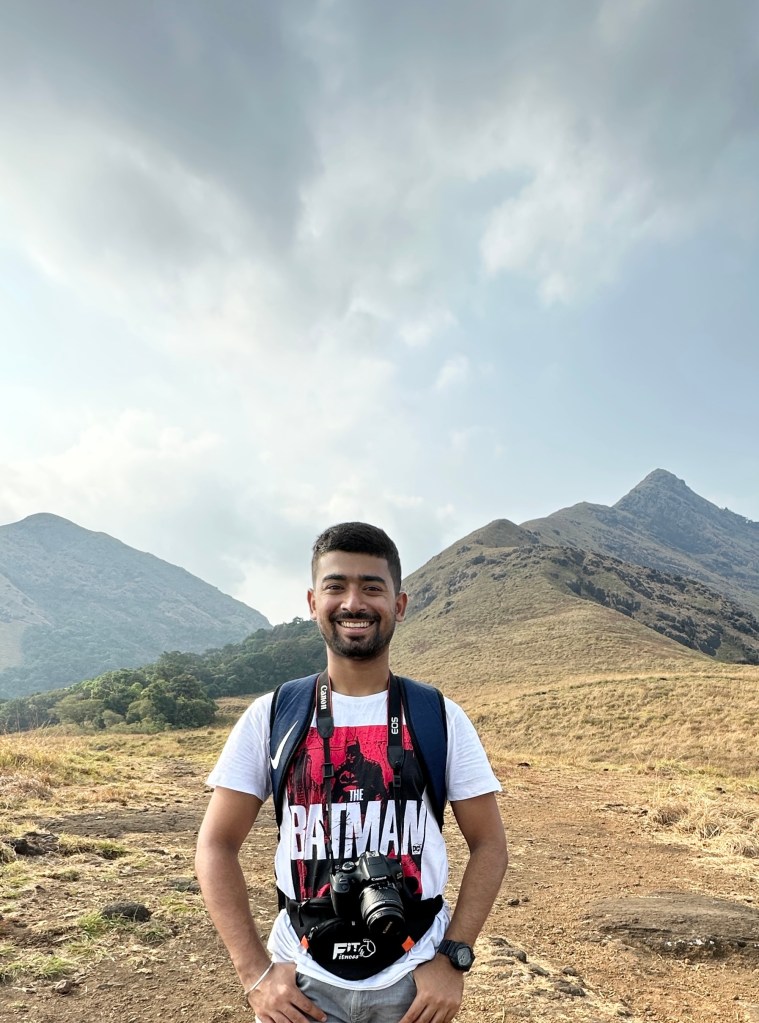


 Borderless