Categories
Editorial

‘If Winter Comes, Can Spring be Far Behind…’

Where the mind is without fear

Where the world has not been broken up into fragments

Where the clear stream of reason has not lost its way

Where the mind is led forward by thee
Into ever-widening thought and action…

— ‘Where the Mind is without Fear’ (1910), by Rabindranath Tagore

As we complete the fourth year of our virtual existence in the clouds and across borders, the world has undergone many changes around us, and it’s not only climate change (which is a huge challenge) but much more. We started around the time of the pandemic — in March 2020 — as human interactions moved from face-to-face non-virtual interactions to virtual communication. When the pandemic ended, we had thought humanity would enter a new age where new etiquettes redefining our social norms would make human existence as pandemic proof as possible. But before we could define new norms in the global context, takeovers and conflicts seem to have reft countries, regions and communities apart. Perhaps, this is a time when Borderless Journal can give a voice to all those who want to continue living as part of a single species in this world — where we can rise above our differences to find commonalities that make us human and part of the larger stream of humanity, that has been visualised by visionaries like Tagore or John Lennon — widely different cultural milieus but looking for the same things — humankind living together in harmony and moving towards a world without violence, without hate, without rancour and steeped in goodwill and love.  

Talking of positive values does not make sense in a world that seems to be veering towards darkness… Many say that humankind is intrinsically given to feelings of anger, hate, division, lust, shame and violence. But then we are just as much inclined towards happiness, fun, love, being respectful and peaceful. Otherwise, would we be writing about these? These are inherited values that have also come down to us from our forefathers and some have been evolving towards embalming or healing with resilience, with kindness and with an open mind.  

If you wake up before sunrise, you will notice the sky is really an unredeemable dark. Then, it turns a soft grey till the vibrant colours of the sun paint the horizon and beyond, dousing with not just lively shades but also with a variety of sounds announcing the start of a new day. The darkest hours give way to light. Light is as much a truth as darkness. Both exist. They come in phases in the natural world, and we cannot choose but live with the choices that have been pre-made for us. But there are things we can choose — we can choose to love or hate. We can choose resilience or weakness. We can choose our friends. We can choose our thoughts, our ideas. In Borderless, we have a forum which invites you to choose to be part of a world that has the courage to dream, to imagine. We hope to ignite the torch to carry on this conversation which is probably as old as humanity. We look forward to finding new voices that are willing to move in quest of an impractical world, a utopia, a vision — from which perhaps will emerge systems that will give way to a better future for our progeny.

In the last four years, we are happy to say we have hosted writers from more than forty different nationalities and our readers stretch across almost the whole map of the world. We had our first anthology published less than one and a half years ago, focussing more on writing from established pens. Discussions are afoot to bring out more anthologies in hardcopy with more variety of writers.

In our fourth anniversary issue, we not only host translations by Professor Fakrul Alam of Nazrul, by Somdatta Mandal of Tagore’s father, Debendranath Tagore, but also our first Mandarin translation of a twelfth century Southern Song Dynasty poet, Ye Shao-weng, by Rex Tan, a journalist and writer from Malaysia. From other parts of Asia, Dr Haneef Sharif’s Balochi writing has been rendered into English by Fazal Baloch and Ihlwha Choi has transcreated his own poetry from Korean to English. Tagore’s Phalgun or Spring, describing the current season in Bengal, adds to the variety in our translated oeuvre.

An eminent translator who has brought out her debut poetry book, Radha Chakravarty, has conversed about her poetry and told us among other things, how translating to English varies from writing for oneself. A brief overview of her book, Subliminal, has been provided. Our other interviewee, Rajorshi Patranabis — interviewed by Jagari Mukherjee — has written poetry from a Wiccan perspective — poetry on love — for he is a Wiccan. We have poetry by Luis Cuauhtémoc Berriozábal, Jim Murdoch, Alpana, Baisali Chatterjee Dutt, John Grey, Shahalam Tariq, Saranyan BV, Rex Tan, Ron Pickett with poetry on the season and many more. Humour is brought into poetry with verses woven around a funny sign by Rhys Hughes . His column this month hosts a series of shorter poems — typically in Hughes’ own unique style.

Devraj Singh Kalsi has explored darker shades of humour in his conversation with God while Suzanne Kamata has ushered in the Japanese spring ritual of gazing at cherry blossoms in her column with photographs and narrative. Keith Lyons takes us to the beautiful Fiordlands of New Zealand, Ravi Shankar to Malaysia and Mohul Bhowmick trapezes from place to place in Sri Lanka. Farouk Gulsara has discussed the elusiveness of utopia — an interesting perspective given that we look upto ideals like these in Borderless. I would urge more of you to join this conversation and tell us what you think. We did have Wendy Jones Nakashini start a discussion along these lines in an earlier issue.

We have stories from around the world: C.J.Anderson-Wu from Taiwan, Paul Mirabile from France, Rakhi Pande, Kalsi and K.S. Subramaniam from India. Our book excerpts are from Out of Sri Lanka: Tamil, Sinhala and English Poetry from Sri Lanka and its Diasporas edited by Vidyan Ravinthiran, Seni Seneviratne and Shash Trevett and a Cli-fi book that is making waves, Rajat Chaudhauri’s Spellcasters. Mandal has also reviewed for us Ilse Kohler-Rollefson’s Camel Karma: Twenty Years Among India’s Camel Nomads. Bhaskar Parichha has discussed Mafia Raj: The Rule of Bosses in South Asia by Lucia Michelutti, Ashraf Hoque, Nicolas Martin, David Picherit, Paul Rollier, Clarinda Still — a book written jointly by multiple academics. Rakhi Dalal in her review of Anuradha Kumar’s The Kidnapping of Mark Twain: A Bombay Mystery has compared the novel to an Agatha Christie mystery!

I would want to thank our dedicated team from the bottom of my heart. Without them, we could not have brought out two issues within three weeks for we were late with our February issue. A huge thanks to them for their writing and to Sohana Manzoor for her art too. Thanks to our wonderful reviewers who have been with us for a number of years, to all our mentors and contributors without who this journal could not exist. Huge thanks to all our fabulous loyal readers. Devoid of their patronage these words would dangle meaninglessly and unread. Thank you all.

Wish you a wonderful spring as Borderless Journal starts out on the fifth year of its virtual existence! We hope you will be part of our journey throughout…

Enjoy the reads in this special anniversary issue with more content than highlighted here, and each piece is a wonderful addition to our oeuvre!

Mitali Chakravarty

borderlessjournal.com

Click here to access the content page for the March 2024 Issue.

.

READ THE LATEST UPDATES ON THE FIRST BORDERLESS ANTHOLOGY, MONALISA NO LONGER SMILES, BY CLICKING ON THIS LINK.

Categories
Contents

Borderless, November 2022

Art by Sohana Manzoor

Editorial

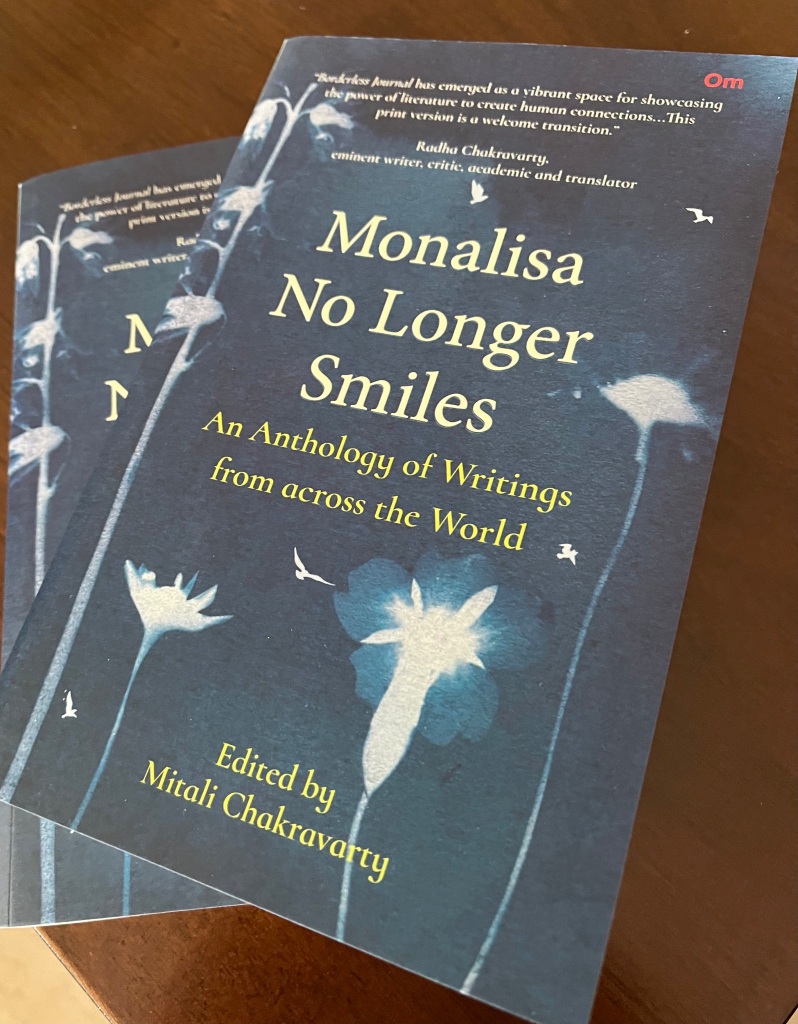
We did it! … Announcing our first anthology … Monalisa No Longer Smiles… Click here to read.

Conversations

Suchen Christine Lim, an iconic writer from Singapore in conversation about her latest book, Dearest Intimate. Click here to read.

Blazing trails, as well as retracing the footsteps of great explorers, Christopher Winnan, a travel writer, delves into the past, and gazes into the future while conversing with Keith Lyons. Click here to read.

Translations

Rows of Betelnut Trees by My Window by Nazrul has been translated from Bengali by Professor Fakrul Alam. Click here to read.

A Day in the Life of the Pink Man is a story by Shankhadeep Bhattacharya, translated from Bengali by Rituparna Mukherjee. Click here to read.

The Clay Toys and The Two Boys is a story by Haneef Shareef, translated from Balochi by Fazal Baloch. Click here to read.

Saturday Afternoon is a poem by Ihlwha Choi, translated from Korean by the poet himself. Click here to read.

Tagore’s poem, Tomar Shonkho Dhulay Porey (your conch lies in the dust), has been translated from Bengali by Mitali Chakravarty as The Conch Calls. Click here to read.

Poetry

Click on the names to read

Jared Carter, Asad Latif, Rhys Hughes, Alpana, Mimi Bordeaux, Saranyan BV, Luis Cuauhtémoc Berriozábal, Quratulain Qureshi, Jim Bellamy, Sourav Sengupta, Ron Pickett, Davis Varghese, Ryan Quinn Flanagan, Jonathan Chan, Terry Trowbridge, Amrita Sharma, George Freek, Gayatri Majumdar, Michael R Burch

Poets, Poetry and Rhys Hughes

In Infinite Tiffin, Rhys Hughes gives an unusual short story centring around food and hunger. Click here to read.

Musings/Slices from Life

The Scream & Me

Prithvijeet Sinha writes of how Edvard Munch’s painting, The Scream, impacts him. Click here to read.

A Fine Sunset

Mike Smith travels with a book to a Scottish beach and walks in the footsteps of a well-know novelist. Click here to read.

The Death of a Doctor

Ravi Shankar mourns the loss of a friend and muses on mortality in his experience. Click here to read.

My Contagious Birthday Party

Meredith Stephens writes of her experience of Covid. Click here to read.

Dim Memories of the Festival of Lights

Farouk Gulsara takes a nostalgic trip to Deepavali celebrations in Malaysia. Click here to read.

Musings of a Copywriter

In Strumming Me Softly with His Guitar…, Devraj Singh Kalsi talks of his friends’s adventure with the guitar. Click here to read.

Notes from Japan

In Therese Schumacher and Nagayoshi Nagai: A Love Story, Suzanne Kamata introduces us to one of the first German women married to a Japanese scientist and their love story. Click here to read.

Essays

My Favourite Book by Fakrul Alam

The essay is a journey into Fakrul Alam’s evolution as a translator. Click here to read.

The Ultimate Genius of Kishore Kumar

Shantanu Ray Chaudhuri, an eminent film critic, writes on the legend of Kishore Kumar. Click here to read.

T.S Eliot’s The Waste Land: Finding Hope in Darkness

Dan Meloche muses on the century-old poem and its current relevance. Click here to read.

The Observant Immigrant

In Piano Board Keys, Candice Louisa Daquin talks of biracial issues. Click here to read.

Stories

The Funeral Attendee

Ravi Prakash shares the story of the life of a migrant in rural India. Click here to read.

A Letter I can Never Post

Monisha Raman unravels the past in a short narrative using the epistolary technique. Click here to read.

Red Moss at the Abbey of Saint Pons

Paul Mirabile takes us to St Pons Abbey in France in the fifteenth century. Click here to read.

You have lost your son!

Farhanaz Rabbani gives a light story with a twist that shuttles between Dhaka and Noakhali. Click here to read.

Book Excerpts

An Excerpt from Manoranjan Byapari’s How I Became a Writer: An Autobiography of a Dalit, translated from Bengali by Anurima Chanda. Click here to read.

An excerpt from Evening with a Sufi: Selected Poems by Afsar Mohammad, translated from Telugu by Afsar Mohammad & Shamala Gallagher. Click here to read.

Book Reviews

Reba Som has reviewed Aruna Chakravarti’s Through the Looking Glass: Stories. Click here to read.

Somdatta Mandal has reviewed Shehan Karunatilaka’s The Birth Lottery and Other Surprises. Click here to read.

Basudhara Roy has reviewed Afsar Mohammad’s Evening with a Sufi: Selected Poems, translated from Telugu by Afsar Mohammad and Shamala Gallagher. Click here to read.

Bhaskar Parichha has reviewed Rahul Ramagundam’s The Life and Times of George Fernandes. Click here to read.

Borderless Journal Anthology

Click here to access the Borderless anthology, Monalisa No Longer Smiles

Categories
Editorial

We Did It!

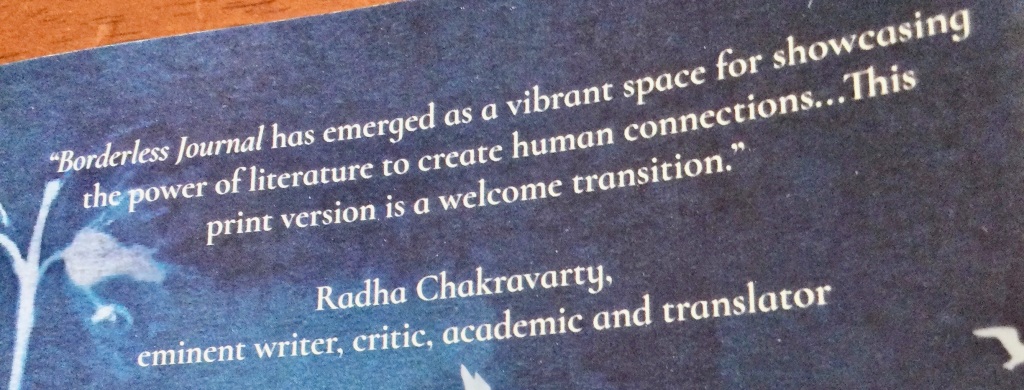
That good things happen despite darkness, despite prognostications of doom, that light glimmers hope if you strive to focus on your strength in hard times is borne true both in fiction and in life. Perhaps, we cannot get back the old ways (but is that what we want?) but new paths emerge. Old gives way to new. And while trying to gather pearls of human excellence — borne not of awards or degrees but of bringing out the best, the kindest, the most loving in human hearts — we managed to create with a team an outstanding anthology. Woven with the writings of old and new — we created a tapestry together that the editor in chief of our publishing house said was “classy, literary, engaging and international”. That one of the oldest and most reputed publishing houses in India with bookshops countrywide took it on was also an unusual event! We are truly grateful to Om Books International, Shantanu Ray Chaudhuri and Jyotsna Mehta along with all our writers and readers who made our anthology a reality, and to Radha Chakravarty and Fakrul Alam for the kind words they bestowed on our effort.

Click here to access the Borderless anthology, Monalisa No Longer Smiles

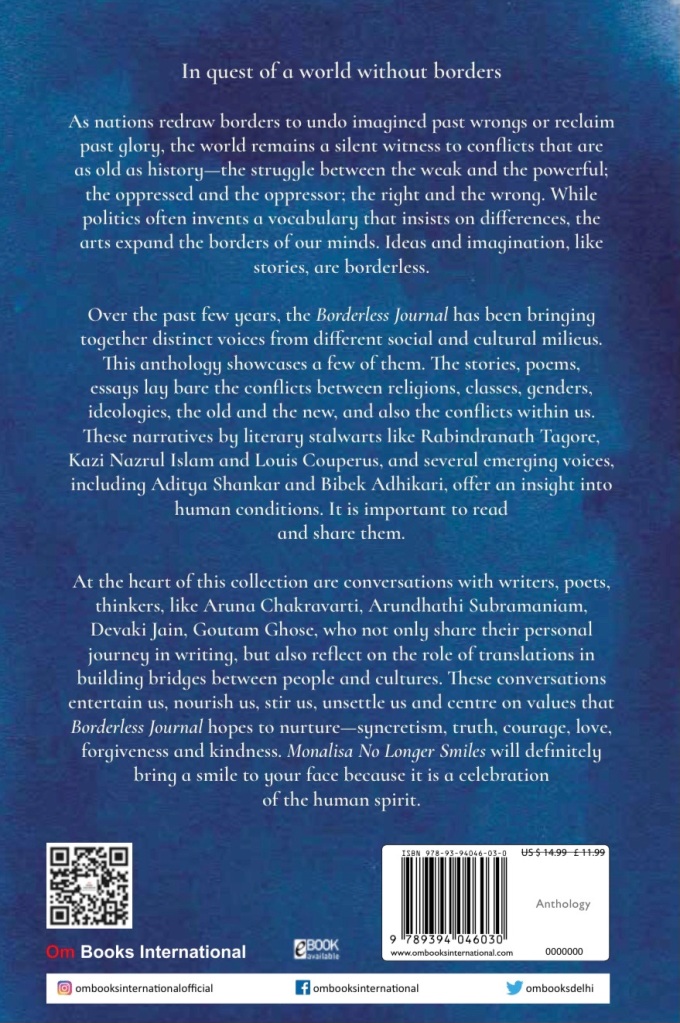
Please greet our first anthology, Monalisa No Longer Smiles, with love and friendship. It could be the perfect Christmas gift in the spirit of the season! And as the blurb says, “it will definitely bring a smile to your face because it is a celebration of the human spirit.”

The anthology is different from our journal in as much as it has a sample of an eclectic collection that has been honed with further editing and has some new features. Most of the writing is from our first year and showcases our ethos, except for Lesya’s poetry and interview. Lesya Bakun from Ukraine is still on the run, looking for a refuge — she cannot return home like you or I can. Her family is scattered across number of countries. Her cousin, who was guarding the factory at Azovstal, was taken prisoner. We included her story in the anthology hoping to create global empathy for refugees as the numbers will increase not only due to war but also due to climate change.

The reason we felt a hardcopy anthology was a good idea was because nothing beats the joy of having a bunch of interesting reads in the warmth of your hands (especially where internet cannot reach or is unavailable). In any case, books with the feel of paper, the rustling whispers which carry voices of leaves can never be replaced as Goutam Ghose had also said in his interview which is now part of our anthology.

And that is why we celebrate more books… this time we feature Singaporean prima donna of literature, Suchen Christine Lim, with her new book Dearest Intimate, a novel that spans more than hundred years including the harrowing Japanese invasion during World War II. She shared sound advice with writers: “Suffering is good for the writer. It will deepen lived experience and expand the heart’s empathy.” And perhaps that is what is echoed through the experiences of the other writer interviewed on our pages by Keith Lyons. This is a writer who not only brought out his own books but was a regular contributor of travel pieces for Frommer’s and National Geographic traveling to unexplored destinations — Christopher Winnan. Another writer Lyon had interviewed recently, Steve Carr, has passed on. We would like to convey our heartfelt condolences to his family and friends.

We have a number of books that have been reviewed. Reba Som reviewed Aruna Chakravarti’s Through the Looking Glass: Stories that span eras spread across time. Somdatta Mandal has reviewed Shehan Karunatilaka’s The Birth Lottery and Other Surprises and Bhaskar Parichha, Rahul Ramagundam’s The Life and Times of George Fernandes. Basudhara Roy has written of Afsar Mohammad’s Evening with a Sufi: Selected Poems, translated from Telugu by the poet and Shamala Gallagher, verses that again transcend borders and divides. We have an excerpt from the same book and another from Manoranjan Byapari’s How I Became a Writer: An Autobiography of a Dalit, translated from Bengali by Anurima Chanda.

More translations from Bengali, Balochi and Korean enrich our November edition. Fazal Baloch has translated a story by Haneef Shareef and Rituparna Mukherjee by Shankhadeep Bhattacharya. We have the translation of an inspirational Tagore poem helping us find courage (Shonkho Dhulaye Pore or ‘the conch lies in the dust’). Another such poem by Nazrul has been rendered in English from Bengali by Professor Fakrul Alam. He has also shared an autobiographical musing on how he started translating Tagore’s Gitabitan, which also happens to be his favourite book. More discussion on the literary persona of TS Eliot and the relevance of his hundred year old poem — ‘The Waste Land’ by Dan Meloche adds variety to our essay section.

Evoking the genius of another outstanding artiste, Kishore Kumar, who happened to pen thought provoking dialogues in some films, is Shantanu Ray Chaudhuri’s essay, review of a recent book on the legendary actor-singer and an interview with the authors. Infringing the boundaries of literary with popular culture and art and integrating all forms into a wholistic bundle has been part of our ethos. In that spirit we have a musing by Prithvijeet Sinha on Edvard Munch’s famous painting called Scream. We have non-fiction from Australia spanning Meredith Stephens’s recent brush with Covid, Mike Smith visits a Scottish beach in the footsteps of a novelist, Ravi Shankar has given us a poignant piece for a late friend and Candice Lousia Daquin talks of the existence of bi-racial biases. In contrast, Suzanne Kamata sent a narrative that bridges divides showcasing a German wife of a Japanese scientist that draws us to conclude that biases erode over time to create an acceptance of bi-racial people. Devraj Singh Kalsi brings in humour with his funny narrative about a guitarist. Rhys Hughes writes in a lighter vein on Indian cuisine in his column and spouts more funny poetry bordering on the absurd.

Jared Carter has shared beautiful poetry on murmuration in birds and we have touching verses from Asad Latif for a little girl he met on a train — reminiscent of Tagore’s poem Hide and Seek (Lukochuri). Michael R Burch has given us poems setting sombre but beautiful notes for the season. We host more poetry by Luis Cuauhtémoc Berriozábal, Quratulain Qureshi, Jim Bellamy, Gayatri Majumdar, Ryan Quinn Flanagan, Alpana, Jonathan Chan, Saranyan BV, George Freek and many more. We have stories from around the world: India, France and Bangladesh.

Gathering all of your thoughts in strings of words from all corners of the world, we present to you the bumper November issue of Borderless Journal . Thank you all for sharing your thoughts with us. Thanks to Sohana Manzoor for her fantastic painting and more thanks to the whole Borderless team for seeing this issue through. We would not have been able to do the anthology or these issues without each one of you — writers and readers.

Thank you all from the bottom of my heart.

There is always hope for a new tomorrow!

Mitali Chakravarty

borderlessjournal.com

Click here to access the Borderless anthology, Monalisa No Longer Smiles

Categories
Stories

The Clay Toys and Two Boys

By Haneef Shareef, translated from Balochi by Fazal Baloch

Courtesy: Creative Commons

The boy smashed his clay toy and threw its pieces into the sewage water. He did not like his friend’s father at all because he never bought toys for his son. He loved his clay toys because his friend always lamented that he did not have any kind of toy. But despite his insistence he refused to carry his toys home. Not even once.

They always met at the corner of the street and played there by the sewerage line in front of his friend’s house. His mother took all household chores upon herself and deputed the servant at the door to keep an eye on her son.

His friend lived somewhere in the western side of the street. He always emerged in the western corner of the street and went back in that direction. He always said that the sewage water flew by their house. If something fell in it, it would resurface by their house. But he never told his friend exactly where he lived. Nor did he ever reveal if the window of their house opened to the south or north. Nor did he say, when the wind blew, in which direction the jujube fruits would fall. He also did not reveal if they lived in a government quarter or in a rented bungalow or had a house of their own.

They just met at the corner of the street and played there and smiled at being the co-owner of the sewerage line. A few times they made up their mind to step into the water and retrieve the toys lying buried in its bottom but every time, at the last moment, courage failed them. The sewage water was dark, full of waste and it also ran deep. And on top of that, they were just two small boys ironically looking for clay toys and that too in the bottom of sewage water.

They sat at the edge of the drain and played there. They built kingdoms and ruled over them like kings. At times they made fields and meadows, raised their hands to pray for rain. some other times, they became herd owners. Every day they scored new marvels. Shopkeeper, street vendors and people around them smiled even at times they laughed at their innocent adventures. It was small world — transparent like water — hung by a thread. As the sun went down the horizon, they took leave of each other hoping to meet on the next day. His friend had aligned his routine with sun. The moment the sun set, he would say goodbye to his kingdom and leave for home. Thereafter, his friend piled up the toys and the servant put them in the basket and carried his little master against his chest leaving behind the kingdom of two little kings in darkness.

Heaven knows which day of the month it was, when for the first time his friend did not turn up there. He piled up his toys, laid down rules and roadmaps for his kingdom but the second king had not arrived yet and his subject was nowhere around the kingdom. He waited for him till dusk, but he did not come. Then along with his servant he went looking for his friend’s house. They passed through several lanes and streets and finally stopped at a door by the edge of the sewerage line. The branches of a jujube were dropping on the wall. It was not obvious if it was a rented house, a government quarter or someone’s private property. The boy assumed it was the house his friend lived in. But its doors and windows were closed. Lamps and light had been blown off. They put their ears against the walls, but they could not hear any human voices. A flock of sparrows were singing in the jujube tree. Otherwise, everything was shrouded in silence. An old rusty lock was hanging on the door bearing witness to all past seasons.

For the next three days the boy waited for his friend, but he did not turn up. He spread the toys on the ground and waited for him. As the sun set and dusk fell, lamps were lit in the neighborhood. The young boy held his servant’s hand and went to the closed door where he thought his friend had lived. As usual, the place was shrined in silence. They stayed there for a while and then the boy looked at the servant. They exchanged gazes. The servant carried the basket of toys on his head. His little master followed him.

However, one Thursday, the two friends ran into each other at the corner of the street by the bank of the sewer line. He did not tell his friend where he was all that while nor did the boy reveal that he had found his home silent and locked.

A few days later, the young master’s father took him to the school. His mother insisted that he was five years old—still too young for the school but his father believed he was seven. They argued with each other. His father won. The boy insisted on taking his friend along. However, his friend had never appeared in the mornings. A few times, he thought he saw his friend at school. He seemed to be wandering alone in middle of the noise of hundreds of children. After that, he disappeared.

The two friends always met in the evening. No questions were asked by either of the young boys focused on their games.

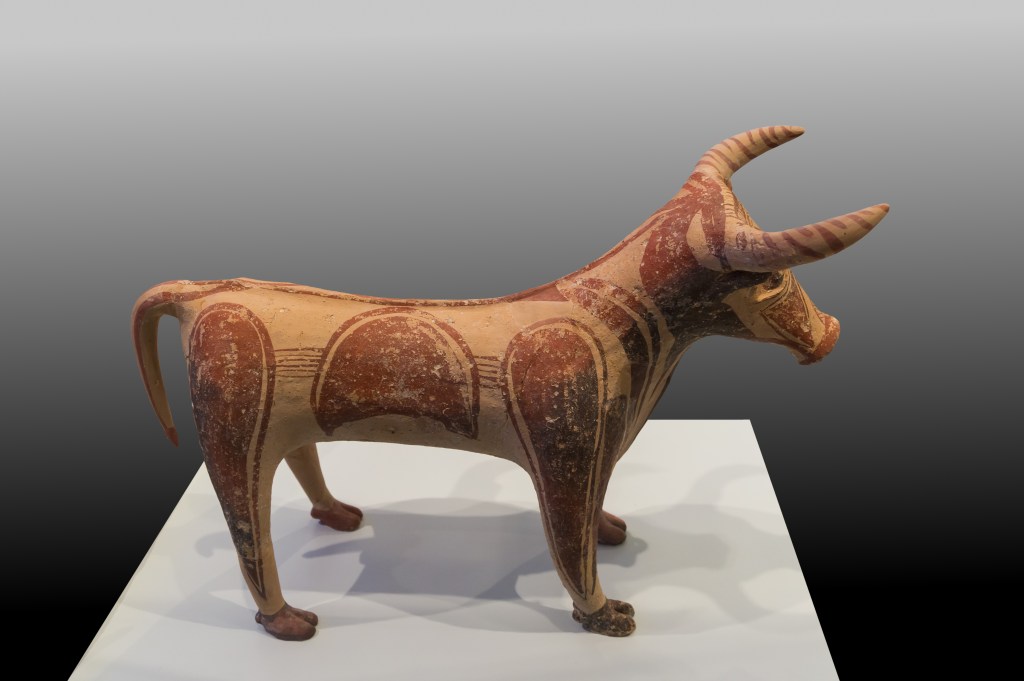
One day when his friend arrived in the evening, he noticed tears in his eyes and his face looked pale. On that day, he went home early taking his friend’s clay bull along. The next day when came, he looked a little anxious. The bull was broken into two pieces. His friend did not ask him what had happened to it. Nor did the boy tell him anything about it. They tried a lot to join the broken parts of the bull, but they failed in their attempt. For a moment, the boy felt like crying loudly but he held back his tears.

They dug a little grave by the sewage water and buried the remains of the bull there. On that night the boy cried incessantly. In the morning, he told his teacher that his bull died the day before and that was why he was late. But his teacher was angry that he failed to distinguish between a truth and a lie. He thought the boy was too young to own a bull. Thus, he thrashed him like other naughty children.

In the evening the boy wanted to tell his friend that he was beaten by the teacher, but he could not. The boy plastered the grave with clay and erected a little epitaph on it. His looked at him and smiled. At dusk the boy called his brother, who in the glow of the lamp wrote on the stone ‘My Bull’. When they reached at the door, the boy halted, as if he remembered something. Thus, they turned back to the grave. Now, the epitaph on the grave read ‘Our Bull”.

My Bull…. Our Bull….The crowd….The door….The servant….The clay toys and two boys and the drain. It was a different world.

A few days later, the gap in their friendship began to widen. The boy stopped coming regularly but his friend always waited for him at the corner of the street with his clay toys piled up before him. Perhaps his companion had forgotten someone was waiting for him at the corner of the street. He felt quite lonely in the middle of the clay toys.

One day when the boy did come, he was shocked to discover that the grave of ‘Our Bull’ had been dismantled by someone. The remains lay scattered. He anxiously looked at the crowd bustling around. There was no trace of his friend. He picked up the pieces of the clay bull and threw them into the drain. Now, when there was not any trace of the ‘Our Bull’ he desperately wished not to have his friend over. Not in that hour of grief at least. He sat at the empty grave of the ‘Our Bull’ fearing the arrival of his friend. But he did not turn up.

The next evening when his friend arrived, he found the grave had been renovated. He scanned the heap of the toys, but the new clay bull was not there amongst the toys. His friend told him that he broke and buried it in the very grave. His eyes welled up and voice almost chocked. He admitted that it was he who dismantled the grave. His friend was shocked to hear it. For a while the whole world came to a halt, the sewage water stopped flowing and he felt himself all alone in a never-ending labyrinth. He could not ask him why he dismantled the grave nor did his friend tell him the reason. On that evening they did not play at all. They did not build kingdoms and did not dispatch emissaries to the neighbouring kingdoms. The boy had his eyes fixed on the pile of the clay toys and his friend sat by the grave and vacantly gazed at sewage water flowing in silence. The evening passed into dusk and on the foundation of the dusk, the night eventually erected it walls around the neighbourhood.

The next evening, the boy waited for his friend, but he did not show up. The street was crowded. Indifferent people were treading back and forth. For a moment the boy tried to find his friend in the jungle of people but, in the next moment, he gave up.

A month passed by but there was again no trace of his friend. One day, he took his servant and went to his friend’s house. They sat for a long time at the door, but nobody came out. Then they knocked the door, called out loudly but nobody responded. As the evening shadows lengthened, the boy for the first time realised that there was not a single house by the bank of the drain. Rather it flowed through the entire neighbourhood, bustling with young and old men and women, children, boys and girls and flock of goats. But the companion of his evenings, the co-owner of the ‘Our Bull’, was nowhere to be seen.

Nobody in the neighbourhood knew the boy. They believed he did not live there. Rather he came from somewhere else. But from where? Nobody had the answer. The boy did not know anything about him either.

The sun was setting. The boy started musing. He cast a look at the crowd and started crying loudly. The servant tried to console him but to no avail. He carried him back home. He continued to cry inconsolably. Then he told everybody that he knew where his friend had gone. He told them that he knew why he did not come back. Thus, he asked the servant to step into the sewage water. The servant was knee deep in the drain with stones, pebbles and pieces of broken glasses under his feet. He could not find anything. The servant grumbled and so did boy’s mother. The shopkeeper and the customers smile and laughed. But the boy was sure that his friend had stepped into drain looking for the pieces of the clay bull.

From then on, the boy broke his clay toys and threw them into the sewer hoping that they would be flown to his friend so that he would know he, his friend, was alive and waiting for him beside the grave of ‘Our Bull’.

.

Dr. Haneef Shareef, a trained medical professional, is one of the most cherished contemporary Balochi fiction writers and film directors. So far, he has published two collections of short stories and one novel. His peculiar mode of narration has rendered him a distinguished place among the Balochi fiction writers. He has also directed four Balochi movies.

Fazal Baloch is a Balochi writer and translator. He has translated many Balochi poems and short stories into English. His translations have been featured in Pakistani Literature published by Pakistan Academy of Letters and in the form of books and anthologies. He has the translation rights to Haneef Shareef’s works.

.

PLEASE NOTE: ARTICLES CAN ONLY BE REPRODUCED IN OTHER SITES WITH DUE ACKNOWLEDGEMENT TO BORDERLESS JOURNAL.