Painting by Georges Seurat(1859-1891). From the Public Domain.
Parasols? Seriously? Such were my thoughts when I first arrived in Japan one summer over twenty years ago. How quaint, I thought. How old fashioned! If a lady was worried about preserving her lily-white complexion, why not just slather on sunscreen and wear a hat?
In South Carolina, where I’d just come from, the only time I ever saw women wielding parasols was when I visited antebellum mansions. There, tour guides flounced around plantations in hoopskirts, twirling parasols as part of their period costumes. In real life, no one used them.
Back then, many of my friends spent hours laying out in the sun, in pursuit of the perfect tan. In the United States, people found my skin to be too pale, but in Japan women wore long white gloves and smeared their faces with whitening cream. And they carried parasols to ward off the sun.
Parasols have actually been in use in the Middle East and Asia for a very long time. They are depicted in ancient art in India, Egypt, Mesopotamia, and Greece, and are mentioned in a divination book from the Chinese Song Dynasty printed in 1270. Although alternative uses have been discovered for the parasol – for example, in 1902, ladies were advised by The Daily Mirror to use their parasols to fend off ruffians — the basic design is much the same as that of first century China.
A postcard from the turn of the 20th century. From the Public Domain
The only parasol I’d ever owned was a bright red one made of paper, bought from a souvenir shop in Southeast Asia, which I displayed in a corner as an ethnic accent to my home décor. I never thought of using it outside.
Parasols were fussy and cumbersome, I thought. How could you do anything with your hands if you were holding one? They were a nuisance, and yet when I went to a baseball game with my mother-in-law in mid-summer, and the hot sun beat down upon us, I was grateful to share the shade of her black umbrella.
Ever conscious of my carbon footprint, I walk to the neighbourhood store with my eco-bags. One sweltering day last summer, I started to reach for my hat on my way out the door, but grabbed an umbrella instead. It really was cooler underneath! And carrying a parasol helps cut down on the new freckles. Today I browsed online for a new parasol. A number of new vendors have popped up in the West offering a variety of designs – Battenburg Lace for outdoor weddings, solid team colours for stadium sports, and more. Could it be that the parasol is about to come into fashion again in my native country? Here in Japan, it has never gone out of style.
From the Public Domain
Suzanne Kamatawas born and raised in Grand Haven, Michigan. She now lives in Japan with her husband and two children. Her short stories, essays, articles and book reviews have appeared in over 100 publications. Her work has been nominated for the Pushcart Prize five times, and received a Special Mention in 2006. She is also a two-time winner of the All Nippon Airways/Wingspan Fiction Contest, winner of the Paris Book Festival, and winner of a SCBWI Magazine Merit Award.
PLEASE NOTE: ARTICLES CAN ONLY BE REPRODUCED IN OTHER SITES WITH DUE ACKNOWLEDGEMENT TO BORDERLESS JOURNAL
It’s been five years since the American cyclist ‘Hutch’ died, yet his message of peace remains, as Keith Lyons remembers the global citizen who challenges us all to live life to its fullest
In early 2019, having not heard from an old friend ‘Hutch’ for a few weeks, I learnt that the American I’d first met in China has died of natural causes at his new humble home in the mountains of Greece. He was almost 80 years old.
There’s nothing extraordinary about living until your late 70s. Or relocating to live the last years of your life in a warmer place. But Hutch was not your ordinary septuagenarian retiree. Nor was he a typical American. Though when I first heard about him in 2009, it was when a German friend staying with me in southwest China had come across a sign on the wall of an Italian restaurant in Lijiang, Yunnan, seeking fellow cyclists for day trips around the area. The deal was, go on a ride with Hutch and other cyclists, and he would pay for lunch or dinner. “So how was he?” I asked my friend about the organiser, who had a website promoting world peace. “American, very American,” she replied. I was intrigued by this.
But it wasn’t till another month or so that our paths crossed, and I met him in a café with a gaggle of others: locals, Chinese youngsters who had moved to Yunnan province, and some foreigners.
Hutch was treating them all to drinks and pizza. I found out later, he bought bikes for some ride participants who became his friends. That’s the kind of person he was.
Hutch was not a tall man in stature, and the cycling obviously kept him very fit, I noted on first meeting him. He wore lycra cycling gear, a neck scarf and bandana, and had a gentle face, with a bright eyes and a benign smile. He was polite, and entertaining, and clearly enjoyed the carbo-loading pizza as much as the entourage, made up of English-speaking Chinese who ranged from their 20s to 40s.
He invited me to join them, as after pizza, there was going to be cake and dessert. He got up to shake my hand, and I noticed he was wearing cycling shorts, with spindly yet muscle-toned legs.
Having set up his new China base in the mountain town where I’d been living since the mid-200s, I got to know him over drinks, meals, outings and adventures. Mr F. A. Hutchinson (I never knew what those initials stood for) acquired names in each country where he stayed – Haqi in China, Nima (meaning ‘sun’) in Tibet, Hache in Bolivia. At one stage he was signing off his emails with ’The Magic Dragon’, his serpent name. ‘Or just call me a bum on a bike’, was tagged to the end of his signature. I just knew him as Hutch.
Generous and giving, sometimes overly generous, he also adopted adult children, accumulating a family of daughters and sons in China during his half decade living in Xining and Lijiang. While his trusted bike, Ms.Fetes, was loaded with pannier bags front and back, he didn’t carry much baggage from his past, which had seen him serve in Vietnam, work for decades in TV sports production in the US, and establish a talent development agency in China in 2007.
Over the couple of years I knew him in Lijiang I can only recall a few occasions when he was not sporting padded cycling shorts. More often than not he turned up to cafe, meeting and events on his bicycle, sometimes not bothering to take off his cycling helmet indoors.
That cycle helmet proved its value one day when we were out cycling in the hills to an alpine lake around 2,600 m above sea level not far from LIjiang. Hutch was a cyclist with remarkable stamina, and his slow and steady approach could burn off others 40 years his junior on hill climbs. While Hutch had cycled all over China for a number of years, without major incident or accident — a fact which impressed all who inquired about the safety and sanity of cycling in The Middle Kingdom — while out with me he broke that 100% safety record. Coming down a winding hill late one afternoon the wheels of his bike skidded on icy gravel and he ended up falling off his bike, a large truck behind him putting on its brakes just in time to avoid running him over. Worried he was requiring an ambulance or hospital treatment, I rushed over to Hutch to find him un-fazed by it all. He cycled back to where he was living, and tried to tend to his battered and bloody knees, elbows and hands himself, a wry smile over his beard-stubbled face.
One of Hutch’s most impressive achievements in China was to cycle from Lijiang across Tibet to Lhasa and onto Mt Kailas, a feat made more incredible by the challenges and dynamics of a group ride (participants from several countries included Elvis), and then the breakaway split by some cyclists which jeopardized the whole mission. I helped with some of the logistics during the year-long adventure, but am still in awe of anyone who can cycle for weeks at altitudes over 4,000 metres across the Tibetan plateau. The tale of the 70-year-old American who cycled across China to Tibet made newspaper headlines, and he featured on the front cover of cycling and outdoor magazines. We gave him a hero’s welcome when he returned to Lijiang, his story still told by expats and locals living in north-west Yunnan.
As well as his cycling pilgrimage to the holy mountain of Tibet, we worked on a housing project for small Tibetan-style eco-houses with wind and solar energy made for US$10,000. In Lijiang, he helped his friend Irlin set up a small eatery (possibly to ensure he had a reliable supply of Western food), and he was a regular visitor to my café, ‘Lijiang Millionaire’s Club’, and the crosstown cafe (and tango dance studio), ‘Over the Bridge’, run by fellow New Zealander, Stephen Dalley.
After Hutch’s years in China, he was ready for a change. Increasingly worried about the Chinese government’s clampdowns on freedom of speech, his frustrations spilled over from the anonymous government to the Chinese people. He often carried a green canvas shoulder bag with the words in Mandarin of Chairman Mao ‘Serve the People’ — and found occasion to show that to shopkeepers, bank clerks, ticket sellers or government officers — anyone who was stonewalling him or telling him ‘mei you’ (don’t have).
Perhaps inspired by the practical and easy-going nature of Kiwis, Hutch was looking forward to heading to New Zealand, where he already had a number of contacts. After Lijiang, he went to Australia, New Zealand, and then to South America, before moving to Europe a few years ago to live in Spain, Germany and Greece.
He was on a personal crusade, to promote peace and understanding, and wanted to get more people on bicycles, by holding inclusive, inexpensive cycle tours. “One of our slogans, Burn Fat, Not Oil,” he wrote.
One of Hutch’s key talents was to enlist others to join, and get them working together, even though he admitted he didn’t like groups. However, the laziness or greediness of others sometimes meant that his efforts floundered into anarchy and stagnation.
While often on the move, Hutch wasn’t a ‘rolling stone gathering no moss’ kind of person. Instead, he acquired more friends everywhere he went. I never saw him play the age card, but enjoyed hearing his wisdom acquired from a long and interesting life. He had some strong opinions on various subjects. Once you met Hutch and he got your contact details, it was like being on an email subscription list you could not get off. A few times I got fed up with the email exchanges, not so much from Hutch, but from some of his old American friends, and despite requests to opt out, found myself back on the list a few months later.
Taoist Hutch believed we needed to change the world, and to change ourselves. He quoted Mahatma Gandhi on his site: “You must be the change you wish to see in the world.”
He rallied against capitalism, materialism, money and greed. He complained about how money was god, the world was going mad, and against the failures of democracy with widespread corruption of its leaders. One year his favourite slogan was, “We have met the enemy, and he/she is us.”
Hutch urged ‘women of the world to unite’. He was impressed by former New Zealand prime minister Jacinda Ardern, often sending me links to news articles about her, but he was not so favourable about Myanmar’s leader Aung Sun Suu Kyi and her lack of response to ethnic cleansing, telling me, “I am starting to really dislike this woman.”
He called for urgent measures to address what he saw as the biggest and most unrecognised problem facing the human race: over-population. Each day he posted comments with news articles under the title ‘Pathology in America’, or with his take on issues, written in upper case: SLEAZE-BAG TRUMP’S AMERICA. He cursed wrongdoers, and hoped they would face the consequences. ‘WOE BE UNTO TRUMP FO ALL THIS! MAY ALL THE 7 DEPREDATIONS, FULL UPON HIM AND HIS CHILDREN’S CHILDREN, FOR 7 GENERATIONS’1, he penned recently after a second child died in government custody at the US border.
Sometimes his missives were written as poems or as cryptic riddles. Likewise, he was prepared to consider other views, new information or the different opinions of those better informed, and he would figuratively smoke the peace pipe.
Hutch did occasionally like to smoke a pipe, not with tobacco but with the ‘happy baccy’. (Indeed, today there’s an article in Scientific American suggesting THC in marijuana may boost rather than dull the elderly brain).
“As I get older, I seek peace and tranquillity,” he wrote in one of his emails to me. “What has been important to me is a different life, one seeking answers to the riddle of life.” In another he sent last year, he said he was getting closer. “Closer to what? The peace of mind of having overcome materialism.” In another email he wrote “at this age, we take life one day at a time”.
He wrote latterly that he had wanted to live in Meteora in Greece, having fantasised about it while in Germany, visiting his long-time friend and patron, Rucha. The rock formation in central Greece has a stunning hillside Eastern Orthodox monastery, second in importance only to Mount Athos. Almost prophetically, he said recently, “We never know when our time has come, so better to act Now!”
On Christmas Eve last year, after a good day out cycling around Meteora, the 78-year-old wrote a poem which started:
What a cycling day this has been, What a rare mood I’m in Being the Light Screaming Delight. . . .
It was in the small town of Kalampaka near Meteora where Hutch died, around 2 January 2019 — according to his close friend Xu Tan — after coming down with a bad cold a few days before. He was cremated at the base of the Meteora rocks.
“I’m not much big on ‘goodbyes’,” Hutch posted as he left Australia in late 2011 on his way to New Zealand. “I usually slip out the back, Jack . . . get a new plan, Stan — and basically get myself down the road.”
“There is no reason to be sad when someone dies and sheds their body,” he said. “In fact, we should celebrate such a transition.”
After learning of his death, many candles were lit in memory of Hutch, in China, Australia, New Zealand, South America, in Europe, in the USA — all around the world, a remembrance and celebration of that cranky, freewheeling legend, as he cycled over the hill into the sunset, and into a brand new dawn.
And five years later, we still remember the man and his message.
Photo provided by Keith Lyons
These are authorial comments retained for colour but do not reflect the stand of Borderless Journal ↩︎
Keith Lyons (keithlyons.net) is an award-winning writer and creative writing mentor originally from New Zealand who has spent a quarter of his existence living and working in Asia including southwest China, Myanmar and Bali. His Venn diagram of happiness features the aroma of freshly-roasted coffee, the negative ions of the natural world including moving water, and connecting with others in meaningful ways. A Contributing Editor on Borderless journal’sEditorial Board, his work has appeared in Borderless since its early days, and his writing featured in the anthology Monalisa No Longer Smiles.
.
PLEASE NOTE: ARTICLES CAN ONLY BE REPRODUCED IN OTHER SITES WITH DUE ACKNOWLEDGEMENT TO BORDERLESS JOURNAL.
The Scream by Edvard Munch(1863-1944). Courtesy: Creative Commons
I met Gustav Beekhof twice whilst travelling in North Africa, once in Tunisia on the island of Djerba, and then in Algeria when I emerged from the desert after spending about seven months living amongst the Touregs.
Gustav was a Dutchman, tall, slender, long blond hair falling to his rounded shoulders. His blue eyes shone like scintillating mountain lakes in the morning sun. He spoke excellent English, French and German, all learned at school but polished and refined ‘on the road’ as he said in his high, nasalised voice.
Over a glass of tea, we spoke about many subjects, he emphasising that the voyager must touch Africa with his or her feet, and not ‘do’ it either in vans or in Land-Rovers as so many ‘doers of Africa do’. Gustav indeed had a whiff of smugness about him.
We split, the cocky Dutchman en route to Morocco, I back into the desert to Tamanarasset. Before leaving, however, he gave me his phone number and insisted that if I ever found myself in Amsterdam I should look him up. He threw back his long blond hair and as he got up to leave, said that he held my friendship in high regard.
Seven years later this was exactly what I did! I had been shuffling between Madrid and Burgundy France as a Flamenco guitarist at Rosario’s dance studios in the mornings and Antonio’s mesón[1]at night, and as a grape-picker at several farms between Dijon and Beaune in Burgundy. Every Autumn I would hitch to Burgundy from Madrid and for a month or so labour in the fields, in the wine-cellars, bottle wine and study oenology with the wine-growers in my spare hours.
The life of a mediocre musician and a seasonal farm labourer made no sense. I needed a change. Was not life a thick forest of possibilities ? One day as I treaded wine in one of the enormous kegs that aligned the cellar of a famous wine-grower, what the Burgundians call ‘piger‘, I suddenly thought of Gustav Beekhof. That night, back in my little room on the farm, I searched through my belongings and found his address. Yes, I would go to Amsterdam for that change.
When my work had finished on the farm I left my guitar with some friends, borrowed a bicycle and cycled up to Holland via Liechtenstein and Belgium, a strenuous journey, given the fact that the bicycle had no gears. I arrived in Amsterdam, thoroughly exhausted, but immediately set out to find my ‘friend’, if I may say so at this point in my narrative.
And indeed I did find him: having telephoned Gustav, that nasalised voice gave me directions to his home. I set off on my bike in search of him. It took me hours as I crossed bridges, turned in and out of little roads and lanes. As I struggled on, I had a strange feeling that Gustav did not know with whom he was speaking over the phone. Be that as it may, I finally found his ‘humble home’ as he merrily said, one of the many barges that float listlessly in the canals that criss-cross Amsterdam. A rather shoddy one at that, but its bohemian appearance did suit the personality of the individual I had met some seven or eight years ago in North Africa, and who was at present standing on the plank that led to the barge from the grassy pavement-bank. He was all smiles. He gestured for me to come ‘aboard’, shook my hand and led me into his ‘humble home’ …
A home that rocked and rolled ever so gently when a barge cruised by. Gustav warned me that to live in a barge one must develop sea-legs. He laughed, and the twinkle in his eye intuited that the Dutchman had no idea with whom he was speaking. I felt rather uncomfortable at first, but this loss of memory seemed not to disturb my host who spread out his long arms as if to engulf all the belongings that swam before my eyes: dozens and dozens of paintings, either framed, rolled up in clusters or on easels covered the uncarpeted ‘bottom deck’ along with hundreds of acrylic paint tubes, whilst more books and documents rose in high stacks against the unpanelled ‘starboard’, barring the grey afternoon light from penetrating two ‘portholes’. Large packages lay on a bunk bed at the ‘stern’. There were no rooms, only a very long and narrow ‘hole’ with a kitchenette at the ‘prow’. Rusting red-painted iron beams horizontally crossed the ‘hull’. Two tables had been placed in middle of this capharnaum[2], one for writing, I presumed, and one for eating ; both had seen better days. The toilet, a cubby hole, was located on ‘portside’ …
I was overwhelmed by the quantity of paintings, some of which I recognised.
“How do you like my prized collection ?” Gustav began. His tone had an undercurrent of secrecy. “I have acquired them at great pains, some are originals, others copies … and a few a result of my own genius.” Modesty was never a quality of Gustav’s personality … not even false modesty !
“But you have a Jasper Johns[3] … a Frans Van Mieris[4] and a Nicolais Astrup[5]!” I rejoined in amazement. They must have cost a fortune. My host shrugged his shoulders.
“Why do you think I live on a rubbishy barge and not in a golden palace, my dear lad ?” He threw back his long blond hair and motioned to the hackney table, where two plates, two forks and two knives had been neatly set. I sat opposite a lovely Laurits Andersen Ring painting: Road in thevillage of Bunderbrøde. Original or copy ? From the kitchenette Gustav sailed back gingery to the table carrying a large tray of chips ; they were dripping with oil. I put one or two in my mouth and felt sick to my stomach. From a cupboard near the toilet he brought forth a bottle of Jenever which presumedly was to wash down the chips. I looked over to his writing table and observed an open notebook.
“My Waybook,” he laughed. “I’m writing a collection of poems and stories about my voyages in India, Central Asia and Africa. Poems and stories written out ‘on the road’, but here in my barge-solitude, polished to a lacquered lustre.” My host was beaming with self-complacency.
I let Gustav make inroads on that greasy stack of chips whilst I cast cursory glances at those many paintings… “Remember those horrible mosquitoes in Africa ?” he reminisced. “They always bit me … perhaps because my blood is so sweet.” His voice had a fluty tone to it. I nodded perfunctorily.Was his blood sweeter than mine ?
I left about midnight, rather sozzled from all that Jenever.
For the next few days, my Dutch friend took me about Amsterdam, especially to the bars where we would invariably get thoroughly drunk, but also to the countryside on bicycle, gliding by the still standing windmills cranking their sails, the tulip fields in blushing bloom, over a streamlet or two, our bicycles poled over on small barques. One day we stopped near one of those streamlets to indulge in some Gouda and Edam cheese. It was there that Gustav, his mouth full of cheese and bread, made me a proposition which I was to regret for the rest of my living days …
“Listen,” he began, munching merrily, washing down his cheese and bread with a few shots of Jenever. “Since you’re out of work, how about working for me ?” I raised a quizzical eyebrow. He gave me a sly wink. “Don’t worry, it’s not hard labour. I need an itinerant salesman for my paintings. You know, I’m stuck here in Amsterdam and can’t meet the demands of all my clients. I have clients in Italy, Spain, France, England ; all over Eastern Europe, too. You’d be a perfect dealer for me, you know many languages, you have a bit of artistic talent yourself to explain certain niceties, and above all, you’re honest. I know you won’t cheat me.” His grin stretched from ear to ear. A strange grin, plastic-like. “I’ll give you ten percent of the proceeds.” And he had another spot of Jenever.
“Why ten ?”
“Why not ? It’s a number like any other. And don’t forgot, some of those paintings are going for over 8,000 Guilders, even double that in other currencies. What do you think ?” He eyed me fixedly, the deep blue of those two tarns swirling before me like turbulent whirlpools.
It took me three days to think over his proposition, and during those three days, when I visited him, we tramped about Amsterdam’s bars, drinking and conversing. Never once did he enquire about my decision. It was whilst licking off the foam of my Heineken in one of Gustav’s favourite bars, where it was his wont to reach into a drinker’s open poach of tobacco, serve himself a good pinch and roll a cigarette without ever asking permission, a rite that he alone exercised at the counter, that I decided to accept his offer. “Fifteen percent !” I added. He winced at first, but that mask slowly transformed into a broad smile. We shook hands and the deal was sealed. He ordered another round for us whilst pinching a bit more tobacco from the pouch of his displeased but stoic neighbour …
And that is how I became an itinerant dealer for Gustav Beekhof’s paintings. My wanderings took me to the most remotest of European towns, and to the most hideous suburbs of those towns. Instead of dealing with rich bourgeois families, small museum curators or private collectors, Gustav’s mailed instructions directed me to shifty-eyed men, well-dressed and well-spoken indeed, but shifty in our negotiations. Besides, we effected our transactions in the oddest of places: warehouses, depots, repositories, seedy hotel rooms. I would remove the paintings from long, plastic cylinders similar to those that the Chinese use to carry their scrolls, unroll the merchandise they were expecting, and after a thorough inspection, the head of these delegations would produce a wad of bills, and without counting them push them into the pocket of my vest. They would leave me standing there without a word, although now and then, one of them was given orders to drive me to the centre of the town and drop me off at my hotel.
Gustav had advised me to deduct my fifteen percent from the purchases, deposit the maximum amount of cash that was permitted in one of the subsidiaries of a Dutch bank, found in Greece, Norway, Belgium, France, England, Luxembourg and Germany. If a large amount of cash remained, I was to travel to another country, locate another subsidiary and deposit the rest. Gustav had absolute faith in my integrity; at any time, I could have run off with thousands of francs, liras, pounds or any currency and simply disappeared. Of course the thought never occurred to me. As to the paintings themselves, they were sent through a special mail service along with a note at one of my hotels directing to the addresses where I had my the appointments. In this way I had no need to return to Amsterdam.
These proceedings continued without respite for two years as I scurried from country to country and town to town. I must admit that over the course of time I began to question the probity of the individuals I was dealing with, for all these transactions seemed enshrouded in mystery, carried out by dubious characters, each and every one of whom bore a rank odour of unprincipled morals, although their behaviour towards me was always impeccably polite, aloof indeed, but nevertheless perfectly respectful. I, thus, disregarded these apprehensions; after all, I was earning vast amounts of money. And I wasn’t one to, as the French say, cracher dans la soupe[6] !
One fine Spring day, I received six paintings at my hotel in Thessaloniki, Greece, and a note directing me to Istanbul, where an Armenian merchant was waiting impatiently to buy the paintings at a very handsome price. However, the note warned me that the merchant was a bit of a rogue, and a clever one at that. I smiled inwardly; I had been to Istanbul several times and could negotiate quite well in Turkish. I rubbed my hands ready for the joust …
It was on the fourth day of my arrival in Istanbul by bus from Thessaloniki that our appointment had been fixed in the Armenian’s small shop near the Armenian Church of Üç Horan (Trinity) inside the Fish Market. His shop, crowded with every object that one could possibly find on the face of the earth: wooden religious statues, candelabras, thuribles, musical instruments, Ottoman-styled hanging lamps, church paintings, ikons, antique furniture, travelling chests dating from the Ottoman Empire, sabres and shields, made it difficult for me to find the merchant seated behind a long, knotty mahogany table upon which had been stacked books, paper-weights and a scruffle of yellowing documents. He had a sinister look about him, doleful, suspicious, a darkly look that matched his dark frizzy hair, thick eyebrows and beard. When he noted my arrival he sat there in frozen silence which lasted longer than I had expected of a potential buyer of Gustav’s long-sought paintings. I sensed something amiss … something which did not sit well in this Ali Baba’s cave.
The Armenian stood and cleared away the books that encumbered his table. He bade me deposit the paintings in his outstretched arms. I took them out of the cylinder and placed them gently in the crooks of his arms, where like a mother holding her child, he cradled them for a few long seconds before laying them delicately on the knotty mahogany table.
Without a word he unrolled each one, admiring the colours, the textures, the shapes, the lines.
“Very nice … lovely !” he finally said in rough Turkish. “The colour saturation of this one is marvellous. And here, the crackle paste indeed gives the village a mediaeval aura. The application of mica flake certainly highlights the effects of the tempest over the sea, whilst here, the dry brush technique impresses an eerie velatura of the Scandinavian landscape.” He looked up at me. “And what do you think of Jasper Johns’ Between the Clock and the Bed ?” The question snapped me out of my reverie; no client had ever posed a question to me concerning the contents or quality of the paintings ; all my dealings had always been conducted with the utmost taciturnity.
“I don’t know … I’m not an art specialist, only a dealer.”
He chuckled : “Are you now ?” He touched the painting ever so delicately. “Pop art ? Expressionism ? What do you think, dealer ?” I remained silent, fidgeting about, the atmosphere had become unbearably oppressive. “Look, these fourteen colours set out like a lithograph should have been painted on Japan paper … do you follow me ?” I shook my head, ignorant of all these technical details. “Well, Mr Dealer, this is not Japan paper, consequently, the painting it not an original, which leads me to surmise that it’s a forgery !” The word forgery shot through me like a bullet. “So are those four, all falsified due to over-enthusiastic scrambling[7]. Only one is an original: The Scream, one of the eight versions by Munch, stolen this year from the Munchmusect in Oslo !” He stopped, stealing a glance at me. “How did you steal it?” he asked in a deep-toned voice, authoritative, one that does not brook rebuke. “And all the others stolen from museums, private collectors and galleries ? Just how do you do it ?” I cringed, feeling engulfed in a welter of confusion.
Mouth agape, I stammered : “I’m not a thief … I sell paintings for Gustav Beekhof, that’s all. I know nothing about where the paintings come from, except that …”
“I shall repeat the question once again,” retorted that deep-toned voice: “How do you steal them ?”
I stepped back. The whole affair was becoming a nightmare. “I told you I sell paintings for Gustav …”
My interrogator bent over the table and slapped me twice in the face. The violence sent me reeling backwards into some wooden statues. He circled round the table and stood menacingly over me. “We have been following your doings for months and months Mr Gustav Beekhof. Your repugnant affair has brought death and destruction to many innocent people.”
“Please, I don’t understand …”
“Shut up and listen !” And he punched me in the stomach, doubling me over. “Interpol shall be here in a moment or two to question you. But I would suggest you tell me everything here and now, for their methods are far from savoury.”
“Really … I’m not Gustav Beekhof … my name is Vigilius Notabene …”
“Oh really ?Vigilius Notabene ? Well now, Mr Notabene, let me inform you that you have been selling stolen paintings and forgeries to underworld criminal organisations and terrorist groups. Do you understand what that means Mr Notabene ? That means with the money they earn by selling what you have sold them for double or triple your amount, they buy arms to execute military personal and politicians, bombs to blow up train stations and aeroports. Did you think you could continue your lucrative affair with impunity ?” He grasped my collar, his face screwed up.
Suddenly, the shop door swung open. Three or four burly men dressed in civilian clothes wove their way towards us. They took me by the arms whilst the Armenian slapped me repeatedly across the face. I began to swoon. He turned to the men: “Gustav says his name is Vigilius Notabene.”
“But … I’m not Gustav !” I whimpered.
“Shall I juggle your memory ?” continued the Armenian. And that powerful fist drove into my chest. I cried out, hanging limp in the strong arms of the agents who looked on indifferently. “No, I’ll tell you your real name. Javier Fuentes, born and raised in Madrid, lover of bullfights and flamenco music. You left Spain for Holland where you changed your nationality and became Gustav Beekhof, amateur painter, counterfeiter and arch-cozen. Do you think we would never get on to your little affair ?” Again that hairy fist ploughed into my ribs.
I gasped for air. In low voices, the agents spoke to the Armenian in Dutch and in Turkish. I was amazed that I understood every word that was said. “Yes, yes Mr Beekhof, you understand everything we are saying. Polyglot, dilettante painter and musician, intrepid thief and casual traveller — it has taken us a while to corner you. And here we all are in my little shop. Cozy, eh ?”
A blow to the midriff sent me hurtling against a gaggle of porcelain geese, where I then slid squirming to the floor breaking the necks of two ! The agents violently grabbed my long, blond hair and stood me up.
“I’ll give you Gustav’s address …” I managed to gasp, my mouth filling with blood. Two agents squeezed my rounded shoulders so hard that I buckled over.
“Still on about Gustav, eh ? There is no Gustav Beekhof in Amsterdam on a barge. Gustav is right here in front of me, and there he will remain until he tells us the truth … If not …” I lifted my arms to ward off a blow, albeit none came.
“Come, come Gus, your mind has been unsettled by all these false identities ; all these wanderings in and out of cheap hotels, dealing with a bunch of thugs and killers. Fifteen percent ? Why give yourself fifteen percent when you deposit the rest in your own name in a Dutch bank account ? You must be completely daft!” I stared at my interrogator in disbelief. How did he know such precise details ?
“We know everything about you, Gussy!” as if reading my mind. “Everything except how you managed to steal these paintings from the museums. That remains a mystery to us all.”
“I’m Vigilius Notabene, born in Gotland on a farm. My parents died when I was thirteen so I left for Holland, Spain and France. In France …”
“Enough!” The Armenian began pummelling me. The agents stopped him. Then I heard the door of the shop swing open. I caught a glimpse of four men dressed in white ; tiny, white skull-caps coiffed their bald heads. They forced me into a straitjacket and hurried me into an ambulance. I was given an injection and that is all I remember until now …
I awoke in a small room, an all ghost-white room: white walls, door, window bars, curtains, bed and bedsheets, writing table. The whiteness pricked my eyes. My arms were strapped to my sides ; they had straitjacketed me. I lay helplessly surrounded by all this monochromatic melodrama.
One day a man, dressed in white whisked into the room, threw me a cursory glance, laid a notebook and pen very carefully on the white, metal table then strode to the bedside. He undid the straps of the straitjacket, pointed to the notebook on the table, and left as quickly as he came, wordlessly.
I stretched my stiff limbs and sat at the table. I had no idea where I was, and no one to turn to: no family, no friends, no lawyers … no one. I stared down at the white, lineless, notebook pages. Yes, I knew what they wanted from me. Ah, Gustav, you are a slippery sod. Here you are at last slipping out of that phantasmagoria of so many faces and places. So many existences that never existed! Take note that Vigilius Notabene will expose the truth of the past. As to Javier Fuentes, he had no future. Gustav is the true wayfarer, the ever-questing pilgrim present, here and now.
So in a renewed state of extreme excitement I now record on those very white pages :
“I met Gustav Beekhof whilst travelling in North Africa…”
.
[1] A small bar or tavern where people eat, drink and listen to flamenco music if there is a guitarist and a singer present.
[7] A technique that allows to paint over areas of a painting to enhance the tone of dark-coloured areas.
Paul Mirabile is a retired professor of philology now living in France. He has published mostly academic works centred on philology, history, pedagogy and religion. He has also published stories of his travels throughout Asia, where he spent thirty years.
.
PLEASE NOTE: ARTICLES CAN ONLY BE REPRODUCED IN OTHER SITES WITH DUE ACKNOWLEDGEMENT TO BORDERLESS JOURNAL
Our population crossed the 8 billion mark in November, 2022. As we move towards trying to hunt for alternative domiciles for our ever-expanding population, even in outer space, we still have to take into account the increased movement of people across the Earth in search of alternative homes driven by external circumstances or by personal needs.
Some have lost their homes and lands to war, some to climate emergencies and some moved out out of choice. Here we have collected narratives of past and present migrations, emphasising the fluidity of borders, despite the lines drawn artificially by manmade constructs. In an earlier interview, Anthony Sattin talks of nomadic migrations and the concept of asabiyya, or brotherhood, which tied humans to ideas and ideals instead of a piece of land mooted in Arabia by Ibn Khaldun in the fourteenth century. Has the time come to revive this concept with conflicts and the climate crises becoming real? As weapons, fire and water affect our habitats, one wonders if reverting to the concept of nomadic existence is not becoming a necessity… This small collection of writings will hopefully highlight the concerns.
In Belacan, Farouk Gulsara shares a narrative based on the life of a migrant in 1950s Malaysia. Clickhereto read.
Ujjal Dosanjh, former Minister from Canada and former Premier of British Columbia, talks of his own journey and learning as he migrated out of India to Canada. Click hereto read.
In Mister, They’re Coming Anyway, Timothy Jay Smith writes on the refugee crisis in Lesbos Island, Greece, in 2016 with photographs by Michael Honegger. Click here to read.
An excerpt from Ramy Al-Asheq’sEver Since I Did Not Die, translated from Arabic by Isis Nusair, edited by Levi Thompson. The author was born in a refugee camp. Click hereto read.
Refugees landing at Lesbos. Photographs by Michael Honegger
Memories of Lesbos, 2016.
Sunrise over the Mediterranean. The island’s hills brighten as the chug of boat engines can be heard over the lapping waves. These aren’t your typical Greek fishing boats returning from a night at sea, but a flotilla of black rafts, nine total carrying some 400 refugees to land on the north coast of Lesbos Island. Under five miles off the Turkish coast, Lesbos has become a beachhead for a flood of refugees that has come as unannounced as a tsunami, and for which local communities are even less prepared.
There has always been a trickle of refugees across the narrow channel. In the ten years that I have been coming here, every week I would find one or two rafts abandoned on the beach with ten or so life jackets or paddles. Until recently, most had been young men from Afghanistan and Iraq, escaping wars they didn’t want to fight, who would later be spotted on a road walking the forty miles or so to the island’s capital, Mytilini, to be processed and transferred to a camp in Athens. In the whole country, the number of such migrants has increased five-fold over the same period last year; but for the islands offshore Turkey, the numbers have risen far more dramatically. On Lesbos, the count has gone from a few dozen a month to over two thousand in one three-day period alone.
A surge in Taliban-led violence in Afghanistan, the rapid spread of the barbaric Islamic state in Iraq, and Syria’s devastating civil war have sent millions fleeing for their lives. Over half of the Syrian population has been displaced, and now accounts for half or more of the new arrivals. Often members of the middle class—teachers, IT specialists and engineers—more often Syrians come as families, forced to leave when their children’s school was bombed; or if from Aleppo, when their neighbourhood was razed. On the whole, Syrians have more money than others, but that doesn’t mean much when they have nothing else but the clothes they are wearing.
Refugees in Lesbos. Photographs by Michael Honegger
Some Afghani refugees have walked from as far as Kabul, taking weeks to hike over Iran’s mountains and cross the length of Turkey to its west coast. The odd Syrian has flown to Istanbul, and taken buses to where, even if he or she has money, still has to hide in forests, waiting for days until his turn for the ‘trafficker’ to bundle him aboard a rubber raft. With the craft’s captain (usually one of the refugees) given an hour of training, they are launched for Greece with nothing more precise nautically than a pointed finger.
It’s a harrowing journey for everyone, not the least because of the real risk of capsizing their overloaded rafts even in light seas—sometimes purposefully. The traffickers instruct them to slash their pontoons if the Greek Coast Guard approaches to keep from being turned back to Turkey, which inevitably tosses forty-some non-swimmers into the sea with a crew of only four frantically trying to save them. Ironically, the Coast Guard’s mission is not to turn them back, but to ensure their safe arrival.
Ahead of them, the journey will still be hard. They don’t know it yet. Their dream—their safety—is their first footstep in Europe. It’s only one step in a perilous journey that will take them to processing centers, overcrowded camps, and force them into the hands of other traffickers, more malevolent than anyone else they have met on their way, who, for extortionist prices, promise to get them to Germany or Austria—the current popular destinations.
That emotional first step on European soil can’t be overestimated. As their rafts slide ashore, it’s a celebration. The journey has ended and they have arrived safely. Regardless of their wariness of what’s next, they scramble ashore, some feeling the need to run a short distance from the water; but others, overcome with their first sense of security in years, weep, embrace each other, believing—rightfully—that they have made it to a better place. Certainly a safer one.
It’s different, too, from what they imagined. There is little officialdom at this northern point of the island. No police to register them, no information other than the latest rumours that their rescuers—sometimes the Coast Guard, sometimes local volunteers—can pass on. Frequently they don’t know where they landed, only that they need to register with the police to get in the long line to be processed.
Where are the police?
Seventy kilometers away.
Will there be a bus?
Maybe.
Maybe?
Probably not. But maybe. It changes daily.
What do we do?
Walk.
Walk? My wife is pregnant. My boy is three years old.
I’m sorry. Walk.
The rules, and the probability of a bus, change daily. It’s not because of some great inefficiency by Lesbos’ government, though the elimination a few years ago of village mayors to create a central authority in Mytilini has complicated providing services as essential as portable johns at the bus park where people are often stranded for several days. Earlier this week, that meant thirty persons crowded into a bus shelter on a chilly and rainy night; among them, eight children and five women—two of them pregnant.
While it was foreseeable that the Syrians would mass in camps just over the border in Turkey, it was far less predictable that they would become such a massive wave of refugees headed for the West. If someone saw it coming, that message never got to frontline Lesbos. It might not have mattered if it did. The country is bankrupt. Local officials can hardly provide basic services, let alone cope with an explosion of refugees. International NGOs haven’t caught up with the crisis either.
Local volunteers are making extraordinary efforts to meet the rafts on arrival, and ensure that they have food, water, clothing, shoes, and even Pampers because there are so many infants. Of course, not everyone agrees on what assistance, if any, should be provided.
Most refugees don’t plan to stay in Greece. Some will, of course, but the locals, seeing first-hand the dimension of what is happening, are starting to ask the bigger picture questions: What does it mean for Europe? Who are these people, coming from war-torn countries, possibly armed because in war zones people have weapons? How many refugees can be absorbed before fundamentally changing the culture of Europe itself?
Closer to home, the concerns take on an economic aspect. What if tourists stop coming because they don’t want to be confronted with the plight of refugees, as some reports suggest has started to happen on other islands? No one denies they need water and food, but what beyond that might actually encourage the next groups to make Molyvos their destination? Tents? Toilets? The worry is that if the refugees, using their cell phones, report back to those following in their footsteps that they are being helped, even more people will come here.
The refugees expect to be met and confronted in some way. The lack of even one policeman in my village, or the absence of a bus to take them to Mytilini, puzzles them. A couple of days ago, a few staged a sit-in, blocking traffic on the road in the village, demanding to be arrested and taken to Mytilini. It lasted only as long as it took to convince them that there really was no one in authority who could arrest them.
One of the young men asked me why not a policeman? Why not a bus? I told him that Greece was a poor country, but he didn’t buy it. His was poorer.
I tried the argument: There are too many of you. The village can’t cope. You are sending messages back that here you get water, food, and until a few days ago, we had a small camp where you could sleep. Now too many people are coming.
He shook his head sadly at my obtuseness.
Mister, they’re coming anyway.
Photograph by Michael Honegger
Timothy Jay Smith, writer, wanderer and philanthropist, has traveled around the world many times collecting stories for his novels, screenplays and stage plays.
.
PLEASE NOTE: ARTICLES CAN ONLY BE REPRODUCED IN OTHER SITES WITH DUE ACKNOWLEDGEMENT TO BORDERLESS JOURNAL
My daughter Lilia, my friend Wendy, and I set out on a Saturday morning for Shodoshima. It’s the largest island in the Inland Sea, home to about thirty thousand people, many of them aging. My mother-in-law went there years before on a group tour. She brought back olive oil as a souvenir. I am intrigued by the idea of a Japanese island with a Greek flavour. Because of its relatively large size and population, and its popularity with tour groups, I figure it would be somewhat accessible for my daughter, who uses a wheelchair and is deaf.
On the island, we stop at a tourist center for maps. I drive through the town. Some of the streetlights are shaded by green or yellow globes. Maybe they are supposed to look like olives. The road follows the seashore. Off the coast we see fishing boats. Here and there are small clusters of olive trees, the branches beaded with black olives. We finally come across a sign advertising the Olive Garden. I pull over and park in a handicapped parking space. A restaurant is up the hill.
“Shall we go eat lunch?” I ask.
“Yes,” Lilia nods. The hill is steep, but there are no steps. Lilia gets into her wheelchair and I begin to push her up the slope. From the restaurant, the view of the sea is marvelous. I smell olive oil. Wendy and I order spaghetti, which comes with bread. Lilia orders Japanese noodles, which are served with tempura fried shrimp and vegetables. When the food arrives, the server tells us how to eat it. “You should drizzle olive oil on the tempura,” she says. “You should put some olive oil and herbed salt in a small dish and dip your bread in it.”
According to a brochure, locals make olive lip gloss, olive soap, olive wax, olive hand cream, and olive-oil smoothies. You can even take classes in using olives to dye fabric. Every October the island holds an Olive Harvest Festival. People come to pick olives. They enter the “Healthy Olive Cooking Recipe Contest.” I imagine that the people of Shodoshima spend a lot of time thinking about new ways to use the olive oil that they produce. The islanders have been growing olives since 1908, and from the taste of our lunch, it’s clear that they have gotten quite good at it.
“Shall we find the Greek windmill?” I ask after we’ve eaten. I had caught a glimpse of it on our way up the hill. It’s actually a replica of the white windmills often seen on postcards from Mykonos.
Olive Park is just down the road. According to the brochure, the chalk- white building is “an exact replica” of an ancient Greek building. The brochure continues, “You may feel as if you are standing on an island in the Aegean Sea.” I’m surrounded by people speaking Japanese. Somehow, I still feel as if I am on an island in the Inland Sea. I really want to see the Greek windmill, but it’s down another hill.
“I don’t care if I see it,” Wendy says. “I can stay here with Lilia while you go.”
I ask Lilia if she wants to see the windmill. “Yes!” she replies.
Wendy and I take turns backing the wheelchair down the hill. It’s laborious, and maybe dangerous. If we lose control, we could all be injured. At last, we enter an olive grove and get close to the white windmill, which was built to commemorate the friendship between Shodoshima and Milos Island in Greece. Emperor Hirohito planted an olive tree near the windmill. As we walk back to the main building, I pluck an olive from a branch. I pop it into my mouth. It’s bitter and tough-skinned. I spit out the black skin. So much for raw olives.
We enter the small museum. A large statue of Athena greets us. Some brooms are on sale. They’re imitations of brooms in a movie about Kiki, a young witch who runs a delivery service, which has recently been filmed on the island. Lilia wants to watch the film about olive cultivation on the island. While she watches, I look at the exhibits. There are photos of Japanese women in kimonos covered with aprons, pressing olives. “They don’t look happy,” Wendy says. “It looks like hard work,” I add. “And in those clothes!”
“Anger at the Bottom,” an art installation by Takeshi Kitano, is in another small port town called Sakate. In Japan, the artist is a famous comedian called Beat Takeshi who often appears on TV. In the West, he is considered a serious actor, writer, and artist. He created this work of art with another artist, Kenji Yanobe. At first glance, this installation is a well. On the hour, however, a monster rises out like a jack-in-the-box. Water spews from its mouth. I think that Lilia would enjoy seeing this. She loves stories about ghosts and monsters.
On the way, we pass a soy sauce factory, and a small gift shop advertising soy sauce–flavored ice cream. Yuck. But Lilia signs that she wants ice cream. “Later,” I sign back, determined to see the monster rise from the well. It’s almost three o’clock. If we’re late, we’ll have to wait another hour to see the beast rise up. We arrive at the port. Another sculpture, which resembles a silver star, faces the harbor. Some elderly men sit idly in front of a nearby building. I decide to ask one of them where the installation is located. I show him the photo I had printed from the Internet. “Where is this?” He points toward some houses. People probably ask him all the time.
“Is it within walking distance?”
“Yes, but there are few tourists now so you would be able to park closer.” He nods at the wheelchair. “It would be better to drive.”
Wendy has to go back to Takamatsu. We decide that I will drop her off at the nearest ferry terminal and then Lilia and I will come back to see the monster. After that, we’ll go farther north to our hotel. I notice that there are many signs in English directing visitors to “Anger at the Bottom.” I didn’t really need to ask how to get there. I follow the signs down a narrow road. We pass a persimmon tree heavy with fruit. There’s another slight incline. I find a parking area near the well. The monster is already out of the well, but it isn’t moving.
Lilia gets into her wheelchair and I begin pushing her up the hill. She could help me by gripping the wheels and moving them forward. She doesn’t. She sits with her hands on her lap on top of her sketchbook. “Go, Mama, go!” she says. I huff and puff. “What do you mean? Why aren’t you helping?” Surprised at my reaction, she grabs onto the wheels and pulls.
At the well, the monster is still. This is the off- season. As the man at the harbour said, there aren’t many tourists this time of year. Perhaps the monster doesn’t rise and spit out water on the hour in this season. Maybe it stays in place. The monster’s red eyes seem to stare at the sea. I detect a yearning in its expression. Its lips are pressed together. No teeth are visible. The neighbourhood is quiet. The only sounds are the flapping of a crow’s wings and the twitter of an invisible bird. A slight breeze stirs the goldenrods. I wait while Lilia sketches the monster. I’m disappointed that she couldn’t see it in motion. Since it isn’t moving, however, she takes her time drawing it. When she finishes, she shows me her work. “Good job,” I say. “Now how about some soy sauce–flavoured ice cream?”
I read that the sunset somewhere on Shodoshima has been rated one of Japan’s hundred best sunsets. Since our hotel room has a view of the sea, I’m eager to check in before sundown so we can watch. I drive along twisty mountain roads, past a quarry, and past stone sculptures, down to another tiny port town in a secluded cove. I check us in to the hotel. “You can borrow DVDs,” the desk clerk says. “Or borrow books.” The lounge is filled with comfortable white leather armchairs. Some books in English are on a shelf, as well as many books in Japanese. I grab a DVD of a movie called 24 Eyes which is based on a novel written by Sakae Tsuboi, a famous Japanese writer who was born in Shodoshima. From our eighth-floor room, we can look out upon the sea from the bathtub. However, I discover that a mountain is blocking our view of the sunset.
We have dinner in the restaurant on the first floor. All the food is fresh and healthy – fish, followed by peeled grapes and slices of persimmon. After a while, we go back to our room and watch the movie. The plot of 24 Eyes is about a young teacher from the larger island of Shikoku who gets a job on Shodoshima in the 1920s. Most people on the island were poor. They wore kimonos. The teacher wore Western clothes and rode a bicycle, which shocked everyone on the island. Later, of course, everyone grew to love the teacher.
In the movie, there is a lot of singing. The children sing about dragonflies and crows. There is also a lot of crying. One girl has to give up her dream of going to music school because her parents are against it. Another gets sick and dies. Three boys go off to war. Many miserable things happen. Sometimes there is singing and crying at the same time. Lilia cries, too. I bring her tissues and give her a hug.
The next morning, we set out for The Movie Village on the southern coast of the island. Many of the tourists at the theme park are much older than us. I spot a group of senior citizens communicating in sign language. One of them notices that I am signing to Lilia and approaches us. “Where are you from?” she asks in sign language.
“Tokushima,” Lilia signs back.
The woman signs that she is from Osaka. “Is that your mother?” She gestures to me. I’m pleased. We look nothing alike. When we are in America, most people think she is adopted.
“Yes,” Lilia replies. She draws her hand down the middle of her face. “I am half.”
“It’s the first time I’ve met an American,” the woman signs.
We look at the old-fashioned wooden buildings. Kimonos are hung on bamboo poles, as if someone has just finished the laundry. Shops sell vintage toys and candies. Visitors try to walk on bamboo stilts or roll a hoop with a stick.
We come to a restaurant with painted pictures of Japanese movie stars propped in front. At the entrance is a photo of the food served. The restaurant’s theme is Shōwa- era school lunch. I ate Japanese school lunches when I first came to Japan. I taught English at junior high schools, and I ate with the students. I don’t feel nostalgic for those lunches, but Lilia wants to eat here. We go inside. Posters from different movies filmed on Shodoshima cover the walls. Some clothes worn in one movie are on display in a corner. We order school lunch. It’s served on a metal tray, just as I remember. There is a bowl of watery curry, a big white roll sprinkled with sugar, and a tangerine. Lilia gets milk in a bottle. I ask for the milk mixed with coffee, also served in a bottle. To tell the truth, it isn’t that great. I’m glad that the food in Japan has gotten better.
Lilia wants to visit the monkey park. She also wants to check out the ravine with a ropeway going across it. Sadly, we don’t have enough time. But now that she knows this island is here, she can return. We drive along the coast, back to the ferry port. The sea glistens in the late afternoon sun. Sometimes it seems as if all the beauty of the world is within our reach.
Lilia in Sodoshima
Suzanne Kamatawas born and raised in Grand Haven, Michigan. She now lives in Japan with her husband and two children. Her short stories, essays, articles and book reviews have appeared in over 100 publications. Her work has been nominated for the Pushcart Prize five times, and received a Special Mention in 2006. She is also a two-time winner of the All Nippon Airways/Wingspan Fiction Contest, winner of the Paris Book Festival, and winner of a SCBWI Magazine Merit Award.
PLEASE NOTE: ARTICLES CAN ONLY BE REPRODUCED IN OTHER SITES WITH DUE ACKNOWLEDGEMENT TO BORDERLESS JOURNAL
Title:Ashoka and the Maurya Dynasty: The History and Legacy of Ancient India’s Greatest Empire
Author: Colleen Taylor Sen
Publisher:Speaking Tiger Books
In The Outline of History, H. G. Wells wrote of Ashoka: “In the history of the world, there have been thousands of kings and emperors who called themselves their highnesses, their majesties their exalted majesties and so on. They shone for a brief moment, and as quickly disappeared. But Ashoka shines and shines brightly like a bright star, even unto this day.”
Ashoka and The Maurya Dynasty: The History and Legacy of Ancient India’s Greatest Empire by Colleen Taylor Sen is a refreshingly ravishing account of the Mauryan empire. Two things stand out prominently in the book: flawless and wide-ranging. Sen has done something extraordinary in dealing with the most powerful empire in India – the amount of material she has used to write the book.
Says the blurb: “At its peak in 250 BCE the Maurya Empire was the wealthiest and largest empire in the world, extending across much of modern India, except a small area in the far south, Pakistan, and parts of Afghanistan up to the Iranian border. The Maurya capital, Pataliputra, was one of the largest cities of antiquity. India (although it was not yet called by that name) was a global power that traded and maintained peaceful diplomatic relations with its neighbors, as far afield as Greece and Egypt.”
Chicago-based, Dr. Colleen Taylor Sen is a culinary historian – having authored several books on food from across continents. A widely translated author, this book does full justice to the subject.
Says the book: “[O]f the seven or eight Maurya emperors, two are remembered today as among India’s greatest leaders: Chandragupta Maurya and his grandson Ashoka. Chandragupta, the founder of the Maurya dynasty, created his empire through both war and peaceful means. He was the first Indian leader known to have signed an international treaty (with the Greeks in the northwest). His grandson Ashoka, after conquering Kalinga in a bloody war in 261 BCE, renounced violence. He then spent the rest of his life advocating and propagating a policy of religious tolerance, kindness to all creatures, and peaceful coexistence in a multicultural society—a policy he called Dhamma.”
Sen discusses Emperor Ashoka’s life, achievements, and his legacy in her book. It also explores the legacy and influence of the Mauryas in politics throughout Southeast Asia, China, and India, as well as in contemporary popular culture. That makes the book broad-based.
An anecdotal reference to the book is in order. While searching for food histories in India, Sen found herself intrigued by Ashoka and began exploring more about him. After conquering Kalinga in a bloody war in 261 BCE, Ashoka renounced violence. He spent the rest of his life propagating religious tolerance and peaceful coexistence in a multicultural society.
In a book of about two hundred sixty adrenaline-charged pages, Sen deals with the rise, the highest point it reached, and the fall of the dynasty. She focuses on the accomplishments of Ashoka. In addition to a truthful account, she discusses Buddhist legends, the legacy of the Mauryas, and colonial South Asia. A captivating add-on tells the story of the rediscovery of the long-forgotten historical Mauryas in the 19th and 20th centuries. The intricacies of Mauryan historiography do not take her away from storytelling and she tells it rather profoundly. The result is a glowing record of one of the world’s most remarkable political eras.
The appendix to the book is as fascinating as it is inquisitive. She does a thorough analysis of how several historians unearthed the Mauryas and what led to those explorations. In her view, the post-Independent Indian historians took a ‘patriotic line’ and presented Ashoka as a ruler free of foreign influences. India’s first Prime Minister, Jawaharlal Nehru, saw in Ashoka the embodiment of a secular role. The Marxist historian, DD Kosambi, wrote that the Ashoka edicts were the first bill of rights for citizens. Then she says, despite extensive scholarship, many questions about the Mauryan empire remain unanswered. For example, what did the city of Pataliputra look like, and will it ever be excavated?
The book is a brilliant addition to the existing literature on Ashoka and the Mauryan Empire. A must-read for history professionals and general book lovers.
.
Bhaskar Parichha is a journalist and author of Unbiased, No Strings Attached: Writings on Odisha and Biju Patnaik – A Political Biography. He lives in Bhubaneswar and writes bilingually. Besides writing for newspapers, he also reviews books on various media platforms.
PLEASE NOTE: ARTICLES CAN ONLY BE REPRODUCED IN OTHER SITES WITH DUE ACKNOWLEDGEMENT TO BORDERLESS JOURNAL
Ratnottama Sengupta gives a glimpse of the life of a woman impacted by the Partition, spirited enough to be a celebrated performer and to have a compelling saga written on her life posthumously, Zohra: A Biography in Four Acts by Ritu Menon, published by Speaking Tiger Books. This feature is based on the book and Sengupta’s own personal interactions with the aging Zohra Sehgal.
Zohra Sehgal. Photo provided by Ratnottama Sengupta
Zohra Sehgal[1] mirrors, in a strange kind of way, the story of the Indian subcontinent.
Born a Khan in 1912, raised in purdah by the Nawabs of Rampur in palaces and mansions in Lucknow and Dehradun, educated in Queen Mary’s College of Lahore; trained in Western dance in pre-Hitler Germany; whirling through the globe and basking in limelight as the dancing partner of the phenomenal Uday Shankar; setting up her own dance school with husband Kameshwar Segal in pre-Partition Lahore; rising to carve a niche for herself as a member of Prithvi Theatres; dominating the screen as a nonagenarian cast against the legendary Amitabh Bachchan… Sahibzadi bestowed with an impulse to find her way in the world, made of her life what she would.
So, was it all sunshine and moonlight in the life of the lady who, when she turned 100, had the wit to say, “You are looking at me now, when I am old and ugly… You should have seen me when I was young and ugly…”? No. She had seen the failure of Uday Shankar Cultural Centre in Almora; the closure of her own dance school in Lahore. She’d relocated to Bombay and be a less appreciated ‘side-kick’ to her ‘prettier’ younger sister in Prithvi Theatres. She performed in makeshift stages more often than in the Opera House; traveled in third class compartments with the troupe, slept on trunks, washed her own clothes. She had to worry about providing for her children and their father. She had to cope with the whimsicality, alcoholism, depression and finally, the suicide of her husband… But the caravan of misfortunes never dampened her spirit. “If I were to be reborn, I’ll be back as a blue-eyed, five feet five, 36-24-36,” she could repartee with humorist Khushwant Singh.
But then, much of the tragedy unfolded around the Independence cum Partition at Midnight. And I thank Ritu Menon’s ‘ABiography in Four Acts’ for lifting the curtain on this side of Zohra Segal – the phenomenon I had the good fortune to know through the years we spent in Delhi’s Alaknanda area.
Zohra’s father, Mohammed Mumtazullah Khan had descended from Maulvi Ghulam Jilani Khan, the warrior chieftain of a clan of the Yusufzai tribe[2] and a religious scholar of repute who came to the Mughal court in Delhi possibly in 1754. Along with infantry and cavalry and the title of Khan Saheb he was given Chitargaon Pargana in Bihar, but since the British rulers were taking over Bengal and Bihar, he fled to Rohilkhand and joined the Rohilla chieftains who survived the battle against the Nawab of Awadh and rose to become Nawab of Rampur.
Zohra’s mother, on the other hand, descended from Najibuddaulah, another Rohilla Pathan[3] in the service of Ahmad Shah Abdali and the Mughals, who founded Najibabad in 1740 and received the hereditary title of Nawab. By 1760, the tract of land he ruled included Dehradun, Najibabad, Meerut, Muzaffarnagar, Badayun, Bijnor and Bulandshahar. After 1887 his descendents, being incharge of the Regency Council that looked after the affairs of the Nawabs, set up schools to teach English, impart western education, encourage education of girls…
So, like many of India’s Muslim royalty and landed gentry, the Mumtazullahs were largely liberal, often westernised, and mostly secular. Their daughters, educated in English medium schools, went on to become hightly qualified professionals, including as ophthalmologist or Montessori teacher. Their sons went abroad for further studies, as did Zohra’s betrothed Mahmud — her maternal uncle’s son who went to school in England, graduated from Oxford, became a Communist, married a comrade and distributed all his inherited land in Moradabad to the peasants. Her elder sister Hajra married Z A Ahmed, an alumni of the London School of Economics who, as a committed communist, organised railway coolies, press workers, farmers and underground members of the then CPI[4].
Yet, even for such a family it was unusual to send the daughter to a boarding school — Queen Mary College, founded in 1908 — in a distant city like the cosmopolitan Lahore. It was a purdah school for girls from aristocratic families from where Zohra matriculated in 1929. By then she had imbibed the secular, broadminded values of her mostly-British teachers, and of an education that placed equal emphasis on physical activities – sports, to be precise. Here Zohra was initiated into both, art and acting – two passions of Uday Shankar who proved providential in her life.
It wasn’t so surprising then, that after matriculating, she set out on an arduous, even hazardous, overland trip across Afghanistan, Iraq, Turkey and Middle East, with a kindred spirit: her strong willed maternal uncle Memphis who, being a maverick much like Zohra herself, endorsed all her unconventional choices. He enrolled her in Mary Wigman Tanz Schule in Dresden; he financed her stay as too her owning a teeny-weeny car so she wouldn’t have to travel by train! None of this, however, ruled out her performing Namaz five times a day or reading the Koran. Years later, it was he who unreservedly stood by her decision to marry Kameshwar Sehgal when her own family was wary of the choice. And they spent their honeymoon in his house ‘Nasreen’ – now well-known as Welham Girls’ School. Built by an Irishman on five acres of land, it had pointed roofs, gables and half-timbering with extensive lawns, gravel pathways and exotic trees…
Young Zohra. Photo provided by Ratnottama Sengupta
‘Can you dance?’ Mary Wigman had asked Zohra. It wasn’t to her disadvantage that her sheltered childhood did not have the scope for that. A radical artiste herself, Wigman had rejected formal technique in favour of improvisation although Zohra had to master theories, alongside choreography and dramatic pieces that entailed limbering up exercises for the whole body, from fingertips and wrists to arms and shoulder, neck, head, back, chest, hips, knees, legs, toes… There were no mirrors: the training did not allow them to look at themselves while composing since, Wigman held, “consciousness and awareness should proceed from within rather than from an external image.”
All this was different from the grammar of classical Indian dancing – and by the end of her third year, when Hitler was hovering on the horizon, she was nimble on her toes dancing foxtrot, waltz, polka and tango. When she returned to Dehradun, she enjoyed a newfound freedom that expressed itself in cutting all her silk burqas to make petticoats and blouses!
Zohra delighted in the adventure of travel, in discovering new places and people. She sought out travel agents, pored over brochures, spotted packages to travel with groups, by trains or buses, walked with friends, rucksacks on their back and sandwiches in their pocket, to Norway, Austria, Hungary, Switzerland, France. This was the time when Uday Shankar and Simkie – Simone Barbier[5] – were crisscrossing Europe. These stars of the Uday Shankar Dance Company were rapturously received by audiences who were mesmerised by the oriental exotica that had little to do with classical or folk dances of India. Instead, it offered romance and sensuousness wrapped in myth and mysticism. The blithe Adonis and his graceful energy cast a spell with his ‘physical beauty,’ ‘transcendental expression,’ ‘grandness’ and ‘command of muscles’. The ‘deep charm of the indescribable nobility’ of his dance became the face of ‘the rare yet mysterious personality of Modern India.”
When she joined Shankar in Calcutta as he prepared to tour Rangoon, Singapore, Moulmein and Kuala Lumpur, Zohra not only learnt to apply western make-up on an Indian face. She had to adapt if not unlearn her training at Wigman’s, to discipline her body and rehearse, rehearse and rehearse. For, at Shankar’s, there was no rule or theory. Instead, there were parties and dinners, meetings with the Viceroy and the Governor of Bengal, driving fast cars and boating, ballroom dances and cabarets too! If Zohra reveled in this, she also soon imbibed the almost religious atmosphere of Shankar’s performances that required them to travel regardless of the time of day or night and be in the theatre well before the hour in order to shed every thought other than the dance — one in which movements radiated from a concept and merged back into it.
Most of all, Shankar’s physical beauty and creative iconoclasm proved irresistible, and Zohra happily succumbed to the dancer and his stage lights. She saw how his unorthodox dance imagination reveled in sensuality and she marveled at its potential. None in India then was experimenting with form and movement nor choreographing for an ensemble. And then, Shankar was using a unique orchestra of violin, sitar, piano, sarod, gongs, drums and cymbals. The musicians composed for the dance, the dancers in glittering costumes moved on dazzling sets to their music. This transported audiences to unexplored aesthetic heights and conquered the world.
With Shankar, Zohra performed in Palestine, Syria, Iraq, Egypt, Greece, the Balkans, Czechoslovakia, Italy, Switzerland. Belgium, Holland, Poland, Italy, France. By now, the company included Allauddin Khan[6], Ravi Shankar, Kathakali artiste Madhavan Nair, and Zohra’s younger sister Uzra. Names, all, that would go on to shine long after Shankar set up the Almora Dance Centre – modeled after Dartington Hall, a country estate in Devon, UK that promoted forestry, agriculture and education too, besides the arts. Before that, however, Zohra toured America performing love duets with Shankar, in New York, Chicago, Boston, Philadelphia. Wherever they went, they were greeted by applause and bouquets, photographs, reviews and receptions. Besotted audiences treated them like rockstars and on one occasion Pearl S Buck presented ‘the princess’ an autographed copy of The Good Earth.
On a subsequent visit to Bali with Shankar, she had the heady experience of romance and passionate discovery – of the splendours of dance and music on the island as much as her very being. The magnetic field that was Shankar aroused her senses thrilling awareness of her body. And on her return to India, she met Rabindranath in Santiniketan…
*
When the Uday Shankar Cultural Centre opened in 1940 at Almora, there were only ten students. As its repertoire kept growing, so did its popularity. Soon they were joined by Nehru’s nieces, Nayantara[7] and Chandralekha[8]; Guru Dutt who would one day become a celluloid maestro; Shanta Kirnan — later Gandhi — who’d shine on stage; Sundari Bhavnani who’d become Shridharani, the founder of Delhi’s Triveni Kala Sangam; and Shiela Bharat Ram, of the industrial family, who gained stardom as Baba Allauddin Khan’s disciple. Classes in technique combined with training under gurus of Kathakali, Bharatanatyam and Manipuri — Sankaran Namboodiri, Kandappa Pillai, Amoebi Singh — and to music by Shankar’s brother Ravi, and Baba’s son, Ali Akbar.
Zohra, besides assisting Shankar just like Simkie, also prepared a five-year course for the learners to improvise intricate movements. If theories of Shankar’s art gave form to his dreams, Zohra also learnt the importance of walking elegantly, suppleness of facial expression, and relaxation of mood, prior to dancing. The training evoked in his dancers the consciousness of the body as a whole. A body that moved in space to form patterns of intrinsic beauty.
Kameshwar Segal, a Rossetti-like boy, slim and fair with curly locks, slender hands and feet, fitted right into the scenario. The great grandson of one of the dewans – prime ministers – of the then princely state of Indore, he was well versed in Urdu and Hindustani besides his mother tongue, Punjabi. Soon he was a painter, set designer, light designer, mask-maker, handyman. Though Zohra, being involved with Shankar, had decided never to marry, she admired Kameshwar’s ingenuity, loved his humour and responded to his banter. Soon he proposed to his teacher. Zohra, senior to him by eight years, was aware of the odds against them. Yet she responded, perhaps because by now, the air in Almora was thick with romance and its byproduct, jealousy. Besides Simkie, so far recognised as his prime dance partner, there was Amala Nandi, whom Shankar would garland as his life partner. Simkie herself settled down with Prabhat Ganguly; Rajendra Shankar married Lakshmi Shankar, and Ravi Shankar married Baba’s daughter, Annapurna.
Photographs provided by Ratnottama Sengupta
Uzra, who had met Hameed Butt in Calcutta, also married the same year – 1942 – as Zohra. But, unlike Uzra she had to reconcile with a vegetarian, orthodox Hindu family of Radha Soami sect. Surprisingly, her uneducated mother-in-law welcomed the alliance more readily than Zohra’s own father who was used to the interfaith marriages of his own communist sons but didn’t wish for either Zohra or Kameshwar to convert. Jawaharlal Nehru was to attend the civil wedding which took place on 14 August 1942, in Feroze Gandhi[9]’s mother’s house in Allahabad, Zohra had learnt from his secretary. Her brother-in-law being Nehru’s secretary, the future prime minister of India had even shared that he would gift them Persian rugs. But two days before that the Quit India Movement[10] started, and Jawaharlal Nehru was jailed. Zohra, ever her sprightly self, had revealed her own story to me: “My brother received him on his release, and the first thing he asked was ‘Where is the young couple?’ I asked my brother, ‘Why didn’t you ask him where are the Persian rugs?’”
*
However, the dream wedding may have been the peak moment of happiness in the life of Kameshwar and Zohra. There on the WW2 gained in intensity, transportation became difficult, food and money too got scarce. In a couple of years, Shankar downed the shutters at Almora and went on to film his dream project, Kalpana. Simkie soon left India never to return. Sachin Shankar set up his ballet unit in Bombay. But before that, when Zohra put her all into starting Zoresh Dance School in Lahore of 1943, Kameshwar staked his claim as director.
Photo provided by Ratnottama Sengupta
When the school was inundated with students, she was forced into motherhood. When she returned to the stage, they went on a national tour with boxes and curtains from Lahore to Amritsar, Bareilly, Dehradun, Meerut, Lucknow, Allahabad, Patna, Asansol and Calcutta. Artistically a huge success, the school, however, left the coffers dry. More importantly, at the end of the Big War in 1945, Britain didn’t rule the waves and India was restive. The Muslim League was at loggerheads with the Congress, equations between the Hindus and Muslims had soured, their Muslim friends were looking at them with misgivings. Lahore clearly was not an ideal place for a couple like them. Kameshwar and Zohra relocated to Bombay, where Uzra and Hameed had set up home.
But in the city of celluloid dreams Zohra did not stand a chance in cinema. Not only was she short, somewhat plump, not quite a beauty; in cinema, a nachnewali was merely a nautch girl. In fact, she did not ever dance on stage again. She re-invented her fluidity of movement and expression to make her mark as a choreographer in Prithvi Theatres where her sister was already a leading lady. Eventually, in mid-1950s she choreographed for a few films such as Navketan’s Nau Do Gyarah and Guru Dutt’s CID.
Their bungalow on Pali Hill – a neighbourhood that was home to British, Catholic and Parsi families — was surrounded with Uma and Chetan Anand, his brothers Dev and Goldie, Balraj and Damayanti Sahni, Meena Kumari, Dilip Kumar, the Kapoors… Frequent visitors included Guru Dutt, Raj Khosla, Mohan Segal, Geeta Dutt, Nasir Khan[11], writers Sahir Ludhianvi, Sardar Jafri, Vishwamitra Adil, Amita Malik, composers S D Burman, and Ravi Shankar … Names that would in the next decade become Bollywood royalty.
Cinema was of course the big thing in Bombay of 1940s. Bombay Talkies had already heralded glory days with titles like Achhut Kanya (1936, untouchable maiden), Kangan(1939, Bangles), Bandhan (Ties, 1940), Jhoola(Swing, 1941), Sikandar(Alexander the Great, 1941). Devika Rani, Ashok Kumar, Leela Chitnis, Sohrab Modi, Prithviraj Kapoor were stars who would soon be joined by Punjabis from Lahore such as K L Saigal, Jagdish Sethi, B R Chopra, F C Mehra. Partition wasn’t a certainty yet, in the city of the political beliefs of Right and Left, mixed with industrialists and progressive writers and struggling artistes, the cry for freedom had created a ferment of ideas and the house resounded with scripts, arguments, reading, dancing, painting. K A Abbas, Sajjad Zaheer, Sadat Hasan Manto, Ismat Chughtai, Shahid Lateef[12] – they would associate with Utpal Dutt, Ritwik Ghatak, Salil Chowdhury, Hamid Sayani, Ebrahim Alkazi, Balraj Sahni and Prithviraj Kapoor[13], to pledge that they would present the crisis of the times through the medium of theatre.
*
Prithviraj[14], although a superstar on screen, believed that theatre should proliferate every city, not temples and mosques. Instead, he urged, “spend on theatres that would become centres for cultural education.” After the first election, when he was nominated to the Rajya Sabha in 1952, he’d said, “In that temple called theatre, a Hindu, Muslim, Christian, Jew, Parsi and Sikh all come together. No one cares whether it’s a pandit or a mulla [15]sitting next to them. Communists sit with communalists, to laugh together and cry together. It would be the biggest temple for the benefit of the nation.”
Such a person could not reconcile to the Partition of the subcontinent. It meant, in his own words, that “You will turn me out of Peshawar, and leave my unfortunate Muslim brethren here in the lurch, with their roots uprooted from the soil!” His protest took the shape of four plays that started in 1945 by underscoring the folly of dividing lives on religious basis.
The quartet began with Deewar (Wall), an original play thoroughly contemporary in its politics and communicating its message in a language everyman could follow. The Partition was symbolised by two brothers who, egged on by the foreign wife of one brother – played by Zohra – insist on dividing their ancestral home into two halves by erecting a wall. At a time when Jinnah was raising his pitch for a Muslim nation, the play interpolated the dialogue with speeches by him, Gandhi and Macaulay. So prescient was the message that the British government refused to allow the performance without a green signal from the Muslim League, despite the go-ahead by its CID and the IG Police.
Eventually, despite objection by certain Urdu papers, the play continued to play till 1947 with the peasants pulling down the wall in the climax. In reality, though, the Radcliffe Line concretised the division on the midnight of 14/ 15 August, unleashing bloodshed and misery for millions. On that fateful day, the play was exempted from Entertainment Tax for one full year. Deewar was performed 712 times between 1945 and 1959, until Prithvi Theatres folded up.
The secular credentials of the company is summed up in one practise: The actors began their days with voice production handled by Prithviraj himself, and singing rehearsed by the music director Ram Gangoli. And what did they sing? The base tones were practised by singing Allah Hu! While the high pitches intoned Ram! Ram!
In another expression of his secularism, after the Direct Action Day[16] riots unleashed on August 16th by Jinnah’s demand for Pakistan, leaving 5000 dead and 15000 homeless in Calcutta alone, Prithviraj drove through the city in an open truck with Uzra and Zohra on either side. However, this Hindu-Muslim amity resulted in death threats for them.
And on the eve of Independence, the entire company gathered in the compound of Prithvi Theatres, unfurled the Indian Tricolour, sang Vande Mataram, then took out a procession. Zohra danced with abandon on the streets of Bombay, while Prithviraj’s son Raj Kapoor played the drum. The euphoria did not last: at a personal level Kameshwar was annoyed; on a larger level, death and destruction stalked the streets and the country was engulfed in the horror of untold violence.
Prithviraj’s immediate response was to stage Pathan, the story of two friends – a Muslim Pathan and a Hindu Dewan. When Tarachand dies, Sher Khan promises to look after his son as his own. Local feuds result in a revenge killing where Vazir is implicated. When tribal custom demands an eye for an eye, Khan sacrifices his own son, Bahadur. And when this scene was enacted, there would be no dry eye in the auditorium. Uzra and, in particular, Zohra immersed herself in the play along with Raj and Shammi, the two sons of Prithviraj, who played the two boys. Raj, then only 23, also travelled to Peshawar to design and redesign to perfection the single set of the play. The play was staged 558 times between 1947 and 1960, when curtain fell on Prithvi Theatres.
When rehearsals for the play were on, so was rioting in the cities and towns across India. Prithviraj would, without fail, visit the affected mohallas[17]and hold peace processions. The one dialogue that resonated long after the play ceased to be staged is still pertinent: “Do you want that Hindus should sacrifice their lives for Muslims and the Muslims should not sacrifice their lives for Hindus? Why should they not when they know they belong to one country, eat the same food, drink the same water, and breathe in the same air? Knowing this, you still raise this hateful question of Hindu-Muslim?”
Prithviraj truly believed that religion does not make for conflict, only the abuse of religion, turning it into the handmaiden of vandals, created conflict. “And it is the responsibility of art to present the true aspect of reality.” So, his next production, Ghaddar (Traitor) covered the period from Khilafat Movement to 1947 to deal with the question of the four million Muslims who had remained in India. If they were traitors, who had they betrayed – Islam or Pakistan? Prithviraj as Ashraf and Uzra as his wife join Muslim League but remain staunch nationalists. Shattered by the violence unleashed in Punjab after August 15, he vows to stay back and serve his motherland. He is therefore shot dead by a ‘friend’ Muslim Leaguer.
Zohra loved the cameo she played of a maidservant who refuses to go to Pakistan. Fully identifying with the sentiments of the character — whom she crafted after the family retainers in her mother’s home — she would add extempore dialogue, and these endeared her to the audiences. She was deeply pained that the Partition created personal loss in her family as many of her own people moved across while she, married to a Hindu, never even considered it. But, in covering the thirty-year span of the play she had to enact an old woman – and “feeling old from within” was against the grain of the ever-exuberant lady who, even at 102, would go to bed with a smile on her lips as she whispered to her long dead husband, “Wait just a little longer Kameshwar, I’m on my way to be with you…”
As with Deewar, Ghaddar too faced problems with censor board clearance. The chief minister of Bombay asked Prithviraj to approach the Central government. Sardar Patel introduced him to Nehru, who sent him to Maulana Azad. The Education and Culture minister not only gave him a letter of clearance but also a 50 percent reduction in train fare for all cultural troupes. But the Muslims boycotted the play; Muslim Leaguers in Cochin threatened to burn down the theatre; and some crazy elements wanted to shoot Prithviraj. When he invited people from Bhendi Bazar to watch the play, they concluded that, “People who have been shown as Ghaddar deserve to be shown as traitors.”
Meanwhile the entire population of villages — where their neighbours were their community, their family — were being uprooted in Punjab and Bengal. They were going crazy trying to decide, “To go or to stay?” People who didn’t know any borders were figuring out if, by crisscrossing the imaginary line, they would remain Indians or become Pakistanis. Would they forego their lifestyle by going or ditch their religion by staying? The questions assumed frightening proportion as two of Zohra’s brother, one of her sisters, and even her dearest Uzra relocated themselves in Lahore and Karachi.
However, the real tragedy in all this for Zohra was that Kameshwar had distanced himself from her. Never having found a foothold for himself in Bombay, he had taken to alcoholism, substance support, and perhaps occult activities. Her touring with the Theatre did not make matters easy. But the need to put food on the table combined with the draw of footlights, and acting became Zohra’s calling and, yes, her second nature.
Ahooti (Sacrifice), Prithvi’s final play in the Partition Quartet, was the story of Janki, who is abducted and raped on the eve of her wedding. She’s rescued by Mohammed Shafi and reconciled with her father in a relief camp. But when the family moves to Bombay, she is subjected to slander, and although her fiancee is willing to marry her, his father forbids that, compelling her to commit suicide. The story mirrored the life of countless ‘Partition widows’ – on either side of the border — who have found place in literature and, much later, in films like Shahid-e-Mohabbat Buta Singh(The Sacrificing Lover, Buta Singh, 1991) and Gadar:Ek Prem katha (Rebellion: A Love Story, 2001)too. The published estimates of the number of women abducted by the governments of both the fledgling countries put the figure at 50,000 Muslim women in India and 33,000 non-Muslim women in Pakistan. The enormity of the problem led the two governments to enter into an agreement to locate, recover and restore all such women to their respective families. But what of the women who had, in the meantime, acquired a new family?
In the original script it was to be the story of a mother and daughter but since Uzra had left the country, Prithviraj rewrote it as the story of a father and his daughter. Zohra did not have her heart in the play: first, becaue Uzra was not there; then, because her original role had been altered. Here too, she discerned Prithviraj’s self-indulgence. The play opened in 1949 to tepid reception and dull reviews that dubbed it ‘boring’. But the Deputy Genral of Bombay Police was moved by the girl’s plight and offered his services to help all such women. Prithviraj introduced him to one refugee whose daughter had been separated in the chaos of fleeing – and within days the daughter was found and restored to him. That is not all: at the end of the play the larger-than-life personality would stand with shawl spread out to collect any donation dropped into it, to help the relief work. Such was the emotional response that women even dropped their jewellery in the shawl – which Prithviraj soon requested them to desist from doing.
The Partition Quartet was to first perhaps to see where the rhetoric of religious difference can lead, the contest over territory can entail, the violence and violations that can result. Whatever the quantum of success or criticism they earned, they certainly provoked debate and affected political discourse that still hasn’t lost its sting. Zohra’s heart would swell with pride when Prithviraj rose to address conventions; call on people to turn his moves into a movement for peace. Through him she found herself performing in Punjab’s Firozpur jail, for prisoners who sat with hands and feet in chain… and she also got to witness the hanging of a man scheduled for the next dawn.
All this changed Zohra in a fundamental way: she shed her arrogance; she learnt to respect the dignity of everyone she worked with; she understood the transformative power of theatre. And perhaps she came to love her country, her people, her roots a little more.
Ratnottama Sengupta, formerly Arts Editor of The Times of India, teaches mass communication and film appreciation, curates film festivals and art exhibitions, and translates and write books. She has been a member of CBFC, served on the National Film Awards jury and has herself won a National Award. Ratnottama Sengupta has the rights to translate her father, Nabendu Ghosh.
.
PLEASE NOTE: ARTICLES CAN ONLY BE REPRODUCED IN OTHER SITES WITH DUE ACKNOWLEDGEMENT TO BORDERLESS JOURNAL
In Conversation with Sanjay Kumar, the founder of Pandies, a socially responsible theatre group
Some members of Pandies, with Sanjay Kumar sitting in the right hand corner.
Festivals often involve pageantry where people connect, reach out and have fun through performances. These can range from high class shows in halls to entertaining performances in street corners, individual buskers or theatricals at home. Brecht (1898-1956), often taught in universities, popularised socially responsible epic theatre. Epic theatre connects the players, imbued with welfarism and a sense of social responsibility, to educate the audience, subsequently encouraged to question and move towards altering their present reality to a more egalitarian one. Add to this students who look for more than just academic growth in universities and a young dynamic professor in the 1980s, and the end result is a volunteered ‘institution’ that has blossomed over three decades into a strangely named group – Pandies.
Sanjay Kumar
Founded in 1987 by Sanjay Kumar, an academic from Delhi University with residencies in Italy and the United States for the welfare of exploited children, the group evolved into a major voice trying to reach out to all strata of society. Kumar evolved a form of theatre to channelise the energy of students towards creating an awareness for the need to grow by helping the less fortunate. He tells us by the way of introduction: “We have been working with twenty slums or bastis in Delhi, have had interactions with a hundred schools and about twenty-five colleges. A minimum of hundred presentations are held each year. The major issue till 2000 was gender-sensitisation. Each year, pandies’ latches on to a different theme. After performing in the proscenium theatre, it takes adaptations of the same to diverse places. The group also works on issues related to environment. The adaptable, flexible, bilingual (at times multi-lingual) scripts are totally ours. The group is constantly exploring, searching for better modes to get its meaning across. Songs, dances, choreographed sequences are all a part of its repertoire. One of the most successful modes is an extremely interactive discussion at the end where the activist even narrates relevant anecdotes to get its audience to talk. The group has evolved a mega network in and around Delhi consisting of women, HIV activists, environmentalists, school and college teachers and students, progressive women from various communities including slums, victims of rape, attempted murder.” His work has reached across to multiple countries, universities (including Harvard) and has found credence among number of hearts across the East and the West.
The most impressive performance I saw was online with young refugees from Afghanistan and migrant workers in slums. They have worked with Non-Governmental Organisations (NGOs) that work with children, sex workers and women, thus educating and learning from them and exposing them to our, more secure world where the maximum need a young student has, is to score well to get into the right university and for their family and friends to travel, to have freedom of speech and better lives. Perhaps, the best way to comprehend this kind of drama is to let Sanjay Kumar take over and introduce the work they are doing, bridging gaps at multiple levels.
Tell us about the inception of pandies’. How old is the group?
The incipience of the group goes back to college really to the year 1987 when we did the first play from Hansraj (a college under Delhi University), though we registered later in 1993, as we broke away. As I got free from MPhil, I decided to start theatre in the college in a way that steers it clear of the festival circuit of doing 25-30 minutes plays and winning small cash awards at various college fests. The College Drama Society was revived in 1987 and under that banner we did six plays, one each a year on the trot: Lorca’s Blood Wedding (1933), Ngugi’s The Trial of DedanKimathi (1974), Strindberg’s The Dream Play (1901), Vicente Lenero’s The Bricklayers(1976), Genet’s The Balcony (1957)and Brecht’s TheCaucasian Chalk Circle (1944). Each was a full-length play of at least 100 minutes.
We were doing plays at a semiprofessional level, all having a run of five to seven days in Delhi’s leading theatre halls. The bookings were being done in the name of the college but from the beginning no money was put forth by the college. The funding was collected by the students from small donations. The group was getting too big for the college. There was a constant targeting from many in the administration and the faculty, accusations of the openly sexual content of the plays, of the insubordinate behaviour of the students, of classes being bunked. And then as the group evolved, there were many students who had graduated but still wanted to be there and as the reputation grew with the choice of plays and quality of production (contemporary reviews read us at par with professional groups), many students from other colleges wanted to join us. Things came to a head with the college administration in 1993. We had already booked at the auditorium in the name of the college and were rehearsing for Macbeth. We decided to launch our own group (the work normally took about six months) and in two months we registered and collected money enough to go under the new banner — Pandies’ theatre. The relationship with structures of the university remains tricky, there are those among the younger teachers and of course students who love us but the old and orthodox are still a bit wary.
Was this theatre started for the needs of the students/ teachers or to create an interest in academic curriculum?
Yes, at that time the syllabus had a totally first world bias (the bias is still there but less), to get in plays that speak to us. They may be first world, but they critique our oppressor — Brecht, Rame, Genet.
What was the gel that bound the group together ? Was it used to satisfy the needs of the students, teachers or society. Can you elaborate?
The first thing was the love of theatre. It’s like a bug, and the heady thing about a collectivism trying its own thing, charting paths not done in college before. And then the activism took over and went way beyond the love. We started pandies’ with a view that our world is not the way we want it. We wanted to make it better for more people. Even the plays from 1987 to 1993 were exploring non-canonical theatre.
The first point of attack was the huge gender bias. We felt we were living in a misogynist, rape friendly society. Series of proscenium plays attacked that. We tied up with the feminist NGO, Shakti Shalini. Our ties go back to 1996, with LGBT movements and women’s movements. Veils had more than hundred shows, theatres, colleges, schools and markets and slums and villages. We were asking for change in rape laws in the country. She’s MAD took stories from women’s organisations about laws of mental illness being consistently used against women to label them mad to take away their property rights, custody of children and provide a veneer over patriarchal violence. Again a play that sought legislative reform was Danger Zones. It explores what happens when you are lesbian and do not have a big wallet or parents to save you — forced marriages, sale into prostitution.
Equally important, in fact more so in later years has been the attack on religious bigotry. Gujarat was a breaking point. We had years of series workshops with impoverished youth in slums exposing the rhetoric of bigotry. We start with the Sikh pogrom of ’85 and go on to dissent against what our society has evolved to under a right wing dispensation, the religious supremacism of our world.
When you work with young boys, drug peddlers and sex workers, aged eight to fourteen, you return home a wreck and in need of therapy. But if you keep that fire alive inside you, you know how to take on the oppressors.
It is about a naked politics. We seek to rouse people from slumber, awaken a critical understanding of the world we live, of the forces that govern us — patriarchy, capitalism and, the tying factor of all oppression — religion.
The need was and remains the need of our times and our ethos.
How did the name evolve? And your group evolve?
It goes back to 1993 and is fully in keeping the with ‘play’ aspect of the group which likes to play with politics with its audience. It emerged from collective decisioning that has been the hallmark of pandies’ functioning. The name is a take ‘off’, ‘away’ from Mangal Pandey and the revolt of 1857. Actually, from the inability of the British to get Indian pronunciations correct. Pandey became Pandy, a hated expletive for the British commanders and continued in their letters even 50 years after the suppression of the revolt. ‘Pandy’ was one who was a part of the British structure, in their employ (Jhansi’s soldiers were not Pandies for instance), earned from them and rose against them. The hatred conveyed by the word was many times higher than in the simple expletives of traitor or the Hindustani ‘gaddaar.’ While it has a historical solidity, it also has a playful aspect just beneath, for many of the young in the group it was also deliciously close to panties and pondies (slang for pornographic literature), the sexual aspects for which the group was falsely castigated while in college, and what we loved to grin and laugh at.
We broke away in 1993, four teachers and about thirty students. Starting as a proscenium English group with an activist leaning in 1993, by 1996 we had turned totally activist. Starting with about thirty-five members (still the core for each project), the group soon acquired more than hundred members (today it has more than that, people go away and many return, even after a decade or fifteen years, to do that “better thing”). A strong presence of young, motivated women gave the group a feminist essence. And seeking overtly to make our ethos better, the group stressed a Left Feminist Atheist core as the law of its work from the very beginning. Activism, simply the overt statement that we are not okay with our world the way it is and seek a systemic change and are willing to do our bit as theatre enthusiasts for it.
Our three primary areas of work are : a. Proscenium: The plays are always activist and many of our own scripts and many adapted, some activist plays (Brecht, Rame and other activist scripts including agit prop) in the original; b. Theatre outside proscenium: What is usually called street theatre, nukkad natak, guerrilla theatre, the group has done actually thousands of performances and c. Workshop theatre: Where activist facilitators create plays with communities, staying with them or visiting them regularly — razor’s edge work has been done with young boy sex workers picked from platforms and housed in shelters, in the cannibalised village of Nithari, in women’s shelters, with refugees and in Kashmir. The process consists of getting ‘stories’ from the margins and creating theatre from them, performed usually by the community members, and at times along with Pandies.
Were you influenced by any theatre/art forms/writers or any external events to evolve your own form?
From the international activist tradition Brecht has been the most solid influence, his mode of showing what is obvious but we refuse to see it. Boal, Franca Rame, Dario Fo. The entire traditions of left swinging realism and alienation. In our own traditions the influence is more subtle, Indian People’s Theatre Association (IPTA) itself and Janam (a more contemporary people’s theatre group). We also borrow from the political and popular traditions of the subcontinent — Dastaan Goi, Jatra, Tamasha and Nautanki to name a few.
What impacts us most is the politics. Theatre is about critique, it’s about my ability to say ‘no’ and my desire to ask ‘why.’ We look back through history, history that tells us nothing can be permanent, that is record of those who stood and fought tyranny and authoritarianism. Gujarat 2002 was difficult and so was Babri Masjid but so was the emergency of 70s and never forget the anti-Sikh pogrom of the mid 80s at the heart of the country where I live.
Yes, and what is happening today, here and all over the globe cries for activist intervention.
What were the kind of content you started with? I heard you even adopted out of Aruna Chakravarti’s novel (Alo’s World?) to make a play. So, what was the content of your plays? Were you scripting your own lines?
We started with adaptations of plays with explicitly activist content which could be made more activist and imposed on our reality. Ibsen’s Ghosts, inspirations from Simon de Beauvoir, Doris Lessing. And post-1996, we were creating more and more from our own scripts, often containing multiple plays tied with thematic thrusts. And again, in times of repression one reverts to adaptations, of those who stood up to the challenge of their times, specially at the doors of gender, religion and class (the three themes of Pandies).
What we did for Aruna was akin to what we have done for other friends of Pandies, fiction writers, create small dramatic enactments based on parts their novels/short stories to go along with the launch and publicity of their works.
Have you moved away from your earlier models? What is your new model?
From proscenium to (while retaining proscenium) community theatre to (while retaining proscenium and community) workshop theatre that was the trajectory of Pandies before the pandemic struck our world.
The pandemic thrust us into a new model of cyber theatre. The group meets every Sunday but with Covid and the lockdown, we all went hibernating for a few months, awestruck by what struck us.
And then we started meeting online. It was amazing, we were able to connect with members in US, in Philippines, in UK and in different parts of India. There was the frigidity of the online mode but the ability to converse with so many people in their respective bubbles was just great. We met every Sunday. And started with storytelling for each other. With around thirty people that process took some Sundays. And then we started thinking of doing online plays using zoom. These were live online, no recording and each ending with a question-and-answer session with our audiences.
What was happening around us, the pandemic, and the equally deadly forays of our right-wing rulers made us look for avante garde activist plays from the past. We turned deliberately to the American tradition (important to let it be known that even the most decadent capitalist center has a solid activist theatre tradition) and did one agit prop and one proto-feminist play. Subterfuge was important and it was also important to say that even in the darkest of hours people have stood up to tyranny and fascism. Clifford Odets’ Till the Day I Die (1935), an anti-Nazi play of the agit prop tradition is aimed as much at Hitler as at McCarthy and relevant against all fascist governments. Broadcast simultaneously on Zoom and Facebook, the play got over 7000 hits. Sophie Treadwell’s Machinal (1928) was the second, a proto feminist play it raised issues of mainstream violence and suppression of ‘other’ voices. We were making quite an impact. Our audience was not confined to people from one city but spread internationally as friends all over the world who had wanted to see our plays (we have travelled and performed abroad twice, once in Manchester with an anti-fascist play — Cleansing in 2002 and in New York in 2012 with Offtrack, based on the lives of young boys ‘rescued’ from platforms in India).
We decided to connect with communities that we work with at least in and around Delhi through zoom. And we discovered the horrors for ourselves. While the rich had actually been ‘worried’ over the lockdown, the poor had taken an unfathomable hit. The incidence of domestic violence was at a peak (lockdown, problems getting ‘booze’, little help from cops and NGOs). Our young friends — now in late 20s, with whom we had been performing since 2006 since the Nithari (slum outside Delhi) pogrom had been thrown out of their meagre jobs, belonging to families of migrant labour — had seen it all and refugees from Afghanistan — in a bad state anyways — were really hit. And they were all artists, performers and storytellers par excellence. So, we decided on a storytelling festival where people from these sectors would narrate their stories in the same cyber format. And we asked our audience to put in some money and that was entirely distributed among the participants. The stories that emerged, personal and fiction derived from personal, were simple exhilarating.
What and how many languages do you use and how do you bridge linguistic gaps?
Language is highly political. We set out as an English group but with Macbeth itself some crucial scenes were being rendered in Hindustani (the opening scene and the porter scene). By 1996, as the group was going totally activist, a multi-language form had evolved. We were still keeping a section of English in the proscenium (had to be translated or made easier in the slums and villages shows) but sections of Hindustani and diverse languages of North India are being introduced. A recent example is an adaptation of Manto’s(1912-1955) stories and writings (Saadat Hasan Manto: Pagaleyan da Sardar), about 60 percent in Punjabi and 40 in English with no other language used (Punglish). We do a lot of translation work, including at times on the spot.
Who does your scripting? How do your scripts evolve?
The original scripts are a collective, collated exercise and emerge after months of workshopping on an issue within the group. Most of the Scripts are written by me or my colleagues from Delhi University, Anuradha Marwah and Anand Prakash.
Who are your crew members and how many team members do you have? How many did you start with?
The total number is above 100. Many leave for a while and return from careers and families. It is strictly volunteer group. The group has tried variously models and the one that works and keeps it activist intent intact is the one where we do not pay ourselves for our time. A project involves a total of about thirty people.
What was the reaction of your colleagues when you started Pandies? Did it find acceptance/ support did you receive from among your colleagues, the academics, and the media?
I would like to add that the reactions from colleagues and academia have been interesting and mixed. Pandies is the first and possibly the only story, of a group tracing its origins in college society theatre and move on without a break to establish not just a national but an international reputation. Even as the model evolved from proscenium alone to in-your-face activism, from seeking and getting funding to putting in your own money and/or collecting it from the audience but never compromising on the political content of what you do. It makes people uncomfortable, especially in the early years, say the first decade — “is this theatre at all?” Today it is seen a story, as an experiment that worked — the sheer survival of the group from 1987 to 2021 and beyond creates a space for admiration. Students spread across this university, over other universities in India and abroad have been the most ardent support system.
The media has been supportive, quite a bit actually. Over the years, the Pandies’ fan club has extended there too. We got some adverse reviews to begin with but more from those from the academia, who were writing in papers and journals, who had problems of simply — I cannot see activist success stories from the university itself.
What has been the impact on the people who are part of the Pandies? What has been the impact on the audience?
When you do political theatre the impact is on all sides of the spectrum. And the best place to measure the success is your own side. The empathy, the killing guilt and the desire to do more manifest in the group members, especially after series of tough workshop theatre evidences the impact.
I saw your play in an on online forum. What exactly made you move towards what you called cyber theatre?
Basically, the pandemic. But it has been a good experience, sheerly in terms of reach and numbers (the first play had 7000+ hits though we never got near that again, also we were ticketing plays after the first). We always crib about the reach of market theatre and how activist theatre falls by the side. The cyber medium actually gives an international access to live theatre. Think the potential is huge.
How would others access these plays?
Amazingly the reach of the smart phone is huge. When we worked with communities, we did send out signals to make available smart phones for our performers and their local audience but discovered that not much was required. The internet does at times pose problems, even for us, there are technical glitches at times but then we have glitches everywhere. And technology, as young techie at Pandies told me, is to be used and not feared. If the audience can suspend disbelief in theatre, what’s a glitch or two on screen.
The potential far outweighs the hurdles.
You had interesting pieces (or rather pieces) evolving out of slums and migrant workers. You had an interesting take on why slums develop. Can you tell us?
The ignored margins of our world. Metropolitan cities, and I speak of Delhi — my abode specifically, attract people from all over. The prospects are great, and it is not untrue, as we have seen in our experiences of performing in so many slums and more importantly creating theatre with those who live there, that life is actually better for most. They earn more, eat better and find better school and health facilities. The trajectory is both simple and awful, many villages around Delhi become abodes for migrants, first on rent and then ownership. These margins are also the blot for the rich and famous who live around there in big bungalows and condominiums. They berate the residents for being thieves and drug peddlers and use them for a supply of menial help, maids, drivers, and the same kind of drugs. Working with them and creating theatre one realises that the grievances from the other side are worse — of exploitations, profiling and being treated worse than animals.
What was the impact of this piece on migrant workers and the theatre you had with Afghan refugees among your audience? Who are the people that constitute your audience? How do they respond to these plays? Do you have collaborations with more universities or theatre groups?
In the preceding decades Pandies has performed in practical every college in Delhi University besides performing in universities all over including IITs (Indian Institute of Technology), TISS (Tata Institute of Social Sciences), Jammu, Bangalore and colleges of Rajasthan and Jharkhand. The tie-ups and collaborations are specific project related. Pandies has over the years been very zealous of guarding its artistic and political independence and anything that seeks to compromise that even slightly is not welcome. We have long lasting collaborations with organisations that work in areas we are in — Shakti Shalini (NGO Women’s group), or Saksham in Nithari (NGO running schools for children).
Can you tell us its reach — universities, theatre halls, small screen? How far have you been able to stretch out in thirty years? Tell us about the growth.
Bourgeois theatre rules the world. It’s connected and money generates more money. pandies’ endeavour has been to connect not just at the university levels, not just at national levels but at international levels, evolve collectives that deal with exploitation and oppression at diverse levels.
We perform and do workshops. The group’s reach has been wide. Going on a narrower, sharper course over the last decade to be able to work with the severely marginalised, those who don’t even come on the space of development of the downtrodden.
The nature of our theatre enables us to connect with the underserved and more than 80 percent of the work does not come on the page of the dominant middle class. Performances and presentations all over the country and many abroad use the pandies’ template, Syrian refugees in Greece (2018), Gypsy communities of Ireland (2013), communities in NYC (2012) and nooks and corners of our own country including the Muslim valley of Kashmir where angels fear to tread.
What are your future plans?
As the world opens up, all varieties of work have started again. Workshops with our underserved margins and a full-length proscenium production are both long overdue.
At the same time the cyber experience has taught us the importance of reach, that those who go physically away don’t have to opt out of working for the group.
So yes, we seek a malleable form, a hybrid that combines stage theatre with all its power and is available online live, and the online form too will merge together to the performance which will be more far reaching and accessible. Given the group’s depth we will get there and soon.
Thank you.
(This is an online interview conducted by Mitali Chakravarty.)
PLEASE NOTE: ARTICLES CAN ONLY BE REPRODUCED IN OTHER SITES WITH DUE ACKNOWLEDGEMENT TO BORDERLESS JOURNAL
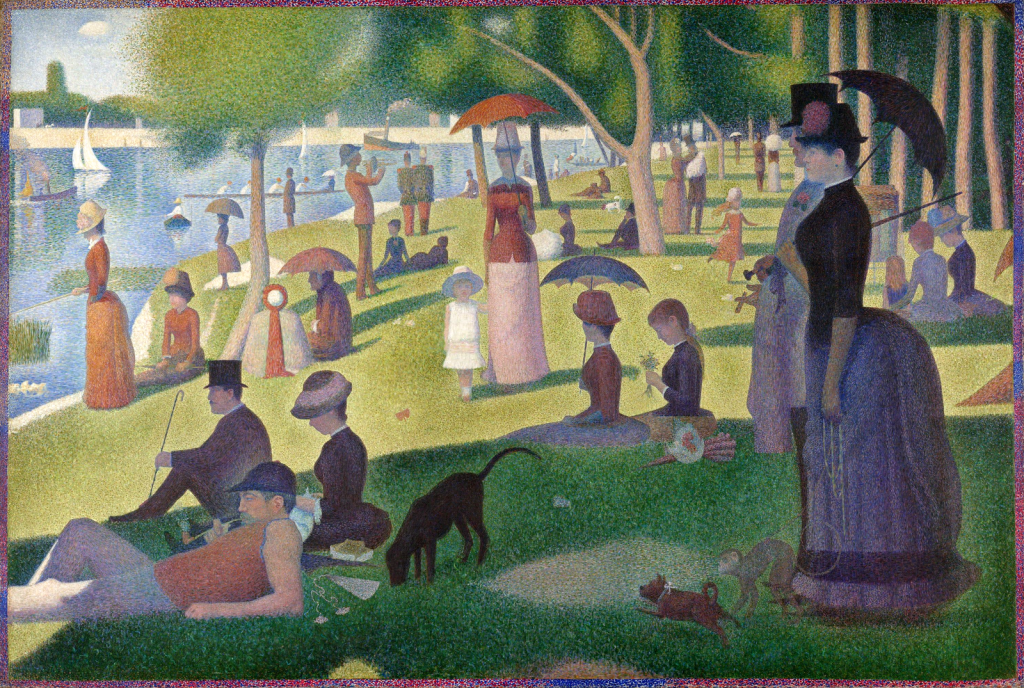
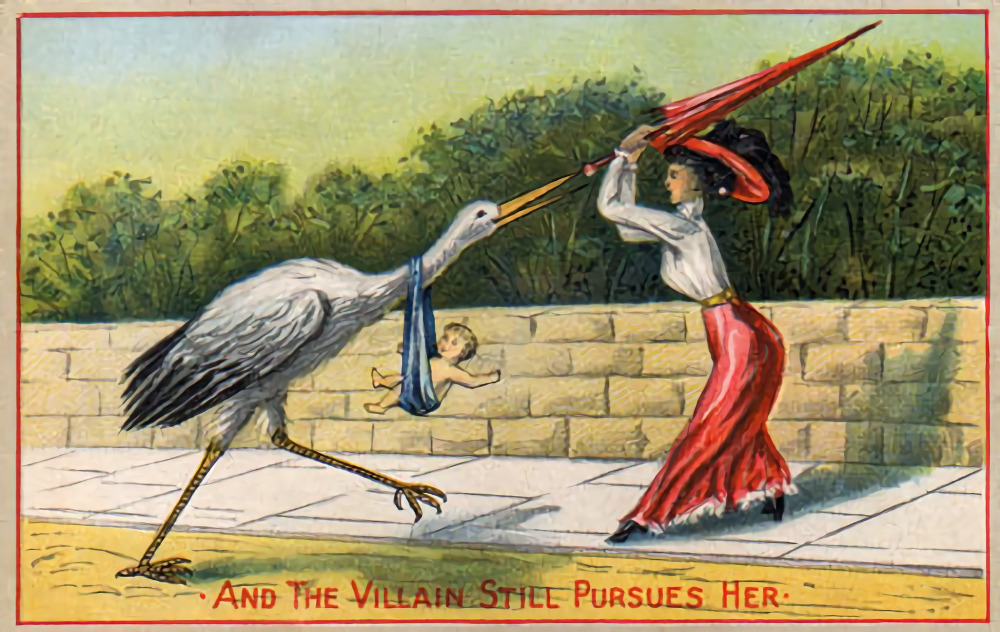
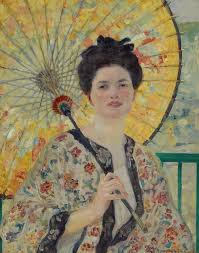



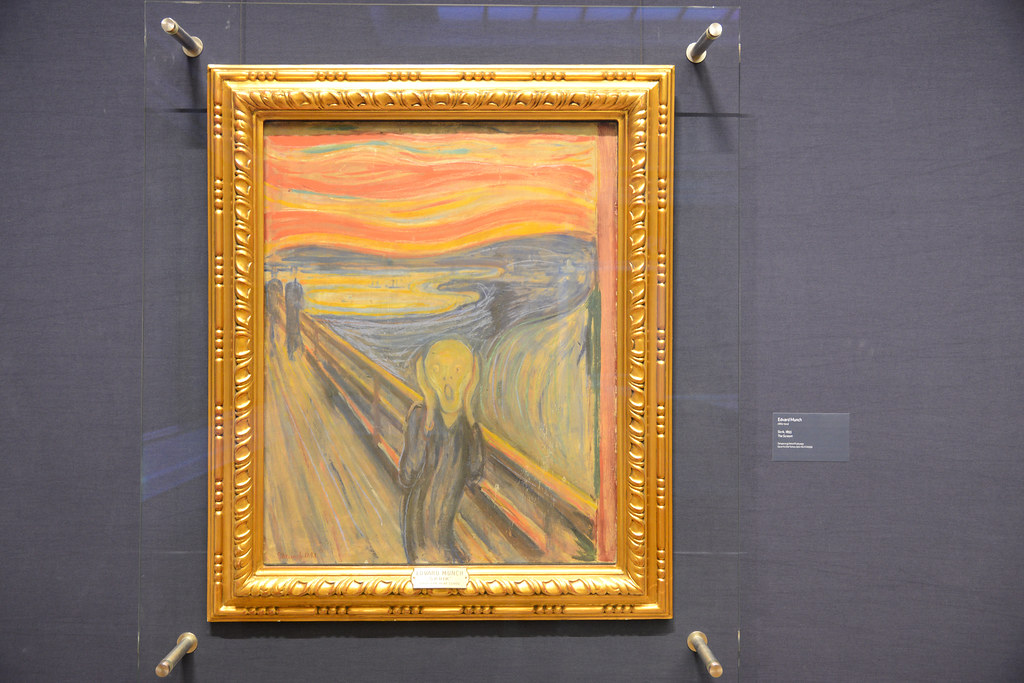





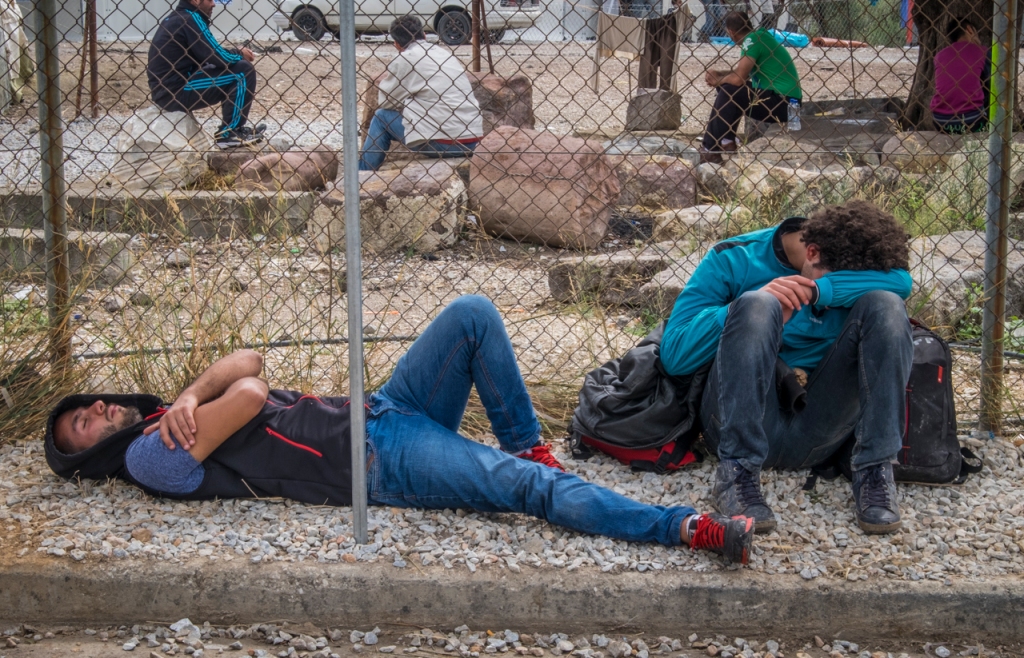




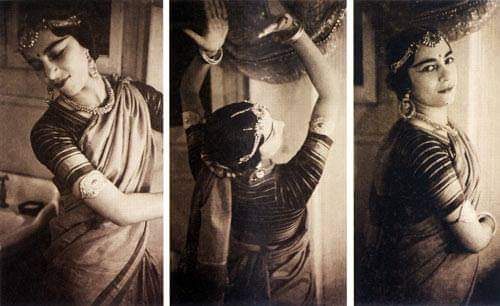

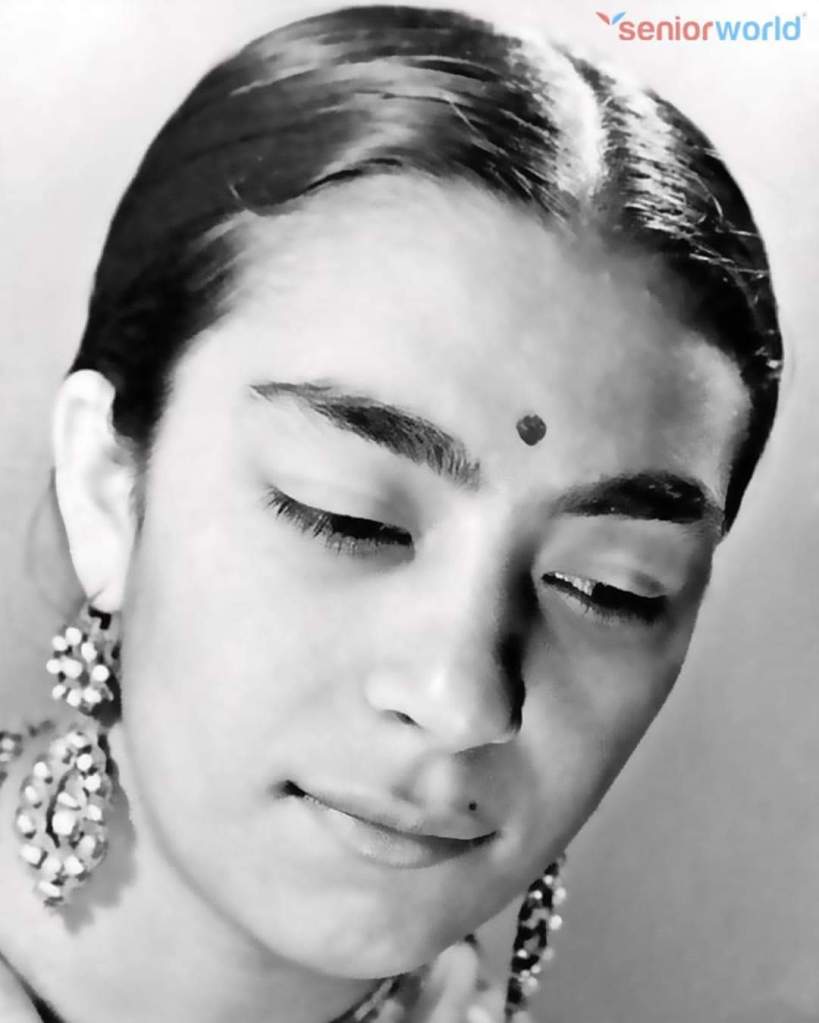
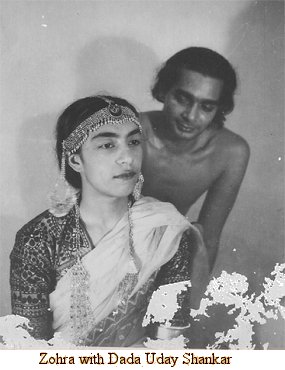

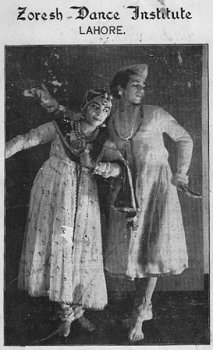
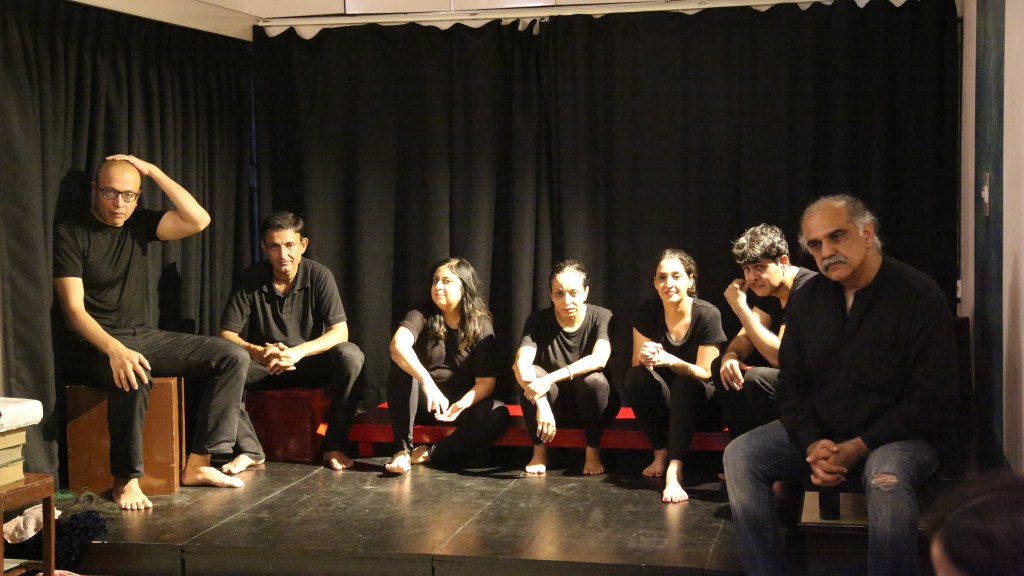
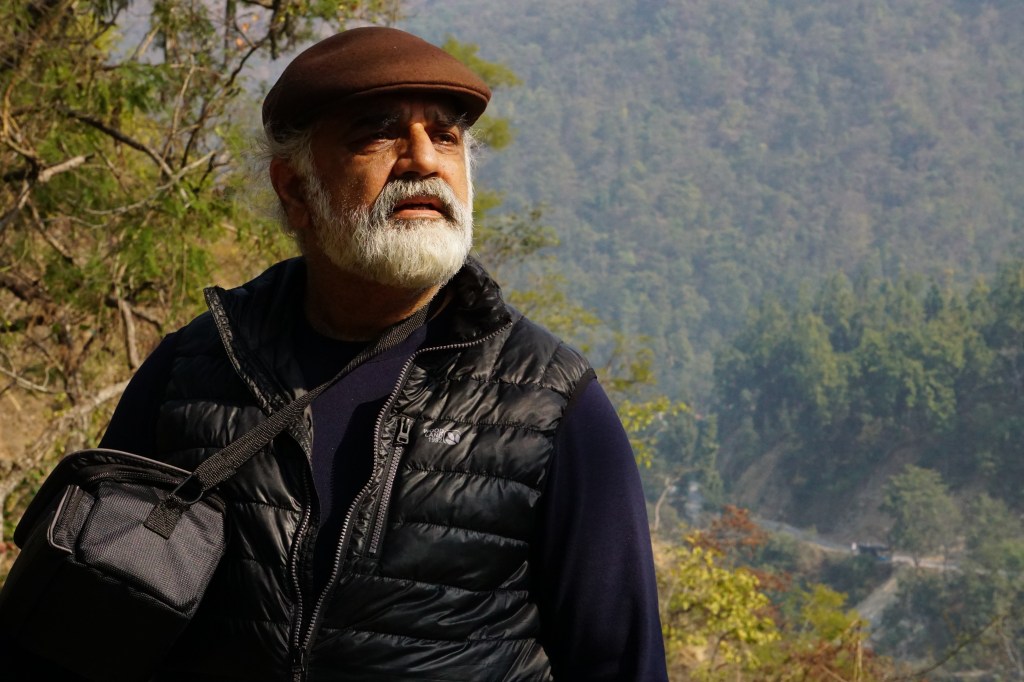
 Borderless