The Sun rears its orangey hue over the horizon. Yet another new day dawns. The Sun does not know it is starting a new horizon. It performs its preordained duty, firing nuclear fusion reactions on its surface. It is the round Earth that revolves around the Sun. The Earth does not know a new day has begun. It just revolves counterclockwise on its axis. It has multiple new dawns at its manufactured latitudes. It neither knows where it started nor its point of reference. A series of celestial accidents brought it to be with its speed and its faithful lunar companion.
The day does not know it is a new day. Wednesday does not know it is Wednesday. It is merely an agreed arrangement for convenience. There is nothing specific about Wednesday or, for that matter, any day. It can rain, shine, snow, or be a non-discrete day. Good or bad things can happen, just like any other day. It is daylight, and night befalls before another day.
Earthlings have been miscalculating their calendars anyway. In 1582, Pope Gregory XIII replaced the Julian calendar with the Gregorian calendar. They realised they had miscalculated the solar cycle and had to remove ten days from the Julian calendars to be in sync with a complete revolution. It took the world three centuries to agree on a single calendar. Imagine the ensuing pandemonium. Sweden had to add two leap days to correct their miscalculations. Imagine finding headstones bearing dates like February 30 or 31 as death dates! So, going back, today’s Wednesday could have been a Saturday in the old Julian calendar.
Different cultures view the beginning of the calendar year at various times, depending on whether they follow a solar, lunar, or lunisolar calculation. The Chinese, who follow a lunar system, celebrate theirs in late January or early February, allowing for leap years. The Persians start theirs, Nowruz, on the summer solstice. The Indians and their Southeast Asian counterparts usher it in April with a water festival, prayers and much merriment. Not to forget the Cambodian despotic leader who established Year 0 on 17th April 1975 to whitewash their glorious past, much like the French Year Zero of the 1789 Bastille Day.
In essence, it is just another day. Just as Paul McCartney described in his song, ‘Another Day‘, one merely slips into shoes on the first day of the calendar and follows the same old routine. That is sad. So, to break the monotony, we attach importance to these days. We start a new ledger or a new school term in some countries. In Malaysia, our school term used to begin on the first Monday of January until COVID-19 befuddled everything. The Education Ministry had to close the schools and postpone examinations. The public examinations used to be done at the end of the year those days. Now, nobody knows when the term begins and when the examinations are written.
Many seize the opportunity to use the new year as leverage to get their lives in order. In the post-inebriation hangover following Christmas and New Year’s Eve, one would vow to become a teetotaller. The resurgence of gym memberships can be observed again. The days into the New Year would see new, eager, wannabe Jane Fondas, who would be MIA by mid-January, often seen arguing at the front desk for a refund.
Life is a continuum; it is not compartmentalised. Though it is good to use the birth of a new year as a fulcrum to springboard oneself to greater heights, any day is a good day to start. All it requires is determination and focus. However, it is easier said than done, and the motivational push varies from person to person. Elements that break the will and opinionated naysayers are aplenty.
Anyway, life will be boring if there are no days to look forward to— no birthdays to shower love, no Christmas to bond, no Harvest Festivals to show gratitude to the forces of Nature, and no New Year’s to make new resolutions for the umpteenth time and break them once again. This makes the world go on. There is always something to look forward to.
Photo Courtesy: Farouk Gulsara
Farouk Gulsara is a daytime healer and a writer by night. After developing his left side of his brain almost half his lifetime, this johnny-come-lately decided to stimulate the non-dominant part of his remaining half. An author of two non-fiction books, Inside the twisted mind of Rifle Range Boy and Real Lessons from Reel Life, he writes regularly in his blog, Rifle Range Boy.
.
PLEASE NOTE: ARTICLES CAN ONLY BE REPRODUCED IN OTHER SITES WITH DUE ACKNOWLEDGEMENT TO BORDERLESS JOURNAL
To conquer fear is the beginning of wisdom.
—Bertrand Russell, Unpopular Essays (1950)
This is one of the dedications that precedes the narrative of Mineke Schipper’s non-fiction, Widows: A Global History. Her description of misapprehensions and the darkness around widowhood, as well as the actions that have been taken and suggestions on how more can be done to heal, weave a narrative for a more equitable society.
Starting with mythological treatment of widows, the book plunges into an in-depth discussion, not just with case studies but also with a social critique of the way these women are perceived and treated around the world, their need to heal from grief or a sense of devastation caused by their spouse’s death, concluding with stories that reflect the resilience of some of those who have overcome the odds of being repulsed. It is a book that inspires hope… hope for a world where despite all stories of misogyny covered in media, there are narratives that showcase both the human spirit and humanity where the ostracised are moving towards being integrated as a part of a functional social sphere.
Schipper, best known for her work on comparative literature mythologies and intercultural studies, navigates through multiple cultures over time and geographies to leave a lingering imprint on readers. She writes: “In Book V of his Histories, Herodotus (485-425/420 BCE) described life among the Thracians: Each man has many wives, and at his death there is both great rivalry among his wives and eager contention on their friends’ part to prove which wife was best loved by her husband. She to whom the honour is adjudged is praised by men and women alike and then slain over the tomb by her nearest of kin. After the slaying she is buried with the husband.” And yet she tells us of the dark past of Europe, “A Polish text asserts with great certainty that, after the burning of the body of her husband, ‘every wife allowed herself to be beheaded and went with him into death’.” She tells us stories of wife burning, killing and dark customs of yore across the world that seem like horror stories, including satis in India. The “motivation” is often greed of relatives or customs born of patriarchal insecurities. She contends, “wherever desperate poverty reigns, widows are at an increased risk.”
She argues: “The story is much the same everywhere; widows who are well educated know what rights they have or are able to find the right authorities to approach with their questions, while women with little or no education continue to suffer from malevolent practices.”
She has covered the stories that reflect the need for the welfare of widows, of how early marriages lead to widowhood even in today’s world ( “ Every year around twelve million girls under the age of eighteen get married, one in five of all marriages.”), of social customs like dowry, which can be usurped by a widow’s spouse’s family, of steps that are being taken and changes that need to be instituted for this group of women often regarded in the past and even in some places, in the present, as witches. In fact, she has written of such ‘witch villages’ in Africa, which have been developed to help widows who have been treated badly and turned away from their homes. Such stories, she tells us prevail all over the world, including India, where widows are sent or go to Varanasi.
She asserts that despite these efforts, “there is often still a significant gap between declarations of gender equality and their day-to-day enforcement and application.” She ends with case studies of four women: “Christine de Pisan, Tao Huabi, Laila Soueif and Marta Alicia Benavente examples of widows who dared to fully throw themselves into a new life following the death of their husbands.” And with infinite wisdom adds: “We cannot change history, but we can look to the past with new knowledge and to the future with new eyes.” She concludes with a profound observation: “Time does not heal sorrow, but out of the centuries-old ashes, grief, strict commandments and prohibitions, new prospects can also rise. The fact that every person’s life is finite makes every day unique and precious. The same goes for widows.”
In this interview Mineke Schipper (née Wilhelmina Janneke Josepha de Leeuw), an award-winning writer from Netherlands, tells us what started her on her journey to uncover the stories of this group of people.
What got you interested in widows as a group from around the world? Why would you pick this particular group only for a whole book?
Yes, whence this topic? The widow had been a tiny part of Never Marry a Woman with Big Feet. Women in Proverbs From Around the World (Yale UP 2004), an earlier book I wrote about proverbs referring to women’s lives, from girl babies to brides, wives and co-wives, mothers and mothers-in-law, grandmothers and old women. It was a long and breathtaking study about more than 15,000 proverbs, collected over many years, apparently widely appreciated and translated with two relatively recent editions published in India, in English and in Marathi. For those interested: the complete collected material is accessible and searchable at www.womeninproverbsworldwide.org, including proverbs about widows. That small but striking section about widows had made me curious, but other books, as it goes, pushed ahead, before I came back to them. In January 2020, I had to look up something in that book about proverbs, and the pages about widows looked so weird that I proposed the widow as my new topic to my Dutch publisher who responded enthusiastically.
You have written of so many cultures and in-depth. How long did it take you to collect material for this book and put it together?
All over I found obvious warnings and distrust viz a viz a woman whose husband dies. Interestingly, a widow was associated with death—and a widower was not. Take heed, suitor, when you replace the dead husband in the widow’s conjugal bed! Better not! Was it the fear that she had killed him? Or the creepy thought that the dead man’s hovering ghost was still hanging around? A widow was supposed to mourn intensely over her husband, preferably the rest of her life. In the meantime, proverbial messages openly expressed the widower’s happiness at the news of his wife’s death: ‘Grief for a dead wife lasts to the door’ (all over Europe) or ‘A wife’s death renews the marriage’ (Arabic). I came across well-known names—such as Confucius, Herodotus, Boniface, and Ibn Battuta—and lesser-known names of early travellers, historians, and philosophers with their commentaries on widows, compulsory or non-mandatory prolonged mourning, voluntary or prescribed chastity, and a surprisingly common choice of suicide as the best option for her. Amazingly many widows obediently followed their husbands to death. In all continents, monuments and documents witness how women joined dead men—buried or burnt alive, hanged, strangled or beheaded, drowned, stabbed or shot. A preference for strangling was inspired by the idea that the victim would enter the next world ‘intact’. So, from the narrow diving board of no more than a few dozen proverbs I plunged into the hidden history of widowhood for about three years.
How do women perpetrate the victimisation of widows? Would you say that widows as a group are more victimised against than other groups of women?
Conceptions about women as interchangeable objects were widespread. If a woman was ‘no longer of use’, a man would need to get a new one, much as you would do with a broken watch, rifle, knife or whip. A man cannot or will not do without a wife, but what about when the tables are turned? The need to present women without husbands as inept and dependent must have been great. A widow managing all by herself was rather met with obvious disapproval. Widowhood has traditionally been associated with emptiness. In Sanskrit, the word vidhua means ‘destitute’, and the Latin viduata (‘made destitute, emptied’) is the root of the word for widow in many European languages, including Witwe (German), veuve (French) and weduwe (Dutch).
Nonetheless there have always been plenty of widows who have lived wonderfully independent lives, but this is not the image seared into the public consciousness. The notion that a woman is unable to live her own life after the death of her husband is an amazingly deep-rooted one. The Japanese word for widow (mibōjin) literally means ‘she who has not yet died’, that is, a widow is simply sitting in Death’s waiting room for her own time to come. Interestingly, the status of widower on the other hand was usually so short-lived and temporary that some languages even lack a word for it all together!
What makes widows more vulnerable than others?
Every widow has her own story, but social systems play an important role. In traditions where goods, land and property are inherited through the mother’s family line with matrilocality, a groom comes to live with his bride’s family, although this often ended up working out slightly differently as men were not best pleased with this living arrangement, so in reality there would be negotiation. However, over the centuries patrilineal systems, lineage and inheritance significantly became the dominant system. According to the patrilocal rules, a man had to remain ‘at home’, a system which to this day obliges countless brides to move in with their parents-in-law, an environment foreign to them. They are forced to comply with the demands and expectations of their family-in-law, while the husbands remain comfortable in the familiar surroundings they grew up in, with major consequences for the lives of women who become widows. This patrilocal living situation has often resulted in greater inequality between marital partners and harsh rules for widows, often preventing a wife from any material heritage after her husband’s death. According to the work of evolutionary psychologists, married women who live with or in close contact with their matrilineal family run a significantly lower risk of violence in the form of (physical) abuse, rape and exploitation than those who move in with their husband’s family. This is all the more true for a widow with a distrustful family-in-law who accuse her of killing her husband, a danger that is greatest in areas where poverty reigns.
At a point you have said, “The Aryan period, which preceded later negative social developments, saw a differently structured society in which there was more space for women: to a certain extent women had religious autonomy, they were entitled to education at all levels (with some even becoming celebrated authors), they participated in public life and also held important positions… However, by the year 200 AD, their position had considerably worsened.” Do you have any idea why their condition worsened in India? What were the ‘negative social developments’ you mention?
In matters of religion the woman was increasingly dependent on the services of her husband or of priests, possibly also on her sons or male relatives, to carry out the rituals she required. Simultaneously she became largely excluded from all types of formalised education. This lasting effect can be seen even today in the global difference in the rate of female and male literacy. The negative stance towards women in India dates back to Brahmin commentaries of ancient Vedic texts, which referred to women as lesser humans; widows subsequently occupied an even lower rung on the social ladder and were forced to work hard towards their religious salvation through extreme asceticism. One example: ‘At her pleasure [after the death of her husband], let her emaciate her body by living only on pure flowers, roots of vegetables and fruits. She must not even mention the name of any other men after her husband has died.’ (Manusmriti Kamam 5/160) Patriarchal relations have developed gradually in different parts of the world and at different times, but not everywhere in the same rigorous forms.
In the Abron-Kulango culture in the northeast of his native Côte d’Ivoire, you have told us “[B]oth widows and widowers were required to accompany their spouse to the next world” but eventually due to societal realisations, such practices stopped. Do you think this can happen in other cultures too. Have you seen it happen in other cultures?
As far as I know, such practices do not exist anywhere anymore. The most problematic obstacle for the rights of widow’s in less-well off regions is the unfortunate combination of illiteracy, fear of witchcraft and covetous in-laws, particularly during periods of mourning and grief. The good news is that even in the most unexpected places initiatives are emerging to help inform women in rural areas of their equality before the law. Self-aware widows become inspiring role models; conscious of their rights, they share their knowledge with others so that more of their fellow widows can find the right legal aid when injustice rears its head.
Would you hold as culprit people who enforce the death of widows? Would you address these people too as criminals in today’s context? Please elaborate.
It wouldn’t help much to do this! Marriage is still frequently presented as the utmost peak that a woman can achieve during her life. From this supposed top spot married women often still look at single and widowed women in a new light—with pity, contempt, suspicion or even hostility: they are out to seduce your own husband! When death comes calling, not only men’s but also women’s negative feelings easily bubble up from the morass of fear at the dreaded prospect of becoming a widow. Over the centuries such reactions towards widows have become part of the constrictive hierarchy meant to keep so many women in their place.
Can sati be justified[1](even though they are deemed illegal as is suicide) by saying the widow immolated herself willingly? Please explain.
The social pressure on widows must have been immense, but we are living now and no longer in the past. It is true that in poorer regions far out of the reach of cities, countless numbers of widows still have to traverse a long road towards a humane and dignified existence. However, instead of justifying the willingness to immolate herself as her own choice, it is better to insist on the positive news that, after the loss of their partner, today not only men but also women have the right to stay alive and further explore their own talents and new possibilities.
You have told us dowry started as a European custom. Is it still a custom there as it is in parts of South Asia, even if deemed illegal? Was it brought into Asia by Aryans/colonials or a part of the culture earlier itself?
The dowry is the gift that the bride’s family would contribute to the couple’s new home. Even though colonisation may have reinforced this ancient custom, but in many communities, it was already a custom and still is in many parts of the world. In Europe it stayed on until the late nineteenth century. In cultures where the bride provided a dowry, the death of a wife would bring benefits to a widower, as a new wife with a new dowry would enrich his home with new assets such as silver tableware, jewellery, bed linen and other valuables. For centuries, among Christians, divorce was forbidden, and from the perspective of widowers the prospect of a second chance provoked a sense of euphoria, as expressed in quite some sayings where his sadness does not go beyond the front door. Across Europe such messages confirm a husband’s profit of his wife’s death: ‘Dead wives and live sheep make a man rich.’ (French; UK English). However, most widows were denied such liberating feelings or didn’t experience any profit from the change. Often, they did not even allow themselves to get over her loss and indulge in any new freedom. They usually were subject to the paralysing fear of other people’s gossip.
In many places a widow who remarried would even lose entitlement to her own dowry or other input she had contributed to her marriage. Many women who remarried felt unable to invoke any right they had on the property of their deceased husband. Little wonder, therefore, that widows were heavily discouraged from remarrying, for example in China. The use of far-reaching laws still re-enforced the highly recommended chaste and sexless existence of widows after the death of her husband. Of course, the considerable number of child marriages in sub-Saharan Africa and South Asia easily robbed child widows from the legal rights wherever they had. According to the World Widows Report, the situation for widows with children is still exceptionally alarming in many parts of the world. Daughters, in particular, remain a huge problem in traditions where women have to contribute a dowry when daughters get married. For this reason alone, poorer parents have a preference for sons: they are more likely to inherit from their father’s family, while their widowed mother can expect little.
Has the condition of widows across the world improved over time? Please elaborate.
Over the centuries far too many widows have been convinced that their only future was conditioned by their dead husband. In my book there are examples from different areas of courageous widows who changed their own lives. Looking around in one’s own neighbourhood, there are always exemplary models of independent widows who do not let themselves be deterred by the doom of whatever prejudiced people think or say.
All emancipation starts with the opportunity to acquire knowledge, but if we are to believe what tradition tells us, women had little need for that, based on an assumption that knowledge did nothing to encourage and promote female obedience, and even less for virtue. ‘Knowledge goes before virtue for men, virtue before knowledge for women’ is an old saying in Europe, while a Chinese saying also agrees that a woman without knowledge is already doing very well. The fact that this message has had such a wide-ranging effect can be seen in the vast difference in levels of education and training among boys and girls in global education statistics.
What did a man look out for when it came to finding a wife? In order to facilitate control over women, various warnings have been passed down to men. One such proverb found the world over clearly expresses this sentiment: ‘Never marry a woman with big feet.’ It comes from the Sena language in Malawi and Mozambique. In China, India and other parts of the world, I came across literal iterations of this proverb. In spite of geographic or cultural distances and differences, this saying reflects a widespread consensus: hierarchy in male-female relations seemed to be essential, and someone had to be in charge. Should he become the main breadwinner for the duration of their married life, his wife will be even more dependent on him.
Significantly the big feet metaphor points to male fear of female talents and power. Hardly surprising therefore that becoming a widow was the worst possible catastrophe for women. Worldwide the solidarity between wives and widows is growing and literacy support within local communities as well, while the former unwavering prejudices against widows are shrinking, and more and more widows with big feet do manage. The old anti-widow stronghold of local prejudice is slowly but surely crumbling into ruins. We cannot change history, but widows can look to the past with new knowledge and into the future with new eyes and new hope.
In 1974, the modest, starless Hotel du Commerce, at 14, Rue[1] Sainte Geneviève, in Paris became my home for over six months, and its owner, Madame Marie, my adopted mother.
A young, aspiring journalist, I was sent to Paris by the editor of a worthless monthly magazine in Palermo, Sicily, to write an article on the monuments of Paris. I took up my long residence at the Hotel du Commerce for two reasons: it was very cheap — that is, ten francs a day — and conveniently located in the centre of the city, only a ten minute walk to the Notre-Dame Cathedral. Madame Marie, ninety kilos of joy and laughter, rented me a room on the fifth floor (without a lift) with two other residents: Caban across from me and Paco at the end of the corridor. The rooms had neither attached toilets – there was one for each floor — nor showers (none). Like all residents and tourists, we washed from the washbasin in our rooms. My little window looked out on to the red-tiled rooftop of a Russian bookshop.
To tell the truth I never wrote that article on the monuments of Paris. What a boring subject! On the other hand, my stay at Madame Marie’s hotel afforded me enough material to write a book — a sketch of her and her residents, their trades, joys and sorrows … their uncelebrated destinies. My editor would have probably sacked me for this ‘breach of contract’, but as luck would have it, his magazine went out of business before my return to Palermo.
I shall never know why Madame Marie took such a liking to me. Everyday, she would invite me for coffee and a chat. We would even watch television in the evenings in her sitting-room which separated the tiny kitchen from the reception. From there she kept an alert eye on the comings and goings of everyone. She was a jolly old woman, and this, despite the loss of her husband at an early age, and the terrible events that occurred in her hotel during the Algerian war in the fifties and sixties[2]. She was indeed fat, but quick-witted with plenty of pluck. She had rolls of flesh rumbling under her eye-catching flower-dotted red robe.
“You know, I was a young girl during the Second World War. I hid some French Resistance fighters in my parents’ house in the Alps. The Germans who hunted down the French fighters couldn’t scare me with their rifles and threats. I sent them packing whenever they pounded at our door!” she would repeat proudly when I was alone with her. When her husband died, she was left on her own to manage the hotel, and in the 50’s that was no asset. Deserters, police informers, merciless OAS members[3] and their equally ruthless adversaries, the FNL[4] all came and went causing rows, arrests, even murders. The plucky Madame Marie handled it all with her sang-froid and flair for compromise.
“My sixth-sense got me through that lot,” she would laugh, her jowls shaking. By the 1970’s, however, things had calmed down in Paris. The lodgers were mostly Japanese and American tourists with a sprinkling of North Europeans. No more brawls, police raids or murders. Madame Marie spoke no foreign language but she understood everything that she needed to understand. She had hired an old woman to clean the rooms. The sprightly widow had learned how to say in English, after having knocked on the lodger’s door at eight in the morning: “You stay or you go?” It was enough to get her point across.
Madame Marie disliked the police. She flared at their scent even before they stepped through the front door in incognito on the trail of someone except on one occasion. I shall let her narrate that exceptional episode: “How that flic[5] fooled me I’ll never forget. Dressed like a hippy, long hair, a torn knapsack, he took a room in the courtyard. He spent two weeks here and never said a word. He got in no later than eight o’clock at night. I thought he played the guitar on the metro[6] for money. Then one day, dozens of police stormed through the front door into the courtyard. I was in the sitting-room and rushed out the back door of the kitchen to see what all the hullabaloo was about. The door of one of my clients was wide open, a young bloke who used to play the guitar on the metro; he had been handcuffed by the ‘hippy’ and was being walked out. I couldn’t believe it. It was like a film. When everything settled down, a police officer came over to me and politely explained that my lodger was a notorious drug-dealer and had been under surveillance for weeks by the ‘hippy’. He apologised for the inconvenience and paid the rent for both the dealer (who hadn’t paid me) and the hippy-policeman.” Madame Marie sighed. “He’s the only flic who ever fooled me.” And she laughed her usual jolly laugh.
She got up to make some more coffee for at that moment Caban and Bebert came in for a chat, both a bit tipsy from their usual drinking bouts before, during and after work. Then Bebette made her appearance, the prostitute to whom Madame Marie ‘lent’ one of the courtyard rooms every now and then to exercise her profession. Madame Marie had no moral qualms about such professions. Everyone had to earn a living … Close behind sailed in an elderly woman whose name I no longer recall. Madame Marie considered the woman to be her best friend. She would sit in front of the television and shout insults at the politicians whom she disliked, much to the displeasure of the others, especially Bebert, who would shower her with mocking abuse. When things got too rowdy Madame Marie would shout them all down or threaten to turn them out if they didn’t settle down.
Madame Marie was at times brusque but fair. She liked Caban, the former butcher and now factory worker hailing from southern France, shy and lonely, drunk by mid-morning. He had been living in Hotel du Commerce since the late sixties. She was fond too, of Bebert, the chimney-sweep, a small, taciturn, melancholic chap straight out of Dicken’s David Copperfield, drunk before ten in the morning. He constantly coughed. His clothes were impregnated with soot and cigarette smoke. Bebert hardly spoke at the table, smoking like a chimney, drinking his coffee whilst Caban smiled and winced at the others’ ridiculous jokes and jibes. Day after day and night after night that sitting-room typified for me – and for the others, I suppose — a sanctuary of friendship and convivial exchange. Oftentimes, I read myself into a page of Balzac’s novel Le Père Goriot [7].
The other two residents rarely joined at that cheery table. One of them, Bolot, stayed in a room in the courtyard. He was a former German soldier who joined the French Foreign Legion after his capture during World War II. The other was called Paco, a Republican Spaniard, who escaped Franco’s persecutions after the Spanish Civil War[8].
I got to know them all, save Bebert. We had no time to get really acquainted. “Poor Bebert,” Madame Marie would sigh. One evening as we sat watching a film Bebert knocked at her kitchen door, then staggered in towards us, blood streaming from his mouth, drenching his night-shirt. His face was ghost white. He kept murmuring, “Madame Marie … Madame Marie,” through clenched, blood-filled teeth. The chimney-sweep appeared lost in a daze. Madame Marie quickly took him by the shoulders, laid him on the sofa then trotted off to get the police. They arrived quickly (the station was two doors away). An ambulance shortly followed. Bebert was placed carefully on a stretcher and carried out.
We never saw Bebert again nor had any news of him. Madame Marie presumed that he had died of a haemorrhage from too much smoking, drinking and chimney soot. She had his room cleaned and fumigated. His belongings amounted to a pair of torn slippers, two shirts and trousers and two used razor blades. On the other hand, she gasped at the hundreds of empty packs of cigarettes. Bebert’s world had been compressed into a nebulous routine of cigarette and alcohol fumes and chimney soot. A bleak, Dickensian world to say the least.
Poor Bebert. He had been living at Hotel du Commerce for eleven years. A fellow without a family, friends … known to no one. He practiced a trade that was gradually dying out. No one ever asked for him at the reception — never a phone call. He was the unknown toiler whose burial stone carries no name because he had no money for a headstone. He was probably buried in the fosse commune[9].
Caban, whom I knew much better than Bebert, fared no better. His salary flowed away upon the torrent of fumes of cigarettes and drink, or as Madame Marie put it coarsely: “He pissed it all against a wall!” Too much gambling, too. So his wife left him, after that, his sixteen-year-old daughter. They were never to be heard from again. Caban was soft-spoken, very shy. Quite frankly, I never saw Caban sober, except at six in the morning before catching the bus to work at the wine-bottling factory. He had asked the foreman, Mister Tomas, to have me hired on for the summer since many of the workers had gone off on holiday. In the café whilst waiting for the morning bus, he began his inglorious day with coffee and a few shots of cognac. He continued his indulging all through the working day on the first floor of the factory where he drank the last dregs of wine from the bottles that were to be washed. By five o’clock he was completely sloshed! Mister Tomas kept him on out of pity. Besides, Caban was inoffensive. Madame Marie even told me he had saved a girl from drowning in the Seine River in Paris. But let Madame Marie tell this very true tale: “He was walking along the banks of the Seine after work when he heard the screams and splashings below him. Caban was a strong swimmer at that time, so he took off his shoes, dived in and grabbed the girl in the water. In a few minutes he had brought her back to the banks safe and sound where a crowd of people had gathered, applauding him. The young girl cried and cried but was unhurt. And you know, her father was the owner of the France-Soir daily newspaper. So, to thank Caban, he gave him a certain sum of money and offered him the France-Soir freeeveryday for the rest of his life. All he had to do was give his name at the news-stands.”
“Does Caban read the France-Soir? I never see him reading a newspaper,” I asked naively.
She laughed. “No, Caban never reads. He never had much instruction.”
I became quite friendly with Caban since we worked together at the factory, although he would constantly upbraid me for not joining him in his ritualised morning concoction. I insisted that I never drink. He would snicker and shrug his bony shoulders. “All men drink!” he slurred. That of course was a subject of conjecture which, and this goes without saying, I never pursued with him.
One day whilst I translated for Madame Marie at the reception, I mentioned that I hadn’t seen Caban for more than a week. Neither had she. Mister Tomas had telephoned, too. Caban never missed a day at work … never. She told me to go upstairs and knock at his door. Which I did for several minutes. Silence. When I returned without news of him she immediately dawdled out to the police station. She was back in no time with two policemen. I accompanied them upstairs. They pounded at the door then kicked it open. There knelt Caban over his bed, his face black as coal. The stench in his room made us gag. I hurried down to tell Madame Marie. And as we stood in the reception, the ambulance arrived and four men, escorted by the police, placed Caban’s frail, limp body into a plastic bag and dragged it down the steps, one by one : thump … thump … thump … Madame Marie started to cry. I covered my ears …
Poor Caban had been dead for over a week, due no doubt to a blood clot of the brain. Madame Marie never forgot those thumps on the flight of stairs. Nothing was said of his death in the newspapers, even in the tabloids. Like Bebert, he succumbed to a companionless death, without flowers or prayers. Without sorrow or tears … He too was probably buried in a fosse commune. He had no bank account. The police found six Francs in his pocket … Six more than in Bebert’s …
Paco, the Spanish refugee, had been living in Hotel du Commerce for seven years. His lack of good French isolated him from the Paris scene, so he took refuge in the clusters of Hispanic scenes that peppered the Parisian streets, especially the taverns where flamenco music could be heard on Rue Moufftard, only a fifteen-minute walk from our hotel.
Since I speak Spanish quite well, I had on many occasions accompanied Paco to these musical haunts of his, where the paella was copious, the sangria flowed like water, the music, if not excellent, loud enough to forget one’s trials and tribulations of the day. Above all, it was cheap …
Paco drank heavily, rum and coke or sangria, but never behaved uncivilly. His deep, black eyes bore into mine whenever he spoke of his luckless past: “My older brother was killed in the war against Franco. I escaped via the Pyrenees leaving behind my parents. Since 1940, I’ve been living in France, working in factories or in the fields. And you know, I still don’t have my French papers. I have no identity! I can’t go back to Spain because of Franco[10], so I must stay here unloading lorries at the Halle Market or washing dishes in grotty gargotes[11].” Paco clapped to the sound of tapping feet and to the rhythmic chords of a furious guitar. “Every now and then I repair the toilets at the hotel which are constantly clogged up.” He snapped his fingers, ordered tapas[12], spoke to his friends in the language of his parents.
The fiery Spaniard would introduce me to his Spanish artist friends, all of them sullen, sad figures whose love of Spain had evaporated into hazy fumes of sangria, nostalgia, gaudy flamenco music, tasteless tapas and brief love affairs. As to Paco, he appeared to be a loner, an ill-starred chap lost in a huge city of lost souls, of crowds so busy that their business took no heed of such a shadowy figure, fugitive and fleeting, drifting from tapas to tapas, sangria to sangria.
Paco hated Paris, but it proved the only place for a stateless refugee to avoid police roundups. For Paco, Hotel du Commerce symbolised a haven for marginals, the homeless and stateless. “Madame Marie is my guardian angel,” he would croak. “My very fat guardian angel” as he clapped and stamped to the riotous music. “The police will never find me … never!” he boasted raising his glass to Madame Marie’s health.
He was wrong. One hot September week, Paco couldn’t be found in the hotel. Madame Marie suspected foul play. Two days later the police arrived, informing her that a certain Paco Fuentes had been apprehended without papers. He had been extradited to his country of origin. His belongings? He had none, like Bebert and Caban. The little he did possess were thrown into a bag and out into a rubbish bin. Poor Paco — would he ever find his parents?
On my many jaunts through Spain, after Franco’s death, I tried to locate Paco Fuentes, but it was like finding a needle in a haystack as the expression goes. Here, however, I must thank the excellent Spaniard, for it was he who introduced me to the world of flamenco.
Bolot kept very much to himself. Unlike the other residents he never drank nor smoked. You didn’t want to muck about with Bolot — a massive fellow, indeed. But then again who would muck about with a former French Foreign Legion soldier?
Yet, Bolot’s aloofness and reserved demeanour attracted many people to him. He had that sort of winning smile, and since he spoke very good French, albeit with a heavy German accent, he befriended those who came into contact with him. Moreover, he shared a passion for stamp-collecting. That was Bolot’s raison d’être[13]! His collection had become very well known to both specialists and amateurs. I would accompany him to the Flea Market on Sundays and there he would trade stamps with the best of stamp-collectors. Stamps from the Soviet Union, China, India, Cuba, several African states, Turkey and Libya. Bolot didn’t need the money, his pension as a soldier was comfortable enough. He simply enjoyed the thrills.
One day as we strolled back to the metro as he towered above me, Bolot acknowledged his good luck: “I volunteered for the army at seventeen, an enthusiastic patriot. Was captured by the French after two days of combat and given a choice: prison or the Foreign Legion. I chose the second, changed my nationality and name.”
“What was your German name?” He smiled but left the question unanswered.
“So I fought for the French. A traitor to my homeland. Call me what you like, I couldn’t sit out the war in a prison for years and years. You know, I never went back to Germany. When I quit the Legion I received my pension and came straight to Paris, the City of Lights.”
“To do what?”
“To sell stamps!” Bolot laughed. “No, I worked as a mechanic in factories until retiring.”
I got to know Bolot as well as Caban since all three of us worked at the same wine-bottling factory in the summer of 1974. He left earlier than me because of a fight between him and an obnoxious individual who abhorred Germans, even though Bolot had acquired French nationality long ago. Bolot refused to fight him, despite the other’s punches, which the former Legionnaire dodged or blocked with considerable ease. If Bolot had really fought, he would have killed him. Mister Tomas broke up the squabble, sacked the young rowdy on the spot and apologised to Bolot. Bolot exercised the noble art of self-restraint.
When I left for grape-picking at the end of September, then on to Italy and Sicily, it was Bolot who helped me repair the broken spokes of my bicycle. Outside Hotel du Commerce, Madame Marie and Bolot wished me the best of luck, inviting me back whenever it suited me. There would always be a spare room for me she insisted. I cycled out of Paris in the direction of Burgundy. I had spent six months at Hotel du Commerce …
After a month of grape-picking I returned to Palermo only to discover that the magazine had failed due to lack of interest … and funds. Relieved, I went to Madrid to begin a career as a flamenco guitarist. Time passed quickly. Or as Madame Marie would philosophically say: “It’s not time that passes but us!” Exhausted from so much playing in studios and taverns, I decided to take a break and travel to France and visit Hotel du Commerce.
It was under new ownership. The manager, an Italian, informed me that Madame Marie had died years ago from dementia after a spell in a nursing home. How everything had changed: the reception room had been refurbished and Madame Marie’s Balzacian sitting-room had become a dining-room for guests. The once starless hotel had become a three-star hotel.
I stayed two nights and paid sixty euros a night! In the seventies, I paid the equivalent of one and a half euros! True, all the rooms had been painted in bright, cheery colours, fitted out with toilets and showers. But sixty euros? Besides, I like a hotel that is lived in, not just slept in …
With the death of Madame Marie, a whole era had come to a close. Hotel du Commerce had decidedly conformed to the standards of kitsch. There were no more residents, only tourists. All the single rooms on the fifth floor had become large rooms suitable for modern travelling couples. Gone were the days and nights round Madame Marie’s convivial table, her coffees and conversation. Those colourful figures who had imprinted their existence there, whose joys and sorrows had been shared by Madame Marie and myself, no longer painted those refurbished walls simply because the epoch ignored the very existence of such figures.
Indeed, who during those two nights reminisced the glittering epoch of Madame Marie’s Hotel duCommerce? Who even imagined her singular story and those of her likeable, touching residents? No one. No one, perhaps, except me, who vouched to safeguard those memories. Memories of the anonymous whose faces will never be seen on photos, nor names ever printed in books.
Paul Mirabile is a retired professor of philology now living in France. He has published mostly academic works centred on philology, history, pedagogy and religion. He has also published stories of his travels throughout Asia, where he spent thirty years.
.
PLEASE NOTE: ARTICLES CAN ONLY BE REPRODUCED IN OTHER SITES WITH DUE ACKNOWLEDGEMENT TO BORDERLESS JOURNAL
“If Washington goes to Dhaka, there’s a chance that Paris might make it to Stockholm. And of course Moscow would be moved to Geneva!?”
Sounds like gibberish? But this is a piece of the speculative conversation on transfers and postings that is regular in the drawing rooms of embassies and consulates, Dr Reba Som found out on her very first posting after her marriage with Himachal Som.
Both were Presidency graduates pursuing higher careers — he in Foreign Service, she on the threshold of a doctorate. But life as the wife of an ambassador wasn’t only about glamour postings, fancy holidays and brush with celebrities. It was a mixed bag of blessings, as the woman who had grown up in Kolkata with a grounding in Tagore’s music would soon conclude. For, there were the dark clouds of life away from ageing parents and school going children; from the comfort of familiar food and mastered language; from developing your potential and crafting your own identity in the world out there.
In recent years we have read accounts of retired ambassadors and career diplomats’ experiences in diplomatic life. In her memoirs, Hop, Skip and Jump; Peregrinations of a Diplomat’s Wife, Dr Som’s is a woman’s voice, abounding in stories and observations about how the spouses keep a brave front in alien surroundings to hold up the best image of her country. In this conversation, she voices outmore about her encounters with racism, with political emergencies and exigencies. In short, about her lessons in a borderless world of multicoloured humanity.
You went to Brazil (1972), then to Denmark (1974), then Delhi (1976), Pakistan (1978), New York (1981), Dhaka (1984), then Ottawa (1991), Laos (1994), Italy (2002). Please share your gleanings from these lands.
The roller coaster ride was a saga of discovery. Travelling across expanses of the planet earth that we had seen only on the pages of geography books and atlases was a great learning experience. I gained an understanding of diverse cultures, imbibed social customs, became proficient in languages, and was exposed to exotic cuisines. At the same time I faced homesickness. Each posting entailed the challenge of uprooting oneself, finding schools for children, and reinventing oneself every time.
A large part of this life was in the years that had no mobile phones, no video calls, no social media, no internet communication. What did you thrive on?
Continents and hemispheres away from home, the only link with family and friends then was the diplomatic bag. The weekly mail service ferried across oceans by the ministry in Delhi contained letters and parcels from home. We were asked to judiciously use the weight allowed to bring spices, tea, condiments, clothing and other necessities. It became a ritual to write long letters and send them weekly by the diplomatic bag to Delhi from where they would be posted to respective destinations throughout India.
Along with letters would come bundles of magazines and newspapers. These brought us news of home from which we were truly cut off. With no television or internet or phone calls, we were in the dark about all news, be it political, social or entertainment. Every week on the bag day we waited anxiously to receive the newspapers – and the letters, which had instructions, news, recipes, advice, gossip. All of these were crucial for nurturing our souls.
One telegram from my father in 1973 carried the cryptic message: ‘Reba, solitary First class.’ These were the MA results of Calcutta University which were out after a delay of two years.
I was most taken up by the understated humour of some of your encounters in your memoir. Please recount some of them.
On our very first posting, to Brazil, not only our unaccompanied baggage but also our accompanied baggage did not arrive. Eventually when the lost luggage showed up, Himachal’s ceremonial bandhgala[1]was steeped brown — in the colour of the gur[2] my mother had lovingly packed in!
In Brazil, we found the people to be fun loving but too flamboyant. They made tall claims that their institutions were the biggest in the world. But reality often proved the claims to be hollow. Such was the Presidential bid to make the tallest flag pole in the world in Brazil’s new capital, Brasilia. A very tall flag mast was indeed built but the huge flag atop it was torn to shreds since the engineers had not factored in the wind speed at that height. Brazilians mirthfully called it the President’s erection!
And at Denmark. we were surprised by a sudden news of our posting to Mozambique. We had long realised that we were mere players on the chessboard of postings – we could be shunted off across continents at the whims of the powers that be. By the same token, a couple of phone calls by the newly arrived ambassador undid the mischief. We were happy to unpack and settle down again. The only guilt I felt was when I met the owner of Anthony Berg chocolates: I had in no time demolished the entire carton of chocolates he had sent as farewell gift!
You are among the few I know who have mothered in different continents. So how different is it to become a mother away from India?
I always felt that the best way to get to know certain nuances of a country’s cultural tradition was to have babies in them. My elder son, Vishnu was born in Copenhagen and Abhishek, the younger one, in New York — and my experiences each time couldn’t be more different.
In Copenhagen, a social democrat country, hospital visits for full term pregnant women were fixed on a certain day of the week. On the preceding day they had to collect their urine in a jerry can and present it for lab examination. I was confounded and not a little embarrassed to meet other mothers-to-be, swinging their jerry cans like designer bags without fail on the appointed day. I learnt only later that, from the urine examination doctors would note the condition of the placenta and not unnecessarily rush patients into childbirth with caesarean and surgical intervention!
In NY, on the day of my discharge, the hospital staff were highly excited because Elizabeth Taylor had come in for one of her facelifts. I could not forgive them their magnificent obsession when, along with a goodbye hamper, they wheeled in a bassinet with a different baby. On my protestation the nurse rudely shouted, “Can’t you read… the tag says Som Junior?” Shocked by the implication I said, I could not only read but also see! And it was not my child. While everyone was looking on in disbelief another nurse wheeled in my little one. The babies had their diapers changed and were put back in the wrong bassinet.
Years later, we discovered in an informal meeting with an American ambassador that Abhishek was indeed an American citizen. Because, at the time of the child’s birth Himachal was posted not to the embassy in Washington but to the consulate in New York. Only consulate children were given the privilege. This discovery, rechecked by State Department Records, gave our son the US passport. It was a windfall as Abhishek went on to graduate summa cum laude from a prestigious management school in the US and enter Wall Street as an investment banker.
I must also share another truth about birthing away from India. Before Vishnu’s birth, my parents had come to Copenhagen. When I was discharged from the hospital I received their care and being fed Ma’s cuisine was the best gift I could have. So, when phone calls came from hospital, followed by visits enquiring about my state of depression, I was totally confused. I realised how many mothers suffered from postpartum depression in a society bereft of nurturing family care.
How could you master languages as removed as Portuguese from Lao and Italian from Urdu? Is a flair for languages the key to this proficiency or the training imparted before each posting?
I enjoy learning languages. My stint at learning French at Ramakrishna Mission Golpark stood me in good stead in grasping Portuguese in Brazil, French in Ottawa and Italian in Rome — all Latin languages. But there was also the hazard of mixing up some phrases and words, so similar yet so different! Like Bon Appetit in French and Bueno Appetito in Italian. Or Amor in Portuguese; amore in Italian and amour in French.
Sometimes though, I accidentally learnt how language travels. My mother had packed in many petticoats to match with my saris but without their cord. We went to a store that promised to hold all we need but all my sign language did not bring what I needed. “Phita is obviously not available here,” I told Himachal, preparing to leave. Suddenly the storekeeper perked up. ‘Fita, si senhora!” he said and produced bundles of cord.
In due time I found out that janala, kedara and chabi – Bengali for window, chair and keys – had travelled from India to become janela, cadeira and chavi.
What did Dhaka mean to one raised in West Bengal – per se the Ghoti-Bangal[3]divide, your roots or the cultural side with Firoza Begum and Nazrul Geeti?
Dhaka was a great posting in so many ways. It was a hop, skip and jump away from my home town Kolkata, with the same language and culture and yet was a foreign posting with foreign allowances!
As you know, there’s a subtle cultural difference in East and West Bengal. Both speak Bengali but in East Bengal, it’s a colloquial rustic dialect while West Bengal speaks its refined cultural form. This formed the infamous ‘Ghoti-Bangal’ divide: Urban Calcuttans looked askance at their country cousins from the East.
The difference extended to the palate. East Bengalis flavoured their dishes with more chillies and West Bengalis, with a pinch of sugar. For the fish loving people, the two iconic symbols are Hilsa and Prawns, for East and West. Emotions soared high in Kolkata when the supporters of the football teams, East Bengal and Mohun Bagan, clashed, after intensely fought matches that spurred deadly arguments and bets.
Given this background, Himachal created a minor storm by announcing to his parents from Chinsurah, Hooghly in West Bengal that he would marry a girl whose parents were from Dhaka and Faridpur in East Bengal. Ghoti-Bangal feud remained the subject of much friendly banter between Himachal and me until we were posted in Dhaka. There, in a diplomatic turnaround, Himachal played down his Ghoti background to announce that his mother’s family was from Chittagong and he was born in the principal’s bungalow in Daulatpur, Khulna, where his grandfather was posted.
To give a bit of Himachal’s family background: Dr Pramod Kumar Biswas, the first Indian doctorate in Agricultural Sciences from Hokkaido University in Japan, had settled in Dhaka as principal of the Agricultural College. His charming daughter Kana won the heart of Dr Rabindranath Som, a veterinarian who weathered the predictable Ghoti Bangal storm to win her hand in marriage.
When my parents Jyotsnamay and Manashi Ray visited us, we couldn’t visit Patishwar in Rajshahi district, where my maternal grandfather Atul Sen had worked with Rabindranath Tagore before he was arrested for revolutionary activities with Anushilan Samiti, and exiled to Kutubdia, an isolated island in the Bay of Bengal. As a headmaster, he had given shelter to Jatirindranath Mukherji, popularly known as Bagha Jatin[4].
It was a breezy day when my octogenarian father revisited Faridpur Zilla School. The colonial bungalow had acquired a fresh coat of terracotta paint. Finding his way to the headmaster’s room, he announced with a lump in his throat that history had been rewritten, boundaries redefined and new national identities forged since 1923, the year he had matriculated.
The headmaster, delving through yellowing files, fished out the matriculation results for that year. My father’s face was that of an excited school boy impatient to show off his prowess: “Look at my maths marks! Oh yes, my English scores were a trifle lower than expected because I had a touch of fever, but look at Jasimuddin’s marks in English! Thank God, he passed it.” We looked around in hushed surprise. This isn’t The Jasimuddin, the beloved poet of Bangladesh? “But of course,” my father responded. “Jasim’s weakness in English was my strength!”
Dhaka was also personally fulfilling as my doctoral studies, which I had carried across three continents, found fruition at last! On another front, I met with success in gaining the confidence and blessings of Firoza Begum, the legendary exponent of Nazrul Geeti.
The songs of Kazi Nazrul Islam were a great favourite of my father. He often hummed those made famous by Firoza Begum. Since I had trained in Tagore songs from age five, I never aspired to master the distinctly different style of rendition. A chance encounter with the golden voice revived this desire. Firoza Begum bluntly refused. When I persisted, she wanted to hear me sing a few Tagore songs.
One morning I mounted three flights of steps, harmonium on my driver’s shoulder, to enter her flat with apprehension. At her bidding, I sang four songs of Tagore. She heard me without any comment, then she asked why I hadn’t been singing for Bangladesh television. My relief was palpable! I had passed her test.
Over the next two years, my weekly classes with her extended well beyond the music lessons to serious discussions on life itself and the meaning of religion. What began as a guru-shishya[5]relationship, transcended to deep friendship. She declined any remuneration and dearly wished that I should cut a disc. This wish of hers came true only when Debojyoti Mishra heard me and decided to record my Nazrul-songs for Times Music in 2016.
Food is perhaps the first face of culture. So please share with us some of your culinary adventures. Or should I say ‘fishy’ stories?
Adventures? I could talk about the chapli kebabs in Pakistan, or about putting samosas in Bake Sales. I could tell you about making rasgullas from powder milk. I could even tell you about our gardener in Laos who merrily collected every scorpion and caterpillar that came his way, “for snacks,” he told me. But let me focus on fish.
The very first party I hosted at home in Brazil led me to seek substitutes for Indian ingredients. Fish of course had to be on the menu, mustard fish at that. I had already learnt from the Brazilian ambassador in Delhi that surubim, being boneless, was the most suited for curries. So surubim it was for months until the day I had to go to the fishmongers – and found it was a monster of a whale!
In Pakistan, traversing the arid countryside of Sind, the train would stop at stations where fillets of pala were being shallow fried on large skillets. Savouring its delicate flavour we went into a discussion on the merits of pala versus hilsa. Both have a shiny silver body with thin bones, both swim upstream against current. The taste of hilsa steam-cooked in mustard sauce is a super delight in both Dhaka and Kolkata. There of course the discussions are on the merits of the hilsa from Padma and Ganga respectively.
In Laos I once called the plumber to ease the draining of the bathtub since the pipe had got clogged. He arrived with a live fish in a plastic bag and promptly emptied it into the pipe. It would eat through the slush as it travelled through the pipe, he assured me!
Post retirement, Himachal settled to honing his culinary skills. Cooking, which he had started in Ottawa, became his lasting hobby. He would shop for fish in C R Park or INA Market[6]. He would pore over cookbooks and plot innovative recipes. “Cooking,” he was quoted in Outlook magazine, “is art thought out with palate.” And his piece de resistance was the salmon baked whole.
Which was your most cherished, or striking, brush with celebrities in world history?
At one of the finest dinners in Copenhagen I found myself seated next to a countess. She invited me to visit her since she lived in the neighbourhood. The next day a liveried man arrived to escort us to an imposing manor house. We were welcomed with sherry and we had to select a card from a silver salver with the name of our partner for the dinner. I was escorted by a handsome young man who floored me when we exchanged names. He was the descendent of Count Leo Tolstoy!
Another memorable encounter was with a person straight out of the history books. I was strolling in a forested park outside Copenhagen. I noticed with a shock that I was looking into a glass topped coffin. The aristocratic face inside had an aquiline nose and a goatee that lent a refinement to the visage that still sported a faint smile. The starched lace collar was held in place by a jewelled button that showed impeccable taste. But the elegant hands tapered off to skeletal fingers, and the feet too had become skeletal.
The plaque at the bottom of the coffin informed us that this was James Hepburn, the Earl of Bothwell, with whom Mary, Queen of Scots had fallen in love. It was a fatal attraction since both were married. But soon her husband, Lord Darnley, the father of her son James, the future king of Scotland and England, was mysteriously burnt down in a manor, and Bothwell was granted a divorce. However, their marriage incensed Catholic Europe, so Mary gave herself up to buy the release of Bothwell, who fled to Denmark.
‘Whoever marries your mother is your father’: this dictum defines the acceptance of whatever political dispensation you are forced to live with, at home or abroad.So how did you cope with a turmoil like Emergency or antagonism in Islamabad?
We had returned to Delhi in the midst of Emergency. We felt some relief to see trains running on time and punctuality being maintained in government offices. Corrupt officers were being hauled up and over-population being addressed. But the atmosphere was sombre and conversations hushed. The deep scar left by the Emergency saw Indira Gandhi being swept out of power the following year.
In Islamabad tension had mounted when I arrived over the imminent execution of Zulfiqar Ali Bhutto[7]. Our residence had become the favourite watering hole for Indian and international journalists who knew Himachal from his Delhi days. Animated discussions over drinks were followed by quick despatches typed out on my rickety typewriter. Unending speculations on the unfolding drama had kept us on tenterhooks. Then one morning in April 1979, the phone rang to say, “It’s done.” [8]
How did Italy change your life?
Italy was easily the best posting of my life in embassies, not only because of its rich history. There I found Italian artists painting inspired by Tagore’s lyrics, and singers like Francesca Cassio singing Alain Danielou’s translations. What made them take it on? The question led me to rediscover Tagore.
My singing of Rabindra Sangeet also found recognition in Rome. My first CD album was released there. I was in many concerts. It was so fulfilling when my translation of Tagore’s lyrics into English found appreciation. Tagore himself believed that his songs were ‘real songs’ with emotions that speak to all people. I began translation in earnest. And that led me to write Rabindranath Tagore: The Singer and his Song (Penguin 2009). The book, with my translation of 50 Tagore songs, was considered very useful to many performing artistes who could understand and represent Tagore better in their art forms.
Please tell us about growing up with Tagore.
Like many girls in Kolkata I began learning Rabindra Sangeet from the age of five. Over the years the songs grew on me. The unique lyrics conveying a gamut of emotions spoke to me when I was far away on postings abroad. I continued my practice of the music through the years and felt vindicated when I got the opportunity to perform to appreciative audiences abroad and back in India.
Why did you work on his songs rather than his poems or stories?
There’s something compelling about Tagore songs. Remember that Gitanjali, which won him the Nobel, was a collection of ‘Song Offerings.’ Songs had given Tagore the strength to ride over the tragedies that had beset his life. They not only helped him express his grief over the deaths and suicides in his family, they were also his mode of expressing his frustration over the political situation that obtained then. And he felt his songs would help others too. “You can forget me but not my songs,” he had written.
Did you ever feel the need to jazz up the songs for Western audiences?
Tagore’s songs are like the Ardhanariswar[9] – the lyrics and the music are inseparable. The copyright restrictions that prevailed after this death did not allow translations. And that was a handicap since his music cannot be appreciated without comprehending his lyrics which are an expression of his creative thoughts.
I would say his songs have near-perfect balance between evocative lyrics, matching melody and rhythmic structure. And the incredible variety of his musical oeuvre touches every emotion felt by any human soul, without jazzing up.
Tagore’s songs are the national anthem of India and Bangladesh, and have also inspired that of Sri Lanka. But will his internationalism hold up with the change of order indicated by the recent developments on the subcontinent?
Tagore was known to be anti-nationalistic. He believed no man-made divisions can keep people segregated. He did not agree with the Western concept of ‘nation,’ he was an internationalist who accepted the ideals of democracy – ‘aamra sabai raja’[10], of gender equality – ‘aami naari, aami mohiyoshi’[11]; indeed, in equality of humans. What he wrote in lucid Bengali suited every mood. Georges Clemenceau, who was the Prime Minister of France for a second time from 1917 to 1920, had turned to Gitanjali when he heard that World War I had broken out. Even today people can relate to what he wrote.
How did all the hop skip and jump shape the feminist within Reba Som?
The wives of Foreign Service officers are often seen as decorative extensions of their spouses. People only saw the glamour we enjoyed on postings abroad, not the heartbreaks and disappointments we battled. Despite their qualifications the wives were not allowed to work abroad. Instead they had to be perfect hostesses: clad in colourful Kanjeevarams they had to prepare mounds of samosas and gulab jamuns.
But there was little recognition, appreciation or compensation by the Ministry of External Affairs of all the hard work and struggle they put in. To settle down in different postings in rapid succession. To host representational parties where they had to conjure Indian delicacies with improvised ingredients. To raise disgruntled children on paltry allowances.
Once, as the Editor of our in-house magazine, I had floated a questionnaire to all the missions abroad asking about the changing perceptions of the Foreign Service wives. That had opened a Pandora’s Box. Eventually in response to our requests the Ministry relaxed service conditions and allowed the wives to work abroad if they had the professional qualifications and received the host country’s permission. This was a veritable coup!
My own act of rebellion was accepting the Directorship of the Tagore Centre ICCR Kolkata (2008-13) after we returned to Delhi on Himachal’s retirement. It became a challenge for me to try and get the Tagore Centre on the cultural map of Kolkata, proving to myself and my disbelieving family in Delhi that it was possible!
Ratnottama Sengupta, formerly Arts Editor of The Times of India, teaches mass communication and film appreciation, curates film festivals and art exhibitions, and translates and write books. She has been a member of CBFC, served on the National Film Awards jury and has herself won a National Award.
.
PLEASE NOTE: ARTICLES CAN ONLY BE REPRODUCED IN OTHER SITES WITH DUE ACKNOWLEDGEMENT TO BORDERLESS JOURNAL
Badshah Amanullah was surely off his rocker. Or else why would he hold a ball-dance in an ultra-conservative country like Afghanistan? On the occasion of Independence Day, Afghanistan’s first ball-dance would be held.
We, the foreigners, were not that bothered. But there was a buzz of restlessness among the mullahs and their followers—the water carriers, tailors, grocers, and the servants. My servant, Abdur Rahman, while serving the morning tea, muttered, ‘Nothing is left of religious decency.’
I did not pay much heed to Abdur Rahman. I was no messiah like Krishna. The task of saving ‘religious decency’ had not been bestowed upon me.
‘Those hulking men will prance around the dance floor holding on to shameless women.’
I asked, ‘Where? In films?’
After that there was no stopping Abdur Rahman. The ancient Roman wild orgies would have sounded like child’s play compared to the juicy imageries of the upcoming dance event that he described. Finally, he concluded, ‘Then they switch off the lights at midnight. I don’t know what happens after that.’
I said, ‘What’s that to you, you mindless babbler?’
Abdur Rahman went mum. Whenever I called him a blathering prattler, he understood that his master was in a bad mood. I would use the Bengali slang word for it and being a seasoned man, though Abdur Rahman did not know the language, he would be able to read my mood.
I was out in the mild evening. Electric lamps lit up the bushes of Pagman. The tarmacked road was spotlessly clean. I was meandering absentmindedly, thinking it was the month of Bhadra and Sri Krishna’s birthday had been celebrated the previous day. My birthday too, according to Ma. It must be raining heavily in Sylhet, my home. Ma was possibly sitting in the north veranda. Her adoptive daughter Champa was massaging her feet and asking her, ‘When will young brother come home?’
The monsoon season is the most difficult one for me in this foreign land. There is no monsoon in Kabul, Kandahar, Jerusalem or Berlin. Meanwhile in Sylhet, Ma is flustered with the nonstop rain. Her wet sari refuses to dry; she is in a tizzy from the smoke of the wet wood of the oven. Even from here I can see the sudden pouring of rain and the sun that comes out after a while. There are glitters of happiness on the rose plants in the courtyard, the night jasmine at the corner of the kitchen, and on the leaves of the palm tree in the backyard.
There was no such verdant beauty here.
Look at that! I had lost my way. Nine at night. Not a soul on the street. Who could I ask for directions?
A band was playing dance numbers in the big mansion to the right.
Oh! This was the dance-hall as described by Abdur Rahman. The waiters and bearers of the building would surely be able to direct me to my hotel. I needed to go to the service doors at the back of the building.
I approached.
Right at that moment, a young woman marched out.
I first saw her forehead. It was like the three-day-old young moon. The only difference was the moon would be off-white—cream coloured—but her forehead was as white as the snow peaks of the Pagman mountains. You have not seen it? Then I would say it was like undiluted milk. You have not seen that either. Then I can say it was like the petals of the wild jasmine. No adulteration of it is possible as yet.
Her nose was like a tiny flute. How was it possible to have two holes in such a small flute? The tip of the nose was quivering. Her cheeks were as red as the ripe apples of Kabul; yet they were of a shade that made it abundantly clear it was not the work of any rouge. I could not figure out if her eyes were blue or green. She was adorned in a well-tailored gown and was wearing high-heeled shoes.
Like a princess she ordered, ‘Call Sardar Aurangzeb Khan’s motor.’
Attempting to say something, I fumbled.
She, by then, looked properly at me and figured out that I was not a servant of the hotel. She also understood that I was a foreigner. First, she spoke in French, ‘Je veux demand pardon, monsieur—forgive me—’ Then she said it in Farsi.
In my broken Farsi I said, ‘Let me look for the driver.’
She said, ‘Let’s go.’
Smart girl. She would be hardly eighteen or nineteen.
Before reaching the parking lot, she said, ‘No, our car isn’t here.’
‘Let me see if I can arrange another one,’ I said.
Raising her nose an inch or so, in rustic Farsi she said, ‘Everyone is peeping to see what debauchery is taking place inside. Where will you find a driver?’
I involuntarily exclaimed, ‘What debauchery?’
Turning around in a flash, the girl faced me and took my measure from head to toe. Then she said, ‘If you’re not in a hurry, walk me to my house.’
‘Sure, sure,’ I joined her.
The girl was sharp.
Soon she asked, ‘For how long have you been living in this country? Pardon—my French teacher has said one shouldn’t put such questions to a stranger.’
‘Mine too, but I don’t listen.’
Whirling around she faced me again and said, ‘Exactment—rightly said. If anyone asks, say I’m going with you, or say Daddy introduced me to you. And don’t you ask me any question like I’m a nobody. And I will not ask anything as if you have no country or no home. In our land not asking prying questions is akin to the height of rudeness.’
I replied, ‘Same in my land too.’
She quipped, ‘Which country?’
I said, ‘Isn’t it apparent that I’m an Indian?’
‘How come? Indians can’t speak French.’
I said, ‘As if the Kabulis can!’
She burst out laughing. It seemed in the fit of laughter she suddenly twisted her ankle. ‘Can’t walk any longer. I’m not used to walking in such high heels. Let’s go to the tennis court; there are benches there.’
Dense darkness. The electric lamps were glowing far away. We needed to reach the tennis court through a narrow path. I said, ‘Pardon,’ as I touched her arm inadvertently.
Her laughter had no limits. She said, ‘Your French is strange, so is your Farsi.’
My young ego was hurt. ‘Mademoiselle!’
‘My name is Shabnam.’
(Extracted from Shabnam by Syed Mujtaba Ali,translated by Nazes Afroz. Published by Speaking Tiger Books, 2024)
About the Book
Afghanistan in the 1920s. A country on the cusp of change. And somewhere in it, a young man and woman meet and fall in love.
Shabnam is an Afghan woman, as beautiful as she is intelligent. Majnun is an Indian man, working in the country as a teacher. Theirs is an unlikely love story, but it flowers nonetheless. Breaking the barriers of culture and language, the two souls meet. Shabnam is poetry personified—she knows the literary works of Farsi poets of different eras. Majnun is steeped in the language and thoughts of Bengal. Together, they find love in immortal words and in the wisdom of the ages.
As the country hurtles towards yet another cataclysmic change, and the ruling king flees into exile, Shabnam is in danger from those who covet her for her famous beauty. Can she save herself and her Indian lover and husband from them?
Shabnam has been hailed as one of the most beautiful love stories written in Bengali. Lyrical and tragic, this pathbreaking novel appears in English for the first time in an elegant translation by the translator of Syed Mujtaba Ali’s famous travelogue Deshe Bideshe (In a Land Far from Home).
About the Author
Born in 1904, Syed Mujtaba Ali was a prominent literary figure in Bengali literature. A polyglot, a scholar of Islamic studies and a traveller, Mujtaba Ali taught in Baroda and at Visva-Bharati University in Shantiniketan. Deshe Bideshe was his first published book (1948). By the time he died in 1974, he had more than two dozen books—fiction and non-fiction—to his credit.
About the Translator
A journalist for over four decades, Nazes Afroz has worked in both print and broadcasting in Kolkata and in London. He joined the BBC in London in 1998 and spent close to fifteen years with the organization. He has visited Afghanistan, Central Asia and West Asia regularly for over a decade. He currently writes in English and Bengali for various newspapers and magazines and is working on a number of photography projects.
PLEASE NOTE: ARTICLES CAN ONLY BE REPRODUCED IN OTHER SITES WITH DUE ACKNOWLEDGEMENT TO BORDERLESS JOURNAL
Ratnottama Sengupta muses on the ongoing wars and violence as acts of terror and gazes back to an incident in the past which resulted in a powerful Bengali poem by Tarik Sujat that she has translated here
The world is in the grip of violence, Rabindranath Tagore wrote on March 5, 1927, sitting in the abode of peace – Santiniketan. Full 97 years later, the world is still in the grip of violence?
It’s Gaza today. Ukraine yesterday. Afghanistan some days ago. Sri Lanka not so long ago. Sometimes it is Bosnia. At other times, it’s Vietnam. Lands far flung and near adorn themselves with blood-red mark of hatred. Religion. Self-seeking dictators. Communism. Global lust for power. No matter what is at stake, the pawn is an innocent life. Always. A woman. An elder. An unborn child…
Tagore wrote Hingshay unmatto prithibi[1]– “The world is in the grip of violence as a prayer to the Almighty. The delirium is leading to conflicts, cruel and ceaseless… Crooked is the world today, tangled its philosophy. No bond is sacred.” And the anguish of such a state of affairs? It led even the Eternal Bard of Bengal to pray for a new birth of ‘Him of Boundless Life.’ “Save them,” Tagore had prayed to the Serene, “raise your eternal voice of hope” so that “Love’s lotus, with its inexhaustible store of nectar” may open its petals in His light. In His immeasurable mercy. To wipe away all dark stains from the heart of the continents.
In vain he prayed.
“Forgive them!” Jesus said, for “They know not what they do!” And what did the soldiers do? They gambled for his clothes by throwing dice! (Luke 23:34)
Forgive them? “Have you forgiven those who vitiated the atmosphere and snuffed out light for innocent lives?” Tagore asked the Almighty, in ‘Proshno (Question)‘. Have you forgiven those who deal hate in the secret hours of night? Have you embraced with love those who murder the helpless in broad daylight under the cover of ideology? Don’t you wince when a pregnant Bilkis[2] is gang-raped? Why do you shed silent tears when elected rulers choke people’s voice with furtive use of power?
And like his Prayer, Tagore’s ‘Question’ too has remained unanswered. And dumb sit the messiahs when men with mistaken notion of mission kill, maim, mutilate hostages who become mere numbers in newspaper headlines – until a new dateline wipes it off our collective memory. Thus, once again, the world was shaken by brutalities carried out in the name of God, in Dhaka’s elite neighbourhood, Gulshan.
On July 1, 2016, before the Cinderella hour struck, five militants entered the Holey Artisan Bakery with bombs, machetes, pistols, and opened fire on men and women, from Italy, Japan, India, Bangladesh. Sunrise. Sunset.. Sunrise… unsuccessfully the police tried to secure the hostages. An elite force of the Bangla Army had to raid to put an end to what BBC News described as “the deadliest Islamist attack in Bangladesh”. Meanwhile? The toll had risen to 29 lives, totaling 17 foreigners, three locals, two policemen, five gunmen, and two bakery staff who were trying to earn their daily bread!
Since Gulshan is home to many embassies and high commissions in the capital of the secular nation, the news stirred up the world in no time. And prayers poured in – over cellphones, on Facebook, television and newspapers too. Prayers of wives for their husbands. Prayers of mothers for their sons. Prayers of a niece for her aunt. Prayers of American friends for their Indian batch mate. But once again, prayers went unanswered…
Among those who did not survive to tell the story was Simona Monti of Italy who worked in textiles. Then 33 years of age, Simona was soon to go to her home an hour away from Rome, to deliver the child she had nursed in her womb for five months. But Michelangelo too did not live to breathe in the world vitiated by hatred. When the news reached her brother, he prayed his Simona’s bloodshed would make this “a more just and brotherly world.”
His prayer, too, remains unanswered.
But poets and other men of conscience did not remain silent. Within days of the incident Tarik Sujat wrote Janmer aagei aami mrityu ke korechhi alingan (Even before my birth I embraced death, July 6, 2016). No diatribe in his words, but the muted cry of an unborn being jolts us. That cry left me with a tear in one eye and fire in the other…
On my very first reading I was touched, I was moved, I fell silent. The pensive mood of the embryonic life turned me reflective. Anger, rage, fury was not the answer to hostility, loathing, abhorrence, I realised. So will you, as you go through the poem that was handed out in Magliano Sabino when Simona’s hometown prayed for her eternal rest.
I Embraced Death Before Birth

Even before my birth I embraced death.
I have no nation, no speech,
No stock of my own.
No distinction between Holy-Unholy,
Sin and Virtue, Sacred or Cursed.
Having seen the ghastly face of life
I've swallowed my last drop of tear...
My first breath did not pollute
The environs of your earth.
My last breath was the first gift
Of this planet to me!

Maa!
You were my only playhouse,
My school, and my coffin.
I had yet to open my eyes -
And still I saw
The sharp nails of executioner
Ripping apart my naval cord.
My ears were yet to hear sound,
Still I could catch bells
That summon lads to schools...
The obscure sound echoed
Through churches, temples,
And minarets of masjids
Until, slowly, it fell silent...

My first bed was my last.
My mother's womb was
My only home
In the unseen world.
On that nook too, darkness descended.
Floating down the river of blood
I groped for my umbilical cord
To keep me afloat...
My tiny fingers, my soft palm
Could find nothing to clutch.

In that Dance of Death
My unseeing eyes witnessed
Koran, Bible, Gita, Tripitak
Bobbing in receding blood.
In the achromatic gloom
Of my chamber
I got no chance to learn
A single mark of piety!

Still...
I embraced death before I was born.
My mother's womb is my
Grave, my coffin, my pyre.
The world of humans
Is enveloped in fire -
A few droplets of my meagre body
Does not quench its thirst!

(Translated from Tarik Sujat’s Bengali poem by Ratnottama Sengupta)
Why has this portrayal of a tormented soul found voice in French, German, Swedish, Italian, English…? Why has it been translated into 17 languages? In the answer blowing in the wind lies hope for mankind. For, the answer is: Not every man is created in the image of Lucifer. That is why, when Giulia Benedetti learnt that she will never again see her aunt Nadia Benedetti, that “she will not talk, will not comment on fashion, will not sing together again…” she wrote on Facebook: “Do not forget. Do not lose her memory. Do not let crazy people massacre. Do not let them win…”
And I immerse my voice in the Bard’s to say: “Let life come to the souls that are dead…” And I pray, bring harmony, bring rhythm, bring melody in our lives, O Serene! Wipe away every dark cloud from the world yet to dawn!
Ratnottama Sengupta, formerly Arts Editor of The Times of India, teaches mass communication and film appreciation, curates film festivals and art exhibitions, and translates and write books. She has been a member of CBFC, served on the National Film Awards jury and has herself won a National Award.
.
PLEASE NOTE: ARTICLES CAN ONLY BE REPRODUCED IN OTHER SITES WITH DUE ACKNOWLEDGEMENT TO BORDERLESS JOURNAL
Abelard & Heloise, a French painting between 1425-1450
Love affairs are usually secret,
But some must be kept especially hidden.
In the case of Abelard and Heloise*, it had to be secret,
Though no matter how flawless a love affair may be, it is best hidden.
Because even then, it was not declared that God is dead.
Daytime words were heard by birds, and night-time words by rats.
Lotte and Werther*,
Caused turmoil before the expiration date,
Romeo and Juliet*,
Were talked of by people.
A love that has passed its expiration date should blend into the myriad of green like a flowering tree,
But being left desolate like the back of a sandcastle by the sea
Or an empty reed warbler nest in a field
Is a lonely affair.
Though a story ascends high into the peaks of immortality
And a spectacular scene tempered by fiery flames may remain,
In the case of Abelard and Heloise, who heated the Middle Ages,
It was an age-old battle between God and mortals.


*The names of a high-ranking cleric and a young nun in medieval France.
*Lotte and Werther from Johann Wolfgang Goethe’s 1774 novel, The Sorrows of Young Werther
*Romoeo & Juliet (1597, play by William Shakespeare)
Ihlwha Choi is a South Korean poet. He has published multiple poetry collections, such as Until the Time When Our Love will Flourish, The Color of Time, His Song and The Last Rehearsal.
.
PLEASE NOTE: ARTICLES CAN ONLY BE REPRODUCED IN OTHER SITES WITH DUE ACKNOWLEDGEMENT TO BORDERLESS JOURNAL.
Ratnottama Sengupta in conversation with Sohini Roychowdhury, who uses dancing to build bridges across cultures
“Meet my daughter Sohini,” Uma Di was introducing the dancer who then lived in Madrid. And my first response was, “Why isn’t she in the movies?!”
Sohini Roy Chowdhury. Courtesy: Sohini Roy Chowdhury
Tall, fair, lissome, agile, Sohini Roychowdhury is the stuff beauty queens and show stoppers are made of. That wasn’t surprising: after all, Uma Roychowdhury herself is the picture of perfection in aesthetics.
It didn’t take me long to realise that, much like the well regarded sculptor’s bronzes, her daughter too was made of enduring stuff. One day she was teaching Bharatanatyam to French, Spanish, and Italian enthusiasts. The next day she was lecturing on mythology in New York. One day she was dancing to ‘Jai Ho![1]’ for the director of the Oscar winning Hollywood movie[2]. Another day she was delineating Durga in an Anthropology Museum…
None of these saw her run out of breath. Nor does she, ever, run out of time. When she’s not holding her fingers in a dance mudra, she is holding a metaphoric pen. This month she unveiled her second book, Dance of Goddess Kali. Yes, she has rings on her fingers and bells on her toes — and wherever she goes, there’s dance on the cards!
Here is what she had to say when I spoke to her:
The Dance of Kali follows Dancing with the Gods. How are the two books different?
Dancing With the Gods and The Dance of Kali are two distinct works, each focusing on different aspects of my artistic and spiritual journey.
Conceived by Monideepa Mukherjee and Sutapa Sengupta, featuring photos from Sohinimoksha
Dancing With the Godsis a pictorial, coffee-table book stemming from my journey as a classical Indian dancer with a multinational dance troupe. Its vivid visuals showcase my onstage performances and behind-the-scenes moments. These are highlights of my career as a dancer, both solo and with Sohinimoksha World Dance and Communications[3].
This visually captivating book focuses on imagery and aesthetics. It offers glimpses into my artistic expression through dance, celebrates my journey around the world, and highlights my life-mantra of connecting civilisations through my craft. This tracing of Sohinimoksha’s journey is for a broader audience: Indian dance enthusiasts, art lovers, and individuals interested in my achievements. The aim is to inspire through visually compelling storytelling.
In contrast, The Dance of Kali is a treatise on the ethos of Goddess Kali and Shaktism. It delves into the deeper spiritual and philosophical aspects associated with the goddess, exploring Kali’s symbolism, mythology, and significance within the context of Shaktism, a Hindu tradition of worshiping the divine feminine energy. The tone of this work is contemplative, as it delves into the profound symbolism and the spiritual aspects associated with the Goddess. It incorporates scholarly research, analysis, and interpretations from various perspectives. Hopefully it offers readers a deeper understanding of Kali’s significance in Hindu spirituality.
May I point out here that The Dance of Kali is not a religious book. It is for readers with a specific interest in Hindu mythology, spirituality, or the myths and legends around the resident Goddess of Kolkata. Those seeking a deeper understanding of Kali’s symbolism and philosophical underpinnings within the context of Shaktism, will find this book dispels disrespectful misrepresentations and unfounded Western misconceptions surrounding the images of Kali as a demonic goddess.
To sum up: both the books reflect different facets of my artistic and spiritual journey. However, they differ significantly in their subject matter, focus, tone, and intended audience. One celebrates my achievements as a dancer through captivating visuals. The other is an academic tome exploring the profound symbolism and spirituality associated with Goddess Kali.
What prompted you, an international dancer, to pick such a rooted in mythology subject?
I have always had a personal affinity with or inclination towards Goddess Kali. Many artistes draw inspiration from their own beliefs, experiences, and cultural backgrounds when choosing subjects for their work. I am no different. For me the depiction of the Goddess is an opportunity for artistic exploration. Kali, with her complex symbolism and multifaceted persona, offers rich material for creative interpretation through the arts, be it dance, literature or visual arts.
This book also celebrates India’s rich mythological heritage and the way it connects to other ancient cultures, in Mesopotamia, Egypt, Spain and France. Kali, with her global soul sisters Ishtar or Sara La Kali, holds significant cultural and religious importance, not just in Hinduism, but other cultures as well, particularly within the contexts of worshipping Mother Goddesses. I delve into Kali’s mythology and symbolism to honour this aspect of Indian life, and its universal resonance.
Yes, Goddess Kali is rooted in Indian mythology. But the themes she embodies — feminine power, transformation, and liberation —transcend cultural boundaries. I hope this book will serve to explore universal themes of empowerment and spirituality. It also aims to provide a deeper understanding of Hindu mythology, and the symbolism associated with the Dark Goddess. Effectively I seek to promote intercultural dialogue and foster greater appreciation for diverse religious traditions. Most significantly, I hope to dispel the uneducated interpretations of Kali as a horrific, savage, demonic goddess. How often she is typecast as a symbol of evil — in popular Western films, books and even as Halloween costumes for disrespectful celebrities like Heidi Klum!
I have witnessed your performance as Durga in an anthropology museum in Madrid. I have noted your commitment to meaningful, even profound themes in your endeavours. What has been your grooming in dance?
I started dancing at a young age under renowned Bharatanatyam Guru, Thankamany Kutty. Later I learnt from Kalamandalam Venkitt in Kolkata. I received rigorous training in Bharatanatyam, the dance that originated in the temples of Tamil Nadu. My dedication to classical art led me to delve deep into its nuances. I mastered intricate footwork, expressions, and storytelling techniques. Over the years, I refined my technique and expression through consistent practice and performance and came to embody the essence of Bharatanatyam.
Your father was a renowned sitarist living in Germany. Your mother is a reputed sculptor of Kolkata. Why did you, an only child, not take to any of these streams of creative expression?
Indeed I was born into a family of accomplished artists. My father, Pandit Subroto Roychowdhury was a renowned sitarist, and my mother, Uma Roychowdhury, is a reputed sculptor. But I chose a different path for myself.
As an only child, I was exposed to various forms of creative expression. But my passion for dance was ignited after watching a riveting performance by Yamini Krishnamurthy when I was about four years old. While I deeply respect my family’s artistic legacy, I followed my own calling and embarked on a journey to carve my niche in the world of dance.
What are the values you have imbibed from them individually?
My father’s sitar schools in Germany have produced hundreds of students — including distinguished sitar players. From him I imbibed a profound appreciation for music and rhythm. I learned discipline, dedication, and the importance of perseverance in mastering an art form. From my sculptor mother I inherited a keen love for aesthetics and eye for details. I learned the importance of expressing emotions and stories through visual and performing arts.
Together these values have steered me towards excellence and innovation in my journey as a dancer and communicator.
Mixed genre performance by Sohini Roychowdhury. Courtesy: Sohini Roy Chowdhury
You have lived in Moscow and Madrid. You are guest professor in far-flung Universities, in America and Columbia. You have danced Bharatanatyam and you have danced to Jai ho! at the premiere of Slumdog Millionaire. What have you gained through your international exposure?
My international exposure has enriched me both personally and professionally. Living in cultural environments as diverse as Moscow and Madrid have broadened my perspectives and deepened my understanding of global arts and communication.
More than 2000 students have ‘graduated’ through my two dance schools in Spain — Casa Asia and Sohinimoksha Artes de la India. In Moscow, more than 80 Russian students performed with me on stage at the Embassy of India and Nehru Centre at the end of their course. As a guest professor in universities across Europe, USA and Latin America, teaching dance, Natyashastra [theory of dance] and Indology, I have not only shared my expertise — I have learnt from students, artistes and scholars from different backgrounds.
Through my performances of Bharatanatyam, and collaborations with international artists, have bridged cultural divides. My dancing to Jai Ho! at the European premiere of Slumdog Millionaire showcased the universal appeal of Indian dance and music. It highlighted its ability to connect with people across borders. Today I can confidently claim to have promoted cross-cultural exchange globally.
Coming from an aristocratic, old Calcutta background, what merit do you see in Bollywood dancing?
Despite coming from an aristocratic background rooted in old Calcutta, I recognise the merit in Bollywood dancing which has become a global phenomenon. Not surprising. For, characterised by vibrant energy, expressive movements, and fusion of multiple dance styles — from Salsa to Tango, Twist to ChaChaCha – Bollywood dancing holds mass appeal. It serves as a platform for artists to showcase their talents to diverse audiences and has contributed to the popularization of Indian culture worldwide. It is rooted in traditional Indian dance forms, yet embraces modern influences. And it reflects the evolving tastes of contemporary audiences.
Since the 1960s, Bollywood has drawn inspiration from various musical traditions across the world. This imparted its films a rich tapestry of global influences. This fusion of world music and dance enriched the aesthetic of Bollywood — and in turn contributed to its cultural significance and global appeal.
In the 1960s, Indian cinema underwent a transformation with the emergence of filmmakers like Guru Dutt and Raj Kapoor, who infused their films with elements of Western music and dance. The most iconic example of this is seen in the song Mera joota hai Japani [my shoes are Japanese] from Shree 420 (1955): here Raj Kapoor’s character sings about wearing Japanese shoes, English pantaloons, and Russian caps — all of which symbolised the growing influence of the West in post-colonial India. And yet, as the song stresses, at core these films are Hindustani — Indian.
Throughout the ’60s, ’70s and ’80s, the industry witnessed the rise of dance and music directors who played a pivotal role in incorporating world music and dance forms into Hindi cinema. Composers like OP Nayyar, Shankar Jaikishan, SD Burman, C Ramachandran, Kalyanji Anandji, RD Burman, Laxmikant-Pyarelal, and Bappi Lahiri experimented with disparate musical styles. These ranged from rock-n-roll, rumba, flamenco to disco, reggae and jazz. This infused their compositions with international flavours.
Similarly, choreographers Sohanlal, PL Raj, Herman Benjamin, Suresh Bhatt, Saroj Khan, Chinni and Rekha Prakash, Shiamak Davar, Farah Khan, Remo D’Souza, Terence Lewis, Vaibhavi Merchant, and Prabhu Deva have blended Indian classical dance with Western styles. This has created the unique dance style that is now identified as Bollywood dancing. It has homogenised movements from hip-hop to salsa and contemporary dance.
Soon stars like Shammi Kapoor, Helen, Asha Parekh, Hema Malini, Rishi Kapoor, Mithun Chakraborty, Jeetendra, Govinda, Hrithik Roshan, Madhuri Dixit, and Sridevi became synonymous with Bollywood’s larger-than-life dance numbers. For, it showcased their versatility and flair for different dance steps. Embracing the twist and turn era of the ’60s to the disco craze of ’70s and the hip-hop-inspired moves of the 2000s, Bollywood stars captivated audiences with their energy and charisma.
Along with Western influences, Bollywood also drew from traditional Indian dances. Its choreography incorporated elements of Bharatanatyam, Kathak, and Odissi. Dance sequences like Dola Re Dola from Devdas (2002) and Pinga from Bajirao Mastani (2015) exemplify the fusion of classical and contemporary dances, blending intricate footwork with dynamic movements and expressions.
In recent years, Bollywood has continued to evolve, reflecting the changing tastes and preferences of global audiences. Directors, like Sanjay Leela Bhansali and Farah Khan, have pushed the boundaries of traditional filmmaking, creating visually stunning spectacles that showcase the diversity of world music and dance. Stars like Priyanka Chopra, Deepika Padukone, and Ranveer Singh have embraced this eclectic mix of styles, bringing their own unique interpretations to the screen.
Spanish, Bulgarian and other European dancers from my own troupe, Sohinimoksha World Dance, have performed specially choreographed fusion dance items set to popular Bollywood tracks. Kristina Veselinova danced toMere Dholnafrom Bhool Bhulaiya; Violeta Perez and Lola Martin to Senorita! from Zindagi Na Milegi Dobara and Maria Sanz on Padmavat’s Ghoomer on stages across India and the world. So I readily acknowledge the significance of Bollywood dance in preserving India’s cultural heritage while adapting to changing times.
Would you say our films are taking our dance traditions to votaries abroad? Just as Indian musicians of the 1960s had taken our ragas to the West?
In the 1960s, Ravi Shankar, Ali Akbar Khan and other maestros played a crucial role in initiating the West in the rich notes of Indian classical music — and that had enriched the global cultural landscape. My own father, Pandit Subroto Roychowdhury, spent more than 40 years in Germany and other European countries, spreading and popularising Indian classical music through concerts and classes. Today Indian films, particularly Bollywood, are carrying forward this legacy. They are showcasing the wealth that is Indian dance — often fused with world dance influences. Just as our musicians shared the wealth of ragas with the West, Bollywood films are spreading the infectious exuberance of Indian dance to enthusiasts around the globe. This is fostering cultural exchange on an international scale. Small wonder that Bollywood is now acknowledged as India’s most potent soft power.
What, in your opinion, is needed to make GenNext learn from our past traditions?
If we want GenNext to learn from our past traditions, we must provide them with comprehensive exposure to our rich cultural heritage. For this, we must integrate our arts and cultural practices into educational curricula. We must foster appreciation through interactive experiences — workshops, performances, cultural events. Additionally we must leverage modern technologies and platforms to disseminate information. Let’s make traditional arts more accessible and engaging for the young. Let’s cultivate mentorship programs and intergenerational exchanges. For, we must bridge the gap between past traditions and contemporary lifestyles, to ensure their relevance and continuity for the generations to come.
Sohini I have seen you at close quarters, as a mother, wife, daughter, and daughter-in-law even as you criss-cross the world for your dance. How do you still find time to write, which is such a demanding, reflective expression?
I am fortunate to be able to balance my roles as a mother, wife, daughter, daughter-in-law, and a performing artiste. My experience as much as my dedication to my craft honed my time-management skills. Despite crisscrossing the world for performances, lecture tours, and other professional commitments, I carve out time to write, for I recognise its significance as a reflective form of expression.
To effectively manage my time, I set priorities, create schedules, and maximize productivity during the available windows of time. I designate specific periods for writing, be it early mornings, late evenings, or during travel downtime. I try to integrate writing into my daily routine, seizing moments of inspiration and reflection to jot down ideas or draft passages.
My passion for writing is a driving force — it motivates me to make time for it amidst my busy schedule. Writing provides a creative outlet for introspection, and intellectual exploration. It complements my artistic endeavours and enriches my personal and professional growth.
I am grateful for the support I receive from the network of my family, friends, and collaborators. They play a crucial role in facilitating my writing pursuits. My latest book, The Dance of Kali, was co-written with my son Rishi Dasgupta, an Economics MSc from the University of St Andrews, UK.
However, at the end of the day, that I find time to write amidst my multifaceted life, reflects my passion for engaging in reflective expression. Because? It contributes to my holistic development as an artist and an individual.
[1] A song from the 2008 Bollywood movie, Slumdog Millionaire
[3] A dance troop started by Sohini Roychowdhury with presence in Madrid, Berlin and Kolkata
.
Ratnottama Sengupta, formerly Arts Editor of The Times of India, teaches mass communication and film appreciation, curates film festivals and art exhibitions, and translates and write books. She has been a member of CBFC, served on the National Film Awards jury and has herself won a National Award.
.
PLEASE NOTE: ARTICLES CAN ONLY BE REPRODUCED IN OTHER SITES WITH DUE ACKNOWLEDGEMENT TO BORDERLESS JOURNAL
Title: Bhang Journeys: Stories, Histories, Trips and Travels
Author: Akshaya Bahibala
Publisher: Speaking Tiger Books
Akshaya Bahibala is a poet, bookseller, publisher, and library advocate. He is the co-founder of Walking Book Fairs, an independent bookstore and publishing company, as well as one of the most beloved bookmobiles in India, having journeyed over 35,000 kilometres through 20 states to promote a love of literature. Bahibala has authored four books in Odia. This book marks his debut in English. This captivating book is full of unexpected twists and turns, offering a unique blend of memories, adventures, and intriguing facts about a well-known substance. It serves both as an exploration and a cautionary tale.
Bhang Journeys: Stories, Histories, Trips and Travels by Akshaya Bahibala is an eye-witness account of the cannabis in one part of India – Odisha. Quite a bit of research and ideation seems to have gone into the book. This book is truly captivating due to its exploration of a controversial subject — bhang or cannabis..
Reads the blurb: “For ten years, from 1998 to 2008, Akshaya Bahibala was in the grip of bhang, of ganja—drinking it, smoking it, experiencing the highs and lows of an addict on Puri’s beaches with hippies, backpackers and drop-outs from France and Japan, Italy and Norway. Then he drew back from the edge and tried to make a life, working as a waiter, a salesman, a bookseller. He starts this journal-cum-travel book with startling, fragmented memories of his lost decade. From these, he moves to stories about people across Odisha whose lives revolve around ganja-bhang-opium.”
Bahibala commences the book by recounting his experiences of indulging in bhang and ganja on the shores of Puri. He also spends time with a considerable number of foreigners — Caucasian men and women who appear to visit Puri for the purpose of getting high. The author mingles with Japanese, German, French, Italian, and Israeli tourists, sharing meals, borrowing money, exchanging bhang-infused biscuits, occasionally engaging in fights, all while listening to Bob Marley’s soulful rendition of “No Woman, No Cry” in a state of intoxication.
The book has some interesting details like how the owner of a government-approved bhang shop prides himself on selling the purest bhang available, claiming it can make people as forgiving and non-violent as Jesus. Another story is about how an opium cutter, learnt how to massage a lump of opium with mustard oil and carve it into tablets as a boy. There is a heart wrenching narrative of a girl who survived cholera by licking opium and became a lifelong addict. Yet another, is about the yearnings of a goldsmith with an opium de-addiction card for 20 grams a month, but he longs for more — atleast 25 grams. There is also the story of the ganja farmer who flies to Puri from Punjab in a helicopter.
The hallucinations induced by the drug are reflected in the case study of a young man, suffering from ganja-and-bhang-fuelled paranoia, convinced that Indian and American spies are after him makes for an interesting yet concerning read. Descriptions are given of angry villagers indulging in violence against excise department officials who try to destroy ganja plantations.
Alongside these narratives, are official data on opium production, seizures, and destruction; UN reports on the medicinal benefits of cannabis and a veteran’s recipes for bhang laddoos and sherbets. The author delves into the process of creating bhang, highlighting its complete legality in India (unlike charas and ganja, which are prohibited under the country’s 1985 Narcotic Drugs and Psychotropic Substances Act). Additionally, there is a subtly humorous account of a Brahmin bhang shop owner who offers intriguing insights into the procurement and sale of bhang. Bahibala also discusses opium (referred to as afeem locally) cutters and government-operated facilities where opium is manufactured. He sheds light on opium addicts, for whom the government provides a de-addiction program.
The author concludes the book on a rather melancholic tone, discussing the current state of affairs in Puri and the significant changes that have occurred over the past two decades. The absence of foreign tourists on Beach Road, the police cracking down on public marijuana use, the proliferation of hotels and restaurants, and the eagerness of owners to expand and construct more establishments are all highlighted. Additionally, the author reflects on the individuals he once knew during his youth, noting that some have relocated to other countries while others remain in the area.
This book offers a comprehensive perspective on the bhang/charas/ganja culture in India, covering aspects such as production, sale, purchase, and consumption under peer pressure. The author’s personal experiences and lessons learnt add depth to the narrative, making it a captivating read. It is a liberating and unfiltered account, unconcerned with conforming to political correctness and yet, there is his own story, where he feels he ‘lost’ a decade of his life to addiction.
Bhaskar Parichha is a journalist and author of Unbiased, No Strings Attached: Writings on Odisha and Biju Patnaik – A Political Biography. He lives in Bhubaneswar and writes bilingually. Besides writing for newspapers, he also reviews books on various media platforms.
.
PLEASE NOTE: ARTICLES CAN ONLY BE REPRODUCED IN OTHER SITES WITH DUE ACKNOWLEDGEMENT TO BORDERLESS JOURNAL
A difficult hiking trail up into the mountains combined with bouts of inner doubt makes for an interesting big day out, as Keith Lyons discovers on an alpine route in New Zealand.
Photo Courtesy: Keith Lyons
The coroner’s reports make sobering reading. Two people had died on the same track within a couple of years – both deaths partly attributed to insufficient signage warning hikers heading down to cross the river at that point rather than continue to where cliffs, waterfalls and slippery rocks could be fatal. Both fatalities were preventable, the reports concluded. The one day, up and down rocky alpine route is recommended to only be attempted by experienced hikers, and in good weather, but when my friend and I set off recently on the Gertrude Saddle hike, in New Zealand’s Fiordland, it seemed ‘experienced’ was not a word I would describe the fellow walkers.
Inspired by photos on Instagram, guidebook recommendations in English, French and German, blogposts with photos, and travellers’ recommendations, the hike is popular and easily accessible. It is only 7km return, but 7km involving some risk and quite a lot of altitude gain and fall – 600m climb to be precise. Already nearly 30 cars, vans and motorhomes were parked in the carpark, close to the divide on the Te Anau-Milford Sound Scenic Highway. If you can’t find the marker signs, just look for the people hiking, one website had quipped.
Peering into the distance, we could make out hikers in waterproof jackets and wind blocking fabrics. In the carpark, I reiterated my expectation that if the trail proved slippery, crumbling or covered in snow or ice, then I wouldn’t want to continue. The start of the trail was picture-perfect, and the weather was fine – something of a rarity for a region that gets 200 days of rainfall in an average year. The first part of the 6-hour hike is along the flats of a valley with a meandering river, giving a chance to admire the alpine grasses and flowers, and look up to the amphitheatre of rugged mountains capped in the previous night’s snow.
Photo Courtesy: Keith Lyons
It was early autumn, but colder than normal, and we wore extra layers of clothing. I counted five layers, plus my gloves. It felt good to be on the move, to be enjoying the day, and the prospect of crowning our week’s trip with a route that neither of us had attempted before. From a previous trip to Fiordland I’d spied the valley, with a hundred waterfalls flowing thanks to the torrential rain, and having heard from friends that this was a great day out, remembered to add it to the possible hike list, when the weather was more favourable.
The first people we encountered were coming down. Maybe they’d started early and were the first back, I thought. As the trio approached, I inquired onto the track conditions. They hadn’t been to the saddle, instead turning around when the going got tough. There were rocks falling down from climbers above, and they didn’t feel safe. It was not the news we were hoping for, but at least I thought this gave us an opt-out.
Photo Courtesy: Keith Lyons
The trail veered left, out of the valley, and up. I felt my breathing become more laboured, and my calves straining. My companion had earlier talked about meeting Edmund Hillary, the first to climb Mt Everest, and being impressed with the size of his strong calves. When I met the New Zealand climber I didn’t get a chance to admire his gastrocnemius and soleus muscles, but when I shook his hand I realised that his hands were also strong, large and powerful.
We reached the river crossing below a waterfall, which was easily crossed with a hop, skip and jump, and then looked again at the route and markers, to ensure imprinted on our memory was the turn off for the river crossing, against the natural inclination to go down, down to where bluffs had claimed weary hikers too keen to get down to the valley below.
Photo Courtesy: Keith Lyons
There were warning signs along the way, as if to reinforce the gravity of the situation. The track from the river crossing on is steep, and not suited to those with limited experience or a dislike for heights, the signs warn. “The track goes up steep rock slabs and is treacherous when wet or frosty — there are steel cables to assist you.” A young woman passed us with just a purse and mobile phone, wearing a spaghetti top. We saw another 20-something walking uphill texting with both thumbs – a feat I was curious about, given that I had no phone reception for my network. Millennials. Seemingly unprepared should the weather turn or they need extra energy for the hike.
We stopped beside Black Lake, and saw a smaller blue lake below, perched above the river crossing waterfall. Other hikers stopped to have snacks or lunch, but we had already tucked into our sandwiches by the river, and I was anxious to keep moving in case the snows ahead melted into slush as the sun finally reached the boulder field. The clamber up with steel cables wasn’t too bad, it was more a case of avoiding damp areas where boots and shoes would slide and attack any confidence.
Photo Courtesy: Keith Lyons
The ridge by the Black Lake has proved to be a false summit, and there was still more climbing to do, on zig-zag tracks which displaced rocks and pebbles with every footfall, along uneven trails covered in pockets of snow, and over granite rocks worn smooth by the elements. Those rocks, where dry, proved to be the most satisfying to walk on, once it was established that the tread of shoes was sufficient to grip the surface.
Looking up, we could make out the silhouette of climbers who had made it to the ridge, which we presumed was the actual saddle. But it was hard to calculate just how far it was up. As more hikers started to come down, we asked, but assessments of the distance and time varied. When someone said ‘probably half an hour’ I realised that rather than turn back, we were probably going to make it to the top for the literally ‘breathtaking’ views. I was feeling good, and my companion was enjoying the rock scrambling.
Photo Courtesy: Keith Lyons
Picking our way among the rocks and boulder, we kept going, the prospect of views, a rest and a second lunch ahead. Eventually the steepness gave way to a more gentle terrain, and a few more steps and we were looking out to different mountains and valleys. We joined the other walkers admiring the view into the Milford Sound and savouring packed lunches. There were folk from the USA, France, Germany, India, China and Belgium, some of them on working visas in New Zealand, or enjoying ‘van life’. People asked others to take their photos, some standing on large boulders very close to drop offs of 700m. We looked around for the spaghetti-top woman. Maybe she had made it, or turned back.
At the top, some 1400m high, ice sat on top of small hollows, with snow melting to make the tracks muddy. My friend found a shelter build with rocks and had his nap, while I climbed a little higher for views both sides of the saddle. The saddle got its name some 140 years ago when the surveyor for the road hiked up with his wife Gertrude Holmes. She was likely wearing a dress, but most probably not a spaghetti top.
As Edmund Hillary once said, to climb a mountain successfully you not only have to hike up it, you have to hike back down too – and survive to tell the tale. With this message taken to heart, we carefully descended to the valley floor, and eventually back to the carpark.
.
Keith Lyons (keithlyons.net) is an award-winning writer and creative writing mentor originally from New Zealand who has spent a quarter of his existence living and working in Asia including southwest China, Myanmar and Bali. His Venn diagram of happiness features the aroma of freshly-roasted coffee, the negative ions of the natural world including moving water, and connecting with others in meaningful ways. A Contributing Editor on Borderless journal’sEditorial Board, his work has appeared in Borderless since its early days, and his writing featured in the anthology Monalisa No Longer Smiles.
.
PLEASE NOTE: ARTICLES CAN ONLY BE REPRODUCED IN OTHER SITES WITH DUE ACKNOWLEDGEMENT TO BORDERLESS JOURNAL.

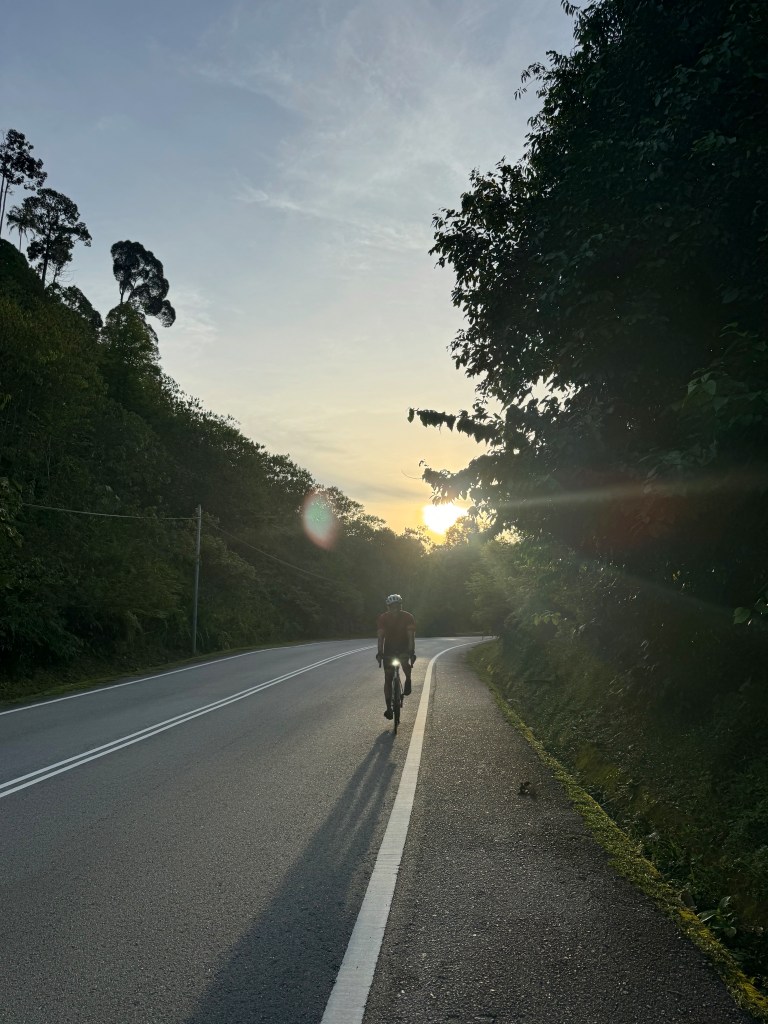

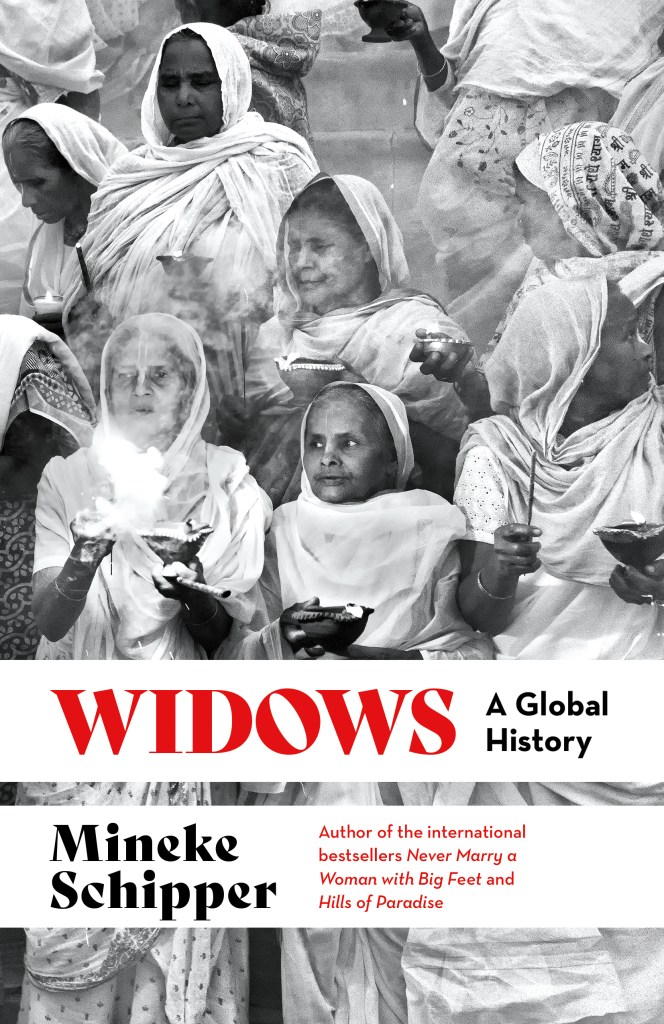
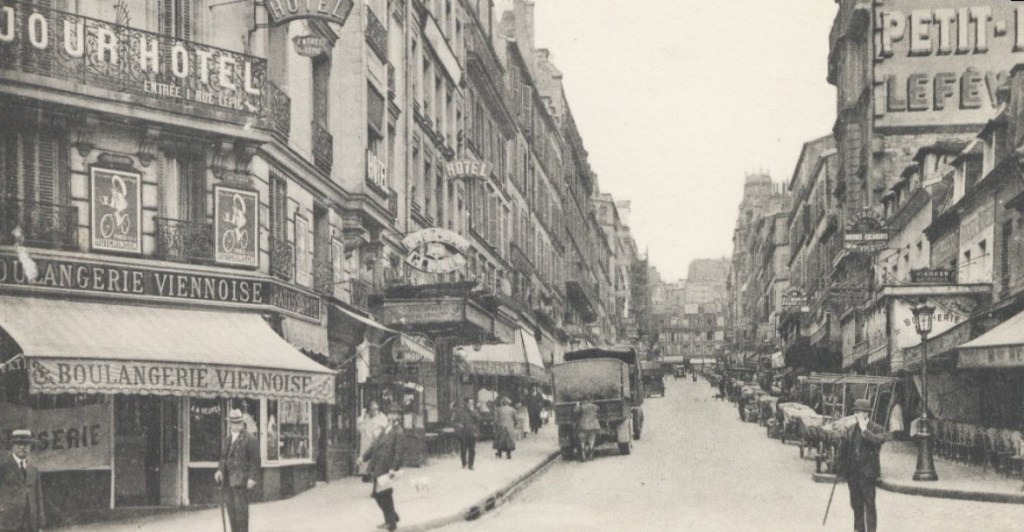










 Borderless