Categories
A Wonderful World

Vignettes from a Borderless World

Enjoy some of the most memorable gems from our treasury … gems that were borne of pens that have written to make our world bloom and grow over time.

The first cover art by Sohana Manzoor published in Borderless Journal

Poetry

An excerpt from Rabindranath Tagore’sThe Child‘, a poem originally written in English by the poet. Click here to read.

Click on the names to read the poems

 Luis Cuauhtémoc Berriozábal,  Masha Hassan, Ryan Quinn Flangan LaVern Spencer McCarthy, Prithvijeet Sinha, Shamik Banerjee, George FreekG Javaid RasoolRakhi Dalal, Afsar Mohammad, Kiriti Sengupta, Adeline Lyons, Nilsa Mariano, Jared Carter,  Mitra SamalLizzie PackerJenny MiddletonAsad Latif, Stuart Mcfarlane, Kumar Bhatt, Saranyan BVRex Tan, Jonathan Chan, Kirpal Singh, Maithreyi Karnoor, Rhys Hughes, Jay Nicholls

Tumi Kon Kanoner Phul by Tagore and Anjali Loho Mor by Nazrul, love songs by the two greats, have been translated from Bengali by Professor Fakrul Alam. Click here to read.

Poetry of Jibananda Das translated by Fakrul Alam and Rakibul Hasan Khan from Bengali. Click here to read.

Mahnu, a poem by Atta Shad, translated from Balochi by Fazal Baloch. Click here to read. 

Manish Ghatak’s Aagun taader Praan (Fire is their Life) has been translated from Bengali by Indrayudh Sinha. Click here to read.

Amalkanti by Nirendranath Chakraborty has been translated from Bengali by Debali Mookerjea-Leonard. Click here to read.

Ye Shao-weng’s poetry ( 1100-1150) has been translated from Mandarin by Rex Tan. Click here to read.

Homecoming, a poem by Ihlwha Choi on his return from Santiniketan, has been translated from Korean by the poet himself. Click here to read.

Essays

 Travels & Holidays: Humour from Rabindranath: Translated from the original Bengali by Somdatta Mandal, these are Tagore’s essays and letters laced with humour. Click here to read.

Temples and Mosques: Kazi Nazrul Islam’s fiery essay translated by Sohana Manzoor. Click here to read.

The Comet’s Trail: Remembering Kazi Nazrul Islam: Radha Chakravarty pays tribute to the rebel poet of Bengal. Click here to read.

The Oral Traditions of Bengal: Story and Song: Aruna Chakravarti describes the syncretic culture of Bengal through its folk music and oral traditions. Click here to read.

Discovering Rabindranath and My Own Self: Professor Fakrul Alam muses on the impact of Tagore in his life. Click here to read.

One Life, One Love, 300 Children : Keith Lyons writes of Tendol Gyalzur, a COVID 19 victim, a refugee and an orphan who found new lives for many other orphans with love and an ability to connect. Click here to read.

When West Meets East & Greatness Blooms: Debraj Mookerjee reflects on how syncretism impacts greats like Tagore,Tolstoy, Emerson, Martin Luther King Jr, Gandhi and many more. Click here to read.

Amrita Sher-Gil: An Avant-Garde Blender of the East & West: Bhaskar Parichha shows how Amrita Sher-Gil’s art absorbed the best of the East and the West. Click here to read.

A Manmade Disaster or Climate Change?: Salma A Shafi writes of floods in Bangladesh from ground level. Click here to read.

Dilip Kumar: Kohinoor-e-Hind: In a tribute to Bollywood legend Dileep Kumar,  Ratnottama Sengupta, one of India’s most iconic arts journalists, recollects the days the great actor sprinted about on the sets of Bombay’s studios …spiced up with fragments from the autobiography of Sengupta’s father, Nabendu Ghosh. Click here to read. 

Dramatising an Evolving Consciousness: Theatre with Nithari’s Children: Sanjay Kumar gives us a glimpse of how theatre has been used to transcend trauma and create bridges. Click here to read.

Are Some of Us More Human than Others ?: Meenakshi Malhotra ponders at the exclusivity that reinforces divisions, margins and borders that continue to plague humankind, against the backdrop of the Women’s Month, March. Click here to read.

To Be or Not to Be or the Benefits of Borders: Wendy Jones Nakanishi argues in favour of walls with wit and facts. Click here to read. 

Reminiscences from a Gallery: MF Husain: Dolly Narang recounts how she started a gallery more than four decades ago and talks of her encounter with world renowned artist, MF Husain. Click here to read.

In The Hidden Kingdom of Bhutan: Mohul Bhowmick explores Bhutan with words and his camera. Click here to read.

From Srinagar to Ladakh: A Cyclist’s Diary: Farouk Gulsara travels from Malaysia for a cycling adventure in Kashmir. Click here to read.

Musings

Baraf Pora (Snowfall) by Rabindranath Tagore, gives a glimpse of his first experience of snowfall in Brighton and published in the Tagore family journal, Balak (Children), has been translated from Bengali by Somdatta Mandal. Click here to read.

Migrating to Myself from Kolkata to Singapore: Asad Latif explores selfhood in context of diverse geographies. Click here to read. 

Cherry Blossom ForecastSuzanne Kamata brings the Japanese ritual of cherry blossom viewing to our pages with her camera and words. Click here to read.

 Hair or There: Party on My HeadDevraj Singh Kalsi explores political leanings and hair art. Click here to read.

 Ghosts, Witches and My New Homeland: Tulip Chowdhury muses on ghosts and spooks in Bangladesh and US. Click here to read.

 Two Pizza Fantasies, Rhys Hughes recounts myths around the pizza in prose, fiction and poetry, Click here to read.

An Alien on the Altar!: Snigdha Agrawal writes of how a dog and lizard add zest to festivities with a dollop of humour. Click here to read.

Where it all Began: Sybil Pretious recounts her first adventure, an ascent on Mt Kilimanjaro at the age of sixty. Click here to read.

Conversations

Rabindranath Tagore: A Universal Bard.: This conversation between Aruna Chakravarti and Sunil Gangopadhyay that took place at a Tagore Conference organised by the Sahitya Akademi in Kochy in 2011. Click here to read.

Sriniketan: Tagore’s “Life Work”: In Conversation with Professor Uma Das Gupta, Tagore scholar, author of A History of Sriniketan, where can be glimpsed what Tagore considered his ‘life’s work’ as an NGO smoothening divides between villagers and the educated. Click here to read. (Review & Interview).

In conversation with the late Akbar Barakzai, a Balochi poet in exile who rejected an award from Pakistan Academy of Letters for his principles. Click here to read.

In A Voice from Kharkiv: A Refugee in her Own CountryLesya Bukan relates her journey out of Ukraine as a refugee and the need for the resistance. Click here to read.

Andrew Quilty, an award winning journalist for his features on Afghanistan, shares beyond his book,August in Kabul: America’s Last Days in Afghanistan and the Return of the Taliban, in a candid conversation. Click here to read. 

Jim Goodman, an American traveler, author, ethnologist and photographer who has spent the last half-century in Asia, converses with Keith Lyons. Click here to read.

In Bridge over Troubled Waters, the late Sanjay Kumar tells us about Pandies, an activist theatre group founded by him that educates, bridging gaps between the divides of university educated and the less fortunate who people slums or terror zones. Click here to read.

In Lessons Old and New from a Stray Japanese CatKeith Lyons talks with the author of The Cat with Three PassportsCJ Fentiman who likes the anonymity loaned by resettling in new places & enjoys creating a space for herself away from her birthplace. Click here to read.

Fiction

 Aparichita by Tagore: This short story has been translated as The Stranger by Aruna Chakravarti. Click here to read.

Hena by Nazrul has been translated from Bengali by Sohana Manzoor. Click here to read. 

Playlets by Rabindranath Tagore : Two skits that reveal the lighter side of the poet. They have been translated from Bengali by Somdatta Mandal. Click here to read.

Pus Ki Raat or A Frigid Winter Night by Munshi Premchand has been translated from Hindi by C Christine Fair. Click here to read. 

Abhagi’s Heavena poignant story by Saratchandra Chattopadhyay translated by Aruna Chakravarti. Click here to read.

An Eternal Void, a Balochi story by Munir Ahmed Badini translated by Fazal Baloch. Click here to read.

The Witch, a short story by renowned Bengali writer Tarasankar Bandopadhyay (1898 to 1971), translated by Aruna Chakravarti. Click here to read.

I Grew into a Flute: Balochi Folktale involving magic retold by Fazal Baloch. Click here to read.

Give Me A Rag, Please:A short story by Nabendu Ghosh, translated by Ratnottama Sengupta, set in the 1943 Bengal Famine, which reflects on man’s basic needs. Click here to read

Rakhamaninov’s Sonata: A short story by Sherzod Artikov, translated from Uzbeki by Nigora Mukhammad. Click here to read.

The Magic Staff , a poignant short story about a Rohingya child by Shaheen Akhtar, translated from Bengali by Arifa Ghani Rahman. Click here to read.

Khaira, the Blind, a story by Nadir Ali, has been translated from Punjabi by Amna Ali. Click here to read. 

The Browless Dolls by S.Ramakrishnan, has been translated from Tamil by B Chandramouli. Click here to read.

Orang Minyak or The Ghost: A Jessie Michael explores blind belief in a Malay village. Click here to read.

Flash Fiction: Peregrine: Brindley Hallam Dennis tells us the story of a cat and a human. Click here to read.

No Man’s Land: Sohana Manzoor gives us surrealistic story reflecting on after-life. Click here to read.

The Protests Outside: Steve Ogah talks of trauma faced by riot victims in Nigeria. Click here to read.

Flash Fiction: Turret: Niles M Reddick relates a haunting tale of ghosts and more. Click here to read.

Henrik’s Journey: Farah Ghuznavi follows a conglomerate of people on board a flight to address issues ranging from Rohingyas to race bias. Click here to read.

Does this Make Me a Psychic?; Erwin Coombs tells a suspenseful, funny, poignant and sad story, based on his real life experiences. Click here to read. 

Phôs and Ombra: Paul Mirabile weaves a dark tale about two people lost in a void. Click here to read.

A Queen is Crowned: Farhanaz Rabbani traces the awakening of self worth. Click here to read.

The Chopsy Moggy: Rhys Hughes gives us a feline adventure. Click here to read.

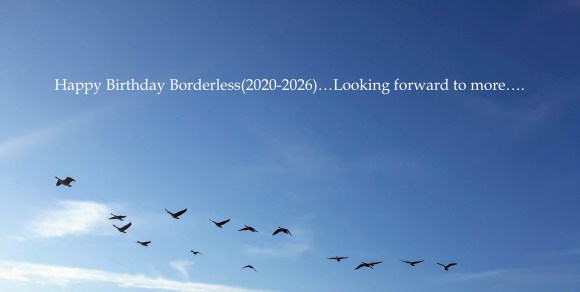
Happy Birthday Borderless… Click here to read.
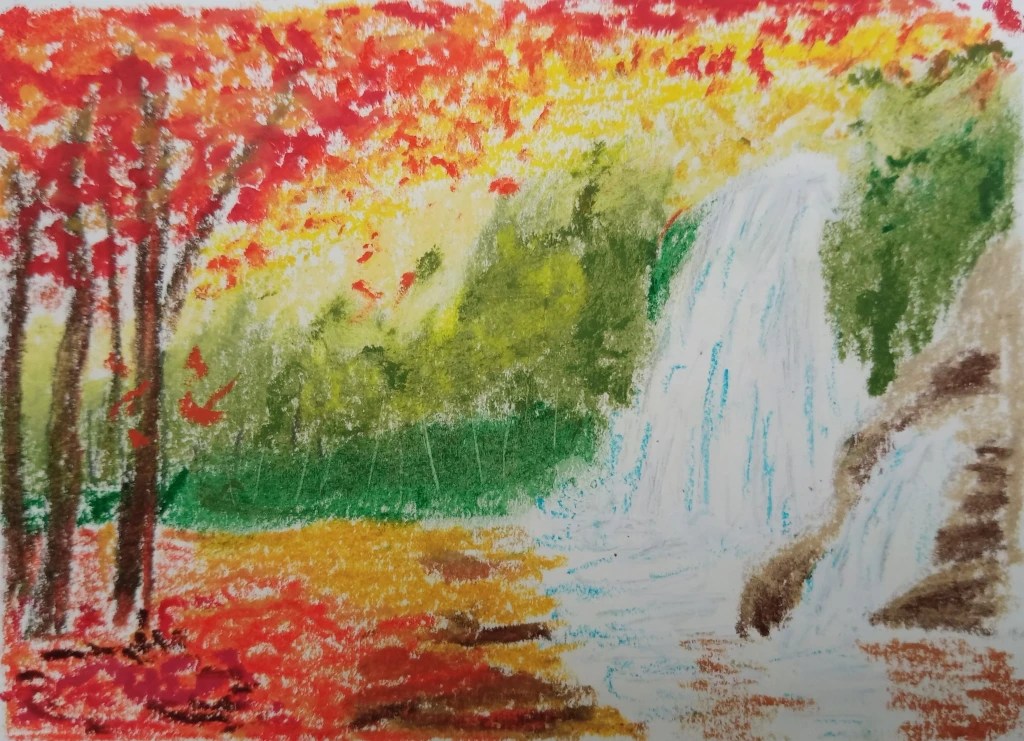
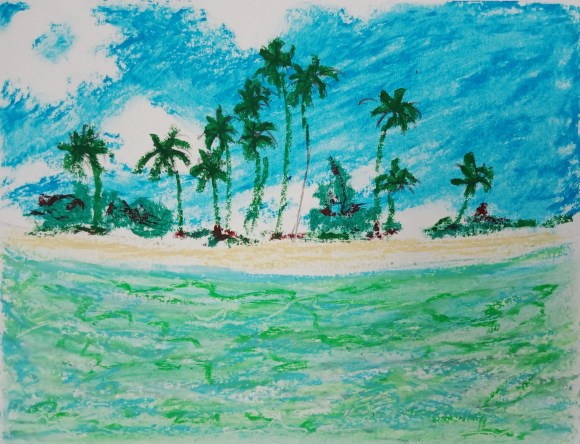
Art by Sybil Pretious
Categories
Excerpt

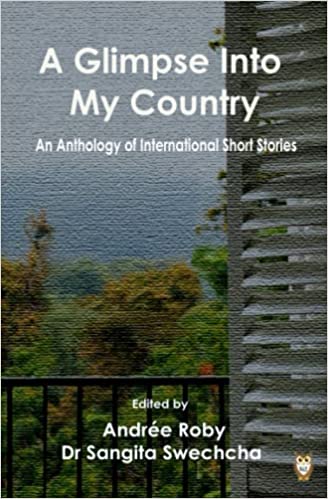
A Glimpse Into My Country: An Anthology of International Short Stories

Title: A Glimpse Into My Country: An Anthology of International Short Stories

Editors: Andrée Roby & Dr Sangita Swechcha

Publisher: Book Hill International

1.

Excerpted from The Goats and the Cow by Sanjib Chaudhary (Nepal)

Shubhavati was humming a folk song. The sun was above her head. The easterly wind was hitting hard on her face. The wind along with the Peepal’s shadow provided her relief from the heat.

The 10 goats were grazing on the nearby field. The landowner had recently harvested rice and the juicy tender sprouts were perfect feast for the goats. While feeling the easterly winds caress she saw a humanlike spot in the horizon. Coming towards her, in a hurried pace. As the figure got nearer, the once single spot broke into four distinct figures. A woman in her mid-twenties, a 40 newly born baby clinging to her shoulder, a boy of around seven years trudging along her and a goat in tow.

 As the group came near her, Shubhavati asked the woman, ‘Why are you running so fast in the midday sun? Have some rest.’

The small boy, tired, sat next to her and started humming a Bollywood song. The woman tethered the goat to a small shrub and started suckling her baby, sitting beside Shubhavati. Her eyes were red with weeping and, as she saw Shubhavati gazing at her with love, she broke down. She started whimpering. Shubhavati consoled her, washed off the tears rolling down her eyes. The woman broke into a loud cry and the little boy, perplexed, started crying with his mother.

She said, ‘This boy’s father returned from Qatar a few days ago. We had a reunion after two 41 years. This little girl was not born when he left us. Everything was so good for few days and suddenly he beat me up.’

‘Small fights between wife and husband are a normal, my dear,’ said Shubhavati.

‘But it was not a small thing. His mother is so jealous that she wants everything that her son brought to be hers. Even the toys that he brought for this little boy!’ She was furious.

She continued, ‘Can you imagine? She threw away a bowl of milk he was sipping in. For me it had been always like that. My husband has been to Rajbiraj. But had he been there he would not say anything to her. He is a coward and doesn’t have courage to say anything to his mother.’

The goat was a small kid when she had brought it along with her from her mother’s house. She had run almost two kilometres and it was still three kilometres to reach her maternal house. Shubhavati lighted a biri and offered it to the young woman. She refused it, saying that she is a non-smoker. Shubhavati sent the puffs of smoke to the skies and started advising the young woman.

‘See, quarrels never will do any good to you, neither to you, nor to your mother-in-law. In between your quarrel, this little boy will suffer. He will be deprived of going to school for many days. Your husband loves you but he can’t take your side.’

‘If you take me as your mother, return to your home. But if you have already made your mind, go, stay for few days and return as your husband comes to fetch you.’ The woman nodded to her advice, clutched her baby and, with the goat and the little boy in tow, continued her journey.

Shubhavati thought had she had a baby girl in her early twenties, she would have had a daughter like the fleeing woman. As the four figures disappeared in the horizon, she saw a man running towards her. She at once knew that he was the father of the two little children when he asked whether she saw a woman running away with two young kids. She told him not to worry, asked him to pacify his wife and to try to maintain a cordial relation with her. The man ran in the direction the woman had headed.

Shubhavati felt good and thanked the lord.

2.

Excerpted from Crossing the Bridge  by Norma Hall (Zimbabwe)

Leila sat in the back of the blue Ford Mondeo, trying to peer out of the car window, over the larger figure of her older brother Spike, who sat next to her. On her other side, her sister Susan, head down, was engrossed in one of the pile of brightly coloured comics the children took with them on one of these long journeys over the border from Zimbabwe into South Africa. Leila’s father, who was driving, had half turned his head to exclaim to the children in the back, that they were now approaching the ‘Great, grey, green, greasy Limpopo River,’ and crossing the bridge, would bring them across the border.

Excitedly Leila looked at the huge muddy green river, which ran like a thick ribbon through the yellow stubbly countryside on either side. Some women could be seen on some of the rocks below doing their washing and a few children swam in the shallows. Then they were over the expansive bridge and soon arrived at the bustling border, with numerous buses, trucks and queuing people waiting out in the sun next to the buildings, beyond which the barrier gate could be seen guarded by some uniformed customs officers and a few soldiers, slouching around, talking and laughing among themselves. Knowing, like others, there was no hurry, they were in for the long wait.

The children were left in the car, windows wound down for the heat which made it almost too hot for the inevitable bickering that would ensue, while the adults, gathering up their various documents, sighed and went off resignedly for the long, arduous process they were accustomed to encountering at the Zimbabwe border post.

Car documents had already been checked by the required visit to the Harare Police Station a few days earlier, which was a mission in itself. There, similar queues, often lengthened by those who curried favour or paid bribes to receive attention first, had to be dealt with. Was the car stolen, who was the owner, where was the insurance, road worthiness, road recovery service documents? With all the requirements, it was strange how one later encountered so many wrecks on the roads caused by accidents and broken-down vehicles, as well as the number of stolen cars being reported.

Leila remembered having seen the strewn clothes and luggage in the bush alongside the road and remnants of a recently crashed car, they’d come across on a previous trip. One of her father’s friends had also been killed one night when his car had crashed into an army truck which was parked with no warning lights, sticking out into the road.

The family had done this journey every two years now, to visit family in South Africa and for the long-anticipated holidays by the sea. And it had been worth it, exciting and adventurous, despite the problems at the border or being stopped by Police on either side of the bridge, for whatever usually ‘cooked up’ reasons that could be used to elicit bribes for an underpaid work force. The two-day journey was long and hot, but they knew it well by now. The snake like road that never seemed to end, driving through small villages, sporadic rocky granite outcrops and rundown towns. Then the climb up Louis Trichardt with its mountain views and winding roads before the long exhilarating drive down to their destination for the first night, an inexpensive motel just outside of Polokwane.

Towards the end of another long day of driving, the children would crane their necks, eyes straining for the prize of being the first to see the sea. Zimbabwe was landlocked, mostly dry and that incredible expanse of aquamarine and then deeper greenish blue water encircling the land at this southern-most tip of Africa, never ceased to enthral the family on these much-anticipated trips.

Leila thought she could have watched forever the sight of that foam riding on the top of the waves, as they rushed to shore and then slowly retreated with a sigh.

About the Book:

A Glimpse Into My Country is a collection of international, fiction and non-fiction, short stories giving the reader a chance to travel from France to England, to Zimbabwe, to India, to South Africa, to Nepal, to Bangladesh and to discover something new about each country through the lens of new and published authors.

The writers from Nepal include Mahesh Paudyal, Sanjib Chaudhary, Mamata Mishra, Jayant Sharma, Neelima Shrestha, Sangita Swechcha & Deepak Rana. The other contributors are Mitali Chakravarty (India), Farah Ghuznavi (Bangladesh), Micaela Grove (South Africa), Norma Hall (Zimbabwe), Derek McMillan (England), Sara Kapadia (UK), and Andrée Roby (France).

About the Editors:

Andrée Roby

After spending over thirty-five years in South London, Régine, originally from France, now lives in West Sussex. She writes under the pen name of Andrée Roby, a name she chose as a tribute to her father (André) and her uncle (Roby). Régine is fluent in French, Spanish and English. As a language teacher, she has a passion for the written word. Her novella “Double Vision” – a creative crime drama, was published in January 2019 and revamped in July2021. Her second book published in April 2020 is a collection of original poems, flash fiction and short stories.  Her crime fiction “Failed Vision”, launched in October 2020, is the prequel to “Double Vision”.


Dr Sangita Swechcha

Dr Sangita Swechcha is an ardent lover of literature from an early age, Sangita has published a novel and co-authored a collection of short stories before the collection ‘Gulafsanga ko Prem’, collection of short stories. She has many short stories, poems and articles published in various international journals and online portals. She was the Guest Editor for the ‘Nepali Literature Month – Nov 2019’ held at Global Literature in Libraries Initiative (GLLI), a USA based organisation. ‘The Himalayan Sunrise: Exploring Nepal’s Literary Horizon’ edited by Sangita Swechcha and Karen Van Drie was released in London in November 2021. The book, A Glimpse Into My Country, is the second publication from Book Hill International. Currently, Sangita Swechcha is working on her second novel.

.

PLEASE NOTE: ARTICLES CAN ONLY BE REPRODUCED IN OTHER SITES WITH DUE ACKNOWLEDGEMENT TO BORDERLESS JOURNAL