Categories
Essay

The Year of Living Dangerously by Fakrul Alam

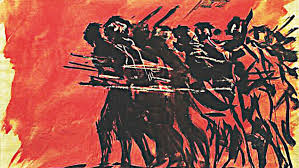
Painting by Zainul Abedin. From Public Domain

1971 began and ended on a note of hope but in the course of the year we went through the whole gamut of human emotions: love for our motherland and hate for its enemies; desire for freedom and abhorrence at those who had curtailed our right to be ourselves; feelings such as anxiety, fear, even terror caused by the knowledge that at any moment we might be abducted and murdered; and excitement and elation at the thought that relief could not be far away. 1971 was the year when for months we lived from day to day, totally insecure in a Dhaka which had become like a city of the dead; it was also the year when we discovered what it meant to hope against hope. 1971, in short, was a cataclysmal year; for every Bengali it was the year of living dangerously.

The year must have begun innocuously enough; at this point in time, I have simply no recollection what I did or how I felt in January and February of that year. But certainly, hope must have been in the air; after Sheikh Sahib’s massive election victory all of us must have been feeling confident and secure in the knowledge that we were finally about to master our destiny. For me—temperamentally apolitical and not yet out of my teens at the beginning of that year—the first sign that something was seriously wrong came one day while we were watching a test match in Dhaka Stadium on the first of March. Suddenly, the game was interrupted and then abandoned as news came about Yahya Khan’s decision to not call a meeting of the Pakistani National Assembly. Pandemonium ruled for a while in the field, but soon everyone left, muttering that this cannot be, indignant that the army chief could not go against the resounding mandate given to the Awami League to change the course of Pakistani history.

And then for a while: hartals[1], demonstrations, slogans, meetings, public displays of discontent, and the will to oppose and resist on one side and display of the carrot as well as the stick on the other. In fact, the month of March showed a whole nation in a state of ferment, ready to go to any length against a brutal but posturing force.

A first climax was Sheikh Saheb’s[2] speech of March 7. Hearing it now, I cannot but think: is it as stirring for people of this generation as it was for ours? Contemplated in retrospective, the speech seems to be the quintessence of the Bengali spirit in 1971: inspired, defiant, pulsating, and resolute. It considers the dangers ahead but is emphatic about the need to put up resistance and counter whatever measures were taken to contain us.

The real climax, of course, came on the night of March 25. That night I was in Sylhet, visiting my sister and her husband, along with my father and two other sisters. In Sylhet that night we could have no idea that Dhaka had become the scene of carnage or that our family, friends, and acquaintances were in the greatest of danger. It was only next morning, waking up to discover that Sylhet town was under curfew, and listening to Indian radio and the BBC, that we began to have an inkling of how devastated Dhaka had become in a night and in how much jeopardy our loved ones were.

Throughout the next week we alternated between a feeling of joy at the knowledge that Bengalis were fighting back and a foreboding that a grievous wound had been inflicted on us. We were elated by Major Zia’s declaration on the radio about independence and the reports of resistance everywhere; we were depressed by the news items transmitted in the air waves about Dhaka as a city that had been flattened by heavy weapons and was still burning. Since, our house was close to Farmgate, we were full of anxiety: had my mother and the sister we had left behind survived the mass slaughter of Dhakaites that was being narrated everywhere except on Radio Pakistan?

After a few days my father decided that he had had enough of waiting and uncertainty; he and I would head for Dhaka and determine for ourselves the fate of my mother and sister. My brother-in-law and three other sisters would remain in what seemed the relative safety of Sylhet. Little did we realise as we left them on a day in early April the hardship and suffering they would go through in the next few months, fleeing from tea garden to tea garden and even to the safety of Tripura[3] to escape the pillaging Pakistani army. Only after we were reunited with them in Dhaka in July did we get to know of their travails as they attempted to evade the marauding forces.

The trip to Dhaka was a tense and an unforgettable one. A few images are etched in my memory vividly: driving through the tea gardens, we saw tea garden workers with bows and arrows, determination wrought on their faces. In Brahmanbaria, we heard gripping stories of the confrontations that had taken place in Comilla and saw the intense preparations being taken in the town itself to resist the Pakistani onslaught. But the most vivid memory of the journey are the scenes of mass exodus we witnessed as we neared Dhaka: men, women, and children on foot or on rickshaws, looking harrowed, wearily fleeing to village homes from the city to escape genocide. Not a few of the people we met told us not to be so foolhardy as to return to Dhaka.

Thankfully, we managed to reach our Indira Road home without facing any unpleasant situations and found that my mother and sister were safe. But there were troop movements all the time and stories of mass arrests of young men during curfew. The elders of my family decided that I would be safer in my uncle’s house in Dhanmondi than in a house in the Farmgate area.

In the few weeks that I stayed in Dhanmondi I managed to get in touch with some of my friends. The news they told me was horrifying: Dr. Jyotirmoy Guhathakurta, my tutorial teacher, and the man who first made me feel that I had the sensitivity to be a student of Shakespeare, and who went beyond his role as a tutor to talk to me about his passion for radical humanism, as well as Mr. Rashidul Hasan, who taught us Blake and was as humble and meek as some of the denizens of The Songs of Innocence and of Experience, had been brutally murdered. More horror stories: one of my school friends, Arun Chowdhury, and his father, could no longer be traced after they had been abducted from Ranada Prasad Saha’s Narayanganj home along with the millionaire philanthropist; one of my uncle’s in-laws, a Rajshahi University professor, had also disappeared after being picked up by the army; other people that we knew had been shot at or humiliated or hurt. A friend who had joined her family in Bogra had witnessed their house being burned and the family had barely managed to escape with their lives. The whole Bengali nation appeared to be bleeding and bruised.

Nevertheless, no one felt defeated and hope still flickered as a candle newly lit and solidly fixed will even in the darkest night. For one thing, there were the daily broadcasts from Swadhin Bangla Betar Kendra[4]containing news about Mujibnagar and organised resistance all over the country. Then there was the knowledge that some friends had crossed the border and were receiving training so that they could be inducted into the Mukti Bahini[5]. Everywhere one could view the resentment against the Pakistani army being concentrated to the point when it would rebound upon them.

Eventually, my parents decided that we would take a house in a part of the city which was relatively free from regular army patrolling and I rejoined them in a Central Road flat. But, really, no part of the city was completely safe. One night, to take just one example, the boys of the neighbouring family climbed the wall separating our two houses because the army had raided the house next door and stayed with us till next morning. I still remember how tense we were that night and nervous and indignant.

Gradually, we learned to sleep better and not hear the stray shots that were fired into the night by who knows whom. Inevitably, we adapted to a life lived mostly indoors, listening to the radio or the tape recorder all day, or reading, or playing cards. But we had to be very careful about everything that we did: the radio had to be toned down, books with insidious sounding titles not read, and visit to and from friends of our age restricted. Fear of army raids constricted us and forced us to make life a diminished thing. Only my father would go out regularly to spend the day in office or shopping; his greying hair gave him a kind of limited freedom that we could not hope to have.

However, consolations for lives lived under such strained circumstances were not impossible to seek even in those days when we would rarely venture into natural light. By June, bombs which were beginning to explode at regular intervals all over the city announced loudly to us that the Bengali capacity to resist, far from being diminished, had transformed itself in spectacular fashion. My father told us one day that he was one of many people who had been donating money for freedom fighters who were now infiltrating into the city in large numbers. In July and August, the Mukti Bahini activity in Dhaka intensified and I even met a few of them. Also, every once in a while, a close friend suddenly disappeared from Dhaka and those of us who still remained in the city still unsure of what we should do talked about his decision to join the freedom struggle and his daring with a mixture of admiration and envy.

Of course, we knew that the life of a freedom fighter was far from a glamorous one, and full of risks. Exactly how hazardous their life could be was driven home to us when in late August a number of them were caught and murdered. Because we knew a few of these valiant fighters personally or by name, for some time, indeed for perhaps the only time that year, we felt depressed and shaken. But another few weeks and many amongst us roused ourselves and felt hopeful again. True, there had been a setback and some of the muktis[6]who had become legendary in a short time because of their exploits had been killed or imprisoned, but September showed that the spirit of resistance was very much alive.

Explosions could once again be heard in and around Dhaka and were signs to us of the vigour and irrepressible nature of our freedom fighters. By October, Swadhin Bangla[7]Radio broadcasts regularly reassured us that there were advances being made on the diplomatic front by our government-in-exile and that on the battlefield our reconstituted Bangladesh army were beginning to engage the Pakistani forces and defeat and demoralise them.

By early November, Nasim Mohsin, my best friend at that time, decided that it was time for him to join the freedom fighters and that the moment for a decisive assault on the Pakistani army was near. I was with him when he contacted some local muktis about crossing over to training camps in Tripura. They told him that the borders were already the site of daily skirmishes and that he should postpone the journey for a while till they could confirm a safe crossing. Desperate to become part of the freedom struggle, Nasim ignored their advice and our pleas to be patient and left us, never to be seen again. Much later, we were to discover that he had been captured by collaborators of the Pakistani army in a village in the Comilla border. They then handed him over to the local Pakistani troops who summarily shot him.

Late November and our excitement grew: the Bangladesh army was no longer content with skirmishes and raids and was now attacking the Pakistanis frontally. By late November war looked inevitable as desperate Pakistani tactics drew India into the campaign. Finally, on the night of December 3, the Dhaka night sky was spectacularly lit by tracer bullets and then invaded by Indian bombers targeting military installations. The next day all of us were on roof-tops watching dog-fights and cheering Indian jets attacking the airport and the cantonment, oblivious to the danger from shrapnel and debris from shattered planes.

Over the next two weeks, our joy grew by the hour, for every Swadhin Bangla Radio broadcast or Indian radio bulletin informed us of Pakistani reverses and detailed advances made by the liberation forces. In our enthusiasm we did not realise that we were going through dangerous times in the capital city as the Pakistani army and its collaborators, their backs against the wall, were becoming more and more vicious. It was only later that we discovered that the brother of a friend who had joined the freedom fighters had been picked up by the Pakistani army during this time and would disappear from our sights forever. And as the liberation forces closed in on Dhaka, rumours spread of youths and prominent people being abducted. Undoubtedly, the scariest memory I have from this period is of a Pakistani plane droning one night, which we knew had dropped bombs on an orphanage the previous night in a bid to discredit the Indian Air Force. It was a moment when we felt totally vulnerable and at the mercy of forces whose reason had become warped to the extent that they could indulge in mass destruction of innocents merely to smear India in the eyes of the world.

Nothing the vicious Pakistani military/propaganda machine could do, however, could thwart the logic of history and prevent liberation, and by December 15 we were hearing the booming of artillery in and around Dhaka. On December 16, we headed for the Ramna Race Course area because we heard that a surrender ceremony was scheduled there in the afternoon.

But we could only go as far as the Hotel InterContinental, where we got caught in a cross-fire. A friend who was with me got slightly hurt as a splinter from a bullet pierced his leg. We took him to his house and then scattered, telling ourselves that we had not survived nine months of occupation only to get killed at the moment of liberation. But by evening we were out in the streets celebrating with muktis, among whom I could see at least one close friend, firing his Sten gun into the air. The year of living dangerously was ending, and the time for unmitigated hope had finally come to stay with us, at least for a while!

(Published on March 31, 2019, The Daily Observer)

[1] Strikes

[2] Sheikh Mujibur Rahman (1920-1975)

[3] A northeastern state of India

[4] Independent Bengali Wireless Centre

[5] The freedom vehicle: The army that fought to free Bangladesh as an independent entity

[6] Freedom fighters

[7] Free Bengal

Fakrul Alam is an academic, translator and writer from Bangladesh. He has translated works of Jibonananda Das and Rabindranath Tagore into English and is the recipient of Bangla Academy Literary Award (2012) for translation and SAARC Literary Award (2012).

PLEASE NOTE: ARTICLES CAN ONLY BE REPRODUCED IN OTHER SITES WITH DUE ACKNOWLEDGEMENT TO BORDERLESS JOURNAL

Click here to access the Borderless anthology, Monalisa No Longer Smiles

Click here to access Monalisa No Longer Smiles on Amazon International

Categories
Humour & Horror

Spooky, Chooky, Gooky

Art by Sohana Manzoor

It’s again that time of the year when we have fun spooking each other with stories of ghosts and haunting. While festivals of light1 and darkness vie with each other for a spot on the same date, observances to pay our respects to our forefathers follow at their heels, some before and some after.

In this selection, we bring to you narratives that could be dark, strange or funny or all of these … a selection of poetry, fiction and non-fiction from around the world. Enjoy the reads!

Poetry

Of Singing Mice, Biscuit Tins & Gym Bikes… by Rhys Hughes. Click here to read.

Human by Manzur Bismil has been translated from Balochi by Fazal Baloch. Click here to read.

In Another Galaxy by Masud Khan has been translated from Bengali by Professor Fakrul Alam. Click here to read.

The Waiting by Stuart MacFarlane. Click here to read.

Walking Gretchums by Saptarshi Bhattacharya. Click here to read.

Bonfire by Ihlwha Choi has been translated from Korean by the poet himself. Click here to read.

Exaltation in D. Minor (I’ll Be Around) by Ryan Quinn Flangan. Click here to read.

It’s Halloween! by Michael Burch. Click here to read.

Prose

From Diana to ‘Dayaan’ : Rajorshi Patronobis talks of Wiccan lore. Click here to read.

The Ghosts of Hogshead: Paul Mirabile wanders into the realm of the supernatural dating back to the Potato Famine of Ireland in the 1800s. Click here to read.

My Christmas Eve “Alone”: Erwin Coomb has a strange encounter at night. Is it real? Click here to read. 

Orang Minyak or The Ghost: A Jessie Michael explores ‘ghosts’ in a Malay village. Click here to read.

The Browless DollsS.Ramakrishnan‘s spooky story, has been translated from Tamil by B Chandramouli. Click hereto read.

 Witches and Crafts: A Spook’s TaleDevraj Singh Kalsi finds a ghostly witch in his library. Click here to read.

In The Chopsy Moggy: Rhys Hughes gives us a strange feline adventure. Click here to read. 

Ghosts, Witches and My New Homeland: Tulip Chowdhury muses on ghosts and spooks in Bangladesh and US. Click here to read.

Nagmati: Prafulla Roy’s long story based on strange folk beliefs has been translated from Bengali as Snake Maiden by Aruna Chakravarti. Click here to read.

From Public Domain

.

  1. Deepavali or festival of lights is on October 31st this year along with Kali Puja and Halloween. October 30th is Bhooth Chaturdashi, or Indian Festival of Ghosts while All Saints’ Day and all Souls’ Day are observed at the start of November. Early October hosted Pitri Paksha, observances for apeasing forefathers in India. ↩︎

Categories
Celebrating Humanity

Autumnal Melodies

Art by Sybil Pretious


October spins a series of celebrations that carry on to herald a glorious start of a new year and beyond. From the Chinese Festival of the Nine Emperor Gods which happens to coincide with Navratri to Christmas and beyond — festivals bring joy into our lives. Majority of these human constructs ring in happiness and hope while reflecting the victory of what we consider good over evils. Often these celebrations are syncretic, roping in people from all cultures and religious creeds, creating a sense of oneness in a way that only a stream of contentment can.

Here we bring to you writings that reflect this cross cultural joyous streak of humanity with translations of Tagore, Nazrul, poetry from the contemporary voices of Ihlwha Choi and John Grey and more prose from Fakrul Alam, Aruna Chakravarti, Ravi Shankar, Snigdha Agrawal, Rhys Hughes, Keith Lyons and Farouk Gulsara. Let us celebrate our commonalities with joy and revive love in a war-torn world. 

Poetry

A Lovesong in the Battlefield by Afsar Mohammad. Click here to read.  

One Star by Ihlawha Choi. Click here to read.

Groundhog Day by John Grey. Click here to read.

Nazrul’s Prolloyullash ( The Frenzy of Destruction) has been translated from Bengali by Professor Fakrul Alam. Click here to read.

 Tagore’s Andhokaarer Utso Hote(From the Fount of Darkness) has been translated from Bengali. Click here to read.

Prose 

The Oral Traditions of Bengal: Story and Song by Aruna Chakravarti describes the syncretic culture of Bengal through its folk music and oral traditions. Click here to read.

Memories of Durga Puja : Fakrul Alam recalls the festivities of Durga Puja in Dhaka during his childhood. Click here to read.

An Alien on the Altar! Snigdha Agrawal writes of how a dog and lizard add zest to festivities with a dollop of humour. Click here to read

In Dim Memories of the Festival of Lights, Farouk Gulsara takes a nostalgic trip to Deepavali celebrations in the Malaysia of his childhood. Click here to read.

A Doctor’s Diary: Syncretic Festivities: Ravi Shankar writes of his early life in Kerala where festivals were largely a syncretic event. Click here to read.

In I Went to Kerala, Rhys Hughes treads a humorous path bringing to us a mixed narrative of Christmas on bicycles . Click here to read.

Hold the roast turkey please Santa  Celebrating the festive season off-season with Keith Lyons from New Zealand, where summer solstice and Christmas fall around the same time. Click here to read.

Categories
Contents

Borderless, October 2024

Art by Sohana Manzoor

Editorial

Where Are Those Happy Days? … Click here to read.

Conversations

In conversation with Malashri Lal with focus on her poetry book, Mandalas of Time. Click here to read.

Keith Lyons speaks to novelist Lya Badgley about her life, books and travels. Click here to read.

Translations

Tagore’s poem on Africa has been translated from Bengali by Debali Mookerjea-Leonard. Click here to read.

Nazrul’s Shukno Patar Nupur Paye (With Ankle Bells of dried leaves) has been translated from Bengali by Professor Fakrul Alam. Click here to read.

Veena Verma’s story, Galat Aurat or The Wrong Woman, has been translated from Punjabi by C Christine Fair. Click here to read.

Sharaf Shad’s story, The Melting Snow, has been translated from Balochi by Fazal Baloch. Click here to read.

Tagore’s Andhokaarer Utso Hote (From the Fount of Darkness) has been translated from Bengali by Mitali Chakravarty. Click here to read.

Poetry

Click on the names to read the poems

Rhys Hughes, Afsar Mohammad, Fhen M, Luis Cuauhtémoc Berriozábal, Shamik Banerjee, George Freek, Shahin Hossain, Stuart MacFarlane, Matthew James Friday, Udita Banerjee, Jenny Middleton, Alpa Arora, Stephen Philip Druce, Malashri Lal, Michael Burch

Poets, Poetry & Rhys Hughes

In Two Pizza Fantasies, Rhys Hughes recounts myths around the pizza in prose, fiction and poetry, Click here to read.

Musings/Slices from Life

An Alien on the Altar!

Snigdha Agrawal writes of how a dog and lizard add zest to festivities with a dollop of humour. Click here to read.

To Be or Not to Be…

Farouk Gulsara ponders over the nature of humanity. Click here to read.

Memories of my Grandfather

Alpana writes of her interactions with her late grandfather. Click here to read.

From Diana to ‘Dayaan’

Rajorshi Patronobis talks of Wiccan lore. Click here to read.

Musings of a Copywriter

In Libraries and Me, Devraj Singh Kalsi recalls his experiences in school and University in a lighter vein. Click here to read.

Notes from Japan

In Among Ghosts in the Land of a Thousand Hills, Suzanne Kamata travels with a Japanese colleague and students to Rwanda. Click here to read.

Essays

Memories of Durga Puja

Fakrul Alam recalls the festivities of Durga Puja in Dhaka during his childhood. Click here to read.

A Doctor’s Diary: Syncretic Festivities

Ravi Shankar writes of his early life in Kerala where festivals were largely a syncretic event. Click here to read.

Stories

The Return

Paul Mirabile unravels the homecoming of a British monk. Click here to read.

The Mango Thief

Naramsetti Umamaheswara Rao writes a story about peer pressure among children. Click here to read.

Sunset Memories

Saeed Ibrahim writes from near the Arabian Sea. Click here to read.

A Whiff of the Past…

Tanika Rajeswari V gives a haunting story set in Kerala. Click here to read.

Book Excerpts

An excerpt by Ruskin Bond from Let’s Be Best Friends Forever: Beautiful Stories of Friendship. Click here to read.

An excerpt from Lara Gelya’s Camel from Kyzylkum. Click here to read.

Book Reviews

Meenakshi Malhotra reviews Anjum Katyal’s Safdar Hashmi: Towards Theatre for a Democracy. Click here to read.

Somdatta Mandal reviews Ammar Kalia’s A Person Is a Prayer. Click here to read.

Bhaskar Parichha reviews Selected Works of Vyasa Kavi Fakir Mohan Senapati, edited by Monica Das. Click here to read.

.

Click here to access the Borderless anthology, Monalisa No Longer Smiles

Click here to access Monalisa No Longer Smiles on Amazon International

Categories
Editorial

Where Are Those Happy Days?

Festivals are like friends.

They bring hope, solace and love to those who believe in them. But, when the structures holding the fiestas in place start to crumble, what do we do then?

Our lives have moved out of wilderness to cities over centuries. Now, we have covered our world with the gloss of technology which our ancestors living in caves would have probably viewed as magic. And yet we violate the dignity of our own kind, war and kill, destroy what we built in the past. The ideological structures seem ineffective in instilling love, peace, compassion or hope in the hearts of the majority. Suddenly, we seem to be caving in to violence that destroys humanity, our own kind, and not meting out justice to those who mutilate, violate or kill. Will there be an end to this bleak phase? Perhaps, as Tagore says in his lyrics[1], “From the fount of darkness emerges light”. Nazrul has gone a step further and stated clearly[2], “Hair dishevelled and dressed carelessly/ Destruction makes its way gleefully. / Confident it can destroy and then build again …Why fear since destruction and creation are part of the same game?”

And yet, destruction hurts humans. It kills. Maims. Reduces to rubble. Can we get back the people whose lives are lost while destruction holds sway? We have lost lives this year in various wars and conflicts. As a tribute to all the young lives lost in Bangladesh this July, we have a poem by Shahin Hossain. Afsar Mohammad has brought in the theme of festivals into poetry tying it to the current events around the world. In keeping with the times, Michael Burch has a sense of mirthlessness in his poems. Colours of emotions and life have been woven into this section by Malashri Lal, Luis Cuauhtémoc Berriozábal, Fhen M, Shamik Banerjee, George Freek, Matthew James Friday, Jenny Middleton and many more. This section in our journal always homes a variety of flavours. Stuart MacFarlane has poems for Wordsworth… and some of it is funny, like Rhys Hughes’ poem based on photographs of amusing signposts. But then life has both sorrows and laughter, and poetry is but a slice of that as are other genres. We do have non-fiction in a lighter vein with Hughes’ story and poem about pizzas. Devraj Singh Kalsi has given a tongue in cheek narrative about his library experiences.

Suzanne Kamata has written for us about her visit to Rwanda. Farouk Gulsara has pondered over humanity’s natural proclivitiesWiccan lore has been discussed by Rajorshi Patranabis. And Snigdha Agrawal has tuned into humour with her rendition of animal antics that overran festivities. Ravi Shankar, on the other hand, has written about the syncretic nature of festivals in Kerala. Professor Fakrul Alam has given a nostalgic recap of Durga Puja during his childhood, a festival recognised as an “Intangible Cultural Heritage of Humanity” by UNESCO, and known for its syncretic traditions where people from all backgrounds, religions and cultures celebrate together.

Festivals have also been taken up in fiction by Tanika Rajeswari V with a ghostly presence hovering over the arrangements. Paul Mirabile has taken us around the world with his story while Saeed Ibrahim writes from his armchair by the Arabian sea. Sahitya Akademi winner for his children’s stories, Naramsetti Umamaheswara Rao, has showcased peer pressure among youngsters in his narrative.  

Two stories have also featured in our translations. Christine C Fair has rendered Veena Verma’s Punjabi story about an illegal immigrant into English. Hinting at climate concerns, Sharaf Shad’s fiction, has been translated from Balochi by Fazal Baloch. Tagore’s powerful poem on Africa has been brought to Anglophone readers by Debali Mookerjea-Leonard as well as his inspiring lyrics, Andhokaarer Utso Hote (From the Fount of Darkness), by our team. Nazrul’s vibrant lyrics, Shukno Patar Nupur Paye (With Ankle Bells of Dried Leaves), has been rendered into English from Bengali by Professor Alam.

Our reviews explore immigrant stories in fiction with Somdatta Mandal reviewing Ammar Kalia’s A Person Is a Prayer. Bhaskar Pariccha has written about Selected Works of Vyasa Kavi Fakir Mohan Senapati, edited by Monica Das. Fakir Mohan is a legendary writer from Odisha. Meenakshi Malhotra has discussed a book on another legend, Safdar Hashmi, one of the greatest names in street theatre in India. The book is by Anjum Katyal and called, Safdar Hashmi: Towards Theatre for a Democracy.

Our book excerpts usher good cheer with a narrative by Ruskin Bond from Let’s Be Best Friends Forever: Beautiful Stories of Friendship. And also hope with a refugee’s story from Ukraine, which travels through deserts, Italy and beyond to US and has a seemingly happier outcome than most, Lara Gelya’s Camel from Kyzylkum. This issue’s conversations take us around the world with Keith Lyons interviewing Lya Badgley, who has crossed continents to live and write. Malashri Lal, the other interviewee, is an academic and writer with sixteen books under her belt. She travels through the world with her poetry in Mandalas of Time.

Huge thanks to the Borderless team for putting this issue together – the last-minute ties – and the art from Sohana Manzoor. Without all this, the edition would look different. Heartfelt thanks to our contributors without whose timely submissions, we would not have a journal. And most of all we thank our readers – we are because you are – thank you for reading our journal.  As all our content, despite being indispensable, could not be mentioned here, do pause by our content’s page for this issue.

We wish you a wonderful month!

Cheers,

Mitali Chakravarty

borderlessjournal.com

[1] Tagore’s Andhokaarer Utso Hote (From the Fount of Darkness)

[2] Nazrul’s Proloyullash translated by Professor Alam as The Frenzy of Destruction

Click here to access the content’s page for the October 2024 Issue.

.

READ THE LATEST UPDATES ON THE FIRST BORDERLESS ANTHOLOGY, MONALISA NO LONGER SMILES, BY CLICKING ON THIS LINK.

Categories
Essay

Memories of Durga Puja by Fakrul Alam

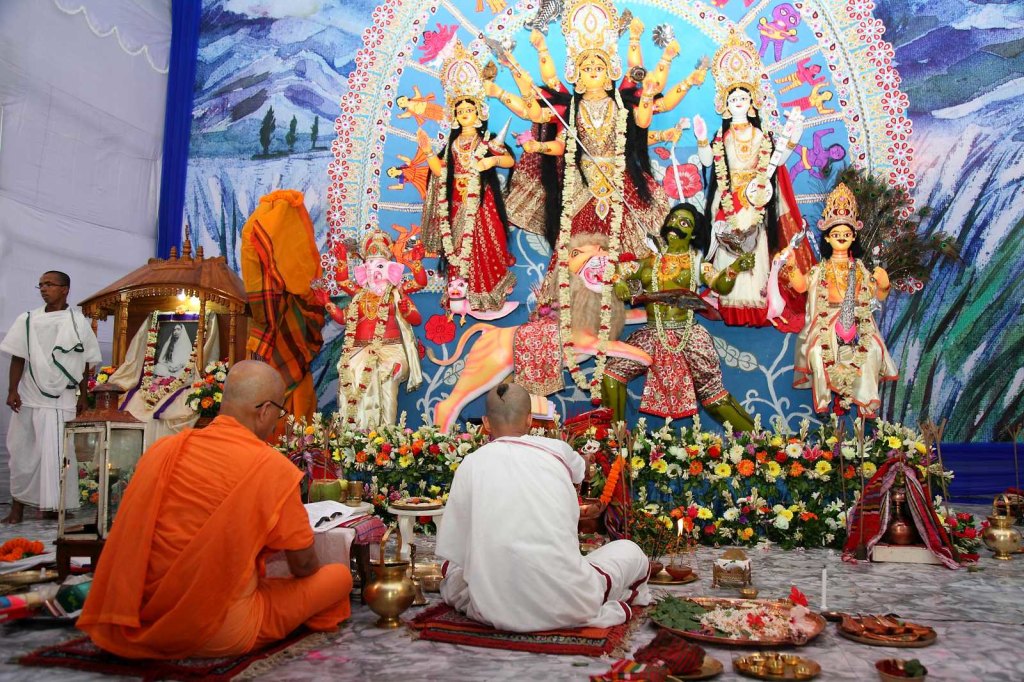
Ramakrishna Mission Durga Puja, Dhaka. From Public Domain

The very first time I heard Shah Abdul Karim’s [1]heart-stirring song “Age Ki Shundor Din Kataitam[2]”, I was transported to my childhood years in Dhaka’s Ramakrishna Mission Road, where we revelled during Durga Puja. Karim remembers lyrically “how happily” he and other village youths would spend their childhood days, “Hindus and Muslims/Singing Baul and Ghetu songs all together.” Karim’s song always strikes a responsive note in my heart because I recall how joyously my friends—whether Muslim or Hindu—and my family members would spend the Puja days every year in our Ramakrishna Misson Road paara or neighbourhood. Although my memories of those days have dimmed considerably by now, one thing I still remember clearly is this: after the two Eids, Durga Puja was the most important festival to light up our young lives then. Alas, those days are gone, not only for me, but for most people growing up in a paara in Dhaka.

One explanation for the spontaneity with which we would participate in the Ramakrishna Mission Puja festivities was demography. Our paara consisted mostly of Muslims but also of not a few Hindus. Our nearest neighbours, for instance, were two Hindu families. True, the events leading to 1947 Partition had created a divide of sorts between people speaking the same language but belonging to different religions, yet, on most occasions, we interacted freely with each other. Every day we would hear the ululations linked to prayers in our Hindu neighbour’s house just as they would listen to the azaan[3] drift into their homes five times a day from our neighbourhood mosques (sans loudspeakers!), summoning the faithful to join the congregation. On Puja days, they would send us prasads[4] and we too would share sweets our mothers would cook for our religious festivals with them. Pakistan was very much a state built around one religion, but do I deceive myself or were ordinary people much more secular and much less bigoted then?

Another reason for the ease with which we moved in and out of Ramkrishna Mission stemmed no doubt from the attitudes of the people who directed Ramkrishna Mission. Much like the Catholic American missionaries who ran the school and college where I would get my basic education, the saffron-clad men of this mission were always tolerant of paara children irrespective of their religion. We were allowed to play football in the Mission field, bathe in its pond for hours, pick the bokul flowers from its trees or while they were strewn in the shades, chat for hours on its lawn, or read in its reading room. Occasionally, one of the missionaries who would spend most of their time meditating or leading prayers for Hindus, would even drop in for a chat with my parents, both devout Muslims but very pleased to have others in our midst. Sure, there were limits even then, for we would not go inside Hindu prayer rooms, and our Hindu friends would never disturb us during our prayer times, but open-mindedness and forbearance ensured that most of the spaces we lived in in our community were shared ones.

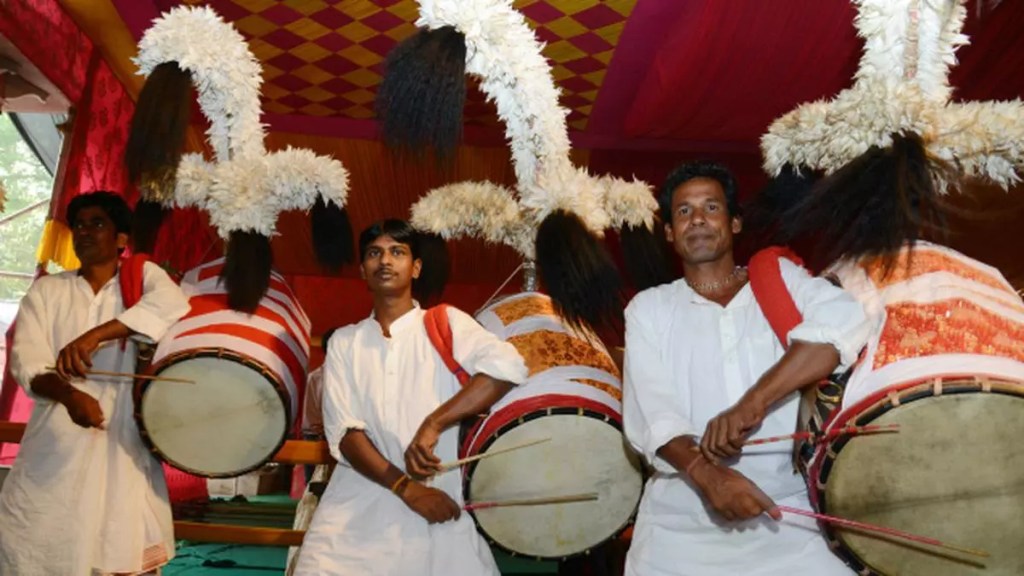
Dhakkis or drummers performing. From Public domain

In any case, Durga Puja in Ramkrishna Mission was the most memorable experience of another religion I have ever had. The moment we would hear the tak dum tak dum of the drums pervade the spaces of our neighbourhood in the mostly warm but occasionally hot and humid end-autumnal days full of fleecy clouds in nearly always blue skies, our hearts would flutter. Those thrumming, magical beats announced unmistakably that the time for another fun-filled Saradiya[5]Puja week had come! The dhakkis or drummers, I do believe, were our Pied Pipers, for we would sprint like the spellbound children of Hamlin then to the open field in front of the mission prayer hall the moment we heard them. We would find them there pounding away on their drums, swaying and smiling and showing off their skills on those ponderous-seeming but colourfully decorated and deep-echoing dhols!

The whole of Ramkrishna Mission became a spectacle of sights, smells, and sounds for the next few days. No matter where or when we went to the Mission during the festival, we would experience a riot of colours, a medley of sounds, and a range of flavours that made the Durga Puja days[6] unforgettable. During Durga Puja, Ramkrishna Mission was truly in the carnivalesque mode, for there was an unmistakable mela or fair-like quality to it.

Hindu men and women would come dressed in their fineries, the married women glowing because of their vermillion smeared-foreheads and multi-coloured saris, the men looking happy and yet self-conscious in their bright but heavily-starched new dhotis[7], and the children beaming and giggling because of anything and everything. We too would dress up for the occasion because, whether Hindu or Muslim, this was an occasion to meet people, mingle, chat, display and (for the boys) ogle.

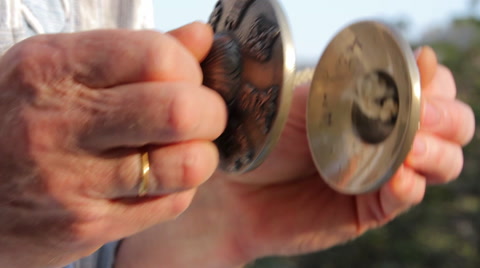
The sound of the drums would merge with the tinkle of manjiras[8], the chiming of bells, the unique note coming from conch shells, the ululation of women, the chanting of the mysterious but solemn-sounding Sanskrit prayers and the incessant chatter of not quite focused devotees. Indeed, there was a constant buzz in the Mission compound every day from mid-morning till late in the evening. In the Mission field, hawkers would sell hot and spicy pickles and chutneys, delectable sweet and/or sour savouries, and flavoured and syrupy drinks. At times the missionaries and volunteers would serve watery but delicious labra khichuri to anyone who cared to line up and eat from the plantain leaves. The smell of the different food items sold through the day would blend with the smoke and scent of the ceremonial dhups or incense lighted for the occasion. The press of the crowd, the feeling of excitement exuded by the people who sat to watch events or wander from place to place, and the assorted Bangla dialects heard all around us created a matchless mix.

But of course, Puja was mainly a holy occasion for the Hindus of the city. While we Muslim children did not understand a lot of what went on and were often mystified by the seemingly endless cycle of rituals, there was much to keep us absorbed in at least a few of the religious events. At the centre of the Puja, undoubtedly, were the idols built for the occasion. They are traditionally unveiled on the sixth day of the moon and placed on a pandal, a temporary structure erected for the veneration of the goddess Durga. Even if we did not know the import of all that we saw, who could not but be overwhelmed by the centrepiece, the resplendent goddess, ten weapons in her ten hands, a benign smile on her face, glowing in light golden colours, draped in a flaming red sari, standing on her lion mount, taming the demon Mahisasur.

Also awe-inspiring were the attendant deities (how “filmy” are the idols made now!). We were captivated by the welcoming melodies of “agamoni” and intrigued by the “Chandipat[9]” or reading from the Hindu scriptures. Day and night we were captivated by the rituals of anjali as the deity was offered flowers and prayers.

For most of us, one of the more fascinating moments of Durga Puja came on the ninth day, when a little girl was made the kumari, symbol of pristine beauty. But the climactic event was the immersion of the deity in the mission pond on the last day. From the morning of this day we would witness intense activity. First, devotees would begin preparations to move the deity, then the pandal would be carried to the pond to the sound of ululations, and finally the Durga would be immersed in the pond water to chants affirming her victory and predicting her triumphant return the next year.

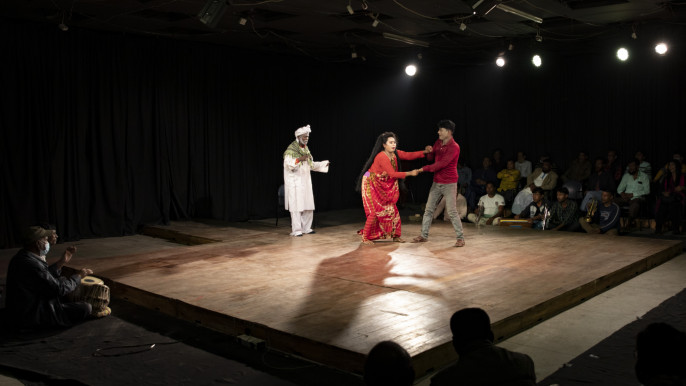
The Durga Puja days mesmerised all of us in the paara in many other ways. For instance, the dhaakis seemed to punctuate the days and nights of the Puja week with aarati[10]and ritual dances, gyrating and drumming with abandon and delighting us children. In the evenings, kirtans or devotional songs absorbed older people who were content to muse to musical tunes even in the middle of a crowd. But what fascinated most people young or old was the jatra[11] that was staged in any one of these evenings. Like the morality plays that I would read about later in my English Studies when studying the history of the theatre of Elizabethan England, this folk genre had angels and demons, characters like Vice and Conscience, music and dance, pathos and farce. In short, it was made out of a recipe guaranteed to please. Its plot, typically taken from an episode of a Hindu epic, was of the kind that would keep children as well as adults spellbound.

Jatra performed on an open (often makeshift)stage with the audience sitting all around it. From Public Domain

All in all, Durga Puja was a truly enthralling and synaesthetic experience; no wonder our senses were satiated by the end of the Puja week! The most important thing, I now realise, was that for nearly a week our paara came alive and we became part of a carnival that went on for days. And in the process our neighbourhood managed to come somewhat closer, for this was one religious occasion where differences were overcome to a great extent.

In 1967, my family moved from Ramakrishna Mission Road to another part of Dhaka and I have never been to another Durga Puja held there since then. But by 1965, a change had already come over our paara. The India-Pakistan war of 1965 had widened the rift created by Partition, a rift that seemed to have been bridged to a great extent in our neighbourhood. A few of our Hindu neighbours left for India after the war. The rest, I know from subsequent visits, have migrated to India over the decades. The Ramkrishna Mission Puja, I hear, is still a huge event, but I doubt very much if the whole neighbourhood comes alive during puja week like it did when I was there.

Will coming generations in our part of the world ever rediscover the joy that comes from knowing that despite different beliefs, people can participate spontaneously in each other’s festivals and even delight in them fully? In 1985, after six years spent in Canada, I remember walking past a Durga Puja pandal in Khulna with a nephew. I asked him, “Have you ever gone inside and enjoyed the puja festivities?”

“No,” he said, “there is a smell that comes from the dhup that they use that I can’t stand. Besides, we aren’t supposed to!” It was a moment that first made me realise that the dream of a secular, tolerant, humane Bangladesh had received a jolt in the years that I had been away. Subsequent events have been even more upsetting for those of us who believe in the values encapsulated in that part of our original (1972) constitution that was later “amended”. It is thus that Shah Abdul Karim’s song has so much resonance for me that every time I hear it, I keep thinking of the Durga Puja celebrations in Ramakrishna Mission that I had been part of once upon a time: “How happily once we village youths/ Would spend our days, Hindus and Muslims/…./ I keep thinking: we’ll never be happy like then/ Though I once believed happiness was forever/ Day by day things get worse and worse.”

(Published in Daily Star on October 20, 2007)

[1] Shah Abdul Karim (1916-2009) was a baul musician of note.

[2] Earlier, we had beautiful days

[3] Muslim prayer call

[4] Offerings of food to God

[5] Autumnal festival – Durga Puja is celebrated in Autumn

[6] Durga Puja celebrations is spread over 5 days, though the count starts from the sixth day of the lunar month.

[7] A cloth wrap worn in place of trousers

[8] Musical instrument

[9] Special chants for Durga

[10] Prayers with  offerings of incense and light

[11] Drama

Fakrul Alam is an academic, translator and writer from Bangladesh. He has translated works of Jibonananda Das and Rabindranath Tagore into English and is the recipient of Bangla Academy Literary Award (2012) for translation and SAARC Literary Award (2012).

PLEASE NOTE: ARTICLES CAN ONLY BE REPRODUCED IN OTHER SITES WITH DUE ACKNOWLEDGEMENT TO BORDERLESS JOURNAL

Click here to access the Borderless anthology, Monalisa No Longer Smiles

Click here to access Monalisa No Longer Smiles on Amazon International
Categories
Nazrul Translations

Autumnal Song by Nazrul

Nazrul’s Shukno Patar Nupur Paye (with ankle bells of dried leaves) has been translated from Bengali by Professor Fakrul Alam


With ankle bells of dried leaves
The wild wind dances away.
Making waves sparkle and sway,
The wild wind goes on its way.
At the pond’s heart, lotus flowers collect.
Bokul and Chapa buds lie strewn.
Restless waterfalls stream and sparkle.
As she darts across the field,
Taking off her wildflower ornaments
And unfurling her unruly hair at the sky
The crazy dust-covered woman keeps dancing.
Like an Iranian child in a frontier world
Treading desert spaces, she enthrals all
Fair-complexioned, sand-coloured ornaments
Draping her body, she comes darting!
Nazrul’s song performed in Bengali by legendary singer, Feroza Begum (1930-2014)

Fakrul Alam is an academic, translator and writer from Bangladesh. He has translated works of Jibonananda Das and Rabindranath Tagore into English and is the recipient of Bangla Academy Literary Award (2012) for translation and SAARC Literary Award (2012).

PLEASE NOTE: ARTICLES CAN ONLY BE REPRODUCED IN OTHER SITES WITH DUE ACKNOWLEDGEMENT TO BORDERLESS JOURNAL

Click here to access the Borderless anthology, Monalisa No Longer Smiles

Click here to access Monalisa No Longer Smiles on Amazon International
Categories
Contents

Borderless, September 2024

Art by Sohana Manzoor

Editorial

And Wilderness is Paradise Enow… Click here to read.

Translations

Raja O Praja or The King and His Subjects, an essay by Tagore, has been translated from Bengali by Himadri Lahiri. Click here to read.

Nazrul’s Roomu Jhoomu Roomu Jhoomu has been transcreated from Bengali by Professor Fakrul Alam. Click here to read.

The Mirror by Mubarak Qazi has been translated from Balochi by Fazal Baloch. Click here to read.

The Source by Ihlwha Choi has been translated from Korean by the poet himself. Click here to read.

Suprobhat or Good Morning by Tagore has been translated from Bengali by Mitali Chakravarty. Click here to read.

Poetry

Click on the names to read the poems

Rhys Hughes, Cal Freeman, Jackie Kabir, Jennifer McCormack, Pramod Rastogi, Miriam Bassuk, K B Ryan Joshua Mahindapala, Paul Mirabile, Shamik Banerjee, Craig Kirchner, Thomas Emate, Stuart MacFarlane, Supriya Javalgekar, George Freek, Ryan Quinn Flanagan, Luis Cuauhtémoc Berriozábal, Michael Burch

Musings/Slices from Life

Finding the Fulcrum

Farouk Gulsara gives a poignant account of looking after an aged parent. Click here to read.

Watery World

Keith Lyons finds the whole world within a swimming pool. Click here to read.

Days that don’t Smell of Cakes and Candy

Priyanka Panwar muses on days which not much happens… Click here to read.

Rayban-dhan

Uday Deshwal revisits his life with his companion sunglass. Click here to read.

In Favour of a Genre…

Saeed Ibrahim argues in favour of short stories as a genre. Click here to read.

Musings of a Copywriter

In Shades of Grey – Hair and There, Devraj Singh Kalsi writes of adventures with premature greying. Click here to read.

Notes from Japan

In Sneaky Sneakers, Suzanne Kamata grins at life in Japan. Click here to read.

Essays

Ah Nana Bari!

Fakrul Alam writes nostalgically of his visits to Feni in Noakhali, a small town which now suffers from severe flooding due to climate change. Click here to read.

A Manmade Disaster or Climate Change?

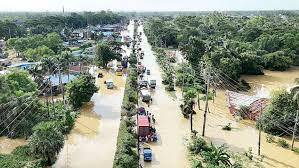
Salma A Shafi writes of floods in Bangladesh from ground level. Click here to read.

A Doctor’s Diary: Life in the High Ranges

Ravi Shankar writes of his life in the last century among the less developed highlands of Kerala. Click here to read.

Stories

The Useless Idler

Paul Mirabile writes of a strange encounter with someone who calls himself an ‘idler’. Click here to read.

Imitation

Naramsetti Umamaheswararao explores parenting. Click here to read.

Final Hours

Mahila Iqbal gives a poignant story about aging. Click here to read.

Friends

G Venkatesh writes a story stirring environmental concerns. Click here to read.

Conversation

Ratnottama Sengupta converses with Reba Som, who recently brought out, Hop, Skip and Jump; Peregrinations of a Diplomat’s Wife. Click here to read.

Book Excerpts

An excerpt from Mineke Schipper’s Widows: A Global History. Click here to read.

An excerpt from Anuradha Marwah’s Aunties of Vasant Kunj. Click here to read.

Book Reviews

Somdatta Mandal reviews Karan Mujoo’s This Our Paradise: A Novel. Click here to read.

Rakhi Dalal reviews Swadesh Deepak’s A Bouquet of Dead Flowers translated from Hindi by Jerry Pinto, Pratik Kanjilal, Nirupama Dutt, Sukant Deepak. Click here to read.

Meenakshi Malhotra reviews Anuradha Marwah’s Aunties of Vasant Kunj. Click here to read.

Bhaskar Parichha reviews Ayurveda, Nation and Society: United Provinces, c. 1890–1950 by Saurav Kumar Rai. Click here to read.

.

Click here to access the Borderless anthology, Monalisa No Longer Smiles

Click here to access Monalisa No Longer Smiles on Amazon International

Categories
Essay

Ah, Nana Bari!

Fakrul Alam writes nostalgically of his visits to Feni in Noakhali, a small town which now suffers from severe flooding due to climate change. 

Every year, twice a year, during winter and summer vacations, my family would travel to Feni, Noakhali, where we would spend our holidays in our Nana Bari, the home of my Nana, or maternal grandfather.

For days before the journey, our excitement would keep mounting. For one thing, Amma[1] would make frequent trips to Nawabpur, or what was then called Jinnah Avenue, to buy fabrics or wool which she would then sew/darn/weave into clothes or woolens to gift her family members when in Feni. She would also spend more time in the kitchen than usual, cooking as many dishes as she could for my father, the only one of us who would be staying behind since he had his office to attend to; he would join us, if at all, for a few days at the end. For days before she left, Amma would repeat instructions to our household help until, by the time we left, we had memorised what they were supposed to be doing while we were away. Moreover, she would spend the last few days before the journey packing and repacking since she had to ensure that we had everything we needed, not only for the fortnight or so we would spend in Feni, but also for the journey back and forth.

And then, finally, the day of the journey to Feni would arrive! The six of us would board two or three rickshaws in the morning elatedly and head for the railway station in Phulbaria. We would have to thread our way through a platform overflowing with passengers and hangers-on, coolies and vendors, beggars and con-artists, as well as railway police and ticket checkers. Intrepid and inspired, Amma would lead us through the milling and tense crowd. It was as if the whole world was heading for the same interclass compartment; indeed, it seemed that we always managed to reach it just when the train was ready to leave the station.

Eventually, the train would leave Phulbaria and we would relax and feel exhilarated again. Because we did the trip so often, we looked forward to the highlights on the way. Bhairab Bridge, huge and unending, had views of the riverscape that were breathtaking in all seasons and for as long as the train clanged through it we were awestruck. Kasba, the station on the border where Pakistani and Indian troops skirmished frequently throughout the 1960s, was always the place where we tensed up a little. The red hills of Mainamati looked incongruous in the green world of Bangladesh. There were junctions like Brahmanbaria and Laxam, where vendors hawked their wares and cries of “cha gorom[2]” and “deem[3]” filled the air. Although the trip to Feni was supposed to be seven or eight hours long, by the time the train reached Feni station, it would be late in the evening and we would be exhausted, worn out by a journey that seemed to have gone on and on.

Feni in the 1960s was a small mofussil town, and to us Dhakaites, quaintly interesting. Rickshaws were often veiled! The traffic consisted almost entirely of rickshaws and bullock carts; the buildings seemed rickety or run-down, as if someone had forbidden them all to look good or completed or told them not to stand up straight. Although the trip to our Nana Bari from the station was not more than a few minutes by rickshaw, to us, it seemed to take forever; we just couldn’t wait for the journey to end by this time.

But all our fatigue evaporated as soon as our rickshaw took a bend and Nana Bari swung into view, revealing our uncles and aunts waiting eagerly to take us in. Nana, intensely religious at this stage of his life, would often be waiting to greet us with the warmest of smiles before hurrying off to prayer. My Nani[4] would first embrace Amma and the two of them would sniff a little, both overcome by the emotion of the oldest daughter returning home after some months. Then she would hug the five of us turn by turn and dash for the kitchen where she had been supervising the cooking. We would join her there as soon as we had washed and changed so that she could serve us delicious pithas[5] and all sorts of delicacies that Amma could cook in Dhaka only now and then. If it wasn’t too late, Amma’s relatives and friends would drop in, making us feel very important, for everyone wanted to know what we children were doing in school and the details of our Dhaka life. Eventually, we would drop off to sleep in utter exhaustion, but not before our uncles and aunts revealed the plans they had for us for the next few days.

The next few days, in fact, would go in a whirl. If it was summer and the heat was too intense or the rain too heavy, we would play carom or snakes and ladders inside for a while; if there was a cloud cover or only a drizzle outside, we would play hopscotch or football in the courtyard or retreat to the shaded grove in the backyard. Sooner or later, though, we would head for the pond, the centre of our daily rituals. Once we went into the water, we stayed in till Nani and Amma dragged us out for lunch. It was in this pond that we all learned to swim in successive trips; here we floated on banana-trunk rafts for hours and were thrilled at the way my uncles caught fish either with a net or a fishing rod. Sometimes, a tiger-skinned snake would slither past us shushing us instantly until it disappeared. Then we would resume our water games once again. If it was winter, on the other hand, we would stay in bed as long as possible, until the sun was completely up; afterwards, we would head for the courtyard where we would play hopscotch or cricket or go to the farthest reach of our Nana Bari in the plot of land adjacent to the pond, pretending to be picnicking. And then after we had psyched and warmed ourselves adequately we would go to the pond for a quick dip and rush out shivering to dry ourselves and have lunch in the sun.

Some evenings Amma would take us out to visit her relatives. Other evenings, we would go out for strolls. At least one evening we would spend promenading all around the dighi (large tank) around which colonial Feni had grown and where there were dak bungalows and the offices of this sub-divisional town. On one of these evenings, our uncle would take us to the edge of the town to show the old bridge and the massive and ancient banyan tree on the Grand Trunk Road, narrating to us, as we went, the story of how Sher Shah had built it and the bridge hundreds of years ago as part of his plan to administer efficiently the territories he had wrested from the Mughals. On another evening, our uncle would take us to see the ruins of Feni airport, for the town was once one of the key forward bases of the Royal Air Force, even though it would be abandoned at the bend of our history when India was partitioned. At least once during every visit to Feni, we would sneak out to go to see a film, for our now-puritan Nana was known to frown even at the mention of the cinema and would get mad at my uncles and aunts if he came to know where they had taken us.

At night, we would occasionally go to dawats[6]. Once every trip, Nanu would reciprocate by inviting relatives, friends, and even acquaintances she considered important to Nana Bari so that they could also meet us over dinner. On nights when we stayed home all by ourselves, Nana would join us after evening prayers, relaxing and joking with us for at least an hour, and thus remind the other elders of how he had been full of life and a Swadeshi (self-rule) campaigner once, an activist in the cause of one Bengal, but how he had become other-worldly now. Sometimes his stepbrother would visit us, tooting his odd-sounding bicycle horn entirely for our benefit as he came and went, and filling Nana Bari with his booming voice and loud laughter. Nani, too, would join us for a while, finally relaxing after another day of hard work, and would tease us as grandmothers are supposed to do, making us grandchildren feel silly and important at the same time.

Reluctantly, we would go to sleep after dinner; some on beds and some on the mats spread out on the floor. But sleep would take long to come, for we would first review the events of the day or plan for the one that was coming up, exchange secrets in the dark, or whisper stories about the ghosts and robbers that were supposed to be all around Nana Bari.

But we felt totally secure in Nana Bari, wrapped up in the love of my grandparents and uncles and aunts. Every part of the Bari[7] was full of family history. “There,” an aunt would say, “was where you were born!” “Those rooms are where all of us used to live before your Nana decided to extend the house for all you grandchildren,” my Nani would tell us proudly. In time, I began to fill parts of Nana Bari with my own memories too, although I was still a boy. Wasn’t that the room, for instance, where I was painfully initiated into the faith, though the occasion led to a feast in my honour afterwards? Occasionally, we all became part of family history in the making, as an uncle or an aunt got married, or one of us or a cousin had his akika[8] or birthday celebrated, and Nana Bari would then take on a festive air for days.

For the fortnight or so we were in Nana Bari, we were thus completely happy. Little did we know then the financial difficulties my Nana was experiencing due to the religious turn he had taken in old age; the hours he was spending in prayers and meditation meant that other people were taking advantage of him, encroaching on his land and trying to defraud him in business. Little did we know the strain Nani was going through then, running the large family on a reduced budget—Amma had three brothers and seven sisters—for she was always generous with us. Little did we realise that our uncles and aunts had to make do with much less than they had been once used to, for they seemed to be totally indulgent and giving whenever we asked them for anything.

No wonder that when the time to return to Dhaka came we were all quite unhappy. As we departed, Amma (and Nani) cried a lot, this time because mother and daughter knew that they would not be seeing each other for at least another six months, and because every leave-taking now confirmed to them that the first parting was irrevocable. We felt a little sad too. School was something to look forward to, but how could the cramped life we led in the busy city compensate for the freedom and the open spaces and the love swirling all around Nana Bari? The journey back, therefore, would seem uneventful and unending and we would go back to Dhaka a fatigued and melancholy lot.

*

Last year, two of our sisters and I visited Nana Bari for a few hours. My Nana had died in 1970, and my Nani went in 1997; all my uncles and aunts were now in Dhaka or abroad. Nana Bari had shrunk in size, for my uncles had decided to sell parts of it in a strategic move to secure the main house from the machinations of the covetous lot that controls remittance-rich and hooligan-infested Feni. The pond, the shaded groves, and all our favorite haunts were gone and we felt totally depressed at the diminished thing that the Bari had become. Better not to come any more, I told myself, better to keep Nana Bari intact in memory than confront the diminution of the place where more than anywhere else we had once been totally happy. Better to wax nostalgic than be confronted with the ever-increasing intimations of mortality.

Ah, Nana Bari!

.

[1] Mother

[2] Hot tea

[3] Eggs

[4] Maternal grandmother, also referred to as Nanu affectionately

[5] Traditional Bengali Sweets

[6] Feasts

[7] House

[8] A celebration that takes place seven days after a baby’s birth

(First published on January 20, 2007 in The Daily Star)

Fakrul Alam is an academic, translator and writer from Bangladesh. He has translated works of Jibonananda Das and Rabindranath Tagore into English and is the recipient of Bangla Academy Literary Award (2012) for translation and SAARC Literary Award (2012).

PLEASE NOTE: ARTICLES CAN ONLY BE REPRODUCED IN OTHER SITES WITH DUE ACKNOWLEDGEMENT TO BORDERLESS JOURNAL

Click here to access the Borderless anthology, Monalisa No Longer Smiles

Click here to access Monalisa No Longer Smiles on Amazon International

Categories
Nazrul Translations

Wantonly Dancing Feet

Nazrul’s lyrics transcreated by Professor Fakrul Alam

Roomu Jhoomu Roomu Jhoomu

Roomo Jhoomo Roomo Jhoomo—anklet bells sound.
Addicted to dancing, bangles jingle jangle to that beat.
The dresses’ borders keep swaying in the restless wind.
Who could be moving with such wantonly dancing feet?
Stranger though she is and so close to the riverbank
I think I know this dancer on the move. Her movements
Fill this heart of mine. Her swan or peacock-like steps
Cast a spell, like a mirage in a desert will. With her smile
She even enchants the forest deer. Her big eyes dance,
Making the sea waves lilt. Forests in the high hills sway,
Sway away to the beat and music of her dancing feet.

Born in united Bengal, long before the Partition, Kazi Nazrul Islam (1899-1976) was known as the  Bidrohi Kobi, or “rebel poet”. Nazrul is now regarded as the national poet of Bangladesh though he continues a revered name in the Indian subcontinent. In addition to his prose and poetry, Nazrul wrote about 4000 songs.

Fakrul Alam is an academic, translator and writer from Bangladesh. He has translated works of Jibonananda Das and Rabindranath Tagore into English and is the recipient of Bangla Academy Literary Award (2012) for translation and SAARC Literary Award (2012).

.

PLEASE NOTE: ARTICLES CAN ONLY BE REPRODUCED IN OTHER SITES WITH DUE ACKNOWLEDGEMENT TO BORDERLESS JOURNAL

Click here to access the Borderless anthology, Monalisa No Longer Smiles

Click here to access Monalisa No Longer Smiles on Amazon International