Categories
Poets, Poetry & Rhys Hughes

Tintin in India

An Indian newspaper published an article about adults who still read Tintin and I realised that although I would have liked to be interviewed for that article, my qualifications were inadequate, for there is no ‘still’ in my particular case. I only began reading the comic when I was grown up. In fact, I only read it properly in the past few years, and I am more than half a century old. True, I did read one or two of his adventures when I was young, but I read them half-heartedly, I don’t know why, instead of with unalloyed delight, as they ought to be read. Possibly they were too elaborate for me back then.

Yes, Tintin is elaborate, but this doesn’t mean it isn’t simple. Yet it has the kind of simplicity that seems complex to the very young reader. There are plots and subplots, conspiracies and clues, and all of this is perhaps a bit much for the mind of a child more familiar with the primitive antics of Dennis the Menace or The Bash Street Kids from The Beano. Each of Tintin’s exploits seemed beyond reasonable length to me, too adult and requiring a heavy investment of my time and intelligence. I speak, naturally enough, only from a personal perspective. In some households, Tintin was read by minds younger than mine, understood and enjoyed too. I was clearly a late developer.

Thanks to a remarkable bookshop in Bangalore, I have been able to obtain the comic books in omnibus editions and catch up with what I missed out on. It intrigued me to learn that the elements I had regarded as impossibly modern in my youth are now quaintly dated. Tintin’s adventures are not hugely dissimilar in tone and setting to the adventure stories of John Buchan1 and they even put me in mind of Somerset Maugham2 at his most sensational, with their heavy reliance on seaplanes and tramp steamers and open-topped automobiles. The pacing is as fast as The Thirty-Nine Steps or Greenmantle, the atmosphere as exotic-colonial as The Moon and Sixpence or The Narrow Corner. There are differences too, of course, but the differences are less surprising.

The pacing is incredibly fast and Tintin blunders his way into scrapes and pickles almost as if destiny has chosen him for the role of spanner in the cogs of the workings of villains, which in a way it has (if we regard Hergé as Fate). He is highly competent most of the time, but can also be inefficient and even inept, often hampered as well as helped by his dog, Snowy. But no quantity or quality of hampering can keep him down for long, he is deft at seizing the opportunities of coincidence that extreme contrivance throws his way. He is fully the equal of any ancient hero from legend or mythology.

And he is mentally strong: no amount of trauma, no near-death incidents or hair-breadth escapes affect him psychologically. He falls out of an aeroplane, an assassination attempt by a dastardly pilot, and his parachute malfunctions. A flat character on a flat page is about to be flattened on the flat ground, but no, he has the singular good fortune to land in a hayrick being transported on a cart. There are no broken bones and no gasping for breath. He picks himself up, dusts off a few straws, resumes his mission with perfect aplomb. One might even say he is inhuman in his attitude to danger. A touch of psychopathy, perhaps? But he is a friend of goodness, an enemy of criminality.

He is also weirdly tolerant of the pompous ineffectiveness of all the sundry supporting characters who populate his existence. Thomson and Thompson, the detectives who never get it right but always take credit for cases solved in their vicinity, provide comic relief, which justifies itself, but even a cursory analysis of their deeds raises a few awkward questions. How on earth are they entrusted continually with missions requiring the utmost delicacy, tact and cunning? They are negative factors in the field of detection, hindrances rather than boons, a pair of slim buffoons (we normally regard buffoons as portly) with a strange sartorial taste and peculiar speech patterns, dramatically underperforming sleuths who are prone to take what they are told at face value. They are worse than useless; they are beneficial to the continuance of evil.

It was a long time before I was able to tell them apart but now, I know they are doubles rather than twins, and that the one with the drooping moustache is Thompson and the one with the flaring moustache is Thomson. In the original French, they were Dupont and Dupond, which is a little less confusing but not much. Tintin ought to have nothing to do with them, but he is always delighted to see them and treats them as highly competent and valuable colleagues. This is a symptom of his own occasional incompetence. But this has nothing to do with India and so we must regretfully forget them.

Tintin travels to India on several occasions. In Egypt, he daringly escapes a firing squad, requisitions an aeroplane, a 1929 de Hallivand DH-80 Puss Moth, one of the highest performing aircraft of its time, with a 130 hp (97 kW) Gipsy Major engine (this aircraft is also notable for being the first to cross the Atlantic from east to west, in 1932) and he courageously, some might say foolishly, sets off for India. Unlike the pilot Nevill Vintcent3, who flew the exact same aircraft from Britain to Sri Lanka (Ceylon, as it once was) without crashing, Tintin runs out of fuel and comes down in the jungle.

Although extremely absurd, the idea of piloting such a plane so far isn’t as implausible as it might appear. We should remember Maurice Wilson4, that very noble but eccentric mystic who planned to climb Mount Everest solo in 1934, forty-six years before Reinhold Messner5 managed the feat, and of course it was inevitable that he would fail, for all the odds were against him. Despite his lack of flying experience, he purchased a de Havilland DH.60 Moth, a more rickety aircraft than the one Tintin used, and flew it from Britain to India in a series of hops. It was a lunatic thing to attempt and yet he succeeded. His failure was on the mountainside, not in the air. Therefore, we have established that Tintin really could have flown to India from Egypt.

Tintin, after his crash landing, meets elephants in the jungle and he wishes to solicit their aid but he doesn’t know their language. He decides to learn it and improvises a trumpet in order to do so, carving the instrument from a block of wood with a penknife, an amazing feat of carpentry (but in Land of the Soviets he creates a new propeller in a similar manner). Now he can fluently talk to all elephants in their own tongue, for elephants apparently speak in a kind of jazz. It is good to have such magnificent animals on your side. One elephant is worth a dozen human friends when it comes to strength and endurance. And they will never forget a service rendered. That, as far as I’m aware, was Tintin’s first visit to India, but he had another a little later.

Tintin in Tibet, often regarded as his finest adventure, finds Tintin visiting Delhi in the company of Captain Haddock, that boisterous, drunken, bumbling, loquacious master mariner who frequently makes matters worse rather than better. They admire the Qutab Minar, as I did, awestruck, when I was in Delhi. I have since learned that the Qutab Minar was based on a tower in Afghanistan, the Minaret of Jam, which must be the most marvellous name ever devised for a tower. I imagine it is made from apricots and strawberries and I lick my lips as I contemplate it. But this has nothing to do with Tintin, who after leaving Delhi travels to Kathmandu and then overland into the mountains. He meets a Yeti and scares it off with the flash of his camera.

The Tintin comics always had a very substantial fanbase in India and letters from Indian readers often were mailed to Hergé. It is therefore unfortunate that a Tintin adventure set entirely in India doesn’t exist. Personally, I would be happy to see one set in Goa. In the 1990s, a nameless artist designed a series of t-shirts bearing images that are parodies of the Tintin book covers with the title “Tintin in Goa” on them. They show the intrepid reporter doing nothing intrepid at all, simply lounging about the beach or going for a joy ride on a motorcycle. Even a comic character as psychologically resolute as Tintin needs a holiday once in a while. What better place for a relaxing stay?

  1. John Buchan ((1875–1940), Scottish peer, writer and editor ↩︎
  2. Somerset Maugham (1874-1965), British writer ↩︎
  3. Neville Vintcent (!902-1942), South African aviator ↩︎
  4. Maurice Wilson (1898-1934), British soldier, mystic and aviator, who died trying to climb Mt Everest solo ↩︎
  5. First mountaineer to ascend Mt Everest solo, without oxygen in 1970 ↩︎

Rhys Hughes has lived in many countries. He graduated as an engineer but currently works as a tutor of mathematics. Since his first book was published in 1995 he has had fifty other books published and his work has been translated into ten languages.

.

PLEASE NOTE: ARTICLES CAN ONLY BE REPRODUCED IN OTHER SITES WITH DUE ACKNOWLEDGEMENT TO BORDERLESS JOURNAL

Click here to access the Borderless anthology, Monalisa No Longer Smiles

Click here to access Monalisa No Longer Smiles on Kindle Amazon International
Categories
Essay

Chandigarh: A City with Spaces

By Ravi Shankar

I was apprehensive. I had spent time in New Delhi when I was very young. But after that, I had never travelled to the north of India. I was traveling by chair car on the Rajdhani Express to Delhi and from there, by bus to Chandigarh. Sleeping on a chair is difficult though the coach offers enough legroom, and the seats are wide. The time was December, and the weather would be cold. The bus journey to Chandigarh from New Delhi took a long time. I was moving through the flat plains of Haryana with fields on both sides of the road. The sun set early during winter in the north. By 5 pm, it was beginning to get dark. The sun had truly set by the time I reached Chandigarh.

The cold was a de novo experience. Using a quilt was something new though later I began the appreciate the gentle warmth provided using the body’s own heat. Coming from the claustrophobic confines of Mumbai, the wide-open spaces of Chandigarh were a welcome change. Some of the traffic circled the roundabouts that were larger in this city than apartment complexes in Mumbai. Space, space, and plenty of space was my first impression of the city.

Chandigarh is believed to have been named after the Goddess Chandi whose temple is located near the city. Garh means a fort. This was India’s first planned city. Various teams of architects had been commissioned and the Swiss-French artist, Le Corbusier was the last in the series. Le Corbusier designed several buildings in Chandigarh including the secretariat, the high court, and the Palace of Assembly. He created an open-hand sculpture like he had done in the other cities designed by him. He designed many structures at the Postgraduate Institute of Medical Education and Research (PGIMER) where I was a resident doctor. His influence was also seen in Panjab University across the road in Sector 14. One of the challenges with a sprawling low-density design was services were located far away and you required a vehicle to access services and go to different areas. In high-density areas like Mumbai, you can just step down to access shops and services. This was in the days before online ordering and e-commerce platforms.

The city is divided into sectors. I settled in the Old Doctor’s Hostel or ODH in Sector 12, where the institute was located. I eventually shifted to the D block of ODH, the newest to be constructed. This had the benefit of a wash basin within the room reducing your trips to the shared restrooms. The research blocks and the college canteens had the trademarks of Le Corbusier’s design. He was fond of using primary colours like blue, yellow, and red as evidenced in the bright hues of the doors and windows of the hostel. The original structure was good but was constructed in the 1960s. By the late 1990s, living standards had improved and the rooms began to feel inadequate. He was also fond of using curves in his buildings and each room had a curve and there was a specially made wooden table to fit into the curve. Most of these had been destroyed over the years. The hostel rooms were single occupancy. This was especially important for the residents in clinical departments as it allowed them to rest after long hours of duty.

Sector 17 was the main commercial hub of the town and had several high-end restaurants and shops. People were fashionably dressed though the cold weather during winter required a lot of clothing. Winter mornings could get very foggy. In those days air pollution levels were still low and winters were generally pleasant. The food was good — ranging from aloo parathas (Indian flatbread stuffed with a spicy potato mix), gobi parathas (made with a stuffing of cauliflower), mooli parathas (Indian flatbread stuffed with a spicy radish mix), tandoori chicken (chicken grilled in a clay oven called the tandoor), tikkis (a small cutlet made of potatoes, chickpeas and different spices), chole bhature (a type of chana masala and puris) and samosas (triangular fried pastry with a savoury filling). Punjabis love their food. The food is wholesome but may be high in saturated fats. There were several tandoori chicken restaurants and chicken was a perennial favourite. The tandoor is a great invention though it may be difficult for the person making rotis in the heat of peak summer. But tandoori rotis eaten piping hot dipped in a spicy gravy on a cold night are a pure delight.

The sector 11 market was the nearest to PGI and there were two or three dhabas (roadside eateries) serving Punjabi delicacies. There was also a more upscale restaurant serving variations of the dosa. These had been modified to north Indian tastes and this was my first introduction to chicken dosa. The taste was good, but the stuffing was very unconventional. The buses were old and had seen better days. I usually took the bus to Sector 17 and to The Tribune colony in Sector 29. Started in 1881, The Tribune is one of the oldest newspapers in North India and one of my father’s acquaintances worked at the newspaper.                 

The Panjab University had a sprawling campus just across the road at Sector 14. I loved to roam through the beautiful campus. The market at the university had shops selling delightful Punjabi samosas. These were large, the covering was crisp, and the stuffing of potatoes and chickpeas was spicy and tasty. Those days a samosa cost around one rupee and fifty paisa — light on the pocket though wages were lower those days.

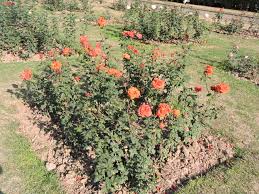
The northern sectors of the city including 12 where PGI was located were the older ones and more prosperous. The Zakir Hussain Rose Garden in sector 16 was named after India’s former president and had over 1600 species of roses. I used to visit occasionally, especially during the winters when the roses were in bloom. Summers in Chandigarh are hot but less than in many other places in the plains due to the closeness to the hills.

The Rock Garden is a major attraction. The garden was begun to be built by Nek Chand in 1957. The garden was built illegally but later became world famous. It is built entirely from discarded household and industrial waste. There is also a doll’s museum inside the garden. One of my fellow residents knew Nek Chand very well and he used to play with his son when he was young. Models of rock gardens have since been built in several Indian cities.

Summers in Chandigarh are difficult. The sun is relentless. The institution timings change. Before the onset of summer, one visits the desert cooler shops to buy new grass screens for the coolers. The cooler is a great invention with a water pump and screens moistened by water through which air is drawn to cool the room. They work well but when there were power outages in summer, they stopped functioning. The onset of the monsoon in late July makes things difficult. The humidity is high, and the temperature is still above 35 degrees celsius. October to December and March to April are usually pleasant. Late December, January, and February are cold and there is a threat of western disturbances that bring rain and cold damp weather. The city has two satellite townships, one in Punjab (Mohali) and the other in Haryana (Panchkula).

Chandigarh has one of the highest human development indicators in India. I enjoyed my three years in this planned city at the foothills of the Himalayas and I look forward to a visit in the future!  

Dr. P Ravi Shankar is a faculty member at the IMU Centre for Education (ICE), International Medical University, Kuala Lumpur, Malaysia. He enjoys traveling and is a creative writer and photographer.

.

PLEASE NOTE: ARTICLES CAN ONLY BE REPRODUCED IN OTHER SITES WITH DUE ACKNOWLEDGEMENT TO BORDERLESS JOURNAL

Click here to access the Borderless anthology, Monalisa No Longer Smiles

Click here to access Monalisa No Longer Smiles on Kindle Amazon International
Categories
Slices from Life

Apples & Apricots in Alchi

Narrative and photographs by Shivani Shrivastav


River Indus en route to Alchi, near Village Saspol.

I pulled my cap a little lower as I started for Alchi, after getting a full can of petrol from the Leh petrol pump. It was a very new thing for me — I marvelled at how a city could have just one petrol pump, and that too for miles around. Moreover, it served the neighbouring villages as well.

To reach Alchi, I had chosen the Delhi-Srinagar route. The distance would be approximately 66 kilometres from Leh, and would perhaps normally have taken two hours, but because of my propensity to stop and admire the rivers, trees and clouds, I knew it would be more than that.

The ageing two-wheeler I had rented was the last one available, but I was just grateful just to go, even though it was with prayers in my heart for a safe journey. The interesting part was, if I wanted to go straight, I had to aim the scooter a little to the right, which in itself was a scary thing, because if I lost myself in admiring the natural beauty too much, I could end up veering to one side, risking an unwanted encounter with the huge army trucks that passed through the remote roads from time to time.

As I started, I noticed the Himalayas in the distance, the white peaks were getting covered in the fresh falling snow, right before my eyes. It seemed propitious, and I started with a smile. Passing through the straight road, repeating the simple directions in my head — follow the road, reach the village Nimmoo, then just keep going on the same road — I felt at peace somehow. It was just me, the long, straight road, the puffy white clouds and the endlessly stretch of brown mountains. And of course, the blue sky that seemed to travel with me everywhere I went.

The journey to Nimmoo was smooth, with just the sound of the wind in my ears and no network on my cell phone. At Nimmoo, I stopped for a cup of tea and some biscuits. I saw the confluence of the Indus and Zanskar rivers on the way, near Nimmoo. I paused to take in the scene — the mixing of the greenish Indus and the bright teal-coloured Zanskar creating a mesmerising palette against the browns of the mountains. Some trees created a layer of green too – I think they are poplars and willows.

As I turned around to restart the drive, across the way, I saw a lady bent over by the side of the road. She was sweeping the road free of small stones that fell from the mountains onto the path. She stopped for a drink from a metal bottle from a backpack that she was carrying. I took the opportunity to talk to her about her motivation for this hard work. She said, “I am a government servant. It’s my job to clear the roads of small stones so that travelers can drive safely. For larger stones, I call other workers who work with shovels and machines.”

I asked, “No one is watching you here; why don’t you rest for a while?” She replied with an open smile, “But I know what I’m doing; I’m watching myself. I have already taken my lunch break. I will stop before it is dark and go back to my village.” Saying this, she pointed to a place not visible from where we stood. I’m reminded that I too, should reach Alchi before dark. Bidding her a respectful and heartfelt “Julley[1]”, I again started on my way.

I passed under mountains extending over the road. I was so hypnotised by the sights and the river and the song of the wind in my ears that I did not notice the huge army truck until it passed to my right. Another foot or so and I would have been history. A little shaken, I anchored myself more firmly to the task at hand and took the final left turn towards the village. I passed a beautiful small bridge made of metal, on both sides of which were poplars turning their leaves yellow and orange. A little further, I reached a huge prayer bell mounted by the side of a road, beyond which were mountains standing like sentinels, and yaks grazing the fields.

It was idyllic and pristine. After a quick drink of water and some photos, I was on to the last leg of the journey. Finally, just as evening was about to fall, I reached the village. Entering it, I could see hay bales, shingled houses and the boundaries of houses made of grey and brown stones stacked together, and rosy-cheeked children playing under trees. With a sigh of relief, I stopped my vehicle some distance from the monastery, taking it as close as I could get. The monastery was the main reason for my visit here. It was supposed to be one of the oldest in Ladakh; made around the year 1024 by hand. Somewhere in my mind, I was also worried about the fact that the seat of the vehicle would not lock, so I could not leave anything in it. By this time, I was famished that I decided to eat first and ask at the restaurant for a homestay nearby, trusting the goodness of the human heart and leaving some of my basic stuff inside the seat of the vehicle.

The restaurant was called ‘Alchi Kitchen’ and appeared to be the only one there. As I climbed the stairs with my backpack and my camera bag, I could see the mountains, the village stretched out below and the monastery. It was surprisingly comfortable, with low seating and gleaming brass and copper cookware in the open-plan kitchen inside. I ordered a plate of Manchurian and rice and watched them make it. The owner and her two young assistants were laughing and chatting as they cooked, their actions precise and practised.

Nearby was a group of youngsters, who appeared to be done with their meal. While waiting, I walked out to the balcony, in front of which was a mountain with the setting sun glinting off it, and prayer flags on its summit waving in the wind. After a few pictures, I just stood and gazed, absorbing the peace radiating from the mountains. Nature is always a balm for the soul. The mountain seemed like an old friend somehow, familiar, whom I was meeting after a long time.

Suddenly called back from my reverie by the owner’s call, I returned inside.  The meal was simple but had layers of flavours. I devoured it feeling grateful towards the people who prepared it. Once I had eaten, refusing the offer of dessert, for I truly was stuffed, I thanked the owner and her friendly assistants and asked about a homestay. They guided me to a house just to the left of the monastery complex, saying that I should tell them that Padma had sent me.

I went to the house as directed. It was a beautiful old wooden three-storied house, with a big courtyard and trees all around. All the evidence of the busy and full household could be seen in the yard – a child’s bicycle, many pairs of shoes, sandals and rubber slippers, flowers planted in pots, random jars and even cut-off plastic bottles, clothes drying on a clothesline and some puppies and chickens playing in the lawn. Such a scene of blissful domesticity!

I asked the homeowner who was just coming out of the house if it was indeed Tsering Dolma’s house. He confirmed and asked if I needed a room. I affirmed that but added a request to see the room before I finally decided. He led me inside, up two flights of stairs, and showed me to a room which had windows from top to bottom, along two walls. These opened out into the backyard, that had a view of the monastery, the river Indus flowing behind it and the mountains beyond it.

I immediately said “Yes!” In all my 30 years of age, I had never once travelled or stayed alone anywhere, let alone at such a remote location, where even the mobile reception was sketchy! However, there was something about this place that seemed so comforting and welcoming, with a feeling of déjà vu.

Smiling, the friendly Tsering asked if I would like some butter tea. Although it was slightly late to be having tea, I could not resist his sweet smile and graceful manner and agreed. He asked his grandson to request his mother for two cups of tea for us. Having kept my stuff in the room, I washed my hands and face and came out. Tsering was sitting in the upstairs sitting room, which had beautiful low seating in front of hand-carved windows. The windows looked out over their lawn studded with apple and apricot trees.

Somehow, it was very easy to talk to Tsering, regardless of his age – he was a grandfather, and we were from such different backgrounds and our life experiences were diverse, yet there was a common thread of humanity and communion that linked us. I had found that people in Ladakh were open-hearted, warm and welcoming if we were friendly. I had never been very outgoing myself, but faced with such spontaneous acceptance, it was hard not to be receptive and equally responsive. Tsering told me about his family and his children’s studies, and we were discussing Ladakhi culture and life at Alchi when his daughter-in-law brought our tea. Smiling shyly, she placed the teacups on the hand-carved table. Tsering asked her to join us, but she said that since dinner was almost ready, she had better take care of that. She did stay, however, to tell me proudly about the children, aged five and two. The older boy I had already met; the younger — a daughter — was playing with her grandmother. After chatting with them both, I asked them if I it was safe to stroll outside for a while. He said that it was perfectly safe and that I could walk around, but to be sure to take a flashlight, or my mobile, as there were no streetlights there.

I took my phone and went outside. The street had small houses on both sides. In one, some women were lighting a clay lamp in a small alcove in front of their house, while chanting something which seems extremely melodious. The scene seemed out of this world, so removed from my usual life. I slipped into this new reality, which seemed far more real than from what I had left behind.

I looked around. The sky was full of stars. The chill breeze was interrupted with the scent of food being cooked in kitchens all around. I took a deep breath and rooted myself deeper into the present moment.

From somewhere came the smell of incense. I walked slowly through the short lane, looking up at the endless sky from time to time. After a slow walk around the monastery walls, I was back at the homestay. Skipping dinner in favour of a light soup served in their kitchen, I chatted a little with the family and then slept early, for I planned to catch the morning light for my photographs.

In the morning, I am woken up by birds outside my window. There were only three sounds I heard – the birdsong, the sound of chanting, and the sound of bells from the monastery. I got up and after freshening up, went out to find Tsering waiting outside in the hall. He said that breakfast could be ready soon and that if I went to the monastery early, I might catch the morning prayers there.

After a sumptuous breakfast of homemade khambir [2] and homemade apricot jam (made by Tsering’s family and even supplied to many shops and emporiums at Leh), along with piping hot butter tea, I went down to the lawn. I found Tsering’s grandchildren playing there with their friends. Enchanted by their animated play, I sat there for a while, clicking them after taking Tsering’s permission. Then I went to the monastery.

The street en route was being readied for the day’s market — people were setting up tables and taking out handmade wares — jewelry, masks, bronze statues, shells and more. As I entered the grounds of the monastery, a deep silence seemed to calm my being. Walking straight down to the main temple, I could feel the history of the place, soaked in the meditation and prayers of so many people.

I went inside, where there was a tall painting of the Buddha, decorated with gold leaves. I looked up at the wooden rafters. I thought how long ago, the common people would have crafted this by hand. I went around with my hand on the prayer wheels placed along one wall of one of the smaller buildings there.

Afterwards, as I stood there looking at a small boy praying with his mother, I tried to feel the stillness inside me. It was something new; a total contrast to the constant activity that was my norm. After sitting there to my heart’s content, I started to circumambulate. A local woman’s two-year-old was doing the same. The child was imitating her mother, who I noticed was not forcing the child to do anything.  Little Amo, for that was her name, smiled at me shyly from behind her mother’s legs. I photographer too. When I said that I admired that she was not pushing her child to do anything, she replied that she was proud of her culture and religion and would just like to present them to her daughter and let her make her own choices. It was okay if she chose a different life, but at least she would do so knowing the alternative.

Amazed and humbled by the generosity of spirit of a young mother in such a remote place, I followed her as she finished her circumambulations. On my third round around one of the corners of the monastery complex, I felt this sudden urge to go down to the river Indus flowing behind the building. After I was done at the monastery, saying bye to Amo and her mother, I asked for directions and people guided me to a tiny lane going down the hill, behind some houses, right down to the riverbed.

I was thankful I was wearing my sports shoes and not the pair of sandals I had also brought. Walking down was a little harder than I had thought, and I was slightly out of breath by the time I reached the grey, stony bed of the mighty Indus. Taking off my shoes, I descended to the edge of the river. It turned out to be a wise choice, for the stones were a little slippery, being rounded and shaped over centuries by the river. I scooped up some handfuls of the river water and drank, excited about being in aa place I had only imagined in my wildest dreams. The water, as I brought up my hand to my mouth, sparkled, giving off rays of reflected light from the morning sun. It cooled my hand. I took a few pictures. Then keeping aside my camera, felt like sitting and meditating beside the slowly flowing river.

The flow rushed and slowed down in certain spots as the river wound around big grey rocks on its path. I sat to listen to the gentle gurgle and sounds of the ebbs and flow and lost track of time. After some time, I sensed another presence and opened my eyes. I saw a stranger a little distance away, setting up his tripod and making slow changes by trying to balance it on the rocks. He was wearing an orange sweater with a loose black jacket over it, jeans and a pair of those sandals that serious trekkers wear. He had extremely curly black hair and appeared to be lost in what he was doing. However, as if he sensed my gaze, he turned my way and smiled. As I rose, I could sense my heart decide that I would trust this person; I felt as if we had already met, or rather known each other for ages. Something in his eyes spoke to my soul in a way that was both soothing and familiar. I knew I could trust this person; he was no stranger — my soul recognised him.

He simply said, “Nice to meet you. I am Kabir.”

“I am Shivani. Same here.”

“Sorry to disturb your meditation.”

“No, you did not disturb me; I just felt your presence.” I responded.

He smiled and asked if I could help him position the tripod and focus his camera for a few pictures and videos. I agreed to help, and sitting as he directed, let him set the focusing timer on this camera, so he could take my place and shoot himself sitting in meditation along the riverbank.

He asked me to arrange some flat stones that are symbolic of a prayer to the elements. I was a little hesitant but when he said that the video would only show the stones and my hands, not my face, I relaxed and let him take his shots. After he finished, we sat there for a long while, sometimes speaking, most often just sharing the silence.

I did not want the meeting to end somehow. I sensed that he was feeling the same; he asked me where I was staying. I told him; he said that he had just put his stuff there too, that very morning, and came directly to the riverside. He must have arrived after I had already left for the monastery.

This meeting had a sense of déjà vu, a synchronicity to it. As we got up to go back to the homestay for lunch, our eyes met. For some seconds, the sound of the rushing river, the insistent wind and the distant bird calls all faded away and it seemed as if I was in a vacuum stretching across time, with just the two of us. I knew that this was a new beginning of an old connection. He felt something too, and we started walking in companionable silence, comforted by the shared upswing of so many emotions. The sense of having done this before created a bridge between our souls, across time and beyond. I felt I was finally home.

[1] Greeting in Ladakhi (Hello/Thank you/Goodbye)

[2] Khambir – Ladakhi bread, ref. Khambir and Butter Tea | Butter Tea | Ladakh Cuisine | About Ladakh (ladakhdekho.com)

Shivani Shrivastav is a a UK CGI Chartered Secretary and a Governance Professional/CS. She loves meditation, photography, writing, French and creating.

PLEASE NOTE: ARTICLES CAN ONLY BE REPRODUCED IN OTHER SITES WITH DUE ACKNOWLEDGEMENT TO BORDERLESS JOURNAL

Click here to access the Borderless anthology, Monalisa No Longer Smiles

Click here to access Monalisa No Longer Smiles on Kindle Amazon International
Categories
Paean To Peace Slices from Life

Magic of the Mahatma & Nabendu

Ratnottama Sengupta shows the impact of Gandhi and his call for non-violence on her father, Nabendu Ghosh as she continues to emote over his message of Ahimsa and call for peace amidst rioting

The ferocity and senselessness of riots — Nabendu Ghosh had personal experience of both. In his autobiography, Eka Naukar Jatri (Dey’s Publication, 2008, Journey of a Lonesome Boat), he writes at length about grappling with the riots that had rocked Calcutta, Bengal — nay, the entire Subcontinent on 16th August 1946. 

The Direct Action Day call was given out by Mohammad Ali Jinnah to press the demand for a separate Muslim State, Pakistan. The epicentre was Calcutta, a flourishing centre of business and education, that had Suhrawardy of Muslim League as its chief minister. On that black Friday, they unleashed unprecedented bloodletting along communal lines. At least 4000 deaths were reported on the very first day of the ‘Great Calcutta Killing’ that continued for more than four days. Many women were raped, many were kidnapped, many killed and hung naked in public areas… Dismemberment, forced conversion, bustees set on fire… Violence spread to Khulna in East Bengal, and Bihar. Within a year the hatred ignited on religious grounds culminated in the Partition of India.

The savagery of the mindless bloodbath had left such a deep dent on the yet-to-be-thirty writer, that he wrote a number of stories and novels on the theme: Phears Lane, Dweep, Trankarta, Ulukhar, ‘Chaaka’(Full Circle), and ‘Gandhiji.

 Gandhiji builds majorly on the author’s own memories of a darshan[1] of Mohandas Karamchand Gandhi while he was passing through Patna, sometime in early 1931. This is how he records his ‘encounter’ with the Saint of Sabarmati who worked magic on the masses with the mantra of Ahimsa, non-violence.

“By 1930 all of India and its British rulers too were uttering one name with awe: Gandhi. One evening it came to my ears that the Mahatma would reach Patna at 7 am the next morning, spend the day in the city and leave by the Punjab Mail at night. 

“I did not sleep well that night. I was up at the crack of dawn and left home at 5 am on the pretext of getting a book from a friend. But I could not get anywhere near the Patna railway station, which was teeming with people who had arrived before sunrise. It was no different along the path he would be driven down. I hung around at one end of the platform, eyes glued to the exit gate. 

“Policemen on horseback trotted past me. A police van was parked close by. Those patrolling the platform carried bayonets and batons. Because of my green years and my small built, I was allowed to inch ahead. From time to time the sky was rent with the cry of ‘Mahatma Gandhi ki jai! Long live the Mahatma!’

“All of a sudden, perhaps to steel myself, I started to whisper: ‘Vande Mataram!  I salute you, my Motherland!’ As if on a cue, the man next to me cried out aloud: ‘Vande Mataram!’ The crowd roared in an echo: ‘Vande Mataram! Vande Mataram!!’

“Suddenly a train rolled in with a long whistle. And people all around me broke into the cries of ‘Mahatma Gandhi ki jai!’ ‘Bharat Mata ki jai!’ ‘Vande Mataram!’ I found myself matching their voice…

“Soon people started saying, ‘There he goes…’ Some cars came forward with Gandhi-topi clad volunteers. And then, there was the face so familiar from the newspapers, peering out of a hood-open Ford. Mahatma Gandhi, clad in a knee-length khadi dhoti, a chadar draped over his bare torso, a volunteer on either side, was greeting everyone with folded hands. What an inspiring image!

“I also broke into the cry of ‘Mahatma Gandhi ki jai!’‘ The crowd had started running behind the moving car. I joined them, without a pause in the slogan. A few paces later, I bumped into someone and fell down by the wayside. As an elderly gentleman lifted me up and soothingly dusted me off. I felt a resolve surface in my thoughts: ‘Freedom must be won!'”

 *

Nabendu Ghosh may or may not have had another prototype for the protagonist Ratan in Gandhiji. But it is said there actually lived close to College Street — where Nabendu lived at the time — a person named Gopal Mukherjee who owned a meat shop. He was a devotee of Subhash Chandra Bose and a critique of Gandhi. Reportedly this ‘paatha‘ — butcher — was funded by some Marwari businessmen and he led his team to retaliate from the fourth day of riots. After Independence, when he was urged to surrender his guns, knives and sword to Gandhiji, he apparently refused, saying, “I would willingly lay down my arms for Netaji, but not for Gandhiji. Why didn’t he stop the killings in Noakhali?”

The author may have woven in some traits of Gopal Paatha but, like a mirror image that is identical yet opposite, his protagonist Ratan is transformed by the iconic personality so that he surrenders his weapons — expressed symbol of violence — at the feet of the Mahatma.

*

As I watched Kamal Hasan’s Hey! Ram (2000), I was reminded of this story, ‘Gandhiji’ that was published in the collection Raater Gaadi (The Night Train) in 1964. Perhaps unknowingly the character played in the film by Om Puri reflects the protagonist Ratan. 

In Hey! Ram, A rioteer who has snuffed out scores of lives walks up to the fasting Gandhi in Beliaghata, throws a roti towards him and says, “I have bloodied my hands with many lives but I will not have your death on my conscience.” He resonates Ratan, the butcher who finds his biggest high in draining out human blood but once he rests his eyes on the frail sage, something happens deep inside him. He who wondered why his taking a life should matter to ‘Gendo’, stakes his own life to protect a Muslim.

*

Nabendu Ghosh experienced the magic of the Mahatma at age fourteen, long years before he became my father. 

I felt the magic of the man whom Rabindranath Tagore gave the name of Mahatma when I was well into my forties, and was doing a Fellowship in Oxford, on a Charles Wallace award, on John Ruskin and his Influence on Gandhi and Tagore. 

Then, almost 20 years later, we were at the critical juncture in time when we were completing 70 years of Gandhi’s passing and approaching his Sesquicentennial Birth Anniversary. That is when I started wondering: “What does Mohandas Karamchand mean to those acquiring voting rights in India now? Is he only the face on every Indian currency note? Is he only ‘M G Road’ — the high street of every city in India? Is he a boring memory who forces every one of his countrymen to shun drinking on his birthday?” 

Or, is there any valid reason to recall what he said — in Natal and Transvaal and Pietermaritzburg; in Kolkata and Noakhali, Chowri Chowra and Dandi, Bombay and Delhi? Is there anything in his actions that can change the lives of not only Indians but everywhere in the world where people are tired of terror strikes and gunshots and discrimination in the name of caste or creed or colour?

For, influence he certainly did, the lives of so many personalities… Not for nothing was Mohandas of Porbandar to become Gandhiji, Mahatma, Bapu, Father of the Nation

[1] To go to view a great or holy man

.

Ratnottama Sengupta, formerly Arts Editor of The Times of India, teaches mass communication and film appreciation, curates film festivals and art exhibitions, and translates and write books. She has been a member of CBFC, served on the National Film Awards jury and has herself won a National Award. 

.

PLEASE NOTE: ARTICLES CAN ONLY BE REPRODUCED IN OTHER SITES WITH DUE ACKNOWLEDGEMENT TO BORDERLESS JOURNAL

Click here to access the Borderless anthology, Monalisa No Longer Smiles

Click here to access Monalisa No Longer Smiles on Kindle Amazon International
Categories
Poetry

Bringing along their homeland

Poetry by Abdul Jamil Urfi

Delhi in the 1960’s:
Nostalgia about Lahore was high.
Partition displaced refugees spoke of 
misery, mayhem, murder. Deda Ji regretted 
that, at the time of leaving, a pillowcase of house jewels
was misplaced. Bhabhi Ji had similar regrets--
leaving priceless possessions behind in Lahore
and friends.
 
But what struck us-- newcomers to the grand city
were the names of shops.
So many of them were
named after places in Western Punjab,
or those now in Pakistan. For instance, 
A popular eatery called ‘Lahorian di Hatti’
‘Quetta DAV School’.
Small eateries served dishes called ‘Pindi ke Chholey Bhatoorey’. 
A shop with the name ‘New Lyallpur Cloth House’. 
There were ‘Lahorian Jewellers’, ‘Sindh Wood & Ply’, 
Karachi Sweet Shop, Karachi Stationery Mart, Quetta Store, 
Peshawar Sweet Bhandar, Lahore Watch Co., Sialkot Jewellers 
and also ‘Abbott Drycleaner’s’, whose shop, it turned out, 
had not been named after some monastery’s abbot 
but after ‘Abbottabad’ --a town in Pakistan 
(made famous by the capture of Osama Bin Laden by US Navy Seals)
Thus, many places in erstwhile undivided India, 
but no more in India now.
Lahore, Quetta, Rawalpindi, Lyallpur, Sindh, 
Abbottabad, Karachi, Peshawar, Sialkot 
made their presence felt in a walk in any area of Delhi. 
The Partition displaced people had suffered immense tragedies and losses
And had also brought a little bit of their homeland with them.

Abdul Jamil Urfi published ‘Memoirs of the bygone century, Beeswin Sadi- Growing up in Delhi during the 1960’s and 70’s’, which was extracted and reviewed in The Friday Times (Lahore)FirstpostIndia of the PastCaleidescopeNew Asian WritingScroll.in and The Quint. He works in Delhi as a university teacher. His poems have appeared in ‘Skylark’,  NAW and Vayavya.

.

PLEASE NOTE: ARTICLES CAN ONLY BE REPRODUCED IN OTHER SITES WITH DUE ACKNOWLEDGEMENT TO BORDERLESS JOURNAL

Click here to access the Borderless anthology, Monalisa No Longer Smiles

Click here to access Monalisa No Longer Smiles on Kindle Amazon International
Categories
Poetry

Life of a Poem by Sutputra Radheye

There is a poem that begins abruptly
like the destruction caused by bombs
being thrown from the planes hovering
over the sky in a formation of a triangle

the poem makes its place in the society
word by word like an immigrant family
through the voracity of their cheap labour
and silence while working under exploitation

the poem starts reaching its prime after years
like a person crossing a teenage river
to fall in love, to experience the carnal touch
to reproduce echoes of its own voice

the poem is often misunderstood and ignored
as a utopian dream of equality as it is
thought to be irrational and stupid to waste time
imagining a world where leaves are green for all

the poem dies in a clumsy alley, homeless
starving, its body becomes home of wounds
where microbes live, eating its flesh and bone

there is no one who writes an elegy for a poem

Sutputra Radheye is a young poet from India. He has published two poetry collections — Worshipping Bodies(Notion Press) and Inqalaab on the Walls (Delhi Poetry Slam)His works are reflective of the society he lives in and tries to capture the marginalised side of the story.

.

PLEASE NOTE: ARTICLES CAN ONLY BE REPRODUCED IN OTHER SITES WITH DUE ACKNOWLEDGEMENT TO BORDERLESS JOURNAL

Click here to access the Borderless anthology, Monalisa No Longer Smiles

Click here to access Monalisa No Longer Smiles on Kindle Amazon International
Categories
Stories

Is it the End Today?     

Flash Fiction by Anjana Krishnan

She stood there with absolutely no movement. She couldn’t move. It felt like her whole body had paralysed. She hoped someone would see her standing like that, so that they could call her and she could wake up from what seemed like a dream. But no one did. She was all alone. It was utter chaos around her. She was standing beneath the streetlight opposite to the place where her house should have been. Now there were only bricks and debris. It was a wasteland, and not her home. She wanted to cry, because everyone had moved on.

 But not her…

 She could not.

 The house stood at the left end of the street. It was different from the other twelve houses in the colony. It had been the oldest one. It was where her grandparents and later her parents had lived. She grew up in that house. When, one by one, her parents and grandparents surrendered to death, the memories and the house were the only things that remained. And when the currents of life made her move to other parts of the world, her heart still longed to return.

What makes every journey unique is having a place to come back to, a final destination: HOME.

Time passed by. The house stayed empty and other members of the family treated it as an asset to sell at the highest price.

After six years, she had finally come back home. In the glory of the setting sun, she saw, to her terror that the colony did not exist anymore. It was just thirteen demolished houses.

The workers had left. The street lights came to life. It was all ruins she could see. Nothing else was left. She stood there, below the street light, opposite the ruins of her home or what was supposed to be her home.

She thought, “It is the end, isn’t it…?”

Anjana Krishnan was born and brought up in Ernakulam, Kerala, and is currently pursuing her undergraduate degree in B.A.(Hons)English from Lady Shri Ram College for Women, Delhi.

PLEASE NOTE: ARTICLES CAN ONLY BE REPRODUCED IN OTHER SITES WITH DUE ACKNOWLEDGEMENT TO BORDERLESS JOURNAL. 

Click here to access the Borderless anthology, Monalisa No Longer Smiles

Categories
Editorial

Will Monalisa Smile Again?

The first month of 2023 has been one of the most exciting! Our first book, Monalisa No Longer Smiles: An Anthology of Writings from across the World, is now in multiple bookstores in India (including Midlands and Om Bookstores). It has also had multiple launches in Delhi and been part of a festival.

We, Meenakshi Malhotra and I, were privileged to be together at the physical book events. We met the editor in chief of Om Books International, Shantanu Ray Chaudhuri, the editor of our anthology, Jyotsna Mehta, along with two translators and writers I most admire, Aruna Chakravarti and Radha Chakravarty, who also graced a panel discussion on the anthology during our physical book launch. The earlier e-book launch had been in November 2022. My heartfelt thanks to the two eminent translators and Chaudhuri for being part of the discussions at both these launches. Chaudhuri was also in the panel along with Debraj Mookerjee at a launch organised by Malhotra and the English Literary Society steered by Nabaneeta Choudhury at Hans Raj College, Delhi University. An energising, interactive session with students and faculty where we discussed traditional and online publishing, we are immensely grateful to Malhotra for actively organising the event and to the Pandies’ founder, Sanjay Kumar, for joining us for the discussion. It was wonderful to interact with young minds. On the same day, an online discussion on the poetry in Monalisa No Longer Smiles was released by the Pragati Vichar Literary Festival (PVLF) in Delhi.

At the PVLF session, I met an interesting contemporary diplomat cum poet, Abhay K. He has translated Kalidasa’s Meghaduta and the Ritusamhara from Sanskrit and then written a long poem based on these, called Monsoon. We are hosting a conversation with him and are carrying book excerpts from Monsoon, a poem that is part of the curriculum in Harvard. The other book excerpt is from Sanjay Kumar’s Performing, Teaching and Writing Theatre: Exploring Play, a book that has just been published by the Cambridge University Press.

Perhaps because it is nearing the Republic Day of India, we seem to have a flurry of book reviews that reflect the Sub-continental struggle for Independence from the colonials. Somdatta Mandal has reviewed Priya Hajela’s Ladies Tailor: A novel, a book that takes us back to the trauma of the Partition that killed nearly 200,000 to 2 million people – the counts are uncertain. Bhaskar Parichha has discussed MA Sreenivasan’s Of the Raj, Maharajas and Me, a biography of a long serving official in the Raj era — two different perspectives of the same period. Rakhi Dalal has shared her views on Shrinivas Vaidya’s A Handful of Sesame, translated from Kannada by Maithreyi Karnoor, a book that dwells on an immigrant to the Southern part of India in the same time period. The legendary film writer K.A. Abbas’s Sone Chandi Ke Buth: Writings on Cinema, translated and edited by Syeda Hameed and Sukhpreet Kahlon, has been praised by Gracy Samjetsabam.

We have a piece on mental health in cinema by Chaudhuri, an excellent essay written after interviewing specialists in the field. Ratnottama Sengupta has given us a vibrant piece on Suhas Roy, an artist who overrides the bounds of East and West to create art that touches the heart. Candice Louisa Daquin has written on border controls and migrants in America. High profile immigrants have also been the subject of Farouk Gulsara’s ‘What do Freddy Mercury, Rishi Sunak & Mississipi Masala have in Common?’ Sengupta also writes of her immigrant family, including her father, eminent writer, Nabendu Ghosh, who moved from Bengal during the Partition. There are a number of travel pieces across the world by Ravi Shankar, Meredith Stephens and Mike Smith — each written in distinctively different styles and exploring different areas on our beautiful Earth. Sarpreet Kaur has revisited the devastation of the 2004 tsunami and wonders if it is a backlash from nature. Could it be really that?

Suzanne Kamata gives us a glimpse of the education system in Japan in her column with a humorous overtone. Devraj Singh Kalsi dwells on the need for nostalgia with a tongue-in-cheek approach. Rhys Hughes makes us rollick with laughter when he talks of his trip to Kerala and yet there is no derision, perhaps, even a sense of admiration in the tone. Hughes poetry also revels in humour. We have wonderful poetry from Jared Carter, Ranu Uniyal, Asad Latif, Anaya Sarkar, Michael R Burch, Scott Thomas Outlar, Priyanka Panwar, George Freek and many more.

The flavours of cultures is enhanced by the translation of Nazrul’s inspirational poetry by Professor Fakrul Alam, Korean poetry written and translated by Ihlwha Choi and a transcreation of Tagore’s poem Banshi (or flute) which explores the theme of inspiration and the muse. We have a story by S Ramakrishnan translated from Tamil by R Sathish. The short stories featured at the start of this year startle with their content. Salini Vineeth writes a story set in the future and Paul Mirabile tells the gripping poignant tale of a strange child.

With these and more, we welcome you to savour the January 2023 edition of Borderless, which has been delayed a bit as we were busy with the book events for our first anthology. I am truly grateful to all those who arranged the discussions and hosted us, especially Ruchika Khanna, Om Books International, the English Literary Society of Hans Raj College and to the attendees of the event. My heartfelt thanks to the indefatigable team and our wonderful writers, artists and readers, without who this journey would have remained incomplete. Special thanks to Sohana Manzoor for her artwork. Many thanks to the readers of Borderless Journal and Monalisa No Longer Smiles. I hope you will find the book to your liking. We have made a special page for all comments and reviews.

I wish you a wonderful 2023. Let us make a New Year’s wish —

May all wars and conflicts end so that our iconic Monalisa can start smiling again!

Mitali Chakravarty,

borderlessjournal.com

.

Photographs of events around Monalisa No Longer Smiles: An Anthology of Writings from across the World. Click here to access the Book.

.

Insta Link to an excerpt of the launch at Om Bookstore. Click here to view.

E-Launch of the first anthology of Borderless Journal, November 14th 2022. Click here to view.

Categories
Poetry

Two Sonnets by Asad Latif

Courtesy: Creative Commons
AN INDIA LIKE YOU
For Alma

Footprints in the dust on a Delhi street,
Or Singapore or Washington DC,
The siren world stays faithful at your feet,
But you find her wherever you might be.
And India, too. Tightly, she holds you:
"Never leave me, child. I've nowhere to go."
"I've left?" Alma says. "Indias are too few
to be born in, to see the world, and know.
I'm as Indian as you, India.
It is you, my Bhuvanamohini,
O land of immortals who lie too near
for unlit lamps to show the way to me.
Get a life of your own, female country. 
You've been Bharat always. Now, Bharati."


A TOY FOR YOU
For Ahaan

I've brought a toy for you Master Ahaan.
It's so large I can't get it through the door.
Come out and take a look, my sweet insaan
And it will remain just yours evermore.
"This map is blank," you say. "Nothing to see."
Fill it up with the colours of your mind,
With a river that runs through drought, a tree
Still standing, a spot where the sun can find
A freezing child, a school for girls to grow,
Indias made of laughter and of joy,
Harvests for outstretched hands to overflow
For all time to come. This map is your toy.
Al-Hind is your Āsthā, Bharat's Imân:
Do bigha zameen. Ek mutthi asmaan.


Glossary:
Bhuvanamohini: Charmer of the world
insaan: human being
Āsthā is the Sanskrit, and Imân the Arabic,  for faith
Do bigha zameen. Ek mutthi asmaan: Two acres of land. A fistful of sky

Asad Latif is a Singapore-based journalist. He can be contacted at badiarghat@gmail.com.

PLEASE NOTE: ARTICLES CAN ONLY BE REPRODUCED IN OTHER SITES WITH DUE ACKNOWLEDGEMENT TO BORDERLESS JOURNAL

Click here to access the Borderless anthology, Monalisa No Longer Smiles

Categories
Musings of a Copywriter

Strumming Me Softly with His Guitar…

By Devraj Singh Kalsi

Strumming a guitar promises a note of success and a rush of adrenalin. Otherwise, there is no reason for young men with brawny biceps attired in sleeveless vests to sit beside the grilled window with creeping money plants on the balcony to invest their time and energy to impress the girl next door. Instead of handsome returns, the well-orchestrated operation often draws the unwarranted attention of the girl’s bifocal father who sniffs an ulterior motive while speed-reading the nasty headlines of the newspaper in hand and patrolling the antiskid balcony space in visible anxiety to crack a strategy to foil the covert takeover bid before his innocent girl slips for the nerd rock star.

Despite the long-drawn, dedicated mission of playing popular romantic numbers to woo the girl, my dear friend did not have any stroke of luck. But the girl’s father did suffer an unexpected stroke, leading to the untimely demise of the romantic misadventure. Assailed by the remorse of having stressed out the old fogey with his musical renditions and clandestine romantic intentions, he decided to punish himself by hanging the guitar on the wall. 

Years later, the girl’s mother visited my friend’s house one evening. That she was up to some mischief became evident when she disclosed to my friend’s bride how he played music for her teenage daughter every morning before she left for school. All hell broke loose when he returned home from the tailoring shop to face an angry spouse who picked up the guitar from the wall as if it were a royal sword and presented it to him with a solemn request to strum it and croon something for her. He tried to duck it by saying he had made a vow, a gentleman’s promise to abstain from playing music again. But she spilt the beans, charging him with how desperately and unsuccessfully he once tried to lure the neighbour’s daughter with his musical foray.   

Shocked by this disclosure, he found no escape route from the mess. He had to either recapitulate the long story long forgotten from his point of view or play the instrument and let his wife be instrumental in reviving his defunct musical career. Instead of denying what his wife accused him of doing many moons ago, he added a divine dimension as he decided that musical pursuit could be  another way of attaining God. The fact that he chose the wrong instrument for that purpose was not pointed out by his wife. She was eager to see him perform live and exclusively for her – in front of her smouldering kohl-lined eyes dying to blink in symphony with his heartbeat. She sat on the cushioned swing suspended from the balcony ceiling, with her long, lustrous hair thrown open, with a blooming pink rose plucked from the painted pot kept nearby and tucked neatly in her straightened tresses. He dithered and fine-tuned the guitar and then decided to select a few lilting numbers from his vast repertoire to play for her in the incandescent light of the paper lantern bulbs setting the romantic mood for the musical soiree.  

The story of this guitar began in Delhi when my friend accompanied me on what is called a business cum pleasure trip. Reaching the capital from Kolkata was a historic visit for my friend who was keen to pose in front of the Red Fort and go on a shopping spree in Connaught Place (CP). While walking on the CP pavement, similar to the Grand Hotel Arcade in design, my friend suddenly entered a music instruments store and quoted an incredible budget for an imported guitar. The bewildered shop owner remained quiet and scanned him for a while before asking him the difference between boiled rice and basmati rice. Taking it as an affront to his dignity and knowledge about the price of musical instruments, he shot back in accented Hindi with a quick reply to salvage his self-respect by claiming that his Ustad had taught many Indian classical legends and he knew several of them personally in Kolkata. 

Many other customers inside the store began to label us as pretentious ignoramuses from another planet. The smart-alecky shopkeeper asked us to identify the portraits on the upper portion of the wall right behind his counter. They were the leading lights who patronised his shop to buy instruments and agreed to get clicked with the owners of the music store that had been in existence for more than a century. My friend cast a quick look but failed to recognise any of them. So, the shopkeeper schooled us further by conducting a master class.

We had to either buy the guitar we had asked for or disappear from the store. I took small steps and reached the exit when I heard my friend holler in a stentorian voice: “Pack this guitar for me. Here — take the money.”

The price was well beyond his budget, but he saved our image and came out of the store with the guitar and a cash memo in hand. It was evident from the facial expression he had picked up a costly instrument he was not ready to buy. But the joy of silencing the shopkeeper and mellowing his tenor was a resounding victory, and he claimed he did not argue much regarding music since he respected elders. But an hour later, when he again felt pricked by this expenditure, he exploded in a language devoid of an iota of respect and issued threats of teaching that bald, grinning shopkeeper a proper lesson had this incident occurred in Bengal. The remarkable story of saving dignity became the dominant aspect of purchasing this guitar. I felt he had risen to the occasion though he had to cancel plans for his shopping spree as his money had gone into this guitar. 

He sat with the guitar and posed with fake smiles for my camera to capture. He did not appear comfortable holding it in his hands and passed it to me after a while. I found it a huge responsibility and took extra care of the guitar as we were proudly taking home something pricey. It was nothing less than a trophy won in a tough competition.

This imported guitar regaled many local listeners – including my friend’s wife at present. She had no idea that how her husband had acquired the prized beauty, saved our self-respect, and preserved the prestige of our state known for culture and music by shelling out an enormous amount to grab something rare that few people in our country can afford even today. Although his father never cut anything other than a piece of cloth, he had big dreams of cutting a music album someday, of inviting the Delhi-based shopkeeper to his launch event as the chief guest for the ribbon-cutting ceremony. This would prove that those from a non-privileged background also had the right to contribute to the enrichment of music was music to his ears.     

After returning home, my friend toyed with the idea of forming a music band, got his ears pierced to wear rings to connect with trendy youth, and offered to engage my services as a lyricist. Within the year, even before I could take a call on this offer, the band he had formed with much fanfare was disbanded due to the sudden exit of the lead vocalist poached by a more resourceful rival music band. He soon realized though he was getting offers to perform in local community functions with a limited budget, it was impossible to sustain this ambitious musical venture. Soon, he joined his father’s tailoring unit and restricted his role as a musician to woo the girl he loved. But some people, like my dear friend, are perhaps naturally attracted to failures and their dreams suffer from a chronic motivational deficiency syndrome that leads them to quit at the earliest pretext.

When his mother pressurised him to settle down as he pushed into his mid-thirties, her history of myocardial infarction made him agree to her proposal. And that is how the lady who was now making him sing live for her breezed into his life. In one of her disclosures after marriage, she revealed to my friend that she had agreed to marry him only because she had seen his photograph where he was strumming a guitar. The direct benefit she expected would be the opportunity to listen to his music after a tiring day in the kitchen. But she hesitated to make it explicit so long as her father-in-law was alive. The arrival of the mother of his lost love simplified the matter for her. 

After listening to his live performance for half an hour, she gave her verdict and a standing ovation with thunderous applause. She regretted such a talent could not deliver anything substantial. Even if half of her praise was a pure exaggeration for her doting husband, there were traces of truth in her observation. When she threatened to leave him forever if he did not resume his journey as a guitarist, he agreed to reconsider his earlier decision to give up music for the sake of his lost love. While this was her loving way to resurrect the failed artist and get him back on track, music had the power to make him a divorcee. The prospect of stitching together his life once again looked remote. So, he succumbed to her demands by resuming his practice sessions on the balcony. Unlike the earlier occasion when he sat on the windowsill and performed for the girl outside the house, this musical foray was for the kitchen queen regaling herself with Bollywood numbers and soothing her frayed nerves with the fragrance of tuberoses he brought home for the bedroom vase every evening.  

.

Devraj Singh Kalsi works as a senior copywriter in Kolkata. His short stories and essays have been published in Deccan Herald, Tehelka, Kitaab, Earthen Lamp Journal, Assam Tribune, and The Statesman. Pal Motors is his first novel.  


PLEASE NOTE: ARTICLES CAN ONLY BE REPRODUCED IN OTHER SITES WITH DUE ACKNOWLEDGEMENT TO BORDERLESS JOURNAL.