Categories
Essay

Where have all the Libraries Gone?

Professor Fakrul Alam writes of libraries affected by corporate needs… With this essay, we hope to launch a discussion on libraries as we knew them and the current trends

From Public Domain

Dhaka, 2003

Where have all those libraries gone?

Back in the ‘70s, in-between classes, adda[1], and sports, I used to spend most of my time in the USIS[2], British Council, or Dhaka University libraries. I would go to USIS for its collection of magazines and fiction, and to the Dhaka University Library for almost everything else. Despite the dust, the load shedding, the noise, the frequent closures of the university and the missing pages within the books, it was a splendid place for both adda and study. Some of my friends and acquaintances lamented that somehow, I had lost interest in “fielding” and had turned into a bookworm, but every book that I read made me thirst for more treasures of English literature. And then there was the British Council Library.

Perhaps memory always rose-tints the past, but it seems to me now that it was the friendliest part of the city then. The lush green lawn and the open spaces that surrounded the library, the access to stacks and stacks of books, the periodicals that you could leaf through, anything from the latest cricket news to reviews of books, the abundantly stocked reference section that was a source of special delight for me, the rows after rows of books that you could explore—here was God’s plenty! The Dhaka University Library had no doubt a much richer collection, but inside the British Council Library you could occasionally experience the bibliophile’s ultimate thrill: leafing through yellowing pages of a fairly old book, only to set it aside for another one; or merely reading surreptitiously through a page or two, secure in the knowledge that not all books are to be swallowed, chewed, and digested, that at least a few are to be tasted, and that was what the British Council Library was for! I would take a book or a periodical on a lazy day, sit down in one of the chairs, and then dream away, secure in the feeling that “there is no Frigate like a Book/ To take us lands away/ Nor any Coursers like a Page/ Of prancing Poetry.”

Everything about the British Council of this period seemed to be inviting. You got to know the staff after a few visits and they were all very friendly. I was still a student when I was on a “first-name basis” with the expatriate assistant representatives and librarians. In the middle of the decade, though only a lecturer at Dhaka University, I could claim the Librarian, Graham Rowbotham, to be a dear friend. In retrospect and especially compared to the library decor and staff now, everybody and everything associated with the library seemed to be amateurish in a way that was endearing and conducive to aimless browsing and long hours of lounging. Book of verse or criticism in hand, I loved spending my mornings here, although “thou” would be a few desks away, and to be glanced furtively in an essentially one-way traffic!

New books kept coming fairly regularly and were ordered by people of catholic tastes and wide-ranging interests. But most importantly, membership was cheap. I can’t remember what the membership fees were, but it must have been ridiculously low since even in those cash-strapped days I never seemed to have been bothered about renewing my membership from year to year. And yet you didn’t have to be a member to go in and browse, although I always preferred to be one so that I could always have books to take away and read at home.

Returning to Bangladesh after six years in Canada, I found the British Council of the ’80s not that different from the inviting, relaxed place I knew in the ’70s, although by now incoming books had slowed down to a trickle. Towards the end of the decade, I think, the library added a video section, but, on the whole, the Council seemed to be cutting back on everything. I had also heard that the library was going to be restructured; apparently, the “Iron Lady” was bent on making the British Council less of a burden on the British economy and more of a self-sustaining, income-generating unit.

But the full effect of the restructuring of the British Council into a self-sustaining, charitable organisation was obvious only by the middle of the ’90s. The Thatcherite assault on the arts, a heightened British concern with security after the Gulf War, and unrest in Dhaka University all must have played their parts, for in 1995 the British Council decided that they would leave the campus for the security of the Sheraton Annex.

The first casualty of what was surely an ill-conceived decision, like USIS’s move to Banani was the British Council’s wonderful collection of books. Row after row of books were given away for free. Indiscriminately. Thoughtlessly. Even some reference books and bound periodicals were distributed gratis since it was felt the Sheraton British Council would have very little space.

Thankfully, the British Council abandoned its move to the Sheraton, but the Fuller Road library never recovered from the book-giving spree. Instead, the library was redesigned to give it a contemporary feel on the outside as well as the inside, security was beefed up, and everything about the library redone to give it a “new”, packaged look.

A cyber centre was installed to make you feel that the ambience was au courant, and impressive graphics-brightened the walls. But what is a library without stacks and stacks of books? The British Council was always the repository of the best in British culture, but this one seemed to be as anaemic as the foreign policy of present-day Britain and nowhere representative of the nation’s past cultural glory. Indeed, where were the Booker Prize winners, the Nobel laureates, the Poetry Book Society choices, London Magazine, Granta, The New Left Review, The London Review of Books? Where were the bibliographies, the reference books that you could use to track an idea or pursue a stray thought to an ever-widening world, so that even within the confines of a library you “felt like some watcher of the skies/ when a new planet swims into his ken?”

The British Council has leased the best piece of property in town from the University of Dhaka. And what does it offer the university’s students? Forced to generate revenues for its upkeep, it had become, as my dear friend put it so memorably, the New East India Company, making money any which way it is able to. Thus, the Council was now more bent on offering exorbitantly-priced language courses and all sorts of examination services, trading on its Englishness and cashing in on the dismal state of our educational system set back by excesses of linguistic nationalism, than on stocking books that represented the best in British culture and that could be made available to the largest group of people. Library fees are ridiculously high—which middle class family can afford to make its children members at Tk 1,300 a year? And entry to the library itself is restricted—you have to be a member to browse! In fact, everything about the present British Council Library reinforces the feeling that it serves almost exclusively two groups of people: the upper class of Dhaka and people desperate about going to Britain for higher studies!

Significantly, the British Council Library now has remade itself as the Library and Information Services. What services? I stopped becoming a member in 1998 when I realised that the membership fees, which I could barely afford even then (the current fees are Tk 650 a year!), were entitling me to diminishing returns every year since the books and most of the periodicals I wanted to read were not there. The year I quit my membership after I had requested the library to procure a book on Burke and India for a research project but, despite repeated reminders to the librarian, that book never came (and I thought that they would listen to a professor of English literature at Dhaka University). The reference section was no longer stocking current bibliographies and sources of information about the world of books.

When I decided to write this piece, I thought in all fairness I should spend some time checking out the Library’s current state before I started critiquing its current library policy. To my dismay, I found that things had gone from bad to worse in the last few years. What services? There is now left only one shelf of literature books and another one devoted to reference items. The library looks pretty, and everything is neatly arranged but why does it remind me of the artificial, vacuous smile of the catwalk beauty? No doubt in line with modern concepts of interior design the library has more space than ever before, but all I see in it is emptiness! Yes, it is smartly done and for the smart people, but where is the world of knowledge in all this?

As my colleague pointed out to me in a note, “What services? How can the young come and request books they don’t know about? Knowledge comes from browsing the shelves, from looking at books and authors you have never seen before, and then you pick it up and read a new author, and perhaps you find a lifelong favourite and your mental landscape changes and that’s what a library’s function is, to widen, to broaden, to expose minds to superior stuff, not provide some crap ‘services’, some videos, some paper hangings, and then have the gall to call it ‘progress’ or ‘keeping up with the times’ or whatever!”

I should add that I have no real problem with the British Council cashing in on the O and A level market and IELTS[3] examinations, but I can’t figure out why it can’t plow back more of its surely substantial profits into establishing a proper library instead of the Fuller Road scam that now calls itself one. Let it charge the people who can afford its outrageously-priced language courses all it wants to, but why can’t it lower library fees so that anybody who wants to can use the library facilities, can browse and read in the library without having to pay anything? I am aware that the British Council is a registered charity and believe that it is supposed to spend its gains here, but can’t it become a leaner operation so that it can beef up its library services? Shouldn’t charity begin at home?

Our libraries have become shadows and shells of their former selves, and it is time we started to ask ourselves a very simple question: what exactly is a good library? And don’t we owe our children and ourselves at least one library?

(Adapted from the essay, ‘The British Council Library: The New East India Company?’ Published on November 8, 2003 in Daily Star)

[1] Casual sessions of tête-à-tête

[2] United States Information Service Library

[3] Internation English Language Testing System

Fakrul Alam is an academic, translator and writer from Bangladesh. He has translated works of Jibonananda Das and Rabindranath Tagore into English and is the recipient of Bangla Academy Literary Award (2012) for translation and SAARC Literary Award (2012).

PLEASE NOTE: ARTICLES CAN ONLY BE REPRODUCED IN OTHER SITES WITH DUE ACKNOWLEDGEMENT TO BORDERLESS JOURNAL

Click here to access the Borderless anthology, Monalisa No Longer Smiles

Click here to access Monalisa No Longer Smiles on Amazon International
Categories
Review

In the Footsteps of the Man Who Walked From England to India in 1613

Book Review by Rakhi Dalal

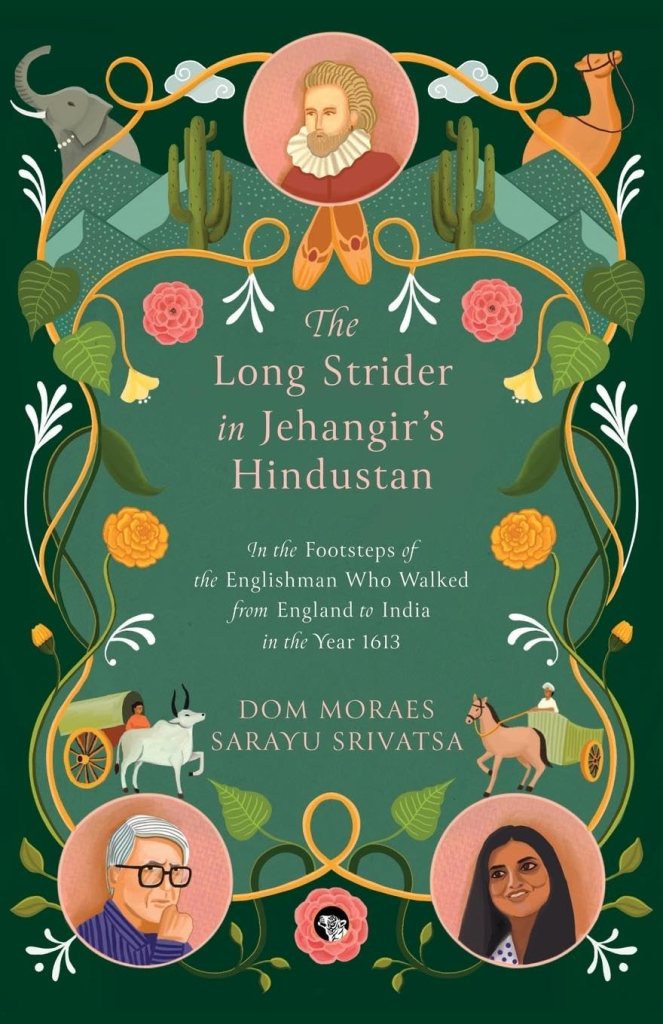
Book Title: The Long Strider in Jehangir’s Hindustan: In the Footsteps of the Englishman Who Walked From England to India in the Year 1613

Authors: Dom Moraes and Sarayu Srivatsa

Publisher: Speaking Tiger Books

During the years, in the early seventeenth century, when East India Company began a search for the possibilities of trade with India via sea route, Thomas Coryate of the village Odcombe in Somerset, England, made an ambitious plan to travel to the Indies, as he called it, on foot. This wasn’t his first undertaking. Having travelled across Europe on foot before, writing a travelogue Crudities on his experience which brought him some fame, he now wished to travel to a place no Englishmen had gone before. Motivated by the thought of gaining more fame with this venture so as to win the affection of Lady Ann Harcourt of Prince Henry’s Court, even the idea of traversing 5000 miles on foot as compared to 1975 miles that he did in Europe did not dissuade him.   

Known as ‘the long strider’, in 1612, Coryate set for his journey to the Indies from London. And in year 1999, more than three hundred years later, his journey and subsequent struggles, somehow inspired Dom Moraes to traverse the same route to correlate Coryate’s experience in the now altered places and its people. Coryate travelled alone, Moraes took the journey with Sarayu Srivatsa, the co-author of this book.

Dom Moraes, poet, novelist and columnist, is seen as a foundational figure in Indian English Literature. He published nearly thirty books in his lifetime. In 1958, at the age of twenty, he won the prestigious Hawthornden Prize for poetry. He was awarded the Sahitya Akademi Award for English in 1994. The Long Strider in Jehangir’s Hindustan was first published in the year 2003. Moraes passed away in 2004.

Sarayu Srivatsa, trained as an architect and city planner at the Madras and Tokyo universities, was a professor of architecture at Bombay University. Her book, Where the Streets Lead, published in 1997 had won the JIIA Award. She also co-authored two books with Dom Moraes: The Long Strider, and Out of God’s Oven (shortlisted for the Kiriyama Prize). Her first novel, The Last Pretence, was longlisted for the Man Asian Literary Prize, and upon its release in the UK (under the title If You Look For Me, I am Not Here), was also included on The Guardian’s Not the Booker Prize longlist.

Srivatsa, who travelled with Moraes to all the places Coryate passed through, writes diary chapters coextending the same routes subsequently. So, each fictive reconstruction of a period and place of Coryate’s travel by Moraes is followed by a diary chapter for the same place by Srivatsa. In that sense the book becomes part biographical fiction and part memoir. 

Coryate, son of a Vicar and dwarfish in stature, was seized by this desire to gain fame and respect. What desire seized the imagination of Moraes, eludes this reader. It, however, doesn’t escape the notice that both the writers shared somewhat similar plight towards the end.

Some of Coryate’s writing during the period did not survive as it was destroyed by Richard Steele, but the rest was sent to England and was posthumously published in an anthology in 1625. Basing his research on such sources, after extensive three years of investigation, Moraes managed to create an account of Coryate’s demeanour, his lived life in a new land with diverse people and customs at different places which he found both shocking and fascinating.  Coryate found the people of India loud and violent but he was also touched by their generosity and kindness. He witnessed the disagreements between Hindus and Muslims, the caste system where the upper caste oppressed the people from lower caste, sati, and the ways of Buddhist monks, Sikhs, pundits of Benaras and Aghoris[1], the lifestyle of Jehangir and the city of Agra before Taj Mahal. He was fortunate to have an audience with Jehangir, the main reason of his travel, but he failed in securing his patronage or enough money to continue to China which he had been his original intent.

In Moraes’ writing, the era comes alive. Vivid imagery and description makes the struggles and sufferings of Coryate palpable on one hand and on the other offer a view on the unfolding of history in a country where these many hundred years later, the echoes of a past similar to the present can be heard. In the preface, Moraes posits one of the reasons to take on the book — to compare the India then with the country during his times. As the reader proceeds with the story, the comparison becomes apparent in Moraes’ construction vis-a-vis Srivatsa’s entries.

Towards the end, an ailing Coryate succumbed to his illness and his body was buried somewhere near the dock at Surat. He could not make a journey home in 1615, but in 2003 a brick from his supposed tomb was sent back to the church in Odcombe by Srivatsa where a ninety six year old vicar waited patiently for the only famous man from Odcombe to return home. The epilogue by Srivatsa gives an account of Moraes’ own struggle with cancer and his demise in 2004, a year after the book was published. It is but right that the soil from his grave in Mumbai also found a resting place in Odcombe.    

[1] Devotees of Shiva

Rakhi Dalal writes from a small city in Haryana, India. Her work has appeared in Kitaab, Scroll, Borderless Journal, Nether Quarterly, Aainanagar, Hakara Journal, Bound, Parcham and Usawa Literary Review

.

PLEASE NOTE: ARTICLES CAN ONLY BE REPRODUCED IN OTHER SITES WITH DUE ACKNOWLEDGEMENT TO BORDERLESS JOURNAL

Click here to access the Borderless anthology, Monalisa No Longer Smiles

Click here to access Monalisa No Longer Smiles on Kindle Amazon International

Categories
Editorial

‘What’s Love Got to Do with It’

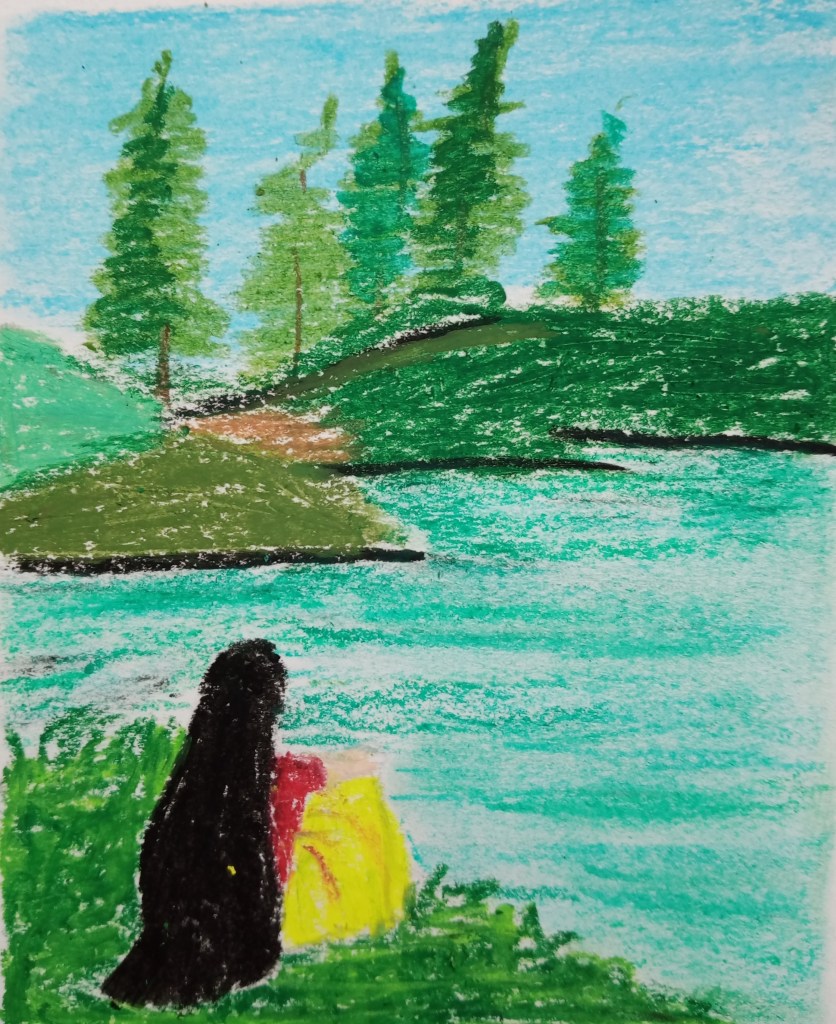
Art by Sohana Manzoor
‘Why does education in love not feature in today’s curriculum?’
— Mahasweta Devi, Our Santiniketan (Translated by Radha Chakravarty, 2022, Seagull Books)

As the world celebrates Valentine’s Day, one pauses to think how far commercialisation has seeped in over time that the very concept of a tender emotion was questioned by Tina Turner in a song called, “What’s love got to do with it” nearly four decades ago. 

This was written even before Mahasweta Devi (1926-2016) published a nostalgic memoir of 1930’s Santiniketan in Bengali in 2001. She raised her pen to ask the very pertinent question that is quoted above. Why is education in love not a part of our curriculum anymore? She was reminiscing about her days in Santiniketan where children were brought up with rigorous academics while discipline was coloured with love and affection. They nurtured a love for nature in students too. This has become a rarity for many and perhaps needs to be revived as the Earth struggles to continue habitable for humankind. In the process of educating students to love and give, Santiniketan threw up many greats like the writer herself. We are delighted to host an excerpt from the start of Our Santiniketan translated beautifully by Radha Chakravarty.

Santiniketan was only the very visible part of a huge project taken on by Tagore (1861-1941). The other part now united with Santiniketan under the banner of Visva Bharati University is Sriniketan, a group of villages where Tagore experimented with raising consciousness and standards of villagers to integrate them into a larger world. He brought in new techniques in agriculture and crafts into the villages under this programme involving many prominent scientists, artists and humanists. And the project has blossomed. Did you know Tagore thought of himself as an NGO and his ‘life work’ he felt was developing villages (Sriniketan) and educating young minds to build a world where borders of knowledge, poverty and ignorance could be smoothened?

He wrote: “I alone cannot take responsibility for the whole of India. But even if two or three villages can be freed from the shackles of helplessness and ignorance, an ideal for the whole of India would be established.

“Fulfill this ideal in a few villages only, and I will say that these few villages are my India. And only if that is done, will India be truly ours.”

All this can be found in a book called A History of Sriniketan (Niyogi Books), written by Uma Das Gupta, a major authority on Tagore who moved from Oxford to Santiniketan and made Tagore’s work in these two institutions her own life’s work. We have featured her and her book in our interview/review section.

Raised out of such ashes of poverty that Tagore sought to dispel, are youngsters from the village of Nithari, where ceaseless efforts by volunteers of organisations like Saksham and pandies’ has given a new lease for life to those who have been exposed to violations, violence, divides, poverty and deprivation. One of them, Sharad Kumar, now studying to be an engineer, kicks off our new section called Pandies’ Corner with his story in Hindustani translated by a volunteer, Grace M Sukanya. His story learns from history and shows rather than tells.

A similar approach to view the present through lenses focussed on the past at a much grander scale has been taken by Shazi Zaman, an author and journalist, who has stepped into the Anglophone world with the transcreation of his own novel from Hindi to English, Akbar, A Novel of History (Speaking Tiger Books). He has brought to the fore how in days when sectarian violence based on religions killed, Akbar (1542-1605) tried to create a new path that would lead to peace so that he could rule over an empire united by administration and not broken by contentious religious animosities which often led to wars. In his interview, he tells us of the relevance of the Great Mughal in a period of history that was torn by divides, divisions so deep that they continue to smoulder to this day and date. That history repeats itself is evident though our living standards seem to improve over time. Bhaskar Parichha’s review of Growing up Jewish in India: Synagogues, Customs, and Communities from the Bene Israel to the Art of Siona Benjamin, edited by Ori Z. Soltes, also reinforces these divides and amalgamations in the modern context. The other books that have been reviewed include The Best of Travel Writing of Dom Moraes: Under Something of a Cloud by Indrashish Banerjee, and Gracy Samjetsabam has introduced us to an intriguing murder mystery in Masala and Murder by Patrick Lyons.

Translations have thrown up interesting colours this time with a Tamil story by a Sahitya Akademi winning writer, S Ramakrishnan, translated on our pages by B Chandramouli, one from Korean by Ihlwha Choi and of course a transcreation of Tagore’s songs where he sings of the meeting of horizons. A beautiful poem by eminent Balochi poet Atta Shad (1939-1997) has been translated by Fazal Baloch. We are again privileged to host an original translation of Jibananda Das(1899-1954) by Professor Fakrul Alam. We also managed to get permission to share some of Professor Alam’s fabulous translations of Jibananada Das from UPL (United Press Limited) and are starting it out by excerpting two of his poems on Banalata Sen, which were till now restricted to readership who only had access to the hardcopy. Rakibul Hasan Khan has given us an essay on these translations. An interesting essay on Satyajit Ray (1921-1992) by Rebanata Gupta and personalised tribute to the first Booker Prize winner from New Zealand, Keri Hulme (1947-2021), by Keith Lyons, who had many non-literary encounters with the sequestered author, add to the richness of our oeuvre.

Ratnottama Sengupta has also paid a moving tribute to the music legend, Lata Mangeshkar, who died at the age of 92 on 6th February, 2022. The choral symphony of multiple voices that hums through the paean recreating the larger than life presence of Lata reinforces that her lilting voice will stay embedded in many hearts and lives forever. Her perfect honing of musical skills delivered with the right emotions make her an epitome of human excellence. She gave the best of herself to the world.

Brooding on death and suicide is Candice Louisa Daquin essay. This is a topic under discussion as Switzerland might start a resort for abetting suicides. It is rather frightening that while people value life and as technology and humans work in consonance to preserve it, the rich can think of squandering away this unique process that has till now not been replicated. The other strange long literary yarn that is dark in colours is woven by Sunil Sharma as he explores the futility and self-pity experienced by retirees in their existentialist quest to find a meaning to live. It has bits of poetry too. Penny Wilkes has also introduced verses into her photographic tour of dewdrops. Candice’s vibrant poetry this time has joined that of Ryan Quinn Flanagan, Mike Smith, A Jessie Michael, Ananya Sarkar, Jay Nicholls, Saptarshi Bhattacharya, Rhys Hughes and many more I leave you to unfold. Rhys Hughes has also given us a spooky piece which says ghosts might be genies — check it out. Do you agree or is he just being bizarre and funny?

Wrapped in more dry humour is Devraj Singh Kalsi narrative on why he does not want pets. Meredith Stephens, on the contrary loves pets and sails the seas of West Australia with her camera, words, seals and dolphins. Luke PG Draper also speaks for animals — for the intrusion of pollutants that harm creatures like whales in his short story. Hop all over the world with Ravi Shankar breaking nightly fasts with food from different cultures. More colour is brought in by Suzanne Kamata who starts a new column, Notes from Japan — introducing us to Japanese sensation, Masaki Nakagawa, who has sung his way to hearts with Lativian songs that he loves, so much so that he got to perform at the Japanese coronation and has pictures with the Latvian President.

The time has come to let you discover the mysterious pieces that have not been mentioned here in the February edition — and there are many.  

Before I wind up till the next month, I would like to thank our fabulous team who make this journal possible. Keith Lyons has now become part of that team and has graciously joined our editorial board. Sohana Manzoor and Sybil Pretious deserve a special kudos for their fabulous artwork. Our grateful, heartfelt thanks to all our wonderful contributors and readers who keep the journal alive.

Wish you all a lovely month.

Best wishes,

Mitali Chakravarty

Borderless Journal

Categories
Essay

Farewell Keri Hulme

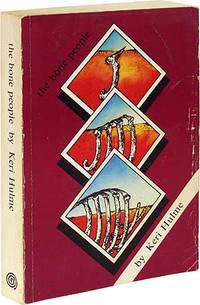
Author Keri Hulme (1947-2021) was the first New Zealander to win the prestigious Booker prize for the bone people*. Keith Lyons recalls times he spent in a remote coastal settlement with the humble writer, who remains a divisive enigma.

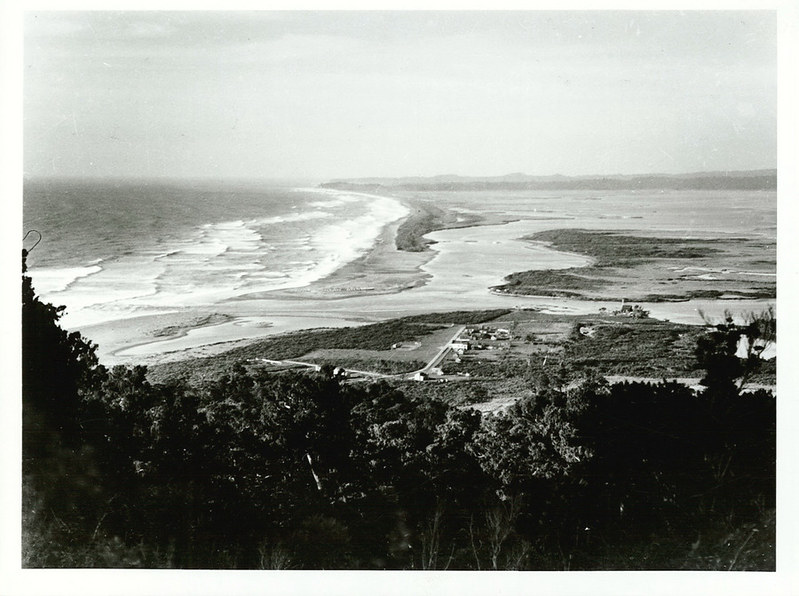
Okarito, home of Keri Hulme. Courtesy: Creative Commons

“You want to know about anybody? See what books they read, and how they’ve been read…” Keri Hulme

I was in high school when I heard the news that Keri Hulme’s the bone people had won the 1985 Booker Prize, literature’s most prestigious award for a novel in English. At 38 years old, she was the first New Zealander to receive the prize. Hulme became the first author to win with their debut novel. Later, in 2013, Eleanor Catton became the second Kiwi, the youngest winner of the Man Booker Prize, and also holds the record for the longest novel, 832 pages.

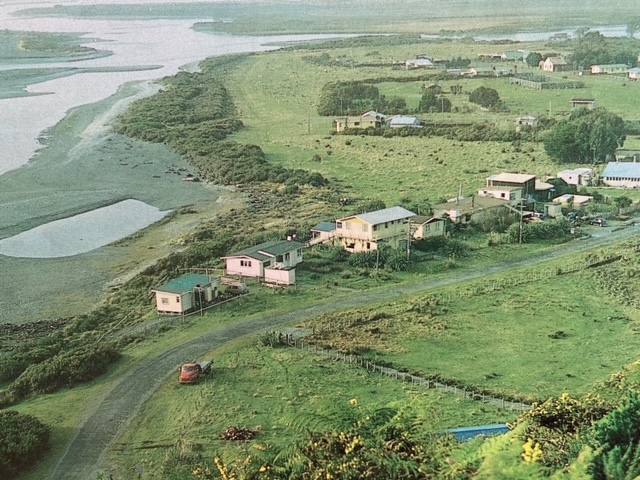
The following summer while hitchhiking around the South Island, I visited the small settlement of Okarito on the West Coast, where Keri had built her own house and lived since the 1970s. A converted schoolhouse in the former 1860s gold mining town was the main accommodation available: a youth hostel with bunk beds. I’d been attracted to the area because of the rugged coastline, placid tidal lagoon, mountain views and the elegant white herons which nested in the nearby forest.

Even though I’d struggled through an early edition of the bone people, I wasn’t as enthralled about the book as some of my fellow travellers who occupied bunk beds in the spartan hostel. Several European visitors carried copies of the book, which had been translated into many languages, several with different covers. It seemed that every day I went out walking along the main street of the settlement (population: 13 permanent residents), there would be an earnest woman from Cologne clutching Unter dem Tagmond or a young couple from Aarhus plodding along the road in the hope of finding Keri’s octagonal tower two-story house. Visitors wandered over the sand dunes desiring to encounter the acclaimed pipe-smoking author, beach combing for driftwood or gemstones washed up on the high tide.

There for the scenery and sanctuary of the coast, lagoon and native forest, rather than to spot the world-famous author, I did locate her house further along the settlement’s main road. A sign on the gate read “Unknown cats and dogs will be shot on sight”. The hostel warden Bill Minehan, who lived next door to Keri, told me she didn’t really like the attention or surprise visitors. Some of the other residents, protective of the community’s drawcard, would give wrong directions, so visitors after sightings of the elusive author could be seen pacing up and down the rutted grass airstrip — signposted Okarito International Airport and flying the Okarito Free Republic flag — or sidestepping around sheep grazing on the settlement’s rough golf course.

Often, after rains, Keri’s front yard flooded, creating a moat to protect her from rubberneckers. The Okarito Free Republic flag sometimes fluttered from a flagpole at Keri’s house, along with an alternative New Zealand flag, with a stylised spiral fern frond, made by Austrian painter and artist Friedensreich Hundertwasser. She moved to Okarito after winning a ballot for a section of land in 1973, building the house herself, lining bookcases with some 6,000 books, and setting up her writing desk with views out to the sea.

Keri was increasingly portrayed as reclusive. Rumours were that she’d spent all her Booker Prize thousands on alcohol from the Whataroa Hotel, some 25 km away. She didn’t like meeting strangers. She was reluctant to give interviews, and very rarely did she allow anyone into her house. She preferred solitude. “A large part of my life is the surge of the sea, listen to the sea, the pulse of the sea,” she once said.

I did catch a glimpse of Keri on my last day when returning a key to Bill — she was wielding a hammer, fixing the side of her house. The sweet aromatic scent of pipe tobacco floated in the humid air. Then I realised it was probably her I’d seen surf-cast fishing while on a long coastal walk towards the lagoon’s outlet into the Tasman Sea.

Bill let slip that Keri was formidable, but not unbeatable, at Scrabble. Having told him I had been at a Catholic boys’ school in Christchurch, and that I was also a writer, he asked if I knew any good high-scoring Scrabble words. I gave him ‘exorcise’ and ‘queazy’.

One of Keri’s favourite Scrabble words, I later found out, was ‘syzygy’, meaning the alignment of three celestial bodies. Three main characters make up ‘the bone people’. Keri said the characters for her book first came into her imagination when she was eighteen years old. After dreaming about a mute child with strange green eyes, she mused over the vision, eventually developing it into the character of the shipwrecked boy Simon Peter, whose life is intertwined with what one critic described as ‘his child-battering stepfather and a virgin feminist’.

The eldest daughter of a carpenter, whose parents came from Lancashire, and a mother who came from Orkney Scots and Māoris, she grew up in my hometown Christchurch. Her father died when she was aged eleven. After leaving school she dropped out of university part way through a law degree. She worked as a tobacco picker, in a woollen mill, delivering mail, cooking fish and chips at a takeaway shop, as a pharmacist’s assistant, a proofreader at a local newspaper, and in television production.

It took her almost two decades to finish the novel. She spent a dozen years trying to find a publisher. All New Zealand’s main publishing houses rejected the manuscript outright or insisted on extensive heavy re-writing before they would consider taking on the book.

In the end, it was published by a small obscure three-woman feminist collective (it was only the second book they produced), and typeset by students at a university newspaper, with an initial print run of just 2,000 copies. The book, which contained numerous typographical errors, was launched at an event at a teacher’s training college.

The year after its humble beginnings, the bone people won the Oscars of world literature, against the odds and against such literary heavyweights as Peter Carey, Doris Lessing and Iris Murdoch. The somewhat controversial win showcased writing from New Zealand to an international audience, who would perhaps only be aware of the likes of modernist short story writer Katherine Mansfield or Janet Frame, who explored madness and language.

Hulme’s contribution, blending indigenous myth and Celtic symbology, and set in a distinctly wild coastal New Zealand setting, is described as “an unusual story of love”’  or in the Amazon blurb “a true evocation of loneliness and attempts by deeply flawed people to connect to each other”. The main character of three, part-Māori artist Kerewin is convinced that her solitary life is the only way to face the world. How autobiographical is it, you ask? The more you delve into it, the more you find similarities with the unusual literary star, who increasingly got dubbed “reclusive” by the media because she wished to remain out of the limelight.

Part of the legend around Hulme is about the surprising success of her debut novel. She didn’t fancy her chances of winning the Booker Prize, so was in the US when the awards ceremony was held in London (plumes of cigarette smoke swirled up in the film footage) — she was the only contender not in the audience at London’s Guildhall. When she was called in her Salt Lake City hotel room during the event, she didn’t believe the news down the phone line. “You’re pulling my leg, aren’t you?” she said, “Oh, bloody hell.”

She was full of self-doubt. The literary world had a mixed response to her breakout novel. “Set on the harsh South Island beaches of New Zealand, bound in Māori myth and entwined with Christian symbols, Miss Hulme’s provocative novel summons power with words, as a conjurer’s spell,” wrote one New York Times review. “She casts her magic on three fiercely unique characters, but reminds us that we, like them, are ‘nothing more than people’, and that, in a sense, we are all cannibals, compelled to consume the gift of love with demands for perfection’.

Another review in the same publication was more critical. “It’s not so much that the novel offers ‘a taste passing strange’ as the author notes in the preface — interior monologues, disjointed narratives and vulgar language, after all, are hardly news these days. It’s more that the novel is unevenly written, often portentous, and considerably overlong.” The Guardian described the bone people as “a morass of bad, barely comprehensible prose.”

Even one of the Booker Prize judges, Joanna Lumley, was against it being picked as the winner, saying its subject matter was ‘indefensible’. A recent article described the bone people as one of the most divisive novels in Booker Prize history. The four words to sum up the book were violent, disturbing, poetic and striking.

While dismissed by some as unreadable and pretentious, in New Zealand the novel combining reality with dreams was seen as a masterpiece by others with its vision of a society regenerated by the adoption of Māori values and spirituality. For some, it challenged their worldview and sense of place at home in the world. Author Joy Cowley wrote, “Keri Hulme sat in our skulls while she wrote this work . . . she has given us — us.”

Keri said she wanted the novel to harmonise New Zealand’s two major cultural influences, indigenous Māori and European-descendent settlers (she herself shared both heritages). If you were to discover other authors who have explored in new ways what it means to be Māori, look up works by Patricia Grace and Witi Ihimaera, or for a raw look at the debilitating effect urban life has had on Maori, Alan Duff’s Once Were Warriors.

By the time I returned to Okarito the following August holidays to write a story for the Youth Hostel Association, the secluded hamlet had grown in population with the addition of a few more hardy souls and holiday houses, I only saw Keri a few times. One time, after gutting some snapper, she was off to clear the mailbox and collect the newspaper at the highway junction (there was no shop in the township). Another time she was cleaning a gun, bespectacled, and wearing her trademark red bush shirt. Like Hemingway, Keri liked hunting, (she favoured a .22 Ruger rifle among her collection of guns, swords and knives), and often took to the forest in search of deer.

Another time she was assembling poles, screens, nets, waders and buckets for the official start of the white baiting season. My father had worked in marine administration for decades, which included the monitoring of whitebait jetties and official seasons, so I knew a few things about the obsession. “Are the whitebait running yet?” I asked as she made the finishing touches to repairing nets. “Any day now,” she replied, looking expectedly towards the clouds billowing in the west. The season officially started the following day, and she had already checked her favoured locations for a 5am start. Normally a night owl and late riser, even her writing routine was swept aside for the ten weeks of the season when she was out trying to catch the coveted tiny fish. While throughout the year she might be catching rig or kahawai in the surf, netting for flounders in the lagoon, or trying to land salmon or trout in the rivers, her main springtime preoccupation was catching whitebait, the prized juveniles of migratory Southern Hemisphere fish.

I helped Bill load up driftwood onto the back of his vehicle before the rains set in, for use as firewood at the hostel (with a load for Keri too) and found some fool’s gold in quartz rock. Bill confirmed my folly. I gave him some more Scrabble words: Quartzy and Quickly.

That next summer I returned again to ‘The Big O’, hitching on the dusty corrugated gravel road to the coast with its pounding surf, driftwood sculptures and star-filled nights. Just before Christmas, with Bill away, Keri asked me if I could look after things at the hostel and check her place while she visited relatives on the other side of the South Island. The only other person staying medium-term was a German dwarf actor, who joked with me that he was a big man in European television and movies. Before she left, she dropped off a carton of a dozen beer, and some frozen whitebait, silvery eyes glistening through the plastic bag, with advice on how to make a batter for fritters with beer, flour, salt, and fresh parsley growing outside the hostel. “You could spice it up with some chilli pepper,” she said, pointing to a half-full jar of pepper left behind in the communal pantry by a Chilean backpacker.

Later, as we drank beer and watched the sunset from the old wharf, I mentioned to Manfred that even though Keri showed typical West Coast conviviality, we never once talked about writing. We’d talked about the moods of the weather, birdcalls from creatures seldom seen, what remedies protected vegetable gardens from slugs, and strange things which washed up on remote beaches. Having lived in that place for so long, she had plenty of stories about incidents, characters, or her own eccentric foibles. And I think that seeing her as a three-dimensional person (almost ignoring that she was a Booker Prize winner) rather than a 2-D writer made a difference, because it took away the pretensions and the expectations. She was direct, and also had a dry sense of humour. Manfred liked her rugged independent spirit, and kindly nature, not just because she had given us a box of beer. “She is like a good Kiwi bloke, yah?”

However, in the literary world, there was an expectation that a second novel was due. Her debut novel was on track to sell over a million copies. She’d retained the film rights, as its form couldn’t be easily adapted to the big screen. She believed that some stories work best ‘behind human eyes, not in front of them’. Surely she wasn’t going to be a ‘one-hit wonder’ like the band who sang the Macarena, Harper Lee’s To Kill a Mockingbird or The Catcher in the Rye by J. D. Salinger?

She finally announced her second novel, about fishing and death, she finally announced. And it would be called BAIT. She published a second collection of poems in 1992, and two collections of short stories appeared in 1986 and 2005. As for BAIT, it later would be published along with its twinned novel, On the Shadow Side.

She once declared she didn’t believe in writer’s block. “I know about distractions, laziness, daydreaming, stressful events that push writing to the background, and the sheer enjoyment of doing other things for a change … I am a slow, but very, very persistent writer.”

I can’t exactly recall when the last time it was I saw Keri. I just remember seeing her heading out on a fishing trip, along the windswept beach towards the lagoon and its ever-shifting outlet to the sea. She gave me a nod, and gradually faded into the misty greyness of the day and the distance. That night, after sunset at the beach, I witnessed the rare phenomena sometimes seen when the surf glows neon-blue from a bioluminescent algal bloom or plankton. Above it and beyond, the stars twinkled.

A decade ago, after almost forty years at Okarito, Keri left to move to the other coast, where she felt more at home. She had been dismayed by the development with ‘very ugly McMansions’ holiday homes visited by outsiders who would fly in by helicopter or plane. Her council rates were becoming unaffordable. She was also suffering from arthritis in her hips, back and elbows.

A few years ago, I went back to Okarito with a friend, but it felt different without her being there. We both hold the wish to buy her house, mainly in memory and tribute to Keri’s life and work, and also, to inspire our own writing. Though we both admit that Keri has fished all the best words, and woven the most compelling tales.

The much-anticipated second novel was never published, nor was the promised third. She died in late December last year. A family representative said she wasn’t after fame or fortune. “There were stories of her being this literary giant. It wasn’t really something that she discussed. It was never about fame for her, she’s always been a storyteller. It was never about the glitz and glam, she just had stories to share.”

*Please note ‘the bone people’ all lower case is the correct version of her title

 A view over Okarito and its lagoon and beach. Photo Courtesy: Keith Lyons

Keith Lyons (keithlyons.net) is an award-winning writer who gave up learning to play bagpipes in a Scottish pipe band to focus on early morning slow-lane swimming, the perfect cup of masala chai tea, and after-dark tabs of dark chocolate. Find him@KeithLyonsNZ or blogging at Wandering in the World (http://wanderingintheworld.com).
.

PLEASE NOTE: ARTICLES CAN ONLY BE REPRODUCED IN OTHER SITES WITH DUE ACKNOWLEDGEMENT TO BORDERLESS JOURNAL