Painting by Laszlo Mednyanszky (1852-1919). From Public Domain
DESCRIBING YOU

How can I describe you?

The fragrance of morning rain
mingled with dew
reminds me of you;

the warmth of sunlight
stealing through a windowpane
brings you back to me again.

SANCTUARY AT DAWN: FORGIVENESS

I have walked these thirteen miles
just to stand outside your door.
The rain has dogged my footsteps
for thirteen miles, for thirty years,
through the monsoon seasons ...
and now my tears
have all been washed away.

Through thirteen miles of rain I slogged,
I stumbled and I climbed
rain slickened slopes
that led me home
to the hope that I might find
a life I lived before.

The door is wet; my cheeks are wet,
but not with rain or tears ...
as I knock I sweat
and the raining seems
the rhythm of the years.

Now you stand outlined in the doorway
—a man as large as I left—
and with bated breath
I take a step
into the accusing light.

Your eyes are greyer
than I remembered;
your hair is greyer, too.
As the red rust runs
down the dripping drains,
our voices exclaim—

"My father!"
"My son!"


SAY YOU LOVE ME

Joy and anguish surge within my soul;
contesting there, they cannot be controlled;
now grinding yearnings grip me like a vise.
Stars are burning;
it's almost morning.

Dreams of dreams of dreams that I have dreamed
dance before me, forming formless scenes;
and now, at last, the feeling grows
as stars, declining,
bow to morning.

And you are music in my undreamt dreams,
rising from some far-off lyric spring;
oh, somewhere in the night I hear you sing.
Stars on fire
form a choir.

Now dawn's fierce brightness burns within your eyes;
you laugh at me as dancing starlets die.
You touch me so and still I don't know why . . .
But say you love me.
Say you love me.
Michael R. Burch’s poems have been published by hundreds of literary journals, taught in high schools and colleges, translated into fourteen languages, incorporated into three plays and two operas, and set to music by seventeen composers.
PLEASE NOTE: ARTICLES CAN ONLY BE REPRODUCED IN OTHER SITES WITH DUE ACKNOWLEDGEMENT TO BORDERLESS JOURNAL
“If Washington goes to Dhaka, there’s a chance that Paris might make it to Stockholm. And of course Moscow would be moved to Geneva!?”
Sounds like gibberish? But this is a piece of the speculative conversation on transfers and postings that is regular in the drawing rooms of embassies and consulates, Dr Reba Som found out on her very first posting after her marriage with Himachal Som.
Both were Presidency graduates pursuing higher careers — he in Foreign Service, she on the threshold of a doctorate. But life as the wife of an ambassador wasn’t only about glamour postings, fancy holidays and brush with celebrities. It was a mixed bag of blessings, as the woman who had grown up in Kolkata with a grounding in Tagore’s music would soon conclude. For, there were the dark clouds of life away from ageing parents and school going children; from the comfort of familiar food and mastered language; from developing your potential and crafting your own identity in the world out there.
In recent years we have read accounts of retired ambassadors and career diplomats’ experiences in diplomatic life. In her memoirs, Hop, Skip and Jump; Peregrinations of a Diplomat’s Wife, Dr Som’s is a woman’s voice, abounding in stories and observations about how the spouses keep a brave front in alien surroundings to hold up the best image of her country. In this conversation, she voices outmore about her encounters with racism, with political emergencies and exigencies. In short, about her lessons in a borderless world of multicoloured humanity.
You went to Brazil (1972), then to Denmark (1974), then Delhi (1976), Pakistan (1978), New York (1981), Dhaka (1984), then Ottawa (1991), Laos (1994), Italy (2002). Please share your gleanings from these lands.
The roller coaster ride was a saga of discovery. Travelling across expanses of the planet earth that we had seen only on the pages of geography books and atlases was a great learning experience. I gained an understanding of diverse cultures, imbibed social customs, became proficient in languages, and was exposed to exotic cuisines. At the same time I faced homesickness. Each posting entailed the challenge of uprooting oneself, finding schools for children, and reinventing oneself every time.
A large part of this life was in the years that had no mobile phones, no video calls, no social media, no internet communication. What did you thrive on?
Continents and hemispheres away from home, the only link with family and friends then was the diplomatic bag. The weekly mail service ferried across oceans by the ministry in Delhi contained letters and parcels from home. We were asked to judiciously use the weight allowed to bring spices, tea, condiments, clothing and other necessities. It became a ritual to write long letters and send them weekly by the diplomatic bag to Delhi from where they would be posted to respective destinations throughout India.
Along with letters would come bundles of magazines and newspapers. These brought us news of home from which we were truly cut off. With no television or internet or phone calls, we were in the dark about all news, be it political, social or entertainment. Every week on the bag day we waited anxiously to receive the newspapers – and the letters, which had instructions, news, recipes, advice, gossip. All of these were crucial for nurturing our souls.
One telegram from my father in 1973 carried the cryptic message: ‘Reba, solitary First class.’ These were the MA results of Calcutta University which were out after a delay of two years.
I was most taken up by the understated humour of some of your encounters in your memoir. Please recount some of them.
On our very first posting, to Brazil, not only our unaccompanied baggage but also our accompanied baggage did not arrive. Eventually when the lost luggage showed up, Himachal’s ceremonial bandhgala[1]was steeped brown — in the colour of the gur[2] my mother had lovingly packed in!
In Brazil, we found the people to be fun loving but too flamboyant. They made tall claims that their institutions were the biggest in the world. But reality often proved the claims to be hollow. Such was the Presidential bid to make the tallest flag pole in the world in Brazil’s new capital, Brasilia. A very tall flag mast was indeed built but the huge flag atop it was torn to shreds since the engineers had not factored in the wind speed at that height. Brazilians mirthfully called it the President’s erection!
And at Denmark. we were surprised by a sudden news of our posting to Mozambique. We had long realised that we were mere players on the chessboard of postings – we could be shunted off across continents at the whims of the powers that be. By the same token, a couple of phone calls by the newly arrived ambassador undid the mischief. We were happy to unpack and settle down again. The only guilt I felt was when I met the owner of Anthony Berg chocolates: I had in no time demolished the entire carton of chocolates he had sent as farewell gift!
You are among the few I know who have mothered in different continents. So how different is it to become a mother away from India?
I always felt that the best way to get to know certain nuances of a country’s cultural tradition was to have babies in them. My elder son, Vishnu was born in Copenhagen and Abhishek, the younger one, in New York — and my experiences each time couldn’t be more different.
In Copenhagen, a social democrat country, hospital visits for full term pregnant women were fixed on a certain day of the week. On the preceding day they had to collect their urine in a jerry can and present it for lab examination. I was confounded and not a little embarrassed to meet other mothers-to-be, swinging their jerry cans like designer bags without fail on the appointed day. I learnt only later that, from the urine examination doctors would note the condition of the placenta and not unnecessarily rush patients into childbirth with caesarean and surgical intervention!
In NY, on the day of my discharge, the hospital staff were highly excited because Elizabeth Taylor had come in for one of her facelifts. I could not forgive them their magnificent obsession when, along with a goodbye hamper, they wheeled in a bassinet with a different baby. On my protestation the nurse rudely shouted, “Can’t you read… the tag says Som Junior?” Shocked by the implication I said, I could not only read but also see! And it was not my child. While everyone was looking on in disbelief another nurse wheeled in my little one. The babies had their diapers changed and were put back in the wrong bassinet.
Years later, we discovered in an informal meeting with an American ambassador that Abhishek was indeed an American citizen. Because, at the time of the child’s birth Himachal was posted not to the embassy in Washington but to the consulate in New York. Only consulate children were given the privilege. This discovery, rechecked by State Department Records, gave our son the US passport. It was a windfall as Abhishek went on to graduate summa cum laude from a prestigious management school in the US and enter Wall Street as an investment banker.
I must also share another truth about birthing away from India. Before Vishnu’s birth, my parents had come to Copenhagen. When I was discharged from the hospital I received their care and being fed Ma’s cuisine was the best gift I could have. So, when phone calls came from hospital, followed by visits enquiring about my state of depression, I was totally confused. I realised how many mothers suffered from postpartum depression in a society bereft of nurturing family care.
How could you master languages as removed as Portuguese from Lao and Italian from Urdu? Is a flair for languages the key to this proficiency or the training imparted before each posting?
I enjoy learning languages. My stint at learning French at Ramakrishna Mission Golpark stood me in good stead in grasping Portuguese in Brazil, French in Ottawa and Italian in Rome — all Latin languages. But there was also the hazard of mixing up some phrases and words, so similar yet so different! Like Bon Appetit in French and Bueno Appetito in Italian. Or Amor in Portuguese; amore in Italian and amour in French.
Sometimes though, I accidentally learnt how language travels. My mother had packed in many petticoats to match with my saris but without their cord. We went to a store that promised to hold all we need but all my sign language did not bring what I needed. “Phita is obviously not available here,” I told Himachal, preparing to leave. Suddenly the storekeeper perked up. ‘Fita, si senhora!” he said and produced bundles of cord.
In due time I found out that janala, kedara and chabi – Bengali for window, chair and keys – had travelled from India to become janela, cadeira and chavi.
What did Dhaka mean to one raised in West Bengal – per se the Ghoti-Bangal[3]divide, your roots or the cultural side with Firoza Begum and Nazrul Geeti?
Dhaka was a great posting in so many ways. It was a hop, skip and jump away from my home town Kolkata, with the same language and culture and yet was a foreign posting with foreign allowances!
As you know, there’s a subtle cultural difference in East and West Bengal. Both speak Bengali but in East Bengal, it’s a colloquial rustic dialect while West Bengal speaks its refined cultural form. This formed the infamous ‘Ghoti-Bangal’ divide: Urban Calcuttans looked askance at their country cousins from the East.
The difference extended to the palate. East Bengalis flavoured their dishes with more chillies and West Bengalis, with a pinch of sugar. For the fish loving people, the two iconic symbols are Hilsa and Prawns, for East and West. Emotions soared high in Kolkata when the supporters of the football teams, East Bengal and Mohun Bagan, clashed, after intensely fought matches that spurred deadly arguments and bets.
Given this background, Himachal created a minor storm by announcing to his parents from Chinsurah, Hooghly in West Bengal that he would marry a girl whose parents were from Dhaka and Faridpur in East Bengal. Ghoti-Bangal feud remained the subject of much friendly banter between Himachal and me until we were posted in Dhaka. There, in a diplomatic turnaround, Himachal played down his Ghoti background to announce that his mother’s family was from Chittagong and he was born in the principal’s bungalow in Daulatpur, Khulna, where his grandfather was posted.
To give a bit of Himachal’s family background: Dr Pramod Kumar Biswas, the first Indian doctorate in Agricultural Sciences from Hokkaido University in Japan, had settled in Dhaka as principal of the Agricultural College. His charming daughter Kana won the heart of Dr Rabindranath Som, a veterinarian who weathered the predictable Ghoti Bangal storm to win her hand in marriage.
When my parents Jyotsnamay and Manashi Ray visited us, we couldn’t visit Patishwar in Rajshahi district, where my maternal grandfather Atul Sen had worked with Rabindranath Tagore before he was arrested for revolutionary activities with Anushilan Samiti, and exiled to Kutubdia, an isolated island in the Bay of Bengal. As a headmaster, he had given shelter to Jatirindranath Mukherji, popularly known as Bagha Jatin[4].
It was a breezy day when my octogenarian father revisited Faridpur Zilla School. The colonial bungalow had acquired a fresh coat of terracotta paint. Finding his way to the headmaster’s room, he announced with a lump in his throat that history had been rewritten, boundaries redefined and new national identities forged since 1923, the year he had matriculated.
The headmaster, delving through yellowing files, fished out the matriculation results for that year. My father’s face was that of an excited school boy impatient to show off his prowess: “Look at my maths marks! Oh yes, my English scores were a trifle lower than expected because I had a touch of fever, but look at Jasimuddin’s marks in English! Thank God, he passed it.” We looked around in hushed surprise. This isn’t The Jasimuddin, the beloved poet of Bangladesh? “But of course,” my father responded. “Jasim’s weakness in English was my strength!”
Dhaka was also personally fulfilling as my doctoral studies, which I had carried across three continents, found fruition at last! On another front, I met with success in gaining the confidence and blessings of Firoza Begum, the legendary exponent of Nazrul Geeti.
The songs of Kazi Nazrul Islam were a great favourite of my father. He often hummed those made famous by Firoza Begum. Since I had trained in Tagore songs from age five, I never aspired to master the distinctly different style of rendition. A chance encounter with the golden voice revived this desire. Firoza Begum bluntly refused. When I persisted, she wanted to hear me sing a few Tagore songs.
One morning I mounted three flights of steps, harmonium on my driver’s shoulder, to enter her flat with apprehension. At her bidding, I sang four songs of Tagore. She heard me without any comment, then she asked why I hadn’t been singing for Bangladesh television. My relief was palpable! I had passed her test.
Over the next two years, my weekly classes with her extended well beyond the music lessons to serious discussions on life itself and the meaning of religion. What began as a guru-shishya[5]relationship, transcended to deep friendship. She declined any remuneration and dearly wished that I should cut a disc. This wish of hers came true only when Debojyoti Mishra heard me and decided to record my Nazrul-songs for Times Music in 2016.
Food is perhaps the first face of culture. So please share with us some of your culinary adventures. Or should I say ‘fishy’ stories?
Adventures? I could talk about the chapli kebabs in Pakistan, or about putting samosas in Bake Sales. I could tell you about making rasgullas from powder milk. I could even tell you about our gardener in Laos who merrily collected every scorpion and caterpillar that came his way, “for snacks,” he told me. But let me focus on fish.
The very first party I hosted at home in Brazil led me to seek substitutes for Indian ingredients. Fish of course had to be on the menu, mustard fish at that. I had already learnt from the Brazilian ambassador in Delhi that surubim, being boneless, was the most suited for curries. So surubim it was for months until the day I had to go to the fishmongers – and found it was a monster of a whale!
In Pakistan, traversing the arid countryside of Sind, the train would stop at stations where fillets of pala were being shallow fried on large skillets. Savouring its delicate flavour we went into a discussion on the merits of pala versus hilsa. Both have a shiny silver body with thin bones, both swim upstream against current. The taste of hilsa steam-cooked in mustard sauce is a super delight in both Dhaka and Kolkata. There of course the discussions are on the merits of the hilsa from Padma and Ganga respectively.
In Laos I once called the plumber to ease the draining of the bathtub since the pipe had got clogged. He arrived with a live fish in a plastic bag and promptly emptied it into the pipe. It would eat through the slush as it travelled through the pipe, he assured me!
Post retirement, Himachal settled to honing his culinary skills. Cooking, which he had started in Ottawa, became his lasting hobby. He would shop for fish in C R Park or INA Market[6]. He would pore over cookbooks and plot innovative recipes. “Cooking,” he was quoted in Outlook magazine, “is art thought out with palate.” And his piece de resistance was the salmon baked whole.
Which was your most cherished, or striking, brush with celebrities in world history?
At one of the finest dinners in Copenhagen I found myself seated next to a countess. She invited me to visit her since she lived in the neighbourhood. The next day a liveried man arrived to escort us to an imposing manor house. We were welcomed with sherry and we had to select a card from a silver salver with the name of our partner for the dinner. I was escorted by a handsome young man who floored me when we exchanged names. He was the descendent of Count Leo Tolstoy!
Another memorable encounter was with a person straight out of the history books. I was strolling in a forested park outside Copenhagen. I noticed with a shock that I was looking into a glass topped coffin. The aristocratic face inside had an aquiline nose and a goatee that lent a refinement to the visage that still sported a faint smile. The starched lace collar was held in place by a jewelled button that showed impeccable taste. But the elegant hands tapered off to skeletal fingers, and the feet too had become skeletal.
The plaque at the bottom of the coffin informed us that this was James Hepburn, the Earl of Bothwell, with whom Mary, Queen of Scots had fallen in love. It was a fatal attraction since both were married. But soon her husband, Lord Darnley, the father of her son James, the future king of Scotland and England, was mysteriously burnt down in a manor, and Bothwell was granted a divorce. However, their marriage incensed Catholic Europe, so Mary gave herself up to buy the release of Bothwell, who fled to Denmark.
‘Whoever marries your mother is your father’: this dictum defines the acceptance of whatever political dispensation you are forced to live with, at home or abroad.So how did you cope with a turmoil like Emergency or antagonism in Islamabad?
We had returned to Delhi in the midst of Emergency. We felt some relief to see trains running on time and punctuality being maintained in government offices. Corrupt officers were being hauled up and over-population being addressed. But the atmosphere was sombre and conversations hushed. The deep scar left by the Emergency saw Indira Gandhi being swept out of power the following year.
In Islamabad tension had mounted when I arrived over the imminent execution of Zulfiqar Ali Bhutto[7]. Our residence had become the favourite watering hole for Indian and international journalists who knew Himachal from his Delhi days. Animated discussions over drinks were followed by quick despatches typed out on my rickety typewriter. Unending speculations on the unfolding drama had kept us on tenterhooks. Then one morning in April 1979, the phone rang to say, “It’s done.” [8]
How did Italy change your life?
Italy was easily the best posting of my life in embassies, not only because of its rich history. There I found Italian artists painting inspired by Tagore’s lyrics, and singers like Francesca Cassio singing Alain Danielou’s translations. What made them take it on? The question led me to rediscover Tagore.
My singing of Rabindra Sangeet also found recognition in Rome. My first CD album was released there. I was in many concerts. It was so fulfilling when my translation of Tagore’s lyrics into English found appreciation. Tagore himself believed that his songs were ‘real songs’ with emotions that speak to all people. I began translation in earnest. And that led me to write Rabindranath Tagore: The Singer and his Song (Penguin 2009). The book, with my translation of 50 Tagore songs, was considered very useful to many performing artistes who could understand and represent Tagore better in their art forms.
Please tell us about growing up with Tagore.
Like many girls in Kolkata I began learning Rabindra Sangeet from the age of five. Over the years the songs grew on me. The unique lyrics conveying a gamut of emotions spoke to me when I was far away on postings abroad. I continued my practice of the music through the years and felt vindicated when I got the opportunity to perform to appreciative audiences abroad and back in India.
Why did you work on his songs rather than his poems or stories?
There’s something compelling about Tagore songs. Remember that Gitanjali, which won him the Nobel, was a collection of ‘Song Offerings.’ Songs had given Tagore the strength to ride over the tragedies that had beset his life. They not only helped him express his grief over the deaths and suicides in his family, they were also his mode of expressing his frustration over the political situation that obtained then. And he felt his songs would help others too. “You can forget me but not my songs,” he had written.
Did you ever feel the need to jazz up the songs for Western audiences?
Tagore’s songs are like the Ardhanariswar[9] – the lyrics and the music are inseparable. The copyright restrictions that prevailed after this death did not allow translations. And that was a handicap since his music cannot be appreciated without comprehending his lyrics which are an expression of his creative thoughts.
I would say his songs have near-perfect balance between evocative lyrics, matching melody and rhythmic structure. And the incredible variety of his musical oeuvre touches every emotion felt by any human soul, without jazzing up.
Tagore’s songs are the national anthem of India and Bangladesh, and have also inspired that of Sri Lanka. But will his internationalism hold up with the change of order indicated by the recent developments on the subcontinent?
Tagore was known to be anti-nationalistic. He believed no man-made divisions can keep people segregated. He did not agree with the Western concept of ‘nation,’ he was an internationalist who accepted the ideals of democracy – ‘aamra sabai raja’[10], of gender equality – ‘aami naari, aami mohiyoshi’[11]; indeed, in equality of humans. What he wrote in lucid Bengali suited every mood. Georges Clemenceau, who was the Prime Minister of France for a second time from 1917 to 1920, had turned to Gitanjali when he heard that World War I had broken out. Even today people can relate to what he wrote.
How did all the hop skip and jump shape the feminist within Reba Som?
The wives of Foreign Service officers are often seen as decorative extensions of their spouses. People only saw the glamour we enjoyed on postings abroad, not the heartbreaks and disappointments we battled. Despite their qualifications the wives were not allowed to work abroad. Instead they had to be perfect hostesses: clad in colourful Kanjeevarams they had to prepare mounds of samosas and gulab jamuns.
But there was little recognition, appreciation or compensation by the Ministry of External Affairs of all the hard work and struggle they put in. To settle down in different postings in rapid succession. To host representational parties where they had to conjure Indian delicacies with improvised ingredients. To raise disgruntled children on paltry allowances.
Once, as the Editor of our in-house magazine, I had floated a questionnaire to all the missions abroad asking about the changing perceptions of the Foreign Service wives. That had opened a Pandora’s Box. Eventually in response to our requests the Ministry relaxed service conditions and allowed the wives to work abroad if they had the professional qualifications and received the host country’s permission. This was a veritable coup!
My own act of rebellion was accepting the Directorship of the Tagore Centre ICCR Kolkata (2008-13) after we returned to Delhi on Himachal’s retirement. It became a challenge for me to try and get the Tagore Centre on the cultural map of Kolkata, proving to myself and my disbelieving family in Delhi that it was possible!
Ratnottama Sengupta, formerly Arts Editor of The Times of India, teaches mass communication and film appreciation, curates film festivals and art exhibitions, and translates and write books. She has been a member of CBFC, served on the National Film Awards jury and has herself won a National Award.
.
PLEASE NOTE: ARTICLES CAN ONLY BE REPRODUCED IN OTHER SITES WITH DUE ACKNOWLEDGEMENT TO BORDERLESS JOURNAL
Kazi Nazrul Islam (24th May 1899-29th August 1976)
Why fear destruction? It’s the gateway to creation!
The new will arise and rip through the unlovely.
Hair disheveled and dressed carelessly
Destruction makes its way gleefully.
Confident it can destroy and then build again!
Ring bells of victory!
Ring bells of victory!

-- Prolloyullash (The Frenzy of Destruction) by Nazrul; translated from Bengali by Professor Fakrul Alam
As the world swerves in disarray, Kazi Nazrul Islam, who died the same month as Tagore, leaves behind a treasury of prose and poetry which, if we imbibe into our blood and bones, could perhaps heal dysfunctional constructs made by humans. Given the current situation, one cannot but help recall Nazrul’s lines from his poem, Prolloyullash (The Frenzy of Destruction), hoping for better times. Known as the rebel poet of Bengal, in his poem, Bidrohi (Rebel), he becomes the force that creates the change. His powerful writing and idealism continues to inspire over the decades.
Tagore saw brilliance in him and even wrote a poem for him that Radha Chakravarty has shared in her essay as a tribute on his 48th death anniversary. We also revisit his own inspiring words with translations of his poetry, lyrics and fiction by Professor Alam and Sohana Manzoor, along with the tribute by Chakravarty.
Ranu Bhattacharyya takes us back to Dhaka of the 1930s… and a world where the two Bengals interacted as one with her migration story. Click here to read.
A Pop of Happiness by Jeanie Douglas. From Public Domain
Happiness is a many splendored word. For some it is the first ray of sunshine; for another, it could be a clean bill of health; and yet for another, it would be being with one’s loved ones… there is no clear-cut answer to what makes everyone happy. In Harry Potter and the Half Blood Prince (JK Rowling, 2005), a sunshine yellow elixir induces euphoria with the side effects of excessive singing and nose tweaking. This is of course fantasy but translate it to the real world and you will find that happiness does induce a lightness of being, a luminosity within us that makes it easier to tackle harder situations. Playing around with Rowling’s belief systems, even without the potion, an anticipation of happiness or just plain optimism does generate a sense of hope for better times. Harry tackles his fears and dangers with goodwill, friends and innate optimism. When times are dark with raging wars or climate events that wreck our existence, can one look for a torch to light a sense of hope with the flame of inborn resilience borne of an inner calm, peace or happiness — call it what you will…?
It is hard to gauge the extreme circumstances with which many of us are faced in our current realities, especially when the events spin out of control. In this issue, along with the darker hues that ravage our lives, we have sprinklings of laughter to try to lighten our spirits. In the same vein, externalising our emotions to the point of absurdity that brings a smile to our lips is Rhys Hughes’ The Sunset Suite, a book that survives on tall tales generated by mugs of coffee. In one of the narratives, there is a man who is thrown into a bubbling hot spring, but he survives singing happily because his attacker has also thrown in packs of tea leaves. This man loves tea so much that he does not scald, drown or die but keeps swimming merrily singing a song. While Hughes’ stories are dark, like our times, there is an innate cheer that rings through the whole book… Dare we call it happiness or resilience? Hughes reveals much as he converses about this book, squonks and stranger facts that stretch beyond realism to a fantastical world that has full bearing on our very existence.
A powerful essay by Binu Mathew on the climate disaster at Wayanad, a place that earlier had been written of as an idyllic getaway, tells us how the land in that region has become more prone to landslides. The one on July 30th this year washed away a whole village! Farouk Gulsara has given a narrative about his cycling adventure through the state of Kashmir with his Malaysian friends and finding support in the hearts of locals, people who would be the first to be hit by any disaster even if they have had no hand in creating the catastrophes that could wreck their lives, the flora and the fauna around them. In the wake of such destructions or in anticipation of such calamities, many migrate to other areas — like Ranu Bhattacharya’s ancestors did a bit before the 1947 Partition violence set in. A younger migrant, Chinmayi Goyal, muses under peaceful circumstances as she explores her own need to adapt to her surroundings. G Venkatesh from Sweden writes of his happy encounter with local children in the playground. And Snigdha Agrawal has written of partaking lunch with a bovine companion – it can be intimidating having a cow munching at the next table, I guess! Devraj Singh Kalsi has given a tongue-in-cheek musing on how he might find footing as a godman. Suzanne Kamata has given a lovely summery piece on parasols, which never went out of fashion in Japan!
Radha Chakravarty, known for her fabulous translations, has written about the writer she translated recently, Nazrul. Her essay includes a poem by Tagore for Nazrul. Professor Fakrul Alam has translated two of Nazrul’s songs of parting and Sohana Manzoor has rendered his stunning story Shapuray (Snake Charmer) into English. Fazal Baloch has brought to us poetry in English from the Sulaimani dialect of Balochi by Allah Bashk Buzdar, and a Korean poem has been self-translated by the poet, Ihlwha Choi. The translations wind up with a poem by Tagore, Olosh Shomoy Dhara Beye (Time Flows at an Indolent Pace), showcasing how the common man’s daily life is more rooted in permanence than evanescent regimes and empires.
Fiction brings us into the realm of the common man and uncommon situations, or funny ones. A tongue-in-cheek story set in the Midwest by Joseph Pfister makes us laugh. Farhanaz Rabbani has given us a beautiful narrative about a girl’s awakening. Paul Mirabile delves into the past using the epistolary technique highlighting darker vignettes from Christopher Columbus’s life. We have book excerpts from Maaria Sayed’s From Pashas to Pokemonand Nazes Afroz’s translation of Syed Mujtaba Ali’sShabnamwith both the extracts and Rabbani’s narratives reflecting the spunk of women, albeit in different timescapes…
When migrations are out of choice, with multiple options to explore, they take on happier hues. But when it is out of a compulsion created by manmade disasters — both wars and climate change are that — will the affected people remain unscarred, or like Potter, bear the scar only on their forehead and, with Adlerian calm, find happiness and carpe diem?
Do pause by our current issue which has more content than mentioned here as some of it falls outside the ambit of our discussion. This issue would not have been possible without an all-out effort by each of you… even readers. I would like to thank each and every contributor and our loyal readers. The wonderful team at Borderless deserve much appreciation and gratitude, especially Manzoor for her wonderful artwork. I invite you all to savour this August issue with a drizzle of not monsoon or April showers but laughter.
May we all find our paths towards building a resilient world with a bright future.
A brief introduction to Rhys Hughes’ Sunset Suite, published by Gibbon Moon Books this year, and a discussion with the author on this ‘Weird Western’ and more…
Rhys Hughes
Perhaps — that’s the wrong way to start a review or any article— but given that this is a book that offers immeasurable possibilities, like sunsets or stars, one could still start with a ‘perhaps’… You might start with another word of course!
Perhaps, Rhys Hughes’ TheSunset Suite is a novel? Or, is it not? It seems to be a group of short, tall tales tied neatly into coffee lore, coming closest structurally to The Arabian Nights — stories told by the Scheherazade, originating around Middle Ages, much after coffee was discovered in Ethiopia by a goatherd in 800 CE. The book departs in various shades from the One Thousand and One Nights, even though magic creeps in every now and then.
Hughes also seems to have a fascination for coffee lores for he redid TheRubaiyatof Omar Khayyam (1048-1131), translated from Persian by Edward Fitzgerald, substituting the wine with coffee a year ago. And here you have two men in the Wild West, telling tall tales, inspired by 26 mugs of coffee.
In The Empire Podcast by William Dalrymple and Anita Anand, there are a couple of episodes on coffee. Coffee houses sprouted around the fifteenth century in the Middle East and flourished during the Ottoman Empire, spreading over time to Europe, and even to America… if we are to believe Hughes! In those times, soldiers, among others, gathered in coffee houses, much to the dismay of kings. The warriors started turning to tall tales, philosophy and gossip instead of training all the time. The rulers were unhappy at the turn of events. Germany went so far as to ban coffee. An article on food history tells us: “One of the most curious of these events happened in Prussia, a precursor to modern-day Germany, where it’s leader Frederick the Great banned coffee by decree in 1777. And he did it for a reason that is almost baffling to modern notions of health and what’s good for society: He wanted people to drink more beer.” In the podcast, they do tell us Germany produced beer. In those days, coffee was seen as a suspicious drink, an aphrodisiac with magical qualities. It is these magical qualities that are invoked in TheSunset Suite.
Brand and Thorn are two coffee drinkers under the stars, sitting over a bubbling pot — and each cup from the pot has a tale in it, professes the author. That the tales are part of a dreamscape of darker hues verging on the absurd, bringing out the strangeness of the illusion we call life and its endless possibilities, comes as a surprise.
People turn into corn cobs, biscuits, musical notes, sombreros and are resurrected in paintings of nightmares at the end, tying the characters loosely into a frame. Phoenixes swim underwater and horses turn into boats and ‘a hill of beans’ becomes a ‘mountain of beans’. The transformations seem to be reminiscent of Kafka’s Metamorphosis (1915) or Pinter’s The Room (1957) … but we are left wondering, are they?
The settings are often realistic at the start but head for the absurd as they end. Each story has a punch and leaves the reader open mouthed in amazement. They are imaginative, clever — sometimes playing on words — like the story of a genie who was told by a robber to make money ‘no object’ — a turn of a phrase which should mean that money is so plentiful that anything is affordable. But the genie, trapped in time and traveling over centuries, misunderstands the grave robber. He makes money into a literal ‘no object’— ‘abstractions, vague colours, mental scents and other intangible things’.
Hughes expands the literary world to a frog, a dog and even an armadillo who are yet to publish their books. This seems almost like an inversion of Luigi Pirandello’s play Six Characters in Search of an author (1921), where the characters left incomplete by a deceased author are looking for a resolution. Hughes’ reader, who talks of these authors from the animal kingdom, waits patiently for the books to turn up. In another story, evocative of the same play by Pirandello, the characters from his earlier tales are trapped in a painting and talk to the artist, ‘the keeper of Lore’, who paints his own nightmares peopled by the creations of Hughes. One of the last narratives, this one ties the stories into a loosely structured unit.
“I am Grampsylvania. That wasn’t my original name, but it’s my name for the foreseeable future. He changed me, you see, from a man into a gigantic but sapient corncob pipe. I don’t mind.”

“And he changed me into a biscuit,” said another voice. “I was just George Lewis once but now I’m The Biscuit Kid.”

A third voice added, “Turned me into a hat, a sombrero. I was Max Grizzly originally. Not that I dislike being a hat.”

“Wonder what he’ll turn you into?” they said to Henry [the artist inside the painting].

“I don’t want to change.”

“Well, you don’t have a say in the matter.”
The idea of the writer as the ultimate creator stretches through tall tales to experimental forms. ‘The Biscuit Kid’ is a one-and-a-half-page story written in one sentence — is it an attempt at what is known as the stream of consciousness technique (as in James Joyce’s Ulysees, 1918) or just a quirky experiment? A strange tale about a man turning into a biscuit in a sulphurous pond with tea dunked into it with an allusion to the Boston Tea Party has the victim floating in infinite circles … is it a comment on history repeating itself? The narrative of ‘Reintarnation Smith’ maps the history of the world rather randomly through the many reincarnations of the protagonist, from a palaeolithic shaman (were there shamans in that time frame?) to a Napoleonic soldier and a First World War trooper to an intelligent tree in a world where humanity has become extinct! The alternatives offered and suggested are mind boggling…
Each story sees itself as a possibility expressed in a light gripping vein, characteristic of the author, who has ostensibly been seen as a cult writer… though I am not sure what that term means or how Hughes, who has authored more than fifty books and writes up storms of stories and poems, feels about it — Let’s ask him. We start with the most pressing question —
This is on something that has me perplexed after reading Sunset Suite. How do you think a frog, a dog or an armadillo would hold a pen? Can we read frog/ dog/ armadillo — or would one need to download a special app from Google to read their books? Or is it better to have a frogman/ dogman/ armadilloman translate these? Please enlighten us.
Armadillo: Image from Public Domain
I hadn’t really thought about it until you asked the question. They would have to use telekinesis to hold a pen. The power of their minds. Maybe they have bigger minds than we think. Having said that, I don’t know why we always assume that if you have a bigger mind, you will be able to move physical objects just by thinking. When I was young, I often tested my own telekinetic powers. They never worked, of course. Except for once, when I made a cardboard box cover a daisy during a storm. I was staring out the window and willing the box to fall on the daisy and protect it from the wind, and that is what actually happened! All of a sudden, the box rose in the air and came down over the flower. Certainly it was the wind that did the trick, rather than my mental powers, but at the time I wondered if perhaps I had found the secret of telekinesis. Frogs, dogs and armadillos would write books using telekinesis. The real question is how much we would understand of what they had written. I don’t suppose we have much in common with frogs or armadillos. The dog’s books might be more accessible. I guess most of the descriptive writing in a dog’s novel would be smell-based because that’s how dogs map the world. But while reading a dog’s novel, should we dog-ear the pages to keep our places? Or human-ear them?
That’s an astute observation… Maybe we can dino-ear them! Did all dinosaurs have ears…? Let’s leave that discussion for another time. Next, I need to know what is a cult writer? Are you one? Please explain.
I don’t really know, to be honest, and I’m not sure if I am one or not. Many years ago, I was told that I was one. I think it’s another way of saying, “Your books aren’t very popular,” but softening that blow by implying that, “At least some people read and enjoy them.” I embraced the definition for want of any better label. We do like labels, that’s the problem. When I write, I write just for myself. Not quite. I do try to write in a similar mode to the writers I most enjoy, and they have audiences. If they didn’t, I wouldn’t know about them. I adore the books of Italo Calvino [1923-1985], but I don’t know many other readers who read him. Does that make him a cult writer? I don’t think so. I think it’s just more likely that I am a little isolated and simply don’t know the readers who do read that kind of fiction. And yet I am in contact with some people on the internet who seem to share my taste in fiction. In fact, they give me recommendations of authors I’d never heard of, who turn out to be wonderfully in tune with my taste. Apparently, if you are a writer who is more loved by other writers than by readers who don’t write, you are a writer’s writer, and that’s a form of cult writer. Last year, I read the nine novels of the almost forgotten Henry Green [1905-1973], who was described as a writer’s writer’s writer, in other words a cult writer cubed. I suppose that to be a cult writer is simply a stage for some writers as they work their way up to greater popularity. It’s probably possible for writers who were once hugely popular but who are no longer appreciated by a sufficiently wide readership to turn into cult writers on the way down.
Why did you not write of a squonk in this book since it is your favourite fantasy animal? Will you be writing on a squonk soon?
A squonk: A mythical creature in American Folklore. Image from Public Domain.
There are no squonks in The Sunset Suite because I have written too much about them elsewhere. I don’t want to oversquonk myself. I first learned about squonks from Jorge Luis Borges’ Book of Imaginary Beings [1957] I think. And then I noticed references to the creature in all sorts of places. Years ago, I wrote a short story called ‘The Squonk Laughed’ because squonks are the saddest of all entities. I wanted to write about one that cheers up. And one of my longest ever poems is about a squonk ragtime pianist who works in a Wild West saloon, ‘Honky Tonk Squonk’. The very word is funny. It sounds round but also squelchy, rather like a cream-filled pastry. There is an excellent song by the band Genesis about squonks called simply ‘Squonk’ and it’s a song that will tell you absolutely everything you need to know about squonks if you listen carefully to the lyrics. In my book, it seemed to me that it was time to show some restraint when it came to squonks. You can have too much of a good, weepy thing.
How long did this book take to germinate into a full blown one and how did it come about?
Not long at all. Some of my projects proceed very slowly, they take years or even decades to be completed. But most of my projects are done fast. This is because if I take too much time over them, I worry that I will lose the thread or threads of the plot or plots, or that the mood and atmosphere of the work will change and be lost. That’s not always a disadvantage. I might begin work on a book thinking it is going in a certain direction. Then I put the project aside for a long time. When I return to it, I have often forgotten the direction I had intended to take the book. So I make it go in a different direction, and it seems to me that sometimes this other direction is a superior journey to the original intended direction. Who knows? But that has no relevance to The Sunset Suite because I wrote it in just a few weeks. I can’t recall exactly how long it took, but it wasn’t a drawn-out process. It happened to be one of those projects that flowed easily. Many do, and I am always grateful to them. It is almost as if I am not doing the work but simply acting as a channel for a set of stories that exist in some cosmic cloud. This is probably a fanciful delusion, but it is one that many writers have had over many centuries. We are conduits as well as creators. We are pipelines as well as pipers.
Have you actually been to the Wild West? Why have you set your book against this backdrop?
I have never been to the Wild West. I have never even been to the West. Even the most easterly part of the American continent is west to me. The furthest west I have been is Ireland. Yet I love Westerns, especially so-called ‘weird’ Westerns. Having said that, I have been to Almeria in Spain, the only desert in Europe, where many ‘Spaghetti Westerns’ were filmed. It looks the way I imagine Mexico or Arizona might look, but I can’t know that for sure because I haven’t been there. Maybe one day I will. I have written quite a few Westerns, all of them weird and unusual. The first was a novella called The Gargantuan Legion. I had the idea for that when I was very young. Much later I wrote a novel called The Honeymoon Gorillas [2018], and then a collection of stories, poems and short plays called Weirdly Out West [2021]. Shortly after finishing The Sunset Suite, I wrote a Western novel
called Growl at the Moon that has been accepted for publication. I am currently working on a novel titled The Boomerang Gang. I find writing weird Westerns to be great fun, relaxing too, yet they apply a strong stimulus to my imagination. Next year I hope to write a novel called Fists of Fleece, which will combine Welsh folklore with Wild West tall tales, creating an especially offbeat hybrid.
You have strange names given to characters peopling The Sunset Suite. Why? Please elaborate.
I enjoy giving my characters strange names. I also think it’s safer. Suppose I have a character in a story named Tim Jones and something absurdly odd happens to him. There might be a real Tim Jones out there in the world who will start thinking that I am referring to him and maybe even mocking him. It is better to give the character a name that surely no real person will ever have. Argosy Elbows, for example, or Crawly Custard. Readers can regard these as nicknames, if they wish. I often make lists of offbeat names for characters that I will use in future stories. Some of these names have been waiting decades to be used. Other names I invent on the spur of the moment while writing. Invention on the spur of the moment is an appropriate thing to do when writing a Western. But in fact the names in The Sunset Suite are still fairly conventional. Jake Bones, Shorty Potter, Killy the Bid, Grampsylvania, Max Grizzly, Cowboy Bunions, Dan Flyblown, Lanky Ranter. It’s not beyond the bounds of plausibility that real people out there do have such names.
Why do you keep obsessing over coffee? Please explain.
I hope it’s not quite an obsession. I like coffee, that’s all. I guess it’s my favourite drink. No offence to water, tea or beer! I am in the process of cutting down on my coffee consumption. I have been reducing my intake for the past twenty years, but it’s still not at zero. I am reducing it very slowly indeed, that’s why. Mind you, the reason why there is so much coffee in The Sunset Suite is simply because cowboy films always show the characters drinking coffee around a campfire. They surely told stories to each other at night while drinking the coffee. It occurred to me that I could use this as a frame for my book. A sequence of strange stories set in the Wild West linked together by the fact that each tale was generated by a cup of coffee. At the end of the book, the two tale tellers have drunk too much coffee. The book is a warning that will be heeded too late. But we are all adults. We don’t really need to be warned about such perils as coffee consumption.
Since classification is an important aspect of human existence, how would you classify your book?
It’s a ‘Weird Western’. That’s what I have been calling it. This is a real sub-genre, and I think my book can be labelled as such without any objections. I might also call it a comedy, a picaresque or portmanteau farce, a speculative whimsy. But it remains a Western, that’s undeniable. It makes substantial use of parody, pastiche, paradox and probably other things beginning with the letter ‘p’. At the same time, I don’t mind if the book is classified just as a fantasy or even only as fiction.
What have been the influences on this book? On your writing?
The main influences on this particular book of mine were other weird Westerns by writers I admire, in particular The Hawkline Monster [1974] by Richard Brautigan, which was marketed as a Gothic Western. Brautigan was especially good at writing short but thoughtful passages that are often at tangents to each other but nonetheless do combine with each other satisfyingly. Another influence was probably a collection of stories I read when I was young, The Illustrated Man [1951] by Ray Bradbury, in which a sleeping man’s tattoos come alive one at a time and tell stories as they do so. But in my book, it is the cups of coffee that come alive in a fictional sense. I also think that the pulp Western author Max Brand was an influence on my book, especially his stranger works, such as The Untamed [1918], which seem to blend echoes of ancient mythology with the more conventional cowboy motifs and clichés.
Would you call these stories humorous? They do linger with absurdity and a certain cheekiness.
I like to think they are humorous. I like to think that The Sunset Suite is a comedy among other things. Most of my fiction has some comedic elements, even if the general tone of the story is serious. Real life is a mishmash of tragedy, comedy, indifference, absurdity, beauty, and who knows what else, so it’s only right and proper for fiction to be such a mishmash too. Obviously, in a short story there’s not much room in which to throw everything, so one has to be more careful when it comes to constructing the piece. The mode of the book, which features a framing device in which is found a set of individual tales that echo each other’s themes, is one I especially enjoy using. I am planning other books that follow this structure.
What books are you whipping up now?
I always work on several projects at the same time. I am currently working on two novels. One of them is a satirical thriller called Average Assassins, and the other is another weird Western called The Boomerang Gang, which is about an Australian immigrant to the Wild West in the late 19th Century and it features an experimental aeroplane with boomerangs for wings. I am also working on a large project called Dabbler in Drabbles, which consists of four volumes of drabbles. A drabble, as I’m sure you know, is a flash fiction exactly 100 words in length. There will be one thousand drabbles in total when the project is finished. The first three volumes have already been published and I am pushing ahead with the fourth. Yet another project I’m working on is a collection of short meditations called City Life. These meditations are supposedly written by the cities themselves and there will be sixty of them in total. I am working on other projects too, but I won’t mention those yet.
Thank you Rhys for your fantastic writing and your time.
(This interview has been conducted through emails and the review written by Mitali Chakravarty.)
Steve’s Scaffolding is firm
but fair
and more convenient
than using
the stairs to scale the façade
of a building.

Metal pipes, riveted tight
are a grid-like
sight for casual sightseers
and that is right
but allow me
to tell you what is wrong.

King Kong.
Yes, that great big ape.
See him loom?
He is the issue we ought
to discuss: he is
the elephant in the room.

But larger
than an elephant, of course,
able to exert greater
force than any other living
creature. That’s his
main feature.

He can climb
structures with such speed
and skill it gives
us all a thrill
to watch him do it.
He can succeed
in reaching the summit
without the need
for a steel lattice.
It takes a lot of practice
but it’s possible.

He won’t plummet,
his hairy grip is firm
on every ledge
and windowsill edge.
He won’t fall
and end up in hospital
with broken limbs.

And so I ask you:
What use is
Steve’s Scaffolding
to King Kong?
Who is Steve anyway?
Why should
any gorilla obey
the safety regulations?

Among the nations
of the world
there are none that
pay any heed
to what King Kong
doesn’t need.
Scaffolding is
one of those things.

But I am here to say
that if you have a building
extremely tall
that you want climbed
for any reason at all
give him a call.
He knows how to use
a telephone:
his receiver is shaped
like a banana.
He will react to your
wish without
any palaver, trust me.

No matter
the season he’ll oblige,
scaling towers
on the outside: he trusts
elevators not a jot.

And when
he gets to the top, if you
have a biplane
or two (biplanes usually
come in pairs)
to buzz the hairs on his
head, he’ll be delighted
to swipe them
like flies: his party trick.

He isn’t wise
but he’s quick to act,
which means he isn’t quite
as thick or daft
as people like to claim.

No need to harbour
a grudge because he beats
his chest too loud.
Nor should he
be blamed for shedding fur
everywhere,
near or far, here or there:
he’s a gorilla,
not Attila the Hun’s barber.

But Steve has other ideas
and now it
finally becomes clear that
Steve is a dinosaur,
a prehistoric monster, yes,
a tyrannosaur
who sings in chorus with
the tectonic
groans of geological time.

He has millions of years
of experience
to help him mangle apes.
The mystery
of his survival can wait
to be solved.
More important is what
he plans to do
next: will he try to chew
King Kong’s
limbs or head? I dread to
even speculate.

But the outcome is good,
my fears are
groundless, the joy seems
boundless as
giant ape and tyrannosaur
shake hands
unexpectedly, like friends
from long ago.

Steve’s scaffolding business
is expanding,
the work is too demanding
for one dinosaur.
He needs a partner to share
the load, his
former colleague was a toad
and not skilled at paperwork.

King Kong has come along
at the right moment.
Steve asks him bluntly: do
you want the job?
The huge ape nods his head,
keen to partake of the
entrepreneurial dream.
They will be a monster team.

Steve and Kong’s Scaffolding
is firm but fair
and more convenient
than using the stairs
to reach the softest of lights,
the inflamed moon,
or ascend the giddy heights of
fame and fortune
Rhys Hughes has lived in many countries. He graduated as an engineer but currently works as a tutor of mathematics. Since his first book was published in 1995 he has had fifty other books published and his work has been translated into ten languages.
.
PLEASE NOTE: ARTICLES CAN ONLY BE REPRODUCED IN OTHER SITES WITH DUE ACKNOWLEDGEMENT TO BORDERLESS JOURNAL
The many faces pf Kazi Nazrul Islam. From the Public Domain
The abiding image of Kazi Nazrul Islam (1899-1976) is that of the “Rebel Poet,” who defines himself as a fiery comet streaking across the firmament, emblazoning in the sky a message of revolutionary change. Unlike Rabindranath Tagore, Nazrul was not born into social and intellectual privilege. He has been described, in fact, as “the ‘other’ of the elite Kolkata bhadralok”.[1] Born in Churulia village in the Bardhaman district of Bengal, Nazrul was the son of the head of a mosque, studied in an Islamic school, and during his youth, joined a Leto group, a travelling band of local performers. When in high school, he was recruited into the British army, and served in Karachi. Even after he returned to Bengal as a young poet who had already acquired fame and repute, he remained something of an outsider to the intellectually sophisticated world of the literati. It was from this position of an outsider that he fashioned his own image as the bidrohior ‘Rebel poet’ who challenged the structures of the political, social, cultural and literary establishment with the sheer force of his iconoclastic writings.
Though best known as a poet, composer and revolutionary, Nazrul’s oeuvre also includes novels, essays, stories, editorials and journalistic pieces on a remarkable variety of topics. He was also a lyricist and composer, creator of the iconic genre called “Nazrulgeeti”. Nazrul’s brilliant literary career lasted from 1919 to 1942, when illness brought it to a sudden end. During this short span of time, he wrote on an amazing range of subjects, including politics, nationalism, social change, religion, communalism, education, philosophy, nature, love, aesthetics, literature and music. He saw it as his mission to arouse public awareness about pressing issues, and to jolt them out of their complacency and general apathy. Remembering Nazrul on the 48th anniversary of his death, it is daunting to think about his extraordinary legacy, but also a timely moment to reflect upon his significance for our own times.
In his political stance, Nazrul argued passionately in favour of armed struggle for total independence from colonial rule, rejecting the Gandhian path to advocate a freedom won via armed resistance. The trope of violence recurs in his writings. Yet his apparent espousal of the principle of destruction springs from a utopian dream of constructive change. “Reform can be brought about, not through evolution, but through an outright bloody revolution,” he says in the essay ‘World Literature Today’. “We shall transform the world completely, in form and substance, and remake it, from scratch. Through our endeavours, we shall produce new creation, as well as new creators”.[2]
Nazrul’s ideas on education counter the colonial pattern, advocating instead a curriculum that draws on indigenous contexts and models. He feels that the new education policy should emphasise empathy, inclusiveness and heterogeneity, with a special focus on psychological and emotional development. “It is our desire that our system of education should be such that it progressively makes our life-spirit awakened and alive,” he says in ‘A National Education’, adding: “… We would rather produce daredevils than spineless young men.” [3]
Inclusiveness and acceptance of heterogeneities are central to Nazrul’s vision. During his stint as a soldier in Karachi in his young days, he became interested in Marxist thought. The influence of this line of thinking can be felt in his emphasis on economic egalitarianism, and his passionate support of the cause of the downtrodden peasantry, particularly in his journal Langal. Following the 1926 riots in Kolkata, he expresses his anguish at the communal antagonism between Hindus and Muslims, critiquing different forms of orthodoxy in both religions. In the poem ‘Samyabadi (Egalitarian)’ [4], he declares:
I sing the song of equality—
Where all divisions vanish and barriers dissolve,
Where Hindu-Buddhist-Muslim-Christian
	merge and become one …
Nazrul was also a supporter of women’s rights. In his poetry, he speaks of equality between men and women. In ‘Nari (Woman)’ he argues: “If man keeps woman captive, then in ages to come, / He will languish in a prison of his own making”.[5]
Not surprisingly, Nazrul’s fearless, unconventional attitude aroused hostility in many quarters. His bold, outspoken magazine Dhumketu enraged the British. The journal was banned, and Nazrul condemned to rigorous imprisonment. At his trial in 1923, he delivered a resounding rejoinder in his speech ‘Rajbandir Jabanbandi (Deposition of a Political Prisoner)’. He remained a thorn in the flesh for the British administration because of his revolutionary views. Nazrul’s religious views also raised many hackles. He married Ashalata Sengupta, or Pramila, who belonged to the Brahmo Samaj. This antagonised conservative Hindus as well as orthodox Muslims.
Nazrul’s success as a writer, especially Rabindranath Tagore’s appreciation of his work, also caused jealousy among contemporary writers. For Tagore had dedicated his play Basanta to Nazrul, and also sent a telegram to him when he was in prison, exhorting him to give up his hunger strike. In 1922, Tagore had written a poem addressed to Nazrul, which appeared in successive issues of the journal Dhumketu[6]:
Come, O shining comet! Blaze
Across the darkness, with your fiery trail.
Upon the fortress-top of evil days,
Let your victory-pennant sail.
What if the forehead of the night
Bear misfortune’s sinister sign?
Awaken, with your flashing light,
All who lie comatose, supine.
Rabindranath Tagore’s recognition of Nazrul’s talent created a lot of envy in literary circles. In 1926-27, parodies of Nazrul’s poetry started appearing in Shanibarer Chithi, a journal published by the Tagore circle. It came to be rumoured that Tagore had not liked Nazrul’s use of the Persianate word khoon (blood) instead of the Sanskritised word rakta, in his composition ‘Kandari Hushiar’. This gave rise to a controversy that became known as khooner mamla (the bloody affair), which drew a strong reaction from a deeply perturbed Nazrul, in the shape of an essay ‘Boror Piriti Balir Baandh” (A Great Man’s Love is a Sandbank)’, in which he blamed Tagore’s followers for the entire misunderstanding. The situation was resolved through the mediation of friends, and relations between Tagore and Nazrul remained cordial. When Tagore died in 1941, Nazrul broadcast a moving elegy, “Robi-Hara”, on Calcutta Radio.
In some ways, Nazrul was ahead of his time. Not many people know that he was aware of environmental issues and the threat of climate change, pressing problems in our own times. In ‘The Day of Annihilation’, he writes in a prophetic vein, of global warming, dissolving ice-caps and a changing ecology, cautioning his readers that if humans exploit the planet, we will eventually be responsible for the destruction of life on earth.
In Nazrul’s life and writings, we encounter the constant pull of contraries.His consciousness was simultaneously rooted in local culture, and infused with a broad transnational spirit. He felt inspired by movements in other parts of the world, such as the Turkish Revolution, the Irish Revolution and the Russian Revolution. In the essay ‘Bartaman Viswasahitya (World Literature Today)’, we discover his awareness about literary developments across the globe.In his political writings he espouses the path of violence, but he also composes exquisitely tender love songs, devotional songs drawing on both Hindu and Muslim imagery, and songs about the beauty of nature.
Nazrul’s style is a volatile mix of colloquial, idiomatic expressions, formal Bengali, Sanskrit and Persianate vocabulary, a smattering of English, and multiple registers of language. His polyglot sensibility also surfaces in his practice as a translator. He translated Omar Khayyam and Hafez from Persian into Bengali. His translations from Arabic into Bengali include 38 verses of the Qu’ran, part of the Mirasun Nagmat (a treatise on Hindustani classical music) and some poems. He translated Whitman’s ‘O Pioneer’ from English into Bengali. He is also known for his innovative ghazals in Bengali.
In 1942, Nazrul suddenly lost his speech. His illness brought his literary life to an abrupt end. All the same, the impact of his writings continued to be felt. In the Bangladesh Liberation War of 1971, the freedom fighters adopted Nazrul’s music as a source of inspiration. He was later declared the National Poet of Bangladesh. Today, while Nazrul’s poems and songs continue to delight and inspire, the true extent of his achievement remains in shadow. It is time for a comprehensive reappraisal of this much underestimated literary genius, because his writings have so much to offer us in our present world.
[1]The Collected Short Stories of Kazi Nazrul Islam, ed. Syed Manzoorul Islam and Kaustav Chakraborty (Hyderabad: Orient Blackswan, 2024), p. xviii. Bhadralok translates to gentleman
[2]Kazi Nazrul Islam, Selected Essays, translated by Radha Chakravarty (New Delhi: Penguin Random House, 2024), p. 137.
[3] Kazi Nazrul Islam,Selected Essays, trans. Radha Chakravarty (2024), p. 60.
[6]The Essential Tagore, ed. Fakrul Alam and Radha Chakravarty. Cambridge, Massachusetts: Harvard University Press, 2011, pp. 115-116; Translation mine.
Radha Chakravarty is a writer, critic, and translator. She has published 23 books, including poetry, translations of major Bengali writers, anthologies of South Asian literature, and critical writings on Tagore, translation and contemporary women’s writing. She was nominated for the Crossword Translation Award 2004.
.
PLEASE NOTE: ARTICLES CAN ONLY BE REPRODUCED IN OTHER SITES WITH DUE ACKNOWLEDGEMENT TO BORDERLESS JOURNAL
Translations from Bengali by Professor Fakrul Alam
Nazrul teaching NazrulgeetiNazrulBorn in united Bengal, long before the Partition, Kazi Nazrul Islam(1899-1976) was known as the Bidrohi Kobi, or “rebel poet”. Nazrul is now regarded as the national poet of Bangladesh though he continues a revered name in the Indian subcontinent. In addition to his prose and poetry, Nazrul wrote about 4000 songs. Pictures from Public Domain
Nazrul’s Bidai Shondha Ashilo has been translated as ‘The Evening of Parting’
THE EVENING OF PARTING

The evening of parting is here; darkness encases the eyes.
Dearest, don’t let tears make my path of parting more slippery.
Like a flower would, I drifted with the tide and came here
Unintentionally. Why, dearest, did you err and pick the flower up?
Why did you put the flower in your tresses, only to fling it away,
Letting it drift once again with the tide?  Here no one understands
Each other. The one you crave only slights you; the one you desire
Won’t be your own. Here there is no real love in the heart’s depths.
How will you understand how my pain wilts the garland of union?
The song I sing takes wings and reaches the sky, craving for you.
Nazrul’s Masjideri Pashe Amai Kabar Diyo Bhai has been translated as’Bury Me’
BURY ME

Make sure to bury me next to a mosque, dear brother of mine,
So that from my grave I’ll hear the muezzin’s prayer call all the time.
As those in the congregation pass me by, I’ll hear too their holy steps
This sinner will thus be saved from the evil spirits close to the grave!
So many pious people—God’s devotees and our prophet’s disciples—
Come to this mosque and recite verses from the Holy Quran here.
Those verses uplift my soul and mind. Many dervishes and fakirs
Come to the mosque’s compound too. Till deep into the night
They recite God’s name repeatedly, though hidden from sight.
I too would like to repeat with them His Holy name, all in tears.
I too would so like to keep repeating His Holy name thus!
Far away from the densely populated civilised world, the nomadic tribes of snake charmers make their temporary homes sometimes right beneath the deep blue mountains, sometimes among deserted and impassable forests, and sometimes by the foamy mountain brooks or in vast stretches of barren land.
He was the headman of one such band of snake charmers. His name was Jahar. He was a god among his people. His men were terrified of him, and yet they also worshipped him. Only one man in his tribe was jealous of Jahar’s hold over his people and scorned him in secret. Yet, he did not dare to question his authority in public. This man was called Bishun. He also had a few disciples. His ardent wish was the demise of Jahar. He plotted to destroy the man and become the leader of the clan himself.
Jahar had gone to the foot of the hill to look for poisonous snakes. On his snake charmer’s flute, he played an enchanting tune that would arouse one’s entire being. The tune attracted a dangerously poisonous black cobra which came out of the woods with a swaying hood. Jahar’s eyes burned with excitement. Suddenly, he threw away his flute and placed his palms in front of the raised hood of the snake. One snap and Jahar’s body turned blue because of the venom. His clansmen were stupefied with fear and stood surrounding him. Jahar was unperturbed. He began to chant some spells in a composed manner and soon he was cured of the venom. The astounded crowd cheered their hero. Only Bishun moved away with a darkened countenance.
This is how Jahar had taken on snakebites ninety-nine times and also cured himself. Now he was preparing himself for the hundredth time. If he succeeded in taking out the venom for this last time, he would be completing a difficult penance. Being successful in serpent-cult was the ultimate aim in Jahar’s life. To complete this, he had been practicing celibacy with utmost sincerity.
While Jahar’s disciples and followers awaited the great day ardently, one night something unprecedented happened. Did he ever pause to think that anything like that could happen?
Jahar had roamed around the world like a gypsy. Distancing himself from women he came to think that women were only hindrances to attain his target. He even started to be disdainful towards women in general.
Then one day, he saw a plantain raft carrying the corpse of a beautiful girl. According to tradition, people bitten by snake were not buried, but were placed on such rafts and set afloat in rivers. Jahar could only do what he was taught to do as a snake charmer—to revive the girl.
Now he was in deep trouble. The young woman had forgotten her past because of the strong snake poison. She could recall nothing about her family or friends. She just kept on staring at him piteously. He could not just leave her behind. His once tremendous hatred turned into pity and compassion. He provided a home for her. What could one call this except irony of fate? But his long harboured disdain for women made him dress the girl as a boy. He made her drink a strong potion that would control her womanly nature.
Jahar named her Chandan (a boy’s name) and joined a different tribe of snake charmers. The old leader of the new tribe was so charmed by Jahar that before his death he named Jahar his successor. So, Jahar became the undisputed leader of the half-civilised nomadic tribe.
None of this new tribe, however, knew that Chandan was not a boy. Jhumro, a favourite disciple of Jahar, was her only good friend. Jhumro cared a lot for Chandan.
At this time, the celibate Jahar, who had passed the test of ninety-nine snakebites successfully, suddenly realised that he was in danger of falling from his highest point of honour.
That night when he was preparing to go to sleep, Chandan’s unparalleled beauty affected him like an arrow and turned him mad for a moment. It is with utmost self-control that he was able to restrain himself. He ran to the idol of the goddess Mansa and sat at her feet repenting through the night for his momentary delusion. He prayed and cried as atonement.
But the desire that was aroused, could not be extinguished so easily. Then on that very day, it was heard that the king’s men of the country had started tormenting the snake charmers because they blamed the nomadic tribe for the increasing number of abductions of children lately.
Jahar immediately gathered his band and traveled a long way and camped in a wild forest frequented by ferocious animals. They ignited fire to keep the wild beasts away and started to make merry. Jahar, Jhumro, Chandan, Bishun, Bishun’s son, Tetule, the magician with blue glasses, the fortune-teller, the old bell-keeper—all were enjoying the amusements played in the moonlight-drenched night.
A fight between Jhumro and Tetule started over a trivial matter. In the beginning, they just yelled at each other, but gradually it developed into fist-fighting. Chandan stood apart, however, at one point, unable to bear Jhumro’s predicament, she jumped between the two men. In the ensuing scuffle, she lost her breastplate, and the people suddenly realized that Chandan was a beautiful woman in disguise.
At this point, another beauty rushed into the scene. Her name was Mowtushi. She took off the scarf she was wearing and covered Chandan with it. All this while, she was secretly in love with Chandan with the abandonment of a youthful love. Realising that Chandan was a woman just like her, all her pent-up love turned into a sisterly affection. Meanwhile, Jahar appeared and dragged the embarrassed Chandan to his tent. The members of his tribe were astonished to say the least. Nobody thought in their wildest dream that an austere celibate like Jahar could keep such a disguised beauty with him.
The only person who did not seem surprised was the old bell-keeper. He was a strange man who drank heavily and told fortunes through clay marks on the ground. Yet he never revealed the complete truth. He shook his head and broke into a shrill laughter.
In the meantime, Jahar had cornered Chandan in his tent and was trying to draw her in his embrace saying, “Chandan, Chandan, you are only mine.” His self- restraint of all these years was taken over by an overwhelming desire that made him blind.
Chandan tried in vain to move away from him. Finally, she reminded him of his vow and the goal of his life—to be successful in his serpent-cult. The words hit their mark and Jahar came to his senses. What was he doing? His gaze fell upon the effigy of the goddess Mansa, and he rushed out of the tent in pain. He would have to do it that very night. He would have to take the hundredth bite from a venomous snake and complete his vow.
Finally, he found such a snake and was about to start the ritual when Bishun came with the news that Jhumro had run off with Chandan. Mowtushi had helped them in this venture.
Jahar could not complete his vow. All the preparations he had taken for so many years were absolved by this one piece of news. His rage made him mad, and he rushed off to find the guilty pair. Nobody, however, could tell him about their whereabouts; he felt his entire body was set on fire.
Returning to his tent, Jahar opened the basket of the venomous black cobra and went to the temple of Shiva. He used sacred texts as enchantment and set the snake after Jhumro.
By that time, the deliriously happy Chandan and Jhumro had journeyed out towards the unknown. They dreamt of a nest of happiness in some far-off land where they would live happily ever after.
The venomous black cobra appeared right at that moment, bit Jhumro, and disappeared. Immediately, the deadly poison caused Jhumro to fall on the ground.
Chandan stood there thunderstruck. She felt helpless and hopeless. The only way to save Jhumro was to approach Jahar. But how could she possibly do that? Blinded by tears Chandan traced back her steps to the tent she had deserted earlier.
Jahar sat like a lifeless statue. A tearful Chandan approached him and said in a trembling voice that she loved Jhumro more than her life. If Jahar could save him, she was even willing to sell her soul to him. Jahar did not utter one word, but followed Chandan in a trance till they came to Jhumro’s body that had turned blue.
Jhumro was saved. Chandan happiness knew no bound. But she did not have time. She had sold herself to Jahar to save Jhumro. She belonged to Jahar now and hence she said to Jhumro in a shaky voice, “Go away, Jhumro. Go far away. I am not yours anymore.”
How could she chase away the man she loved most? Tears fell from eyes ceaselessly, her heart hurt too.
Jahar was watching the heartbreaking scene standing not far away. He held the black cobra that had returned to retrieve poison from Jhumro’’s body. He looked at Chandan once and then again at Jhumro. He seemed immersed in deep thought.
Then he took the snakebite on his own chest willingly. Jhumro cried, “What did the Master do?” Both Jhumro and Chandan ran toward Jahar who replied angrily, “Take her away from here, Jhumro. I will consume the poison now. This is my last snake, and I must cast the spell, but it won’t work before womenfolk. Take her away from this forest, country even. Go far away to some other land.”
Chandan and Jhumro left accordingly. The master saw that his disciples were gone, but he did not chant his spell. He smiled to himself and muttered, “Those spells are not mine to utter. I will call on Shiva, Shiva, Shambhu, Shambhu…”
The poison of the black cobra was turning his body blue and the light of his eyes were dimmed. Yet, his face caught on the ray of some other world that illuminated his visage with joy. It seemed that his suffering soul had finally found peace.
He had been successful in this final battle of the serpent-cult.
From the Public Domian
[1] Naga-panchami is a day that might fall either in the Bengali month of Aashar or Shravan when serpents are worshipped.
.
Kazi Nazrul Islam(1899-1976) was born in united Bengal, long before the Partition. Known as the Bidrohi Kobi, or “rebel poet”. Nazrul is now regarded as the national poet of Bangladesh though he continues a revered name in the Indian subcontinent. In addition to his prose and poetry, Nazrul wrote about 4000 songs.
Sohana Manzoor is an Associate Professor at the Department of English and Humanities at ULAB, a short story writer, a translator, an essayist and an artist.
PLEASE NOTE: ARTICLES CAN ONLY BE REPRODUCED IN OTHER SITES WITH DUE ACKNOWLEDGEMENT TO BORDERLESS JOURNAL


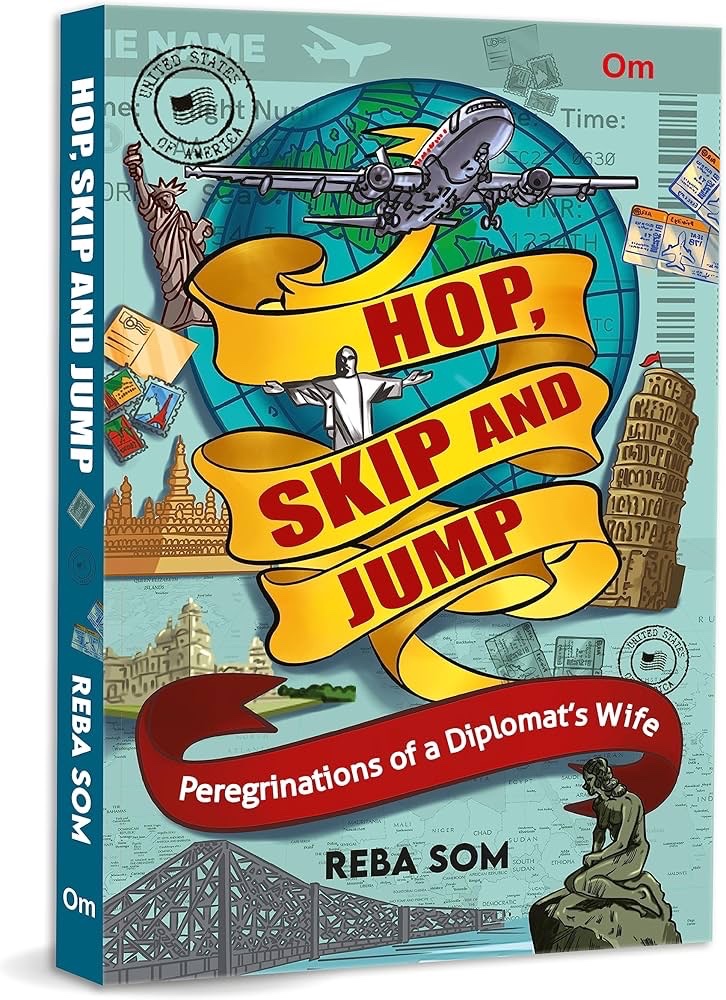
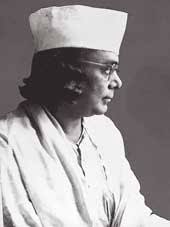
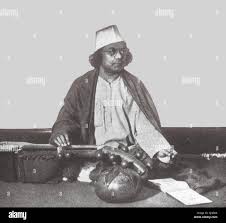



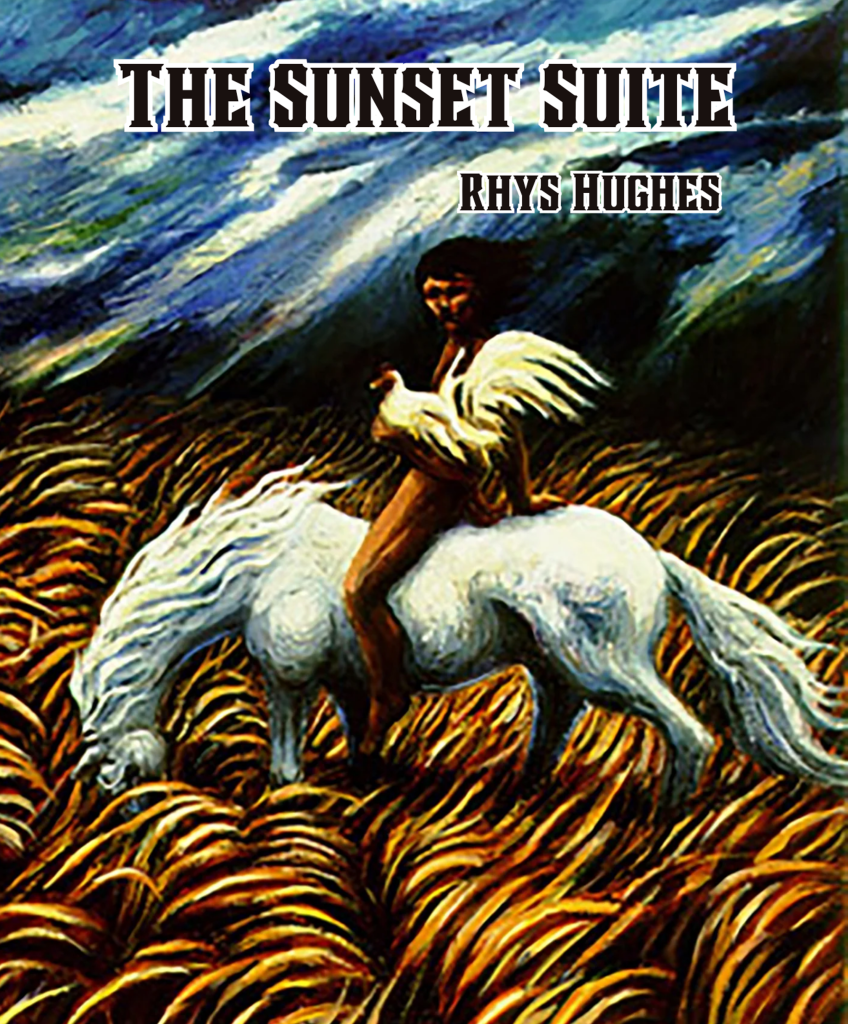
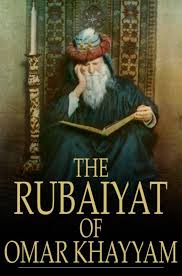



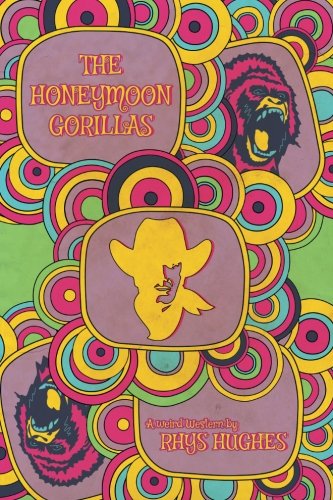
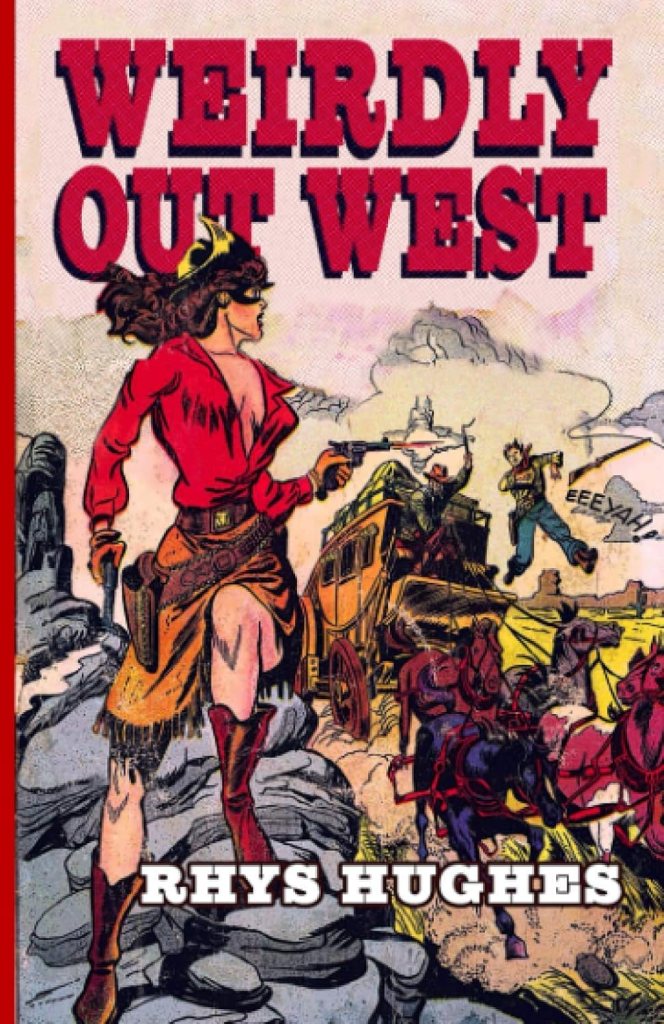


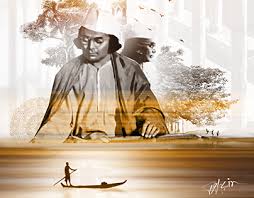
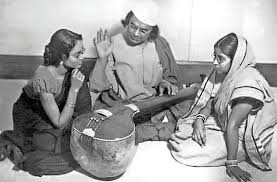
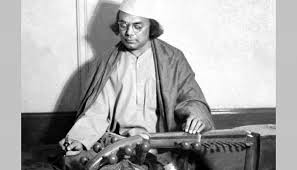
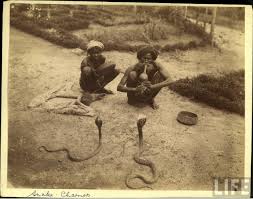
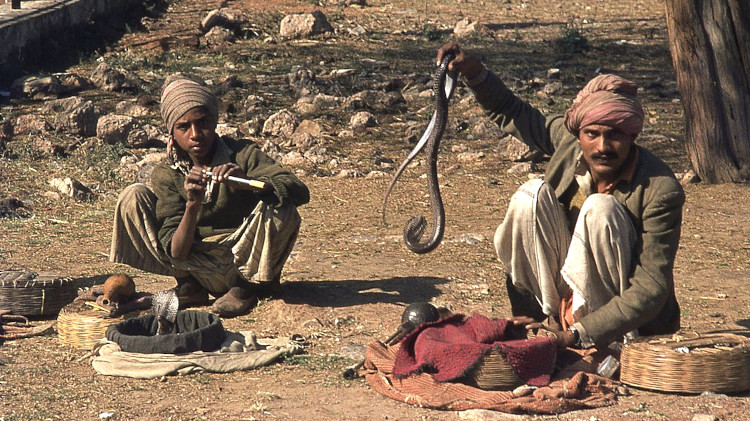
 Borderless