Ratnottama Sengupta muses on acts of terror and translates a Bengali poem by Tarik Sujat which had come as a reaction to an act of terror. Click here to read.
Renee Melchert Thorpe recounts her mother’s migration story, hopping multiple countries, starting with colonial Calcutta and Darjeeling. Click here to read.
Paul Mirabile wanders into the realm of the supernatural dating back to the Potato Famine of Ireland in the 1800s. Clickhere to read.
Conversations
In conversation with eminent Singaporean poet and academic, Kirpal Singh, about how his family migrated to Malaya and subsequently Singapore more than 120 years ago. Click hereto read.
There was a time when humans walked the Earth crossing unnamed landmasses to find homes in newer terrains. They migrated without restrictions. Over a period of time, kingdoms evolved, and travellers like Marco Polo talked of needing permissions to cross borders in certain parts of the world. The need for a permit to travel was first mentioned in the Bible, around 450BCE. A safe conduct permit appeared in England in 1414CE. Around the twentieth century, passports and visas came into full force. And yet, humanity had existed hundreds of thousand years ago… Some put the date at 300,000!
While climate contingencies, wars and violence are geared to add to migrants called ‘refugees’, there is always that bit of humanity which regards them as a burden. They forget that at some point, their ancestors too would have migrated from where they evolved. In South Africa, close to Johannesburg is Maropeng with its ‘Cradle of Humanity’, an intense network of caves where our ancestors paved the way to our evolution. The guide welcomes visitors by saying — “Welcome home!” It fills one’s heart to see the acceptance that drips through the whole experience. Does this mean our ancestors all stepped out of Africa many eons ago and that we all belonged originally to the same land?
And yet there are many restrictions that have come upon us creating boxes which do not allow intermingling easily, even if we travel. Overriding these barriers is a discussion with Jessica Mudditt about Once Around the Sun: From Cambodia to Tibet, her book about her backpacking through Asia. Documenting a migration more than a hundred years ago from Jullundur to Malaya, when borders were different and more mobile, we have a conversation with eminent scholar and writer from Singapore, Kirpal Singh. Telling the story of another eminent migrant, a Persian who became a queen in the Mughal Court is a lyric by Nazrul, Nur Jahan, translated by Professor Fakrul Alam from Bangla. Ihlwha Choi has self-translated his own poem from Korean, a poem bridging divides with love. Fazal Baloch has brought to us some exquisite Balochi poems by Munir Momin. Tagore’s poem, Okale or Out of Sync, has been translated from Bengali to reflect the strange uniqueness of each human action which despite departing from the norm, continue to be part of the flow.
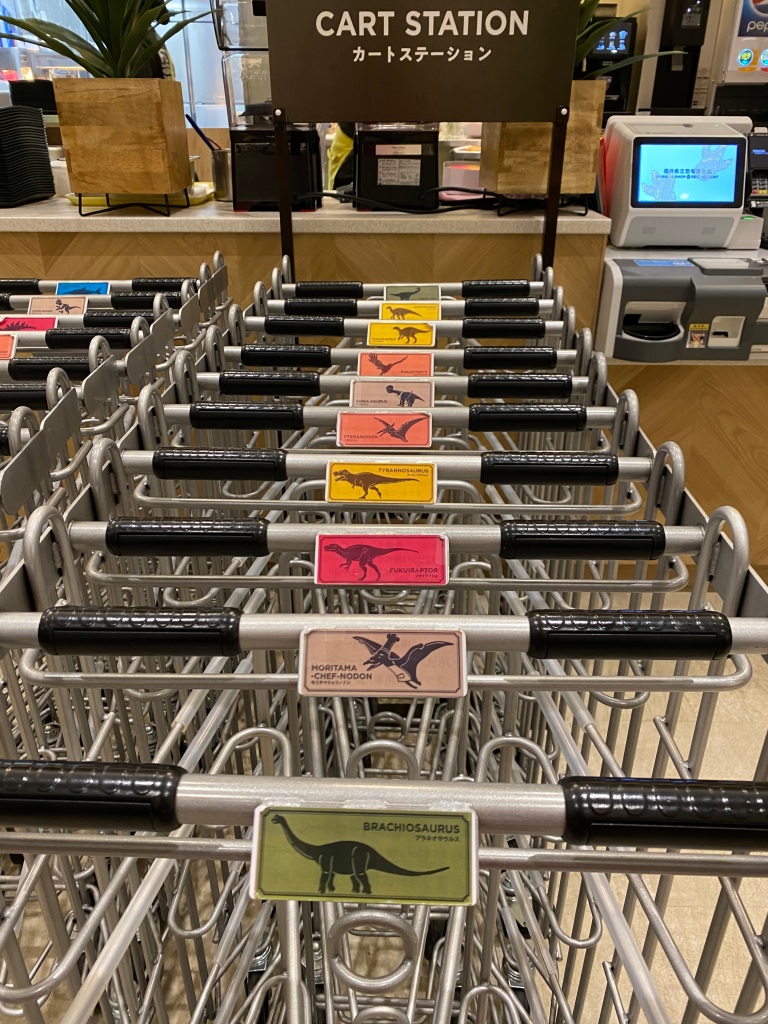
We have a tongue in cheek piece from Devraj Singh Kalsi on traveling in a train with a politician. Uday Deshwal writes with a soupçon of humour as he talks of applying for jobs. Snigdha Agrawal brings to us flavours of Bengal from her past while Ratnottama Sengupta muses on the ongoing wars and violence as acts of terror in the same region and looks back at such an incident in the past which resulted in a powerful Bengali poem by Tarik Sujat. Kiriti Sengupta has written of a well-known artist, Jatin Das, a strange encounter where the artist asks them to empty fully even a glass of water! Ravi Shankar weaves in his love for books into our non-fiction section. Recounting her mother’s migration story which leads us to perceive the whole world as home is a narrative by Renee Melchert Thorpe. Urmi Chakravorty takes us to the last Indian village on the borders of Tibet. Taking us to a Dinosaur Museum in Japan is our migrant columnist, Suzanne Kamata. Her latest multicultural novel, Cinnamon Beach, has found its way to our book excerpts as has Flanagan’s poetry collection, These Many Cold Winters of the Heart.
In reviews, Somdatta Mandal has written about an anthology, Maya Nagari: Bombay-Mumbai A City in Storiesedited by Shanta Gokhale and Jerry Pinto. Rakhi Dalal has discussed a translation from Konkani by Jerry Pinto of award-winning writer Damodar Mauzo’sBoy, Unloved. Basudhara Roy has reviewed Trailokyanath Mukhopadhyay’s Tales of Early Magic Realism in Bengali, translated by Sucheta Dasgupta. Bhaskar Parichha has introduced us toThe Dilemma of an Indian Liberal by Gurcharan Das, a book that is truly relevant in the current times in context of the whole world for what he states is a truth: “In the current polarised climate, the liberal perspective is often marginalised or dismissed as being indecisive or weak.” And it is the truth for the whole world now.
Our short stories reflect the colours of the world. A fantasy set in America but crossing borders of time and place byRonald V. Micci, a story critiquing social norms that hurt by Swatee Miittal and Paul Mirabile’s ghost story shuttling from the Irish potato famine (1845-52) to the present day – all address different themes across borders, reflecting the vibrancy of thoughts and cultures. That we all exist in the same place and have the commonality of ideas and felt emotions is reflected in each of these narratives.
We have more which adds to the lustre of the content. So, do pause by our content’s page and enjoy the reads!
I would like to thank all our team without who this journal would be incomplete, especially, Sohana Manzoor, for her fabulous artwork. Huge thanks to all our contributors who bring vibrancy to our pages and our wonderful readers, without who the journal would remain just part of an electronic cloud… We welcome you all to enjoy our June issue.
‘Okale‘ (translates as ‘out of sync with time’) is a part of Tagore’s poetry collection, Khanika (translates to ‘moments’) published in 1900.
Art by Sohana Manzoor
OUT OF SYNC

Who is it that runs burdened with
           Merchandise to the closed haat*?
Dusk has set in.
             The day is past.

Carrying burdens on their heads,
Vendors return to their homestead.
A fragment of the new moon
                     Has risen in the vale.
Those from the other shore,
Call out loudly to the boats.
The riverside reverberates with
                       Their echoes evermore.

With what hope have you come
              At this hour
To the closed haat, breathlessly,
              With your load?

Sleep has caressed
              The woods to bed,
The cawing of crows have halted
              In their nests.

In the shrubs near the pond,
By the fence, crickets call.
Stunned branches of bamboo,
          Sway softly in the breeze —
Within the courtyard of their homes,
The weary sleep in their abodes.
The night-lamp brightens
          The flickers of shades.

When all are at rest,
        As the time to work is past,
Who is it that runs burdened with
           Merchandise to the closed haat?


*Rural Bazaar
This poem has been translated by Mitali Chakravarty with editorial input by Sohana Manzoor
.
PLEASE NOTE: ARTICLES CAN ONLY BE REPRODUCED IN OTHER SITES WITH DUE ACKNOWLEDGEMENT TO BORDERLESS JOURNAL
Boat Park only.
No cars or hearts
of dying stars
or interplanetary vessels
originally from Mars.
Just boats please.

No freezing icebergs
from Arctic climes,
no bottled messages,
discarded dresses,
no teasing flotsam,
thank you, ma’am.

Old ships are allowed,
The Flying Dutchman
is especially welcome,
the Marie Celeste too,
but as for the rest: the
sunken ones ought to
remain where they’ve
lain for so many years
on the gloomy seabed.

When all’s said and done,
that is best for everyone,
don’t you think so?
The boats with holes
remaining in the drink
instead of trying to park
in a spot where they
will never sink again.

This is a respectable
boat park: I will tolerate no
scandals in the dark.
Don’t bring your submarines,
hovercrafts, hydrofoils,
zodiac dinghies loaded
with gung-ho marines,
giant rubber ducks or rafts
worth forty bucks or more.
(How much is that, you want
to know? Items priced
in bucks are very deer.)

Let me make myself clear.
Boat park only.
This is no place for planes,
trains, skateboards,
sledges drawn by yetis,
so don’t turn up with any
kind of scooter
or motorbikes seating girls
named Betty.
A boat park, do you hear?

A knight riding a stallion
or a rascal in a rocket
will be denied admittance
no matter how much gold
from their pockets
they are willing to pay.

But a galleon under full sail,
bigger than a blue whale,
will only be charged a pittance
to rest and wait in the park until
other ships arrive from Spain
to escort the poor thing home:
it doesn’t want to sail the dark
remaining seas alone. That’s the
stark truth, I can’t say I blame it.

Boat park only.
Those are the written words.
The issue has been put
to the vote and
the judgement is final.
Only park boats.

No giant squid or octopuses,
no massive clams
or tide-claimed buses,
no mermaids, tritons,
pirate ghosts: no drifting pieces
of charred toast.
Boat park only
and you might
quote me on that, if you like.
Rhys Hughes has lived in many countries. He graduated as an engineer but currently works as a tutor of mathematics. Since his first book was published in 1995 he has had fifty other books published and his work has been translated into ten languages.
.
PLEASE NOTE: ARTICLES CAN ONLY BE REPRODUCED IN OTHER SITES WITH DUE ACKNOWLEDGEMENT TO BORDERLESS JOURNAL
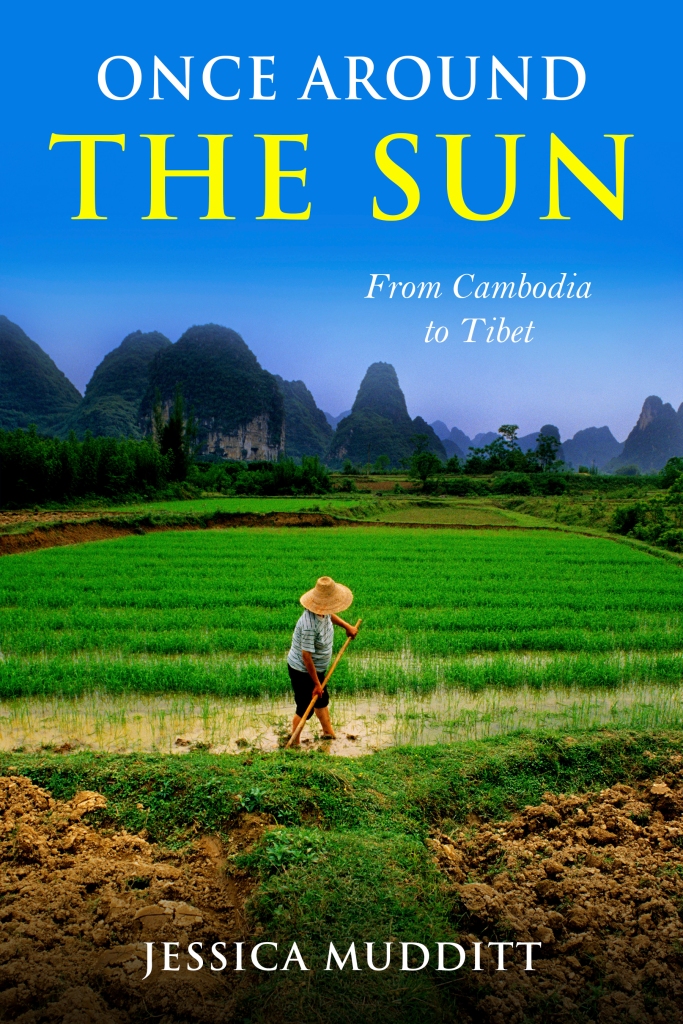
A brief overview of Once Around the Sun : From Cambodia to Tibet (Hembury Books) by Jessica Mudditt and a conversation with the author
Jessica Mudditt
Jessica Mudditt’s Once Around the Sun: From Cambodia to Tibet is not just a backpacker’s diary but also her need to relate to humanity, to find friendships and even love, as she does with Kris, a photographer named after Krishna, the Hindu god, because his parents while visiting India fell in love with the divinity!
The Burmese translation of Our Home in Myanmar was published recently.
Hurtling through Cambodia, Vietnam, China, Tibet, young Mudditt concludes her narrative just at the brink of exploring Nepal, India and Pakistan in her next book… leaving the reader looking forward to her next adventure. For this memoir is an adventure that explores humanity at different levels. Before this, Mudditt had authored Our Home in Myanmar – Four years in Yangon, a narrative that led up to the Myanmar attack on Rohingyas and takeover by the military junta. Once Around the Sun: From Cambodia to Tibet is the first part of a prequel to her earlier book, Our Home in Myanmar, both published by her own publishing firm, Hembury Books.
What makes her narrative unique is her candid descriptions of life on a daily basis — that could include drunken revelry or bouts of diarrhoea — while weaving in bits of history and her very humane responses. Her trip to Angkor Wat yields observations which brings into perspective the disparities that exist in our world:
“I was gazing out at an empire that was once the most powerful and sophisticated in the world. In 1400, when London had a middling population of 50,000, the kingdom of Angkor had more than a million inhabitants and a territory that stretched from Vietnam to Brunei. It had flourished for six hundred years, from the ninth to the fifteenth centuries.
“But somehow Cambodia had become one of the world’s poorest countries, and surely the most traumatised too, following a recent war and genocide. I knew that when we came back down to the ground, there would be a collection of ragtag street kids and downtrodden beggars desperately hoping for our spare change. It was difficult to reconcile the grandeur of Cambodia’s past with its heart-breaking present in the twenty-first century. How did a country’s fortunes change so dramatically? Could the situation ever be turned around?”
How indeed?
Then, she writes of Vientaine in Vietnam:
“I was struck by the fact that sex work seemed to be the consequence for countless young women living in poverty. It made me angry, but mostly sad.”
In these countries broken into fragments by intrusions from superpowers in the last century, judged by the standards of the “developed countries” and declared “underdeveloped”, an iron rice bowl becomes more important to survive than adventure, discovering other parts of the world or backpacking to self-discovery. Travel really is the privilege of that part of the world which draws sustenance from those who cannot afford to travel.
Jessica showcases mindsets from that part of the Western world and from the mini-expat world in Hong Kong, which continue alienated from the local cultures that they profess to have set out to explore or help develop. One of the things that never ceases to surprise is that while the ‘developed’ continue to judge the ‘third world’, these countries destroyed by imposed boundaries, foreign values, continue to justify themselves to those who oppress them and also judge themselves by the standards of the oppressors.
Some of these ‘developing’ countries continue to pander to needs of tourism and tourists for the wealth they bring in, as Jessica shows in her narrative. She brings out the sharp differences between the locals from Asia and the budgeted backpackers, who look for cheap alternatives to experience more of the cultures they don’t understand by indulging in explorations that can involve intoxicants and sex, their confidence backed by the assurance that they can return to an abled world.
Backpackers from affluent countries always have their families to fall back on — opulent, abled and reliable. Mudditt with her candid narrative explores that aspect too as she talks of her mother’s response to her being sick and budgeting herself. Her mother urges her to cut short her trip. But she continues, despite the ‘adversities’, with an open mind. That she has a home where she can return if she is in any kind of trouble begs a question — what kind of ‘civilisation’ do we as humans have that she from an abled background has a safe retreat where there are those for whom the reality of their existence is pegged to what she is urged to leave behind for her own well-being? And why — as part of the same species — do we accept this divide that creates ravines and borders too deep to fathom?
Mudditt with her narrative does create a bridge between those who have plenty and those who still look for and need an iron rice bowl. She mingles with people from all walks and writes about her experiences. Hers is a narrative about all of us –- common humanity. Her style is free flowing and easy to read — quite journalistic for she spent ten years working as one in London, Bangladesh and Myanmar, before returning to her home in Australia in 2016. Her articles have been published by Forbes, BBC, GQ and Marie Claire, among others. This conversation takes us to the stories around and beyond her book.
What led you to embark on your backpacking adventure? Was it just wanderlust or were you running away from something?
It was primarily from wanderlust, but I also didn’t know what I was going to do with the rest of my life. After six years at university, I was still yet to have any particular calling. However, I was also glad I didn’t know. It meant that I was free to go and explore the world, because I wasn’t putting my career on hold. I had no career.
I also had a broken heart when I set off for Cambodia – but the trip was planned before that relationship had even begun. But again, part of me was glad that my boyfriend had called it quits, because my plan was to be away for a very long time (and it ended being a decade away).
What made you think of putting down your adventures in writing? As you say, this is a prequel to your first book.
It was the pandemic that made me realise that backpacking was really special. There was a period in 2020 when it looked like travel may never be so unrestricted again, so it motivated me to document my year of complete freedom. It was also before social media was even a thing. When I was lost, I was really lost, and I had to use my problem-solving skills.
Prior to the pandemic, I sort of thought that backpacking itself was too fun to write about. I hadn’t actually lived in any of the countries I visited – I was just passing through. But that is also a valid experience, and one that many people can fondly relate to. There were also some really confronting and difficult moments.
You have written of people you met. How have they responded to your candid portrayals? Or did you change their names and descriptions to convey the essence but kept your characters incognito?
While I was writing the book, I got back in touch with the people I travelled with – I can thank Facebook for still being in touch with most people mentioned. They helped me to remember past anecdotes and I got some of the back story of their own trips. I have only used first names to protect their privacy, although there are some photos in the book too. Thankfully the world is so big that the odds are small that anyone would recognise, say, an Irish guy from Adam in Vietnam in 2006! Clem from Shanghai has just sent me a photo of her with my book, and Romi from Vietnam actually came to my book launch, which was awesome.
What was your favourite episode in this book — as a backpacker and as a writer? Tell us about it.
I think it was crossing into China and meeting ‘the man.’ I felt so alive with every step I took into China after crossing over on foot from Vietnam. To be chaperoned in the way I was – without being able to communicate a single word – was unusual. His kindness left me speechless, so the anecdote has a nice story arc.
In your travels through China, you faced a language handicap and yet found people kind and helpful. Can you tell us a bit about it?
I foolishly underestimated the language barrier. It was profound. In Southeast Asia, there was always at least a sprinkling of English, and I sort of just assumed that I’d be fine. I entered China from Vietnam, so my first port of call was Nanning, where there is not even really an expat population. I couldn’t do the most basic things, from finding the toilet or an internet cafe or something to eat! I used sign language and memorised the Chinese character for ‘female’ to make sure I went into the right toilet! In a restaurant, I just pointed at whatever someone else was eating in the hope that they would bring me a bowl of whatever it was. There were times when I was seriously lost and lonely, but I ended up staying in China for two months and saw the comedic side. I was bumbling around like Mr Bean (who is hugely popular in China).
I met a lot of people who were really kind to me, and I was just so grateful to them. I didn’t have Wi-Fi on my phone back then, so getting lost in a massive city in China was a bit scary. I met a student called Mei-Xing who ‘adopted’ me for a few days in Guilin. We had a really nice time together and it was so great to hang out with a local.
What is/are the biggest takeaway/s you had from your backpacking in this part of the world? Tell us about it.
I think it’s something quite simple: the world can be a very beautiful place, and a very polluted place. Tourism can do a great deal of damage when there are too many people clambering over one area. There is also an incredible level of disparity in a material sense on our planet. Some humans are travelling into space on rockets. Others are pulling rickshaws, as though they are draught horses. It is profoundly inequitable.
Having travelled to large tracts of Asia, what would you think would be the biggest challenge to creating a more equitable world, a more accepting world? Do you think an exposure to culture and history could resolve some of the issues?
I think that democracy is key. It slows us down and forces us to act in the interest of the majority, not the top-level cronies. That is definitely also something I witnessed in Myanmar. When a few people hold all the power, the population is deprived of things that ought to be a human right.
I think that travel definitely alters your perspective and broadens your mind, and it is something I’d recommend to anyone. Realising that the way that things are done in your home country is not the only way of doing things is a valuable thing to learn.
Mostly, you met people off the street. In which country did you find the warmest reception? Why and how?
In Pakistan. The hospitality and friendliness was unparalleled. I think it was in part due to not having many tourists there. Nothing felt transactional. I met some fascinating people in Pakistan who would have a profound impact on my own life. I am still in touch with several people I met there.
At a point you wondered if the poverty you saw could be reversed back to affluence in the context of the Angkor kingdom. Do you have any suggestions on actually restoring the lost glory?
I believe that it is beginning to be restored. Pundits have called this the “Asian Century.” I am convinced that the United States and the UK are in decline, and this process will only speed up. India, to me, holds the most promise as the next superpower, because it is a democracy (albeit flawed – like all of them), English- speaking, enormous, beautiful, fascinating and its soft power is unmatched. China is facing headwinds. I blame that on making people sad by removing their agency.
How long were you backpacking in this part of the world? Was it longer than you had intended? What made you extend your stay and why?
My trip was exactly 365 days long. I planned it that way from the beginning. I wanted to travel for no less than a year (more than a year and I might stay feeling guilty for being so indulgent!). That is also why the book is called Once Around the Sun – my time backpacking was the equivalent of one rotation of the Earth. I set off on 1 June 2006 – the first day of winter in Australia – and I arrived on 1 June 2007 in London, on the first day of the British summer. I love the sunshine.
After having travelled around the large tracts of Asia and in more parts of the world, could you call the whole world your home or is it still Australia? Is your sense of wellbeing defined by political boundaries or by something else?
Home for me is Sydney. I absolutely love it. I get to feel as though I am still travelling, because my home city is Melbourne. I go down a new road every other day and I love that feeling. The harbour is beautiful, and the sun is shining most days. It’s very multicultural too.
My kids are three and five, so I haven’t travelled overseas for years. My plan is to travel with them as much as possible when they are a bit older. I hope they love it as much as me. I cannot wait to return to Asia one day. I am also desperate to visit New York City.
What are your future plans for both your books and your publishing venture?
The second part of Once Around the Sun will come out in 2025. It’s called Kathmandu to the Khyber Pass, and it covers the seven months I spent Nepal, India and Pakistan.
My goal is to complete my fourth memoir by 2027. It will be called My Home in Bangladesh (it will be the prequel to Our Home in Myanmar!).
My fifth book will be about how to write a book. I am a book coach and in a few years I will have identified the most common challenges people face when writing a book, and finding their voice.
In the next twelve months, there will be at least 12 books coming out with Hembury Books, which is my hybrid publishing company. I love being a book coach and publisher and I hope to help as many people as possible to become authors.
Please visit the website and set up a discovery call with me if you plan on writing a nonfiction book, or have gotten stuck midway: https://hemburybooks.com.au/.
Photographs from Once Round the Sun, provided by Jessica Mudditt
(The online interview has been conducted through emails and the review written by Mitali Chakravarty.)
Nur Jahan, Nur Jahan,
Floating down a river you came
To a land full of clouds
A land of gardens—Iran!
You had your plate filled
With Nargis flowers, poppies and roses
And had brought them all along.
You brought as well legends
Of Shirin and Farhad and Shiraz.
With your graceful and slim self came
Bulbuli, Dilruba and Rabab’s songs.
Your love healed even Emperor Salim’s lunacy!
You daubed sandalwood paste on yourself
And bore the stigma in front of everyone --
A stigma the moon bears in the blue sky
Smilingly. It’s what is written in lovers’ tales.
I’ll ensure that it ambles along pathways
Forever, questing for love’s pleasures,
Despite any infamy linked to the affair.
Jahangir(Prince Salim) and his beloved empress, Nur Jahan
Nazrul’s Nur Jahan sun by the legendary Feroza Begum
Born in united Bengal, long before the Partition, Kazi Nazrul Islam(1899-1976) was known as the Bidrohi Kobi, or “rebel poet”. Nazrul is now regarded as the national poet of Bangladesh though he continues a revered name in the Indian subcontinent. In addition to his prose and poetry, Nazrul wrote about 4000 songs.
“Singapore is intimately linked with home and, yet for me, home has always been a process of lifelong search. Partly because of the early months of my birth. The record says I was born in March 1949, but the time was not certain as I do not have a birth certificate. My father forgot to register my birth,” reminisces Dr Kirpal Singh, an internationally recognised scholar. Born in the Straits Settlement of Singapore, before the island emerged as an independent entity, he has lived through much of history. He tells a story of multi-racial, multi-cultural growth that the island afforded him.
His father, he tells us, was “well known throughout Malaya — Jeswant Singh nicknamed as ‘Just One’ — a boxer who would knock people down with his left hook. In 1954, he left boxing when he killed someone during a match.” His mother, a Jewish Scot who he cannot recollect, he tells us, “ might have been David Marshall’s sister according to my stepsister but no one else has said that.” Marshall[1] was the first Chief Minister of Singapore from 1955 to 1956 and then Singapore’s Ambassador to France, Portugal, Spain, and Switzerland 1978 to 1993. He is the founder of the Worker’s Party. His parents had emigrated from Baghdad to Singapore in 1908 according to current resources.
How did Singh’s parents come to be in Singapore? Were they immigrants or colonials?
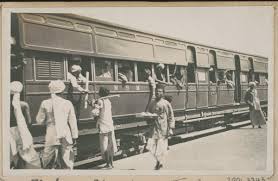
He responds with what he knows: “My grandfather and grandmother came to Singapore on board a ship in 1900. They left Jullunder, Punjab, in 1899. By the time they reached Singapore, it was the end of 1900. They left to seek their fortune. They were from the farming community. My grandfather was only sixteen and my grandmother was about twelve. They were in transit in Penang for six months. They came to Singapore in 1901. Actually, it was all Malaya — Singapore was part of the Straits Settlement. They came to Singapore by train. Trains were just starting out. It was around August 1901.
Trains in Malaya
“My uncle was conceived during this journey. They halted in Singapore for only two or three weeks. My grandfather’s cousin was in Perak[2], in Malaya. So, he wanted to be with his cousin. His cousin had cattle. Most of the Sikhs were cattle farmers. They settled in Pahang[3], an area which eventually became a nuclear dump[4] for Australia. It is closed to public now. There was a stone that proclaimed the land was a nuclear dump when I went with my son a few years ago.
“My father moved to Singapore as his prospects were better here as a boxer. This is where he met my mother. I was born here. He actually met mum because my mother’s two brothers had invited her to come from Glasgow. My mother is Scottish, from an industrial background. Her brothers came to the Far East to make money. She finished her school leaving exams and came to visit her brothers during her vacation. She would go with her bothers to watch boxing, where she saw my father, the champ. She was only fifteen or sixteen. The next thing the brothers knew was she was pregnant with me.”
Jeswant Singh was popular with colonials. Kirpal Singh tells us: “Some Europeans saw him box and offered him a job then in the Base Ordinance Depot. This was the British Military camps in the Far East. There were three bases in Singapore: the naval base, Kranji and one in the South. He worked there for thirty years and retired after that. In 1972[5], after the final British withdrawal from Singapore, dad’s formal employment status ended. After that he just did odd jobs, ending up as a security guard, looking after the factories in Jurong, earning about two to three hundred dollars a month.”
Kirpal Singh spent his childhood with his grandmother and uncle. Before he started schooling, his father left him with his grandmother and divorced his mother in favour of a new bride. Dr Singh tells us the story of how he returned to Singapore: “I was basically in Perak with my grandmother. My uncle, who was the first Sikh to become a Christian in Southeast Asia, left home because his father gave him a beating for changing his religion. My uncle was an Anglican. His conversion saved him from the Great Depression as the clergy was very well looked after. From 1929 to 1933, the church looked after him because he was the priest in Seramban. My father was still young. My uncle was born in 1911 and my dad in 1923. My grandmother bore eighteen children. Five of the infants passed away before they were one month old. But thirteen survived. She passed away at 95… I knew when I left for my doctorate programme in Adelaide that that was the last time I would see her. I had a hunch and was crying on the plane. Six weeks later, I got a letter with the news of her death.”
He adds: “Dad was in not in a position to look after me. The responsibility fell on his brother William. His full name was William Massa Singh s/o Deva Singh. He had studied at the Ipoh Chinese school, topped the school, eventually worked as an insurance agent. He was very good in English. The principal of his school, a New Zealander, arranged for my uncle to move to Singapore. Then my father moved there too. Singapore was the metropolis even then. It was the centre of English education. Penang was the other one. In 1956, I was sent to Singapore from Perak on a train — a one-and-a-half-day journey to my uncle.”
His grandmother joined them within a few months as his uncle was, he says, “more interested in aiding Lee Kuan Yew get rid of the colonials. Lee Kuan Yew was a self-made man. He met Goh Keng Swee[6] and Rajaratnam[7] as students in England. They became buddies and wanted to move out of colonial rule and be independent.”
Then, how did a young child survive? Dr Singh tells us: “I used to earn my pocket money from age five six by watering gardens. I have had very interesting experiences. When I was in primary two, I used to give tuition to primary one students. With enough gumption, you can survive in this world.”
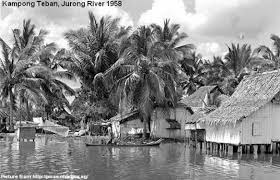
Kampongs in Singapore’s past
“I grew up with my uncle’s wards, who were brought home to be educated. There was even one who was a Chinese-Japanese mix. So, I grew up being familiar cross-cultural marriages and in a multicultural home. I grew up in the kampong with a Chinese boy and we became friends from the age of seven-and-a-half when we were in primary two. His name is Tan Jwee Song — I call him Jwee, ‘my good saint’. He told me after O-levels he would support me to study further and took to teaching. At that time, you could become a teacher after completing your O level. I joined Raffles late during my time in high school because it was too expensive for me. I taught in night classes started by Lee Kuan Yew and studied. I owed Jwee $80,000 dollars and I wanted to pay his widow back — but she would not accept it. When I graduated in 1973 with an honours’ degree, I was $44 thousand in debt. Then, I was given a scholarship.”
And slowly, Kirpal Singh came to his own. When television came into being, he tells us: “I was often on TV in 1970s — days of early television — debates and interviews as a guest.” Kirpal Singh grew into an intellectual of repute as he worked and studied with the support of the many races and many people who, often like him, were migrants to Singapore.
As time moves forward, these stories — that are almost as natural as the sand, the wind and the sea — ask to be caught in words and stored for posterity, stories from life that show how narrow borders drawn by human constructs cannot come in the way of those with ‘gumption’.
(Written by Mitali Chakravarty based on a face to face conversation with Kirpal Singh. Published with permission of Kirpal Singh)
A migrant child who holds his mother's hand will ask the question many times a day. "Is this America, the Promised Land?"
An innocent, he does not understand how long it takes a heart to find its way. A migrant child who holds his mother's hand
may think all citadels he sees are grand, but soon perceives that he can never stay. Is this America, the Promised Land?
He sees a barrier where soldiers stand with rifles drawn, encroachers kept at bay. A migrant child who holds his mother's hand
may find that dreams will not come true, as planned. There comes a time when we can only pray. Is this America, the Promised Land?
Must we deny asylum, reprimand with angry words and deeds that cause dismay, a migrant child who holds his mother’s hand? Is this America, the Promised Land?
LaVern Spencer McCarthy has published twelve books of short stories and poetry. She is a life member of Poetry Society of Texas and lives in Blair Oklahoma.
My day job is “associate professor,” so I sometimes attend academic conferences. When I learned of an upcoming conference on language teaching in Fukui Prefecture, which I had never been to, I was eager to sign up. Sure, I wanted to hear all the cutting-edge theories about teaching English to language learners – how to motivate my students to write haiku, how to use AI, and so on – but my primary reason was to see the dinosaur bones.
Although at one time it seems that dinosaurs pretty much roamed the whole world, fossils of dinosaur bones weren’t discovered in Japan until 1989. Those bones were found in Katsuyama City, Fukui Prefecture. Since then, even more bones have been discovered, and a museum ̶ Fukui Prefectural Dinosaur Museum ̶ opened in 2000. As part of the pre-conference activities, the host university had arranged for a trip to the museum. A free shuttle but would depart at 11:30am.
I consulted an app on my smartphone and determined that it would take me about five hours to reach Fukui Station from my home in Tokushima Prefecture on the island of Shikoku. I would have to take a bus, a train, another train, and the high-speed bullet train. After a recent trip to Tokyo, I had learned how to use an electronic transit card, which was basically an app on my phone. This app could be used to breeze through ticket gates at train stations, as well as on buses and subways.
I got up at 5:30am on the day of the museum tour. My husband dropped me off at the bus station. I got on the bus and got off in Osaka. Then I took a train to Kyoto, which was mobbed with travelers. Although I thought I could get on the next train, the so-called Thunderbird, with my app, I discovered that I needed to have a reservation. I suppose I could have made one on my smartphone while standing in line, but I was confused. I left the platform and queued up to buy a reserved ticket from the vending machine, which disrupted my tight schedule and meant I would not be able to make it to Fukui in time for the free shuttle bus.
The Thunderbird goes straight from Kyoto to Fukui with few stops in between. The scenery is mostly composed of rice fields and squat mountains. The monotonous view was calming. About an hour later, the train pulled into Tsuruga where I had to switch to the brand-new Hokuriku Shinkansen for the last seventeen minutes of my journey. In my rush to finish my business at the vending machine in Kyoto, I had inadvertently booked a seat in the most luxurious car. I was the only one there.
I texted a friend who was also attending the conference. She had already arrived. I told her that I would be late, and that I wouldn’t be able to ride the bus with her. This was Japan, where everything was always on time! However, the organisers were Americans, and they were willing to wait for me. Hooray!
As soon as I got to Fukui Station, with its moving animatronic raptor keeping guard out front, I hopped into a taxi and finally arrived at the university, where the bus was indeed waiting. I sprinted onboard, apologised to my fellow passengers, and thanked the organiser profusely.
The museum was impressive, as advertised. Replicas of dinosaurs discovered in such far-flung locales as Morocco and Mongolia were on display. There were, of course, also exhibits of the five dinosaurs and one bird species discovered in Fukui, including the long-necked stubby-legged Fukuititan, the herbivorous Fukuisaurus, and the Fukuiraptor. Although the museum offers an excavation experience where visitors can pretend to dig and discover fossils, my friend and I just walked around looking at all of the cool rocks and bones.
Having gone through my son’s dinosaur obsession when he was young, I could remember some of the dinosaur’s names – the Ankylosaurus with its bumpy back, the Stegosaurus, and Pterodactyl. When we were ready to take a break, my friend and I made our way to the cafeteria for dino-themed snacks.
While many famous destinations in Japan are struggling with over-tourism, Fukui, while slightly off the beaten track, has a pleasantly relaxing vibe. Things may change with the new bullet train, but for now, I recommend it as a fascinating horde-free place to visit.
Suzanne Kamatawas born and raised in Grand Haven, Michigan. She now lives in Japan with her husband and two children. Her short stories, essays, articles and book reviews have appeared in over 100 publications. Her work has been nominated for the Pushcart Prize five times, and received a Special Mention in 2006. She is also a two-time winner of the All Nippon Airways/Wingspan Fiction Contest, winner of the Paris Book Festival, and winner of a SCBWI Magazine Merit Award.
PLEASE NOTE: ARTICLES CAN ONLY BE REPRODUCED IN OTHER SITES WITH DUE ACKNOWLEDGEMENT TO BORDERLESS JOURNAL
Without black tea, his mornings never start. The newspaper should be upon his bed; Not finding it will make his eyes all red. As if examining a piece of art, He reads each page. Loud oohs such as 'My heart!', 'Another swindle!', or 'So many dead!', Are heard as if the earth's weight’s on his head. Harrumphing, he jumps to the Cultures part. A pensioner today, back in those days, He was a banker. Now, he saunters, plays Carom with me, or spends the noontimes planting Camellias —- a work he finds enchanting. At times, he sits before some dusty files, Puts on the glasses, thumbs through them, and smiles.
Shamik Banerjee resides in Assam with his parents. Some of his recent works will appear in York Literary Review, Willow Review, Thimble Lit and Modern Reformation — to name a few.
PLEASE NOTE: ARTICLES CAN ONLY BE REPRODUCED IN OTHER SITES WITH DUE ACKNOWLEDGEMENT TO BORDERLESS JOURNAL








 Borderless