Categories
Contents

Borderless, June 2025

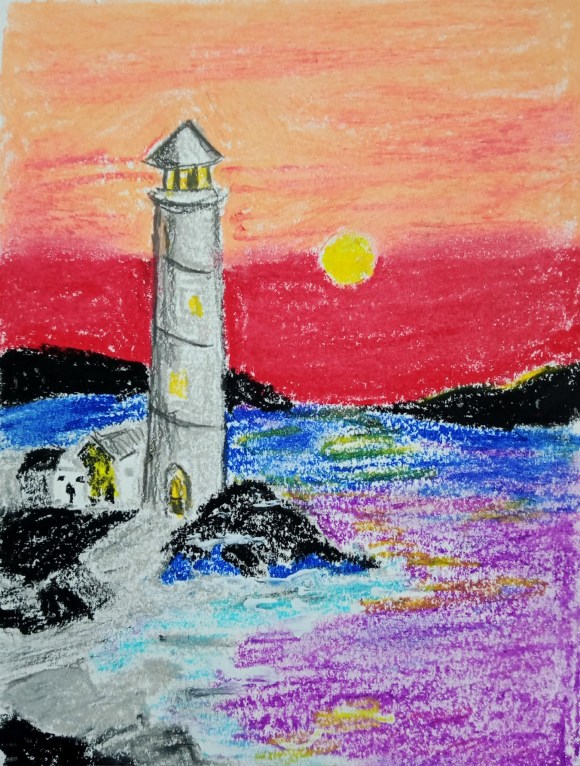
Art by Sohana Manzoor

Editorial

‘How do you rebuild a life when all that remains is dust?’… Click here to read.

Translations

The Great War is Over and A Nobody by Jibanananda Das have been translated from Bengali by Professor Fakrul Alam. Click here to read.

Sukanta Bhattacharya’s poem, Therefore, has been translated from Bengali by Kiriti Sengupta. Click here to read.

 Five poems by Soubhagyabanta Maharana  have been translated from Odia by Snehaprava Das. Click here to read.

Animate Debris, a poem by Sangita Swechcha has been translated from Nepali by Saudamini Chalise. Click here to read.

Lost Poem, a poem by Ihlwha Choi  has been translated from Korean by the poet himself. Click here to read.

Sonar Tori (Golden Boat), a poem by Tagore, has been translated from Bengali by Mitali Chakravarty. Click here to read.

Poetry

Click on the names to read the poems

Allan Lake, Shobha Tharoor Srinivasan, Ron Pickett, Ananya Sarkar, George Freek, Bibhuti Narayan Biswal, Jim Bellamy, Pramod Rastogi, Vern Fein, Saranyan BV, Ryan Quinn Flanagan, Juairia Hossain, Gautham Pradeep, Jenny Middleton, Mandavi Choudhary, Rhys Hughes

Musings/Slices from Life

Where Should We Go After the Last Frontiers?

Ahamad Rayees writes from a village in Kashmir which homed refugees and still faced bombing. Click here to read.

The Jetty Chihuahuas

Vela Noble takes us for a stroll to the seaside at Adelaide. Click here to read.

Hope Lies Buried in Eternity

Farouk Gulsara muses on hope. Click here to read.

Undertourism in the Outback

Merdith Stephens writes from the Australian Outback with photographs from Alan Nobel. Click here to read.

Musings of a Copywriter

In Driving with Devraj, Devraj Singh Kalsi writes of his driving lessons. Click here to read.

Notes from Japan

In The Tent, Suzanne Kamata visits crimes and safety. Click here to read.

Essays

Public Intellectuals Walked, So Influencers Could Run

Lopamudra Nayak explores changing trends. Click here to read.

Where No One Wins or Loses a War…From Lucknow with Love

Prithvijeet Sinha takes us to a palace of a European begum in Lucknow. Click here to read.

Bhaskar’s Corner

In Can Odia Literature Connect Traditional Narratives with Contemporary Ones, Bhaskar Parichha discusses the said issue. Click here to read.

Feature

The story of Hawakal Publishers, based on a face-to-face tête-à-tête, and an online conversation with founder Bitan Chakraborty with his responses in Bengali translated by Kiriti Sengupta. Click here to read.

Stories

The Year the Fireflies Didn’t Come Back

Leishilembi Terem gives a poignant story set in conflict-ridden Manipur. Click here to read.

The Stranger

Jeena R. Papaadi writes of the vagaries of human relationships. Click here to read.

The Opening

Naramsetti Umamaheswararao relates a value based story in a small hamlet of southern India. Click here to read.

Book Excerpts

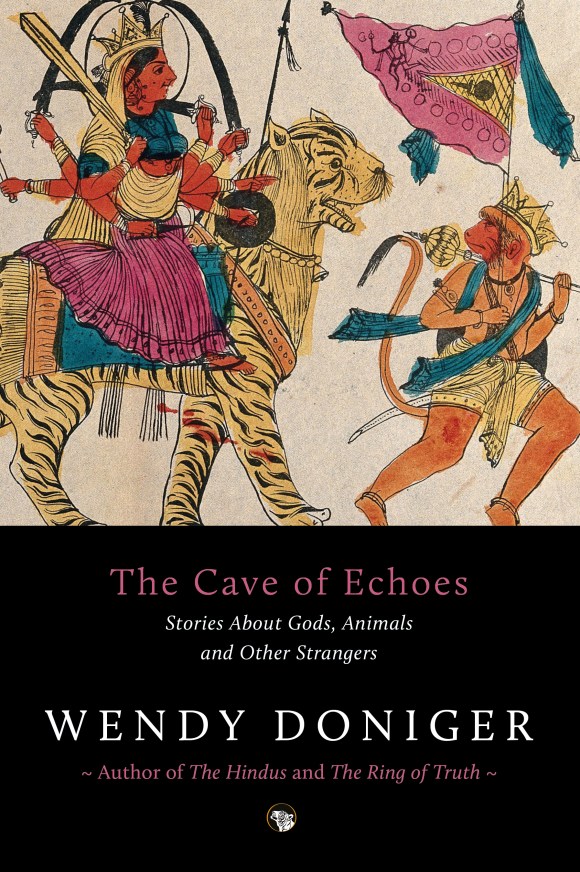
An excerpt from Wendy Doniger’s The Cave of Echoes: Stories about Gods, Animals and Other Strangers. Click here to read.

An excerpt from Mohua Chinappa’s Thorns in My Quilt: Letters from a Daughter to Her Father. Click here to read.

Book Reviews

Somdatta Mandal reviews Madhurima Vidyarthi’s Job Charnock and the Potter’s Boy. Click here to read.

Rakhi Dalal reviews Dhruba Hazarika’s The Shoot: Stories. Click here to read.

Satya Narayan Misra reviews Bakhtiyar K Dadabhoy’s Honest John – A Life of John Matthai. Click here to read.

Bhaskar Parichha reviews David C Engerman’s Apostles of Development: Six Economists and the World They Made. Click here to read.

.


Click here to access the Borderless anthology, Monalisa No Longer Smiles

Click here to access Monalisa No Longer Smiles on Amazon International

Categories
Editorial

‘How do you rebuild a life when all that remains is dust?’

The Great War is over
And yet there is left its vast gloom.
Our skies, light and society’s soul have been overcast…

'The Great War is Over' by Jibanananda Das (1899-1954), translated from Bengali by Professor Fakrul Alam.

Jibanananda Das wrote the above lines in the last century and yet great wars rage even now. As the world struggles to breathe looking for a beam of hope to drag itself out of the darkness induced by natural calamities, accidents, terror attacks and wars that seem to rage endlessly, are we moving towards the dystopian scenario created by George Orwell in 1984, which would be around the same time as Jibanananda Das’s ‘The Great War is Over’?

Describing such a scenario, Ahmed Rayees writes a moving piece from the Kashmiri village of Sheeri, the last refuge of the displaced refugees who were bombarded after peace was declared in their refuge during the clash across Indo-Pak borders. He contends: “People walked back not to homes, but to ruins. Entire communities had been reduced to ash and rubble. Crops were destroyed, livestock gone, schools turned into shelters or craters. How do you rebuild a life when all that remains is dust?”

People could be asking the same questions without finding answers in Gaza or Ukraine, where the cities are reduced to rubble. While we look for a ray of sunshine, amidst the rubble, Farouk Gulsara muses on hope that has its roots in eternity. Vela Noble wanders on nostalgic beaches in Adelaide. And Meredith Stephens travels to the Australian outback. Devraj Singh Kalsi brings in lighter notes writing of driving lessons while Suzanne Kamata creeps back to darker recesses musing on likely ‘criminals’ and crimes in her neighbourhood.

Lopamudra Nayak writes on social media and its impact while Bhaskar Parichha writes of trends that could be brought into Odia literature.  What he writes could apply well to all regional literature, where they lose their individual colouring to paint dystopian realities of the present world. Does modernising make us lose our ethnic identity and how important is that? These are questions that sprung to the mind reading his essay. As if in an attempt to hold on to the past ethos, Prithvijeet Sinha wafts around old ruins in Lucknow and sees a cemetery for colonial soldiers and concludes: “Everybody has formidable stakes, and the dead don’t preach the gospel of victory or sombre defeat.”

Taking up a similar theme of death and war is a poem from Saranyan BV. In poetry, we have colours from around the world with poems from Allan Lake, Ron Pickett, Ananya Sarkar, George Freek, Jim Bellamy, Ryan Quinn Flanagan, Juairia Hossain, Gautham Pradeep, Jenny Middleton, Mandavi Choudhary and many more. Multiple themes are woven into a variety of perspectives, including nature and environment, with June hosting the World Environment Day. Rhys Hughes gives a funny poem on the Welsh outlaw, Twm Siôn Cati.

We have mainly poetry in translation this time. Snehaprava Das has brought to us Soubhagyabanta Maharana’s poems from Odia and Ihlwha Choi has translated his own poem from Korean. Sangita Swechcha’s poem in Nepali has been rendered to English by Saudamini Chalise. From Bengali, other that Jibanananda Das’s poems translated by Professor Fakrul Alam, we have Tagore’s pensive and beautiful poem, Sonar Tori (the golden boat). Yet another Bengali poet, one who died young and yet left his mark, Sukanta Bhattacharya (1926-1947), has been translated by Kiriti Sengupta. Sengupta has also translated the responses of Bitan Chakravarty in a candid conversation about his dream child — the Hawakal Publishers. We also have a feature on this based on a face-to-face conversation, giving the story of how this publishing house grew out of an idea. Now, they publish poetry traditionally, without costs to the poet. Their range of authors are spread across continents.

Our fiction again returns to the darkness of war. Young Leishilembi Terem has given a story set in conflict-ridden Manipur from where she has emerged safely — a story that reiterates the senselessness of violence and politics. While Jeena R. Papaadi writes of modern human relationships that end without commitment, Naramsetti Umamaheswararao relates a value-based story in a small hamlet of southern India. 

From stories, our book excerpts return to the real world, where a daughter grieves her father in Mohua Chinappa’s Thorns in My Quilt: Letters from a Daughter to Her Father while Wendy Doniger’s The Cave of Echoes: Stories about Gods, Animals and Other Strangers, dwells on demystifying structures that create borders. We have two non-fiction reviews. Parichha writes about David C Engerman’s Apostles of Development: Six Economists and the World They Made. And Satya Narayan Misra discusses Bakhtiyar K Dadabhoy’s Honest John – A Life of John Matthai. Somdatta Mandal this time explores a historical fiction based around the founding of Calcutta, Madhurima Vidyarthi’s Job Charnock and the Potter’s Boy while Rakhi Dalal looks at fiction born of environmental awareness, Dhruba Hazarika’s The Shoot: Stories.

We have more content. Do pause by our contents page and take a look.

Huge thanks to all our contributors without who this issue would not have materialised. Heartfelt thanks to the team at Borderless for their support, especially Sohana Manzoor for her iconic artwork that has almost become a signature statement for Borderless.

Let’s hope that next month brings better news for the whole world.

Best wishes,

Mitali Chakravarty

borderlessjournal.com

Click here to access the contents for thJune 2025 Issue

READ THE LATEST UPDATES ON THE FIRST BORDERLESS ANTHOLOGY, MONALISA NO LONGER SMILES, BY CLICKING ON THIS LINK.

Categories
Excerpt

The Cave of Echoes

Title: The Cave of Echoes: Stories about Gods, Animals and Other Strangers

Author: Wendy Doniger

Publisher: Speaking Tiger Books

It is impossible to define a myth, but it is cowardly not to try. For me, the best way to not-define a myth is to look at it in action, which is what have tried to do throughout this book: to see what myth does, rather than what myth is. It seems to me that by the time you’ve defined your terms in an argument, you’ve lost interest in the problem. But at this point, as we begin to reexamine our own assumptions about myths, it might be useful to list some things that I think myths are not: myths are not lies, or false statements to be contrasted with truth or reality. 1bis usage is, perhaps, the most common meaning of myth in casual parlance today. Indeed, other cultures, too, call myths lies. The Malagasy end the recitation of any myth with a traditional tag-line: “It is not I that lie; this lie comes from olden times.” In our culture, in particular, myths are often given the shadowy status of what has been called an “inoperative truth,” when in fact they might better be characterized as operative fictions. Picasso called art a lie that tells the truth, and the same might be said of myths.

What a Myth Is and Is Not

The desecration of the word “myth” to mean “lie” began with Plato, who contrasted the fabricated myth with the true history. It is, I think, an irony that our word for myth in most European languages, together with our basic attitude to myths, comes from ancient Greece, one of the very few cultures in the world from which we have almost no example of real, live myths, of myths as a part of a vital tradition; by the time most of the Greek myths reach us, they have been so thoroughly reworked in artistic and philosophical forms that they are mythological zombies, the walking dead. Plato was, as Eliade pointed out long ago, the first great demythologizer; he “deconstructed” the myths of Homer and Hesiod. It was Plato who challenged, successfully, the status of the poetic myth-carvers and myth collectors and banished them from his Republic. We can see in Plato a spectrum of mythmakers: at one end are anonymous wet nurses, who transmit the old myths to helpless infants; at the other end are the poets, like Hesiod and Homer, the “mimetic clan” who cannot imitate the true forms since no one has ever seen the forms and the poets can only imitate what they have seen.

Plato warns us that we must not tell these poetic myths about the gods even if they are true; in this, I think, he affirms the power of myths to influence human life; for he fears that a bad myth will make a bad life. (We shall see, in chapter 6, other Greek arguments against the evil effects of the myths in Greek tragedies.) Moreover, it is hard to escape from this image of the bad life; the stories that we learn in childhood have a marvelous hold on our memory.

Yet it is necessary for people to believe in good myths, even if they are false; this is the argument that Plato advances for the “noble lie” (gennaion pseudos) in the Republic, the statement that distorts an outside surface in order to convey an inner truth. Some of these good myths come from the old days; Plato distrusts this sort of “mythologizing,” the stories about centaurs and Chimaeras and Pegasus and so forth, but he distrusts even more the people who analyze them away as metaphors for the North Wind and so forth ( anticipating Friedrich Max Miller by some twenty-four hundred years); such analyses are altogether too clever and waste an awful lot of time. 13 People do have to have myths, Plato concedes; if they don’t believe in the old ones, we must construct new ones for them, logically, and this is very difficult to do, for we must convince them, in the cold light of reason, of the truth of the myths in order to make them accept the laws that we wish to give them:

“How can one assert in cold blood that the gods exist? Because we must hate and find unbearable those who, today as in the past, due to having refused to allow themselves to be convinced by the myths related to them since earliest childhood by a mother or a nurse giving them the breast, have obliged us, and still do so, to develop the arguments which take up our time now.”

For this reason, despite his opposition to myths and mythmakers, Plato himself was also a great “remythologizer” who invented the drama of the philosophical soul and made it a new kind of myth, a reasonable, logical, “likely” myth, to challenge the old myths of centaurs and so forth. In this way, when it came to myth, Plato managed to hunt with the hounds and to run with the hare. As Marcel Detienne has put it: “Plato’s work marks the time when philosophy, while censuring tales of the ancients as scandalous fictions, sets about telling its own myths in a discourse on the soul, on the origin of the world, and on life in the hereafter.” It was Plato who transformed ancient mythic themes to make the myth of Er, the myth of Eros, and the myth of the creation of the universe. Though Plato’s “likely or resembling story” can be a myth in the sense of a narrative ( and in that sense is interchangeable with logos meaning “narrative”), it is not a myth in the negative sense of a bad copy, like the myths of Homer ( which are negatively contrasted with logos meaning “reason”).

Yet Plato does apply the word “myth” ( mutbos) to the story of the world that he creates in the Pbaedo, a myth that he says is “worth hearing,” though it is merely another “likely story”:

“Now, to assert vehemently that things like this are really so as I’ve narrated them, doesn’t befit any man of sense. But that this is so, or something pretty much like it, about our souls and their dwelling place, since it is clear that the soul is immortal-it is quite fitting that we say that. “

The likely story is not the truth; but it resembles the truth, and is as close as we can ever get to the truth about certain subjects. Plato confesses that he resorts to telling myths, despite the fact that such stories are not literally true, because there is no other way of using words to produce even the effect of truth.

Plato regards the myth that he constructs in the Pbaedo as an essential vehicle for salvation, a kind of religious or magic charm:

“It is well worth running the risk that these things are so for anybody who thinks them so. (For it’s a fair risk.) And he must recite these things over and over to himself like a magic charm, even as I at this moment and for a long time past have been drawing out this myth.”

Plato ends the Republic with his own myth, the myth of Er, which he certainly does not regard as a lie: “And so the myth was saved and was not lost, and it will save us, if we believe it, and we shall safely cross the river of Lethe and we will not sully the soul. “

For Plato admits that a myth says something that cannot be said in any other way, that cannot be translated into a logical or even a metaphysical statement. A myth says something that can only be said in a story.

Which brings me to what I think a myth is. Let me begin with a rather cumbersome and rather functional definition: A myth is a story that is sacred to and shared by a group of people who find their most important meanings in it; it is a story believed to have been composed in the past about an event in the past, or, more rarely, in the future, an event that continues to have meaning in the present because it is remembered; it is a story that is part of a larger group of stories.

The assertion that a myth is a story is basic to my argument; for I think that the myth is persuasive to us because the action itself is persuasive. Even when what happens in the myth is not physically possible in this world ( as when, for instance, a man turns into a fish), when the event is described in detail, as something that happened, we can see it happening, and so it enlarges our sense of what might be possible. Only a story can do this.

About the Book

The Cave of Echoes celebrates the universal art of storytelling, and the rich diversity of the stories—especially myths—that people live by. Drawing on Hindu and Greek mythology, Biblical parables, and the modern mythologies of Woody Allen and soap operas, Wendy Doniger—renowned scholar of the history of religions—encourages us to feel anew the force of myth and tradition in our lives, and in the lives of other cultures. She shows how the stories of mythology—whether of gods, sages, demons or humans—enable cultures to define themselves. She raises critical questions about how myths are interpreted and adapted, and the ways in which different cultures make use of central texts and traditions. Drawing connections across time and place, she proposes that myths are not static beliefs but evolving narratives, and that by entering into other cultures’ stories, we may unexpectedly rediscover our own.

Written with scholarly depth and characteristic wit, this is a landmark work in the comparative study of mythology. It’s essential reading for anyone interested in how we understand others—and ourselves—through the stories we tell.

About the Author

Wendy Doniger is the author of several acclaimed and bestselling works, among them, The Hindus: An Alternative History; Hindu Myths; The Ring of Truth; Women, Androgynes and Other Mythical Beasts; Dreams, Illusion and Other Realities; Winged Stallions and Wicked Mares; An American Girl in India; and translations of the Rig Veda and the Kamasutra (with Sudhir Kakar). She is Mircea Eliade Distinguished Service Professor Emerita of the History of Religions at theUniversity of Chicago, and has also taught at the School of Oriental and African Studies, University of London, and the University of California, Berkeley.

PLEASE NOTE: ARTICLES CAN ONLY BE REPRODUCED IN OTHER SITES WITH DUE ACKNOWLEDGEMENT TO BORDERLESS JOURNAL
Categories
Contents

Borderless, September 2021

Editorial

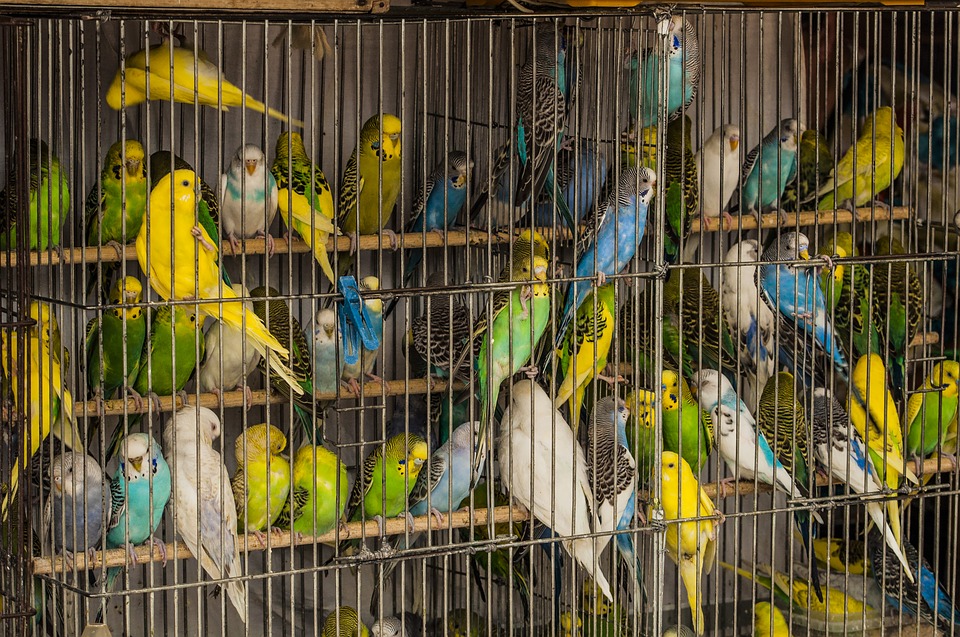
The Caged Birds Sing…Click here to read.

Interviews

Professor Anvita Abbi, a Padma Shri, discusses her experience among the indigenous Andamanese and her new book on them, Voices from the Lost Horizon. Click here to read.

Keith Lyons talks to Jessica Mudditt about her memoir, Our Home in Myanmar, and the current events. Click here to read.

Translations

Be and It All Came into Being

Balochi poetry by Akbar Barakzai, translated by Fazal Baloch. Click here to read.

Adivasi Poetry

A poem by Jitendra Vasava translated from the Dehwali Bhili via Gujarati by Gopika Jadeja. Click here to read.

A Poem for The Ol Chiki

 Poetry by Sokhen Tudu, translated from the Santhali by Hansda Sowvendra Shekhar. Click here to read.

About Time

Korean poetry on time written and translated by Ilwha Choi. Click here to read.

Of Days and Seasons

A parable by the eminent Dutch writer, Louis Couperus (1863-1923), translated by Chaitali Sengupta. Click here to read.

Road to Nowhere

An unusual story about a man who heads for suicide, translated from Odiya by the author, Satya Misra. Click here to read.

Abhisar by Tagore

A story poem about a Buddhist monk by Rabindranath Tagore in Bengali has been translated by Mitali Chakravarty. Click here to read.

Poetry

Click on the names to read the poems

Arundhathi Subramaniam, Michael R Burch, Sekhar Banerjee, Jeff Shakes, Ashok Suri, Tim Heerdink, Srinivas S, Rhys Hughes, A Jessie Michael, George Freek, Saranayan BV, Gigi Baldovino Gosnell, Pramod Rastogi, Tohm Bakelas, Nikita Desai, Jay Nicholls, Smitha Vishwanathan, Jared Carter

Nature’s Musings

In Sun, Seas and Flowers, Penny Wilkes takes us for a tour of brilliant photographs of autumnal landscapes with verses. Click here to read.

Poets, Poetry & Rhys Hughes

In Memory Gongs, Rhys Hughes creates a profound myth tinged with a tongue in cheek outlook … Click here to read.

Essays

Crime and the Colonial Capital: Detective Reid in Calcutta

Abhishek Sarkar explores the colonial setting up of the Calcutta detective department in 1887. Click here to read.

The Myth of Happiness

Candice Louisa Daquin ponders over the impositions on people to declare themselves happy. Click here to read.

Once Upon a Time in Burma: Of Babies and Buddhas

John Herlihy takes us through more of Myanmar with his companion, Peter, in the second part of his travelogue. Click here to read.

Bhaskar’s Corner

Bhaskar Parichha explores links between Politics & the Media. Click here to read.

Musings/Slices from Life

Cyclists

Mike Smith muses about a black and white photograph from his childhood. Click here to read.

Leo Messi’s Magic Realism

Sports fan Saurabh Nagpal explores the magic realism in famous footballer Messi’s play with a soupçon of humour. Click here to read.

Infinite Possibilities & Mysterious Riddles

Keith Lyons gives a lively account of traveling across borders despite the pandemic. Click here to read.

Word Play

Geetha Ravichnadran explores additions to our vocabulary in a tongue-in-cheek article. Click here to read.

Musings of a Copywriter

In When I Almost Became a Professor, Devraj Singh Kalsi gives humour tinged reasons on why he detached himself from being an academician. Click here to read.

Stories

Flash Fiction: Turret

Niles M Reddick relates a haunting tale of ghosts and more. Click here to read.

Silver Lining

Dipayn Chakrabarti travels through moods of the day and night. Click here to read.

Captain Andi is in love

Dr. P Ravi Shankar explores a future beyond climate change in Malaysia. Click here to read.

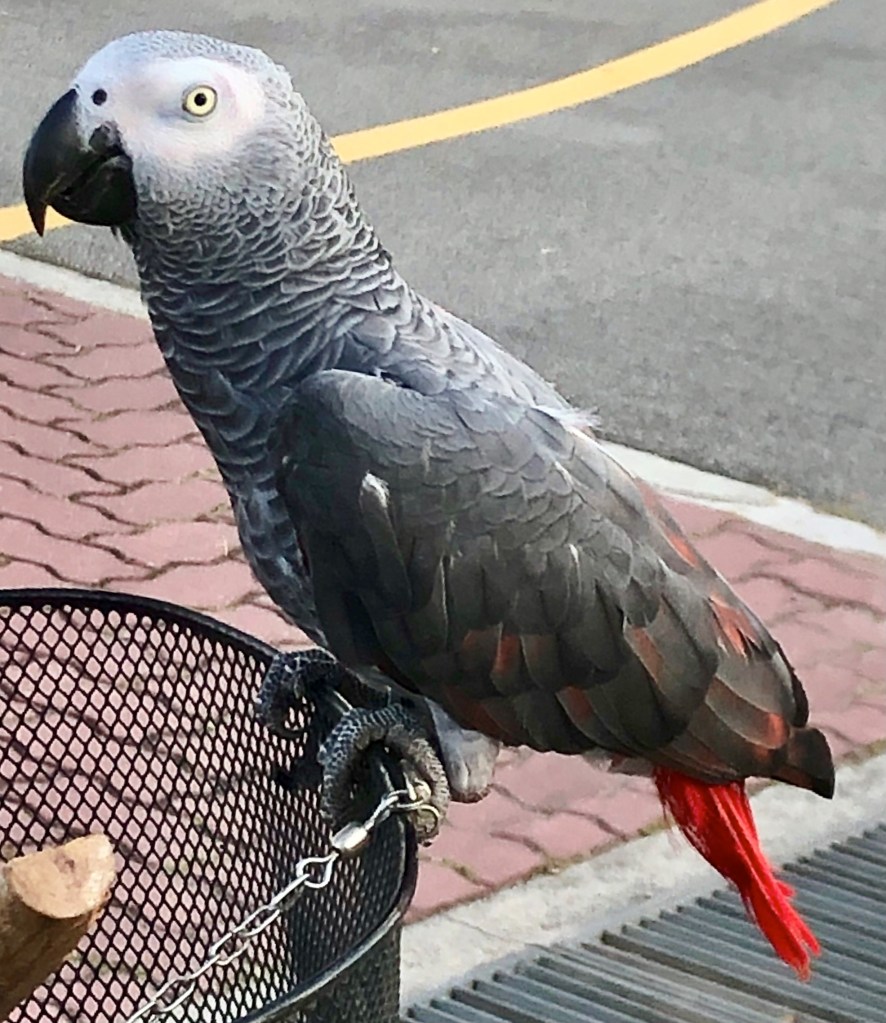
The Cockatoo

Revathi Ganeshsundaram captures the stardust in ripening years. Click here to read.

The Missing Tile

Saeed Ibrahim’s story reflects on the ties between an old teacher and a student. Click here to read.

The Literary Fictionist

In Return of the Ghost, Sunil Sharma explores the borders between life, ideas and death. Click here to read.

Book Excerpt

An excerpt from Kobi’ and ‘Rani’: Memoirs and Correspondences of Nirmalkumari Mahalanobis and Rabindranath Tagore, translated by Somdatta Mandal, showcasing Tagore’s introduction and letters. Click here to read.

Book Reviews

Rakhi Dalal reviews Anvita Abbi’s Voices from the Lost Horizon. Click here to read.

Basudhara Roy reviews Bina Sarkar Ellias’ Song of a Rebel and Other Selected Poems. Click here to read.

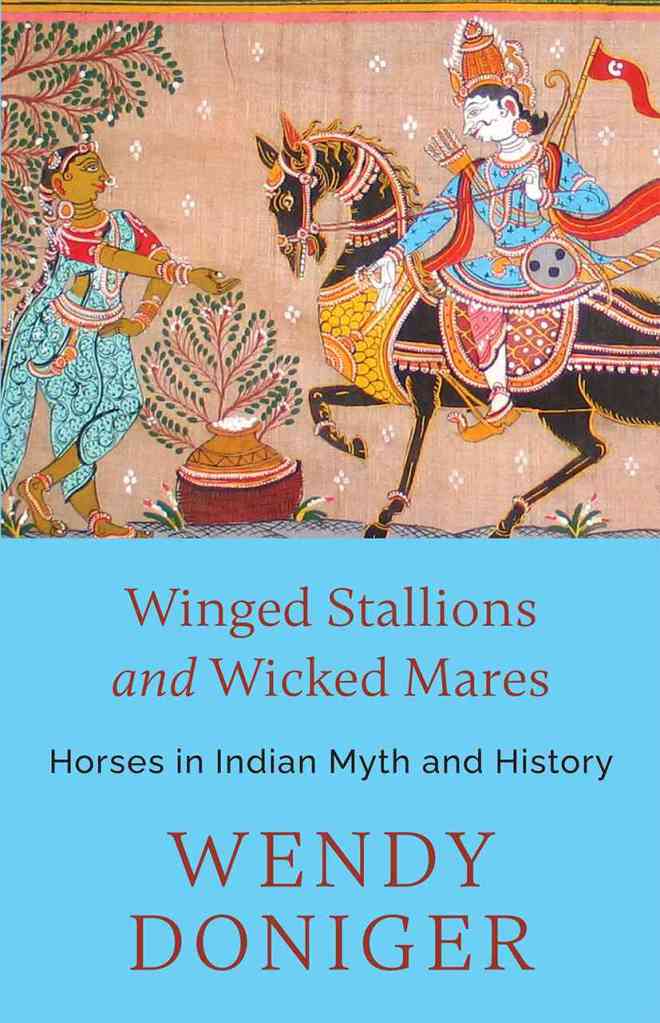
Bhaskar Parichha reviews Wendy Doniger’s Winged Stallion and Wicked Mares. Click here to read.

Categories
Editorial

The Caged Birds Sing

...Don't you know
They're talkin''bout a revolution
It sounds like a whisper...
-- Tracy Chapman,'Talkin 'Bout a Revolution
Thou shalt love thy neighbour as thyself. 
— Bible 

We are living in strange times that seem to be filled with events to challenge the innovativeness of man. As if the pandemic were not enough, concepts that had come out of the best in our civilisation to unite mankind have been convoluted by a minority to manipulate and hurt the majority into submission. Life is not about surviving with faint-hearted compliance but about having the courage to live it as you want, facing it full up front, to voice out in unison against injustices, wrongs, and most of all to loan strength to help and care for each other. Often to understand this, we need to hinge on to our past, to learn from our heritage. But do we do that? In the hectic drive to be successful, we tend to ignore important lessons that could have been imbibed from the past. Like, did you know that the tribes in the Andaman can save themselves from a tsunami?

Padma Shri Anvita Abbi tells us all about the Andamanese and her attempts to revive their moribund language in her interview and book, Voices from the Lost Horizon, reviewed by Rakhi Dalal. While the review focusses on the uniqueness of Abbi’s work and the publication with its embedded recordings of the tribe fast dissolving into the morass of mainstream civilisation, her interview highlights the need to revive their lores that evolved out of a 70,000-year-old culture. On the other hand, Jessica Mudditt, interviewed by Keith Lyons, dwells on the ongoing crisis in Myanmar, which has been clearly the focus of her book, Our Home in Yangon. This interview focusses on the here and now of the crisis. But most crises have their roots deep and perhaps an exploration of these could help. There are 135 ethnicities in Myanmar but how many are actually integrated into the mainstream? Are they in the process of getting ‘lost’ like the voices of the speakers of Greater Andamanese?

That is why we tried to showcase a few such strains that are going unheard in the loudness of the ‘civilised’ mainstream. We have translations in poetry from Santhali and Adivasi, touching on the concerns of those who are often considered underdeveloped. And, perhaps, as Abbi said in her interview about the Andamanese, we can say much the same for these tribes too.

“These tribes are neither poor, nor uneducated (their knowledge of environment comprising birds, fishes, medicinal plants and their … weather predictions, and the Earth they walk on is amazing) …”

Distinctions have been created by a ‘civilisation’ entrenched in mono-cognitive enforcements leading to the loss of trust, confidence, languages, cultures and valuable knowledge about basic survival. Perhaps we can attempt to heal such wounds by imbibing the openness, love, devotion and compassion shown by the Buddhist monk, Upagupta (who is still revered in Myanmar as Shin Upagutta), in the translation of Tagore’s story poem, ‘Abhisar’ or ‘The Tryst’.  Somdatta Mandal’s translation of Tagore’s letters introduce similar humanitarian concerns when the maestro mentions a German anthropologist and his wife who for the betterment of mankind were journeying to study tribals in India. Tagore remarks, “The people for whom they are willingly prepared to undergo hardship and to overlook all sorts of danger are not their relatives, nor are they civilised.” And yet even a century ago to fathom more about mankind, attempts were being made to integrate with our ancient lore. The concept of being ‘civilised’ is of course now much under the microscope. What is being ‘civilised’?

 Is it about having power? We have Akbar Barakzai’s poem translated by Fazal Baloch on creation looking at the divide between a ‘civilised’ God and man. The theme stresses the two sides of the divide. More translations from Odiya, Dutch and Korean further mingle different flavours of the world into our journal — each questioning the accepted norm in different ways.

In an edition focussed on myths and stories from which we evolved, Rhys Hughes has created an unusual legend around elephants. His poetry also deals with animals — cats. One wonders if the T S Eliot’s famed ‘Macavity, the Mystery Cat’ could have to do something with his choices?  We were fortunate to have Arundhathi Subramaniam share her poetry on myths around Indian figures like Shakuntala and Avvaiyar and the titular poem from When God is a Traveller that won her the 2020 Sahitya Akademi Award. Michael R Burch continues on the theme dwelling on Circe, Mary Magdalene and Helen. Sekhar Banerjee has a more iconoclastic approach to myths in his poetry. Jared Carter talks of modern myths perpetuated through art and cultural studies as does Mike Smith in his musings with his glance back at the last century through a photograph.

We have poetry by a Filipino writer Gigi Baldovino Gosnell from South Africa, looking for a new world, a new legend, perhaps a world without borders. Tohm Bakelas has given us a few lines of powerful poetry. Could these poems be a reaction to world events? Smitha Vishwanath has responded to the situation in Afghanistan with a poem. In this edition, photographs and verses in Penny Wilkes’ ‘Nature’s Musings‘ draw from the universe. She writes, “The sun never asks for applause” — a powerful thought and perhaps one mankind can learn from.

Ghost stories by Niles Reddick and Sunil Sharma perpetuate the theme, especially the latter has a ghost that questions myths of ‘isms’ created in the modern-day world. We also have a writer from Malaysia, P Ravi Shankar, with a futuristic legend set in a far-off time where man has embraced the reality of climate change and artificial intelligence. An interesting and fun read as is Devraj Singh Kalsi’s professions about why he did not become a professor, Geetha Ravichandran’s light musing on word play and a young writer Saurabh Nagpal’s musing, ‘Leo Messi’s Magic Realism‘ — a footballer viewed from a literary perspective!

While our musings make us laugh, our essays this time take us around the world with the myth of happiness deconstructed by Candice Louisa Daquin, to Burma and deep into Kolkata’s iconic history of the detective department started in the nineteenth century. There is an essay by Bhaskar Parichha that explores politics and media and mentions ‘gatekeepers’ of the media who need to be responsible for influencing public opinion. Guess who would be the gatekeepers?

Bhaskar Parichha’s review of Wendy Donniger’s non-fiction exploring myths around horses, Winged Stallion and Wicked Mares, and Basudhara Roy’s review of Bina Sarkar Ellias’ Song of a Rebel and Other Selected Poems perpetuate the theme of the importance of the past on the one hand and question it on the other. But that is what Borderless is about — exploring the dialectics of opposing streams to re-invent myths towards a better future.

We have a bumper issue again this time with nearly fifty posts. I invite our wonderful readers on a magical journey to unfold the hidden, unmentioned gems scattered on the pages of the September Issue of Borderless. Thank you again to an outstanding team, all our global contributors who make every edition an adventure and a reality and our wonderful readers. Thank you all.

Have a beautiful month!

Mitali Chakravarty

Borderless Journal

Categories
Review

Winged Stallions and Wicked Mares

Book Review by Bhaskar Parichha

Title: Winged Stallions and Wicked Mares; Horses in Indian Myth and History

Author: Wendy Doniger

Publisher: Speaking Tiger Books, 2021

Horses have a captivating and curious existence in India. Stallions have been graciously carved into the Indian landscape in a variety of ways. To view the subcontinent’s past through the prism of the horse is to be swept back in its power and propriety. Horses have a galactic connection to Indian history, mythology, art, literature, folklore and also popular belief.

The political symbolism of the horse, its vital function in social life, religion, sport and war, its role in shaping economies and forging crucial human bonds is too obvious to point out.

Emergence of local breeds such as the Kathiawari and the Marwari, the Zanskari and the Manipuri is an interesting tale of gallantry. In India’s modern history, there were fabulous horsewomen too, Chand Bibi, Maratha princesses and women polo players among them. Horses have an intimate connection to grooms, blacksmiths, breeders, traders and bandits.

Rana Pratap’s legendary Chetak, Ranjit Singh’s much-contested Laili, Pabuji’s cherished black mare and those horses captured in paintings and equestrian portraits are riveting. This glorious age of the horse met its painful decline with the onset of colonial rule and automation.

Winged Stallions and Wicked Mares; Horses in Indian Myth and History by Wendy Doniger is an engrossing book not only for the subject but also the research. In this inspiring and scholarly book, Doniger — who has been called the greatest living mythologist — examines the horse’s significance throughout Indian history, from the arrival of the Indo-Europeans, followed by the Greeks, the Turks and Mongols (who imported Arabian horses) and the British (who imported Thoroughbreds and Walers). 

Along the way, she delves deep into the rituals of horse sacrifice in the Vedic age. She rummages through the stories of warring horses and snakes in the Mahabharata. She digs into   tensions between Hindu stallion and Arab mare traditions; imposing European standards on Indian breeds; the reasons many Indian men ride mares to weddings; the motivations for murdering Dalits who ride horses; and the enduring myth of foreign horses who emerge from the ocean to fertilise native mares.

Doniger combines erudition with storytelling and gives the reader a persuasive account on the horse in Indian culture just as she does it in her other books on Indian mythology. 

Quoting from the book: “The horse is not indigenous to India, except in a few small pockets. Even after it was brought to the subcontinent sometime between 2000 BCE and 1500 BCE by the Indo-Europeans. It played almost no part in the lives of ordinary Indian villagers, being too expensive for all but the most privileged people to own. In India’s folklore, epics and popular culture horse stories abound and there are some brilliant images of the animal.”

Doniger’s ride through four millennia of Indian legend and folklore is full of sacrificial horses, horse-headed gods, transformations and couplings. Like Doniger’s other works on Indian mythology and history, this book  is astonishingly accomplished with the threads of mythical narratives woven into a meaningful depiction of the Indian imagination.

Author of classic works like The Hindus: An Alternative History and Hindu Myths, Wendy Doniger has two doctorates, in Sanskrit and Indian studies, from the universities of Harvard and Oxford. She has taught at the School of Oriental and African Studies, University of London and the University of California, Berkeley, and is currently the Mircea Eliade Distinguished Service Professor of the History of Religions at the University of Chicago. Her other books include Siva: The Erotic Ascetic; Dreams, Illusion and Other Realities; The Mare’s Trap: Nature and Culture in the Kamasutra.  

The Vedic ritual of the sacrifice of a stallion is balanced by the myth of a goddess who takes the form of a mare named Saranyu (Fleet). Doniger retells the story thus:

“The blacksmith of the gods gave his daughter, Saranyu, in marriage to the Sun, and she gave birth to twins, Yama and Yami. Then the gods concealed the immortal woman from mortals; they put in her place a female of-the-same-kind (Savarna) and gave that look-alike to the Sun. Saranyu took the form of a mare; the Sun took the form of a stallion, followed her, and coupled with her. From that were born the twin equine gods called the Ashvins. She abandoned them, too.”

Doniger takes us on the trail of the horse into and within India. What follows is a surprising and exhilarating journey, covering caravan-trade routes originating in Central Asia and Tibet, sea routes from the Middle East, and the dominions of different sultans and Mughal emperors, the south Indian kingdoms as well as the Rajput horse-warrior states. 

Doniger professes her earliest exposure to India and the horses was in 1963 when she was twenty-two years old. Her meeting with Penelope Betjeman — daughter of Field Marshal Sir Philip Walhouse Chetwode who was the head commander of the British forces in India from 1928 to 1935 — gave her an introduction to these creatures. Doniger has dedicated the book to Penelope who died accidentally in 1986 in the Kulu Hills.

Winged Stallions and Wicked Mares has about a dozen chapters — most of which have a throwback to the Vedic and Puranic times. It is only in the last two chapters where she writes the horse saga of modern India. With a slew of illustrations and profound research, the book makes for a gripping read. 

.

Bhaskar Parichha is a journalist and author of No Strings Attached: Writings on Odisha and Biju Patnaik – A Political Biography. He lives in Bhubaneswar and writes bilingually. Besides writing for newspapers, he also reviews books on various media platforms.

.

PLEASE NOTE: ARTICLES CAN ONLY BE REPRODUCED IN OTHER SITES WITH DUE ACKNOWLEDGEMENT TO BORDERLESS JOURNAL

Categories
Review

Beyond Dharma

Book Review by Bhaskar Parichha

Title: Beyond Dharma – Dissent in the Ancient Sciences of Sex and Politics

Author: Wendy Doniger

Publisher: Speaking Tiger Books, 2020

When one of the world’s most acclaimed and charming scholars of Hinduism presents a trailblazing interpretation of ancient Indian texts and their historic influence on subversive resistance, the book ought to be of more than ordinary interest.

Eminent Indologist Wendy Doniger’s book was published by Yale University Press earlier under a slightly different title. It has now been republished in India by Speaking Tiger Books, thus widening the scope of readership.

Their blurb on the book reads: “Ancient Hindu texts speak of the three aims of human life: Dharma, Artha and Kama. Translated, these might be called religion, politics and pleasure, and each is held to be an essential requirement of a full and fulfilling life. Balance among the three is a goal not always met, however, and dharma has historically taken precedence over the other two qualities, or goals, in Hindu life.” 

 Doniger is the author of several acclaimed and bestselling works, among them, The Ring of Truth: Myths of Sex and JewelryHindu Myths; On Hinduism; Siva, the Erotic Ascetic; Dreams, Illusion and Other Realities and Reading the Kamasutra. She is the Mircea Eliade Distinguished Service Professor of the History of Religions at the University of Chicago and has also taught at the School of Oriental and African Studies, University of London, and the University of California, Berkeley. Then, she has also been a controversial historian. Her earlier book The Hindus: An Alternative History was banned in 2009 because of some disruptive exemplifications of Hindu gods. 

In the present book, she offers a spirited and close reading of two ancient Indian writings—Kautilya’s Arthashastra and Vatsyayana’s Kama Sutra. She argues that scientific disciplines have offered animated and continuous criticism of dharma over many centuries. While she chronicles the tradition of veiled subversion, she uncovers connections — to voices of dissent all the way through Indian history. 

The book offers deeper insights into the Indian theocracy’s subversion of science by a limited version of religion these days. In the preface she contends: “Prime Minister Narendra Modi’s attempts to replace genuine science with ludicrous religious science debases not only the work of real scientists working in India today but a strong ancient tradition of scientific opposition to religious dogma, a tradition that we can see at work in the two great texts.”  

The Hindu belief system has always encouraged deliberations, debates and questioning of not only one’s beliefs but also, of all the ancient Indian texts — whether they are religious or impious. Consequently, Doniger’s book offers to the readers an occasion to deliberate on Indian texts in the modern day context. 

The book with its exemplary research is insightful and also somewhat controversial as it attempts to define the elusive word dharma and its overall place in human life. It is not just about the philosophical aspect of dharma, rather it draws parallel between Kautilya’s Arthashastra and Vatsyayana’s Kama Sutra and how both oppose what is mentioned in the Dharmashastras.

The book picks up popular terminologies from Hinduism, such as moksha (freedom from the cycle of birth) and provides different views of the word when mentioned in Arthashastra and Kama Sutra.

While talking about Hinduism and dharma, it is impossible to not talk about Manu. Doniger argues, “There are many other dharma texts, with significantly different ideas on many of the subjects that concern us here; some are older, some later than Manu… But Manu’s text remains the gold standard that later texts either accepted or rebelled against, and it provides a base against which we may measure the other two texts that are our main concern.”

Doniger makes some interesting observations that exists in the two ancient texts. For instance, in the section ‘Spying and Seducing’, the author brings out exhilarating facts. “The paranoid psychology of the political text casts its shadow over the erotic text. Eternal vigilance is the price of tyranny — but also the price of adultery.”

Divided into eight chapters, the book pronounces, “As not only Protestants but Victorian Protestants, the British rejected as filthy paganism the sensuous strain of Hinduism, both the world of kama and much of Hindu theological dharma, with what they saw as kitschy images of gods with far too many arms. It reminded them of Catholicism.”

In the epilogue, Doniger brings forth the colonial impact on these texts. She says, after the British colonized India in the eighteenth century only a sanitized version of the Kamashastra arrived.

As a whole, Doniger’s book must be read with panache. Even though it is a well–researched book with a liberal outlook, her point of view would surely give rise to opposing discourses.

.

Bhaskar Parichha is a journalist and author of No Strings Attached: Writings on Odisha and Biju Patnaik – A Political Biography. He lives in Bhubaneswar and writes bilingually. Besides writing for newspapers, he also reviews books on various media platforms.

.

PLEASE NOTE: ARTICLES CAN ONLY BE REPRODUCED IN OTHER SITES WITH DUE ACKNOWLEDGEMENT TO BORDERLESS JOURNAL