Categories
Review

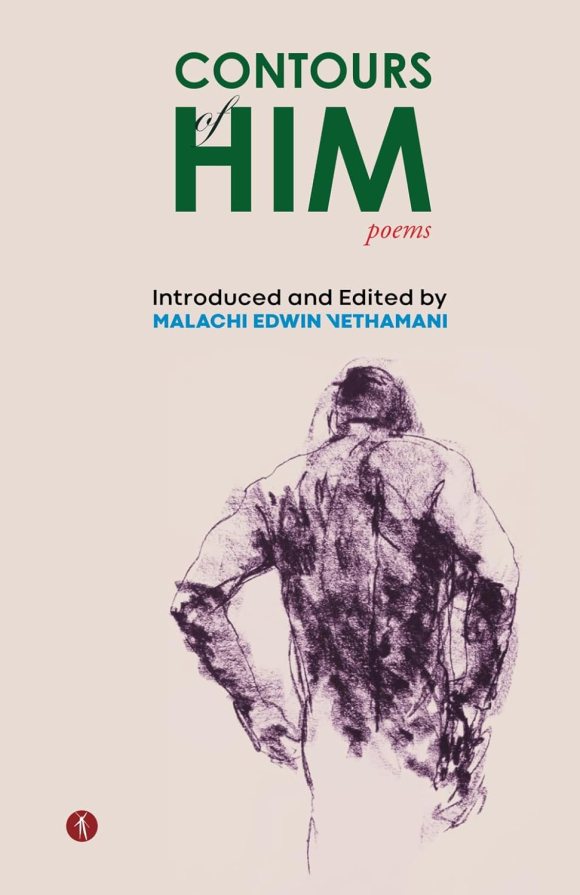
Contours of Him

Book Review by Meenakshi Malhotra

Title: Contours of Him: Poems

Edited and Introduced by Malachi Edwin Vethamani

Publisher: Hawakal Publishers

Contours of Him: Poems has been edited and introduced by Malachi Edwin Vethamani, a Malyasian academic of repute. The book has a rich assemblage of poetical voices — from both men and women — representing the contours and nuances of the many aspects and shades of masculinity. The poems explore the male body as a symbol of identity, art, and humanity, delving into themes of masculinity, strength, vulnerability, and beauty. It also examines the male body and psyche as the site of hurt and wounding. The book features poems that scrutinise the male form revealing or concealing it to explore these themes.

The focus on corporeality or the somatic coexists with the psychological in many poems in the anthology. Childhood innocence and curiosity coexist and yield to what could  be viewed as growing pains or  the challenges of maturation and understanding. There are several poems on the father-son theme, with poems  that express homage to the father. Christina Yin’s prose poem ‘To My Father’ and Gopal Lahiri’s ‘My Ideal Man’ are cases in point. Sudeep Sen in the poem, ‘Baba/Father’, captures the enormous vacuum left by the loss of the father as Sen completes the elaborate death rituals as the eldest son of his dead father, performed as per brahminical  prescriptions. In a gnomic and nuanced vein, Vethamani , the editor of the anthology, gives his take on father-son  intimacies. 

This book examines the contours of the male body and psyche at different stages of life and could be viewed as a psycho-somatic exploration of masculinity across diverse cultures. It also explores the strength and fragility of the male physique, occasionally dipping into cultural repertoires of  male archetypes, human and divine. At the same time, it acknowledges societal expectations from men and their concomitant cultural insecurities, particularly regarding their identity and the search for acceptance.

A common motif in many of the poems is about the unwitting and unwillingly borne burden and baggage of masculinity. The protagonists/personae of many of these poems seem to be conscious that masculinity is but a performance, involving the display of muscles and embodying a certain swag. Yet this definition of and  expectation from men within patriarchies, can be a cage and  straitjacket which binds, restricts and confines the human being. If patriarchies bind women, men are not exempt from it either. It is this theme that resonates(among others) in Angshuman Kar’s poem called ‘Tears’: “When mountains cry, rivers are born/From a woman’s tears, pearls have always been born/And when mothers cry, dormant volcanoes awaken…No one in the world knows/why a strong man cries/or why, when he does/he looks so sacred and beautiful.” 

The predominant focus, however, is on corporeality that has led to the exploration of its many aspects of the  body in the poems. The many facets locates the male body along a spectrum of materiality, vulnerability, relationality and the transcendental possibilities of the body. In recent years, there have been a plethora of poems by women discussing corporeality in multiple registers, exploring female subjectivity, desire and sexuality. Focus on the psychosomatic aspects of the gendered body has led to numerous explorations and analyses of femininity, on being/becoming women, on trans-identities. Many poems have been written on the human-divine aspect of the female body. Kamala Das and others (including Pakistani women poets) have written evocatively about the transgressive desires and  the many hungers of the female body .

Voices from the global south recording the voices of men was perhaps the need of the moment. The anthology includes a few poems on masculinity as a construct, especially focusing on the male body through various lenses — vulnerability, performance, shame, violence, and transformation. These poems offer a critical lens rather than idealising masculinity, exposing its social constructions and internal contradictions. They also highlight the relational nature of masculinity which are often traditionally embedded within family structures in South Asia. There are glimpses of guilt in Arthur Neong’s poem, “At this juncture of age, I feel like a teenager again,” where the persona/speaker seems keen to shed and slough off the burdens of masculinity and be in an escapist mode. He writes “At times I go to my wife for a little reprieve/Yet eyes open, think of ways to cheat”. Some of the poems read like love poems, like David C.E. Tneh’s poem, ‘Crossings’, that memorialises his dead friend. Tneh writes: “between the shared spaces and/ private moments come a synergy of collective memories/that I have  of you.”

 A writer writing on the  female body once referred to it as  a story discussed by men. Similarly, the anthology at hand discusses the contours of male corporeality and affect. The anxieties of masculinity, of literally not measuring up, pepper these poems and forms one of the vital themes of this anthology. Occasionally, a kind of narcissism creeps in, often giving way to musing or self-introspection. After voicing the common masculine concerns(and anxieties) of corporeal self-consciousness, the poet Kiriti Sengupta declares:

“I don’t look at veiled people anymore. 
It is either my age or my hormones.
I now look beyond the flesh, bone and keratin.”

In the last revelatory line, there is a movement towards transcendence: “I have been told /the finer body dwells undressed.”

In a different context but similar vein, Sandeep Kumar Mishra in ‘The Canvas of Form’ writes, “The naked body, stripped of all pretence,/Breathes honesty, raw beauty, fragile strength.” The profundity of the closing lines is inescapable: “The body, bared, is neither shame nor pride/But speaks of histories, of fears ,of love. It tells  of burdens carried, joys embraced/And in its stillness, whispers human truth.”

Much canonical poetry, including that of the famed  icon of modernist poetry, T.S.Eliot, writing a century ago, display a preoccupation with masculine anxieties in his iconic ‘The Love Song of Alfred J Prufrock’. The effete personae/protagonist , immortalised in the eponymous poem, Felix Cheong writes of ‘Middling Age’ that it’s “So unbecoming to have become so old? You’d sooner wear the ends of your frailty rolled”, lines echoing   T.S.Eliot’s The Love Song of Alfred J Prufock, “I will wear the bottoms of my trousers rolled.”

From Justin Baldoni’s Man Enough to Shyam Selvadurai’s Funny Boy, there are many coming of age stories  in our cultural landscape-on book lists and bestseller lists. While the sociology of sex and gender has long been a part of sociology and social psychology, the growth and development of a field of knowledge –gender studies– in the last four decades or so, has thrown into relief the fact that if femininity is a construct, so is masculinity.

Meenakshi Malhotra is Professor of English Literature at Hansraj College, University of Delhi, and has been involved in teaching and curriculum development in several universities. She has edited two books on Women and Lifewriting, Representing the Self and Claiming the I, in addition  to numerous published articles on gender, literature and feminist theory.  Her most recent publication is The Gendered Body: Negotiation, Resistance, Struggle.

.

PLEASE NOTE: ARTICLES CAN ONLY BE REPRODUCED IN OTHER SITES WITH DUE ACKNOWLEDGEMENT TO BORDERLESS JOURNAL

Click here to access the Borderless anthology, Monalisa No Longer Smiles

Click here to access Monalisa No Longer Smiles on Amazon International
Categories
Review

…My Heart Wanders Wailing with the Restless Wind…

Book Review by Meenakshi Malhotra

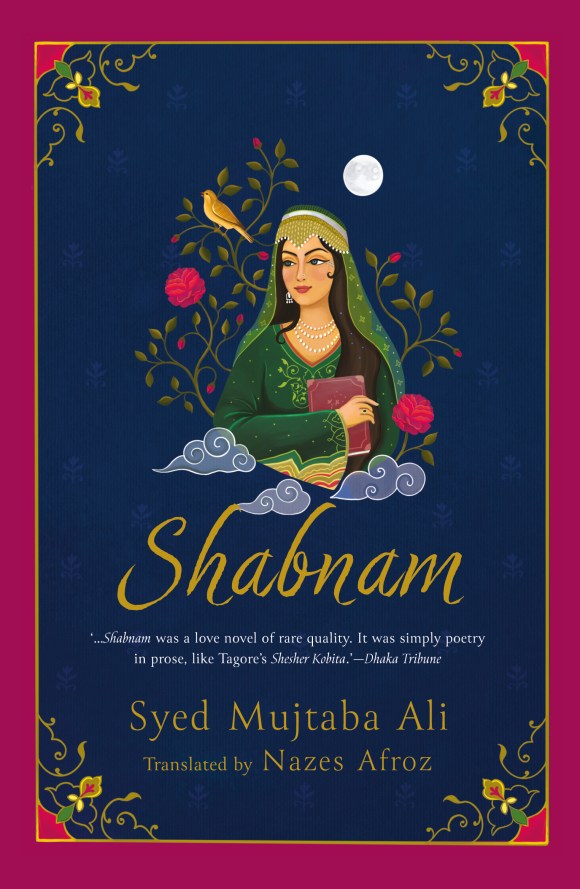
Title: Shabnam

Author: Syed Mujtaba Ali

Translator from Bengali: Nazes Afroz

Publisher: Speaking Tiger Books

Shabnam (1960) by Syed Mujtaba Ali is a love story that is set in the third decade of the 20th century. ‘Shabnam’ in Persian means a ‘dewdrop’. The polyglot scholar Mujtaba Ali’s love story becomes a vehicle for articulating the profundities of life which extends beyond the plot and the telling just like that of his teacher, Rabindranath Tagore. To quote the words of another reviewer: “His novel can be compared to a dewdrop which assumes rainbow hues during sunrise as it encompasses not only the passionate cross-cultural romance of Shabnam and the young Bengali lecturer, Majnun, but also shades of humanity, love, compassion set against the uncertainties generated by ruthless political upheavals.” Sweeping in scope, set against the backdrop of the Afghan Civil War (1928-29) and beyond, the novel narrates an epic love story. That this has recently been translated by a former BBC editor stationed in Afghanistan, Nazes Afroz, and published for a wider readership, emphasises its relevance in the current context, where regressive curtailment of human rights and liberties are evident on a daily basis.

Shabnam is a young, upper class and educated Afghan woman, fluent in French and Persian. As we learn in the course of the narrative, she is daring and apparently fearless. She is proud of her Turkish heritage as she invokes it while introducing herself: “You know I’m a Turkish woman. Even Badshah Amanullah has Turkish blood. Amanullah’s father, the martyred Habibullah, realised how much power a Turkish woman—his wife, Amanullah’s mother—held. She checkmated him with her tricks. Amanullah wasn’t even supposed to be the king, but he became one because of his mother.” Given the current context, with its attack on womens’ freedom, it is perhaps difficult to imagine that a woman like Shabnam or anyone with a similar persona or voice could be found at all. She seems at times to inhabit the rarefied realms of her author’s imagination, beyond the earthly realm.

Shabnam’s knowledge of history and the world is extensive. She actively chooses and decides about her surroundings and her own life, which is more than what many women can do in today’s Afghanistan. Characters like Shabnam are also the result of the varied travels of the author Mujitaba Ali, who traveled and taught in five countries. On the power wielded by women, Shabnam offers a rejoinder to her lover/narrator: “In your own country, did Noor Jahan not control Jahangir? Mumtaz—so many others. How much knowledge do people have of the power of Turkish women inside a harem?”

The novel has a tripartite structure. In the first part, is the dramatic meeting of the narrator, Majnun, with the striking and unconventional Shabnam at a ball given by Amanullah Khan, the sovereign of Afghanistan from 1919 to 1929. The novel’s narrative is dialogic in nature and the introduction and subsequent exchanges of the protagonists  are peppered with wit and poetry. The first part concludes with the two of them acknowledging their love for each other.

In the second part of this novel,we witness more developments in their relationship. Shabnam assumes an agential role and makes a decision to marry Majnun secretly with only their attendants looking on. And then later, this decision receives a legitimate sanction since a wedding is organised for them by her father, who does not know they are already married. Despite the xenophobic approach in those times of many Afghans (and other South Asian communities) against marrying their daughters to foreigners, her family decides to marry Shabnam to Majnun as they wanted her out of conflict-ridden Afghanistan and in a safer zone. Her father hopes she will go off to India with her husband. This seems unexpectedly progressive in the Afghanistan of  almost a century ago. But instead, in the third part, she is abducted by the marauding hordes while her beloved attempts to organise their return from Afghanistan.

The last part continues with Majnun’s quest for his beloved. His endeavour leads him to travel, hallucinate and drives him almost insane, reminiscent of the Majnun of Laila-Majnun fame, a doomed union that resonates in and forms a motif in the narrator/lover’s repeated conversations with Shabnam. At the end of the novel, Majnun ascends the physical realm of love. He says: “Now after losing all my senses, I turn into a single being free of all impurities. This being is beyond all senses—yet all the senses converge there… There is Shabnam, there is Shabnam, there is Shabnam.”

The novel concludes with the realisation that “there is no end” (tamam na shud). This feeling seems to echo the idea of  “na hanyate hanyamane sarire”(“It does not die”) in Sanskrit signifying that love is eternal, even beyond the material realm. Both the luminosity and fragility of love is represented in the novel.

Mujtaba Ali’s wide and varied experience is in evidence at several points in the novel, as is his wit and satiric sense, some of which filters through to his created characters.   This can be experienced in the dialogues and descriptions even in its translated form. In order to conceal her identity from the marching and rustic hordes, Shabnam comes to visit her beloved in a burqa. She argues that it is not a symbol of oppression but a self-chosen disguise: “Because I can go about in it without any trouble. The ignorant Europeans think it was an imposition by men to keep women hidden. But it was an invention by women—for their own benefit. I sometimes wear it as the men in this land still haven’t learned how to look at women. How much can I hide behind the net in the hat?”

A valuable addition to the rich corpus of travel writing in Bangla Literature, the book remained unknown to the world outside Bengal despite its excellence as there were no translations. In 2015, Afroz had translated and published this book as In a Land Far from Home: A Bengali in Afghanistan. It was subsequently shortlisted for the Crossword Book Award. That translations can provide a bridge across cultures is eminently clear from this work, which gives us a tantalising glimpse of a culture beyond our own and encourages us, the readers, to recognise that true love transcends borders or boundaries and that the language of true love is the same everywhere.

The novel’s title, Shabnam, is a natural choice, as the intelligent, courageous and beautiful Shabnam is the emotional centre of the novel. To describe her ineffable charm, we could draw upon Mujtaba’s teacher’s words, in Gitanjali (Song Offerings by Tagore):

She who ever had remained in the 
depth of my being, in the twilight of
gleams and of glimpses…

… Words have wooed yet failed to win
her; persuasion has stretched to her its
eager arms in vain.

Song 66, Gitanjali by Tagore

Majnun, the narrator lover is left, in Tagore’s words: “gazing on the faraway gloom of the sky, and my heart wanders wailing with the restless wind.” Romance by its very nature, is fleeting and  transient and romantic love in its literary avatars/depictions acquires a bitter-sweetness when its founded on loss and longing. So it is with Shabnam.

.

Dr Meenakshi Malhotra is an Associate Professor of English Literature at Hansraj College, University of Delhi, and has been involved in teaching and curriculum development in several universities. She has edited two books on Women and Lifewriting, Representing the Self and Claiming the I, in addition  to numerous published articles on gender, literature and feminist theory.  Her most recent publication is The Gendered Body: Negotiation, Resistance, Struggle.

.

PLEASE NOTE: ARTICLES CAN ONLY BE REPRODUCED IN OTHER SITES WITH DUE ACKNOWLEDGEMENT TO BORDERLESS JOURNAL

Click here to access the Borderless anthology, Monalisa No Longer Smiles

Click here to access Monalisa No Longer Smiles on Amazon International
Categories
Review

Mahasweta Devi: Writer, Activist, Visionary

Book Review by Meenakshi Malhotra

Title: Mahasweta Devi: Writer, Activist, Visionary

Editor: Radha Chakravarty

Publisher: Routledge

Mahashweta Devi (1916-2016) was a renowned and much awarded writer-activist-translator who was reputed for her close observation and documentation of tribal life and its marginalisation and willed forgetting by dominant power systems. Among the many awards received by her were the Padma Vibhushan, the Ramon Magsaysay, the Jnanpith and the Sahitya Akademi Award. The stated aim of the present volume — in keeping with the overall objectives of the Writer in Context Series — is to present a more rounded, multidimensional image of Mahasweta Devi. This has been admirably accomplished by Prof Radha Chakravarty who is an eminent translator and academic herself.

In the ‘Introduction’, she unpacks the partial truths that underlie the stereotypical image of Mahasweta Devi as an activist. Highlighting the fact that Mahashweta’s representations of different forms of mar­ginality bring together “the aesthetic and the political in ways that demand a more nuanced reading”, she reinforces the need to read Devi’s oeuvre as literature, and not only as “forms of social documentation or ‘wit­nessing’”. She interrogates the stereotype of the activist-writer and opens up the possibility of re-reading Mahasweta Devi’s life and work in “newer, more unsettling ways”. Further, Chakravarty highlights how her (Devi’s) creative writings in particular emerge as “ambivalent texts, simultane­ously imbued with radical potential and a continued reliance on traditional forms of signification”.

Mahasweta Devi’s writings often demonstrate a tenuous divide between fiction and non-fiction. As a matter of fact, she emphasises on “the historical basis for her creative writings”, which is evident in many of her novels like Mother of 1084 (Hazaar Churashir Maa, 1974), and stories like ‘Draupadi’ and many others, which are based on the Naxalite movement.  Simultaneously however, her literary works display a measure of social realism which, Chakravarty contends, is “offset by a visionary quality that enables the imagining of transformative possibilities.” The contents of this volume testify to the varied, diverse and  sometimes “contradictory dimensions of her multifaceted genius”.

The book under consideration aims to set the record straight for readers outside Bengal whose views are based on the “tiny fraction of her Mahashweta Devi’s work available in English translation”. She was an extraordinarily prolific and versatile writer who wrote in multiple genres, including fiction, biography, drama, children’s literature, memoirs, travel writing, and literary criticism. She also occasionally translated her own work into English.

Chakravarty’s introduction and compilations in this volume foregrounds the aspect  of Mahashweta’s political activism and how her writing itself  becomes a form of resistance. Her early  induction into Marxism was also partially attributable to her family background. Her family included Ritwik Ghatak (her father’s brother was a famed film maker) on her father’s side and on her mother’s, Sankha Choudhuri and Sachin Choudhuri, one a well-known sculptor and the other, the founder/editor of India’s foremost social science journal, Economic and Political Weekly, respectively.

Her early contact with Tagore and education at Santiniketan sensitised her to values of “inclusiveness, self-reliance, freedom of thought and expression, social responsibility, and environmental issues”. There, she also imbibed some of the spirit of the freedom struggle. Through her marriage to Bijon Bhattacharya, she grew familiar with IPTA[1] and the left ideologies. Later, she was associated with different radical movements in Bengal, Manipur, Jharkhand, Bihar, and Rajasthan, which find expression in many of her writings (Mother of 1084, ‘Draupadi’).

Her political commitment to these movements is evident in her use of language.  Local vocabularies become central to the style and subject of Mahasweta’s writings. She wrote in 1983: “Since I remain immersed in indigenous myths, oral legends, local beliefs and religious convictions, I find purely indigenous words very potent and expressive.”

She  was critical of writers in the Bangla literary establishment whose experiments with modernist aesthetics led to disengagement with the socio-political context. All the same, her writings evince special “linguistic, textual, and aesthetic strategies that can be compared to the prac­tices of other writers who were experimenting with new approaches”, using non-linear time. Oral traditions fascinated her and she worked closely with Prof G.N.Devy in her later years, to campaign for the recognition of tribal languages.

She also  translated and edited volumes on Indian folklore. In her own writings, she includes elements from the oral traditions, as in the snatches of local lore in Jhansir Rani (The Queen of Jhansi) or the lines from an untranslated Santhal song in ‘Draupadi’. As Chakravarty points out, “Heteroglossia, the use of language as an indicator of social hierarchies in multivocal, polyphonic texts, functions as a potent literary feature in her writings.” Alongside, many of her texts incorporate multilingual elements, as if to indicate the heterogeneities in South Asian societies and cultures.

The book is an comprehensive introduction to and reappraisal of Mahasweta Devi’s life and work. It is imaginatively conceptualised and organised into different sections, each highlighting diverse aspects of her work and the criticism thereon. Section 1 of the book called ‘Spectrum: The Writer’s Oeuvre’, offers the reader in English an overview of the full range of her oeuvre through brief samples of her literary writings across diverse genres to highlight her versatility. These include Jhansir Rani (1956), a fiction­alised biography of Rani Lakshmibai, Queen of Jhansi, which amalgamates historical sources, folklore, and creative characterisation, to show up the contradictions in different ver­sions of the Rani’s life and Hajar Churashir Ma (The Mother of 1084), her powerful novel about the political awakening of a mother after her son is killed by the police during the Naxalite movement of the 1970s, altered the trajectory of the Bengali novel. The extract from the final pages captures, in a style resembling stream-of-consciousness, the dramatic political power struggles in the outer world and the inner drama of the mother’s psyche.

The short story ‘Giribala’ narrates the plight of a girl married off at 14 to a man who sells their own daughters into the flesh trade to pay for the construction of his dream house. The play Bayen uses modern experimental techniques to present the story of a woman from the caste of Doms (cre­mation attendants), who becomes the victim of collective superstition and scapegoating and yet, in a final act of heroic self-sacrifice, saves the very community that has ostracised her. In a complete change of tone and style,’Nyadosh the Incredible Cow’, a delightful piece of writing for children, offers a witty anecdotal account of the devastating exploits of a cow in the author’s home. The extract from Tarasankar Bandyopadhyay, Mahasweta Devi’s English monograph on the iconic Bengali writer, reveals her incisive­ness as a literary historian and critic and also provides a window to her own literary values.

As Chakravarty clarifies, given the vast body of critical readings on Mahasweta’s writings, a comprehensive compilation is beyond the scope of this book. Instead, the selected essays in Section 2 (‘Kaleidoscope: Critical Reception’) offer the reader (in translation) a sense of the paradigm shifts that mark Devi’s critical recep­tion in Bengal, the rest of India, and in the international domain. Ten­sions, debates, and contradictions are highlighted, and overview of her critical reception over four decades –1957 to 1997 in Bengal is discussed by Arup Kumar Das. An essay by Dipendu Chakrabarti analyses the debates and contro­versies around her work. Dilip K. Basu’s account of Hajar Churashir Ma views itas a pathbreaking text that transformed the course of the Bengali novel in the 1970s.

The essays in English by other Indian critics include Sujit Mukherjee’s classic piece on Mahasweta and Spivak, Jaidev’s account of national alle­gory in Douloti, Arunabh Konwar’s comparative analysis of the creative use of fictionalised biography by Mahasweta and Indira Goswami, Shreya Chakravorty’s study of the politics of translation in the work of Spivak and Samik Bandyopadhyay, Anjum Katyal’s account of Mahasweta as a drama­tist, and Benil Biswas’ reading of the transmutations of Mahasweta’s texts via stage and screen adaptations.

International contributions include an important new essay on Pterodactyl by Gayatri Chakravorty Spivak, who interprets the rhetorical pointers in the text to speak of it as an activist mediation for the reader to learn about earn­ing the right to intervene. Shreerekha Subramanian’s essay offers a compara­tive study of the discourse on motherhood in novels by three women writers across different languages, locations, and literary traditions: Mahasweta Devi, Toni Morrison, and Amrita Pritam.

Section 3 (‘Ablaze With Rage: The Writer as Activist’) includes some of Mahasweta’s activist writings, such as ‘Tribal Language and Literature: The Need for Recognition’, a passionate demand for the inclusion of tribal languages in official discourse; ‘Palamau is a Mirror of India’, where she critiques what she perceives the failures of the state to address the plight of the oppressed people in post-Independence India; and ‘Eucalyptus: Why?’, a scathing critique of the nexus between local powers and global market forces that have led to the replacement of natural forests in Bengal with eucalyptus plantations that have destroyed the local ecology that sustained human and animal life there. Alongside, in ‘The Adivasi Mahasweta’, Ganesh N. Devy reminiscences about his first encounter with Mahasweta Devi and their subsequent collaborations in activist campaigns and projects. ‘Haunted Landscapes: Mahasweta Devi and the Anthropocene’, by Mary Louisa Cappelli, connects Mahasweta’s activist writings and fiction on the subject of the Anthropocene to indicate the need to take a composite view of her writing and activism as twin manifestations of the same vision.

Section 4, ‘Personal Glimpses: A Life in Words’, includes extracts from Mahasweta’s memoir Our Santiniketan (2022), along with interviews (with Naveen Kishore and Radha Chakravarty) and reminiscences by her family members (Nabarun Bhattacharya, Soma Mukhopadhyay, Sari Lahiri, Ina Puri), friends (writers ‘Anand’ and Anita Agnihotri), and associates (Ranjit Kumar Das ‘Lodha’, Dakxin Bajrange), which highlight different facets of Mahasweta’s life and personality, bringing to life the woman behind the public image.

The book offers a comprehensive overview of Mahashweta Devi’s writing and will be of immense use to students, researchers and to general readers. As Chakravarty reiterates , “New trends in Mahasweta studies continue to evolve, including emphasis on her environmental concerns, ethics, planetarity and the Anthropocene, intersectionality, the use of incommensurate realities and registers of writ­ing, comparative readings, and an emerging focus on her life”.

This is an ambitious attempt to give us an idea of the immense range of her work. While a full biog­raphy and a full bibliography of Mahasweta’s oeuvre is yet to be published, (encompassing the entire corpus of her work, including letters and other unpublished material) this volume is a vital step in that direction. In her excellent Introduction, Chakravarty charts the long-term impact of Devi’s work which continues to resonate in contemporary forms of activism and theatre. Through the actions of the many groups of people she inspired – the women of Manipur whose public protest imitated her fiction, to the per­formances of the Budhan theatre, and the rise to fame of the Dalit Bengali writer, Manoranjan Byapari— “Mahasweta’s impact and influence can be felt in many ways. She survives through the people she struggled to support all her life,”

It is an ironical reflection on our times that a prolific and much awarded Indian writer-perhaps deserving of the Nobel prize, should be excised from the university syllabus of a central university. This move has, perhaps paradoxically, elicited even more interest in Mahasweta Devi’s work and has also consolidated her reputation as a mascot, a symbol of resistance to state violence. A timely intervention, this volume proves yet again that a great writer, in responding to local , regional, environmental ethical concerns sensitively,  transcends his/her immediate context to acquire global and universal significance.    

[1] Indian People’s Theatre Association founded in 1943

.

Dr Meenakshi Malhotra is Associate Professor of English Literature at Hansraj College, University of Delhi, and has been involved in teaching and curriculum development in several universities. She has edited books on Women and Lifewriting, Representing the Self and Claiming the I, in addition  to numerous published articles on gender, literature and feminist theory.   Recently, she co-edited The Gendered Body: Negotiation, Resistance, Struggle.

.

PLEASE NOTE: ARTICLES CAN ONLY BE REPRODUCED IN OTHER SITES WITH DUE ACKNOWLEDGEMENT TO BORDERLESS JOURNAL

Click here to access the Borderless anthology, Monalisa No Longer Smiles

Click here to access Monalisa No Longer Smiles on Amazon International

Categories
Review

A Cup that Cheers: Savouring The Coffee Rubaiyat

Book Review by Meenakshi Malhotra

Title: The Coffee Rubaiyat

Author: Rhys Hughes

Publisher: Alien Buddha Press

 Rhys Hughes’ creative adaptation of Edward Fitzgerald’s translation of the Rubaiyat of Omar Khayyam[1] is a delightful read. Located somewhere between tribute and parody, it has recreated the tonal and prosodic rhythms of the original translation, quartet by quartet. Yet, there is a thin line between parody and subversion, and Hughes’s adaptation negotiates this with a tongue-in cheek flippancy.

To illustrate the close parallel of the original 1st quartrain of Fitzgerald’s translation and Hughes creative adaptation:

Awake! For Morning in the Bowl of Night

Has flung the Stone that puts the Stars to Flight:
And lo! the Hunter of the East has caught
The Sultan's Turret in a Noose of Light.

The original aubade is wittily recast as:  

Awake! For the alarm clock next to the bed

Is ringing the bells that can wake the dead:
And Lo! The ruby rays of the rising sun
Colour the espresso machine a pinkish red.

This paean to coffee is replete with personifications –“Dawn’s lips are coffee-smeared”(vi).

Some of Hughes odes to coffee poke fun at the metropolis and its quirky inhabitants, the poem(s) capture the rhythms of life and its frenetic pace in the urban metropolis. Thus in quatrain 18, we get a glimpse, a veritable word-picture of the tube/metro train commuter:

I sometimes think that never blows so hard,

The commuter who is late, reputation marred,
To cool his coffee so he can catch his train
Before all the doors are closed by the guard.

Literary- and other-Histories of Coffee

In a ‘Brief History of Coffee around the World’, Garrett Oden clarifies that , unlike tea and alcohol which have been around and in use for more than five thousand years, coffee has had a relatively recent history. Although it has supposedly been around for over a 1000 years, its first verifiable documented use was about 500 years ago. Accidentally discovered by a goat herder whose goats turned unusually frisky after consuming some red beans, it became popular in Yemen and the areas surrounding it, the area  we know now as the Middle East or as west Asia. The journey of coffee to Europe and beyond is replete with narratives of colonialism, plunder, pillage and scandal. This murky history was often forgotten as  the roasted magic bean  became a rage in coffee houses across the world.

The dubious antecedents of this heady brew derived from the magic bean is invoked in literary works such as Alexander Pope’s  ‘The Rape of the Lock’ where the effects of coffee are thus described:

“Coffee, (which makes the Politicians wise, And see thro’ all things with his half-shut eyes)/Sent up in vapours to the Baron’s brain new stratagems” to fulfil  his nefarious designs. Closer to our own times, we have T.S. Eliot’s line in ‘The Love Song of J. Alfred Prufrock’ where his persona declares, summing up the urban ennui of his quotidian existence, “I have measured out my life with coffee spoons”, a line which is yet another testimony to the fact that coffee has become  an inseparable and indispensable part of our everyday life.

Echoes of Fitzgerald’s Rubaiyat are interwoven into each quatrain and the poems follow the chronology of the original sequence. From the chess board (p 56-XLVIX) to the image of the “moving finger” which is replaced by the “moving tongue” (LI, p58), in poem after poem, we have many hyperboles to capture the effects of this drink which stands for a way of life. It is a way of life familiar to inhabitants of the modern metropolis where one’s life is lived under the glare of neon lights, and where sleeplessness, stress are all par for the course.  

Although the poems employs the resources of several figures of speech like metaphor, personification, hyperbole, perhaps the most apt and commonly used figure is that of bathos. It is an effect of anticlimax created by a lapse in mood from the sublime to the trivial. A typical example is Pope’s line in ‘The Rape of the Lock’ where he says, “Great Anna, whom three realms obey/ Dost sometimes counsel take — and sometimes tea”: In Hughes’s case, “the cosmos is nothing but a frappucino” ,”the inverted cup we call the sky.”

The poems are crafted in a spirit of irreverent good humour and this  book is definitely a  little nugget, worth savouring. Even if (to persist in the metaphor) one’s cup does not run over, it is definitely a cup that cheers.

Click here to read an excerpt from The Coffee Rubaiyat

[1] The translation was first published in 1859. Omar Khayyam, an astronaut, mathematician, a philosopher and a poet lived from 1048–1131 and wrote in Persian.

.

Dr Meenakshi Malhotra is Associate Professor of English Literature at Hansraj College, University of Delhi, and has been involved in teaching and curriculum development in several universities. She has edited two books on Women and Lifewriting, Representing the Self and Claiming the I, in addition  to numerous published articles on gender, literature and feminist theory.  Her most recent publication is The Gendered Body: Negotiation, Resistance, Struggle.

.

PLEASE NOTE: ARTICLES CAN ONLY BE REPRODUCED IN OTHER SITES WITH DUE ACKNOWLEDGEMENT TO BORDERLESS JOURNAL

Click here to access the Borderless anthology, Monalisa No Longer Smiles

Click here to access Monalisa No Longer Smiles on Amazon International

Categories
Contents

Borderless, December 2023

Art by Sohana Manzoor

Editorial

Celebrating the Child & Childhood… Click here to read.

Special Tributes

An excerpt from Rabindranath Tagore’sThe Child‘, a poem originally written in English by the poet. Click here to read.

Vignettes from an Extraordinary Life: A Historical Dramatisation by Aruna Chakravarti… Click here to read.

Conversations

A conversation with the author, Afsar Mohammed, and a brief introduction to his latest book, Remaking History: 1948 Police Action and the Muslims of Hyderabad. Click here to read.

A conversation with Meenakshi Malhotra over The Gendered Body: Negotiation, Resistance, Struggle, edited by Meenakshi Malhotra, Krishna Menon and Rachana Johri and a brief introduction to the book. Click here to read.

Translations

The Monk Who Played the Guitar, a story by S Ramakrishnan, has been translated from Tamil by T Santhanam. Click here to read.

The White-Coloured Book, a poem by Quazi Johirul Islam has translated from Bengali by Professor Fakrul Alam. Click here to read.

Indecisiveness has been written and translated from Korean by Ihlwha Choi. Click here to read.

Tagore’s 1400 Saal (The Year 1993) has been translated from Bengali by Mitali Chakravarty. Click here to read.

Nazrul’s rejoinder to Tagore’s 1400 Saal has been translated from Bengali by Professor Fakrul Alam. Click here to read.

Poetry

Click on the names to read the poems

Ron Pickett, Prithvijeet Sinha, George Freek, Sutputra Radheye, Caroline Am Bergris, Thoyyib Mohammad, Kumar Bhatt, Patricia Walsh, Hamza Azhar, John Grey, Papia Sengupta, Stuart McFarlane, Padmanabha Reddy, Ryan Quinn Flanagan, Jee Leong Koh, Rhys Hughes

Poets, Poetry & Rhys Hughes

In His Unstable Shape, Rhys Hughes explores the narratives around a favourite nursery rhyme character with a pinch of pedantic(?) humour. Click here to read.

Musings/ Slices from Life

Trojan Island

Nitya Amalean writes of why she chooses to be an immigrant living out of Sri Lanka. Click here to read.

Wayward Wayanad

Mohul Bhowmick travels to the tea gardens and hills of Wayanad. Click here to read.

Musings of a Copywriter

In Visiting Cards & Me…, Devraj Singh Kalsi ponders on his perspective on the need and the future for name cards. Click here to read.

Notes from Japan

In Kyoto: Where the Cuckoo Calls, Suzanne Kamata introduces us to Kyoto. Click here to read.

Essays

Peeking at Beijing: The Epicentre of China

Keith Lyons travels to the heart of Beijing with a sense of humour and a camera. Click here to read.

To Be or Not to Be or the Benefits of Borders

Wendy Jones Nakanishi argues in favour of walls with wit and facts. Click here to read.

Where Eagles Soar

Ravi Shankar gives a photographic treat and a narrative about Langkawi. Click here to read.

Stories

Heather Richards’ Remarkable Journey

Paul Mirabile journeys into a womb of mystery set in Thailand. Click here to read.

The Untold Story

Neeman Sobhan gives us the story of a refugee from the 1971 Bangladesh Liberation War. Click here to read.

Wrath of the Goddess?

Farouk Gulsara narrates a story set in 1960s Malaya. Click here to read.

No Man’s Land

Sohana Manzoor gives us surrealistic story reflecting on after-life. Click here to read.

Book Excerpts

An excerpt from Dr Ratna Magotra’s Whispers of the Heart – Not Just A Surgeon: An Autobiography. Click here to read.

An excerpt from Manjima Misra’s The Ocean is Her Title. Click here to read.

Book Reviews

Somdatta Mandal reviews Indian Christmas: Essays, Memoirs, Hymns, an anthology edited by Jerry Pinto and Madhulika Liddle. Click here to read.

Christopher Marks reviews Veronica Eley’s The Blue Dragonfly: healing through poetry. Click here to read.

Basudhara Roy reviews Kuhu Joshi’s My Body Didn’t Come Before Me. Click here to read.

Bhaskar Parichha reviews Permacrisis: A Plan to Fix a Fractured World by Gordon Brown, Mohamed El-Erian, Michael Spence, Reid Lidow 

.

Click here to access the Borderless anthology, Monalisa No Longer Smiles

Click here to access Monalisa No Longer Smiles on Kindle Amazon International

Categories
Editorial

Celebrating the Child & Childhood…

‘Victory to Man, the newborn, the ever-living.’
They kneel down, the king and the beggar, the saint and
the sinner,
the wise and the fool, and cry:
‘Victory to Man, the newborn, the ever-living.’

The Child’ by Rabindranath Tagore1, written in English in 1930

This is the month— the last of a conflict-ridden year— when we celebrate the birth of a messiah who spoke of divine love, kindness, forgiveness and values that make for a better world. The child, Jesus, has even been celebrated by Tagore in one of his rarer poems in English. While we all gather amidst our loved ones to celebrate the joy generated by the divine birth, perhaps, we will pause to shed a tear over the children who lost their lives in wars this year. Reportedly, it’s a larger number than ever before. And the wars don’t end. Nor the killing. Children who survive in war-torn zones lose their homes or families or both. For all the countries at war, refugees escape to look for refuge in lands that are often hostile to foreigners. And yet, this is the season of loving and giving, of helping one’s neighbours, of sharing goodwill, love and peace. On Christmas this year, will the wars cease? Will there be a respite from bombardments and annihilation?

We dedicate this bumper year-end issue to children around the world. We start with special tributes to love and peace with an excerpt from Tagore’s long poem, ‘The Child‘, written originally in English in 1930 and a rendition of the life of the philosopher and change-maker, Vivekananda, by none other than well-known historical fiction writer, Aruna Chakravarti. The poem has been excerpted from Indian Christmas: Essays, MemoirsHymns, an anthology edited by Jerry Pinto and Madhulika Liddle, a book that has been reviewed by Somdatta Mandal and praised for its portrayal of the myriad colours and flavours of Christmas in India. Christ suffered for the sins of humankind and then was resurrected, goes the legend. Healing is a part of our humanness. Suffering and healing from trauma has been brought to the fore by Christopher Marks’ perspective on Veronica Eley’s The Blue Dragonfly: healing through poetry. Basudhara Roy has also written about healing in her take of Kuhu Joshi’s My Body Didn’t Come Before Me. Bhaskar Parichha has reviewed a book that talks of healing a larger issue — the crises that humanity is facing now, Permacrisis: A Plan to Fix a Fractured World, by ex-British Prime Minister Gordon Brown, Nobel Laureate Michael Spence, Mohamed El-Erian and Reid Lidow. Parichha tells us that it suggests solutions to resolve the chaos the world is facing — perhaps a book that the world leadership would do well to read. After all, the authors are of their ilk! Our book excerpts from Dr Ratna Magotra’s Whispers of the Heart – Not Just A Surgeon: An Autobiography and Manjima Misra’s The Ocean is Her Title are tinged with healing and growth too, though in a different sense.

The theme of the need for acceptance, love and synchronicity flows into our conversations with Afsar Mohammad, who has recently authored Remaking History: 1948 Police Action and the Muslims of Hyderabad. He shows us that Hyderabadi tehzeeb or culture ascends the narrow bounds set by caged concepts of faith and nationalism, reaffirming his premise with voices of common people through extensive interviews. In search of a better world, Meenakshi Malhotra talks to us about how feminism in its recent manifestation includes masculinities and gender studies while discussing The Gendered Body: Negotiation, Resistance, Struggle, edited by her, Krishna Menon and Rachana Johri. Here too, one sees a trend to blend academia with non-academic writers to bring focus on the commonalities of suffering and healing while transcending national boundaries to cover more of South Asia.

That like Hyderabadi tehzeeb, Bengali culture in the times of Tagore and Nazrul dwelled in commonality of lore is brought to the fore when in response to the Nobel laureate’s futuristic ‘1400 Saal’ (‘The year 1993’), his younger friend responds with a poem that bears not only the same title but acknowledges the older man as an “emperor” among versifiers. Professor Fakrul Alam has not only translated Nazrul’s response, named ‘1400 Saal’ aswell, but also brought to us the voice of another modern poet, Quazi Johirul Islam. We have a self-translation of a poem by Ihlwha Choi from Korean and a short story by S Ramakrishnan in Tamil translated by T Santhanam.

Our short stories travel with migrant lore by Farouk Gulsara to Malaysia, from UK to Thailand with Paul Mirabile while chasing an errant son into the mysterious reaches of wilderness, with Neeman Sobhan to Rome, UK and Bangladesh, reflecting on the Birangonas (rape victims) of the 1971 Bangladesh Liberation war, an issue that has been taken up in Malhotra’s book too. Sobhan’s story is set against the backdrop of a war which was fought against linguistic hegemony and from which we see victims heal. Sohana Manzoor this time has not only given us fabulous artwork but also a fantasy hovering between light and dark, life and death — an imaginative fiction that makes a compelling read and questions the concept of paradise, a construct that perhaps needs to be found on Earth, rather than after death.

The unusual paradigms of life and choices made by all of us is brought into play in an interesting non-fiction by Nitya Amlean, a young Sri Lankan who lives in UK. We travel to Kyoto with Suzanne Kamata, to Beijing with Keith Lyons, to Wayanad with Mohul Bhowmick and to Langkawi with Ravi Shankar. Wendy Jones Nakanishi argues in favour of borders with benevolent leadership. Tongue-in-cheek humour is exuded by Devraj Singh Kalsi as he writes of his attempts at using visiting cards as it is by Rhys Hughes in his exploration of the truth about the origins of the creature called Humpty Dumpty of nursery rhyme fame.

Poetry again has humour from Hughes. A migrant himself, Jee Leong Koh, brings in migrant stories from Singaporeans in US. We have poems of myriad colours from Ryan Quinn Flanagan, Patricia Walsh, John Grey, Kumar Bhatt, Ron Pickett, Prithvijeet Sinha, Sutputra Radheye, George Freek and many more. Papia Sengupta ends her poem with lines that look for laughter among children and a ‘life without borders’ drawn by human constructs in contrast to Jones Nakanishi’s need for walls with sound leadership. The conversation and dialogues continue as we look for a way forward, perhaps with Gordon Brown’s visionary book or with Tagore’s world view of lighting the inner flame in each human. We can hope that a way will be found. Is it that tough to influence the world using words? We can wish — may there be no need for any more Greta Thunbergs to rise in protest for a world fragmented and destroyed by greed and lack of vision. We hope for peace and love that will create a better world for our children.

As usual, we have more content than mentioned here. All our pieces can be accessed on the contents’ page. Do pause by and take a look. This bumper issue would not have been possible without the contribution of all the writers and our fabulous team from Borderless. Huge thanks to them all and to our wonderful readers who continue to encourage us with their comments and input.

Here’s wishing you all wonderful new adventures in the New Year that will be born as this month ends!

Mitali Chakravarty

borderlessjournal.com

  1. Indian Christmas: Essays, MemoirsHymns edited by Jerry Pinto & Madhulika Liddle ↩︎

Click here to access the content’s page for the December 2023 issue

.

READ THE LATEST UPDATES ON THE FIRST BORDERLESS ANTHOLOGY, MONALISA NO LONGER SMILES, BY CLICKING ON THIS LINK.

Categories
Interview Review

The Gendered Body

In conversation with Meenakshi Malhotra and a brief introduction to The Gendered Body: Negotiation, Resistance, Struggle (Scopus Index), edited by Meenakshi Malhotra, Krishna Menon and Rachana Johri, published by Routledge

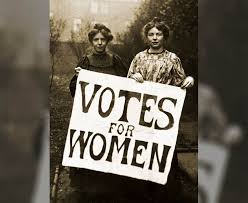
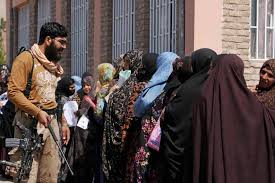
Why would one half of the world population be seen as evolved from the rib of the first man, soulless or as merely subservient to fulfil the needs of the other half? This is a question that has throbbed for centuries in the hearts of that half that suffers indignities to this date, women. While feminism became a formalised idea only in the 18th-19th century and things started improving for certain groups of women around the world, in some regions, like Afghanistan, the situation has deteriorated in recent years. Their government, recognised by world leadership, has ensured that women do not have schooling, cannot work in senior positions, have to be accompanied by men if they go out and remain covered as the feminine body could tempt bringing shame, strangely, to the female but not to the man who has the right to be tempted and hence to violence and violate her body and her mind.

Given this ambience, any literature voicing protest for patriarchal mindsets that accept situations like in current day Afghanistan passively, should be celebrated as an attempt to shard the silence of suffering by one half of the world population. The Gendered Body: Negotiation, Resistance, Struggle, edited by three academics, Meenakshi Malhotra, Krishna Menon and Rachana Johri, does just that. At the start, we are told: “This book situates the discourse on the gendered body within the rapidly transitioning South Asian socio-economic and cultural landscape.  It critically analyzes gender politics from different disciplinary perspectives…”

Featuring 22 writers, the narratives take up a range of issues faced by women in Pakistan, India, Bangladesh and Srilanka. The Pakistani implementation of Islamic law, under the Hudood ordinances, has been addressed in a powerful essay by Aysha Baqir, subsequently by Anu Aneja, in her discourse on Urdu poetry. It was interesting to read how the ghazal form started as a male-only art form where women were depicted as mysterious houris or pining with sadness. Birangona — a phrase that was given to rape victims of the 1971 Bangladesh Liberation War — has been explored by Sohana Manzoor through a classic, Rizia Rahman’s novel, Rokter Okshor[1](1978), written about such women driven to prostitution. Women’s voices in the Sri Lankan LTTE have been explored by Simran Chaddha. Nayema Nasir has taken up decadent customs in the progressive Bohra community in Mumbai and shown how things are moving towards a change. Colonial and Dalit voices have found a hearing in Malhotra’s essay on Mahasweta Devi’s short story, ‘Draupadi’, set against the Naxalite movement of 1970s.

Dotted with women’s responses to a variety of current issues, including the Anti-CAA-NRC uprisings (Tamanna Basu), Shaheen Bagh (Meenakshi Gopinath, Krishna Menon, Rukmini Sen and Niharika Banerjea), and the pandemic (Krishna Menon, Deepti Sachdev and Rukmini Sen), there is even a case study by Shalini Masih dealing with psychiatric trauma where both the psychiatrist and the patient, who might have evolved into a stalker or a rapist without the therapy, heal. A certain sense of hope echoes through some of these narratives, a hope to heal from wounds that have sweltered over eons.

The flow of words is smooth and the ideas should be able to rise against the tide of erudition to touch our lives with lived realities. There are responses that transcend the heaviness of academic writing for instance the impassioned start made by Giti Chandra in her narrative: “A woman’s body is a story that men tell each other. When it is full-hipped, it is a tale of their healthy children; when it is fair, it speaks of their wealth; when it is narrow, it proclaims their access to gyms; and when it is tanned, it flaunts their ability to vacation on sunny isles. If its feet are not small enough to convey a leisure that does not require walking, they are bound and made smaller and more childishly submissive; if its legs are not long enough befitting its trophy status, bone-crippling heels are added to them. When it is raped it is an assertion of power, a chest-thumping; when it is raped it is an aggression over its owner; when it is raped its womb is stolen from the enemy…” Chandra points out some things that make one think, like quoting Rahila Gupta, she suggests victims is not the word we should use for women, but we should refer to the sufferers as survivors.

This collection of essays questions social norms and niceties to realise what early woman’s rights activist, Elizabeth Cady Stanton, drafted, that “all men and women [had been] created equal” in July 1848. While the struggle continues through centuries and the discourse of these narratives, the last essay by a man, Brijesh Rana, attempts to give a broader and more inclusive outlook to the whole human body. The book comes across as a tryst — of academic and feminist voices — to speak up for mankind to equalise.

To further understand the intent and scope of this book, we have in conversation one of the editors— Meenakshi Malhotra, who teaches gender studies and literature, has to her credit two Charles Wallace fellowships and a number of books. She reflects on the bridge that is being attempted between scholarship and activism.

How and when did you conceive this book? Tell us a bit about your journey from the conception to the publication of the book.

This book was originally conceived due to the positive response my co-editors and I received after presenting a panel at an American Association of Asian studies (AAS) conference back in 2017. We were approached by an international publisher who encouraged us to take forward the work with a focus on South Asia. We were unable to take it forward at that time, however we revived the project a few months into the lockdown in late 2020 when we felt we had a little more time. Also, along the way, we were able to reach out to fellow travellers, working in and on Pakistan, Bangladesh and Sri Lanka.

Three of you have collaborated to compile and edit this book. Collaborations to bring out books are not easy. Tell us about this collaboration.

As we three had presented on the same panel, the collaboration was a natural corollary since we had a sense of being fellow travellers and sister academics/scholars. That worked well for us because each of us were engaged in research and research guidance and wanted to showcase the recent work in this area. Both the co-editors, Krishna working on gender and its intersections with politics and Rachna on gender and psychology are very well-established scholars in the field of gender. I work on gender and literature, had my own network and I must mention that in the course of writing for Borderless Journal, I was able to access the work of others on that platform.

Explain to us the significance of the title of your book.

I think we arrived at the title through two processes-one was the immediate situation of Covid which left us in a state of precarity. However, we felt that even within the context of the contagion, women — and other genders — were endangered in specific ways. Second is the understanding that the body is always already produced by multiple matrices of gender, race, caste etc. The human body is also always a gendered body.

We had initially suggested that we call it ‘The Gendered Body and its Fragments’ to connote the bundling of several discursive strands on gendered bodies, but the idea was vetoed (by the initial reviewer) since “fragments” had   resonances and nuances which we did not have space (or expertise) to go into, at that point.

You have a variety of contributors, some of who are non- academic. What did you look for when you chose your content?

Variety as you point out, is the key term. We were looking for something new, something interesting, flagging the variegated cultures of South Asian societies. The book comprises a mix of experienced researchers and some researchers whose essays are their preliminary forays into publishing.

Your book is divided into different sections ‘Negotiation’, ‘Struggle’, ‘Resistance’, ‘Protest’, ‘Critique’, ‘Representations and New Directions’. Can you tell us the need to compartmentalise the essays into this structural frame?

Just to give it a structure, organisation and coherence. Having said that, there are also frequent overlaps.

Would you call this book feminist? Feminism is as such a human construct. Why would this construct be essential for treating people equally? What is the need for feminism?

It is feminist in its orientation to the research areas as well as its methodologies. The key concept here is collaboration and therefore we have two conversation as an expression of feminist epistemology or knowledge-making.

Feminism, like other modes of affirmative action — like reservations, quotas — are an attempt to create a level playing field for historically disprivileged groups  and oppressed minorities.

Having said that, I/we would like to point out that feminism has become inclusive and an umbrella term that also includes the work on masculinities and trans-identities since the 1990s.

Isn’t feminism the forte of only women?

Not at all and that is why we have the term feminisms. We hope to do more work subsequently on masculinities, on trans bodies in the future.

You have 21 women writers who write of women’s issues. Yet the last is an essay by a man — not on feminist issues— but more to create a sense of inclusivity, if I am not wrong. Why did you feel the need for this essay?

It is not so much about women’s issues as much as about gendered bodies in contemporary South Asia, about identities, subjectivities, bodies in motion gearing up for political action(the conversation and the essay on campus movements are instances).

Also, the last essay which articulates a post-humanist perspective, I felt, would take us beyond the materialities of gendered bodies and flag the way recent research/scholarship has looked at the Anthropocene. It was attempting to give a meta perspective, to bring in a way of seeing, which probably will have an impact on how we understand and conceptualise human bodies.

Your book blurb says: “Topical and comprehensive, this book will be useful for scholars and researchers of gender studies, sociology, political sociology, social anthropology, cultural studies, post-colonial studies and South Asian studies.” Why would you limit the scope of your book when you have some essays that should be read by many and are like eye openers, like the ones on Hudood, Birangonas, Bohras, even your own on ‘Draupadi’ and more?

I think Routledge as an academic publisher, probably does this routinely, to highlight the academic terrain any new book covers.

Having said that, we would definitely want the book to be of general interest. Some of the essays discussed issues which were possibly eye-openers for us as well.

What is the difference between academic writing and non-academic writing? You do both, I know.

Academic writing has often a thesis and an argument underpinning it, which is not to say that non-academic writing — especially the essay — cannot have them.

Also, many of the essays were based on student papers/MPhil and even PhD dissertations. The panel we were a part of was an academic conference on South Asian studies.

Would this book be classified as women’s writing as majority of the writers are women and have written on women’s issues… and yet there is a man? Is it necessary to have such classifications? Would it rule out male readers?

Not at all to every question. It just happens that many of our contributors are women, but I would like to dispel the idea that “gender” is about women only. It is about boxes, stereotypes and role-based expectations, which are to be questioned. 

Thanks for giving us a powerful book and your time.

[1] Words of Blood

(The online interview has been conducted through emails and the review written by Mitali Chakravarty.)

PLEASE NOTE: ARTICLES CAN ONLY BE REPRODUCED IN OTHER SITES WITH DUE ACKNOWLEDGEMENT TO BORDERLESS JOURNAL. 

Click here to access the Borderless anthology, Monalisa No Longer Smiles

Click here to access Monalisa No Longer Smiles on Kindle Amazon International