Light of mine, O light, the universe is filled with your effulgence,
My heart is yours; my eyes drown in your refulgence.
….
The sky awakens, the breeze flits, the Earth laughs.
As luminous currents surge, thousands of butterflies take flight.

— Aalo Amar Aalo (Light, My Light), Bichitra, 1911, Rabindranath Tagore
There was a time when lights were a part of joy and celebrations as in Tagore’s poem above. Lighting lamps, people welcomed home their beloved prince Rama on Deepavali, who returned after a fourteen year exile, and during his banishment, killed the demonic Ravana. On the same day in Bengal, lamps were lit to ward off evil and celebrate the victory of Kali, (the dark woman goddess wooed by Tantrics) over the rakshasa, Raktabeeja. In the Southern part of India, lamps were lit to celebrate the victory of Krishna over Narakasura. The reasons could be many but lights and fireworks were lit to celebrate the victory of good over evil during the festival of lights.
In the current world with lines blurred between good and evil, while climate crises seeks smoke free, coal free energy, flames of fire or fireworks are often frowned upon. In these times, we can only hope to light the lamp of love — so that differences can be settled amicably without killing the helpless and innocent, infact without violence, greed, peacefully and with kindness, keeping in mind the safety of our species and our home, the Earth. We invite you to partake of our content, writings that light the lamp of love —
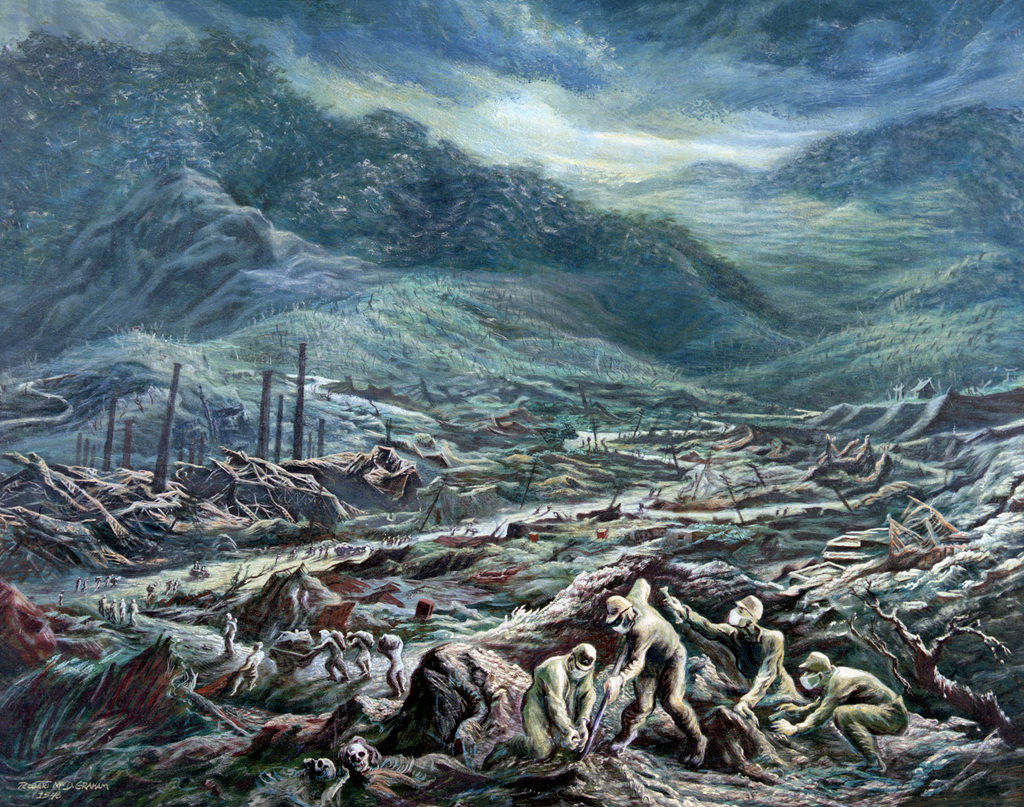
Atom Nuclear Bomb Explosion- Illustration “Atomic Landscape” Nagasaki, Japan 1946 Art by Robert Graham Courtesy: Creative Commons
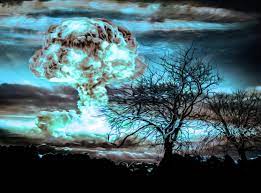
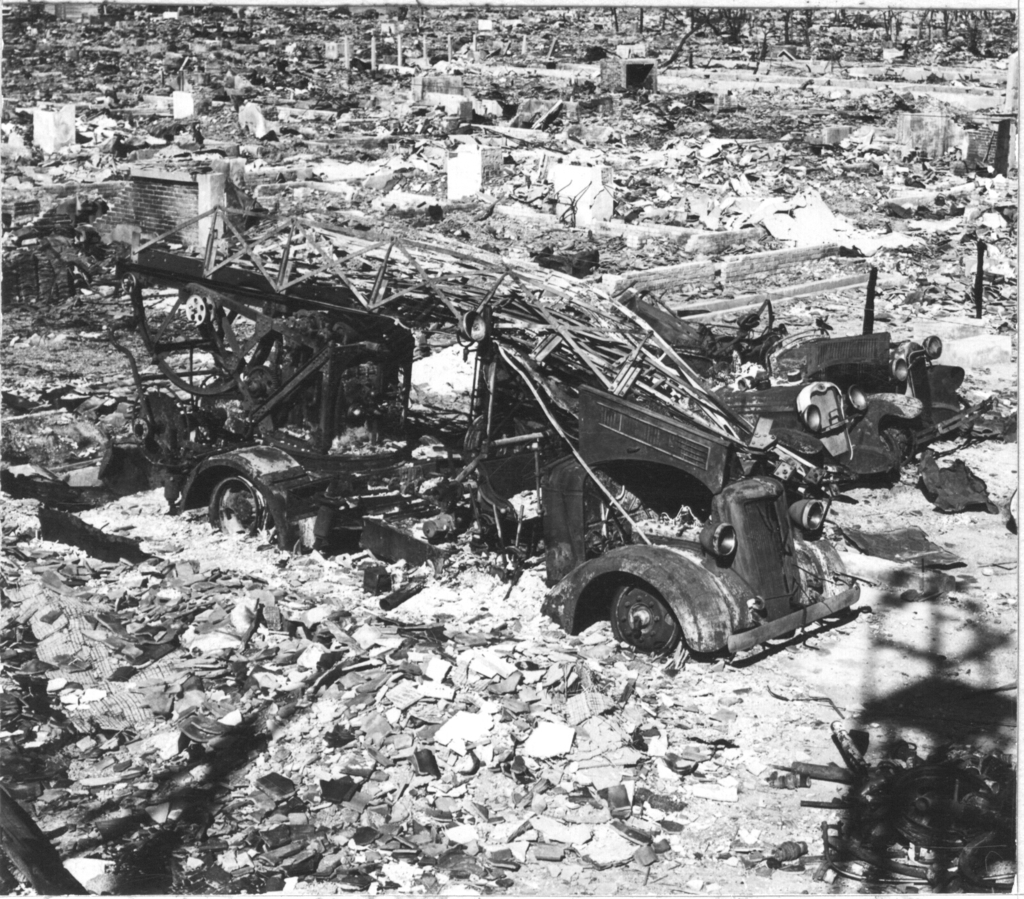
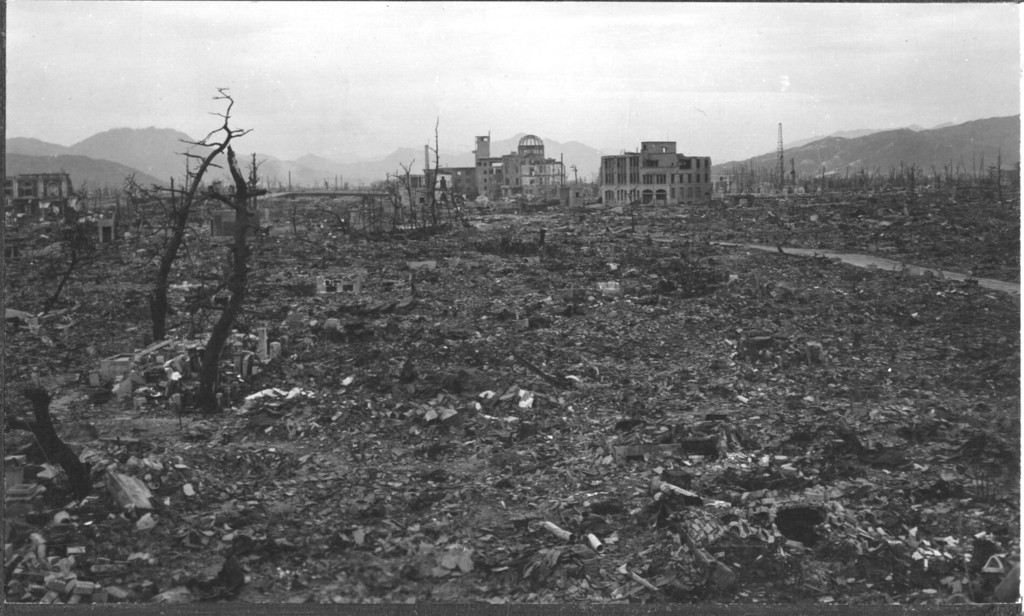
When in 1945, the Allied forces dropped atom bombs on August 6th in Hiroshima and on August 9th in Nagasaki, the Second World War drew Japanese aggression to a halt. But what was the impact on the lives of those innocents whose home, family and future changed forever? Their lives were wrecked — within a few seconds for no fault of their own. The impact clearly continues to ravage the second generation, as can be seen from the narrative of a hibakusha’s daughter who shares her travails while expressing her candid views on the recent movie, Oppenheimer, and the sale of ‘Boppenheimer’ products. She writes: “I live with it1 now having a chronic progressive nerve pain disease. My damaged immune system is attributed to my mother’s exposure to radiation from the atomic bombing.”
Are we forgetting that past, where two whole towns were decimated by atomic bombings with uncountable numbers of deaths and suffering handed down generations? Will we repeat the horrific story again to resolve issues as conflicts continue to ravage the planet with weapons, without considering their impact on the already felt climate crises? Will there be a replay of the bombing of 1945 to annihilate a people, their way of life and create suffering among all humanity? We may not be around to comment on the outcome!
Way back in 2017, climate experts contended that in case of another such bomb blast, “The effect would be similar to that of the giant meteor believed to be responsible for the extinction of the dinosaurs. This time, we would be the dinosaurs.”
With that in mind, we hope for a world without wars. In this special edition, writings look for peace by creating awareness and suggesting alternatives. Kathleen Burkinshaw writes about the 1945 bombings and her perspectives on media packaging of mushroom clouds. We have a story from a soldier’s perspective during the First World War by the eminent Bengali poet, Nazrul, who fought in it as a soldier for the British army. Current conflicts show up in the writing of Ramy-Al-Asheq, who was born in a refugee camp in the Middle East. They move to Ukraine with voices of Lesya Bakun, a refugee on the run, and Ron Pickett, a US army veteran. Poetry on Myanmar in the past by Sister Lou Ella Hickman and a story of the Rohingya’s plight by Shaheen Akhtar brings the focus into civil wars within Asia. More poems by Don Webb and Michael Burch urge for peace through poetry. Awareness about conflicts that nonetheless impact an interconnected world are brought in with interviews with journalists who were in Afghanistan (Andrew Quilty) and Myanmar (Jessica Muddit) when the takeovers by the current regimes started. We conclude with a discussion for alternatives towards a better future with Anthony Sattin.
Non-Fiction
Mushroom Clouds and Movies: Response from a Hibakusha’s Daughter:Kathleen Burkinshaw, a second generation victim who suffers nerve disorders from the atom bomb dropped on Hiroshima, where her mother watched her own father perish, responds to the recent media packaging of the event. Click here to read.
The Refugee and the Other, an excerpt from Ever Since I Did Not Die by Ramy Al-Asheq, translated by Isis Nusair. Click here to read.
Poetry
I am Ukraine by Lesya Bakun, a refugee from Ukraine. Click here to read.
Wars and Rumours of War, a response on the war in Ukraine by Ron Picket, a a retired naval aviator with over 250 combat missions and 500 carrier landings. Click here to read.
My Visit to Myanmar in 1997, a poem about peace in the land where Buddha flourished by Sister Lou Ella Hickman. Click here to read.
Henais a short story by Nazrul from the perspective of a soldier during the first world war, translated from Bengali by Sohana Manzoor. Click here to read.
The Magic Staff is a poignant short story about a Rohingya child seeking refuge by Shaheen Akhtar, translated from Bengali by Arifa Ghani Rahman. Click here to read.
Interviews
A discussion about Afghanistan, with journalist Quilty who went back to Kabul as Taliban entered the city. Click here to read.
Keith Lyons talks to Jessica Mudditt, who watched from within the country as the Myanmar Junta took over. Click here to read.
Could there be a way out of this world wide unrest? A discussion with Anthony Sattinas he explores concept of brotherhood unique to earlier times, when borders were not this well defined. Click here to read.
*
Hiroshima after August 6th, 1945Hiroshima after bombingCourtesy: Creative Commons
Abhirup Dhar, a horror writer whose books are being extensively adopted by Bollywood, talks about his journey and paranormal experiences. Click here to read.
Translations
Munshi Premchand’s Balak or the Child has been translated from Hindi by Anurag Sharma. Click hereto read.
Atta Shad’s Today’s Child has been translated from Balochi by Fazal Baloch. Click here to read.
Masud Khan’s History has been translated from Bengali by Professor Fakrul Alam. Click here to read.
Ihlwha Choi translates his own poem,Lunch Time, from Korean. Click here to read.
Tagore’s Somudro or Ocean has been translated from Bengali by Mitali Chakravarty. Click here to read.
“Here with a Loaf of Bread beneath the Bough,
A Flask of Wine, a Book of Verse -- and Thou
Beside me singing in the Wilderness --
And Wilderness is Paradise enow.”

― Omar Khayyám (1048-1131); translation from Persian by Edward Fitzgerald (Rubaiyat, 1859)
I wonder why Khayyam wrote these lines — was it to redefine paradise or just to woo his beloved? I like to imagine it was a bit of both. The need not to look for a paradise after death but to create one on Earth might well make an impact on humankind. Maybe, they would stop warring over an invisible force that they call God or by some other given name, some ‘ism’. Other than tens of thousands dying in natural disasters like the recent earthquake at the border of Turkiye and Syria, many have been killed by wars that continue to perpetrate divides created by human constructs. This month houses the second anniversary of the military junta rule in Myanmar and the first anniversary of the Ukrainian-Russian war that continues to decimate people, towns, natural reserves, humanity, economics relentlessly, polluting the environment with weapons of mass destruction, be it bombs or missiles. The more weapons we use, the more we destroy the environment of our own home planet.
Sometimes, the world cries for a change. It asks to be upended.
We rethink, reinvent to move forward as a species or a single race. We relook at concepts like life and death and the way we run our lives. Redefining paradise or finding paradise on Earth, redefining ‘isms’ we have been living with for the past few hundred years — ‘isms’ that are being used to hurt others of our own species, to create exclusivity and divisions where none should exist — might well be a requisite for the continuance of our race.
Voices of change-pleaders rang out in the last century with visionaries like Tagore, Gandhi, Nazrul, Satyajit Ray urging for a more accepting and less war-bound world. This month, Ratnottama Sengupta has written on Ray’s legendary 1969 film, Goopy Gyne, Bagha Byne: “The message he sent out loud and with laughter: ‘When people have palatable food to fill their belly and music to fill their soul, the world will bid goodbye to wars.’” Shantanu Ray Chaudhuri has given an essay on one of the greatest pacifists, Gandhi, and his attitudes to films as well as his depiction in movies. What was amazing is Gandhi condemned films and never saw their worth as a mass media influencer! The other interesting thing is his repeated depiction as an ethereal spirit in recent movies which ask for changes in modern day perceptions and reforms. In fact, both these essays deal with ghosts who come back from the past to urge for changes towards a better future.
Delving deeper into the supernatural is our interviewee, Abhirup Dhar, an upcoming writer whose ghost stories are being adapted by Bollywood. While he does investigative stories linked to supernatural lore, our other interviewee, Andrew Quilty, a renowned journalist who has won encomiums for his coverage on Afghanistan where he spent eight years, shows in his book, August in Kabul:America’s Last Days in Afghanistan and the Return of the Taliban, what clinging to past lores can do to a people, especially women. Where does one strike the balance? We also have an excerpt from his book to give a flavour of his exclusive journalistic coverage on the plight of Afghans as an eyewitness who flew back to the country not only to report but to be with his friends — Afghans and foreigners — as others fled out of Kabul on August 14 th 2021. While culturally, Afghans should have been closer to Khayyam, does their repressive outlook really embrace the past, especially with the Taliban dating back to about only three decades?
This intermingling of life and death and the past is brought to life in our fiction section by Sreelekha Chatterjee and Anjana Krishnan. Aditi Yadav creates a link between the past and our need to travel in her musing, which is reminiscent of Anthony Sattin’s description of asabiyya, a concept of brotherhood that thrived in medieval times. In consonance with wanderlust expressed in Yadav’s essay, we have a number of stories that explore travel highlighting various issues. Meredith Stephens travels to explore the need to have nature undisturbed by external interferences in pockets like Kangaroo Island in a semi-humorous undertone. While Ravi Shankar travels to the land’s end of India to voice candid concerns on conditions within Kerala, a place that both Keith Lyons and Rhys Hughes had written on with love and a sense of fun. It is interesting to see the contrasting perspectives on Southern India.
Professor Fakrul Alam has also translated poetry where a contemporary Bengali writer, Masud Khan, cogitates on history while Ihlwha Choi has translated his own poem from Korean. A translation of Tagore’s poem on the ocean tries to capture the vastness and the eternal restlessness that can be interpreted as whispers carried through eons of history. Fazal Baloch has also shared a poem by one of the most revered modern Balochi voices, that of Atta Shad. Our pièce de resistance is a translation of Premchand’s Balak or the Child by Anurag Sharma.
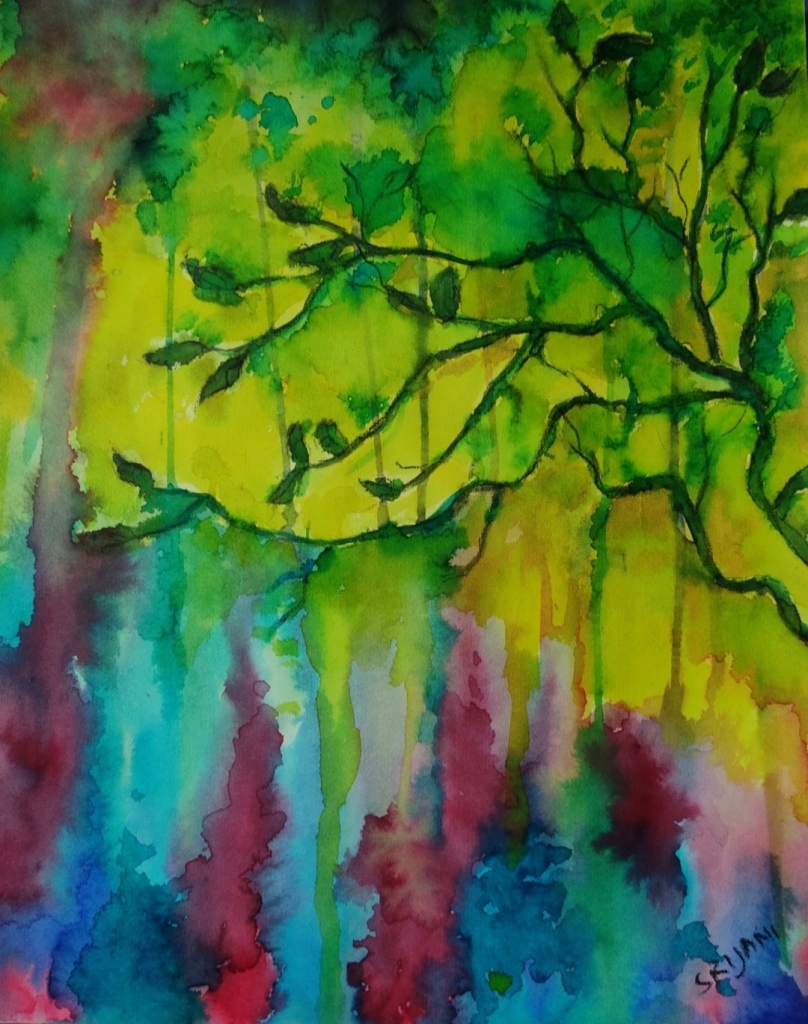
This vibrant edition would not have been possible without all the wonderful translators, writers, photographers and artists who trust us with their work. My heartfelt thanks to all of you, especially, Srijani Dutta for her beautiful painting, ‘Hope in Winter’, and Sohana for her amazing artwork. My heartfelt thanks to the team at Borderless Journal, to our loyal readers some of whom have evolved into fabulous contributors. Thank you.
Do write in telling us what you think of the journal. We look forward to feedback from all of you as we head for the completion of our third year this March.
dreams were our first language
handed down for the many millennia
to what we have become
they still speak their secret language
that was once voiced
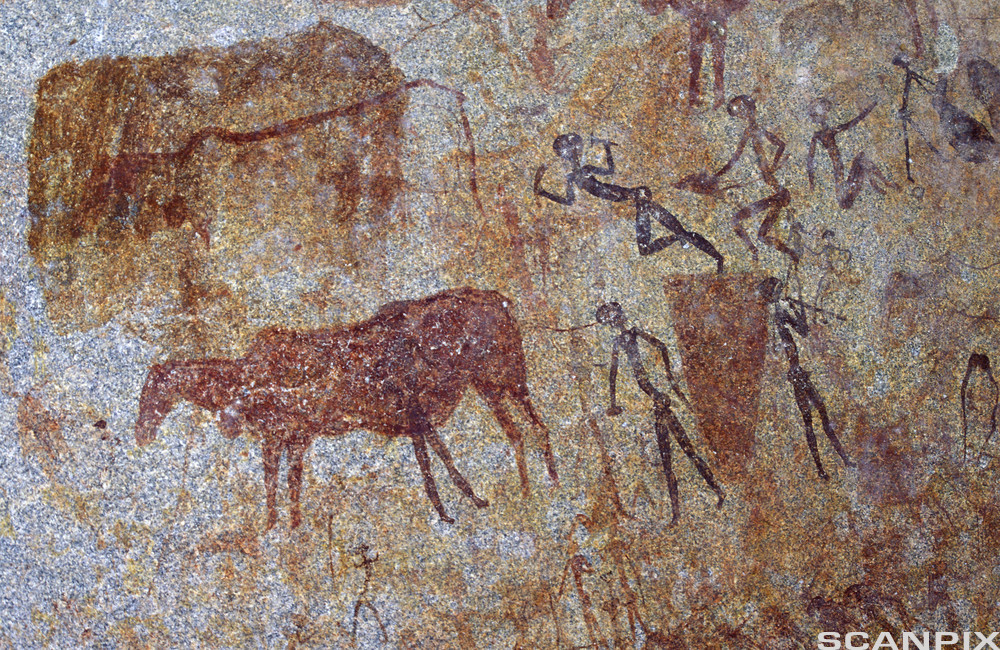
in the cave drawings of vanished beasts:
mammoths, lions, horses, and deer
of hands stencilled red or black
and the men
who danced in the light of the primal fire
before their hunt
so, when dreams come
this ancient language
speaks our secret truths
like stories on walls reflected in the fire light . . .
one question remains
when dreams come
will we dare
to dance in the darkness of our own sacred fire
Sister Lou Ella Hickman, I.W.B.S. is a widely published poet. She published her first book of poetry in 2015 entitled she: robed and wordless.
.
PLEASE NOTE: ARTICLES CAN ONLY BE REPRODUCED IN OTHER SITES WITH DUE ACKNOWLEDGEMENT TO BORDERLESS JOURNAL




 Borderless