In 2015, Shashi Tharoor’s speech at the Oxford Union exploded across social media, striking a chord far beyond academic or diplomatic circles. Framed around the motion “This House Believes Britain Owes Reparations to Her Former Colonies”, Tharoor—alongside eloquent speakers from Ghana and Jamaica—argued persuasively for moral accountability from the former empire. Tharoor’s speech was widely appreciated in India because of the succinctness with which he illustrated how and why colonial rule exploited the subcontinent, and how violence and racism were the order of those days.
“It’s a bit rich to oppress, enslave, kill, torture, maim people for 200 years and then celebrate the fact that they are democratic at the end of it. We were denied democracy, so we had to snatch it, seize it from you,” he said to loud applause from the audience.
But while insightful points such as these formed the crux of Tharoor’s eloquent speech, it was his rapier barbs that had the esteemed audience (and netizens alike) crowing. “No wonder that the sun never set on the British Empire,” he says at one point, referencing a common boast used to illustrate the sheer extent of Britain’s power, “because even God couldn’t trust the English in the dark.”
The speech’s viral success revealed a yearning—particularly among millennials raised on televised debates and editorials—for a mode of discourse that is rapidly disappearing. Where once prime-time slots featured fiery discussions on social and political issues about caste, class, gender, and policy, today’s digital platforms prioritise speed, relatability, and aesthetics.
In the India of today, a viral tweet can spark more conversation than a peer-reviewed article. A beauty influencer’s “Get Ready With Me” vlog is more likely to trend than a lecture by a scholar on social justice. The thought leaders of the past were expected to speak with gravity; the content creators of the present are expected to sparkle. When public intellectuals are replaced by public influencers, the nature of cultural discourse changes. Popular culture, once a mirror held up to society, now leans into escapism. Complex socio-political debates are flattened into clickable soundbites, and intellectual inquiry is often sidelined by algorithm-friendly content categories, sorted by SEO value[1].
Intellectuals once forced us to think harder, ask more difficult questions, live with complexity. Influencers invite us to feel seen, validated, or soothed. One expands the self, the other simply flatters it.
India’s Golden Age of Thought: When Public Intellectuals Shaped the Nation’s Conscience
Once upon a time, India did not lack public intellectuals. In fact, the early decades after Independence saw them thrive because India’s tradition of intellectual dissent is long and storied. Figures like Nehru, Gandhi, Ambedkar, Tagore—they were not just leaders or writers; they were public philosophers.
Thinkers engaged with the moral and political questions of their time, not just within academia but in public forums, books, interviews, op-eds, and essays that reached a wide, engaged readership. They helped build the intellectual spine of a newly independent nation grappling with secularism, caste, democracy, and justice.
Even in Bollywood, cinema once offered social critique—from Guru Dutt’s Pyaasa (Thirsty, 1957) to Shyam Benegal’s Ankur (The Seedling, 1974). They were conscience-keepers, cultural critics, and truth-speakers. They didn’t shy away from controversy—many actively courted it. They weren’t afraid to speak against majoritarianism, economic inequality, censorship, or communalism.
Meanwhile, halfway across the world in Texas, a young boy named Wes Anderson—who would go on to become one of the most distinctive voices in contemporary cinema—found himself deeply influenced by Satyajit Ray. It wasn’t just Ray’s pioneering cinematic style that captivated him, but also his prolific work as a writer and illustrator, and his powerful engagement with public discourse. Through his films, Ray offered a radical and empathetic lens on Indian society, boldly confronting issues such as poverty, gender roles, the tension between tradition and modernity, and the human consequences of social change—perspectives that were remarkably ahead of their time and continue to resonate across cultures.
Dr. A.P.J. Abdul Kalam was one of modern India’s most beloved and influential public intellectuals—a scientist, teacher, and former President who embodied the rare blend of deep technical knowledge and visionary humanism. Revered as the “Missile Man of India” for his pivotal role in advancing the country’s space and defence programs, Kalam also brought science into the public imagination with clarity, humility, and hope. His presidency (2002–2007) was marked by an earnest outreach to young people, whom he inspired to dream beyond the limitations of circumstance. Unlike many in power, Kalam believed in the democratisation of knowledge—he made complex ideas accessible, challenged youth to innovate, and constantly linked progress with ethics and spirituality. In doing so, he redefined what it meant to be a public intellectual in India: not someone cloistered in academia, but a leader who imagined a better future and invited the nation to build it with him.
Brains Behind Paywalls: How Intellectualism Lost Its Spotlight
There’s no shortage of brilliant minds today—but intellectualism requires both platform and patience. Neither is abundant. A YouTuber dissecting colonial legacy in Indian education may get a few thousand views; a beauty blogger with “chai latte skin” content racks up millions. But now, intellectuals are trapped producing work for journals and conferences rather than the public sphere. As a result, public-centred intellectualism has become rare. It’s not because intellectuals of that caliber no longer exist, but that the structures that once made their ideas visible have been buried under layers of institutional gatekeeping.
The decline of the public intellectual isn’t just the result of a shifting media landscape—it’s also tied to how our access to and expectations around knowledge have evolved. There was a time when intellectuals were celebrated as generalists, able to navigate literature, politics, science, and philosophy, and translate complex ideas for a broader audience. Think of Susan Sontag or Bertrand Russell—figures who didn’t confine themselves to narrow academic lanes but moved fluidly across disciplines to spark public thought and dialogue.
Today, intellectual life has become increasingly siloed. Hyper-specialization has turned academia into an insular world where scholars speak primarily to other scholars. Rather than bridging the gap between advanced knowledge and public discourse, modern academics are often locked within their own echo chambers. The public philosopher who once commented on culture and politics has given way to specialists producing work for a niche audience of peers.
Even when academics do attempt to reach beyond their field, they’re often met with suspicion. A historian writing on political theory or a physicist reflecting on metaphysics is likely to be dismissed for stepping outside their “expertise.” Intellectual authority today is rigidly policed, and interdisciplinarity—once a hallmark of great thinkers—is now treated with skepticism.
From Public Intellectuals to Public Aestheticism: How Influence Got a Makeover
Today’s cultural powerhouses operate on a very different wavelength than their predecessors. Where figures like Susan Sontag or James Baldwin once shaped public consciousness through sharp intellect and critical writing, today’s influencers—like Kim Kardashian—wield their power almost entirely through aesthetics. Kardashian doesn’t publish essays; she sets the tone for global beauty trends. With each new look—glazed donut skin, brownie lips, strawberry makeup, and the almost comically indulgent cinnamon cookie butter hair—the Kardashians and Jenners reshape beauty norms with a force that rivals traditional intellectuals.
In India, the landscape mirrors this shift. Influencers like Ananya Panday and Ranveer Allahbadia amass millions of views despite offering little in terms of originality or eloquence. Much of their content borrows from what’s already been done, often repackaged with no clear voice of their own. Unlike cultural figures such as Shabana Azmi or even Priyanka Chopra[2]—whose words once commanded attention and mattered—many of today’s digital celebrities struggle when pulled out of the comfort zone of scripted, bite-sized platforms. Their polished online personas crumble under the pressure of unscripted public discourse.
What we’re left with is a curated illusion, a constant performance of identity. And the troubling part? Young audiences are watching, emulating, and internalising these facades—until, inevitably, a scandal breaks the spell. In an era ruled by surface and spectacle, authenticity has become the rarest currency of all.
If Joan Didion or Arundhati Roy represented a time when public intellectualism had mass appeal, these influencers represent what has replaced it: public aestheticism. A philosopher might spend years constructing a critique on our society, but an influencer can change peoples’ worldviews with a single Instagram post. Influence now moves at the speed of an Instagram story. The philosopher builds theory; the influencer sells a mood. In this new aesthetic economy, they are the message, the medium, and the marketplace all at once. This is not an incidental shift, but a reflection of our broader cultural transformation.
Although, this is absolutely not a wholesale condemnation of influencers. Many use their platforms to raise awareness, fundraise, and spotlight important issues. But influence has become aestheticised. And when beauty, brevity, and branding become the dominant currencies of expression, difficult truths become harder to hear.
Even figures with a platform one would consider intellectual, like a podcast or blog, tend to operate within a different framework than the public intellectuals of the past. The most successful are the ones who know how to package their ideas into easily consumable formats. Their content may demand engagement, but not necessarily deeper thinking. The most successful cultural critics of our digital age are simply a different kind of influencer, one who may sell a worldview rather than a skincare routine, but are selling something nonetheless.
Amidst all of this, we have lost the expectation of being challenged by our cultural figures. We have lost the collective memory of what it means to gather around an idea rather than a trend. We have lost the stamina for long-form thinking. We now crave hot takes instead of deep dives, personality over principle, vibes over values. We’ve also stopped expecting our cultural figures to challenge us. We ask them to inspire us, to entertain us, to market their authenticity. We no longer crowd into halls for heated debates—we scroll.
When Influence Replaces Insight: The Rise of Apathy and the Fall of Public Thought
The culture hasn’t gone quiet though. Indian influencers—fashion bloggers, tech reviewers, lifestyle curators, “finance bros”, even comic creators—are the new cultural capital. They dominate conversations on what matters to people: from wedding aesthetics and productivity hacks to skincare routines and budget investments. The currency of their influence isn’t depth but relatability, not dissent but delight. Even in the realm of “education”, we find influencers gamifying complex financial or political ideas into simplified carousels or 60-second explainers. It’s not necessarily bad—but it is diluted.
It’s also understandable why many hesitate to enter intellectual spaces today—there’s a prevailing sense that everything worth saying has already been said. We live in an age where every thought seems pre-articulated, every argument countered, every counterpoint already dissected. The landscape isn’t lacking in intellectual potential; it’s that fewer people feel confident stepping into the role of a public intellectual, believing true originality is no longer possible.
This mindset breeds an intellectual echo chamber. Rather than contributing to the discourse, many settle into passive consumption, convinced that someone else has already voiced every worthwhile idea.
But the truth is, no conversation is ever truly finished. History shows us that ideas are living things—they shift, adapt, and deepen depending on who engages with them and when. The same philosophical questions that animated thinkers centuries ago continue to evolve, finding new relevance in each generation. Feminism as it was understood in the 1970s is not the feminism of today. Jean Baudrillard’s meditations on media and hyperreality in the 1980s feel hauntingly prescient in our digital age—but our reading of him is inevitably shaped by the world we now inhabit. Every era reinterprets the past, and every new voice brings a fresh lens. That’s what keeps the intellectual tradition alive.
Reclaiming Thought: Can Intellectualism Survive the Age of Spectacle?
So, can the intellectual space be reclaimed, or has it been permanently absorbed into digital spectacle? Long-form discussions found in podcasts, essays, and forums are a great starting point. Platforms of these media types allow for deeper exploration of ideas, where nuance and depth are greatly valued.
And it’s not that intellectuals have disappeared. They are still here, writing essays, protesting laws, mentoring students. But they’ve been pushed to the peripheries of public attention. Their audiences are shrinking, and their words are often drowned out by the louder, shinier pull of influencer content.
But intellectual spaces aren’t only limited to these traditional platforms. Niche online communities like internet book clubs on Fable or Instagram create new ways for people to connect with unique ideas. You can also incorporate intellectual conversation into your everyday life. Attend local events, art galleries, or even start casual discussions among friends to make these topics more accessible and relevant. The intellectual sphere may have shifted, but it isn’t gone. We simply have to work to reclaim these spaces with people who are willing to engage deeply with ideas.
Ultimately, the death of the public intellectual may not be as tragic as it seems, it may just mean that intellectualism is taking on new forms. But we have to ensure we’re not losing sight of what really matters—the depth, complexity, and refusal to settle for easy answers in the pursuit of something greater.
Culture Is Still Loud—It Just Doesn’t Want to Make You Uncomfortable Anymore
There’s another reality unique to India: the active suppression of dissent. To be an intellectual in India today, particularly one critical of the status quo, is to court danger. Writers have been jailed (Anand Teltumbde), journalists have been shot (Gauri Lankesh), and students have been arrested for protest slogans. In such an atmosphere, who would choose to be a public intellectual?
The public intellectual, by definition, is someone who speaks truth to power. In India, speaking truth to power comes at a high cost. And so, instead, we scroll. Meanwhile, the influencer class thrives because they are apolitical by design. Their influence is rooted in apathy, in not asking uncomfortable questions. This is not a coincidence. It is by systemic design. The less we think, the more we consume. The more aestheticised our discontent, the less threatening it becomes. Influencers now perform the soft work of culture—sedating, distracting, pacifying—while hard truths are hidden behind paywalls, FIRs, and broken institutions.
But if the public intellectual is to make a comeback, we as an audience must do our part. We have to choose depth over dopamine, discomfort over convenience. We must resist the temptation to aestheticise every idea until it’s just another lifestyle choice.
Because when thought leaders become brand ambassadors, and reflection becomes a trend, we risk forgetting that ideas—not images—are what truly shape society.
The public intellectual may be on life support, but the conversation isn’t over. It never is.
[1] SEO (Search Engine Optimisation) value refers to the estimated monetary worth of organic traffic generated by a website through search engine optimisation efforts.
Lopamudra Nayak is a poet, freelance writer, and biotechnologist with a passion for literature and storytelling. She writes poetry, book reviews, and reflections on pop culture on her blog, Substack and Instagram.
.
PLEASE NOTE: ARTICLES CAN ONLY BE REPRODUCED IN OTHER SITES WITH DUE ACKNOWLEDGEMENT TO BORDERLESS JOURNAL.
(Excerpted from Ramblings of a Bandra Boy by Ratnottama Sengupta)
Joy Bimal Roy looks back at the many 21 Januarys, his birthday, that have dotted 70 calendars
On 6th February 1950 Baba and Nabendu Kaku arrived together in Bombay to work on Bombay Talkies’ Maa. I wasn’t born then, so I can only wonder if either of them, or their illustrious fellow travellers Hrishikesh Mukherjee and Asit Sen even imagined what a life changing experience that journey would be for each of them and, ultimately, for Indian Cinema.
This small but immensely talented and visionary team — Baba as director, Nabendu Kaku as screenplay writer and Hrishi Kaku as editor — created some of the best loved and most remembered classics of the golden ’50s and early ’60s: Do Bigha Zamin, Devdas, Madhumati, Sujata and Bandini.
When I was born on 21st January 1955, this team was already well established and feted in Bombay film industry. Co-incidentally (or perhaps not, because is there any such thing as coincidence?) six days after my birth, a daughter Ratnottama — Uttama to me — was born to Nabendu Kaku and Kanak Kakima in the same, Mandakini Nursing Home in Bandra. Uttama and I instinctively formed a bond which continues till today and seems to strengthen over the years. For me this became the link between our two families.
*
Some silly astrologer told my parents that they should not celebrate my first seven birthdays — else, ill-luck would befall me. So I grew up going to birthday parties of other children and wondering why I never had one.
That could explain why to date I hate my birthdays. It is a day of introspection and soul searching, assessing the past year of my life for gains and losses. No wonder I am more depressed than usual by the end of the day.
All that changed on my 40th birthday thanks to Sriram, my college classmate, and my sister, Aparajita, who was in Mumbai from Kolkata at that time. Together they conspired to have a small celebration at home. Sriram, ever generous, brought the champagne and glasses as well because he was not sure we had any.
Paradoxically it was possibly the worst time in our lives. We had lost the eviction suit our landlords had filed against us in the Small Causes Court, and had been given four months to vacate the premises, of which two months were already up. My birthday was on 21st January and three weeks after that, on 14th February, we were supposed to vacate our home of 46 years — unless we got a Writ Petition admitted in the High Court.
Plonk in the middle of this mess, the thought of celebrating my birthday had not even crossed my mind. But when Sriram entered holding the champagne bottle aloft like a trophy, along with his petite and demure wife Enakshi, and my classmates Divyakant and Ajay, their love and concern were so palpable that suddenly my spirit soared and I felt free as a bird. If I was blessed to have friends like them, Life couldn’t be so bad after all.
It’s not that I celebrated every year after that but I was no longer traumatized on my birthdays.
*
The first birthday we celebrated after moving into our cottage was my 50th birthday. It doubled as a housewarming party, so it was a riotous affair. Everyone got high thanks to the ministrations of a bartender called Greenville and danced to blaring music like whirling dervishes. Our neighbours complained and the cops turned up.
Not bad for someone who started out in life with no birthday celebrations at all, eh?
*
When my 60th birthday dawned I was not feeling particularly celebratory. But my sister was coming down, this time from Hyderabad, my niece from Dubai and my nephew from England, and I didn’t want to disappoint them.
Our home at that time was overrun with cats and the garden was a mess, so I looked for a more welcoming venue. The only place I could think of was Kekee Manzil, home to our old family friend Kekoo Gandhy, founder of Chemould, India’s first commercial Art Gallery — and his daughters Rashna, Behroz and Shireen. I asked hesitantly but they agreed enthusiastically and I will always be grateful for that.
Kekee Manzil is an elegant and gracious villa, a heritage structure overlooking the Arabian Sea at Bandstand. At one point of time the Gandhy family also owned the adjacent property which once went by the name of Ville Vienna and housed Baba’s mentor Nitin Bose — and now is famous as Mannat, owned by Shah Rukh Khan.
The venue was the hero on that evening filled with friends, food and fun, not me. Because I was feeling singularly ill at ease about my appearance.
I hadn’t had the time or the bandwidth to figure out what to wear for this milestone birthday, so I had to settle for the only new kurta I had. Unfortunately it looked like tent on me. To make matters worse I had burgeoned to 95 kilos, so I felt like a beached whale.
I made a mental resolution. I HAD to lose weight that year. But as they say, the way to hell is paved with good intentions. So my resolution remained just that — until months had gone by…
*
But before the year dovetailed into my 61st birthday, by sheer synchronicity I stumbled into the right dietician for me — and in eight months I lost 16 kg. Cereno, a trendy batch mate, told me about Zara and gave me a style tip for my hair. He said I would look much better if I had a very short haircut, like a crew cut. I didn’t like the idea of a crew cut but I realised I needed a makeover to go with my new clothes.
At the end of it all my reflection in the mirror was unrecognisable. A strange bald man looked back at me. My sister shrieked when she saw me but she was mollified by the favourable reaction of Cereno and other classmates.
The coup de grace was when a poker-faced Cereno borrowed my phone, fiddled with it, and handed it back to me saying he had put my profile on a dating app. “Just wait for five minutes,” he said, “and you’ll get your first hit.” Sure enough, after five minutes my phone went beep!
So in my 60th year I reinvented myself. Better late than never?
About the Book
Ramblingsof a Bandra Boy is a compilation of Joy Bimal Roy’s posts on social media between 2017 and 2020. These slices of life “served without any extra seasoning or fancy garnish” as he puts it, have been described by Rachel Dwyer, professor of Indian Cultures and Cinema at SOAS, London, as jottings in kheror khata, the traditional cloth bound notebook that Satyajit Ray — and his father Sukumar Ray before him — used to pen down thoughts and visuals that are world’s treasure. It covers life in the glitzy Bandra where most of the Bollywood crowd resides… giving glimpses of real life of the giants peopling the cinema screens.
About the Author
Joy Bimal Roy is the son of legendary Indian filmmaker, Bimal Roy, and one of India’s pioneer woman photographers, Manobina Roy. He started his filmmaking stint as an assistant director to Shyam Benegal.
‘So what is it like being the son of Bimal Roy[1]?’ Ratnottama Sengupta asked the author of Ramblings of a Bandra Boy
Ratnottama Sengupta and Joy Bimal Roy. Photo Courtesy: Debashish Sengupta
Rambling, when used for writing – or speech – implies unmapped, confused or, at worst, inconsequential flow of thoughts. In another usage, the word applies to walking in the countryside for sheer pleasure. It is in this second sense that Joy Bimal Roy’s digitally published text, Ramblings of a Bandra Boyis a perfect match of form and content. For, its sweeping take hops from landscape to landscape and life to life of persons who have peopled the world of the author born in a typical Bandra household precisely 70 years ago.
Why typical Bandra household? Because Bandra – derived from the word bandar, meaning harbour – is the Queen of Mumbai’s suburbs. This pocket of history in the heart of the Financial Capital of India is also the home of VIPs, of Bollywood and of political variety too. As the time-weathered Bandra Fort overlooking the Arabian Sea vouches, Bandra predates the British ownership of the Seven Islands gifted to the Crown when Charles II married Princess Catherine of Portugal. Indeed, St Andrew’s Church, in existence since 1575, came up on the strength of Jesuit Priests who won over Koli fishermen winning Christians a stronghold in this part of coastal Maharashtra, much like in Goa.
In the 21st century, Bandra is where Mehboob Studios and Lilavati Hospital stand. Where the Bandra-Kurla Complex defines the dreams of the rich and the rising, overshadowing Asia’s biggest shanty town, Dharavi. And where the awe inspiring Bandra-Worli Sealink bridges the southern extreme of ‘Bombay’ with its ever growing ‘suburbs’.
But all through my lifetime, Bandra has been better recognised as the home of celebrities. Bollywood thespians, Dilip Kumar and Sunil Dutt, to Shah Rukh Khan and Salman Khan; art personalities, KK Hebbar to Kekoo Gandhy; actors, Rekha to Raakhee; directors, Nitin Bose and Hrishikesh Mukherjee, writer Gulzar and cricketer Sachin Tendulkar; umpteen fashion designers and models too have boasted 400050 as their Pincode.
Joy Bimal Roy’s Ramblings takes you on a multi-stop tour of this ‘port’ of India’s social fabric. For, as you skid from one story to another, in no predetermined chronology or thematic order, you get to meet his Yusuf Uncle (Dilip Kumar of Devdas[2] fame) and Bhoba Kaka (Ritwik Ghatak of Madhumati[3]fame), Lata Bai (Mangeshkar) and the Dutts — father Sunil and daughter Priya — who have represented North West Bombay in Parliament even as one member of that family slogged in a jail.
Take a quizzical look at Bollywood divas and peep at actors in their skin labouring on in a posh gym. Get a warm handshake with Shashi Kapoor and gift a sari to Sanjana. Riveting tales of travels to Lebanon, Beirut, Abu Dhabi, Greece, Switzerland, England, San Francisco and San Jose – they’re crowned by nuggets like “I delved into my sister’s recipe book… it has taken the place of Bhagvad Gita in my life” and “I do wish food wasn’t such an important feature in my life. Because it directly correlates to my expanding waistline.”
That’s not all. Here’s a reverential insight into what constituted Shyam Benegal’s greatness — and several irreverent accounts of the crème de la crème schools and colleges that have shaped the author who could have been a top notch contemporary artist, a charming singer, an enviable fashion designer, or an accoladed filmmaker.
Joy Bimal Roy chose not to be either of these. Instead, he stitched together Imagesof Kumbha Mela when he chanced upon the footage that were to be Bimal Roy’s last film. And he directed Remembering Bimal Roy[4]when his father’s birth centenary came around. He has mounted a series of world class exhibitions to showcase the photography of his mother, Manobina Roy, who, along with her twin Debalina Majumdar, was one of India’s earliest woman photo artist. And in her memory he has installed an imposing sculpture of two hands raised in prayer, ‘Requeim’, at the Bandstand promenade. He has got a road named after his venerable father. He has designed the career of musical talents like Alisha Chinai. He has up-cycled heritage saris and jewellery to support hospices. And he has been editing a newsletter chronicling the life of Bandra, the neighbourhood he was born in, grew up in, and continues to breathe life into.
Now Joy has given us Ramblings, a compilation of his posts on social media between 2017 and 2020. These slices of life “served without any extra seasoning or fancy garnish” as he puts it, have been described by Rachel Dwyer, professor of Indian Cultures and Cinema at SOAS[5], London, as jottings in kheror khata, the traditional cloth bound notebook that Satyajit Ray — and his father Sukumar Ray before him — used to pen down thoughts and visuals that are world’s treasure. In this exclusive, he converses about his book and his life.
What is your earliest memory of being the son of Bimal Roy?
Finding out in school from classmates that my father was famous!
What is the strongest impression you retain of 8th January 1966 – the day Bimal Roy passed into eternity?
I remember hearing a song from the basti[6] behind our house while I was taking a bath. That song still haunts me. I wasn’t allowed into the living room where Baba’s body was kept, so I peered in through the slats of the back door of the living room. We lived in an old Parsi Bungalow where the wooden doors were 8 ft high and had moveable wooden shutters. The room was packed to capacity but there was pin drop silence. Time stood still. It hadn’t yet sunk in that I would never see Baba again.
Did you develop a deeper understanding of what Bimal Roy was, in the process of makingRemembering Bimal Roy?
Absolutely. It was a cathartic and moving experience to hear the memories of people he had worked with over 60 years ago. Not only Tapan Sinha, who was with him in New Theatres; poet, lyricist, director Gulzar who had started as assistant in Bandini; Sharmistha Roy, daughter of his art director Sudhendu Roy; and his accountant Amrit Shah – even next generation personalities like Javed Akhtar and Ashutosh Gowarikar remembered him with so much love and respect that it brought tears to my eyes. I discovered anew that Baba was not only a superlative filmmaker but also a wonderful human being.
Did you likewise get to know Manobina Roy a little more through her photography?
Not really. I was fortunate to have her presence for 46 years of my life. So I grew up being photographed and seeing her photos. But it was only after her death that I discovered from a Bengali book called Chhobi Tola that she and her sister Debalina were two of the earliest known women photographers of India.
Has the insight into Bimal Roy films equipped you to be a responsible filmmaker? Or did you gain greater practical experience as an understudy/ through your interactions with Shyam Benegal, Girish Karnad[7], Basuda[8], and Hrishi Kaku[9]?
I had no interaction with Basuda and Girish in connection with film making. What I learned after watching the making of Chaitali[10] — the last film made under the banner of Bimal Roy Productions, nine years after Baba passed away — was how NOT to make a film.
Whatever I learned about filmmaking was from watching Baba’s films and my work experience with Shyam Benegal.
I wouldn’t really describe myself as a ‘filmmaker’ after making one documentary on Baba. However it is true that I have very high standards and living up to them was a big responsibility. After all, I am my father’s son. He was a perfectionist and so am I. It took me six months to edit a one-hour film simply because I was striving to do the best possible job with the material I had in hand.
Before you got into films you have ‘dabbled’ in fashion designing, worked with HMV[11], and now you are a most absorbing and prolific writer. Personally, I have always admired your painting (which I seldom see you do now). And I know you have mesmerised your college events with your singing. Which of these is your natural calling?
All of them unfortunately, which is why I didn’t know which one I should follow. As a result I have been a ‘dabbler’ — to use your own word. You could accuse me of being a dilettante but as I said before, I have high standards. So whatever I did, it was with all my heart and soul.
Tell me about the joys and woes of assisting Shyam Benegal.
That is impossible to describe as one question in an interview. It would be an entire interview! You can, however, get some answers in my book.
Which of the film stars of Bimal Roy’s team have you been closest to?
None. Because I was not even eleven when Baba passed away. But we did keep in touch with Yusuf Uncle. He was incomparable.
What difference in the work culture or cinematic ethics have you noticed between these two legends?
Baba and Shyam? I can only judge Baba from his films, but I worked with Shyam. It’s a difficult question to answer.
Please tell us about Uttama, Papri, Roopu, Sharmistha (Buri?), Aloka – essentially, about the extended Family of Bimal Roy?
That’s what all of them were and are: Family. One accepts and embraces them as they are.
What led you to the Ramblings which has been described as ‘social document of our times’?
My Facebook friends led me to Ramblings. They drove me mad demanding a book. I did it more to oblige them and make them stop making demands.
What next — cinema a la Bimal Roy — or books after Monobina Roy, who, besides being an ace photo artiste and a fabled cook, wrote Jato Door Tato Kachhe?[12]
A Bengali translation of Ramblings of a Bandra Boy.
[2] Hindi movie, 1955, Dileep Kumar (1922-2021) played the titular role
[3] Hindi movie, 1958, written by Ritwick Ghatak (1925-1976)
[4] Joy Bimal Roy lost his father filmmaker Bimal Roy when he was 11 years. Joy remembered very little of his father. ‘Remembering Bimal Roy’ made by Joy Bimal Roy is the search of a son for his father.
Ratnottama Sengupta, formerly Arts Editor of The Times of India, teaches mass communication and film appreciation, curates film festivals and art exhibitions, and translates and write books. She has been a member of CBFC, served on the National Film Awards jury and has herself won a National Award.
.
PLEASE NOTE: ARTICLES CAN ONLY BE REPRODUCED IN OTHER SITES WITH DUE ACKNOWLEDGEMENT TO BORDERLESS JOURNAL
Art by Sophia P, CypressArt by Hugo A, Quezon CityFrom Public Domain
In 1985, famous artistes, many of whom are no longer with us, collaborated on the song, We are the World, to raise funds to feed children during the Ethiopian famine (1983-85). The song was performed together by Michael Jackson, Willie Nelson, Bob Dylan, Ray Charles, Diana Ross, Stevie Wonder, Smokey Robinson, Paul Simon, Tina Turner, Dionne Warwick, Lionel Richie, Billy Joel and Bruce Springsteen. The producer, Julia Nottingham, said: “It’s a celebration of the power of creativity and the power of collective humanity.” The famine was attributed to ‘war and drought’.
Over the last few years, we have multiple wars creating hunger and drought caused by disruptions. Yet, the world watches and the atrocities continue to hurt common people, the majority who just want to live and let live, accept and act believing in the stories created by centuries of civilisation. As Yuval Noah Harari points out in a book written long before the current maladies set in, Homo Deus (2015), “…the stories are just tools. They should not become our goals or our yardsticks. When we forget that they are mere fiction, we lose touch with reality. Then we begin entire wars ‘to make a lot of money for the corporation’ or ‘to protect the national interest’. Corporations, money and nations exist only in our imagination. We invented them to serve us; why do we find ourselves sacrificing our lives in their service?”
What Harari says had been said almost ninety years ago by a voice from another region, by a man who suffered but wrote beautiful poetry, Jibanananda Das… and here are his verses —
“The stories stored in my soul will eventually fade. New ones— New festivals—will replace the old — in life’s honey-tinged slight.”
We carry the poem in this issue translated by Professor Fakrul Alam, lines that makes one dream of a better future. These ideas resonate in modern Balochi poet Ali Jan Dad’s ‘Roll Up Not the Mat’ brought to us in English by Fazal Baloch. Korean poet Ihlwha Choi’s translation takes us to longing filled with nostalgic hope while Tagore’s ‘Probhat’ (Dawn) gives a glimpse of a younger multi-faceted visionary dwell on the wonders of a perfect morning imbibing a sense of harmony with nature.
“I feel blessed for this sky, so luminous. I feel blessed to be in love with the world.”
Starting a new year on notes of hope, of finding new dreams seems to be a way forward for humanity does need to evolve out of self-imposed boundaries and darknesses and move towards a new future with narratives and stories that should outlive the present, outlive the devastating impact of climate change and wars by swapping our old narratives for ones that will help us harmonise with the wonders we see around us… wonders created by non-human hands or nature.
We start this year with questions raised on the current world by many of our contributors. Professor Alam in his essay makes us wonder about the present as he cogitates during his morning walks. Niaz Zaman writes to us about a change maker who questioned and altered her part of the world almost a century ago, Begum Roquiah. Can we still make such changes in mindsets as did Roquiah? And yet again, Ratnottama Sengupta pays homage to a great artiste, filmmaker Shyam Benegal, who left us in December 2024 just after he touched 90. Other non-fictions include musings by Nusrat Jan Esa on human nature contextualising it with Milton’s Paradise Lost (1667); Farouk Gulsara’s account of a fire in Sri Lanka where he was visiting and Suzanne Kamata’s column from Japan on the latest Japanese Literary Festival in the Fukushimaya prefecture, the place where there was a nuclear blast in 2011. What is amazing is the way they have restored the prefecture in such a short time. Their capacity to bounce back is exemplary! Devraj Singh Kalsi shares a tongue-in-cheek musing about the compatibility of banks and writers.
Exploring more of life around us are stories by Sohana Manzoor set in an expat gathering; by Priyatham Swamy about a migrant woman from Nepal and by Naramsetti Umamaheswararao set against rural Andhra Pradesh. While Ahmad Rayees gives a poignant, touching story set in a Kashmiri orphanage, Paul Mirabile reflects on the resilience of a child in a distant Greek island. Mirabile’s stories are often a throwback to earlier times.
In this issue, our book excerpts explore a writer of yore too, one that lived almost a hundred years ago, S. Eardley-Wilmot (1852-1929), a conservationist and one who captures the majesty of nature, the awe and the wonder like Tagore or Jibanananda with his book, The Life of an Elephant. The other book takes us to contemporary Urdu writers but in Kolkata —Contemporary Urdu Stories from Kolkata, translated by Shams Afif Siddiqi and edited by Shams Afif Siddiqi and Fuzail Asar Siddiqi. A set of translated stories of the well-known Bengali writer, Bibhutibhushan Bandopadhyay by Hiranmoy Lahiri, brought out in a book called Kaleidoscope of Life: Select Short Stories has been reviewed by Somdatta Mandal. Malashri Lal has discussed Basudhara Roy’s A Blur of a Woman. Roy herself has explored Afsar Mohammad’s Fasting Hymns. Bhaskar Parichha has taken us to Sri Lanka with a discussion on a book on Sri Lanka, Return to Sri Lanka: Travels in a Paradoxical Islandby an academic located in Singapore, Razeen Sally.
Bringing together varied voices from across the world and ages, one notices recurring themes raising concerns for human welfare and for the need to conserve our planet. To gain agency, it is necessary to have many voices rise in a paean to humanity and the natural world as they have in this start of the year issue.
I would like to thank all those who made this issue possible, our team and the contributors. Thank you all from the bottom of my heart. I cannot stop feeling grateful to Sohana Manzoor for her fabulous artwork too, art that blends in hope into the pages of Borderless Journal. As all our content has not been mentioned here, I invite you to pause by our content’s page to explore more of our exciting fare. Huge thanks to all readers for you make our journey worthwhile.
I would hope we can look forward to this year as being one that will have changes for the better for all humanity and the Earth… so that we still have our home a hundred years from now, even if it looks different.
Shyam Benegal (1934-2024)Street art: Shyam Benegal From Public Domain
“If I enjoy the film I have made, then I am quite certain viewers will too. And what business do I have to burden viewers with what I myself do not enjoy?”
–Shyam Benegal (in an interaction with Ratnottama Sengupta)
Art is not elitist. Nor is artistic experience one that only the elite can enjoy. The world’s greatest art has been accessible to all mankind. Taj Mahal was erected in memory of Mumtaz Mahal but it is for the world to access and admire. The cave paintings at Ajanta propagated a certain philosophy but thousands of years later too they mesmerise one and all. And, anyone who goes to Tanjore temple experiences its magnificence. Cinema too is capable of providing such universal experience. What is more, it is possible to provide such an experience without distorting or oversimplifying an idea.
Shyam Benegal (1934-2024) had dinned this belief into me when I interviewed with him for the first time — in Bombay of 1980. Seven years before that he had proved it to the world with his debut film, Ankur (The Seedling, 1974). It had announced itself to cineastes through its nomination for the Golden Bear at the 24th Berlin Film Festival and had gone on to win three National Awards. In the wake of stylised trendsetters like Bhuvan Shome (directed by Mrinal Sen, 1969), Uski Roti (Others’ Bread, directed by Mani Kaul, 1969) and Maya Darpan (Illusory Mirror, directed by Kumar Shahani, 1972), everyone expected Ankur to be another “arty” film. In other words, “pretentious”, “pseudo intellectual”, even “boring”. Far from refusing to peter out of theatres due to lack of footfalls, the Rs 5-lakh budget film went on to garner millions because it engaged audiences of every shade and strata. And it was hailed as marking a new beginning in Indian cinema that had roots in the narrative tradition of earlier masters such as Bimal Roy and Benegal’s own cousin, Guru Dutt.
No, Ankur was not a fluke, Nishant (Night’s End, 1975) had proven. Once again, Benegal had set his film in Telengana, that part of Andhra Pradesh which had seen him grow up with his siblings in the household of his father whose livelihood came from a photo studio. “Alwal was a semi-rural semi-urban area, so I had seen both sides of a feudal society coming to grips with modernity setting in,” Benegal had explained to me.
Ankur had touched upon several ills of the feudal system: class difference, caste inequity, sexual exploitation of women, of the physically challenged, and even alcoholism among the poor. It had a sequence of thrashing, and it closed with the indication of violent protest. Almost all these themes would flower into independent saplings in Benegal’s subsequent films. Because the important thing for him, as he once said to BBC, was that “post-Independence India was changing its feudal character to the kind of society we wanted to create. Industrialisation at one level, creation of the middle class at another level, and disappearance of the regressive values of the feudal life.”
At that time, when I was yet to step out of my teens, I was deeply impacted by the oppressive ‘liberty’ of the caste person who thought he had a right over the lowborn woman. The empowerment of women was a theme Benegal felt strongly about. “The idea had started during the national movement with Gandhi, who first talked about women having equal responsibility,” pointed out the director of The Making of a Mahatma (1996). “They have to become aware of their strength and empower themselves because 50 percent of your population comprises of women.”
*
From the birth of a new nation to the birth of a nation, Benegal constantly grappled with these themes. With “the whole business of tradition and modernity,” to borrow his words. “In an ancient society like India where so much of tradition is still valued and revered, when will we get rid of the dubious virtues?” he wondered.
Benegal functioned with a sensibility that was native to the length and breadth of the land that was his canvas. “As long as one functions with one’s sensibility, it will resonate with every person of that sensibility,” he maintained.
To me the most endearing trait of a Benegal film is the simplicity of its narrative. His incidents came out of life, his characters were from his surroundings. And his unfolding, though devoid of gimmick, was not bereft of drama nor of violence. He learnt to steer clear of artifices while making ad films where, “because you have to make your point in one minute, you tend to fall back on gimmick.”
Clarity of purpose and simplicity of narration were the two rails that never let his script go off into a meander of ultra mystical or complex metaphors. Magic realism? Hyper realism? High pitched melodrama? Benegal had need for none of these ploys. “The most complex of ideas have a simple way of projecting themselves,” he’d say. That, and not its reverse, was the most valid mantra of his life.
Why did the Phalke or the Padma Bhushan awards like simple story telling? “Because I like to involve people, and that happens when there is a dramatic juxtaposition of characters.” The use of drama did not in any way dilute the significance of his subject — be it casteism (Samar, Conflict, 1999), women’s empowerment (Bhumika, Role, 1977), portrayal of the principles of national heroes (Making of the Mahatma), or the struggle to wrest power from an oppressor (Junoon, The Obsession, 1978). Be it in feudal Telengana (Nishant), in a Borgadar’s Bengal (Arohan, The Ascent, 1982), an industrial Bombay (Kalyug, The Age of Vice, 1981), in Bose’s Burma (The Forgotten Hero, 2005), or Mujib’s Bangla (Mujib: The Making of a Nation, 2023).
In the process he dispelled the notion that showing our reality in cinema cannot engross or entertain. In fact, he questioned the very definition of the word ‘Entertainment’. “If a serious talk or a news holds you spellbound, isn’t that also entertainment?” he had asked me.
So, in order to engage the viewers, Benegal plunged into problems and miseries of the marginalised Indian: the milkman (Manthan, The Churning, 1976) and the weaver (Susman, The Essence, 1978), the untouchable (Samar) and the glamorous (Bhumika), the royals (Zubeidaa, 2001) and the entertainer (Sardari Begum, 1996), the middle class households where women are mere birthing machines (Hari Bhari, 2000), or the illiterate voters of Sajjanpur (Welcome to Sajjanpur, 2008).
Through all these voters, men and women, landlords and servants, on the banks of Katha Sagar (A Sea of Stories, 1986, TV series) or in the arid Birbhum or in the Mandi (Market Place, 1983) of flesh, Benegal made spectators of us. “Even a road accident turns us into spectators, some mute, some aggressive, some caring,” he’d pointed out. “What is it we want to experience when we rush to the window when we hear a car screeching to a half?” he’d asked. “Why is an unanticipated death — or murder — part of the entertainment formula? Because the adrenaline rush, the excitement in these exorcises our fears,” he had explained.
But Benegal’s wasn’t a conventional definition of entertainment. Nor did he decry the use of violence in mainstream cinema. “Indeed, it helps society because viewers find vicarious release from the stress that builds up in the tension filled life in urban societies.” As for his own films rooted in the remote pockets away from the metros? “Sometimes we need to use force because some social problems have got so deeply entrenched,” he was unabashed about violence in his films. “Change in certain situations can come only from the use of violence. But be careful never to lose your moral compass,” he immediately warned me. “Violence cannot be indiscriminately justified nor universalised. And in no circumstance should it be glamourised.”
*
So human impulses, and social well-being were his prime concern. The constant interaction between an individual and his or her milieu; suffering inequities, and standing up against exploitation — we gained insight into these when we sat in darkened auditoriums to watch Arohan, Sardari Begum, Mammo (1994), Well Done Abba…(2010)
Socio-economic. Socio-political. Socio-legal. No label of genre could own Shyam Benegal. Because? “That will restrict my own thinking. How can I keep pace with the galloping changes that come with the ticking of centuries? And when the march of science unleashes computers and cellular phones, Internet and digital filmmaking?”
But what prompted his choice of subject every time he sat down to work on a script — with Shama Zaidi or Girish Karnad, Satyadev Dubey or Khalid Mohamed[1]? “There’s an electic streak in me that will not let me go where I’ve been before or do what I’ve done before,” Benegal was clear. So historical patterns to saw him go from The Making of a Mahatma on Gandhi, the advocate of non-violence, to Bose, The Forgotten Hero who escaped home incarceration and travelled through Himalayan hurdles and joined the Japanese to fight the British colonisers of India. From the Junoon of the Sepoy Rebellion of 1857, to Bharat Ek Khoj (India, a Search, 1988 TV serial) exploring the roots of India. From my Samvidhan (2010, TV mini-series), the formulation of the Constitution that is the firm foundation of the nation he mapped through his films, to Mujib on the birth of Bangladesh.
This refusal to be contained in a box had seen Benegal go from making promotional ads to documentaries on Steel Authority of India and Artificial Insemination in Animal Husbandry, on Nehru and Satyajit Ray. Benegal’s refusal to be boxed and labelled saw him make
Manthan and Hari Bhari — two prime examples of turning a documentary subject into a feature film. Why, his varied interest saw him making a documentary that mapped the course of a raga which originated with Mallikarjun Mansur hearing a leaking tap in the kitchenette of a friend in Bombay – and went on to capture the spirit of the financial capital!
What explains the prolificity of the man who celebrated his 90th birthday on December 16 and bade goodbye a week later? His indomitable and indefatigable spirit.
Unusual Concerts: The documentary on Mallikarjun Mansur (1910-1992) and Bombay
Ratnottama Sengupta, formerly Arts Editor of The Times of India, teaches mass communication and film appreciation, curates film festivals and art exhibitions, and translates and write books. She has been a member of CBFC, served on the National Film Awards jury and has herself won a National Award.
.
PLEASE NOTE: ARTICLES CAN ONLY BE REPRODUCED IN OTHER SITES WITH DUE ACKNOWLEDGEMENT TO BORDERLESS JOURNAL
Ratnottama Sengupta, an eminent senior film journalist, converses with Divya Dutta, an award-winning actress, who has authored two books recently, Stars in my Sky and Me and Ma at a litfest in Odisha. Sengupta directs us with her questions to a galaxy littered with Bollywood snippets and emotional stories about life.
Divya you are in this literature festival organised by Shiksa O Anusandhan (SOA)[1], Bhubaneswar with your second book, Stars in My Sky[2]. But your life as an author started with Me and Ma[3]. So your first book was on your personal life. Didn’t your publishers want to know more about your professional life first?
l never had any motive to become an author, you know! My life has been very organic. Things have just happened. Me and Ma wasn’t planned either. My biggest fear was, l didn’t want to lose my mother. Life teaches us that we don’t lose anyone. They may stop living outside of us but they stay on inside us. In our heart. And we have the security that they won’t go away from there. But l wanted to celebrate my parents.
Many a times our dreams don’t match our parents’. Some 25 years back, it was impossible in a doctor’s family to imagine that l would be an actor. There are many parents who force their children to do what they want, they don’t care to understand their children’s dreams or interests. But my mother did.
I would often flip through the pages of Stardust, a magazine which was very popular then. One day an advertisement for a talent hunt caught my eyes. l applied with two amateurish photographs clicked by my brother and never expected to get selected. Much to my surprise, l got selected. So I told my mother, l have to go to Mumbai for an audition.
Both, my brother and I were standing in front of her, our eyes downcast, pin drop silence in the room. My mother said, “You have your second year exams…” And l said, “l promise l will work very hard.” She said, “Look at me.” I looked up. She asked, “Are you sure?” There was a few seconds’ pause. And in those few seconds l realised that this is what l want to do in life.
My mother said, “Okay fine, I am with you.” At that moment happiness filled my heart. And l knew l can never let down this parent because she has believed in me and stood by me, come what may. When she was in the hospital l thought to myself, “Shall l cry or shall l celebrate her?” And l realised l wanted to celebrate her.
So I called Penguin and told them l wanted to write about my mother. They said, “It sounds beautiful, please go ahead. What do you call it?” Till then I had not even thought about what to call it! The title that came out of my heart was Me and Ma because it is the story of a mother and a daughter.
As you said, The Stars in My Sky is commercially attractive but nothing can be more fetching, more precious than your mother. So to me Me and Ma was a bestseller from the outset. I could connect with the readers through the book, through the audio book and now the Hindi version is also out.
Words from the heart!
You see, we don’t build friendship with our parents – neither do our parents. This book is about diminishing those gaps. Children, talk to your parents. And parents, don’t think that you are older, your children should listen to you. Parents too should listen to their children though they may think differently.
I was very fortunate to have outstanding parents. So whenever people told me they had read the book l would call my mother to say, “Mamma l love you.” Many a times we do not say that. We take our parents for granted, and perhaps rightly so — other than our parents, whom can we take for granted? But having said that, I will repeat: We certainly need to convey our love.
The same way parents should convey their love to their children?
Everything in life is mutual but parents, especially a mother’s love is unconditional. Many times when we are in a rush we tell them to “hang up”. Now, when she’s no more, l think, “Whom do l call up when l want her to pick up the phone!”
You touched the core of my heart. When my mother passed away, the first thought that crossed my mind was, “l can never call her again!”
I do call her, and we talk. The bell rings from my heart and we have fun talking, bade majje ki baat hoti hain.[4]
You wrote for your school and college magazines but at which point did you realise that expressing with words rather than emoting is what you want to do? Of course younger yearsare more about being in front of the camera – later, with your pen dipped in experience, you turn reflective.
All these things are gifts from the universe. When l was writing in my school and college magazines, those were not coming out of experience but were full of sincerity, from my heart. My first love always was to face the camera –- perhaps because l am an ardent fan of Mr Bachchan[5]. I saw him on the screen when l was four or five and was mesmerised. I wanted to belong where he was, which world is it? l wanted to go there.
Remember the song, Khaike paan Banaraswala?[6] I would tear my mother’s dupatta or sari and wrap it around my waist over my kurti. Paan wasn’t allowed, so I would stain my lips with maa’s lipstick. I would invite the neighbourhood kids and tell them that, if they clapped louder after my performance, they would get sweets-and-savoury and rooh afzah[7]too. I loved the claps, the appreciation, the acknowledgment but above all the performance was what l loved most.
As a student too I loved to entertain my class between two periods. I was the head girl but l was the naughtiest in the classroom. My friends would ask me to perform and l performed. So performance is what l always enjoyed. Alongside I wrote. Perhaps I had been experiencing the magic of words.
Emoting beautiful words penned by others is an actor’s job. Beautiful words always touch our hearts. I experienced the magic of words as an actor. When l started writing it wasn’t for a film, it was for me. And it was to find a different world that resonates with me. So, both go parallelly.
Both writing and acting are based on lived experiences. You write about experiences in your life; you also portray a character from your life experience. Let’s hear how your life moulded your characters.
Sure! Let me tell you about Isri Kaur in Bhaag Milkha Bhaag[8].
My mother was a Doctor in a rural area. If the ladies who came for treatment were asked, “How are you?” They would cry. “You are fine?” and they could cry. They’d cry for everything. After school l used to sit in my mother’s clinic and watch everything. I would wonder why these ladies wouldn’t speak but only cry!
Cut to Bhaag Milkha Bhaag. When Rakeysh Omprakash Mehraji cast me he said, “You don’t have much of dialogue. But you must speak through your eyes.”
“No problem,” I replied.
Now let me tell you about the power of costume. I had gone in jeans for a rehearsal of the scene where I’m washing the utensils, but things were not going right, there was a gap somewhere. Then Rakeyshji asked me to wear my costume.
I said, “l’m absolutely comfortable Sir!”
He said, “I insist.”
I changed into a salwar kameez, draped the dupatta behind my ears and then wrapped it around myself — and magic happened. I was washing as if l were a pro! The Director later told me l’d put my hand on burning coal and got burnt, but l don’t have any recollection of that.
Suddenly, l recognised Isri Kaur! She could be the lady who’d come to see my mother. She was there in my subconscious, and tears just trickled down my eyes.
Scenes from Bhag Milkha Bhag. Photo provided by Ratnottama Sengupta
At the end of the scene, l was hugging Milkha. Rakeyshji said, “Give it your end.” So l thought to myself, “Should the end be so clichéd! Brother and sister hug each other, and that’s it?!” All of a sudden l realised that the roles we play, the characters, also have subconscious memories. I remembered Isri Kaur had, as a child, seen Milkha saluting his father, “so do it!” I don’t know where the voice came from but it did. I left that embrace and saluted him just like he did. The entire set fell silent. Every person in the team was crying and that became a cherished moment. This is the power of the subconscious!
Now my eyes are moist! But just as ocean gives back what it takes, so does the ocean that’s life.
Beautiful. So aptly said!
Divya you have two books to your credit. Me and Ma is so personal, and The Stars in My Sky probes your connection with the outer world. What was the difference in writing these two books?
There’s a big difference between writing and acting. Each has a different feel altogether. In acting you part with yourself and allow the character to come in.
You internalise an outsider.
You have put it beautifully. Yes, writing is extremely personal — as personal as my experience with my mother. But Stars in My Sky is my experience with the people l have encountered on the sets. People l shared my movie journey with: Amitabh Bachchan, Shabana Azmi, Irrfan Khan, Javed Akhtar, Gulzar, Shahrukh, Salman…
In the course of making a movie we meet so many people. We cannot say, ‘This person has given me this character,’ or ‘this person has made me a star’. But each of them did something beautiful which l will always remember. Something that brought a smile to my face at that moment. So l thought, l should write about those moments — and you cannot capture those without being personal.
And when you write something on a director or a writer you need to share it with them. These were my personalised accounts. But I’ve had the most overwhelming experience sharing the chapters with them. I saw actors and directors alike cry on reading their chapters. One person l was sharing with over the phone fell silent. He did not speak, nor did I. And l realised that, many a times we don’t say, ‘l like this thing of yours’ or ‘what you did for me made a big difference in my life, thank you.’ So this silence was most rewarding.
It’s so very important to let people know they’ve made such an impact! Now, since we are in a lit fest – which is a celebration of words – l’d like to ask you: what is the thrill in holding a printed book in your hands? Let me elaborate: Today so many things are online. We type or key-in more than we write with pen on paper. Yet I always want to touch the book. After retiring from The Times of India, much of my writing got published online. Some of these got published as an anthology, Monalisa No Longer Smiles[9]. I was thrilled to hold a copy of that book. Why?
l can certainly tell you about scripts. These days many directors and producers say, “Shall l mail you the script?” I tell them, “Please send me a bound script.” It imparts a sense of belonging, like the power of hugging. When we hug our book, we can feel the power of touch. So I hug my script, my copy, with my name written over it… It’s fun turning the pages rather than scrolling with your finger. The smell of paper, the sound of flipping the pages, maybe reading while eating had left a spot of turmeric… All these give me the feeling, it’s mine. The touch, the smell, of a new book will always remain my first love.
You just said you’ll write stories. Will you also write scripts, and direct them?
I’m in love with acting. And, people who write good screenplays should do that. At the same time, we should be open to life. I never knew l would be an actor, I never knew l would be an author, l don’t know what l will be in future. So l say ‘Yes!’ to what life offers us.
Right – Life is a journey, not a destination.
I will go back a little bit to Stars in My Sky. You have mentioned and we also know that Rakeysh Omprakaash Mehra, Yash Chopra, Shyam Benegal, Shabana Azmi who has written the Foreword, are important parts of your career. Can we peep into that world?
I have been fortunate to work with some brilliant and legendary directors. Let me tell you some stories.
Shyam Benegal is one of the most approachable and humble directors ever. When l came to Mumbai from Punjab, no one said ‘No’ in this industry. Who knows when you will require whom? So when l visited production houses they all said, Yes, they will work with me. And i believed them all. And l called Ma to say l was doing 22 films. Of these, 20 never happened and two were made with other heroines, not me. So I was heartbroken.
During that time l met Shyam Benegal at the premier of Train to Pakistan. I said, “Sir l want to meet you.” He said, “Okay. This is my number, call me.” By then I had become cynical, I thought, ‘Is it that simple?’ But I went to Shyam ji’s office – and he was truly honest. “My film’s casting is done,” he said, “but there is one sequence of folk dance. Will you do that?” I said, “Of course Sir.” The film was Samar. He said, “l will need seven days.” Seven days? Then l will have to learn dance and a lot of things, I thought.
On the very first day he asked me, “What’s your hobby?” I said, “Cooking Sir, l love cooking.” “Okay,” he said, “go to the kitchen, with your co-stars, and make something you like.” I was surprised – when will the dance rehearsal start? But l went to the kitchen, there were Seema Biswas, Rajat Kapoor and others. I used to call Seema Biswas Ma’am. In the process of cooking the formality gave way to familiarity and warmth. Suddenly I found myself saying, “Didi pass me the salt, the paratha is getting burnt!” So Ma’am turned to Didi — and that translated into my chemistry with them in front of the camera. Unassumingly it moulds you into the character, without you being aware of it!
Then he told me, “Go to the folk dancers and watch them dancing.” I went, I saw them dancing, and came back. “Now listen to the song,” he told me. I listened, and responded, “The song is beautiful Sir!” “So choreograph it,” he said. “Me Sir!” I squeaked. Here was Shyam Benegal, who could get any choreographer to do it, but he asked me, all of 18, to do that. Was I nervous! I couldn’t sleep that whole night. But more than nervousness or excitement was the feeling of responsibility: none other than Mr Benegal had asked me to choreograph the song. And when I did it, he asked me to teach it to the dancers. The next day went by in teaching them their dance only!
In Welcome to Sajanpur directed by Shyam Benegal In Irada (Intention) directed by Aparnaa SinghDivya Dutta in various roles. Photos provided by Ratnottama Sengupta
What a wonderful way to groom a talent!
The day after was the shoot. A night shoot. The entire crew, cast and the villagers were there to cheer me up. There was a 7-camera setup shooting the dance at one go but l was looking at one person alone – Mr Benegal: he was telling me, “Do it, do it.”
I did it to loud cheer. l was scooped up by my co-stars. I felt so beautiful, and so confident. With gratitude l turned around to thank Shyam Babu, but he had left for the next shot! Nothing mattered to him, but he had left behind a girl who had learnt how to take responsibility. A girl who now knew she had it inside her.
Fabulous! This is what make them icons!
Divya Dutta (born 25 September 1977) is an Indian actress and model. She has appeared in Hindi and Punjabi cinema, in addition to Malayalam and English-language films. She has received many awards including a National Film Award, a Filmfare OTT Award and 2 IIFA Awards.

Highlights in Acting:
1) *Shaheed-e-Mohabbat Buta Singh*/ Punjabi/ 1999
2) *Welcome to Sajjanpur*/ 2008/ Director: Shyam Benegal
3) *Delhi-6*/ 2009/Director: Rakeysh Omprakash Mehra
4) *Stanley Ka Dabba*/ 2011/ Director: Amole Gupte
5) *Bhaag Milkha Bhaag*/2013/ Director: Rakeysh Omprakash Mehra
6)*Irada*/ 2017/ Director: Aparnaa Singh
*Divya Dutta got National Film Award for Best Supporting Actress in Irada*

-- (Compiled by Ratnottama Sengupta)
[1] Studies and Research (translation from Hindi). SOA is a deemed University in Bhuwaneswar.
[2]Stars in My Sky: Those Who Brightened My Film Journey (2022)
[9]Monalisa No Longer Smiles: An Anthology of Writings from across the World (2022), Om Books International
.
Ratnottama Sengupta, formerly Arts Editor of The Times of India, teaches mass communication and film appreciation, curates film festivals and art exhibitions, and translates and write books. She has been a member of CBFC, served on the National Film Awards jury and has herself been the recepient of a National Award.
.
PLEASE NOTE: ARTICLES CAN ONLY BE REPRODUCED IN OTHER SITES WITH DUE ACKNOWLEDGEMENT TO BORDERLESS JOURNAL
An innovative rap contest between Gandhi and Martin Luther King, Gandhi as a stand-up comedian, his life as a musical, and at least seventeen actors portraying him across numerous films. No other political and spiritual leader has influenced our cultural discourse as much as M.K. Gandhi. This despite Gandhi’s deep-rooted aversion to cinema and theatre. Shantanu Ray Chaudhuri looks at the legacy of Gandhi in films, plays, songs and TV shows.
“Slim be a combination of an actual kamikaze and Gandhi.” This is Eminem, seventy years after the Mahatma was assassinated, in a song from his 2018 album Kamikaze, that also became the theme song of the Marvel film Venom. It is interesting to conjecture what the bhajan-loving apostle of peace and non-violence would have to say about being referenced by the hip-hop rapper in a song whose very next lines talk of killing and use the F-word.
Probably no other political leader anywhere in the world has been part of popular culture – films, songs, music videos, animation shows, graphic novels – as much as Mohandas Karamchand Gandhi. Newsreels on him run into hundreds of hours. A China-based journalist, A.K. Chattier, put together one of the first celluloid versions of the Mahatma’s life and times from archival material available, sourcing rare footage. Unfortunately, both the print and the negative have been lost.
Beginning with the American feature documentary Mahatma Gandhi: Twentieth-century Prophet in 1953, to The Gandhi Murder, a conspiracy theory film on the assassination, in 2019, he has been part of at least thirty films. Even the Marvel film Age of Ultron has his footage. As many as seventeen actors have played him onscreen: J.S. Casshyap, Ben Kingsley, Sam Dastor, Jay Levey, Yashwant Satvik, Annu Kapur, Rajit Kapur, Mohan Gokhale, Naseeruddin Shah, Surendra Rajan, Mohan Jhangiani (voiced by Zul Vilani), Dilip Prabhavalkar, Dr Shikaripura Krishnamurthy, Avijit Datta, S. Kanagaraj, Neeraj Kabi and Jesus Sans.
Of these, Sam Dastor featured as the Mahatma in Lord Mountbatten: The Last Viceroy (1986) and Jinnah (1998), while Surendra Rajan has donned Gandhi’s garb as many as six times, in Veer Savarkar (2001), The Legend of Bhagat Singh (2002), Netaji Subhash Chandra Bose: The Forgotten Hero (2005), the TV movie The Last Days of the Raj (2007), the short film Gandhi: The Silent Gun (2012) and Srijit Mukherji’s Gumnaami (2019).
Gandhi and Early Indian Cinema
It was common in the 1930s and 1940s for film hoardings to have life-size pictures of Gandhi over the photographs of the stars. The protagonist of Kanjibhai Rathod’s mythological Bhakta Vidura (1921), the first film to be banned in India, resembled Gandhi, cap and all. Ajanta Cinetone’s Mazdoor (1934), written by Munshi Premchand, too was banned, and promoted as ‘the banned film’, as it dealt with Gandhian principles. Produced by Imperial Film Company and directed by R.S. Chaudhary, Wrath (1931) had a character called Garibdas who fights untouchability. The censors cut out many of its scenes and renamed it Khuda Ki Shaan. Vinayak Damodar Karnataki’s Brandy Ki Botal (1939) took up Bapu’s campaign against liquor and referred to Gandhi as ‘azadi ka devta’.
The Feature Biopics
The most well-known of these is Richard Attenborough’s 1982 film. In the making for over twenty years, it remains, warts and all, the definitive film on Gandhi. And though Attenborough made the cardinal error of falling prey to what Nehru had warned him against at the outset when the director had met him with the proposal in 1963 – “Whatever you do, do not deify him … that is what we have done in India … and he was too great a man to be deified” – there is no doubt that this is an epic labour of love that delivers a series of spectacular set-pieces of great emotional heft.
As the filmmaker himself observed, “It took me 20 years to get the money to get that movie made. I remember my pitch to 20th Century Fox. The guy said: ‘Dickie, it’s sweet of you to come here. You’re obviously obsessed. But who the f***ing hell will be interested in a little brown man wrapped in a sheet carrying a beanpole?’” As it turned out, the whole world was, as was the Oscar committee. And Ben Kingsley set a benchmark for the onscreen Gandhi that has been impossible to top over forty years later. So complete was the identification that a few years later a popular Hindi film, Peechha Karro (d: Pankaj Parashar, 1986), had a character swear by Ben Kingsley instead of Gandhi.
Ben Kingsley
Surprisingly, despite the many incarnations of the Mahatma on cinema, Gandhi is only one of two full-length feature films to deal with his life. The other one being Shyam Benegal’s The Making of the Mahatma (with Rajit Kapoor essaying the role), which as its Hindi title, Gandhi Se Mahatma Tak, suggests, deals primarily with his experiences as a barrister and in South Africa. Several biopics on national leaders of the freedom movement feature Gandhi in important cameos. These include Sardar (d: Ketan Mehta, 1993, Annu Kapoor as Gandhi) and Jabbar Patel’s Dr B.R. Ambedkar (2000, with Mohan Gokhale as Gandhi), probably the first time the Mahatma was shown in a negative light. There was also the 2011 film Dear Friend Hitler, based on his correspondences with Adolf Hitler (played by Raghubir Yadav).
These biographical films include Gandhi, My Father, which deals with his tortured and tumultuous relationship with his son, Harilal Gandhi. Based on the latter’s biography Harilal Gandhi: A Life by Chandulal Bhagubhai Dalal, the film was directed by Feroz Abbas Khan, who had earlier helmed a stage version, Mahatma Vs Gandhi (based on Dinkar Joshi’s Gujarati novel Prakashno Padchhayo), starring Naseeruddin Shah and Kay Kay Menon as Gandhi and Hiralal respectively. The film version starred Darshan Jariwala and Akshaye Khanna as father and son respectively.
The Adversarial Gaze
Existing with the eulogies are a handful of films that portray the world of his adversaries – people like Nathuram Godse and Veer Savarkar, in particular. Unfortunately, none of these have the rigour of the works of Richard Attenborough and Shyam Benegal and have been rightly dismissed as sensationalist. Ashok Tyagi’s 2017 short film Why I Killed Gandhi, which released in early 2022, became controversial for allegedly showing Godse as a hero, forcing its lead actor to apologise for playing the role of Godse. In the same vein is Ved Rahi’s Veer Savarkar (2001). Kamal Haasan’s Hey Ram (2000), a fictional tale of the moral dilemmas facing a would-be assassin of Gandhi, is in comparison a more nuanced take, though Naseeruddin Shah is probably the healthiest Gandhi onscreen ever.
Naseeruddin Shah as Gandhi
But by far the more interesting fiction came close to sixty years ago. In 1963, around the time that Attenborough was talking to Pandit Nehru about his film on Gandhi, Nine Hours to Rama created quite a flutter for its purportedly ‘sympathetic’ take on Nathuram Godse. Narrating the last nine hours of the life of Gandhi’s assassin, this one is a strange beast. Dismissed by academic Ravinder Singh as “a heady concoction of a little history and too much fiction”, the film shows Godse involved in an affair with a married woman and even an encounter with a prostitute. Godse tries to lure the former into sharing a room with him, describing the sexual encounter likely to follow as ‘dessert’ after a meal. No wonder, the film, as well as the novel of the same name by Stanley Wolpert on which it was based, faced protests from both Congress and Godse’s supporters, and an eventual ban.
A laughable enterprise in all respects – the only thing it probably gets right are the three bullets, and even that scene is followed by a ridiculous one where Gandhi forgives Godse who is shown as repenting his act immediately afterwards – what is surprising about it are the credentials of the people involved with the project. The director Mark Robson is well known for Hollywood blockbusters like The Bridges of Toko Ri, The Harder They Hall, Peyton Place and Von Ryan’s Express. The screenwriter Nelson Gidding scripted critically acclaimed ones like The Haunting and Andromeda Strain. And among the cast, we have respected actors such as Jose Ferrer (who essayed the definitive Cyrano de Bergerac on stage and screen) and Robert Morley.
What makes this somewhat of a curio are the smattering of Indian actors in cameos, including David as a policeman, Achala Sachdeva (as Godse’s mother) and P. Jairaj as G.D. Birla. By far the most interesting and innovative aspect of the film is its credit titles – comprising the ticking of an old-fashioned pocket watch – designed by Saul Bass, which is deserving of a full-length article.
The Shadow of Gandhi: Gandhigiri
Gandhi’s life and philosophy have cast long shadows, particularly in Hindi cinema. Almost all films that show a police station invariably have his photograph up there on the wall as part of the background décor. However, it is in the subtle messaging of Hindi cinema that his influence is most strongly felt, particularly the way our films have for the longest time made a virtue of being poor, equating money with all evil.
Possibly the one film that epitomises the enduring legacy of the Mahatma and was instrumental in reintroducing him in popular discourse is Raju Hirani’s Lage RahoMunna Bhai (2006). In a stroke of genius, the filmmakers have a goonda hallucinating about the Mahatma, who inspires him to ‘Gandhigiri’ (the term caught on in a big way, leading to a 2016 film starring Om Puri titled Gandhigiri) instead of gundagiri as a tool to get your way
Munnabhai and Gandhi
Though not as influential as the Munna Bhai film, Jahnu Barua’s Maine Gandhi Ko Nahin Mara (2005) is as important. The film, about a retired professor whose dementia-wasted mind begins to believe that he was accused of killing Gandhi, is a metaphoric exposition of what Gandhi and the values he espoused mean today, how he has been reduced to a statute, a road and a stamp. If Munna Bhai has the two goondas recalling Gandhi only from his photo on currency notes and on account of 2 October being a dry day, Barua’s film highlights how we remember the man only on two days – 2 October and 30 January
Gandhi’s influence on the national psyche has been part of many other films tangentially. The 2009 film Road to Sangam is the story of a Muslim mechanic entrusted the job of repairing an old V8 ford engine, little knowing that the car had once carried Gandhi’s ashes to the sangam for immersion. While Shah Rukh Khan’s character in Swades is named Mohan, and the film, according to Mahatma Gandhi’s grandson Tushar Gandhi, “epitomises Gandhi’s values”, A. Balakrishnan’s Welcome Back Gandhi (2012) imagines the leader returning to contemporary India and dealing with a country he barely recognises.
Girish Kasaravalli’s Koormavatara (2011) tells the story of a government employee who is selected to portray Gandhi in a TV series, owing to his strong resemblance to the leader. Having never acted before and not a believer in Gandhian principles, he resists before reluctantly taking up the assignment. Reading on Gandhi and his philosophies transforms his life as people start flocking to him and he must negotiate the tricky terrain of being regarded as a modern-day Gandhi.
Different Strokes
Imagine Gandhi and and civil rights champion Martin Luther King Jr engaged in a battle of rap! That is exactly what Keegan Michael Key and Jordan Peele did in the popular web series Key and Peele, which has Gandhi and King going the hip-hop way to decide who is the better pacifist.
While the inspiration behind the name of the Canadian punk rock band, Propagandhi, is not hard to ascertain, the animated TV series Clone High, made by Phil Lord, Christopher Miller and Bill Lawrence, imagined teenage versions of legends, among them Gandhi, who is shown as a ‘fun-loving, hyperactive teenage slacker’. An episode in the popular TV show Seinfeld has a character claiming to have met Gandhi and having an affair with him. In the TV series FamilyGuy, Gandhi shows up as a stand-up comedian while South Park has a character meeting Gandhi in hell.
Following in the footsteps of Mahatma Vs Gandhi and Lillete Dubey’s Sammy, from Pratap Sharma’s play (the title derived from the word ‘swami’ which was used by South African whites as a demeaning term for Indian workers), Danesh Khambata went the Broadway-style musical way with his theatrical production, Gandhi: The Musical. The play covers the leader’s life through sixteen songs, a dozen dances, featuring a cast of over forty dancers, incredibly introducing song-and-dance routines into the Mahatma’s life.
The impact that playing Gandhi has on an actor and the process that it involves also need to be explored at greater length as it provides insights on how influential he continues to be. Joy Sengupta, who portrayed Gandhi in Sammy, says, “It changed my perspective in life. I was all revolutionary and fashionably loathing Gandhi. I had even directed a play on Bhagat Singh, taking pot-shots at Gandhi. Sohail Hashmi told me not to do that, as Gandhi was the only and the most powerful secular symbol surviving in India. That kind of opened a few clogs in my head regarding what secularism is, whether it could coexist with spiritualism, etc. Ten years later, Sammy happened. I gave up all mainstream work for four months to focus on the play. I went to every Gandhi institution I could, pored over every photograph to imbibe the body language. Every films division reel to get his body rhythm. Recording of his speeches gave me his intonation and pitch. I switched to a Gandhian diet and lost 12 kg. I travelled by local transport. I took in all the hardships and drew strength from the Gandhian perspective of using your negatives by turning them into your strengths. This is something I had read when I was a kid in a school textbook, and it had remained with me. Now it became my full-blown philosophy – hardships and punishment can go on to make you a better man. I did not go for any complicated process – Gandhi believed in simplicity and executed everything in its simple organic form (something the intellectual Nehru found difficult to understand). It was simple. Be transparent, rely on truth, accept faults and do penance, forgive others, do it yourself, and always look at the poorest and most vulnerable as a consequence of your actions. Most importantly, listen to your inner voice for guidance. If you really mix all that, you get a simple childlike man who was always busy doing simple things to improve his inner being. I aimed for his essence, focussing on catching his spirit on stage and not mimicking him.”
Songs eulogising Gandhi are dime a dozen in India, of course. These include the reverential non-film ‘Suno-suno ae duniya waalon Bapu ki ye amar kahani’(Mohammad Rafi) and ‘Gundham hamare Gandhiji’ (S.D Burman).
While the celebrated ‘De di hamme azadi bina khadag bina dhal, Sabarmati ke sant tune kar diya kamal’ (Jagriti, 1953) spoke of Gandhi as someone to look up to, to emulate, Lage Raho Munna Bhai’s sensational ‘Bande mein tha dum’ made Gandhi cool, a buddy you can count on when in trouble, giving us a Gandhi for Generation Z.
For someone who has been such an integral part of popular culture, and for someone almost deified for his pacifism, Gandhi’s views on cinema are stridently illiberal. In fact, some of his pronouncements almost echo those of the bigoted ‘right’ that keeps calling for bans and boycotts. Describing cinema as a ‘sinful technology’ and a ‘corrupting influence [as bad as] a drinking bout, he said, “If I was made prime minister, I would close all the cinemas and theatres…” and “if I had my way, I would see to it that all cinemas and theatres in this country were converted into spinning halls”.
He watched just two films in his life, and hated both. The first one was Mission to Moscow (1943), which Miraben insisted he watch. The film, based on the memoirs of Joseph Davies, the US ambassador to Russia, featured scantily clad women in a few dancing scene. Horrified, Gandhi admonished the people there ‘for showing such nude dances’ to him. Soon after, he happened to watch Vijay Bhatt’s production Ram Rajya, at the insistence of the film’s art director, Kanti Desai. Extremely reluctant, Gandhi agreed only because, as he said, “I will have to see an Indian film as I have made the mistake of watching an English one.” And contrary to popular opinion, as industrialist Shanti Kumar Morarje mentioned, he disliked it ‘especially because of the shouting and uproar in the film’.
Such was his abhorrence for cinema – “The cinema, the stage, the race-course, the drink-booth and the opium-den – all these [are] enemies of society …” – that industry stalwarts like Khwaja Ahmad Abbas and Baburao Patel wrote open letters and editorials to Gandhi, articulating “the positive contribution of cinema to entertainment and its utility as a tool to further the cause of Indian freedom movement.” Patel wrote: “Let this champion of Daridra Narayan come down and meet us and we shall try to convince him, or be convinced. Surely as workers in the film field, we are not worse than the poor untouchables for whom the old Mahatma’s heart so often bleeds. And if he thinks we are, the more reason why he should come to our rescue.”
But to no avail. Gandhi remained unmoved. As he said, “I refuse to be enthused about [cinema] and waste God-given time [on it] … in Ahmedabad children get headaches, lose power of thinking, get fever and die … The disease is caused by going to cinemas.”
The dislike defied all logic and was so deep-rooted that it probably needs a psychiatric assessment. Or better still, a film that addresses the great man’s aversion to cinema.
(Parts of this essay was first published in The Telegraph)
Shantanu Ray Chaudhuriis a film buff, editor, publisher, film critic and writer. Books commissioned and edited by him have won the National Award for Best Book on Cinema twice and the inaugural MAMI (Mumbai Academy of Moving Images) Award for Best Writing on Cinema. In 2017, he was named Editor of the Year by the apex publishing body, Publishing Next. He has contributed to a number of magazines and websites like The Daily Eye, Cinemaazi, Film Companion, The Wire, Outlook, The Taj, and others. He is the author of two books: Whims – A Book of Poems(published by Writers Workshop) and Icons from Bollywood (published by Penguin/Puffin).
PLEASE NOTE: ARTICLES CAN ONLY BE REPRODUCED IN OTHER SITES WITH DUE ACKNOWLEDGEMENT TO BORDERLESS JOURNAL
Eminent film journalist, Ratnottama Sengupta, in conversation with legendary actress Deepti Naval, on her penchant for words at the unveiling of her memoir, A Country Called Childhood, at an international literary festival in Shimla, India.
Ratnottama Sengupta in conversation with Deepti Naval at the Simla Literary Festival. Photo courtesy: Ratnottama Sengupta
“Where’s the session?”
That was the question on every lip as I entered the beautifully restored Gaiety Theatre – the Gothic architecture that was designed 135 years ago by an English architect following examples of Victorian Britannia, to be the Opera in the Town Hall complex built for the British rajas who’d shift the capital from Delhi to Shimla to escape the oppressive Indian summer.
It was the second day of Unmesh[1], and I was to conduct a conversation with Deepti Naval whose appearance on the Hindi screen with Shyam Benegal’s Junoon[2](1978) had given every young girl like me a new icon – one we could readily identify with, since the doe-eyed beauty was so Indian! Not overwhelmingly dolled up, not westernised, not running around trees mindlessly, the personas she essayed were so close to life! If anything, here was an actor who’d come back from the US armed with a training in Fine Art – but spoke like us.
The literary face of Deepti Naval is not so well known, though. In fact, some of the youngsters in the audience – which was studded with stars of Indian Cinema like Sai Paranjpye, Goutam Ghose and Atul Tiwari – didn’t expect the actress to be there, in the International Festival of Literature organised by the Sahitya Akademi, and hosted by the Ministry of Culture to mark 75 Years of Independence. “Who’s this writer? The actor Deepti Naval? Didn’t know that!”
So, although I cherish every memory of Miss Chamko in Chashme Baddoor (1981, As Far be the Evil eye); of Sandhya Sabnis in Katha (1982, Stories); of Mahatmain in Damul (1985, Bonded Until Death); of Ek Aur Panchavati (1986, One More Panchavati[3]) where she acted with my father, Nabendu Ghosh; of Memories in March (2010) and Listen..Amaya (2013), I decided to ignore the actress and bring to the fore the writer Deepti Naval, of whom Gulzar wrote in the Preface to Black Wind and Other poems (2004), her poetry collection: “She has her brains in her heart, or her heart in her head. She lives the experience twice. First, when she actually lands in a situation and takes the full experience of life. The second, when she filters it, takes the essence in a poem and relives it.”
RS: I’ve heard some of your poems on YouTube; I’ve read some of your stories, and though we don’t have the visa yet, we will soon have entry into that country when your memoirs are launched: A Country Called Childhood — I love the name!
All your stories and certainly your poems come out of your lived life. Is it always your own life or does your aesthetics sometimes follow what happened to another person? I know you’ve directed a television serial, so – d’you sometimes become the camera and simply watch the characters in action?
Deepti: Yes, all my stories come from real life. Most of the stories are my own experience and the rest either happened to friends or I heard the story, perhaps three sentences, that has stayed with me for some reason. It has registered and never left me. So, when I got down to writing, I thought, ‘Why don’t I recreate what could have happened?’
Obviously, there’s an element of imagination in recreating the stories but they’re real episodes that have happened to real people. There’s only one story – The Morning After – which is completely fictional. The rest of the stories are all somebody’s or the other’s experience.
RS: Just taking up on that expression — completely fiction: Does ‘fiction’ come out of the air or does it come out the soil?
Deepti: Always from somewhere — in life, in this world. Something has got rooted in your mind, and you feel that you can develop it. If you write about it, you can share.
RS: I know at least one story that I read – ‘Thhulli’[4]– has come out of the homework you did for a film that probably never happened.
Deepti: No, the film never got made. The film, Red Light, was to come out of a script that was given to me by Vijay Tendulkar. It was about a girl who stands under the lamppost in a red-light district, and then whatever happens… I was to play that girl. So, I felt I should do some homework.
Actors love to indulge in things like that. So, I went to a red-light district with three of my colleagues. And that experience, of that one night in Kamathipura, the red-light district of Bombay, what happened that whole night… How I met this girl called Thhulli, up in one of the brothels. How I pursued her — I wanted her to give me time. I wanted to sit and chat with her, and that was managed. I got that space with her — until things got a little rough. The whole ambience became very tense, and I had to be salvaged from that situation into getting out. It was an eye-opener.
RS: The portion that first grabbed me was your first encounter with Kamathipura.
Deepti: Yes, I’m particularly drawn to this one experience. It was a dark monsoon night when we first stepped into that area. And you know what the monsoon in Bombay is like — if it starts to pour, it is unending. So, it was one of those nights and we’re in my Ambassador car. We were just cruising along the red-light district. You don’t see many people because it’s pouring, and it’s very late in the night.
Reading from ‘Thulli’ by Deepti Naval
The street we had now entered was completely dark, the only source of visibility being the headlights of our car. It was an eerie feeling driving through a lane where you could see nothing, just the sense of something not being right. We drove slowly into the uncanny silence of the waterlogged avenue, broken only by the sound of ripples caused by the whirring of car tyres.
‘Something tells me we should turn back,’ Tanvir spoke gravely. No one said a word. Inayat drove cautiously up to the end of the lane, then switched gears. Slowly the Ambassador started to swerve, heavy with the water in its wake. This is when I began to get my bearings.
Thrown suddenly into the floodlights as the car made a gurgling U-turn, on both sides of the street, were women – standing behind the bars, their powdered-to-white faces alternately Illuminating in the shifting light. They were neither soliciting customers nor bargaining. They just stood there, languid, confined within their cages, each occupying a separate, dark world.
“Why are they locked behind bars?” — I spoke under my breath, not believing what I saw.
“These are cages,” answered Tanvir. “Women here are not allowed to get out.’
‘They’d be killed if they did,” declared Inayat.
“My God! So, they do exist, the famous Cages of Falkland Road!”
Excerpted from The Mad Tibetan: Stories from Then and Now
RS: But let me read a few lines from the portion where you’re recognised as an actress. That must be quite a common experience for you…
Reading from ‘Thulli’ by Ratnottama Sengupta
“No, no more Ikkey! Go…go! No more! The girls are tired and sleeping. I cannot wake them up now.”
“It is not a customer Thhulli!” he said in a hushed tone, then moved aside to reveal me standing nervously behind him. The woman saw me, and for a moment there was in her eyes… not instant recognition, as I had expected, but disbelief.
She suddenly looked perplexed. “She is… she is…”
“She is a film star…” and he whispered my name to her, bending real low, as if he was the only person who knew about my dark secret.
“She wants to talk to you. They want to make a film on your life.”
I shot a glance at him — a clever little fellow, I thought.
“At this time?”
“Just for a few minutes…” I quickly pleaded, the ‘please’ carried forward with my eyes.
The woman relented. The man stepped aside allowing me to enter through the half gate. “Yeh Thhulli hai!” he said, introducing me formally to the woman from the window.
The greater part of the room was in darkness. I walked into my grim surroundings, grateful for being let in at this unearthly hour.
I looked about the room. It was just a single room, very small, cramped with two giant sized wooden beds with bright coloured curtains hanging around them. Underneath the beds, sprawled all over the floor were girls. Nine of them, Thhulli informed me as she asked me to follow her.
She adroitly crossed over to the other side; I hesitated a bit, looking at the bare legs zigzagging the floor. Knees jutting into knees, hair enmeshed with hair, the girls slept soundly, huddled into each other. I followed Thhulli avoiding placing my foot on braids collaged against the burnt grey cement floor.
Suddenly, I stood face to face with a distorted version of myself in the huge mirror tilted against the green wall. Appearing strange in this setting, I saw myself slanted in the mirror — a cotton stole wrapped around my head, blue jeans and a white top, wearing my trekking shoes, the old olive Timberlands that refuse to wear out. A low night lamp turned to lime green the corner where the cupboard was cemented into the wall. Both of us now stood in the only space left in the room — the window.
“Baitho[5],” said Thhulli, looking around for something for me to sit on.
From under a heap of bedsheets she pulled a red plastic stool spilling sleazy magazines about the floor. I tried not to look. She dusted the stool with it, then fixing her own hair in the mirror, moved down on the floor, gracefully. I looked at the stool at first, then, decided to sit down on the floor next to Thhulli — at the window.
Thhulli curled up and smiled, the innocent smile of a child. A woman of thirty or so, she looked older than her years. Her face had great beauty, I could see, with clear skin and gentle features. “Assamese?” I inquired. “No, Nepali,” she replied, her legs pulled up against her chest.
For a long awkward moment we looked at each other, then she spoke in awe, “You are very famous.” Her Hindi had a falling forward tilt to it. “I have seen you,” she said gently.
“In a film?” I asked, my hopes rising. This was my chance of connecting with her instantly.
“No, not in film. On the wall, on a poster… and on that!” She pointed towards a small television set, a grimy fourteen-inch B&W[6] perched on a heap of aluminium trunks at the other end.
“You were singing,” she said shyly.
“Singing?” I tried to restrict my voice to a whisper.
“Yes, under a waterfall… with… with Mithoon Chakraborthy… your song Uthaile ghunghata… chand dekh le!” [7]
“Oh my God! You watch that stuff!”
“The girls watch it all the time! They love that song. They love seeing films. We get to watch them in the afternoons. The minute they wake up, they switch on the TV set. I let them… they are young.”
“And you don’t go to the cinema hall?”
“We hardly go out!” Thhulli became quiet almost as soon as she said that. Dressed in a lungi and kurta, her knees pulled up on one side, she was far from the pan-spitting, hard faced kaddak madams of kothas[8] that we see in Hindi films. This was a face you would never expect to see in a brothel. I quickly revised my pre-conceived notion of prostitutes.
Excerpted from The Mad Tibetan: Stories from Then and Now
RS: The rest of it is also full of sensitive moments. And this is a story that we would not hear if she were not an actor. The amazing thing is this seems timeless! Recently we saw a similar situation in Gangubai Kathiawadi, which is set at least half a century ago, in Nehru’s time. There too the girl says, “We see the actors only on the posters, because we are never allowed to go out.”
Deepti: That’s a hard-hitting reality. They Are Behind Bars… and never allowed to go out!
RS: Deepti you’ve travelled widely, across the globe. After your studies you came back to Mumbai. You’ve travelled across India. You’ve also travelled through the arts. You’ve studied Fine Art in New York, you’ve seriously done photography, you’ve been in films, you’ve taken to writing. Lamha Lamha (Moment to Moment), your first book of Hindi poems, came out almost 40 years ago?
Of course, I’m going to ask you to recite one of your poems. Again, I won’t ignore the actress all together. In fact, one of my favourites is about Smita and you. It’s again an experience that you can share only with another actor.
Deepti: Smita and I? That’s from my second book of poems, Black Wind[9]. By the time it came out, I had lived life. Lamha Lamha was all about romantic ideas about life, about love, those tender feelings you have before you really start living the harsher realities of life. And Black Wind came out in 2004 – it was a dark period, when things were not going well. So, the poems turned out… a bit dark (smiles). But there’s this nice poem addressed to my friend Smita Patil. It kind of describes Smita’s and my relationship. I wrote this poem after she was gone.
SMITA AND I

Always on the run,
Chasing our dreams…
We met each time
At baggage claim
VIP lounges
Check-in counters.
Stood a while together
Among gaping crowds.
Spoke unspoken words.
Yearning to share
Yet afraid,
Afraid of ourselves.
All around us people
Cheering, leering…
And we, like spectacles
Amidst the madness.
Trying to live a moment,
A glance, a touch,
A feeling to hold on to –
And move on…
The last time we sat together
Waiting for a flight,
I remember I'd said,
“There must be another way
Of living this life!”
For a long time you remained silent.
Then,
Without blinking,
Without turning,
Said,
“There isn't.”
Today
You're gone
And I’m still running…
Still trying
To prove you wrong.
R.S Deepti, you’re a woman. And by that very definition you’re an artist. An artist who speaks in many voices. Do you still do photography?
Deepti: That’s taken a back seat since writing took over. But painting I still do, yes.
RS: So, in the title story of the collection, The Mad Tibetan, you’re relating your experience of travelling in Ladakh with the camera. You’re looking at your protagonist through the camera aren’t you?
Deepti: When I first went to Ladakh in 1993 there weren’t too many Indians there. Leh was full of foreigners. It was as if I’m in Europe. As a photographer it had fascinated me. About four years later, I wanted to see that landscape during winter. In summer you see these patches of green, a cultivated green patch between two houses. I thought, let me see how the landscape changes in winter, how it turns grey and brown and black.
So, after a Film Festival at Siri Fort [Delhi] I got onto a flight with some faujis – military men flying there from Jammu. Then I looked for a taxi. In summer I’d seen many tourists – foreigners toh bhare pade thhe[10]. But now I didn’t see a soul, taxis too were difficult to come by. So one fauji said, “Ma’am you wait here, we’ll organise a vehicle for you. Where d’you want to go?” “Leh,” I said. But Leh was deserted. No hotels in sight, the streets were deserted. I knew one co-actor, Phunsook Ladakhi, lived in Stok, some 13 kms away. I asked if they could take me there.
Phunsook was not there but his wife, her sister and a child were there. I stayed with them. They didn’t speak Hindi and I didn’t speak their language, but we could communicate. There I would take my camera, take some rajma — kidney beans — rolled in a dry roti in the pocket of my parka jacket, and go around Stok and Choglamsar. There I saw this Tibetan man in an open tent by the river Indus. I found it fascinating that a man was living in a tent that didn’t have a roof – it was tied down with bamboo poles but had no roof! ‘This is weird’ I thought and started taking photos. Pictures of him. A few kids were playing around him, calling out ‘Nyonba! Nyonba!’ – the word means crazy.
Meanwhile it started to snow. I was taking pictures – and I realised that in that wide open, with the kids gone, I was alone with the camera and this man! He was then posing for me with animated gestures, and I thought, “Wow! What a study for a photographer!” Then, once I realised that there was something off with the man, I started to retreat and get back on the tar road which is the old highway. And he ran after me for quite a bit. But he ran up to the point where there was a barbed wire. Perhaps that was symbolic: I managed to pull it up, got under it and came out on the tar road. He stayed there, and his expression was one of a child. Like, ‘Now you were playing with me, and now you’re running away! Game over?’
In the night, in the place I was staying in Stok, I could hear some sound: Ta-tar-tar-ta… It was a scary sound that I’d been hearing over the past couple of nights. I came down and didn’t see the women or the kids. I knocked on their door and got no response. There was no sign of life. And the sound had come really close. So, I said to myself, “No good being scared.” So at three at night, I opened the window and tried to confront the source of the strange sound. “Who’s there, trying to bother me?” I called out.
And then I see this Nyonba. The mad Tibetan had strung together a whole lot of Coca Cola cans and was dragging them on the tar road like a rattle – going this way and then going that way…!
It was an amazing sight, and sound. I ran for my camera, but it was nighttime, there was hardly any light on the road, and I was on the first floor. So, I said, forget the camera, let me just be in this moment. The camera cannot capture all the beauty that we experience!
RS: Sometimes we don’t have the time – or the opportunity – to read but the experience is shared when the screenwriter narrates it so vividly like you just did. And clearly you have the eye for details. We see this in all your stories. Also, as I have already mentioned, most of your stories are about women – as was the series you directed, Thoda Sa Aasman[11].
I was touched by the story, ‘Sisters’, about the two pre-teen siblings who live with their alcoholic father because their mother has left them. And the father decides to shave off their hair because it’s full of lice. And the agony the loss of hair causes – only a woman can realise what it is to be forcefully deprived of their hair! It’s not vanity, it’s something deeper, it’s the crowning glory of an Indian woman.
Deepti: Yes, this story is set in Joginder Nagar, a small place in remote Himachal Pradesh where my mother had lived. When the father shaves off all their hair, and they have to walk back bald-headed, they are so embarrassed. Everybody is staring at them, the other kids are jeering at them. These Pahari women had beautiful long hair and now they were takla munda, a shining bald pate! The humiliation of being heckled at, the agony, is too much.
RS: But even at that tender age, and in such a disturbed state, the girls are so sensitive! They plan to leave their father and go away to the city where he won’t find them…
Deepti: They try to take the last train at night and get away from the misery of facing their neighbours after the unbearable loss. But then they think of their father, so forlorn without them. One of them gets on the train, but the other says, “Wait… what if mother comes back?” So, they both stay back!
RS: But Deepti, there’s at least one story – ‘Bombay Central[12]’ – which is entirely from the male perspective. It’s also happening primarily between two men. It’s not only a man’s point of view, it is a masculine experience too. How did you come by it? It was also the first story I read because, being born and bred in Bombay, I was lured by the title – I expected to see some of my city in it.
Deepti: I’d heard the story from an Assistant Director(AD) during one of my film projects. We were talking about who came to Bombay – now Mumbai — from where and how. This AD told me later, “I couldn’t bring it up in front of everyone, but I was only fifteen when I came to Bombay. And something strange happened…”
This boy was on the train coming from some place in Madhya Pradesh. Sitting across him in a starched white kurta-pyjama was this very proper slim man who kept looking at him, as if sizing him up. “Why is he staring away at me?” the boy started to wonder. As the train approached the Bombay Central station, the man started to make small talk with the boy. The conversation continued and when they alighted at the station, he brought the boy home.
The boy gets his first glimpse of Bombay, its downtown area, and is struck by it, and the house where he lands up. And through the night he spends there, he realises that he was brought home by the man for his wife! It so happens that she kind of seduces him – and he is made to sleep with her while the man is in the verandah across, lying on charpoy with his face the other way while the full thing happens here! The boy realises that he is probably impotent, but he loves his wife so much that he doesn’t want her to leave him… so he brought home a naïve young person who wouldn’t fight!
When I heard this, I felt I had to write it. I wrote some of it from imagination, building some of the description on what I was told – whatever he had conveyed to me… Yes, it is a male story!
RS: But as I finished reading it, I thought to myself, what if we change the gender? Would anyone be surprised if an elderly woman takes home a naïve young girl for her husband? I think we’ve all heard some such thing happening, being experienced so many years back and perhaps even now. But this was so startling, it reminded me of Roald Dahl.
I must mention two other things about the story. First, this is also happening on a monsoon night – the boy decides to stay in the man’s house because it is pouring when he arrives in a new city late in the night…
Deepti: Yeah! My stories are full of the Bombay monsoon! The rest are all in the pahar, mountains…
RS: The other thing is that the boy was also lured to the city by the moving images of the tinsel town on the silver screen. Of course, this guy was not coming to be an actor…
Deepti: No, he was coming to assist in filmmaking, to learn to eventually be a director and make his own movies…
RS: And what was the final resolution in life? Did he achieve his dream?
Deepti: Yeah, he became a filmmaker and made three-four decent films (laughs).
RS: Wonderful to know that Tinsel Town is not always heartbreaking, full of shattered dreams! Now, with A Country Called Childhood, we are in Amritsar…
Deepti: Yes, we will go there but before that – I will go back to my book of poems, Black Wind and Other Poems. There’s a section here called The Silent Scream. This came out of my curiosity, and deep interest in psychology and the aberrations of the so-called sane mind.
While I was writing these poems, I was also writing a script called Split. This was about an actor who gets a script where she has to play a mentally disturbed woman. I wrote about how the actor goes into that role for which she’s shooting in Ranchi. How she goes to the asylum, spends time in the women’s ward, comes to know some of them and imbibes all that into her work. But eventually her own ghosts start popping out from the closet – and in a cathartic moment she breaks down in front of the camera.
Yes, it turned out to be a dark script. Nobody wanted to put in money on a subject like this – so that got shelved. But what happened is that despite writing that script, there were many images that were floating around in my head, “this hasn’t been woven in… that too got left out…” Those came out in the form of these 22 poems.
What happened was, when I was shooting Hip Hip Hurray for Prakash (ex-husband Prakash Jha) I came to know that there’s a very big mental institution there – Ranchi Mansik Arogyashala.
At this time, I was offered a role by Amol Palekar in Ankahee where I play a girl who is slightly off the rocker. I told Amol, “I can’t do the scene – hallucinating, convulsing and all that. I need to see how some of the patients behave.” Amol said, “No no don’t – you’ll come up with all kinds of strange ideas.” But since I was in Ranchi, I decided to go. On one occasion, I went with Goutam Ghose – I wanted him to direct the film.
I went in planning to go there 2-3 days, and I spent 23 days. After the first four hours I spent there, I was so zapped, so enervated! I felt, “My god! Just one visit and I’m feeling so drained – what if I were to do an entire 30 days of shoot! What would it do to me as a person? And if an actor has to stay for 30 days in that character’s state of mind, would she remain unaffected? That was the seed of the script Split. The mirror image, but there’s a split.
So, I took permission and spent the whole day inside the ward, on the verandah with all the women. I came to know them at close quarters and ended up with a deeper understanding of their minds. Some of the women were clinically not even mad, but if someone came and wrote “her mind is not stable,” they can put you there. He can go frolicking and nobody comes to take the girls back. They can be excluded from property and everything, totally discarded. There were so many girls like that.
So, here’s a girl I used to watch every night. I’d be sitting in the verandah and she’d come out – I could see her trying to deal with herself…
OUT ALONE

She stands at one end of the verandah,
A naked bulb glows at the other end
Staining the dark floor with dull yellow light.
Beyond the empty ward
Drag echoes of the autumn night.
From pillar to pillar, in severe silence
Skulk slithering shadows.
Out alone in the cold she stands
Night after night
Fighting her demons!
Her body, frail and brittle,
Flaps leaf-like, on two glass feet.
The torched face, broken
Then tacked together, so bluntly
The ragged joints show.
Hounded eyes that do not blink
Frozen in a deathlike glaze.
Her fragile spirit, splintered.
These are not the features
She was born with.
This is the face we gave her.
Another poem is about a girl who’s different from the rest of us. She’s different, but delightfully confident. She has this flight of mind which the world doesn’t easily accept…
GODDESS

‘I’m DURGA! I’m KALI!
The GODDESS!
No one can conquer me!’
She pulled the crown off the idol’s head
And wore it on herself.
The crowds were aghast!
They swore at her,
Chased her with sticks, stones, screams…
But she slipped into the wilds
Flying beyond their reach.
At the magic hour
When sun and rain dazzle the earth,
She danced and skipped,
Jumped and leaped,
Chasing a single rainbow…
Light-footed, she glided
Through the celestial landscape
Wearing her cheap silver crown
She tripped the light, luminous.
“I am DURGA! I am KALI!”
A frog leapt in the slush –
She lunged towards it, caught it!
Croaky frog twitching in her left hand
Stick in the right,
A tinsel crown aslant her forehead
She was one with the elements.
With earth, with sky, with slush,
With trees, with breeze…
Dancing! Mesmerising her Gods!
Her laughter gurgled in the wind
Her feet spinning the good earth.

And then the villagers got her.
Caught her by her feet
Dragged her through the sludge.
Frog, stick, crown dragged behind,
Straggled on the muddy track.
‘She’s too dangerous to be left free!’
They signed on a piece of paper,
Dumped her in the loony bin,
Wiped the vermilion off her forehead
Chopped the long black hair
Razed it to scalp
Locked her behind the solid grill.
Left her squalling, on the cold dank floor.
Now, when the sky is overcast
And the earth is wet and brown,
She walks down the courtyard,
Blue-templed and dead-eyed,
The cardboard crown trails behind her,
None make a sound.
There’s another aspect to this. I was working on the script, taking notes, talking to the women. And there was one girl, she was mad on seeing me there. She was livid, she just didn’t want me there. She would come up and tell me, “Chiriya ghar hai kya? Is this a zoo? Ka dekhne aaye ho, tamasa? Have you come to see a spectacle?”
I knew what she was feeling. She thought – and it wasn’t tamasha, people just walk in to see us, “What are we? Creatures to be stared at?” She would confront me whenever she got a chance. Her state of mind I have tried to put down in this poem which is addressed to me – the so-called sane world.
THE STENCH OF SANITY

There’s something rotten inside of you.
In your flesh, the stench of sanity!
It breathes in your eyes, this thing…
Something decadent in your flesh
Decaying…
It will be too late,
You will die of it.
This thing that sleeps with you
Night after night,
Like an ageing wanton woman,
Spent, but not quite spent.
And she waits for you to dump her
In some dark street corner.
Yet she follows you, drunken whore!
There’s no getting away for you
You will die of it,
This thing, that breathes…
Inside of you, in your flesh
The stench of sanity!
The anthology Black Wind got its name from the lovely poem of that name. That was at a time when everything I was going through was dark. Between 1990 and 1995, I was going through depression, and suicidal attacks. It’d come every 20-25 days and I had to fight it. And I did!
Deepti Naval recites a poem from Black Wind
One has gone through all kinds of ups and downs in personal life, so my poems are autobiographical. There’s not much to hide – nothing that I am embarrassed of, nothing that needs camouflage. What I was reluctant to talk about, that is also in this new book, so I’m very comfortable with myself now.
RS: So now it is time for celebration… We’re about to enter A Country Called Childhood. What made you think of this title?
Deepti: I was writing and sharing my chapters with my editor, David Davidar of Aleph Book Company. Somewhere I’d written a sentence that these were the sound, the smell, the feel of a country where I grew up, a country called ‘Childhood’. He caught on to that phrase and said, “This will be the title of your book.”
Yes, childhood is a country where we’ve all been and at some point, we leave that country – ‘that museum of innocence’, as Goutam Ghose just mentioned – for good. And we leave with no return ticket! We only live with the memories of that place.
Deepti Naval and Goutam Ghose at the Simla Literary Festival. Photo credit: Ratnottama Sengupta
RS: Surely your childhood was in an actual geographical landscape?
Deepti: My entire childhood was spent in Amritsar. That’s where I was till I turned 19, then I went to America. But all the 18 years until then had been spent in Amritsar and growing up there left vivid imprints in my mind. The rest of it I’m a little vague. Sometimes a colleague says, “Arre we were there in such-n-such festival, together we did this, or that.” And I think, “This person remembers all this so distinctly, but I don’t!” But my childhood I remember.
The first four chapters were written 20 years ago, and since then I’ve been jotting down even the smallest incident that comes back at odd moments. Later on, I would recall it and write it the way I remember it.
Then of course there was this whole element of research. Because family history se jo suni-sunai baat hai — all that I’d heard or was part of family lore — had to be cross-checked to make sure they have a foothold on the ground. There was a lot on the Partition, there was the Japanese Invasion of Burma during WWII when my mother’s family walked over the Assam Hills and came into India over months. All these stories rooted in historical events needed cross checking.
And looking for photographs! From whichever source I could think of, any relative I met, I’d say, “Aunty you must be having some pictures? Please look for them!” “Y-e-s, there are some lying somewhere upstairs!” I’d coax them and chase them and get them to bring down the suitcase from the attic or wherever, dust it, tease them out of envelopes… And if I saw anything that was of interest to me, I’d plead, “Give this to me, I’ll get it professionally scanned… and cleaned!”
This went on endlessly. Off and on, I was also involved in [film] shootings. Only when the publisher came into the picture some five years ago that I said to myself, “Now this is a project, I have to complete it before I do anything else.” I did a couple of web series and a film too, but these were a distraction for me. I was dying to get back to the book. Because when you’re writing, if you do anything else, it takes so much more effort to pick up from where you left. Woh wapas itni aasani se nahin hota — it’s not easy to get back to the same state of mind. It’s a discipline I have to learn from people like Atul (Tiwari) here. Sai (Paranjpye) also has written her memoirs — A Patchwork Quilt, is a wonderful book. Sai’s the sole reason for people knowing me as Miss Chamko – that’s why my writing has been overshadowed by my on-screen essays (smiles).
RS: Is there anything on Sai in A Country Called Childhood?
Sai Paranjpye with Deepti at the Simla Literary Festival. Photo credits: Ratnottama Sengupta
Deepti: No, my next book will have a huge chunk on Sai. This is only about my childhood. I started to write it as a homage to my parents. But it took me so long to finish this book, they have both gone. That’s the only thing that’ll hurt me about this book.
RS: Are you a single child?
Deepti: No, I have an older sister and a younger brother in America.
RS: So what will you read out to us today?
Deepti: Let me read the opening of my book. I’ve tried to recreate my childhood as vividly as possible, the way I remember it visually. And I want the reader to come with me… through my childhood.
Prologue — Reading by Deepti Naval
Memory rushes back. At times it pulls me by my finger, eggs me on, saying, “Come, let’s go inside those dark chambers where you stood in the light, rejoicing a life yet to unfold.”
It’s getting dark in the city of Amritsar. Shops are shutting down, street lamps come on, casting dim, yellow light. Rickshaws and bicycles hustle to make their way home. A handcart loaded with gunny bags wobbles down the street. Even Dwarka’s wine shop is closing. The old salwar tailor pulls his rickety shutter down, gets on his bicycle and paddles away. Shahani’s voice can be heard – she’s urging her buffaloes home. Grubby little boys, the mochis[13], play outside in the gully and behind the threshold of the phatak, the big iron gate, two little sister, Bobby and Dolly go about their lives…
This scene seems like it is from hundreds of years ago but it actually dates back to the year 1956. It’s one of my earliest memories, in which I’m almost four years old. It’s the street I remember the most, the street on which I lived.
So now I go into third person and I see myself there.
A litte girl darts out of a house, crying, “I want to go to my Mamma.”
“Your Mamma has gone to the cinema. You get in here at once.”
“I will also go to the cinema,” she retorts and runs down the street.
Suddenly something stirs in the air. There’s a muffled grunt in the sky and the breeze changes. The sky turns red. Tin sheds begin to flap and rattle. The smell of wind on earth. It’s a dust storm. Stray pieces of paper littering the ground outside the book binders shop fly up and float in the air. Bicycles fall in a slow, studied motion along the wall of the cinema hall. The wooden shutter of Gyan Halwai’s[14]shop tilts and slips out of its clamp. He stands with his arms outstretched, holding it with all his malai lassi strength against the wind, his lungi threatening to fly off. A rickshaw puller pedals backwards and sideways. The world seems to slant at the edges. Dust storms the streets.
My Sardi’s voice cuts through the mayhem. “Stop, I say. Get back girl. It’s dark!” she yells.
The girl is not coming back. She runs all the way to the end of the street and suddenly finds herself in the middle of Katra Sher Singh Chowk in front of the Regent Talkies, surrounded by huge cinema posters. The posters begin to tear from the whiplash of the wind. Sarr… sarr… sarr… faces of actors and actresses fold up and slap against the dry whitewash of the decrepit cinema.
Unable to keep her eyes open from the dust, wind and tears, the little girl hides her face in her sleeve. At her feet swirl particles of dust-torn scraps of paper; bright orange and pink trimmings from the tailor’s shop gather momentum. She stands still for a while, watching the little merry-go-round go around her dotted booties, until her eyes fall upon something.
Across the street, the Plotwala is doing a Tandav[15]. He’s the skinny man who sells little leaflets with the plot and songs of Hindi films printed on them. A strong gust wisps away the sepia-coloured leaflets from his hands and flings them into the wind. They soar in the air, going up and up in circles, dodging the poor man’s attempts to retrieve them. Tossed into the wind, the yellowed sheets somersault, now diving to his feet, now rising as if in sudden applause. He leaps and plunges by the side of the road, flapping his arms around, hurling himself at the musical notes. One leap slips into two and two into four till the songs dance above his gaunt, lanky frame. He dances with the songs, the poor Plotwala, trying in vain to hang on to his only means of livelihood as it slips away into grainy air.
No one notices the little girl as she stands in the middle of the road, enthralled by the dance of songs. Her large eyes filled with tears but she forgets to cry.
“There you are Marjani!” – my Sardi steps forward, scoops me…Now I’m back to first person: … scoops me in one sweeping movement, lodges me onto her hip, strides down the street, puts me back inside the house where I belong.
As we enter, my grandmother rises from a chair, pointing a finger at me, “No little girls from good homes go out to cinemas on the street.”
Excerpted from A Country Called Childhood by Deepti Naval
RS: One question in the mind of those who’ve been hearing you: Is poetry closer to your heart, than prose/ fiction?
Deepti: Writing is close to my heart. I look at life through both. I’m always looking for the little things that make life so interesting. At the end of the day, I would like to be known as an artist. Somebody who just felt compelled to express herself any which way, whichever form comes in front of me. Work is joyous, interesting work more so.
RS: One of our listeners here feels that the actor in you is talking when you are writing – because your writing is very vivid and visual. Does it come from your experience as an actor? Do you pay greater attention to details in life because you have to act?
Deepti: I think being an actor does train us to observe life. And when you notice something, you grab that and keep it somewhere in your emotional reservoir – perhaps for future use! But as a child too, I was very observant. I used to observe my mother very keenly. So yes, looking into the shadows helps me be Miss Chamko, and definitely it helps me in my writing.
RS: So which expression is more satisfying to the artist in you – acting or writing?
Deepti: It is immensely satisfying for me to put down something in writing. Because, as an actor I’m carrying to the audience a concept that is the director’s, and the writer’s. Then there’s an editor there who has put it together in the best way to take the emotion of the moment to the audience. I’m a tool in chiseling the portrait – Miss Chamko – that people love…
But we – artists — continually interpret life through our work. Even acting. Acting isn’t a camouflage either, you have to bare yourself, your inner self. There’s no work that is not autobiographical. Writing is perhaps more so.
Deepti Naval and Ratnottama Sengupta at the launch. Photo credit: Ratnottama Sengupta
[1] Translates from Hindi as ‘Awakening’. This is the name of the festival in Simla in June where Deepti Naval’s book was launched in 2022 June.
[2] Film based on Ruskin Bond’s A Flight of Pigeons (1978), set in 1857 against the backdrop of the revolt.
[3] The forest where Rama built a hut and stayed during his exile in Ramayana
Ratnottama Sengupta, formerly Arts Editor of The Times of India, teaches mass communication and film appreciation, curates film festivals and art exhibitions, and translates and write books. She has been a member of CBFC, served on the National Film Awards jury and has herself won a National Award. Ratnottama Sengupta has the rights to translate her father, Nabendu Ghosh.
.
PLEASE NOTE: ARTICLES CAN ONLY BE REPRODUCED IN OTHER SITES WITH DUE ACKNOWLEDGEMENT TO BORDERLESS JOURNAL


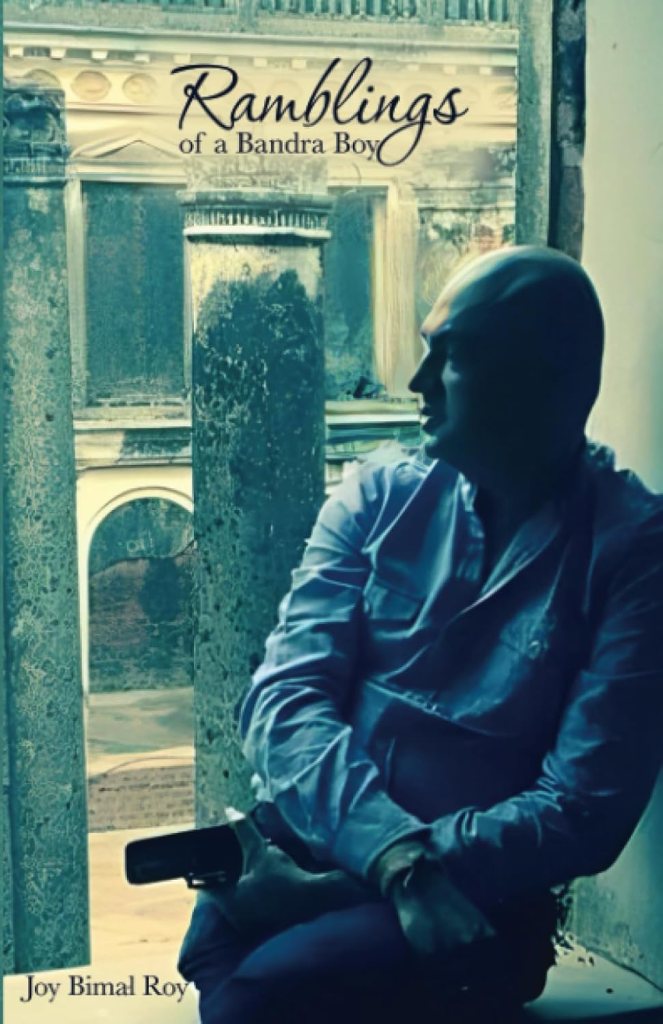
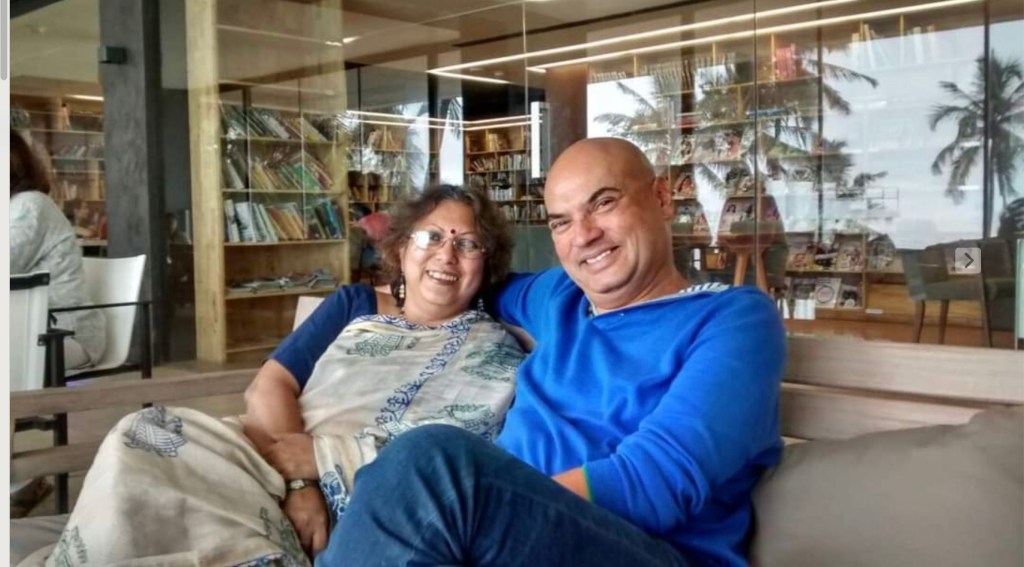



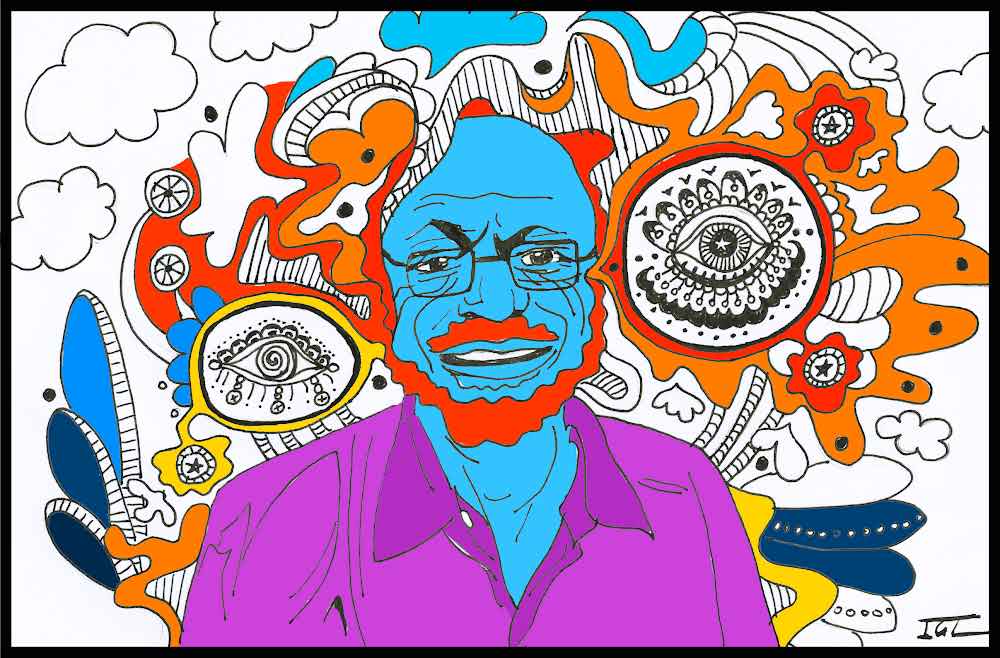
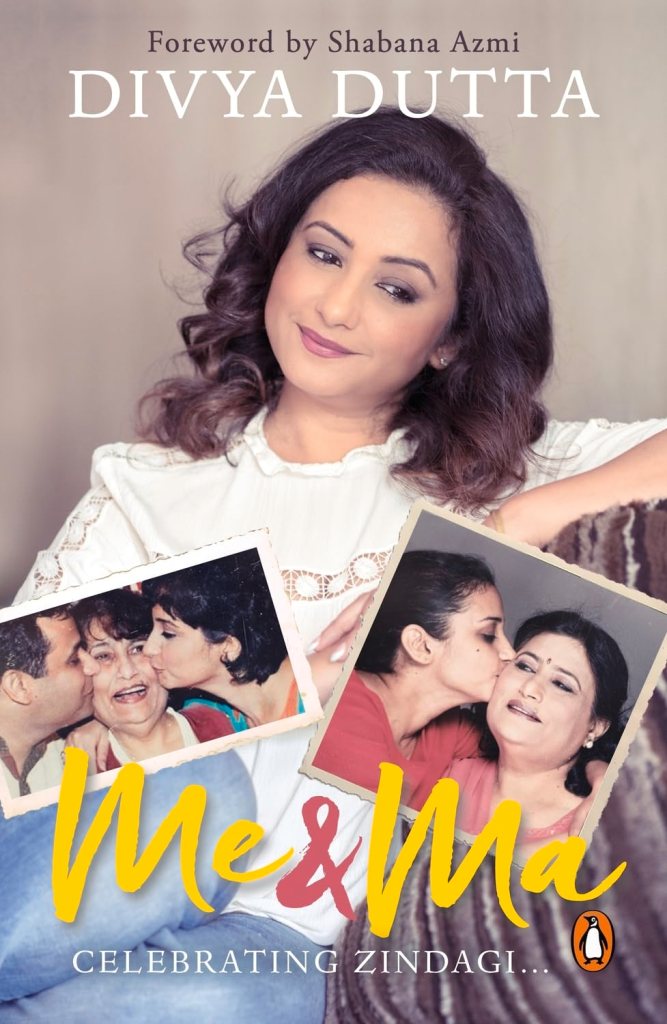
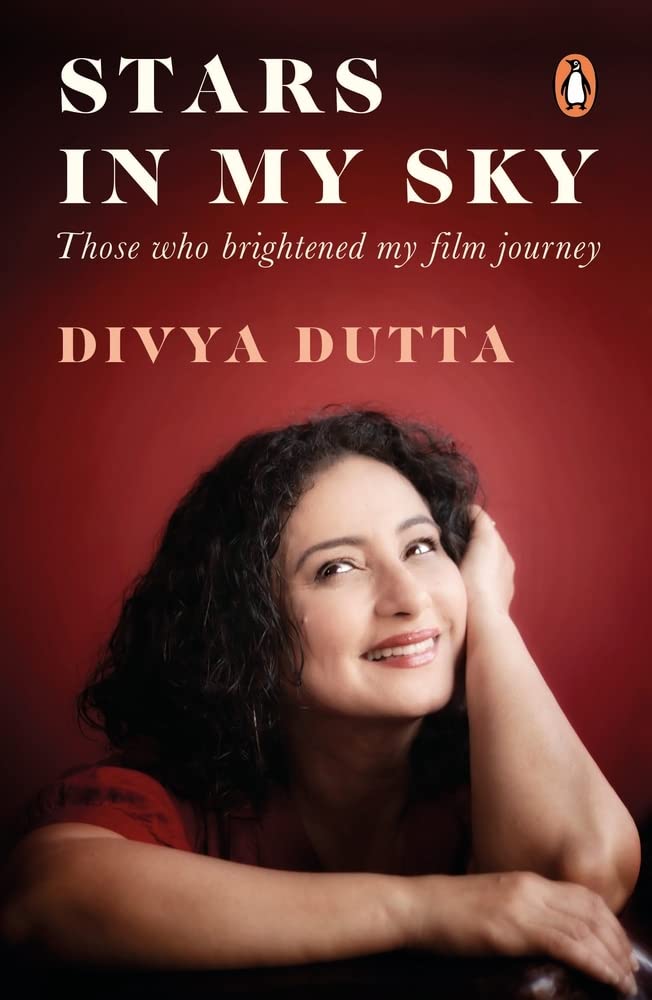
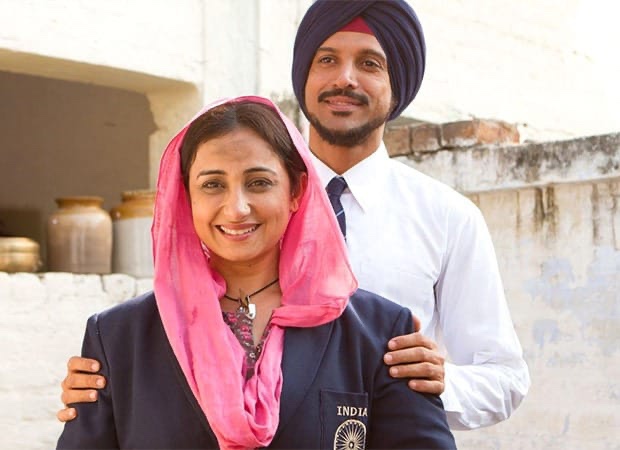
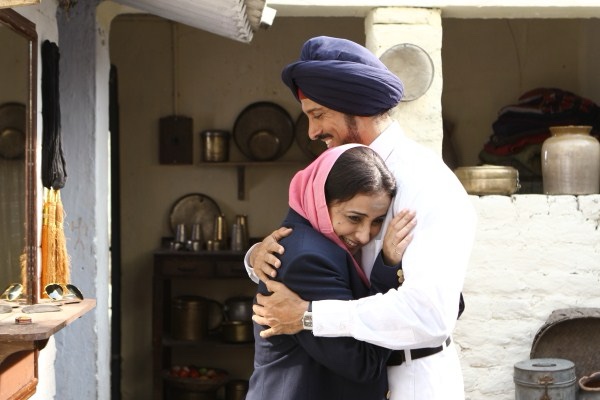
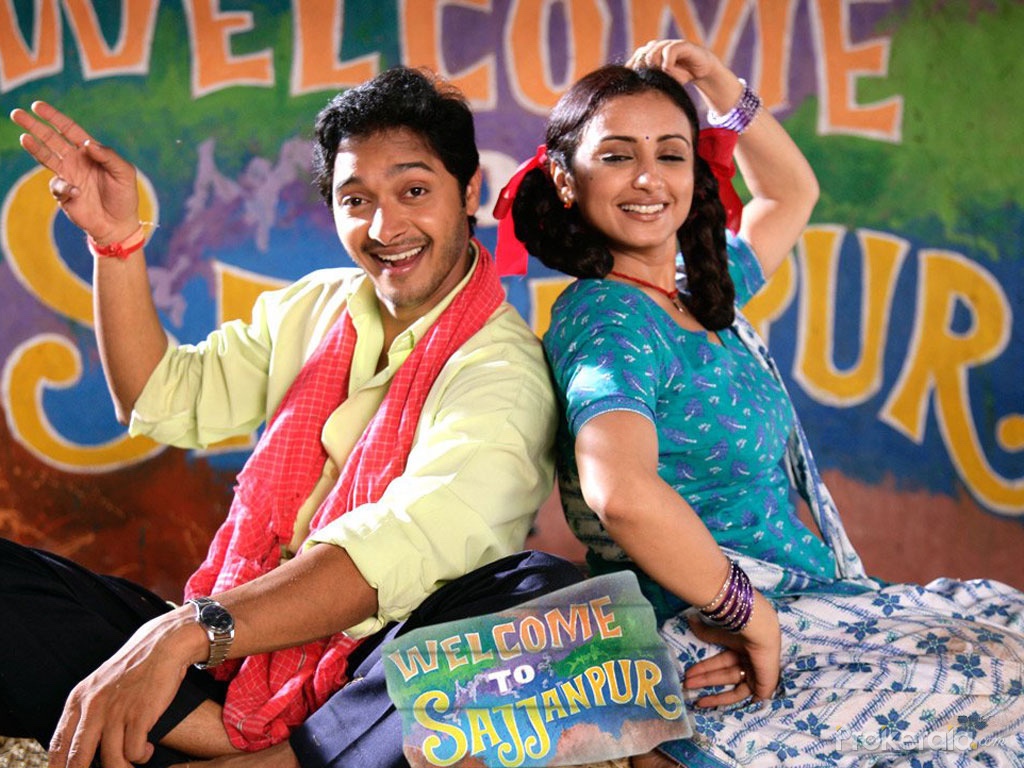



 Borderless