Categories
celebrations

Borderless Birthday Bonanza

Figments caught straying in whispers of a dream,
Weave together till they form a visible stream,
Filling a void with voices that sing,
With freedom and impunity ring,
Giving credence to a distant, imagined realm.

— Introduction, Monalisa No Longer Smiles: An Anthology of Writings from across the World

As we complete three years of our virtual existence in clouds, connecting, collecting and curating words of ideators, we step into our fourth year with the pleasurable experience of being in bookshops in hardcopy too. Monalisa No Longer Smiles: An Anthology of Writings from across the World, our first hardcopy anthology, takes us into the realm of real books which have evolved over eons in history. This anthology connects us to those who hesitate to step into the virtual world created by technology. And there are many such people – as ingrained in the human heritage is a love for rustling paper and the smell of books. We have had some excellent reviews, praising not just the content but also the production of the book – the cover, the print and the feel. The collection bonds traditional greats with upcoming modern voices. We are grateful to our publisher, Om Books International, Shantanu Ray Chaudhuri, Jyotsna Mehta and their team for giving our book a chance. We do look forward to more anthologies hopefully in the future.

The writings we have collected over the last three years are reflective of diverse voices— some in concurrence with our thought processes and some in discussion or even in divergence. We have a variety of forms — poetry, conversations, fiction and non-fiction. Some are humorous and some serious. We try to move towards creating new trends as reflected in our anthology and our journal. For instance, Monalisa No Longer Smiles starts with an experiment — a limerick was adapted to express the intent of our book and journal; whereas normally this form is used to express light, or even bawdy sentiments. Perhaps, as the limerick says, we will find credence towards a new world, a new thought, a restructuring of jaded systems that cry out for a change.

Borderless Journal did not exist before 2020. Within three years of its existence, our published pieces have found voices in this anthology, in other books, journals and even have been translated to a number of languages. Our own translation section grows stronger by the day supported by translators like Aruna Chakravarti, Fakrul Alam, Radha Chakravarty and Somdatta Mandal. Our interviews and conversations probe to find similarities and divergences in viewpoints. Our stories tell a good tale rather than indulge in stylistic interplay and our poetry is meant to touch hearts, creating a bond between the writers and anglophone readers. What we hope to do is to expose our readers to writing that they can understand. Writers get lost at times with the joy of creating something new or unique and construct an abstraction that can be intimidating for readers. We hope to host writing that is comprehensible, lucid and clear to the lay person.

What we look forward to homing in the coming months is a mingling of different art forms to birth new ideas that will help our species move progressively towards a world in harmony, filled with peace and love, giving credence to voices like that of Tagore, Nazrul or Lennon. “Imagine there’s no heaven…Imagine there’s no countries…no religion, too…Imagine all the people/ Livin’ life in peace…Imagine all the people/ Sharing all the world…” The need to redefine has been felt and as Lennon says in his last paragraph: “You may say I’m a dreamer/ But I’m not the only one/ I hope someday you’ll join us/ And the world will live as one.” With this hope, we continue our journey into another year – a new adventure that will take us to a universe where heaven can be found on Earth, grounded and real, within the human reach and can be shared without war, greed, hatred and anger.

Here, we share with you a few iconic pieces that have found their way to our pages within the last three years.

Poetry

Poems by Arundhathi Subramaniam houses three poems. Click here to read. The following poems from her collection can be found here.

  1. When God is a Traveller (titular poem from her Sahitya Akademi Award winning book)
  2. Eight Poems for Shankuntala
  3. The Fine Art of Ageing

Murmuration by Jared Carter. Click here to read.

Poems by Sukrita Paul Kumar: Poetry on Ukraine. Click here to read.

Arthurian Legends by Michael R Burch. Click here to read.

Conversations

Keith Lyons talks to Jessica Mudditt about her memoir, Our Home in Myanmar, and the current events. Click here to read.

Unveiling Afghanistan: In Conversation with Nazes Afroz, former editor of BBC and translator of a book on Afghanistan which reflects on the present-day crisis. Click here to read.

Professor Anvita Abbi, a Padma Shri, discusses her experience among the indigenous Andamanese and her new book on them, Voices from the Lost Horizon. Click here to read.

In Conversation with Akbar Barakzai, a ‘Part-time Poet’ in Exile: The last interview of Akbar Barakzai where he says, ‘The East and the West are slowly but steadily inching towards each other. Despite enormous odds “the twain” are destined to “meet” and be united to get rid of the geographical lines…’ Click here to read more.

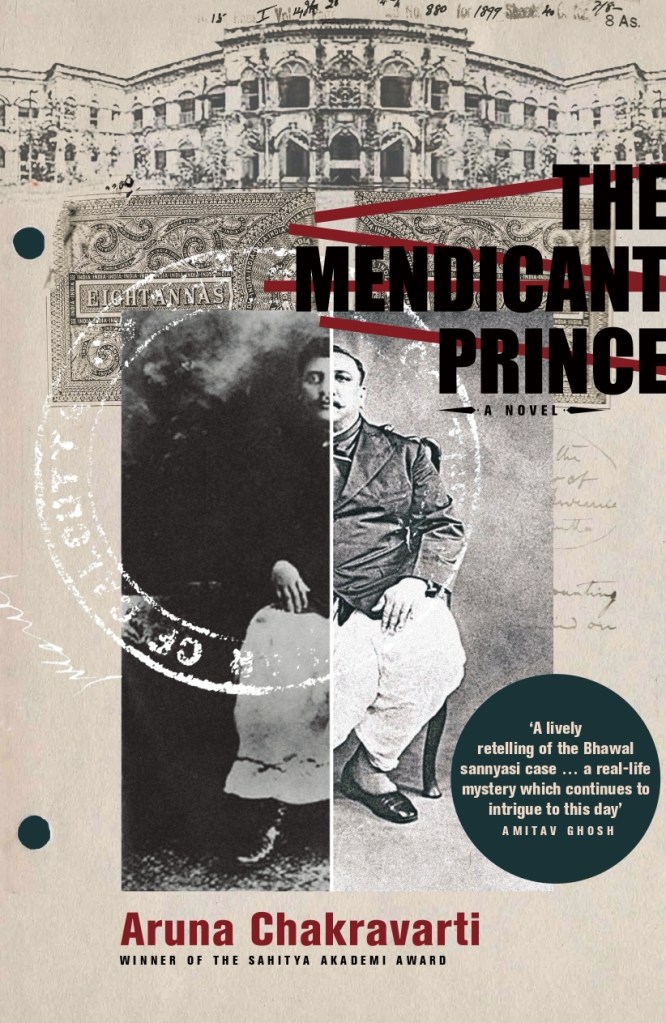
The Making of Historical Fiction: A Conversation with Aruna Chakravarti unfolds the creation of her latest novel, The Mendicant Prince, based on the prince of Bhawal controversy in the first part of the last century. Click here to read. 

Fiction

Half-Sisters: Sohana Manzoor explores the darker regions of human thought with a haunting psychological narrative about familial structures. Click here to read.

Rituals in the Garden: Marcelo Medone discusses motherhood, aging and loss in this poignant flash fiction from Argentina. Click here to read.

Navigational Error: Luke P.G. Draper explores the impact of pollution with a short compelling narrative. Click here to read.

The American Wonder: Steve Ogah takes us to a village in Nigeria. Click here to read.

Columns

Poets, Poetry & Rhys Hughes: A column by Rhys Hughes which can be fun poetry or prose. Click here to read.

Bhaskar’s Corner: Essays on contemporary life by Bhaskar Parichha. Click here to read.

Musings of a Copywriter: Humour by Devraj Singh Kalsi. Click here to read.

Pandies’ Corner: These narratives highlight the ongoing struggle against debilitating rigid boundaries drawn by societal norms, with the support from organisations like Shaktishalini and Pandies. Click here to read.

Notes from Japan by Suzanne Kamata: A column that takes us closer to Japan. Click here to read.

Non- Fiction

Dilip Kumar: Kohinoor-e-Hind: Ratnottama Sengupta recollects the days the great actor sprinted about on the sets of Bombay’s studios …spiced up with fragments from the autobiography of Sengupta’s father, Nabendu Ghosh. Click here to read. 

The Ultimate Genius of Kishore Kumar: Shantanu Ray Chaudhuri, an eminent film critic, writes on the legend of Kishore Kumar. Click here to read.

Farewell Keri Hulme: A tribute by Keith Lyons to the first New Zealand Booker Prize winner, Keri Hulme, recalling his non-literary encounters with the sequestered author. Click here to read.

Epaar Bangla, Opaar Bangla:  Bengals of the Mind: Asad Latif explores if homeland is defined by birth. Click here to read.

At Home in the World: Tagore, Gandhi and the Quest for Alternative Masculinities: Meenakshi Malhotra explores the role of masculinity in Nationalism prescribed by Tagore, his niece Sarala Debi, Gandhi and Colonials. Click here to read.

Just a Face on Currency Notes?: Debraj Mookerjee explores Gandhi-ism in contemporary times. Click here to read.

The Idea of India: Bharata Bhagya Bidhata – The Making of a Motherland: Anasuya Bhar explores the history of the National Anthem of India, composed by Tagore in Bengali and translated only by the poet himself and by Aruna Chakravarti. Click here to read.

Translations

Tagore Translations, including translations by Aruna Chakravarti, Fakrul Alam, Somdatta Mandal and Radha Chakravarty. Click here to read.

Nazrul Translations, including Professor Fakrul Alam and Sohana Manzoor. Click here to read.

Gandhi & Robot by Thangjam Ibopishak, translated from the Manipuri by Robin S Ngangom. Click here to read.

Songs of Freedom by Akbar Barakzai, poems translated from Balochi by Fazal Baloch. Click here to read.

Give Me A Rag, Please:A short story by Nabendu Ghosh, translated by Ratnottama Sengupta, set in the 1943 Bengal Famine, which reflects on man’s basic needs. Click here to read.

Thanks to our team, contributors and readers for being a part of our journey. Let’s sail onwards…

Painting by Sohana Manzoor

Mitali Chakravarty

borderlessjournal.com

Categories
Stories

Nobody in the Sky

Story by S Ramakrishnan, translated from Tamil by R. Sathish

Courtesy: Creative Commons

Midway through the movie, Chitra felt very hungry. But she did not fuss over it.

Like clockwork by 8pm, the stomach rang its hunger alarm. She always finished her dinner before 9. But on movie-going days, she couldn’t do much, though.


She was munching on popcorn. But that barely satiated her hunger. She couldn’t focus on the movie. She badly wanted to go home.

Karthick, sitting next to her, was fully immersed in the movie. She softly asked Priya, her eight-year old daughter seated to her right, “Are you hungry?” She nodded. On most days, Priya would be in bed by nine.

Chitra wondered if at least the two of them could step out for some quick bites. But Karthick wouldn’t like it. How long for the movie to finish, she didn’t know.

She sat tight and bore with it. No more interested in the movie, she browsed through the Whatsapp messages on her phone.

That day was their wedding anniversary.

They were celebrating their tenth.

Chitra had taken a day off from office. But not Karthick who promised to come early in the evening. Well, quite strangely, they didn’t know how to celebrate their anniversary. Year after year, they routinely put on new clothes, visited a temple, watched a movie, and ended their special day with a non-vegetarian meal at a hotel. Chitra found this utterly boring.

If we unable to make ourselves happy, we cannot have anyone bring that unexpected joy for into our lives. Be it a wedding day or a birthday, we celebrate pretty much in the same way. Hardly any difference.

For a few years, they invited some friends home for birthdays. But those interactions were anything but real. Fake smiles and pretensions. Complaints about how a certain person was not invited on purpose and a critique of the dinner fare. Such needless problems made them stop hosting parties. 

As for the anniversary, whether it was the ninth or the tenth, the milestone made no difference. On that day, we had to look happy and cheerful.

She had given Priya a day off from school, and kept her home for company. Karthick scolded her for this.

“What is she going to do by not attending school?”

“What am I going to do, by the way! Never mind, let her be with me “.

“That’s indeed what I am also asking you. We are not kids, Chitra. In fact, even you should be going to the office. We are going out only in the evening. Aren’t we?”

“I don’t feel like going today. And I have informed my office.

“That’s your choice. But, let her go”.

“Nothing will be lost in a day, pa”.

“Your choice”, grumbled Karthick with a tight face. Wedding day… so, Chitra did not want to quarrel.

As he got on to his bike, ready to leave, she gently asked, “You will be home for lunch, right?”

“Will see. Have a lot of work.”

“Shall we…. come over to your office? We can all head to ECR for lunch from there.”

“No need, I will try to come early.”

“I am cooking many items: Aviyal, Curry, Koottu, Pachadi, Payasam,…

“Okay, I will come. But can be a little delayed.”

“Will wait for you.”

Karthick, dapper in his new clothes, rode off to his office. Chitra and Priya hung around in the house. Chitra pulled out her wedding album, flipped through the photographs. Have put on a little more weight now. Wedding makeup doesn’t look good. Hair is dishevelled near the ear. Didn’t notice at all.

Many of the jewels she wore at the wedding belonged to her aunt. She had loaned them for a day. Chitra wished to buy them all by herself one day. After all these years, that day had yet to come.

When young, Chitra dreamt that angels would descend from above and lavish her with lovely gifts. After the wedding, she realised that one must create one’s own moments of joy. There was nobody high up in the sky to delight her.

It was already 10:30 when she and Priya boarded the “share auto” to go to the supermarket. They got down at the main road. Beyond the signal and to the left was the supermarket. Along the way, when they crossed Shivani Readymade Store, Chitra asked, “Priya, would you like a new dress?”

“For what?”

“Should only Amma and Appa wear new clothes for the wedding day?”

“So, I also get a new dress?” Priya asked eagerly.

They entered the store. As she was choosing the dress for Priya, Chitra looked around for any new sarees for her too. She found one. In her favourite ‘peacock neck” colour. But she hesitated.

“Buy it, ma. Appa[1] won’t scold”.

Chitra considered checking with Karthick. She had already set aside a silk saree for the anniversary. But this would look better on her, she felt.

Priya chose an ethnic party wear in white with floral patterns. Chitra wanted to wear this sort of dress when she was young. But her father never bought them.

“No white dress for girls,” her father would say sternly.

The ethnic dress looked so pretty. She checked the price tag. It revealed 8300 rupees! Karthick would definitely scold her. But Priya likes it! She looked pleadingly at her mom.

“Okay, take it,” said Chitra.

They both looked thrilled when they left the store with one new dress for each of them. She wished there could be someone who would take her out and allow her to buy what she wanted.

At the supermarket, Priya bought a chocolate bar and hid it to give them later as her gift. On their way back, with handfuls of bags, they stopped by an ice cream parlour next to a tailor shop. They treated themselves to an almond ice cream. Priya had never felt happier.

Once home, almost instinctively, Chitra started humming her favourite song from some Tamil movie — “A pleasant mind embraces music (oru iniya mandhu isaiyai anaiththu chellum)”. While enjoying the song, Priya asked, “Did anyone sing at your wedding, ma?”

“No, not really”.

“But I see people sing and dance around the couple in movies”.

“Oh! That is a film wedding. This is a real wedding”.

“Why don’t they sing at the real weddings?”

“Yeah… why shouldn’t they? But anyway who knows to sing?”

It was getting late for lunch. Chitra got down to cook. Meanwhile, Priya put on her new dress and stood before Chitra. How beautiful she looked! Chitra recalled how she must have also looked pretty like Priya when young. Pulling Priya towards her, Chitra hugged her tightly and stroked her hair.

“Do I look beautiful, ma?”

“You look pretty”.

“Reema is the most beautiful girl in our class. You know, how her skin shines!”

“That is not natural, my baby. Only your skin is natural”. After all, she could but only console herself.

Excited about her new dress, Priya took a selfie with Chitra’s phone, and doubtfully asked, 

“Amma[2], can I send this photo to daddy?”

“No, let it be a surprise”.

Songs kept springing forth as she cooked. Only sometimes was she able to cook with such joy. On most days, it was a chore. An unavoidable work.

It was a big spread she made that day. She and Priya relished a glass of payasam[3] each as soon as it was ready. After arranging the dishes on the dining table, they waited for Karthick.

Chitra came out of the bedroom dressed in her “peacock neck” blue saree. She so wanted to try it out.

“It looks super, ma”, said Priya adoringly looking at her mother.

Does amma look beautiful?”

“Very beautiful,” said Priya as she went to her and tenderly moved her hands over the saree.

They both waited, dressed in all their fineries, for Karthick. It was 2pm, and he had not come home yet. Chitra phoned him. He did not answer the call. They were famished. She really wanted to eat. When he came at last at 2:30, she did not show any anger.

“Sorry, Chitra. Colleagues demanded a treat. Went to Buhari.”

“That’s okay, but you could have told me that”.

“I ate very less biryani. Wanted to eat with you at home, you know,” Karthick replied with a fake smile.

They ate together. He made no comment about the many dishes she had whipped up. She had lost her appetite waiting for him, so couldn’t quite relish her meal. Karthick helped himself to a glass cup of payasam, sat before the TV and asked,

“The baby is in a new dress. When did we buy this?”

“Today morning. Amma and I bought it. Even the saree she wears is new,” chimed in Priya.

“Why a white-coloured dress, dear? It will get dirty soon.”

His words sounded exactly like her father’s. Suppressing her anger, she responded, “We can wash it if it gets dirty.”

“But why a new saree for you? You do have a new silk saree. Don’t you?”

“I don’t have this colour.”

Good heavens! He did not ask the price of Priya’s dress.

“I need to go back to the office. You both come over directly to the mall at 6pm.”

“What about to the temple?”

“We can do it another day. No time today.”

Karthick left as soon as he got a call from the office. Chitra and Priya changed over to their regular clothes. Priya switched to TV. Chitra withdrew to her bedroom and dozed off. Woke up only at 5pm.   

Strangely, she had a dream in an afternoon nap! She wore a new saree even in her dream! With a nice hairdo and the new silk saree, Chitra was now ready for the evening. Priya was already waiting for her, all dressed up. They hired an autorickshaw[4] and reached the mall.

It was not bustling with shoppers. Chitra and Priya leisurely window-shopped. Took the escalator, landed at the multiplex on the fourth floor, and sat waiting for Karthick. Chitra wondered if there would be any more “anniversary couples” in the mall. Many young men were streaming out of the cinema after the English movie.

She called Karthick to find out if he had left. No answer. They spent their time watching the various ads on the big, wide screen.

“We should also have a car like this, ma,” Priya expressed her desire.

“It costs forty lakh rupees.”

“Then, let us buy some other car.”

“First, house; then, a car.”

“You have been saying this for a long time… nothing has happened.”

“Need at least sixty to seventy lakhs to buy a house,” said Chitra with a sigh.

Chitra realised that a man, in a light red linen shirt, had been staring at her. She felt he was only admiring her. Luckily, Priya didn’t notice it. Soon, a girl in jeans and black top joined him. Holding hands, they proceeded to Screen no 4. She had never walked hand-in-hand with Karthick in a public place. Was this also something to wish for… She chided herself.

When Karthick turned up, it was 6:40pm.

“Movie starts at seven.”

“We could have come late, after all.”

“Didn’t notice. Saw it only after coming here.”

They got into the cinema hall. Karthick walked along but was busy talking to someone on the phone.

It was 10 when the film ended.

“There is a restaurant on the second floor. Let us eat there,” proposed Chitra.

“That is a costly place. Chicken soup… 400 bucks. Not worth it. Food is also crap.
Let us eat at the newly-opened Red Chillies.”

“Where is it?”

“Will check the map.”

“It is already 10pm.”

“It is close by. We will be there soon.”

They rode off on his motorbike. There was no restaurant at the place indicated by the online map. After some roundabouts, they spotted it beyond a couple of streets. It was a small joint. Crowded. They got a table after waiting for some time.

Tired-faced, in a dragged voice, Priya said, “Feeling sleepy, ma.”

“Eat your favourite veechu parotta[5],”suggested Karthick.

Priya nodded her head. It took half an hour for the food to be served. It was very spicy. She couldn’t eat. Karthick ate his kothu parotta 5with relish. Priya nibbled on her parotta drowsily. When they left the place with their leftovers packed, it was past 11.

They lived in Jafferkhanpet. There were many stray dogs around. Karthick didn’t like to live in a multi-storey apartment. Though the house was far inside from the main road, he could get an independent house there. The street leading up to the house ran parallel to Cooum, a polluted river infested with mosquitoes. Theirs was a two-bedroom house.

They did not quite interact with neighbours. They had a motorbike. So they could do their shopping at the main road easily. The place also had many “share autos”. Chitra used them to go to her office and come back home.

Sensing that they might come late, Chitra had switched on the corridor lamp before leaving the house. It shone distinctly to be spotted from the beginning of the lane.

“Keys?” Karthick asked for them as he parked his bike and closed the gate.

She shuffled through her handbag. The keys couldn’t be found.

“Where is the key?” Karthick asked irritably.

She opened her handbag and searched all over. She undid the zipper of the pocket outside and the zipper of the pocket inside. She couldn’t find it.

“The key is missing,” said Chitra with trepidation.

“Didn’t you buy popcorn during the intermission? And taken out the money from the bag.”

“But I unzipped the pocket on the side to take out the cash.”

“So, where did it go?”

“No idea.” said Chitra, worried.

“Could it have fallen down in the cinema?” asked Karthick, filled with anger.

“Possible,” said Chitra nodding her head.

“Let me go and check. You both wait here,” said Karthick frowning at her.

“You didn’t take the keys, ma. I saw them on the key holder.” Priya reminded her.

“Why couldn’t you tell me then?” Chitra scolded her.

“I thought you would be taking it while leaving.”

Chitra realised she had locked the door by shutting it but had forgotten to take the key.
The door lock came with a small key. A modern type lock which locked itself when one shut the door. If it had been a key of the older model, no one could forget it. Amma had it tucked to her waist always.

Now, there was no spare key for this either. Karthick had lost his in his office.

“The key is inside the house,” said Chitra.

“So, how are we to get in?” asked Karthick with anger intact.

“Shall we ask someone for help?”

“Do you know what time it is now? 11:30. Whom can we ask at this unearthly hour?”

“Shall I talk to Nithu?”

“Do whatever you want. Let me see if I can get any help at the main road”

Karthick left on his motorbike.

Standing outside her locked house, Chitra phoned Nithya, her friend. Half asleep, “What happened di[6]. Is someone not well?” she enquired.

“The key is stuck inside the house. I don’t know what to do.”

“Come over to my house. We will figure out in the morning”.

“Can we find any locksmith now?”

“Not at this hour.”

“If you have any contact number, give me.”

“Nothing now. Just come over to my place.”

“Okay, will think about it.” Chitra hung up.

How much more longer could they wait outside like this! Not one house in the street had a bench on the veranda or even a staircase step to sit on. Only iron gates. Couldn’t someone have at least left a plastic chair outside? Could have been helpful in such times, she felt.

Priya, overcome with sleep, asked, “What should we do now, ma?”

No place for little Priya to rest. The street suddenly looked scary to Chitra.

Who could they seek help from? What could anyone do? Head to Nithya’s place without further delay and spend the night there? 

Karthick returned, keeping a tight face.

“The locksmith is on the way. Wants thousand rupees”.

They waited outside the house. The street lamp at the end of the street shone brightly. Clueless, Chitra walked towards the lamp. A dog opened its eyes and lifted its head towards her. It did not bark.

A fifty-something man came on a bike, with a bag full of keys. He asked Karthick to point the flashlight from his phone at the keyhole.

He couldn’t open the lock even after trying with different types of keys.

“Only an original key can open this lock, sir. This is an expensive lock. The company alone has a duplicate key for this”.

“What am I to do now?”

“Take the help of some carpenter. He will break open the door.”

“It is a rented house. Can’t break the door, you know.”

“No other way. None of my keys is pairing with the lock.”

“Please do something. We have only you to depend on now.”

“Poor thing, your wife! Your kid also looks lost. Let me see if I have any more keys at home.”

“Shall I come along?”

“Not necessary, sir. How could you leave the womenfolk alone in the dark?”
The locksmith went away on his bike. Chitra felt guilty at having been so forgetful.

“Shall we spend the night at Nithu’s house?” Chitra asked very hesitantly.

“If that chap can’t open the door, then we can,” replied Karthick.

No woman has ever not worried about losing the keys. Yet she bears the brunt even
if others lose theirs. If only Karthick had come home in the evening, this wouldn’t have happened. But could she risk telling him that? He would turn livid.

A movie she didn’t like, food she didn’t relish — and to be standing outside your own house at this hour. All this irritated her. Such a situation would never have arisen in an apartment. Even if it did, the watchman would be around to help.

The three of them kept standing outside their house. Priya was leaning against the bike. Nithya called to ask if they were coming.

“I don’t know. The locksmith is yet to come with a new set of keys”.

“Shall I speak to Karthick?”

“No. He is seething with anger. He might even bark at you.”

“Come anytime,” said Nithya and disconnected the call.

Chitra felt like speaking to her mother. But she would panic on receiving a phone call at this odd hour. A situation like this would also leave her confused. But wait! Wasn’t she the one to force me to marry Karthick? Why shouldn’t I call her?

The locksmith hadn’t turned up yet. Karthick kept calling him. No answer. Not a soul to help them in this big metropolitan city. The house looked like a cave without an entrance. Irritated, Karthick also began walking towards the street corner.

The locksmith returned with another man. Together, they tried. The locksmith’s partner scraped the key continually and slid it inside the keyhole. Keeping his ear closer to the door, he studied the sound. After a long battle, the door opened.

Priya rushed to the bathroom. Karthick paid them off and thanked them.

As soon as Chitra entered the house, she looked for the key on its holder. It was dangling there, attached to a tiny elephant. She showed it to the locksmith.

“Who doesn’t forget, ma? If it was daytime, this wouldn’t have taken so long. I travelled all the way to Saidapet to bring this guy for your work. I am not familiar with these new types of lock; but he is an ace.”

Chitra gave the young man five hundred rupees.

“It is okay, akka[7]. Sir has already paid us.”

“This is for the trouble you took to come at this time.”

“Keep this key as a spare.” He handed her a key he had made.

After they left, she stood there staring blankly, not knowing if she should close the door or leave it open. Tears welled up. As it was their wedding anniversary, she consoled herself. Karthick had gone to bed after changing his clothes.

Chitra stepped out of the now-open house onto the street. It was past 2am. She had never seen the street at this hour. The warm street lights and the silence of the houses in the street — to her it was like a painting that had come to life.

She felt hungry. She did not eat well at the restaurant. There was some batter in the fridge. She thought of helping herself with a dosa[8]. But no, she felt she must punish herself by starving.

Putting away all the memories of the just-concluded chaos, she shut the door. In four hours, it would be another morning. To cook. To get Priya ready for school. To rush to office. She was already gasping for breath.

While dosing off to sleep, she realised that they had not even taken an anniversary photo.

As if all I miss is only that, she muttered.

[1] Father

[2] Mother

[3] A dessert

[4] Motorised version of a rickshaw

{5} Different types of paratha or pan fried flatbread.

[6] Elder sister

[7] Sister

[8] A crispy crepe made of rice and lentil

S Ramakrishnan is one of the most prolific and celebrated writers of modern Tamil literature. His vast body of work spans fiction, plays, screenplays and essays. He has written and published 11 novels, 55 collections of essays on world cinema, world literature, Indian history and painting; 20 anthologies of short stories, three plays and
21 books for children. He has received many major awards for his literary works, including the Sahitya Akademi Award in 2018, Tagore Literary Award and Maxim Gorky Award. Sancharam, the novel which won him the Sahitya Akademi award,is a poignant portrayal of the lives of Nadaswaram (a wind instrument) artists — an instrument that is a part of all celebrations but the artist who plays it is not part of the celebrations. His short stories and essays have been translated and published in English, Malayalam, Hindi, Bengali, Telugu, Kannada and French.

R Sathish is a translator from Tamil to English. He is an advertising professional, and lives in Hyderabad.

PLEASE NOTE: ARTICLES CAN ONLY BE REPRODUCED IN OTHER SITES WITH DUE ACKNOWLEDGEMENT TO BORDERLESS JOURNAL. 

Click here to access the Borderless anthology, Monalisa No Longer Smiles

Categories
Excerpt

A Handful of Sesame

Title: A Handful of Sesame

Author: Shrinivas Vaidya

Translator: Maithreyi Karnoor

Publisher: Gibbon Moon Books

Although Navalgund had been roused from its slumber by the Mainavati elopement episode, in a few days after the eloping couple returned, going by the saying, ‘she becomes of this earth when she starts lighting the hearth’ the scandal lost steam and the town went back to sleep again.

The people returned to their busy routines of asking each other in the mornings if they were up, and turning their faces to the skies in the afternoon and saying “What do you know? There’s not a hint of rain yet.” They went back to sitting on the knoll near the Lalgade temple until darkness stepped in and until the concluding strains of the raag Bhairavi  of the Magdum’s band rehearsal became thin air, they discussed such pressing matters as the ghost in the tamarind tree beside the Sankawwa pond, or the yard-long wheat-hued cobra that had slithered into the rock cluster before the Taluk office, or the Halladmatha’s Sire’s persistent cough, or Mamlatdar’s minor wife Mandakini, or the plague mice falling dead in Hubballi, or Bal Gangadhar Tilak. After ruminating over these never-ending topics, they would hasten home to eat their evening meals and shut their doors upon the darkness outside and turn in before the wicks in the kerosene lamps in their respective homes went off with a phtt.  The womenfolk kept themselves busy with hearth, childbirth, and a little mirth of water’s worth on their way to the pond. Once in a while, they created their own entertainment with gossip and slander and quarrels – scold this one, taunt that one or mock another one. 

Navalgund has grown considerably in the thirty or forty years since the mutiny. Fleeing the Company’s oppression, many families from Nargund are now settled in Navalgund. With the increase in population, more merchants have set up shops. Earlier, Adoni’s was the only trading family in all of Navalgund. Now, with the addition of Mhantshetty, Mhankali, and Yirapakshimath, there are four merchant families. The Queen’s government had laid down with great care gravel roads because of which trade and businesses are growing. Open-topped and covered bullock carts and even horse-drawn carts are now plying from town to town on these roads. The municipality that has been there for a while has now started a school, a library and — can you believe it — even an English hospital! But no one goes to that hospital because it is rumoured that they put the flesh of chickens, sheep, and donkeys in their medicines. Hence, Vasudevaachar’s patients are constantly growing in number. Bullock carts crowd at the Panths’ door every morning. Moaning, groaning and coughing patients covered in woollen blankets wait in their veranda. Vasudevaachar walks among them bare-chested, stroking his sacred thread with both hands and advising the patients on their medication, treatment and diet, offering soothing words of courage or stern reprimands as the occasion demanded.

“Ningawwa, if give up garlic chutney for two days the sky won’t fall on your head”

“Krishtya, I’ll give you a Shankhvati. Powder it, mix it with lemon juice and lick it. Your stomach will be alright. You won’t die if you cut down on your food for a couple of days”

“Bharmya, I’m giving you this bottle of Balantsyrup. Give it to your wife and don’t drink it yourself, you whoreson…”

“Basangauda, you have the sugar disease. Fire two of your farmhands and do their work yourself. You must also eat less…”

“Subbi, I told you that feeding your daughter-in-law the red figs of the Banyan tree will beget her children. But I don’t remember promising they would be male children!”

“Do not eat or drink undrinkable and uneatable things, you sons of unwed mothers!”

“Goudra, your lady is showing signs of consumption. See if her spittle is red-tinted. It’s a terribly infectious disease. Stay away for a few days – it’s good for you and also for her.”

“It’s not just medicines that will cure you, Shambhu. You must also have faith in god. Here, repeat after me, medicine is the waters of the Ganges, the doctor is a manifestation of god’. Now, once more…”

Such medical jargon could be heard in the halls of the Panth house every day. 

From early morning to the ripening afternoon, Vasudevaachar sits in the outer hall attending to his patients. He then heads to the backyard, draws seven or eight pots of water from the well and pours it over himself completing his bath before heading to the altar and sitting down for a two-hour long, uninterrupted prayers. Sometimes the municipality’s three o’clock bell would have rung before his prayers are complete. Then, after a meal and a short siesta, with only a thin shawl covering his bare chest, he heads to the Lalgade Hanamappa temple for prayers in the late afternoon. Sometimes, if there is a sermon or sacred storyrecitation on, he sits down to listen to it. If not, he sits a while on the stone bench that’s open to the skies outside and lets himself afloat in Magdum’s melodies before slowly heading back home.

On one such rippleless evening, Tulsakka and Vasudevaachar sat chatting on the porch outside the house. The children who had gone out to play hadn’t returned yet and Ambakka was at Antambhatta’s corner house, when suddenly Rukuma rushed from the backyard to the main-door looking excited and coughed a couple of times to draw Tulsakka’s attention. She then called out to her sotto voce, “Tulsakka… tssst… come here… come quickly…” Sensing her excitement and strange expression, Tulsakka left Vasudevaachar behind and walked over looking quizzically at Rukuma who began gushing and flailing her arms animatedly.

“She’s here!” she said.

“Who ay Rukuma? Who is here?” Tulsakka asked in her normal calm voice.

“She… she!” Rukuma insisted.

“She who?” asked Tulsakka as calm as before.

Rukuma came close to Tulsakka and said with wide eyes, “She! The one from Annigeri”

Taken aback by her words, “What’s this new drama now” Tulsakka exclaimed and followed her to the backyard.

Covering the child in her lap with the loose end of her sari, she sat by the stack of cotton twigs in the backyard, her poignant face both nervous and hopeful. As soon as Tulsakka and Rukuma came close, she stood up and held the child out and her eyes filled with tears.

“Please don’t be angry, my lady… it’s three days since he’s burning with a fever. Even the master of my home hasn’t visited in a while. Do what it takes but please save my child. I heard the master of your home is a great doctor with healing hands. So I came running here. Please don’t tell my master that I was here… he will be very angry. This is my only son please save him for me…” she implored them.

Tulsakka hesitated for a moment and then said, “Come, sit here…” and showed her to the holy basil pedestal. The Annigeri woman sat down where she was asked to. Then spotting someone else, she suddenly covered her face with her sari, handed the baby to Rukuma and stood back in fright. Even Rukuma and Tulsakka were a little scared as they turned around and saw that it was Vasudevaachar. He fixed a dark gaze upon them for a moment before looking at Rukuma and saying “Bring the child in, I’ll take a look.” He walked back to his desk in the outer hall and Rukuma followed with the baby.

The Annigeri baby’s fever was owing to a knot in the stomach. Vasudevaachar gave a handful of small sachets to Rukuma and said, “Tell her to mix this in thin, watered-down milk to make a paste and feed it to the baby four times a day. Children often get fevers. Tell her not to worry. The baby will be well in a couple of hours. Open one of the sachets and give it to the baby yourself so she can learn how it’s done. Also, tell the mother to drink boiled water and to feed the baby a little less for the next four days.” He sent Rukuma away and went back to sit on the porch outside.

As Vasudevaachar’s instructions were being carried out, Rukuma and Tulsakka had formed an easy friendship with the Annigeri woman as only women could with one another. ‘Where are you from? How many years since you came to Annigeri? What did you say your name was? Mhaashaabi? What does it mean? Where did you meet Venkanna? Is this your only child?’ they were asking her. ‘How many grandchildren? I hear you haven’t seen your own lands in Annigeri… why don’t you visit once? If the baby gets well soon, I will go to the annual fairat the mausoleumof the Yamanoor saint…’ she was saying to them when suddenly Ambakka walked in through the backyard door straightening the parting in her sari. Upon finding out who the stranger was, Ambakka sprung back as if stung by a scorpion. “Ayya may her pyre be lit!” she started shrieking, “That thing may have no sense, but what about you? You have let it in like this! Hey, you! Get up… you have polluted the holy basil with your touch… pick your child up…” Rukuma and Tulsakka were saddened to see the Annigeri woman’s plight. Tulsakka spoke with her usual calm and dignified voice.

“Ambakka, please be quiet. Is this how you treat a guest?” At this Ambakka suddenly came into her wild avatar and started yelling in a shrill, sarcastic tone.

“Ayya… who’s stopping you, my lady? It’s your home… do what you like in it. Who am I to tell you anything? Venkanna mistress is your sister-in-law after all, isn’t she? She’s brought her son home moreover… it’s the procession of the family’s heir. Get the cradle out. Welcome him in, bestow gifts into her lap, give her a new sari– you haven’t given her one on her wedding, have you? Who am I to stop you…?”

“I don’t understand what she’s saying” exclaimed Mhaashaabi alarmed by the scene Ambakka was making. She said a hasty “I’ll take your leave, madam” to Tulsakka and left quickly.

The next day, after the atmosphere had cleared a bit, Rukuma went up to Tulsakka and said in a low voice, “Did you notice the baby’s nose, Tulsakka? Wasn’t it exactly like Venkanna’s?” and smiled knowingly.

A few days since then, Venkanna cornered Ambakka in the backyard. “Ambi, this is the last time. If you stick your nose in my affairs again, I’ll erase all traces of you. Be warned” he said menacingly.

ABOUT THE BOOK

A sweeping historical novel. Shortlisted for the Lucien Stryk Asian Translation Prize, 2019. The original work Halla Bantu Halla won the Central Sahitya Akademi Award.

It is the year 1857. A great uprising — what would come to be known as the first war of Indian independence — has broken out. Two brothers, emissaries of a northern king, on a mission to garner the support of the southern rulers, wander lost and hungry in a forest not far from their destination. They are captured and one of them is hung by the British. Caught in the rough and tumble of the mutiny, the other brother settles down in a place that was never meant to be more than a temporary refuge. He spends his life far away from home among people who do not speak his language. The novel spans the story of three generations of his family living under the burden of inherited nostalgia, a story that unfolds with all its flying fancies and stumbling follies on the threshold between tradition and modernity. Set against the backdrop of the freedom movement, the novel explores the lives of the people of the Dharwad region of Karnataka; their acts of faith and the realpolitik of ritual. Masterfully and sensitively translated from the Kannada, A Handful of Sesame is funny, tragic, ironic, satirical, lyrical and deeply allegorical of a young, modern nation. 

ABOUT THE AUTHOR

Shrinivas Vaidya was born in the Dharwad district of Karnataka. He conceived of the plot of Halla Bantu Halla — inspired in part by the history of his own family — a long time ago, but it wasn’t until he retired from his four-decade long career in banking that he managed to sit down and write it. The novel won the Sahitya Akademi award – the highest honour by India’s National Academy of Letters. He has written several collections of short fiction since then.  

ABOUT THE TRANSLATOR

Maithreyi Karnoor is the recipient of the Charles Wallace India Trust Fellowship for creative writing and translation at Literature Across Frontiers, University of Wales Trinity Saint David. She has won the Kuvempu Bhasha Bharati prize for translation and has been shortlisted for the Lucien Stryk Asian Translation Prize and is a two-time finalist of the Montreal International Poetry Prize. Sylvia: Distant Avuncular Ends is her debut novel.

PLEASE NOTE: ARTICLES CAN ONLY BE REPRODUCED IN OTHER SITES WITH DUE ACKNOWLEDGEMENT TO BORDERLESS JOURNAL

Categories
Interview Review

The Making of Historical Fiction: A Conversation with Aruna Chakravarti

Aruna Chakravarti reveals how she wove a historic novel, The Mendicant Prince(Published by Picador India, 2022),  from a controversial court case that took place in the early twentieth century and created ripples through not just Bengal but the whole country and even England.

Aruna Chakravarti. Photo courtesy: Swati Bhattacharya

Perhaps we can call her the queen of historical fiction or an author inspired by history, but Aruna Chakravarti, an eminent award-winning Anglophone writer, evokes the past of a united Bengal – long before the Partition along religious lines in 1947 — repeatedly giving us a glimpse of an age where culture superseded beliefs. She recreates a period where we can see the seeds of the present sowed. In her last novel, Suralakshmi Villa (2020), she gave a purely fictitious account of a woman who pioneered changes in a timeframe that dates back to more than a century. Before that in the Jorasanko novels (2013, 2016), she brought to life the Tagore family history. By then, she had written her own family history set in the same period called The Inheritors (2004), which was shortlisted for the Commonwealth Award. Perhaps, her grounding comes from having translated Sunil Gangopadhyay’s First Light and Those Days, both novels set around the nineteenth and early twentieth centuries. She also won the Sahitya Akademi Award for translating Sarat Chandra’s Srikanta, a novel again set in a similar timeframe. She started her journey as a writer translating Tagore songs for which she won the Vaitalik award. Perhaps, this grounding has made her what she is today – a powerful re-creator of history where the characters come to life. You emote and react to their statements and on their actions. Her narrative carries you with it.

Her novel based on the real story of the Bhawal Prince which was launched last month,  gives a clear glimpse of the event with historical accuracy. The Bhawal prince turned mendicant after losing his memory in 1909 in Darjeeling. He was recovering from a bout of syphilis. He fell prey to intrigue and might have been poisoned. The prince was abandoned as a corpse during his cremation and yet he survived …and then, twelve years later, he returned — having travelled through much of the country with a band of Naga sadhus — to claim his rightful place. Swapan Dasgupta, a journalist turned politician, wrote when he thought of the Bhawal case, the “Dreyfus affair in late 19th century France, the John F. Kennedy assassination in the US and the James Hanratty case in Britain are ones that come readily to mind.” He was reviewing an earlier historical narrative written by Partha Chatterjee(2002) called A Princely Imposter?, which Chakravarti tells us she has used as a resource.

Set against the independence movement and colonial era, she has painted a man, who though flawed, gains the sympathy and wins the heart of the reader. The writing is fluid and evocative. Given that the trial lasted for more than sixteen years, and his first wife and her family refused to acknowledge the prodigal prince, the story has been made into films multiple times, once Sanyasi Raja (Bengali, Mendicant Prince, 1975), the second time, a remake in Telugu Raja Ramesh (1977) and more recently somewhat anachronistic, a movie called,   Ek je Chhilo Raja (There was a King, 2018). The Mendicant Prince departs from the films in being a stickler for the period, the historicity and brings to fore events and nuances the author researched by interviewing surviving Bhawal family relatives. What is amazing is the way in which Chakravarti has fleshed out each character to make the persona real, to the point where, as in her earlier Jorasanko novels, the reader can visualise them. Aruna Chakravarti’s strength is definitely her mastery over the language and her ability to breathe life into the past.

In this interview, Aruna Chakravarti tells us how she has woven the novel into the timeframe and created a novel based on history – an excellent lesson for aspiring writers of historical fiction from the empress of the genre herself.

What moved you to write a novel on the Prince of Bhawal?

The controversial prince of Bhawal, Ramendra Narayan Roy. The top is a picture of the claimant and the bottom has the picture of the prince as a Naga sannyasi or mendicant.

I first heard of the Bhawal case in 1950 when I was about ten years old. The time was the aftermath of Indian Independence and Partition when many Hindus from Pakistan were relocating in India. A family from East Bengal came to live in the government quarter next to ours and became very friendly with us. One of its members, we called him Uncle, was an excellent story teller and regaled us with many tales.

One was about a legal case concerning a prince turned sannyasi [mendicant] then prince again. It had taken place in Bhawal, a principality in present day Bangladesh. The case was still fresh in his memory. The Privy Council verdict had been announced as recently as July 1946 and it was natural for him, still nostalgic for the land he had left behind, to wish to talk about it. I was so mesmerised by the tale that it stayed with me for decades afterwards.

I never thought of writing about it till recently, when some friends distantly related to the royal family urged me to. ‘You have already done two novels on the Tagores so why not the Bhawals?’ I didn’t take to the idea easily. It seemed too big and complex a project. Then, during the Covid years, in the state of incarceration we all found ourselves, I started thinking seriously about it. But I was constantly beset with anxiety. ‘Would I be able to pull off such a delicate operation?’ A meticulous adherence to the facts together with dates was called for since these were already out in the public domain. There was no way I could take liberties with them. A reconstruction of the life and times of the concerned people, within these limits, called for tremendous imaginative power and an equal amount of discipline and concentration. Covid worked in my favour. In the complete silence and absence of activity; in the total encapsulation of self by the mind; I found myself getting slowly entrenched in the world I was creating. A world of queens and mistresses, liaisons and stratagems, faith and betrayal and a desperate British imperialism slowly eroding under the pressure of an awakening nationalism.

It seems amazing to me now. But it worked.

What kind of research went into it? Did you travel to Jaidevpur?

No. That was one of the hurdles Covid put in my way. For all my other novels I have made it a point to do an extensive amount of field work. This time, travel being rendered impossible, I had to depend entirely on secondary sources. My chief source was Dr Partha Chatterjee’s book A Princely Imposter? It contained a treasure trove of information. Articles in Bangladeshi journals of which there was quite a significant number and other books, both English and Bengali, fiction and non-fiction, helped me to understand and visualise the context in which the drama had unfolded. The two films Sanyasi Raja and Ek je Chhilo Raja also offered a few glimmerings. These, however, were negligible. What came in truly useful was the first-hand research I had done for my earlier work such as my translations and other novels. As also the conversations I had with some distant relatives and family friends of the Bhawals.

How much of your story is fact and how much is fiction?

This question, invariably put to me in the context of my creative writing, is difficult to answer since it is impossible to put a quantum to either. All I can say is that the events the reader is taken through in The Mendicant Prince are historically accurate and documented. But the book is not history. It is a novel; an imaginative reconstruction of a prominent legal case fought in the dwindling twilight of British India. The fictional element travels beyond the case to the lives of the people it affected, particularly the women of the family. Nothing much is known about these women so I have had to give them backgrounds and contexts; personalities and distinguishing characteristics that are wholly imagined.

It is true that you have woven history and fiction meticulously and seamlessly in the book. In creating the ambience of the period, you have touched on prevalent myths such as the education of a woman results in her widowhood. You have also mentioned bedes and kheersapati mangoes. Were these actually part of what you found in the Bhawal story? Or is it something you introduced? If so, what was the intention?

No. They had nothing to do with the Bhawal case. These details were provided to intensify the ambience; to make the world of early twentieth century Bengal come dynamically alive. Reformers like Ishwar Chandra Vidyasagar, Raja Ram Mohan Roy and Debendranath Tagore had advocated education for women. But the idea was fiercely resisted by the conservative section of Bengali society. Many clung to an age-old belief that educated women were liable to become widows. It was natural for Rani Bilasmoni [the prince’s mother], with her disdain for education even for her sons, to hold such a belief. In terms of the novel, this is a distinguishing trait of her character and brings into focus Bibhavati’s difficulties with her mother-in-law and her alienation in her husband’s home.

Pannalal Basu’s preference for kheersapati mangoes, along with other fictional details about his nature and tastes, takes him out of the realm of history and gives him a personality and voice. The presence of bedes at the river bank, just before the monsoon sets in, is a regular feature of the riverine culture of East Bengal, now Bangladesh. The addition of this detail enhances authenticity. In this case it provides a bit of dramatic irony as well. The band is travelling to Bhawal. Bhawal which has been the central focus of Pannalal Basu’s life for over six years…

You discussed the story with a relative of the royal family. What kind of interview did you have with him? Please share with us.

Actually I spoke to several members of the family. None of them are directly connected to the royal line. The person with whom I interacted most closely is the grand-nephew of the bara rani [the eldest queen], Sarajubala Debi. It was not a structured interview. Some family gossip and reminiscences, were shared, from time to time. That, too, mainly in connection with the bara rani. Among the bits of information I gathered, was the bricked over Bhawal vaults, filled with gold vessels, which ran across one entire wall of a room in the palace. Another was the conversation in which Bibhavati tells Sarajubala about the aridity of her sex life. I also came to know that the mejo kumar’s [second prince’s] second marriage was arranged by Sarajubala and that she had initial doubts about its suitability since Dhara Debi was small and slight and the mejo kumar very tall and hefty.

Your characters, each one are very well drawn, and the narrative makes readers travel back in time. How do you manage this? How do you gauge the reactions of the characters?

It is difficult to answer this. It has, I suppose, to do with instinct and the ability to internalise. In a historical novel, characters are conceived within a factual framework to begin with, then internalised and allowed to evolve through the course of the novel. The process is not planned. There is no strategy involved. It flows naturally and spontaneously. Not only the characters… the world that the author is recreating expands and grows in depth and richness as one goes along. Gradually it pervades one’s whole consciousness. So much so that sometimes one is not even aware of where fact ended and the imagination took over. I find myself in this state of confusion quite often. Did I read or hear about this somewhere, I’m often caught wondering, or did I imagine it?

Some women in your Jorasanko and Suralakshmi Villa are path breakers. But in The Mendicant Prince, they are more within the stream of history. Was this a conscious call or was it the circumstances? Please elaborate.

Suralakshmi Villa was pure fiction and I wanted to project a certain kind of woman as the central character. A woman who is far ahead of the times in which she lives; who breaks stereotypes and lives on her own terms; who dismisses societal expectations without giving it a second thought. A complex, enigmatic character whom people find difficult to understand, even a century later.

In Jorasanko, some of the characters were indeed path breakers. Digambari forbade her husband entry into his own home because, in her opinion he had strayed from the moral path. Jogmaya refused to obey her brother-in-law’s diktat that his entire family embrace the Brahmo faith, resulting in the rift that divided the Tagores into the Hindu branch and the Brahmo branch. Tripurasundari refused to give up her husband’s property. Jnanadanandini introduced many changes in the way the women of the household lived. These were real people and their actions are documented facts. There were no such progressive women in the Bhawal family. So how could I present them as path breakers?

The Bhawal case had been a mystery for a long time and no one knew why the prince’s first wife, Bibhavati, refused to recognise him. Have you figured that one out? Do you have an opinion on it?

No one knows the truth. Bibhavati’s insistence that the sanyasi was not her husband has left people baffled to this day. The case was fought many years after the alleged death and cremation of the prince and the verdicts given were based mostly on circumstantial evidence. I have tried to rationalise her stance and find a cause for it.  This is where the fictional element comes in. It lies in the kind of person Bibhavati is and her relationship with her brother. In terms of the novel, I mean. Nothing has been made very explicit. But there are hints. I’m hoping readers will be able to figure it out for themselves.

You have written historical novels before this one. You have dealt with the Tagore family ancestry and your own. How different was working on this novel?

The difference was that this one dealt with a court case the details of which were already out in the public domain. There was very little known about the Tagore women and my own family of course. For the latter, I had to depend on what I had heard from family members, which was very little. For the Tagore women project I gleaned titbits of information from their own writing, biographies of Rabindranath, and Rabindranath’s autobiographical writing. The facts being few and far between the imagination was allowed full play.  

Writing The Mendicant Prince was a different proposition altogether. The facts were well known. What could I add to them to justify a new work? And then an idea came to me. How would it be if I were to bring to the fore the women of the family who were strongly affected by what was happening but about whom nothing is known? They were only names in the drama that was unfolding around them. I could flesh out these women, give them thoughts, emotions, aspirations and distinguishing characteristics. This component would be pure fiction. As a result, the book came to be structured on two levels. It is an authentic record of the Bhawal case supported by  documents like letters, diary entries, newspaper cuttings, legal papers and case histories. But the account is interspersed with the personal revelations of the women of the family. Gradually the musings of a few other characters were added. The District Judge and some of the subjects were also given a voice.

Do you have another book on the cards? What should we look forward from you next?

 A collection of stories titled Through a looking glass: Stories is scheduled for publication by Om International. It should be in the market in a few months. There are nine stories showcasing women from across the spectrum of Indian society. Though coming from diverse religions and provincial cultures, they are all trapped in the tradition of silence which is the woman’s lot. Each has a secret space within her with a hidden story.

Thank you for giving us your time.

The Prince of Bhawal before he became a mendicant, early 1900s.

Click here to read the book excerpt

(This online interview has been conducted by Mitali Chakravarty)

.

PLEASE NOTE: ARTICLES CAN ONLY BE REPRODUCED IN OTHER SITES WITH DUE ACKNOWLEDGEMENT TO BORDERLESS JOURNAL

Categories
Excerpt

Aruna Chakravarti’s The Mendicant Prince

Title: The Prince Mendicant

Author: Aruna Chakravarti

Publisher: Picador India

January 1921

1

The Sannyasi

It was a raw, blustery morning in late January. A small knot of people could be seen standing near the Buckland Bund, an embankment on the Buriganga river. The river, which swirled and foamed along the edges of the city of Dhaka, was especially turbulent this winter.

All eyes were fixed on a man, a stranger to these parts. He had been sitting cross-legged on the Bund, gazing into the distance day and night, for the past three months, impervious to the cold gusts of wind and spray that rose from the agitated waters below. There was something odd about his appearance. He could be a Bengali, the locals surmised, judging by the shape of his face with its somewhat square jawline, wide nose and high cheekbones. His body was covered with ash but the patches that were visible were as fair as a European’s and his eyes, hooded by dark, heavy lids, a greenish brown. Masses of tawny hair fell in dreadlocks down his sturdy back and shoulders and a matted beard almost touched his navel. A tattoo—a word in some strange language—could be seen on his right arm. He was naked except for the strip of coarse orange cloth that covered his genitals. The men standing around stared at him with unabashed curiosity and exchanged glances. Once in a while someone would fling a question at him. They had been doing so from the first day they saw him sitting on the Bund.

‘Who are you? Why are you here?’ A middle-aged man in a silk lungi and woollen vest asked in a stern voice.

‘Main Bangla nahin jaanta.’ [1]The stranger’s lower lip twisted to the right as he answered in Hindi.

A barrage of questions followed in a Hindi thickly accented with Bengali.

‘Where have you come from?’ ‘Bahut door se.[2]

‘What are you doing here?’ ‘Nothing. Just sitting.’

‘That we can see. But why here?’

‘No reason. I just … just came here …’

‘Are you a sannyasi?’

‘Yes. I’m a roaming sadhu.’

‘You look quite young. Must be in your mid-thirties. Am I right?’ The stranger shrugged his heavy shoulders and turned his eyes northwards on a massive structure looming in the distance. It was the zamindar’s mansion locally known as the Rajbari. The zamindars of Bhawal were rich and powerful beyond ordinary landowners and had been dignified by the title of Raja. Their sons were addressed as Kumar, each according to his position in the hierarchy.

The man in the lungi moved aside. Another, an elderly gentleman in a dhuti[3] and shawl, took his place.

‘You are too young to abandon the world. When did you become a sannyasi?’ The old man leaned forward and examined the stranger’s face and head closely. There was a puzzled look in his eyes.

‘I ran away from home in my youth and joined a group of holy men.’

‘How long ago was that?’

‘I don’t remember.’

 ‘Where did they take you?’

‘To the mountains. I spent many years there.’

The old man nodded. But the answer didn’t seem to satisfy him.

The crowd ebbed, melted and swelled once more. Others took up the interrogation.

‘Do you have parents?’

‘No.’

‘Are you married?’

The man, calm and unruffled all this while, stiffened at this question. As though alerted to some hidden hostility. He had a prominent Adam’s apple which jumped up and down his throat.

‘Um …’ he hesitated, ‘yes … n-no. Yes. I had a wife … once.’

‘You left her too?

‘Yes.’

‘Why do you keep looking at the Rajbari?’

‘No reason.’ The answer came pat as though he had prepared for the question. ‘There’s nothing else to see …’

The men walked away and stood a little apart. They exchanged meaningful looks and nudged and whispered. Snatches of their conversation came floating through the air.

‘Exactly like the mejo kumar[4]. The same height and build. The same small hands and feet. Even the tiny wart on the lower lid of the right eye. What do you think, Taufique?’ The elderly gentleman turned to the man in the lungi.

‘Yes, indeed, Kashi kaka. I never did believe the story.’

‘You think anyone does?’

‘I don’t know about the family. The subjects certainly don’t. Not one.’

‘The man seems to be about thirty-five or thirty-six. Exactly the age the mejo kumar would have been today. Have you noticed the way he sits? Hunched forward like a bull.’

‘And his complexion! What man other than a royal could be that fair? His body is covered with ashes but I noticed his hands and feet. Particularly the feet. Rough and scaly but shell pink. Like new milk with a drop of vermilion mixed in it.’

‘The colour of his eyes? And the tiny angles sticking out from the tops of his ears? The resemblance is uncanny. The mejo kumar too had …’

‘There are marks on his back and legs. And tiny patches on the scalp in between the dreadlocks. I looked at them closely …’

‘Yes, I noticed them too. The mejo kumar’s body was ridden with syphilis when he was sent to Darjeeling. These must be the scars.’

‘He seemed a bit rattled when I asked if he was married.’

‘He did indeed. He couldn’t decide what to say.’

‘He is the mejo kumar,’ a chorus of voices joined in. ‘The story we have been told is bunkum.’

‘Concocted by the mejo rani[5] and her brother.’

‘Without a doubt. Without a doubt.’

‘Why do you think they did it?’

‘Who knows? They must have had their reasons.’

‘Mark my words, brothers,’ an old man wearing a skull cap observed darkly, ‘this man is pretending to be a sadhu, when he is in fact the mejo kumar – the second prince of the royal family. Now that both his brothers are dead, he is the sole heir of the estate. The real ruler. If I’m proved wrong, I’ll never venture another opinion as long as I live.’ He moved his head solemnly from side to side.

About the Book:

In the winter of 1909, Ramendranarayan Roy, the ailing second prince of the Bhawal zamindari, proceeds to Darjeeling with his wife Bibhavati, brother-in- law Satyendranath and a retinue of officials and servants, after being advised a change of air by his physicians. Three weeks later, a telegram from Satyendranath arrives at the Bhawal estate, carrying news of the prince’s demise and subsequent cremation.

Soon peculiar rumours start circulating around Bhawal and the surrounding town. Some say that the prince was poisoned, while others suspect that his body was taken to the burning ghat but not actually cremated. There are also whispers about an incestuous relationship between Bibhavati and her brother. The story takes a bewildering turn when, twelve years later, a mendicant comes to Bhawal, claiming to be the long-lost prince and the heir to the estate.

With no resolution in sight, matters reach the court, where the so-called prince and some family members face off against Bibhavati and her brother, aided by the British Court of Wards who are keen on maintaining ownership of the zamindari. The breathless legal drama that ensues will culminate in an incredible series of events, permanently altering the course of the estate’s history.

Inspired by the legendary Bhawal sannyasi case and evocative in its recreation of pre-Partition Bengal, The Mendicant Prince is an intriguing tale of dual identity and the inexplicable quirks of fate.

About the Author:

Aruna Chakravarti has been Principal of a prestigious women’s college of Delhi University for ten years. She is also a well-known academic, creative writer and translator with fifteen published books to her name. Her novels, The Inheritors, Jorasanko, Daughters of Jorasanko and Suralakhsmi Villa, have sold widely and received rave reviews. She is the recipient of the Vaitalik Award, the Sahitya Akademi Award and the Sarat Puraskar.


[1] I do not know Bengali – translated from Hindi

[2] From very far – translated from Hindi

[3] A cloth wrap that is a substitute for trousers

[4] The second prince

[5] The second queen or the prince’s wife

Amazon pre-order link: https://amzn.to/3uZgjCy

.

PLEASE NOTE: ARTICLES CAN ONLY BE REPRODUCED IN OTHER SITES WITH DUE ACKNOWLEDGEMENT TO BORDERLESS JOURNAL

Categories
Stories

The Bus Conductor by Dalip Kaur Tiwana

Short story by Dr. Dalip Kaur Tiwana, translated from the original Punjabi by C. Christine Fair

Dr Dalip Kaur Tiwana. Courtesy: Creative Commons

Dr. Dalip Kaur Tiwana (4 May 1935 – 31 January 2020) is recognised as one of the most consequential Punjabi authors who substantially contributed to the development of modern Punjabi literature. Prior to her death, she published twenty-seven novels, seven collections of short stories as well as a literary biography. Tiwana was also a distinguished academic. She was the first woman in the region to obtain a Ph.D. from Punjab University in 1963.  She joined the Punjabi University at Patiala from which she retired as a Dean as well as a Professor of Punjabi. Dr. Tiwana garnered innumerable regional as well as national awards within India, including the prestigious Sahitya Akademi Award and the Padma Shri, India’s fourth largest civilian honor. She surrendered her Padma Shri in 2015 expressing “Solidarity with other writers who are protesting against the increasing cultural intolerance in our society and politics and the threat to free speech and creative freedom.”

The Bus Conductor

Art by C Christine Fair

The lady doctor, Polly, had been transferred from Nabhe to Patiala. Her family members were trying to get the transfer rescinded. That is why, instead of taking a house and living in Patiala, she got permission from the senior doctor to come from Nabhe every morning by bus and return in the evening.

She felt ill at ease because of the shivering sound of the idling buses, the heat, the sweat, the crowds, the ludicrous indolence of the conductors, and the rude banter. Thinking to herself, “But this is just a matter of days,” she suffered it all. On the days when Jit was on duty for that bus, she would feel a bit comfortable because that conductor seemed to be good natured.

One day, a man asked Jit, “Where does that girl with the bag work?”

Jit said discretely as he was handing over the ticket, “Aho[1] sir!  She is a lady doctor. A very senior lady doctor. People say that her salary is a full three hundred rupees.”

“Sir, these days women are earning more than men. That’s why men are no longer the boss,” said the man as he sat down on a seat nearby.

“Sir, no matter what they earn, girls of a good household still must lower their eyes when they speak…and this lady doctor, I go to Patiala all the time and by god, she doesn’t even speak…,” said the Sardar who was sitting behind while gazing towards Polly.

“By god! I also….” He stopped mid-sentence when Jit, while handing the ticket to this dandy in a pink shirt, glowered at him and said, “So, brother. Do you want to go? Or should I toss you off the bus now?”

“Conductor Sir.  I didn’t anything. Why are you getting angry like this?”

While Jit was handing the ticket over to Polly, she began to give him the ten she took out.

“I don’t have any change. Forget about it and pay in full tomorrow.” Having said this, Jit moved on.

Ahead, there was elderly woman who also took out a ten. “Ma’am, I don’t have change. The entire fare is 10.5 annas[2] and you take out such a large note and hand it to me? Fine. Go and get change and then come back,” Jit said in a rather stern voice.

“Young man! In that time, the bus will have left and it’s urgent that I go.  You can return the rest of the money to me in Patiala,” the elderly woman begged of him.

“Fine, ma’am. Sit down,” he said as he began to cut her a ticket.

Polly was thinking about the hospital, all of the patients, the medicines, the nurses, and the various duties as the bus left behind Rakhra, then Kalyan and then Rony and neared the Chungu toll booth.

Jit told the driver, “Yaar[3]!  Today drive towards this blue building right here.”

The passengers who were travelling to the gurdwara grumbled a bit, but by now the bus had turned and was once more on the direct route. Near the Flower Cinema the conductor rang the bell to stop the bus, opened the door, and began to tell Polly, “You get down here, the hospital will be nearby.”

Polly got down quickly. She even forgot to say thank you. She thought to herself, “That poor fellow is such a nice conductor.”

By the time she reached the bus station that evening to begin her journey home, the bus was already full. With great difficulty she waited 45 minutes for another bus. A bus conductor, with his shirt unbuttoned, passed her three times while mumbling the song from the film Awaara[4]. He gave an anna to a female beggar to get rid of her for some time. She didn’t know why, but people were staring at her wide-eyed.

The next day, it happened by chance, that when she reached the Nabha bus station, the buses were already full, and Jit was turning away additional passengers without a ticket. Jit approached her and said, “You can pick up the bag on the front seat and sit down. I saved a seat for you.”

Polly passed by several gawking passengers and sat down. Jit immediately rang the bell for the bus to move forward.

“This conductor is so good-natured,” Polly thought to herself.

As the delays in getting her posting to Nabha stretched over time, she became depressed. The sound of the idling buses and fears of the bus leaving were constantly on her mind. Whenever she was forced to sit next to a fat passenger, her nice clothes would get wrinkled, and the stench of sweat would make her dizzy.

Then one day when she was about to give money for her ticket, Jit said, “No madam, forget about it,” and moved ahead.

“No sir, please take the money,” Polly emphatically requested.

“What difference will it make whether I take your money or not?” he asked. He walked further ahead and began to give a ticket to someone.

Polly, feeling self-conscious from the argument, sat down quietly but throughout the journey she was wondering why the conductor didn’t take money from her. She did not like it at all. For someone earning Rs. 300 what is the value 10.5 annas?

The next day she intentionally left five minutes late, thinking, “Today I won’t go on the Pipal Bus. Instead, I’ll take the Pepsu Roadways Bus.  What nonsense is this that he won’t take the money!”

She was stupefied to see that the driver had started the bus and was standing yelling at the conductor.

“Oye! I am just coming. Why are you yelling? Why do want to leave so early? Is it about to rain?” Jit said, while walking very, very slowly.

“Are we going to the next station or not? You’re taking your sweet time getting here,” the driver said.

“Get over here, Madam and take the front seat, and open the window,” Jit said to Polly.

“How can the bus leave without Madam?” mumbled a clerk in the back who took the bus from Nabhe to Patiala every day.

Jit glared at him. Everyone fell silent. The bus left. Polly took out the money but despite her repeated attempts, Jit refused to take it. Polly became very angry. “Jit is making me a part of this scam…But why is he neither charging me nor giving me a ticket?… Still, this is defrauding the company…” She was thinking this just as the bus stopped and a ticket-checker boarded. When he was checking the tickets of the other passengers, Polly broke out in a nervous sweat.

“How humiliating it is that I don’t have a ticket…. I will tell him that the conductor didn’t give me a ticket even though I asked for one,” she thought. “But what will the poor man say? No. I will tell him that I forgot. But no. How can I lie,” she debated with herself.

Then the checker approached her.

As soon as he said, “Madam…ticket,” Jit, taking a ticket out of his pocket, called out, “She…. she…This woman is my sister. I have her ticket.”

Seeing the ticket, the checker glanced at the conductor whose pants were threadbare at the knees and whose khaki uniform was worn at the elbows. Then, he looked over the woman in the expensive sari.  He smiled with his eyes.

Jit became flustered. The checker quickly got down from the bus.

Polly, surprised and worried, was thinking that perhaps this man, who earns a paltry Rs. 60 per month, didn’t eat during the day so that he could pay for my entire fare.

In the hospital, she kept thinking about this. She felt so uneasy about it.

In the evening when she reached the station, Jit was sad as he slowly made his way towards her.

“My older sister also studied medicine in Lahore…and she died there during the riots of partition. The rest of my family perished too. I somehow managed to make it here alive. How could I even think about studying when I could barely feed myself?  Then I became a conductor. When I saw your bag and stethoscope, I remembered Amarjit…and…and….” Then he choked up.

Polly was very distraught. She didn’t know how to respond.

Meanwhile, the bus came.  He quickly walked towards it and Polly kept on watching him walk away with affection in her moist eyes.

(Translated and published with permission from the Punjabi publisher at https://punjabistories.com. Link to the Punjabi story: https://punjabistories.com/tag/bus-conductor-by-dalip-kaur-tiwana/)


[1] A Punjabi expletive like Oh!

[2] Equal to 1/16 of a rupee

[3] Friend

[4] A 1951 movie – Awaara means vagabond

C. Christine Fair is a professor in Georgetown University’s Security Studies Program.  She studies political and military events of South Asia and travels extensively throughout Asia and the Middle East. Her books include In Their Own Words: Understanding the Lashkar-e-Tayyaba (OUP 2019); Fighting to the End: The Pakistan Army’s Way of War (OUP, 2014); and Cuisines of the Axis of Evil and Other Irritating States (Globe Pequot, 2008). She has published creative pieces in The Bark, The Dime Show Review, Furious Gazelle, Hypertext, Lunch Ticket, Clementine Unbound, Fifty Word Stories, The Drabble, Sandy River Review, Barzakh Magazine, Bluntly Magazine, Badlands Literary Journal, among others. Her visual work has appeared in Vox Populi, pulpMAG, The Indianapolis Review, Typehouse Literary Magazine, The New Southern Fugitives, Glassworks and Existere Journal of Arts. Her translations have appeared in the Bombay Literary Magazine, Bombay Review, Muse India and The Punch Magazine. She reads, writes and speaks Punjabi, Hindi, and Urdu.

.

PLEASE NOTE: ARTICLES CAN ONLY BE REPRODUCED IN OTHER SITES WITH DUE ACKNOWLEDGEMENT TO BORDERLESS JOURNAL

Categories
Review

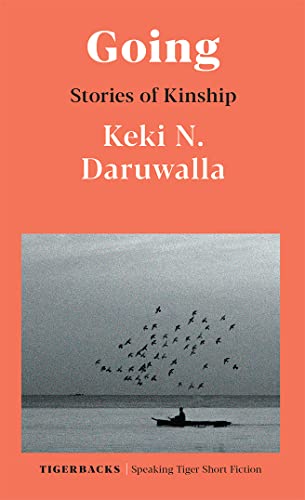
Going by Keki N Daruwalla

Book Review by Indrashish Banerjee

Title: Going: Stories of Kinship

Author: Keki N Daruwalla

Publisher: Speaking Tiger

There are short stories where the ending is a collective culmination of all their subplots and themes, somewhat like a novel, but if you have read Somerset Mugham, you know what I mean. And there are stories which couldn’t care less. They move from one event to another, one subplot to another, make abstract observations and then suddenly come to an end. Maybe because every story must come to an end, but it’s the journey you must enjoy; it’s the journey that’s of greater importance. There are readers who like the former style – they appreciate its logical pattern of one thing leading to another. And there are readers who like the journey and believe disorderliness is a better reflection of life’s idiosyncrasies – and reflect on the sudden ending to connect it with what happened earlier.  It is a delight to discover a writer. I knew Keki N. Daruwalla’s works – For Pepper and Christ – but had never read him. And now that I have read Going: Stories of Kinship, I will move back and try out his other works.

Among Keki N. Daruwalla’s acclaimed short story collections are Sword and Abyss (1979), The Minister for Permanent Unrest and Other Stories (1996) and Love Across the Salt Desert (2011). His first novel, For Pepper and Christ, was shortlisted for the Commonwealth Fiction Prize in 2010. He was awarded the Padma Shri in 2014. But Keki N. Daruwalla is better known for his poetry. His poetry volumes include Under Orion, The Keeper of the Dead (winner of the Sahitya Academy Award, 1984), Landscapes (winner of Commonwealth Poetry Award, 1987) and the Map Maker. Most recently he was honoured with the Poet Laureate award at the Tata Literature Live, Mumbai Litfest, 2017.

Thematically connected short stories are in fashion. But it’s difficult to identify any common thread running across the stories in Going. Each one is different.

Sometimes that sudden or understated ending can be a reference to a subplot within the story. Lionidas Campbell, in ‘The Bhahmaputra Triology’, many years after making love to an Indian woman discovers that he had sired a son from the relationship – and the story ends there. It can sometimes be reflective of the larger message the story wants to convey.  After Ardeshir’s daughter, Arnavaz, elopes with a Muslim boy against her father’s wishes refusing to be dissuaded by her father’s attempt to invoke the history of persecution of Parsees by Muslims, Ardeshir is a heartbroken man.  At the end, while wallowing in grief, sitting on armchair, Ardeshir suddenly feels the “frail silhouette of Arnavaz adrift on his memories” – and a yearning for his daughter grips him. The climax makes two messages very clear. The helplessness of a man seeing personal concerns of his daughter triumphing over a need for historical justice; filial love prevailing over community loyalty and concerns about history.

As much as all the stories, to an extent, explore the inner lives of characters, Bikshu is more so. The entire story is about Bikshu’s inner journey, its conflicts, evolution, emotional layers with occasional detours to Bikshu’s past, his family and mother. At the end of the book, I discovered the commonality.  When you have read the stories and reflect on them as a collective, you feel they are about human relationships and how they evolve over time.

Indrasish Banerjee has been writing and publishing his works for quite some time. He has published in Indian dailies like Hindustan Times and Pioneer, and Café Dissensus, a literary magazine. Indrasish is also a book reviewer with Readsy Discovery. Indrasish stays and works in Bangalore, India. 

.

PLEASE NOTE: ARTICLES CAN ONLY BE REPRODUCED IN OTHER SITES WITH DUE ACKNOWLEDGEMENT TO BORDERLESS JOURNAL

Categories
Excerpt

Villainy by Upamanyu Chatterjee

Title: Villainy

Author: Upamanyu Chatterjee

Publisher: Speaking Tiger Books

Death of late having been much on her mind, it did not seem surprising to Dr Mujumdar that she should, at seven-forty of a December morning, during her constitutional in the neighbourhood park, be the first to come upon the corpse or rather, to recognise it to be a dead body. Of course, they were all concentrating on striding along on the jogging track – rolling their hips, pausing discreetly on occasion, only for a micro-second, to break wind – and all moving clockwise as per the rules set down and put up by the Residents’ Welfare Association on the signboard at the entrance, and if they had eyes for anything, it was for the odd, protruding pebble in their paths and every now and then, a Johnny-come-lately in his new car outside the gates, prowling in search of a parking slot. But beneath the hibiscus bushes just before the Children’s Corner, they so stared her in the face, leapt out at her to shout out their presence that she marvelled that no one else appeared to have noticed them – a pair of off-white Bata tennis sneakers, stark against the dark, damp loam, blue socks in a heap at the ankles, khaki trousers that had ridden up to reveal scrawny calves, with the rest of the travesty mercifully hidden by the foliage and a mound of compost awaiting distribution. For travesty she knew it would be and she did not want to see it; for since when has death not been a travesty of all that holds meaning?

       ‘Something tells me that that is not a drunk Colony guard or municipal gardener sleeping it off,’ said she, aloud, to herself, glanced at her watch even though she knew what time it was, and continued silently, But could I still do my half-a-dozen rounds as though nothing has happened, or at least as many as I can before someone else notices something amiss? Or would that be callous and unfeeling of me? She lengthened her stride and began doggedly to pump her elbows in an effort to get away quickly. Her heart though was really not in it that morning. ‘It does seem shameful for someone who’s almost a medical doctor,’ she carried on her conversation with herself, ‘to run away from a corpse. Waddle away, more accurately. But people must never know. And all this – ’ She looked up and about her for a moment, blinked ‘ – is going to have to stop pretty soon, isn’t it?’ She exchanged a ‘Morning’ for a ‘Hello, dear’ as she overtook portly Mrs Gulati. ‘I mean, no one can possibly jog or skip rope or stretch or do his yoga and breathe through his anus or laugh his therapeutic Santa Claus belly laugh in the presence of a dead body, can he?’ And then, aloud, ‘Morning, Sanjeev-ji. You are early today?!’

      Dr Mujumdar took more than her usual eleven minutes to cross the Children’s Corner, pass the Water-Harvesting Area and loop around the Nano Golf Course. By the time she turned into the straight stretch along the C-Block side of the park, a knot of the regulars, forced to abandon their burpees and their Hanuman pushups, had formed around the hibiscus bushes. Automatically, Dr Mujumdar slowed down, even wondered for a second whether she could about-turn and, disobeying the commandment of the RWA, clump away anti-clockwise.

       ‘Don’t touch anything! Just call the police.’

      ‘Could it be someone we know? Even a member of the Health Club?’

      ‘Doesn’t look as though his membership did him any good. Somebody had better telephone the police, I say.’

      ‘I can’t. My phone needs to be charged.’

      ‘I can’t either, unfortunately. I always leave my phone behind at home when I step out for my exercise.’

      ‘Why don’t you call them? They will respond immediately to your commanding personality.’

      ‘It is the RWA that should phone the police. After all, the dead body has been found in a public place. Just call Tutreja at the Association.’

      ‘I can’t, I just told you. My phone needs to be charged.’

      ‘Why are you carrying around a phone that doesn’t work?’

      ‘To time my rounds, if you must know. The clock works. And how damn nosey you are, if I might add.’

      ‘Is something the matter? I’m a doctor. A pharmacist, more accurately. Perhaps I might be of help.’

      The knot of exercisers, three-deep by then, stirred and parted like porridge to make way for Dr Mujumdar and then congealed around her even before she could look down once more upon the Bata shoes and the scrawny calves, the khaki trousers. The press of bodies made concentration all the more difficult.

      ‘We’ll have to pull him out and turn him over. Any volunteers?’ The doctor looked about her at the knot, watched it stir and thin. ‘Backache,’ murmured a man with a white moustache, his hand ready to clutch his hip.

      With a grunt of annoyance, portly Mrs Gulati planted herself in the hibiscus bed, pushed aside the vegetation and bent to grab an ankle. The shadow of a momentary queasiness crossed her features at the touch of that cold, alien flesh. She was suddenly surrounded by several fellow-residents whom she had abashed. Freely directing and admonishing one another, they lifted the body up and sideways and laid it down, face up, on the jogging track. The group emitted a sort of collective moan, part sigh, part gasp, on first seeing the face. With difficulty, Dr Mujumdar got down on her knees beside the body. The onlookers, four deep now, gathered about them as though caught in an eddy.

      He was dead, there was no doubt about that. The dead do not look like the living. She felt for his pulse. The wrist was cold and stiff. She extracted a large handkerchief from the pocket of her tracksuit and gently dusted the loam and grit off the face. A murmur, a commentary on the vanity of all that is not death, rustled through the group like the hint of a breeze.

Excerpted from Villainy by Upamanyu Chatterjee. Published by Speaking Tiger Books, 2022.

ABOUT THE BOOK

 Walkers in a Delhi neighbourhood park come upon a body on a mid-winter morning—an unidentified body, unremarkable but for an extraordinary scar right between the eyes.

A delinquent teenager—who prefers, to the rest of living, an Ecstasy pill with a beer, and the interior of an expensive car with a gun in his pocket—leaves home one evening for a joyride in his father’s Mercedes.

In the nineteen years separating these episodes, five killings take place—and one near-fatal battery—none of which would have happened if a school bus hadn’t been in the wrong lane. Deals are struck between masters and servants, money changes hands, assurances are given and broken. The wheels of justice turn, forward, backwards and sideways, pause and turn again. Old alliances are tested and new ones are formed in prison cells, mortuaries and court rooms. And every life is a gamble, for no one is entirely innocent.

A meticulously crafted literary thriller, Upamanyu Chatterjee’s seventh novel is a riveting story of crime and retribution, and a meditation on the randomness of evil, death and redemption. It will keep you spellbound till the end.

ABOUT THE AUTHOR

 Upamanyu Chatterjee is the celebrated author of English, August: An Indian Story (1988), The Last Burden (1993), The Mammaries of the Welfare State (2000), Weight Loss (2006), Way to Go (2011), and Fairy Tales at Fifty (2014)—all novels; The Revenge of the Non-vegetarian (2018), a novella; and The Assassination of Indira Gandhi (2019), a collection of long stories. He won the Sahitya Akademi Award in 2000, and in 2008, he was awarded the Order of Officier des Arts et des Lettres by the French Government for his contribution to literature.

Click here to read the review

PLEASE NOTE: ARTICLES CAN ONLY BE REPRODUCED IN OTHER SITES WITH DUE ACKNOWLEDGEMENT TO BORDERLESS JOURNAL

Categories
Excerpt

Ruskin Bond’s Friends in Wild Places

Title: Friends in Wild Places: Birds, Beasts and Other Companions

Author: Ruskin Bond

Illustrator: Shubhadarshini Singh

Publisher: Talking Cub, the children’s imprint of Speaking Tiger.

Timothy

TIMOTHY, THE TIGER cub, was discovered by Grandfather on a hunting expedition in the Terai jungle near Dehra.

Grandfather was no shikari, but as he knew the forests of the Siwalik hills better than most people, he was persuaded to accompany the party—it consisted of several Very Important Persons from Delhi—to advise on the terrain and the direction the beaters should take once a tiger had been spotted.

The camp itself was sumptuous—seven large tents (one for each shikari), a dining-tent, and a number of servants’ tents. The dinner was very good, as Grandfather admitted afterwards; it was not often that one saw hot-water plates, finger-glasses, and seven or eight courses, in a tent in the jungle! But that was how things were done in the days of the Viceroys… There were also some fifteen elephants, four of them with howdahs for the shikaris, and the others specially trained for taking part in the beat.

The sportsmen never saw a tiger, nor did they shoot anything else, though they saw a number of deer, peacocks, and wild boars. They were giving up all hope of finding a tiger, and were beginning to shoot at jackals, when Grandfather, strolling down the forest path at some distance from the rest of the party, discovered a little tiger about 18 inches long, hiding among the intricate roots of a banyan tree. Grandfather picked him up, and brought him home after the camp had broken up. He had the distinction of being the only member of the party to have bagged any game, dead or alive.

At first the tiger cub, who was named Timothy by Grandmother, was brought up entirely on milk given to him in a feeding bottle by our cook, Mahmoud. But the milk proved too rich for him, and he was put on a diet of raw mutton and cod liver oil, to be followed later by a more tempting diet of pigeons and rabbits.

Timothy was provided with two companions—Toto the monkey, who was bold enough to pull the young tiger by the tail, and then climb up the curtains if Timothy lost his temper; and a small mongrel puppy, found on the road by Grandfather.

At first Timothy appeared to be quite afraid of the puppy, and darted back with a spring if it came too near. He would make absurd dashes at it with his large forepaws, and then retreat to a ridiculously safe distance. Finally, he allowed the puppy to crawl on his back and rest there!

One of Timothy’s favourite amusements was to stalk anyone who would play with him, and so, when I came to live with Grandfather, I became one of the favourites of the tiger. With a crafty look in his glittering eyes, and his body crouching, he would creep closer and closer to me, suddenly making a dash for my feet, rolling over on his back and kicking me in delight, and pretending to bite my ankles.

He was by this time the size of a full-grown retriever, and when I took him out for walks, people on the road would give us a wide berth. When he pulled hard on his chain, I had difficulty in keeping up with him. His favourite place in the house was the drawing room, and he would make himself comfortable on the long sofa, reclining there with great dignity, and snarling at anybody who tried to get him off.

Timothy had clean habits, and would scrub his face with his paws exactly like a cat. He slept at night in the cook’s quarters, and was always delighted at being let out by him in the morning.

‘One of these days,’ declared Grandmother in her prophetic manner, ‘we are going to find Timothy sitting on Mahmoud’s bed, and no sign of the cook except his clothes and shoes!’

Of course, it never came to that, but when Timothy was about six months old a change came over him; he grew steadily less friendly. When out for a walk with me, he would try to steal away to stalk a cat or someone’s pet Pekinese. Sometimes at night we would hear frenzied cackling from the poultry house, and in the morning there would be feathers lying all over the veranda. Timothy had to be chained up more often. And finally, when he began to stalk Mahmoud about the house with what looked like villainous intent, Grandfather decided it was time to transfer him to a zoo.

The nearest zoo was at Lucknow, 200 miles away. Reserving a first-class compartment for himself and Timothy—no one would share a compartment with them— Grandfather took him to Lucknow where the zoo authorities were only too glad to receive as a gift a well-fed and fairly civilized tiger.

About six months later, when my grandparents were visiting their relatives in Lucknow, Grandfather took the opportunity of calling at the zoo to see how Timothy was getting on. I was not there to accompany him, but I heard all about it when he returned to Dehra.

Arriving at the zoo, Grandfather made straight for the particular cage in which Timothy had been interned. The tiger was there, crouched in a corner, full-grown and with a magnificent striped coat.

‘Hello Timothy!’ said Grandfather, and, climbing the railing with ease, he put his arm through the bars of the cage.

The tiger approached the bars, and allowed Grandfather to put both hands around his head. Grandfather stroked the tiger’s forehead and tickled his ear, and whenever he growled, smacked him across the mouth, which was his old way of keeping him quiet.

He licked Grandfather’s hands and only sprang away when a leopard in the next cage snarled at him. Grandfather ‘shooed’ the leopard away, and the tiger returned to lick his hands; but every now and then the leopard would rush at the bars, and the tiger would slink back to his corner.

Excerpted from Friends in Wild Places: Birds, Beasts and Other Companions by Ruskin Bond; illustrated by Shubhadarshini Singh. Published by Talking Cub, the children’s imprint of Speaking Tiger.

ABOUT THE BOOK

Since he was a young boy, Ruskin Bond has made friends easily. And some of the most rewarding and lasting friendships he has known have been with animals, birds and plants—big and small; outgoing and shy. This collection focuses on these companions and brings together his finest essays and stories, both classic and new. There are leopards and tigers, wise old forest oaks and geraniums on sunny balconies, a talking parrot and a tomcat called Suzie, bears in the mountains and kingfishers in Delhi, a family of langurs and a lonely bat—and many more ‘wild’ friends, some of an instant, others of several years.

Beautifully illustrated by Shubhadarshini Singh, this is a gift for nature- and book-lovers of all ages.

ABOUT THE AUTHOR

 Ruskin Bond is the author of numerous novellas, short-story collections and non-fiction books, many of them classics. Among them are The Room on the Roof, The Night Train at Deoli, Time Stops at Shamli, Rain in the Mountains, The Blue Umbrella, When I Was a Boy, Lone Fox Dancing (his autobiography) and A Book of Simple Living. He received the Sahitya Akademi Award in 1993, the Padma Shri in 1999 and the Padma Bhushan in 2014.

Ruskin lives in Landour, Mussoorie, with his extended family.

ABOUT THE ILLUSTRATOR

 Shubhadarshini Singh was brought up in Kolkata and studied in Visva-Bharati, Shantiniketan. She has been an ad woman, a journalist and a film-maker. She shares Ruskin Bond’s deep love for animals and wildlife and has made his best stories into a series for television: Ek Tha Rusty. Shubhadarshini runs an art gallery for Outsider Arts, and has had shows of her paintings in Delhi and Bhopal. She lives in Delhi with her husband, son and dogs.

PLEASE NOTE: ARTICLES CAN ONLY BE REPRODUCED IN OTHER SITES WITH DUE ACKNOWLEDGEMENT TO BORDERLESS JOURNAL

Categories
Review

The Best of Travel Writing of Dom Moraes

Book Review by Indrashish Banerjee

Title: The Best of Travel Writing of Dom Moraes: Under Something of a Cloud

Author: Dom Moraes

Publisher: Speaking Tiger Books

Travel books that I have read so far, broadly fall into two categories. One is investigative and the other is a spontaneous account of the author’s experience. If one is analytical, the other is immediate. It’s not necessary that the two styles can’t be combined. V.S Naipaul’s A Million Mutinies Now (1990) is a good example of that: a mix of investigation of a place’s past and present through ordinary people’s lives combined with day-to-day travel details. Bill Bryson’s Travels in Small-Town America (1989) is about Bryson’s experience of visiting the towns of America with occasional dosage of nostalgia.

The Best of Travel Writing of Dom Moraes: Under Something of a Cloud falls into the second category – a spontaneous account of events as seen by the author. However, where it’s different from travel books in general (and the ones mentioned above) is that it doesn’t stick to a singular theme. A collection of essays, some autobiographical, some reports, the book takes the reader through a kaleidoscopic journey spanning continents, lives and topics ranging from when the author takes his first steps into the world of writing as a child to the time he is a mature travelling journalist covering topics as diverse as Suharto’s rule in Indonesia to dacoits in India. 

If you are familiar with Dom Moraes ((1938-2004) as a poet, novelist and columnist, you will not be surprised by the sheer finesse of writing you encounter as you move from one essay to another, although you may have your own favourites. Regarded as one of the giants of Indian English literature, Moraes won the prestigious Hawthornden Prize when he was just 20 followed by Sahitya Academy Award and a series of other literary awards in England, America and India.

The book starts with an introduction by Sarayu Srivastava recounting the last days of Moreas with detours to his past. The introduction has a morbid element to it, as did Moraes’s life. But, surprisingly, the morbid mood the introduction sets, vaporises in the pieces that follow.

The first two travel pieces are purely autobiographical. ‘His Father’s Son’ (1945) recollects the carefree childhood days of Dom Moraes in Ceylon (now Sri Lanka) where is father, a reporter with Times of India, was posted. There is a strong visual element to how the natural world of these places has been described. Anecdotes about a child – Moraes – discovering this natural world slowly almost reads like the formative pages of a novel. In ‘Figures in the Landscape’ (1955) Moraes is equally carefree, if a little awkward, going through a range of experiences, some writerly, others potentially amorous, in that global capital of arts, artists and sensuality, Paris.

But there is a tragic and frightening aspect to the pieces, too, which appears and retreats only to reappear as if to remind you that life is not just about gambolling. That aspect is the gradual mental deterioration of Dom Moreas’s mother who was given to violence. Her fits of violence form a recurrent theme until she leaves Ceylon and returns to Bombay to stay with her relatives. But even after she departs, her presence constantly lurks in the background. And when she does reappear, either actually or via recollection, the atmosphere of the essay instantly changes.

She, although absent from many other pieces in the collection, casts a shadow on her son such that some of the actions of the son, particularly his introverted and melancholic personality, seem to be coloured by his mother’s tragedy. One can sense in later essays where the author has grown up, how the derangement of the mother would have affected the son. That almost becomes a subterranean subtheme.

The following opening passage of ‘The Chinese at the Doorstep’ is a case in point.

One recalled the oddest things: I remember a toy-shop in a Knightsbridge arcade where I used to go when very unhappy, during my first days in London, in order to buy small delicate glass toys which I later smashed, one by one, in the fireplace of my flat, with a malediction against anything beautiful.”

Moraes had a complex relationship with his mother. And in the essays that are a throwback to his childhood days, you meet a helpless child unable to make up his mind whether he loves his mother for who she is, or is indifferent to her — seeing her from a distance with a sense of fright and awe.

As the book progresses, the world of Moraes opens up further. ‘The Chinese at the Doorstep’ (1959) is about a sudden journey to Sikkim and surrounding places. There is a tension in the place that it’s abuzz with Chinese spies, and that China is engaged in incursions and military build-up in the Indian border states. The year is 1959 and developments are admittedly a precursor to the things to come in 1962. Written more than half a century ago, the essay reads disturbingly current. The essay’s narrative is much tauter, almost like a spy thriller, than the other essays.

Since the global brouhaha about climate change is not older than roughly a decade and half, we tend to locate all climate disasters to recent times, having settled into the belief that the past generations were coexisting with nature in peace and harmony. However, the subcontinent has always been home to extreme climate events going back to the 18th century.

“Geography as well as history has always been linked to East Pakistan.” When I read this sentence, the first sentence in ‘Death by Water’ (1970), I thought I was in for an account of the atrocities on the Hindu population of East Pakistan during that period but was surprised to find an extremely well-informed report on a cyclone which had hit the region in 1970. The sea level had risen to a great height creating a ‘water wall’, according to eyewitnesses, which had then crashed on the land raging inland with a monster force and then stopping and moving back into the sea. The next day when helicopters were sent to survey the damage, bodies of humans and cattle were found floating in the sea, river and crevices. 

In ‘Dispatches from Indonesia’ (1972), Moraes visits a country under the tyrannical rule of General Suharto. The dictator had come to power seven years before his visit through a military coup, and immediately after, there was a crackdown on the intelligentsia. Some were executed and some sent to prison camps. Moraes travels to one such prison camp outside the city and meets two famous prisoners, Suprapto (Soeprapto), the former Attorney General, and Pramudja (Pramudya Ananta Tur), a famous writer. Their lives are a reflection of the losses and tragedies the critics of the regime suffered.

In ‘The Company of Dacoits’ (1981), Moraes withdraws from the world of dictators and devastating floods and enters the rugged terrain of dacoits.  We meet Lajjaram, who is dead and whose body is being constantly mishandled by the police, and Lakshman Singh Rathore, alias Lachhi, an eighteen-year-old boy who was thrust into dacoity by his circumstances, first to seek help to avenge his father being deceived, and then to pay for the help received by becoming a fulltime bandit. The rest of the essay is about Lachhi trying to get himself acquitted of the crimes committed by other dacoits in his group. 

Likewise, the other pieces also deal with human conditions in varied settings.                    

The essays are undoubtedly dated, but the subjects they deal with brim with recency: human disaster, tyrannical govt, national expansionism, inaccessibility of justice. Over a period of time, these subjects, of course, have acquired a new lexicon: territorial conflict, climate change, human right excesses and so on.

The collective time span of the pieces is almost 60 years. Dom Moraes’s gaze is that of a writer, rather than of a journalist, always looking out for human tragedies, helplessness and intricacies within bigger narratives of climate disaster, military coups and national conflicts.

.

Indrasish Banerjee has been writing and publishing his works for quite some time. He has published in Indian dailies like Hindustan Times and Pioneer, and Café Dissensus, a literary magazine. Indrasish is also a book reviewer with Readsy Discovery. Indrasish stays and works in Bangalore, India. 

.

PLEASE NOTE: ARTICLES CAN ONLY BE REPRODUCED IN OTHER SITES WITH DUE ACKNOWLEDGEMENT TO BORDERLESS JOURNAL