Categories
Review

The Best of Travel Writing of Dom Moraes

Book Review by Indrashish Banerjee

Title: The Best of Travel Writing of Dom Moraes: Under Something of a Cloud

Author: Dom Moraes

Publisher: Speaking Tiger Books

Travel books that I have read so far, broadly fall into two categories. One is investigative and the other is a spontaneous account of the author’s experience. If one is analytical, the other is immediate. It’s not necessary that the two styles can’t be combined. V.S Naipaul’s A Million Mutinies Now (1990) is a good example of that: a mix of investigation of a place’s past and present through ordinary people’s lives combined with day-to-day travel details. Bill Bryson’s Travels in Small-Town America (1989) is about Bryson’s experience of visiting the towns of America with occasional dosage of nostalgia.

The Best of Travel Writing of Dom Moraes: Under Something of a Cloud falls into the second category – a spontaneous account of events as seen by the author. However, where it’s different from travel books in general (and the ones mentioned above) is that it doesn’t stick to a singular theme. A collection of essays, some autobiographical, some reports, the book takes the reader through a kaleidoscopic journey spanning continents, lives and topics ranging from when the author takes his first steps into the world of writing as a child to the time he is a mature travelling journalist covering topics as diverse as Suharto’s rule in Indonesia to dacoits in India. 

If you are familiar with Dom Moraes ((1938-2004) as a poet, novelist and columnist, you will not be surprised by the sheer finesse of writing you encounter as you move from one essay to another, although you may have your own favourites. Regarded as one of the giants of Indian English literature, Moraes won the prestigious Hawthornden Prize when he was just 20 followed by Sahitya Academy Award and a series of other literary awards in England, America and India.

The book starts with an introduction by Sarayu Srivastava recounting the last days of Moreas with detours to his past. The introduction has a morbid element to it, as did Moraes’s life. But, surprisingly, the morbid mood the introduction sets, vaporises in the pieces that follow.

The first two travel pieces are purely autobiographical. ‘His Father’s Son’ (1945) recollects the carefree childhood days of Dom Moraes in Ceylon (now Sri Lanka) where is father, a reporter with Times of India, was posted. There is a strong visual element to how the natural world of these places has been described. Anecdotes about a child – Moraes – discovering this natural world slowly almost reads like the formative pages of a novel. In ‘Figures in the Landscape’ (1955) Moraes is equally carefree, if a little awkward, going through a range of experiences, some writerly, others potentially amorous, in that global capital of arts, artists and sensuality, Paris.

But there is a tragic and frightening aspect to the pieces, too, which appears and retreats only to reappear as if to remind you that life is not just about gambolling. That aspect is the gradual mental deterioration of Dom Moreas’s mother who was given to violence. Her fits of violence form a recurrent theme until she leaves Ceylon and returns to Bombay to stay with her relatives. But even after she departs, her presence constantly lurks in the background. And when she does reappear, either actually or via recollection, the atmosphere of the essay instantly changes.

She, although absent from many other pieces in the collection, casts a shadow on her son such that some of the actions of the son, particularly his introverted and melancholic personality, seem to be coloured by his mother’s tragedy. One can sense in later essays where the author has grown up, how the derangement of the mother would have affected the son. That almost becomes a subterranean subtheme.

The following opening passage of ‘The Chinese at the Doorstep’ is a case in point.

One recalled the oddest things: I remember a toy-shop in a Knightsbridge arcade where I used to go when very unhappy, during my first days in London, in order to buy small delicate glass toys which I later smashed, one by one, in the fireplace of my flat, with a malediction against anything beautiful.”

Moraes had a complex relationship with his mother. And in the essays that are a throwback to his childhood days, you meet a helpless child unable to make up his mind whether he loves his mother for who she is, or is indifferent to her — seeing her from a distance with a sense of fright and awe.

As the book progresses, the world of Moraes opens up further. ‘The Chinese at the Doorstep’ (1959) is about a sudden journey to Sikkim and surrounding places. There is a tension in the place that it’s abuzz with Chinese spies, and that China is engaged in incursions and military build-up in the Indian border states. The year is 1959 and developments are admittedly a precursor to the things to come in 1962. Written more than half a century ago, the essay reads disturbingly current. The essay’s narrative is much tauter, almost like a spy thriller, than the other essays.

Since the global brouhaha about climate change is not older than roughly a decade and half, we tend to locate all climate disasters to recent times, having settled into the belief that the past generations were coexisting with nature in peace and harmony. However, the subcontinent has always been home to extreme climate events going back to the 18th century.

“Geography as well as history has always been linked to East Pakistan.” When I read this sentence, the first sentence in ‘Death by Water’ (1970), I thought I was in for an account of the atrocities on the Hindu population of East Pakistan during that period but was surprised to find an extremely well-informed report on a cyclone which had hit the region in 1970. The sea level had risen to a great height creating a ‘water wall’, according to eyewitnesses, which had then crashed on the land raging inland with a monster force and then stopping and moving back into the sea. The next day when helicopters were sent to survey the damage, bodies of humans and cattle were found floating in the sea, river and crevices. 

In ‘Dispatches from Indonesia’ (1972), Moraes visits a country under the tyrannical rule of General Suharto. The dictator had come to power seven years before his visit through a military coup, and immediately after, there was a crackdown on the intelligentsia. Some were executed and some sent to prison camps. Moraes travels to one such prison camp outside the city and meets two famous prisoners, Suprapto (Soeprapto), the former Attorney General, and Pramudja (Pramudya Ananta Tur), a famous writer. Their lives are a reflection of the losses and tragedies the critics of the regime suffered.

In ‘The Company of Dacoits’ (1981), Moraes withdraws from the world of dictators and devastating floods and enters the rugged terrain of dacoits.  We meet Lajjaram, who is dead and whose body is being constantly mishandled by the police, and Lakshman Singh Rathore, alias Lachhi, an eighteen-year-old boy who was thrust into dacoity by his circumstances, first to seek help to avenge his father being deceived, and then to pay for the help received by becoming a fulltime bandit. The rest of the essay is about Lachhi trying to get himself acquitted of the crimes committed by other dacoits in his group. 

Likewise, the other pieces also deal with human conditions in varied settings.                    

The essays are undoubtedly dated, but the subjects they deal with brim with recency: human disaster, tyrannical govt, national expansionism, inaccessibility of justice. Over a period of time, these subjects, of course, have acquired a new lexicon: territorial conflict, climate change, human right excesses and so on.

The collective time span of the pieces is almost 60 years. Dom Moraes’s gaze is that of a writer, rather than of a journalist, always looking out for human tragedies, helplessness and intricacies within bigger narratives of climate disaster, military coups and national conflicts.

.

Indrasish Banerjee has been writing and publishing his works for quite some time. He has published in Indian dailies like Hindustan Times and Pioneer, and Café Dissensus, a literary magazine. Indrasish is also a book reviewer with Readsy Discovery. Indrasish stays and works in Bangalore, India. 

.

PLEASE NOTE: ARTICLES CAN ONLY BE REPRODUCED IN OTHER SITES WITH DUE ACKNOWLEDGEMENT TO BORDERLESS JOURNAL
Categories
Stories

Eyes of the Python


Written in Tamil by S.Ramakrishnan, translated by Dr.B.Chandramouli

Raghav dreamed of a python again. He had never dreamed of a snake till he was thirty. But ever since he married seven months ago, the python had recurred several times in his dreams. Mirudhula was to blame.

She was fond of pythons. When she admired one, her eyes would widen as if she were swishing her tongue at a delicious gulab jamun. In confusion, he used to wonder: “What kind of woman is she?”

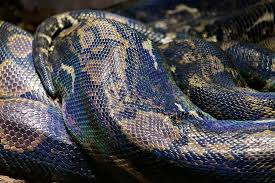
In the city zoo, there was a cage with an artificial tree containing a twelve-foot python. They did not know where they got it; it was the first thing they went to see as newlyweds.

“Ragav, look at its eyes. They flash with a secret. Its texture, the style of its coils, the small movements, all of it are amazing. I like it; I want to hold it in my lap,” said Mirudhula.

Ragav hid his fear and asked, “Should we go?”

“We just arrived. Why are you rushing?” she said, standing near the barrier, watching it with interest.

He could not understand what interested her.

“You know it is non-poisonous. Even at school, I got a prize for drawing a python,” said Mirudhula.

“It is still a snake,” said Ragav. She was snapping pictures with her mobile. A boy who came there hid behind his mother with closed eyes. His mother was pulling him forward, urging him to look.

Ragav left her alone and went to see the white tiger. When he returned, she was still admiring the python. He felt irritated to see her slowly licking an ice cream cone and watching the motionless python.

Young newlyweds go to the movies only. Mirudhula was not interested in the movies; in all of her 26 years, she had seen only less than ten.

“I fall asleep at the cinema,” she said. He could never fall asleep in a movie theater.

In his college days, he would watch all three new releases for Diwali and Pongal non-stop. The three movie theatres in his town changed movies twice a week. In a week he saw six movies, mostly second shows. If it was too late to go home, he would sleep on friend’s open terrace and in the morning, go to the college from straight from there.

Why did he marry a girl who disliked movies – he wondered.

 Mirudhula was a salesperson for a multinational company. She was the single daughter of a dentist. She graduated from Manipal University after attending an Ooty convent. Having worked in Italy for two years, she was fluent in four or five languages. She made 1.5 lakhs per month.

They connected on a matrimonial site. When they first met in Amethyst’s coffee shop, her perfume intoxicated him. He couldn’t take his eyes off of her black and yellow salwar-kameez.

She spoke fluently and naturally with a fake smile on her face, as if speaking to a customer. She ordered an orange ice-tea, which Ragav had never tasted.

Twice, she repeated the same question: “Are you the only offspring?”

“Yes. My father is a college professor and my mom a schoolteacher,” he replied.

“Thank God you aren’t a teacher too,” she said. He didn’t get what was funny about it but laughed politely. Her charming beauty seduced him, as one might desire decorated pineapple pieces in a five-star hotel.

She seemed to be purposefully using a seductive voice.

“May I know how much you weigh?” she asked.

No girl has ever asked him that. Feeling shy, he said, “Sixty-eight”.

“You must lose 5kg, ” she said, smiling.

While opposite her, he felt as if it was drizzling on his face.

She winked, “Do you have any other questions?”

“You are very beautiful,” said Ragav. 

“I am aware of it.”

“I am lucky,” he laughed lightly.

“I’m still deciding – have to think more. I rush nothing.” Mirudhula said, “I am different and difficult to understand.”

“Different how?”

“I don’t want to scare you off yet, but I am like that only.”

She licked her small lips as she spoke. Her lips were sexy; the upper one was slightly smaller.

‘I think I am an inch taller than you,” she said.

“Is that so?” he exclaimed. “It is not a problem.” 

“It would be a problem for me. You should wear platform shoes,” she said.

“Sure. I can do that.”

“Do you drive?” she asked.

“No, I only ride a bike.”

“I got a car as soon as I got the job and drive to work daily. I love driving.”

“That is really cool. We don’t have to use ola then,” he said.

She disliked that comment. Slowly combing her distressed hair, she munched on the orange wedge.

“Aren’t you curious about my car?”

“Sorry. I know nothing about cars.”

She teased him, “Do you walk on the road with your eyes closed?”

“I wear a helmet. I hardly notice anything else.”

While she ate a sugar cube, she regarded him quietly. Her eyes seemed to seek something in him. What was she looking for? He could not stand her scrutiny.  

She smiled. “We will meet again.”

 Her perfume lingered long after she left. Ragav picked up and tasted a sugar cube just like her.

It was the first of their three dates. After that, their families got together and arranged the wedding. Unlike traditional marriage hall weddings, theirs was a lavish affair at a beach resort. Mirudhula’s father spared no expense. They honeymooned in Hawaii. She enjoyed varied foods, including fish. Raghav craved rice.

Even when she was kissing him in bed, Mirudhula was slow and deliberate. Her kiss was emphatic. Her embrace was slow and long. Their lovemaking was urgent and refreshing, like eating ice cream in the summer.

They temporarily stayed at Mirudhula’s apartment upon returning to Chennai. Mirudhula was serious about renting a new home. She rented a flat on the top floor of a newly built apartment building with 34 floors.

Ragav said, “A first-floor flat would have been nice.”

“One must live in the highest location possible. It is nice to see the city beneath my feet,” she said.

He felt uncomfortable living so far up.  What if the lift failed? What if the balcony glass barrier cracked? Why was there so much glare in the morning? His mind bubbled with doubts, questions, and fears. But her morning routine was to stand on the balcony with the morning brew in the hand and admire the sprawling city below. The fast wind blew her hair in waves. He disliked standing on the balcony.

Mirudhula was a great cook, but she only cooked when she liked it. The other times, they catered from the hotel only. She was never late for work. Even at home, she never seemed to rest and kept moving. Ragav, however, liked to relax on the sofa after work. On Sundays, he slept until noon. Not her.  She exercised every morning. She took great care of her figure and health.

Leaving together by car, she dropped him off at the metro station and proceeded to her workplace. She never drove him to work. She often got home by 9 p.m., whereas he was back by 6 p.m.

While waiting for her, he watched television. Occasionally, he cooked for himself. All his dreams of married life were dashed in a few weeks. He felt that his life was like a book read and finished in a hurry.

One day Mirudhula fought, saying he lacked toilet etiquette. He yelled at her another day for storing Chinese food in the fridge that smelled foul. Despite the petty fights, she often surprised him with gifts. He too took her shopping every week without fail. To appease her, he ate in some restaurants that he disliked. Her poise was evident in her every action.

She had the habit of buying strange things online. She bought wall mounted blue lights for the bedroom. The rotating blue light made the room look like a pool. When she moved around in the room, it was as if in a dream.

Another time, he was busy at work when she sent him a video and texted him to watch it right away. It was a revolting scene that showed a python swallowing a baby monkey.

Angrily, he called her and demanded to know why she sent him that video.

“Did you see? The python swallows the monkey and turns, looking eerily silent…something strange…”

“Isn’t the baby monkey unfortunate?”

“Snakes eat when they’re hungry–anything wrong in that?”

“Don’t send such videos anymore. Why would I look at them?”

“I liked the video so much I watched it 30 times today. You are my better half, so I shared it with you.”

 He cut the call with “Stupid”

It was two days before they spoke again. He became more enraged when she ignored his anger.

That Sunday, she made many of his favorite dishes. She deliberately wore a silk sari. Showered him with kisses; his anger melted away.

A few days later, she told him while leaving for work, “I’ll get a package; accept it but don’t open it. I’ll open it.”

“What package?” he asked.

“Surprise” she laughed.

A guy delivered a big box, just as she said. It came from Taiwan.

Despite being curious, he did not open it, not wanting to anger her.

Unusually, she called before coming home that day: “Did the package arrive?””

“They delivered it in the afternoon itself,” he said.

“Can I get you something from McDonalds?” she asked.

Knowing she wasn’t planning to cook, he replied, “Pick it up yourself.”

She asked, “What sweet would you like?”.

“I’ve given up sweets,” he said flatly.

She cut the line by saying, “Well, we’re eating today.”

Mirudhula came home carrying two bags. One package contained food and the other sweets. Was it her birthday today? He wondered. Then he remembered her birthday was on May 8th. He could not figure out what was special about that day.

 The package she carefully unwrapped contained a rubber python folded six times. She caressed it lovingly.

“Touch it and see how soft it is”

“What is this for, Mirudhula?” he asked.

“They have included a hand pump to inflate it; please help me,” she said

He took the hand pump and inflated the rubber python through a port. He watched it slowly expand. The snake unraveled to over ten feet of smooth coils. She wore it on her shoulders and smiled.

“Come close… let us wear it together,” she said.

As he grudgingly consented, she wrapped the inflated python around his shoulder as well.

“How is it? Can you feel the silky touch?” she asked.

“It feels strangely slimy, “he said as he tried shaking it off.

“I searched online and ordered it from Taiwan for 300 dollars,” she said.

“It’s not worth it. What made you buy it? I don’t like it,” said Ragav.

“I will spend my money as I wish. You like nothing.” She said, reclining on the sofa, hugging the python. He was a bit scared to look at her. As she stroked the python’s head, she stroked it with her cheek; only its tail was dangling outside the sofa.

“Ragav, I am thrilled today. Let us celebrate.”

“What is there to celebrate?”

“You won’t understand. Even before we were married, I said I was different. You even nodded your head.”

“That doesn’t mean you should have a Python at home… who would do that?”

“This is not a true snake, just a toy.”

“Why do you need a toy?”

“Then why do you have a fish tank? You like watching fish, right? Did I question it?”

“It is not the same.”

“It is all the same. Look Ragav. Whether you like it or not — us living together means compromising on some things I like.”

“There is no such rule.”

“No problem.  I don’t need your permission, anyway.” She laughed and sat down on the couch to watch an Italian channel. When she was angry, she would speak in a foreign language and watch foreign language channels.

Ragav locked himself in his room. His anger took a long time to subside. She might even bring the rubber python to the bedroom, he thought. Luckily, she left it on the sofa. She ate alone and came to bed as if nothing had happened.

She took the python to the bathroom the next day. She rubbed soap suds on it as she played with it in the shower. The wet python dried on the balcony.

He suppressed his rage and left for the office.

In the car, Mirudhula said, “You are overreacting, it’s just a toy.” This is like you playing video games; try to understand.”

He did not reply. That day, she drove him to his office on purpose. He came home to find the dried python in the hall, left there by the maid. He was furious.

When he touched its body, it felt like a snake but with motionless eyes. The plastic tongue twitched when he pressed its head. In the mirror, his visage looked strange as he wore the snake, like she did. It was such an expensive costume. What would someone from his hometown think? What is so special about this python?

 He deflated the python. Folding the rubber shell, he cast it in the kitchen corner. It was the first thing she looked for when Mirudhula got home at 9.30 pm. Not finding it, she shouted, “What did you do with the python?”

“It is in the kitchen”

“You would have deflated it, I know.” She said, walking to the kitchen.

“Yes. It is disgusting to look at.”

“The problem is yours. What you did is inevitable; you’re a pervert.”

“I’m not perverted. Does anyone else keep a python at home?”

“I don’t care if others keep it or not. I’m not like others.”

“You are adamant.”

“Yes. I am like that only.” She said, deliberately inflating the python with the hand pump. It grew much larger than its usual size. She walked to the bedroom, lovingly hugging the python. Loud music blared. Maybe she was dancing with the python.

Ragav slept on the sofa that night. The python accompanied her to work in the morning. In the lift, an old man asked her, “Is that a rubber toy? Where do they sell it?”

“Taiwan” she said, laughing.

“I’ve seen a python in the Assamese forests,” said the old man.

She put the python in the back seat. She did not drive him to work that day. He rode to work on his bike. He could not concentrate at work. When he spoke to his mother, he told her what had transpired.  His mother asked incredulously, “A rubber snake? Why did she buy it?”

“Who knows? She is a strange type.”

His mother was shocked. “Thank goodness she did not buy a live snake”

“She might even do that. I don’t know what to do.”

He heard his mother cursing in anger. Perhaps she spoke to Mirudhula’s father. Mirudhula’s mom called her the next day.

“Why did you talk to others about our problems?” Mirudhula demanded.

“I told my mother only.”

“Are you a schoolboy to run to your mother? What do you have in your mind? Am I crazy?”

“Yes.”

“I can’t live up to your expectations, Ragav.”

“I understood it very well long ago.”

“Then you better close your eyes and ears.  If you complain again like this to my folks, I do not know what I will do.”

“Why do you torture me? You can leave if you don’t like to live with me.”

“Why should I leave? I will stay here.”

“Well, I will leave then.”

Walking to the balcony with the python, she said, “It’s your choice.”. Leaning on the barrier, she held the snake up, and it wave in the air. To express his anger, he left for work early in the morning.

He arrived home late that night. The home was empty. He didn’t bother to look for her. She did not return the next day as well. He rang her father, but his father did not pick up the phone. After three days, Mirudhula called him one afternoon. “I have decided Ragav. I am leaving”              

“It is your choice.”

“The house cost me over two lakhs. You must return it. I have informed the owner that I will vacate the home, since I have paid for the advance. You better find a new place. Our marriage was a bad dream. That is all I can say.” She hung up.

Ragav thought she’d return after her anger subsided. He couldn’t stand her stubborn behavior. He wanted to call her back and give a piece of his mind. When he called again, she did not pick up the phone.

Upon returning home that night, he discovered she had emptied the house of her clothes and belongings. But she had left behind the rubber python, which lay alone in the middle of the hall.

Why did she leave it behind? It was the root of all their problems. What was she seeking? Her wants were so weird.

He kicked the rubber snake with his foot, but even then, his rage did not fade.

To vent his anger, he trampled the snake with his feet. After deflating it, he took it to the balcony and cast it into the wind.

 Flying in the air, the snake looked beautiful indeed. 

Glossary

Gulab jamun: Indian sweets

Diwali, Pongal: Festivals

S. Ramakrishnan is an eminent Tamil writer who has won the Sahitya Akademi Award in the Tamil Language category in 2018. He has published 10 novels, 20 collections of short stories, 75 collections of essays, 15 books for children, 3 books of translation and 9 plays. He also has a collection of interviews to his credit. His short stories are noted for their modern story-telling style in Tamil and have been translated and published in English, Malayalam, Hindi, Bengali, Telugu, Kannada and French.  

Dr.Chandramouli is a retired physician.. He is fluent in English and Tamil. He has done several English to Tamil, and Tami to English. He has published some of them.

.

PLEASE NOTE: ARTICLES CAN ONLY BE REPRODUCED IN OTHER SITES WITH DUE ACKNOWLEDGEMENT TO BORDERLESS JOURNAL

Categories
Review

Beyond the Veil: A Book Review by Aruna Chakravarti


Title: Beyond the Veil

Author: Devika Khanna Narula

An important task for those committed to tracking the path of women’s Issues, past and present, is to embark on a study of the academic discourses on gender sparked off by feminist scholars and activists — an area that is fast gaining ground all over the world. Yet there is another dimension to the effort. It also involves an exploration of creative writing generated by sensitive, imaginative feminism. It is important to understand that concepts such as Patriarchy, Agency and Resistance are not limited to feminist debate and discourse. They are equally and dynamically present in poetry and fiction. In India, the field of feminist creative writing is growing rich with promise every day.

One such endeavour is Devika Khanna Narula’s novel Beyond the Veil.  A work of epical dimensions it operates on a vast canvas. Vast both in terms of space and time, it spans half a century, between 1900 and 1950. It offers interesting insights into life as lived by upper class and middle-class women during a momentous period of Indian history. A time when a mass resistance against British rule was spreading all over the country culminating in the independence of India. A movement in which some women also participated.

Spatially the narrative shuttles between two families from two different parts of India linked by marriage. They belong to different cultures though they come from a common stock. They are the Punjabis of Lahore and the Punjabi Khatris of Bandhugarh, a fictional name for Bardhaman, in West Bengal. The founder of the Kapoor family in Bandhugarh, came from Punjab in the sixteenth century and, by sheer dint of merit and hard work, amassed lands and wealth. His progeny followed in his footsteps, established themselves as zamindars and, at some point, were dignified by the title of Rajah by the British.

The Khannas of Punjab and the Kapoors of Bandhugarh seem very different in externals. The first belongs to the ‘small business’ class. The other is related to royalty. One is of pure Punjabi extraction. The other, though from the same genetic type, is highly Bengalised having lived in Bengal over many generations. They speak Bengali, eat Bengali food, dress like Bengalis, worship in Bengali temples and use idioms and expressions that serve to accentuate the effects of defamiliarization and alienness among the daughters-in-law who, in an effort to keep the bloodline pure, are brought from the old pristine stock.

These women face the challenges their upheaval brings in its wake. They are required to come to terms with another kind of life, learn to adapt to a new environment, cope with taunts about their dissimilarities and conquer their fears and insecurities. It works both ways. Roopmati, coming from Punjab has to turn herself into a Bengali in her marital home. Her daughter, brought up as a Bengali in Bandhugarh, is wed to a young man in Lahore and has to adapt to a different set of priorities and values for which she is totally unprepared.

Yet, scratch the surface and the fates of women, whether in Punjab or Bengal, are identical. Denial of education, economic dependence on the male, social conditioning over generations and the suppression of individual identity by an oppressive ‘joint family’ ideology are present across the spectrum. Humiliation and desertion by husbands, violence—physical and mental, molestation and rape both marital and by other males of the family are normalized and hidden from view. Adherence to tradition have rendered other horrors acceptable and inevitable. The custom of Sati and Purdah, female infanticide and neglect of the girl child are part of a patriarchal system that exists in both communities.

The strange thing is that the women who suffer these indignities, day in and day out, are the very ones who are entrusted with perpetuating the system. Males set the rules but females are expected to implement them. And many do. Mindlessly like automatons. Some even enjoy the process. Because this is the only area of dominance men have relegated to women. Women like Bebe of Bandhugarh and Rukmini of Lahore enjoy power through a determined subjugation of the younger women of the family, particularly the daughters-in-law. They also see it is as their duty to break the clay of the other and force it into the patriarchal family mould. 

The world in which the young women of Beyond the Veil live is cold and dark. But occasionally a shaft of sunlight pierces through the clouds. Some women upset the status quo from time to time. These are rebels who expect consideration and fair play. They demand change. The mother and daughter duo Roopmati and Maina are two such women. It is heartening to see that, under their influence, their husbands too develop sensitivity and compassion for the women in their households. Other males follow suit. The curtain falls on a world slowly waking from slumber.

The ambience of both worlds is created with great sensitivity and detail. Descriptions of food eaten, clothes worn, journeys undertaken and the joys and sorrows of day-to-day living are totally credible. The narrative flows smoothly unmarred by jolts and jars. The topography of Lahore, Karachi and Bandhugarh of those days is authentic and accurate. Life as it is lived in, whether it is the Khanna family or the Kapoor, the cultural differences come through with clarity and precision. Events and locales are rooted in history and dates are adhered to. Names of streets, restaurants, railway stations, cinema halls… even the films that were shown in them a century ago… can be put to the test and will not fail. Best of all are the local legends and myths that have grown around communities and families, rivers and lakes, temples and mansions. The book is a storehouse of information of a bye gone era.

.

Aruna Chakravarti has been the principal of a prestigious women’s college of Delhi University for ten years. She is also a well-known academic, creative writer and translator with fourteen published books on record. Her novels JorasankoDaughters of JorasankoThe Inheritors have sold widely and received rave reviews. Suralakshmi Villa is her fifteenth book. She has also received awards such as the Vaitalik Award, Sahitya Akademi Award and Sarat Puraskar for her translations.

.

PLEASE NOTE: ARTICLES CAN ONLY BE REPRODUCED IN OTHER SITES WITH DUE ACKNOWLEDGEMENT TO BORDERLESS JOURNAL

Categories
Poetry

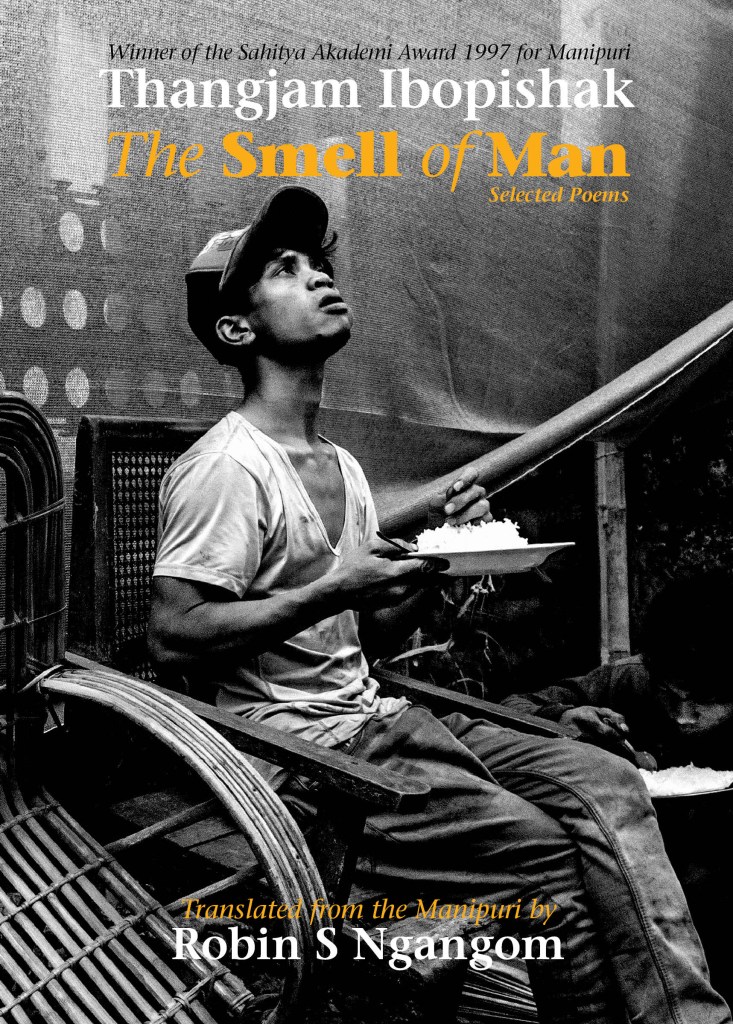
Gandhi & the Robot

Written in Manipuri by Thangjam Ibopishak, translated by Robin S Ngangom

Gandhi and Robot
 
A long time ago
Nehruji owned a robot gifted by Russia,
that could chant a thousand ‘Hare Ramas’
in a minute!
Vallabhaiji possessed a Gandhi borrowed from Birla,
that could spin ten balls of thread
on the charkha every hour.
Vikram Sarabhai proclaimed on Republic Day:
I’ll create a new pilgrimage site for science 
at Trombay.
 
In Delhi’s Red Fort, donkeys bray
with parched throats on an empty stomach;
the dhobis who rear them feed them
old copies of the ‘Harijan’ newspaper
by tearing them into bits.
 
Today, sadhus announce:
we will build a pagoda at Pokhran
to shelter the ‘New Buddha’.
Elated, I cried:
‘Bravo, Bharat, bravo!’

(from The Smell of Man, Red River, 2021)

Thangjam Ibopishak (b 15 February 1948) is one of the leading Manipuri poets. Based in Imphal, he taught Manipuri literature at GP Women’s College and has published 10 volumes of poetry, three of which earned him some of the most prestigious awards in the state, including the Manipur State Kala Akademi Award in 1986, the Jamini Sunder Guha Gold Medal in 1989, the first Jananeta Irabot Award in 1997 and the Kavi Ratna Dr Kamal Memorial Award in 2012. He has also published two books of essays and a memoir. Ibopishak also won the Sahitya Akademi Award for poetry in 1997 for The Ghost and the Mask, and the Manipur State Award for Literature in 2009.

Robin S Ngangom is a bilingual poet and translator who writes in English and Manipuri. Born in Imphal, he studied literature at St Edmund’s College and the North-Eastern Hill University, Shillong, where he currently teaches. His poems have appeared in The New Statesman (London), Verse (Georgia), Kunapipi (Denmark), Planet: the Welsh Internationalist (Ceredigion), The Literary Review (New Jersey), The HarperCollins Book of English Poetry (HarperCollins India), These My Words (Penguin India), Chandrabhaga (Cuttack), Kavya Bharati (Madurai). Ngangom describes his poetry as ‘mostly autobiographical, written with the hope of enthusing readers with my communal or carnal life — the life of a politically-discriminated against, historically-overlooked individual from the nook of a third world country’. His third book of poetry, The Desire of Roots, was published by Red River.

PLEASE NOTE: ARTICLES CAN ONLY BE REPRODUCED IN OTHER SITES WITH DUE ACKNOWLEDGEMENT TO BORDERLESS JOURNAL. 

Categories
Review Tribute

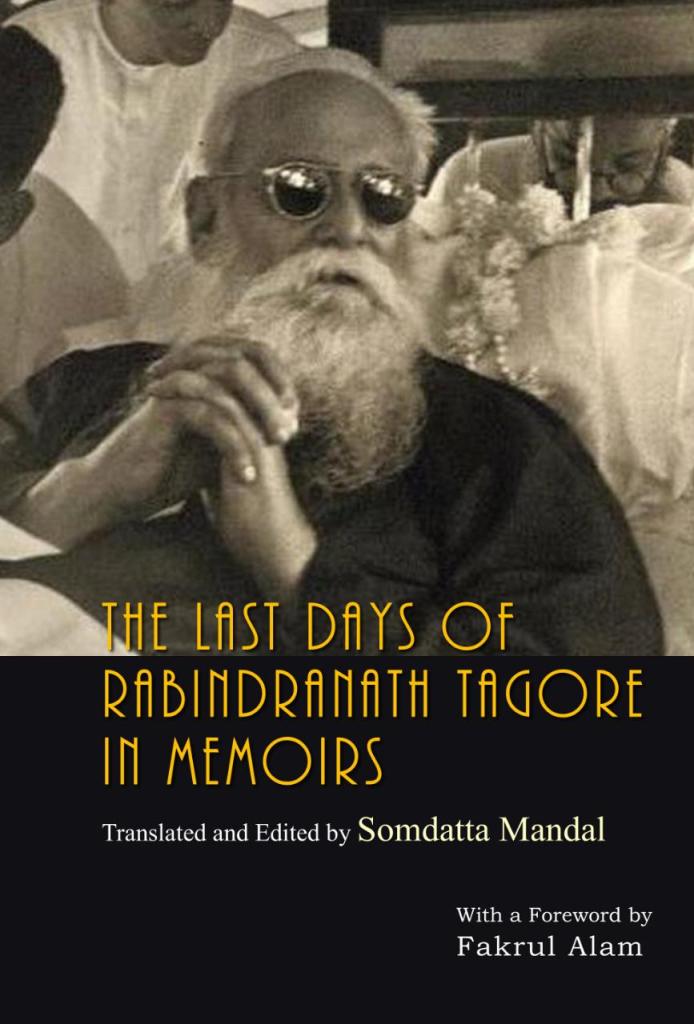
Under the Shadow of Death: Memoirs of Tagore’s Last Days

To Commemorate Tagore’s 80th Death anniversary, we present a review of Somdatta Mandal’s translation of memoirs around Tagore’s last days with a forward by Professor Fakrul Alam

Book Review by Meenakshi Malhotra

Title: The Last Days of Rabindranath Tagore in Memoirs

Translator/ Editor: Somdatta Mandal

Publisher: Birutjatio Sahitya Sammiloni, 2021

The Last Days of Rabindranath Tagore in Memoirs, selected, edited, translated, and put together from the original Bangla by Somdatta Mandal, hovers along a fine line between biography, autobiography and perhaps a bit of hagiography around the account of a life lived in the shadow of imminent death. Mandal draws on all these genres to create a rich chiaroscuro of effects, with a chorus of the memoirs of a few caregivers, mostly women, who were in close proximity to Tagore and served and took care of him in the last year of his life.

Criss-crossing between bouts of illness and creativity, the caregivers also doubled as scribes and notetakers, transcribing the precious words of the great poet. Together, they create an incredibly rich web of narratives, which have been very ably selected and translated by Professor Somdatta Mandal. The memoirs also convey a sense and flavour of the place, whether it is Santiniketan, Jorasanko, Kalimpong or Mongpu — the various places and haunts of Rabindranath in the twilight of his life. The interesting thing is that many of these ancillary memoirs were written by young people who later became famous as writers and artists, their talents often nurtured, encouraged and incubated by the greatly revered poet himself.

The titles of their respective memoirs attest to their unique writerly talents: ‘Nirbaan’ by Pratima Devi, representing a release and freedom from a painful state. Rani Chanda, the second section talks about the ‘alapchari’(Musical) Rabindranath and Gurudev, highlighting his sensitivity to and concern for others.  Mongpu-te Rabindranath and Swarger Kachakachi (Rabindranath at Mongpu and Close to Heaven) by Maitreyi Devi are deeply evocative pieces. Nirmalkumari’s “22nd Shravan” is perhaps given the most space by the editor/translator and shows his anxieties about the fate of the university built by him, a unique educational experiment very dear to his heart. Living in the shadow of the great man, it is as if each memoir and person measures up their life which gains in meaning and significance, as a result of the unique legacy bequeathed to them, with love and affection, by the poet.    

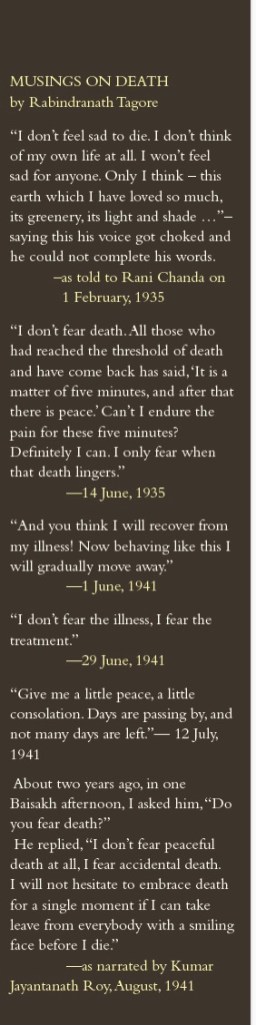
In reflecting and refracting, through the prism of their care and service, the closing year of Rabindranath’s life, the memoirs lay bare several facts. The bard was often a difficult patient, experiencing several crests and troughs as far as his moods — creative and otherwise — were concerned. Too intelligent and perceptive to avoid facts, he could see his imminent death, but did not want his caregivers to be morose and mournful. On them, fell the job of entertaining him, creating laughter and fun, in which he would participate when his health permitted him. He was less scared of death, he said, than of surgery advocated by his very eminent doctors like Dr Bidhan Chandra Roy (later he Chief Minister of West Bengal from 1948-1962) and Dr Nilratan Sarkar.

That this book is a labour of love is evident from Professor Mandal’s careful selection and editing, as well as her meticulous and competent translation. She has presented the momentous and moving final months of Rabindranath Tagore’s eventful life up to the day of his death which witnessed an outpouring of grief from many quarters. It is the final months of his life which is transcribed and inscribed by his memorialists, among whom are Pratima Devi, his daughter-in-law and son Rathindranath’s wife; Rani Chanda, his secretary Anil Chanda’s wife and a writer herself; Maitreyi Devi, the well-known writer and a protégé and favourite of Tagore’s; Nirmalkumari Mahalanabis, whose exchanges with the kobi-guru (great poet) have been detailed in Kobi and Rani (translated by Professor Mandal in 2020) and Amita Thakur, his granddaughter.

The first selection Pratima Devi’s ‘Nirbaan’ (1942) demonstrates his faith in and affection for his conscientious daughter-in-law, who, along with Rani Chanda and others, become an embodiment of care and nurture. He is aware of being a difficult patient and this awareness, which shines through in many of his comments and pet peeves, not only redeems him, but makes him more human. Musing “fondly on the poet’s twilight moments” while punning on the Robi (Bangla for sun) in the poet’s name, Maitreyi Devi, a Sahitya Akademi award-winning novelist writes: “The almost setting sun…was no less pleasant than the glory and radiance of the afternoon sun” and even within the sickroom, the poet continued “playing” his tunes, along with the march of time.

In his sensitive and nuanced foreword, Professor Fakrul Alam points out the memorialists’ refusal to minimize or sentimentalize Gurudev’s illness. In fact, Rani (Nirmalakumari Mahalanobis) expresses her impatience and criticism of the happenings and the people around the poet in the last stages. Amita Thakur, Rabindranath’s granddaughter was a notable exponent of his songs in her time, and he would depend on her to note down the songs as they came to him. Her work is chosen, says Alam, “as a coda for her assemblage of extracts from the memoirs of the five devoted caregivers who were women who had served him selflessly for sustained periods.”

The literary and archival value of such a work is undeniable and its benefits for exploring literary culture is immense. Between its glimpses of a towering giant in the world of letters with a truly international perspective to its comments about Tagore’s closeness to women and his seeking women as caregivers, the collection is also a testament to Tagore’s faith in the selfless capacity of women.

The book and Rabindranath’s close relationship with his many caregivers and later, memoirists, sometimes created a family dynamic of some tension between his natal family and adopted one. At one point, Maitreyi Devi (called “Mongpobi” or “Mitra” by the poet) talks of the negative comments made about her by Indira Debi (Bibi), one of Tagore’s favourite nieces, daughter of Satyendranath Tagore and Jnadanandini Debi. Later however, Maitreyi Devi also mentions the kindness shown to her by Indira Debi when they are together in Santiniketan.

Like in Kobi and Rani, the memoirs of Rani Mahalanobis (called Prathama or first to differentiate her from Rani Chanda who was referred to as Dwitiya or second) show the many facets of the great man himself — his many moods from his mellow moods even when he was in extreme pain to his irascible mood to his playful and humorous moments. It is to the credit of the editor/translator that she has organised and arranged the material very skillfully to bring out his mercurial nature, his flashes of temper and his expectation that his caregivers would wear their responsibilities lightly.

Overtly committed to personal memory, life narratives and biographies occasionally come  close to hagiography. They also lay bare a  performativity inscribed in the very form, implicit in the relationship between the great man/ luminary and those who are satellites in his orbit. The many layers of feeling get reflected in a plurality of forms that are both sedimented and fluid in structure — comprising letters, diaries, poems, fragments. These innovative narrative structures are evolved to convey through an overlapping of various genres: non-fiction, poetry, memoir, autobiography, letters, etc. Extending well beyond any coherent theoretical coordinates to streamline its disparate forms, life narratives are as much constructed by an individual artist — subject as they are the product of her/his intersecting textures of historical, social, political, economic, and cultural contexts.

The socio-cultural context  is specifically that of the progressive environment of Santiniketan and Vishwa Bharati. We see how the ambience of cultural efflorescence and Brahmo liberal ideas helped shape these young women. Perhaps, because of the reformist cast of Brahmo womanhood or the holistic educational schemes fostered by Tagore, in his caregivers, we see the emergence of relatively independent or mobile women, cast in agentic roles of decision making. We see an extraordinary sense of  a tightly-knit community of caregivers whether in Pratima Devi and Maitreyi Devi during the harrowing journey back from Kalimpong to Calcutta when Tagore’s illness worsens, the encounters of Maitreyi Devi with British doctors in Kalimpong or the journey undertaken by Maitreyi from Mongpu along with her young daughter immediately after a landslide, when her husband, Manmohan Sen, undertakes  to get the landslide cleared.

With a vibrant assembly of many pictures and voices, the story emerges from a collage. Piecemeal in bits and pieces, like the oranges sent to Rabindranath by Maitreyi Devi from Mongpu. Each experience, like the fruit, is savoured slowly and with relish. The remaining fruit, both actually and figuratively/symbolically, is given to the students.

A life, even one as extraordinary as Rabindranath Tagore’s, unfolds in time, simultaneously, it also participates in eternity. Thus, even as his nearness and the promise of proximate greatness draws his mentees into his magical orbit, we see him worrying about his imminent death and the fate of Santiniketan. We have to also see the life of the women, details of which get inscribed in their memoirs. The demands placed upon them are often relegated to the margins as they form part of the enchanted circle around the ailing poet, who at times seems to assert his claim on their time, albeit often  in jest, sometimes in a semi-serious way, competing for their attention with their other affections and preoccupations. Their lives, they realise, are given significance and irradiated by his presence, endowed with value through the care they could extend to the great soul.  

Ultimately the collection testifies to the power of great literature and poetry. As the poet himself says:

“Of course, literature is based upon lies — from beginning to end. Whatever I have said, whatever I am saying, how much of that is true? I have done a lot of farming for 80 years. I cannot vouch that all the grains will be stored in the barn. Some will be eaten by rats, but even then, something would be left behind. I cannot say that with certainty, eras change, times change and along with that everything also changes. But I can say with certainty that my songs will last the longest. Especially Bengalis will have no other way except to sing my songs in grief, sorrow, joy and happiness. They will have to go on singing them for ages.”

Kumar Sri Jayantanath is aptly quoted in Appendix B of the memoirs: “There is nothing new to say about Rabindranath because whatever we had to say has already been said by him.” Therefore, we pay a tribute to the poet in the poet’s own words:

You had brought along with you

 Deathless soul

In your death you have

Donated that

You have donated that

In your death.”

.

  Dr Meenakshi Malhotra is Associate Professor of English Literature at Hansraj College, University of Delhi, and has been involved in teaching and curriculum development in several universities. She has edited two books on Women and Lifewriting, Representing the Self and Claiming the I, in addition  to numerous published articles on gender, literature and feminist theory.       

.

PLEASE NOTE: ARTICLES CAN ONLY BE REPRODUCED IN OTHER SITES WITH DUE ACKNOWLEDGEMENT TO BORDERLESS JOURNAL