Categories
Editorial

‘If Winter Comes, Can Spring be Far Behind…’

Where the mind is without fear

Where the world has not been broken up into fragments

Where the clear stream of reason has not lost its way

Where the mind is led forward by thee
Into ever-widening thought and action…

— ‘Where the Mind is without Fear’ (1910), by Rabindranath Tagore

As we complete the fourth year of our virtual existence in the clouds and across borders, the world has undergone many changes around us, and it’s not only climate change (which is a huge challenge) but much more. We started around the time of the pandemic — in March 2020 — as human interactions moved from face-to-face non-virtual interactions to virtual communication. When the pandemic ended, we had thought humanity would enter a new age where new etiquettes redefining our social norms would make human existence as pandemic proof as possible. But before we could define new norms in the global context, takeovers and conflicts seem to have reft countries, regions and communities apart. Perhaps, this is a time when Borderless Journal can give a voice to all those who want to continue living as part of a single species in this world — where we can rise above our differences to find commonalities that make us human and part of the larger stream of humanity, that has been visualised by visionaries like Tagore or John Lennon — widely different cultural milieus but looking for the same things — humankind living together in harmony and moving towards a world without violence, without hate, without rancour and steeped in goodwill and love.  

Talking of positive values does not make sense in a world that seems to be veering towards darkness… Many say that humankind is intrinsically given to feelings of anger, hate, division, lust, shame and violence. But then we are just as much inclined towards happiness, fun, love, being respectful and peaceful. Otherwise, would we be writing about these? These are inherited values that have also come down to us from our forefathers and some have been evolving towards embalming or healing with resilience, with kindness and with an open mind.  

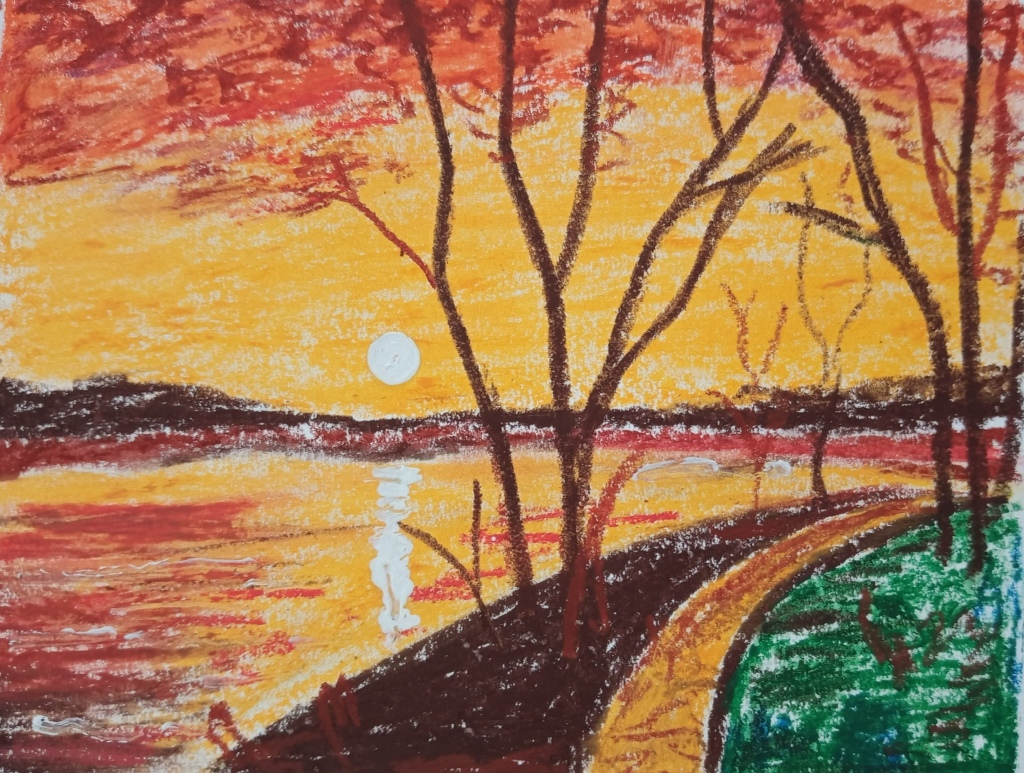
If you wake up before sunrise, you will notice the sky is really an unredeemable dark. Then, it turns a soft grey till the vibrant colours of the sun paint the horizon and beyond, dousing with not just lively shades but also with a variety of sounds announcing the start of a new day. The darkest hours give way to light. Light is as much a truth as darkness. Both exist. They come in phases in the natural world, and we cannot choose but live with the choices that have been pre-made for us. But there are things we can choose — we can choose to love or hate. We can choose resilience or weakness. We can choose our friends. We can choose our thoughts, our ideas. In Borderless, we have a forum which invites you to choose to be part of a world that has the courage to dream, to imagine. We hope to ignite the torch to carry on this conversation which is probably as old as humanity. We look forward to finding new voices that are willing to move in quest of an impractical world, a utopia, a vision — from which perhaps will emerge systems that will give way to a better future for our progeny.

In the last four years, we are happy to say we have hosted writers from more than forty different nationalities and our readers stretch across almost the whole map of the world. We had our first anthology published less than one and a half years ago, focussing more on writing from established pens. Discussions are afoot to bring out more anthologies in hardcopy with more variety of writers.

In our fourth anniversary issue, we not only host translations by Professor Fakrul Alam of Nazrul, by Somdatta Mandal of Tagore’s father, Debendranath Tagore, but also our first Mandarin translation of a twelfth century Southern Song Dynasty poet, Ye Shao-weng, by Rex Tan, a journalist and writer from Malaysia. From other parts of Asia, Dr Haneef Sharif’s Balochi writing has been rendered into English by Fazal Baloch and Ihlwha Choi has transcreated his own poetry from Korean to English. Tagore’s Phalgun or Spring, describing the current season in Bengal, adds to the variety in our translated oeuvre.

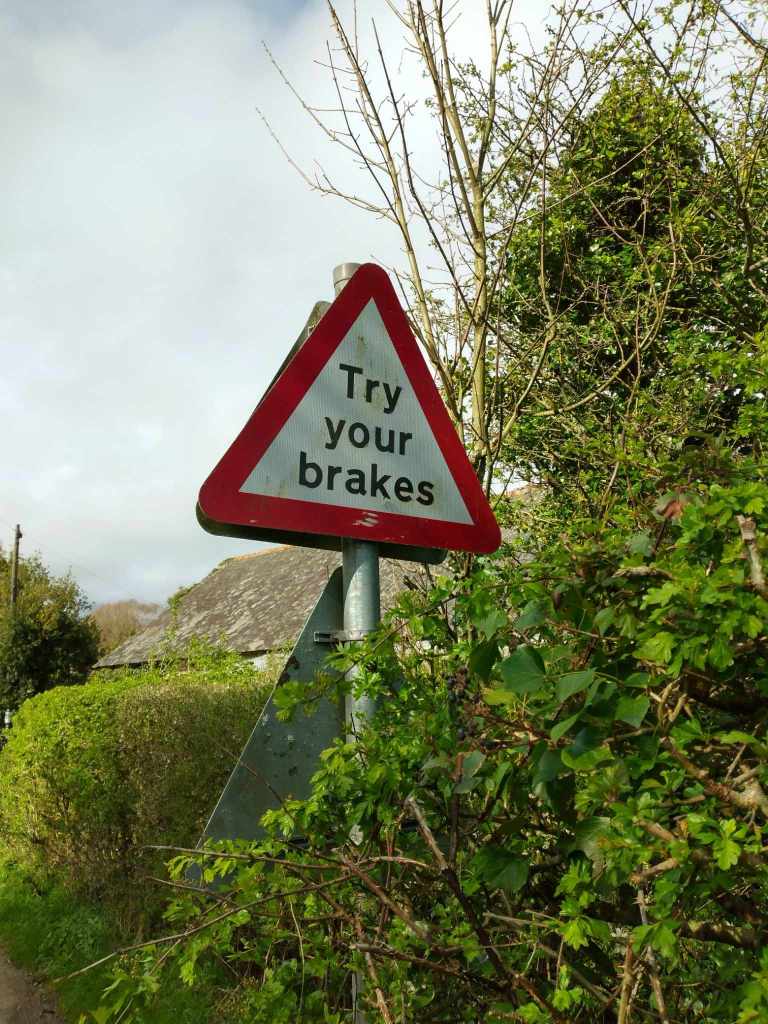
An eminent translator who has brought out her debut poetry book, Radha Chakravarty, has conversed about her poetry and told us among other things, how translating to English varies from writing for oneself. A brief overview of her book, Subliminal, has been provided. Our other interviewee, Rajorshi Patranabis — interviewed by Jagari Mukherjee — has written poetry from a Wiccan perspective — poetry on love — for he is a Wiccan. We have poetry by Luis Cuauhtémoc Berriozábal, Jim Murdoch, Alpana, Baisali Chatterjee Dutt, John Grey, Shahalam Tariq, Saranyan BV, Rex Tan, Ron Pickett with poetry on the season and many more. Humour is brought into poetry with verses woven around a funny sign by Rhys Hughes . His column this month hosts a series of shorter poems — typically in Hughes’ own unique style.

Devraj Singh Kalsi has explored darker shades of humour in his conversation with God while Suzanne Kamata has ushered in the Japanese spring ritual of gazing at cherry blossoms in her column with photographs and narrative. Keith Lyons takes us to the beautiful Fiordlands of New Zealand, Ravi Shankar to Malaysia and Mohul Bhowmick trapezes from place to place in Sri Lanka. Farouk Gulsara has discussed the elusiveness of utopia — an interesting perspective given that we look upto ideals like these in Borderless. I would urge more of you to join this conversation and tell us what you think. We did have Wendy Jones Nakashini start a discussion along these lines in an earlier issue.

We have stories from around the world: C.J.Anderson-Wu from Taiwan, Paul Mirabile from France, Rakhi Pande, Kalsi and K.S. Subramaniam from India. Our book excerpts are from Out of Sri Lanka: Tamil, Sinhala and English Poetry from Sri Lanka and its Diasporas edited by Vidyan Ravinthiran, Seni Seneviratne and Shash Trevett and a Cli-fi book that is making waves, Rajat Chaudhauri’s Spellcasters. Mandal has also reviewed for us Ilse Kohler-Rollefson’s Camel Karma: Twenty Years Among India’s Camel Nomads. Bhaskar Parichha has discussed Mafia Raj: The Rule of Bosses in South Asia by Lucia Michelutti, Ashraf Hoque, Nicolas Martin, David Picherit, Paul Rollier, Clarinda Still — a book written jointly by multiple academics. Rakhi Dalal in her review of Anuradha Kumar’s The Kidnapping of Mark Twain: A Bombay Mystery has compared the novel to an Agatha Christie mystery!

I would want to thank our dedicated team from the bottom of my heart. Without them, we could not have brought out two issues within three weeks for we were late with our February issue. A huge thanks to them for their writing and to Sohana Manzoor for her art too. Thanks to our wonderful reviewers who have been with us for a number of years, to all our mentors and contributors without who this journal could not exist. Huge thanks to all our fabulous loyal readers. Devoid of their patronage these words would dangle meaninglessly and unread. Thank you all.

Wish you a wonderful spring as Borderless Journal starts out on the fifth year of its virtual existence! We hope you will be part of our journey throughout…

Enjoy the reads in this special anniversary issue with more content than highlighted here, and each piece is a wonderful addition to our oeuvre!

Mitali Chakravarty

borderlessjournal.com

Click here to access the content page for the March 2024 Issue.

.

READ THE LATEST UPDATES ON THE FIRST BORDERLESS ANTHOLOGY, MONALISA NO LONGER SMILES, BY CLICKING ON THIS LINK.

Categories
Poets, Poetry & Rhys Hughes

Lines for Loons, Loonies, and Such-like…

SAILING AWAY

I sailed across the seas
balanced on my knees,
each kneecap in a little
toy boat and for sails the
flaps of my big raincoat,
open to catch the breeze.

TURNING THE DIAL

Nash your teeth in envy, Ogden,
when you read this rhyme
for I have turned the dial higher
on the daftness amplifier
and now it’s on eleven,
which is two more than nine.


WHAT WE CALL

I sometimes wonder
what we call a sea
in which a brave dog
swims desperately
through tempestuous
and perilous waves?

Rough! Rough!

CALLING MY BLUFF

Someone called my bluff
earlier today while I was
sunning myself in the park.
“Here boy! Good bluff!
Who’s a good bluff then?”

And it actually came running!
I have seen some weird
stuff in my time but never
a bluff that runs. That was
tough on my sense of fun.

CROOKED SMILE

Someone just told me
that I have an old crooked smile
and I must confess it’s true.
My smile embezzled
100 doubloons from
the East India Company in 1642

CHARGING MY PHONE

I am
charging
my phone.

The field is
a large one
but I think I’ll be able to
gore it before it reaches
the gate.


THE WINDS IN SEASON

Spring Summer Autumn Winter
do your worst, blow your best.
There’s a splinter in the sprinter.
North, South, East, and West.

Winter Spring Summer Autumn
put your boots on and come forth.
Silver talons finally caught them.
East, West, South, and North.

Autumn Winter Spring Summer
scrub the dishes for the feast.
Fools in clover are made dumber.
South, North, West, and East.

Summer Autumn Winter Spring
Arch an eyebrow, gape a mouth.
Hark the harps unattended sing.
East, West, North, and South.

SCIENTIFIC POETRY

Newton with a suit on
Einstein eating limes
Archimedes in a tree
and that’s just three
who rhyme.

Von Neumann in a bath
Faraday on a trampoline
Gödel playing castanets
and that’s just three
who don’t.


MY BROTHER


My brother
is captain
of a soccer team
and he wants me to play
in goal. And he says
that if I refuse
they will lose the game
and he’ll weep
and do some other
melodramatic things.
But why should I
oblige him?
Am I my brother’s
keeper?


AS A SPOON

I went
to a fancy
dress party
yesterday.

Most of
the evening
remains
a blur.

But I know
that I was
the only man
in the room
dressed as
a spoon.

Caused quite a stir.


THE BAD BANDIT

The bad bandit
has been banned
from banditry
because his moustaches
when twirled
got out of hand
on his face.

So he joined a band
in which he plays
a rubber band mandolin
and now it’s only girls
who twirl on the
dance floor during
the encore.

Not his whiskers anymore.

Rhys Hughes has lived in many countries. He graduated as an engineer but currently works as a tutor of mathematics. Since his first book was published in 1995 he has had fifty other books published and his work has been translated into ten languages.

.

PLEASE NOTE: ARTICLES CAN ONLY BE REPRODUCED IN OTHER SITES WITH DUE ACKNOWLEDGEMENT TO BORDERLESS JOURNAL

Click here to access the Borderless anthology, Monalisa No Longer Smiles

Click here to access Monalisa No Longer Smiles on Amazon International

Categories
Poetry

Cyclist Give Way

Poetry and Photography by Rhys Hughes

Cyclist, give way
to horses.
The forces
of darkness will prevail
if you don’t.

A sound of hooves
removes
any doubts
you may entertain about
whether your brakes
still work–
Surely they must fail.

The narrow saddle
you ride upon
is smaller than the seats
the horses know.
It would make
a very poor paddle
if you were ever forced
to use a canoe.

The glowing sunrise lies
beyond the hills
but what keeps it rising?
Hydrogen atoms
pay the monthly bills.

Cyclist, give way
every time:
You are not as fast
as a neighing beast.
In a race you might be
a semi-finalist
but never a winner.

And what do you eat
for dinner? Do you feast
on apples and hay
and drink nothing stronger
than fresh water?

I very much doubt it.
It seems to me
you prefer to eat cakes
and sip pints of
strong Irish stout.

You are like a centaur
mounted there.
The horses will stare
at you and your shoes
and never forget
this unbalanced fact.

Cyclist! Don’t presume
to know the sources
that continually fill
your rubber wheels
with airs and graces.
Simply give way
to the faces of horses.

Rhys Hughes has lived in many countries. He graduated as an engineer but currently works as a tutor of mathematics. Since his first book was published in 1995 he has had fifty other books published and his work has been translated into ten languages.

.

PLEASE NOTE: ARTICLES CAN ONLY BE REPRODUCED IN OTHER SITES WITH DUE ACKNOWLEDGEMENT TO BORDERLESS JOURNAL

Click here to access the Borderless anthology, Monalisa No Longer Smiles

Click here to access Monalisa No Longer Smiles on Kindle Amazon International

Categories
Contents

Borderless, February 2024

Art by Sohana Manzoor

Editorial

Finding Godot?… Click here to read.

Conversations

Ratnottama Sengupta talks to Ruchira Gupta, activist for global fight against human trafficking, about her work and introduces her novel, I Kick and I Fly. Click here to read.

A conversation with Ratna Magotra, a doctor who took cardiac care to the underprivileged and an introduction to her autobiography, Whispers of the Heart: Not Just a Surgeon. Click here to read.

Translations

Two poems by Nazrul have been translated from Bengali by Niaz Zaman. Click here to read.

Masud Khan’s poetry has been translated by Fakrul Alam. Click here to read.

The White Lady by Atta Shad has been translated from Balochi by Fazal Baloch. Click here to read.

Sparrows by Ihlwha Choi has been translated from Korean by the poet himself. Click here to read.

Tagore’s Dhoola Mandir or Temple of Dust has been translated from Bengali by Mitali Chakravarty. Click here to read.

Pandies Corner

Songs of Freedom: What are the Options? is an autobiographical narrative by Jyoti Kaur, translated from Hindustani by Lourdes M Supriya. These narrations highlight the ongoing struggle against debilitating rigid boundaries drawn by societal norms, with the support from organisations like Shaktishalini and pandies’. Click here to read.

Poetry

Click on the names to read the poems

Rhys Hughes, Maithreyi Karnoor, Luis Cuauhtémoc Berriozábal, Sivakami Velliangiri, Wendy Jean MacLean, Pramod Rastogi, Stuart McFarlean, Afrida Lubaba Khan, George Freek, Saranyan BV, Ryan Quinn Flanagan, Sanjay C Kuttan, Peter Magliocco, Sushant Thapa, Michael R Burch

Poets, Poetry & Rhys Hughes

In City Life: Samples, Rhys Hughes takes on the voice of cities. Click here to read.

Musings/Slices from Life

Ratnottama Sengupta Reminisces on Filmmaker Mrinal Sen

Ratnottama Sengupta travels back to her childhood wonderland where she witnessed what we regard as Indian film history being created. Click here to read.

Suga Didi

Snigdha Agrawal gives us a slice of nostalgia. Click here to read.

Healing Intellectual Disabilities

Meenakshi Pawha browses on a book that deals with lived experiences of dealing with intellectual disabilities. Click here to read.

Musings of a Copywriter

In Hobbies of Choice, Devraj Singh Kalsi explores a variety of extra curriculums. Click here to read.

Notes from Japan

In Becoming a Swiftie in my Fifties, Suzanne Kamata takes us to a Taylor Swift concert in Tokyo. Click here to read.

Essays

Walking about London Town

Sohana Manzoor takes us around the historic town. Click here to read.

How Do You Live?

Aditi Yadav explores the universal appeal of the translation of a 1937 Japanese novel that recently came to limelight as it’s rendition on the screen won the Golden Globe Best Animated Feature Film award (2024). Click here to read.

The Magic Dragon: Cycling for Peace

Keith Lyons writes of a man who cycled for peace in a conflict ridden world. Click here to read.

Stories

A Night at the Circus

Paul Mirabile tells a strange tale set in Montana. Click here to read.

Echoes in the Digital Expanse

Apurba Biswas explores a futuristic scenario. Click here to read.

Two Countries

Ravi Shankar gives a story about immigrants. Click here to read.

Chadar

Ravi Prakash writes about life in an Indo-Nepal border village. Click here to read.

Just Another Day

Neeman Sobhan gives a story exploring the impact of the politics of national language on common people. Click here to read.

Book Excerpts

An excerpt from Nabendu Ghosh’s Journey of a Lonesome Boat( Eka Naukar Jatri), translated from Bengali by Ratnottama Sengupta. Click here to read.

An excerpt from Upamanyu Chatterjee’s Lorenzo Searches for the Meaning of Life. Click here to read.

Book Reviews

Somdatta Mandal reviews The History Teacher of Lahore: A Novel by Tahira Naqvi. Click here to review.

Basudhara Roy reviews Srijato’s A House of Rain and Snow, translated from Bengali by Maharghya Chakraborty. Click here to read.

Bhaskar Parichha reviews Toby Walsh’s Faking It : Artificial Intelligence In a Human World. Click here to read.

.

Click here to access the Borderless anthology, Monalisa No Longer Smiles

Click here to access Monalisa No Longer Smiles on Amazon International

Categories
Editorial

Finding Godot?

Discard all prayers,
Meditation, hymns and rituals.
Why do you hide behind
Closed doors of temples?
....
There is no God in this house.

He has gone to visit the
Farmers who plough the hard ground,
The workers who break rocks ...


— Tagore, Dhoola Mandir or Temple of Dust (1910)

Love is a many splendoured thing and takes many forms — that stretches beyond bodily chemistry to a need to love all humankind. There is the love for one’s parents, family, practices one believes in and most of all nurtured among those who write, a love for words. For some, like Tagore, words became akin to breathing. He wrote from a young age. Eventually, an urge to bridge social gaps led him to write poetry that bleeds from the heart for the wellbeing of all humanity.  Tagore told a group of writers, musicians, and artists, who were visiting Sriniketan in 1936: “The picture of the helpless village which I saw each day as I sailed past on the river has remained with me and so I have come to make the great initiation here. It is not the work for one, it must involve all. I have invited you today not to discuss my literature nor listen to my poetry. I want you to see for yourself where our society’s real work lies. That is the reason why I am pointing to it over and over again. My reward will be if you can feel for yourself the value of this work.”

And it was perhaps to express this great love of humanity that he had written earlier in his life a poem called Dhoola Mandir that urges us to rise beyond our differences of faith and find love in serving humankind. In this month, which celebrates love with Valentine’s Day, we have a translation of this poem that is born of his love for all people, Dhoola Mandir.  Another poet who writes of his love for humanity and questions religion is Nazrul, two of whose poems have been translated by Niaz Zaman. Exploring love between a parent and children is poetry by Masood Khan translated from Bengali by Fakrul Alam. From the distant frontiers of Balochistan, we have a poem by Atta Shad, translated from Balochi by Fazal Baloch, for a fair lady — this time it is admiration. Ihlwha Choi translates poetry from Korean to express his love for a borderless world through the flight of sparrows.

Love has been taken up in poetry by Michael Burch. Borne of love is a concern for the world around us. We have powerful poetry by Maithreyi Karnoor that expresses her concern for humanity with a dash of irony or is it sarcasm? Luis Cuauhtémoc Berriozábal expresses his admiration for the poetry of Italian Poet Antonia Pozzi (1912-1938) in poetry. We have poems by Stuart McFarlane, Pramod Rastogi, Afrida Lubaba Khan, George Freek, Saranyan BV, Ryan Quinn Flanagan and many more. Rhys Hughes brings humour into poetry and voices out in his column taking on the persona of two cities he had lived in recently. There is truth and poignancy in the voices of the cities.

Suzanne Kamata writes a light-hearted yet meaningful column on the recent Taylor Swift concert in Tokyo.  Aditi Yadav takes up the Japanese book on which was based a movie that won the 2024 Golden Globe Best Animated Feature Film Award. Sohana Manzoor journeys to London as Devraj Singh Kalsi with tongue in cheek humour comments on extracurriculars that have so become a necessity for youngsters to get to the right schools. Snigdha Agrawal gives us a slice of nostalgia while recounting the story of a Santhali lady and Keith Lyons expresses his love for peace as he writes in memory of a man who cycled for peace.

Ratnottama Sengupta also travels down the memory lane to recall her encounters with film maker Mrinal Sen as he interacted with her father, Nabendu Ghosh. She has translated an excerpt from his autobiography to highlight his interactions with Ghosh. The other excerpt is from Upamanyu Chatterjee’s latest novel, Lorenzo Searches for the Meaning of Life.

In reviews, Somdatta Mandal has explored Tahira Naqvi’s The History Teacher of Lahore: A Novel. Srijato’s A House of Rain and Snow, translated from Bengali by Maharghya Chakraborty, has been discussed by Basudhara Roy and Bhaskar Parichha has reviewed Toby Walsh’s Faking It: Artificial Intelligence in a Human World. News and Documentary Emmy Award winner (1996) Ruchira Gupta’s daring novel born of her work among human traffickers, I Kick and I Fly, has been brought to our notice by Sengupta and she converses about the book and beyond with this socially conscious activist, filmmaker and writer. Another humanist, a doctor who served by bridging gaps between patients from underprivileged backgrounds, Dr Ratna Magotra, also conversed about her autobiography, Whispers of the HeartNot Just a Surgeon: An Autobiography , where she charts her journey which led her to find solutions to take cardiac care to those who did not have the money to afford it,

We have fiction this time from Neeman Sobhan reflecting on how far people will go for the love of their mother tongue to highlight the movement that started on 21st February in 1952 and created Bangladesh in 1971. Our stories are from around the world — Paul Mirabile from France, Ravi Shankar from Malaysia, Sobhan from Bangladesh and Ravi Prakash and Apurba Biswas from India — weaving local flavours and immigrant narratives. Most poignant of all the stories is a real-life narrative under the ‘Songs of Freedom’ series by a young girl, Jyoti Kaur, translated from Hindustani by Lourdes M Supriya. These stories are brought to us in coordination with pandies’ and Shaktishalini, a women’s organisation to enable the abused. Sanjay Kumar, the founder of pandies’ and the author of a most poignant book about healing suffering of children through theatre, Performing, Teaching and Writing Theatre: Exploring Play, writes, “‘Songs of Freedom’ bring stories from women — certainly not victims, not even survivors but fighters against the patriarchal status quo with support from the organisation Shaktishalini.”

While looking forward in hope of finding a world coloured with love and kindness under the blue dome, I would like to thank our fabulous team who always support Borderless Journal with their wonderful work. A huge thanks to all of you from the bottom of my heart. I thank all the writers who make our issues come alive with their creations and readers who savour it to make it worth our while to bring out more issues. I would urge our readers to visit our contents’ page as we have more than mentioned here.

Enjoy our February fare.

Mitali Chakravarty

borderlessjournal.com

Click here to access the content’s page for the February 2024 Issue.

.

READ THE LATEST UPDATES ON THE FIRST BORDERLESS ANTHOLOGY, MONALISA NO LONGER SMILES, BY CLICKING ON THIS LINK.

Categories
Poetry

Bermuda Love Triangle & the Frothiest Coffee

Poems by Rhys Hughes

BERMUDA LOVE TRIANGLE 


Our aeroplane
vanished one day into the void
without an explanation.
We were flying towards Bermuda
to attend a birthday celebration
but we never arrived.

Your ship disappeared
one afternoon while sailing slowly
north of Puerto Rico.
You were afeared it had sunk
to the bottom of the sea
in some unholy catastrophe
but it hadn’t.

And as for the submarine
cruising east from the Bahamas:
the crew were wearing pyjamas
when it mysteriously
passed out of this world
and entered a realm like a dream.

In a higher dimension
these three vehicles materialised.
Without our consent
they fell in love and began an affair:
an aeroplane snatched from the air
in a relationship
with a sailing ship
and a submarine involved with both.

What a complicated situation!
So many emotions entangled…
I almost feel strangled
by the melodrama
of the Bermuda love triangle.


THE FROTHIEST COFFEE

The frothiest coffee that ever there was
swung from a tether, for certain
because
it was the frothiest coffee
that ever could be
in history
apart from the brew
made frothy by you
for the numberless Counts of Ballyhoo,
all of whom despise tea.

But why did it swing from a tether?
I sigh when I’m asked
that question
and not for the reason
that it’s the
wrong season for asking it. Oh no!
I sigh because
sighs are wise and I’m
a kind of owl
with a reputation to uphold.

What kind of owl exactly?
A coffee loving owl.
I spoon the ground beans into a barrel
with a trowel
and then I add the boiling milk
and I whisk it
vigorously until my soul seems to sink
and cavort among
the bubbles of the wondrous foam
that turns this hovel
into a proper home, as only the frothiest
coffee can.
I hope you understand?

And now I ought
to say something more about
the Counts of Ballyhoo, who as you know
were enemies of tea,
and the youngest scion of that House
was Freddy Fiddledee
and he once decided to embark
on an epic journey in a wooden ark
because ‘motorcycle’
doesn’t rhyme with ‘embark’
at least not at this particular time.

And his mission was
to find out for certain if there really was no
blend of tea he might enjoy,
black or milky or lemony,
in cups or mugs on the decks of tugs despite
his renowned family’s
aversion to that brew: he wondered if there
might be something new
that the world could offer him:
a change from the inevitable coffees he knew
too well, hot as hell,
but there wasn’t.
Too bad! His voyage was a waste.

Let’s not be hasty
and think the poem is at an end.
There are two more lines to go:
this one and
the next one.

Rhys Hughes has lived in many countries. He graduated as an engineer but currently works as a tutor of mathematics. Since his first book was published in 1995 he has had fifty other books published and his work has been translated into ten languages.

.

PLEASE NOTE: ARTICLES CAN ONLY BE REPRODUCED IN OTHER SITES WITH DUE ACKNOWLEDGEMENT TO BORDERLESS JOURNAL

Click here to access the Borderless anthology, Monalisa No Longer Smiles

Click here to access Monalisa No Longer Smiles on Kindle Amazon International

Categories
Poets, Poetry & Rhys Hughes

City Life: Samples

Published in 1972, this novel by Italo Calvino explores Marco Polo’s journey to China and is in the form of a conversation between Marco Polo and Kublai Khan.

Last year I began work on a project called City Life, which will consist of fifty short stories that are each exactly 500 words in length. I don’t know where the idea for this project came from, but I suppose it must have been influenced by Italo Calvino’s Invisible Cities. Perhaps my project is a modest tribute to that magnificent author, my favourite writer of fiction, but there are differences in approach. His cities are imaginary; mine are real. I tell the stories of my cities from the viewpoint of the cities themselves.

I feel a little uncomfortable trying to compare myself to Calvino. I stand in his shadow. City Life will never match Invisible Cities, yet I am pleased with my progress so far. I have written 32 instalments to date. I am at present unsure how I will go about finding a publisher for the book when it is completed, especially as my ideal format is for the book to be published in a box, with each individual city on a separate piece of paper, meaning that the tales can be easily read in any order. I will deal with that issue in good time.

Meanwhile, the following two extracts are told in the voices of Bangalore and Colombo.

City Life: Bangalore

Once I was a garden city, full of lakes and trees, an environment with a climate very conducive to good health. But someone in another country discovered the transistor and then the computer chip. How did these technological innovations change me? I rapidly became a major centre for the new industries generated by those inventions. I expanded, lost my original definition, acquired a new one. A human being who expands too rapidly does so because of misapplied greed and a reckless disregard of bodily danger. I had no choice in the matter. I turned into an electronics hub, one devoted to the money that can be made from computers, those miraculous and alarming devices.

Yet my appearance matches no true vision of an imaginary future. Do not suppose that I am clean and beautiful, filled with crystal towers and monorails of gleaming glass. My roads are clogged with traffic, I am dusty, cracked, prone to flooding, polluted and overstressed. My air smells of smoke and chemicals. I am ashamed of my lakes, plastic-choked and foamy with effluent. I have grown huge and ugly, I tremble with the urgency of the commercial transactions taking place inside me, as if I have a nervous disorder, damage to my spinal cord. Yes, I generate enormous wealth, but who for? Not for the majority of the inhabitants who fight for the daily right to survive.

We think of deserts as empty wastelands and we suppose that the addition of a thousand lakes would transform them into paradisal realms. But deserts can be created by intense ambition as surely as by weather patterns and geography. Cut down trees, build roads, pound the ground flat in order to erect buildings, absorb villages on the edge of the sprawl. The process is too late to arrest. It will keep going until I am unable to recognise myself in my dreams. Not that I sleep enough these days for dreams to be common. I am a restless giant. The noise of the traffic is permanent. It reduces at night but never ceases. The coming and going of freight trains keeps me awake.

But I am not yet ready for despair that resembles an infinite resignation. Every desert, even one manufactured for profit, should contain an oasis. Near my heart, at the centre of my flux, there is a certain street and halfway along it can be found the greatest bookshop in the world. Blossom Book House not only has a tremendous selection of titles, it also provides the burning desert traveller with pools of thoughtful quiet. I am a city that contains a bookshop. How can I enter and browse that store without turning myself inside-out? This is a mystery with a solution I intend to keep secret. Perhaps a city’s spirit can enter a human consciousness every once in a while?

I immerse myself in books full of pictures of the way I was. When I was the fairest one of all on my high plateau.

City Life: Colombo
Colombo

There is crime in all big cities, that’s a law of life, and a certain amount of crime occurs in me too. On the western shores of the island of Sri Lanka I recline, but it is difficult to relax for long. There are sirens, shouts, a scuffle. Someone is robbing pedestrians at knifepoint or breaking into a shop again. What is to be expected? There is even murder on occasion.

The police frequently arrest those responsible, but sometimes the best detectives are mystified by a cunning theft or abduction. They admit defeat. One day there is a spectacular homicide near the ocean. The perpetrator leaves no clues at all. The experts are baffled. At last, a forensics specialist comes up with the ingenious idea of turning the case over to me.

I am the city itself and must be fully aware of every incident that happens within me. If anyone can solve this case, it is I, the capital of my modest nation. When I am approached with the proposal, I agree immediately. There’s no need for me to examine evidence, which is non-existent anyway. The usual methods of the criminologist are suitable for human beings only.

I am a metropolis, not huge but significant enough, and the killing took place inside my body. I tightly shut my notional eyes and concentrate. Where do I feel a peculiar itch? In one of my southern suburbs, in a particular street. I narrow it down quickly enough, to a house and a room in that house. A man is sitting on a chair at a table. He is eating his dinner.

I speak to him. He is so surprised that he drops his spoon. But he is rather a resourceful person, able to recover his composure in a matter of moments, wide grin on his mouth, his eyes full of mockery. It is clear he feels safe from arrest, an assassin who carefully covered his tracks after the deed.

Securing his confession is the only way he can be prosecuted and he has no intention of admitting anything to a disembodied voice, a voice he assumes is his own guilty conscience toying with him in order to test the firmness of his resolve. I ask him questions about his movements on the night of the murder and he answers in an offhand manner.

He doesn’t even pause while eating his meal. He has an alibi, a plausible answer for everything. Half an hour of questioning and I am ready to give up. I tell him this and he smiles thinly and nods. I turn to leave. On the threshold of his consciousness, I suddenly stop and turn.

“Just one more thing,” I say, and I reveal that I am the city of Colombo, that he lives inside me and I’m aware of everything he has done. He is deeply shocked. His confession follows. How could it not? We might betray the people we love, but who willingly betrays their own home?

Rhys Hughes has lived in many countries. He graduated as an engineer but currently works as a tutor of mathematics. Since his first book was published in 1995 he has had fifty other books published and his work has been translated into ten languages.

.

PLEASE NOTE: ARTICLES CAN ONLY BE REPRODUCED IN OTHER SITES WITH DUE ACKNOWLEDGEMENT TO BORDERLESS JOURNAL

Click here to access the Borderless anthology, Monalisa No Longer Smiles

Click here to access Monalisa No Longer Smiles on Amazon International

Categories
Contents

Borderless, January 2024

Art by Sohana Manzoor

Editorial

Imagine all the People, Sharing All the World’Click here to read

Conversations

Interviewing Bulbul: Remembering Mrinal SenRatnottama Sengupta introduces Bulbul Sharma to converse with her on Mrinal Sen, the legendary filmmaker, reflecting on Bulbul Sharma’s experience as an actress in his film, Interview. Click here to read.

In conversation with Gajra Kottary, eminent screenplay writer, and a brief introduction to her recent book of short stories, Autumn Blossoms. Click here to read.

Translations

Nazrul’s poem, Samya or Equality, has been translated from Bengali by Niaz Zaman. Click here to read.

Masud Khan’s Fire Engine has been translated from Bengali by Fakrul Alam. Click here to read.

Short Poems by Mulla Fazul have been translated from Balochi by Fazal Baloch. Click here to read.

Disaster Alert by Ihlwha Choi has been translated from Korean by the poet himself. Click here to read.

Prarthona or Prayer by Rabindranath Tagore has been translated from Bengali by Mitali Chakravarty. Click here to read.

Poetry

Click on the names to read the poems

Radha Chakravarty, David Skelly Langen, Urmi Chakravorty, Avantika Vijay Singh, JM Huck, Isha Sharma, Stuart McFarlane, Saranyan BV, Ron Pickett, Mereena Eappen, Ahmad Al-Khatat, Ganesh Puthur, George Freek, Rhys Hughes

Poets, Poetry & Rhys Hughes

In Some Differences Between India and Sri Lanka, Rhys Hughes relates his perceptions of the two countries with a pinch of humour. Click here to read.

Musings/Slices from Life

When the Cobra Came Home

Antara Mukherjee nostalgically recalls her past and weaves it into the present. Click here to read.

The Old Man

Munaj Gul Muhammad describes his encounter with an old Balochi man. Click here to read.

Corner

Anita Sudhakaran muses on the need for a quiet corner. Click here to read.

Musings of a Copywriter

In Taking Stock…Finally, Devraj Singh Kalsi writes of stocks that defy the laws of gravity. Click here to read.

Notes from Japan

In A Sombre Start, Suzanne Kamata talks of the twin disasters in Japan. Click here to read.

Essays

Abol Tabol: No Nonsense Verses of Sukumar Ray

Ratnottama Sengupta relives the fascination of Sukumar Ray’s Abol Tabol, which has  just completed its centenary. Click here to read.

Peeking at Beijing: Fringe-dwellers and Getting Centred

Keith Lyons shares the concluding episode of his trip to Beijing. Click here to read.

Stories

The Gift

Rebecca Klassen shares a sensitive story about a child and an oak tree. Click here to read.

Healing in the Land of the Free

Ravi Shankar gives the story of a Nepali migrant. Click here to read.

Pigeons & People

Srinivasan R explores human nature. Click here to read.

Phôs and Ombra

Paul Mirabile weaves a dark tale about two people lost in a void. Click here to read.

Book Excerpts

An excerpt from Srijato’s A House of Rain and Snow, translated from Bengali by Maharghya Chakraborty. Click here to read.

An excerpt from The Kidnapping of Mark Twain: A Bombay Mystery by Anuradha Kumar. Click here to read.

Book Reviews

Somdatta Mandal reviews Sudha Murty’s Common Yet Uncommon: 14 Memorable Stories from Daily Life. Click here to read.

Meenakshi Malhotra reviews Rhys Hughes’ The Coffee Rubaiyat. Click here to read.

Rakhi Dalal reviews Ajit Cour’s Life Was Here Somewhere, translated by Ajeet Cour and Minoo Minocha. Click here to read.

Bhaskar Parichha reviews Scott Ezell’s Journey to the End of the Empire: In China Along the Edge of Tibet. Click here to read.

.

Click here to access the Borderless anthology, Monalisa No Longer Smiles

Click here to access Monalisa No Longer Smiles on Kindle Amazon International

Categories
Editorial

‘Imagine all the People, Sharing All the World’

Art by Sohana Manzoor

Let’s look forward to things getting better this New Year with wars tapering off to peace— a peace where weapons and violence are only to be found in history. Can that ever happen…?

Perhaps, all of us need to imagine it together. Feeling the need for peace, if we could dwell on the idea and come up with solutions, we could move towards making it a reality. To start with, every single human being has to believe firmly in the need for such a society instead of blaming wars on natural instincts. Human nature too needs to evolve. Right now, this kind of a world view may seem utopian. But from being hunter-gatherers, we did move towards complex civilisations that in times of peace, built structures and created art, things that would have seemed magical to a cave dweller in the Palaeolithic times. Will we destroy all that we built by warring – desecrating, decimating our own constructs and life to go on witch-hunts that lead to the destruction of our own species? Will human nature not evolve out of the darkness and chaos that leads to such large-scale annihilation?

Sometimes, darkness seems to rise in a crescendo only to be drowned by light emanating from an unknown source. This New Year — which started with an earthquake followed the next day by a deadly plane collision — was a test of human resilience from which we emerged as survivors, showing humanity can overcome hurdles if we do not decimate each other in wars. Bringing this to focus and wringing with the pain of loss, Suzanne Kamata, in her column tells us: “Earthquakes and other natural disasters are unavoidable, but I admire the effort that the Japanese people put into mitigating their effects. My hope is that more and more people here will begin to understand that it is okay to cry, to mourn, to grieve, and to talk about our suffering. My wish for the Japanese people in the new year is happiness and the achievement of dreams.”

And may this ring true for all humanity.

Often it is our creative urges that help bring to focus darker aspects of our nature. Laughter could help heal this darkness within us. Making light of our foibles, critiquing our own tendencies with a sense of humour could help us identify, creating a cathartic outcome which will ultimately lead to healing. An expert at doing that was a man who was as much a master of nonsense verses in Bengal as Edward Lear was in the West. Ratnottama Sengupta has brought into focus one such book by the legendary Sukumar Ray, Abol Tabol (or mumbo jumbo), a book that remains read, loved and relevant even hundred years later. We have more non-fiction from Keith Lyons who reflects on humanity as he loses himself in China. Antara Mukherjee talks of evolving and accepting a past woven with rituals that might seem effete nowadays and yet, these festivities did evoke a sense of joie de vivre and built bridges that stretch beyond the hectic pace of the current world. Devraj Singh Kalsi weaves in humour and variety with his funny take on stocks and shares. Rhys Hughes does much the same with his fun-filled recount on the differences between Sri Lanka and India, with crispy dosas leaning in favour of the latter.

Humour is also sprinkled into poetry by Hughes as Radha Chakravarty’s poetry brings in more sombre notes. An eminent translator from Bengali to English, she has now tuned her pen to explore the subliminal world. While trying to explore the darker aspects of the subliminal, David Skelly Langen, a young poet lost his life in December 2023. We carry some of his poems in memoriam. Ahmad Al-Khatat, an Iraqi immigrant, brings us close to the Middle East crisis with his heart-rending scenarios painted with words. Variety is added to the oeuvre with more poetry from George Freek, Ganesh Puthur, Ron Pickett, Stuart McFarlane, Urmi Chakravorty, Saranyan BV, JM Huck and many more.

Our stories take us around the world with Paul Mirabile from France, Ravi Shankar from Malaysia, Srinivasan R from India and Rebecca Klassen from England, weaving in the flavours of their own cultures yet touching hearts with the commonality of emotions.

In conversations, Ratnottama Sengupta introduces us to the multifaceted Bulbul Sharma and discusses with her the celebrated filmmaker Mrinal Sen, in one of whose films Sharma ( known for her art and writing) had acted. We also have a discussion with eminent screenplay writer Gajra Kottary on her latest book, Autumn Blossoms and an introduction to it.

Somdatta Mandal has reviewed Sudha Murty’s Common Yet Uncommon: 14 Memorable Stories from Daily Life, which she says, “speaks a universal language of what it means to be human”. Bhaskar Parichha takes us to Scott Ezell’s Journey to the End of the Empire: In China Along the Edge of Tibet. Parichha opines: “The book evokes the majesty of Tibetan landscapes, the unique dignity of the Tibetan people, and the sensory extremity of navigating nearly pre-industrial communities at the edge of the map, while also encompassing the erosion of cultures and ecosystems. Journey to the End of the Empire is both a love song and a protest against environmental destruction, centralised national narratives and marginalised minorities.” Meenakshi Malhotra provides a respite from the serious and emotional by giving us a lively review of Rhys Hughes’ The Coffee Rubaiyat, putting it in context of literature on coffee, weaving in poetry by Alexander Pope and TS Eliot. Rakhi Dalal has reviewed a translation from Punjabi by Ajeet Cour and Minoo Minocha of Cour’s Life Was Here Somewhere. Our book excerpts from Anuradha Kumar’s The Kidnapping of Mark Twain: A Bombay Mystery introduces a lighter note as opposed to the intense prose of Srijato’s A House of Rain and Snow, translated from Bengali by Maharghya Chakraborty.

Translations this time take us to the realm of poetry again with Fazal Baloch introducing us to a classical poet from Balochistan, the late Mulla Fazul. Ihlwha Choi has self-translated his poetry from Korean. Niaz Zaman brings us Nazrul’s Samya or Equality – a visionary poem for the chaotic times we live in — and Fakrul Alam transcribes Masud Khan’s Bengali verses for Anglophone readers. Our translations are wound up with Tagore’s Prarthona or Prayer, a poem in which the poet talks of keeping his integrity and concludes saying ‘May the wellbeing of others fill my heart/ With contentment”.

May we all like Tagore find contentment in others’ wellbeing and move towards a world impacted by love and peace! The grand polymath always has had the last say…

I would like to thank our contributors, the Borderless team for this vibrant beginning of the year issue, Sohana Manzoor for her fabulous art, and all our readers for continuing to patronise us.

With hope of moving towards a utopian future, I invite you to savour our fare, some of which is not covered by this note. Do pause by our contents page to check out all our fare.

Mitali Chakravarty

borderlessjournal.com

Click here to access the contents page for the January 2024 issue

.

READ THE LATEST UPDATES ON THE FIRST BORDERLESS ANTHOLOGY, MONALISA NO LONGER SMILES, BY CLICKING ON THIS LINK.
Categories
Poetry

Through an Electron Microscope…

Poetry by Rhys Hughes

END OF DECEMBER


At the end of December
in the year 2023
I wrote this poem about a bee
who held a key
in his little legs, delicately.

He flew to a door in a big tree
and turned the lock
in the trunk
with a dramatic clunk
and I’ll remember
for quite a while
how slender was his smile.

Behind the door
was a cup of tea
brewed especially for me
in a clean teapot
but strained afterwards through
a smelly old sock.

Plus a ginger biscuit like the moon
that took up most
of the room in the gloom
of the tree’s interior,
and I was grateful for these gifts.

“Thankee kindly,” I said to the bee
as I dunked and drunk
from the porcelain cup.
Then unexpectedly he said to me:
“Nothing is free
in this material world. That’ll be
six hundred rupees.
I will take a cheque, pay up now
or by heck there’ll be a mighty row
and you will never
see tomorrow.”

That, to my sorrow, is a true tale
and now I avoid tea
offered to me by bees in a forest.
And it is why
I only accept
cautiously at best
black coffee brewed by butterflies.


LOST LOVE

We parted near the marble fountain
in the twilight of a magic year,
she was a scientist at the university
and said I was too simple for her.

She also said I was far too small
to make the affair feel quite right,
that our love was just a game but I
was an intriguing specimen all the same.

Although I have not seen her since
and indeed I have now lost all hope,
I suspect she nonetheless is watching me
through an electron microscope.

Rhys Hughes has lived in many countries. He graduated as an engineer but currently works as a tutor of mathematics. Since his first book was published in 1995 he has had fifty other books published and his work has been translated into ten languages.

.

PLEASE NOTE: ARTICLES CAN ONLY BE REPRODUCED IN OTHER SITES WITH DUE ACKNOWLEDGEMENT TO BORDERLESS JOURNAL

Click here to access the Borderless anthology, Monalisa No Longer Smiles

Click here to access Monalisa No Longer Smiles on Kindle Amazon International