Categories
Contents

Borderless, June 2025

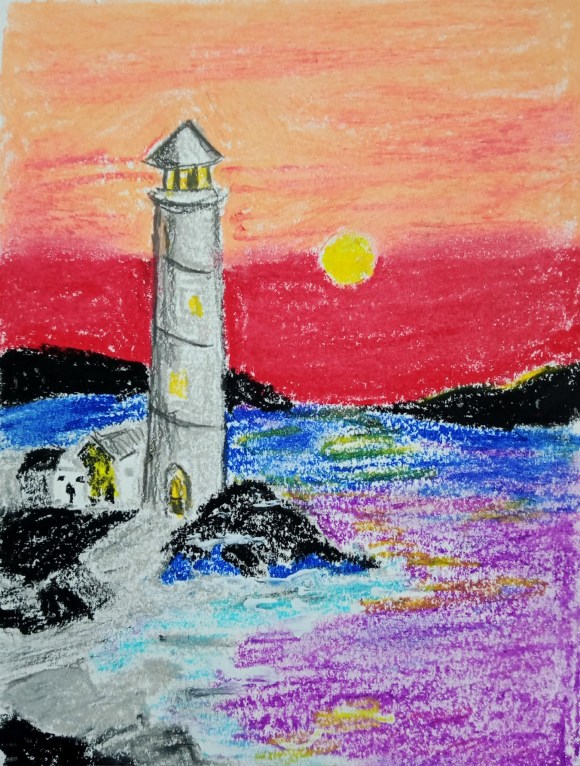
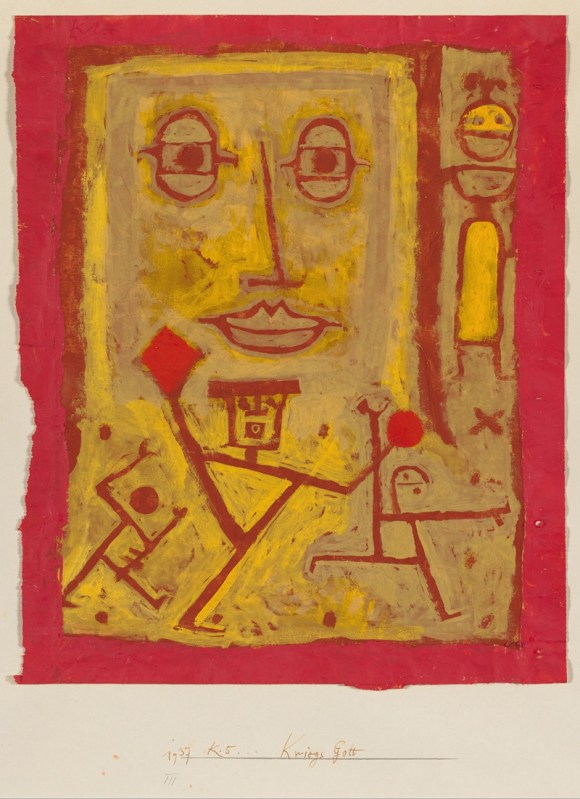
Art by Sohana Manzoor

Editorial

‘How do you rebuild a life when all that remains is dust?’… Click here to read.

Translations

The Great War is Over and A Nobody by Jibanananda Das have been translated from Bengali by Professor Fakrul Alam. Click here to read.

Sukanta Bhattacharya’s poem, Therefore, has been translated from Bengali by Kiriti Sengupta. Click here to read.

 Five poems by Soubhagyabanta Maharana  have been translated from Odia by Snehaprava Das. Click here to read.

Animate Debris, a poem by Sangita Swechcha has been translated from Nepali by Saudamini Chalise. Click here to read.

Lost Poem, a poem by Ihlwha Choi  has been translated from Korean by the poet himself. Click here to read.

Sonar Tori (Golden Boat), a poem by Tagore, has been translated from Bengali by Mitali Chakravarty. Click here to read.

Poetry

Click on the names to read the poems

Allan Lake, Shobha Tharoor Srinivasan, Ron Pickett, Ananya Sarkar, George Freek, Bibhuti Narayan Biswal, Jim Bellamy, Pramod Rastogi, Vern Fein, Saranyan BV, Ryan Quinn Flanagan, Juairia Hossain, Gautham Pradeep, Jenny Middleton, Mandavi Choudhary, Rhys Hughes

Musings/Slices from Life

Where Should We Go After the Last Frontiers?

Ahamad Rayees writes from a village in Kashmir which homed refugees and still faced bombing. Click here to read.

The Jetty Chihuahuas

Vela Noble takes us for a stroll to the seaside at Adelaide. Click here to read.

Hope Lies Buried in Eternity

Farouk Gulsara muses on hope. Click here to read.

Undertourism in the Outback

Merdith Stephens writes from the Australian Outback with photographs from Alan Nobel. Click here to read.

Musings of a Copywriter

In Driving with Devraj, Devraj Singh Kalsi writes of his driving lessons. Click here to read.

Notes from Japan

In The Tent, Suzanne Kamata visits crimes and safety. Click here to read.

Essays

Public Intellectuals Walked, So Influencers Could Run

Lopamudra Nayak explores changing trends. Click here to read.

Where No One Wins or Loses a War…From Lucknow with Love

Prithvijeet Sinha takes us to a palace of a European begum in Lucknow. Click here to read.

Bhaskar’s Corner

In Can Odia Literature Connect Traditional Narratives with Contemporary Ones, Bhaskar Parichha discusses the said issue. Click here to read.

Feature

The story of Hawakal Publishers, based on a face-to-face tête-à-tête, and an online conversation with founder Bitan Chakraborty with his responses in Bengali translated by Kiriti Sengupta. Click here to read.

Stories

The Year the Fireflies Didn’t Come Back

Leishilembi Terem gives a poignant story set in conflict-ridden Manipur. Click here to read.

The Stranger

Jeena R. Papaadi writes of the vagaries of human relationships. Click here to read.

The Opening

Naramsetti Umamaheswararao relates a value based story in a small hamlet of southern India. Click here to read.

Book Excerpts

An excerpt from Wendy Doniger’s The Cave of Echoes: Stories about Gods, Animals and Other Strangers. Click here to read.

An excerpt from Mohua Chinappa’s Thorns in My Quilt: Letters from a Daughter to Her Father. Click here to read.

Book Reviews

Somdatta Mandal reviews Madhurima Vidyarthi’s Job Charnock and the Potter’s Boy. Click here to read.

Rakhi Dalal reviews Dhruba Hazarika’s The Shoot: Stories. Click here to read.

Satya Narayan Misra reviews Bakhtiyar K Dadabhoy’s Honest John – A Life of John Matthai. Click here to read.

Bhaskar Parichha reviews David C Engerman’s Apostles of Development: Six Economists and the World They Made. Click here to read.

.


Click here to access the Borderless anthology, Monalisa No Longer Smiles

Click here to access Monalisa No Longer Smiles on Amazon International
Categories
Editorial

‘How do you rebuild a life when all that remains is dust?’

The Great War is over
And yet there is left its vast gloom.
Our skies, light and society’s soul have been overcast…

'The Great War is Over' by Jibanananda Das (1899-1954), translated from Bengali by Professor Fakrul Alam.

Jibanananda Das wrote the above lines in the last century and yet great wars rage even now. As the world struggles to breathe looking for a beam of hope to drag itself out of the darkness induced by natural calamities, accidents, terror attacks and wars that seem to rage endlessly, are we moving towards the dystopian scenario created by George Orwell in 1984, which would be around the same time as Jibanananda Das’s ‘The Great War is Over’?

Describing such a scenario, Ahmed Rayees writes a moving piece from the Kashmiri village of Sheeri, the last refuge of the displaced refugees who were bombarded after peace was declared in their refuge during the clash across Indo-Pak borders. He contends: “People walked back not to homes, but to ruins. Entire communities had been reduced to ash and rubble. Crops were destroyed, livestock gone, schools turned into shelters or craters. How do you rebuild a life when all that remains is dust?”

People could be asking the same questions without finding answers in Gaza or Ukraine, where the cities are reduced to rubble. While we look for a ray of sunshine, amidst the rubble, Farouk Gulsara muses on hope that has its roots in eternity. Vela Noble wanders on nostalgic beaches in Adelaide. And Meredith Stephens travels to the Australian outback. Devraj Singh Kalsi brings in lighter notes writing of driving lessons while Suzanne Kamata creeps back to darker recesses musing on likely ‘criminals’ and crimes in her neighbourhood.

Lopamudra Nayak writes on social media and its impact while Bhaskar Parichha writes of trends that could be brought into Odia literature.  What he writes could apply well to all regional literature, where they lose their individual colouring to paint dystopian realities of the present world. Does modernising make us lose our ethnic identity and how important is that? These are questions that sprung to the mind reading his essay. As if in an attempt to hold on to the past ethos, Prithvijeet Sinha wafts around old ruins in Lucknow and sees a cemetery for colonial soldiers and concludes: “Everybody has formidable stakes, and the dead don’t preach the gospel of victory or sombre defeat.”

Taking up a similar theme of death and war is a poem from Saranyan BV. In poetry, we have colours from around the world with poems from Allan Lake, Ron Pickett, Ananya Sarkar, George Freek, Jim Bellamy, Ryan Quinn Flanagan, Juairia Hossain, Gautham Pradeep, Jenny Middleton, Mandavi Choudhary and many more. Multiple themes are woven into a variety of perspectives, including nature and environment, with June hosting the World Environment Day. Rhys Hughes gives a funny poem on the Welsh outlaw, Twm Siôn Cati.

We have mainly poetry in translation this time. Snehaprava Das has brought to us Soubhagyabanta Maharana’s poems from Odia and Ihlwha Choi has translated his own poem from Korean. Sangita Swechcha’s poem in Nepali has been rendered to English by Saudamini Chalise. From Bengali, other that Jibanananda Das’s poems translated by Professor Fakrul Alam, we have Tagore’s pensive and beautiful poem, Sonar Tori (the golden boat). Yet another Bengali poet, one who died young and yet left his mark, Sukanta Bhattacharya (1926-1947), has been translated by Kiriti Sengupta. Sengupta has also translated the responses of Bitan Chakravarty in a candid conversation about his dream child — the Hawakal Publishers. We also have a feature on this based on a face-to-face conversation, giving the story of how this publishing house grew out of an idea. Now, they publish poetry traditionally, without costs to the poet. Their range of authors are spread across continents.

Our fiction again returns to the darkness of war. Young Leishilembi Terem has given a story set in conflict-ridden Manipur from where she has emerged safely — a story that reiterates the senselessness of violence and politics. While Jeena R. Papaadi writes of modern human relationships that end without commitment, Naramsetti Umamaheswararao relates a value-based story in a small hamlet of southern India. 

From stories, our book excerpts return to the real world, where a daughter grieves her father in Mohua Chinappa’s Thorns in My Quilt: Letters from a Daughter to Her Father while Wendy Doniger’s The Cave of Echoes: Stories about Gods, Animals and Other Strangers, dwells on demystifying structures that create borders. We have two non-fiction reviews. Parichha writes about David C Engerman’s Apostles of Development: Six Economists and the World They Made. And Satya Narayan Misra discusses Bakhtiyar K Dadabhoy’s Honest John – A Life of John Matthai. Somdatta Mandal this time explores a historical fiction based around the founding of Calcutta, Madhurima Vidyarthi’s Job Charnock and the Potter’s Boy while Rakhi Dalal looks at fiction born of environmental awareness, Dhruba Hazarika’s The Shoot: Stories.

We have more content. Do pause by our contents page and take a look.

Huge thanks to all our contributors without who this issue would not have materialised. Heartfelt thanks to the team at Borderless for their support, especially Sohana Manzoor for her iconic artwork that has almost become a signature statement for Borderless.

Let’s hope that next month brings better news for the whole world.

Best wishes,

Mitali Chakravarty

borderlessjournal.com

Click here to access the contents for thJune 2025 Issue

READ THE LATEST UPDATES ON THE FIRST BORDERLESS ANTHOLOGY, MONALISA NO LONGER SMILES, BY CLICKING ON THIS LINK.

Categories
Poetry

Found in Translation: Soubhagyabanta Maharana’s Poetry

Five Odia poems by Soubhagyabanta Maharana  have been translated by Snehaprava Das

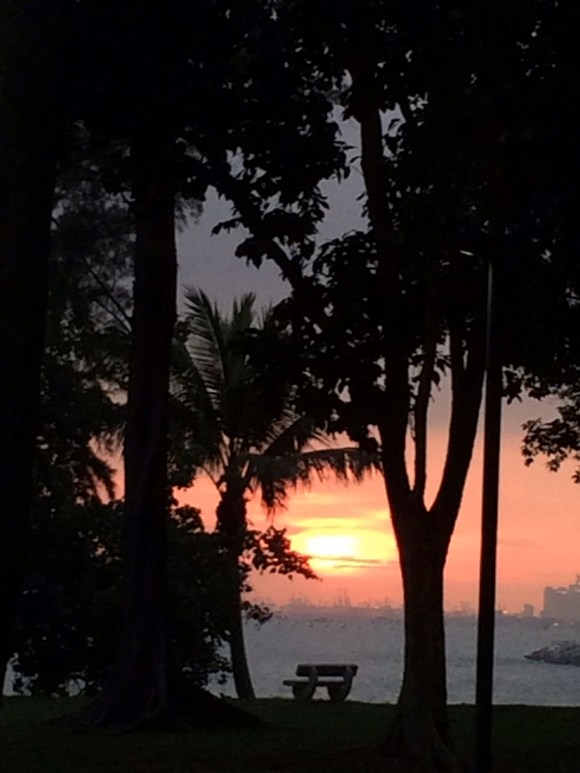
SUNSET: A SYMBOL 

To bridge the agelessly waiting gap
Between an unvoiced luminosity and a vibrant darkness
Sunset is a magic silence,
An indulging over the wispy interlapping
Of light and shadow.

It is an ancient oil-painting
On the old drawing sheet of the sky by a
Bohemian, invisible artist who fills the earth
With a spectrum of the melody of
An unforgettable twilight.

Sunset is the gentle thump of
Disembodied dancers’ feet, tripping
To the rhythm of witch-chanting
On a phantom, ashy-pale stage.

A lifetime that had glowed like a fake sun
In the crimson smile of the earth
Slowly turns black,
And on the black canvas of the sky
Painted in scatters are millions of sparkling stars.

Sunset is a Truth,
A promise of a melodious, bright morning
That the sun dreams of
Slumbering in the palanquin of the night.

SILENCE BETWEEN WORDS

Like a lone, saffron-robed monk
The silence hiding between the words, waits
Keeping awake in secret,
Hoping to get free
from the mysterious chains of mystic incantations.

The bewildering crowd of thoughts stuck between
One word and another,
Before even the mystery of the meaning is unraveled
Confuses the interpreting.

And the silence is left alone,
Weeping, elegizing the loss --
A dumb witness to the unwarranted death of words.

Because the silence does not reveal itself
In happiness,
A sorrow lives permanently in the palpitations
Of the poet’s heart
To bring the un-wilting flowers of poetry
Molded from the poet’s blood into blooming
in their vivid, picturesque charm.

In the unshackled voice of the poet
words and silence seek a nerve center,
in a sensitive, ultimate moment of love
to melt into each other.

Who else other than a poet could gauge
The depth of the silence hidden
In the koel’s song
To bridge the gap between life and death?

A VILLAGE THAT WAS: SKETCHING NOSTALGIA

No one was there waiting eagerly
To meet my shadow,
No one to lament the loss of a village
That was there once.
The smell of love in the wet mud
Has faded with the passage of time.
The melody of spring in the soft breeze,
The shadow of a rainbow on the face of water
Have disappeared too.

The day when I left the village,
A fleeting cloud played hide and seek
In my book-satchel.
The fragrance of the lotus in the village-pond
That wished to caress fondly
The vibrance of childhood on my face
Missed me.
The name of that village lives in me.
A village crowded with forests of Mahula
And throbbing with the song of Adivasis
Dancing in the shadows of the Sal --
The village where rings the rhythm of my birth-cries
in a straw-thatched hut --
the name of that village, has melted into my breath.

A deep sadness pricks me though
That just as I understood the village
I lost my way to it,
Before I could trace the lotus-pond
And inhale its fragrance.
The smoke the factories emitted
Choked me midway,
As I went on narrating the nostalgia
I was left with just myself.
Alone.
While I searched for dreams
Painted in rural shades,
I lost my own self in the pale horizon
Of a smoky, grey sky.

DECLARATION

I gathered the ardour of that missing warmth
From the ashes of a decadent sun
To charge the cold blood that run in my veins.
I gathered the exotic smell of blinking stars
To add years to my life.

My skeletal frame that resembles
some ancient sculptor has a voice.
It can speak, and it can hide
from the eyes of the world
the pain it writhes under,
lest someone use its vulnerability
and sign a sworn statement for befriending
its invisible blood, flesh and sinews.

In every corner of my body that is caged,
In the prison of the elements,
Love sojourns.
And the intimate voice of my shadow-self
Has reached up to the planets and beyond.

The primeval tale of my century-old wait
Has sheltered in the feeble gaze of my eyes
May be, I am designed to stand as
The enemy of Time.
It was perhaps designed so,
That my victory march, with the bugle blowing
Will be declared a glorious success
Against a different backdrop.

RELATIONSHIP: ANOTHER HORIZON

It feels odd at times
To play the hero in
The brief interlude between
Ignorance and innocence.
There are times when a relationship
Founded on poisoned, defiled trust
Tastes sweet.
In the dark sanctum of bitter animosity,
A beguiling god assumes a friendly form
And embraces to overwhelm you
with his gratifying blessings.

Only a fake hero would nurture
The overpowering urge to
Flaunt himself in vain glory on the
Dazzling stage of civility.
It is he who fosters a brazen wish
To draw a line on the water,
And to wish for the moon
In a moonless night-sky.
True friendship is where
The sapling of love grows
Its green foliage
To reach a lofty height
And brings life to fruition.
It’s like a faint streak of light
That illumines a blind alley at night.

A heart bathed in that love
Becomes more sacred than a shrine,
More craved than the potion of immortality.
It is the comfort an orphan child enjoys,
Sleeping inside a cozy culvert
In the chilly night of the month of the Pausha*.

*December- January
Soubhagyabanta Maharana

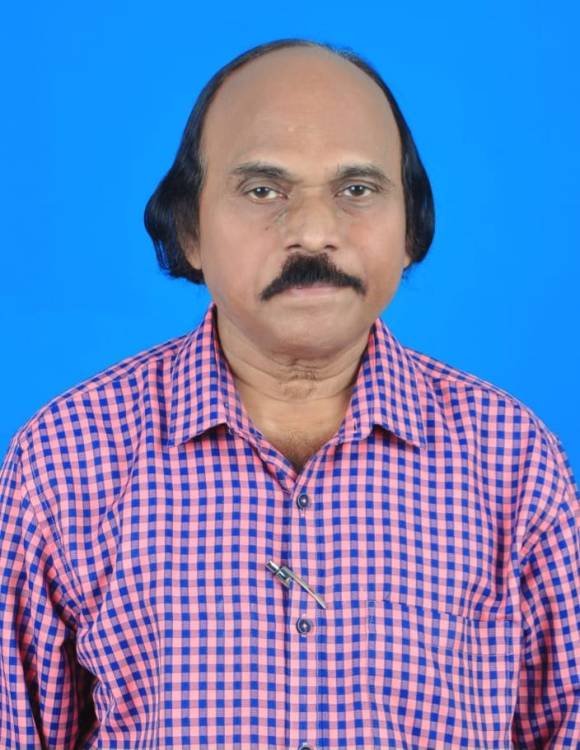
Soubhagyabanta Maharana (b.1951) in the  Bolangir town, Odisha, is a prominent bilingual poet, critic and translator of Odia and English.  He is an awardee of Odisha Sahitya Akademi for poetry in 2010 along with many prestigious literary awards. He has to his credit nineteen poetry collections  and  six essay collections on modern Odia poetry.

Dr.Snehaprava Das, is a noted writer and a translator from Bhubaneswar, Odisha. She has five books of poems, three of stories and thirteen collections of translated texts (from Odia to English), to her credit. 

PLEASE NOTE: ARTICLES CAN ONLY BE REPRODUCED IN OTHER SITES WITH DUE ACKNOWLEDGEMENT TO BORDERLESS JOURNAL

Click here to access the Borderless anthology, Monalisa No Longer Smiles

Click here to access Monalisa No Longer Smiles on Kindle Amazon International

Categories
Bhaskar's Corner

Can Odia Literature Connect Traditional Narratives with Contemporary Ones?

By Bhaskar Parichha

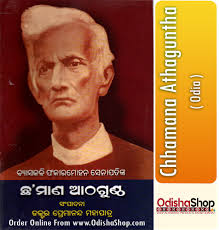
Odia literature is characterised by a profound tradition of classic narratives, with notable examples such as Fakir Mohan Senapati’s timeless Chha Mana Atha Guntha[1].  This literary corpus is further enhanced by an array of mythological and folk narratives that hold significant importance in the cultural legacy of Odisha.

These narratives persist through time because they reflect universal human experiences, encompassing themes such as land, power, family, and morality, all while being intricately linked to the historical context and cultural identity of the region. They serve not only as stories but also as reflections of society, having been shaped and refined over the years.

Readers are consistently attracted to these literary works for reasons similar to those that draw us to the writings of Shakespeare or the epic narrative of the Mahabharata: their themes are enduring, and the insights they provide remain pertinent. Similarly, publishers and curators, even at the national level, often revisit these classic tales, a trend that is entirely justifiable.

However, it is the transition to contemporary matters that strikes a significant chord. Odia literature has been progressing, albeit perhaps not as prominently or visibly as certain other Indian literary landscapes. Modern voices are addressing current issues—urban isolation, the influence of technology, caste relations, and environmental deterioration. The change is evident, yet it remains less pronounced than it has the potential to be.

What accounts for this? There may be multiple reasons.

The literary tradition of Odisha is profoundly embedded in its heritage. Classic literature is not only revered and taught but frequently eclipses modern works. Both publishers and readers exhibit a conservative inclination, preferring established texts. This trend is not unique to Odia literature; for example, Tolstoy remains a central figure in Russian literary discourse. As a result, this inclination obstructs the acknowledgment of new authors.

Modern Odia literature faces considerable challenges in its distribution. In contrast to Bengali or Tamil literature, which benefits from larger urban readerships and established translation networks, Odia books often struggle to reach broader audiences.

While digital platforms are making significant strides in this domain, the overall development is still sluggish. Without a strong market, numerous authors may opt to concentrate on more conventional themes that are viewed as more commercially viable.

The demographic composition of Odisha is primarily rural, where numerous readers find a stronger connection with stories that delve into village life or ethical dilemmas, as opposed to genres like cyberpunk or themes focused on existential angst. Although there are urban Odia authors, their readership is frequently limited in range. As a result, contemporary themes may seem alien to those who maintain a deep bond with traditional cultural settings.

The literary language of Odia typically possesses a formal tone, significantly influenced by its classical roots. This can lead to a conflict with modern terminology and global themes, posing challenges for writers who wish to innovate without jeopardising their connection to the audience. In contrast, languages such as Hindi and Malayalam readily incorporate colloquial expressions, which thrive in contemporary literature.

Nonetheless, modern Odia literature is dynamic and progressing. Short story writers are exploring a variety of topics including religion, science fiction, feminism, leftist ideologies, and climate change. Prominent authors such as Sarojini Sahu, Satya Mishra, Rabi Swain, Sadananda Tripathy, Jyoti Nanda, Bhima Prusty, Janaki Ballabh Mohapatra, Ajaya Swain, Biraja Mohapatra, Sujata Mohapatra and young writers like Debabrata Das  are actively investigating these contemporary themes. Publications like Kadambini, Rebati, and Katha are offering platforms for these creative narratives.

Despite this, the main obstacle remains the need to improve visibility. Social media and over-the-top (OTT) platforms have the potential to revolutionise this landscape—just picture an Odia adaptation of Black Mirror[2]!

There is an immediate need for greater investment in Odia storytelling to effectively bridge the gap between traditional and modern narratives.

.

[1] Six acres and a Third, a novel by Fakir Mohan Senapati(1843-1918) published in 1902

[2]Black Mirror is a British dystopian science fiction television anthology series that started in 2011 and is still on the run.

.

Bhaskar Parichha is a journalist and author of Cyclones in Odisha: Landfall, Wreckage and ResilienceUnbiasedNo Strings Attached: Writings on Odisha and Biju Patnaik – A Political Biography. He lives in Bhubaneswar and writes bilingually. Besides writing for newspapers, he also reviews books on various media platforms.

.

PLEASE NOTE: ARTICLES CAN ONLY BE REPRODUCED IN OTHER SITES WITH DUE ACKNOWLEDGEMENT TO BORDERLESS JOURNAL

Click here to access the Borderless anthology, Monalisa No Longer Smiles

Click here to access Monalisa No Longer Smiles on Amazon International
Categories
Editorial

“Imagine all the people/Living life in peace”

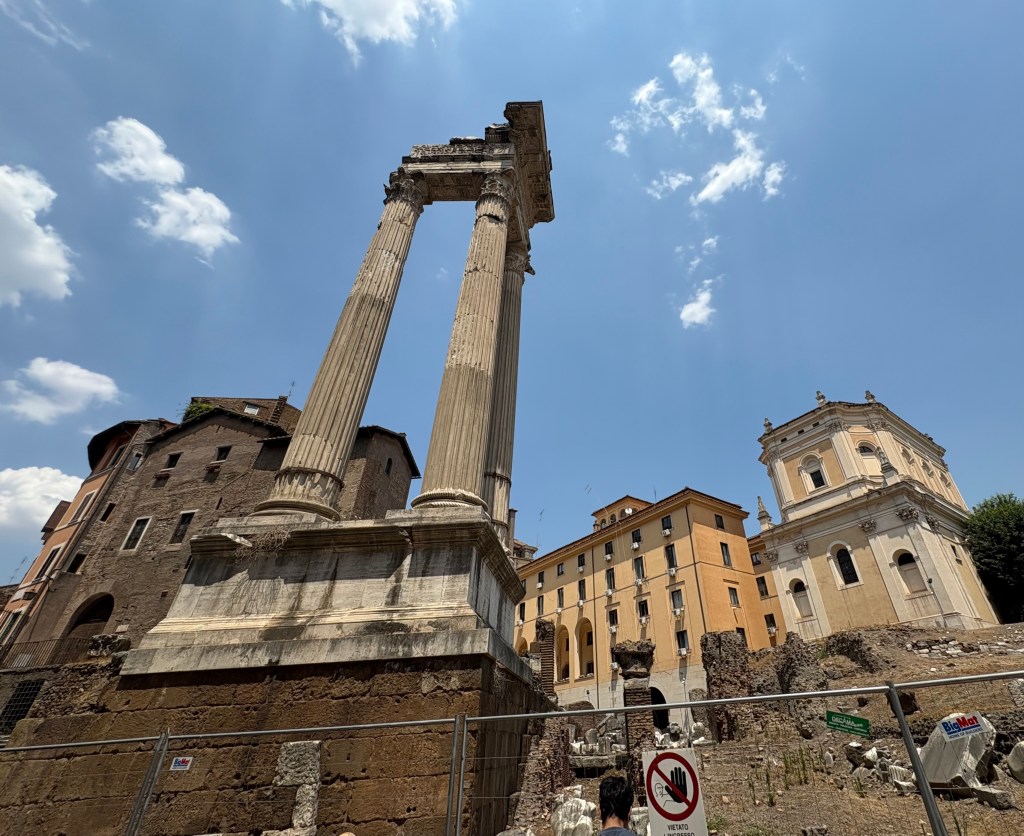
God of War by Paul Klee (1879-1940)
The sky weeps blood, the earth cannot contain
The sorrow of the young ones we've slain.
How now do dead kids laugh while stricken by red rain?

— from Stricken by Red Rain: Poems by Jim Bellamy

When there is war
And peace is gone
Where is their home?
Where do they belong?

— from Poems on Migrants by Kajoli Krishnan

Poetry, prose — all art forms — gather our emotions into concentrates that distil perhaps the finest in human emotions. They touch hearts across borders and gather us all with the commonality of feelings. We no longer care for borders drawn by divisive human constructs but find ourselves connecting despite distances. Strangers or enemies can feel the same emotions. Enemies are mostly created to guard walls made by those who want to keep us in boxes, making it easier to manage the masses. It is from these mass of civilians that soldiers are drawn, and from the same crowds, we can find the victims who die in bomb blasts. And yet, we — the masses — fight. For whom, for what and why? A hundred or more years ago, we had poets writing against wars and violence…they still do. Have we learnt nothing from the past, nothing from history — except to repeat ourselves in cycles? By now, war should have become redundant and deadly weapons out of date artefacts instead of threats that are still used to annihilate cities, humans, homes and ravage the Earth. Our major concerns should have evolved to working on social equity, peace, human welfare and climate change.

One of the people who had expressed deep concern for social equity and peace through his films and writings was Satyajit Ray. This issue has an essay that reflects how he used art to concretise his ideas by Dolly Narang, a gallery owner who brought Ray’s handiworks to limelight. The essay includes the maestro’s note in which he admits he considered himself a filmmaker and a writer but never an artist. But Ray had even invented typefaces! Artist Paritosh Sen’s introduction to Ray’s art has been included to add to the impact of Narang’s essay. Another person who consolidates photography and films to do pathbreaking work and tell stories on compelling issues like climate change and helping the differently-abled is Vijay S Jodha. Ratnottama Sengupta has interviewed this upcoming artiste.

Reflecting the themes of welfare and conflict, Prithvijeet Sinha’s essay takes us to a monument in Lucknow that had been built for love but fell victim to war. Some conflicts are personal like the ones of Odbayar Dorj who finds acceptance not in her hometown in Mongolia but in the city, she calls home now. Jun A. Alindogan from Manila explores social media in action whereas Eshana Sarah Singh takes us to her home in Jakarta to celebrate the Chinese New Year! Farouk Gulsara looks into the likely impact of genetic engineering in a world already ripped by violence and Devraj Singh Kalsi muses on his source of inspiration, his writing desk. Meredith Stephens tells the touching story of a mother’s concern for her child in Australia and Suzanne Kamata exhibits the same concern as she travels to Happy Village in Japan to meet her differently-abled daughter and her friends.

As these real-life narratives weave commonalities of human emotions, so do fictive stories. Some reflect the need for change. Fiona Sinclair writes a layered story set in London on how lived experiences define differences in human perspectives while Parnika Shirwaikar explores the need to learn to accept changes set in her part of the universe. Spandan Upadhyay explores the spirit of the city of Kolkata as a migrant with a focus on social equity. Both Paul Mirabile and Naramsetti Umamaheswararao write stories around childhood, one set in Europe and the other in Asia.

As prose weaves humanity together, so does poetry. We have poems from Jim Bellamy and Kajoli Krishnan both reflecting the impact of war and senseless violence on common humanity. Ryan Quinn Flanagan introduces us to Canadian bears in his poetry while Snigdha Agrawal makes us laugh with her lines about dogs and hatching Easter eggs! We have a wide range of poems from Snehprava Das, George Freek, Niranjan Aditya, Christine Belandres, Ajeeti S, Ron Pickett, Stuart McFarlane, Arthur Neong and Elizabeth Anne Pereira. Rhys Hughes concludes his series of photo poems with the one in this issue — especially showcasing how far a vivid imagination can twist reality with a British postman ‘carrying’ sweets from India! His column, laced with humour too, showcases in verse Lafcadio Hearn, a bridge between the East and West from more than a hundred years ago, a man who was born in Greece, worked in America and moved to Japan to even adopt a Japanese name.

Just as Hearn bridged cultures, translations help us discover how similarly all of us think despite distances in time and space. Radha Chakravarty’s translation of Kazi Nazrul Islam’s concerns about climate change and melting icecaps does just that! Professor Fakrul Alam’s translation of Nazrul’s lyrics from Bengali on women and on the commonality of human faith also make us wonder if ideas froze despite time moving on. Tagore’s poem titled Asha (hope) tends to make us introspect on the very idea of hope – just as we do now. At a more personal level, a contemporary poem reflecting on the concept of identity by Munir Momin has been translated from Balochi by Fazal Baloch. From Korean, Ihlwah Choi translates his own poem about losing the self in a crowd. We start a new column on translated Odia poetry from this month. The first one features the exquisite poetry of Bipin Nayak translated by Snehprava Das. Huge thanks to Bhaskar Parichha for bringing this whole project to fruition.

Parichha has also drawn bridges in reviews by bringing to us the memoirs of a man of mixed heritage, A Stranger in Three Worlds: The Memoirs of Aubrey Menen. Andreas Giesbert from Germany has reviewed Rhys Hughes’ The Devil’s Halo and Somdatta Mandal has discussed Arundhathi Nath’s translation, The Phantom’s Howl: Classic Tales of Ghosts and Hauntings from Bengal. Our book excerpts this time feature Devabrata Das’s One More Story About Climbing a Hill: Stories from Assam, translated by multiple translators from Assamese and Ryan Quinn Flangan’s new book, Ghosting My Way into the Afterlife, definitely poems worth mulling over with a toss of humour.

Do pause by our contents page for this issue and enjoy the reads. We are ever grateful to our ever-growing evergreen readership some of whom have started sharing their fabulous narratives with us. Thanks to all our readers and contributors. Huge thanks to our wonderful team without whose efforts we could not have curated such valuable content and thanks specially to Sohana Manzoor for her art. Thank you all for making a whiff of an idea a reality!

Let’s hope for peace, love and sanity!

Best wishes,

Mitali Chakravarty

borderlessjournal.com

Click here to access the contents page for the May 2025 Issue

READ THE LATEST UPDATES ON THE FIRST BORDERLESS ANTHOLOGY, MONALISA NO LONGER SMILES, BY CLICKING ON THIS LINK.

Categories
Poetry

Found in Translation: Bipin Nayak’s Poetry

 Five Odia poems by Bipin Nayak have been translated by Snehaprava Das

WITHIN 

An equestrian within me
Mounts an unbridled horse
And plays a violin.
A boatman inside me
Crosses an imaginary river
Again, and again
In a non-existent boat.

Within me, there is a wayfarer
That refuses to
Travel the trodden road
And takes a turn.

A lake ripples in me,
Waiting futilely
To lose itself in the sea,
And a waterfall
Leaps noisily from above
To wet the rocks.

A cloud floats within me,
All of a sudden,
Flashes a lightning smile
And goes back to sleep.

In me, a cowherd
Returns home in the twilight
Painted in the colours of sunset
And lights a kerosene lamp.

A camel inside me
Sags under a sack-load of salt,
But trudges across the sands
Dreaming of a lush meadow.

A mother in me conceives words,
Bleeds in labour,
Nourishes the vulnerable words
With love and care
And watches them grow…

PAPER BIRD

My woes pull your neck longer.
My beloved words become the air
To stuff your insides.
I forge your wings from
The crumpled paper of my dreams,
And mold your beak with my kisses,
Paint you in the colour
Of my solitary nights….
Trim you with
All my fears and frustrations.
Because I could not
Make a paper-boat of you
To sail in the muddy puddle,
I lift you up
To fly across
The monsoon sky.
When you climb a little higher
Into the air
And are drenched out of shape,
I, a naked child,
Stand here in the rain, look up and cry!

THE MAKING

I pick a few bones of my hardest grief,
Scoop some blood
Oozing red to create.

I fix a face of smoke or a patch of weepy cloud
Mold a nose from the wafting breeze.
I fix a pair of eyes, like day and night,
There in the face.
In one of them, I put a tornado,
A bird in the other.
With flowers of joy and grief,
I shape the lips.
The body I try to make
Out of a river that hides under it,
A fire and a perpetually vain desire
To reach the sea or a desolate jungle.
I design the limbs from a
Lingering surge of green.
All these efforts
Are but only to replicate
What has been made before.
I set afloat
Because it has been set to drift
Much before…
And because it has sprinkled
A cosmic fervour across
A secret sanctum inside me,
To bring a god to life,
I worship it!
I keep trying to create and re-create inside me
Because it has made me much before that!


A SKY AS I AM

I have set out to paint a sky of my own --
A sky that is exactly as I am!
And for that I have picked up
Some nomadic dreams, a sunset,
I have collected the blood of flowers,
The tune of a stream that has flown away,
The chirping of orphan birds,
The layers of moss spread over
A decrepit piece of rock-writing.
I have scooped up
A handful of ash from the debris of
Perished time,
And a wild storm that had retreated
After having blown me away.
I took out the wet melody from a violin and
the primeval music of the insect,
throbbing inside the grass.
From the reminisces stuck in the sinews
I have gathered a few scattered sighs,
And from the darkness, the mysteries of nights,
I have got warmth from dreams,
Sin from pollen grains.
With these elements beside me
And a canvas in shreds,
I sit down to paint a sky of mine
A sky that is exactly as I am!

LET THEM SING

Let them sing a song.
I do not mind
If my wound heals them,
Or my tears make them glow,
And my blood paints them crimson.

My quick breathing flits about, but
I do not mind if someone plays a flute
Blowing into the holes of my bones
And sings through the lips
Borrowed from me.

Let them sing, why must I mind it?
The lips are not mine. Nor is the song!


Bipin Nayak

Bipin Nayak (1950), a bold and engaging voice in the literary scenario of modern Odisha, is a trend setter who explored new possibilities for Odia poetry. One of the most significant postmodernist and minimalist poet in Odia, Nayak is a believer in the artefact of words than the meaning and medium. For him poetry is an aesthetic exploration through the fragile, fluid words which could be liberated from its conventional canons and connotations. There is a distinct undertone of metaphysical too in his poetry that hovers over the slim divide between the real and the surreal. Bipin Nayak is a pioneer in Odia auto-fiction writing. His ‘Jatra ra Ketoti Pada’[1], an unprecedented experimental work, that challenges the conventional style through a blending of prose and poetry and does not conform to any traditional literary genre. Besides being the recipient of the prestigious Odisha Sahitya Akademi award the poet has received several accolades for his contribution to Odia literature. Significant amongst them are the Bishuba Jhankar Purashkar, Akhila Mohan Kabita Sammana, Sachivalaya Lekhaka Parishada Sammana and Sammana from Kalinga Sahitya Samaja. He has been widely published in Hindi, Bengali and also in English and has adorned the pages of Indian Literature, Kavya Bharati and other prestigious journals. His major works include Swarachitra (The Painted voice) that fetched him the Odisha Sahitya Akademi award, Nija Nija Barnabodha Apustaka, Sadaja, Bidagdha Bichara, Band Ghara ra Basna.         

[1] Translates to ‘how many steps are there in a journey’

Dr.Snehaprava Das, is a noted writer and a translator from Bhubaneswar, Odisha. She has five books of poems, three of stories and thirteen collections of translated texts (from Odia to English), to her credit. 

PLEASE NOTE: ARTICLES CAN ONLY BE REPRODUCED IN OTHER SITES WITH DUE ACKNOWLEDGEMENT TO BORDERLESS JOURNAL

Click here to access the Borderless anthology, Monalisa No Longer Smiles

Click here to access Monalisa No Longer Smiles on Kindle Amazon International

Categories
Editorial

Seasons in the Sun?

April is a month full of celebrations around the world. Asia hosts a spray of New Year festivities. Then there are festivals like Qing Ming Jie, Good Friday and Easter. All these are in a way reminders of our past. And yet, we critique things as old fashioned! So, where does tradition end and ‘outdated’ or ‘outmoded’ start? Meanwhile we continue to celebrate these festivals with joy but what happens to those who have lost their home, family and their living due to war or climate disasters? Can they too join in with the joie de vivre? Can we take our celebrations to them to give solace in some way?

In our April issue, we have stories from climate and conflict-ridden parts of the world. From Bangkok, Amy Sawitta Lefevre gives an eyewitness account of the March 28th Earthquake that originated in Myanmar. While in her city, the disaster was managed, she writes: “I’m also thinking of all the children in Myanmar who are sleeping in the open, who lost loved ones, who are feeling scared and alone, with no one to reassure them.” As news reels tell us, in Myanmar there have been thousands of casualties from the earthquake as well as shootings by the army.

From another troubled region, Pakistan, Zeeshan Nasir gives a heartrending narrative about climate change, which also dwells on the human suffering, including increase in underage marriages.

Human suffering can be generated by rituals and customs too. For instance, if festivals dwell on exclusivity, they can hurt those who are left out of the celebrations. Odbayar Dorje muses along those lines on Mongolian traditions and calls for inclusivity and the need to change norms. On the other hand, Devraj Singh Kalsi hums with humour as he reflects on social norms and niceties and hints at the need for change in a light-hearted manner. Farouk Gulsara makes us laugh with the antics of his spoilt pet cat. And Suzanne Kamata dwells on her animal sightings in Kruger National Park with her words and camera while Meredith Stephens takes us sailing on stormy seas… that too at night.

Art is brought into focus by Ratnottama Sengupta who introduces artist Haren Thakur with his adaptation of tribal styles that has been compared to that of Paul Klee (1879-1940). She also converses with filmmaker Leslie Carvalho, known for his film The Outhouse, and his new novel, Smoke on the Backwaters. Both of these have a focus on the Anglo-Indian community in India. Also writing on Indian film trends of the 1970s is Tamara Raza. Bhaskar Parichha pays tribute to the late Ramakanta Rath (1934-2025), whose powerful and touching poetry, translated from Odia by the poet himself, can be found in our translations section.

We have an excerpt from Professor Fakrul Alam’s unpublished translation of Tagore’s Red Oleanders. It’s a long play and truly relevant for our times. Somdatta Mandal shares with us her translation of Tagore’s essay called ‘The Classification in Society’, an essay where the writer dwells on the need for change in mindsets of individuals that make up a community to move forward. A transcreation of a poem by Tagore for his birthday in 1935 reflects the darkness he overcame in his own life. Two poems expressive of longings by Jibananada Das have been translated from Bengali by Professor Alam aswell. From Balochistan, we have an excerpt from the first Balochi novel, Nazuk, written by the late Syad Zahoor Shah Hashmi and rendered into English by Fazal Baloch. Among contemporaries, we have a short story by Bitan Chakraborty translated from Bengali by Kiriti Sengupta, a poignant story that reflects on gaps in our society. And a Korean poem by Ihlwha Choi rendered to English by the poet himself.

Our poetry section celebrates nature with poetry by Lizzie Packer. Many of the poems draw from nature like that of George Freek and Luis Cuauhtémoc Berriozábal. Some talk of the relationship between man and nature as does Stuart McFarlane. We have a variety of themes addressed in poems by Thompson Emate, Meetu Mishra, Saranyan BV, Paul Mirabile, Pramod Rastogi, Ryan Quinn Flanagan and many more. Rhys Hughes brings in both humour and social commentary of sorts with his poem. And in his column, Hughes has shared three gothic poems which he claims are horrible but there is that twinge of fable and lightness similar to the ghosts of Ebenezer Scrooge’s world[1]— colourful and symbolic.

Stories sprinkle humour of different shades with Snigdha Agrawal’s narrative about mendicants and AI and Mitra Samal’s strange tale about childhood pranks. Naramsetti Umamaheswararao takes us back to schooldays with his narrative. We have a fun book excerpt from Agrawal’s Fragments of Time (Memoirs), almost in tone with some of her stories and musings.

An extract from Anuradha Kumar’s latest non-fiction making bridges across time and geographies. Called Wanderers, Adventurers, Missionaries: Early Americans in India, the book is an intriguing read. We have a review by Professor Mandal of Sheela Rohekar’s Miss Samuel: A Jewish Indian Saga, translated by Madhu Singh. Highlighting syncretic folk traditions, Gracy Samjetsabam has discussed the late Tony K Stewart’s translation of oral folklore in Needle at the Bottom of the Sea: Classic Bengali Tales from the Sundarbans. Parichha has written about a high-profile book that also hopes to draw bridges across the world, Raisina Chronicles: India’s Global Public Square, by S. Jaishankar and Samir Saran.

This issue has been made possible because of support from all of you. Huge thanks to the team, all our contributors and readers. Thanks to Sohana Manzoor for her fabulous artwork. Do pause by our contents page as all the content could not be covered here.

Perhaps, world events leave a sense of pensiveness in all of us and an aura of insecurity. But, as Scarlett O’ Hara of Gone with the Wind[2] fame says, “After all, tomorrow is another day.” 

Looking forward to a new day with hope, let’s dream of happier times filled with sunshine and change.

Enjoy the reads!

Mitali Chakravarty

borderlessjournal.com

[1] A Christmas Carol by Charles Dickens, 1843

[2] Gone With the Wind, a novel by Margaret Mitchell, published in 1936

Click here to access the contents page for the April 2025 Issue

READ THE LATEST UPDATES ON THE FIRST BORDERLESS ANTHOLOGY, MONALISA NO LONGER SMILES, BY CLICKING ON THIS LINK.

Categories
Bhaskar's Corner Tribute

Ramakanta Rath: A Monument of Literature

By Bhaskar Parichha

The death of Ramakanta Rath, a provocative figure in contemporary Odia poetry, has left a considerable gap in the literary landscape. Born on December 13, 1934, in Cuttack, Ramakanta was a prominent modernist poet in Odia literature. He obtained his Master’s degree in English Literature from Ravenshaw College and joined the Indian Administrative Services (IAS) in 1957.

His work was significantly shaped by the influences of poets such as T.S. Eliot and Ezra Pound, often delving into themes of mysticism, mortality, and human isolation. Ramakanta Rath’s contributions have profoundly impacted modern Odia literature in various ways. He brought modernist themes and styles to Odia poetry, drawing significant inspiration from Western poets such as T.S. Eliot and Ezra Pound. His examination of topics like the search for the mystical, the concepts of life and death, and the experience of inner solitude facilitated a transition in Odia poetry towards more contemporary and universal themes.

 Rath’s poetry is marked by symbolic references to spiritual and metaphysical dimensions of existence, which enhanced the intellectual richness of Odia literature. This methodology enabled readers to engage with intricate philosophical concepts through the medium of poetry. Rath’s poetry is noted for its somber tone and symbolic references to the spiritual and metaphysical dimensions of existence.

His significant literary contributions include Kete Dinara (Of Bygone Days, 1962), Aneka Kothari (Many Rooms, 1967), Sandigdha Mrigaya (Suspicious Hunting, 1971), Saptama Ritu (The Seven Seasons, 1977), Sachitra Andhara (Picturesque Darkness, 1982), Sri Radha (1984), and Sri Palataka (Mr Escapist, 1997). Rath was honoured with the Sahitya Akademi Award in 1977, the Saraswati Samman in 1992 for Sri Radha, the Bishuva Samman in 1990, and the Padma Bhushan in 2006. He also received the Sahitya Akademi Fellowship in 2009 before which he was the vice-president of the Akademi.

Rath is particularly celebrated for his lengthy poem, Sri Radha, in which he reimagines Radha, freeing her from theological limitations and depicting her as a remarkable character who embodies deep emotions, love, defiance, and resilience. This poem uniquely intertwines themes of erotic love with existential introspection. This notable work initiated a new trend in Odia poetry that echoed the confessional styles of poets like Sylvia Plath, infusing a personal and introspective quality into Odia literature.

He skillfully combined traditional Odia poetic meters and techniques with contemporary free verse, creating a unique hallmark of his artistic expression. Odia poetry is characterised by its extensive use of classical meters and forms, such as chhanda, chautisa and  champu which serve to articulate intricate emotions and themes in a structured and rhythmic manner. By incorporating these traditional elements, Rath infused his poetry with cultural richness and musicality, thereby amplifying its emotional resonance and thematic depth.

Ramakanta Rath’s integration of traditional Odia meter enriched his themes in multiple ways. By using these familiar poetic forms, his work connects more profoundly with readers who recognise them. This cultural connection amplifies the emotional resonance of his themes, making them easier for his audience to relate to. Additionally, traditional Odia meters often hold symbolic significance, which Rath skilfully utilises to deepen his modernist themes.

The combination of symbolic annotations and modernist concepts enhances Rath’s poetry, adding depth and encouraging reflection. By contrasting traditional forms with modernist ideas, his work creates a dynamic tension. This tension amplifies the emotional resonance of his poetry, prompting readers to navigate the clash between traditional values and contemporary realities, which adds layers to his themes. Rath’s incorporation of traditional meters with modern free verse invites readers to think critically about his poetry.

This fusion of styles encourages a deeper exploration of his themes, leading to a more profound appreciation of his work. While the traditional Odia meters offer a cultural base, Rath’s modernist themes keep his poetry relevant on a global scale. This interplay between tradition and modernity enables his work to reach beyond local confines, attracting a wider audience interested in existential and philosophical questions.

Rath’s poetry stands out for its masterful incorporation of irony and wit, elements that add depth and complexity to his body of work. Critics note that his use of irony can often be challenging to interpret, reflecting the nuanced and multifaceted nature of his poetic viewpoint. This unique approach, combined with his thematic explorations, has sparked a resurgence among a new generation of Odia poets, playing a crucial role in the advancement of modern Odia literature.

Ramakanta Rath’s impact has been instrumental in shaping the landscape of contemporary Odia poetry, solidifying his reputation as a monumental figure in the realm of Indian literature today. His passing signifies the conclusion of a significant era in the narrative of Odia literature, leaving behind a legacy that will continue to inspire future writers and poets.

.

(First published in Odisha Plus)

Read his translated poems by clicking here.

Bhaskar Parichha is a journalist and author of Cyclones in Odisha: Landfall, Wreckage and ResilienceUnbiasedNo Strings Attached: Writings on Odisha and Biju Patnaik – A Political Biography. He lives in Bhubaneswar and writes bilingually. Besides writing for newspapers, he also reviews books on various media platforms.

.

PLEASE NOTE: ARTICLES CAN ONLY BE REPRODUCED IN OTHER SITES WITH DUE ACKNOWLEDGEMENT TO BORDERLESS JOURNAL

Click here to access the Borderless anthology, Monalisa No Longer Smiles

Click here to access Monalisa No Longer Smiles on Amazon International
Categories
Poetry

The Door I Never Opened

By Snehaprava Das

THE DOOR I NEVER OPENED                   

A nonchalant mist settles calmly
Over the pensive trees.
Dull and scarred leaves spread below in thick scatters
Like languishing memories…

A decaying door at an obscure bend
From the ruins of Time
Raises its grey, obstinate head.
What lay behind that discreet door
Did I ever want to know?
A wonderland of many rainbows
Or a sick valley of snow?
Had I cared to see if there lay behind that door
A terrain of spring delight
Or a tunnel of an endless night,
To see if the warm moment of love
Was gained or lost?
I clung instead to a world
Full of winter and frost.

The door, desiccated in time
Stands locked there still
May be if I had tried but a little
And stepped beyond,
I might have entered a rose garden
But I was never that discreet.

Dr.Snehaprava Das, is a noted writer and a translator from Bhubaneswar, Odisha. She has five books of poems, three of stories and thirteen collections of translated texts (from Odia to English), to her credit.

PLEASE NOTE: ARTICLES CAN ONLY BE REPRODUCED IN OTHER SITES WITH DUE ACKNOWLEDGEMENT TO BORDERLESS JOURNAL

Click here to access the Borderless anthology, Monalisa No Longer Smiles

Click here to access Monalisa No Longer Smiles on Kindle Amazon International

Categories
Review

To her Great Grandfather from a Great Granddaughter

Book review by Bhaskar Parichha

Title: Selected Works of Vyasa Kavi Fakir Mohan Senapati

Editor: Monica Das

Publisher: Sahitya Akademi

Fakir Mohan Senapati (1843-1918) is a prominent figure in Indian literature and a key advocate for Odia nationalism. Born in Mallikashapur, Odisha, he faced significant hardships, losing both parents by age two and being raised by his grandmother with limited education.

Senapati is celebrated for his pioneering works, including the first modern Odia short story, “Rebati,” and novels like Chha Mana Atha Guntha (Six Acres and a Third) , Mamu (Uncle), and Prayaschita (Atomement), which address social issues and the lives of ordinary people, emphasizing social justice and peasant struggles.

His impact transcends the realm of literature; he was instrumental in promoting the unique identity of the Odia language during times of external challenges. His literary contributions facilitated the de-Sanskritisation of Odia, thereby rendering literature more accessible to the general public. He continues to embody the pride and cultural identity of the Odia people.

Selected Works of Vyasa Kavi Fakir Mohan Senapati by Monica Das is characterised by its relevance and authenticity. The compilation and editing, originating from Sahitya Akademi, reflect a high level of quality, with the editor having meticulously attended to every detail.

Monica Das is an Associate Professor of Economics at Gargi College, University of Delhi, and a fellow at the Developing Countries Research Centre. Her research focuses on feminist economics, and she is involved with the International Association for Feminist Economics (IAFFE). Her own works include Tales of the Girl Child in India and The Other Woman, which examine the socio-economic impacts of underage marriage and polygamy on gender development. She also produced the film Anwesan, highlighting the life of her great-grandfather, Fakir Mohan Senapati. She oversees the Fakir Mohan Foundation, which promotes Odisha’s cultural heritage and addresses social challenges, particularly those affecting women.

Putting together a collection can be quite a challenge. It has to open up different viewpoints and styles for readers, deepening their grasp of literature and culture. Curators have to also add introductions that give context to the works, making it easier for readers to see the importance of each piece in the larger literary scene. Monica Das has successfully met these expectations. This Selection highlights Senapati’s creations that established a framework in which the ordinary individual became the focal point.

Says Monica in the introduction: “Fakir Mohan Senapati is a giant in the field of Indian literature, who belonged to Odisha. He brought about a revolution in novel writing by departing from romance and writing on social realism. His portrayal of the common man and his concerns predated those of Premchand and Rabindranath Tagore, the other giants of Indian literature.

“His writing had elements which, apart from promoting secular attitudes, helped bring about social changes, to which he also contributed directly as the Dewan of some of the princely states of Odisha in British India. Odisha is the first state in India to have been established on the basis of language, for which he laid the foundation.”

Fakir Mohan distinguishes himself from his predecessors in the field of Odia prose through his unique use of language: “His liberal use of terse proverbs and the folksy style of his writings is what catches the reader’s immediate attention. Besides this, it adds to the rustic wisdom of his characters. In his stories, one cannot miss the underlying concern with social reform. He always took care to depict an honest view of life. Though he takes a didactic stance in his writings, he took care to see that this did not militate against realism and the smooth flow of the narrative. Fakir Mohan’s characters were drawn from ordinary life from among peasants, weavers, barbers, milkmen, revenue clerks and teachers. Very few belong to the higher ranks of the society. He set the tone of the common man. For the first time, ordinary readers were touched by the fact that stories were written about them, about their concerns, their agonies, exploitations and bitter-sweet experiences. Fakir Mohan was indeed a consummate artist with a keen eye for minute details.”

The Selected Works of Vyasa Kavi Fakir Mohan Senapati spans approximately four hundred pages and presents the intriguing perspective of a remarkable individual. He was more than merely a writer; he was a social reformer, a patriot, and a cunning strategist, serving as the dewan of the princely states of Odisha during the period of colonial rule.

Concludes Monica in the book: “It’s a strife-torn world that we live in today. Fakir Mohan’s works, considered unparalleled internationally, hold even greater significance now because of the centrality of humane modes that form the essence of his writings. The compilation in the Selection presents all this and more.”

The volume serves as a comprehensive and curated resource on Fakir Mohan’s literary works, significantly enhancing the current body of literature dedicated to the father of Odia literature.

.

Bhaskar Parichha is a journalist and author of UnbiasedNo Strings Attached: Writings on Odisha and Biju Patnaik – A Political Biography. He lives in Bhubaneswar and writes bilingually. Besides writing for newspapers, he also reviews books on various media platforms.

.

PLEASE NOTE: ARTICLES CAN ONLY BE REPRODUCED IN OTHER SITES WITH DUE ACKNOWLEDGEMENT TO BORDERLESS JOURNAL

Click here to access the Borderless anthology, Monalisa No Longer Smiles

Click here to access Monalisa No Longer Smiles on Amazon International