Categories
Contents

Borderless, March 2025

Happy Birthday Borderless… Click here to read.
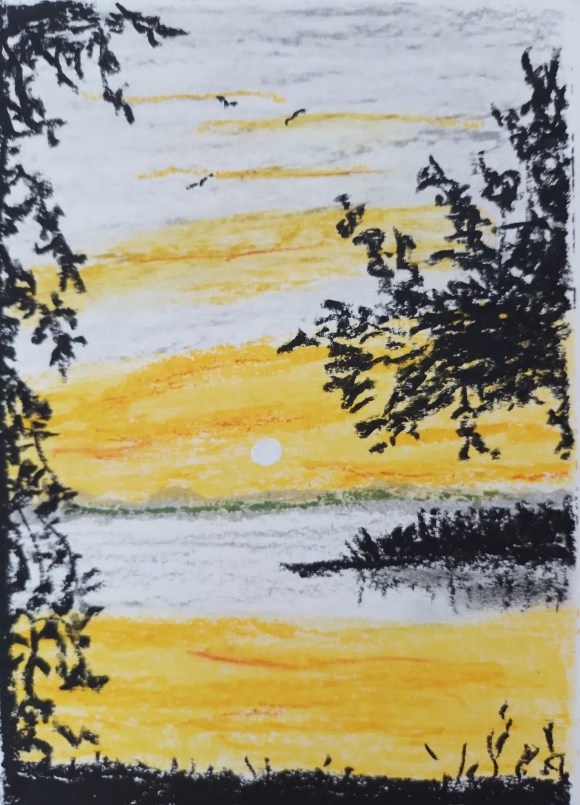
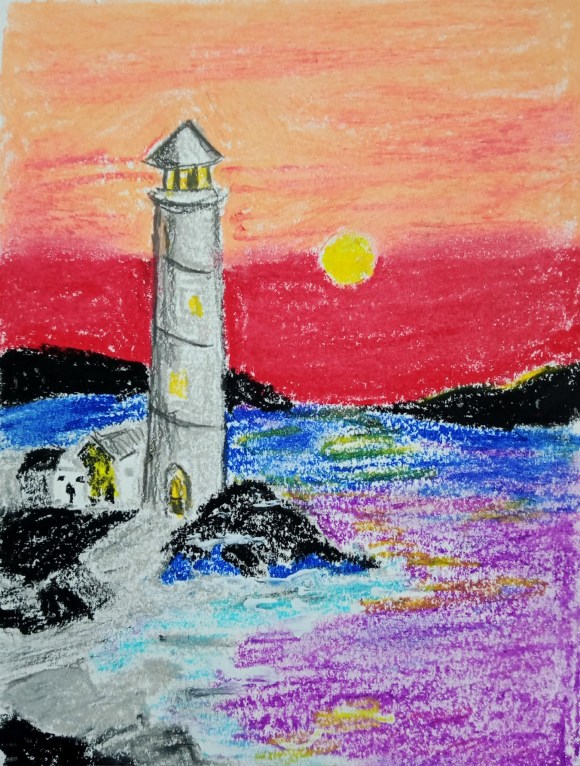
Art by Sohana Manzoor

Editorial

Celebrating a Borderless World… Five Years and Counting… Click here to read.

Translations

Jibanananda Das’ poems on war and for the common masses have been translated from Bengali by Professor Fakrul Alam. Click here to read.

A Scene with an Aged Queen, a poem by Ihlwha Choi  has been translated from Korean by the poet himself. Click here to read.

Tagore’s Esho Bosonto, Esho Aj Tumi (Come Spring, Come Today) has been translated from Bengali by Mitali Chakravarty. Click here to read.

Pandies’ Corner

For Sanjay Kumar: To Sir — with Love has been written for the founder of pandies’ theatre by Tanvir, a youngster from the Nithari village where pandies’ worked with traumatised victims. Over time, these kids have transcended the trauma to lead fulfilling lives. The late Sanjay Kumar passed on this January. This is a tribute to him by one of his students. It has been translated from the Hindustani original by Lourdes M Surpiya. Click here to read.

Poetry

Click on the names to read the poems

Luis Cuauhtémoc Berriozábal, Kiriti Sengupta, Ryan Quinn Flanagan, Snehaprava Das, Stuart McFarlane, Arshi Mortuza, George Freek, Jyotish Chalil Gopinathan, Ahmad Al-Khatat, Michael Burch, Bibhuti Narayan Biswal, Mark Wyatt, Owais Farooq, Adriana Rocha, Rakhi Dalal, Rhys Hughes

Musings/Slices from Life

Nobody Knows…

Farouk Gulsara muses on the dichotomies in life exploring beliefs that shape our world. Click here to read.

Beachcombing on the Abrolhos Islands

Meredith Stephens goes beachcombing in a thinly inhabited island. Click here to read.

As Flows the Gomti: A Monument of Tranquility 

Prithvijeet Sinha takes us to the past of Lucknow. Click here to read.

Musings of a Copywriter

In All Creatures Great and Small, Devraj Singh Kalsi talks of living in harmony with nature… is it tongue in cheek? To find out, click here to read.

Notes from Japan

In Haiku for Rwandan Girls, Suzanne Kamata writes of her trip to Africa where she teaches and learns from youngsters. Click here to read.

Essays

Take One

Ratnottama Sengupta takes stock of women in Bengali cinema over the last fifty years. Click here to read.

Drinking the Forbidden Milk of Paradise…

Meenakshi Malhotra explores the past of poetry and women writers. Click here to read.

Where have all the Libraries Gone?

Professor Fakrul Alam writes of the loss of libraries as we knew them. Click here to read.

Stories

In the Realm of Childhood

Paul Mirabile gives us a story set in Scotland. Click here to read.

The Appropriate Punishments

Naramsetti Umamaheswararao gives a fable set in a forest. Click here to read.

Eyes of Inti

Swati Basu Das shares a lighthearted flash fiction. Click here to read.

‘Solitude is a Kind of Freedom…’

Munaj Gul gives an introspective story set in Balochistan. Click here to read.

Why I Stopped Patronising that Cheese Maker’s Shop…

Zoé Mahfouz shares a humorous vignette of Parisian life. Click here to read.

Conversations

Ratnottama Sengupta discusses the famous actor, Soumitra Chatterjee, with his daughter, Poulami Bose Chatterjee. Click here to read.

Keith Lyons interviews Malaysian author and editor, Daphne Lee. Click here to read.

Book Excerpts

An excerpt from Frank S Smyth’s The Great Himalayan Ascents. Click here to read.

An excerpt from Rhys Hughes’ The Devil’s Halo. Click here to read.

Book Reviews

Somdatta Mandal reviews Tsering Namgyal Khortsa’s non-fiction, Little Lhasa: Reflections in Exiled Tibet and fiction, Tibetan Suitcase, together. Click here to read.

Malashri Lal reviews Rachna Singh’s Raghu Rai: Waiting for the Divine. Click here to read.

Bhaskar Parichha reviews Sandeep Khanna’s Tempest on River Silent: A Story of Last 50 Years of India. Click here to read.

Vignettes from a Borderless World… Click here to read a special fifth anniversary issue.
Categories
Editorial

Celebrating Borderless… Five Years and Counting…

Emerging by Sybil Pretious

Drops of water gather to make a wave. The waves make oceans that reshape land masses over time…

Five years ago, on March 14th, in the middle of the pandemic, five or six of us got together to start an online forum called Borderless Journal. The idea was to have a space that revelled with the commonality of felt emotions. Borderless was an attempt to override divisive human constructs and bring together writers and ideators from all over the Earth to have a forum open to all people — a forum which would be inclusive, tolerant, would see every individual as a part of the fauna of this beautiful planet. We would be up in the clouds — afloat in an unbordered stratosphere— to meet and greet with thoughts that are common to all humans, to dream of a world we can have if we choose to explore our home planet with imagination, kindness and love. It has grown to encompass contributors from more than forty countries, and readers from all over the world — people who have the same need to reach out to others with felt emotions and common concerns.

Borderless not only celebrates the human spirit but also hopes to create over time a vibrant section with writings on the environment and climate change. We launch the new section today on our fifth anniversary.

Adding to the wealth of our newly minted climate and environment section are poems by Luis Cuauhtémoc Berriozábal on the LA fires, Green by Mark Wyatt and Ecopoetry by Adriana Rocha in our March issue. We also have poetry on life in multiple hues from Kiriti Sengupta, Ryan Quinn Flanagan, Snehaprava Das, Stuart McFarlane, Arshi Mortuza, George Freek, Ahmad Al-Khatat, Jyotish Chalil Gopinathan, Michael Burch, Bibhuti Narayan Biswal, Owais Farooq and Rakhi Dalal. Tongue-in-cheek humour in poetry is Rhys Hughes forte and he brings us just that in his sign poem.

 Devraj Singh Kalsi with a soupçon of ironic amusement muses on humans’ attitude to the fauna around him and Farouk Gulsara lays on a coating of sarcasm while addressing societal norms. Meredith Stephens brings us concerns for a green Earth when she beachcombs in a remote Australian island. Prithvijeet Sinha continues to familiarise us with his city, Lucknow. Suzanne Kamata, on the other hand travels to Rwanda to teach youngsters how to write a haiku!

Professor Fakrul Alam takes us to libraries in Dhaka with the hope that more will start writing about the waning of such paradises for book lovers. Other than being the month that hosts World Environment Day, March also homes, International Women’s Day. Commemorating the occasion, we have essays from Meenakshi Malhotra on the past poetry of women and from Ratnottama Sengupta on women in Bengali Cinema. Sengupta has also interviewed Poulami Bose Chatterjee, the daughter of the iconic actor Soumitra Chatterjee to share with us less-known vignettes from the actor’s life. Keith Lyons has interviewed Malaysian writer-editor Daphne Lee to bring to us writerly advice and local lores on ghosts and hauntings. 

Our fiction truly take us around the world with Paul Mirabile giving us a story set Scotland and Naramsetti Umamaheswararao giving us a fable set in a Southern Indian forest. Swati Basu Das takes us on an adventure with Peruvian food while sitting by the Arabian Sea. Munaj Gul gives a heart-rending flash fiction from Balochistan. And Zoé Mahfouz shares a humorous vignette of Parisian life, reflecting the commonality of felt emotions.

Celebrating the wonders of the nature, is a book excerpt from Frank S Smyth’s The Great Himalayan Ascents. While the other excerpt is from Hughes’ latest novel, The Devil’s Halo, described as: ‘A light comedy, a picaresque journey – like a warped subterranean Pilgrim’s Progress.’ We have reviews that celebrate the vibrancy of humanity. Bhaskar Parichha writes of Sandeep Khanna’s Tempest on River Silent: A Story of Last 50 Years of India, a novel that spans the diversity that was India. Malashri Lal reviews Rachna Singh’s Raghu Rai: Waiting for the Divine, a non-fiction on the life and works of the famous photographer. Somdatta Mandal discusses two book by Tsering Namgyal Khortsa reflecting the plight of Tibetan refugees, a non-fiction, Little Lhasa: Reflections in Exiled Tibet and a fiction, Tibetan Suitcase.

One of features that we love in Borderless is that language draws no barriers — that is why we have translations by Professor Alam of Jibananada’s short poems on the impact of war on the common masses. We have a small vignette of Korea from Ihlwha Choi’s self-translated poem. And we have a translation of Tagore’s verses invoking the healing power of spring… something that we much need.

We also have a translation by Lourdes M Supriya from Hindustani of a student’s heartrending cry to heal from grief for a teacher who faced an untimely end — a small dirge from Tanvir, a youngster with his roots in Nithari violence who transcended his trauma to teach like his idol and tutor, the late Sanjay Kumar. With this, we hope to continue with the pandies corner, with support from Lourdes and Anuradha Marwah, Kumar’s partner.

Borderless has grown in readership by leaps and bounds. There have been requests for books with writings from our site. On our fifth anniversary, we plan to start bringing out the creative writing housed in Borderless Journal in different volumes. We had brought out an anthology in 2022. It was well received with many reviews. But we have many gems, and each writer is valued here. Therefore, Rhys Hughes, one of our editorial board members, has kindly consented to create a new imprint to bring out books from the Borderless Journal. We are very grateful to him.

We are grateful to the whole team, our contributors and readers for being with us through our journey. We would not have made it this far without each one of you. Special thanks to Sohana Manzoor for her artwork too, something that has almost become synonymous with the cover page of our journal.  Thank you all from the bottom of my heart.

Wish you all happy reading! Do pause by our content’s page and take a look at all the wonderful writers.

Best wishes,

Mitali Chakravarty

borderlessjournal.com

Click here to access the contents page for the March 2025 issue

Happy Birthday Borderless… Click here to read.

Vignettes from a Borderless World… Click here to read a special fifth anniversary issue.
Categories
Stories

The Appropriate Punishments

By Naramsetti Umamaheswararao

From Public Domain

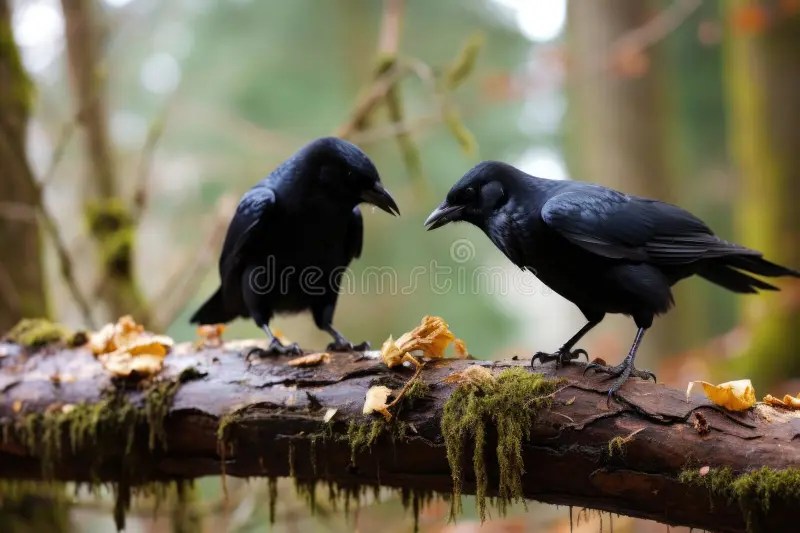
In a small forest next to Ramapuram, there lived a crow and a monkey who were friends. They would help each other when needed, but they were mischievous by nature and often looked for opportunities to harass others. Over time, they befriended a cunning jackal, and the three would team up to trouble travelers passing through.

The residents of Ramapuram and nearby villages had to cross this small forest to reach the town. Whenever a traveler passed through the forest with a bag in hand, the monkey would jump from the tree and snatch the bag, hoping to find food inside. It would climb up a tree, rummage through the contents, and if there was anything edible, it would keep it, tossing the rest to the ground. The monkey would then mock the traveler, showing its teeth and laughing at their distress. Once the traveler left, the monkey would share the food with its friends.

The crow, on the other hand, would swoop down and peck at the travelers’ heads with its beak or legs, causing them to flinch. If anyone rested under a tree, the crow would defecate on them and then hide in the branches, laughing at their misery.

The jackal was skilled at imitating the roar of a tiger. It would hide behind a tree and roar like a tiger, scaring the travelers who would then run away in fear, much to the jackal’s delight.

One day, a farmer named Rama from the neighbouring village of Shantipuram was passing through the forest. He was on his way to buy jewelry for his daughter’s wedding, carrying money in his bag. The monkey, mistaking the bag for food, leaped in front of Rama and snatched the bag, quickly climbing a tree. “Oh no, my bag!” cried Rama as he ran after the monkey. But the monkey, sitting on a branch, began searching through the bag. Finding nothing to eat, it became angry and tore the money into pieces, throwing them down.

Seeing this, Rama was filled with both sadness and anger. He spotted a dry branch on the ground and thought of using it to threaten the monkey. But before he could act, the crow swooped down and pecked him on the head. Meanwhile, the jackal, hiding behind a tree, roared like a tiger. Terrified, Rama ran away from the forest.

When he reached his village, Rama told the villagers what had happened. The villagers felt sorry for him and promised to help with his daughter’s wedding expenses.

A young man in the village suggested, “I know a sorcerer. Let’s tell him about this and put an end to these troubles.” So they took Rama to the sorcerer.

After hearing the story, the sorcerer said, “I will secretly observe what’s happening in the forest and punish the culprits.” He kept his promise and observed the mischief of the crow, monkey, and jackal for a few days to understand their behavior completely. Then, he devised a plan and set out for the forest.

When the monkey saw the sorcerer coming with a bag in hand, it followed its usual habit and jumped down to snatch the bag. But the moment its hand touched the bag, it stuck to it. No matter how hard the monkey tried, it couldn’t free itself. The sorcerer had applied strong glue to the bag beforehand, knowing this would happen. The monkey screeched in fear.

Hearing the monkey’s cries, the crow flew down intending to peck the sorcerer. But the sorcerer quickly threw a net over the crow, trapping it.

Meanwhile, the jackal, watching the humiliation of its friends from a distance, tried to roar like a tiger again. It went behind a tree to hide, but the sorcerer’s disciple, who had been waiting there, threw another net over the jackal, capturing it.

Realising that the sorcerer was not an ordinary traveler, the animals pleaded, “Oh, please forgive us. We won’t trouble anyone anymore.”

The sorcerer laughed and asked, “When you were troubling the travelers, where was your sense of right and wrong? Now that you’re in trouble, you suddenly confess and promise to end your mischief? How can you chnge so quickly?”

They replied, “We never expected someone like you would come. Please let us go. We promise to live without bothering anyone.”

The sorcerer, however, was unmoved. “There’s no question of letting you go. I will hand you over to the zoo so that travelers passing through this forest won’t be troubled anymore.”

The animals pleaded once again, “We’ve learned our lesson. Please let us go.”

Even the sorcerer’s disciple requested, “Please forgive them and let them go.”

But the sorcerer responded, “Don’t show mercy on these creatures. The monkey tore up Ramayya’s money. I’ll release the crow, and if it ever causes trouble again, I’ll capture it and starve it to death in a cage. I’ll train the monkey to perform tricks and take it with us for shows. As for the jackal, I’ll hand it over to the zoo.”

And the sorcerer did exactly as he said. He disciplined the three of them and put an end to their mischief. From that day on, travelers passing through the forest were no longer troubled by the crow, monkey, or jackal.

From Public Domain

Naramsetti Umamaheswararao has written more than a thousand stories, songs, and novels for children over 42 years. he has published 32 books. His novel, Anandalokam, received the Central Sahitya Akademi Award for children’s literature. He has received numerous awards and honours, including the Andhra Pradesh Government’s Distinguished Telugu Language Award and the Pratibha Award from Potti Sreeramulu Telugu University. He established the Naramshetty Children’s Literature Foundation and has been actively promoting children’s literature as its president.

.

PLEASE NOTE: ARTICLES CAN ONLY BE REPRODUCED IN OTHER SITES WITH DUE ACKNOWLEDGEMENT TO BORDERLESS JOURNAL

Click here to access the Borderless anthology, Monalisa No Longer Smiles

Click here to access Monalisa No Longer Smiles on Amazon International
Categories
Celebrating Life

For All Creatures Great & Small

Painting by Sybil Pretious

Sometimes I wonder what makes us exclusive as a species on Earth? Do we really have some kind of superiority over the flora and fauna without which we may not survive? With multiple species of wildlife being threatened by human exploits, perhaps there is a need to remind ourselves of our dependence on our planet and the lives it supports while acknowledging our existence as just one of the many species. In this issue, we celebrate life on this planet… I do not know if a cockroach or a cow would be considered wildlife, but it seems only right to see all of them as our brethren… along with yetis who could be a figment of the human mind… Enjoy some of our selected fare from around the world on World Wildlife Day today.

Poetry

Katsaridaphobia by Aditya Shankar. Click here to read.

Kissing Frogs by Rhys Hughes. Click here to read.

Pirate Blacktarn & the Worm by Jay Nicholls. Click here to read.

Yeti by Jared Carter. Click here to read.

Giraffe’s Dad by Tagore has been translated from Bengali by Professor Fakrul Alam. Click here to read.

Jibananda Das’s Where have all these Birds Gone & On the Pathways for Long have been translated from Bengali by Professor Fakrul Alam. Click here to read.

Non-Fiction

Humbled by a Pig: Farouk Gulsara meets a wild pig while out one early morning and muses on the ‘meeting’. Click here to read. 

Breaking Bread: Snigdha Agrawal has a bovine encounter in a restaurant. Click here to read.

Rabbit IslandSuzanne Kamata visits the island of Okunoshima, where among innocence of rabbits lurk historic horrors. Click here to read. 

The Ocean & Me: Meredith Stephens writes of her encounters with sea creatures in South Australia. Click here to read.

An Encounter With Snakes: Devraj Singh Kalsi, amuses with his hilarious take on snakes and snake charmers in his home. Click here to read.

Bugs of Life: Sohana Manzoor, highlighting her ‘affection’ or the lack of it for bugs. Click here to read.

Fiction

Maya and the Dolphins: Mohin Uddin Mizan weaves a story around dolphins in Cox Bazaar, Bangladesh. Click here to read.

Memory Gongs: Rhys Hughes reflects on the cycle of life. Click here to read.

Navigational Error: Luke PG Draper explores the impact of pollution on wildlife. Click here to read.

The Llama Story: Shourjo shares a short fun piece written from a llama’s perspective. Click here to read. 

Naughty Ravi: Naramsetti Umamaheswararao writes of an awakening of kindness to fellow creatures. Click here to read.

One Small Ancient Tale: Tagore’s story about two wild birds has been translated by Nishat Atiya. Click here to read.

The Parrot’s Tale:  Tagore’s powerful story has been translated by Radha Chakravarty. Click here to read.

Dolphins. Photo Courtesy: Meredith Stephens
Categories
Contents

Borderless, February 2025

Art by Sohana Manzoor

Editorial

The Kanchejunga Turns Gold … Click here to read.

Translations

Tumi Kon Kanoner Phul by Tagore and Anjali Loho Mor by Nazrul, love songs by the two greats, have been translated from Bengali by Professor Fakrul Alam. Click here to read.

Tumi to Janona Kichu (You seem to know nothing) by Jibananda Das has been translated from Bengali by Professor Fakrul Alam. Click here to read.

Where Lies the End of this Unquenchable Thirst?, a poem by Atta Shad, has been translated from Balochi by Fazal Baloch. Click here to read.

The Bird’s Funeral a poem by Ihlwha Choi  has been translated from Korean by the poet himself. Click here read.

Kheya or Ferry, a poem by Tagore, has been translated from Bengali by Mitali Chakravarty. Click here to read.

Poetry

Click on the names to read the poems

Michael Burch, Shamik Banerjee, John Drudge, Ashok Suri, Cal Freeman, Lokenath Roy, Stuart McFarlane, Thompson Emate, Aditi Dasgupta, George Freek, Gazala Khan, Phil Wood, Srijani Dutta, Luis Cuauhtémoc Berriozábal, Akbar Fida Onoto, Ryan Quinn Flangan, Rhys Hughes

Musings/Slices from Life

Just Another Day?

Farouk Gulsara muses on the need to observe various new year days around the globe and across time. Click here to read.

Of Birthdays and Bondings…

Ratnottama Sengupta reminiscences on her past experiences. Click here to read.

As Flows the Gomti: A Palace of Benevolence

Prithvijeet Sinha takes us for a tour of the Bara Imambara in Lucknow with his words and camera. Click here to read.

The Midwife’s Confession and More…

Aparna Vats shares a narrative around female infanticide centring her story around a BBC interview and an interview with the journalist who unfolded the narrtive. Click here to read.

Juhu

Lokenath Roy gives a vignette of the world famous beach. Click here to read.

Musings of a Copywriter

In The Heroic Fall, Devraj Singh Kalsi explores dacoits and bravery. Click here to read.

Notes from Japan

In Finding Inspiration in Shikoku’s Iya Valley, Suzanne Kamata has written of a source of inspiration for a short story in her recently published book. Click here to read.

Essays

Reminiscences from a Gallery: MF Husian

Dolly Narang recounts how she started a gallery more than four decades ago and talks of her encounter with world renowned artist, MF Husain. Click here to read.

In The Hidden Kingdom of Bhutan

Mohul Bhowmick explores Bhutan with words and his camera. Click here to read.

When a New Year Dawns…

Ratnottama Sengupta writes of the art used in calendars and diaries in India. Click here to read.

What Is Your Name?

Fakrul Alam recalls his mother as a person who aspired for fairplay for women. Click here to read.

Stories

Vasiliki and Nico Go Fishing

Paul Mirabile gives a heartwarming story set in a little Greek island. Click here to read.

Naughty Ravi

Naramsetti Umamaheswararao writes of an awakening. Click here to read.

The Wise One

Snigdha Agrawal gives a touching story around healing from grief. Click here to read.

Conversations

Ratnottama Sengupta converses with Joy Bimal Roy, author of Ramblings of a Bandra Boy. Click here to read.

A discussion on managing cyclones, managing the aftermath and resilience with Bhaksar Parichha, author of Cyclones in Odisha: Landfall, Wreckage, and Resilience. Click here to read.

Book Excerpts

An excerpt from Bhaskar Parichha’s Cyclones in Odisha, Landfall, Wreckage and Resilience. Click here to read.

An excerpt from Joy Bimal Roy’s Ramblings of a Bandra Boy. Click here to read.

Book Reviews

Somdatta Mandal reviews Amitav Ghosh’s Wild Fiction: Essays. Click here to read.

Meenakshi Malhotra reviews Syed Mujtaba Ali’s Shabnam, translated from Bengali by Nazes Afroz. Click here to read.

Bhaskar Parichha reviews Abhay K’s Nalanda: How it Changed the World. Click here to read.

.

Click here to access the Borderless anthology, Monalisa No Longer Smiles

Click here to access Monalisa No Longer Smiles on Amazon International
Categories
Editorial

The Kanchenjunga Turns Gold…

The Kanchenjunga turns gold

Ghoom, Darjeeling, is almost 2.5 km above sea level. Standing in the rarified air of Ghoom, you can watch the Kanchenjunga turn gold as it gets drenched in the rays of the rising sun. The phenomenon lasts for a short duration. The white pristine peak again returns to its original colour blending and disappearing among the white cirrus clouds that flit in the sky. Over time, it’s shrouded by mists that hang over this region. The event is transitory and repeats itself on every clear morning like life that flits in and out of existence over and over again…

Witnessing this phenomenon feels like a privilege of a lifetime as is meeting people who shine brightly and unusually, like the Kanchenjunga, to disappear into mists all too early. One such person was the founder of pandies’ 1 who coordinated the pandies’ corner for Borderless Journal, the late Sanjay Kumar (1961-2025). The idea of starting this column was to bring out the unheard voices of those who had risen above victimhood to find new lives through the work done by pandies’. In his book, Performing, Teaching and Writing Theatre: Exploring Play, published by Cambridge Scholars Publishing, he described his scope of work which in itself was stunning. His work ranged from teaching to using theatre and play to heal railway platform kids, youngsters in Kashmir, the Nithari survivors and more — all youngsters who transcended the scars seared on them by violations and violence. We hope to continue the column in coordination with pandies’.

Another very renowned person whose art encompassed a large number of social concerns and is now lost to time was the artist, MF Husain (1915-2011). This issue of Borderless is privileged to carry an artwork by him that has till now not been open to the public for viewing. It was a gift from him to the gallerist, Dolly Narang, on her birthday. She has written nostlgically of her encounters with the maestro who walked bare-feet and loved rusticity. She has generously shared a photograph of the sketch (1990) signed ‘McBull’ — a humorous play on his first name, Maqbool, by the artist.

Drenched with nostalgia is also Professor Fakrul Alam’s essay, dwelling on more serious issues while describing with a lightness his own childhood experiences. Many of the nonfiction in this issue have a sense of nostalgia. Mohul Bhowmick recalls his travels to Bhutan. And Prithvijeet Sinha introduces as to a grand monument of Lucknow, Bara Imambara. Lokenath Roy takes us for a stroll to Juhu, dwelling on the less affluent side. Suzanne Kamata describes her source of inspiration for a few stories in her new book, River of Dolls and Other Stories. A darker hue is brought in by Aparna Vats as she discusses female infanticide. But a light sprays across the pages as Devraj Singh Kalsi describes how his feisty grandmother tackled armed robbers in her home. And an ironic tone rings out in the rather whimsical musing by Farouk Gulsara on New Year days and calendars.

With a touch of whimsy, Ratnottama Sengupta has also written of the art that is often seen in calendars and diaries as well as a musing on birthdays, her own and that of a friend, Joy Bimal Roy. They have also conversed on his new book, Ramblings of a Bandra Boy, whose excerpt is also lodged in our pages, recalling their days in the glitzy world of Bollywood as children of notable film director, Bimal Roy (1909-1966), and award-winning writer, Nabendu Ghosh (1917-2007).

We feature the more serious theme of climate change in our other interview with Bhaskar Parichha, who has written a book called Cyclones in Asia: Landfall, Wreckage and Resilience. He has spoken extensively on resilience and how the incidence of such storms are on the rise. We carry an excerpt from his non-fiction too. His book bears the imprint of his own experience of helping during such storms and extensive research.

Climate change has been echoed in poetry by Gazala Khan and the metaphor of thrashing stormy climate can be found in Luis Cuauhtémoc Berriozábal’s poetry. Touching lines on working men spread across the globe with poems from Michael Burch, Shamik Banerjee, Stuart McFarlane and Ashok Suri while Ryan Quinn Flanagan has written of accepting change as Nazrul had done more than eighty years ago:

Everyone was at each other's throats,
insistent that the world was ending.
But I felt differently, as though I were just beginning,
or just beginning again…

--Changes by Ryan Quinn Flanagan

Poets, like visionaries across time and cultures, often see hope where others see despair. And humour always has that hum of hope. In a lighter tone, Rhys Hughes makes one laugh or just wonder as he writes:

I once knew a waiter
who jumped in alarm
when I somersaulted across
his restaurant floor
after entering the front door
on my way to my favourite
table: he wasn’t able
to control his nerves
and the meal he was bearing
ended up on the ceiling
with people staring
as it started to drip down.

--No Hard Feelings by Rhys Hughes

We have many more colours of poetry from John Drudge, Cal Freeman, Phil Wood, Thompson Emate, George Freek, Srijani Dutta, Akbar Fida Onoto, and others.

Translations feature poetry. Lyrics of Nazrul (1899-1976) and Tagore (1861-1941) appear together in Professor Alam’s translations of their love songs from Bengali. He has also transcreated a Bengali poem by Jibananada Das (1899-1854). Profoundly philosophical lines by Atta Shad (1939-1997) in Balochi has been rendered to English by Fazal Baloch for his birth anniversary this month. Ihlwah Choi has translated his poem from Korean, taking up the poignant theme of transience of life. A Tagore poem called ‘Kheya (Ferry)’, inspired by his rustic and beautiful surroundings, has been brought to us in English.

Our fiction this month features human bonding from across oceans by Paul Mirabile, Naramsetti Umamaheswararao and Snigdha Agrawal. This theme of love and bonding is taken up in a more complex way by our reviews’ section with Meenakshi Malhotra writing of Syed Mujtaba Ali’s novel, Shabnam, translated from Bengali by Nazes Afroz. Bhaskar Parichha has explored the past by bringing to focus Abhay K’s Nalanda: How it Changed the World. Somdatta Mandal’s review of Amitav Ghosh’s latest Wild Fiction: Essays touches upon various issues including climate change.

Huge thanks to all our contributors, the Borderless team for all these fabulous pieces. Thanks to Gulsara, Kamata, Bhowmick and Sinha for the fabulous photography by them to accompany their writings. Heartfelt gratitude to Sohana Manzoor for her cover art and to Dutta for her artwork accompanying her poem. Without all your efforts, this issue would have been incomplete. And now, dear readers, thank you for being with us through this journey. I turn the issue over to all of you… there is more as usual than mentioned here. Do pause by our contents page.

Let’s celebrate life this spring!

Happy Reading!

Mitali Chakravarty

borderlessjournal.com

.

  1. pandies’ was started in 1987. It’s spelled with a small ‘p’ and the name was picked by the original team. Read more about pandies’ by clicking here. ↩︎

Click here to access the contents page for the February 2025 Issue

READ THE LATEST UPDATES ON THE FIRST BORDERLESS ANTHOLOGY, MONALISA NO LONGER SMILES, BY CLICKING ON THIS LINK.

Categories
Stories

Naughty Ravi

By Naramsetti Umamaheswararao

Ravi, a fourth-grade boy, could never sit still. His hands were always busy with some mischief. Whenever he found something at home, he would play with it, often damaging valuable items. Despite his mother’s occasional scoldings, Ravi never stopped his antics or playing around.

One morning, while playing with a ball inside the house, Ravi threw it at the television in the hall. The screen cracked, and his furious mother couldn’t hold back her anger. She hit him, but before she could deliver more blows, Ravi’s father intervened, rescuing the boy.

Through tears, Ravi said, “I didn’t mean to, Dad! I promise I’ll never play with a ball inside the house again.” His father calmed him down and persuaded his mother to forgive him.

But Ravi’s mischief didn’t end there. Another day, he saw a bug on the glass-top tea table in the hall. Picking up a cricket bat, he swung at the bug, but it flew away unharmed. Unfortunately, the table shattered under the force of his swing. The sound of breaking glass brought his parents running. They found Ravi holding the bat, standing next to the broken table.

Afraid of another scolding, Ravi glanced nervously at his mother. Before she could say anything, his father stepped in and asked, “Didn’t you promise not to play inside the house? What happened now?”

“I only used the bat to hit a big bug on the table, Dad. It got away,” Ravi explained, gesturing with his hands. His father patiently advised him, “Alright, but remember, no more damaging things at home.” Ravi’s mother, however, remained silent, visibly upset.

Another day, Ravi wanted a storybook from the shelf. Climbing onto a chair to reach it, he accidentally knocked down several books and other items. Hearing the commotion, his mother rushed in to find books and belongings scattered on the floor.

Frustrated, she scolded, “How many times have I told you to be careful? You’re always breaking or dropping something! Now clean this mess up!” Ravi tried to explain that the other items fell when he pulled out one book, but his mother refused to listen. Feeling deeply hurt, Ravi decided to leave the house for a while.

“If I go out, Mom will worry and search for me. She might even cry. That would make her stop scolding me,” he thought.

Ravi walked to the nearby park. Sitting amidst the greenery, he watched people, children playing in the distance, and ducklings swimming in a pond. Slowly, his irritation and sadness faded.

Just then, he noticed a baby bird falling from a nest in a nearby tree. The bird chirped loudly in fear. Ravi quickly ran to the tree and caught the bird in his hands before it could hit the ground. Gently stroking its wings, he calmed the frightened bird.

From Public Domain

Moments later, the mother bird flew down, circling Ravi and chirping anxiously. The baby bird flapped its wings joyfully at the sight of its mother. Ravi placed the baby bird carefully back near its nest. The mother bird covered it lovingly with her wings.

“The mother bird came back to protect her baby. Maybe my mom is already worried about me. I should go home and let her know I’m safe,” Ravi thought.

Ravi rushed back home. The moment his mother saw him, she smiled and said, “Where were you? I made some payasam for you. Come and eat.” Ravi sat down and narrated everything that had happened in the park.

Hearing his story, his mother’s face lit up with pride. She kissed his cheek and said, “You’re my precious little gem. You’re mischievous at home, but outside, you’re so helpful and kind.”

Ravi realised, “Mom scolds me when I do wrong and praises me when I do good. She truly loves me. I should never make her sad or upset again.” From that day on, Ravi started listening to his mother and became more careful both at home and outside.

Naramsetti Umamaheswararao has written more than a thousand stories, songs, and novels for children over 42 years. he has published 32 books. His novel, Anandalokam, received the Central Sahitya Akademi Award for children’s literature. He has received numerous awards and honours, including the Andhra Pradesh Government’s Distinguished Telugu Language Award and the Pratibha Award from Potti Sreeramulu Telugu University. He established the Naramshetty Children’s Literature Foundation and has been actively promoting children’s literature as its president.

.

PLEASE NOTE: ARTICLES CAN ONLY BE REPRODUCED IN OTHER SITES WITH DUE ACKNOWLEDGEMENT TO BORDERLESS JOURNAL

Click here to access the Borderless anthology, Monalisa No Longer Smiles

Click here to access Monalisa No Longer Smiles on Amazon International

Categories
Contents

Borderless, January 2025

Art by Sohana Manzoor

Editorial

“We are the World”… Click here to read.

Translations

Jibanananda Das’s Ghumiye Poribe Aami (I’ll Fall Asleep) has been translated from Bengali by Professor Fakrul Alam. Click here to read.

Roll Up Not the Mat by Ali Jan Dad has been translated from Balochi by Fazal Baloch. Click here to read.

My Father’s Jacket, a poem by Ihlwha Choi  has been translated from Korean by the poet himself. Click here to read.

Probhat or Dawn by Tagore has been translated from Bengali by Mitali Chakravarty. Click here to read.

Poetry

Click on the names to read the poems

Michael R Burch, Kirpal Singh, Afsar Mohammad, Michelle Hillman, Kiriti Sengupta, Jenny Middleton, G Javaid Rasool, Stephen Druce, John Grey, Aman Alam, George Freek, Vidya Hariharan, Stuart McFarlane, Rhys Hughes

Poets, Poetry & Rhys Hughes

In Midnight Tonight, Rhys Hughes gives us humour and horror together. Click here to read.

Musings/Slices from Life

Not Quite a Towering Inferno

Farouk Gulsara gives an account of an experienced hotel fire in Colombo. Click here to read.

Do we all Dance with the Forbidden?

Nusrat Jahan Esa muses on human nature keeping in mid Milton’s Paradise Lost. Click here to read.

Musings of a Copywriter

In Banking Ideas?, Devraj Singh Kalsi explores the idea of writers and banking. Click here to read.

Notes from Japan

In Weekend in Futaba at the Japan Writers Conference, Suzanne Kamata writes of the inception of the event and this year’s meet. Click here to read.

Essays

Well Done, Shyam! Never Say ‘Goodbye’!

Ratnottama Sengupta gives an emotional tribute to Shyam Benegal, focussing on her personal interactions and his films. Click here to read.

Roquiah Sakhawat Hossein: How Significant Is She Today?

Niaz Zaman reflects on the relevance of one of the earliest feminists in Bengal. Click here to read.

Morning Walks

Professor Fakrul Alam writes of his perambulations in Dhaka. Click here to read.

Stories

Nico’s Boat Sails to China

Paul Mirabile weaves a story of resilience set in Greece. Click here to read.

Anand’s Wisdom

Naramsetti Umamaheswararao relates a story set on pathways amidst Andhra villages. Click here to read.

The Forgotten Children

Ahamad Rayees gives us a poignant story set in Kashmir. Click here to read.

The Heart of Aarti

Priyatham Swamy gives a story about an immigrant from Nepal. Click here to read.

Persona

Sohana Manzoor wanders into a glamorous world of expats. Click here to read.

Conversation

In conversation with Kiriti Sengupta, a writer and a director of Hawakal Publishers. Click here to read.

Book Excerpts

An excerpt from S. Eardley-Wilmot’s The Life of an Elephant. Click here to read.

An excerpt from Contemporary Urdu Stories from Kolkata, translated by Shams Afif Siddiqi and edited by Shams Afif Siddiqi and Fuzail Asar Siddiqi. Click here to read.

Book Reviews

Somdatta Mandal reviews Bibhutibhushan Bandopadhyay’s Kaleidoscope of Life: Select Short Stories, translated from Bengali by Hiranmoy Lahiri. Click here to read.

Malashri Lal reviews Basudhara Roy’s A Blur of a Woman. Click here to read.

Basudhara Roy reviews Afsar Mohammad’s Fasting Hymns. Click here to read.

Bhaskar Parichha reviews Razeen Sally’s Return to Sri Lanka: Travels in a Paradoxical Island. Click here to read.

.

Click here to access the Borderless anthology, Monalisa No Longer Smiles

Click here to access Monalisa No Longer Smiles on Amazon International

Categories
Editorial

“We are the World”

In 1985, famous artistes, many of whom are no longer with us, collaborated on the song, We are the World, to raise funds to feed children during the Ethiopian famine (1983-85). The song was performed together by Michael Jackson, Willie Nelson, Bob Dylan, Ray Charles, Diana Ross, Stevie Wonder, Smokey Robinson, Paul Simon, Tina Turner, Dionne Warwick, Lionel Richie, Billy Joel and Bruce Springsteen.  The producer, Julia Nottingham, said: “It’s a celebration of the power of creativity and the power of collective humanity.” The famine was attributed to ‘war and drought’.

Over the last few years, we have multiple wars creating hunger and drought caused by disruptions. Yet, the world watches and the atrocities continue to hurt common people, the majority who just want to live and let live, accept and act believing in the stories created by centuries of civilisation. As Yuval Noah Harari points out in a book written long before the current maladies set in, Homo Deus (2015), “…the stories are just tools. They should not become our goals or our yardsticks. When we forget that they are mere fiction, we lose touch with reality. Then we begin entire wars ‘to make a lot of money for the corporation’ or ‘to protect the national interest’. Corporations, money and nations exist only in our imagination. We invented them to serve us; why do we find ourselves sacrificing our lives in their service?”

What Harari says had been said almost ninety years ago by a voice from another region, by a man who suffered but wrote beautiful poetry, Jibanananda Das… and here are his verses —

“The stories stored in my soul will eventually fade. New ones—
New festivals—will replace the old — in life’s honey-tinged slight.”

Jibananda Das, from ‘Ghumiye Poribe Aami’ (I’ll fall asleep), 1934, translated from Bengali by Professor Fakrul Alam

We carry the poem in this issue translated by Professor Fakrul Alam, lines that makes one dream of a better future. These ideas resonate in modern Balochi poet Ali Jan Dad’s ‘Roll Up Not the Mat’ brought to us in English by Fazal Baloch. Korean poet Ihlwha Choi’s translation takes us to longing filled with nostalgic hope while Tagore’s ‘Probhat’ (Dawn) gives a glimpse of a younger multi-faceted visionary dwell on the wonders of a perfect morning imbibing a sense of harmony with nature.

“I feel blessed for this sky, so luminous. 
I feel blessed to be in love with the world.”

--‘Probhat’ (Dawn) by Tagore, 1897, translated from Bengali by Mitali Chakravarty

Starting a new year on notes of hope, of finding new dreams seems to be a way forward for humanity does need to evolve out of self-imposed boundaries and darknesses and move towards a new future with narratives and stories that should outlive the present, outlive the devastating impact of climate change and wars by swapping our old narratives for ones that will help us harmonise with the wonders we see around us… wonders created by non-human hands or nature.

We start this year with questions raised on the current world by many of our contributors. Professor Alam in his essay makes us wonder about the present as he cogitates during his morning walks. Niaz Zaman writes to us about a change maker who questioned and altered her part of the world almost a century ago, Begum Roquiah. Can we still make such changes in mindsets as did Roquiah? And yet again, Ratnottama Sengupta pays homage to a great artiste, filmmaker Shyam Benegal, who left us in December 2024 just after he touched 90. Other non-fictions include musings by Nusrat Jan Esa on human nature contextualising it with Milton’s Paradise Lost (1667); Farouk Gulsara’s account of a fire in Sri Lanka where he was visiting and Suzanne Kamata’s column from Japan on the latest Japanese Literary Festival in the Fukushimaya prefecture, the place where there was a nuclear blast in 2011. What is amazing is the way they have restored the prefecture in such a short time. Their capacity to bounce back is exemplary! Devraj Singh Kalsi shares a tongue-in-cheek musing about the compatibility of banks and writers.

Rhys Hughes’ poem based on the photograph of a sign is tongue-in- cheek too. But this time we also have an unusual exploration of horror with wry humour in his column. Michael Burch shares a lovely poem about a hill that was planted by his grandfather and is now claimed as state property… Afsar Mohammad explores hunger in his fasting poems and Aman Alam gives heart rending verses on joblessness. Poems by Kirpal Singh contextualise Shakespearian lore to modern suffering. We have more poems by Kiriti Sengupta, Michelle Hillman, Jenny Middleton, G Javaid Rasool, Stephen Druce, John Grey, George Freek and many others — all exploring multiple facets of life. We also have a conversation with Kiriti Sengupta on how he turned to poetry from dentistry!

Exploring more of life around us are stories by Sohana Manzoor set in an expat gathering; by Priyatham Swamy about a migrant woman from Nepal and by Naramsetti Umamaheswararao set against rural Andhra Pradesh. While Ahmad Rayees gives a poignant, touching story set in a Kashmiri orphanage, Paul Mirabile reflects on the resilience of a child in a distant Greek island. Mirabile’s stories are often a throwback to earlier times.

In this issue, our book excerpts explore a writer of yore too, one that lived almost a hundred years ago, S. Eardley-Wilmot (1852-1929), a conservationist and one who captures the majesty of nature, the awe and the wonder like Tagore or Jibanananda with his book, The Life of an Elephant. The other book takes us to contemporary Urdu writers but in Kolkata —Contemporary Urdu Stories from Kolkata, translated by Shams Afif Siddiqi and edited by Shams Afif Siddiqi and Fuzail Asar Siddiqi. A set of translated stories of the well-known Bengali writer, Bibhutibhushan Bandopadhyay by Hiranmoy Lahiri, brought out in a book called Kaleidoscope of Life: Select Short Stories has been reviewed by Somdatta Mandal. Malashri Lal has discussed Basudhara Roy’s A Blur of a Woman. Roy herself has explored Afsar Mohammad’s Fasting Hymns. Bhaskar Parichha has taken us to Sri Lanka with a discussion on a book on Sri Lanka, Return to Sri Lanka: Travels in a Paradoxical Island by an academic located in Singapore, Razeen Sally.

Bringing together varied voices from across the world and ages, one notices recurring themes raising concerns for human welfare and for the need to conserve our planet. To gain agency, it is necessary to have many voices rise in a paean to humanity and the natural world as they have in this start of the year issue.  

I would like to thank all those who made this issue possible, our team and the contributors. Thank you all from the bottom of my heart. I cannot stop feeling grateful to Sohana Manzoor for her fabulous artwork too, art that blends in hope into the pages of Borderless Journal. As all our content has not been mentioned here, I invite you to pause by our content’s page to explore more of our exciting fare. Huge thanks to all readers for you make our journey worthwhile.

I would hope we can look forward to this year as being one that will have changes for the better for all humanity and the Earth… so that we still have our home a hundred years from now, even if it looks different.

Wish you a year filled with new dreams.

Mitali Chakravarty

borderlessjournal.com

Click here to access the content’s page for the January 2025 issue

.

READ THE LATEST UPDATES ON THE FIRST BORDERLESS ANTHOLOGY, MONALISA NO LONGER SMILES, BY CLICKING ON THIS LINK.

Categories
Stories

Anand’s Wisdom

By Naramsetti Umamaheswararao

In the town of Kalyanapuram, there lived a wealthy man named Raghav. He had a daughter of marriageable age and was seeking a suitable groom for her.

Once, while Raghav was traveling to a nearby village called Bangaru Palem to explore a possible marriage alliance, he met Anand on the way. Anand introduced himself, saying he was from Machavaram village, well-educated, settled in business, and unmarried.

Raghav thought that Anand might make a good son-in-law, but he decided to test his intelligence and character before making a decision.

As they were traveling, the heat of the sun intensified, and Raghav felt thirsty. He asked a passerby, “Is there a well or a pond nearby?” The man pointed to a pond and said, “You can quench your thirst at that pond.”

Anand asked the man, “Is the pond water poisonous or life-giving?” The man replied, “I don’t know.” Raghav went ahead and drank the water from the pond. He thought to himself, “What a strange question Anand asked! Is he a fool?”

After some distance, two more travelers joined them. One was a farmer, and the other was a moneylender. The farmer was going to a neighbouring village to buy cattle, and the moneylender was on his way to collect old debts.

Anand asked the farmer, “Are you a provider of food or just greedy?” The farmer remained silent, unsure of how to respond. Then, Anand turned to the moneylender and asked, “Do you care for people’s well-being or just focus on squeezing them dry?” The moneylender also remained silent. Raghav now firmly believed Anand was indeed a madman and thought, “There’s no way I can accept him as my son-in-law.”

Even though Raghav continued walking with Anand, he kept his distance, disliking the way Anand spoke. The other two travelers also found Anand’s words odd and wanted to get rid of him as soon as possible.

A little further into the journey, it was noon, and the group felt hungry. They sat under a tree, unpacked their food, and began to eat. But Anand’s attention was drawn to a nearby bush. “It’s not safe to sit here. Let’s move away immediately,” Anand warned.

The other three ignored him and said, “We will eat here. If you don’t like it, go wherever you wish.” But Anand insisted, “I’m saying this for your safety. I sense a dangerous snake nearby. If we don’t leave quickly, it could be a threat.”

Raghav mocked him, “Did the snake come and tell you this in a dream? Or do you have some magical powers?”

Anand pointed to a snake’s skin near the bush and said, “Look at that freshly shed snakeskin. It’s about fourteen feet long and thick, which indicates the size of the snake. It must be nearby. I’m warning you based on this evidence.”

As soon as Anand finished speaking, the farmer screamed, “Look! There it is! The snake is coming toward us, just as Anand said.” In no time, all four ran far away to a safe place and had their meal.

Raghav ’s opinion about Anand began to change. He realised Anand wasn’t mad after all. However, Raghav was still curious why Anand had asked those strange questions earlier.

He asked Anand, “You seem to be a wise man. Why did you ask if the pond water was life-giving or poisonous?”

Anand replied, “Even if the water looks clean, it could be filled with dirt or dangerous creatures like crocodiles, which would make it deadly. On the other hand, water from a safe, clean source sustains life, making it like nectar. That’s why I asked.”

Next, Raghav asked, “Why did you ask the farmer if he was a provider of food or just greedy?”

Anand explained, “A farmer who grows food crops feeds others, so, he’s a provider of food. But if he only grows cash crops for profit, he is driven by greed. That’s why I asked.”

Hearing this, the farmer proudly declared, “I am certainly a provider of food!”

Then Raghav asked, “What was the meaning behind your question to the moneylender—whether he cared for people or just squeezed them dry?”

Anand replied, “There are two kinds of moneylenders. Those who consider the financial situation of the borrower and give them time to repay with understanding — they care for people. But those who are ruthless and demand repayment no matter what, are only focused on taking money and are like a burden on people’s backs. That’s why I asked.”

The moneylender, realising the wisdom in Anand’s words, said, “I am definitely the kind who cares for people!”

With all his doubts cleared, Raghav invited Anand to his home and expressed his desire to make him his son-in-law.

Naramsetti Umamaheswararao has written more than a thousand stories, songs, and novels for children over 42 years. he has published 32 books. His novel, Anandalokam, received the Central Sahitya Akademi Award for children’s literature. He has received numerous awards and honours, including the Andhra Pradesh Government’s Distinguished Telugu Language Award and the Pratibha Award from Potti Sreeramulu Telugu University. He established the Naramshetty Children’s Literature Foundation and has been actively promoting children’s literature as its president.

.

PLEASE NOTE: ARTICLES CAN ONLY BE REPRODUCED IN OTHER SITES WITH DUE ACKNOWLEDGEMENT TO BORDERLESS JOURNAL

Click here to access the Borderless anthology, Monalisa No Longer Smiles

Click here to access Monalisa No Longer Smiles on Amazon International