The story of Hawakal Publishers, based on a face-to-face tête-à-tête, and an online conversation with founder Bitan Chakrabortywith his responses in Bengali translated by Kiriti Sengupta. Clickhere to read.
The Great War is over
And yet there is left its vast gloom.
Our skies, light and society’s soul have been overcast…

'The Great War is Over' by Jibanananda Das (1899-1954), translated from Bengali by Professor Fakrul Alam.
Jibanananda Das wrote the above lines in the last century and yet great wars rage even now. As the world struggles to breathe looking for a beam of hope to drag itself out of the darkness induced by natural calamities, accidents, terror attacks and wars that seem to rage endlessly, are we moving towards the dystopian scenario created by George Orwell in 1984, which would be around the same time as Jibanananda Das’s ‘The Great War is Over’?
Describing such a scenario, Ahmed Rayees writes a moving piece from the Kashmiri village of Sheeri, the last refuge of the displaced refugees who were bombarded after peace was declared in their refuge during the clash across Indo-Pak borders. He contends: “People walked back not to homes, but to ruins. Entire communities had been reduced to ash and rubble. Crops were destroyed, livestock gone, schools turned into shelters or craters. How do you rebuild a life when all that remains is dust?”
People could be asking the same questions without finding answers in Gaza or Ukraine, where the cities are reduced to rubble. While we look for a ray of sunshine, amidst the rubble, Farouk Gulsara muses on hope that has its roots in eternity. Vela Noble wanders on nostalgic beaches in Adelaide. And Meredith Stephens travels to the Australian outback. Devraj Singh Kalsi brings in lighter notes writing of driving lessons while Suzanne Kamata creeps back to darker recesses musing on likely ‘criminals’ and crimes in her neighbourhood.
Lopamudra Nayak writes on social media and its impact while Bhaskar Parichha writes of trends that could be brought into Odia literature. What he writes could apply well to all regional literature, where they lose their individual colouring to paint dystopian realities of the present world. Does modernising make us lose our ethnic identity and how important is that? These are questions that sprung to the mind reading his essay. As if in an attempt to hold on to the past ethos, Prithvijeet Sinha wafts around old ruins in Lucknow and sees a cemetery for colonial soldiers and concludes: “Everybody has formidable stakes, and the dead don’t preach the gospel of victory or sombre defeat.”
We have mainly poetry in translation this time. Snehaprava Das has brought to us Soubhagyabanta Maharana’s poems from Odia and Ihlwha Choi has translated his own poem from Korean. Sangita Swechcha’s poem in Nepali has been rendered to English by Saudamini Chalise. From Bengali, other that Jibanananda Das’s poems translated by Professor Fakrul Alam, we have Tagore’s pensive and beautiful poem, Sonar Tori (the golden boat). Yet another Bengali poet, one who died young and yet left his mark, Sukanta Bhattacharya (1926-1947), has been translated by Kiriti Sengupta. Sengupta has also translated the responses of Bitan Chakravarty in a candid conversation about his dream child — the Hawakal Publishers. We also have a feature on this based on a face-to-face conversation, giving the story of how this publishing house grew out of an idea. Now, they publish poetry traditionally, without costs to the poet. Their range of authors are spread across continents.
Our fiction again returns to the darkness of war. Young Leishilembi Terem has given a story set in conflict-ridden Manipur from where she has emerged safely — a story that reiterates the senselessness of violence and politics. While Jeena R. Papaadi writes of modern human relationships that end without commitment, Naramsetti Umamaheswararao relates a value-based story in a small hamlet of southern India.
We have more content. Do pause by our contents page and take a look.
Huge thanks to all our contributors without who this issue would not have materialised. Heartfelt thanks to the team at Borderless for their support, especially Sohana Manzoor for her iconic artwork that has almost become a signature statement for Borderless.
Let’s hope that next month brings better news for the whole world.
(This is in loving memory of my friend, Ethan Henkholen Doungel and my cousin, Nungsibi Sangdonjam, both of whom lost their lives to this conflict.)
The mist in those Imphal mornings clung to the world like a mother’s embrace, pooling in the hollows where night lingered longest. I can still feel it swirling around our bare ankles — mine pale as rice flour, Lalen’s golden like sun-warmed honey — as we raced through the dewy grass toward the river. Our bags would tangle in our haste as we stumbled over roots still drunk with midnight’s shadows. The damp hemp of our bags smelt of earth and childhood.
We’d arrive breathless at the water’s edge just as the first monsoon drops began to fall. Lalen would throw his head back, his laughter skipping across the river’s skin like the kingfishers we loved to chase, his tongue catching raindrops with the solemn concentration of a temple priest receiving blessings. I’d giggle until my stomach ached, until the cold water found its way down my collar in tickling rivulets that made me shriek. I remember how it fell in fat, warm drops as Lalen and I raced through the fields, our school bags abandoned by the roadside. We would catch fireflies as they buzzed over us…. We were fifteen that May of 2023, old enough to understand the tensions simmering around us, young enough to believe it wouldn’t touch us.
Our families were woven together. Every Sunday, Lalen’s father would arrive at our household carrying jars of wild honey, his laughter booming through our courtyard. My mother would press a steaming cup of tea into his hands while scolding him for leaving mud tracks on her freshly swept floors. Both our dads would sit on the porch sharing a single bottle of Yu (wine), and hamei (rice cakes). Their voices blending as they argued about football and nothing at all.
“To start off another season,” Ipa[1]would say, his eyes crinkling at the corners as he was cheering on for Northeast United, in the new ISL season kicking off.
“To the fools who can’t hold their liquor,”Lalen’s father would counter, making them both laugh until their shoulders shook.
As I was lost in these thoughts… a voice from behind broke the silence!
“Heyy, wait!”Lalen’s voice floated through the downpour as he slipped in the mud. I turned just in the nick of time just to see him crash into me, sending us both tumbling into the flooded field. The water was warm as blood against our skin.
That was the same evening, our fathers sat on the porch watching the news reports with grim faces. Two communities — the Kukis and Meiteis began protesting against each other. The first roadblocks appearing along the highways. Still, back home our father’s still shared their usual bottle of rice wine, their friendship stubborn as ever.
“Things will calm down,” Ipa said, his voice steady.
“This is all politics,” Lalen’s father agreed.
They were wrong.
By June, the valley smelled of burning. No one knows who attacked whom first. Maybe it was the Kuki villages in the hills — we’d wake to columns of smoke staining the morning sky. Then the retaliatory attacks began in Meitei neighbourhoods. The day they burned our school, Lalen and I stood on the ridge watching the flames consume the building of our school.
This was also the night, when our fathers had perhaps argued for the first time. The voices were loud:
“They’re burning our churches!” Lalen’s father shouted, his usual warmth gone.
“And your people are attacking our temples!” Ipa countered.
“They killed my neighbour last night,”Lalen whispered. His hands were shaking. “Said he was storing weapons.”
“My cousin disappeared at the protest yesterday,” I admitted.
We didn’t say anything besides this. The space between us had become a minefield.
The next morning, Lalen wasn’t waiting by our gate. His bicycle sat unused in their yard, its tires going flat with each passing day. People say his family moved back to Churachandpur. I did not think much of it then, but yes, I did miss him a lot.
But none of that mattered when the monsters came on August 3rd. This date I will never ever forget the date — Ima’s[2] birthday. She’d just pulled her pineapple cake from the oven, the sweet coconut scent wrapping around us like one of her hugs. Then the air turned sharp with kerosene.
Through our kitchen window, shadows moved wrong. Not the dancing light of lamps, but torch flames licking at night. Men — no, not men, shapes with black masks where faces should be. Their boots kicked over Ima’s potted marigolds as they came.
“Run to the back!” Ipa shouted as bullets zoomed through the window and exploded.
I remember the exact shade of orange the flames consumed my mother’s best silk phanek[3]. The sound Ipa made when the bullet found him — not a scream, just a soft “oh” of surprise. I ran until my lungs burned, until the screams faded behind me, until I collapsed in a drainage ditch with the taste of mud and blood in my mouth.
The Assam Rifles Refugee Camp at Moirang was a nightmare of flapping plastic tarps and wailing children. At night, I’d lie awake listening to the old women whispering about which family had been wiped out that day. When the news came about Lalen’s village, I didn’t cry. They said the militants had locked the doors before setting the houses ablaze. They said you could hear the screams from three kilometers away.
I turned sixteen in a makeshift tent, eating stale rice with fingers that still smelled of smoke. I wondered where Lalen would be now…
The day I saw him again was April 2024. Nearly more than a year since we’d last spoken. I was digging through the ruins of the market, searching for anything salvageable, when I felt eyes on me.
He stood between two gutted shops, taller than I remembered, his features hardened by hunger from what I could tell. Then something caught my eyes, and I could not believe it. The Kuki national army (KNA) armband on his sleeve was frayed at the edges. KNA is a prescribed terrorist outfit by the Government of India, and I never expected my best friend to wear their uniform… He is around the same age as me… The rifle in his hands looked too heavy, yet he carried it like an extension of himself.
“Wait … you…?” He called out and took my name. However, this time, my name sounded foreign in his mouth now, stripped of all the friendly warmth.
The jar of turmeric in my hands slipped, shattering at our feet. The yellow powder bloomed between us like a poisonous flower. “You’re alive.”
His knuckles whitened on the rifle. “No thanks to your people.”
The air smelled of rotting fruit and something worse beneath. A body, probably. There were always bodies now.
“They weren’t my people,” I whispered. “The men who killed my parents — your people killed my family. You are wearing the uniform of the people who killed Ipa and Ima…” I flinched as I could not express myself.
“Does it matter? What about what you all have done” His voice cracked. “Your cousin was in the mob that burned my sister alive. I saw his face.”
The words punched through me. I hadn’t known.
The rifle trembled as he raised it. I saw the exact moment his finger found the trigger — the way his breath hitched, the way his eyes flickered to the scar on my left wrist from when we’d both fallen out of the mango tree.
“I should,” he whispered. “For sis… For my parents.”
I didn’t close my eyes. “Then do it.” After all, what’s the point of living, when I do not have my family or even now my friend with me?
The seconds stretched. A drop of sweat traced the new scar along his temple. The rifle had slipped from his now trembling fingers like that of a dying man’s last breath hitting the dirt. The metallic clang as it fell, echoed through the ruined marketplace and the rubble of what was left, bouncing off bullet-riddled walls in a way that made my stomach twist.
His hand moved toward his pocket and my body had already reacted before my mind could catch up — a full-body flinch that sent pain shooting through my half-healed ribs. Every instinct screamed that he was reaching for another weapon, that this was some cruel trick. After everything we’d seen, after all the betrayals, how could I believe otherwise? But what he pulled out wasn’t a weapon.
A scrap of blue cloth, frayed at the edges. The Kangla emblem I’d clumsily stitched back in third grade — the symbol of kangleipak[4] — still visible beneath the stains of gunpowder and blood.
My breath caught. That stupid handkerchief. The one I’d given him when he scraped his knee falling off his bicycle. The one he’d pretended to lose when the boys teased him for keeping a girl’s gift.
“Don’t…” My voice cracked. “After everything… why would you still have this?”
His fingers trembled around the fabric. When he spoke, his words were barely audible over the distant gunfire.
“Because it was the last thing that ever smelled like home… And most importantly it reminded me of you…”
Then his other hand moved- too fast, too practiced-and suddenly I was staring down the barrel of his pistol. The standard-issue 9mm that people say were smuggled from Myanmar. The same weapon that had executed twelve Meitei civilians just last month.
I didn’t scream. The girl who would have screamed died the night I watched my parents being killed helplessly.
The shot never came.
Instead, the pistol’s muzzle tilted-just slightly-toward his own temple. His eyes locked onto mine one final time, and in them I saw the boy who used to share his tiffin with me under the Bonsum tree.
The explosion of gunpowder was deafening.
The shot echoed through the ruined market as Lalen collapsed. I caught him without thinking, his blood immediately warm against my chest. His lips moved against my ear, forming words lost to the ringing in my ears.
When the light left his eyes, I realised I was rocking him like a child. The handkerchief lay between us, with crimson everywhere.
The fireflies had never returned to Imphal valley after that. The monsoons still come, but the rain tastes different now — metallic, like blood. Some nights I swear I can hear our fathers laughing on some distant porch, their voices carried by a wind that no longer blows here.
What does it take to make a child point a gun to his best friend's head?
What does it take for neighbours to douse each other in gasoline?
What does it take for a land to forget how to love its own?
Most importantly, where is my country? Did everyone forget Manipur existed?

This is Manipur.
This is what happens when hate wins.
These are the children we sacrificed.
Till then its silence, just pure silence.
Bonsum tree, the state tree of Manipur. From Public Domain.
This is a work of fiction, but the horrors it describes are all too real. The violence in Manipur has torn apart communities that once lived as neighbours, friends, and family. What was unthinkable years ago has become commonplace- children recruited into militancy, villages burned to the ground, and lifelong bonds shattered within just months.
I did not write this story to take sides or point fingers at who is to blame. War has no heroes- only victims. The Kuki and Meitei people have both suffered unimaginable loss. Friends have become enemies, and children have been robbed of their futures. I wrote this therefore, not to sensationalise, but to mourn. Most importantly I hope that this would force us to confront what happens when hatred is allowed to fester. To remember that behind every headline from Manipur, there are real people-mothers, fathers, children-whose lives have been destroyed.
Leishilembi Terem is a student from Manipur with a quiet love for growing things– whether nurturing plants in her garden or stories in her notebook. When she isn’t studying plant biology or digging her hands into soil, she writes about the world she sees: the fragile beauty of her homeland, Kangleipak, the political storms that shake it, and the ordinary people caught between.
.
PLEASE NOTE: ARTICLES CAN ONLY BE REPRODUCED IN OTHER SITES WITH DUE ACKNOWLEDGEMENT TO BORDERLESS JOURNAL.
Raja O Praja, an essay by Tagore, has been translated from Bengali as The King and His Subjects by Professor Himadri Lahiri. It formed the lead essay in his book of the same name published in 1908.
Translator’s Introduction: Rabindranath Tagore’s essay “Raja O Proja” was first published in the well-known Bengali periodical Sadhana (Sravana, 1301/1894). It is anthologised in Rabindra Rachanabali (Sulabh Sanskaran) 5th volume (Visva-Bharati, Pous 1394): pp. 727-31. Tagore unravels the nature of the relationship between the colonial masters and the subjugated subject people. Much before Edward Said, Tagore examined how the colonial masters resorted to the practice of stereotyping, a strategy that denies human qualities to the colonised and renders them inferior and uncivilised. Set against the contemporary political background, the essay provides an incisive analysis of the behaviour patterns of both the British colonial government and the subjugated Indian population. It should be considered a significant contribution to the study of colonialism.
The King and his Subjects
When the British civilian, Radice Sahib1, insulted and persecuted a certain zamindar in Orissa by violating laws, Lieutenant-Governor MacDonnell2subjected the offender to a one-year-punishment.
If we reflect on this incident, it should not have surprised us. In reality, however, this act of justice was incredibly startling to the general public. This explains why some naive individuals expressed their unusual delight.
Shortly afterwards, when MacDonnell Sahib was duly replaced by Elliott Sahib3, the latter freed Radice from the punishment by illegally reversing his predecessor’s order and even promoted him to a higher post. Now the same naive people have started expressing their profound sorrows.
The task is accomplished by the will of the master. Only the master knows why he [i.e. Elliott] violated the rule; we are left desperately groping in the dark. It may be that one civilian protected the prestige of another. But the decision was surely inappropriate – this incident dented MacDonnell Sahib’s prestige, and even that of the government.
In course of their conjectures, people are providing different theories; all of these may turn out to be incorrect. On the whole, it may be said that only the government knows the ins and outs of its own policies; we are merely blind puppets being controlled by these policies.
Hence, it is my opinion that driven by our delusions, we instinctively express our happiness and sadness at the moral and immoral decisions of the people at the helm of affairs. Where everything is done at the master’s will, where our good fortune or bad depends greatly on the character and whim of a particular person, there we should consider both the auspicious and the inauspicious, the moral and the immoral as merely momentary, accidental episodes. What MacDonnell Sahib did was the result of his own will, and what Elliott Sahib did was also produced by his own caprice; we are merely ruses.
Even then, we cannot help feeling distressed or shocked by the appalling events or delight at their praise. But we should always remember the specific instances that will make us happy and contribute to our people’s glory.
This can be achieved only when all the common people develop so intense a sense of conscience and alertness that we can feel the pain together in the face of insult and injustice, and also when the government absorbs into its own system an obligation to respect the conscience of the people; only then can we genuinely rejoice.
Usually, our moral conscience, our understanding of our work culture, and our apprehension of vilification all combine to guide us to the path of duties. The principles of responsibilities of our governments are largely determined by moral conscience and work culture. Their connection with the subject people’s ideology of good and evil is very weak.
It is universally known that when conscience comes into conflict with work culture, the latter sometimes prevails. During this conflict, the moral compass of those individuals not involved in the conflict can help reinforce one’s own conscience. When we will find the subject people’s criticism being appropriately reflected in the government’s activities, we will express our happiness.
In the absence of the subject people’s criticism, the sense of moral duty of the British in India imperceptibly slackens and degenerates to such a level that their moral ideals begin to radically differ in nature from those of the native British. For this reason, we find on the one hand, the Englishmen in India hate us, and on the other, they express their utmost intolerance towards their own countrymen’s opinions, as if both were alien to them.
There might be several reasons for this. One reason is that due to the remote location of their country, the British in India forget how social criticism typically motivates or impacts actions of their own countrymen. In addition to this, the Englishman’s relationship with us is primarily based on selfish interest as they do not share any emotional bond that stems from nation-based kinship. Hence, for various reasons, it becomes challenging for the British in India to maintain the same purity of selfless duties towards their subjects. Consequently, a distinct and specific code of duty begins to develop for the colonials in India – this arises from various factors such as their self-interest and pride of power, the moral conscience of the weak, subjugated nation, and the complexities involved in administering a foreign country. The English of England sometimes fail to recognise this distinct code of duty.
Certain talented Englishmen with exposure to colonial India have taken upon themselves the responsibility of effectively introducing this unique object [i.e., this new ideology of difference] in England. By virtue of their talent, they are demonstrating that this new object has its own unique appeal.
Rudyard Kipling’s name may be cited as an instance. He has exemplary power. By invoking that power, he has created in the English imagination an image of the Orient as a cattle pen. He is trying to convince the native Englishmen that the Indian government is, indeed, a circus company. He is skillfully orchestrating our actions as a performance of strange and spectacular animals of various species before the civilised world, implying once the spectators take off their steady gaze, all the animals could immediately spring upon them. The animals are to be observed with intense curiosity, they will have to be kept under control with the proper combination of fear of the whip and temptation of pieces of bone. Of course, certain doses of compassion for animals are also required. But if you raise here issues of principles, love, and civilisation, it will be difficult to keep the circus going, and it will also be dangerous for the proprietors.
The image of strong human animals being controlled solely by willpower and compelled to dance at the mere gesture of the master’s finger is likely to fascinate the English as a curious spectacle of entertainment. This generates in them an interest in the uniqueness of the human animal and also a racial pride. There is also a profound satisfaction in being able to control someone who embodies an imminent threat, and this seems delightful to the inherent nature of the English people.
On another front, the number of Anglo-Indian team members is also increasing day by day. Anglo-Indian literature too is gaining popularity. The influence of Anglo-Indians is gradually finding roots in the English soil, spreading its branches all around. In this context, it should be mentioned for the sake of justice that many Anglo-Indians, after retiring from their assignments in India, have displayed extreme benevolence towards the helpless Indians.
For all these reasons, many native English people are sceptical about whether it would be a quixotic stupidity for them to discharge to the oriental animals those duties usually reserved for themselves, whether this act of showing equality will reveal the civilised islanders’ intellectual narrowness and inexperience, and whether this would also harm animals of various species. English philosophers such as Herbert Spencer believe that it is not only inevitable that moral ideals vary according to the standard of civilisation but also necessary according to the norms of evolution.
The truth of these opinions will be judged on some other occasion. For the time being, I can only say that its (i.e., the practice of treating Indians unequally) consequences are very painful for us. Apprehending an uprising after noticing some posters on trees in the state of Bihar, opinions have been expressed in several English newspapers that a genuine union of love is never possible between Oriental and Occidental races. The former has to be subjugated forcibly by means of fear of threats. All these, it seems, are being expressed more openly these days than ever before.
Our opinion is that even if we admit that the principles of duty in freedom-loving Europe may not be suitable for application in every corner of the ever-subjugated Orient, it is indeed an unrealistic dream for them to maintain the usual rhythm of the Oriental life here for the simple reason that our king is a European. If our country were free, the monarchy that would have evolved in the natural process in this Oriental space would surely have been different in multiple aspects. It may be that, from one perspective, the king’s excessive power would have appeared greater than it is now. Similarly, from another perspective, the subjects, by limiting the king’s authority, would have channelised their own desires in various forms and through multiple avenues. Natural compatibility can be best expressed through natural means. Howsoever they may want, the English cannot achieve that (artificially) just through policy making.
Hence, the Englishmen can behave with us just in the way they do; if they willingly distort it, that will amount to misbehaviour, it will never become an Indian behaviour. They can break their own ideal, but in its stead what will they build and how? However, the English, fallen from their ever-familiar native ideal, may turn out to be big, ferocious animals. From the hints of cruelty, laced with aggression of power, that we can trace in the works of authors like Rudyard Kipling, it seems that man often wishes to jump into the primitive barbarity of wild nature of the forest by ripping through the fine, hundred-threaded strong net of civilisation. On their arrival in India, the Anglo-Indians taste the exquisite wine of power that may create this overwhelming intoxication. The natural, spontaneous embodiment of masculinity in the writings of these loveless, difficult, power-boasting talented men has a kind of extreme fascination. That is literature for the English but for us, it is indeed a recipe for death.
Secondly, the way authors in their contemporary novels represent the Orient as appearing mysterious to the Occident is largely fictitious. There are numerous intersections between us. The similarities of the heart are often overshadowed by external differences. Modern writers tend to apply colour to, and even exaggerate, the unfamiliarity of these external features to please the readers; they do not try to unearth the similarities lying deep within, neither are they capable of doing that.
The significance of making all these statements is simply this: the idea that European values are exclusively meant for Europe is gradually spreading not only in India but also in England. Indians are supposedly so different a race that the civilised values are not completely applicable to them.
Under such circumstances, if our ethical values become strong, the policy of governance cannot go off the right track. When the English are conscious of the fact that their actions are being closely watched by the entire Indian population, they will not be able to do anything by completely disregarding India.
Recently, some evidence of this is being noticed. When India witnesses some misdeeds committed by the English, she begins to call for justice in her own feeble voice, invoking civilisational and moral values. This naturally angers the colonials, but at the same time, they are forced to remain somewhat vigilant.
Even then, full results are yet to be seen. The British consider it an admission of their weakness to adhere to codes of values that exhibit respect towards us all the time and under all circumstances. They find it insulting and harmful if one of them commits a crime against us and is punished by the law. They fear that Indians will perceive it as curtailment of power.
It is impossible for us to identify the nature of thoughts of government officials. However, I feel the untimely promotion of Radice Sahib can be linked to the above policy. This suspicion is reinforced specially when such an event is found to have occurred repeatedly. The government is, as if, silently declaring, it is your audacity to expect an English official to be humiliated for harassing and insulting one of you. Even if we have to violate conventions and neglect the rules of governance to crush that audacity, it will be desirable. The English race is greater than the norms of ethics, they are beyond the jurisdiction of justice!
For the sake of truth, it has to be admitted that the government tends to keep not only the English but also its own employees a notch above the rule of justice. This has been observed in one or two contemporary incidents. In the Baladhan4 murder case, all those involved, right from the English judge to the Bengali police personnel who were openly blamed in the judgement of the High Court, have been rewarded and encouraged by the colonial Bengal government.
We are individuals outside the realm of politics, we are not familiar with its internal complexities. There might be a hidden motive behind it [the government’s decision]. The authorities may believe that the local judge in the Baladhan case did not issue an incorrect ruling – around five to seven individuals should have been hanged in some manner. They might have nurtured a biased opinion that the incident in reality happened despite the lack of concrete judicial evidence, and that only the local judge could have determined the truth which was inaccessible to the High Court judge.
We want to say that openly rewarding, instead of punishing, individuals who have been publicly condemned by the highest court of the country, who have been proven guilty in the eyes of the public, amounts to the disregard of the moral judgment of the public. Everyone’s told we do not feel the need to offer any explanation to you about our duties. The government is not bothered about whether you praise or criticise it – our government is strong enough to withstand such scrutiny!
The governor who demolishes the anguish and moral judgement of the subjects under his shoes, and drowns their feeble, insecure voices beneath the marching sounds of their feet, is indeed a strong ruler in Anglo-India!
It is unnecessary to disclose whether this highlights their power or reveals our utmost weakness. This insolent disregard of the government suggests that, in its view, the moral judgement of the Indians is not strong enough to evoke a feeling of embarrassment in them. Instead, this unapologetic recklessness seems to them as the manifestation of a genuine power over an ever-oppressed nation.
If we can really convince the agents of the government that we do not consider the violation of ethics as bravado, that injustice, however powerful it may appear, is held as equally despicable and reprehensible in our Oriental system of judgement, and that the lack of courage to dispense justice everywhere firmly and impartially is also considered by us as a sign of weakness, only then the English would be forced to respect our norms of duties. The reason is that they will be able to discover the correspondence between our ideal and their own.
When we forget the bitter lessons of our prolonged subjugation, when we decide not to consider the injustice of the powerful as the manifestation of divine will — something that must be endured in silence — when we consider attempts at the redressal of injustice, even if it fails, as our duty, and when for these reasons, we stop being averse to sacrifice ourselves and bear pains, only then the days of true happiness will bloom. At that point, the sense of justice of the British government will never be derailed by any selfish policy and eccentricity of any individual; it will stand like a resolute mountain firmly based on the foundation of the subjects’ hearts. At that time, good gestures of the government will not accidentally be showered on our bowed heads like momentary favours; we will, on the contrary, accrue them as respect. What we are getting as alms today will be received as our rights.
Questions can be raised – offering advice is easy, but what about the solution? To that, we may retort that no proper bliss can be achieved by clever strategies alone; for that we have to pay the entire price due to it. All of us must strive to our utmost potential, proper lessons should be imparted to siblings and children in every household, a strong ideal of justice needs to be established in both the family and society, and careful attention must be paid to one’s own behaviour. Like all good advice, this too is easier to hear, difficult to implement, and is indeed age-old. However, there is no new, short-cut or hidden path other than this long, open, and ancient highway.
Translator’s Notes:
1. Mr. C.A. Radice belonged to the Indian Civil Service cadre during the late nineteenth and early twentieth century. He was posted as an Assistant Magistrate and Collector in Murshidabad in 1890 and was “vested with third class powers” (Appt. File 5C—4. Proceedings B. 1—3, Ja. 1890). He was ‘degraded’ for “prosecuting Babu Radha Shyam Nissanta Mahapatra, zaminder of pargana Balinkandi in the district of Balasore” [Judl. File J-1P—113(1-21), Proceedings 134-55, Aug. 1893]. Radice’s ‘reversion’ to 2nd grade became effective in February 1895. [(Appt., File 6C—8(3.8). Proceedings B. 716-21, Feb. 1895)]. The translator of this essay traced these pieces of information in the entry on “Radice, C.A. Mr., I.C.S.—” pp. 1126-1128. Kindly see: https://sadte.wb.gov.in/uploads/pdf/D12/D1224.pdf
2. Antony Patrick MacDonnell (1844–1925) joined the Indian Civil Service in 1865. He was the Lieutenant-Governor of Bengal during the period 1893-1895. MacDonnell was respected as an expert on the Indian land reformation and famine relief. “His sharp temper and unwillingness to tolerate inefficient subordinates earned him the nickname ‘the Bengal Tiger.’” Kindly see the entry on “MacDonnell, Antony Patrick” contributed by Patrick Maume, in Dictionary of Irish Biography. https://www.dib.ie/biography/macdonnell-antony-patrick-a5180.
3. Sir Charles Alfred Elliott (1835-1911) was the Lieutenant-Governor of Bengal during the period 1890-1893. Tagore’s reference to MacDonnell being replaced by Eliott is confusing because Eliott indeed preceded MacDonnell, and did not succeed him.
4. Tagore refers to an incident which is popularly known as “Baladhan Murder Case.” It took place in Baladhan Tea Garden in the Cachar district of Assam on 11 April, 1893. Several persons barged into the manager’s bungalow in the tea garden at night and killed the manager (Mr. Cockburn) and the chowkidar and seriously wounded Mr. Cockburn’s Indian paramour named Sadi. Money and other valuables were looted. Later six Manipuris and a Gurkha were arrested. They were tried by the sessions judge John Clark (and a panel of three Indian assessors) at Sylhet who sentenced four of the accused to death. Babu Kamini Kumar Chanda took up the case to Calcutta High Court which acquitted all the accused (Sanajoba 234). “On December 11, 1893, Calcutta High Court Judges Ameer Ali and H.T. Prinsep acquitted all of the prisoners on account of the many ‘irregularities’ and ‘illegalities’ committed during the police investigation and trial, as well as the lack of corroborating evidence” (Kolsky 145).
See pp.142-48 [in Chapter 4 titled “One scale of justice for the planter and another for the coolie”: law and violence on the Assam tea plantations” (pp. 142-184)] in the book Colonial Justice in British India edited by Elizabeth Kolsky (Cambridge University Press, 2010) and p. 234 of Th. Babachandra Singh’s chapter “The Manipuris in the Politics of Assam” (pp. 213-36) included in the book Manipur, Past and Present: The Heritage and Ordeals of a Civilization, Volume 4 (Pan-Manipuris in Asia and Autochthones), edited by Naorem Sanajaoba, Mittal Publications, 2005. (Google book link: https://books.google.co.in/books?id=CzSQKVmveUC&printsec=copyright&redir_esc=y#v=onepage&q&f=false)
.
Himadri Lahiri retired as Professor of English, the University of Burdwan, West Bengal, India. He is currently teaching English at Netaji Subhas Open University, Kolkata.
PLEASE NOTE: ARTICLES CAN ONLY BE REPRODUCED IN OTHER SITES WITH DUE ACKNOWLEDGEMENT TO BORDERLESS JOURNAL
Mahashweta Devi (1916-2016) was a renowned and much awarded writer-activist-translator who was reputed for her close observation and documentation of tribal life and its marginalisation and willed forgetting by dominant power systems. Among the many awards received by her were the Padma Vibhushan, the Ramon Magsaysay, the Jnanpith and the Sahitya Akademi Award. The stated aim of the present volume — in keeping with the overall objectives of the Writer in Context Series — is to present a more rounded, multidimensional image of Mahasweta Devi. This has been admirably accomplished by Prof Radha Chakravarty who is an eminent translator and academic herself.
In the ‘Introduction’, she unpacks the partial truths that underlie the stereotypical image of Mahasweta Devi as an activist. Highlighting the fact that Mahashweta’s representations of different forms of marginality bring together “the aesthetic and the political in ways that demand a more nuanced reading”, she reinforces the need to read Devi’s oeuvre as literature, and not only as “forms of social documentation or ‘witnessing’”. She interrogates the stereotype of the activist-writer and opens up the possibility of re-reading Mahasweta Devi’s life and work in “newer, more unsettling ways”. Further, Chakravarty highlights how her (Devi’s) creative writings in particular emerge as “ambivalent texts, simultaneously imbued with radical potential and a continued reliance on traditional forms of signification”.
Mahasweta Devi’s writings often demonstrate a tenuous divide between fiction and non-fiction. As a matter of fact, she emphasises on “the historical basis for her creative writings”, which is evident in many of her novels like Mother of 1084 (Hazaar Churashir Maa, 1974), and stories like ‘Draupadi’ and many others, which are based on the Naxalite movement. Simultaneously however, her literary works display a measure of social realism which, Chakravarty contends, is “offset by a visionary quality that enables the imagining of transformative possibilities.” The contents of this volume testify to the varied, diverse and sometimes “contradictory dimensions of her multifaceted genius”.
The book under consideration aims to set the record straight for readers outside Bengal whose views are based on the “tiny fraction of her Mahashweta Devi’s work available in English translation”. She was an extraordinarily prolific and versatile writer who wrote in multiple genres, including fiction, biography, drama, children’s literature, memoirs, travel writing, and literary criticism. She also occasionally translated her own work into English.
Chakravarty’s introduction and compilations in this volume foregrounds the aspect of Mahashweta’s political activism and how her writing itself becomes a form of resistance. Her early induction into Marxism was also partially attributable to her family background. Her family included Ritwik Ghatak (her father’s brother was a famed film maker) on her father’s side and on her mother’s, Sankha Choudhuri and Sachin Choudhuri, one a well-known sculptor and the other, the founder/editor of India’s foremost social science journal, Economic and Political Weekly, respectively.
Her early contact with Tagore and education at Santiniketan sensitised her to values of “inclusiveness, self-reliance, freedom of thought and expression, social responsibility, and environmental issues”. There, she also imbibed some of the spirit of the freedom struggle. Through her marriage to Bijon Bhattacharya, she grew familiar with IPTA[1] and the left ideologies. Later, she was associated with different radical movements in Bengal, Manipur, Jharkhand, Bihar, and Rajasthan, which find expression in many of her writings (Mother of 1084, ‘Draupadi’).
Her political commitment to these movements is evident in her use of language. Local vocabularies become central to the style and subject of Mahasweta’s writings. She wrote in 1983: “Since I remain immersed in indigenous myths, oral legends, local beliefs and religious convictions, I find purely indigenous words very potent and expressive.”
She was critical of writers in the Bangla literary establishment whose experiments with modernist aesthetics led to disengagement with the socio-political context. All the same, her writings evince special “linguistic, textual, and aesthetic strategies that can be compared to the practices of other writers who were experimenting with new approaches”, using non-linear time. Oral traditions fascinated her and she worked closely with Prof G.N.Devy in her later years, to campaign for the recognition of tribal languages.
She also translated and edited volumes on Indian folklore. In her own writings, she includes elements from the oral traditions, as in the snatches of local lore in Jhansir Rani (The Queen of Jhansi) or the lines from an untranslated Santhal song in ‘Draupadi’. As Chakravarty points out, “Heteroglossia, the use of language as an indicator of social hierarchies in multivocal, polyphonic texts, functions as a potent literary feature in her writings.” Alongside, many of her texts incorporate multilingual elements, as if to indicate the heterogeneities in South Asian societies and cultures.
The book is an comprehensive introduction to and reappraisal of Mahasweta Devi’s life and work. It is imaginatively conceptualised and organised into different sections, each highlighting diverse aspects of her work and the criticism thereon. Section 1 of the book called ‘Spectrum: The Writer’s Oeuvre’, offers the reader in English an overview of the full range of her oeuvre through brief samples of her literary writings across diverse genres to highlight her versatility. These include Jhansir Rani (1956), a fictionalised biography of Rani Lakshmibai, Queen of Jhansi, which amalgamates historical sources, folklore, and creative characterisation, to show up the contradictions in different versions of the Rani’s life and Hajar Churashir Ma (The Mother of 1084), her powerful novel about the political awakening of a mother after her son is killed by the police during the Naxalite movement of the 1970s, altered the trajectory of the Bengali novel. The extract from the final pages captures, in a style resembling stream-of-consciousness, the dramatic political power struggles in the outer world and the inner drama of the mother’s psyche.
The short story ‘Giribala’ narrates the plight of a girl married off at 14 to a man who sells their own daughters into the flesh trade to pay for the construction of his dream house. The play Bayen uses modern experimental techniques to present the story of a woman from the caste of Doms (cremation attendants), who becomes the victim of collective superstition and scapegoating and yet, in a final act of heroic self-sacrifice, saves the very community that has ostracised her. In a complete change of tone and style,’Nyadosh the Incredible Cow’, a delightful piece of writing for children, offers a witty anecdotal account of the devastating exploits of a cow in the author’s home. The extract from Tarasankar Bandyopadhyay, Mahasweta Devi’s English monograph on the iconic Bengali writer, reveals her incisiveness as a literary historian and critic and also provides a window to her own literary values.
As Chakravarty clarifies, given the vast body of critical readings on Mahasweta’s writings, a comprehensive compilation is beyond the scope of this book. Instead, the selected essays in Section 2 (‘Kaleidoscope: Critical Reception’) offer the reader (in translation) a sense of the paradigm shifts that mark Devi’s critical reception in Bengal, the rest of India, and in the international domain. Tensions, debates, and contradictions are highlighted, and overview of her critical reception over four decades –1957 to 1997 in Bengal is discussed by Arup Kumar Das. An essay by Dipendu Chakrabarti analyses the debates and controversies around her work. Dilip K. Basu’s account of Hajar Churashir Ma views itas a pathbreaking text that transformed the course of the Bengali novel in the 1970s.
The essays in English by other Indian critics include Sujit Mukherjee’s classic piece on Mahasweta and Spivak, Jaidev’s account of national allegory in Douloti, Arunabh Konwar’s comparative analysis of the creative use of fictionalised biography by Mahasweta and Indira Goswami, Shreya Chakravorty’s study of the politics of translation in the work of Spivak and Samik Bandyopadhyay, Anjum Katyal’s account of Mahasweta as a dramatist, and Benil Biswas’ reading of the transmutations of Mahasweta’s texts via stage and screen adaptations.
International contributions include an important new essay on Pterodactyl by Gayatri Chakravorty Spivak, who interprets the rhetorical pointers in the text to speak of it as an activist mediation for the reader to learn about earning the right to intervene. Shreerekha Subramanian’s essay offers a comparative study of the discourse on motherhood in novels by three women writers across different languages, locations, and literary traditions: Mahasweta Devi, Toni Morrison, and Amrita Pritam.
Section 3 (‘Ablaze With Rage: The Writer as Activist’) includes some of Mahasweta’s activist writings, such as ‘Tribal Language and Literature: The Need for Recognition’, a passionate demand for the inclusion of tribal languages in official discourse; ‘Palamau is a Mirror of India’, where she critiques what she perceives the failures of the state to address the plight of the oppressed people in post-Independence India; and ‘Eucalyptus: Why?’, a scathing critique of the nexus between local powers and global market forces that have led to the replacement of natural forests in Bengal with eucalyptus plantations that have destroyed the local ecology that sustained human and animal life there. Alongside, in ‘The Adivasi Mahasweta’, Ganesh N. Devy reminiscences about his first encounter with Mahasweta Devi and their subsequent collaborations in activist campaigns and projects. ‘Haunted Landscapes: Mahasweta Devi and the Anthropocene’, by Mary Louisa Cappelli, connects Mahasweta’s activist writings and fiction on the subject of the Anthropocene to indicate the need to take a composite view of her writing and activism as twin manifestations of the same vision.
Section 4, ‘Personal Glimpses: A Life in Words’, includes extracts from Mahasweta’s memoir Our Santiniketan (2022), along with interviews (with Naveen Kishore and Radha Chakravarty) and reminiscences by her family members (Nabarun Bhattacharya, Soma Mukhopadhyay, Sari Lahiri, Ina Puri), friends (writers ‘Anand’ and Anita Agnihotri), and associates (Ranjit Kumar Das ‘Lodha’, Dakxin Bajrange), which highlight different facets of Mahasweta’s life and personality, bringing to life the woman behind the public image.
The book offers a comprehensive overview of Mahashweta Devi’s writing and will be of immense use to students, researchers and to general readers. As Chakravarty reiterates , “New trends in Mahasweta studies continue to evolve, including emphasis on her environmental concerns, ethics, planetarity and the Anthropocene, intersectionality, the use of incommensurate realities and registers of writing, comparative readings, and an emerging focus on her life”.
This is an ambitious attempt to give us an idea of the immense range of her work. While a full biography and a full bibliography of Mahasweta’s oeuvre is yet to be published, (encompassing the entire corpus of her work, including letters and other unpublished material) this volume is a vital step in that direction. In her excellent Introduction, Chakravarty charts the long-term impact of Devi’s work which continues to resonate in contemporary forms of activism and theatre. Through the actions of the many groups of people she inspired – the women of Manipur whose public protest imitated her fiction, to the performances of the Budhan theatre, and the rise to fame of the Dalit Bengali writer, Manoranjan Byapari— “Mahasweta’s impact and influence can be felt in many ways. She survives through the people she struggled to support all her life,”
It is an ironical reflection on our times that a prolific and much awarded Indian writer-perhaps deserving of the Nobel prize, should be excised from the university syllabus of a central university. This move has, perhaps paradoxically, elicited even more interest in Mahasweta Devi’s work and has also consolidated her reputation as a mascot, a symbol of resistance to state violence. A timely intervention, this volume proves yet again that a great writer, in responding to local , regional, environmental ethical concerns sensitively, transcends his/her immediate context to acquire global and universal significance.
[1] Indian People’s Theatre Association founded in 1943
.
Dr Meenakshi Malhotra is Associate Professor of English Literature at Hansraj College, University of Delhi, and has been involved in teaching and curriculum development in several universities. She has edited books on Women and Lifewriting, Representing the Self and Claiming the I, in addition to numerous published articles on gender, literature and feminist theory. Recently, she co-edited The Gendered Body: Negotiation, Resistance, Struggle.
.
PLEASE NOTE: ARTICLES CAN ONLY BE REPRODUCED IN OTHER SITES WITH DUE ACKNOWLEDGEMENT TO BORDERLESS JOURNAL
Poetry which goes beyond the boundaries of words and speaks for a greater cause calls for a captivating read. The lines become more significant when the verses address multiple socio-politico-cultural issues, aesthetically and without didacticism. Poet and academician Sanjukta Dasgupta’s latest book of poems Ekalavya Speaks is not merely a gathering of words, they rather, “[…] spread out their wings untiring/ And never rest in their flight” (Yeats) and attempt to hark at deaf ears and represent unheard voices. She is a strong voice for the otherized, marginalised sections raising issues from multiple spheres of life. Caste, gender, myth, history, pre-history, and technology all find space in her chosen selection of poems. The very last lines of the first poem, ‘Accident of Birth’ says,
“No accident could be
More catastrophic than
The accident of birth, alas.”
This sets the tone of the whole collection, bringing out the angst of not one voice or one poet but an entire nation. The poet is a strong voice, at times ironic as she says in her titular poem ‘Ekalavya Speaks’-
“The Sun also Rises for us
 I may claim your thumb some day.”
These lines are from Dronacharya, the tutor of the royal princes who asks his disciple to gift him his thumb after lopping it off as a fee to maintain his allegiance to the throne. Ekalavya, the tribal prince could not question the ‘guru’ in the Mahabharata, whereas the poet in the surreal space gives him the voice to speak for the treachery of the great guru. The guru reappears in the poem ‘Dronacharya: The Teacher of Princes’ where questions are thrown at the intentions of a biased guru who was “The glamourised bonded labour/ Leashed to the regal court.”
Her poem, ‘Kurukshetra-The Killing Field’, goes beyond the boundaries of territories and is akin to any war where lives are lost. At once Kurukshetra becomes the battleground of Ukraine or Gaza where humanity is killed every day. The crying mothers and wailing children are the same everywhere and they are representatives of the universal sorrow of pain and loss and how peace is a mere myth as “Peace was restored at the price/ of rivers of blood […]”. In fact, ‘In the Holy Land’, she talks of dying children and the toxic air of war-trodden Gaza; of the grief-ridden Bethlehem and Jerusalem.
In her greater narrative, Ekalavya and Karna unite to quest for justice, for a space in the mainstream, and for a better liberated world. In Dasgupta’s poetry, Ekalavya, Shambuka or Shikhandi are not figures from the great epics, they represent the backwards sections of society who perhaps after eons of silence they have now found the time to come out of death, saying– “ I rise from my ashes/ Resurrected!”
With Shikhandi, Draupadi’s brother in the Mahabharata, who was born a female and exchanged gender with a yaksha (nature spirit) for that of a male, Dasgupta brings in the suffering caused by gender identity. She sensitively writes about Oscar Wilde’s homosexuality in her poem ‘The Poet In Reading Gaol’. One’s sexual orientation can ironically be treated as a heinous crime. Heterogeny is also a kind of capitalism as the poet strongly urges and questions progressiveness and maligning of human rights.
In her earlier books Lakshmi Unbound, Sita’s Sisters, and Indomitable Draupadi. Dasgupta has primarily addressed the feminist question. Her latest includes poems like ‘Bapu’ and ’Manipur’. In ‘Bapu’, she talks about the rape of a 12-year-old child in the name of religion in India with sensitivity.
‘The Coffee Shop’ is an interesting and ironic poem. Dead leaders meet in a surreal space where neither murderer nor violence can touch them. They are ‘immortals’ and ‘martyrs’ and, now, are even invincible. It is utopian when Gandhi, Jesus, Martin Luther, and Julius Caesar meet each other. Religion and politics, peacemakers and warriors, all blend in a higher realm of understanding. The flavour of this poem is unique and different from the rest of the poems in the collection and yet thematically it stands out as a statement against violence and death. Death cannot bring an end to the ones whose deeds and ideals are immortal. The same can be said about another visionary poem, ‘Shakespeare and Kalidasa’.
In all the poems, the poet comes across as a strong, sensitive voice whose pen cuts across dogmas, blind faiths, violence and otherization. At the same time, she speaks for the cause of humanity. There are personal poems, like ‘I can’t breathe’; a brilliant poem describing psychological claustrophobia in a world where no peace or no prayers can end the suffering of souls. ‘The Exit’ or ‘Loss’ add richer gravity .
As a poet Dasgupta’s language is lucid and she draws her allusions and examples from the myths, from the past and the projected the future. She strongly voices her opinion. As an educator and as a responsible human being she becomes the voice of the many. Each poem unfolds a story to guides our way through obstructions, which are not physical but mental barriers from which one must liberate oneself. As I read her, I am reminded of a few lines by the great Urdu poet, Faiz Ahmad Faiz, who wrote:
Speak, your lips are free.
Speak, it is your own tongue.
Speak, it is your own body.
Speak, your life is still yours.
Swagata Chatterjee is an Assistant Professor of English at a state-aided college under Vidyasagar University. She is an academician and a keen reader.
.
PLEASE NOTE: ARTICLES CAN ONLY BE REPRODUCED IN OTHER SITES WITH DUE ACKNOWLEDGEMENT TO BORDERLESS JOURNAL
Shantanu Ray Chaudhuri in conversation with M.S. Viraraghavan and Girija Viraraghavan
M.S. Viraraghavan and Girija Viraraghavan
In their new book Roses in the Fire of Spring: Better Roses for a Warming World and Other Garden Adventures (Running Head, 2023), world-renowned rose hybridisers, M.S. Viraraghavan and Girija Viraraghavan, record their journey of over fifty years, creating more than a hundred new rose varieties, in a range of colours, shapes and types. The authors spoke to Shantanu Ray Chaudhuri on their lifelong passion for the rose.
The passion for roses goes back a long way – can you recall the first moments when you realised that this was a ‘calling’ you had to follow? Any epiphanic moment that leaps to the mind?
From quite a young age, Viraraghavan was fascinated with roses, but the epiphanic moment was really when his family spent summer vacations in Coonoor, staying at the government guesthouse within Sim’s Park, which overlooked a rose garden. Every morning, he would wander about this garden which was a blaze of colour of the new roses created from the golden rose of Persia, R. foetida by Pernet Ducher, a great French rose breeder. The brilliant, never-before-seen colours of these roses amazed him – from bright gold and apricot to dazzling oranges and reds. In particular, one of the golden roses took his breath away – ‘Julien Potin’, aptly named for a jeweller – its vivid colour was quite overwhelming for the boy of thirteen, already thrilled with roses. From this came the intoxicating thought: ‘If Pernet Ducher could do it, why not I?’
There’s a delightful little bit about Viraraghavan sir’s viva-voce for the IAS and how his knowledge of roses played an important part in him getting through that. Would you like to share that with our readers?
A difficult part of the IAS examination is the viva-voce, where a panel of senior administrators question the aspirant about various aspects of his or her life and ambitions. Viraraghavan was in the middle of this interview when the Chairman, by chance a learned rose grower, asked him what his hobbies were. ‘Growing roses,’ was the response. The next question was meant to be a googly to confuse a nervous candidate. ‘What roses can you grow in Madras City?’ But Viraraghavan had read the CompleteGardening in India by K.S. Gopalaswamiengar, well-known horticulturist of Bangalore, many times, so my answer was nearly verbatim from the chapter on various kinds of roses which do well in low-to-medium elevations, i.e., warm climates, so he reeled off the different rose classifications: Teas, Noisettes, Bourbons, Chinas, Hybrid Teas, Hybrid Perpetuals. The interview committee then decided it was prudent to go on to other questions rather than get a lecture from a young and seemingly unflurried candidate! But his capacity to master detailed information on various subjects had been noted, and he came through with flying colours (pun intended).
You mention making your presence on the world stage as late as 2000. Please give us a brief account of your work on roses before and after – a potted highlights package, if one can call it.
From the start, our rose breeding focused on creating better roses for warm climates based on the dictum of India’s pioneer rose breeder, B.S. Bhatcharji of Bengal and Bihar, who had stressed the need for a separate breeding line for warm climates as distinct from the Western focus on creating cold-hardy roses suitable for them. Thus, in the early years, our work was with those roses which, though Western, performed well in hot climates, and we had bred many which did well in Hyderabad where we lived. Then, after perusal of many books on roses, we realised the potential in two Indian rose species Rosa gigantea (from northeast India) and Rosa clinophylla (perhaps the world’s only tropical rose species). After getting them with great effort, we began to work with them. At every annual national rose convention in India we would present updates of our work. In 1999, at what happened to be a World Regional Rose Convention, in Jaipur, Viraraghavan’s talk, as always, focused on the breeding with the two rose species mentioned. After the talk, the World Federation of Rose Societies President, Helga Brichet, and Vice-President (South America), Mercedes Villar, came up to him and said they had never before heard of this kind of rose work or of these rose species and invited him to be a speaker at the next World Rose Convention to be held in May 2000 in Houston, Texas.
That was the start of a further phase of rose breeding with the realisation that other than India, several warm parts of the world were also looking for roses that would do well there. These two rose species had been personally collected by us from their native habitat. At Houston, and in other places, people were fascinated by this aspect, which no earlier breeder had undertaken, that is, personally collecting rose species in the wild, at great risk, growing them and using them in creating new roses; starting from scratch as it were. It made sense to them when Viraraghavan explained the dictum of that great German breeder Wilhelm Kordes I who said –‘The soup ladle will only bring out what is already in the tureen’, meaning that fresh genetic input was required if new and different roses are to be created. The enthusiastic response to his ideas strengthened his determination to go ahead with this new rose breeding line. There is nothing as intoxicating as the realisation that the rose world is watching our work with great interest.
One of the most fascinating sections of the book is the one titled ‘The Ones Who Came Before’. Please provide readers with a short account of these legendary influences.
Karrie’s Rose. Photo courtesy: M.S. Viraraghavan and Girija Viraraghavan
We had noticed that invariably roses were named for famous people with often no connection to the world of roses. This made us think: why not name our roses for the intrepid plant-hunters who had discovered roses in the wild, on mountains and in forests, and botanists who had contributed to the knowledge on plants.
One wild Indian rose is R. gigantea, from our north-east, and Myanmar. Three great plant hunters were responsible for collecting this species in the wild – Sir George Watt, General Sir Henry Collett and Frank Kingdon Ward. We decided to name our rose hybrids for all three. Sir George was a medical doctor with an interest in botany, and worked as a surveyor with the British India government. During the course of his work, in the 1880s, he found Rosa gigantea growing on the slopes of Mt Sirohi, now in Manipur, and collected specimens. Almost simultaneously, so did Sir Henry Collett, except in the Shan Hills in what is now Myanmar. Both specimens were identified as being the same and named by the great Belgian taxonomist of the time, François Crepin. Climbing Mt Sirohi in 1990, we came across and collected plants from perhaps the precise location that Sir George had found Rosa gigantea. We named our first hybrid, a creamy yellow climbing rose, for him. We then felt it should be planted near his ancestral home in Scotland. With the help of the Royal Botanic Garden, Edinburgh, we managed to get this new rose planted in the Logan Botanic Garden, very near Sir George’s birthplace. Some years later we embarked on a sentimental journey, along with his descendants and his associates’ descendants, visiting his grave and the hospital he had worked in after retiring from India, to see the rose blooming in Logan.
We named a second seedling we had bred from R. gigantea for General Sir Henry Collett, a rose with big creamy white blooms that has been planted in suitable areas in Britain as well, and, gratifyingly, being grown by some of his descendants. A third rose, a climber with blooms of yellow-suffused pink, was named for Frank Kingdon Ward, the legendary and intrepid plant hunter who collected innumerable new and wild Himalayan plants despite his surprising acrophobia! We then came across a piece by the then BBC 4 gardening anchor, Matthew Biggs, who had visited Kingdon Ward’s grave in Grantchester near Cambridge. He wrote about the neglected condition of the grave of one of the world’s greatest plant explorers. So we decided to make amends by planting ‘Frank Kingdon Ward’ by the wall nearest his grave in the churchyard in a moving ceremony organised by Matthew Biggs, and attended by a number of well-known British horticulturists, as also the family. An urn with the ashes of Sheila Macklin, Kingdon Ward’s wife, for whom he had named a Himalayan lily, and who had died just the previous year, was interred near his grave, and close to where the rose was planted.
We have also named a rose for Leschenault de la Tour, the great French plant explorer who found a beautiful new rose species, called Rosa leschenaultiana after him, in the Western Ghats in the early 1800s; our rose named for him is a climber with pure white blooms.
And of course we have a rose to celebrate the remarkable life and career of the great Indian botanist and cytogeneticist, E.K. Janaki Ammal, who co-wrote the Chromosome Atlas of All Cultivated Plants in 1945. She studied botany at Michigan State University in the 1920s on a full scholarship, later receiving a PhD and DSc honoris causa. Back in India, she played a vital role in creating the ‘Noble’ strain of sugarcane – an extraordinary hybrid of sugarcane and bamboo leading to varieties thick as a man’s arm in contrast to the pencil-thin traditional varieties. But credit was stolen by seniors at the research station, and so she went off to Britain. There she worked at famous institutes, including John Innes, Kew and the Royal Horticultural Society. Later, she met the then Prime Minister Jawaharlal Nehru on a plane, and he put her in charge of reforming the Botanical Survey of India in Calcutta. But sadly she was a forgotten figure by the time of her death in 1984. Our rose named for her has the same colour hues as the saris she wore – orange yellow and saffron. A plant of this rose was planted in 2020 at the World Regional Rose Conference Kolkata, at the Botanical Survey of India garden. The rose has also been planted in the John Innes Institute, in Kew and the Royal Horticultural Society’s garden in Wisley in the UK.
If one were to ask you of one moment each – one particular achievement in the journey and one abiding regret – what would these be and why?
There can be no doubt that the moment which was special in our rose breeding career was the moment described above, when Helga Brichet and Mercedes Villar came up to us in Jaipur in 1999, and said they had never heard such a new approach to breeding roses, pioneered by us, of using two Indian rose species to create a new line of warm-climate roses. It was their invitation to speak in Texas launched us on to the world stage of roses.
As for an abiding regret, that’s all too easy to answer. It’s the systematic neglect of Indian-bred roses by the rose-growing public of India, who remain fascinated by roses raised in Europe and the U.S. though they are utterly unsuited for Indian climates. This unreasonable preference for foreign rose varieties is part of the general craze for all things foreign. Fortunately, more recently, there has been a change, and young rose breeders and growers are realising that Indian bred roses do better in the heat and are slowly beginning to grow these.
Give us an insight into the challenges and pitfalls of growing and creating roses in India, as informed by your journey. Interesting story that highlighted these.
The main challenge was getting Indian roses accepted by the Indian rose growing public, as highlighted above. Indeed, now our roses are being grown in India, perhaps because they are being grown around the world! Another thing is one must learn patience. It takes us about eight to nine years to name and release a new rose. It is a long process, of the actual crossing of two roses, waiting for the fruit to ripen, then harvesting the fruit (rose hips), collecting the seeds, stratifying them in the refrigerator (if one lives on the hot plains), sowing the seed, waiting for the seedlings to sprout, growing the plant for a number of years to test its potential, and suitability, and only then finding a name and releasing it, by sending to a rose nursery to make more plants.
Our long career in rose breeding and our connected travels around the world has provided us with many interesting, even hilarious experiences. We were in Japan, at the Sakura Rose Garden. With us was a group of people including our friend, the well-known Japanese plant scientist, Dr Yuki Mikanagi. We were looking at a rose plant, with dark pinkish-red blooms with white on the reverse, bred by us and as yet unnamed. Yuki said she liked this rose very much. We immediately told her that we would name it for her. She said: ‘But this rose is red and white, whereas my name means “snow” in Japanese. Viru’s instant response was, ‘Then we will it name it Blushing Yuki,’ much to the delight of Yuki and everyone.
In his government service days, when we lived in Hyderabad, Viru would tend to his roses, watering and spraying them with fertilizers before leaving for office. There would be a number of telephone calls for him about some official matter. Girija would answer the phone (landline in those days), and when she told the callers he was busy spraying, they would hear it as ‘praying’ and immediately apologise: ‘Please do not disturb him when he is at his prayers’.
Both of us were hands-on gardeners, doing most of the work ourselves and you cannot garden without muddy hands and clothes. Very often visitors would mistake us for the garden help and request us to take them to the master or the mistress of the house. The looks on their faces when they realised who we were would make us laugh.
On one occasion, we were in California to receive the ‘Great Rosarians of the World’ Award. At the ceremony, we both first gave a talk on ‘Roses in India, Past Present and Future’. At the end of the ceremony, an earnest old lady came up to us and asked, in all seriousness, ‘Do roses grow in India?’
For most of us, roses are red and a Valentine’s Day Gift. Appendix 1 of your roses runs to 50 pages! Tell us briefly of some of the interesting ones, in particular the very evocative names you have, for example, Kindly Light, Meghamala/Wine-dark Sea, Twilight Secret. What goes into giving a name to a rose?
Apart from the roses we have named for friends, for other roses we like to give evocative names.
KINDLY LIGHT: we named this lovely white shading to soft pink rose after the hymn ‘Lead, Kindly Light’, a favourite of Mahatma Gandhi’s. We have the practice of giving two names to some of our roses, one better understood in India, if it is a Sanskrit word, and one for the West. This rose is named ‘Swami Vinayananda’ in India, for a monk of the Ramakrishna Mission order. He was great plantsman, his book on dahlias is a definitive work on all aspects of dahlia growing and he was very good rose grower.
MEGHAMALA/WINE-DARK SEA: One more example of two names for a rose. Meghamala translates as ‘garland of clouds’. The name for our rose was inspired by the purple garland-like pattern, reminiscent of clouds, on the petals of this rose, which otherwise are dark orange-red in colour. ‘Meghamala’ is from a line by Devulapalli Krishna Sastri, beloved modern poet of the Telugu language, to whom the rose is a tribute. ‘Wine-Dark Sea’ derives from Homer’s epithet, in both the Iliad and Odyssey, of the purple shadows of approaching night on the orange-red waters reflecting the rays of a setting sun on the Aegean Sea.
ALLEGORY OF SPRING: We named a very special light-pink rose with intriguing pointed petals after the famous Botticelli painting La Primavera, also called ‘Allegory of Spring’.
INCENSE INDIGO: An indigo purple rose with an enticing fragrance was the inspiration for this name.
TWILIGHT SECRET and TWILIGHT TRYST: Two purple-hued roses that remind one of the late evening, shadowy light, romantic secrets and trysts.
AHIMSA: We gave this name to a golden yellow rose borne on a plant without any thorns (prickles), thinking of the Mahatma’s philosophy of non-violence.
KUSABUE’S GUARDIAN ANGELS: Kusabue is the name of a rose garden in Sakura City, Japan, entirely looked after by volunteers, all very senior citizens. This is our tribute to them.
Golden ThresholdKanyakumariPhoto Courtesy: M.S. Viraraghavan and Girija Viraraghavan
Shantanu Ray Chaudhuriis a film buff, editor, publisher, film critic and writer. Books commissioned and edited by him have won the National Award for Best Book on Cinema twice and the inaugural MAMI (Mumbai Academy of Moving Images) Award for Best Writing on Cinema. In 2017, he was named Editor of the Year by the apex publishing body, Publishing Next. He has contributed to a number of magazines and websites like The Daily Eye, Cinemaazi, Film Companion, The Wire, Outlook, The Taj, and others. He is the author of two books: Whims – A Book of Poems(published by Writers Workshop) and Icons from Bollywood (published by Penguin/Puffin).
.
PLEASE NOTE: ARTICLES CAN ONLY BE REPRODUCED IN OTHER SITES WITH DUE ACKNOWLEDGEMENT TO BORDERLESS JOURNAL
Rabindranath Tagore spells different things to different people: National Anthems; the Nobel, Rabindra Sangeet, a veiled woman, Sriniketan or Santiniketan. A cineaste might think of Charulata or Kabuliwala, Chokher Bali (Best Friend) or Kadambari. But the subject ‘Tagore and Cinema’ would mean talking of Tagore’s exposure to cinema, his interest in the medium, the fate of his involvement with celluloid, the films based on stories penned by him, their interpretation in a world that is so far removed from his, in historical, economical, and cultural terms… In other words, it would mean talking of what about Tagore endures — and why it reaches out to the wide world of humanity.
To me, it is Tagore’s awesome, inspiring humanism that offers us immense scope to transcreate, reinterpret, relocate the socially relevant developments and rooted characters again and again onscreen. Like Shakespeare, his works are universal in terms of age, geophysical location, terrain of the mind and tugs of emotions…
Rabindranath was almost seventy when he exhibited his paintings that were so radically different from the style associated with the Tagore family artists, Abanindranath, Gaganendranath, Sunayani Devi, or Nandalal Bose. For, if the Bengal School looked East and sought inspiration in delicate miniatures, Chinese watercolours or the sparseness of Japanese zen, Tagore absorbed the boldness of German expressionism and created a unique style. It’s impossible for someone so open to avant garde trends to take no interest in cinema, the 20th century art form that was silently taking its juvenile steps in India when Tagore won the Nobel.
When he visited Russia, he watched Battleship Potemkin, the classic ‘handbook for editors’ (to quote Phalke winner Hrishikesh Mukherjee) that influenced a long line of filmmakers in India too. By 1931, the year when Alam Ara (Hindi) and Jamai Shasti’(Bengali) turned ‘movie’ into ‘talkie’, Tagore was in the last decade of his life. So, when he directed Natir Puja (The Dancing Girl’s Worship) at New Theatres, he was substantially assisted by Premankur Atorthi, who was the first to direct a film based on a Tagore composition. This was the only time when the Renaissance personality directly interacted with the celluloid medium. His nephew Dinendra wrote the screenplay, albeit under Tagore’s guidance, and students of Santiniketan acted in it. More importantly, Tagore himself essayed an important role in the dance-drama which was shot with a static camera over four days. However, the result was more a staged play than cinema. A greater tragedy is that the reels perished within 10 years, when a fire ravished the New Theatres Studio in 1941.
Atarthi’s own direction of Chirakumar Sabha (1932) set off a tradition that received a robust boost, first in the 100th year of the poet’s birth, and again in 2011, when he turned 150 and further. If literary treasures like Gora (1938) and Chokher Bali (1938) were adapted onscreen by Naresh Mitra and Satu Sen, they were remade and reinterpreted by Rituparno Ghosh who veered towards Tagore rather than Saratchandra, the more popular litterateur of Bengal who was a staple of Tollygunge for years. In fact all major names of Tollygunge, from Nitin Bose, Agradoot, Tapan Sinha, to Purnendu Pattrea, Partha Pratim Chowdhury and Rituparno Ghosh have announced their coming of age in cinema with a film based on a Tagore composition.
It is interesting to note that when Tagore visited Russia in September of 1930 members of the Cinema Board who had a conversation with him regarding his “new film stories” were deeply impressed by the short versions of the stories (as narrated) by the Poet, and they met him at his hotel to discuss in detail the possibilities of filming them. Tagore himself had enough interest in cinema to visit the Amalgamated Cinema Union, where he was received by its president M Rutin and was shown Eisentein’s Battleship Potemkin and portions of Old and New, we learn from his Letters from Russia.
Although evoking the Bengal of his time in divergent hues, Tagore’s stories continue to inspire man to go beyond divisions of nation, religion, caste or gender, perhaps because they explore how society shapes our love and relationships. This essay dwells on films that highlight the pervading themes of feminism, humanism and universalism in Tagore’s literary works.
Not Slave, Nor Goddess
The champion of women tells us to enunciate aami nari, I am a woman … with pride, because a woman is not a slave nor needs to be the other extreme, a goddess. That it is right for a woman, whether young, maiden, or widowed, to be a person of flesh and blood. That Tagore empathised so deeply with his women characters that today’s social historians are talking of an androgynous strain in the humanist.
* When Satyajit Ray filmed Ghare Bairey (The Home and the World), we got a glimpse of the regressive practices that ailed even the wealthy and educated households. However the most symbolic scene was the one where Bimala is inspired by Nikhilesh to step out of the inner quarters of the zamindar’s household. Even Sandip, the false god, hails it as a ‘social revolution’. Tagore the author goes on to criticise the pseudo rebel but at no point does he criticise Bimala — not even when her sister-in-law cautions Nikhilesh about the freedom his wife is abusing. We find a repeat of this theme in Char Adhyay (Four Chapters) – but we’ll come to that later.
* Chokher Bali, first filmed in 1938, turned the spotlight on the deprivations young widows were subjected to even after the reformist crusades of Raja Ram Mohan Roy and Ishwar Chandra Vidyasagar. Very sympathetically, and most aesthetically, it held a brief for their sensuality — even sexual needs, especially when Rituparno Ghosh filmed it in 2003. But even here, before Mahendra’s mother dies, she urges that in her memory he should host a feast for widows — “people feed Brahmins, beggars, even animals, but never for the unfortunate widows,” he underscores.
* Nitin Bose’s bilingual Noukadubi was probably the first to take Tagore to Hindi cine-goers. Incidentally Rituparno and Subhash Ghai’s Noukadubi were also bilingual. In 1944, Milan afforded Dilip Kumar opportunity to mature as an actor, for here Ramesh upholds the flag of humanism. After being boat wrecked he comes home with Kamala, the ‘bride’ he has not deigned to look at, and realises that she is in fact someone else’s wife. The gentleman in him decides to take her to a convent and give her not just protection (from a par purush, stranger) but also proper education — even at the cost of his own spotless reputation and his chances of finding happiness with his beloved, Hem Nalini.
* In Charulata (1964), although Satyajit Ray continues to unfold her story from Amal’s point of view, his sympathy without reservation lies with the lonely wife. For half a century and more viewers have no doubt that Charu was an alter ego for Tagore’s Natun Bouthan – his sister-in-law Kadambari Devi, who took her own life. This story has inspired Bandana Mukherjee’s Srimati Hey and Suman Ghosh’s Kadambari (2015). Ray underscores this aspiration aspect in the film when Charu writes, gleaning from her experiences, and her writings are published in a magazine. This was unthinkable in the 19th century — and only a deeply humane soul could understand that a woman too needed to express her intellectual and creative self. (This aspect is completely missing in Charulata of 2011, directed by Agnideb Chatterjee, although it unfolds from the woman’s perspective and unabashedly speaks of her physical intimacy with Amal.)
* For Tagore, perhaps the stifling of this intellectual self was as great a tragedy as the ‘burying’ of her potentials within the walls of domesticity. In the poem ‘Sadharan Meye’ (Ordinary Girl), he urges his contemporary Sarat Babu to write a novel where the protagonist — a scorned woman — goes on to study, travel abroad, re-valued by several admirers, including the man who ditched her for being an ‘ordinary’ woman. The core thought of this poem had inspired a script by Nabendu Ghosh, an altered (and unacknowledged) version of which was made by Hrishikesh Mukherjee as ‘Pyar Ka Sapna’ (Dream of Love, 1969). In recent times the theme has been most successfully revisited in Vikas Bahl’s Queen (2014).
* In Megh O Roudro (Clouds and Sunshine), Rabindranath’s short story creates a protagonist whose struggle to affirm her dignity in the British ruled 19th century prompts her to read and write under the tutorship of a stubborn law student who is jailed for constantly challenging the discriminatory ways of the imperialists. By the time he is released, she is a prosperous widow who courteously acknowledges his role in her achieving self-confidence. In 1969, Arundhuti Debi, herself raised in Tagore’s ethos at Santiniketan, chose this for her second outing after Chhuti (Holiday) and her lyrical treatment brought her recognition as a director of substance.
* But what happens when a woman cannot fulfill her destiny, as in Streer Patra (A wife’s Letter, 1972)? How did Rabi Babu want his Mejo Bou — haus frau — to behave when the acutely male dominated household turns a blind eye to the injustice of marrying off the hapless orphan Bindu to a lunatic? Not drown her woes in the vast ocean at Puri but to slough off, in a moment of illumination, the shell of ‘Mejo Bou’ and become Mrinal, a woman with .her own soul and individual identity Why must she end her life like his Natun Bouthan — “Meera Bai didn’t,” he points out. And to us, even by today’s standards, it is the ultimate expression of feminism.
* Perhaps because of the class she belonged to, and with the support of a rebellious brother, Mrinal could do what Chandara couldn’t in Shasti (Punishment, 1970). Tagore knew that neither his ‘Notun Bouthan’ nor his own wife Mrinalini got the opportunities enjoyed by his ICS brother’s wife. Far from it: Chandara’s husband Chhidam places the burden of his Boudi’s death at the hands of his elder brother on his wife. In the prevailing patriarchal society it wasn’t unthinkable: a wife was expendable because you could get another, but not a brother. But the unlettered Chandara has her own estimation of the sanctity that is the conjugal bond. When her husband comes to meet the wife condemned to hang, she denies him the right of visitation by disdainfully uttering a single word: “Maran!” How should we read it today? Go, drop dead or go hang yourself!
* Jogajog (Connection) was written in 1929 in a society where there were caste/ class distinctions even amongst zamindars. Tagore had first-hand experience of this within his family. His crude protagonist is a johnny-come-lately who seeks revenge by marrying the educated and cultured Kumudini. He cannot stand any expression of respect for her brother and feels belittled at the slightest hint of will in his wife. Matters go so far that in the 2015 film, director Sekhar Das can effortlessly trace moments of marital rape in their conjugal discord.
* Chitrangada had poised the question: where lies a woman’s true beauty – in her outward appearance or her inner worth? Should the princess, raised to be as good as a prince, deny her essential self to please a man? Or is she wrong to sacrifice her being for one she loves? In 2008, Rituparno Ghosh gave a whole new androgynous reading of the dance drama, with Madan/ Cupid becoming a psychoanalyst.
Child — The Father and Mother of Man
Robi, who immortalised his childhood in Chhelebela (Boyhood), could never forget the restrictions imposed by adults and the suffocating effect it had on an imaginative soul. Therefore in Ichhapuran (Wish Fulfillment,1970), directed by Mrinal Sen for the Children’s Film Society of India, he effected a role reversal whereby their bodies get swapped. The naughty child Sushil becomes the father and the senior who covets the youthfulness becomes the free spirited son.
The comical confusion this ensues in the village leads both to realise the importance of their individual positions in life. They get back to their original self with the profound lesson for humanity – that each one of us has a place in the world no one else can ever fulfill.
* Of course the best known child in Rabindra Rachanabali (Creations of Tagore) is Amal. Essentially Dakghar (Post Office) was a testimonial against the crushing of childhood Tagore suffered. In the recent past actors Chaiti Ghoshal and Kaushik Sen have proved the enduring appeal of Dakghar — she in the form of a recorded audio play (CD); he on stage. Chaiti Ghoshal interprets the protagonist she had played with Shambhu and Tripti Mitra not as a Rabindrik character but as any child today, familiar with cricket and computer. Manipur’s Kanhailal has used elements of dance and drama to reinforce this message of freedom beyond frontiers. And, following the 2007 police firing in Nandigram (that killed 14 persons who were opposing state officials on land acquisition drive), Kaushik Sen had interpreted Amal’s desire to send a letter as a message to every household to raise awareness.
Sen’s Dakghar, then, was not about death but about liberation from life in bondage. “Perhaps that’s why, a day before Paris was stormed during WWII, Radio France had broadcast Andre Gide’s French translation of the play,” Kaushik had said while staging the play. “Around the same time, in a Polish ghetto, Janus Kocak had enacted the play with Jewish kids who were gassed to death soon after.” After such multi-layered readings of the text, Dakghar as filmed by Anmol Vellani in 1961 remains a simplistic viewing — perhaps because it was made for the Children’s Film Society.
* In The Postmaster the child – an illiterate village girl in this instance – metaphorically becomes a mother and a priya , or beloved, of the pedantic city boy who is stirred by beauty of the moon but can’t wait to go back. When he falls critically ill she dutifully serves him and cares for him like a wife. When he is set to depart by simply tipping her with silver coins, the child with a maturity beyond her years refuses to say goodbye. Rejection doesn’t need words: she can negate his very existence by her silence.
* Samapti (Finale) the concluding story of Teen Kanya (1965) remade by Sudhendu Roy as Upahaar ( The Gift, 1975), builds on the flowering of a woman in an unconventional girl child. Mrinmoyee is certainly not a Lakkhi Meye…a good girl , she’s a scandal in rural Bengal of 100 years ago. She escapes her wedding night by climbing down a tree, she spends the night on her favourite swing on the riverbank, she snatches marbles from her friend, a boy… When they try to tame her by locking her up in a room she throws things at Amulya. But when he returns to Calcutta and she’s sent back to her mother’s, she realises grown up love for the man she’s married to, and sneaks into his room by climbing the same tree!
* Buddhadev Dasgupta had woven Shey from Tagore’s late novel written for his granddaughter, and then scripted a feature based on 13 poems by the bard. When we read a poem, certain images arise before our mind’s eye. The director interprets Tagorean poetry through such images and experiences. “It is about how a poet responds to another poet,” he explains.
Of Zamindars and Servants
Robi, the ‘good for nothing’ youngest son of Debendranath, had to prove himself in his father’s eyes by successfully performing the job he was entrusted with – that of collecting taxes, ‘khajna’, from the ‘prajas’, subjects, no matter how impoverished they were. We all know that in doing the job he came across a vast cross section of people of the land whom he would not otherwise get to know so intimately. And while he could not be lenient as his father’s representative, he created caring characters like the zamindar in Atithi ( The Guest) who brings home a vagabond, gives him education, and even prepares to give his daughter in marriage to the free spirited boy whose restless soul drives him away…
* But having seen the reality of the lives of the subjects Rabindranath also created uncaring zamindars like the one in ‘Dui Bigha Jami’ (Two Bighas of Land) that had inspired the Bimal Roy classic Do Bigha Zamin (1953), set in a post-independence India that was rapidly industrialising. Debaki Bose attempted a more literal visualisation as part of Arghya, his Centenary Tribute to Tagore, along with his poem ‘Puratan Bhritya’, (Old Retainer).
* Robi, the motherless child who was raised in a large household in the rigid care of servants, said ‘Thank You’ to them through characters like Kesto, the old family retainer who refuses to leave even when he’s dubbed a thief or driven away. Instead, he saves his master from small pox at the cost of his own life. Tagore, in fact, goes a step further in his short story, ‘Khokababur Pratyabartan’. The trusted servant even raises his son to eventually give him up as the master’s child lost to a landslide in the river! Oppression of Religion
Pujarini (Worshipper) was immortalised by Manjushri Chaki Sircar’s dance. Although set in the revivalist times of Ajatshatru who was set upon putting the clock back and wipe out the Buddhist tenor of his father Bimbisara, we can easily identify with Rabindranath’s condemnation of any excess – violence in particular – in the name of Religion. Visarjan (Immersion) too raises consciousness against violence in any form, against even animals, in the name of religion.
* Nor can we overlook instances where he raises his angst ridden voice against the inhuman treatment of humans on grounds of caste or creed. In Chandalika, the untouchable gets a new mantra to live by when the Buddhist monk Ananda says “Jei manab aami sei manab tumi kanya (You, lady, and I are part of the same humanity).” The act becomes a beacon for Sujata, the eponymous protagonist of Bimal Roy’s film, who is on the verge of ending her life (following casteist discrimination).
* Tagore’s poem called ‘Debatar Grash’ (God’s Greed), lashes out against the cruelty people can unleash through the heart rending plight of the mother whose child is snatched from her and thrown into the raging waters to appease the villagers superstitious belief in god’s wrath. Shubha O Debatar Grash (Shubha and God’s Greed, 1964) remains a signature film of Partha Pratim Chowdhury.
* Tagore questioned the very concept of belonging to ideological boxes. His time-transcending novel, Chaturanga (Four Quartet), points out that human experiments (like, say, Communism) have failed because they put ideology in watertight boxes that do not have any room for flexibility. This inspired Suman Mukhopadhyay to film it in 2008. Tagore, who himself created walls and broke them, questions this through Jyathamoshai, his uncle, and Sachish, who invite Muslim singers and feed them at shraddha or funeral as much as through Damini, whom Sachish wants to domesticate much against her wish. She even questions her husband’s authority to will her away along with his property, to his religious guru. Tagore uses the graphic imagery of a hawk and a mongoose that Damini has as her pet (it is well known that these animals cannot be domesticated).
Nationalism to Internationalism
‘Where the world has not been fragmented by narrow domestic walls, and the clear stream of reason has not lost its way into the dreary desert sand of dead habits: into that heaven of freedom’ Tagore, forever and always, wanted his compatriots to awake. That is why Nikhilesh, in Ghare Bairey, does not condone violence even in the name of nationalism. That is why he decries Sandip, who uses the passion of young freedom fighters and the wealth of the poor to fill his coffers.
Beware the false god: Tagore repeats the criticism in Char Adhyay. In 2012 Bappaditya Bandopadhyay revisits the novel filmed by Kumar Shahani in 1997, the golden jubilee of Independence. But Ela’s Char Adhyay review it for its politics, its backdrop of ultras and violence, for the debate that acquired a new validity in the world after 9/11. Tagore was much in favour of non-violence, so much so that he criticised the nationalist movement too when it turned violent. How much of a visionary he was to ask a full century ago: “What will be the state of the nation that is based on violence?”
Young filmmakers are amazed by Tagore’s vivid criticism of the deterioration of party structures although he himself never belonged to any party. Sarat Chandra’s Pather Dabi (Demands of the Path), written about eight years before Char Adhyay, had taken a populist stand while Tagore didn’t hesitate to say through the protagonist Atin, ‘I am not a patriot in the sense you use the term.”
* That Rabindranath was against any form of regimentation is well established. His play, Tasher Desh or the land of cards, perhaps, written to criticise the submission of the conscience in Hitler’s Germany, remains the ultimate critique of regimentation. Directed by Q in 2012, the text layers his criticism of contemporary society by “trippy” visuals. By Q’s own submission, it is a “quirky” retelling of the Tagorean allegory.
* Gora (directed by Naresh Mitra in 1938) goes further: He bows to his adopted mother, hails her as his Motherland and says, every child is equal for a mother, she does not differentiate on any ground. Tagore here gives us a blueprint for an ideal Republic where a hundred flowers can fill the air with a hundred different colours.
* Perhaps the ultimate example of Tagore’s humanism is Kabuliwala, directed in Bengali by Tapan Sinha in 1958 and in Hindi by Hemen Gupta in 1961. An Afghan selling his wares in a Calcutta 150 years ago and striking a friendship with a child who reminds him of his own daughter back home, is a story that will strike a chord in anybody, anywhere in the world, at any given point in time — even in a world swamped with internet, chat rooms, mobile phones and multimedia messaging.
All of this reiterates the ‘forever-ness’ of Tagore. It also redefines the need to interpret his farsightedness, his comprehensiveness, his universality for our own times, in our own terms. Tagore himself had observed in a letter: “Cinema will never be slave to literature – literature will be the lodestar for cinema.” So we may conclude that since Tagore was primarily delving into human emotions, into the psyche of men and women placed in demanding situations that forced them to measure up to social, political, cultural or gender-based challenges, films based on his stories not only continue to be made but find an ever-growing audience in the globalised world.
(Courtesy: Tagore and Russia: International Seminar of ICCR 2011 held in Moscow. Har Anand publications, 2016. Edited by Reba Som and Sergei Serebriany)
.
Ratnottama Sengupta, formerly Arts Editor of The Times of India, teaches mass communication and film appreciation, curates film festivals and art exhibitions, and translates and write books. She has been a member of CBFC, served on the National Film Awards jury and has herself won a National Award.
.
PLEASE NOTE: ARTICLES CAN ONLY BE REPRODUCED IN OTHER SITES WITH DUE ACKNOWLEDGEMENT TO BORDERLESS JOURNAL
Poem for Joseph

It is never too late to come home.
But I must first find a homeland
where I can find myself,
just a map or even a tree or a stone
to mark a spot I could return to
like an animal lifting his leg
even when there’s nothing to return for.

Although it’s true
that in my native land
children had crawled out of burrows
they had gouged under their hard beds,
long after the grownups had fled
and roofs came apart
like charred heads.

You said you didn’t regret
how ethnic cleansers had palmed
your newly-built home off on a people
well on their trail back to unique blood,
you didn’t mind leaving behind
objects of desire
you had collected over twenty-five years,
or, how you came to live in a rented room
with your wife and children
in dog-eat-dog Imphal,
among the callous tribe
I call my own.

Only the photographs you mourned,
the beloved sepia of a family tree,
since you’re the reason why your fathers lived;
but who’ll believe now
that you lived at all?


After ‘Jashn-e-Azadi’
(a film on Kashmir by Sanjay Kak)

The kite transforming into smoke lacing
the chinars is not a symbol.
The rose has migrated from the garden of paradise.
Freedom will never come
poured into goblets waiting to be raised,
Martyrdom is a handout from the hagiographer.
Only poetry of ruins is real.
The incoherent rose still blooms
from some beloved breast torn open.


The First Rain

The first rain like the first letter of May
brings news to the hills.
Perched like the houses on the edge of a cliff
I’ve lived more days in exile
than years of my poor childhood.
As a fumbling fifteen-year-old
I abandoned my forward-looking native people
who entrusted terror, drugs and
a civilized plague to children.

Is it better to rejoice and forget
or to remember and be sad?
Only a foolish boy cannot wait to be a man,
adores winter, and leaves home to write poetry.

After the holocaust became a touchstone
we can indict an erring people
and make culture and carnage co-exist.
If I told you how babies have been shot down
from their mothers’ breasts
you would put it down to a poet’s overworked heart
but we like to believe in leaders who flock to the capital

An animal threatened with extinction
needs a lair for his mate and his young,
I’m not different.
I need the morning for its bright blood
and I need to seize the night.

There was not a day that changed my days.
When I listen to hills
I hear the voices of my faded life.
Whisky and Mehdi Hassan and Billie Holiday
make for strange fruit on nondescript evenings.

They can stop us but not our thoughts
from coming out into the streets,
they can shoot us but cannot kill the air
which carries our voices.

O my love, you are still asleep
when the rain carries the night till dawn.
After lying down with dreams of you
I awake in another day of bread and newspapers.

I’m banished to the last outpost of a dying empire
whose keepsakes have become the artefacts of the natives:
necklaces, pianos, lace and tombstones.
I’ve pursued horoscopes and
only promises and maledictions pursue me.
One day Venus was mine, joy and honey,
another day Saturn would not be propitiated.
I found a moment’s peace
in my little daughter’s face.

Before I met you
my dreams were limited by ignorance.
Sometimes at night
I put two drops of our past in my eyes
but they refused to close.

Can poetry be smuggled like guns or drugs?
We’ve drawn our borders with blood.
Even to write in our mother tongue
we cut open veins and our tongues
lick parchments with blood.

I read my smuggled Neruda
and sometimes listen to the fading fiddles
and the mourning voices of my land.

I’m the anguish of slashed roots,
the fear of the homeless,
and the desperation of former kisses.
How much land does my enemy need?

O my love, why did you fade
into the obscurity of my life
and leave me to look long at the mountain?

I’m the pain of slashed roots
and the last rain is already here.
I’ll leave the cracked fields of my land
and its weeping pastures of daybreak.
Let wolves tear our beloved hills.

I’ll leave the bamboo flowering
in the groves of my childhood.
Let rats gnaw at the supine map
of what was once my native land.

Native Land

First came the scream of the dying
in a bad dream, then the radio report,
and a newspaper: six shot dead, twenty-five
houses razed, sixteen beheaded with hands tied
behind their backs inside a church…
As the days crumbled, and the victors
and their victims grew in number,
I hardened inside my thickening hide,
until I lost my tenuous humanity.

I ceased thinking
of abandoned children inside blazing huts
still waiting for their parents.
If they remembered their grandmother’s tales
of many winter hearths at the hour
of sleeping death, I didn’t want to know,
if they ever learnt the magic of letters.
And the women heavy with seed,
their soft bodies mowed down
like grain stalk during their lyric harvests;
if they wore wildflowers in their hair
while they waited for their men,
I didn’t care anymore.
Extracted from My Invented Land: New and Selected Poems by Robin S. Ngangom. Published by Speaking Tiger Books, 2023.
About the Book
Robin S. Ngangom’s poetry is the poetry of feeling, which draws the reader deep into the poet’s world. The poems in My Invented Land showcase Ngangom’s remarkable range—tracing his poetic arc from the deeply personal to the political, from chronicles of private joys, sorrows and everyday epiphanies to the poetry of witness that gazes unflinchingly at the realities that haunt the Northeast, his native land.
About the Author
Born in 1959 in Imphal, Manipur, Robin S. Ngangom is a bilingual poet and translator who writes in English and Manipuri. After completing his high school in Imphal he studied English literature at Shillong’s St Edmund’s College and the North-Eastern Hill University where he currently teaches. His first collection, Words and the Silence, was published in 1988 and since then, he has published two more volumes of poetry and a book of translations. He was invited to the UK Year of Literature and Writing in 1995, has read his poems at literary events in India and abroad, and his poems have appeared in several prestigious anthologies and magazines. He has also co-edited two significant anthologies of poetry from Northeast India.
Click here to read the review
PLEASE NOTE: ARTICLES CAN ONLY BE REPRODUCED IN OTHER SITES WITH DUE ACKNOWLEDGEMENT TO BORDERLESS JOURNAL.
Into the myriad-doored faith of poetry, there are manifold ways to arrive. Some come to it for respite, some for resuscitation, some for refuge. To a lot of us, poetry is therapeutic; to many others, an arsenal; to yet others, an immortal witness. Through what door one seeks admission into poetry’s realm is important for the way poetry will speak to us and the kind of poetry we will, in turn, create.
To Robin Ngangom, poetry manifests itself as both companion and quest, currency in circulation and archive, vision and the language to communicate the thought. “Poetry cannot help anyone to get on in life,” he writes, “or make a successful human being out of anyone. But poetry should move us; it should change us in such a manner that we remain no longer the same after we’ve read a meaningful poem.” (‘Introduction’) As necessary, as native, and as effortless to him as breath, Ngangom’s poetry bespeaks an honest and wholehearted engagement with life that is rare.
My Invented Land: New and Selected Poems recently brought out by Speaking Tiger Books is Ngangom’s fourth poetry collection. Containing an admirable selection of his work from his three earlier collections Words and the Silence (1988), Time’s Crossroads (1994) and The Desire of Roots (2006) along with more than thirty new poems, this volume brings to us a fascinating diachronic document of Ngangom’s steady journey in and with poetry over the last thirty-five years. For readers familiar with his work, this volume is an asset. For those who wish to make an acquaintance with it, the book will be indispensable and an immensely appealing starting point.
In reading Ngangom’s poems, one is pleasantly startled, each time, by his distilled sensibility, his linguistic finesse and his inimitable lyrical fecundity. Simplicity is the catchword of these poems. One would be hard put to identify any posturing in Ngangom’s poetry. There are no mirages here, no postmodernist obsession with camouflage, no cautious construction of the self or deliberated distance between poet-observer-speaker. Personality, in fact, is such an important accompaniment of these poems that it casts each poem in the resolutely warm light of its familiarity, meeting in poem after poem, an expectation unarticulated but answered.
Self, land and poetry constitute an essential thematic triangle in My Invented Land – each theme inevitably leading to the other. For Ngangom, there is no poetry apart from the existential rootedness of the self in (home)land, this relationship being both a prism and a prison through which his sensibility is reflected upon the world – “But where can one run from the homeland,/ where can I flee from your love?” (‘The Strange Affair of Robin S. Ngangom’) In the best of times, this bond with the land becomes one of gratitude; in spans of torment, a burden he cannot do without; and during moments of reflection, an agonising search as in ‘Poem for Joseph’:
It is never too late to come home.
But I must first find a homeland
where I can find myself,
just a map or even a tree or a stone
to mark a spot I could return to
like an animal lifting his leg
even when there’s nothing to return for.
Even love and its exploration through adolescence into manhood which is an important concern in Ngangom’s poetry, finds its expression in the distinct foreground and background of the landscape, so much so that be(love)d and land become one:
Maternal earth,
generous and callous.
You untouchable then,
and invulnerable now;
all your instincts
rearranged with
your scattered hair.

Were I to trace
my name on your frosted mirror
you would quickly efface it with your breath. (‘Age and Memory’)
There is no denying the sharp political edge of this poetry, its inveterate honesty and its essential inability to water down the truth with fancy or idealism. In ‘To Pacha’, a moving elegy to Pacha Meetei, one of Manipur’s finest writers, Ngangom writes:
There are no more tears to shed
in this withered country where they
kill pregnant women and children; its
nipples have long gone dry, and leering
death walks your homeland.
In ‘The Strange Affair of Robin S. Ngangom’, patriotism is “admiring the youth who fondles grenades,/ patriotism is proclaiming all men as brothers/ and secretly depriving my brother,/ patriotism is playing the music of guns/ to the child in the womb.” ‘My Invented Land’ writes home as “a gun/ pressed against both temples/ a knock on a night that has not ended/ a torch lit long after the theft/ a sonnet about body counts/ undoubtedly raped/ definitely abandoned/ in a tryst with destiny.” The uneasiness between homeland and nation is a palpable presence in the telling use of the phrase ‘tryst with destiny’ as it is in many of the poems in this book. The golden jubilee of the nation’s independence becomes, in ‘15 August 2008, Northeast India’, “fifty years of discrimination festering in the periphery/ with another anniversary of murder and disappearances.” In ‘My Invented Land’, the homeland “has no boundaries./ At cockcrow one day it found itself/ inside a country to its west,/ (on rainy days it dreams looking east/ when its seditionists fight to liberate it from truth.)”
But this is not poetry of writing back, of witness, of resistance or of conscious activism. My Invented Land is poetry of observation, of quiet but ceaseless self-exploration and self-assessment (the land being an inalienable unit of the self and vice-versa), of lament and of agonis
ed truth-seeking with “only one pair of shoes/ but many roads” (‘Saint Edmund’s College’). One marvels at the beauty of the title, an apposite image for a body of poems that is invested so completely in poetry as this essentially nourishing collection of eighty-two poems is. This invented land, one realises, is as much Imphal or Manipur or Shillong or the Northeast of India as it is the land of memory, imagination, hope, language and poetry.
One must take special note of Ngangom’s deftness with language in this collection, his mastery over its opulence and crisis, its headiness and its insomnia, its velocity and meditativeness. Much of his poetry is pointedly and joyously literal with little need of metaphor to expand or accentuate his ideas. However, his language arrives from such depth in the soul that lyricism and beauty are innate to it, deluging the reader with an unsurmised assertion of its grandeur in a poem like ‘Laitlum’ for instance:
I want to be converted amongst houses kneeling
in the thick of firs of former lives,
randomly built without electricity.
It is characteristic of Ngangom to lift what would be, in most hands, a random assortment of prosaic moments and to elevate it, with his heightened attention, into iridescent poetry. Observe the following lines from ‘Street Life’:
I’ve had decadence forced on me.
I let the rain waste my day, and arriving
at streets that do not even know my name
I take off just like that, waving to silhouettes,
buying drinks for anyone, even primates
for whom I have no great regard, hating the houses
which warn of dogs instead of welcoming me.
The new poems in this collection, while retaining a spiritual connect with the poet’s earlier work, branches off into greater profundity. Marked by the loneliness, uncertainty and despair of the Pandemic, the language has grown quieter and more serene so that a metaphysical restlessness animates these poems, quiet unlike the earlier ones – “All voyages will be inward from now,” (‘September’) The language of realism mutates here into unexpected symbols and uneasy images that haunt. ‘Postcard’ written for Jayanta Mahapatra finds “ghosts leaving friends on the road”; in ‘Home’, a river swirled with “brown waters/ until it died, strangled by garbage”; in ‘Flight’, “The most vulnerable will sell bodies./ Because in spite of the landmines/ they still shared limbs.”
But despite Ngangom’s disquiet with the world and his unceasing inquest into its maladies, love remains his avowed and timeless panacea. It is in and through love that human life acquires redemption and as one moves through the collection, one perceives it watermarked by love of many kinds – amorous, passionate, seductive, lustful, nostalgic, mythic, idyllic, ecological, fraternal and forgiving. Every despondency, for the poet, springs from an absence of love and can find an effective resolution in love – love for the beloved, for the homeland, for one’s brethren, for humanity, for poetry, and above all, for love itself. “…someone who cannot love is always alone,” he writes in his ‘Introduction’. In ‘Day’, he prays for the Pandemic’s end so that “a primeval need/ may be restored to us:/ the ability to hold another/ before the day ends.” The all-embracive and sustaining religion of love that leads him to fashion each word “from a private hurt”’ (‘Introduction’) can alone right the balance. In ‘January’, for instance, he believes that “If anyone were so much as to mention a word like ‘love’/ everything will fall quietly again as snow.”
Poetry, according to Ngangom, “should not merely amuse us or make us think: it should comfort us, and it must heal the heart of man.” (‘Introduction’) With a brilliant introductory essay by the poet (that makes one desperately wish there were more such essays by Indian English poets on their vision and craft) and its timeless verses, My Invented Land accomplishes this and more with poise, grace and an unquestionable claim to the glory of its writer in the canon of Indian English poetry, his committed pilgrimage in verse promising to be an inspiration for many poets to come.
Basudhara Roy teaches English at Karim City College affiliated to Kolhan University, Chaibasa. Author of three collections of poems, her latest work has been featured in EPW, The Pine Cone Review, Live Wire, Lucy Writers Platform, Setu and The Aleph Review among others.
.
PLEASE NOTE: ARTICLES CAN ONLY BE REPRODUCED IN OTHER SITES WITH DUE ACKNOWLEDGEMENT TO BORDERLESS JOURNAL



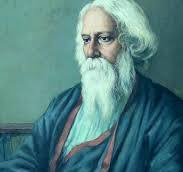

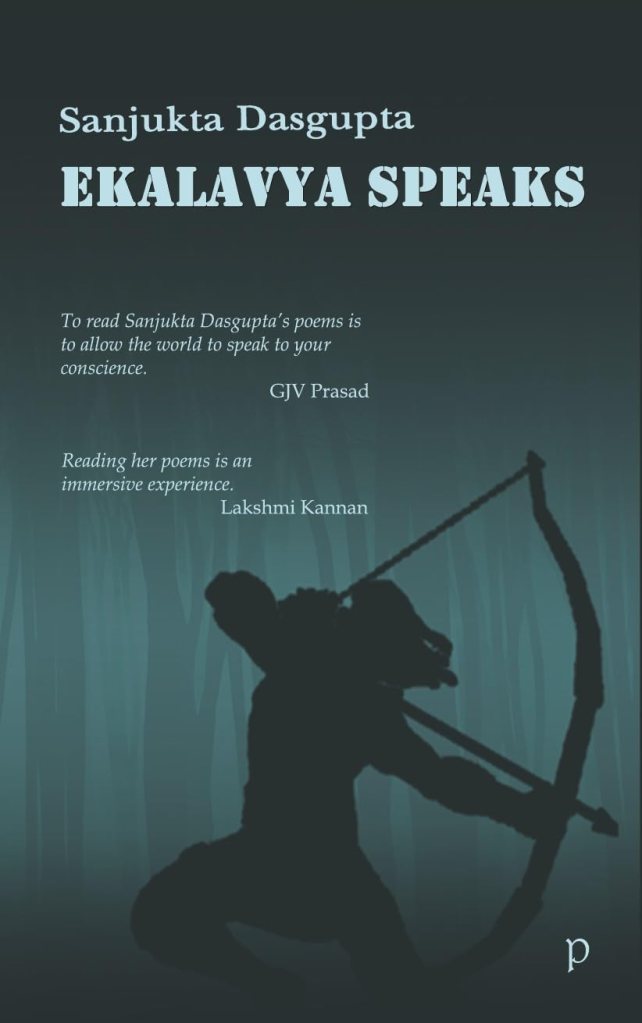


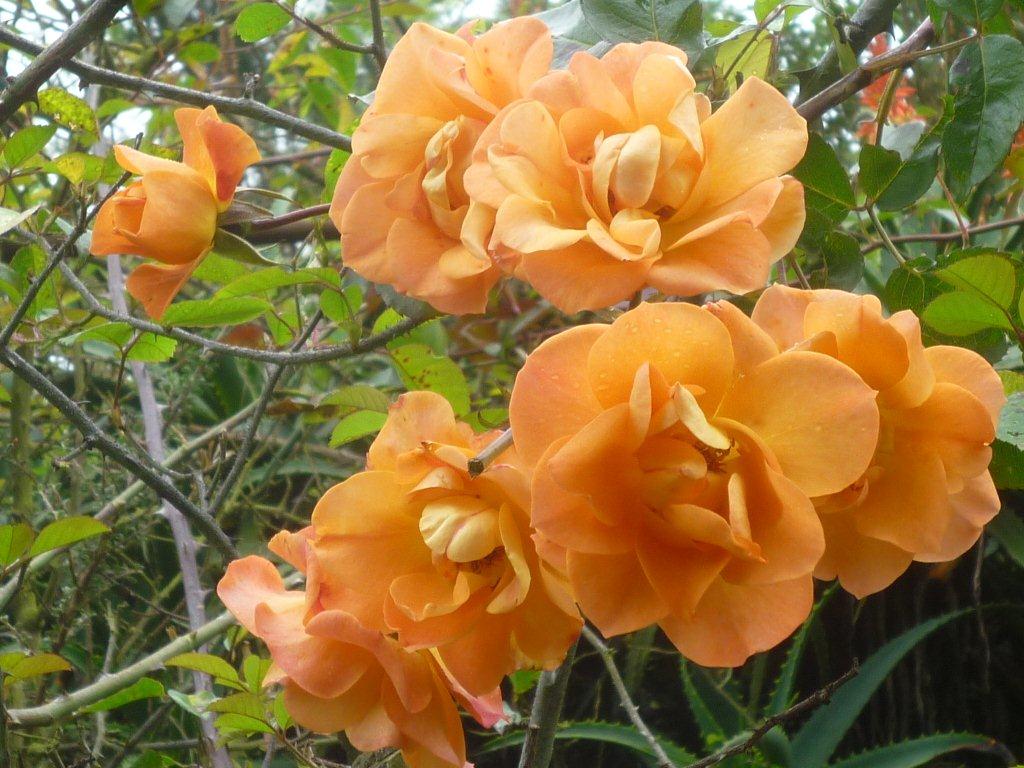
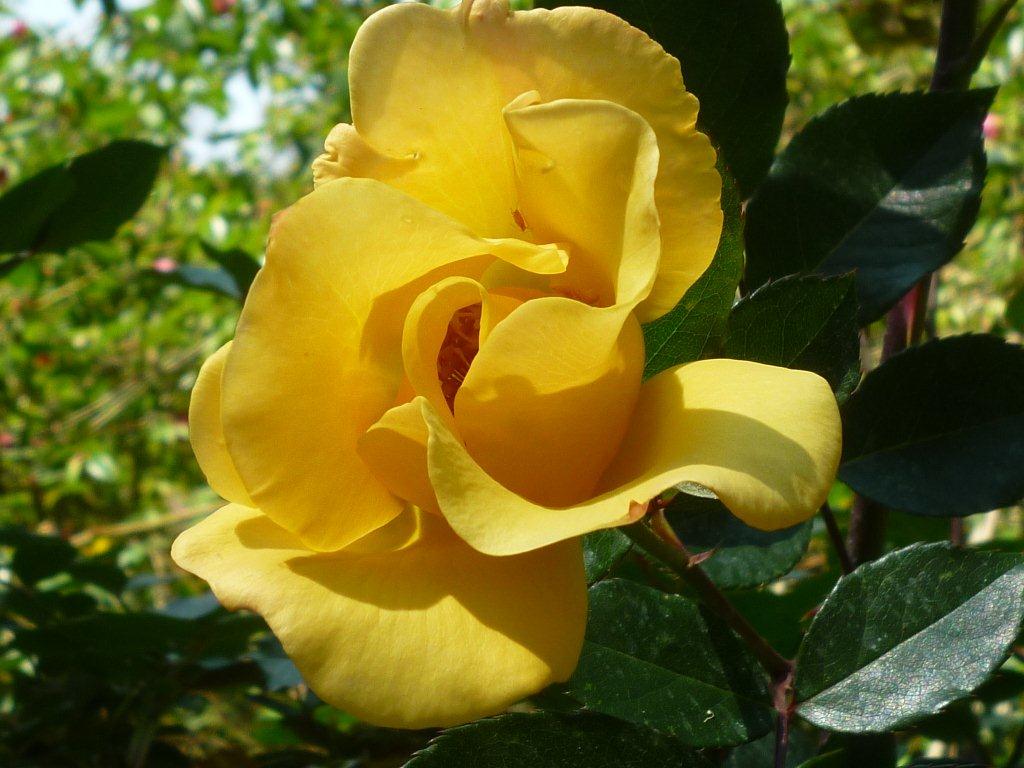


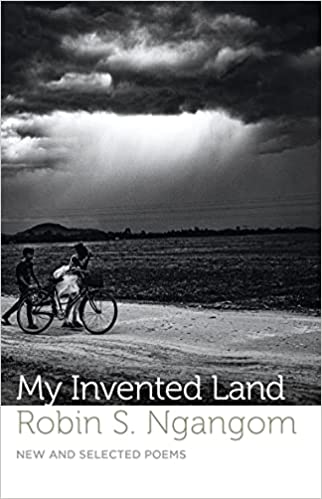
 Borderless