Categories
Essay

Where Eagles Soar

Narratives and photographs by Ravi Shankar

Langkawi

Most passengers got down from the bus at Alor Setar, Kedah, north Malaysia. Binaya, my travel companion, shifted to the front seat of the double decker and later I followed him. It was after eight thirty in the evening and the road had become narrower. After driving on the six lane E1 expressway for most of the day, the narrower road looked confining. Traffic had also reduced. We got an excellent driver’s eye view of the road. One of the benefits of a double decker is the opportunity that you can pretend to be the driver. Malaysia’s northern most state of Perlis seemed different from the larger ones to the South. It was around nine-thirty at night when we reached the Kuala Perlis bus terminal. It was a short walk to our hotel near the jetty.

The Deepavali holidays had just begun and the exodus from Kuala Lumpur to various hometowns was in full swing. The expressway was packed with cars and our drive north was a slow crawl. The InterCity bus service (a private bus operator) used a double decker for this trip though the lower deck had been stripped of seats and used only for luggage and cargo. The seats were comfortable and the drive smooth though extremely slow due to the traffic.

Next morning, we had a traditional Malay breakfast of nasi lemak (rice cooked in coconut milk), fried anchovies and kueh (traditional cakes) along with teh tarikh (boiled and frothed tea). Pouring tea from a great height from one mug to another is a traditional South Indian way of cooling the drink and generating a thick head of foam. Tea shops do this with an extravagant flourish. We walked around the jetty and waited for our midday ferry to Langkawi.

The process of boarding the ferry was smooth and organised. We were seated right at the front. Roro ferries that could carry cars were approaching Kuala Perlis from Langkawi. The sea was calm, and the islands of Langkawi appeared after half an hour. The ferry went round the island and eventually approached the town of Kuah. Kuah is the district headquarters of Langkawi. There is the iconic Langkwai eagle statue near the jetty. The jetty was modern, and we took a taxi to our hotel located near Cenang Beach (Pantai Cenang in Malay).

Cenang Beach

The main island of Langkawi is surprisingly large, and taxis are the main means of transport. Cenang beach is popular with travellers. We were staying at the Cenang Langkwai House near Cenang beach. The room was spacious and well-equipped. Considerable thought had gone into the arrangements, and we had a pleasant stay. The first day I had noodles with prawns for lunch, and I was pleasantly surprised by their freshness and taste. Sea food was plentiful and enjoyable. Binaya was not comfortable with sea fish and preferred freshwater delicacies. I could understand his perspective as I always preferred sea fish and found freshwater fishes not very much to my liking. We dined in a large restaurant that was a few minutes’ walk from our hotel. One evening I tried mussels (delicious) while on another occasion I had laksa (Laksa is a spicy noodle dish popular in Southeast Asia. Laksa consists of various types of noodles, most commonly thick rice noodles, with toppings such as chicken, prawn, or fish).

My good friends, Naveen and Sunil, had recommended that we take the island-hopping tour. We booked the tour for the next morning. Langkawi is also famous for duty-free shopping and Binaya wanted to purchase a suitcase. The prices, however, were not lower than those in KL. Eventually I ended up purchasing some excellent chocolates at the Cenang Mall. Our stay was made sweeter!

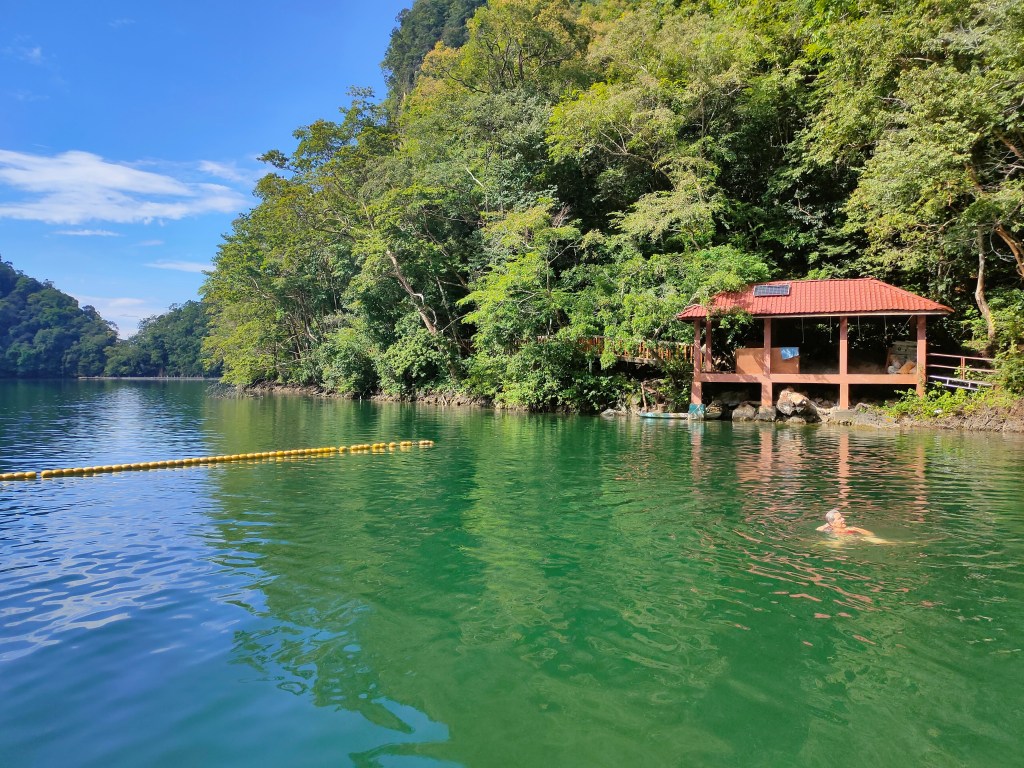
Early next morning we walked down to the main thoroughfare to have roti canai is a South Indian flatbread dish popular in Malaysia). We waited on the white sands of Cenang Beach for our transportation to the tour jetty. Each boat had about 24 passengers and was well organised. Everyone had to wear life jackets while on the boat. We had our photos taken and this was our introduction to this Langkawi custom. The tour lasts for around four hours and covers three main islands south of the main island. Our first stop was the Pulau Dayang Bunting, where we entered a geopark to hike up the hills to a lake. The trail was well maintained. Humidity was the main problem. After the mandatory photo, we continued to the lake. The tiles on the water, like elsewhere in Langkawi, were made of a floating material stays afloat on lakes and seas but depresses slightly under your weight. Both of us were quiet and we were missing the energy and dash of Sunil, our friend from Monash University, Malaysia.    

Island Hopping

We continued to Pulau Singa Besar to watch eagles feed from boats. Pulau means island in Malay though it brought images of the fragrant rice dish to our minds. We continued to Pulau Beras Basah and the sandy beaches and the turquoise waters took me back in time to one happy island, Aruba. There were colourful beach huts and paragliding was available for more adventurous souls. The ride back to the main island was short and we could see a docked cruise ship in the distance. Our photo had been converted into a souvenir (a small plate on which the photo was printed). We had lunch at our morning restaurant. Binaya had nasi goreng (fried rice) while I had the all-day breakfast. This was a good deal and consisted of two pieces of toast with butter, two fried eggs, a chicken sausage, and baked beans. Binaya tried out different geographical varieties of nasi goreng from Pattaya to Cina to USA.

After lunch we went to the Underwater World. The aquarium has themed sections like tropical rain forest, subantarctic climate, and marine life sections among others. The main attractions were the seal show and the penguins. The seal performed a variety of tasks and received a treat after completing each successful task. This is mentioned as the largest aquarium in Malaysia. The one at KL has a spectacular underwater tunnel and you can watch marine life swim by all around you.

Langkawi means reddish brown eagle in the Malay language and is believed to be the place of Garuda. The islands have been a part of the Kedah sultanate for over two millennia. The islands have a geological history going back to over 550 million years. Langkawi is thought to have been cursed for seven generations in the early 18th century by Mahsuri, a woman who was falsely accused of adultery and executed unjustly. Langkawi was occupied by the Kingdom of Siam and became a part of Malaysia after the Anglo-Siam treaty. The islands were a sleepy backwater and were developed into a major tourist destination by Dr Mahathir Mohamed.

The next morning, we travelled to the cable car toward the north of the island. The Deepavali holidays brought many to the island. The tourist infrastructure’s good, and we did not experience crowds and long waiting times. The Langkawi sky cab provides an aerial link from the Oriental Village at Teluk Burau to the peak of Gunung Machinchang, which is the location of the Langkawi Sky Bridge. The total length is 2.2 km, with a journey time from the base to the top of around 15 minutes. It was officially opened in 2003. We were comparing this to the Manakamana cable car in Nepal. This one is longer and steeper. The elevation between the base and the middle station is said to be the steepest in the world. There were delightful views of the bay and the surrounding islands as we moved slowly toward the top. The Skybridge is a major attraction and is among the longest free span and curved bridge in the world. There are a few glass sections that allow you to look down into the valley. The views were majestic, and the bridge is around 660m above sea level. There is also a sky glide option with a comfortable cabin style vehicle that carries visitors from the top station to the sky bridge.

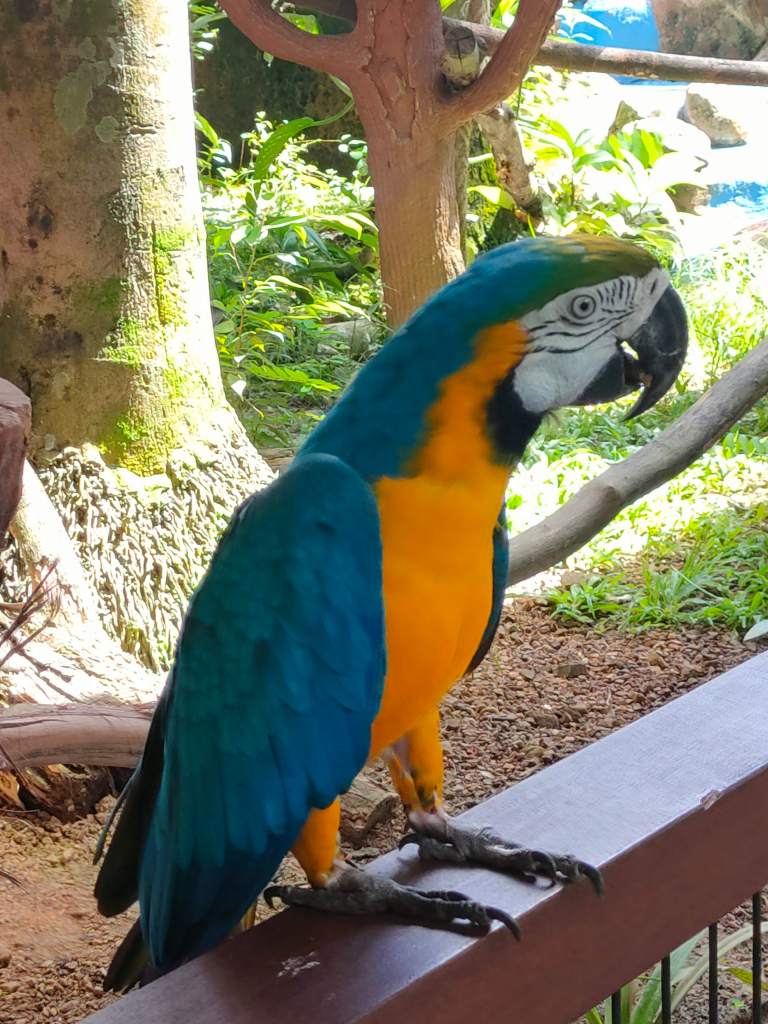
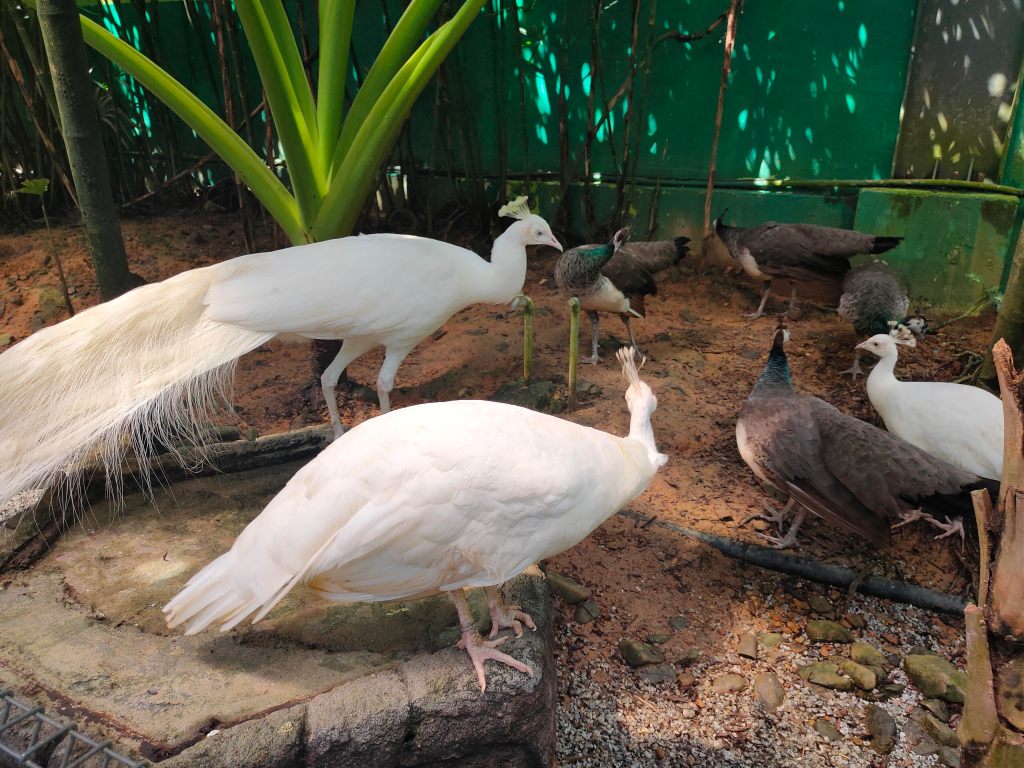
We took a taxi to the Langkawi Wildlife Park. Malaysia has some delightful animal parks and the one at Langkawi offers close encounters with animals. The animals are used to visitors and there are plenty of opportunities to touch, pet and feed them. Trained handlers were at hand. I was reminded of ‘Farm in the City’ at KL constructed around a similar theme. The covered walking path meanders through animal enclosures and the peafowls reminded me of the KL Bird Park. Feeding the small birds, the tortoises, deer, and the rabbits is a highlight of the visit. Like at other attractions there is a mandatory photo, and the exit is always through a duty-free shopping complex. That evening we had a spectacular thunderstorm. Being to the north the rains may be more seasonal at this tropical paradise.

The next morning, we had to depart back to routine life. We reached very early for our flight back to KL. We watched passengers boarding Air Asia, Malaysian Airlines and Scoot flights to Penang, KL and Singapore. Air Asia is a dominant player in the Southeast Asian market. The flights are cheap and usually fly on time. The aircrafts, however, may be older and the leg space is limited.

We had a pleasant break at one of Malaysia’s major tourist destinations. There are many attractions here that we are yet to experience. Time was limited and we did not want to rush ourselves from attraction to attraction during a leisurely break. We plan to return one day to the oldest land in Malaysia, 550 million years in the making as proudly proclaimed by the site Naturally Langkawi!

Dr. P Ravi Shankar is a faculty member at the IMU Centre for Education (ICE), International Medical University, Kuala Lumpur, Malaysia. He enjoys traveling and is a creative writer and photographer.

.

PLEASE NOTE: ARTICLES CAN ONLY BE REPRODUCED IN OTHER SITES WITH DUE ACKNOWLEDGEMENT TO BORDERLESS JOURNAL

Click here to access the Borderless anthology, Monalisa No Longer Smiles

Click here to access Monalisa No Longer Smiles on Kindle Amazon International

Categories
Essay

Cinema, Cinema, Cinema!

By Gayatri Devi

Is it appropriate to speak of transnational glee as a legitimate audience response to a film? If so, that might be a fitting label for the global spectator reaction to the blockbuster Indian film, Jailer, released worldwide on August 10, 2023.  The film whose OTT rights were purchased by Amazon Prime is streaming online while simultaneously playing to packed theatres in India, Sri Lanka, Malaysia, China, the Middle East, Australia, Canada, the US, the UK, France, and other countries. In its first month of theatrical release, Jailer brought in an impressive 300 crores in India alone with over 600 crores and counting (just shy of 22 million US dollars) as its worldwide earnings. Many Indian blockbuster films have had a worldwide high-performance index recently with the likes of Ponniyin Selvan, Pathaan, Bahubali etc. thriving on an exoticised glamour of an India of kings and queens and palaces and freedom fighters and medieval breakdance routines, a sort of mystified enchanting India of the travel brochure version for viewers both inside and outside India. Even a mediocre film like RRR had a localised transnational success in the United States during the academy award season as well.

Unlike these historical and revisionist costume dramas, Jailer is a full-on pop culture phenomenon, a movie of the moment, a tale of its time; it is as au courant as cellphones and police corruption. It is full of attitude, and packed chockful of allusions and homages to both Indian and western movies in what is essentially a fun romp. Shot mostly in sumptuous wide shots and rhythmic cuts, it establishes an onscreen India, dry and dusty, with industrial warehouses running forgery, guns and knives, roadside ice cream vendors, fly-by beheadings, and struggling gardens along with elementary school YouTube influencers.  Its real distinction is that people all over the world get it. But it is as Indian, specifically, it is as Tamil as a Tamil can be, and it puts a smile on the face of anyone anywhere who watches it. The international blockbuster with no pretensions to anything other than cinematic entertainment is back, thanks to Jailer and its vibrant young director Nelson Dilipkumar.

Jailer tells the story of two men, a hero and a villain, a retired police officer Tiger Muthuvel Pandian, the eponymous jailer, and a criminal mastermind Varman who runs an art forgery ring. They make counterfeit Indian statuary and sells them in the international market. Their encounter becomes complicated when the jailor’s son, a corrupt police officer, starts working for the villain, the male melodrama of father-son conflict being a favorite trope in Tamil cinema from older films like Thangappathakkam (The Golden Badge, 1974) that starred an earlier era’s superstar Shivaji Ganesan. Jailer belongs to the same pedigree of male melodramatic films. The hero is played by the Tamil superstar Rajnikanth and the villain, the psychopathic leader of the forgers by Vinayakan from the nearby Malayalam film industry in Kerala.

Both Rajnikanth and Vinayakan belong to the highly successful world of mainstream, commercial Indian cinema with strong populist reception while also maintaining a certain level of middle-class entertainment sophistication. When compared to Rajnikanth, Vinayakan is relatively a newcomer, but one who has very quickly claimed his own space in Mollywood, Kerala’s film industry that produces Malayalam language-based films.

Vinayakan’s breakout performance as an underworld operative, an executioner and strongman, a complex character who is right, wrong and everything in between in Kammatti Padam[1] (2016) earned him a Kerala State Film Award for Best Actor.  Jailer sees him as a criminal psychopath with unpredictable ticks like instructing his lackeys to dance for him, drowning his enemies in big vats of sulphuric acid, delivering his Tamil-Malayalam pidgin with menacing comic timing etc.  The overall excesses of his character have the potential to turn him into a stereotypical villain, especially since the sulphuric acid dunking trope has a colourful cinematic legacy in Indian popular culture. (The “sulphuric acid joke” is an instantly recognisable film joke in Indian pop culture attributed to the persona of an outlandish villain played by the erstwhile Bollywood star Ajit who is credited with asking his henchman Raabert (Hindi pronunciation of Robert) the following purely apocryphal lines: “Raabert, is haraami ko liquid oxygen mein dal do; liquid ise jeene nahin dega, oxygen ise marna nahin dega”  (Robert, drown him in Liquid Oxygen; the Liquid won’t let him live, and the Oxygen won’t let him die!”). Jailer abounds in many such recognisable “quotation marks” throughout the film, including an ear-slicing scene, an evident homage to Quentin Tarantino’s Reservoir Dogs(1992), and “Stuck in the Middle with You”. These artfully placed allusions create an enjoyable self-reflexive layer in the film where Jailer talks to film materials that have provided evident inspiration. The self-conscious scripting and direction, and the sheer enjoyment and abandonment with which Vinayakan embraces the deranged psyche of Varman makes him a bonafide villain and not a caricature.

Rajnikanth who plays the title role of the jailer is the 72-year-old veteran superstar of Tamil cinema known to his massive adoring fan base as thalaivar (“Leader/Chief” in Tamil). Rajanikanth started his film career with the 1975 romantic drama Apoorva Ragangal (Rare Melodies), a far cry from the action crime thriller genre which would soon become synonymous with his name in the industry. With his trademark moustache, lopsided pursed lips, thick mop of straight black hair swiped across the forehead, lean frame, and long lanky legs, Rajnikanth from the 80s onwards played the righteous underdog on both sides of the law who took on the snobbish elite as well as the violent underworld players and won. He played orphans, rickshaw drivers, underworld consigliere, police officer, milkman, engineer, writer, grandfather, father, son, brother, husband, lover – he played the full spectrum of masculine roles in mainstream Indian cinema.

There is an underacknowledged colour line in Indian films where the relatively whiter-complexioned actors and actresses are considered stardom material. Rajnikanth with his dark-complexion and Midas touch at the box office demolished this industry practice and became the mirror for the ordinary darker Dravidian face on the Indian silver screen.  Jailer sees him aged but fuller and lighter than his earlier years, though what has not changed are his instantly recognisable dance moves; underworld or the penthouse, underdog or the aggressor, Rajnikanth’s dance moves set the tone in his films. The standing jogs, the high kicks, the hip shake, the robotic arm movements and hand props like dark glasses and hand towels showed a new definition of “cool” to his fans.  His tentative dance performance in Jailer is reminiscent of another accomplished dancer who exhibits a pretend stage fright; John Travolta in Pulp Fiction dancing with Uma Thurman to Chuck Berry’s “You Never Can Tell.”

Other significant performances include Vasanth Ravi as the jailor’s corrupt and clueless son, Ramya Krishnan as the jailer’s visibly irritated wife, along with hilarious cameos by Malayalam superstar, Mohanlal, Bollywood star, Jackie Shroff, and Kannada star, Shiva Rajkumar — all of them act as outlaws who help the jailer in his fight against Varman. An equally hilarious subplot involves a love triangle between the dancing beauty Kamna, her lecherous costar “Blast” Mohan, and her lover, the timid film director.

The film clocks an impressive two hours and fifty minutes on the strength of these men and their vivacious performances, smart, sharp, and funny dialogue, over-the-top violence, and a sizzling cameo dance sequence, popularly known in Indian film lingo as an “item number” by the alluring Bollywood actress Tamannah. The single “Kaavaala[2] composed by the music director, Anirudh, is a proper earworm turned worldwide viral hit with the young and the old alike shaking their hips to its mood altering percussive rhythm, the latest being a Japanese version of the song. Perhaps as a testament to the song’s instant infectious popularity, the original dance features dancers of multiple ethnicities, a global potpourri as it were, with a set reminiscent of the production design of Raiders of the Lost Ark[3] (1981) as well as a flute intro that calls out to Andean musicians. If any song can bring the world together, “Kaavaala” can.

Indeed, the multiple references to Quentin Tarantino, Reservoir Dogs and Pulp Fiction are unavoidable while watching Jailer. As with Tarantino, director Nelson (as he is popularly known) too operates inside a similar vision of cinematic storytelling.

The proper subject of Jailer is cinema, cinemas of India, cinemas of the world. Tamil melodramas of the 1970s, the middle class Tamil comedies of the eighties and the nineties, Bollywood action flicks, Hollywood adventure films, the black  crime comedies of Quentin Tarantino, the epic blood splatter of Robert Rodriguez, the bumbling and menacing sociopathic capers of Guy Ritchie films  – Jailer tips its hat to all of these crime-as-entertainment influences through its multilayered dense scripting, the large cast of characters, and the no holds barred display of gory violence. It is a refreshingly confident film without any false notes though some of the repeated explosion scenes could be tightened.

Jailer tells an old story familiar to the Tamil audience, a story as old as Shivaji Ganesan in Thangappathakkam(1974)—the upright police officer father and the fallen corrupt son. The film chugs through its dense thicket of plot and counterplot towards an inevitable moral resolution to this impasse. This is where the power of the star system in Indian cinema, a status equal to that of gods, plays its trump card. With Rajnikanth playing the jailer father there can be only one moral resolution, son, or no son. It is a formula that never fails, and speaks of a justice perhaps unique to cinema.

.

[1]  Kammatti Paadam — is the name of a slum in Kochi, Kerala. It is a place name. Kammatti is a proper noun without any traceable etymology.  Paadam means “field” in Malayalam. “The Slum Fields” of “The Slum” could be an appropriate translation.

[2] Kaavaalaya — A Telugu phrase, “I Want You, Man”

[3] Set in 1936

.

Gayatri Devi is a teacher, translator and writer living and working in Savannah, Georgia.

.

PLEASE NOTE: ARTICLES CAN ONLY BE REPRODUCED IN OTHER SITES WITH DUE ACKNOWLEDGEMENT TO BORDERLESS JOURNAL

Click here to access the Borderless anthology, Monalisa No Longer Smiles

Click here to access Monalisa No Longer Smiles on Kindle Amazon International

Categories
Essay

A City for Kings

Narratives and photographs by P Ravi Shankar*1

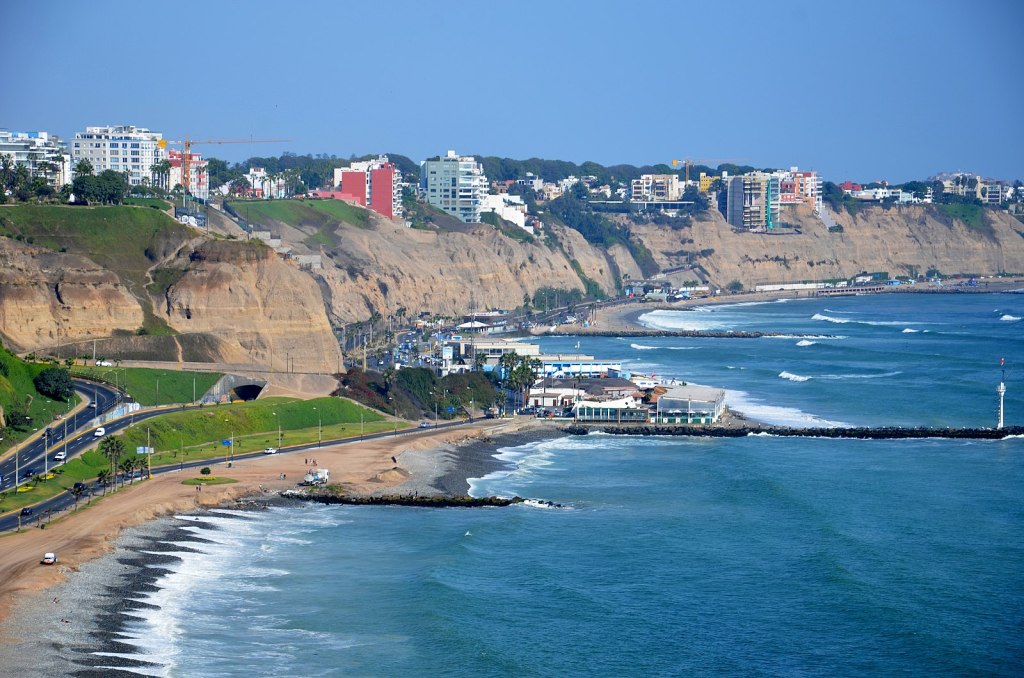
Lima. Courtesy: Creative Commons

The rich golden-brown skin peeled off easily to expose the pink flesh underneath. The ‘frita’ was a perfect symphony of flavours with every note being in the right place. I enjoyed the entire fish including the bones and the head. I was having a ‘trucha frita’ (fried trout) at a restaurant in Magdalena del Mar, Lima, Peru. The fish was large and had been fried without much oil. Peru is known for its food, and I enjoyed my lunch (almuerzo) throughout my visit. Lunch is the major Peruvian meal. There were special lunch menus and for around 8 nuevo soles (around 2 US dollars and fifty cents). I got an entrada (usually a soup or a salad) and a segundo (seconds with a big variety of dishes) with a drink and often a dessert.

I landed at Lima’s Jorge Chavez International Airport late at night late in September. The airport is not very large by international standards but functions quite well. Taxi fares from the airport are on the higher side. I had taxi-hailing apps on my phone, but they did not seem to work at the airport. Lima is a city of around 11 to 12 million people. About a third of Peru’s population lives in the capital. There has been a recent influx of Venezuelan refugees to the city. The city is crowded but most of it is well-planned with squares, roundabouts, parks, and sidewalks.

I liked Lima. For a large city, it is not very polluted though some areas are dusty. The city is usually covered by haze or fog till late in the morning. The weather is usually cloudy though it rarely rains. About 40% of Peru’s population lives in the arid coastal region (la Costa). You see a lot of cambios or shops where you can change money. You also see a lot of restaurants. Lima is the third largest city in Latin America and recently has gained a reputation for its food. Peru has a lot of Japanese and Chinese immigrants (most of whom arrived at the end of the nineteenth and beginning of the twentieth century) and may be the most ‘Asian’ country in Latin America. Many Chinese run Peruvian Chinese restaurants called ‘chifas’.

Lima gained in importance during the Spanish rule and was the capital of the viceroyalty of Peru which included parts of modern-day Ecuador, Colombia, Bolivia, Chile, and Argentina. The city became very wealthy. During my different visits, I stayed in three different parts of the city — Pueblo Libre (Free town), Magdalena del Mar, and Jesus Maria. Lima is divided into several municipalities.

In Pueblo Libre, I stayed near the Plaza de la Bandera (Plaza of the Flag), a huge roundabout. The archeological ruins of Mateo Salado were nearby. Peruvians take great pride in their rich heritage. Following the Spanish conquest, the pre-Hispanic religions and cultures were violently suppressed by the Spaniards. They do continue to influence modern Peru in several ways but there is a stark discontinuity.

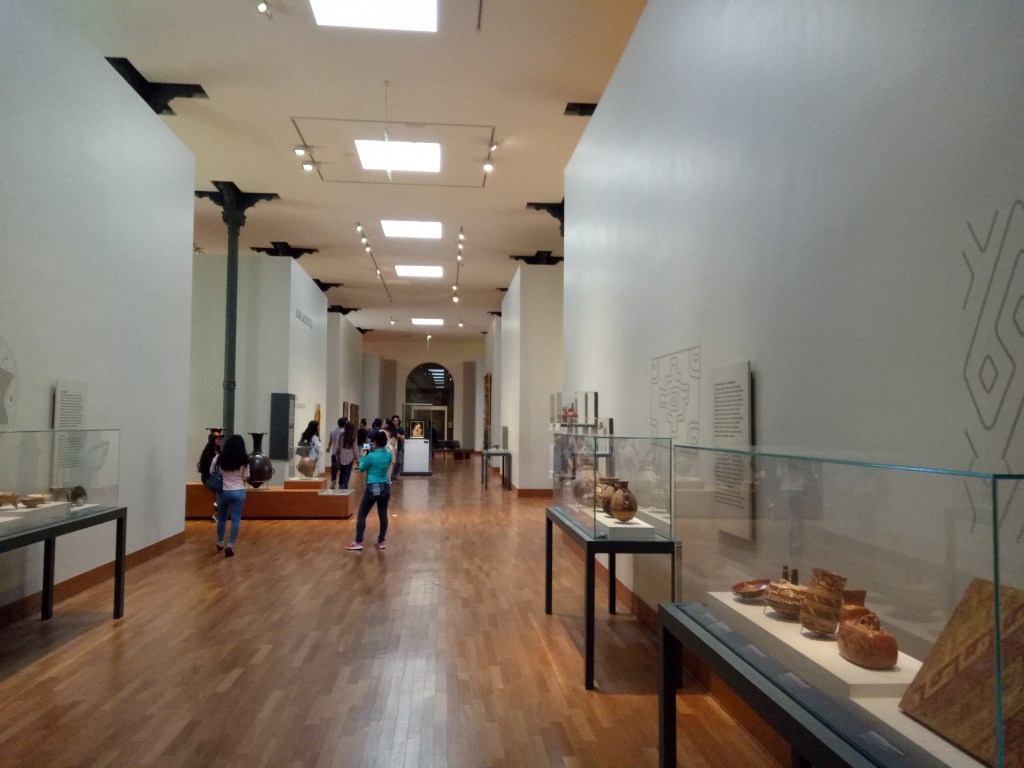
The Larco Museum is one of the many fine museums in the city. The museum has a rich collection of pre-Columbian art, is well-maintained, and is very appealing to the senses. Many civilisations took root on the arid coast. The Paracas and Nazca civilisations were prominent. The population had to learn to harness and use water from underground sources. The Anthropology Museum was under renovation, and I could only see the section commemorating the life of the liberator, Simon Bolivar. Bolivar is very popular in South America with several streets and buildings named after him. There is even a detergent named after him.

The Parque de la Leyendas (Park of Legends) is the zoo. The zoo is huge and is structured according to the three regions of Peru, the coast (costa), the mountains (sierra), and the jungle (selva). The Amazon rainforest constitutes the largest part of the country by land area. The largest city, Iquitos, can be reached only by boat or by air. The zoo also has a huge garden with plants from all over the world and a huge archeological site.

Plaza de Armas

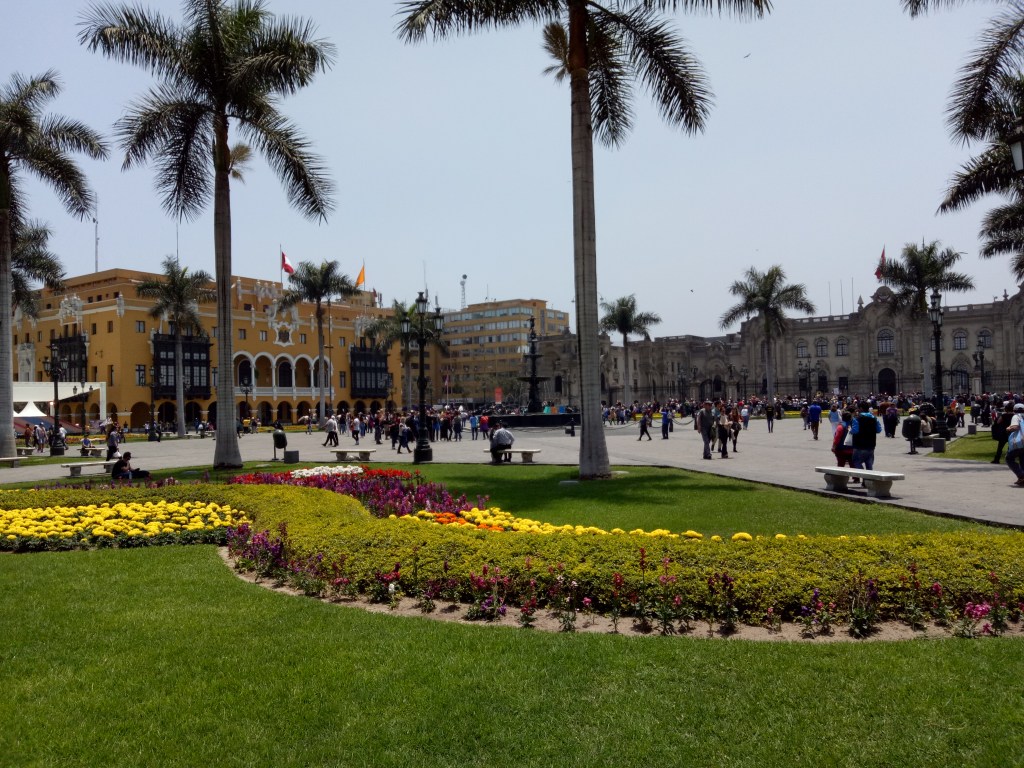
Plaza de Armas de Lima (Plaza Mayor lof Lima) is the main square of the city surrounded by fine Spanish colonial buildings. Every town in Peru has a Plaza de Armas. Town planning is mostly good with numbered sectors and streets within the city. I was fortunate to see the changing of the guard at the Presidential palace which takes place around noon. What a show of pomp, colour, and pageantry on horseback! The synchronisation was perfect. The cathedral of Lima, the municipal palace, and the palace of the Union are major historical buildings.

Changing of Guards

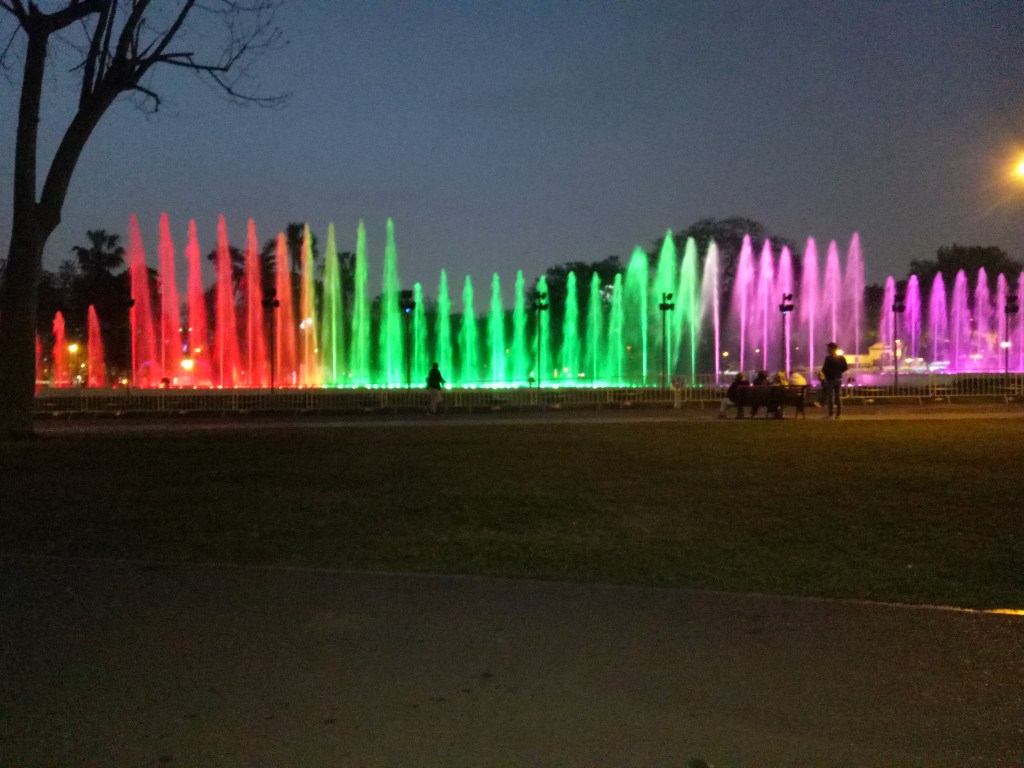
I had heard and read a lot about one of the more recent attractions of Lima – the magical water fountain. The Circuito Magico de Agua creates magic with water. I reached the place mainly known for the spectacular fountains around 5 p.m. You can walk underneath a tunnel of water. As the sun began to set the lights were turned on. The lights at the main fountain could reproduce an extravagant palette of colors and different scenes were created in tune with the music. There was a light show at 7.15 pm. Crowds began to gather around the main fountain. The light and sound show using lasers and lights was spectacular and provided a brief introduction to the rich tapestry of Peru.     

Magical Fountains

Chicha morada is a drink from the Andes region and is made from purple corn. Rich in antioxidants, the drink is refreshing and healthy. Chicha morada is smooth and beautifully complements various Peruvian dishes. The alcoholic variety plays an important role in different religious and other ceremonies from ancient times to the present day. There is a legend about the corn (mama jora, mother corn) plant from which these drinks are derived.

The legend about the chicha[1] is especially popular in Cuzco, the ancient capital of the Inca empire, and also in other cities in Peru. In ancient times the God Viracocha (the creator) saw people working hard. He wanted to help them, so he came down from Hanaq Pacha (the world above) to place in a single plant the powers he wanted to give humans.  He chose a weak plant that struggled to grow amidst spiny weeds. To give his power to this plant, Viracocha took from his bag a sliver of huaranguay wood, a puma hair, a condor feather, and the fox’s brain.  He put them together and placed them on the small plant.

The city that treats visitors like kings with its sumptuous meals and friendliness, creates mystery with magical legends, like the one about Viracocha. Perhaps, that is why a sense of lingering longing and gratitude fills my being as I think of the colourful capital of that distant country on the other side of the globe.

Acknowledgment: Senor Fernando needs to be thanked for his hospitality and help during my visit — Dr P Ravi Shankar

[1] The legend is mentioned in a blog article by WC Morveli titled ‘Drink chicha to become wiser than a fox’ (https://cuzcoeats.com/drink-chicha-wiser-fox/)

  1. Unless otherwise stated ↩︎

Dr. P Ravi Shankar is a faculty member at the IMU Centre for Education (ICE), International Medical University, Kuala Lumpur, Malaysia. He enjoys traveling and is a creative writer and photographer.

.

PLEASE NOTE: ARTICLES CAN ONLY BE REPRODUCED IN OTHER SITES WITH DUE ACKNOWLEDGEMENT TO BORDERLESS JOURNAL

Click here to access the Borderless anthology, Monalisa No Longer Smiles

Click here to access Monalisa No Longer Smiles on Kindle Amazon International
Categories
Review

The Story of an Incredible ‘Lightman’

Book Review by Bhaskar Parichha

Title: The Wizard of Festival Lighting – The Incredible Story of Srid

Author: Samragngi Roy

Publisher: Speaking Tiger Books

There are two things that make this book interesting. Firstly, it is the story of a man who decorated lights during festivals and got worldwide fame for what he did. Secondly, the author of the biography is a young writer. The Wizard of Festival Lighting: The Incredible Story of Srid is written by the protagonist’s granddaughter, Samragngi Roy, who published her debut novel, a young adult fiction in 2017.

Nevertheless, what makes this book stand out most is its unconventional theme. History is presented innovatively in this 352-page book, and folklore is at the center. Just like Durga puja can’t be mentioned without Kolkata, Jagatdhatri puja can’t be mentioned without lighting. This isn’t just West Bengal’s festival history, but India’s. Here’s how one man conquered the world through his vision. Documents like this are historical.

The blurb reads: “Eleven year old Sridhar was fascinated by light. Growing up among a dozen siblings in a mud cottage in Chandannagar in West Bengal, he longed to create something beautiful. A school dropout who never studied beyond Class Eight, he taught himself about lights and electricity by doing odd jobs at an electrician’s shop—an act that earned him a severe beating from his father. In spite of his family’s opposition, he grew up to become a celebrated light artist and inventor, setting new standards for festival lighting and pioneering new techniques.”

Recalls Sridhar “In 1968, when I was hired by the Bidyalankar Puja Committee for the purpose of providing street lighting, I had volunteered to additionally decorate the banks of our old pond too for three primary reasons. Number one, I had grown up next to it. Number two, it had been the source of some of our most sumptuous meals in childhood. And number three, it had been the setting for several of my childish shenanigans.

“However, when the lights glowed around the pond after sundown, the space enclosed by the banks of the pond looked extremely empty. But of course, I couldn’t have done anything about it because the enclosed space contained nothing but neck-deep water. That’s when I first contemplated the possibility of making lights glow under water and laughed at myself for being so impractical.”

The narrative continues: “So, I closed my eyes, muttered a quick prayer and used my stick to smash a glowing lamp. Then I waited for the impact. There was none that I could feel. My muscles, which had been tense and stiff all along, slowly relaxed. Parashuram and I looked at each other, and my gentle nod was met with a happy little jig that he performed on the steps of the ghat, bursting with excitement. But then the idea stuck with me for a while and what had seemed impossible in the evening had started to seem like an idea worth giving a shot by the night. I wasn’t even sure if the idea was feasible since it was unprecedented.”

Sridhar Das’s work received great acclaim throughout the world. His work has been exhibited in the Festival of India in Russia, Ireland, Los Angeles and Malaysia. The cover of the book is based on his exhibit in the Thames Festival in London — his famous illuminated peacock boat in three dimensions.

As a result of his fame and commitment to work, Sridhar, along with those closest to him, suffered from a variety of issues. His wife had to combat illness and loneliness to care for the family, leaving her husband free to forge his own path. His daughter grew up with her famous father largely absent. The telling encapsulates the true story of his meteoric rise, as well as his family with an unflinching exploration of what his meteoric rise cost him. 

The story, poignantly related by his granddaughter, is both a subtle portrait of a complex individual and an affectionate tribute to a grandfather loved by his grandchildren. It takes readers back to vanished times, and introduces them to a man who pursued his dreams and created his own field through sheer determination. 

.

Bhaskar Parichha is a journalist and author of UnbiasedNo Strings Attached: Writings on Odisha and Biju Patnaik – A Political Biography. He lives in Bhubaneswar and writes bilingually. Besides writing for newspapers, he also reviews books on various media platforms.

.

PLEASE NOTE: ARTICLES CAN ONLY BE REPRODUCED IN OTHER SITES WITH DUE ACKNOWLEDGEMENT TO BORDERLESS JOURNAL

Click here to access the Borderless anthology, Monalisa No Longer Smiles

Click here to access Monalisa No Longer Smiles on Kindle Amazon International

Categories
Narratives of Humankind

Looking for a Refuge

Art by Sohana Manzoor

Our population crossed the 8 billion mark in November, 2022. As we move towards trying to hunt for alternative domiciles for our ever-expanding population, even in outer space, we still have to take into account  the increased movement of people across the Earth in search of alternative homes driven by external circumstances or by personal needs.

Some have lost their homes and lands to war, some to climate emergencies and some moved out out of choice. Here we have collected narratives of past and present migrations, emphasising the fluidity of borders, despite the lines drawn artificially by manmade constructs. In an earlier interview, Anthony Sattin talks of nomadic migrations and the concept of asabiyya, or brotherhood, which tied humans to ideas and ideals instead of a piece of land mooted in Arabia by Ibn Khaldun in the fourteenth century. Has the time come to revive this concept with conflicts and the climate crises becoming real? As weapons, fire and water affect our habitats, one wonders if reverting to the concept of nomadic existence is not becoming a necessity… This small collection of writings will hopefully highlight the concerns.

Migrants

In Migrating to Myself from Kolkata to Singapore, Asad Latif explores selfhood in context of diverse geographies. Click here to read.

In How I Wound Up in Japan, Suzanne Kamata gives her story as an immigrant. Click here to read.

In Belacan, Farouk Gulsara shares a narrative based on the life of a migrant in 1950s Malaysia. Click here to read.

Ujjal Dosanjh, former Minister from Canada and former Premier of British Columbia, talks of his own journey and learning as he migrated out of India to Canada. Click here to read.

Migrant poems by Malachi Edwin Vethamani. Click here to read. 

Refugees

In Mister, They’re Coming Anyway Timothy Jay Smith writes on the refugee crisis in Lesbos Island, Greece, in 2016 with photographs by Michael Honegger. Click here to read.

In A Voice from Kharkiv: A Refugee in her Own Country, Lesya Bakun relates her journey out of Ukraine as a refugee and the need for the resistance in 2022. Click here to read.

An excerpt from Ramy Al-Asheq’s Ever Since I Did Not Die, translated from Arabic by Isis Nusair, edited by Levi Thompson. The author was born in a refugee camp. Click here to read.

Refugee in my Own Country/ I am Ukraine… Poetry by Lesya Bakun. Click here to read.

Bringing Along their Homeland, a poem by Abdul Jamil Urfi, for refugees from the India- Pakistan Partition. Click here to read. 

In 1947, a biographical poem by Masha Hassan, set during the India-Pakistan Partition. Click here to read. 

The Grave is Wide, poems on refugees by Michael R Burch. Click here to read. 

Art by Sohana Manzoor

We are very grateful to our contributors who shared these unique narratives with us.

Categories
Poetry

Migrant Poems

By Malachi Edwin Vethamani

Courtesy: Creative Commons
A HABITATION OF ONE’S OWN 

(i)

His journey began
with a seed of hope,
an unwavering resolute
to seek new opportunities.

                Tossed on a sea
caught between two land masses,
a small soul
lurching towards a dark land.

Greeted on land by few, familiar faces 
his hungry belly needed feeding
and work to provide a roof,
shelter from sun and rain. 

                     *
Daytime sweat saving dollars
to return home one day
to buy land
build a house, raise a family.

The journey home,
constantly deferred,
soon blurs
familiar family faces.

News from home
arrives with newcomers
few and far between.
Scant and sketchy.

Life takes a new turn
and begins to take root
in the once harsh 
friendless, orphaned land.

               *
The years pass on,
the world encroaches
upon little lives with
deaths and disappearances.

A sudden change of masters
abandoned by the white man 
terrorised by Japanese swords, 
heads on stakes.

Survived to hear shouts of “Merdeka”! 
gave little cause for rejoicing 
received a red identity card,
labelling him a foreigner.

(ii)

His labour,
faith in his God,
hope for his children
remain resolute and unyielding.

The change of masters
has meant little for his lot,
still second-class citizens
meted out meagre morsels. 

The land that had drawn
the father now pushes
his children away, 
to seek new shores.

They now depart
to distant lands,
leaving father and mother
like their father once had.

(iii)

Tirunelveli
Madras
Penang
Kuala Lumpur
Malaya
Malaysia

All the places
my father passed through,
then resolutely remained
refusing to return.

Now he lies in Cheras, 
at final rest, all labours done
in Malaysian soil
with a blue identity card.

(First published in  ‘Life Happens’, Petaling Jaya, Maya Press, 2018)

NEW ARRIVALS 

You now arrive 
on wings of hope
small bands of brothers
leaving behind kinfolk.
Budding youth
soon to be savaged
in this land.

Like you,
my father and uncles
once made that journey.
Different routes, 
not similar conditions.
Same hopes, not of wealth
but to mete out 
a life for themselves.

Decisions made to leave
home and village
on a single-way passage
unclear destinations.

Their long journey
many decades ago
tossed and turned
on unkindly seas.

The sight of land
through sea-sick eyes
gave little comfort,
knowing that another journey
was set to begin
with no preparation
on touching land -
the promised Malaya.

Now, you arrive
over land and by air,
fatigued and clueless.
A piece of paper
in your hand
holding hope and despair
Like so many before you. 


(First published in  ‘Life Happens’, Petaling Jaya, Maya Press, 2018)

THE OTHER CHILD

As the candles on his thirteenth 
birthday cake were blown out,
so ended a dear dream. 

Unlike his freshly minted teenage friends 
he is labelled different. 
Losing the camaraderie of childhood friends,
set aside as a refugee. 
A word he would hear more and more.  

He too was born in this land.
Sang Negaraku* every school week,
the last six years. 
Now those doors he yearned for
are closed to him. 

His parents are silent. 
They have no answers.
They say: Be patient. 
God will answer our prayers. 

I have not changed overnight. 
But they see me different now.
My sun-filled school days now grey.
I now wait for my father 
with news of a new school,
among others sharing a similar fate
born in this land 
but still a refugee. 


*Malaysian national anthem

(First published in Rambutan Kisses, 2022)

Malachi Edwin Vethamani is a poet, writer, editor, critic, bibliographer and Emeritus Professor at University of Nottingham. His publications include: Rambutan Kisses (2022), The Seven O’clock Tree (2022) and Love and Loss (2022), Coitus Interruptus and Other Stories (2018), Life Happens (2017) and Complicated Lives (2016). His individual poems have appeared in several literary journals and anthologies. His edited four volumes of Malaysian poetry in English. The Malaysian Publishers Association awarded Malchin Testament: Malaysian Poems the National Book Award 2020 for the English Language category. His collection of poems Complicated Lives and his edited volume of poems Malaysian Millennial Voices were finalists for the National Book Award 2022 for the English Language category.

PLEASE NOTE: ARTICLES CAN ONLY BE REPRODUCED IN OTHER SITES WITH DUE ACKNOWLEDGEMENT TO BORDERLESS JOURNAL. 

Click here to access the Borderless anthology, Monalisa No Longer Smiles

Click here to access Monalisa No Longer Smiles on Kindle Amazon International

Categories
Poetry

Birds in Flight

By A Jessie Michael

BIRDS IN FLIGHT   

Birds in flight
Wings spread wide and tight
Lift off
In perfect formation
Inbuilt navigation
Flying to food and shelter
Unperturbed by storming weather

Men in flight
Crammed in rickety open boats
Set off
Flotsam of a nation
Escaping damnation
No leader, no navigator
No telling their fate in water

They look up to the sky
See birds in flight
Gliding high
In perfect formation
Inbuilt navigation
Out in front a leader
Heading to food and shelter

HAVE WE?  HAVE WE?

Have we learnt another language
to challenge our little brains?
Have we walked in others’ shoes 
and learnt of their pain?
Have we shared with them a cup of joy
and freely drunk of theirs too?
Have we sat at their table and
broken bread with them?
Have we stood beside the others 
and thought them just the same?
Have we risen above ancient anger,
forgiven our fellow men,
thought them worthy of our compassion
and stretched out our hands?
Have we emptied the bitter cup
that diminishes all men?

Our colours are but geography,
our religions but pathways 
to the same universal One.
So who is to say who is better?
It is always our own buried fear,
that we pray at the alter,
then curse the man on the street
just because he looks different 
and is from another land;
just because we will not say
he is really homo deus.


A. Jessie Michael is a retired Associate Professor of English from Malaysia. She has written short stories for online journals, local magazines and newspapers. She has published an anthology of short stories Snapshots, with two other writers and most recently her own anthology The Madman and Other Stories (2016).

PLEASE NOTE: ARTICLES CAN ONLY BE REPRODUCED IN OTHER SITES WITH DUE ACKNOWLEDGEMENT TO BORDERLESS JOURNAL

Click here to access the Borderless anthology, Monalisa No Longer Smiles

Click here to access Monalisa No Longer Smiles on Kindle Amazon International

Categories
Stories

The Coin

By Khayma Balakrishnan

Courtesy: Creative Commons

“What if you ran away?” Shyam suggested when she heard my story and saw the bruises on my hands. I looked at her between my tears. “Where?” I sniffled. Shyam stared at me blankly. She did not have an answer to that question.  I won’t lie. I had thought about running away many times. But I was seventeen and SPM[1] was just a few months away. If I did run away, what would happen to my future? Sometimes I wished that I wasn’t a person who thought so much. Why can’t I be like one of those girls who couldn’t care less? Why couldn’t I take risks? I tucked my hair behind my ears, a nervous habit of mine and looked down at my book, attempting to solve a complicated Additional Mathematics problem. It seemed to be as complicated as my life. I closed my eyes and looked out of the classroom. I wished to be anywhere at all, except home.

After school, I walked home, dreading each step, hoping time would slow down. I walked by the big red mansion, wondering if it really was haunted? As I turned into the junction, I wondered if the aunty and uncle in the corner lot were really abandoned by their sons? Why were all the swings broken in the playground? How many cars were there exactly in the Chinese house? Where did the vegetable seller live? As I came closer to home, my heartbeat quickened. I tucked my hair behind my ears with shaky fingers. Why was the walk home so short?

It was another day of beatings, curses, and a night of sleepless slumber. My mother screamed at me that she wished I had never been born. My aunt slapped me across the face for daring to answer her back. My grandfather spat his tobacco on my face while calling me worthless. As I helped shower my grandmother and changed her clothes, she scratched me, adding on to the existing bruises. After five years, I had gotten used to it. I couldn’t wait to be back at school the next day so I could at least fit in a nap.

As I sat staring at my homework that night, I wondered if things could have been different. What if I had not run away with my mother from my father’s home. He was a drunk who hit us, but back then, my mother loved me. She would hug me and kiss the pain away. I agreed to leave that hell, not knowing my mother would then become the demon. She kept telling me that I ruined her life, that she was stuck in a horrible marriage because of me. Often, I was confused. Was it really my fault? I never asked her to stay. Why was I constantly blamed for her choices?

As I strolled to school the next day, I wondered if Shyam would be willing to listen about what happened the previous day at home. Afterall, it must sound the same to her.  But before I could tell her, she came running to my table at the back of the class. “Don’t go to the canteen during recess, come to the Upper Six classroom, Steph has something to show you.” Before I could ask her more, Puan Vijaya entered the class. Shyam walked back to her table. I glanced at her, and she winked at me.

Selamat Pagi, cikgu,[2]we droned. History was fun. Normally, I would be interested. Now, I was curious. What could Steph have? Was it a new book? She had many of those naughty romances that were forbidden reads for us. Or was it a new picture she had drawn? She often drew pictures of men and women doing… that thing. I couldn’t focus as Puan Vijaya read about Malayan Union from the history textbook. Steph, Shyam and I met in Form Three. They have been listening to my stories ever since, offering a shoulder, often being angry on my behalf and asking me to run away from my home. But I was too much of a coward to do that.

The next two periods were biology and Bahasa Melayu[3], which crawled with an unbearable slowness. It was as if time was truly testing me. I kept drawing pictures all over my biology notebook as I barely registered what my teacher was saying. Science never interested me, but I took it to be close to Shyam and Steph. Finally, the much-awaited bell that indicated it was break rang. Girls poured out of classrooms and chatter filled the corridors of the whole school. Shyam looked at me meaningfully from the front of the class. My stomach felt like it might drop from the excitement. We walked together towards the stairs in silence.

On the way to the third floor, a patrolling prefect stopped us. “Masa rehat, tak boleh naik atas. Pergi kantin,[4]” she ordered. My shoulders slumped in defeat, but Shyam perked up. “Terlupa barang dalam kelas tambahan semalam. Sekejap je.[5] Please” I wondered what extra classes she meant but kept mum. The prefect looked at us both, and after a moment, let us pass. I was surprised. Shyam pulled my hand, and we climbed up the remaining stairs. Finally, we were outside the Upper Six classroom. It was a long classroom that had almost thirty tables. The classroom was usually empty as the girls in the Upper Six class were often in the library. Their classes were always conducted there.

Steph had closed the windows and pulled the curtains. I was excited. The moment was here. After we stepped in, we made sure to close the door and lock it. Steph took out a board that had numbers and alphabets. It looked like she had made the board herself. “This board will tell us our future,” she whispered. I eyed it sceptically. “How?” I asked out loud. My voice echoed in the silent room, making us jump.

“Shhhh,” she gestured. “Do you have a coin?” Shyam and I reached into our pockets. I produced a 20cents coin. She took it gleefully. “This is called Spirit of the Coin,” and my eye widened. I had heard of the game. Although I had never played it before, I knew many girls in my school played it, convening with the unseen and unheard. My stomach dropped further. “I’m scared,” I whispered. “Don’t you want to know when you can escape? When will she die?”

Her question piqued my interest. I nodded. Indeed, I did want to know. I just didn’t know if I was brave enough. I tucked my hair back and looked down at the board, studying it. It was a small board, had all of the Latin alphabets and numbers, ranging from zero to ten.

“It’s okay. Shyam and I will play first. You watch us. Then if you want, it’ll be your turn, okay,” I nodded again.

“First, the rules. You cannot summon a spirit that is dead for less than 30 days, or else the spirit will follow you home. You can only ask three questions. You cannot ask the spirit to do any favours for you. You must use the phrase — go home — when you want the spirit to leave, understand?” Shyam and I nodded again, as if in a trance.

I blinked and looked at her and asked, “Wait, what if you ask it to do a favour for you?”

Steph looked at me, surprised. Maybe she hadn’t expected me to ask a question. “From what I heard, the spirit will do it, but you will be indebted to the spirit for the rest of your life,” and I nodded.

“Who taught you how to play this? Did it work,” I pressed on further. I could see Steph was losing her patience.

“I watched my cousins play it yesterday. I remember it,” she said, her voice high from the annoyance she must be feeling towards me. I nodded silently. I had more questions but decided to be quiet. I didn’t want to make her too angry. 

“I’ll go first, you girls watch,” Steph sat on the ground, with the board in front of her. She placed the coin in the middle and muttered something. We felt a blast of wind, which was weird as all the windows were closed and the air was still.

“It’s here,” Steph whispered.

What was, I wondered? But I tucked my hair behind and decided to stay silent. “Will I pass my SPM?” was her first question. The coin started to move, as if on its own. It was fascinating yet frightening for me. Sweat poured out of my forehead as I watched the coin go to the words Y then E and lastly to S. I saw Steph’s eyes grow big. “When will I get married?” was her next question, and again I watched the coin move to numbers 2, then 0, then to 2 and finally to 5. 2025! Steph didn’t look too happy with the answer though. “Go Home!” Steph said out loud. There was a blast of wind, and the air became still.  She looked at Shyam. “Do you want to try?” Shyam nodded.

I looked at the clock in the classroom. We had five more minutes before breaktime was over. When Shyam’s finger touched the coin, we felt another blast of wind. I wonder who she summoned?  “Will I pass my SPM?” was also her first question. The coin answered Y-E-S. But before Shyam could ask her second question, we heard a bell ring shrilly. It indicated that break time was over. We had to hurry. “GO HOME” Shyam commanded. We felt a blast of wind and it was quiet again. Steph folded her board. Shyam held the coin, not knowing what to do with it. Steph took it from her and shoved it in my hand. It felt warm, almost hot.  I was stunned. I did not want the coin. “Keep it, you might need it,” she winked and opened the classroom door.

“Come, let’s go!” Shyam pulled my hand. I stuffed the coin into my pocket.

During the remaining classes, I kept stroking the coin in my pocket. I wanted to play the game, but what would I ask? About SPM? About my future? Or about my aunt? When would she die? When would the torment end? I had so many questions. But the most important question would be which spirit would I call? Appatchi[6]? Tata[7]? Or papa? As Mrs. Lee ended our class, we thanked her. The final bell rang, and as much as I did not want to, I had to start walking home. I wondered what awaited me at home today.

Once home, I quickly changed into my house clothes, and I kept the coin in the pocket of my shorts. I hoped it would give me strength to get through the day. I went through the routine like a clockwork. I bathed ammama[8], while she screeched and scratched me, blended her food and fed her. All while she spat it back on my face. At one point, I got so angry I wanted to scream at her, but I couldn’t. Because they were watching. And waiting for the opportunity to strike me. After feeding ammama, I did the dishes. She had laid out my food. Rice which was swimming in cold rasam[9]. Looking at it, I lost my appetite. I tucked my hair, made sure nobody was watching and threw the food away. I washed the clothes, took in the dry clothes, and folded them. I was used to doing six people’s laundry on my own. I swept and mopped the house. It was already six in the evening.

She had gone out to the pasar malam[10]. I sought permission from appaiya[11] to shower. He nodded and I ran to the washroom. As I was putting on my clothes after the shower, I heard her car honk. “No, no, no…” I muttered as I quickly pulled a t-shirt over and ran to the front of the house. I did not dry my hair and it was dripping, making my t-shirt wet.  She had gotten out of the car and was opening the gate.

“Where were you?” she screamed. The neighbours looked over, and then continued to mind their own business. This was normal to them.

“So..sorry cinamah[12], I was bathing” I answered.

“Why did you take so long to shower? Because of your hair? Do you think you are so pretty that you need to wash your hair? I’ll put an end to this today!” and I knew the worst part of the day was upon me. She dragged me by my hair to the kitchen.

“Kneel!” she commanded. I cried and begged her for mercy. She hit my head with a metal spoon and forced me to kneel. She rummaged the kitchen drawers and took a pair of scissors. She started cutting my hair while I cried. She kept cutting it until the entire floor was filled with hair. My head felt bare and my tears wouldn’t stop. She kicked my back and I fell on the floor. “Sweep up the kitchen. I don’t want to see your hair anywhere,” and she walked away.

Appaiya and amma[13] were watching and had done nothing to stop her. “You deserve it,” I heard amma behind me. I got up and stared at the floor.

My hair was everywhere. I walked towards the broom and swept it all up. I threw it all away and went into the room. I looked at myself in the mirror. I looked terrible. There were patches of hair in some parts while some parts were so bare you could see the skin on my head. My tears refused to stop at the sight. How was I going to go to school? The girls would laugh. The teachers would stare. More tears spilled out. At the same time, anger bubbled in me. I wanted revenge. Maybe it was time for me to actually do something instead of crying. I closed my eyes and touched the coin. It felt warm to my touch.

The night went by without any other incidents. Cinamah had a satisfied look on her face, while amma laughed every time she saw me. I stayed in the kitchen as much as possible, until it was time to feed ammama her dinner and put her to bed. I did the rest of my chores quietly, but a plan was growing in my head. By the time they had all gone to bed, it was eleven thirty at night. I was ready to end this torture as well.

I started working on my homework and waited till the clock struck twelve. Then I tip-toed outside each room and waited till I heard their snores. Once I was satisfied, I walked back to the dining table where my books were and took out a piece of paper. I remembered how Steph’s board had looked. I drew the alphabets and the numbers. I reached into my pocket to take out my coin. It still felt warm on my skin. I was ready. I closed my eyes.

“Can you kill my whole family?” The coin remained rooted on its spot. I felt a blast of wind as I caught the coin move slowly.

.

[1] Sijil Pelajaran Malaysia (SPM), or the Malaysian Certificate of Education equivalent to a GCSE exam

[2] Selamat Pagi : Good Morning: Cikgu: Teacher

[3] Malay language

[4] Break time, can’t go upstairs. Go to the canteen

[5] I forgot something in an extra class yesterday. Please let me go for a short while.

[6] Grandmother (The mother of one’s dad)

[7] Grandfather (The father of one’s dad)

[8] Ammama: Grandmother (The mother of one’s mom)

[9] A thin and spicy South Indian soup

[10] Night market

[11] Grandfather (The father of one’s mum)

[12] Aunt (Mother’s sister)

[13] Mother

Khayma Balakrishnan enjoys writing stories and poems. Her work in English contains flavours of her native tongue, Tamil, as well as her national language, Bahasa Malaysia. Her works have been published both in print and online from 2017 till 2023.

.

PLEASE NOTE: ARTICLES CAN ONLY BE REPRODUCED IN OTHER SITES WITH DUE ACKNOWLEDGEMENT TO BORDERLESS JOURNAL. 

Click here to access the Borderless anthology, Monalisa No Longer Smiles

Click here to access Monalisa No Longer Smiles on Kindle Amazon International
Categories
Nostalgia

My Hostel Days

By Ravi Shankar

The air was getting colder. There was an early morning chill. I wrapped my cotton blanket more tightly around me. January is one of the colder months of the year in Thrissur, Kerala, India. During winter and summer, I had taken to sleeping on the terrace of the men’s hostel. More peaceful and soothing. You can watch the twinkling stars and the clouds. A few other kindred souls did the same. Though it did rain on occasions and then we had to beat a hasty retreat with our bed rolls. The terrace also attracted students who studied using their table lamps till the small hours of the morning.

I stayed at the same hostel room throughout my undergraduate medical (MBBS) course and the first month of my internship. I still remember my entry into the men’s hostel. I had a big suitcase, a bedding roll, a table lamp, a plastic bucket, a mug, and a few daily necessities. We were allotted the first floor of the C Block called the C’ block. We were the sixth batch of the institution and the last one to enjoy the privilege of being allotted rooms together in a single block. Of the twelve rooms in C’ all except three were allotted to our batch.

Ragging was still going strong though strong anti-ragging efforts were also ongoing. We had security guards posted at the entrance to our block and our seniors screaming abuse at us. Gradually after the first few weeks, things quietened down. Reminiscing about those days, I am struck by the simplicity of our lives. Each room had two windows, a ceiling fan, three wooden tables with three wooden chairs, three wooden cots, three metallic cloth hangers, and concrete wall shelves. There was also a ventilator opening into the corridor. Each room was shared by three students. The older medical college hostels had high roofs and did not always have a ceiling fan.

The men’s hostel was located at the edge of the vast campus of the Medical College, Thrissur. There were three blocks (A, B and C) with each block spread over two floors. There was a big portico in front with a phone room and a phone boy. There were bigger rooms (with attached baths) for the tutors and a TV room on the first floor. We had an improvised gym on the ground floor. A room for indoor games was on the first floor next to the TV room and the hostel mess was on the ground floor. In those days there were no cell phones and subscriber trunk dialling (STD) was not yet available. Trunk calls had to be booked manually. The newspaper and magazines room were right at the hostel entrance.  

The mess was a simple affair with eight wooden tables and wooden stools and chairs. The chairs had to be strong enough to withstand frequent abuse from the students. There was a serving window, and the main kitchen was inside. Mornings were busy as the clinical students had to board the college buses to reach the hospitals in the town. We had a varied menu for breakfast. This could be masala dosa (a flat bread of rice and lentil flours stuffed with vegetables) puttu (steamed cylinders of ground rice, layered with coconut shavings and fillings), idli (a savoury rice cake), upma (a thick porridge made from rice flour or semolina), noolputtu (called string hoppers in Sri Lanka), bread with jam and butter and something that we called the fractional test meal (FTM). FTM consisted of a glass of warm milk, two boiled plantains and two hard boiled eggs. Quite nutritious and filling. Lunch was usually a hurried affair except on Sundays. Afternoon tea or coffee was one of my favourite repasts. Kerala has a rich and varied selection ranging from different types of vadas (savoury fried snacks), adas (fresh coconut and jaggery wrapped in a dough made of rice) steamed in banana leaf, cutlets, pazhampori (fried banana fritters) and something we called the grenade. The grenade was shaped like one, was mildly sweet and required some effort eating. Neither the mess tea nor coffee were remarkable.   

Hostel mess. Photo courtesy: Ravi Shankar

The quality of dinner varied greatly. On the menu could be chappati (unleavened flat bread), Kerala parotta (layered bread), biryani, plain rice among others. People from the central parts of the state were fond of kanji (a rice gruel). Each month we selected three mess secretaries to oversee the mess. Later we started having a dinner feast toward the end of the month with a grand menu. I still fondly remember the biryani and the lime juice. Lime juice is a specialty of the area with a beautiful blend of sourness and sweetness. We had the Indian Coffee House (ICH) run the college canteen off and on. They closed and reopened a number of times. The crowd we had was not enough for their operation? They served masala dosas with a stuffing of beetroot and potatoes, cutlets, and strong rich coffee. Economics restricted this outing to may be once a week. I survived on a monthly money order from my family.

We also had a local tea shop run by an old people a five-minute walk from the hostel. We used to drop in there during the evening for tea, coffee, and snacks. They also occasionally served lunch. The lunch was served on banana leaves and consisted of papadam, injipulli (dark brown sweet-sour and spicy curry made of ginger, tamarind, green chillies and jaggery), vegetables, sambar (a lentil-based vegetable stew), rasam (a spicy South Indian soup-like dish) and fish curry and fish fry as an extra. The fish was mackerel coated in a spicy rich coconut coating and deep fried in coconut oil. During the early days the mess had frequent financial difficulties resulting in closure and we had to hunt for food outside. Luckily there were a few local tea shops around the campus though this often required a long walk. This was challenging especially at night. Eventually the situation stabilized, and closures, luckily became rare. We also had water problems before we were connected to the main water supply. We were dependent on a small pond, which used to dry up during the summer. The mess had a huge water storage container placed near the wash basins in case the taps run dry.    

The medical college campus was the old TB sanatorium. The sanatorium was established several decades ago far away from human habitations. The campus was vast, and the soil rocky. There were a lot of cashew trees on the sprawling campus. Soon campus roads were constructed, and we could walk move about more easily amidst nature. The basketball and the badminton courts were closed to the hostel and were packed during the evenings. Summers were hot though the temperature was usually below 40 Celsius. Now summer temperatures are routinely over 40 degrees throughout much of Kerala. The state is facing the full brunt of global warming.

We organised a hostel day only once during the time I was at the college. That was a grand affair with music and dancing and several courses of food. The ground in front of the hostel was converted into a fairyland with twinkling lights and decorations. We had a system of ‘late mess’ where dinner was stored for us till 10 pm. We often used this service when we went to watch movies in Thrissur town. The bus fare then was below two rupees and now it is around twenty rupees.

We used to enjoy long walks in the sprawling campus and through the by lanes of surrounding villages. Life was very stressful with assignments, submissions, and frequent examinations. We had to find creative means to relax and recharge. I still remember my last week at the hostel. I was doing my posting in the hospital at Thrissur town and decided to shift to a lodge at the town outskirts. I had accumulated several medical textbooks during my study years, and these were heavy and had to be transported safely. Carrying these around required brute physical effort. You had to be physically strong to be a doctor. I developed close links with my room mates and my floor mates during my stay at the Men’s Hostel (MH). These are nurtured and maintained through our batch WhatsApp group. At my alma mater each batch is named after a famous personality in medicine. As I read more about Osler and his stellar contributions to medicine I felt justly proud that our batch carry his illustrious name. MH, Medical College, Trichur you have left an indelible mark on me and my fellow hostelers. MH tujhe salam[1]!    

[1] Salute to you.

Dr. P Ravi Shankar is a faculty member at the IMU Centre for Education (ICE), International Medical University, Kuala Lumpur, Malaysia. He enjoys traveling and is a creative writer and photographer.

.

PLEASE NOTE: ARTICLES CAN ONLY BE REPRODUCED IN OTHER SITES WITH DUE ACKNOWLEDGEMENT TO BORDERLESS JOURNAL

Click here to access the Borderless anthology, Monalisa No Longer Smiles

Click here to access Monalisa No Longer Smiles on Kindle Amazon International

Categories
Essay

‘Wormholes to other Worlds’

Ravi Shankar writes about museums in Kuala Lumpur

Perdana Botanical Gardens. Courtesy: Creative Commons

I had a feeling of quiet satisfaction. I was finally able to locate the passage. I had spent a few weeks trying to do so without success. At ten in the morning, the iron gates of the passage/tunnel under the busy road were open as mentioned in the video on YouTube.  I could see the lakes of the Perdana Gardens ahead. The Perdana Botanical Gardens is one of the major attractions of Kuala Lumpur.

There are also several attractions located around the garden. Among these are the KL Bird Park, the Butterfly Park, the National Planetarium, the Islamic art museum, the Royal Police Museum, and the Tun Razak Memorial. I visited these museums over several weekends. Walking to and from and within these museums keeps me active. Many are located around the Perdana Botanical Garden. Two are around the Dataran Merdeka, the Merdeka Square. The Royal Museum is separate but not very far from these two locations. KL has several other museums that we will examine in a later article.

The pandemic had created a sense of fear within me. In late 2000, COVID was still under control in Malaysia and the national museum was open with pandemic protocols. I was apprehensive but my entry to the museum was smooth. The National Museum of Malaysia (Muzium Negara in Malay) is an impressive structure inaugurated in 1963. The museum was designed in the style of a Malay palace and UNESCO had provided consultants from different countries. The museum is impressive and modern.

The ground floor details the history of Malaysia from ancient times to the Sultanate of Melaka. Kedah in the north was a major historical centre. Excavations have revealed old civilisations. Melaka was a major trading post. Various European colonial powers had fought over the state.  The second-floor deals with the colonial and modern history of the country. I was fascinated by images of the Japanese occupation and the civil war. There are various exhibits located outside on the museum grounds. As the pandemic has slowly declined, the museum has come to life again attracting crowds, especially on weekends. There are local crafts and food items on display and sale.

There is a museum café on the premises that serves good Malay food. I often have lunched there while visiting the botanical garden and surrounding attractions. The textile museum or Muzium Tekstil is in a beautiful old heritage building near Merdeka Square, the country’s historical heart. The building started as the headquarter of the Federated Malay states railways and served later as the main office for different government entities.

The textile museum was opened in 2010. There are four galleries over two floors. The Pohon Budi Gallery deals with the tools, materials, and techniques of textile making over the ages. The Pelangi Gallery deals with batik. I visited the museum with a friend who hailed from Gujarat, and he was fascinated by how batik had been adopted here . The Teluk Berantai gallery concentrates on the teluk berantai (interlocking bays), a harmonious motif made up of individual flower designs stitched together into geometric patterns. The Ratna Sari gallery is also located upstairs. The British had brought in artists and artisans mainly from India to construct several colonial-era buildings in the Mughal style. The museum is within walking distance from the Masjid Jamek station on the Sri Petaling line.

The KL City Gallery tells the story of the city from its founding as a tin mining town to eventually becoming the capital of British Malaya and modern Malaysia. Kuala Lumpur comes from two Malay words meaning the muddy confluence of two rivers. The town at the confluence of the Gombak and the Klang rivers grew rapidly into a modern metropolis. The gallery is operated by ARCH, a Malaysian brand making hand-assembled collectibles and gifts. The story of the city is told through old prints, miniatures, and photos. The centrepiece is the hand-assembled KL City model with over 5000 miniature buildings. The gallery has a café, and the city’s love of food is well showcased. At the entrance there is an I love KL sign popular with tourists and locals as a backdrop for photos.

The National art gallery (Balai Seni Negara) is within walking distance from the KL Hospital station on the newly opened Putrajaya line. The gallery is designed as spaces flanking the circular ramp to serve as exhibition areas for more intimate and contemplative viewing. The spiral ramp in the middle provides a dynamic visual experience to visitors showcasing the building from different angles at every level.  There are galleries located on three levels. There is a mixture of different media like paintings, a few miniature paintings, sculptures, installations, and projected images among others. I love the space and feel of the building. There is a good collection of paintings and other works by Malaysian artists. British colonial artists and their impressions of life in colonial Malaysia are also featured. The gallery makes for an interesting and contemplative outing. 


Minnature Gallery advertises itself not as a museum as the pieces on display were all created specifically and are not of historical value. There are thousands of miniature pieces, and the buildings were 3D printed. The location is within the Sungai Wang Plaza, near the Merdeka Square. The recreation of the Dataran Merdeka or the Independence Square and the light show at this historic location (in miniature) is impressive. are miniature models of several locations in the country. While the pandemic protocols lasted, these served as a good introduction for me to the attractions of other states in the country. They have a small store selling merchandise. Most museums in Malaysia have a gift shop and a dining area. The models of different foods from Malaysia in the Minnature gallery are impressive though I am not sure if there is a restaurant on the premises. The amount of detail is huge and the proportions of the structure correspond to the real world.

An artifact from the Islamic Museum. Photo Courtesy: Ravi Shankar

The Islamic Arts Museum (Muzium Kesenian Islam Malaysia) is located around the perimeter of the Perdana Garden. The museum claims to be the largest one on Islamic art in Southeast Asia. The Nusantara region including Malaysia and Indonesia claims to have the largest Muslim population in the world. There are more than 7000 artefacts. The building is spacious with large glass frames letting in plenty of light. The museum is spread over two levels. Level one contains galleries devoted to architecture, the Quran, and other manuscripts, and a gallery each for the art of India, China, and the Malay Peninsula. The second level is dedicated to Arms and Armours, Textiles, Jewelry, and Coins, and three galleries consisting of artworks categorised by their materials – Metal, Wood, and Ceramics. The craftsmanship of some of the pieces is sublime. The dedication of the craftsmen and the time they devoted to their tasks has to be admired. The highlight of the gallery to me was the delightful and elaborate roofs. Each is a masterpiece of design! There is also a fine dining restaurant on the premises.

The original Royal Malaysia police museum (Muzium Polis di Raja Malaysia) was built in 1958. The new building located on the outskirts of Perdana Garden was inaugurated in 1998. There are three galleries: one deals with policing during the early days of the Malay sultanate, the other, with the Colonial Era and the last with the period called Emergency, the Anti–British National Liberation War (1948-1980) which involved guerrilla warfare. There are a variety of materials used by the police force over the ages in the collection. There is a good collection of motorcycles and other vehicles. The police persons on duty at the museum are very friendly. There is a large collection of armoured vehicles and cars and a plane model on the grounds of the museum.

The Royal Museum (Muzium di Raja) was inaugurated in 2013 and was the residence of the King of Malaysia till the royal family moved to a new residence. The huge two-story property was built in 1928 by a Chinese mining tycoon for his huge family and was one of the biggest residences in Kuala Lumpur (KL). The museum provides a glimpse into the life of the royal family though most rooms can only be seen from the walkway. There is a good view of the KL skyline, including the iconic Petronas Tower.

All these museums are visitor friendly and provide a unique glimpse into the history of the city, the state of Selangor, and Malaysia. Tourists might need around three or four days to do justice to the richness on offer. Museums take you to other worlds and times. The American art critic, Jerry Saltz says, “Don’t go to a museum with a destination. Museums are wormholes to other worlds. They are ecstasy machines. Follow your eyes to wherever they lead you…and the world should begin to change for you.”  

A restored museum room in the Islamic Arts Museum. Photo Courtesy: Ravi Shankar

Dr. P Ravi Shankar is a faculty member at the IMU Centre for Education (ICE), International Medical University, Kuala Lumpur, Malaysia. He enjoys traveling and is a creative writer and photographer.

.

PLEASE NOTE: ARTICLES CAN ONLY BE REPRODUCED IN OTHER SITES WITH DUE ACKNOWLEDGEMENT TO BORDERLESS JOURNAL

Click here to access the Borderless anthology, Monalisa No Longer Smiles

Click here to access Monalisa No Longer Smiles on Kindle Amazon International